Students use rulers and protractors to determine if sets of side lengths and angles can form a unique triangle, multiple triangles, or no triangle at all.
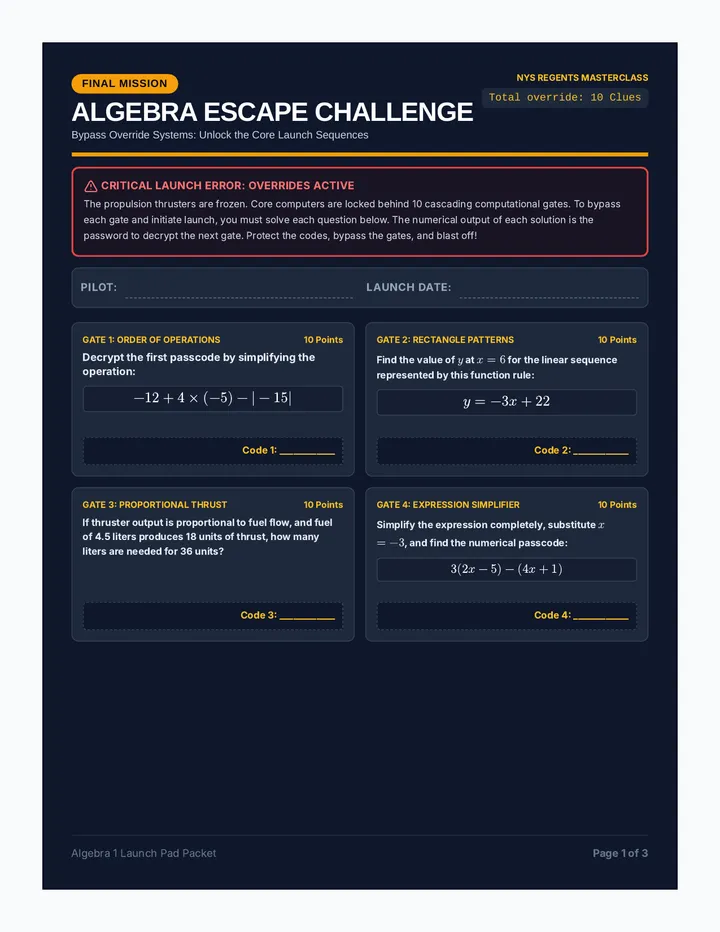
A comprehensive summer bridge workbook for rising 8th graders transitioning to Algebra 1. Contains review of prerequisite topics, advanced pre-algebra skills, real-world application, and an Algebra Escape Challenge.
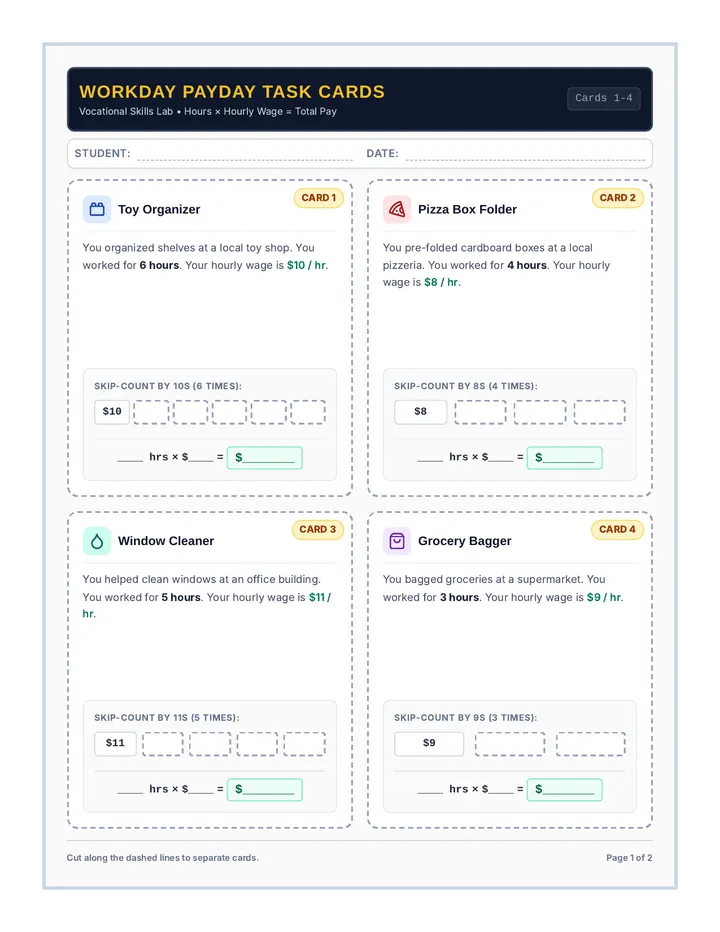
A practical vocational math lesson where students learn to calculate daily earnings by multiplying hours worked by hourly wages. Designed with real-world job-card contexts and supported by structured visual skip-counting.
A printable set of 8 vocational job-card task cards for student stations. Each card presents a distinct workplace scenario with clear numbers and visual guides to support independent double-digit skip-counting and wage calculations.
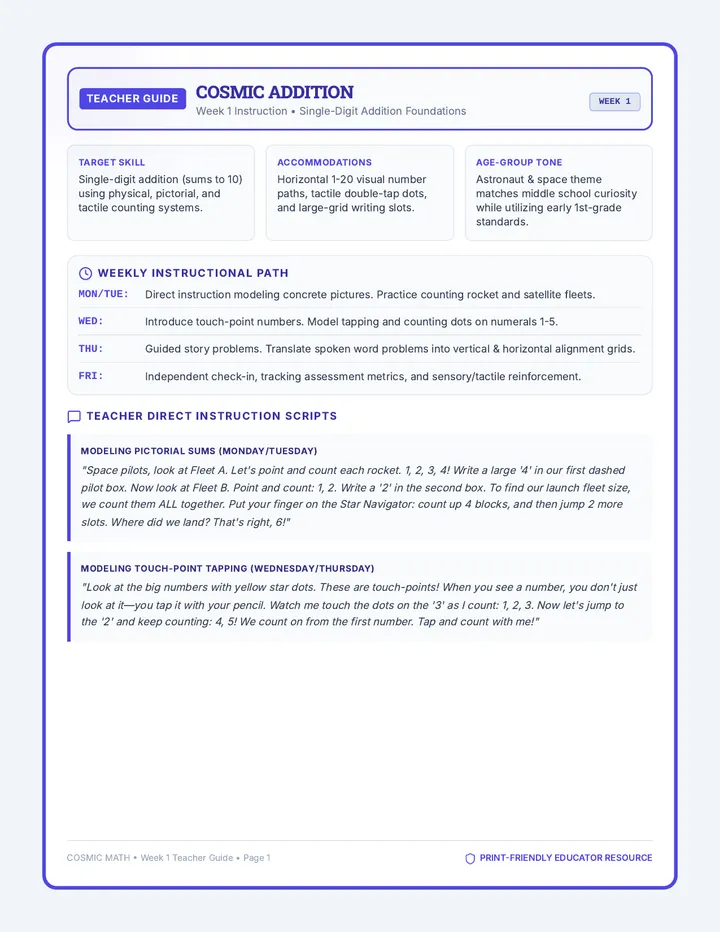
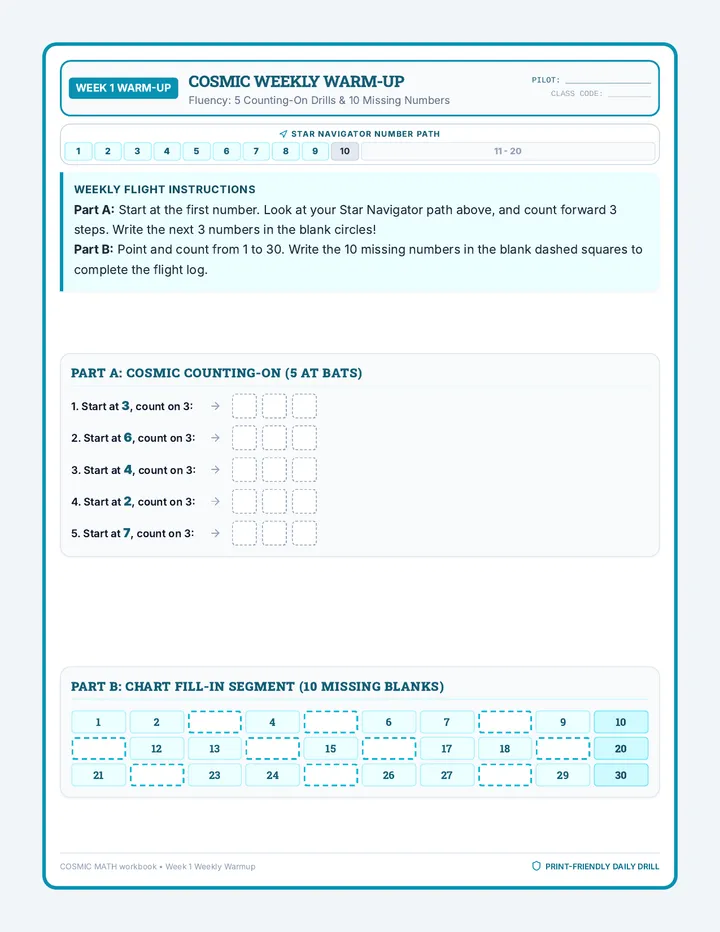
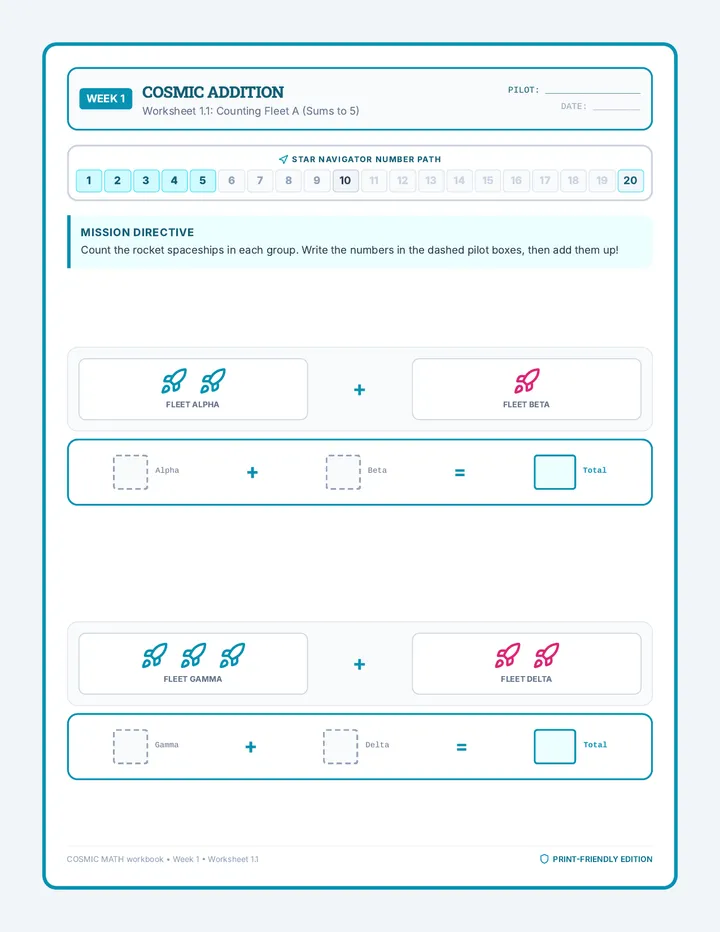
A 4-week math workbook and instructional sequence themed around outer space exploration, specifically designed for middle school students with disabilities (SWDs) working at an early 1st-grade level. Features embedded touch-points, base-ten icons, visual number paths, and age-appropriate space exploration visuals to teach single-digit operations, place value, and patterns.
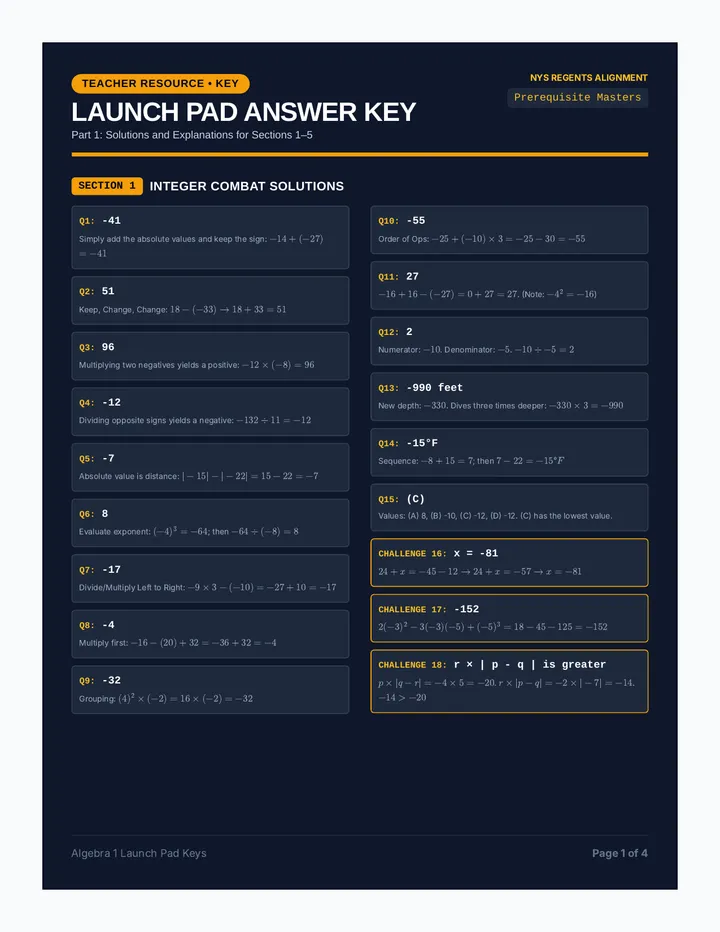
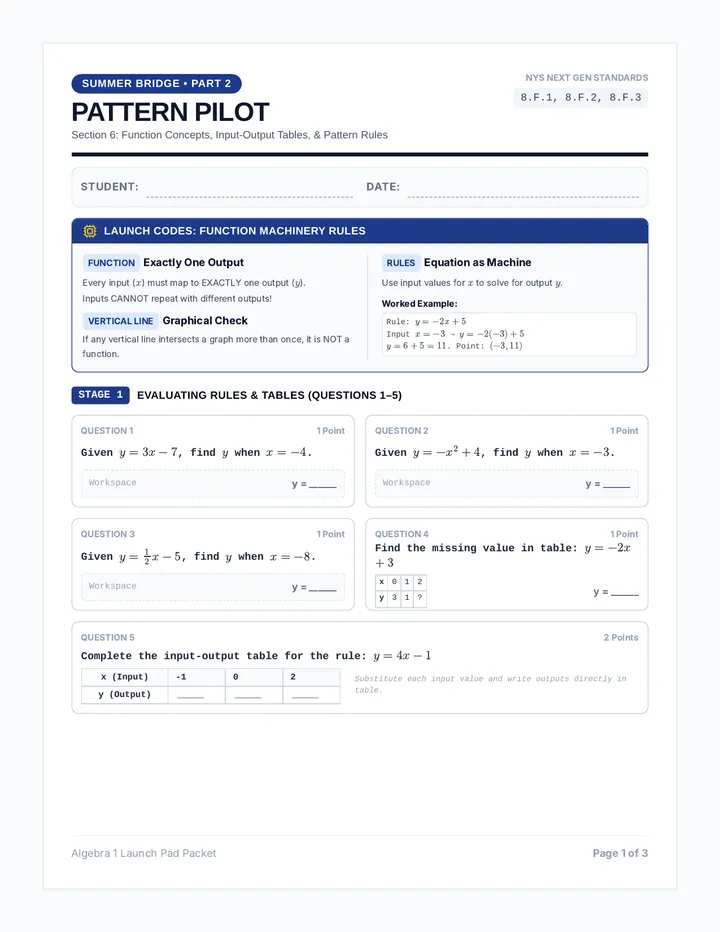
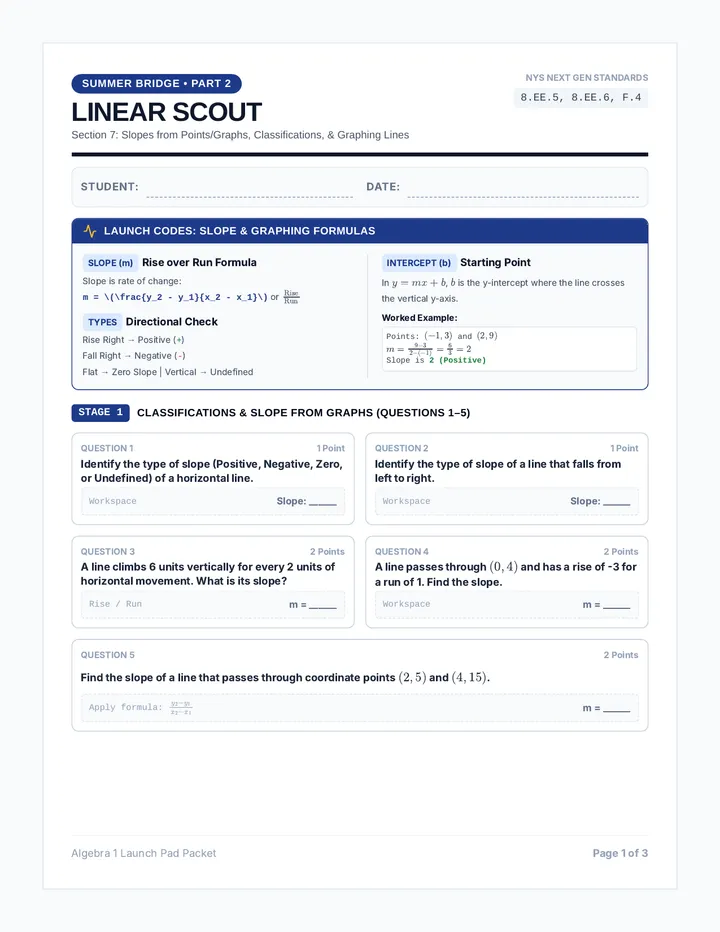
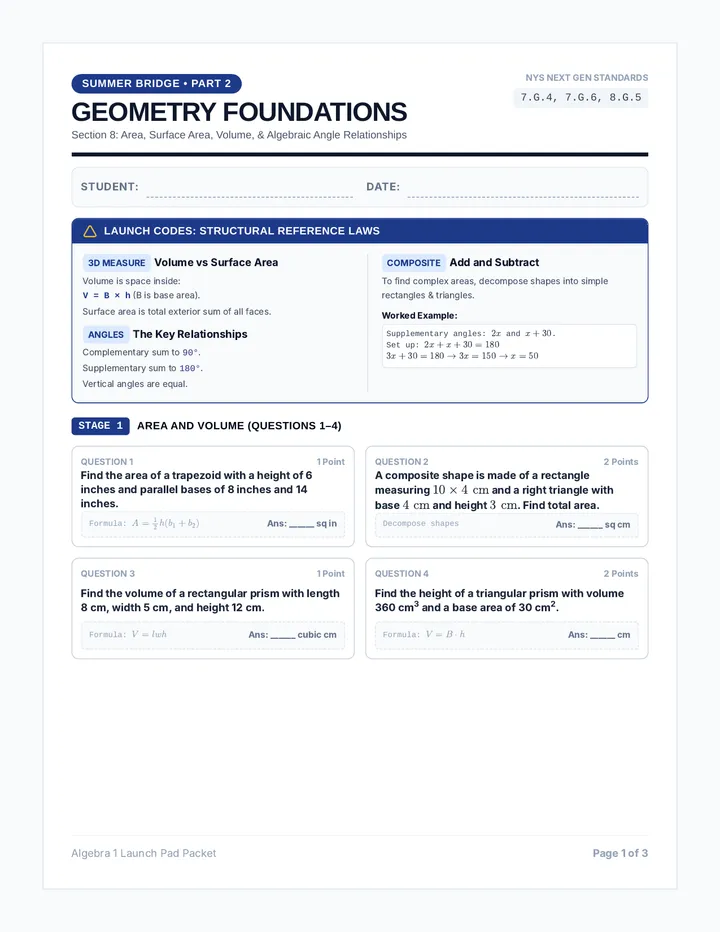
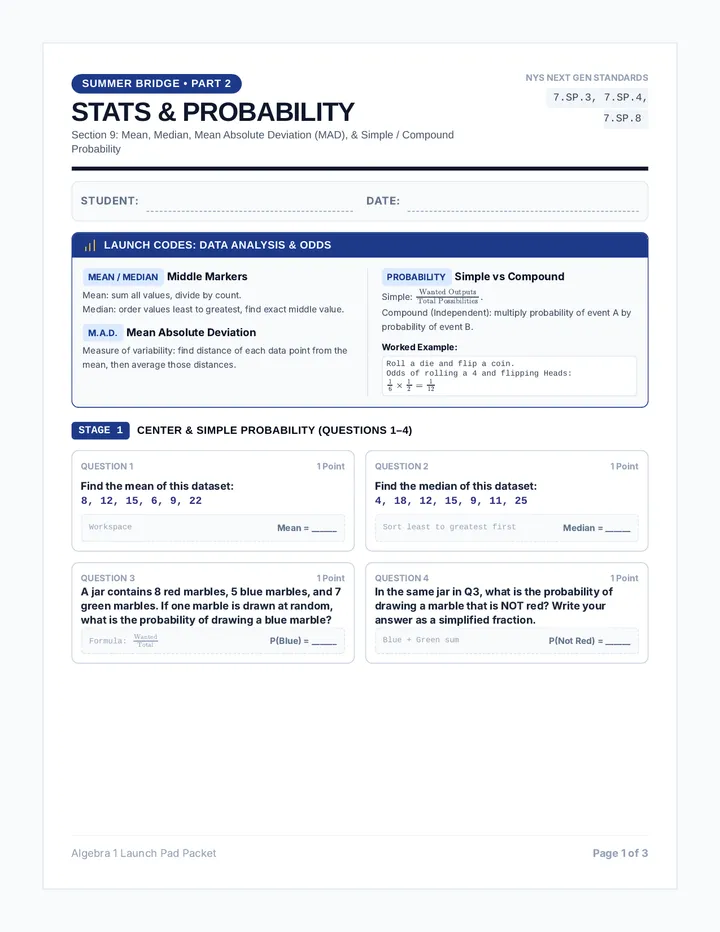
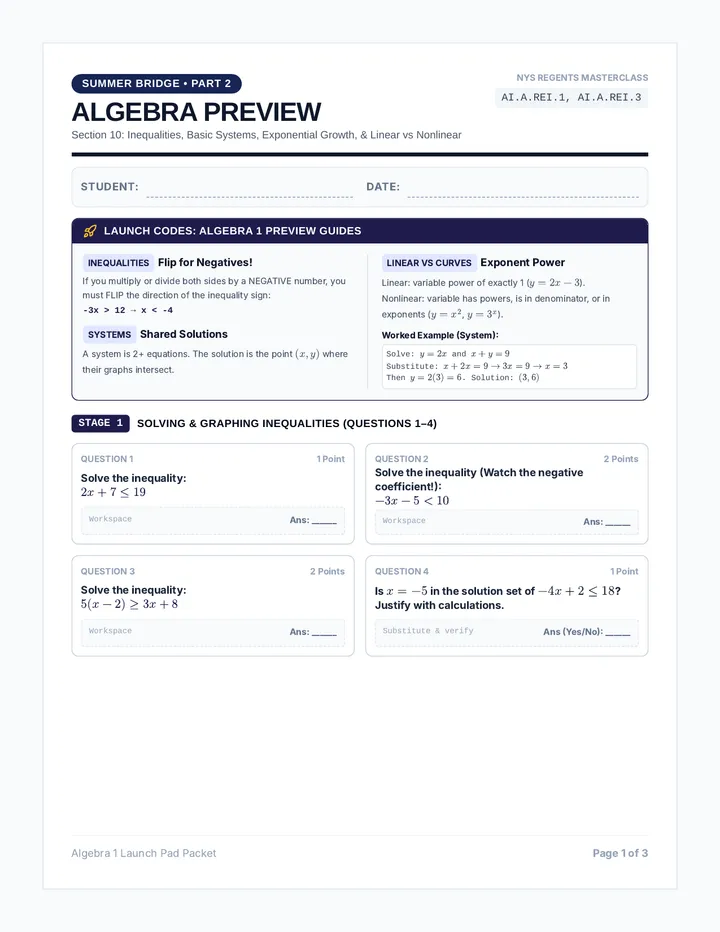
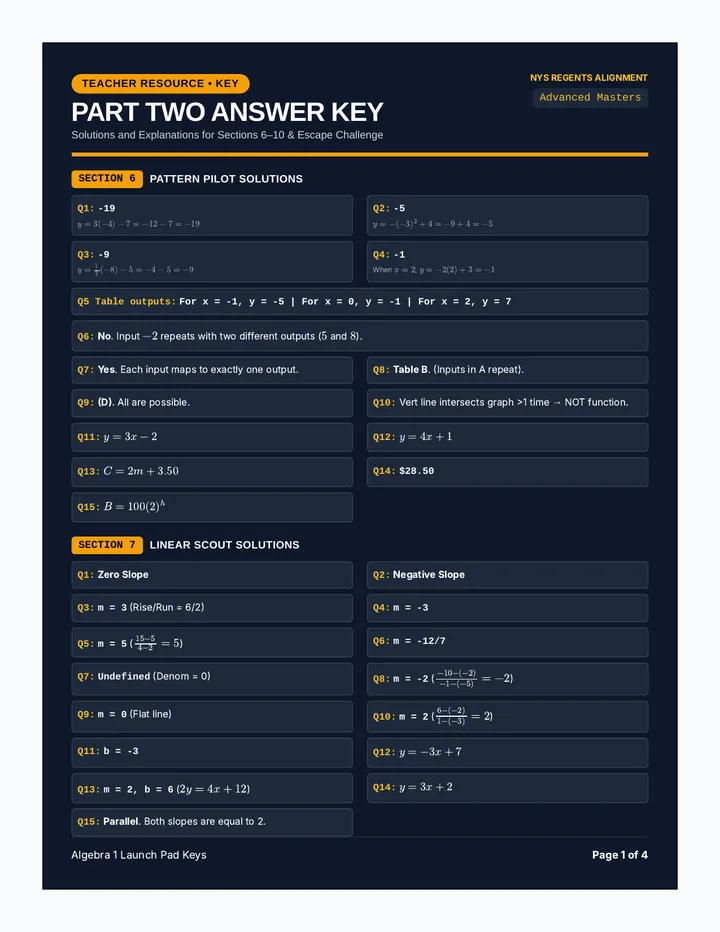
The second part of the Algebra 1 Summer Bridge Packet. It covers functions & patterns, linear relationships, geometric foundations, statistics & probability, and an advanced Algebra 1 preview.
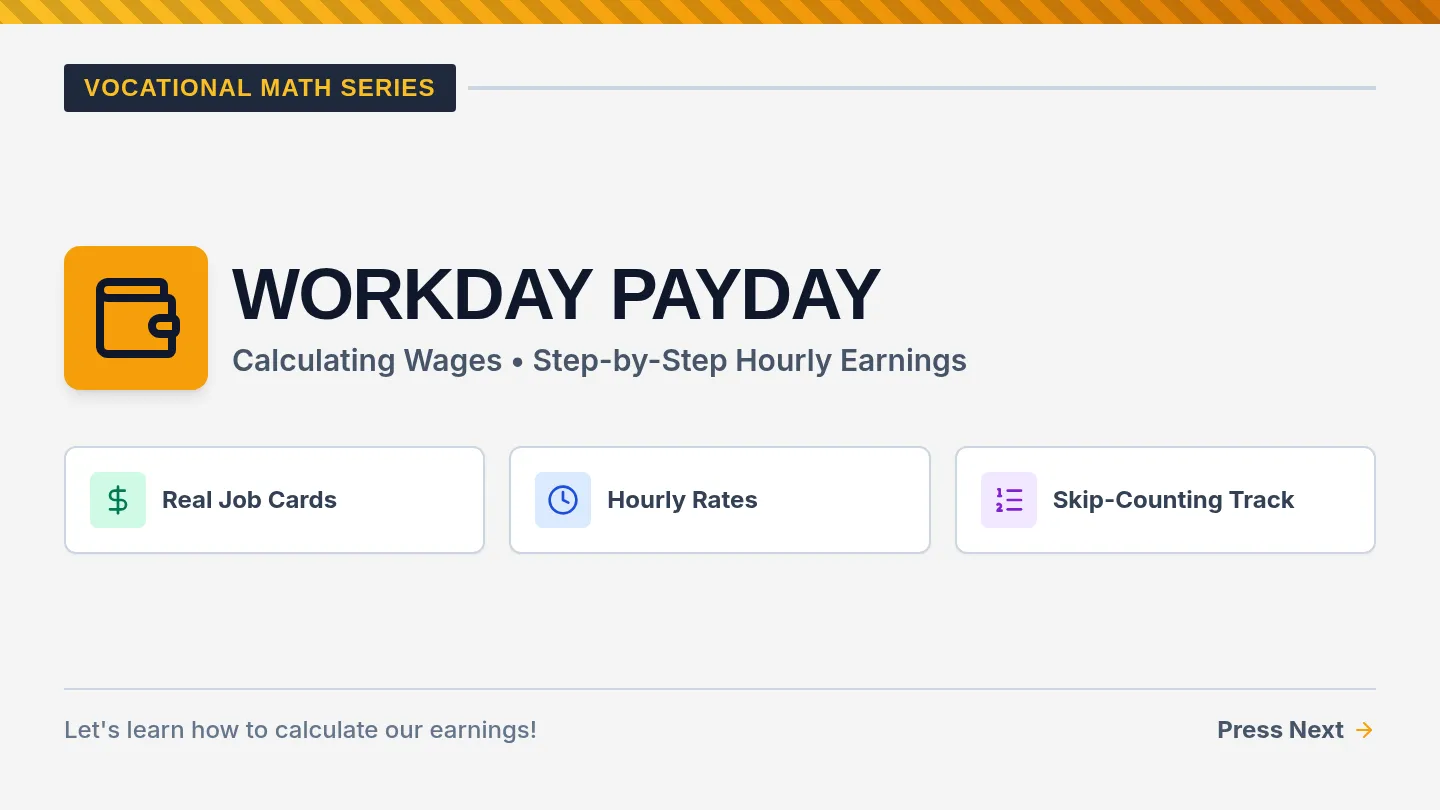
A comprehensive 7-slide presentation that introduces hourly wage calculations using real-world vocational scenarios. Designed with a retro industrial clipboard theme, featuring bold graphics, clear icons, and visual skip-counting tracks. All slide text elements are strictly 24px or larger.
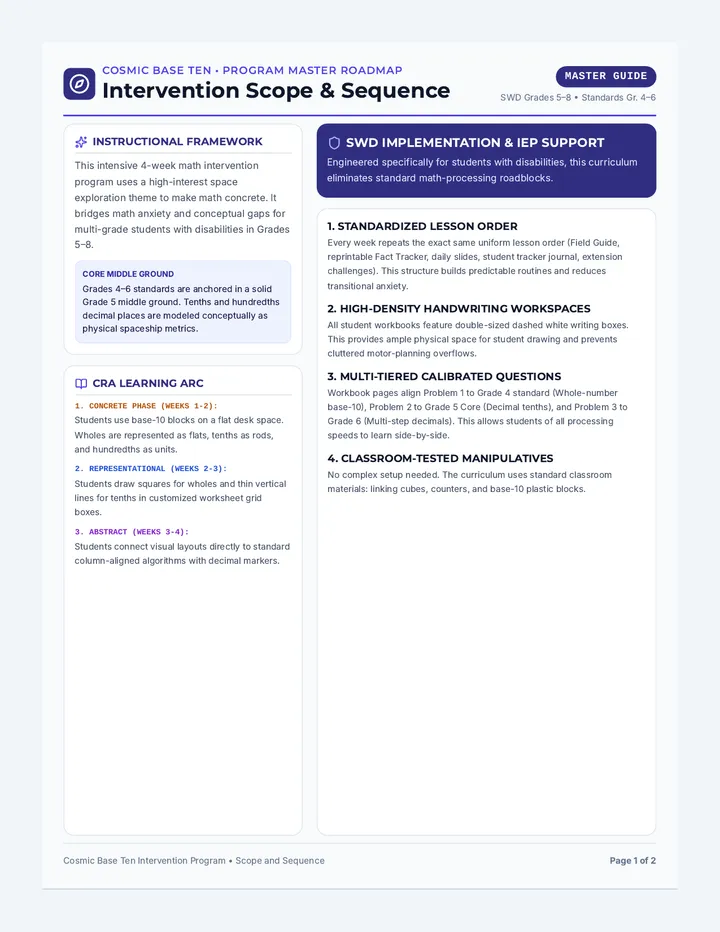
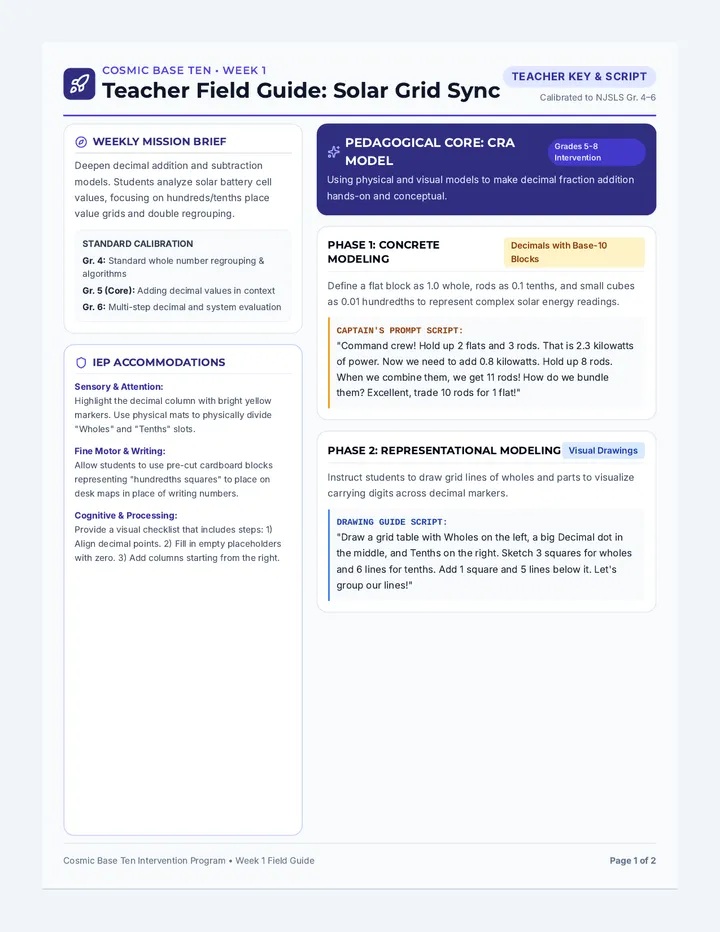
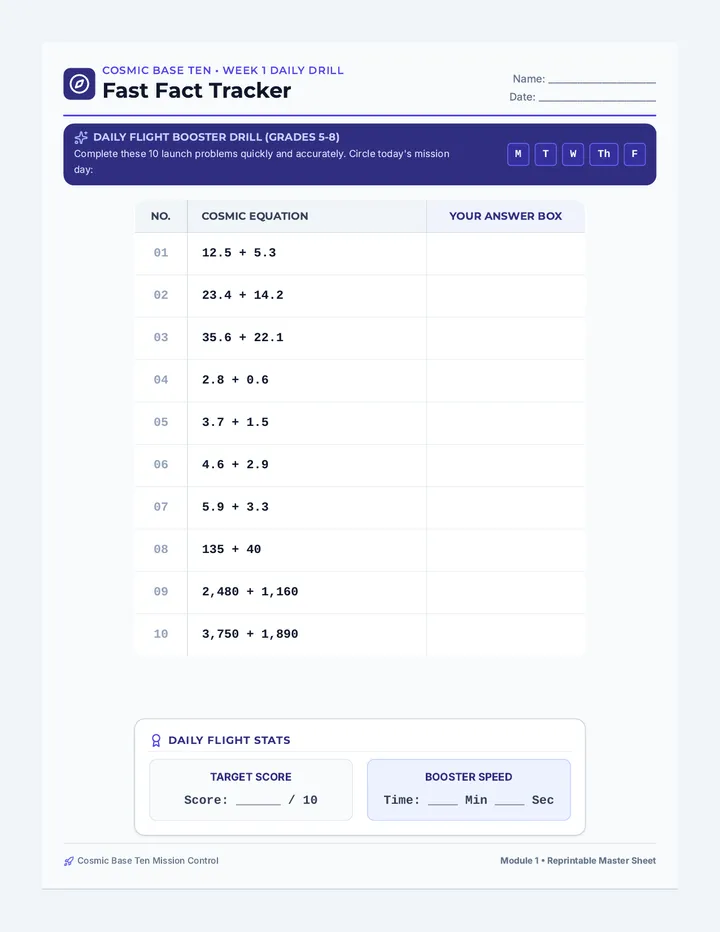
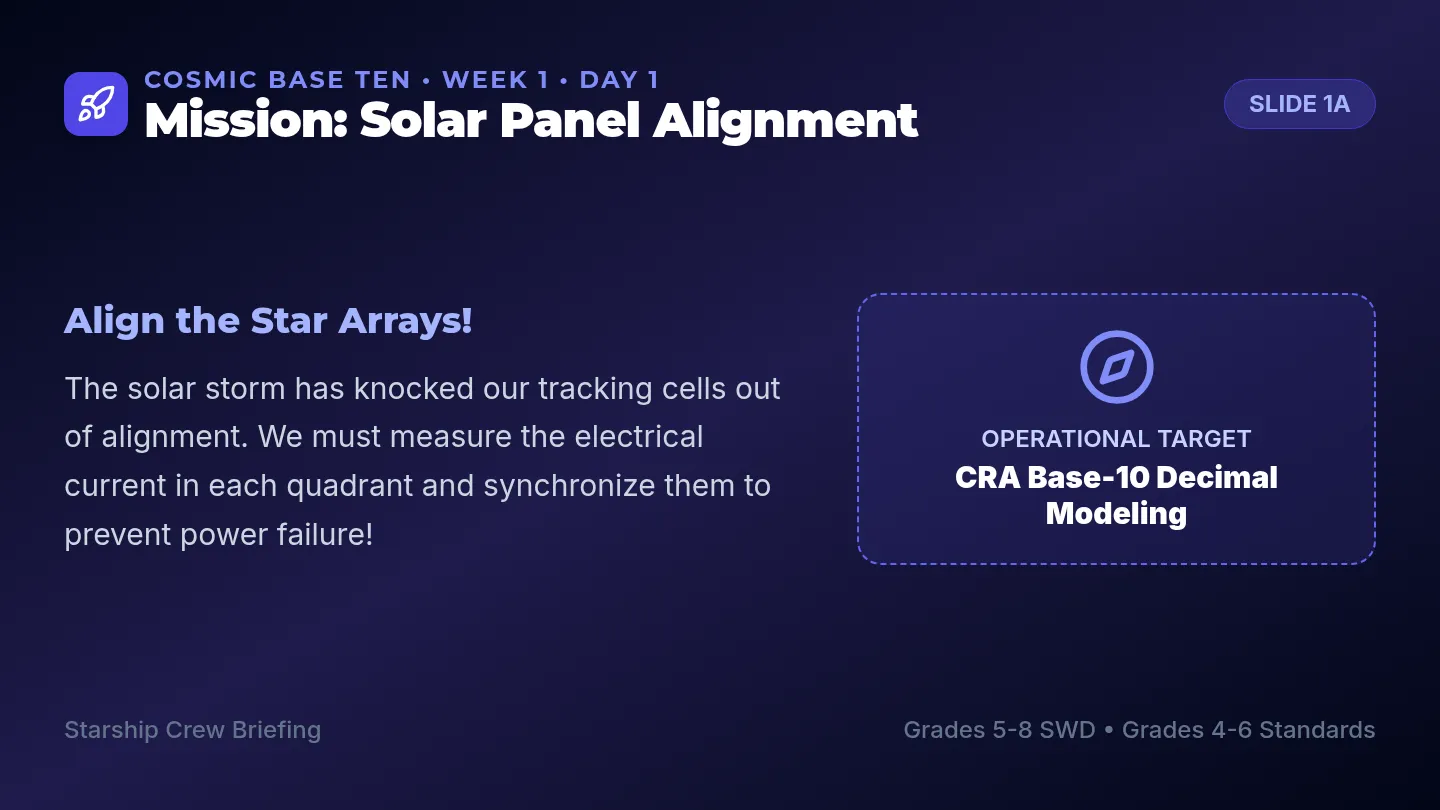
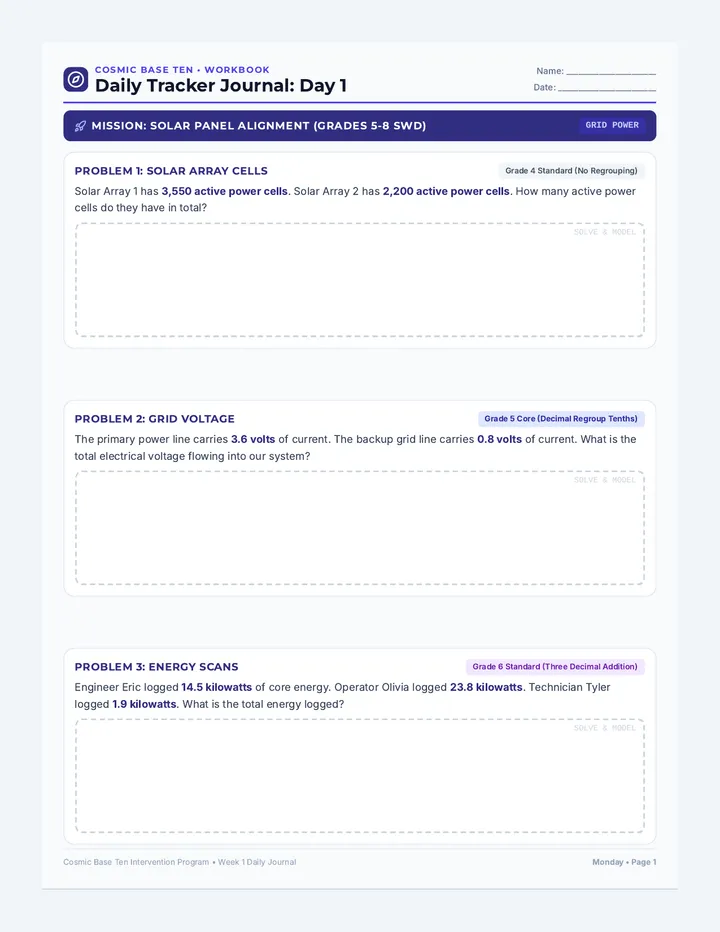
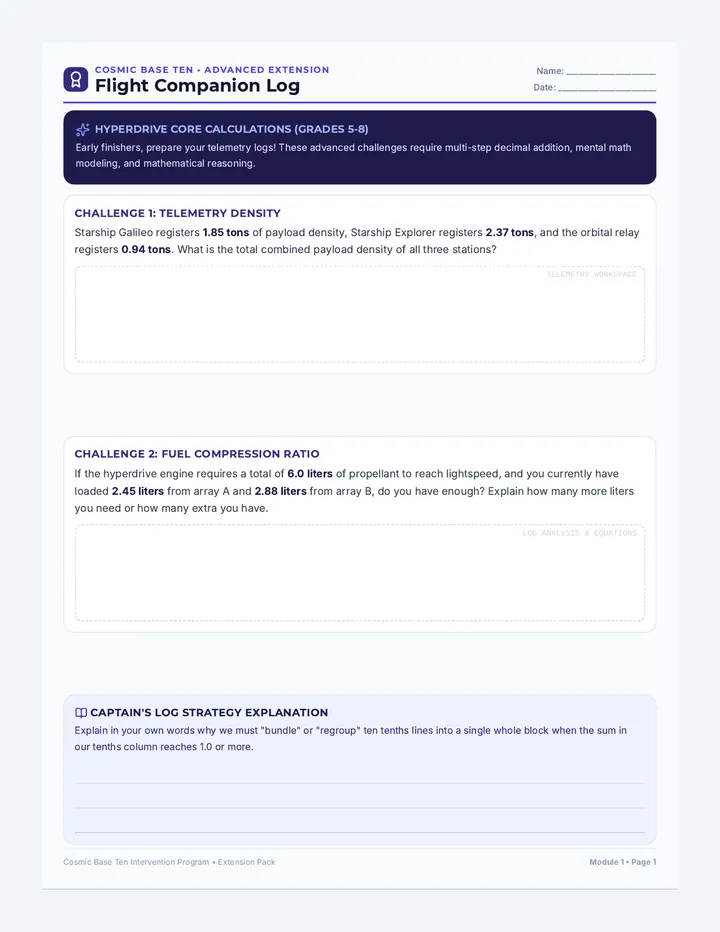
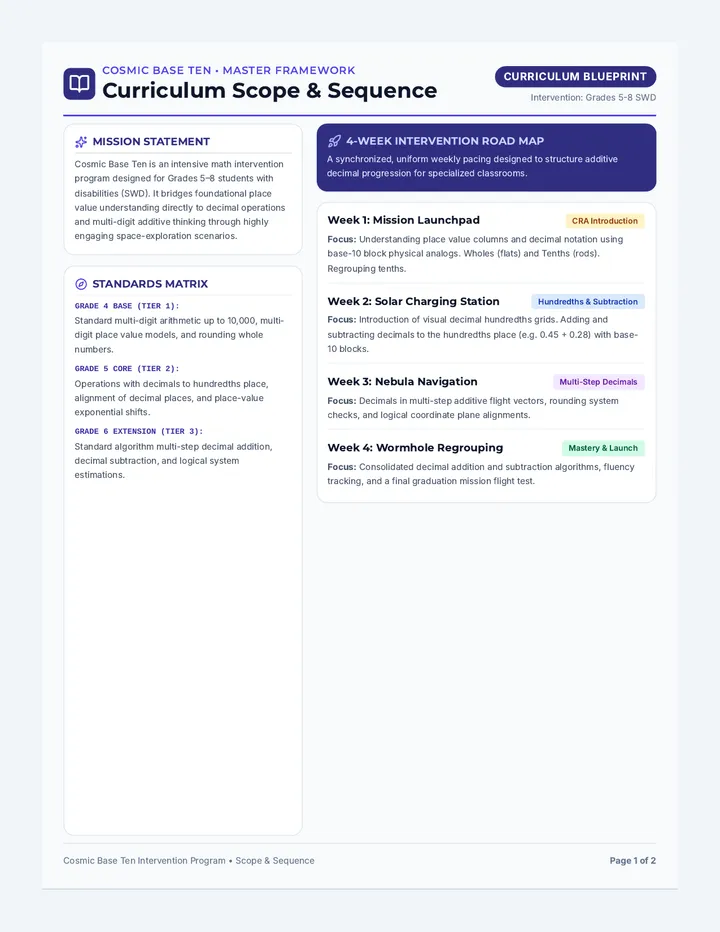
A 4-week intensive math intervention program set in a space exploration universe, designed for multi-grade students with disabilities in Grades 5–8. It covers additive thinking, place value, and decimal regrouping, anchored in Grades 4–6 standards with a Grade 5 core middle ground.
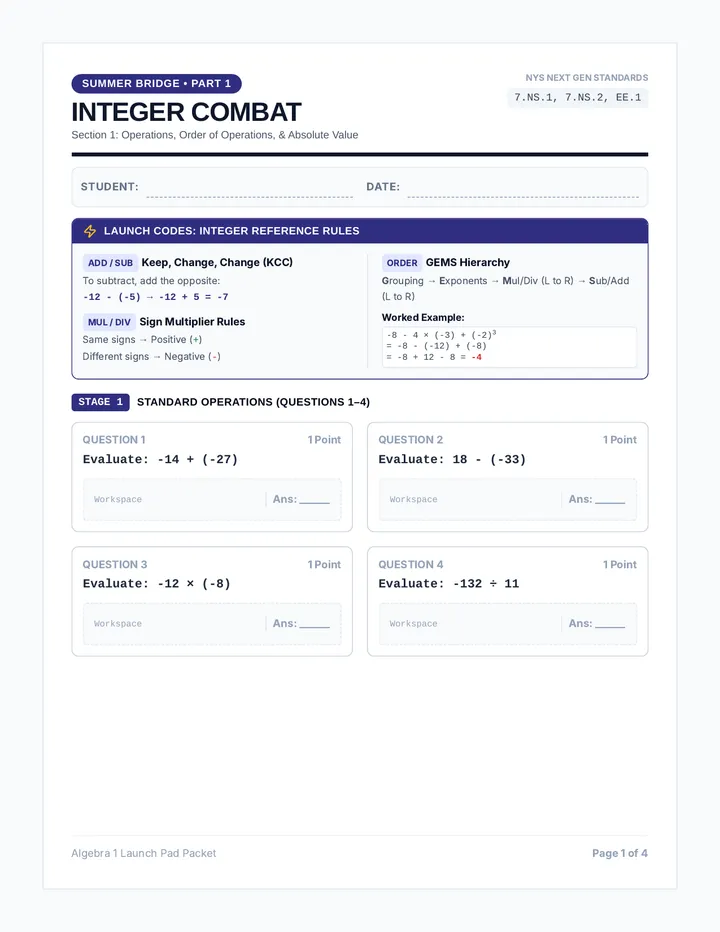
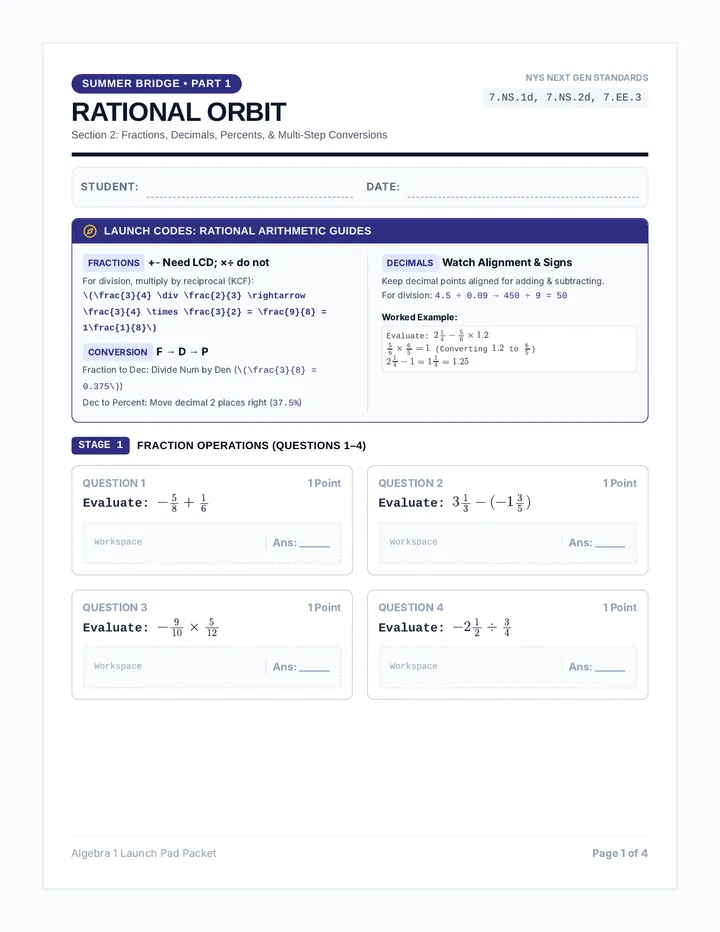
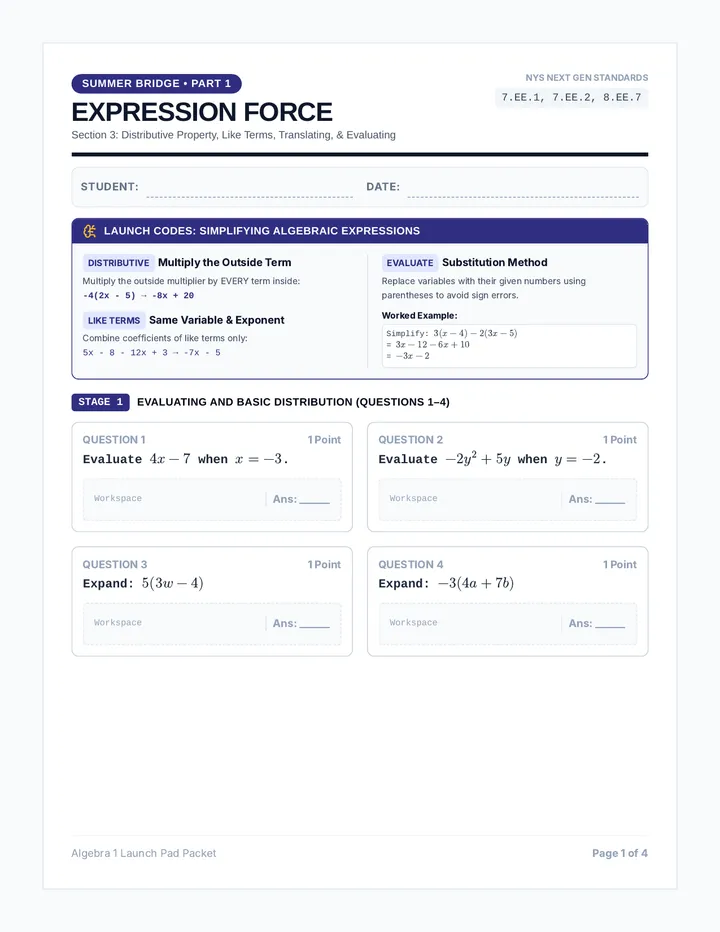
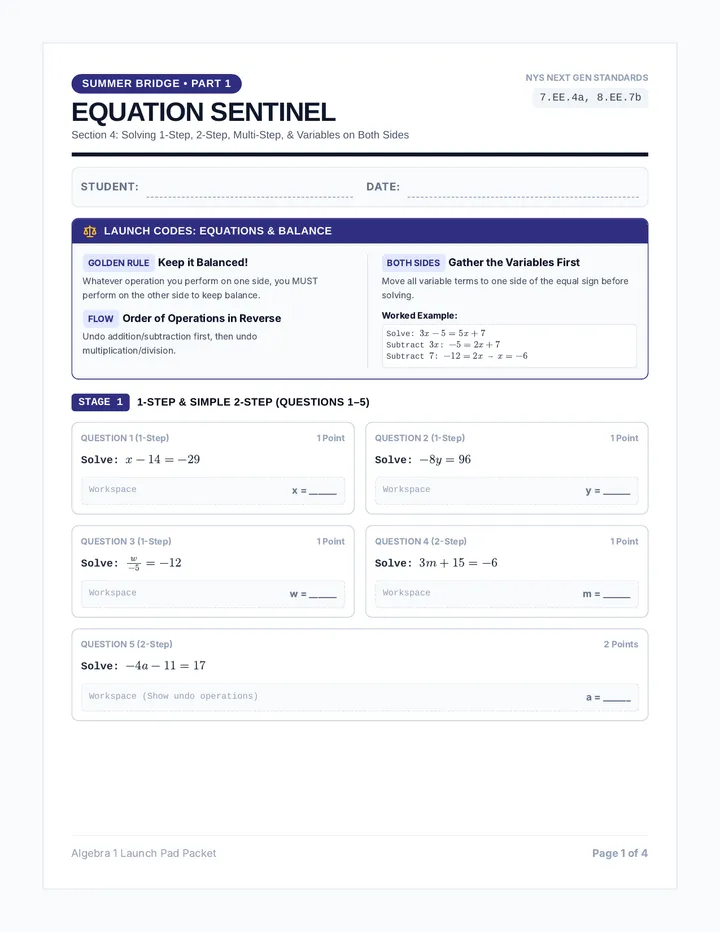
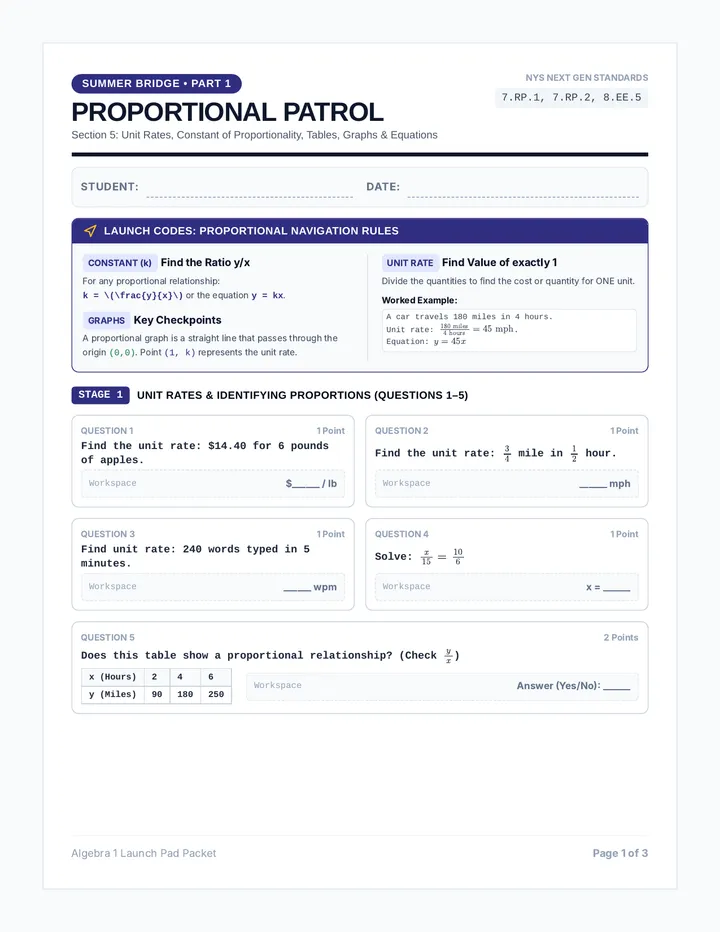
The first part of the Algebra 1 Summer Bridge Packet for rising 8th graders. It covers integer operations, rational numbers, expressions, solving equations, and proportional relationships with worked examples and workspaces.
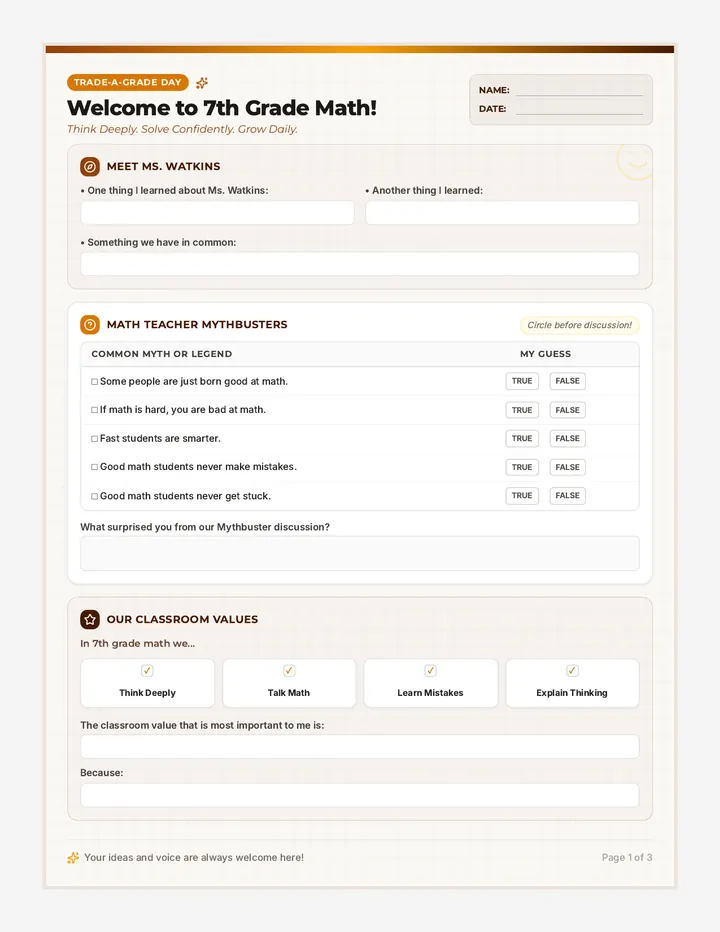
A beautifully themed 3-page transition worksheet for incoming 7th-grade math students visiting Ms. Watkins' classroom on Trade-a-Grade Day. Features a cohesive warm brown, gold, and cream palette with welcoming, interactive elements like mythbusters, classroom values, and introductory thinking prompts. Page 3 provides a customized mathematical sneak-peek on ratios, unit rates, and integers.
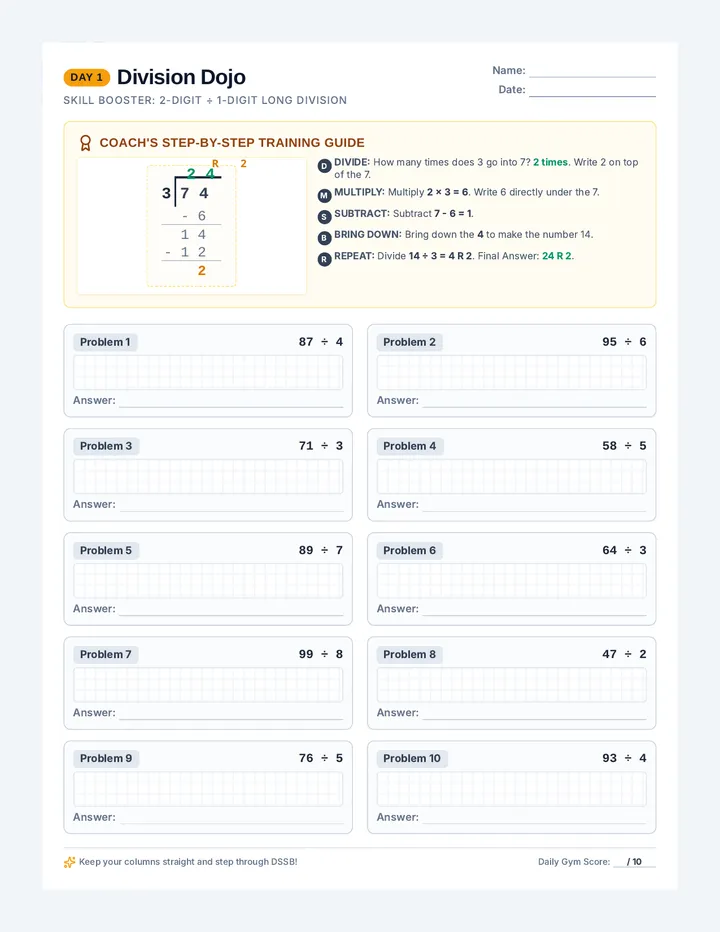
A six-day targeted daily practice series designed to reinforce critical middle school math skills. Each single-page worksheet features a scaffolded, step-by-step solved example followed by 10 targeted practice problems with dedicated workspace.
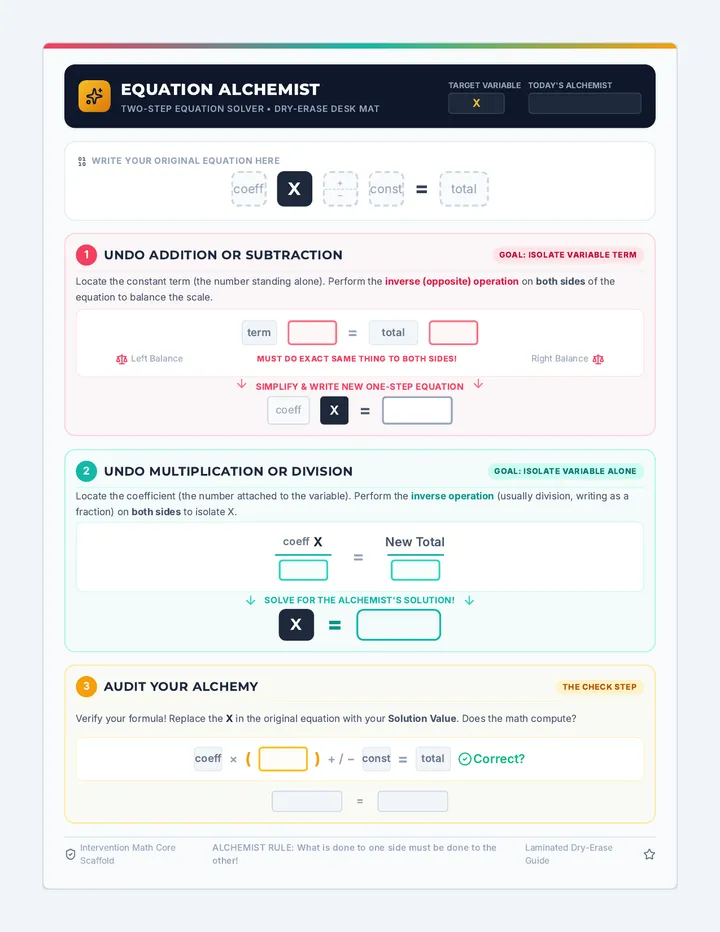
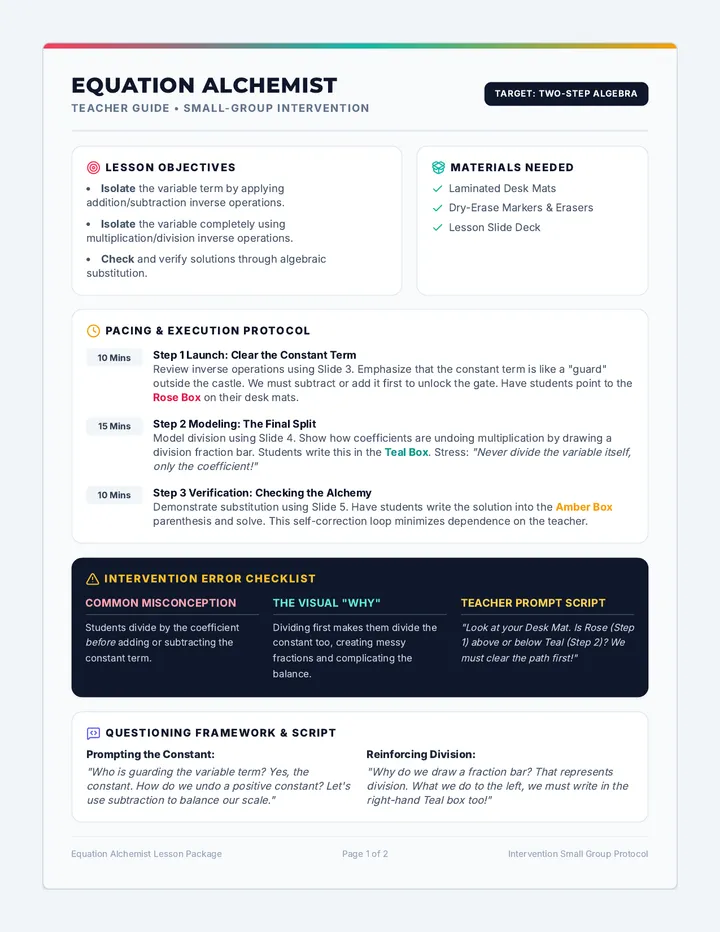
A comprehensive math intervention lesson targeting two-step algebraic equations. Features a color-coded step-by-step visual organizer that guides students through undoing addition/subtraction first, followed by multiplication/division to isolate the variable.
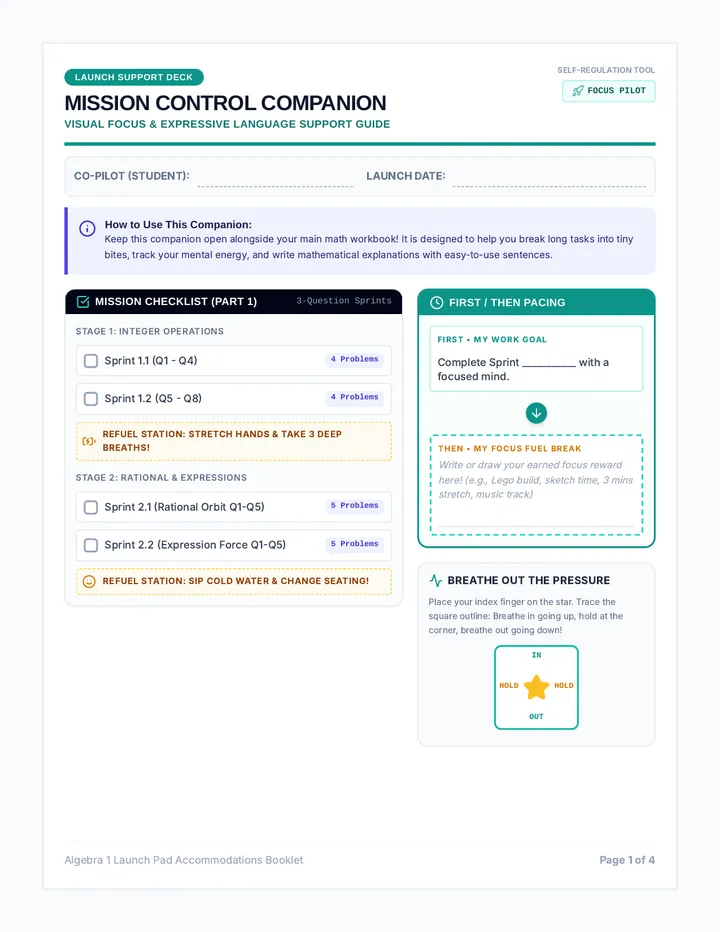
A specialized 4-page student-facing support and accommodation packet designed specifically for students with expressive language challenges and focus difficulties. Includes visual schedules, 'First-Then' pacing boards, structured sentence frames, and simplified graphic organizers with rocket-themed visuals.