A comprehensive introduction to the fundamental concepts of statistics, including data classification, sampling methods, and experimental design.
A comprehensive lesson on solving exponential equations with the same base, covering the Property of Equality and step-by-step problem-solving techniques.
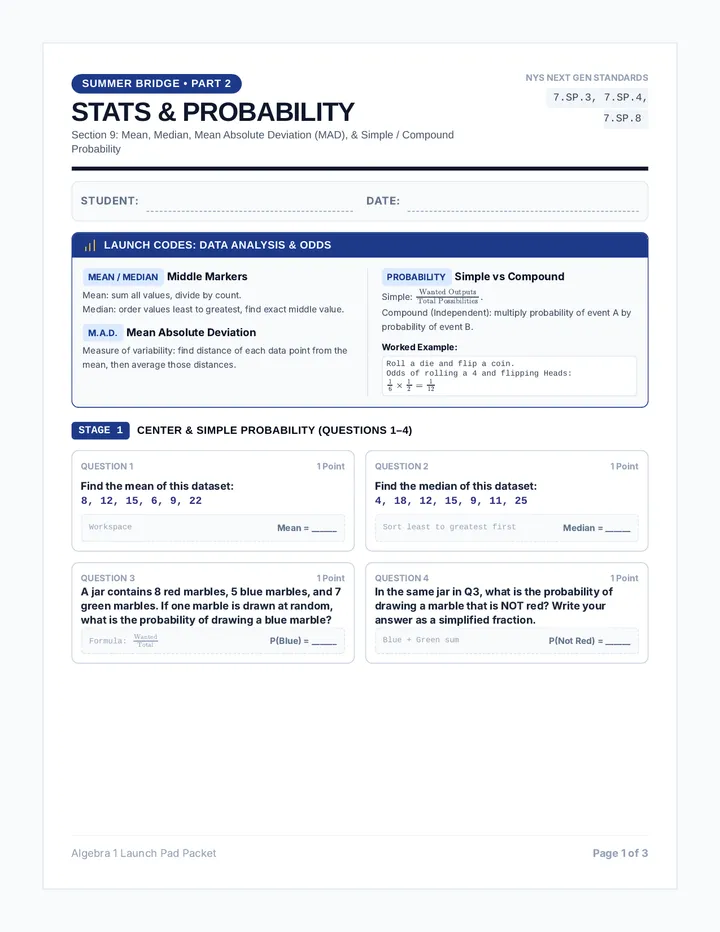
A comprehensive 40-question review covering descriptive statistics, elementary probability, and counting techniques based on Algebra 1 and Statistics curriculum.
A lesson focused on interpreting and analyzing real-world data from criminal justice, tax returns, and law enforcement statistics using calculations like rates of change, percentages, and frequency distributions.
A comprehensive assessment covering exponential growth and decay, solving exponential equations, and arithmetic/geometric sequences based on Chapter 6 Algebra 1 concepts.
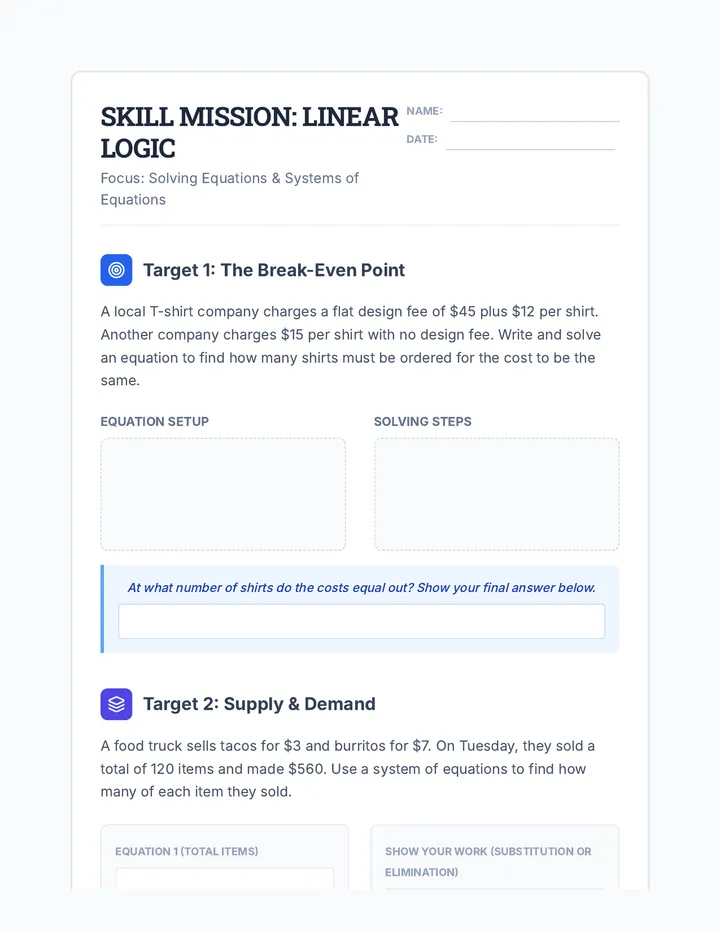
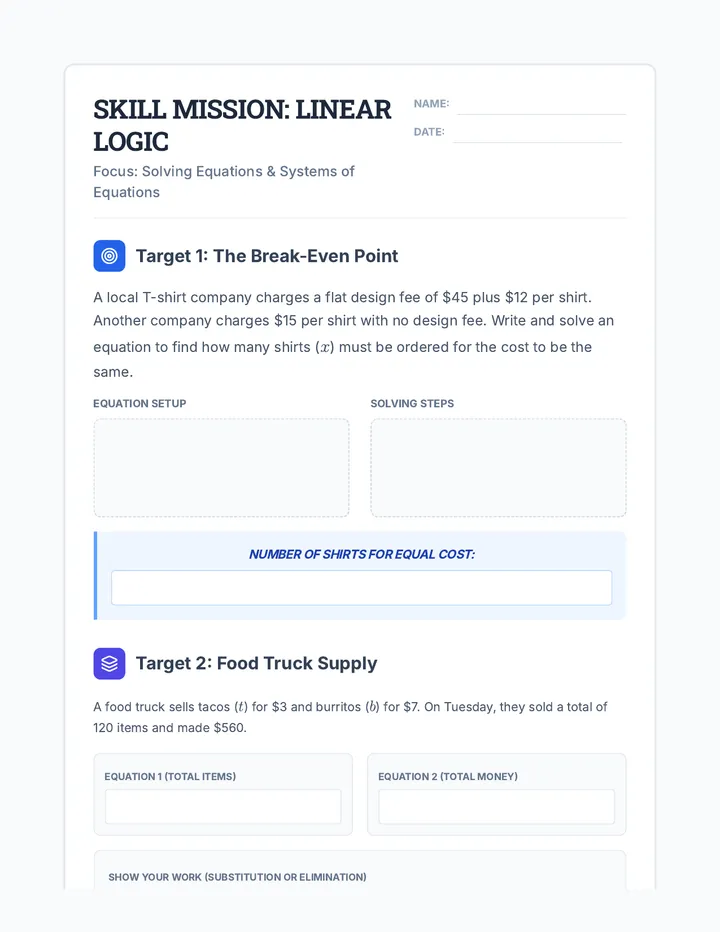
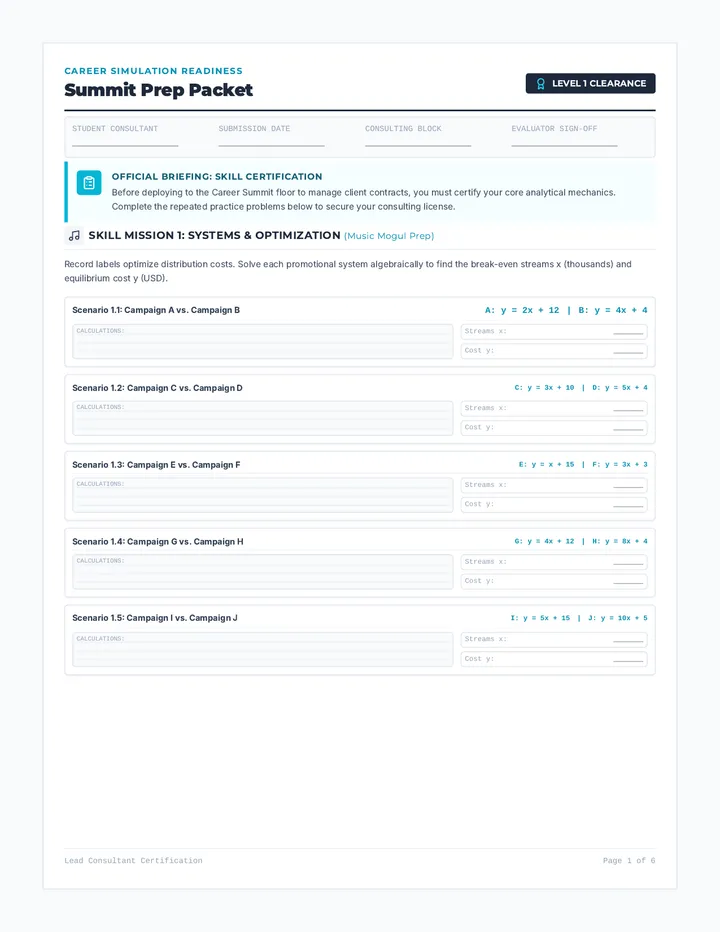
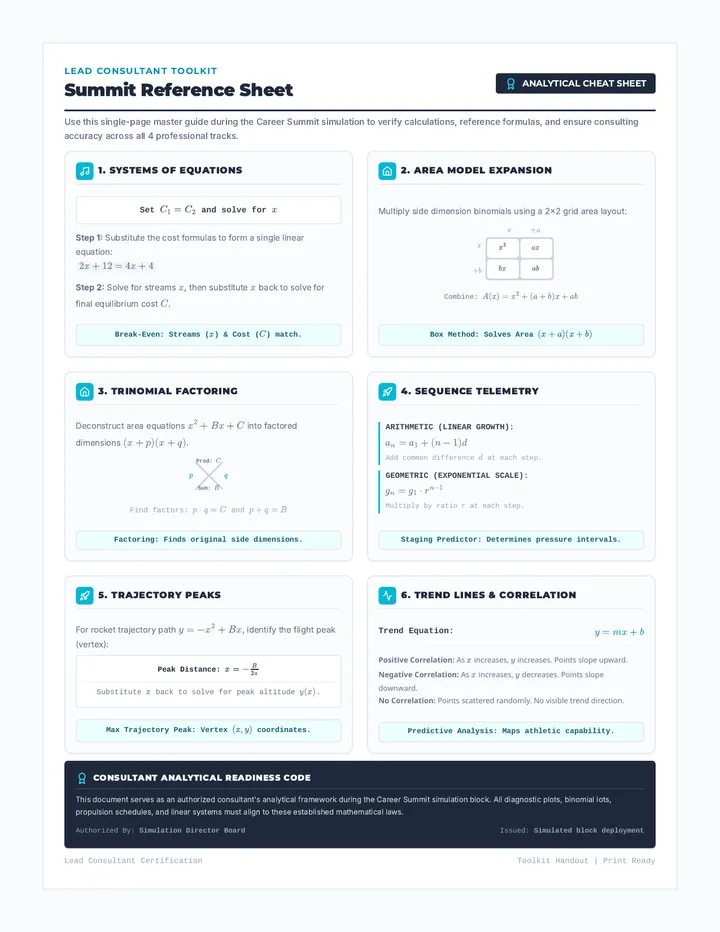
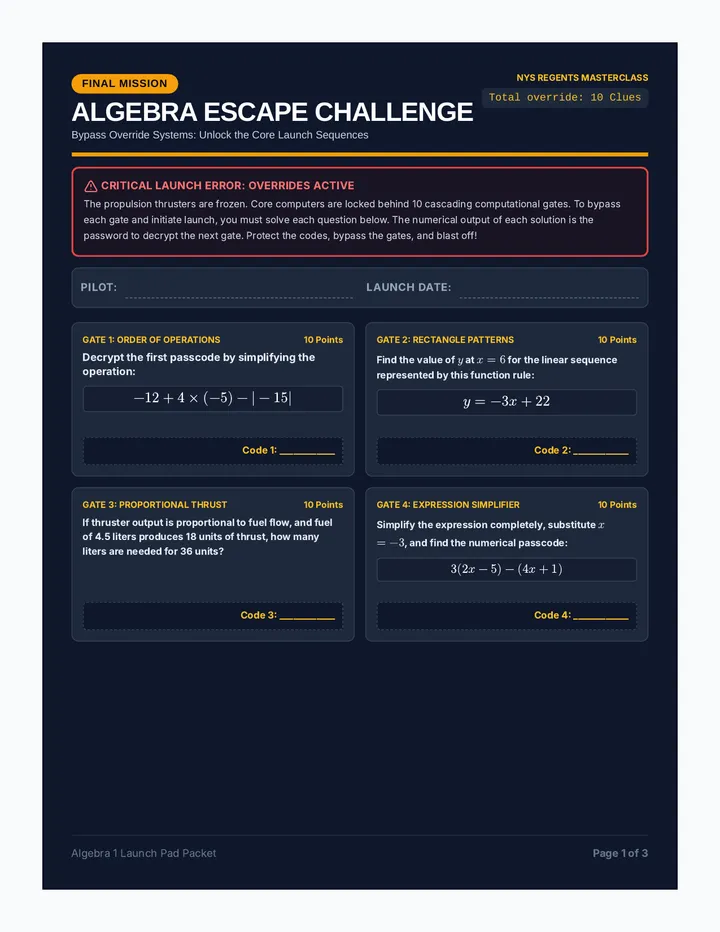
A comprehensive review of systems of linear equations including graphing, substitution, elimination, and real-world application problems involving cost and quantity.
A comprehensive assessment covering logarithms, exponential transformations, and equation solving based on Chapter 6 materials. Includes a 30-question multiple-choice quiz and a detailed answer key.
A comprehensive assessment covering nth roots, rational exponents, and radical equations based on Chapter 5 Algebra 2 concepts.
A comprehensive assessment and answer key covering similar polygons, triangle similarity theorems (AA, SSS, SAS), and proportionality theorems.
A comprehensive assessment covering triangle relationships (bisectors, medians, altitudes) and the properties of parallelograms, featuring conceptual and problem-solving questions.
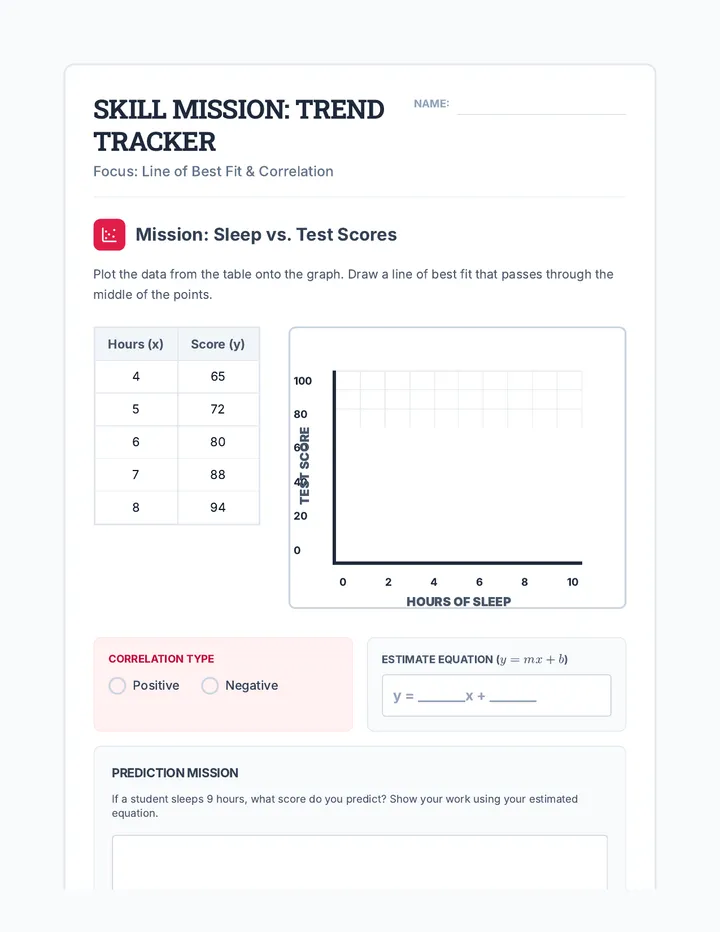
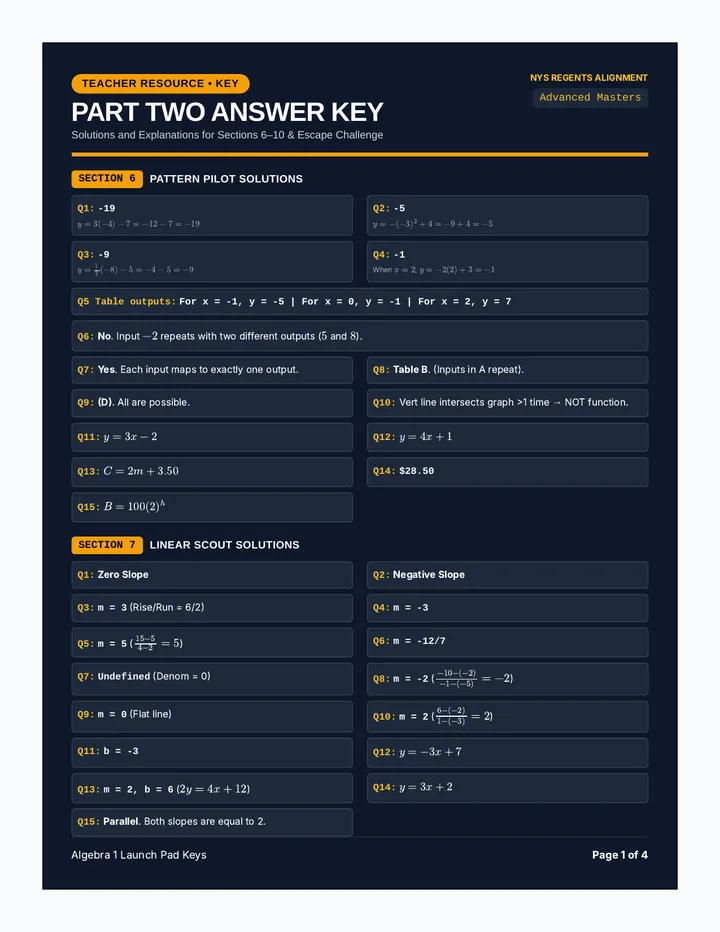
A comprehensive assessment covering graphing linear equations, writing equations in slope-intercept form, and solving systems of linear equations by graphing, based on the Chapter 4 and 5 review materials.
A comprehensive assessment and answer key covering graphing linear equations, writing equations in slope-intercept form, and solving systems by graphing.
A comprehensive guide to mastering the TI-84 graphing calculator for Algebra 1, focusing on graphing functions and using the CALC menu to find critical points of quadratics.
Final mastery check of AZ 3.G.A.2 skills: partitioning shapes, identifying unit fractions, and explaining the relationship between parts and the whole area.
Students explore how the same shape can be partitioned into equal areas in multiple ways, reinforcing that fractional parts must have equal area but not necessarily identical shapes.
Students partition circles, rectangles, and squares into 2, 3, 4, 6, and 8 equal parts with precision, meeting the partitioning requirements of the AZ standards.
Students express the area of one part as a unit fraction (1/b) of the whole, connecting partitioning to numerical notation as required by AZ 3.G.A.2.
Students define equal shares and identify them in circles and quadrilaterals, establishing the foundation for AZ 3.G.A.2 by distinguishing area from shape.
A final review and assessment of all skills learned throughout the Fraction Factory unit.
Exploring different ways to partition the same shape into equal areas, reinforcing that shapes can look different but have the same fractional area.
Practicing partitioning circles, rectangles, and squares into specific numbers of equal parts (2, 3, 4, 6, 8).
Focuses on naming the partitioned parts as unit fractions (1/b) and understanding that the size of the part depends on the total number of parts.
An introduction to identifying and creating equal parts in various shapes, distinguishing between fair and unfair shares in the context of factory production.
A comprehensive lesson on basic budgeting, financial vocabulary, and mathematical foundations including fractions and simple algebra, designed for special education students.
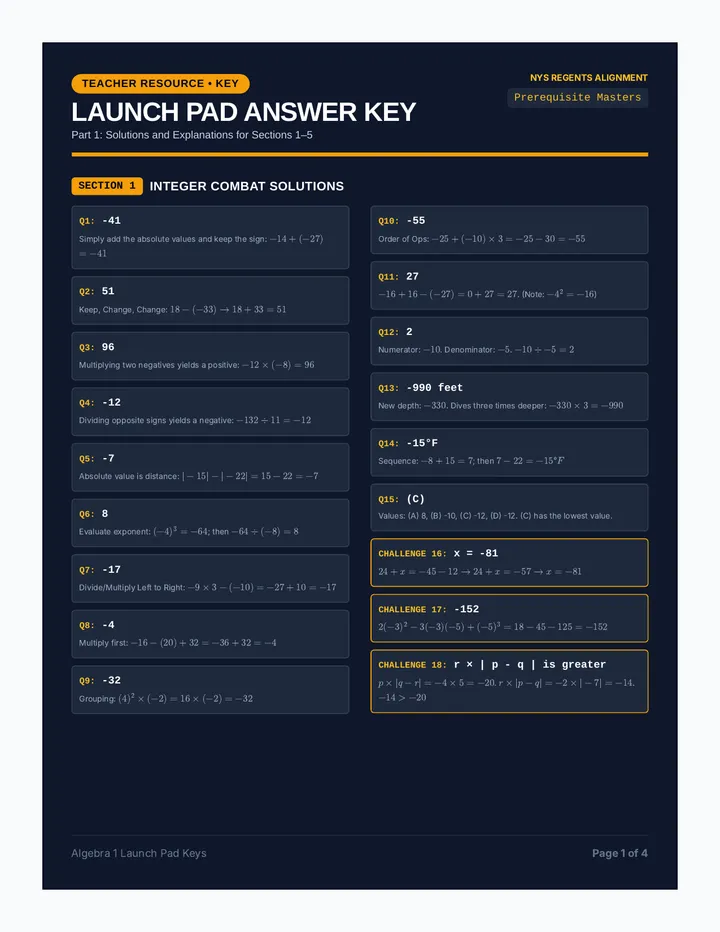
A comprehensive suite of informal math assessments focusing on number sense, fractions, prime numbers, integers, and percentages, themed around a high-stakes code-breaking mission.
Apprendre à justifier rigoureusement chaque étape d'un calcul ou d'une construction géométrique.
Calculer la somme des angles intérieurs des polygones et résoudre des problèmes complexes d'amplitudes d'angles.
Identifier les angles correspondants, alternes-internes et alternes-externes, et découvrir les propriétés des droites parallèles coupées par une sécante.
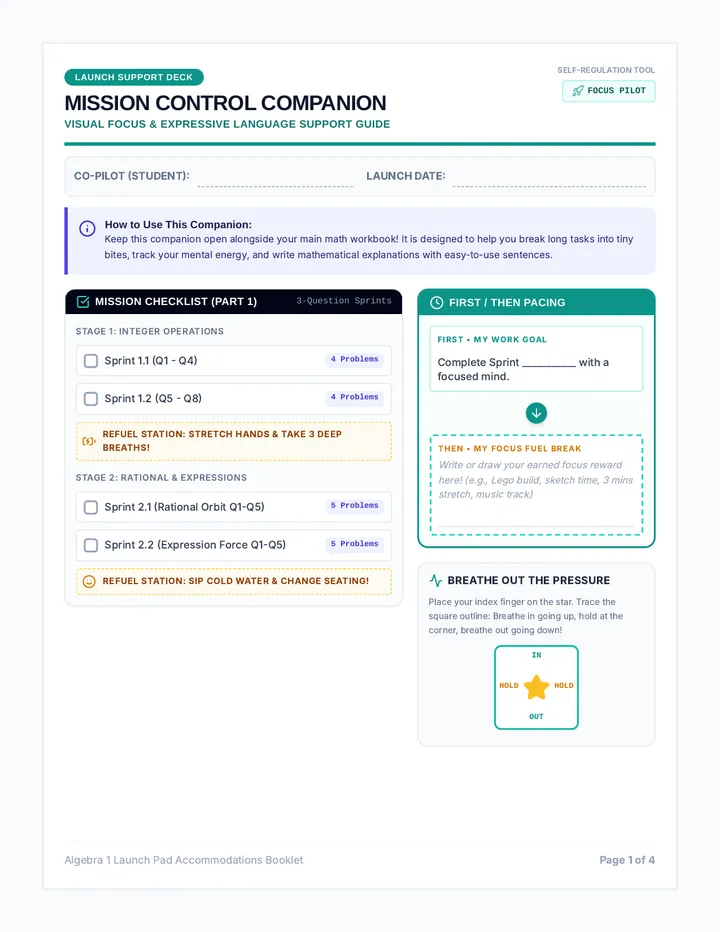
A 40-minute lesson designed to build mathematical confidence by reframing 'struggle' as 'growth.' Students engage in progressive logic challenges while practicing self-regulation and encouragement strategies.
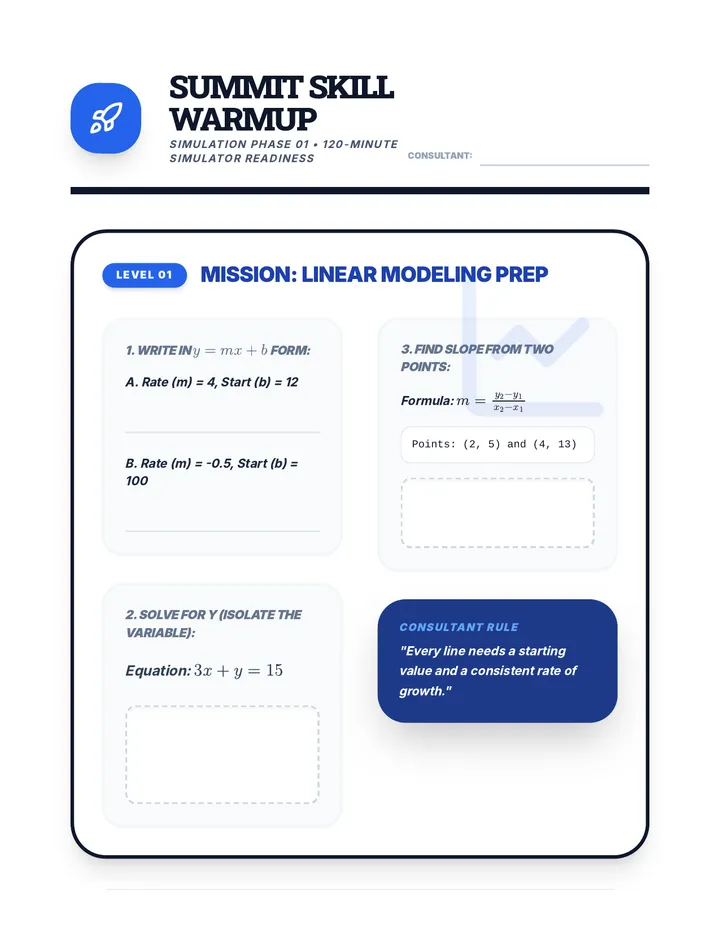
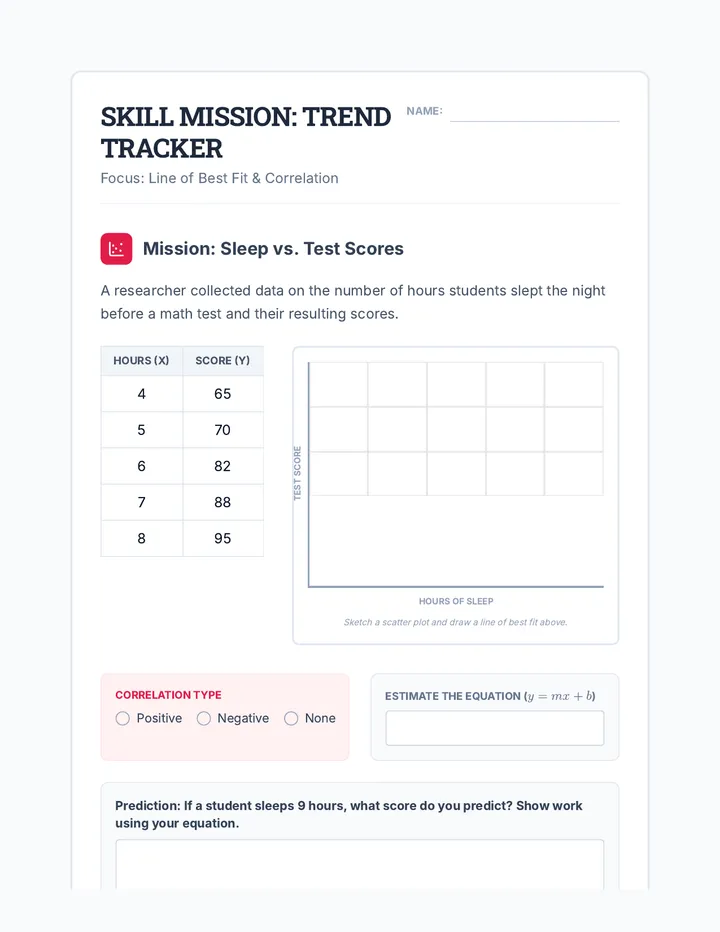
A comprehensive review of linear equations, systems, and data analysis designed for Alabama high school students. This lesson uses real-world urban data to bridge algebraic manipulation with statistical interpretation.
A visual exploration of 2D geometric shapes, focusing on identifying names and properties through an architectural-themed Tarsia puzzle.
A comprehensive reteach lesson on solving linear equations in one variable, including variables on both sides, with a focus on properties of equality and justifying each step.
A comprehensive guide and practice set for mastering Algebra 1 standard 10.B (Factoring Quadratics), focusing on manual calculation and Desmos-based strategies.
Une leçon pratique pour apprendre à calculer rapidement des pourcentages de tête ou à l'écrit.
Une introduction au cosinus dans le triangle rectangle, incluant la formule et le moyen mnémotechnique CAH.
Une mini-leçon sur le calcul de la médiane d'une série statistique, utilisant l'exemple concret des notes d'élèves.
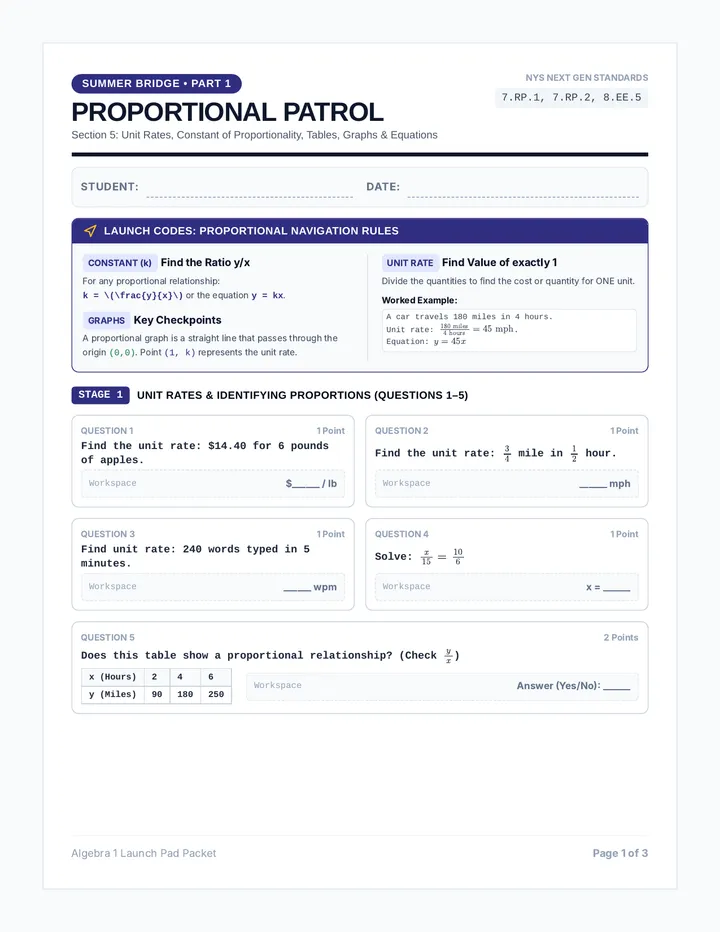
In this lesson, students will master the art of finding and interpreting the unit rate from proportional graphs. They will learn to identify the point (1, r) and use the ratio y/x to build mathematical models of real-world relationships.
A comprehensive lesson on special parallelograms (rectangles, rhombuses, and squares), focusing on their unique properties, hierarchy, and real-world applications in architecture and design.
Applying percentage concepts to solve real-world problems, including finding the part given the whole and the percent.
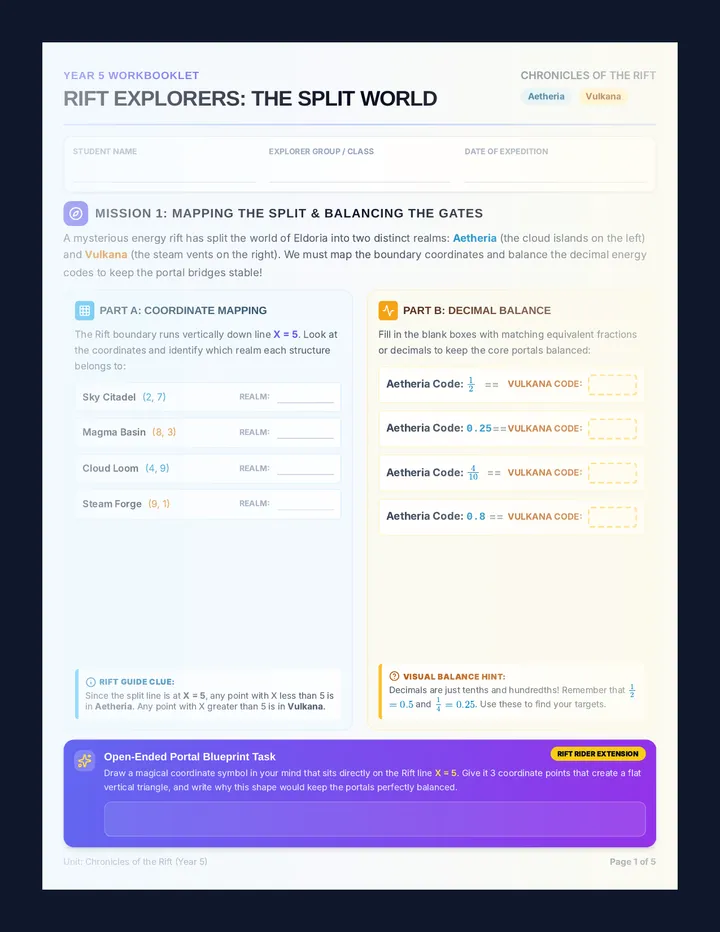
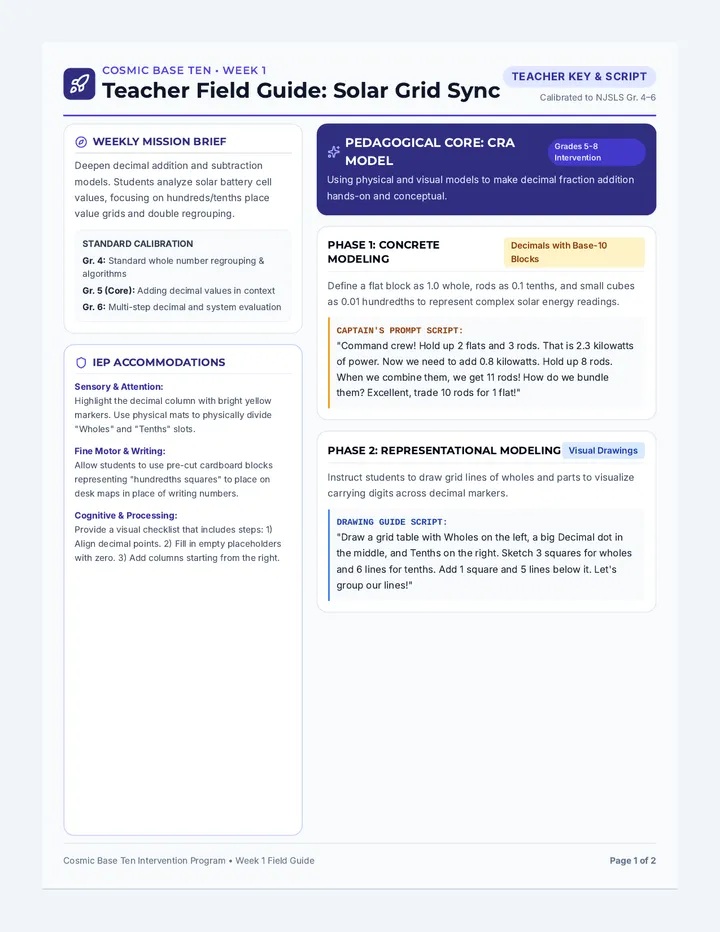
Students will master the "Material Mix" by converting between fractions, decimals, and percentages using visual models and benchmark values.
Focuses on using ratio tables to organize data and plotting those ratios as coordinates on a graph to visualize relationships.
Students will learn to identify ratios, find equivalent ratios using scaling, and calculate unit rates in real-world contexts.
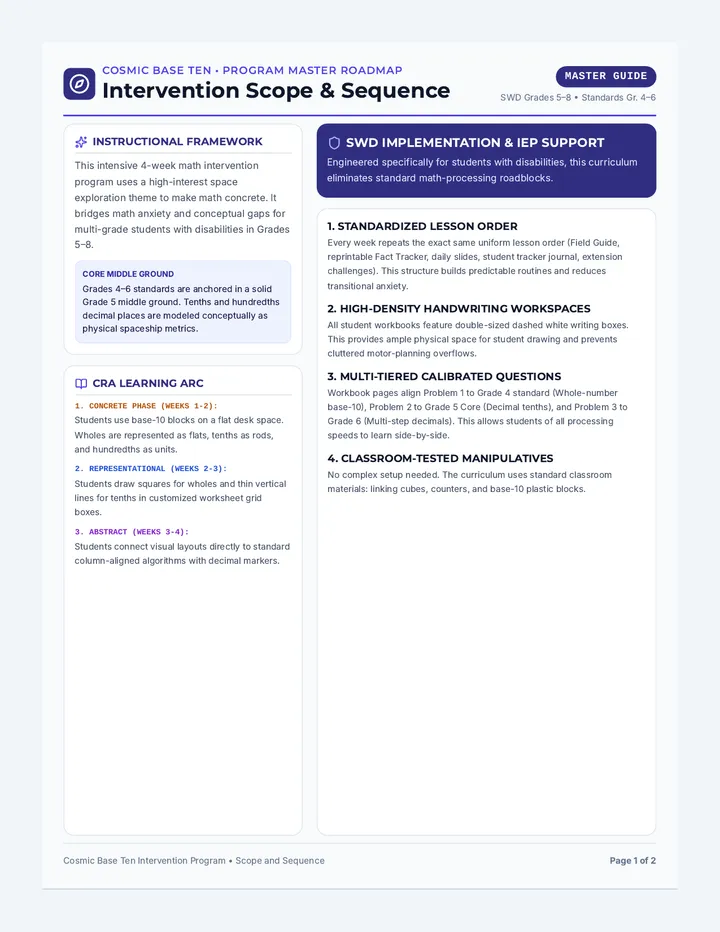
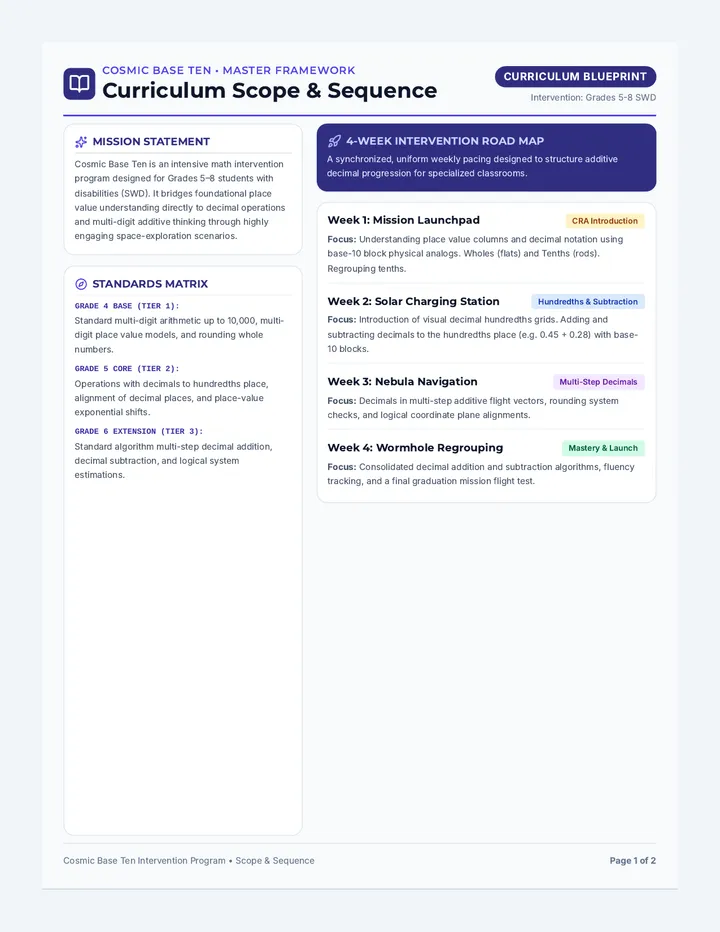
A collection of modified 7th-grade math scope and sequence documents tailored for Tier 2 and Tier 3 student support.
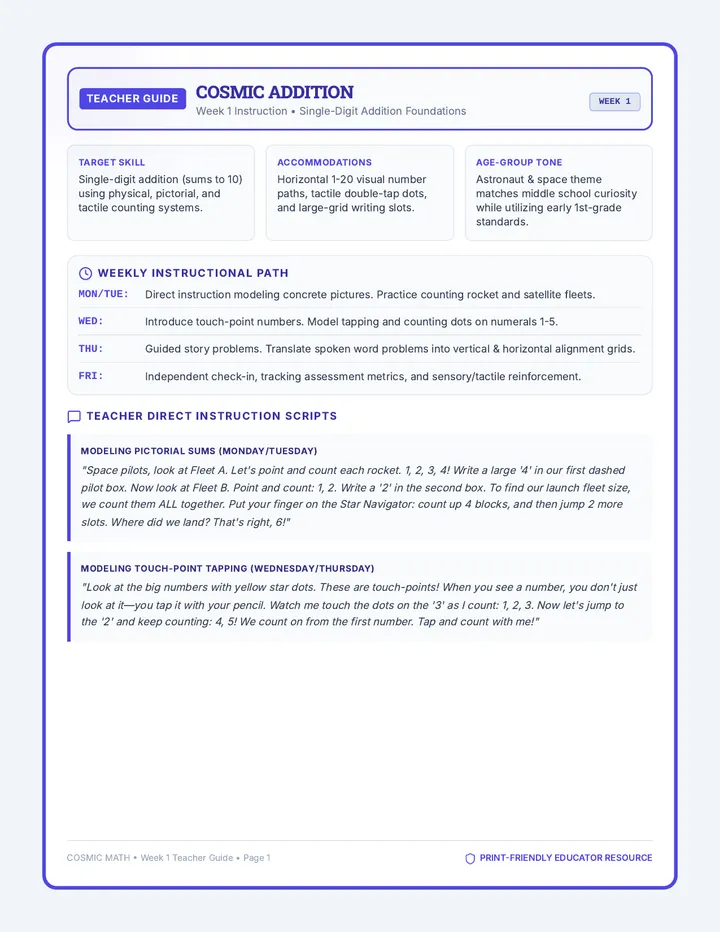
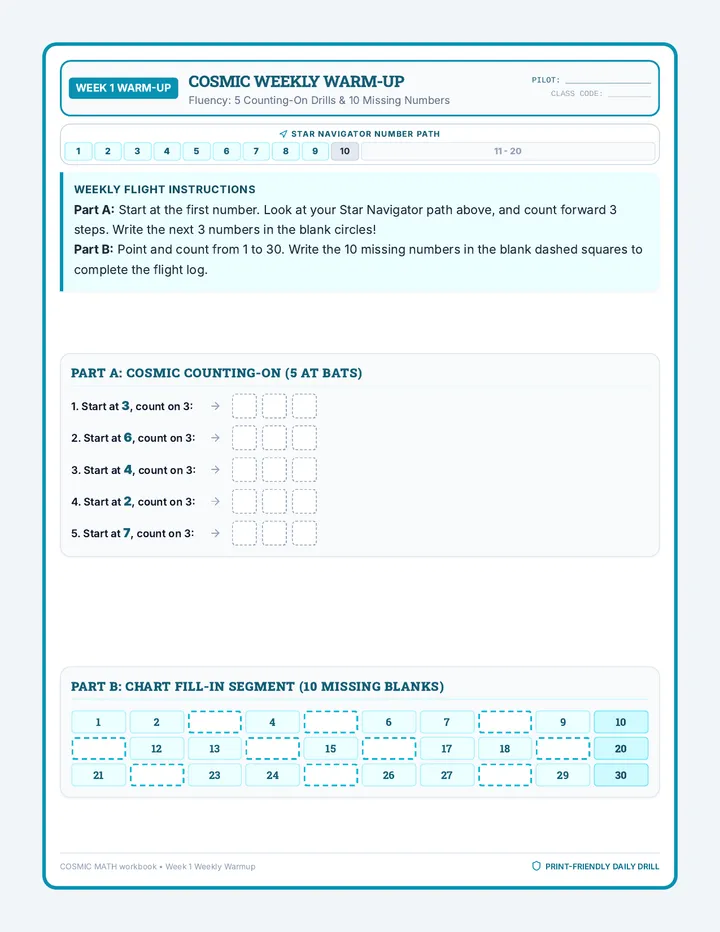
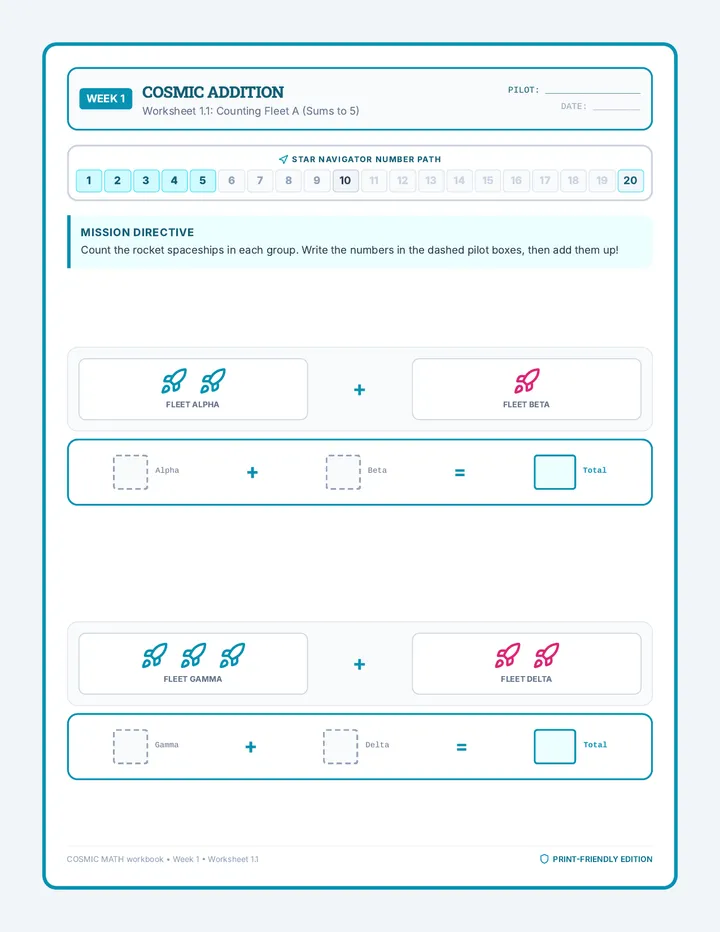
A visual, color-coded addition resource designed for non-readers to practice sums up to 10 using tactile manipulatives and clear visual cues.