A collection of spring-themed math activities focusing on addition and subtraction within 5 using visual supports like touch-points and pictures. Includes a collaborative partner game to reinforce skills through play.
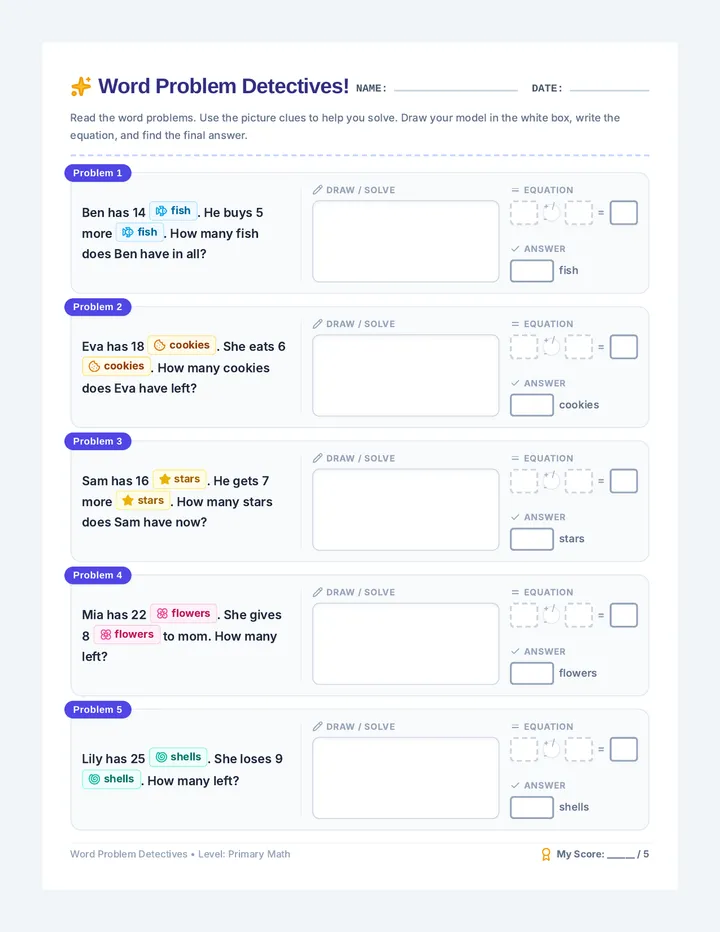
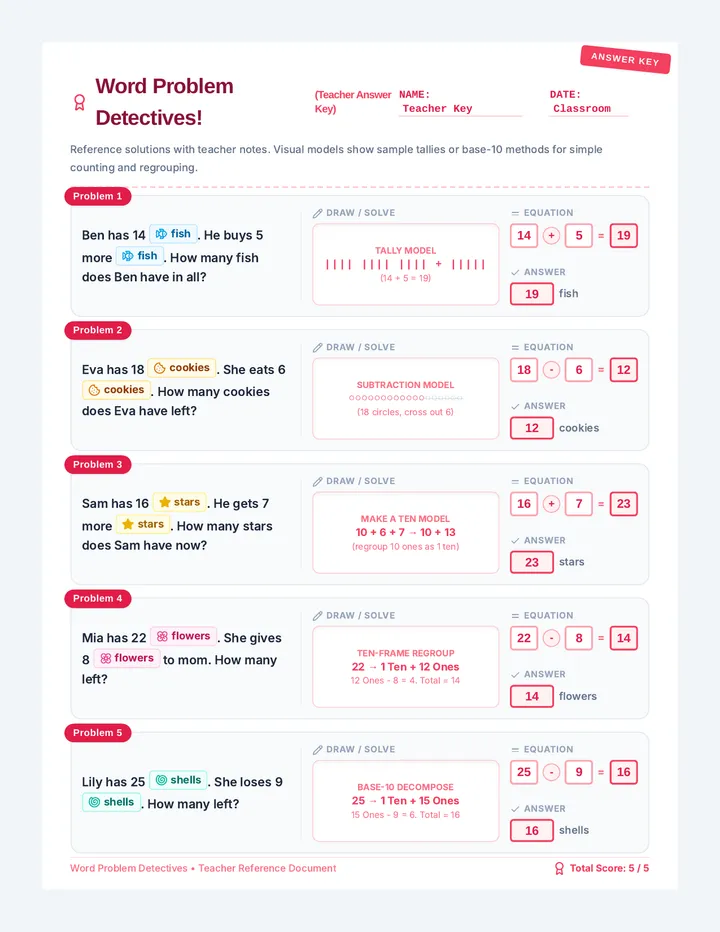
A primary math unit designed to build confidence in solving one-step addition and subtraction word problems. The sequence combines engaging visual cues, scaffolded modeling spaces, and explicit transition strategies between concrete and abstract math representation.
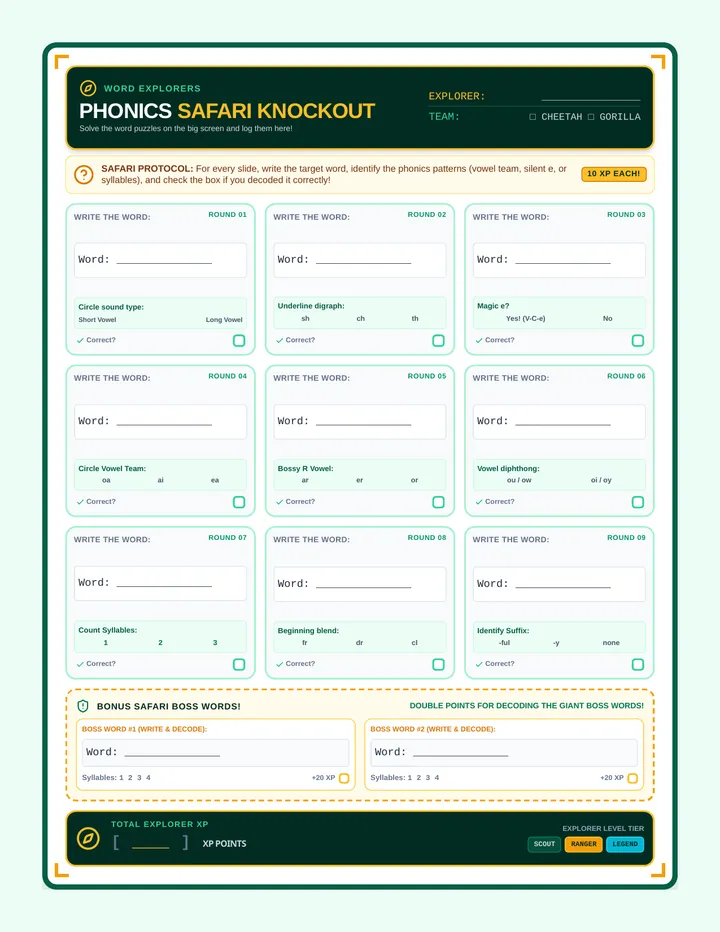
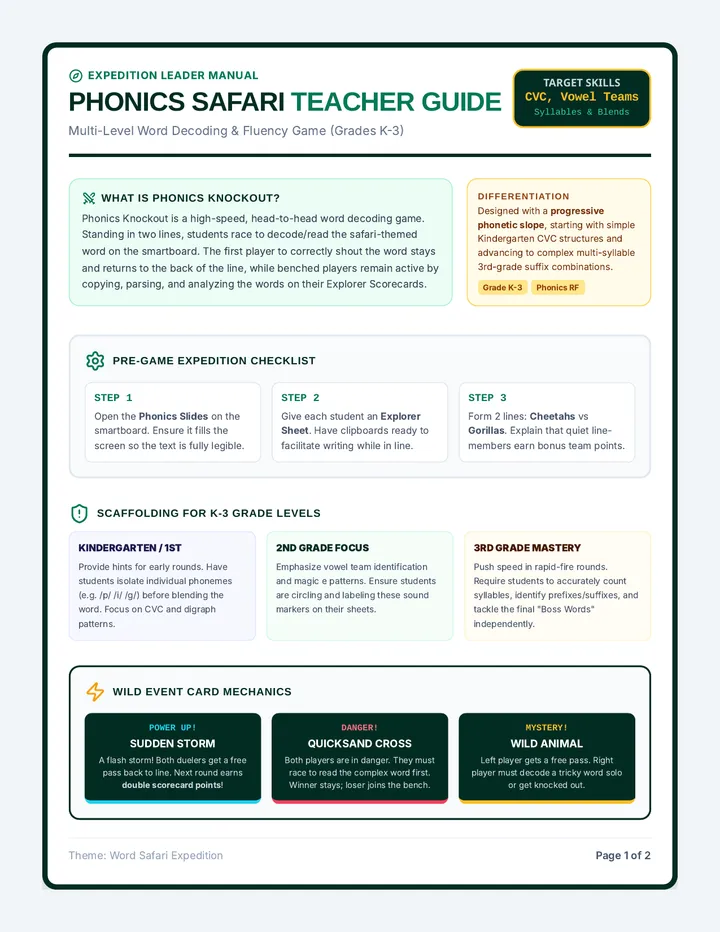
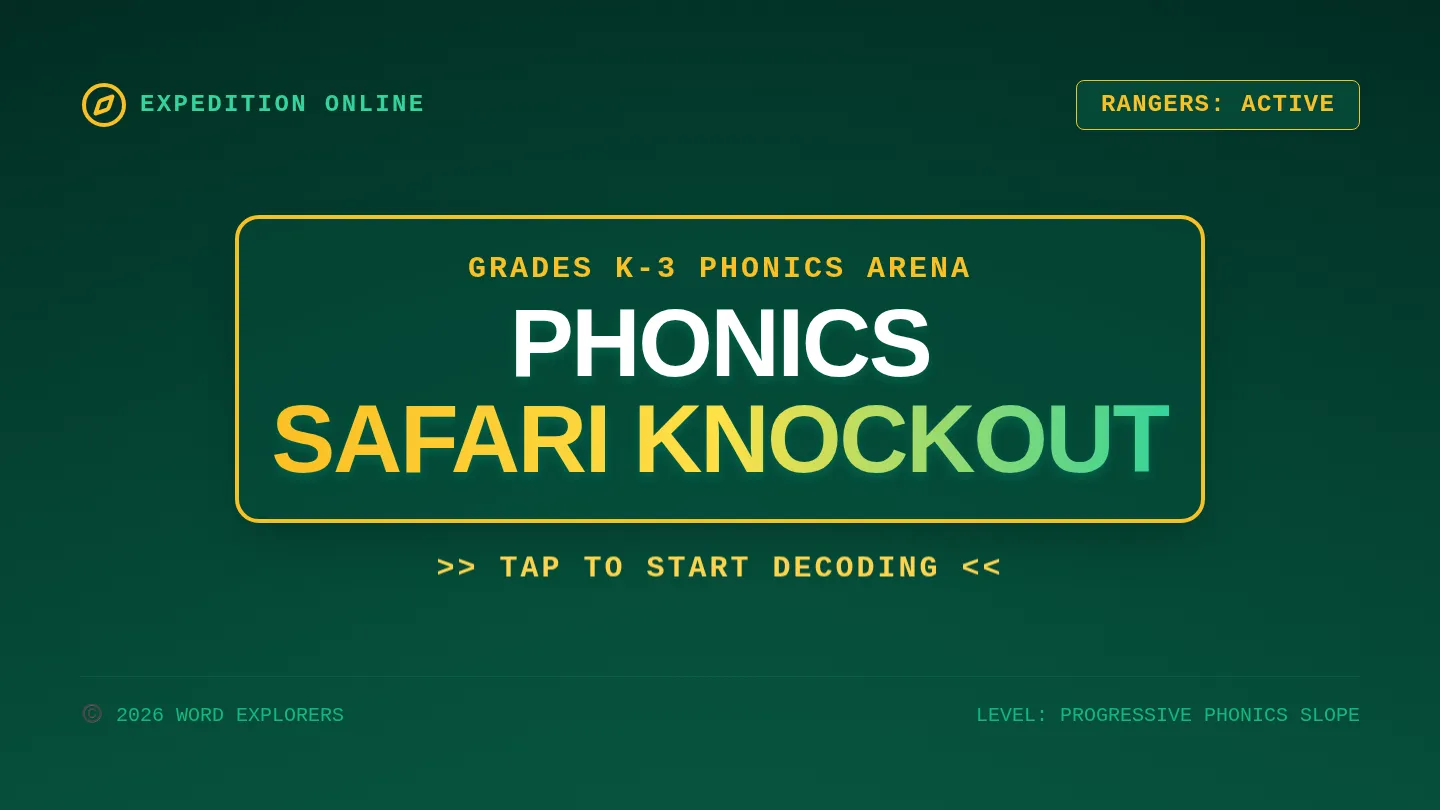
A high-energy, wild safari-themed classroom game for K-3 students focusing on key phonics skills including CVC words, silent 'e', vowel teams, and multi-syllable decoding. This lesson includes a widescreen smartboard presentation, a teacher facilitation guide with word keys, and an active-participation student tracker sheet.
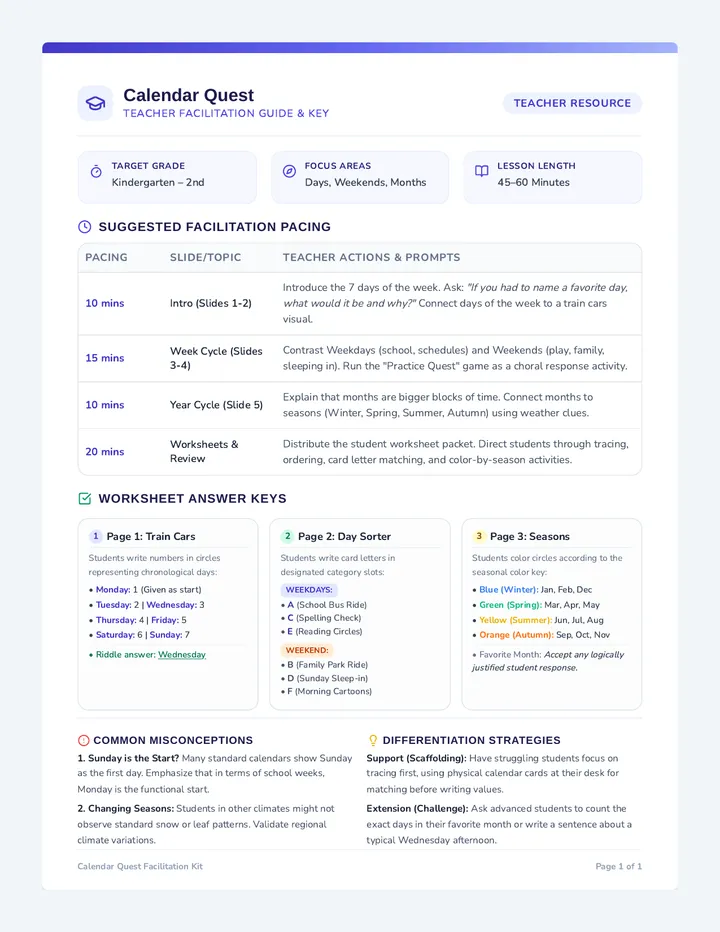
A detailed instructional and answer guide for teachers, providing pacing recommendations, questioning frameworks, and correct key values for the days, sorting, and months worksheets.
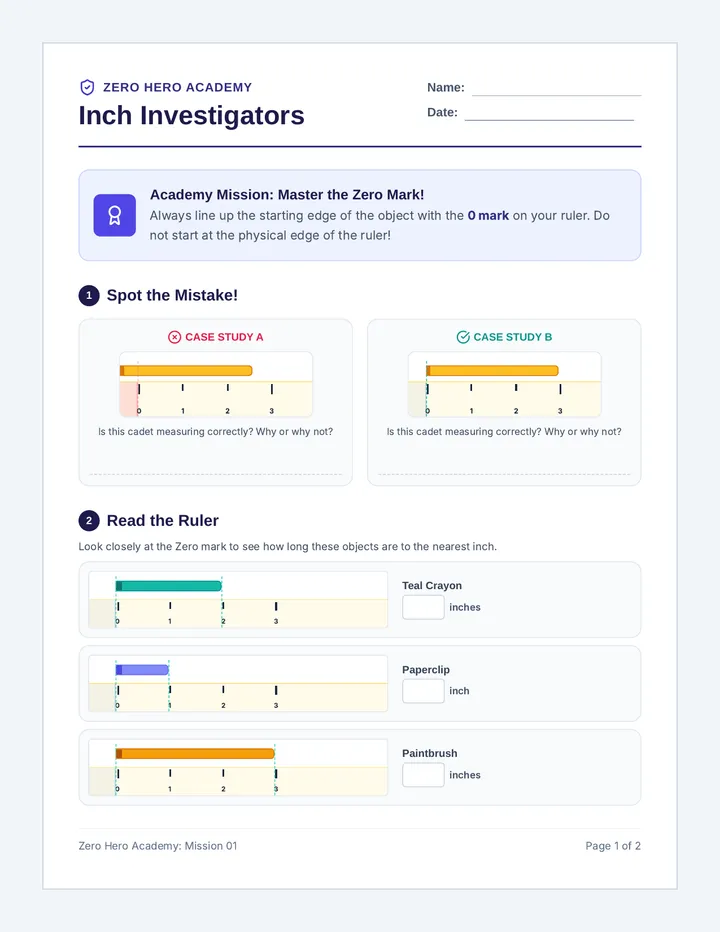
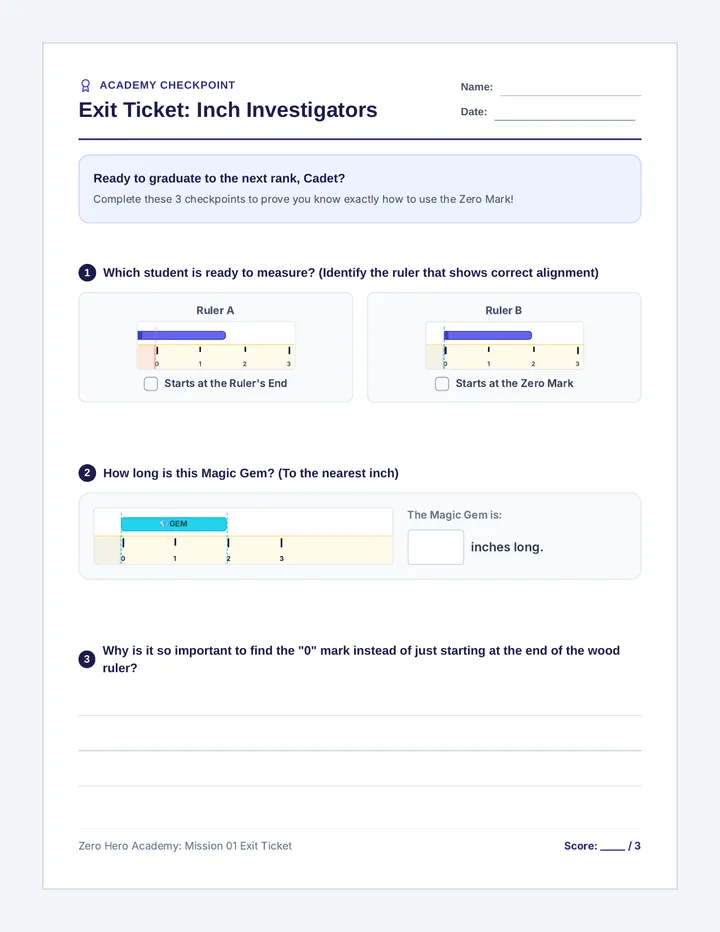
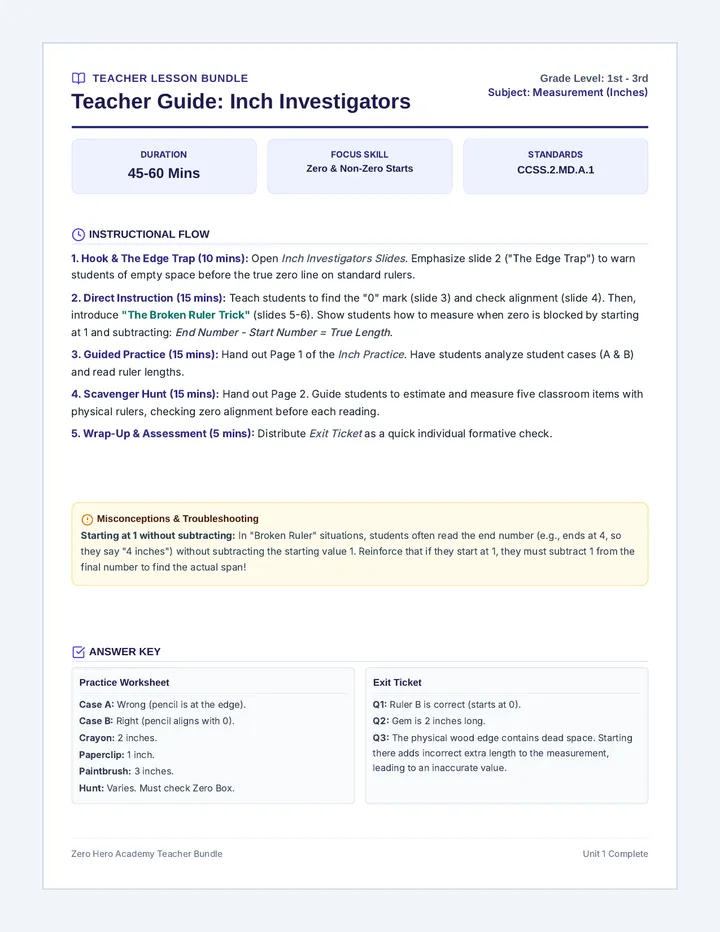
A two-part measuring adventure where students join the Zero Hero Academy to master measuring in inches and centimeters, with a strong focus on aligning the start of objects with the ruler's zero mark.
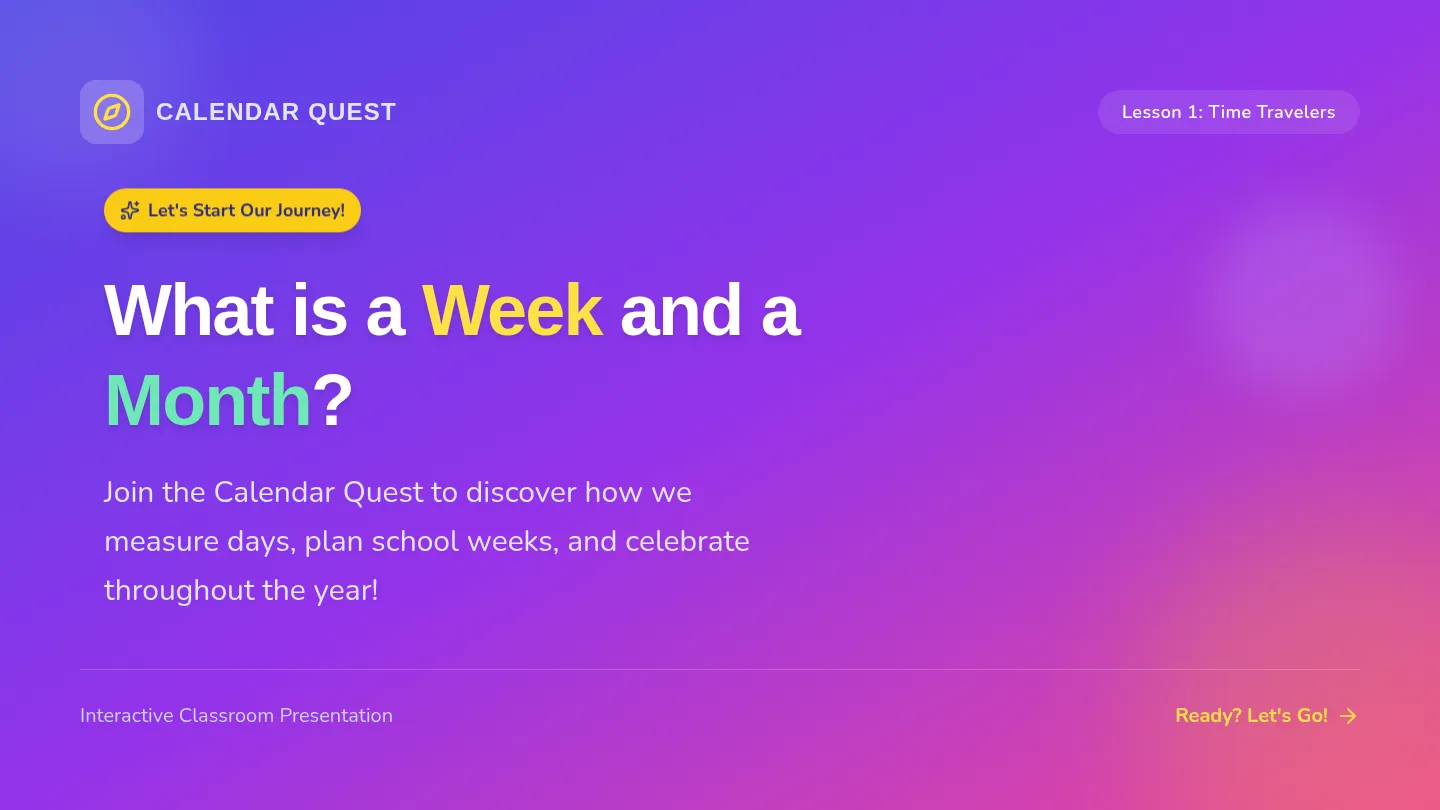
A foundational lesson introducing early elementary students to calendar concepts, including days of the week, weekdays versus weekends, and the twelve months of the year, contextualized with real-world school, home, and seasonal scenarios.
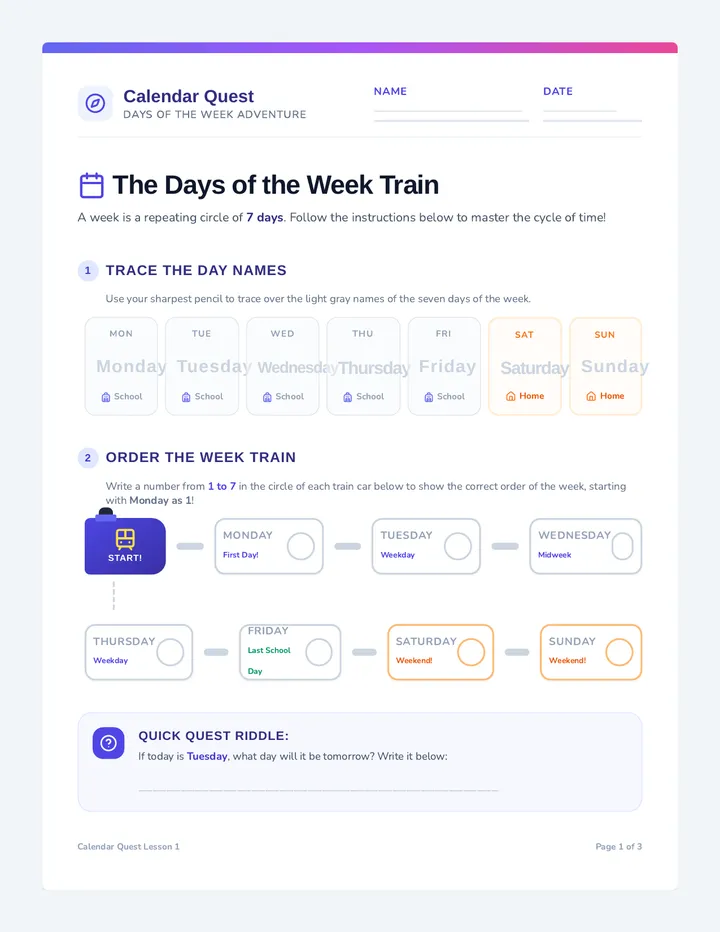
A multi-page student worksheet pack featuring days of the week tracing and ordering, a cut-and-paste weekday vs. weekend sorting activity, and a color-coded months of the year seasonal grid.
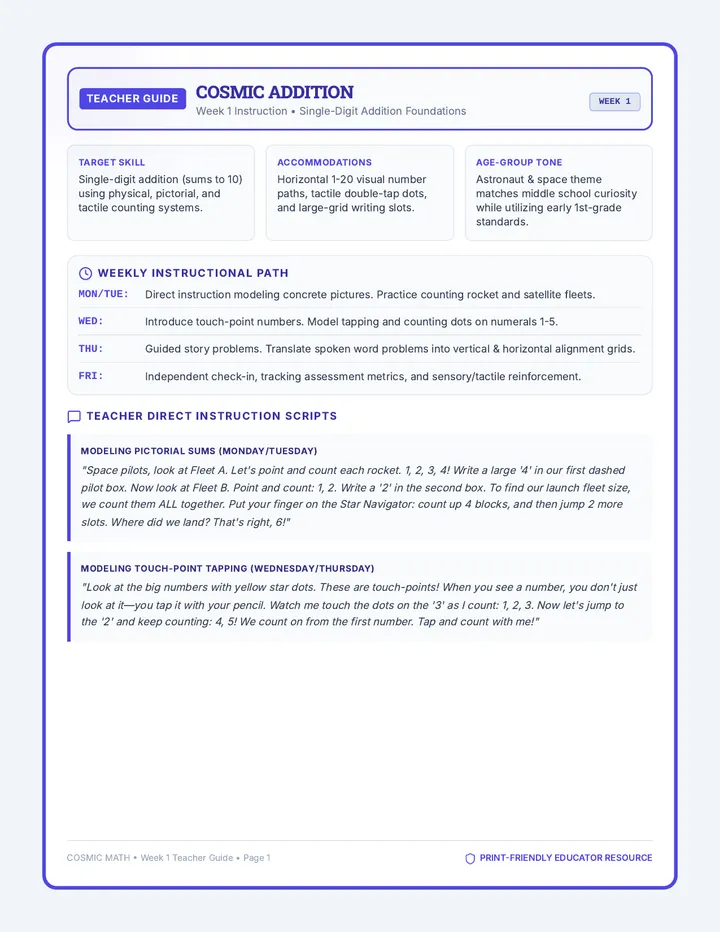
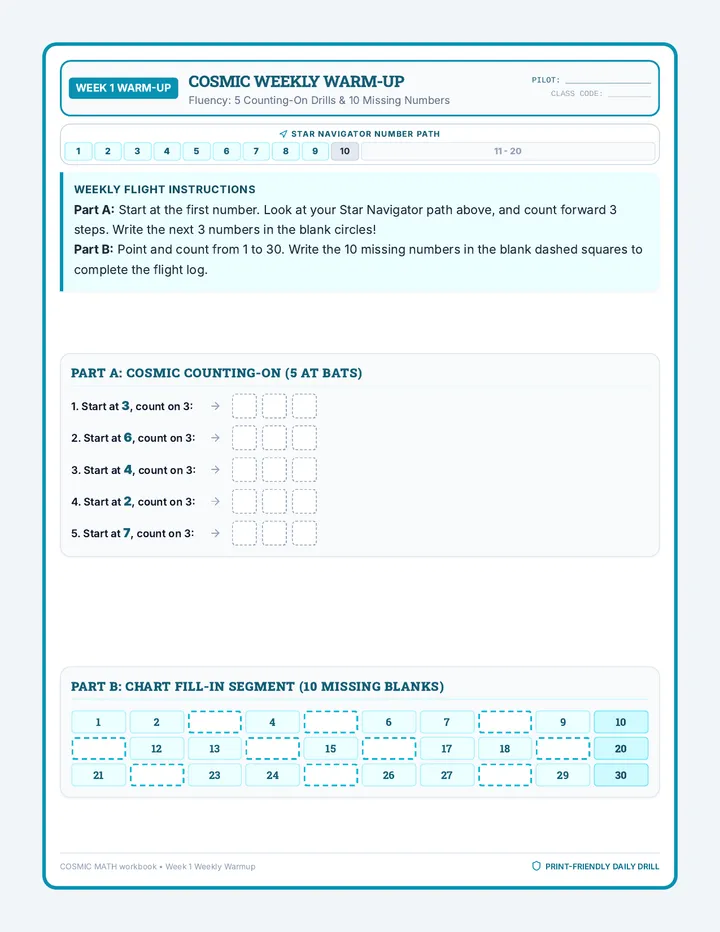
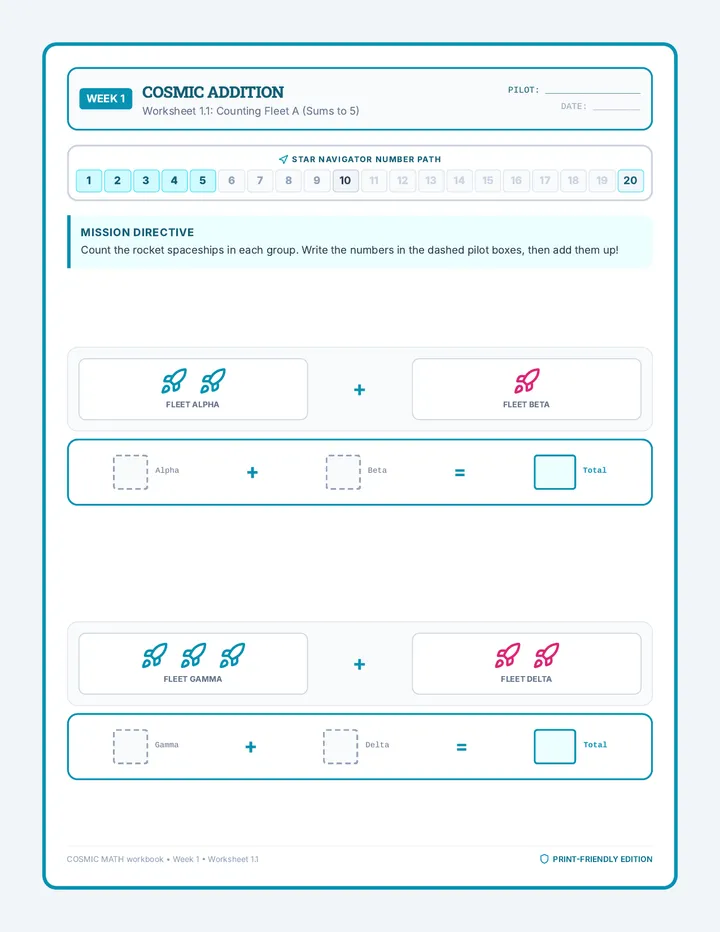
A 4-week math workbook and instructional sequence themed around outer space exploration, specifically designed for middle school students with disabilities (SWDs) working at an early 1st-grade level. Features embedded touch-points, base-ten icons, visual number paths, and age-appropriate space exploration visuals to teach single-digit operations, place value, and patterns.
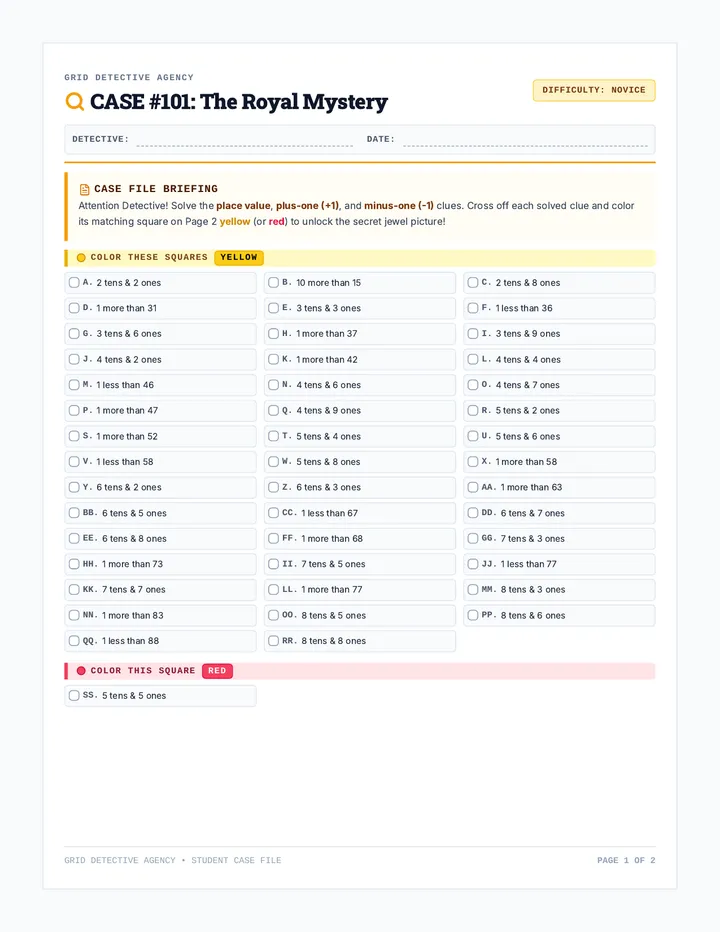
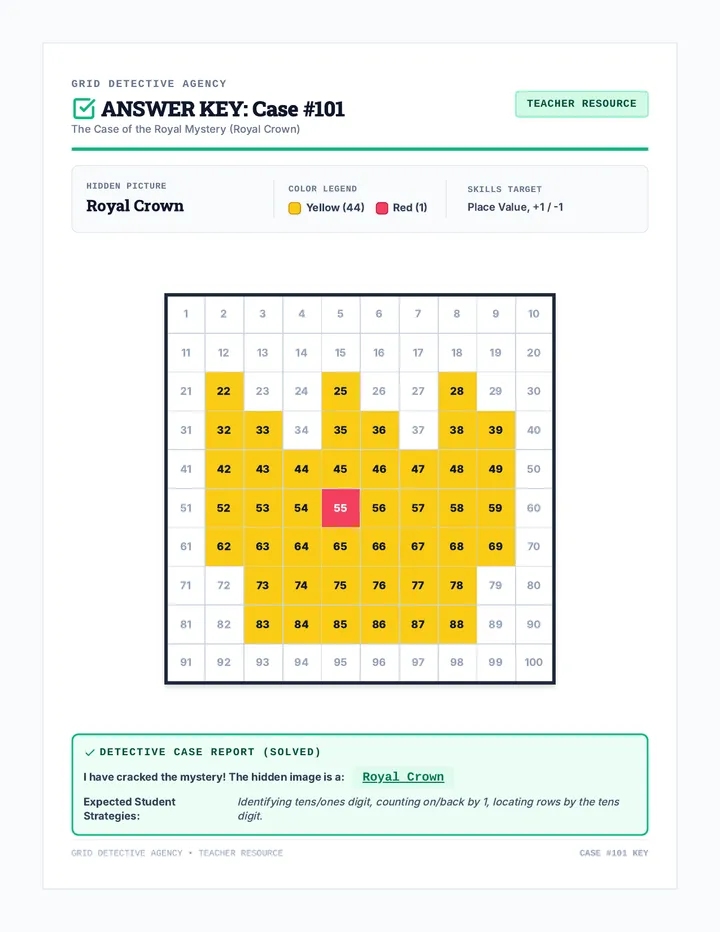
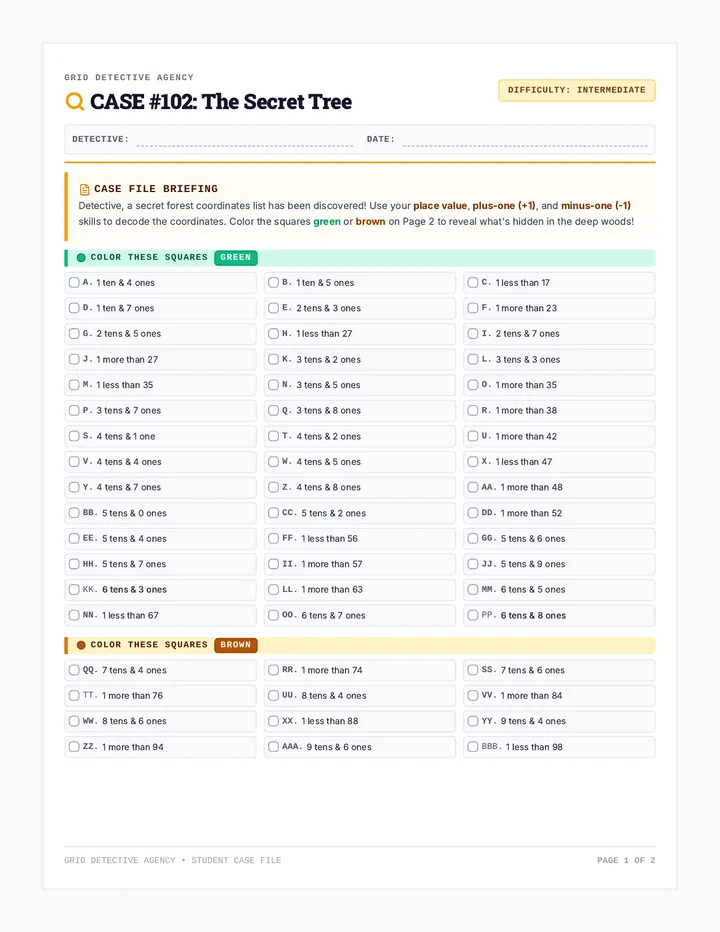
A fun, puzzle-packed math lesson where students become Grid Detectives, using place value clues (tens and ones, plus-one, minus-one) to solve 100-chart mystery pictures and unlock hidden pixel art drawings.
An engaging, visual slide deck that introduces early elementary students to the calendar concepts of days, weeks, weekdays, weekends, and months through real-world scenarios.
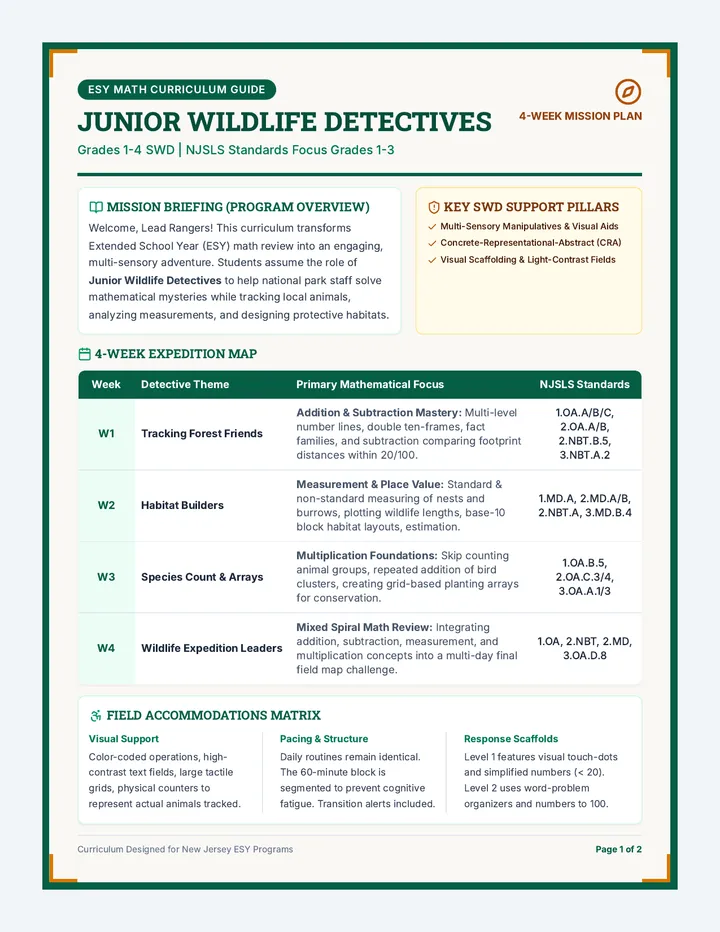
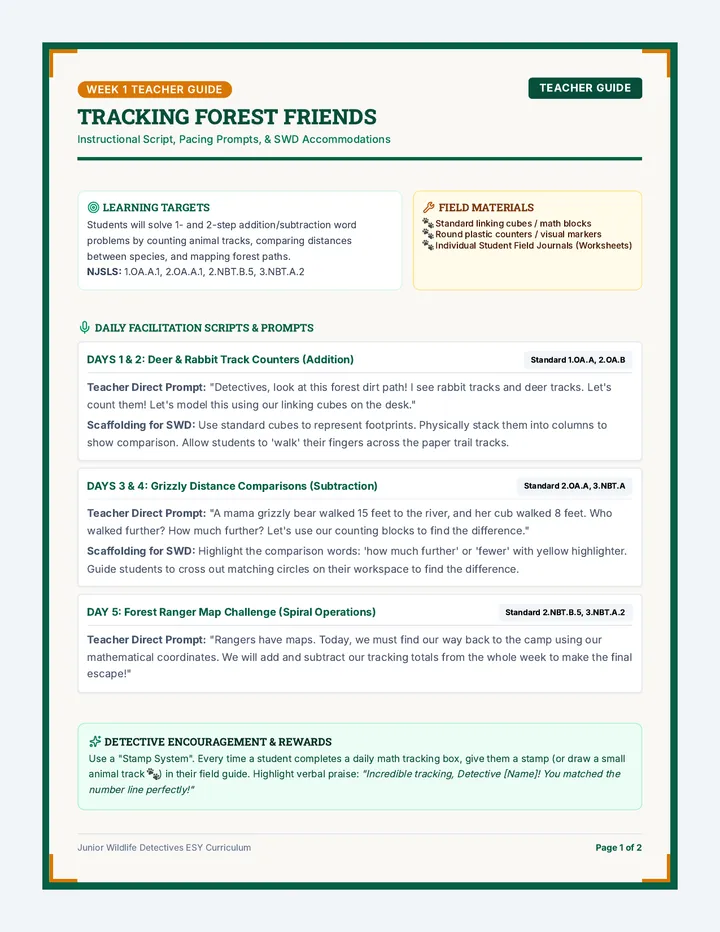
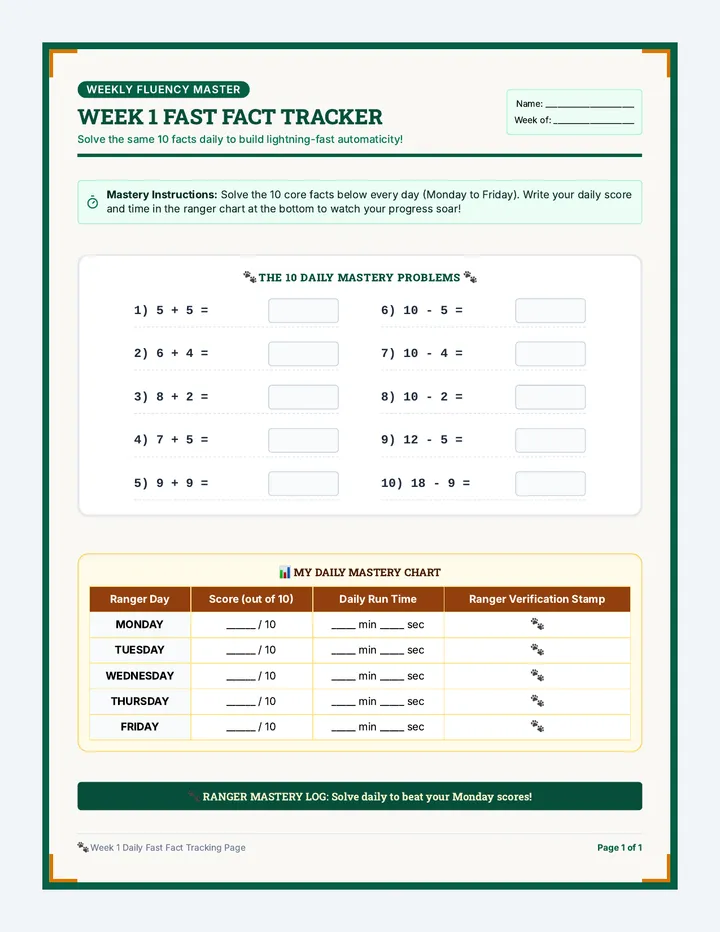
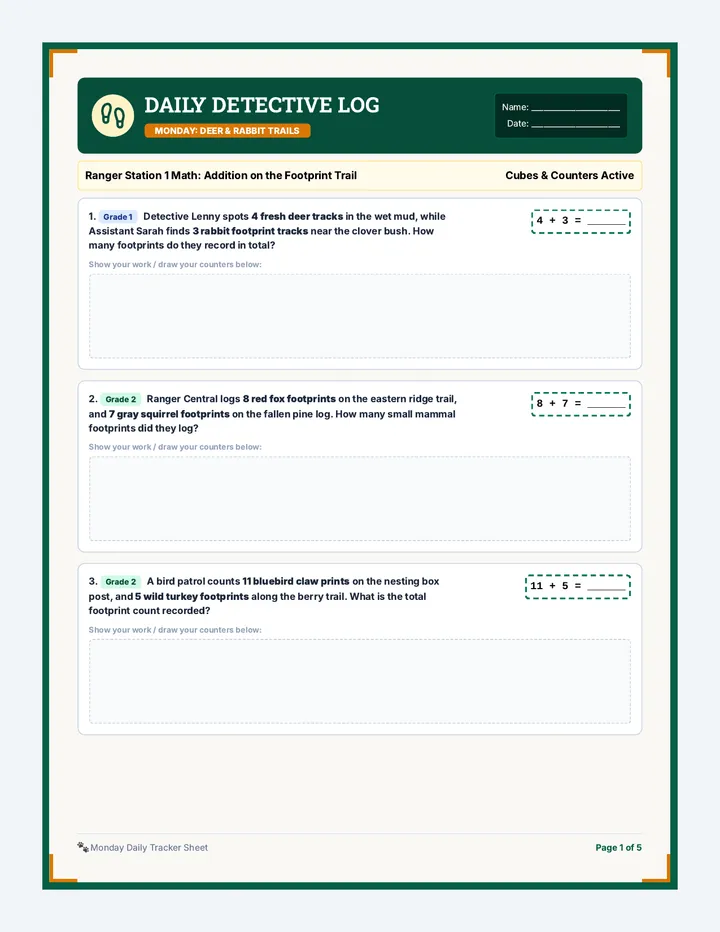
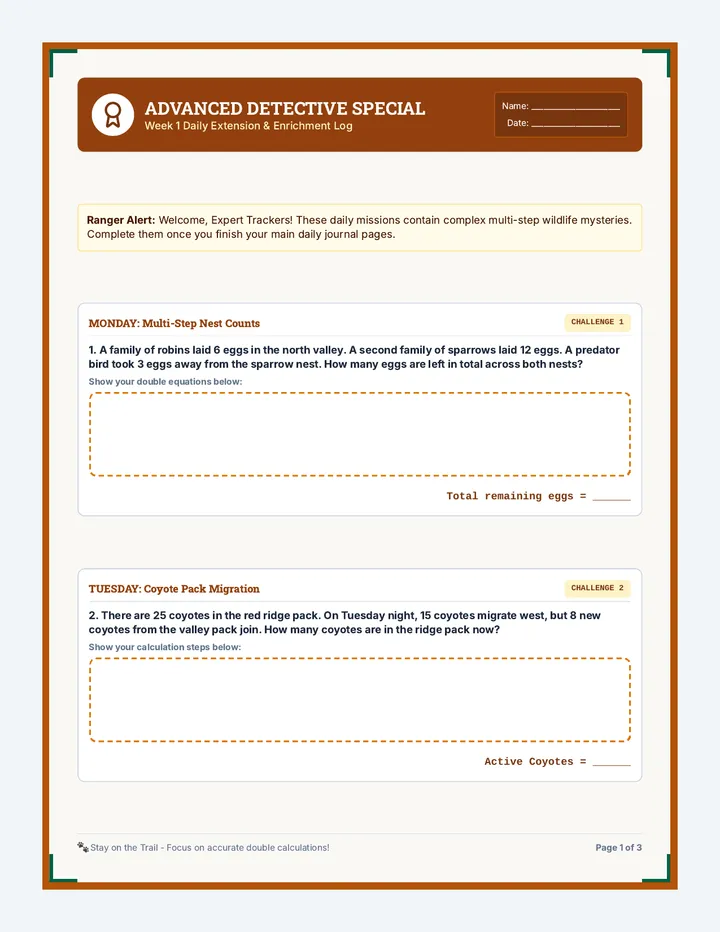
A 4-week Extended School Year (ESY) Math curriculum for Students with Disabilities (SWD) in grades 1-4. Using an engaging 'Junior Wildlife Detectives' theme, students track animals, measure habitats, and categorize species while mastering addition, subtraction, place value, and multiplication foundations aligned with NJ Student Learning Standards (NJSLS) for grades 1-3.
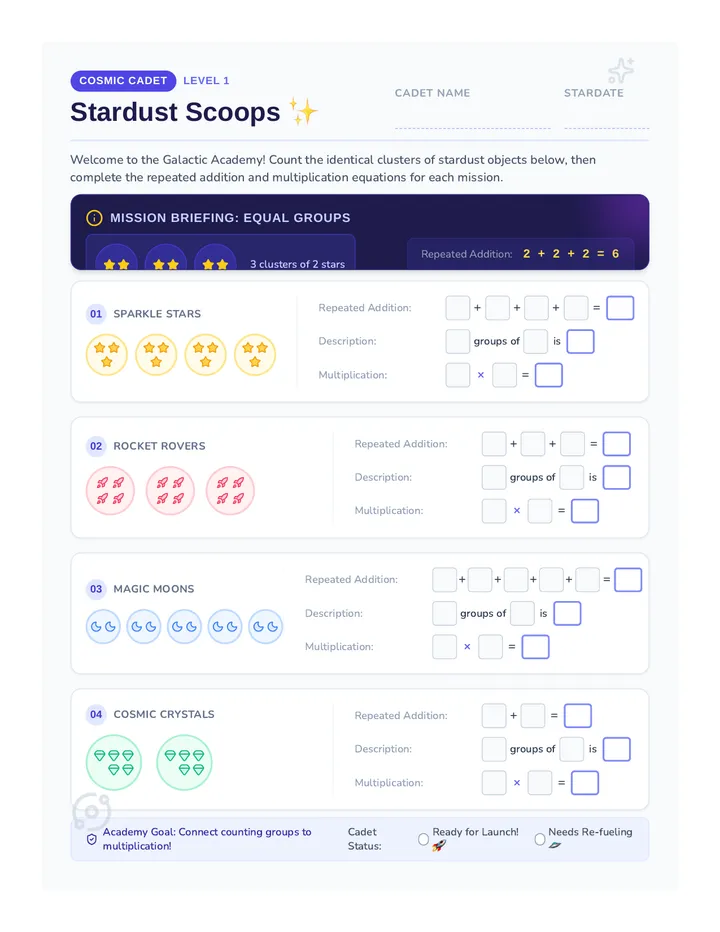
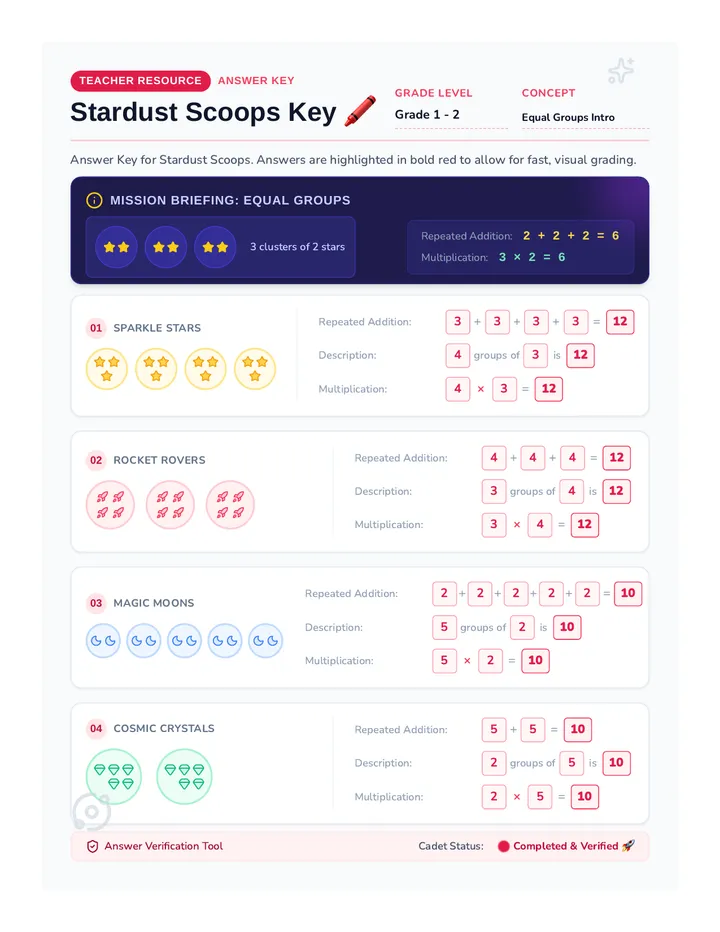
An introductory lesson to multiplication using equal groups and visual representations. Students learn to connect repeated addition to multiplication using starry-themed groups.
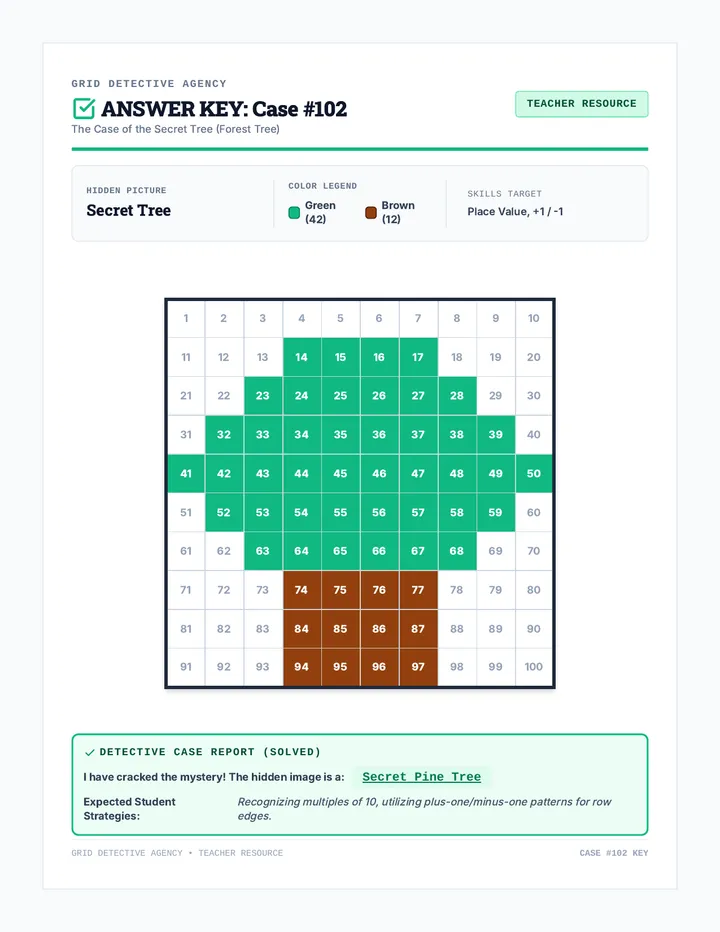
A 1-page printable teacher answer key for 'The Case of the Secret Tree' (Tree). Features a fully colored 100-chart grid displaying the green pine tree with a brown trunk, a color legend, and the filled-out detective case report.