A 30-day handwriting practice program focused on sports science, athletic disciplines, and teamwork vocabulary, designed for 4th to 6th graders to improve penmanship through engaging sports facts.
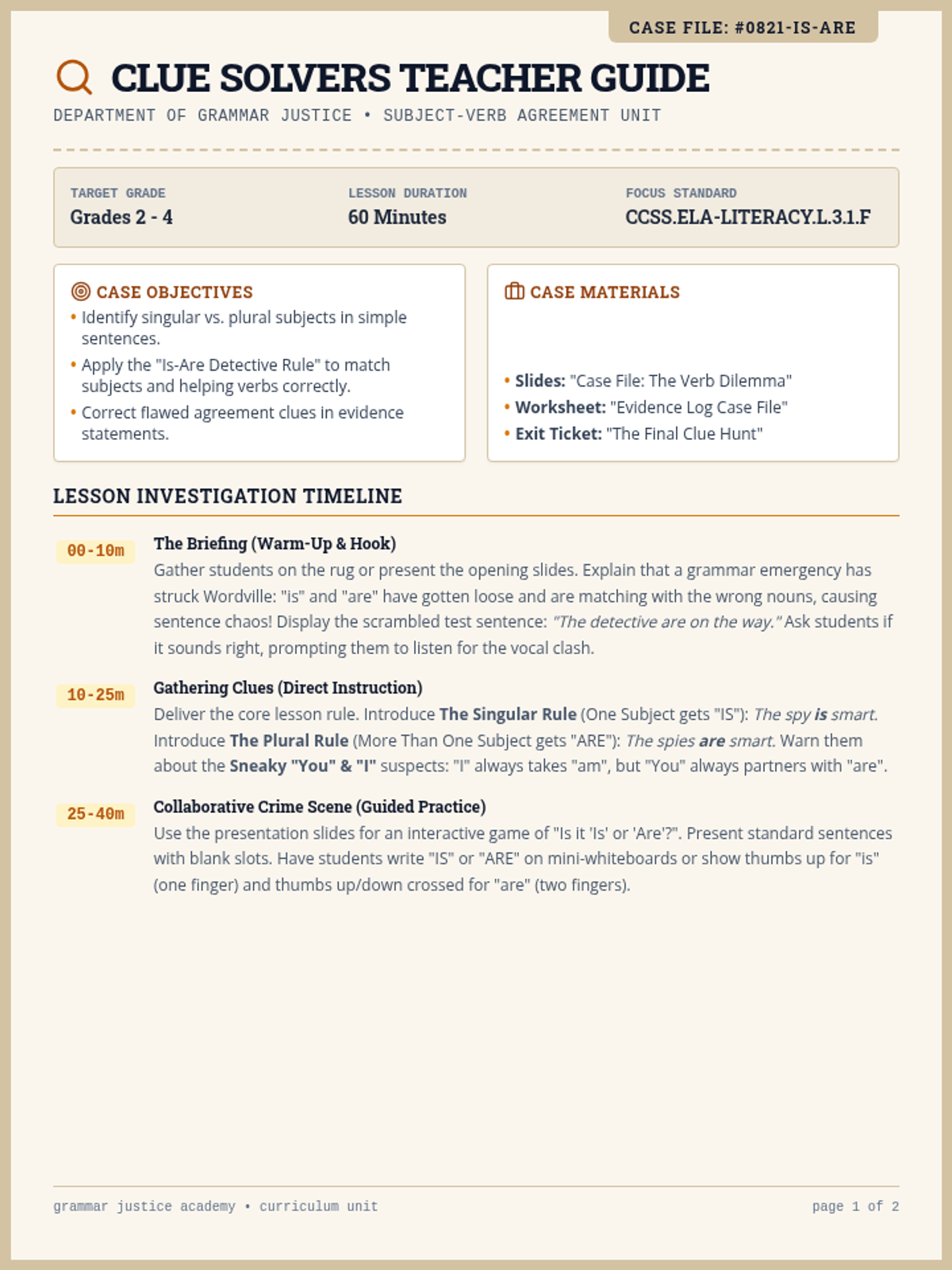
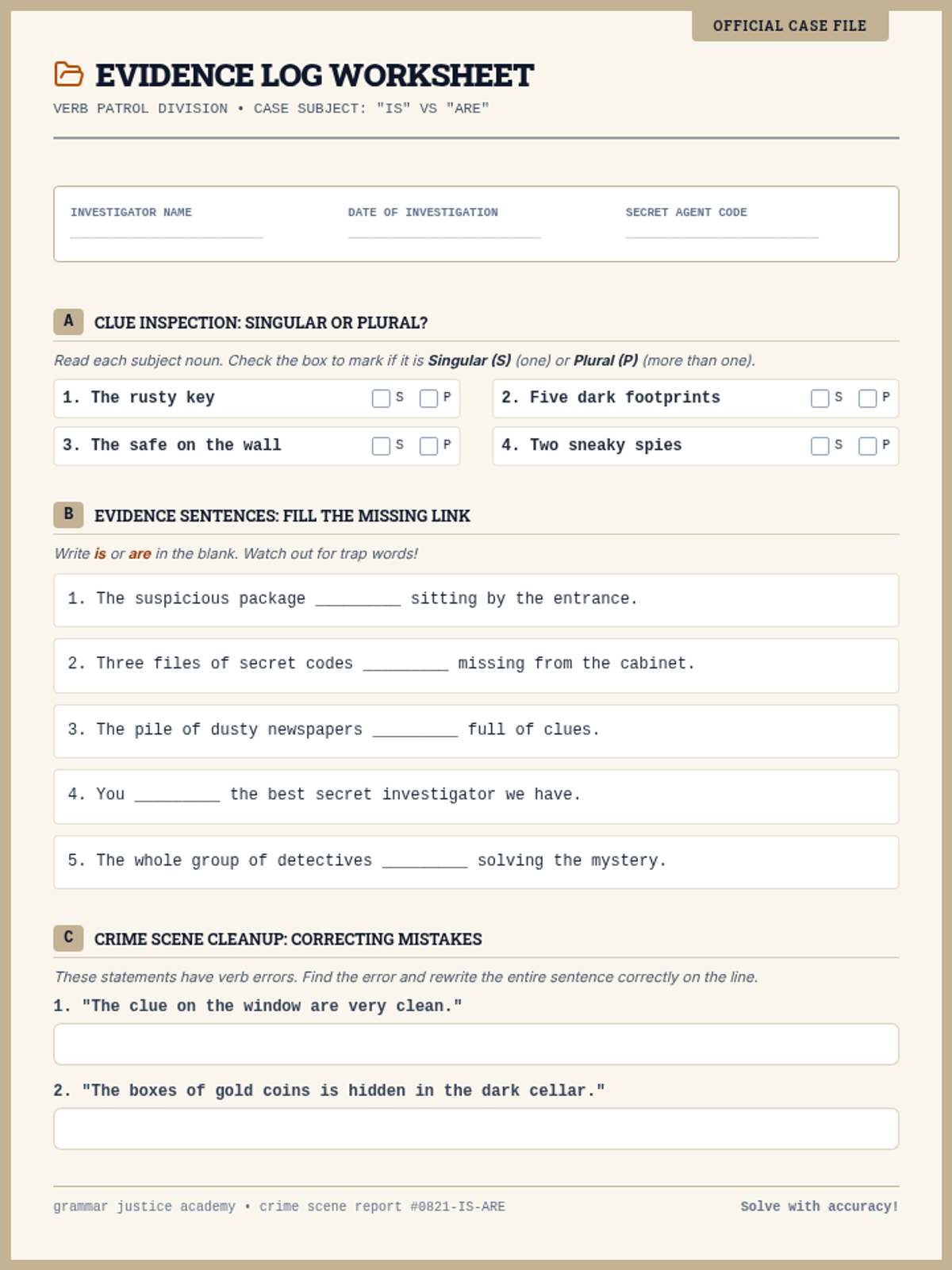
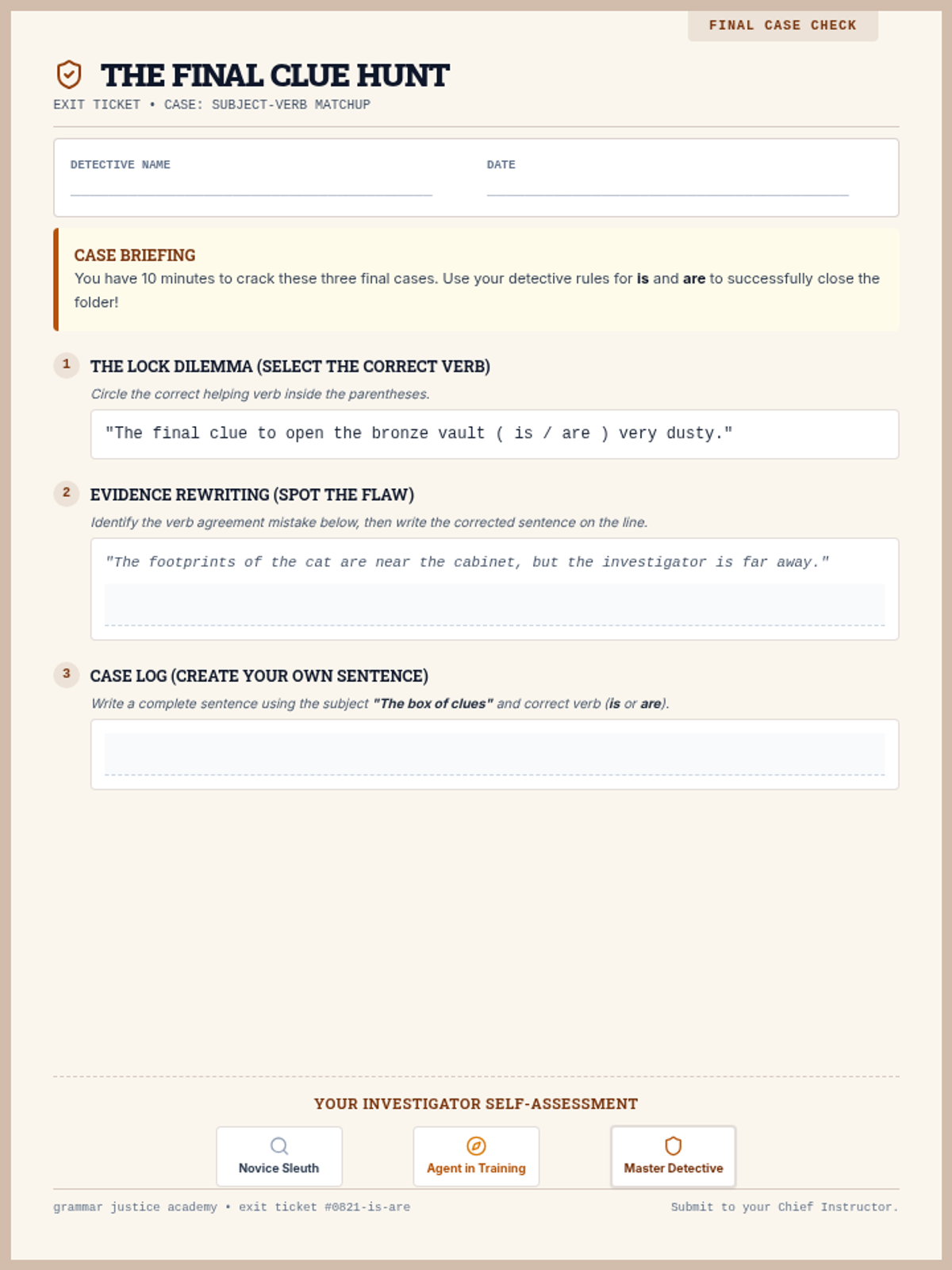
An immersive, detective-themed lesson guiding students to master subject-verb agreement for 'is' vs 'are'. Includes a detailed teacher guide, presentation slides, student case file worksheet, and a final clue hunt exit ticket.
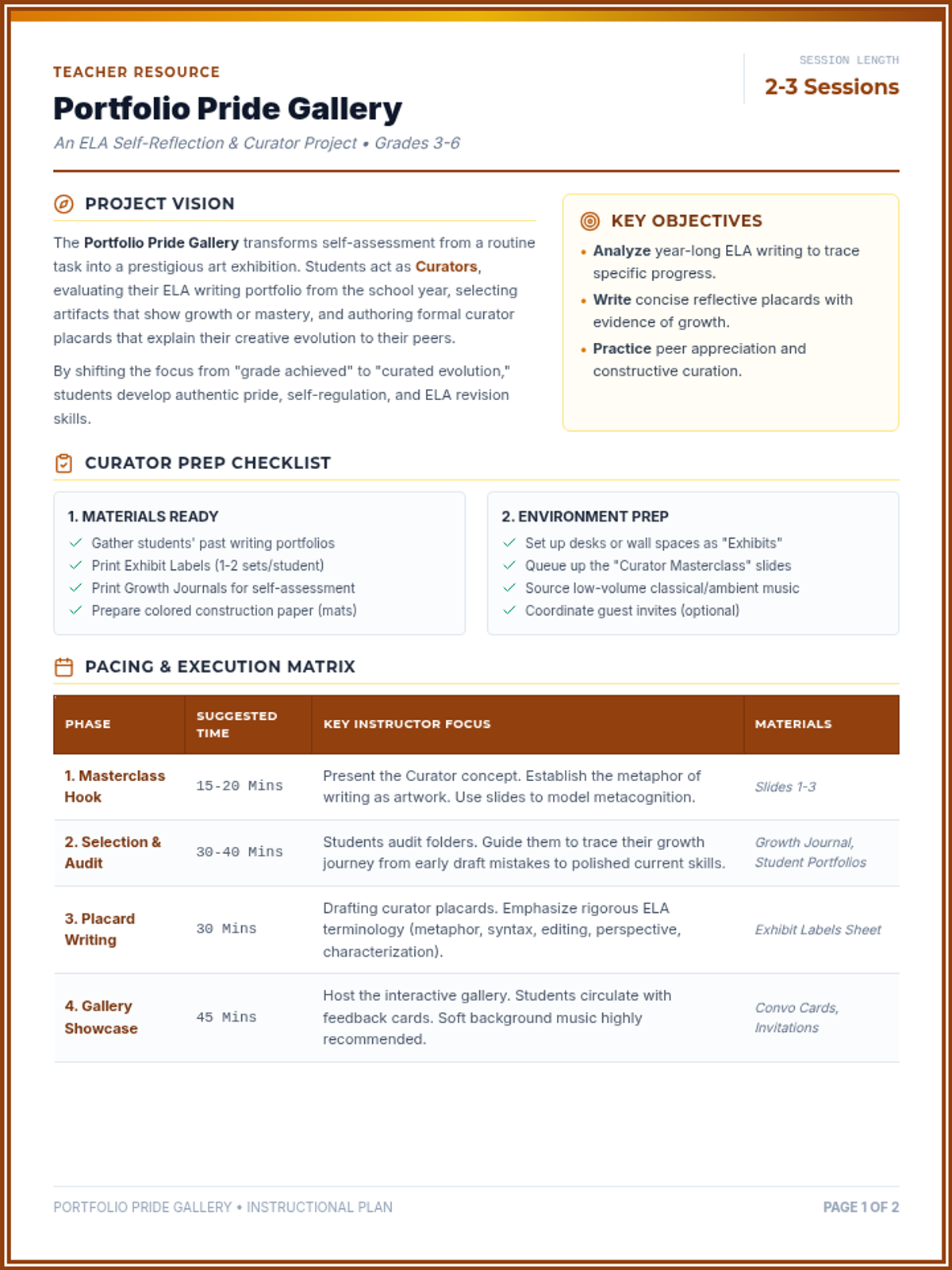
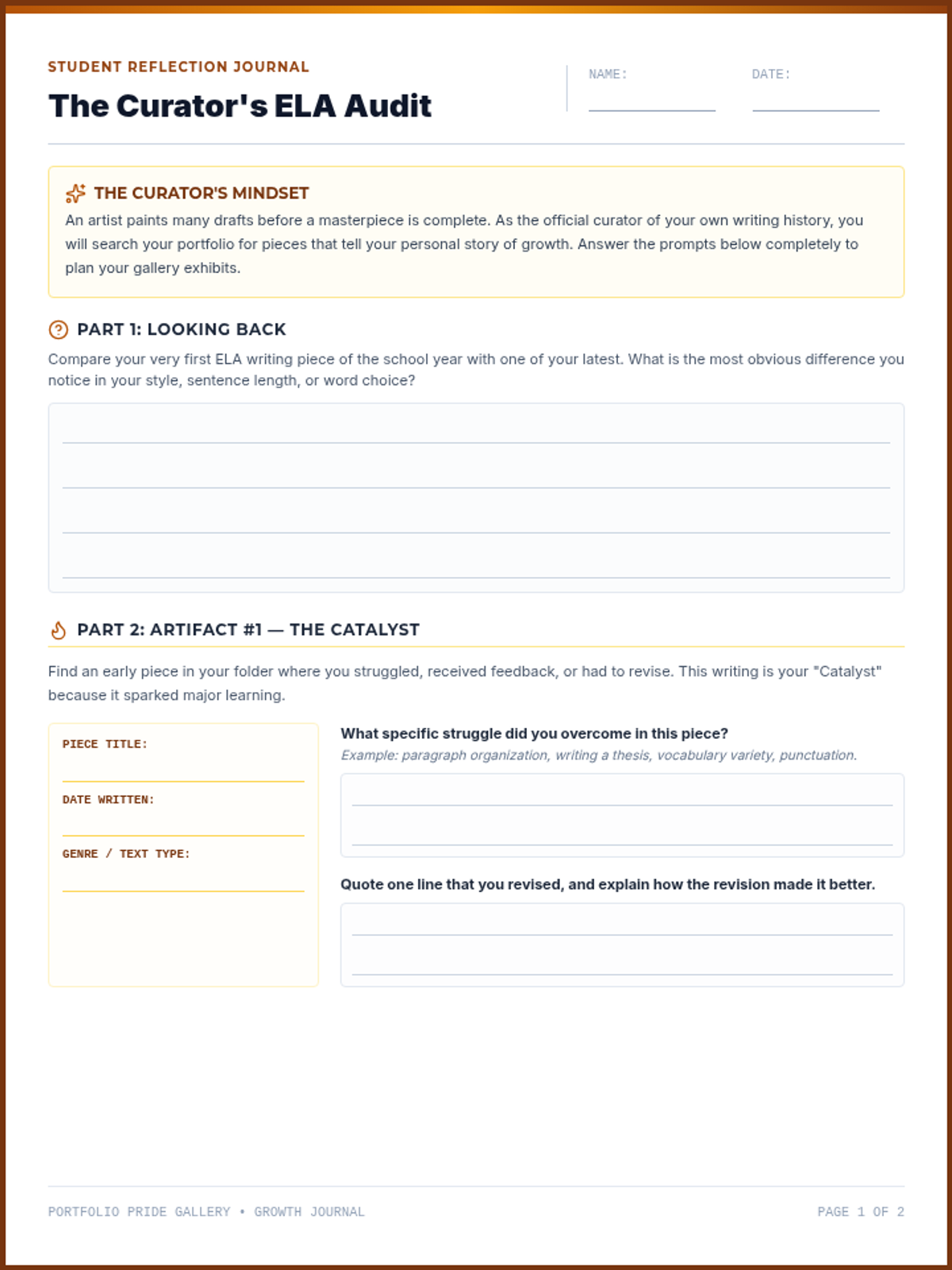
An ELA and self-reflection project where 3rd-6th grade students curate their year-long academic growth, select their best writing, and design an interactive art-gallery-style showcase of their progress.
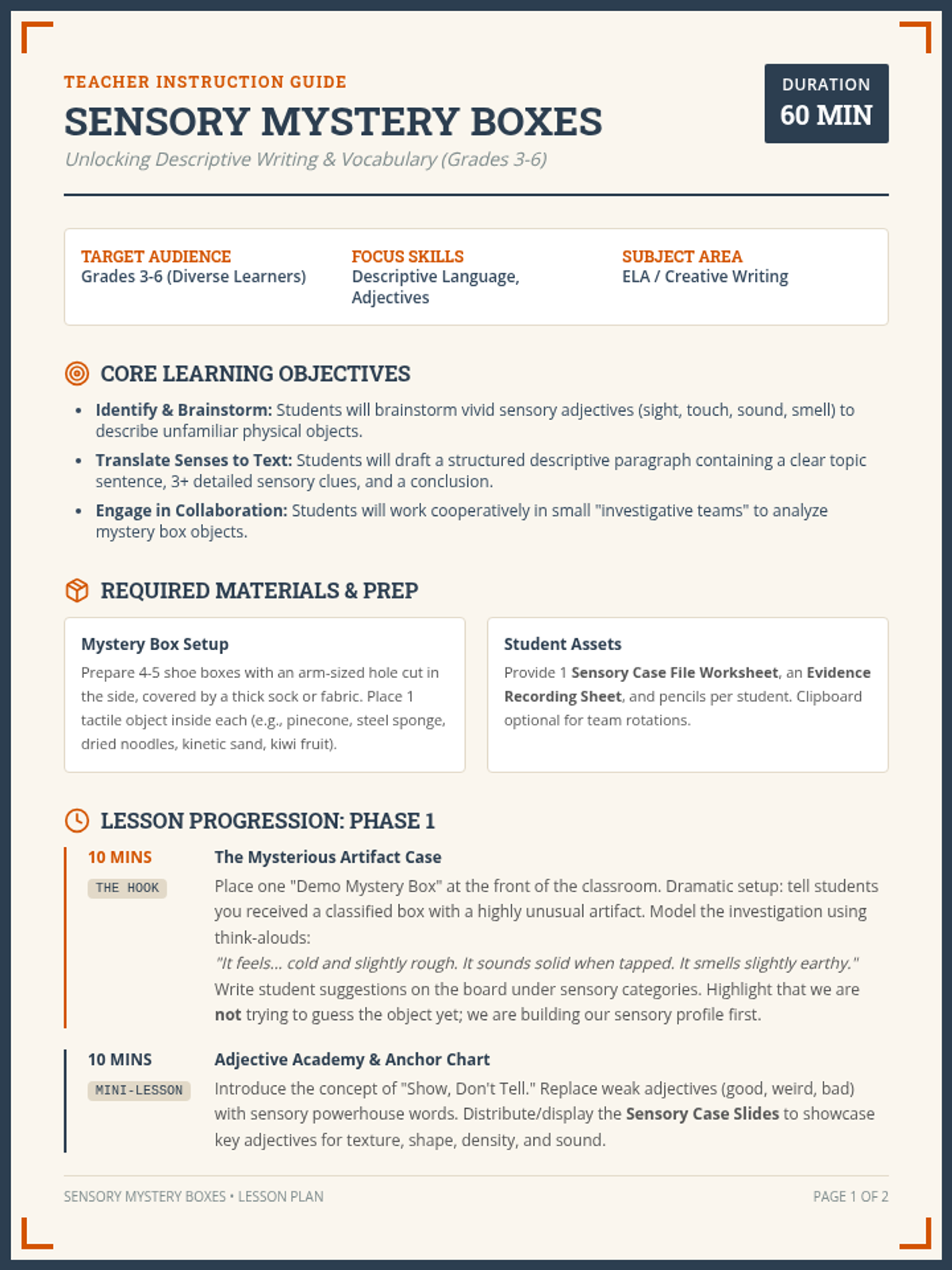
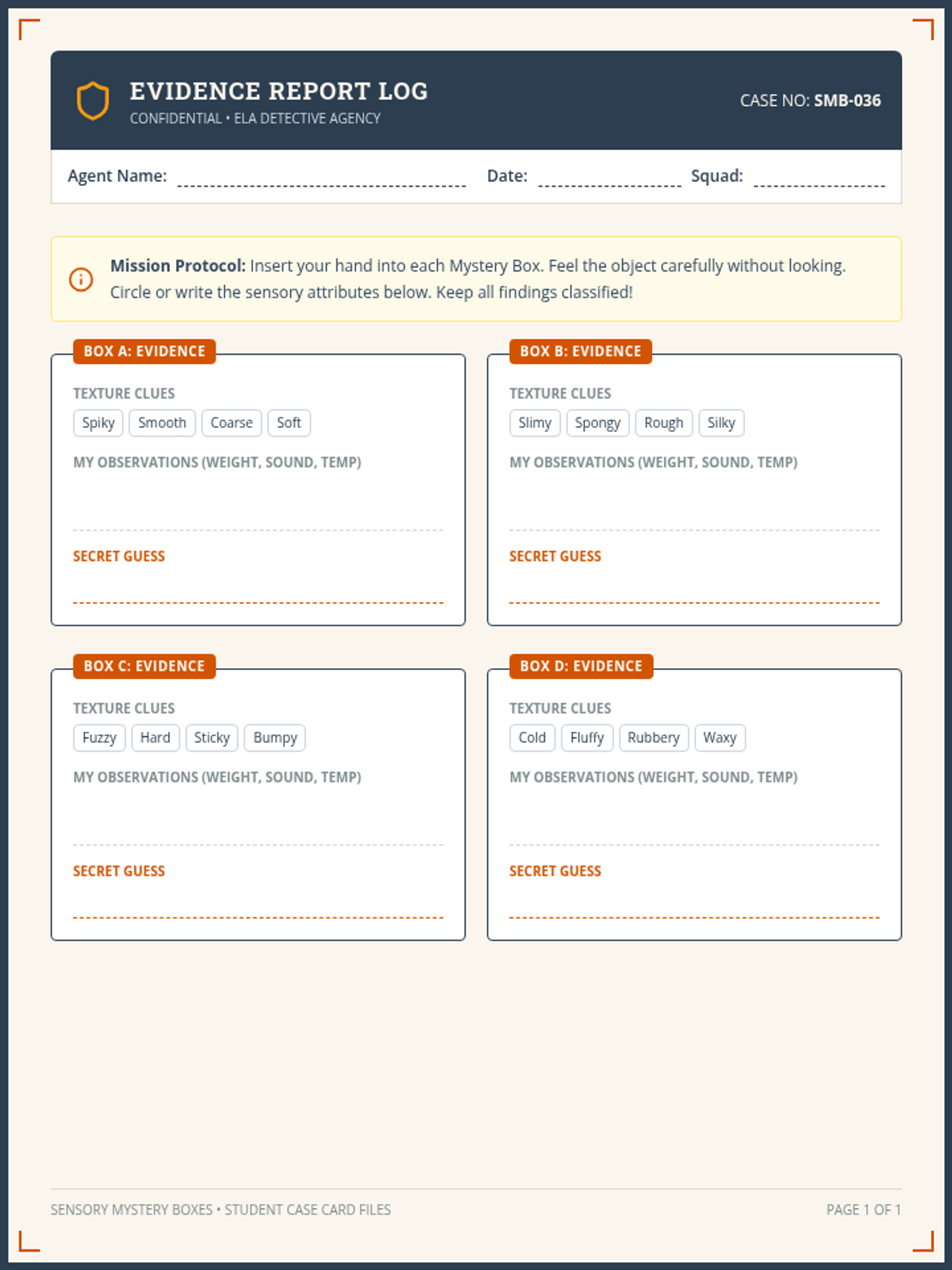
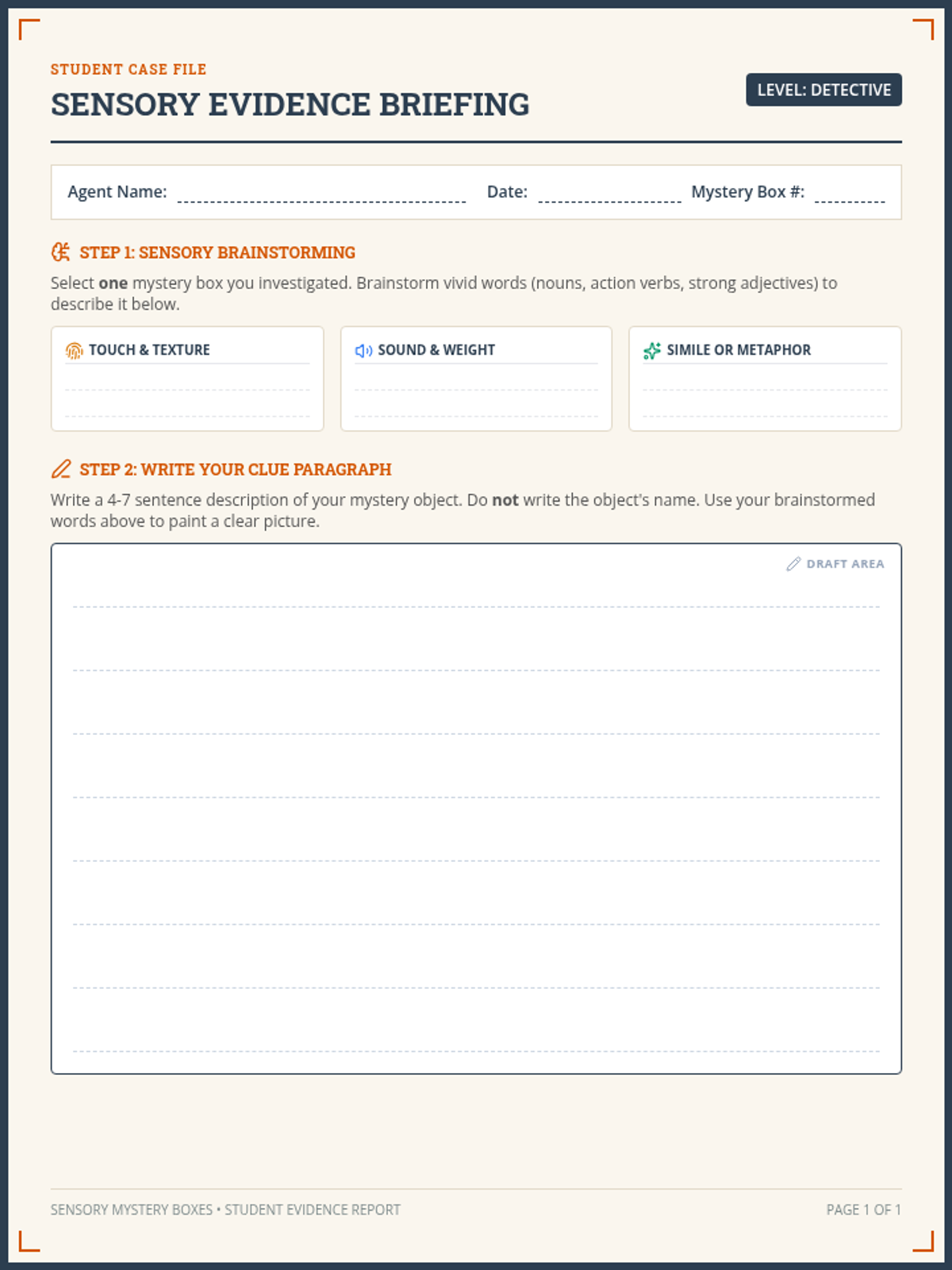
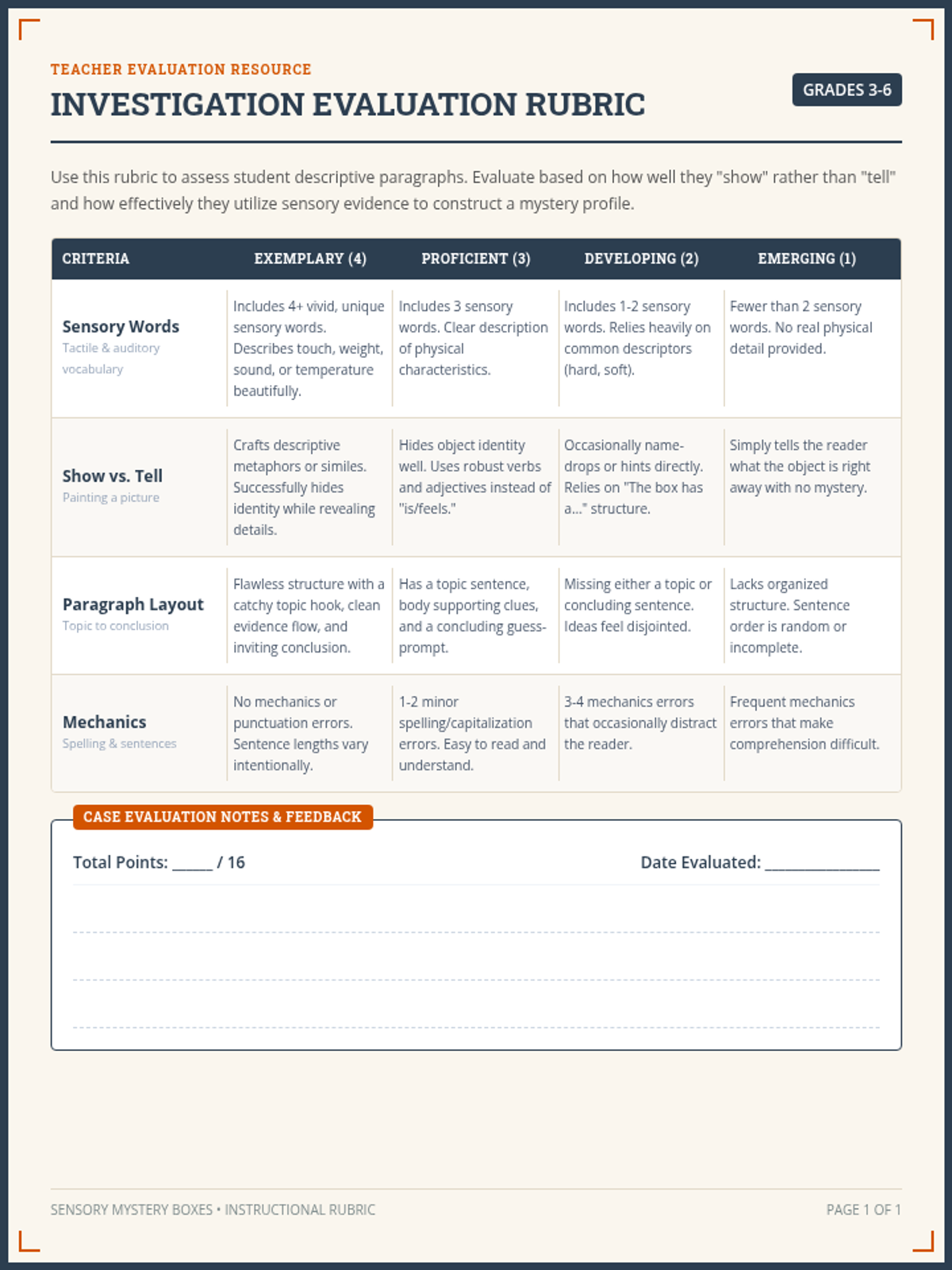
An immersive, multi-sensory ELA lesson designed for grades 3-6 to unlock descriptive writing. Students explore mystery tactile objects, build sensory vocabulary, and compose descriptive paragraphs.
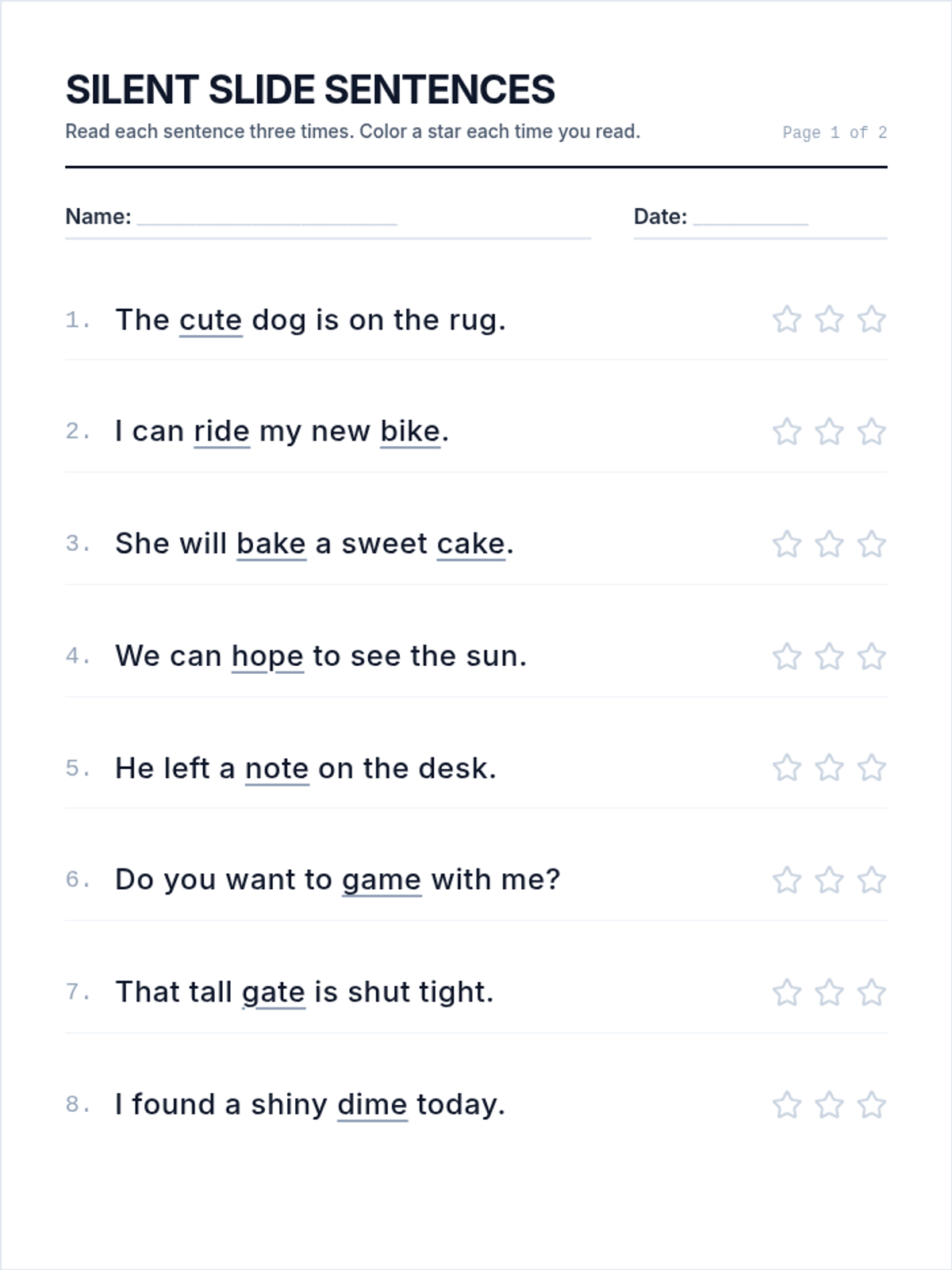
A first-grade decoding lesson focused on reading and tracking simple sentences featuring vowel-consonant-e (silent e) words for fluency.
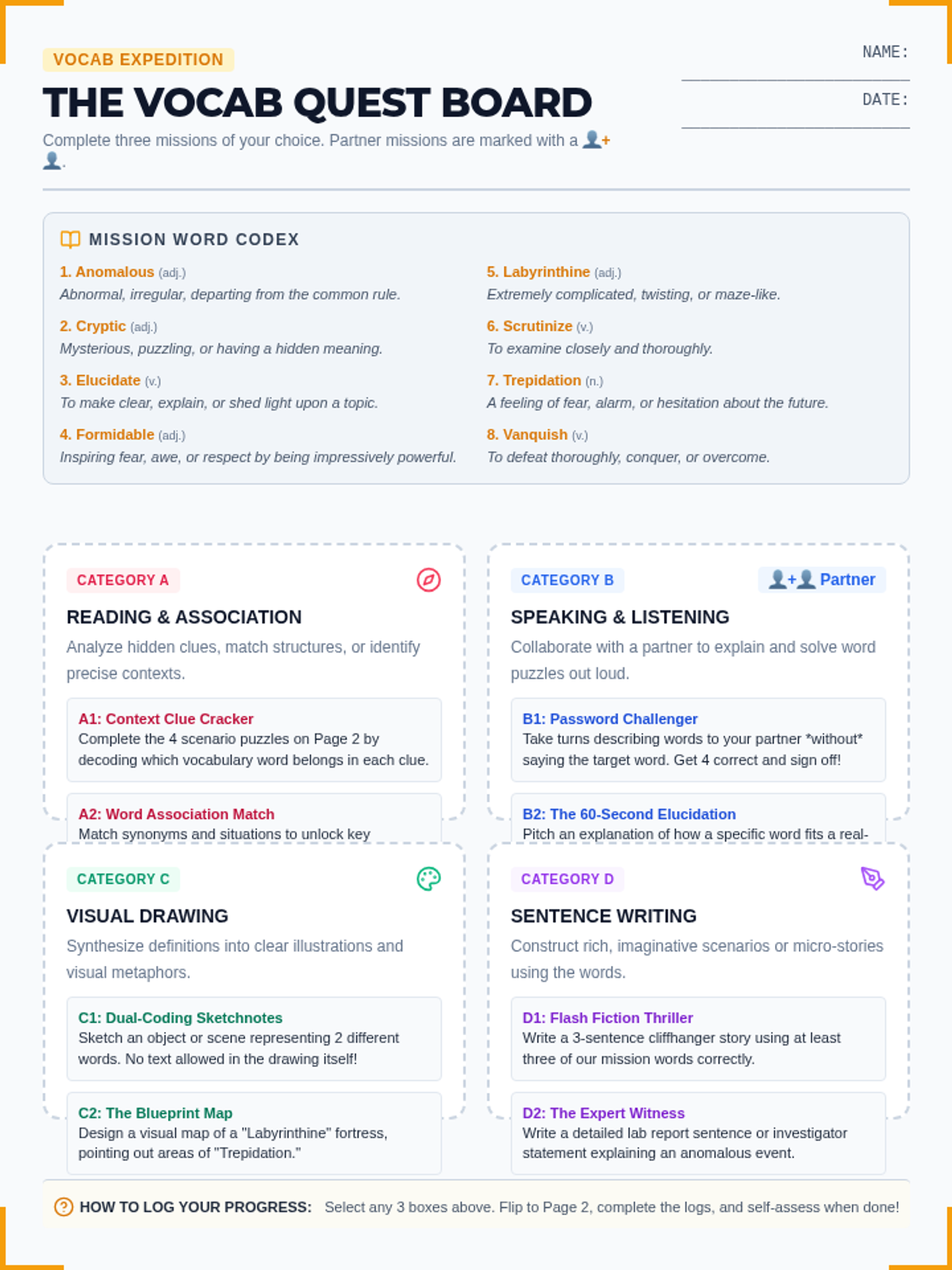
A vocabulary review lesson utilizing a thematic Choice Board Matrix, focusing on critical thinking, collaborative partner speaking, reading comprehension, visual sketching, and creative writing.
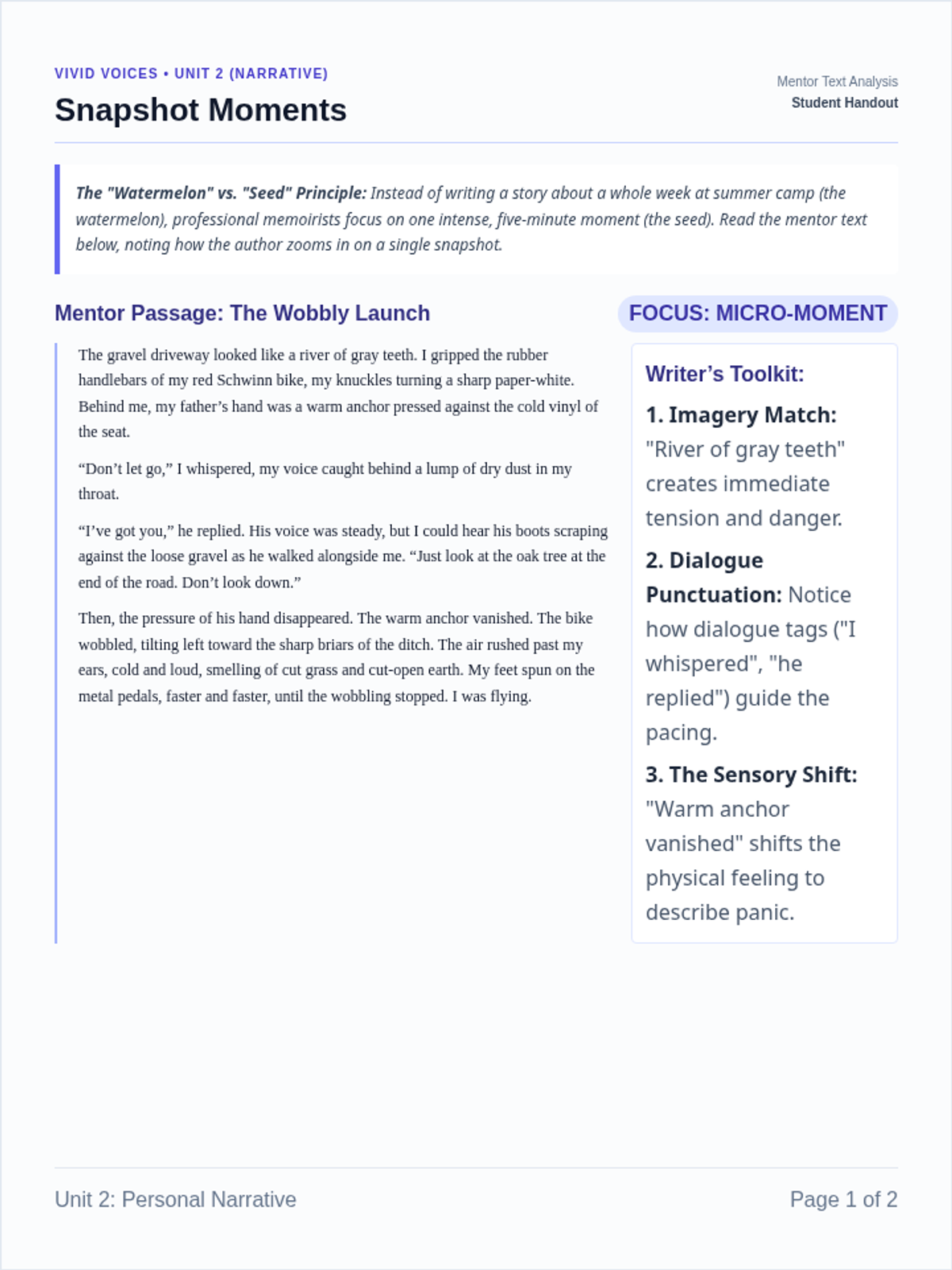
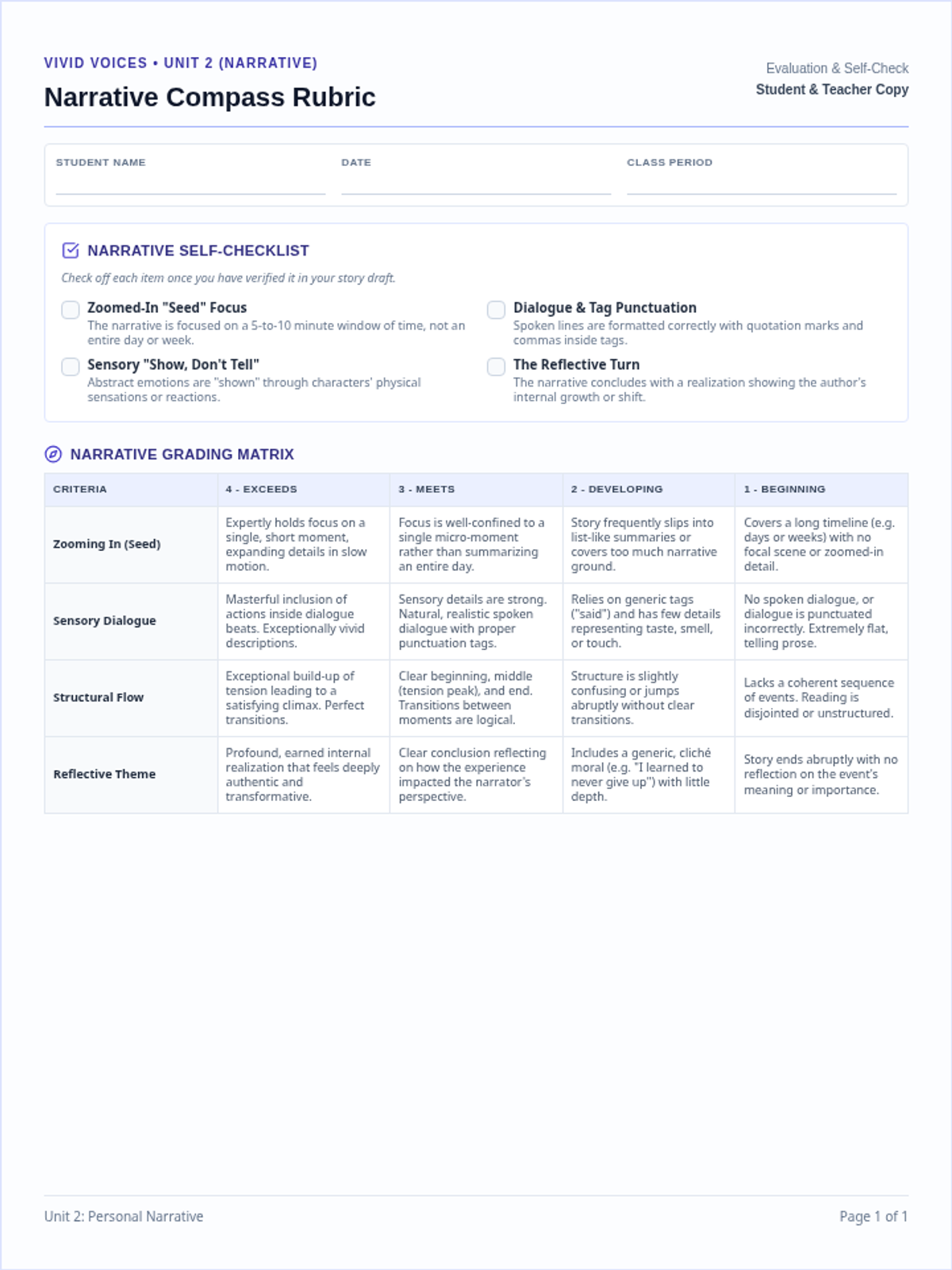
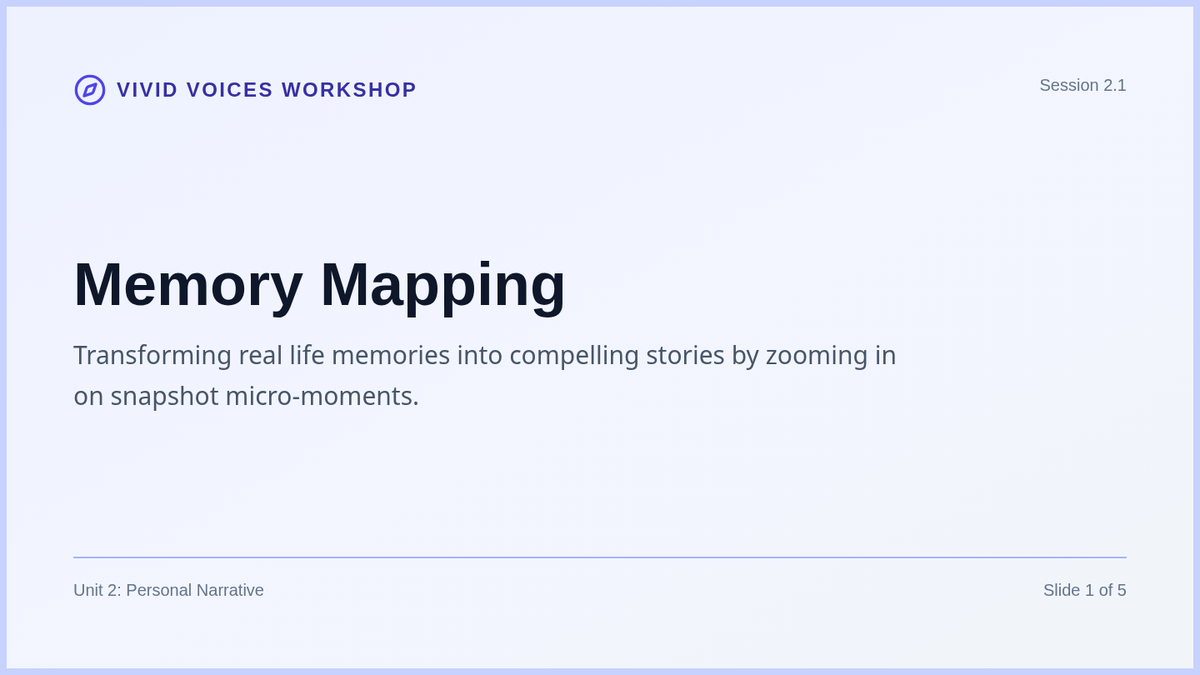
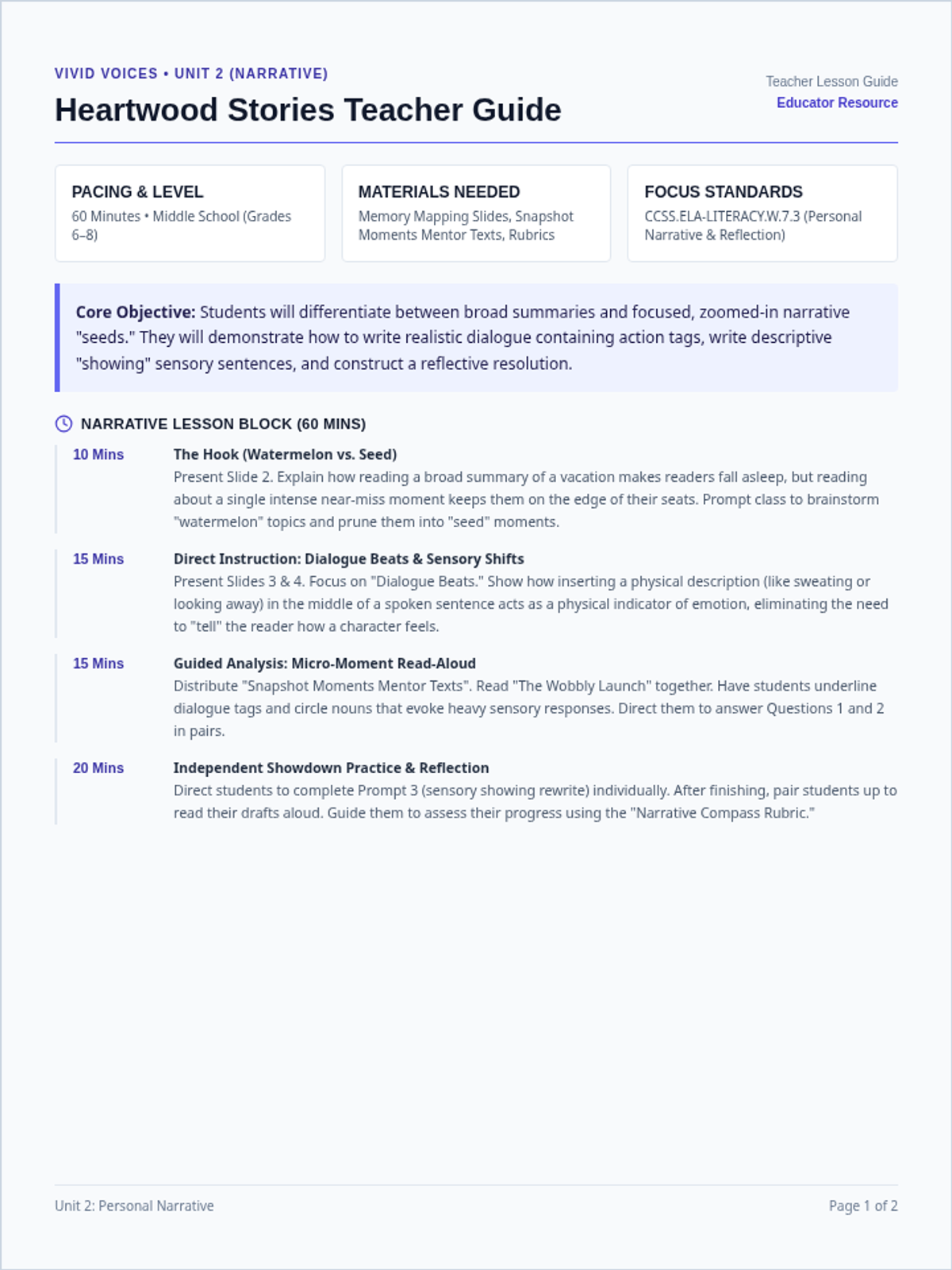
A journey into transforming real-life memories into vivid prose. Students practice zooming in on 'snapshot moments', writing realistic dialogue, and developing authentic reflective themes.
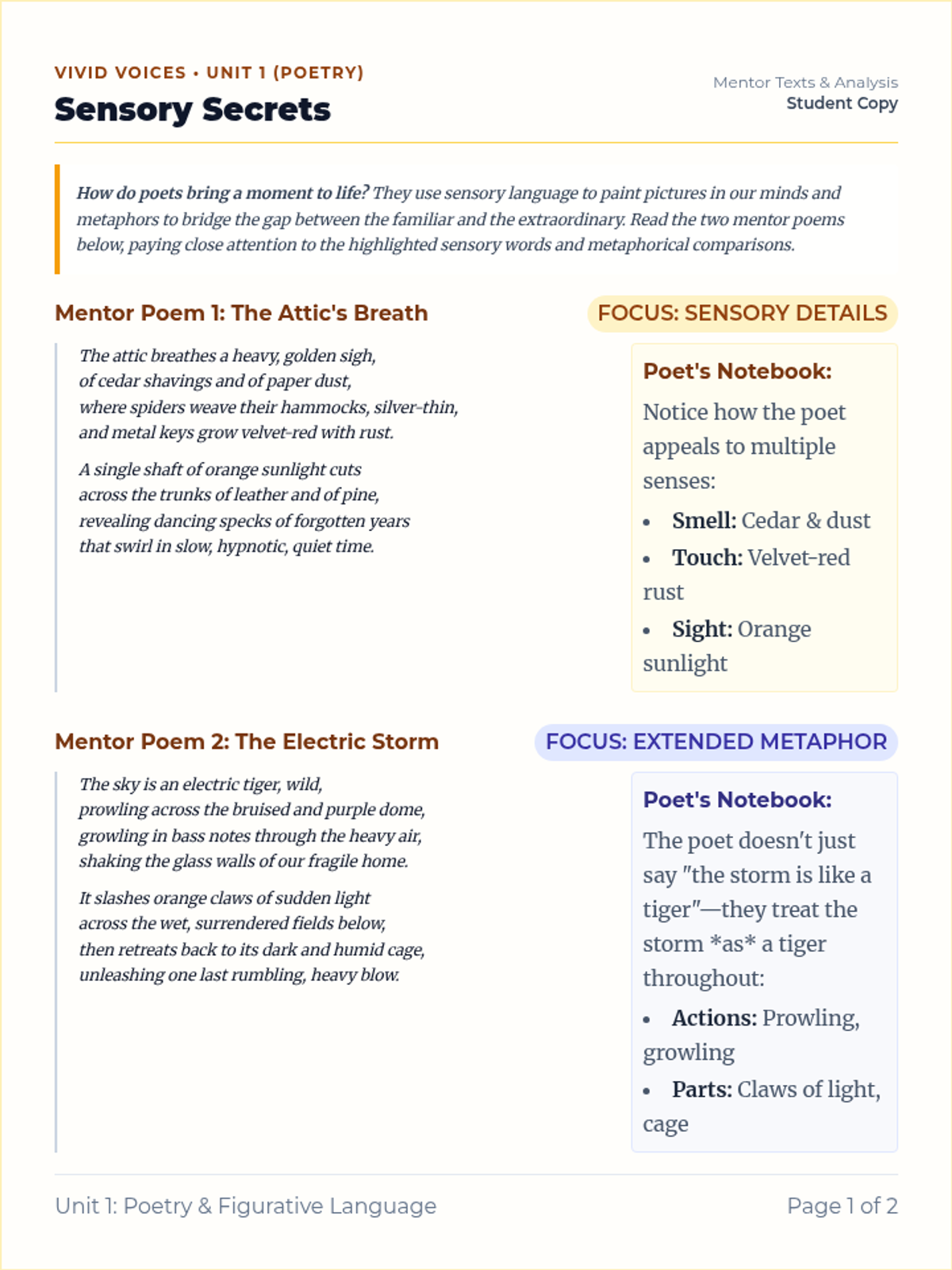
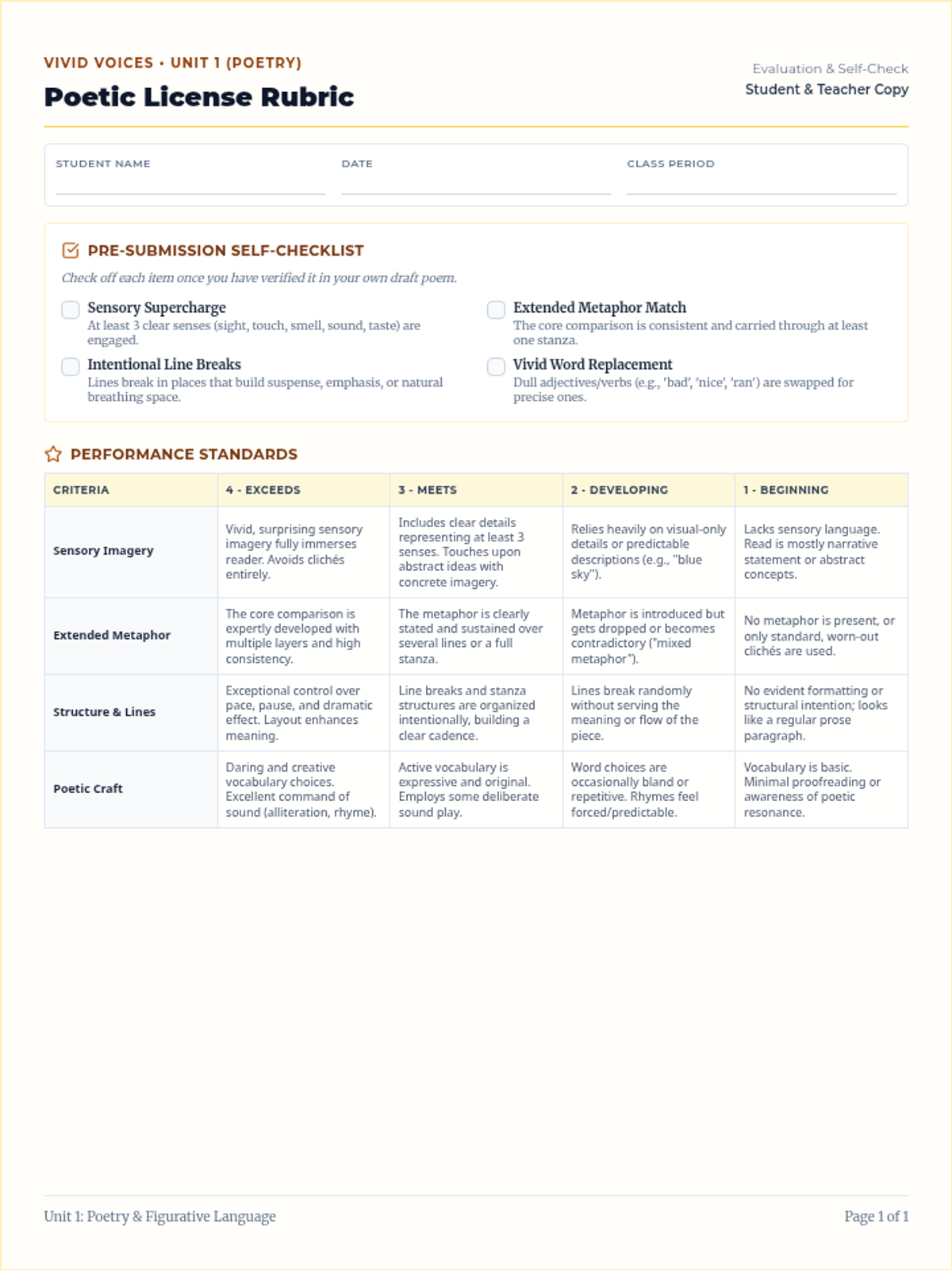
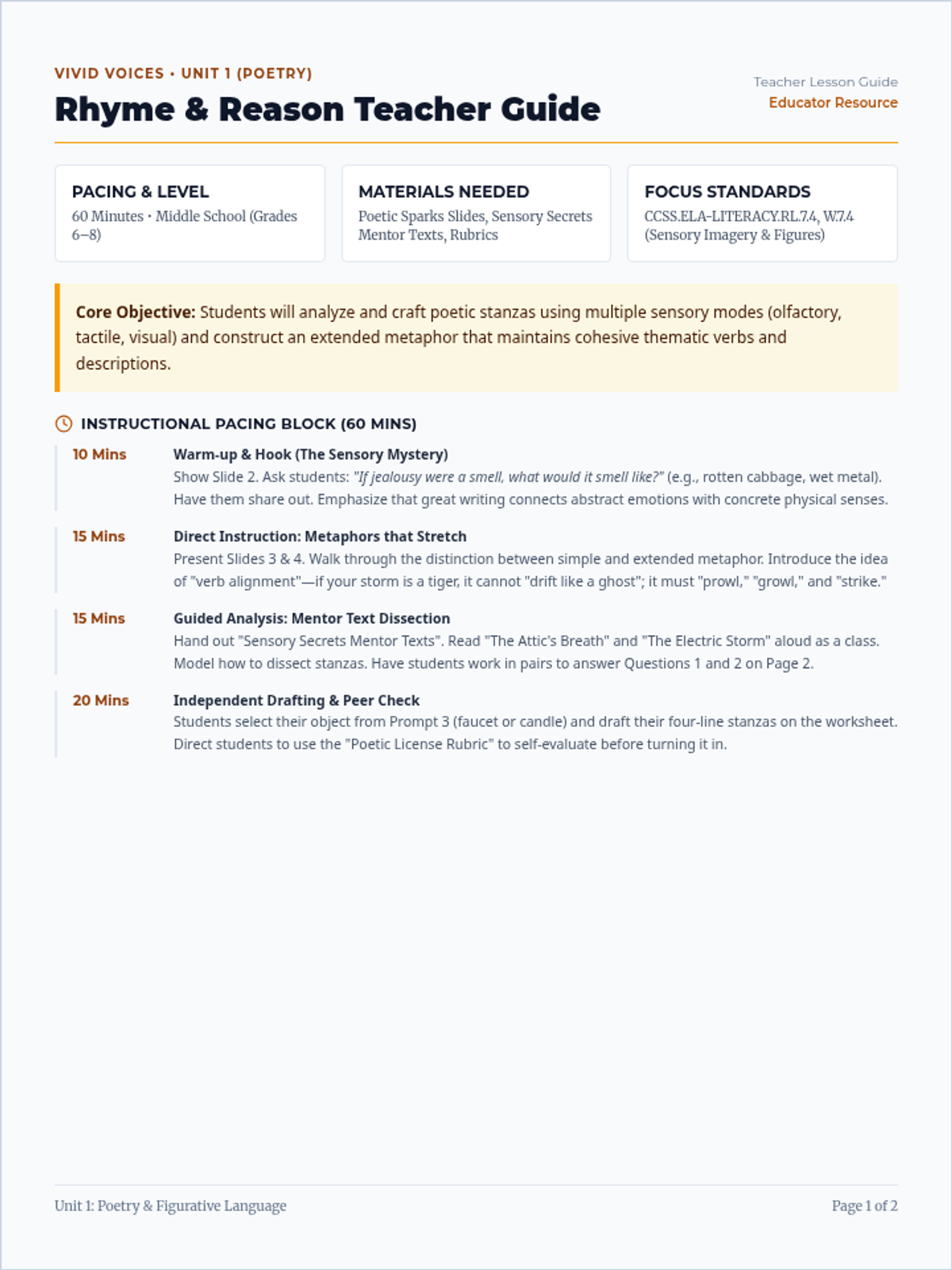
An immersive exploration of sensory imagery, metaphor, rhythm, and structure. Students examine classic and modern mentor poems and draft original pieces using figurative language.
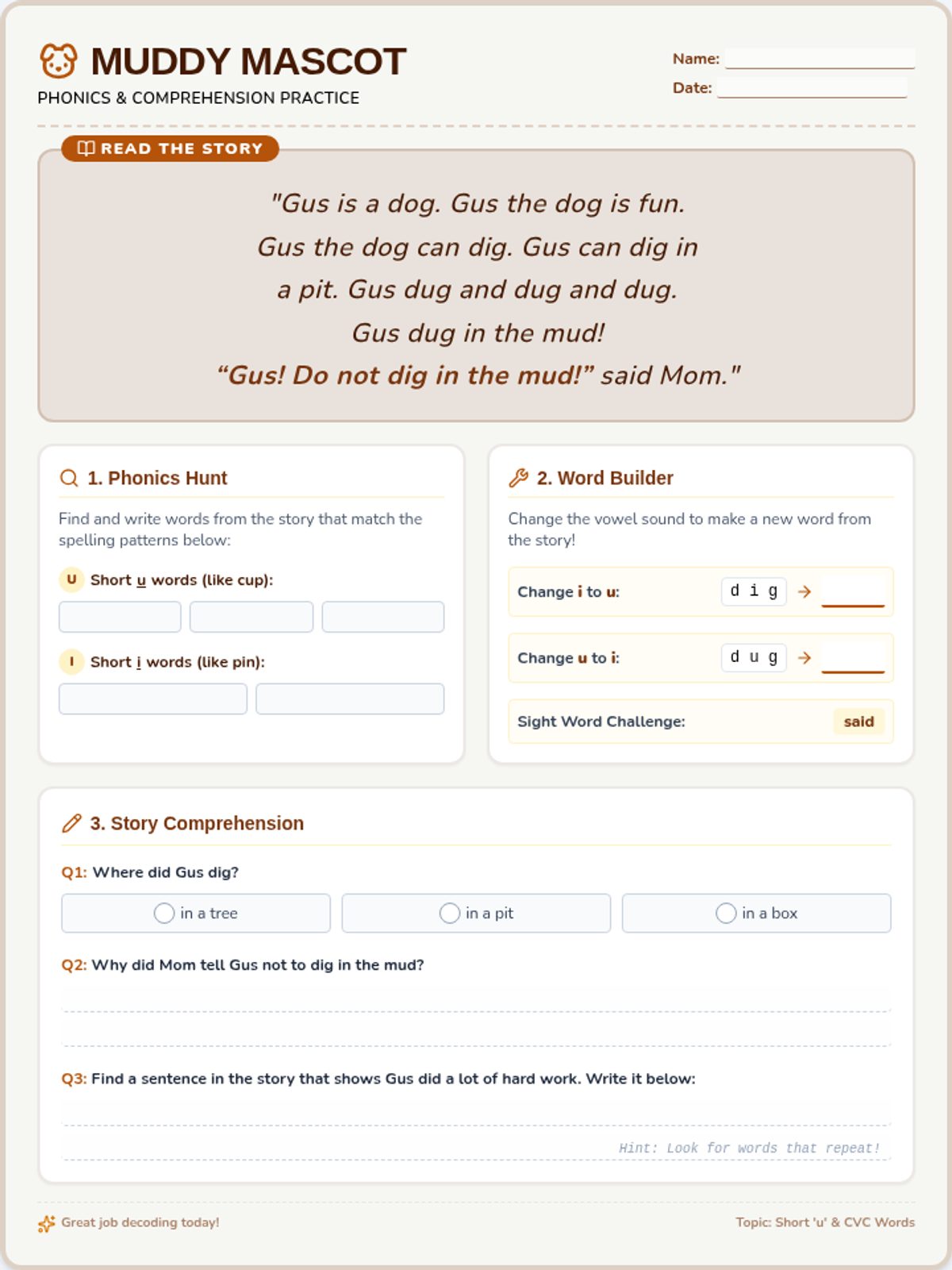
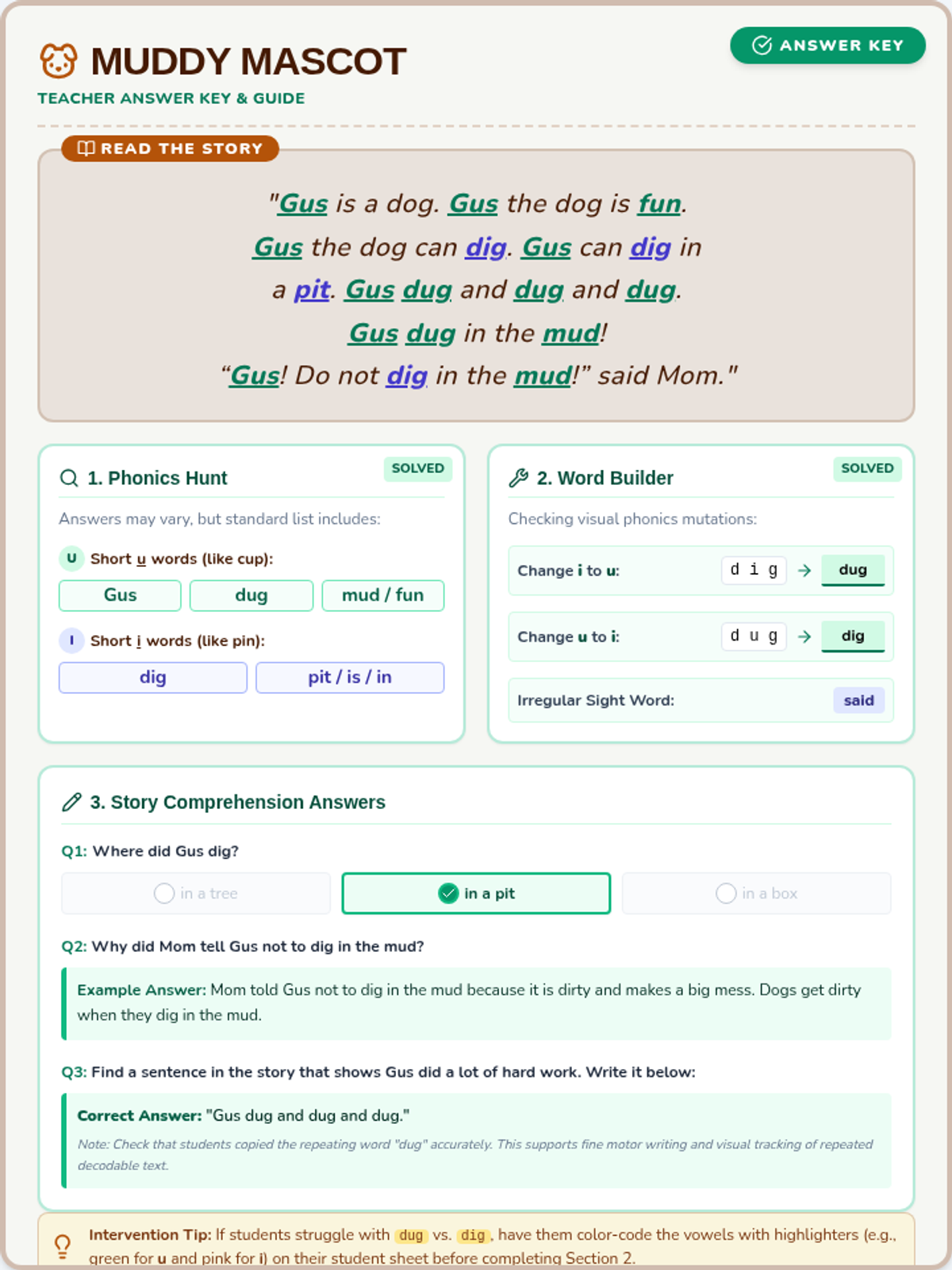
A phonics-focused reading comprehension lesson for Grade 3 reading intervention, centered on decoding CVC words, short 'u' sounds, and sight words through a story about a playful dog named Gus.
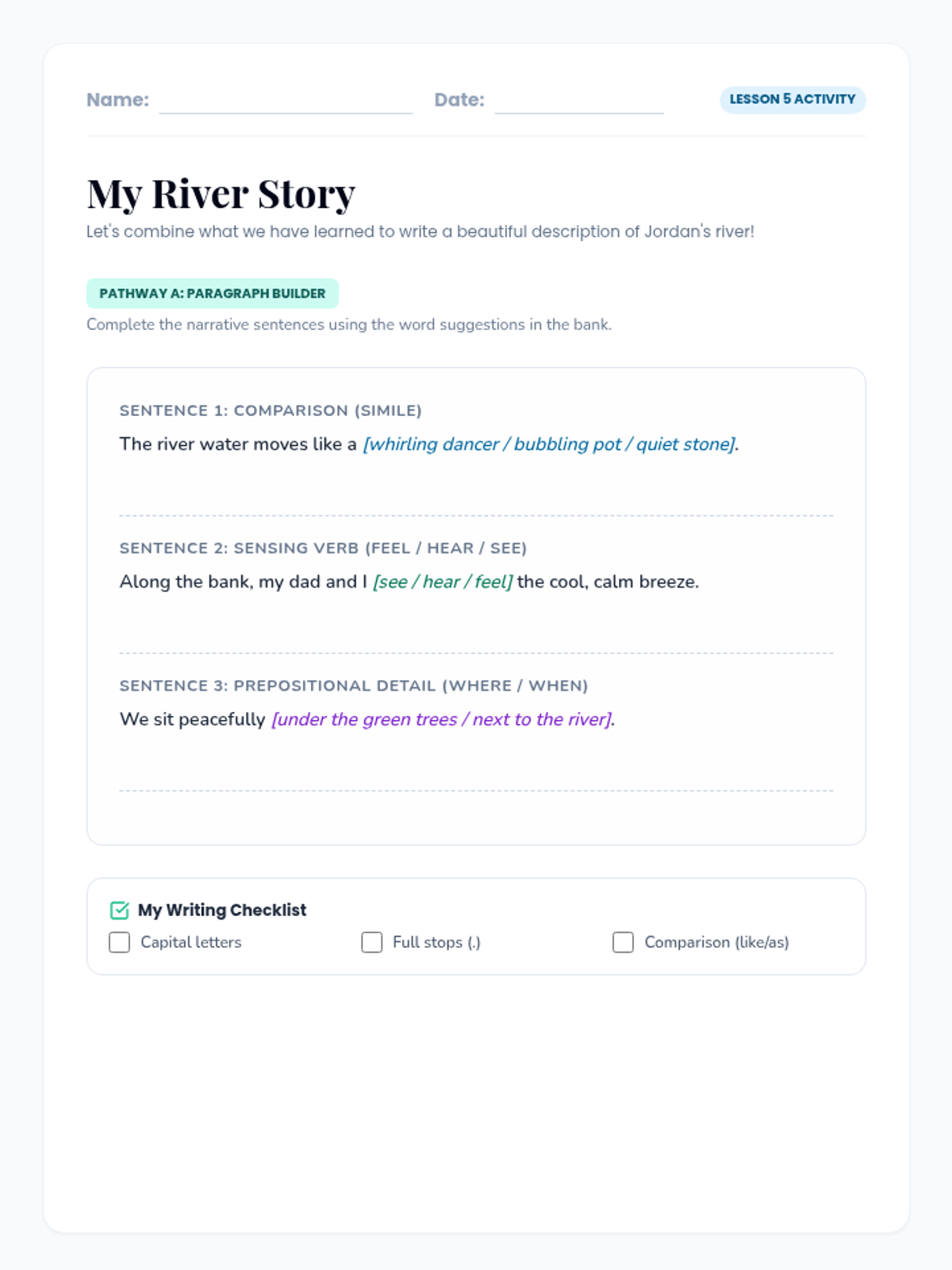
Students combine their cumulative learning of sensing verbs, prepositional phrases, and comparisons to co-construct and independently draft a descriptive paragraph about an outback landscape, utilizing a multi-tiered writing frame.
Students learn how prepositional phrases give information about 'where' and 'when' events occur, practicing adding them to simple sentences containing sensing verbs to build descriptive detail.
Students investigate sensing verbs related to the five senses, identifying how the author uses them to share how natural elements feel during drought, and brainstorming sensory details about the outback.
Students explore how authors use figurative language to paint 'word pictures' by identifying comparisons using 'like' and 'as' in the text, and co-constructing similes about the natural world.
Students sequence the key events in 'Mallee Sky' (drought changing to welcome rainfall) using a simplified storyboard planner, identifying how environmental patterns affect the landscape.