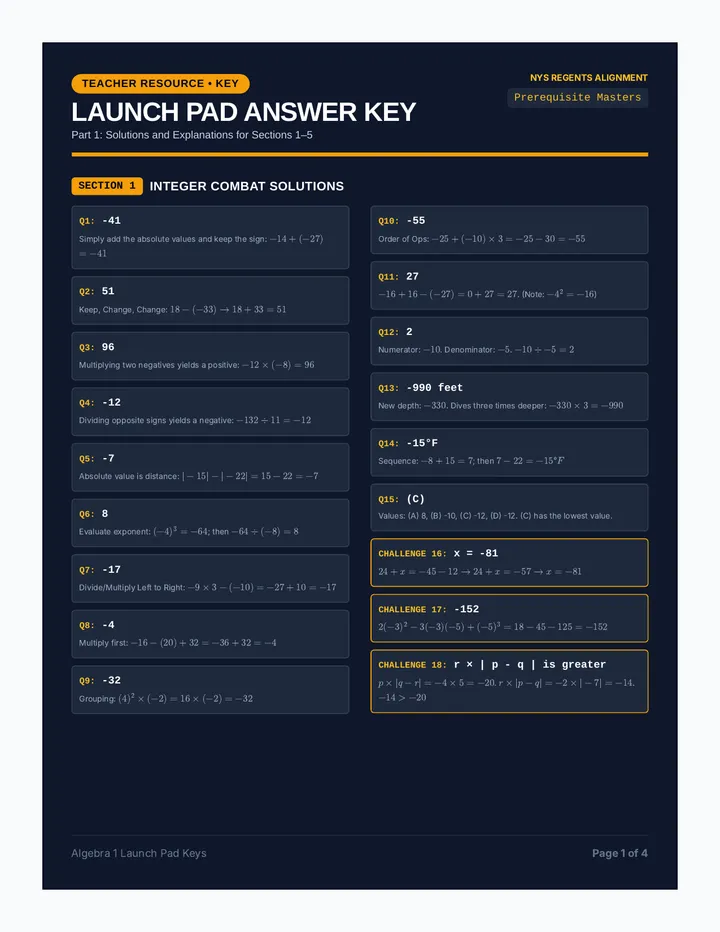
A high school geometry lesson focused on proving quadrilaterals are rhombuses through triangle congruence and specific rhombus properties, featuring a 'Proof Scramble' hands-on activity.
A high-energy math simulation where students manage a large budget, navigate financial constraints, and handle unexpected 'life events' while shopping for their dream items.
A comprehensive project where students apply linear functions to model real-life savings goals for a startup business. Students will calculate startup costs, determine savings rates, and project their business launch date using algebraic models.
A hands-on project where students apply right triangle trigonometry to design a piece of modern architecture or geometric art, culminating in a detailed calculation poster.
A hands-on geometry project where students apply similarity criteria (AA, SSS, SAS) to measure unreachable heights using shadow casting and mirror reflections. Students will perform outdoor measurements, calculate scale factors, and provide formal geometric proofs for their methods.
A project-based lesson where students design an infographic poster demonstrating their mastery of triangle similarity criteria and real-world proportional reasoning.
A creative art-based project where students apply circle geometry concepts—arc length, sector area, and inscribed angles—to design and calculate a geometric masterpiece.
Students apply linear function concepts to model a real-world income and expense scenario. They will calculate rates of change, identify initial values, and visualize their budget through graphing.
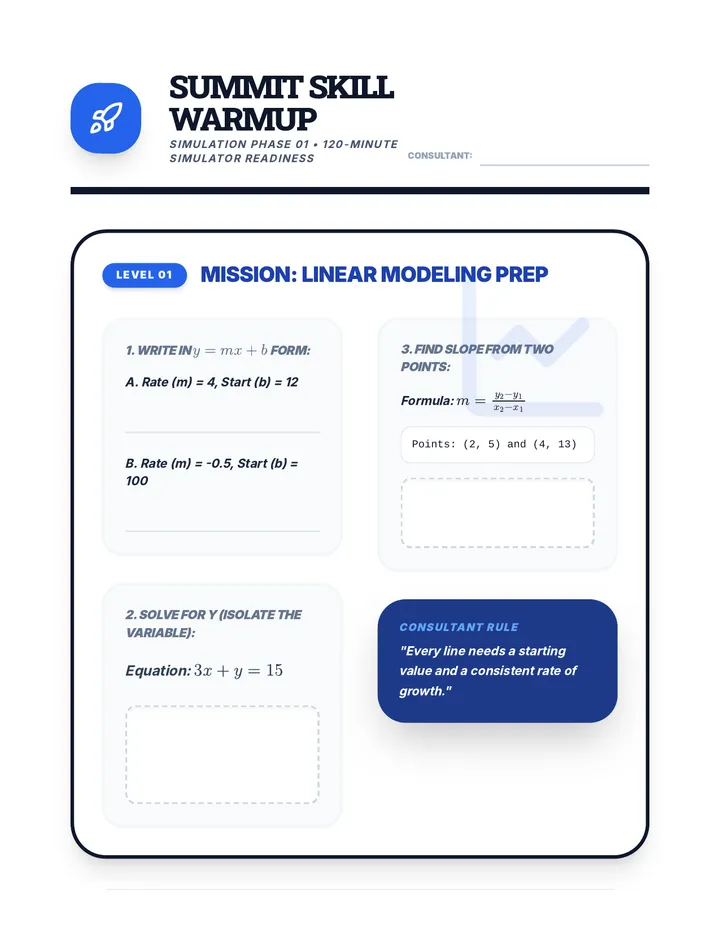
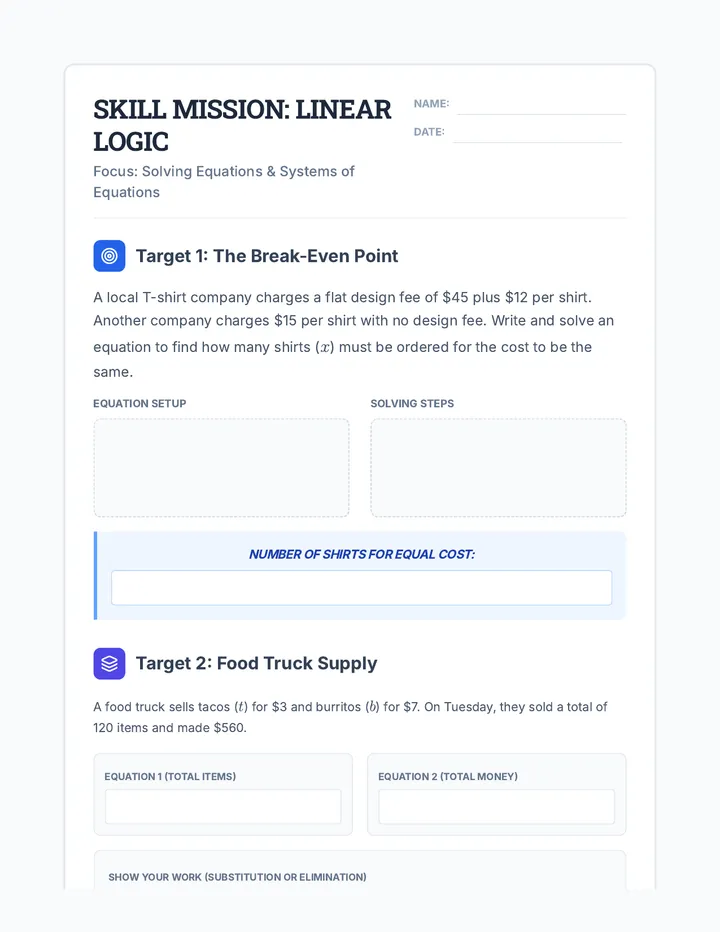
A real-world project exploring linear functions through cell phone plans and career earnings. Students analyze slope as a rate of change and the y-intercept as a starting value.
A project-based lesson where students apply concepts of similarity, scale factor, and proportions to create a scale drawing or 3D model of a real-world object. Students move from mathematical practice to creative application.
Students apply their knowledge of slope to design a roller coaster. They calculate the steepness of various drops and climbs, representing their findings through a technical blueprint and a visual infographic.
A focused lesson on the binomial distribution, covering the BINS criteria, identifying parameters, and calculating probabilities using digital spreadsheet tools.
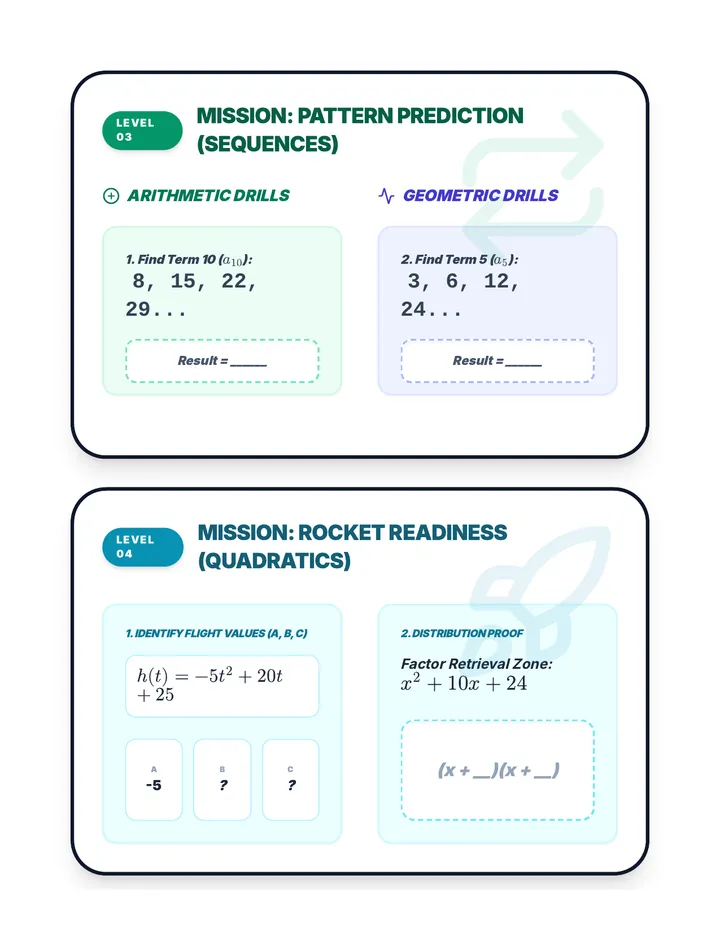
A comprehensive unit review and summative assessment covering three key methods for solving quadratic equations: graphing, factoring, and the quadratic formula. Students practice identifying key features of parabolas, algebraic manipulation for factoring, and the step-by-step application of the quadratic formula.
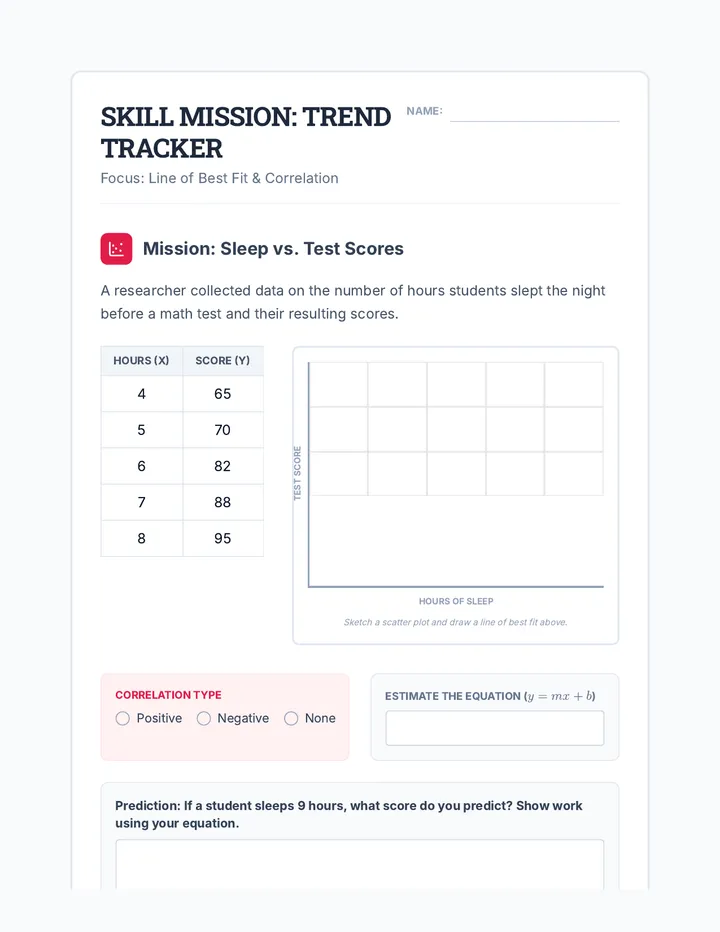
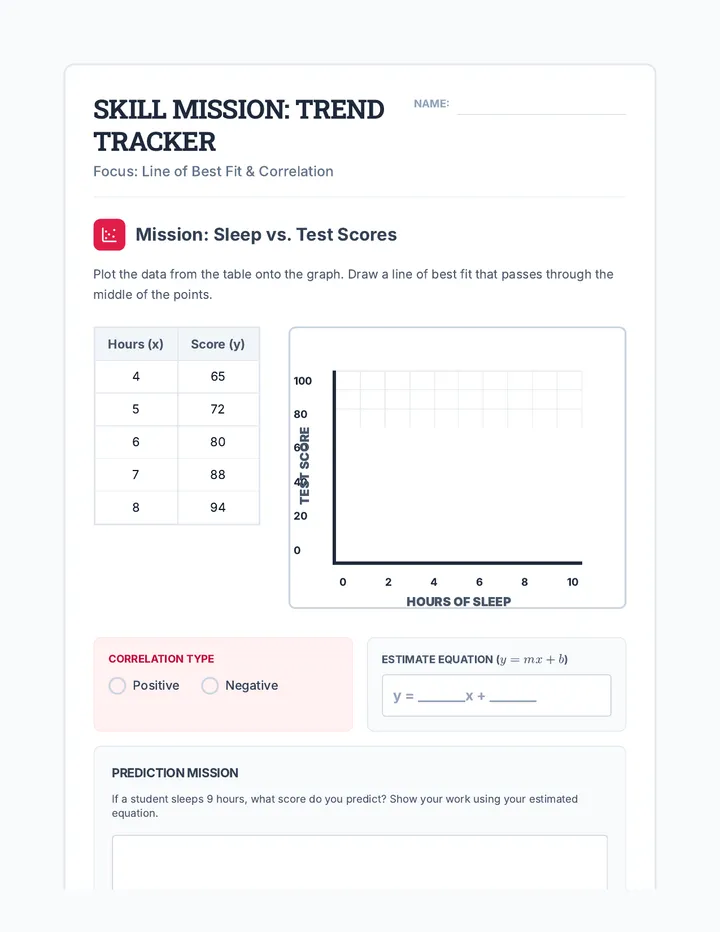
Students learn to plot bivariate data, identify trends, and spot outliers using a real-world scenario of sleep and mood.
A comprehensive guide to analyzing and graphing rational functions, covering all key features from asymptotes to holes.
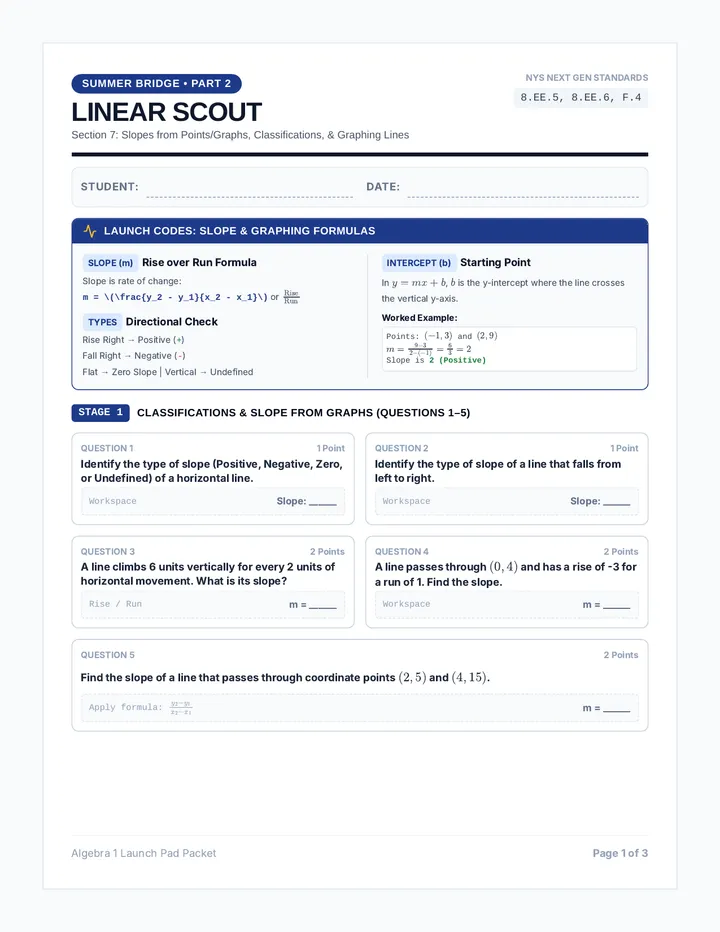
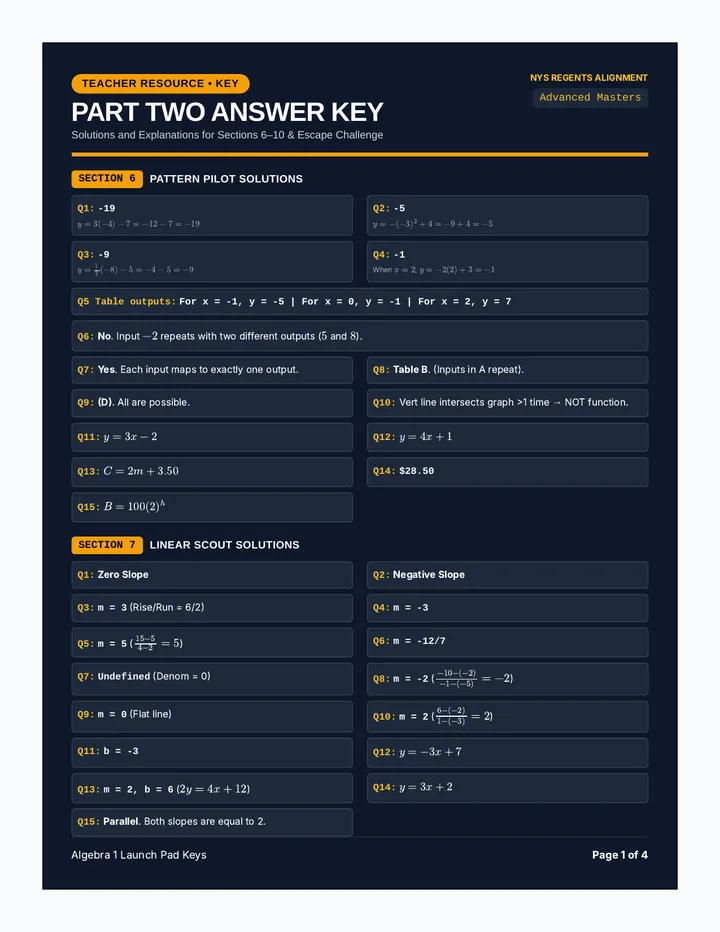
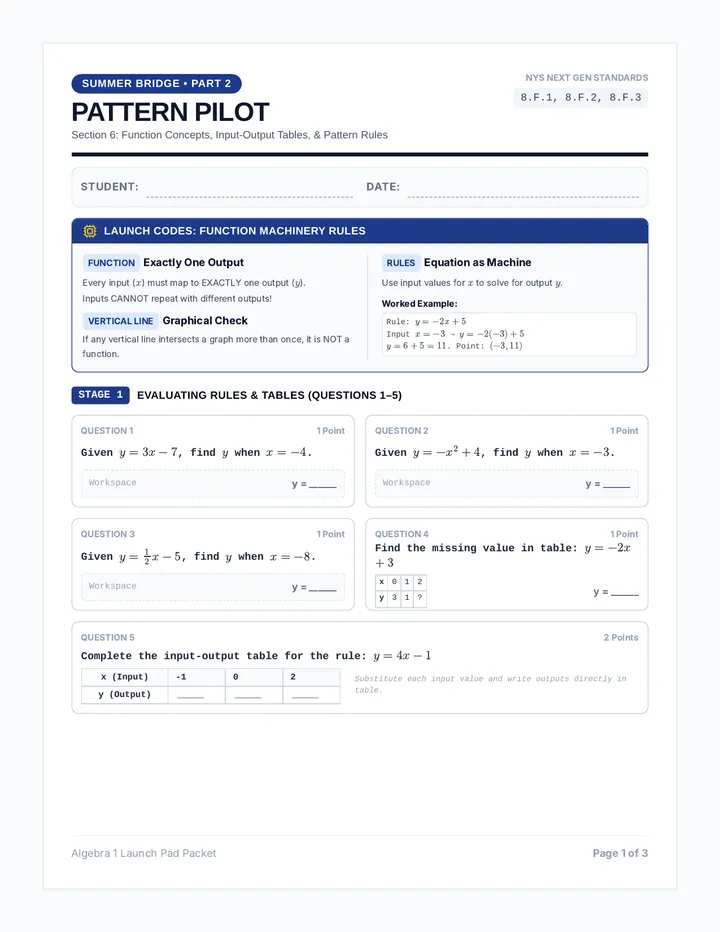
An advanced look at slope as a rate of change, including calculation from coordinates and understanding special cases like zero and undefined slopes.
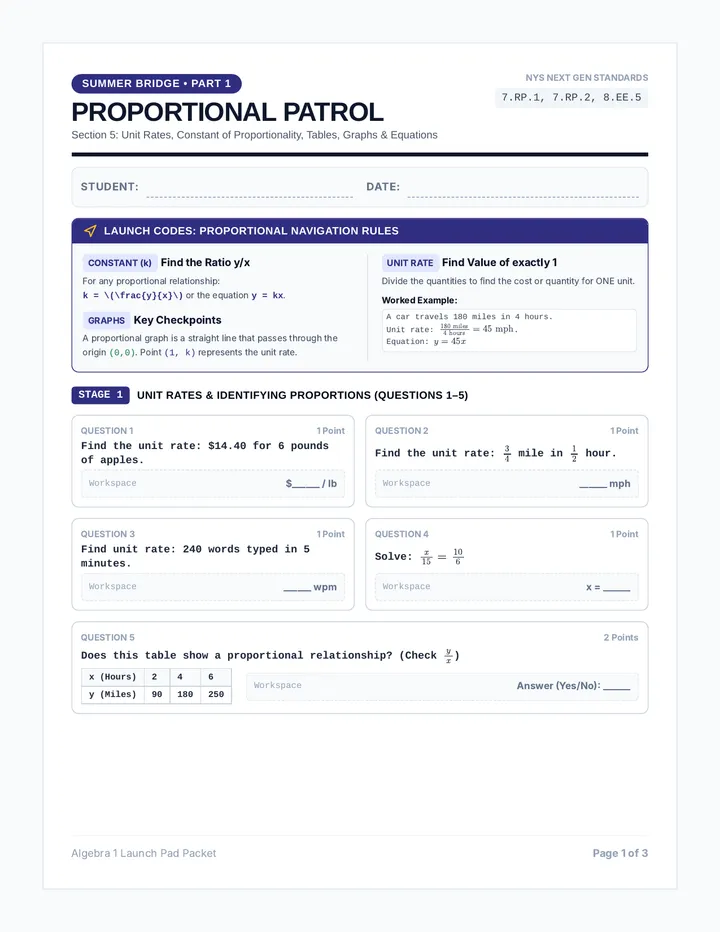
A comprehensive assessment lesson focusing on mastering one-step equations involving multiplication, division, and basic addition/subtraction.
A hands-on math project where students design carnival games to explore theoretical versus experimental probability through data collection and analysis.
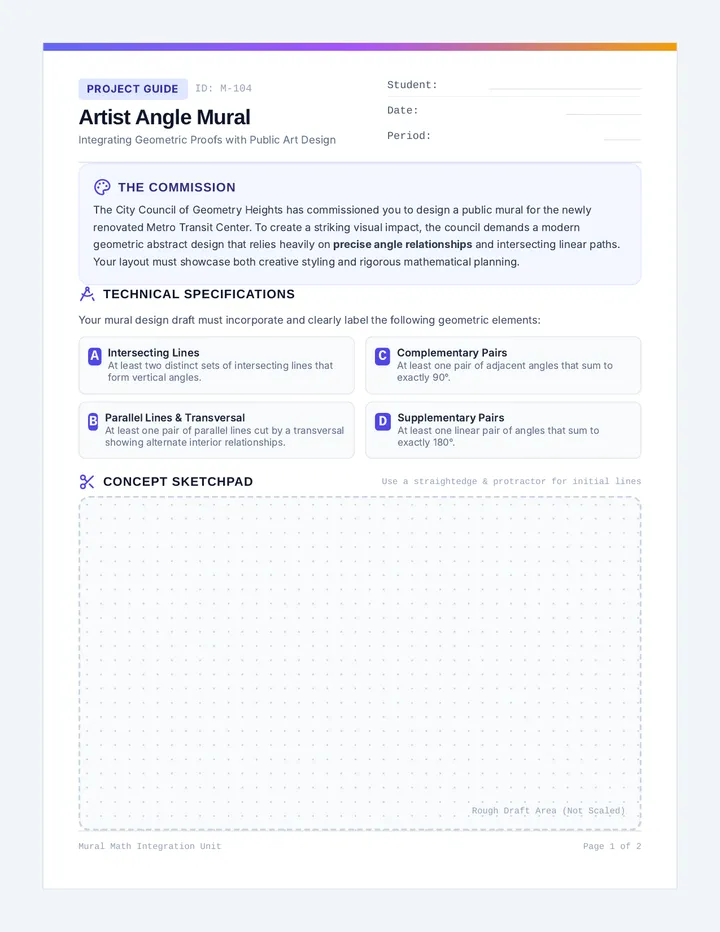
A highly scaffolded lesson on angle relationships (vertical, complementary, and supplementary) featuring an architectural blueprint theme. Includes guided notes with exemplars and step-by-step practice materials.
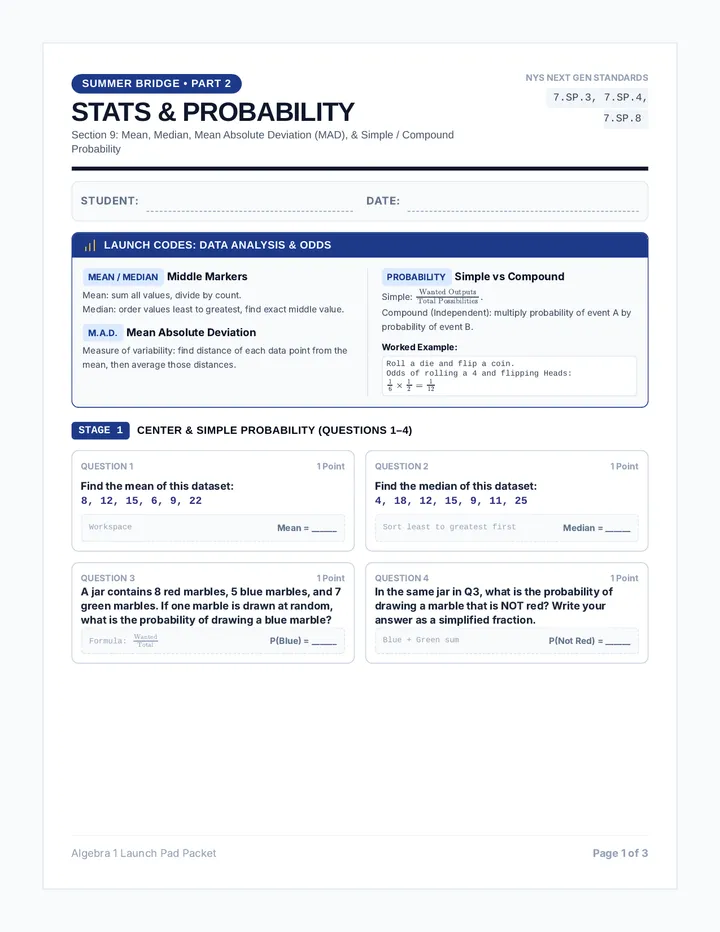
Advanced applications of central tendency and spread, including algebraic problem-solving, weighted means, and the mathematical impact of outliers for high school students.
A comprehensive assessment covering Level 1, Level 2, and Level 3 data analysis, designed to evaluate mastery of mean, median, mode, and range in both numerical and narrative contexts.
Students interpret and solve word problems involving mean, median, mode, and range, focusing on extracting data from narrative contexts and real-world scenarios.
A foundational lesson designed for SIFE students to understand fractions greater than one using visual models and fraction strips. Focuses on bridging concrete models to number lines with minimal text reliance.
A collection of extra practice cases for mean, median, mode, and range, ranging from single-digit warmups to double-digit challenges, themed as unsolved detective files.
Students apply their knowledge of mean, median, mode, and range to data sets featuring two-digit numbers, focusing on multi-digit addition and division.
A lesson focused on identifying and interpreting outliers in box plot data visualizations, using a forensic detective theme to engage students in data analysis.
Students learn to calculate mean, median, mode, and range using single-digit data sets through structured, step-by-step guided practice and visual aids.
A 65-minute 9th-grade mathematics lesson focusing on the practical application of proportions, percentages, and statistical measures to analyze real-world datasets. Students act as data analysts to solve problems related to urban development and global trends.
A high-energy, comprehensive review lesson for 9th-grade math students to synthesize their learning through a competitive team relay challenge covering all major domains.
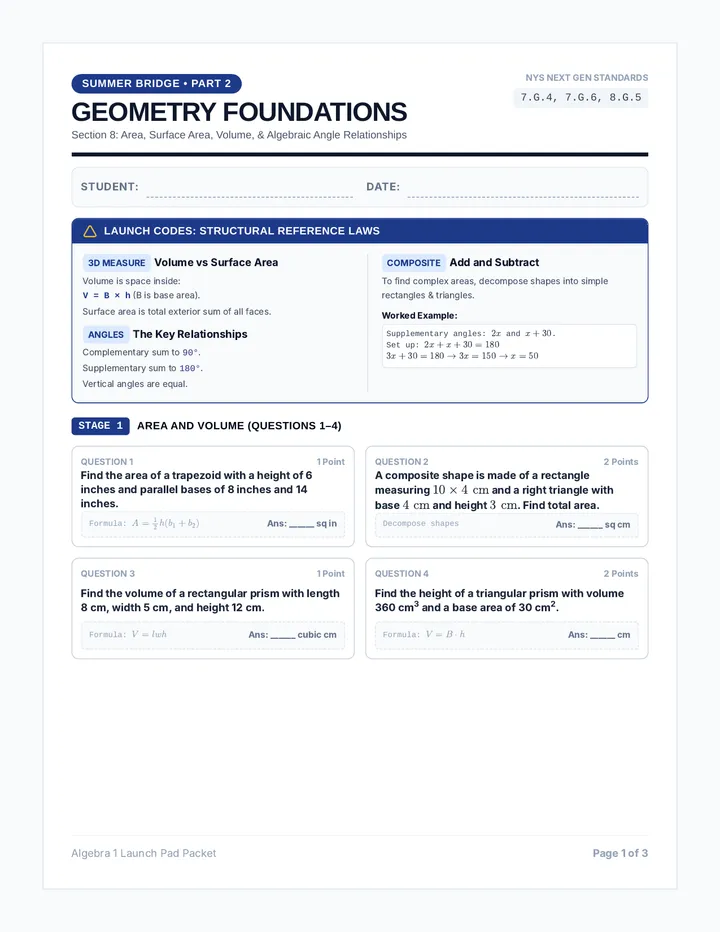
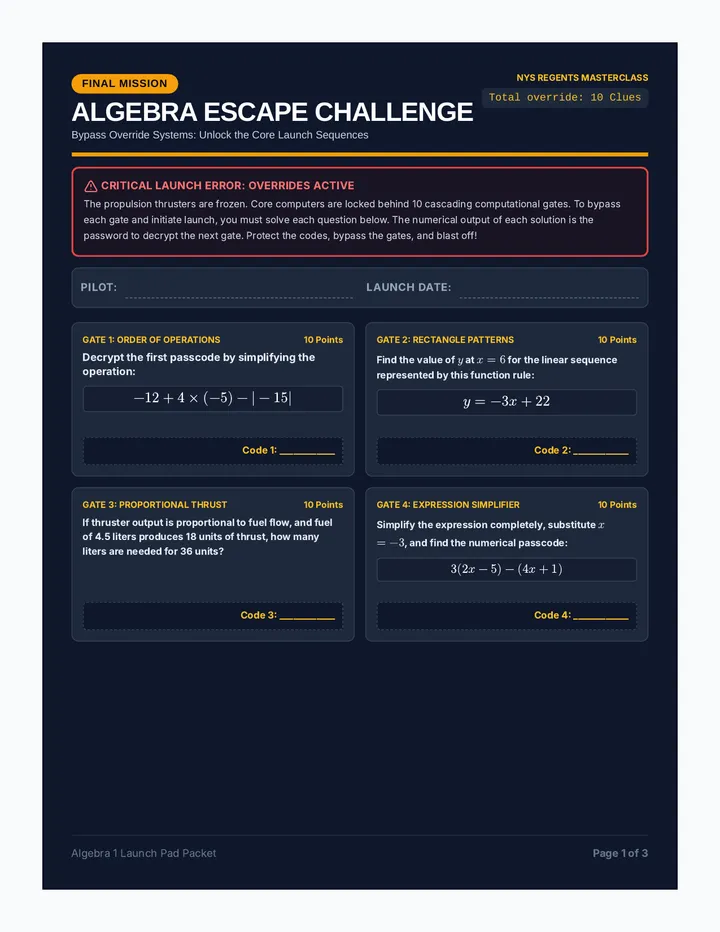
A 65-minute intensive review session focusing on the integration of algebraic expressions and coordinate geometry through a collaborative escape room challenge. Students refine their skills in PEMDAS, slope calculation, and linear graphing to solve structural 'blueprint' puzzles.
A comprehensive summative assessment lesson where 9th-grade students demonstrate their mathematical proficiency across algebra, geometry, and statistics before reflecting on their year-long growth.
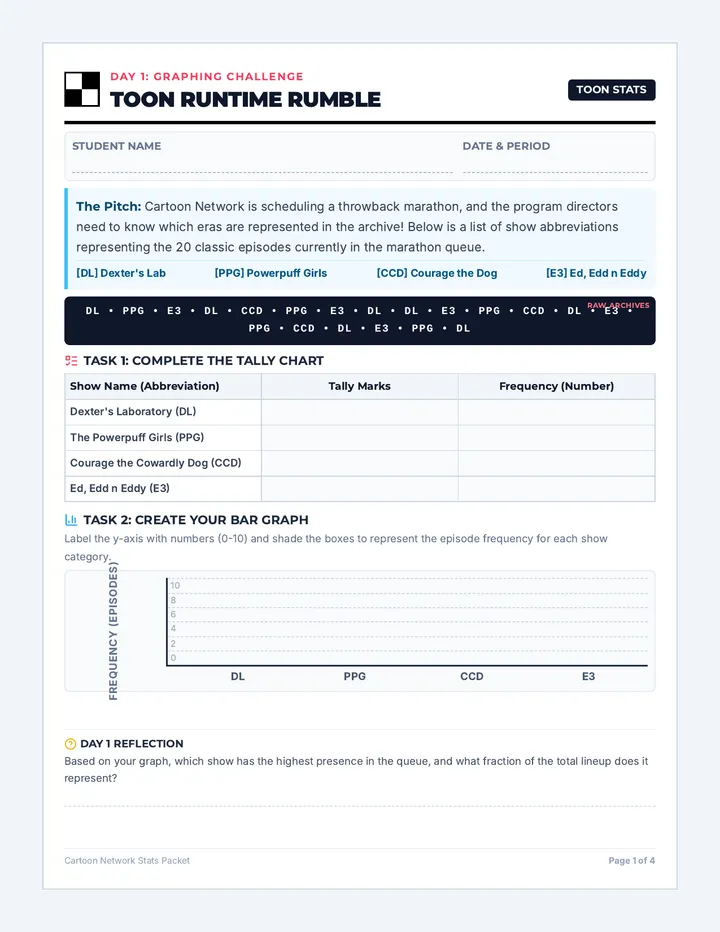
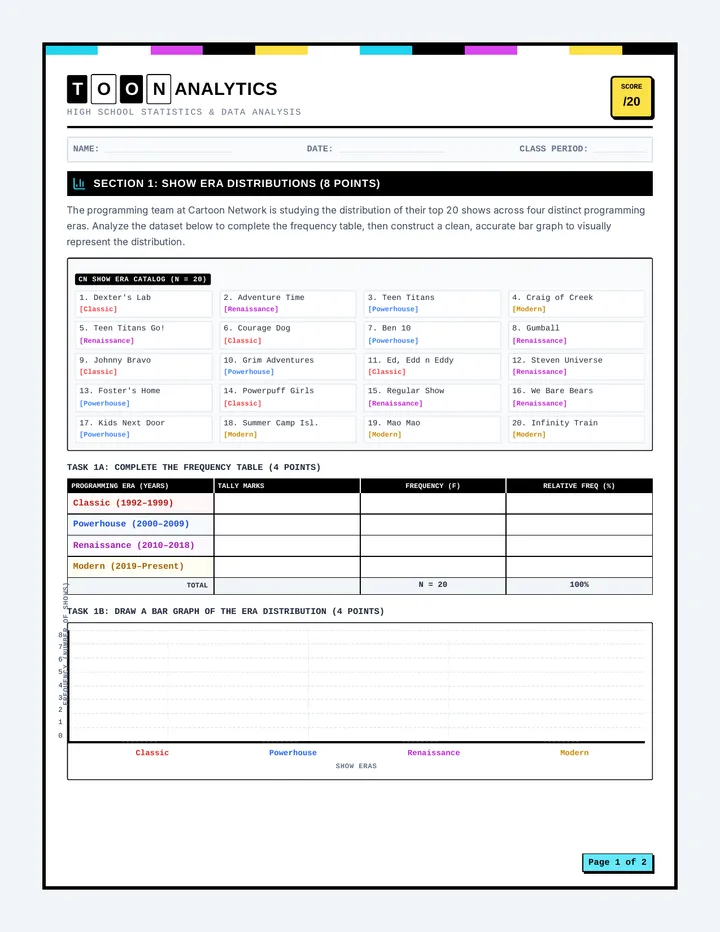
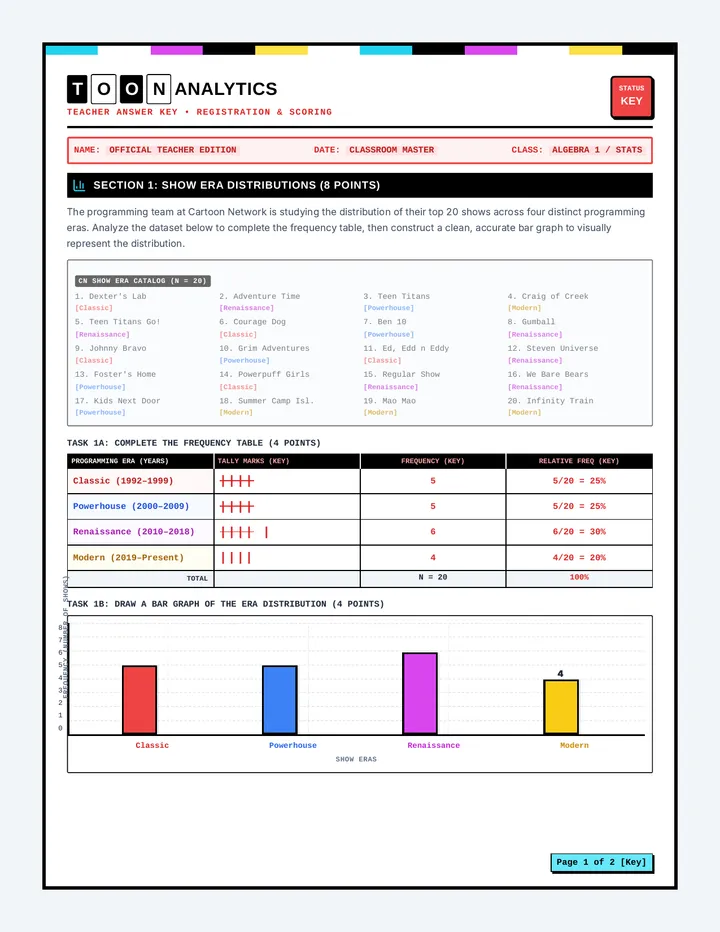
A comprehensive lesson for 9th-grade students on transforming raw data into meaningful visualizations, including frequency tables, dot plots, and box-and-whisker plots.
Review of symmetry concepts followed by a final challenge activity and a short assessment.
Identifying symmetry in everyday objects and nature, such as butterflies, leaves, and common household items.
Exploring symmetry in geometric shapes like squares, circles, and triangles, focusing on matching halves.
Introduction to the concept of symmetry and the 'line of symmetry' using mirror images and simple shapes.