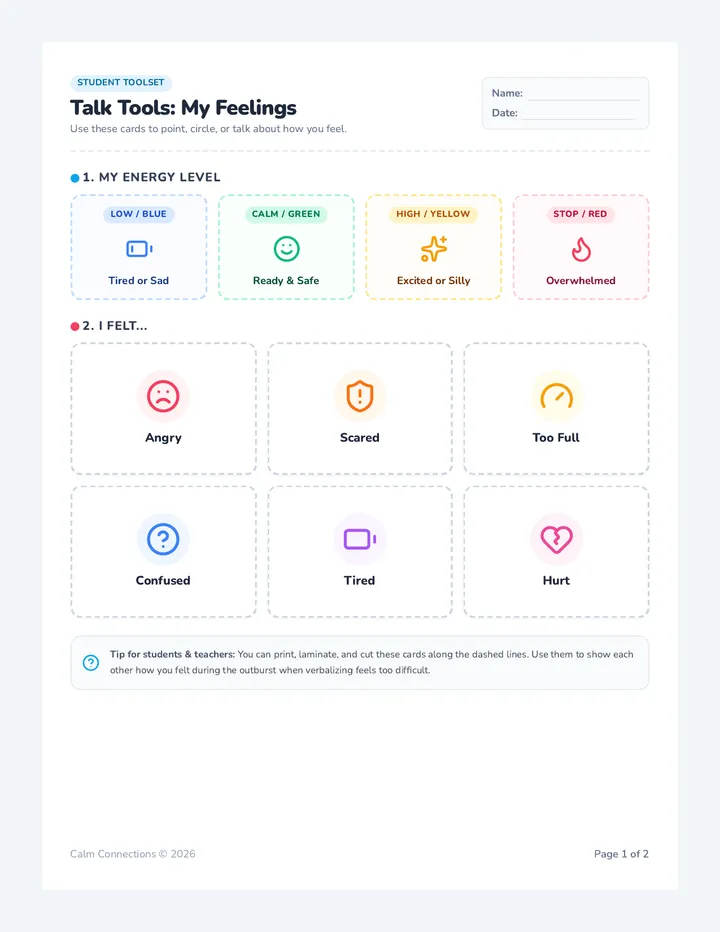
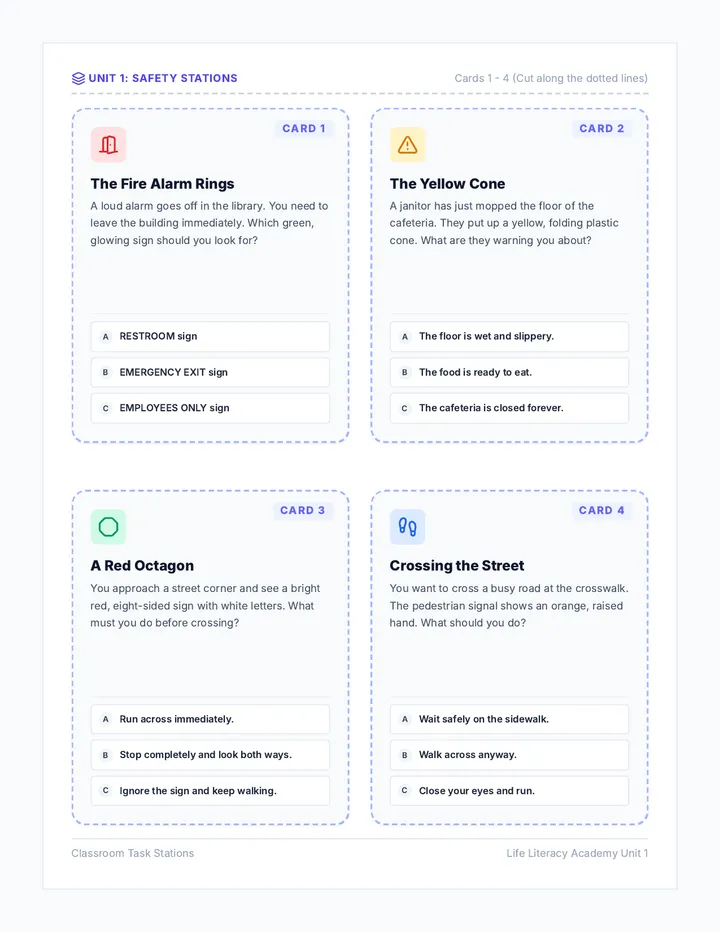
Explores the Red Zone (angry, terrified, out of control) with a focus on 'Emergency Stop' safety plans and the importance of finding a safe space.
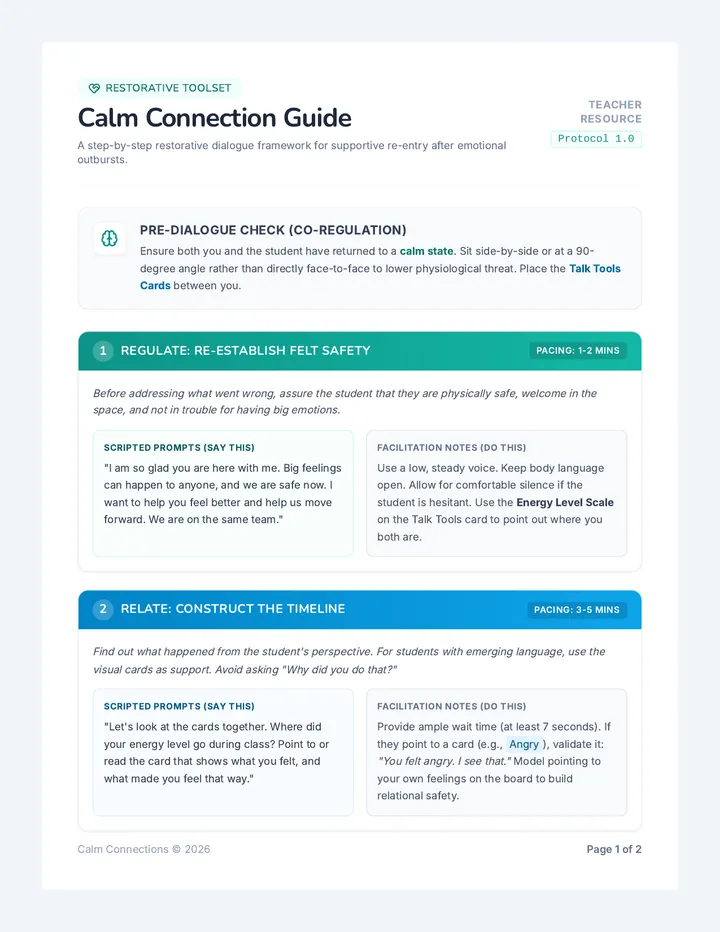
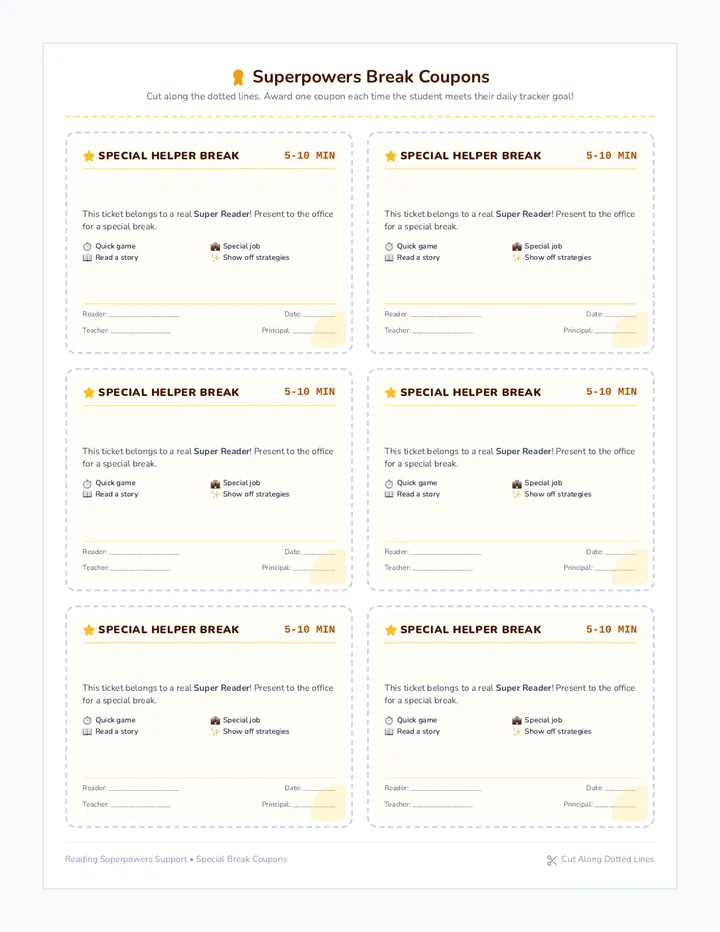
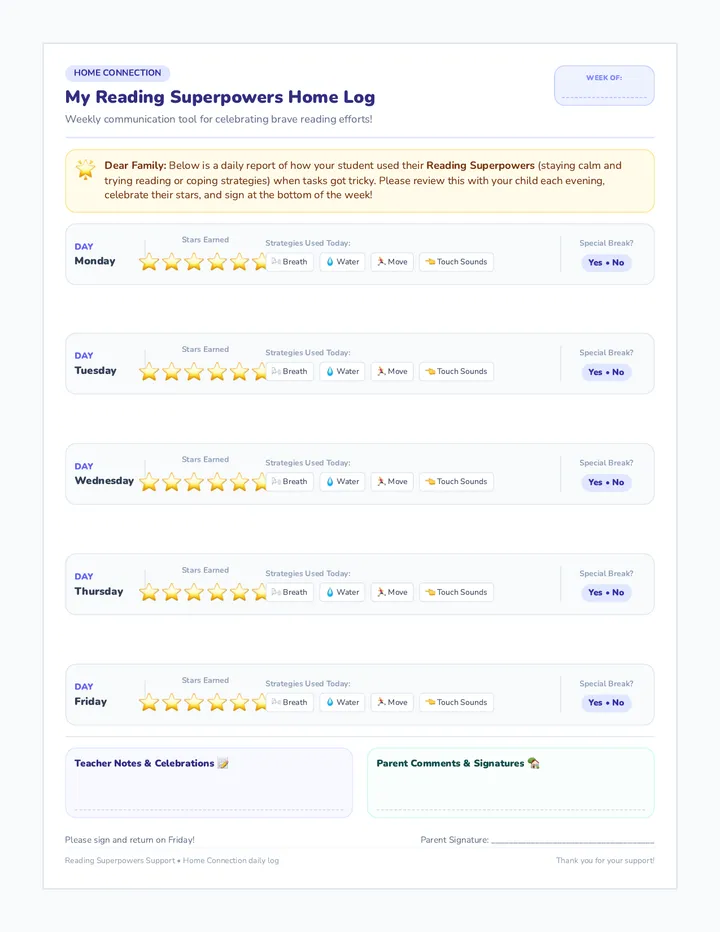
A positive reinforcement system for 2nd graders to track behavior goals across the school day using a space-themed mission report.
A set of resources focused on the intervocalic 'r' sound, helping young learners identify and produce the 'r' sound when it appears between two vowels. Includes visual aids, practice activities, and instructional support.
This lesson introduces the 'Mood Mechanics' workshop, teaching students to read their internal 'dashboard' (physical feelings) and select the right 'tools' (coping skills) for different emotional states.
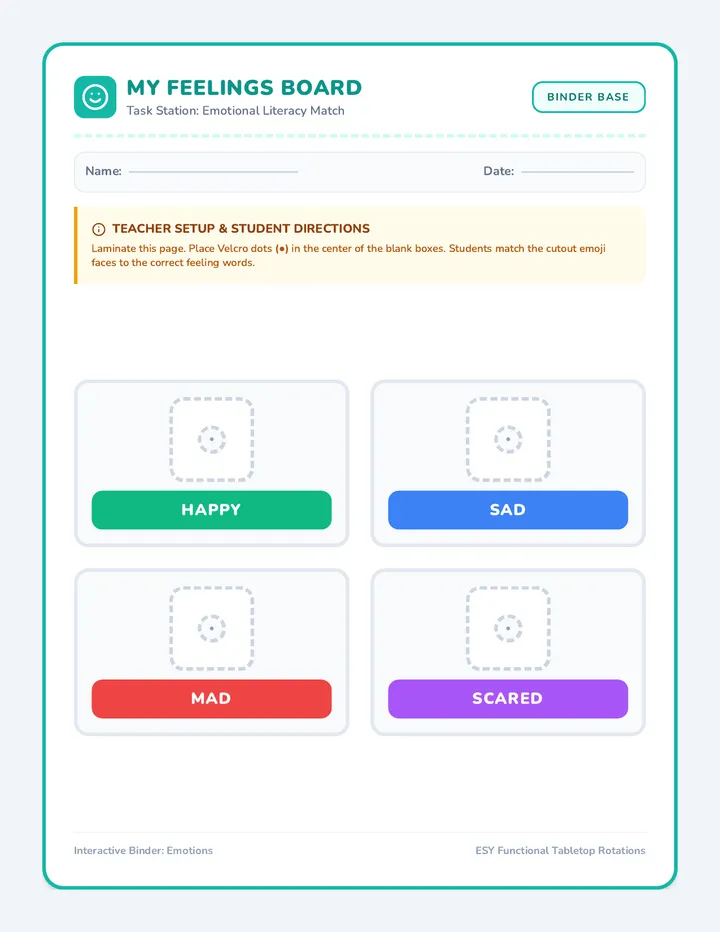
A lesson designed for high school students with intellectual disabilities to explore how internal emotions are expressed externally, using characters from the movie Inside Out as a relatable framework. Students will practice identifying physical cues and behaviors associated with different feelings.
A visual management system to help students transition between focused learning periods and restorative breaks, using a 'Focus Engine' metaphor.
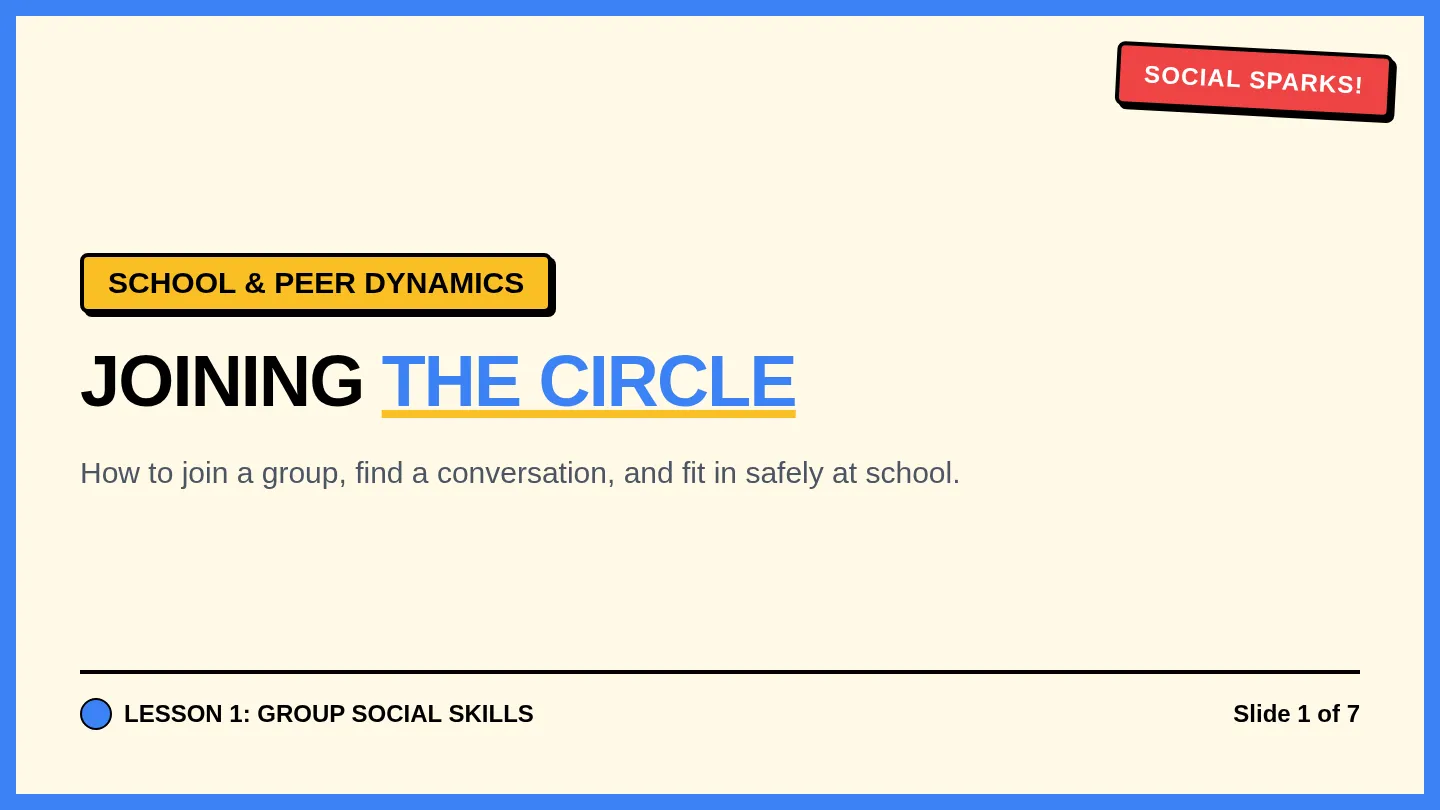
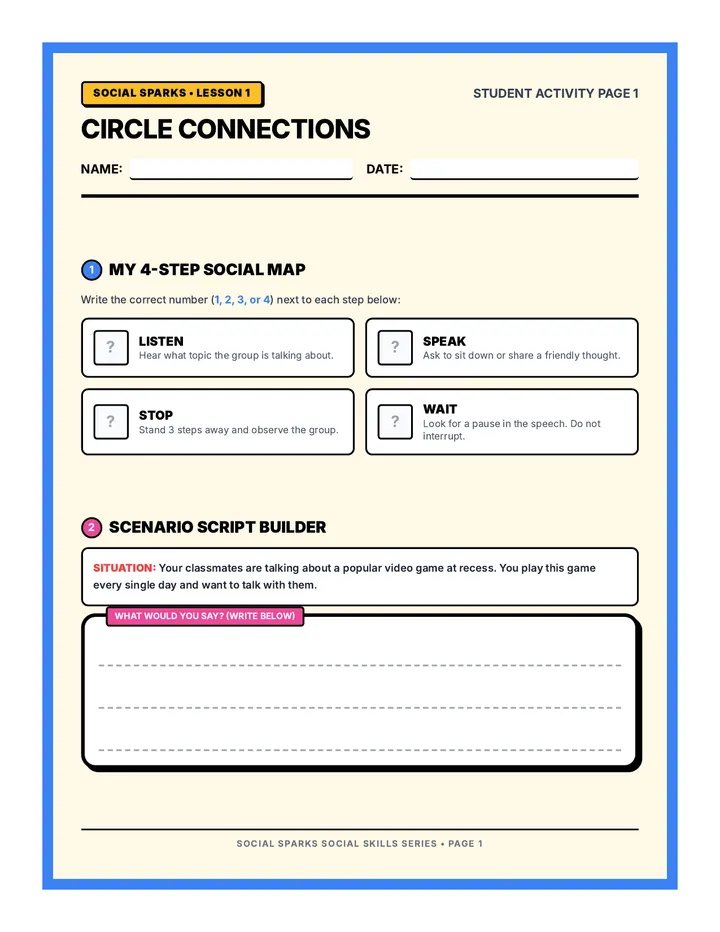
A 10-minute high-impact lesson on social communication skills for students with intellectual disabilities, featuring differentiated task cards and visual supports.
A scaffolded approach to simplifying fractions, focusing on finding common factors and understanding equivalence through visual models and step-by-step practice.
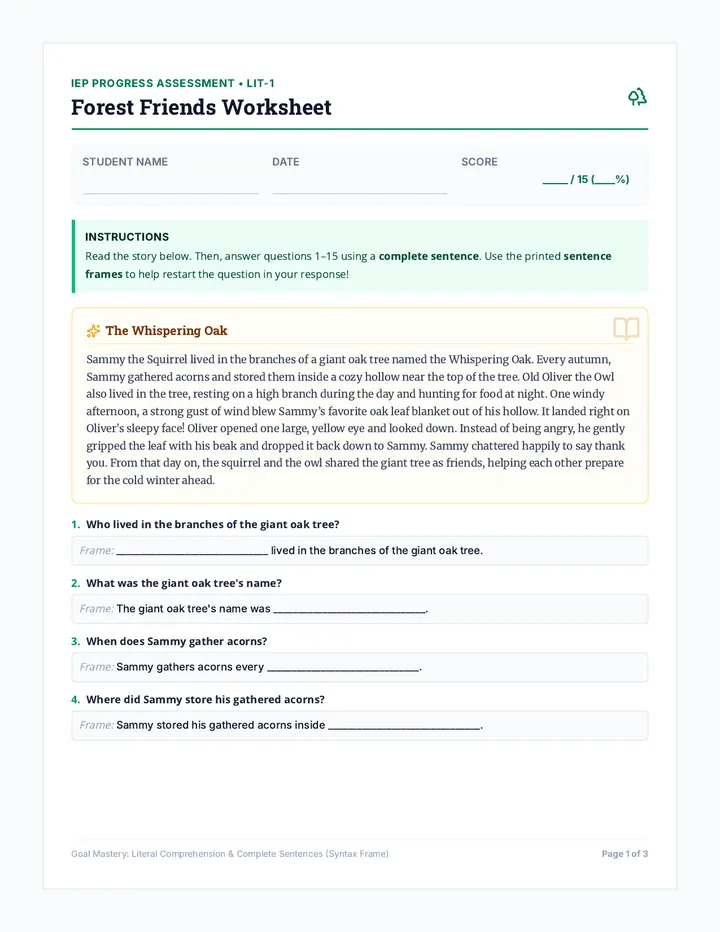
This lesson focuses on helping students who use AAC to visualize and communicate their long-term goals. It provides visual supports and a choice board to facilitate expression about their future aspirations.
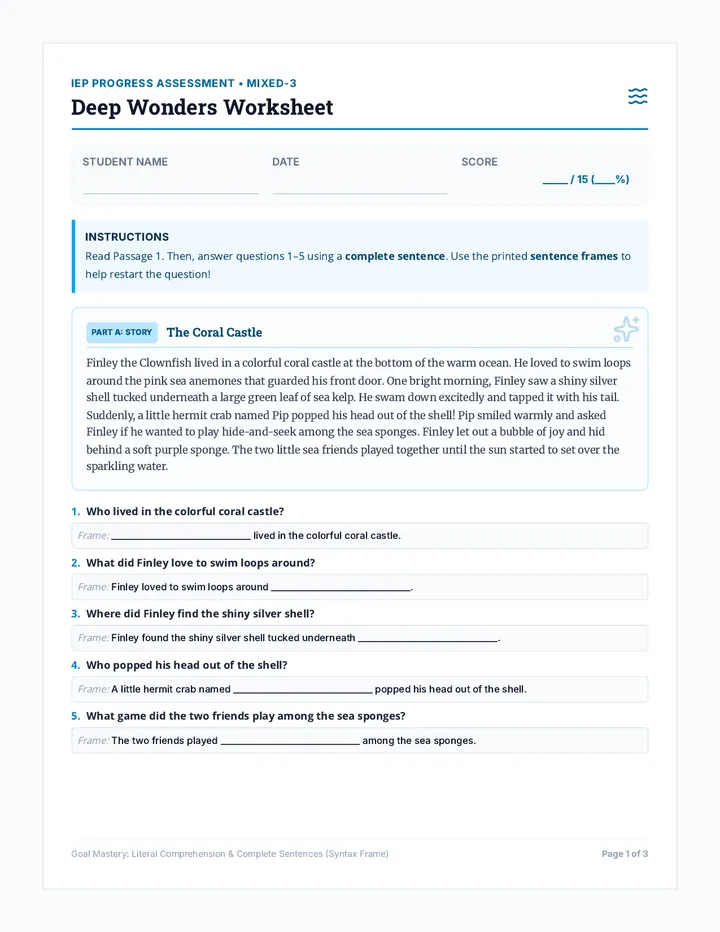
A gym-based lesson for lifeskills kindergartners focusing on foundational social-emotional skills through movement and simple play. The lesson includes high-visibility visual supports and low-complexity games designed to minimize elopement and maximize engagement.
Focuses on identifying the Green Zone (calm, focused, ready) and proactive habits that help students stay in this optimal learning state.