Students compare and contrast rectangles and rhombuses using properties of angles and side lengths.
A lesson focused on comparing fractions with the same denominator or the same numerator using visual area models and number lines. Students will develop a conceptual understanding of fraction size through visual representation.
Tier 2 reteach for standard 4.NF.4: Apply and extend previous understandings of multiplication to multiply a fraction by a whole number.
Tier 2 reteach for standard 4.NF.3: Understand addition and subtraction of fractions as joining and separating parts referring to the same whole. Focus on like denominators and mixed numbers.
Students solve single-step division word problems using basic facts and larger numbers with 1-digit divisors, supported by a multiplication chart reference.
Tier 2 reteach for standard 4.NF.2: Compare two fractions with different numerators and different denominators. Focus on common denominators and benchmark fractions.
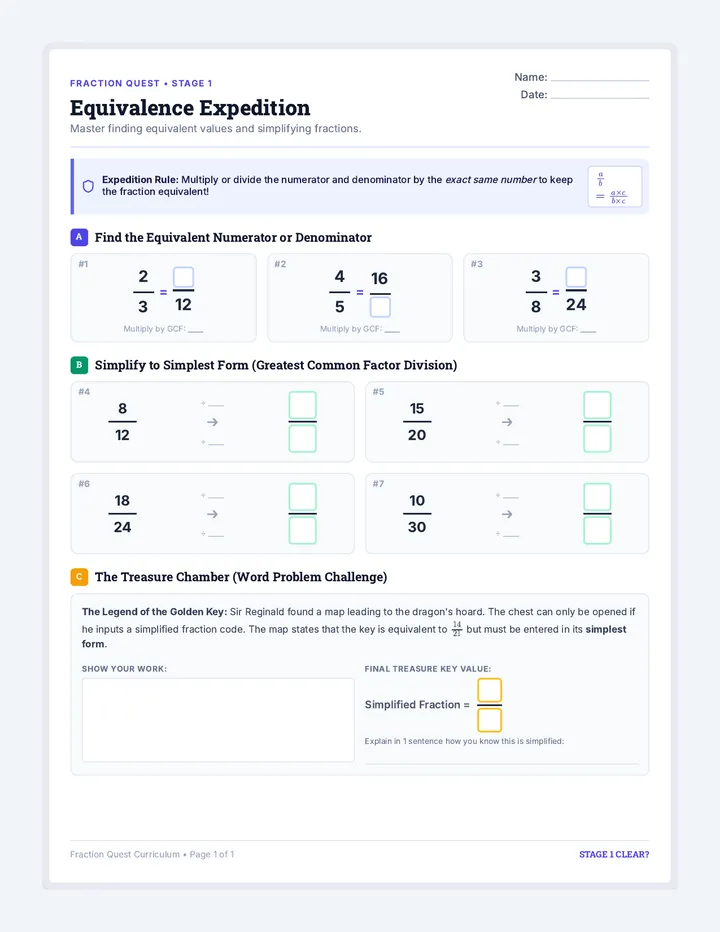
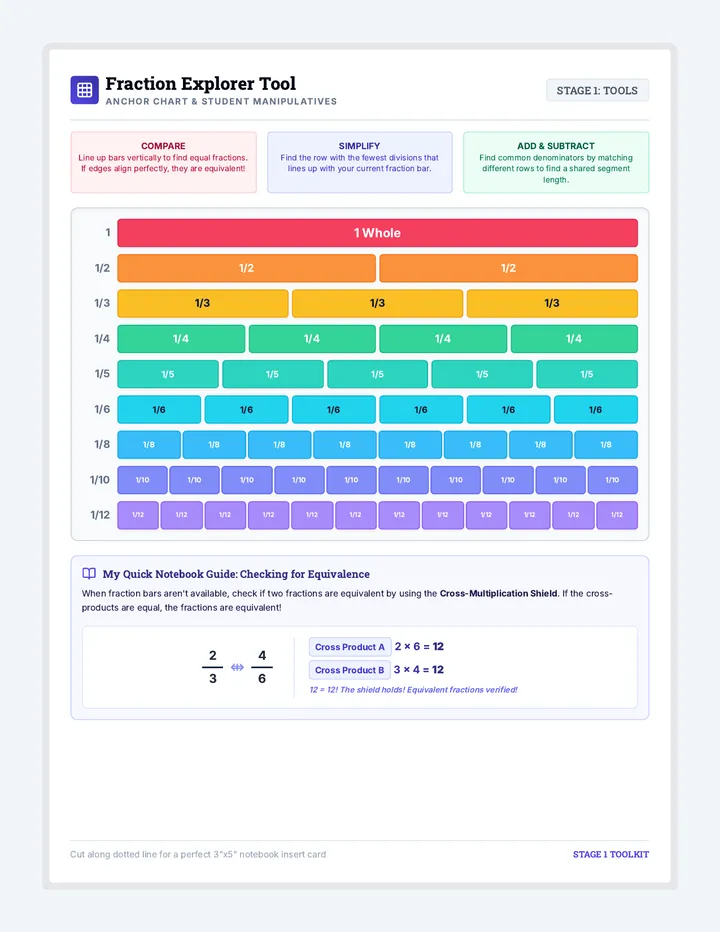
Tier 2 reteach for standard 4.NF.1: Explain why fractions are equivalent using visual fraction models. Focus on the "Splitting" and "Merging" strategies.
Tier 2 reteach for standard 4.NBT.6: Find whole-number quotients and remainders with up to four-digit dividends and one-digit divisors, using strategies based on place value.
Tier 2 reteach for standard 4.NBT.5: Multiply a whole number of up to four digits by a one-digit whole number, and multiply two two-digit numbers, using strategies based on place value.
A foundational lesson on multi-digit multiplication using color-coded place value strategies and the area model to support students working significantly below grade level.
Tier 2 reteach for standard 4.NBT.4: Fluently add and subtract multi-digit whole numbers using the standard algorithm.
Tier 2 reteach for standard 4.NBT.3: Use place value understanding to round multi-digit whole numbers to any place.
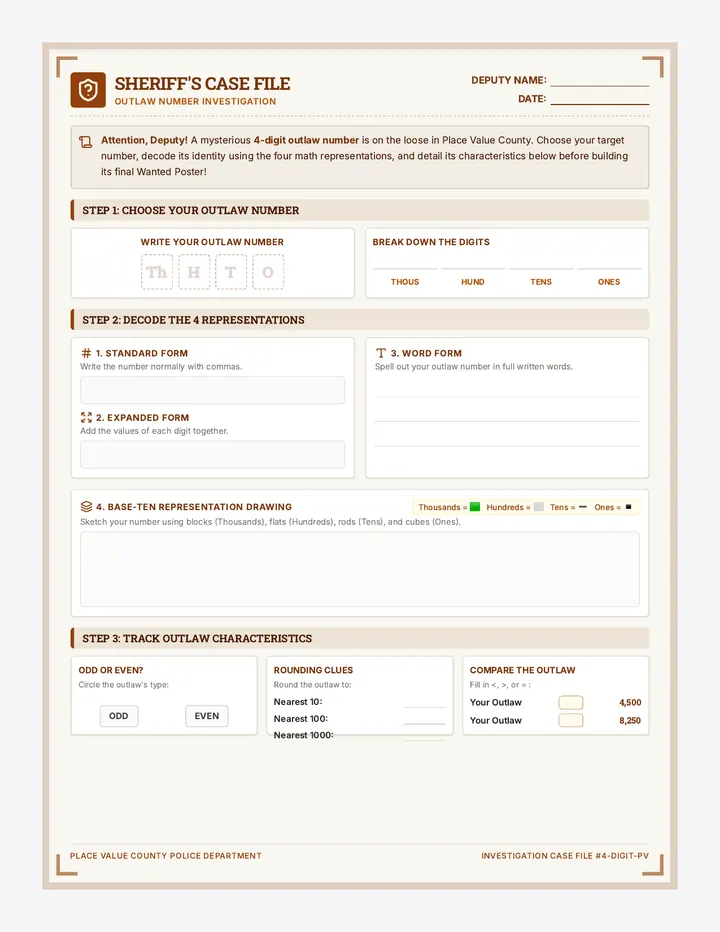
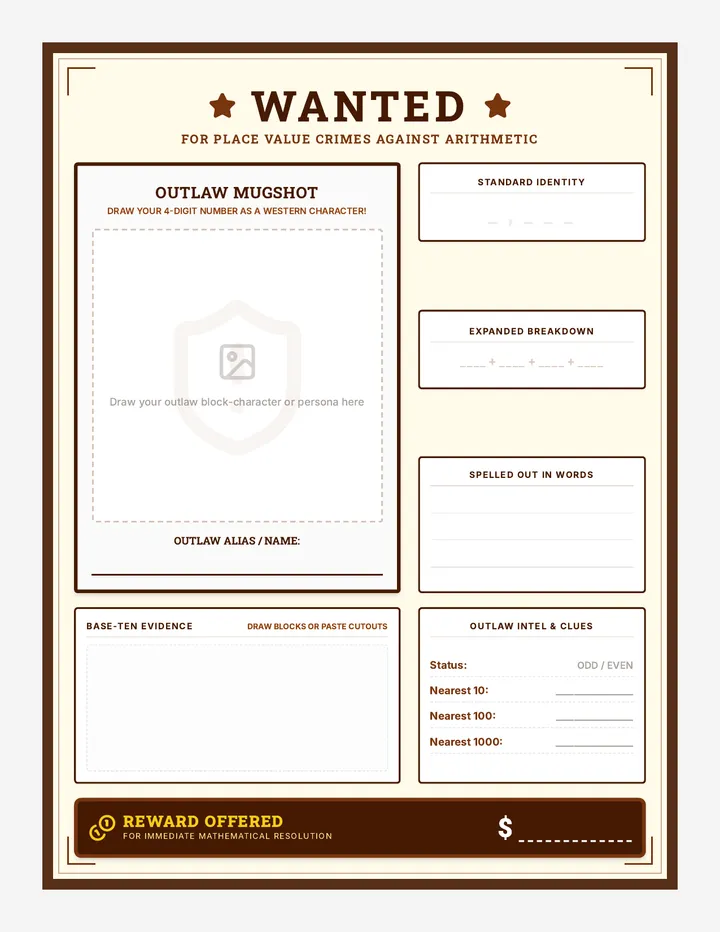
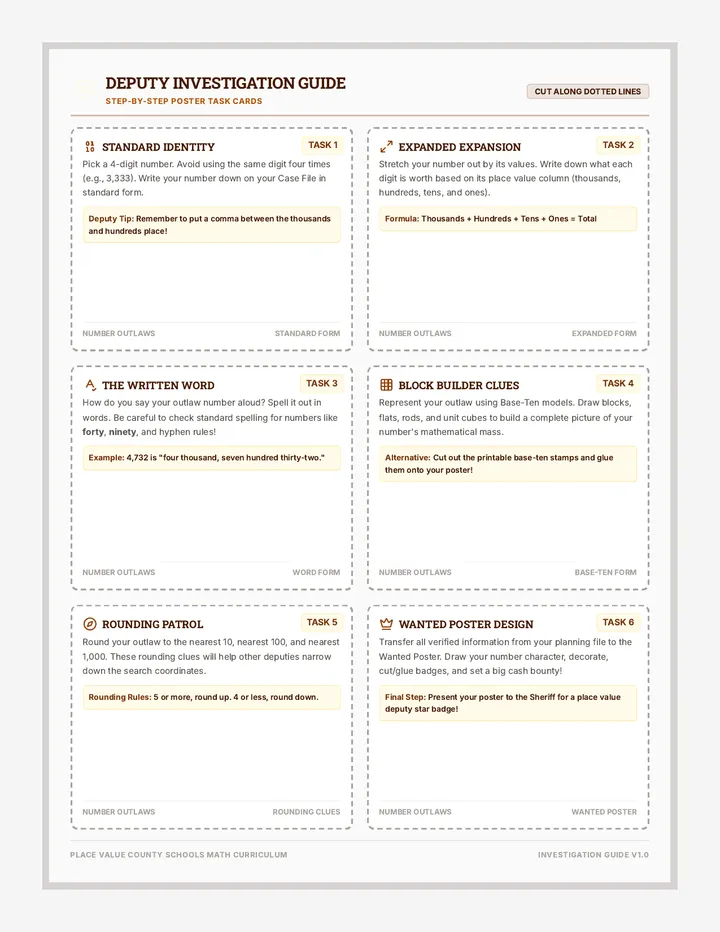
Tier 2 reteach for standard 4.NBT.2: Read and write multi-digit whole numbers using base-ten numerals, number names, and expanded form. Compare two multi-digit numbers based on meanings of the digits in each place.
Tier 2 reteach for standard 4.NBT.1: Recognize that in a multi-digit whole number, a digit in one place represents ten times what it represents in the place to its right.
Tier 2 reteach for standard 4.OA.5: Generate a number or shape pattern that follows a given rule. Identify apparent features of the pattern that were not explicit in the rule itself.
Tier 2 reteach for standard 4.OA.4: Find all factor pairs for a whole number in the range 1-100; recognize that a whole number is a multiple of each of its factors. Determine whether a given whole number in the range 1-100 is prime or composite.
Tier 2 reteach for standard 4.OA.3: Solve multi-step word problems using the four operations, including problems where remainders must be interpreted.
Tier 2 reteach for standard 4.OA.2: Solving word problems involving multiplicative comparisons using multiplication and division.
A lesson focused on adding and subtracting mixed numbers through the lens of a busy bakery, featuring word problems and computational practice.
A Tier 2 reteach lesson focused on multiplicative comparisons using tape diagrams and area models to bridge the gap between additive and multiplicative thinking.
A lesson focused on breaking down complex, multi-step word problems using the four operations through graphic organizers and visual modeling.
A comprehensive 5E lesson exploring the intersection of geometry and arithmetic through triangular and square numbers. Students will identify patterns, build geometric representations, and derive algebraic formulas for figurative numbers.
A lesson focused on introducing and practicing telling time to the half-hour, connecting analog and digital representations.
A comprehensive lesson on calculating the volume of composite figures composed of two non-overlapping right rectangular prisms, specifically modeled after NYS 3-credit extended response questions.
A sweet introduction to converting mixed numbers into improper fractions using a bakery-themed approach. Students will master the 'Multiply then Add' technique with clear visual aids and practice problems.
A collection of tools for tracking student progress in mastering number decompositions for 6 and 7.
A lesson focused on mastering multi-digit multiplication using the partial products method and area models to visualize the process.
A high-stakes escape room challenge where students solve PEMDAS expressions involving exponents to crack the vault code. Students act as digital detectives navigating four distinct security layers.
A focused lesson on solving multi-step word problems involving measurement conversions for length, time, and volume. Students practice converting units before applying arithmetic operations to find solutions.
A lesson focused on solving multi-step word problems involving mass, volume, and capacity unit conversions. Students use conversion charts and operation keywords to determine the correct mathematical steps for each scenario.
A mini-lesson introducing probability concepts through the lens of 'The Luck Lab', covering vocabulary (certain to impossible) and fractional representations.
A comprehensive lesson on classifying quadrilaterals based on their properties, focusing on the hierarchy and inclusive definitions required for 5th-grade geometry.
A comprehensive set of small group activities where students calculate unknown angles and determine the area of various figures using tiling and equations. The lesson uses a 'Blueprint Builders' theme to engage students in real-world mathematical applications.
A 45-minute lesson exploring inverse variation through the lens of travel speed and Boyle's Law, focusing on formulating and solving equations for real-world scenarios.
A comprehensive lesson on comparing and representing fractions using area and length models within a bakery-themed context. Students will practice comparing fractions with like numerators or denominators and identifying equivalent fractions and whole numbers.
Students learn to apply Sine, Cosine, and Tangent to real-world measurements and abstract artistic design, culminating in a dual-phase project.
A hands-on geometry lesson where students explore the mathematical properties of circles through real-world measurement and creative geometric art design. Students discover the relationship between circumference and diameter while applying area formulas to their own masterpieces.
This lesson focuses on practical math applications in a retail setting, covering decimals, percentages, and basic arithmetic with a focus on money management.
A comprehensive milestone assessment and review unit for 6th-grade students performing in the 221-230 RIT range, focusing on The Number System and Expressions & Equations. Includes a technical blueprint, skill-building lab activities, and a final proficiency assessment.
This lesson focuses on the hierarchical classification of quadrilaterals, helping students understand that subcategories inherit properties from their parent categories.