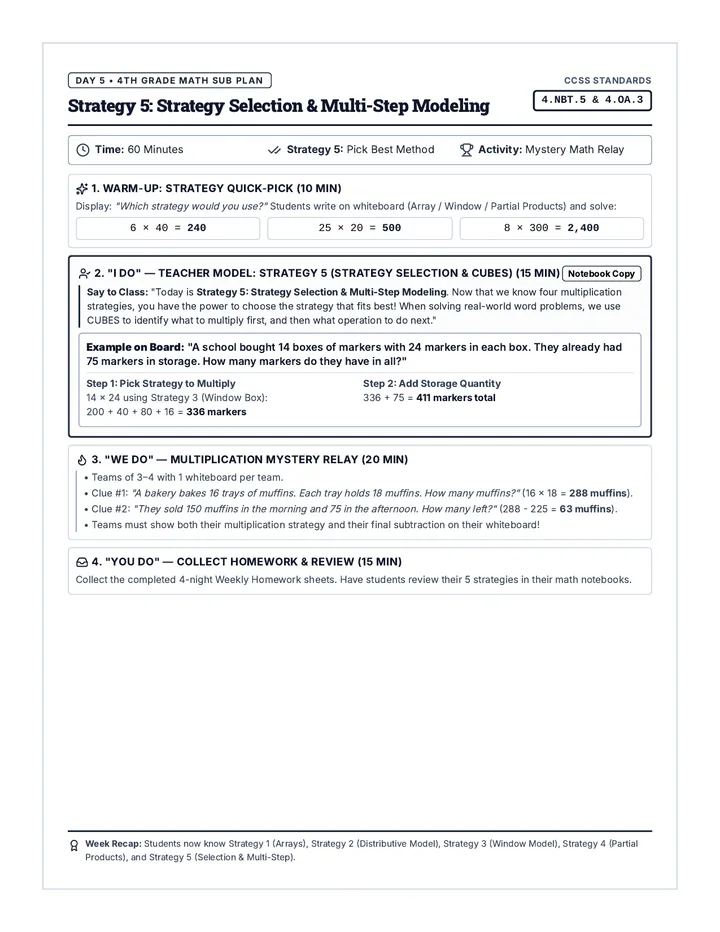
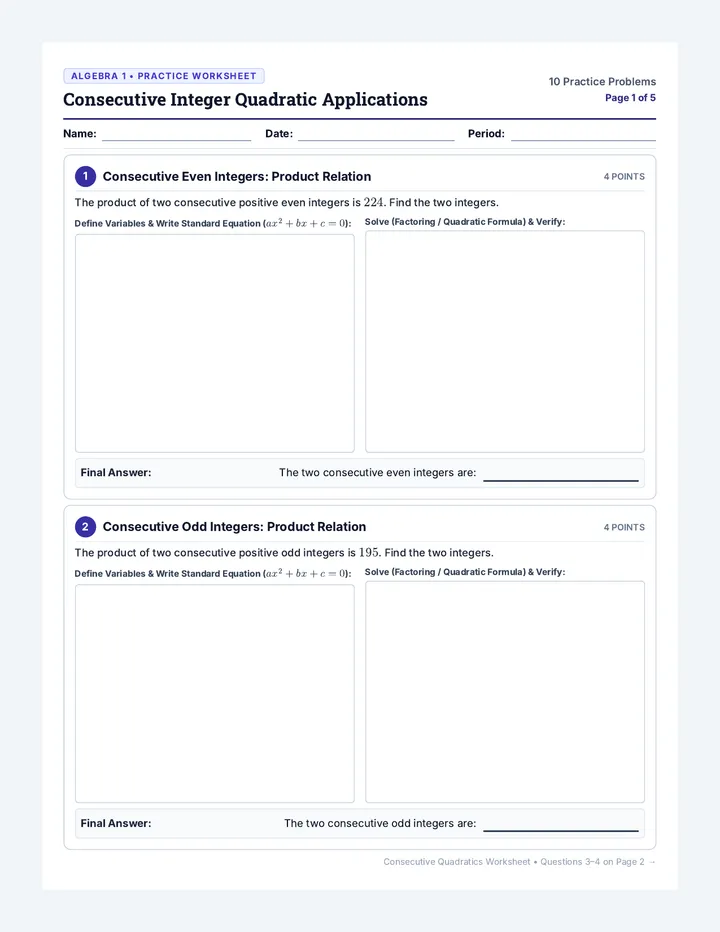
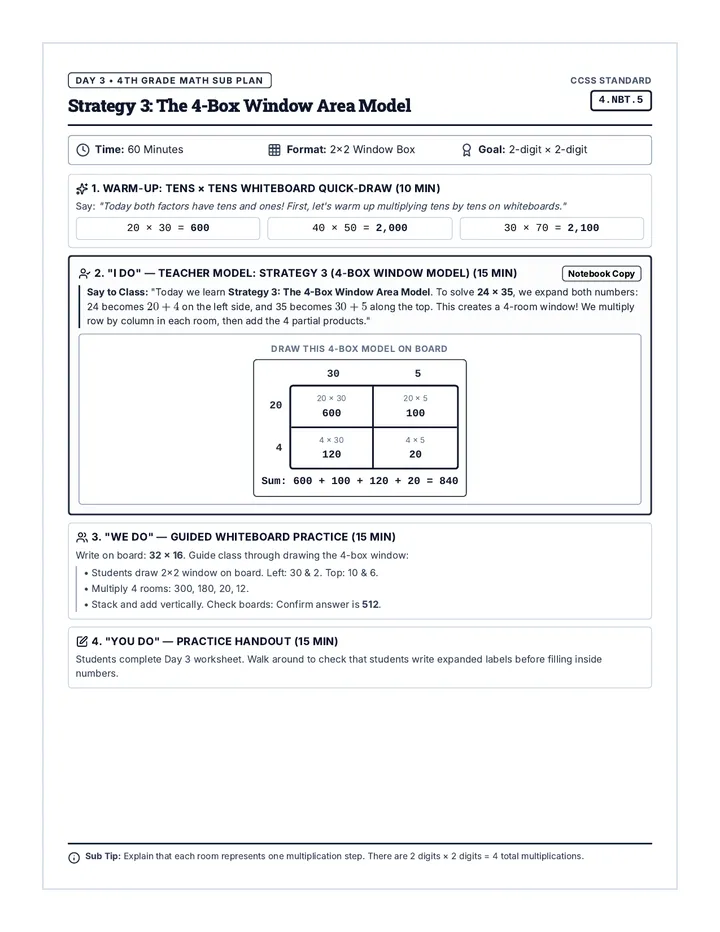
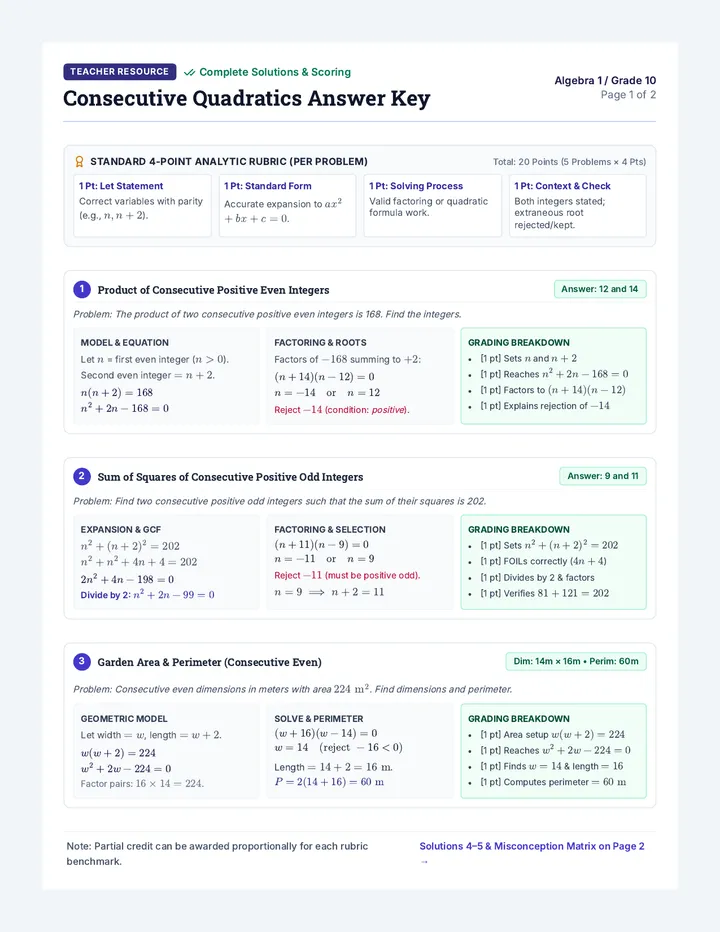
"My priceless relic was snatched while clumsy, bumbling guards dozed!"
Connotative Impact: "Bumbling" carries negative emotional weight to plant blame on guards.
Figurative Language (Hyperbole) Tone: Melodramatic
"My heart shattered into a million pieces when I saw Vault 4."
Figurative Impact: Hyperbole exaggerates distress to make him seem like an innocent victim.
Detective Question: Are the narrator's words neutral facts or emotional manipulation? Check the math!
Spiral Synthesis The Grand Accusation
Case Showdown
Examine the suspect's statement. Combine Ratios, Unit Rates, and Word Choice (RL.6.4):
The Intern's Statement: Suspect #3
"I drove the delivery van to downtown storage. I drove 180 miles in 2 hours on city streets, driving totally peacefully and responsibly, because I have a heart of gold!"
1. Math Unit Rate (6.RP.2): 180 mi ÷ 2 hr = 90 mph! Can someone drive "peacefully" at 90 mph in a city?
2. Word Choice & Tone (RL.6.4): Why does she use the idiom "heart of gold"? To feign innocence while speeding!
Ready Detectives? Open your Case Files Worksheet! Case File #602 • 30-Minute Lab
Unit Rate: _________ miles per 1 hour
Unit Rate Forensic Check:
City street speed limits are strictly 35 mph. Which suspect's alibi is mathematically impossible?
Part 4: Contrasting Tone & Forensic Verdict (RL.6.4 & 6.RP.2 Spiral) Transcript #B2
"My team followed museum protocol to the letter. We checked Vault 4 every 30 minutes like clockwork. At 12:01 AM, Finch sprinted down the corridor clutching a heavy velvet briefcase, sweating profusely. When I called out, he shouted at me to mind my own business."
— Officer Bradley, Head of Security
7. Tone Contrast (RL.6.4): How do Officer Bradley's words ("protocol to the letter", "like clockwork") convey a disciplined, objective tone that contrasts with Curator Finch's emotional statements?
8. Final Detective Verdict: Combine Suspect A's calculated unit rate (Part 3) with Officer Bradley's testimony. Who stole the scarab, and how does math expose their story?
Ratio Sleuths Case File #602 • Grade 6 (30-Min Lesson) Page 2 of 2 • Submit to Lead Detective
(A) Unit Rate: ______ m/s (B) Loaded Verb Impact: ________________________
Day 7 Exit Ticket • Exposing False Diction with Rates
Name: ____________________ Date: ________
Suspect claims: "I strolled leisurely at 2 mph for 3 hours, traveling 18 miles." Prove mathematically why the word "leisurely" is a deceptive lie:
Math Proof: 2 mph × 3 hr = ____ mi (needed 6 mph!) Diction Breakdown: ____________________
Day 8 Exit Ticket • Multi-Step Rate Comparison
Name: ____________________ Date: ________
Drone Alpha flies 240 feet in 12 seconds. Drone Beta flies 350 feet in 14 seconds. Which drone is faster, and by how many feet per second?
Alpha: ____ ft/s • Beta: ____ ft/s Faster Drone & Difference: ________________
Day 9 Exit Ticket • Spiral Dossier Self-Check
Name: ____________________ Date: ________
Rate your confidence (1–5) on each target: Ratios (6.RP.1), Unit Rates (6.RP.2), and Word Connotation/Tone (RL.6.4). State one concept to review before the Day 10 exam:
RP.1: [ ] / 5 • RP.2: [ ] / 5 • RL.6.4: [ ] / 5 Target Review Focus: ________________
Day 10 Exit Ticket • Post-Assessment Reflection
Name: ____________________ Date: ________
Case Closed! In one sentence, explain how unit rate mathematics proved that the suspect's innocent word choices and metaphors were false:
Reflection: ________________________________________________________________________________________________
Ratio Sleuths Daily Checks • Page 2 of 2 Standards: 6.RP.1, 6.RP.2, RL.6.4 (30-Min Lessons)
Teacher Resource
Item 1 Solution (6.RP.A.1) — 3 Pts Full Credit: Correct 3 forms + reduction
Answers: Words: 12 to 4 • Colon: 12:4 • Fraction: 12/4 • Simplified: 3 to 1 (or 3:1, 3/1).
1 pt for 3 valid forms; 1 pt for correct order (tablets first); 1 pt for simplification to 3:1.
Item 2 Solution (6.RP.A.1) — 4 Pts Full Credit: 8 cameras + proportional reasoning
Answer: 8 security cameras.
Explanation: The ratio is 2 cameras for every 5 detectors. Since \(20 \div 5 = 4\), the multiplier is 4. Multiply \(2 \times 4 = 8\) cameras. (Or equivalent ratio equation \(2/5 = x/20 \implies x = 8\)).
Item 3 Solution (6.RP.A.2) — 4 Pts
Calculation: \(270 \div 4.5 = 60\).
Answer: 60 miles per hour.
2 pts work shown; 2 pts correct rate with units.
Item 4 Solution (6.RP.A.2) — 4 Pts
Pack A: \(\$24 \div 8 = \$3.00\) per pick.
Pack B: \(\$30 \div 12 = \$2.50\) per pick.
Answer: Pack B ($2.50 per pick).
Items 5 & 6 Solutions (RL.6.4 & Spiral Synthesis) — 10 Pts 5 Pts each item
Item 5 (Word Choice & Tone): The speaker employs strongly connotative diction: the loaded label "paranoid tyrant" carries bitter hostility toward authority, while the minimizing phrase "simply guarding" downplays responsibility. Together, these choices construct an aggressive yet self-absolving tone designed to deflect guilt.
Item 6 (Synthesis): Unit rate calculation: \(18 \text{ miles} \div 3 \text{ hours} = 6 \text{ mph}\). Stationed stationary at the depot would yield a travel rate of 0 mph. The recorded rate of 6 mph proves continuous vehicle movement over 18 miles, completely shattering the speaker's claimed innocence and exposing their tone as deceitful rhetoric.
4 - Master Sleuth (23–25)
3 - Detective (19–22)
2 - Apprentice (15–18)
1 - Novice (0–14)
Exemplary ratio models, flawless unit rates with correct units, nuanced explanation of loaded words, figurative meaning & tone.
Accurate ratio & rate computations with minor arithmetic slip; correctly identifies connotations and explains impact on tone.
Inconsistent unit rate division (inverted divisor); identifies loaded words but struggles to explain overall tone impact.
Cannot compute unit rates; misses ratio order; minimal or superficial reading response without text evidence.
Ratio Sleuths Cumulative Exam Key • Grade 6 Common Core Page 2 of 2 • Teacher Grading Resource
Days 6–10
Day
Lesson Focus
Standards
Daily "I Can" Target & Vocabulary
Forensic Activity & Check
06
Heist Timeline Spiral
All 3 Standards
I can compare ratios and unit rates across time logs.
Vocab: rate comparison, pacing, tone shift.
Cross-examine timeline logs against guard statement.
Exit Check: Timeline discrepancy.
07
Debunking Suspect Lies
All 3 Standards
I can use unit rates to prove figurative statements false.
Vocab: contradiction, deceptive diction, verification.
Calculate walking rates to debunk intern's alibi.
Exit Check: Rate proof vs. text lie.
08
Multi-Rate Evidence
All 3 Standards
I can solve multi-step rate problems & analyze subtle tone.
Vocab: multi-step rate, nuance, underlying attitude.
Drone surveillance speeds; examine defensive nuances.
Exit Check: Drone unit rate diff.
09
The Forensic Briefing
Unit Review
I can synthesize mathematical and textual evidence.
Vocab: synthesis, culmination, claim, warrant.
Assemble Case File Alpha & Beta into formal indictment.
Exit Check: Self-confidence rating.
10
Final Case Exam
Unit Exam
I can demonstrate mastery of 6.RP.1, 6.RP.2, and RL.6.4.
Summative Assessment Period (30 min).
Individual Cumulative Assessment.
Case Closed Reflection.
Week 1 Focus (Days 1–5): Foundation 30 min/day
Direct explicit instruction on ratio notations and unit rate computation (\(a/b\)). In ELA, students identify loaded adjectives, connotations, and sensory metaphors in witness statements.
Week 2 Focus (Days 6–10): Application 30 min/day
Multi-step problem solving and debunking suspect claims. Students use mathematical certainty (rates) to dispute subjective, misleading word choices and uncover the culprit.
Ratio Sleuths Scope & Sequence • Grade 6 Common Core Standards: 6.RP.A.1, 6.RP.A.2, RL.6.4
8. Final Forensic Verdict: The evidence points directly to Curator Finch and Driver Suspect A working together. Finch's sprint with a heavy briefcase matches Suspect A's getaway speed of 70 mph.
Ratio Sleuths Answer Key • Page 1 of 2 Worksheet Solutions Guide
Teacher Resource
Daily Slips Key
Day 1 (6.RP.1): Cameras to Vases
Three forms: 5 to 15, 5:15, 5/15 (or simplified 1 to 3, 1:3, 1/3). Sentence: "For every 1 camera, there are 3 vases."
Day 2 (6.RP.1 & RL.6.4): Connotations
(A) Simplified ratio: 2 to 8 = 1 to 4 (or 1:4). (B) The word "incompetent" carries a harsh negative connotation indicating contempt.
Day 3 (6.RP.1 & RL.6.4): Equivalence & Tone
Gold coins: Ratio 3:7. Since \(21 \div 7 = 3\), multiply \(3 \times 3 = \) 9 gold coins. Tone: The metaphor "worthless junk" conveys arrogant dismissiveness.
Day 4 (6.RP.2): Unit Rate Fuel
Calculation: \(135 \div 3 = 45\). Unit Rate: 45 miles per gallon. Sentence: "The motorcycle travels 45 miles for every 1 gallon of gas."
Day 5 (6.RP.2 & RL.6.4): Unit Price & Hyperbole
(A) \(240 \div 6 = \$40\). Unit Price: $40 per 1 gram. (B) Calling $40/gram "practically free" is a hyperbole that exposes illegal greed.
Day 6 (Spiraled RP.1, RP.2 & RL.6.4)
(A) \(80 \div 10 = \) 8 meters/sec. (B) An objective 3rd-person narrator gives neutral speeds, while the suspect uses dramatic, breathless verbs.
Day 7 (Debunking False Claims)
Math proof: \(2 \text{ mph} \times 3 \text{ hr} = 6 \text{ miles}\). Walking 18 miles requires 6 mph (a fast run). The false word "leisurely" proves deceit.
Day 8 (Multi-Step Drone Rates)
Drone Alpha: \(240 \div 12 = 20\text{ ft/s}\). Drone Beta: \(350 \div 14 = 25\text{ ft/s}\). Drone Beta is faster by 5 ft/s (\(25 - 20 = 5\)).
Day 9 (Self-Assessment & Review)
Student self-ratings (1–5) should trigger targeted peer tutoring for ratings < 3. Review focus should cite specific ratio or rate definitions.
Day 10 (Post-Assessment Reflection)
Exemplar response: "Unit rate calculations revealed the true speeds and costs, which proved that the suspects' innocent words were just a verbal smokescreen."
Daily 5-Minute Grading Tip: Collect the exit tickets at the classroom door. Sort slips into three piles: Ready (both parts correct), Math Check (ratio/rate calculation error), and Diction Check (missed connotation/tone). Use these piles for the 5-minute warm-up grouping the next day!
Ratio Sleuths Answer Key • Page 2 of 2 Exit Tickets 1–10 Solutions
Memory: "D = Dictionary Definition!"
Ratio Sleuths Flashcards • Set 1 (Cards 1–6) Standards: 6.RP.1, 6.RP.2, RL.6.4
Study Aid Grade 6 • Detective Flashcards
Cut along dashed lines for individual study cards
RL.6.4 • ELA Card 07
Definition: The emotional or cultural feeling, positive or negative, that a word evokes beyond its literal dictionary definition.
Heist Clue: Finch calls the guards "slackers" rather than "workers".
Contrast: "Inquisitive" (+) vs. "Nosy" (-)
Memory: "C = Connection to feelings!"
RL.6.4 • ELA Card 08
Definition: The author's or speaker's attitude toward the subject, characters, or audience, established through specific word choices.
Heist Clue: Bradley's tone is disciplined; Finch's tone is arrogant.
Tone Adjectives: sarcastic, urgent, clinical, defensive.
Memory: "Tone is the author's Attitude!"
RL.6.4 • ELA Card 09
Definition: Words or expressions with a non-literal meaning used to create vivid imagery, emphasize ideas, or evoke emotion.
Types: Simile, metaphor, personification, hyperbole, idiom.
Example: "The museum was as silent as a tomb."
Memory: "Not literal! Paint pictures in the mind."
RL.6.4 • ELA Card 10
Definition: An intentional, extreme exaggeration used for dramatic emphasis, humor, or emotional distortion rather than literal fact.
Heist Clue: "My heart shattered into a million pieces."
Suspect Motive: Exaggerates distress to play the victim.
Memory: "Hyper = Over the top exaggeration!"
RL.6.4 • ELA Card 11
Definition: A direct comparison between two unlike things by stating that one thing is another (without using "like" or "as").
Heist Clue: "The director is a tyrant"; "The scarab was the crown jewel."
Impact: Transfers qualities directly to influence opinion.
Memory: "States A IS B directly!"
RL.6.4 • ELA Card 12
Definition: Words chosen deliberately for their powerful emotional connotations to persuade or manipulate the audience's reaction.
Heist Clue: "Bumbling", "tyrant", "royal care", "worthless junk".
Detective Rule: Strip away loaded words to find the math facts.
Memory: "Packed with emotional explosives!"
Ratio Sleuths Flashcards • Set 2 (Cards 7–12) Standards: 6.RP.1, 6.RP.2, RL.6.4
Unit Rate Trap (6.RP.2)
Ingenious speed or pricing trap with clear \(a/b\) calculation proving guilt.
Valid unit rate calculation with plausible alibi contradiction.
Math does not mathematically disprove the alibi; inverted division.
Word Choice & Tone (RL.6.4)
Skillful loaded diction and vivid figurative language that establish distinct tone.
Clear positive/negative connotations and at least 1 figurative device.
Word choice is mostly neutral; missing figurative language.
Peer Solving & Key
Complete, beautifully organized case file with comprehensive answer key.
Case file is solvable by peers; includes answer key with math work.
Clues are incomplete or confusing; missing full answer key.
Ratio Sleuths Extension Project • Operation Whodunit Page 2 of 2 • Teacher & Peer Rubric