A high school physics and applied math lesson where students use quadratic regression and systems of equations to model real-world parabolic motion, from basketball shots to architectural arches.
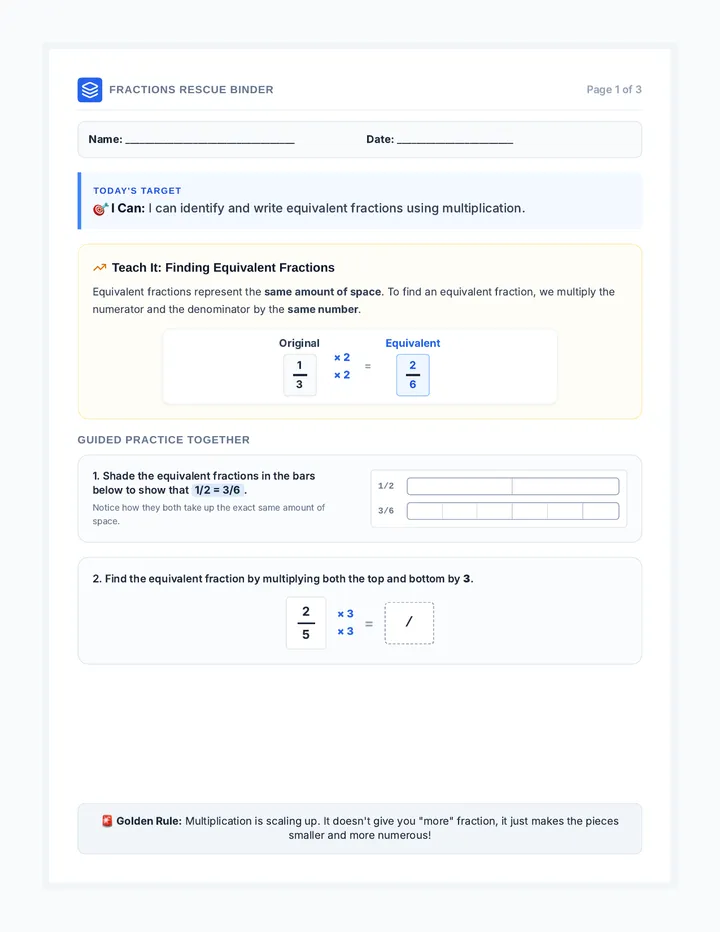
An intensive high-school math intervention binder focused on rebuilding foundational rational number operations, equivalent representations, and visual modeling for resource room or co-taught classrooms.
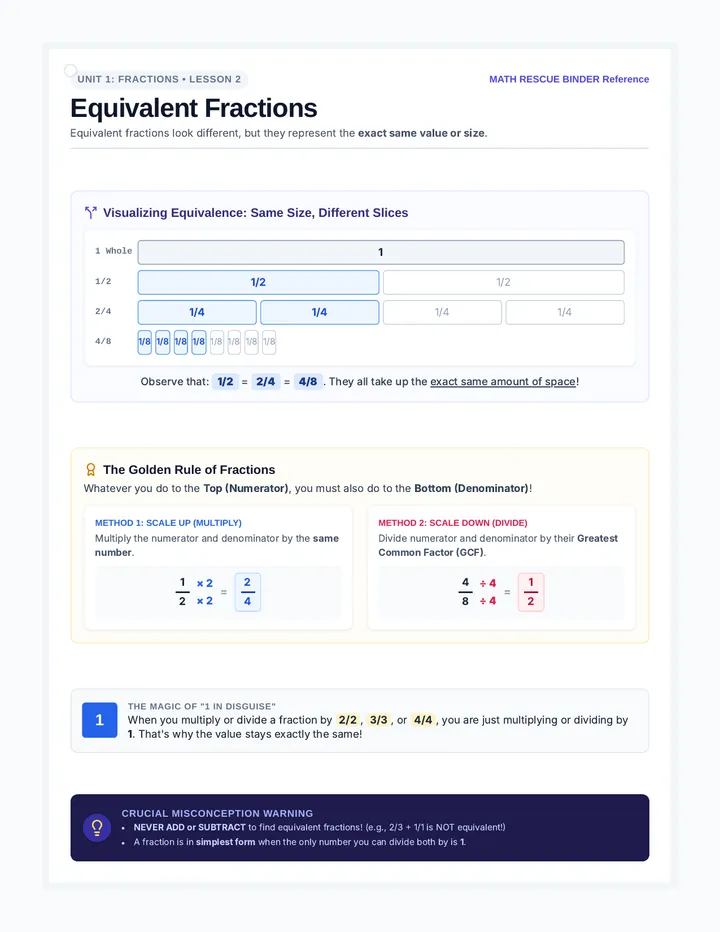
Teaches students how to identify and generate equivalent fractions, find common denominators, and simplify fractions using visual fraction bars and color-coded step-by-step methods.
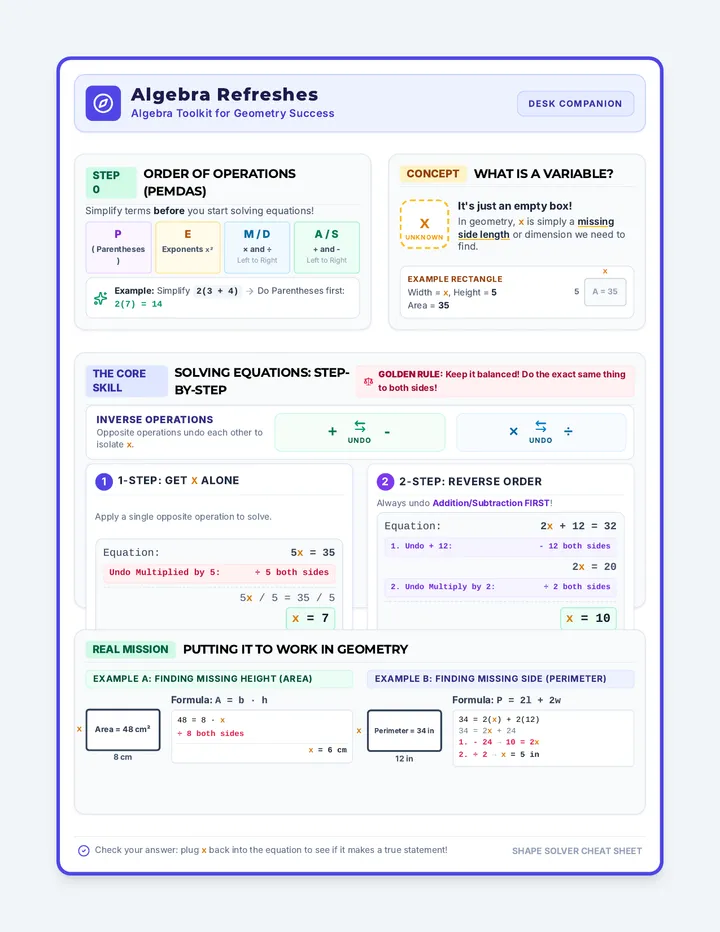
A highly visual, print-friendly, color-coded one-page laminated-style reference sheet for geometry students. It breaks down PEMDAS, explains what a variable is, demonstrates 1-step and 2-step equations using inverse operations with dual-direction arrow boxes, and applies these skills directly to geometry perimeter and area problems.
A curriculum unit tracing the development of linear equations. Students journey from ancient informal heuristics (False Position) to modern symbolic algebraic equations.
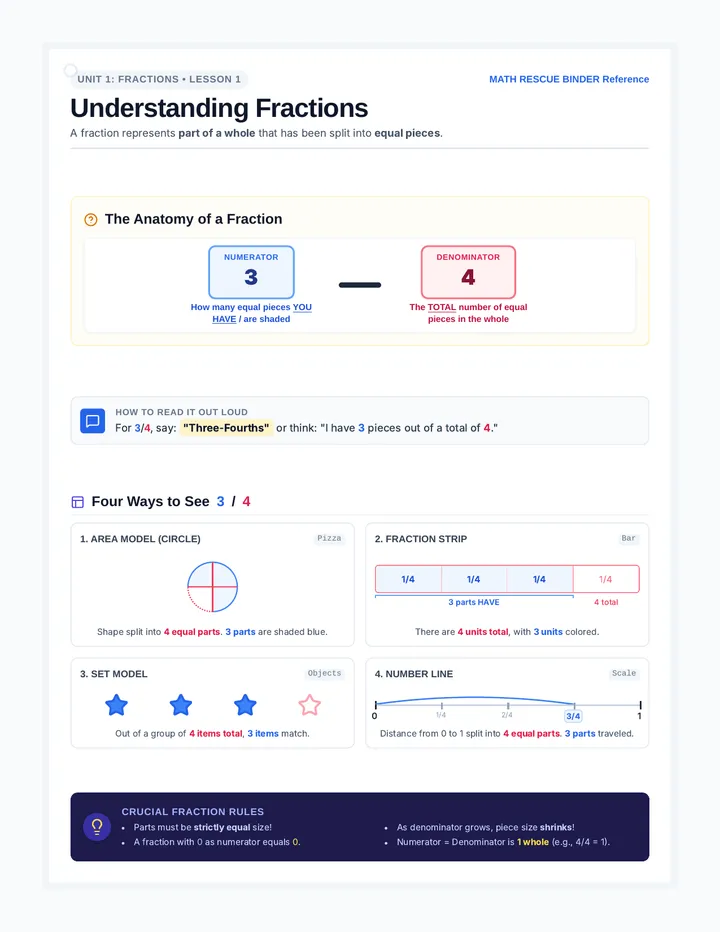
Focuses on rebuilding foundational understanding of fractions, specifically naming numerators and denominators, interpreting fractional parts, and resolving common high-school misconceptions. Designed for math intervention, resource rooms, or co-taught settings.
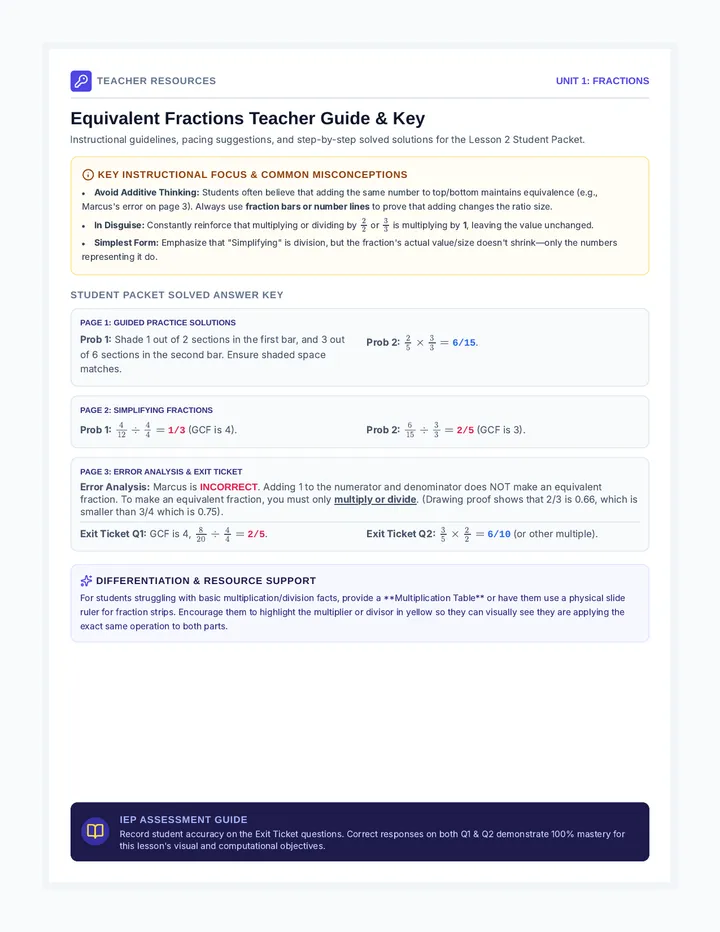
A teacher guide and step-by-step color-coded answer key for Lesson 2's Equivalent Fractions packet, providing pedagogical guidance, IEP progress tips, and fully solved problems.
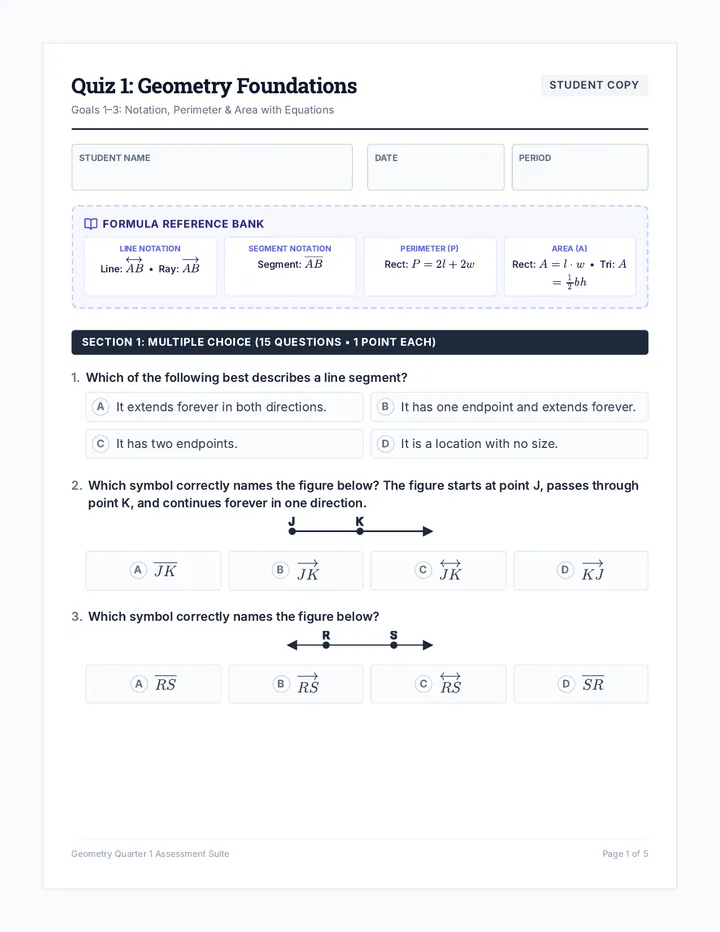
Comprehensive quarterly assessment suites for high school self-contained geometry and statistics. These modules cover foundational geometric properties (lines, segments, angles) and key statistics elements (shape, center, spread, outliers, z-scores, and normal distributions).
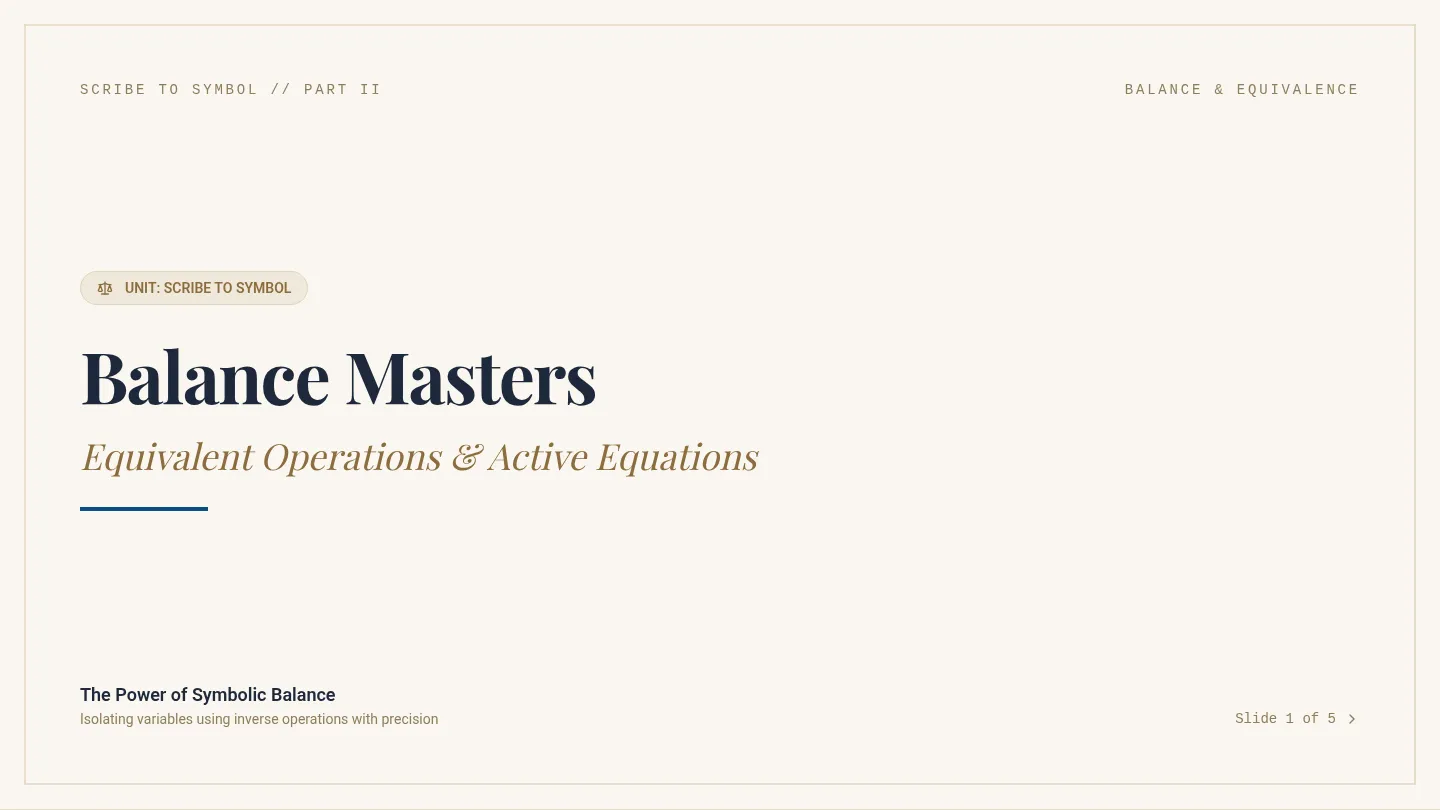
A lesson focused on solving modern linear equations using algebraic balance methods. Students solidify their understanding of equivalent operations through an active 'scoot card' classroom movement game.
A comprehensive student-facing intervention packet for Lesson 2, covering equivalent fractions, visual fraction bars, simplifying fractions, scaffolded practice, error analysis, and an exit ticket.
A high-leverage coordinate geometry unit bridging Algebra 1, Algebra 2, and Geometry. Students analyze lines, slopes, polygons, parabolas, and system intersections on the coordinate plane through an architectural blueprint lens.
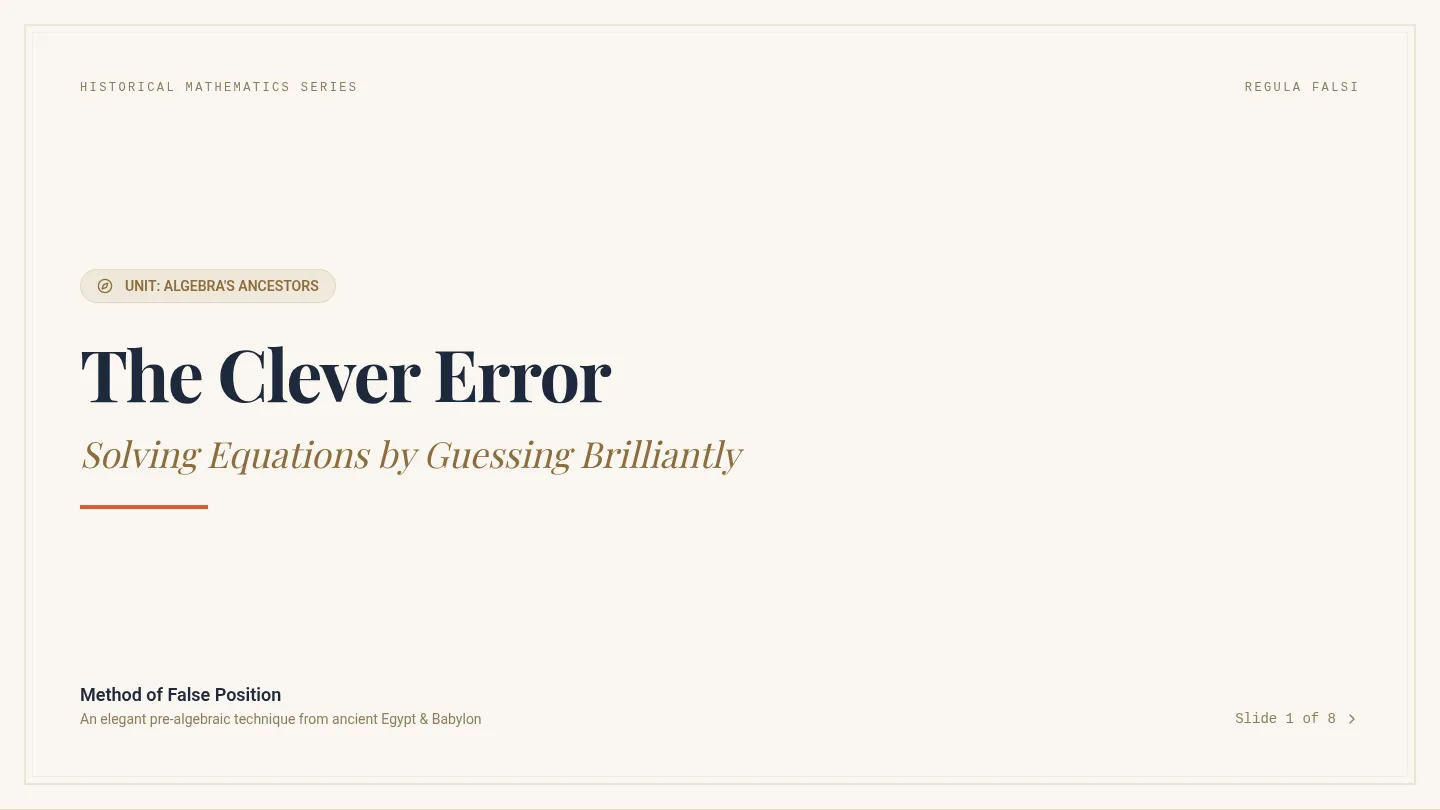
A historical and mathematical exploration of the Method of False Position (Regula Falsi). Students discover how ancient mathematicians solved linear equations before modern algebra by making deliberate "wrong" guesses and scaling the error.
A color-coded visual reference sheet comparing fraction bars to show equivalence (1/2 = 2/4 = 4/8) and detailing the rules for simplifying and generating fractions.