Students master the art of partitioning number lines into equal segments. They identify and place unit fractions (1/b) as the mark at the end of the first segment, reinforcing the relationship between the denominator and total partitions.
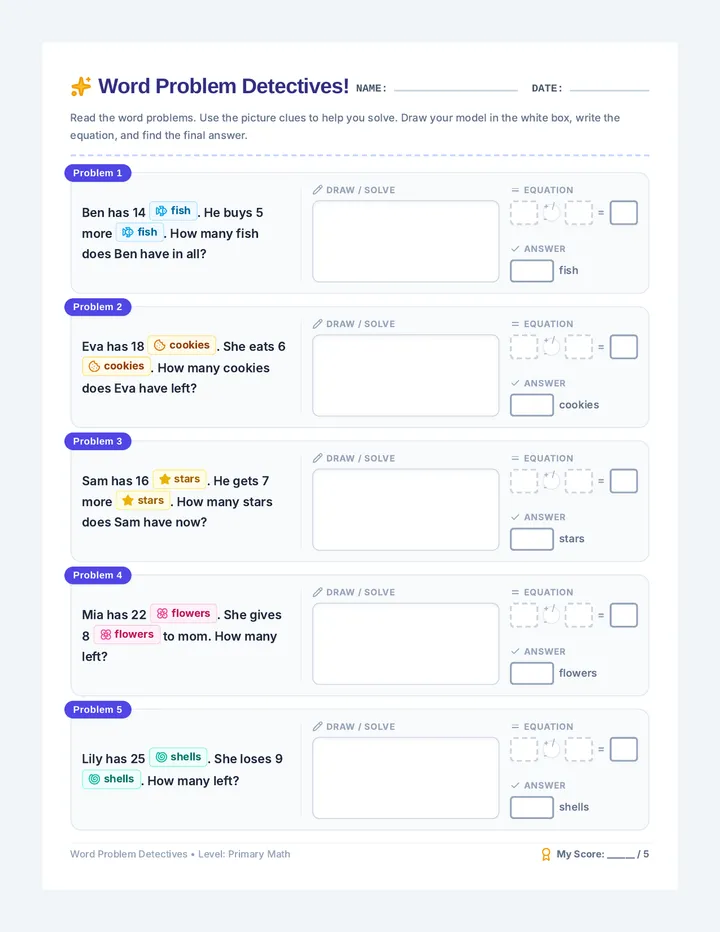
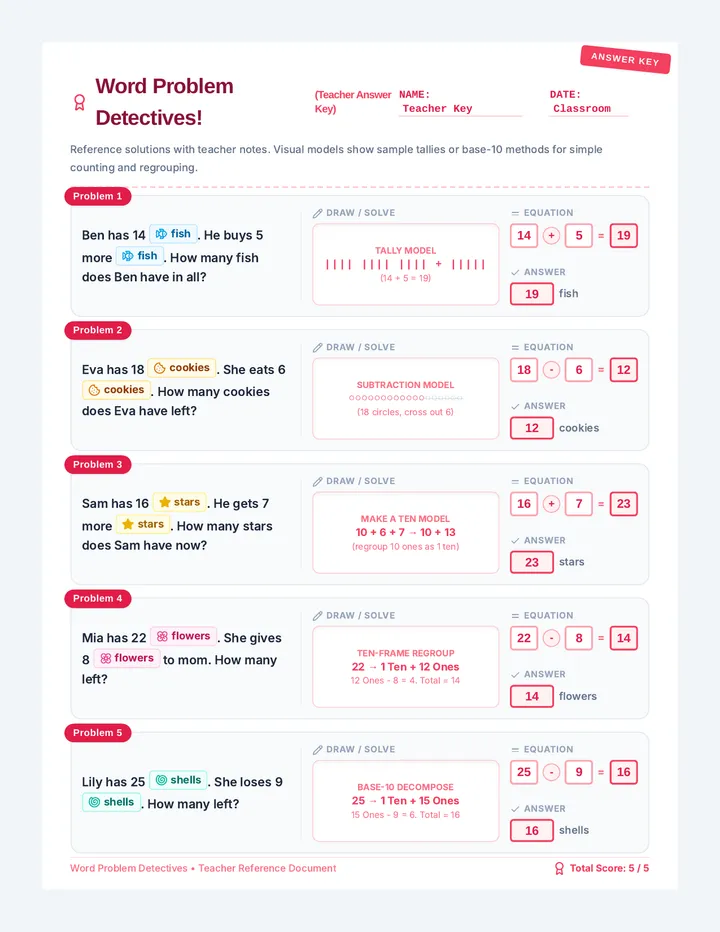
A lesson focused on solving multi-step addition and subtraction word problems using a structured checklist approach, specifically designed for students with IEPs.
A high-energy 5th-grade review session covering decimal operations (addition, subtraction, multiplication), comparing, ordering, and rounding up to the thousandths place. Designed with a racing theme to engage students in a fast-paced mathematical challenge.
A mini-mystery centered around a kitchen scene where students use observation and logic to solve a visual puzzle.
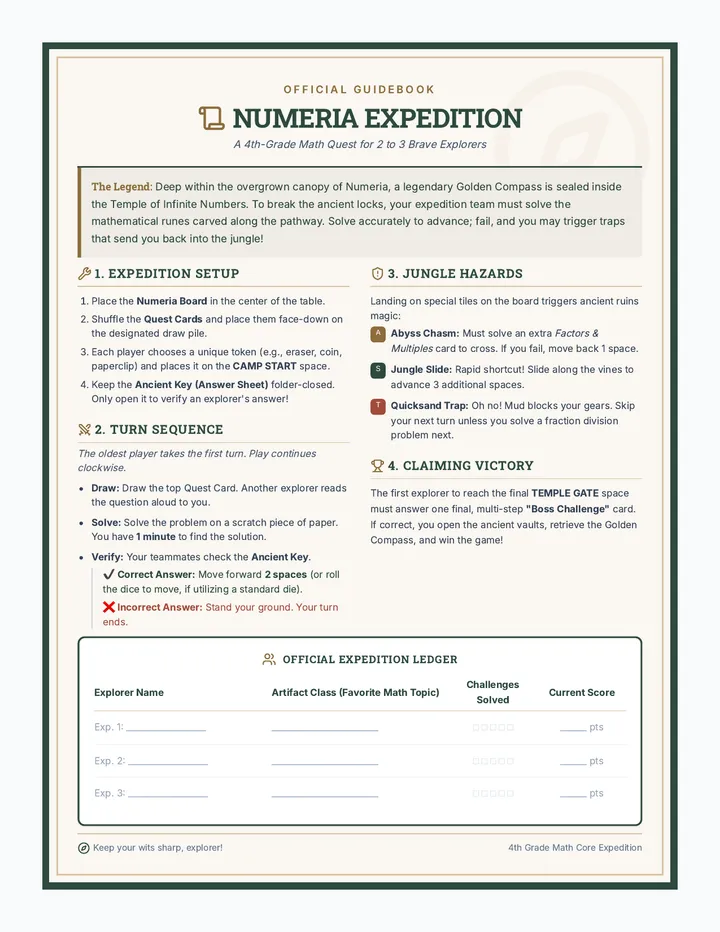
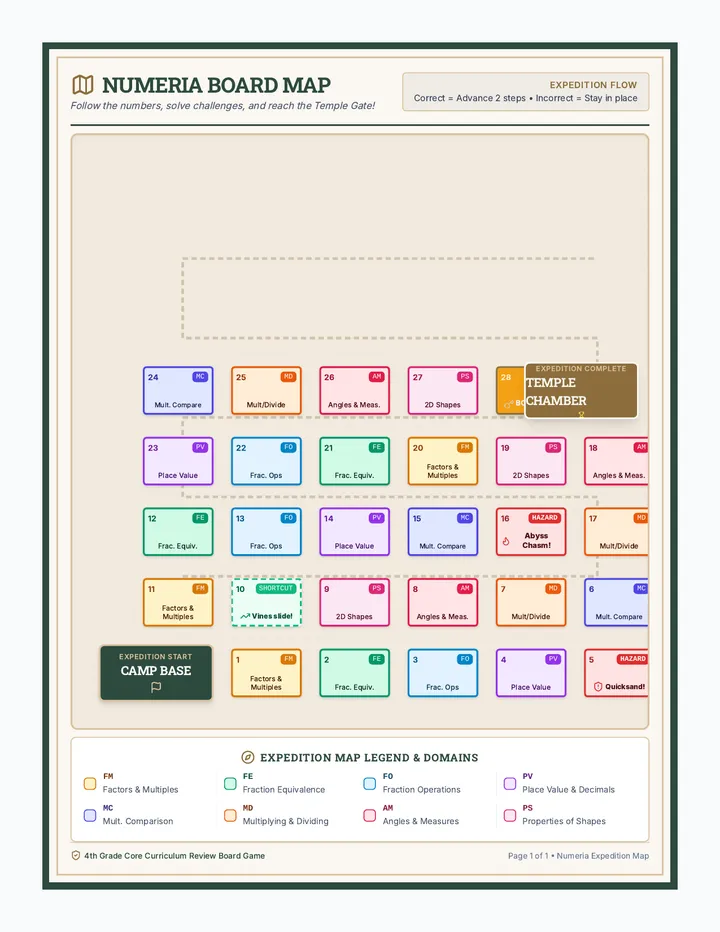
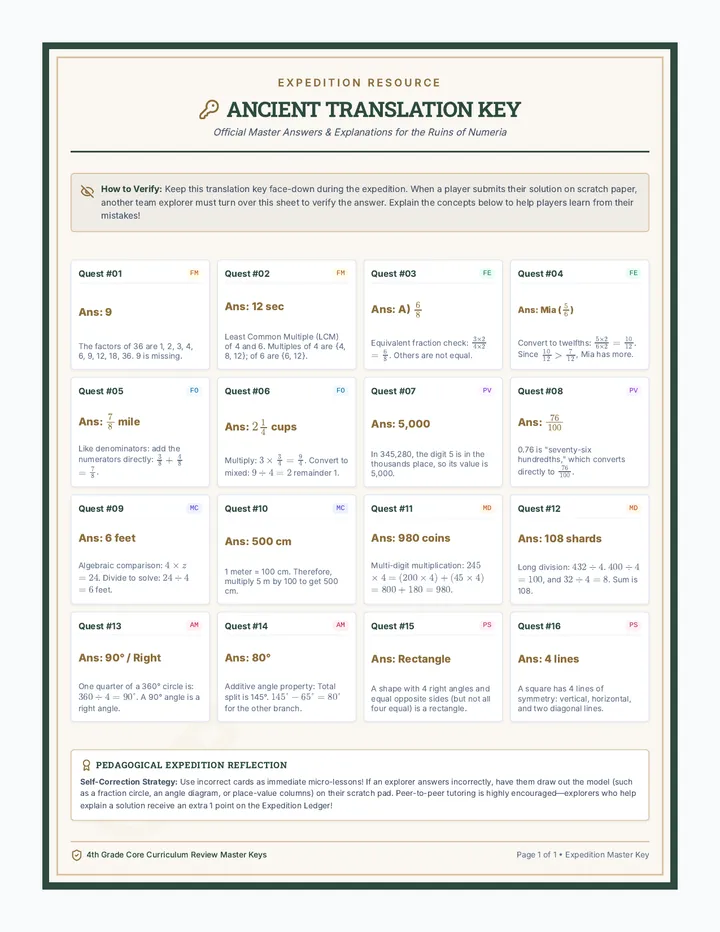
A comprehensive wrap-up lesson for 4th-grade math, focusing on applying multiplication, division, area, and perimeter skills to real-world word problems through a galactic exploration theme.
Students collect data through a class survey and create their own bar graphs, culminating in a creative spring-themed sports craft.
Students learn to read and analyze bar graphs by interpreting data about spring activities and answering comparative questions.
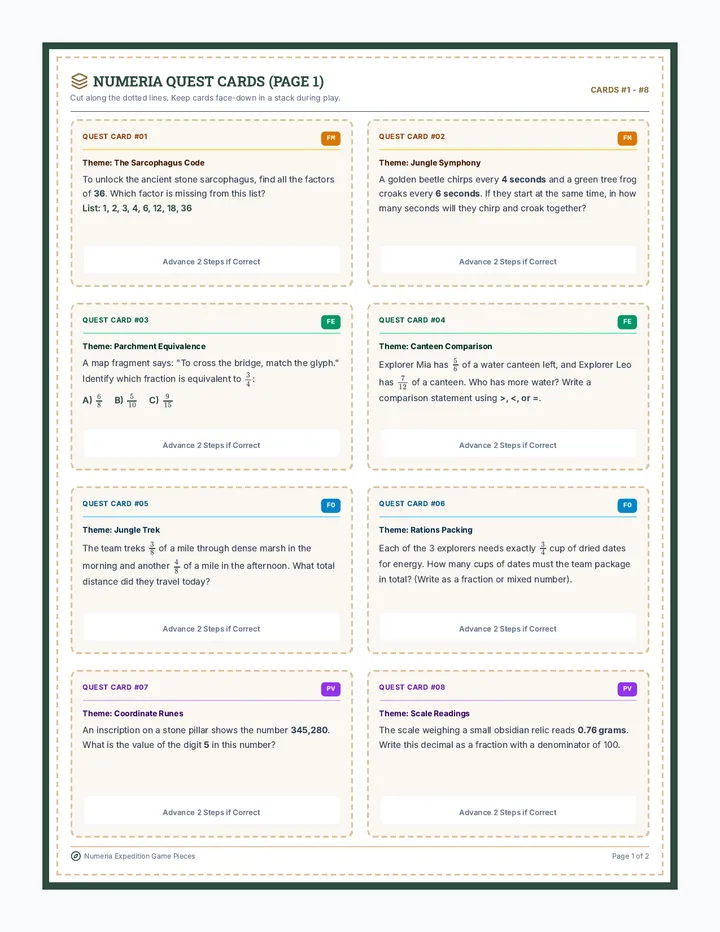
A comprehensive 4th-grade math review using a Jeopardy-style game format covering all Common Core domains: Operations, Base Ten, Fractions, Measurement, and Geometry.
A foundational lesson on clock anatomy, focusing on identifying hour numbers and five-minute increments. Students practice spatial reasoning and number sequencing within a circular layout.
A collection of high-energy 4th-grade math games focused on decimal place value, comparison, and equivalent fractions. These games utilize 10-sided dice and spinners to make reviewing tenths and hundredths engaging and hands-on.
A focused lesson on calculating area and perimeter of complex rectilinear shapes by determining missing side lengths and applying geometric formulas.
A functional math lesson using a transit map metaphor to teach students how to read schedules and calculate elapsed time, designed for grades 3-5.
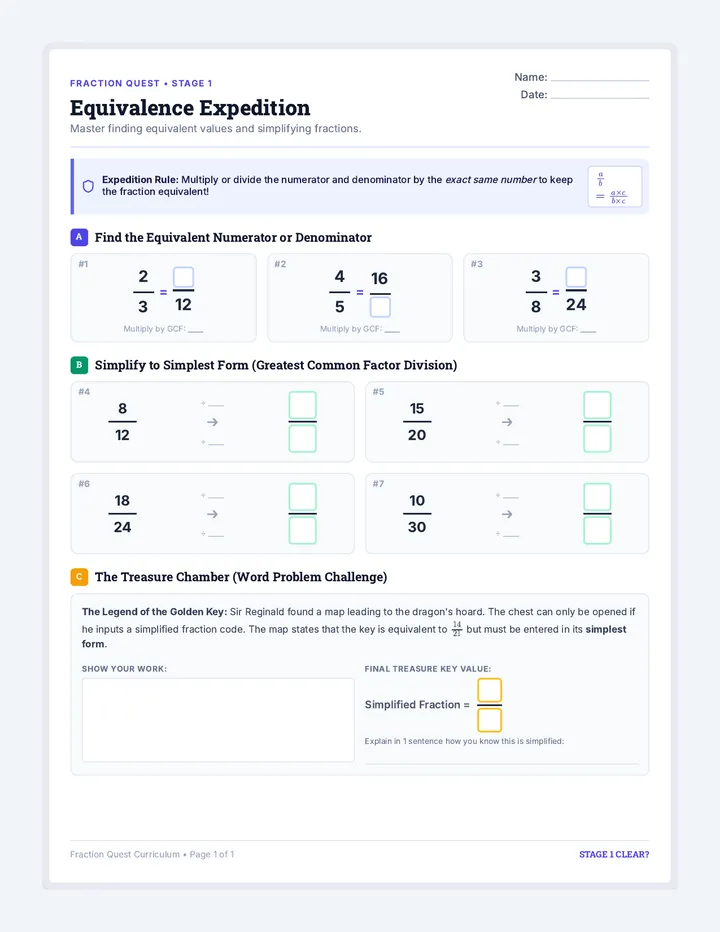
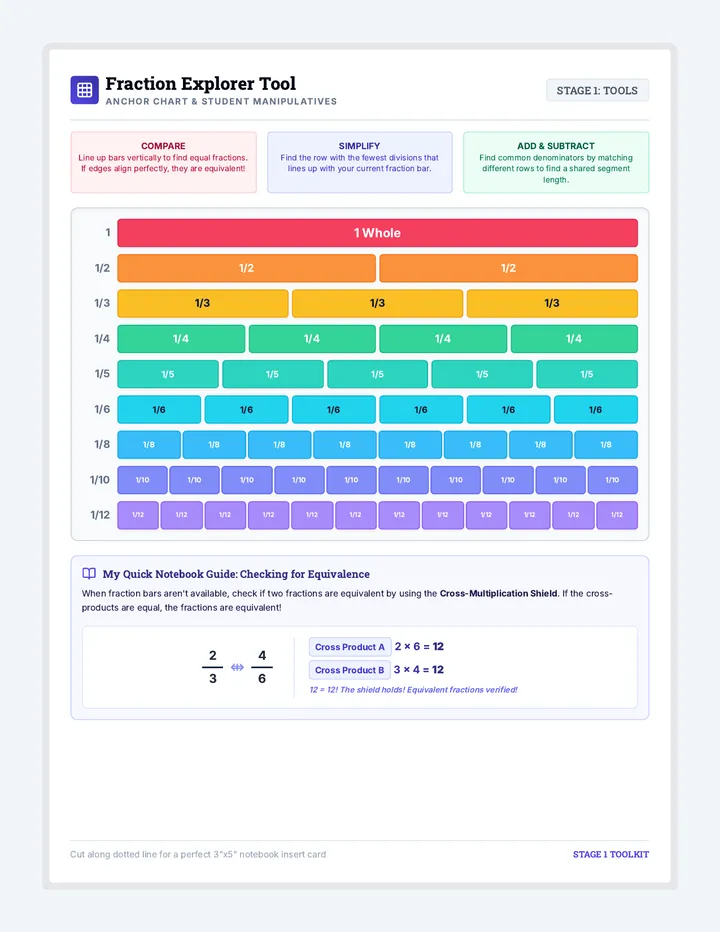
A comprehensive lesson on finding equivalent fractions using multiplication and division, supported by fraction strips and number line models. Students explore how to scale fractions up and down while maintaining the same value.
A geometry lesson focused on identifying and creating multiple lines of symmetry through the lens of traditional quilting patterns. Students explore how geometric shapes can have horizontal, vertical, and diagonal symmetry.
A 4th-grade math lesson on identifying and generating equivalent fractions using visual models like fraction strips and bars, and applying multiplication and division rules.
A focused practice session on basic multiplication and division facts up to 12x12. Students will solve five multiplication and five division equations to build fluency.
A hands-on probability project where students design, build, and test carnival games. They will calculate theoretical probability, collect experimental data, and analyze the results to understand statistical likelihood.
A lesson focused on mastering addition and subtraction of fractions with unlike denominators using the cross-multiplication (butterfly) method. Students use structured graphic organizers to visualize each step of the process.
Advanced applications of central tendency and spread, including algebraic problem-solving, weighted means, and the mathematical impact of outliers for high school students.
A comprehensive assessment covering Level 1, Level 2, and Level 3 data analysis, designed to evaluate mastery of mean, median, mode, and range in both numerical and narrative contexts.
In this hands-on geometry exploration, students venture outside to measure the angles of shadows cast by playground equipment and trees at different times of day. They apply their protractor skills to record data and analyze how the sun's position changes angle measurements.
Fourth graders explore line symmetry through Indiana's local flora and fauna, identifying mathematical patterns in nature and creating original geometric art.
Students interpret and solve word problems involving mean, median, mode, and range, focusing on extracting data from narrative contexts and real-world scenarios.
A foundational lesson designed for SIFE students to understand fractions greater than one using visual models and fraction strips. Focuses on bridging concrete models to number lines with minimal text reliance.
A foundational lesson on equivalent fractions using area models and number lines, styled as architectural blueprints to emphasize precision and measurement.
A collection of extra practice cases for mean, median, mode, and range, ranging from single-digit warmups to double-digit challenges, themed as unsolved detective files.
Students apply their knowledge of mean, median, mode, and range to data sets featuring two-digit numbers, focusing on multi-digit addition and division.
Analyzing and creating line plots to represent measurement data.