An intervention lesson focusing on morphology (form), academic vocabulary (transformation), and explicit instruction in short vs long E sounds. Includes a reading passage on shaping a country and structured writing practice.
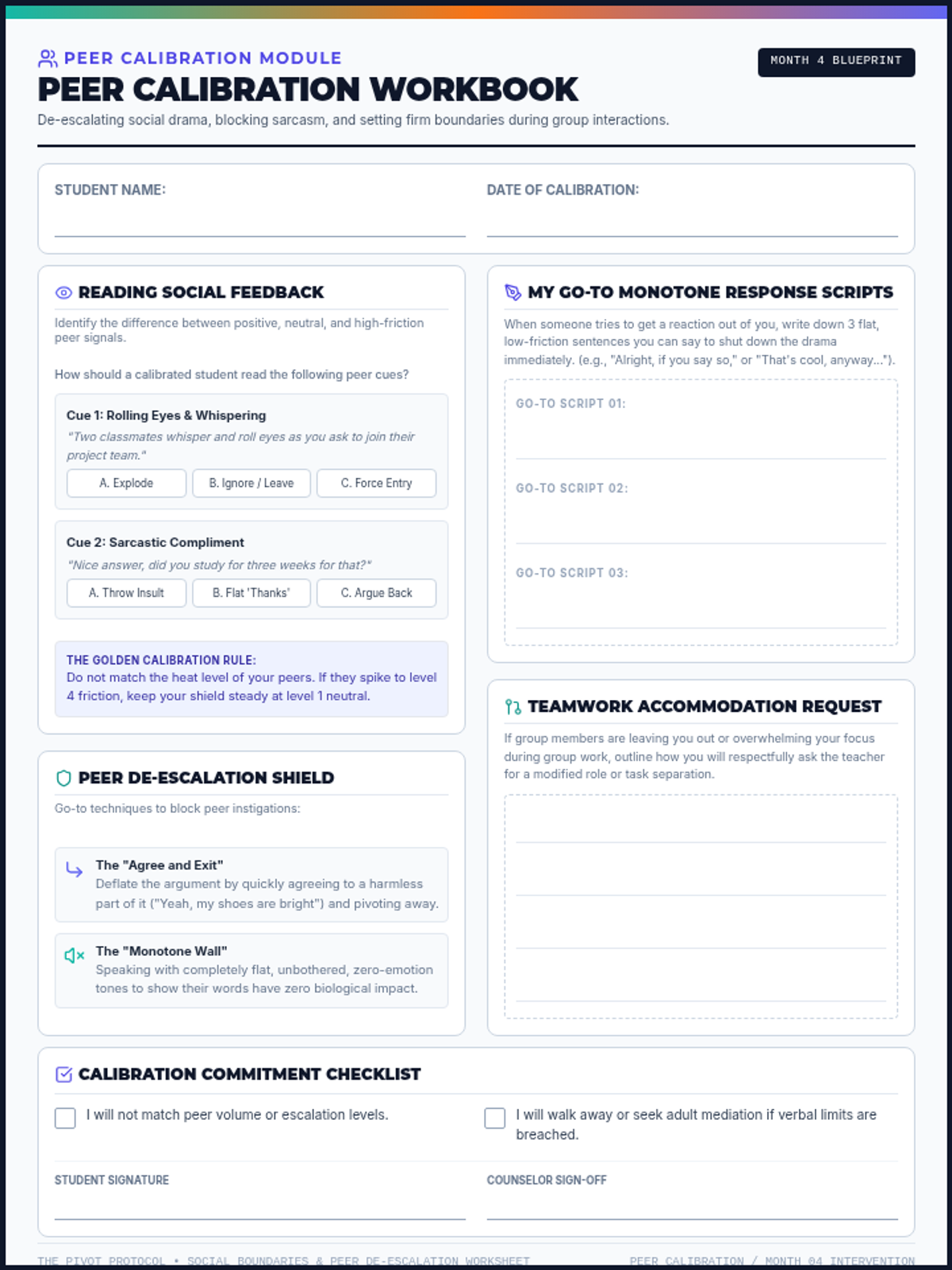
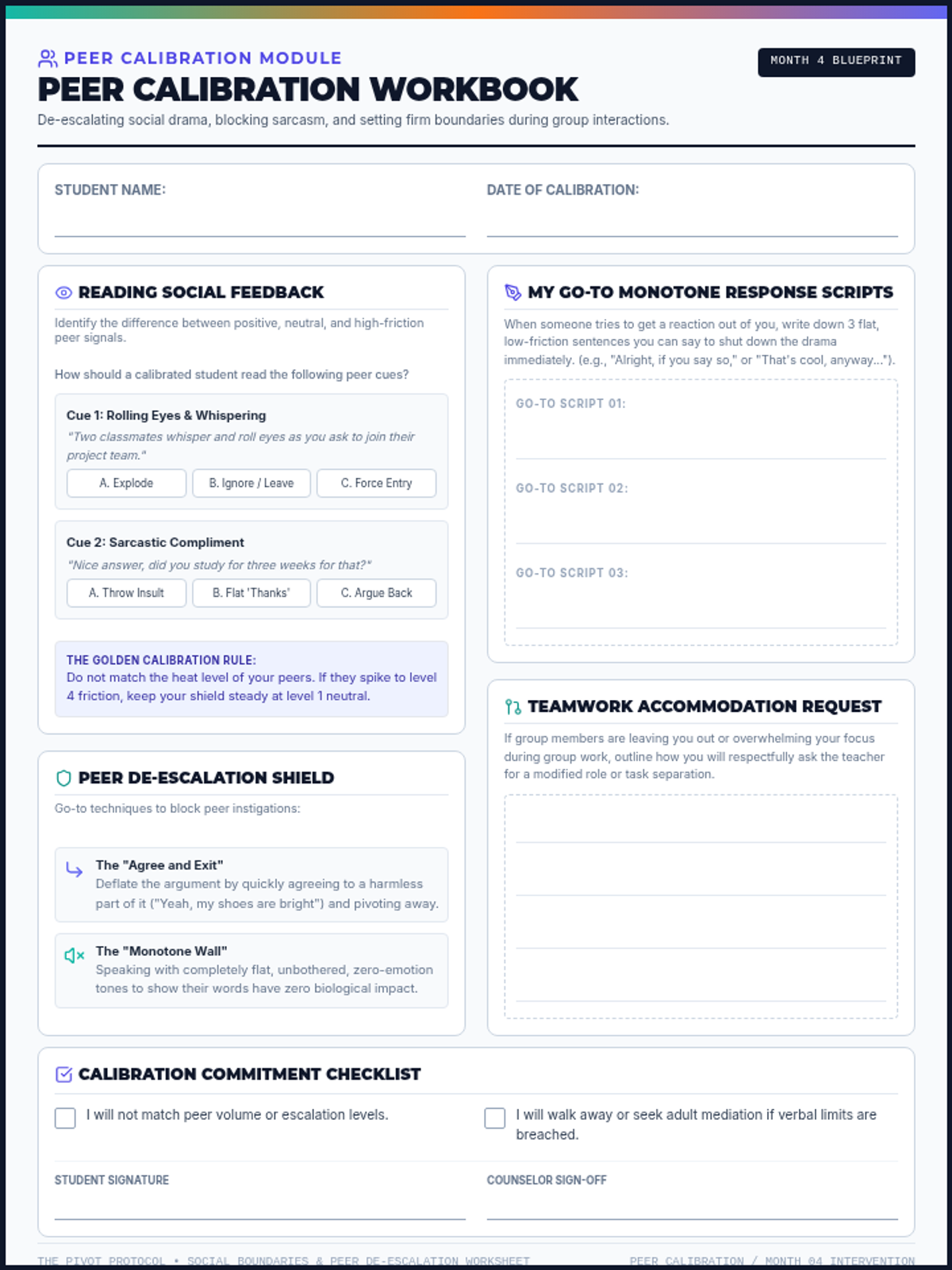
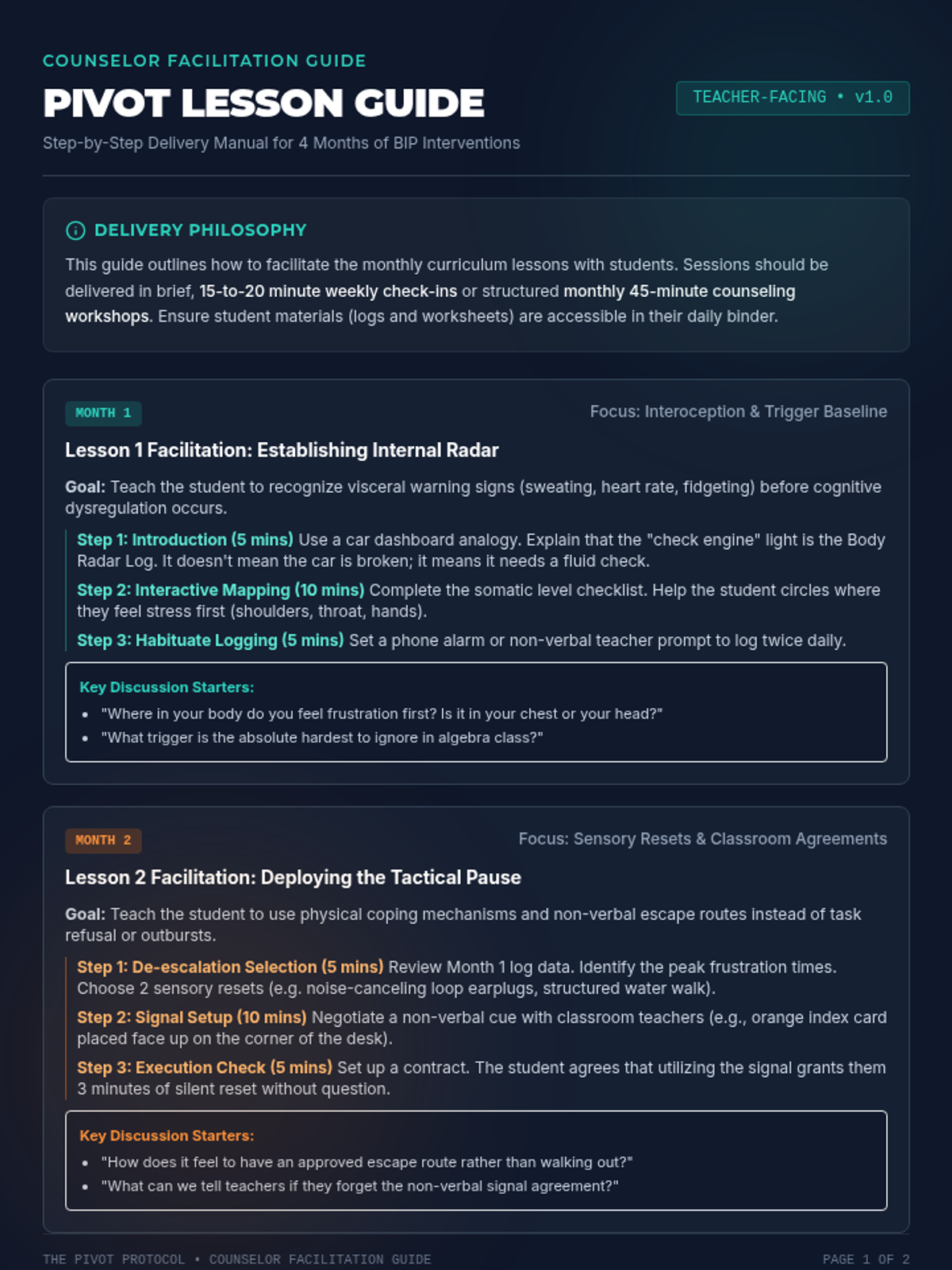
Month 4 focus on peer-to-peer conflict resolution, de-escalating social tension, responding to sarcasm, and reading social feedback cues without dysregulating.
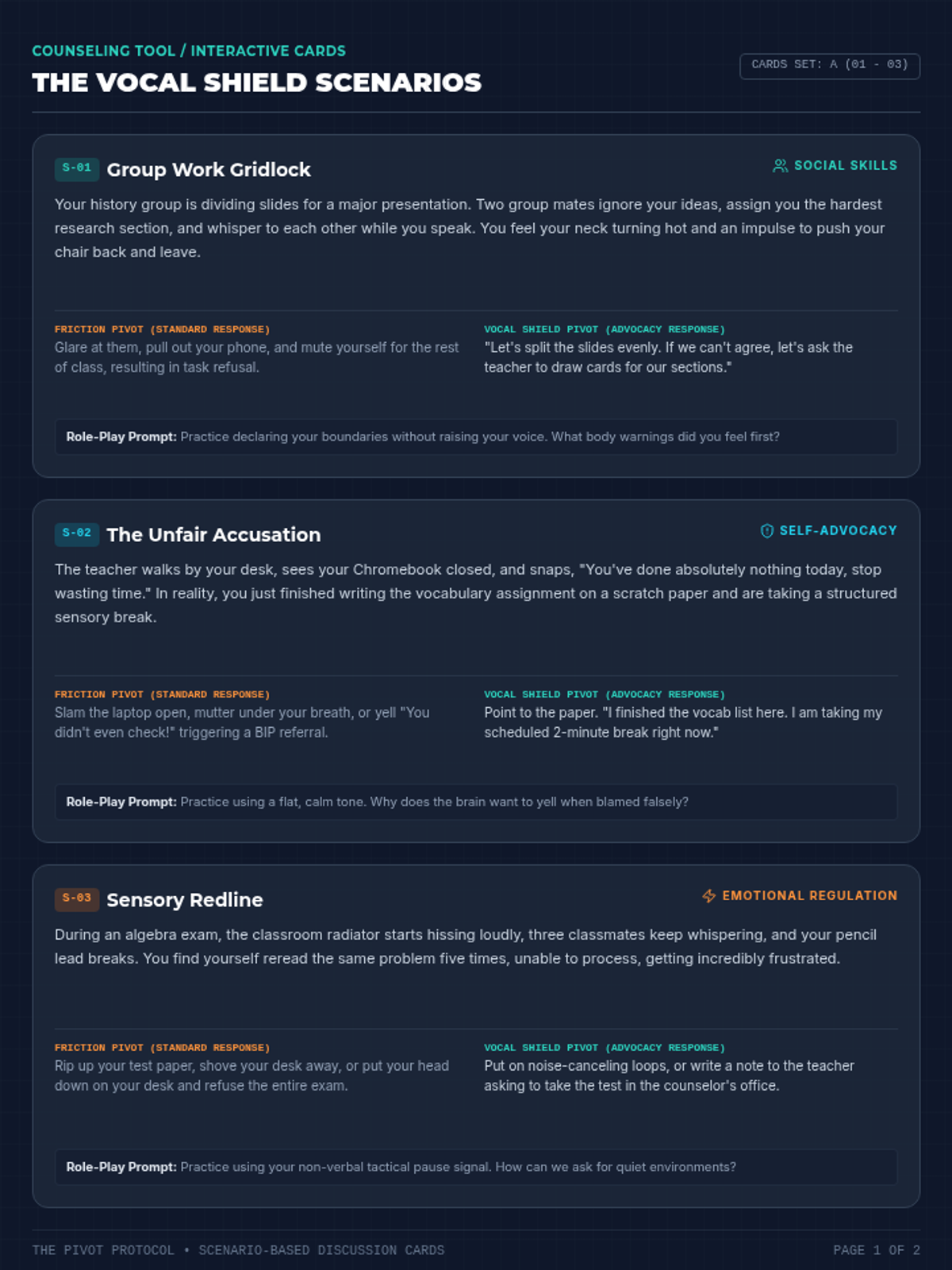
Addresses social skills, self-advocacy with teachers, navigating peer-to-peer conflict, and reading social feedback cues without dysregulating.
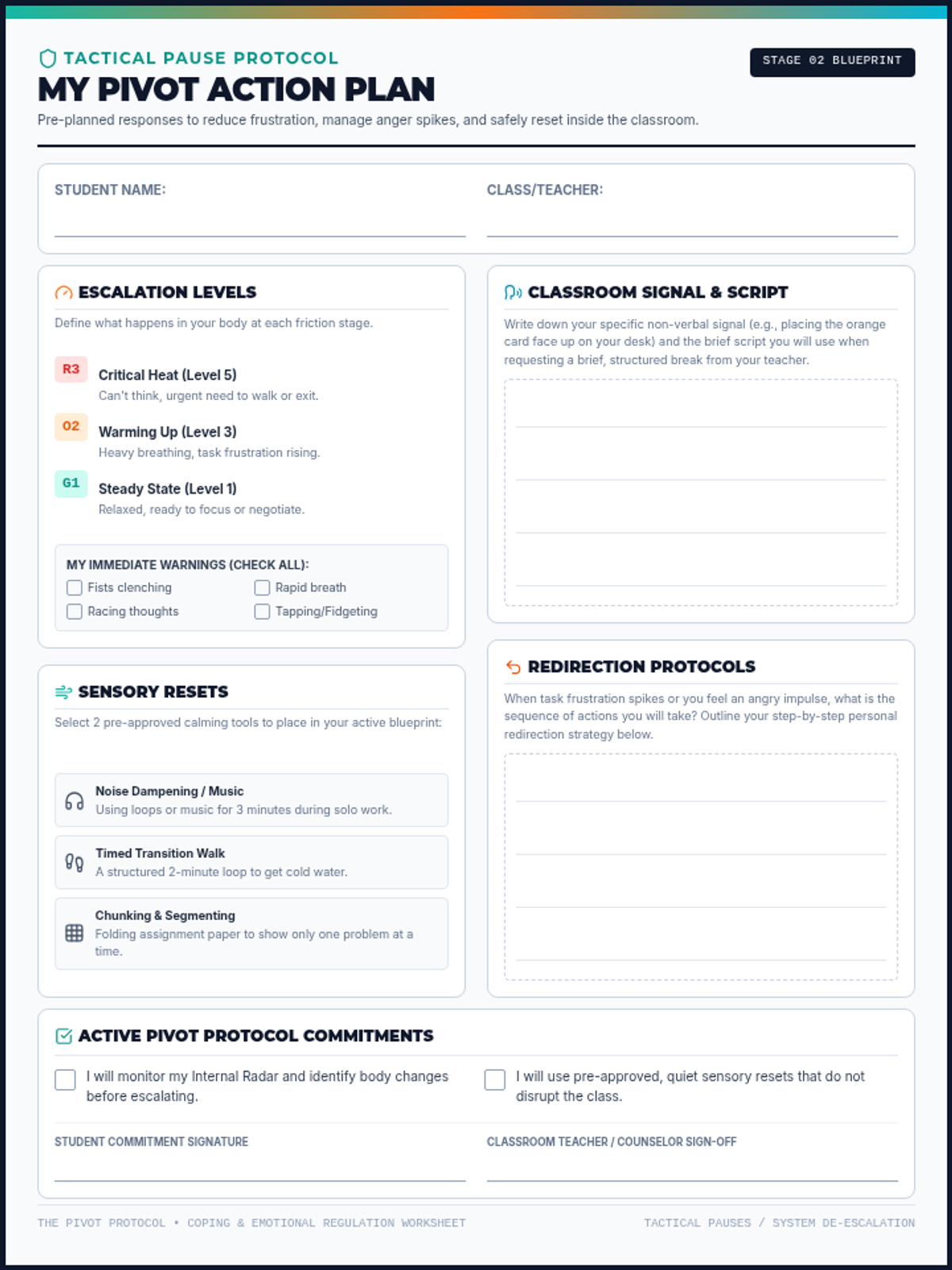
Focuses on calming techniques, active anger management, and frustration tolerance when triggers spike, introducing personalized 'Pivot Plans' for classroom situations.
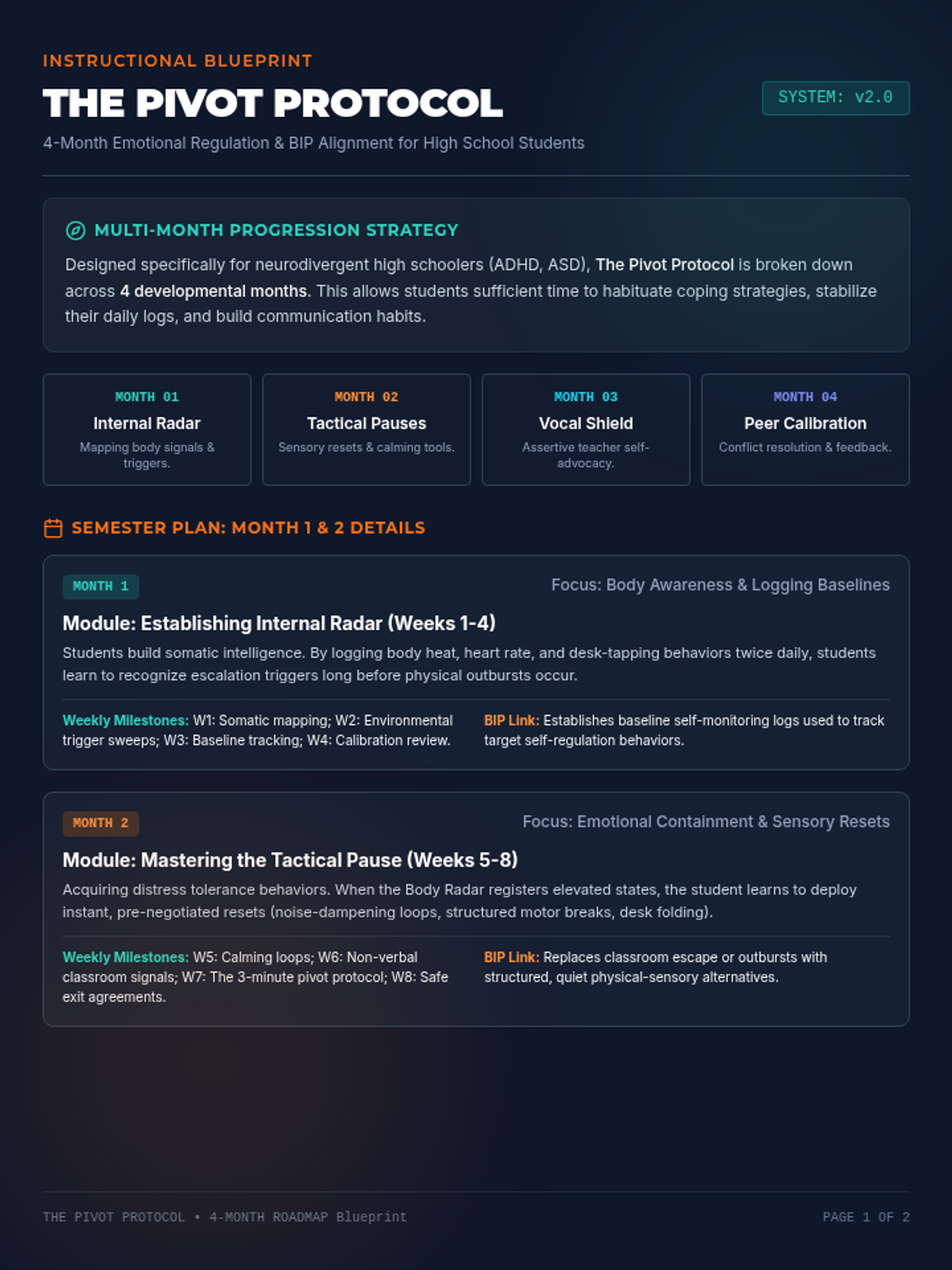
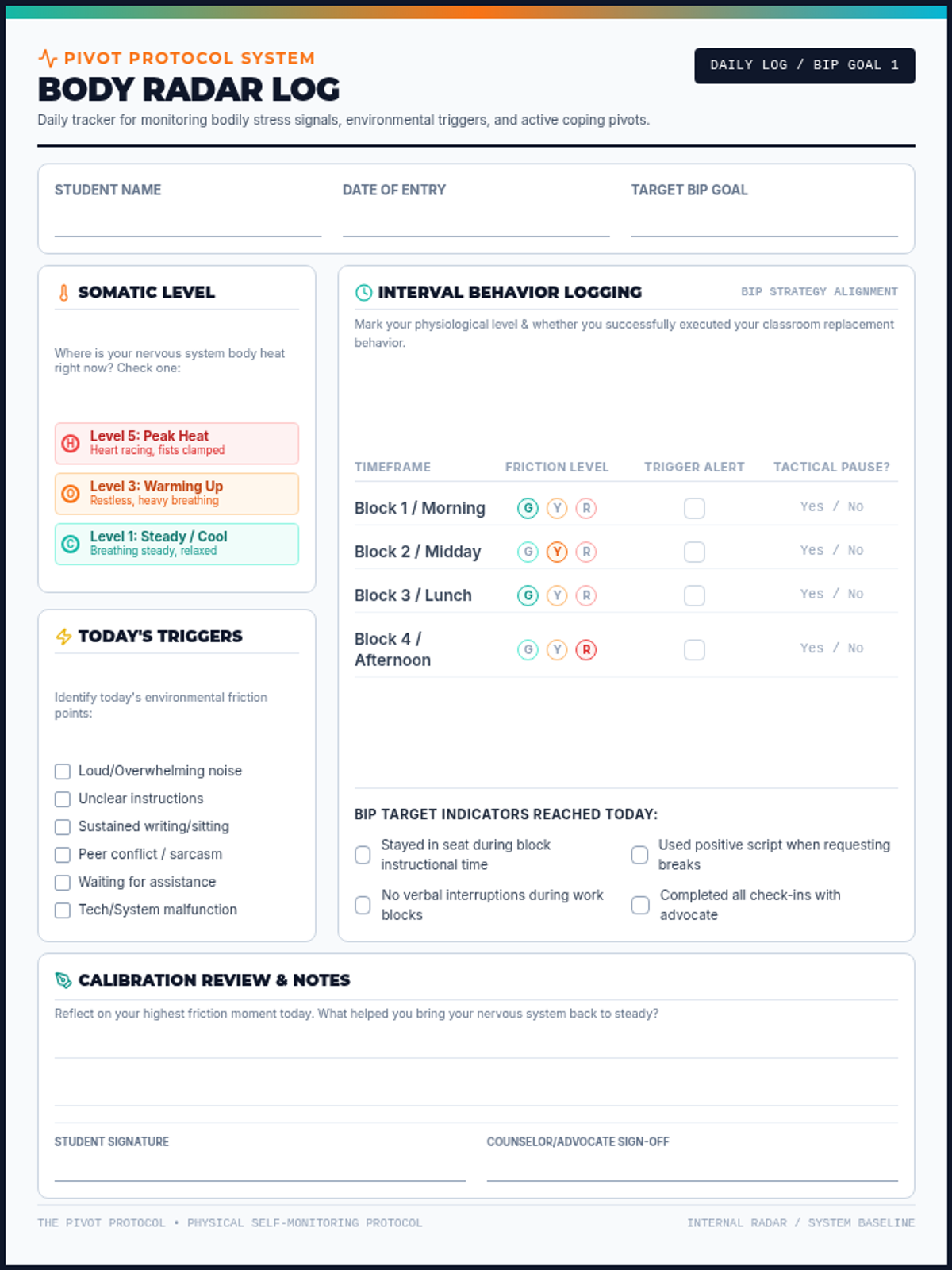
Establishes the foundation of self-awareness by helping students map their physical trigger responses ('Internal Radar') and setting up their baseline self-monitoring daily tracker.
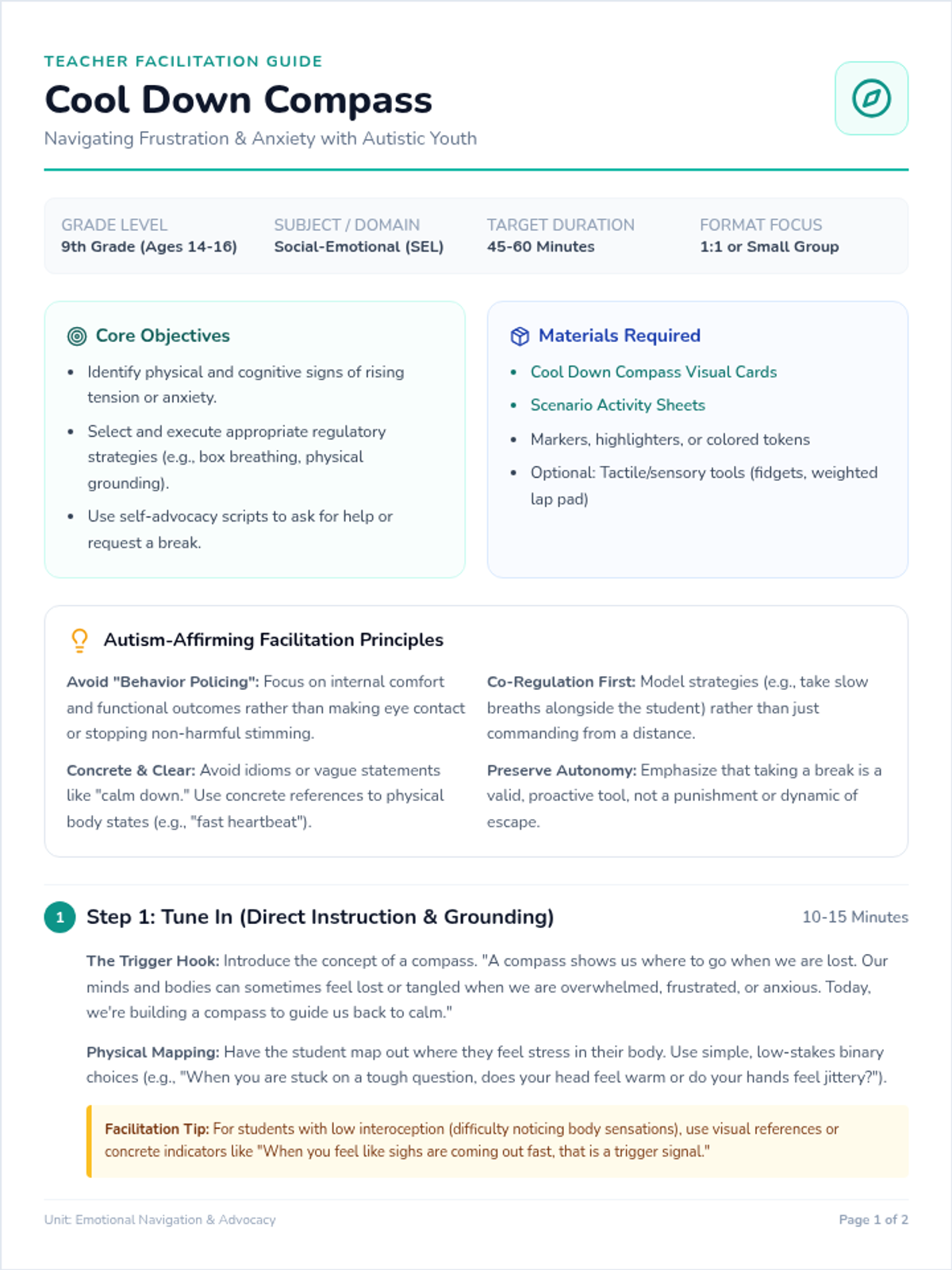
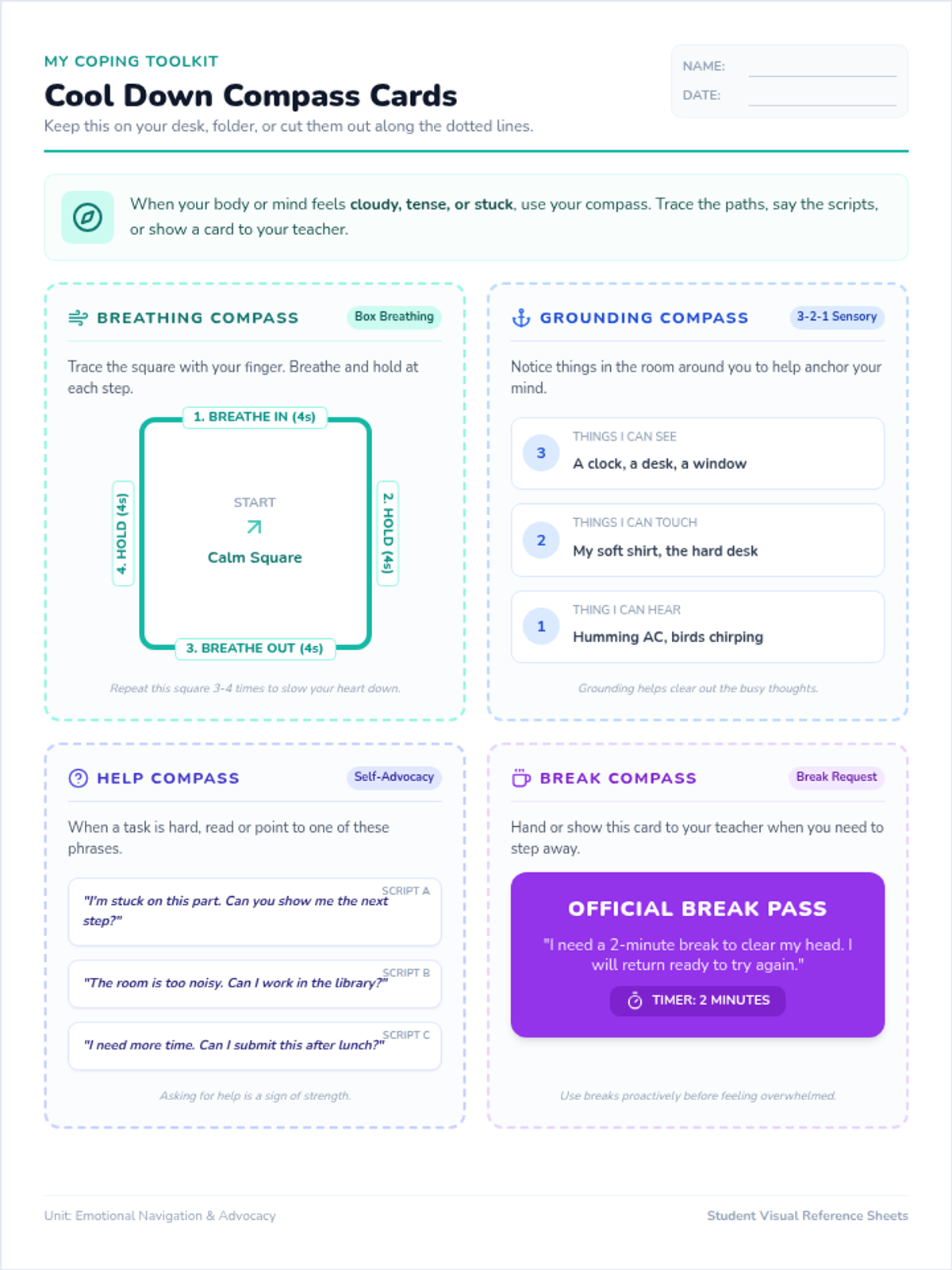
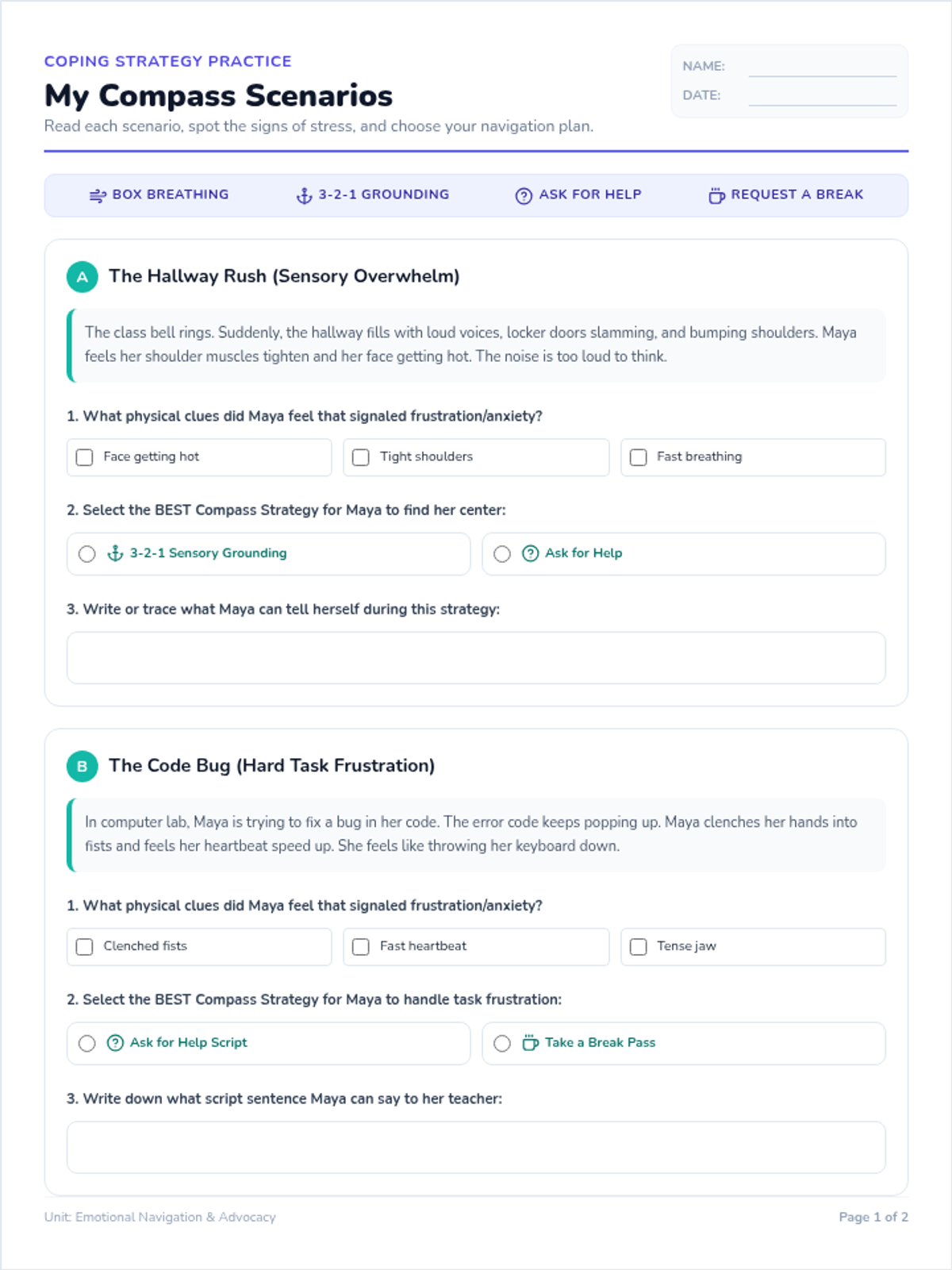
A comprehensive social-emotional learning lesson designed for 9th-grade students with autism to recognize triggers of anxiety or frustration and employ concrete coping strategies (breathing, physical grounding, self-advocacy, and requesting breaks). Includes teacher facilitation guides, visual strategy cards, and structured scenario worksheets.
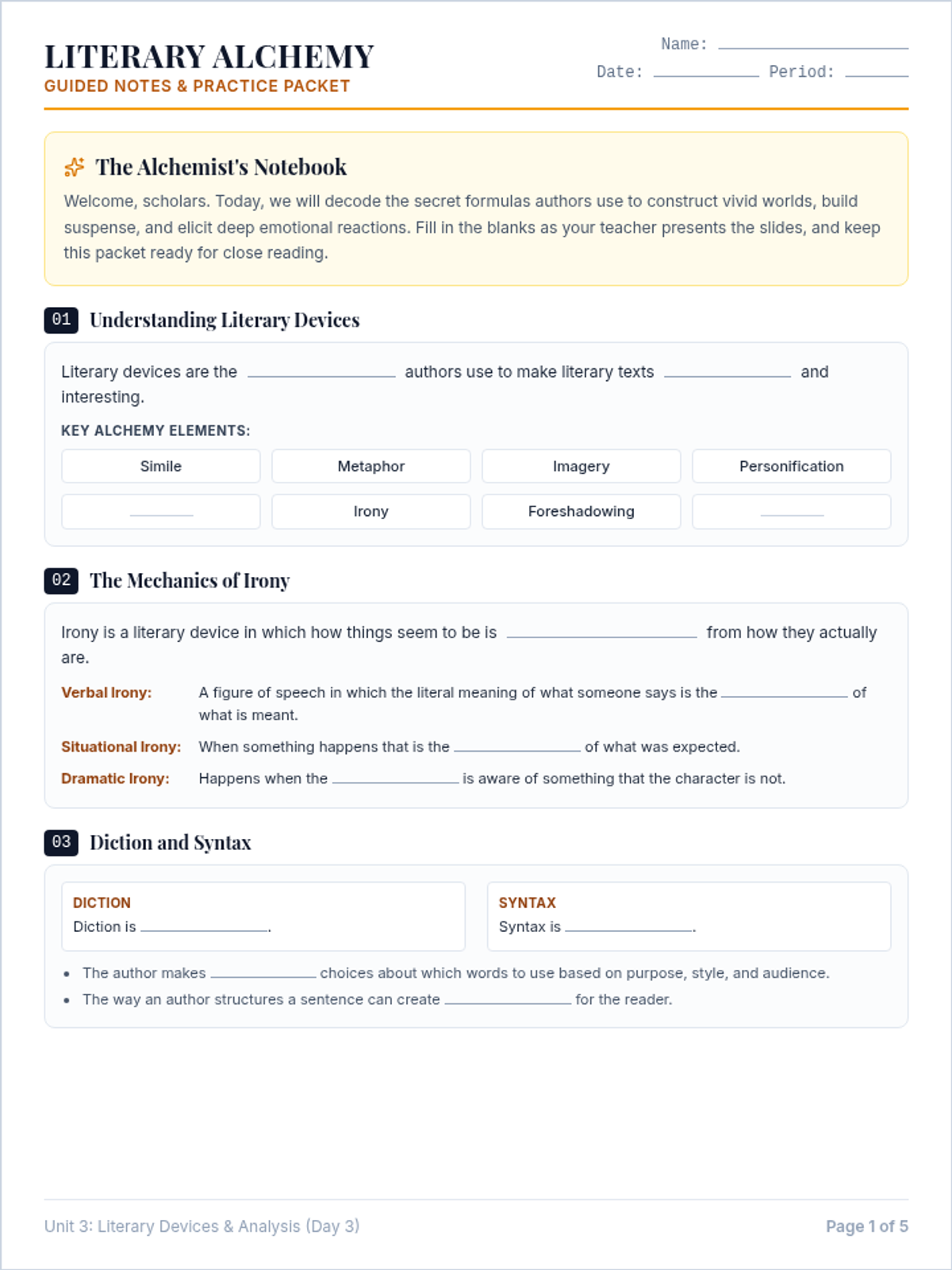
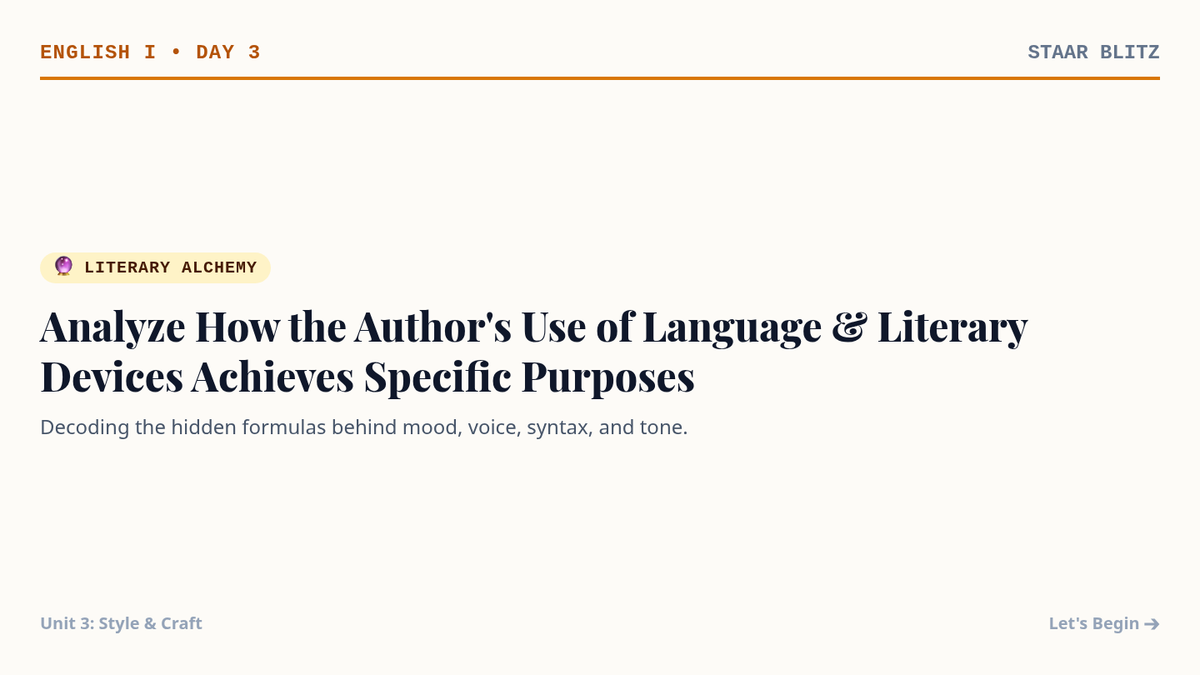
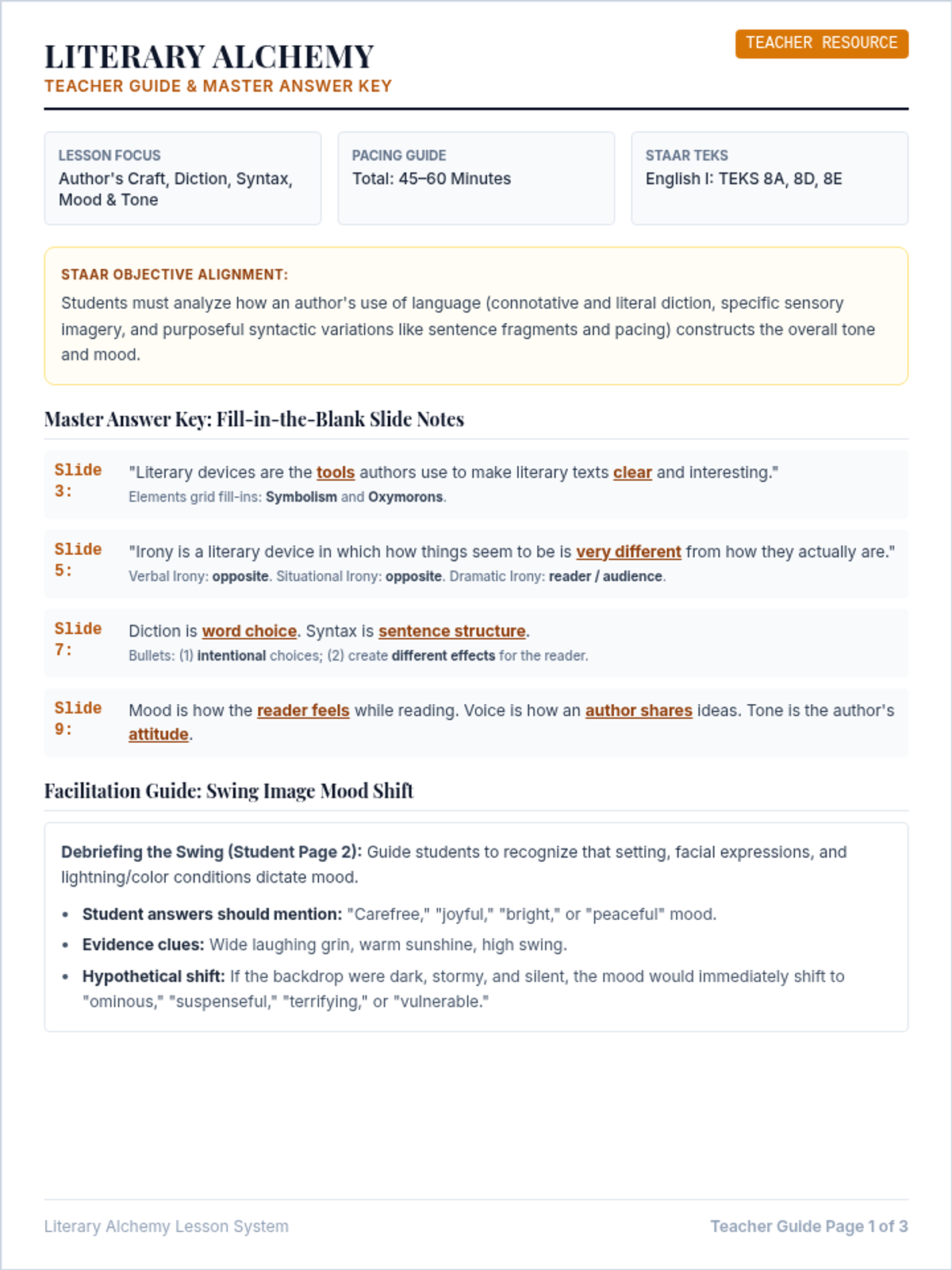
A rigorous STAAR-aligned high school English I lesson analyzing how authors employ literary devices, diction, syntax, and imagery to craft mood, voice, and tone. Students engage in interactive note-taking followed by guided close reading of Edgar Allan Poe and Delia Owens, culminating in independent passage analysis.
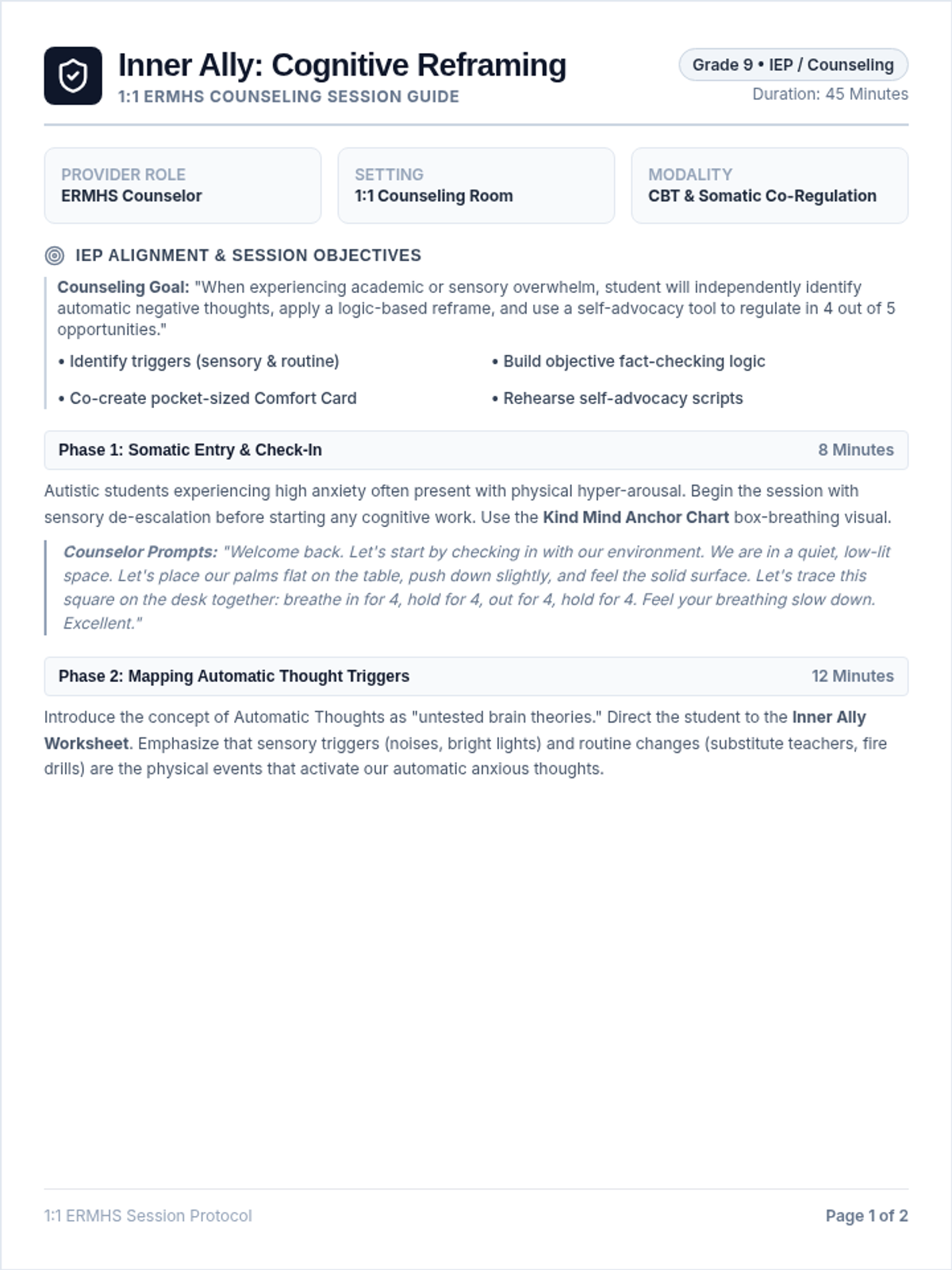
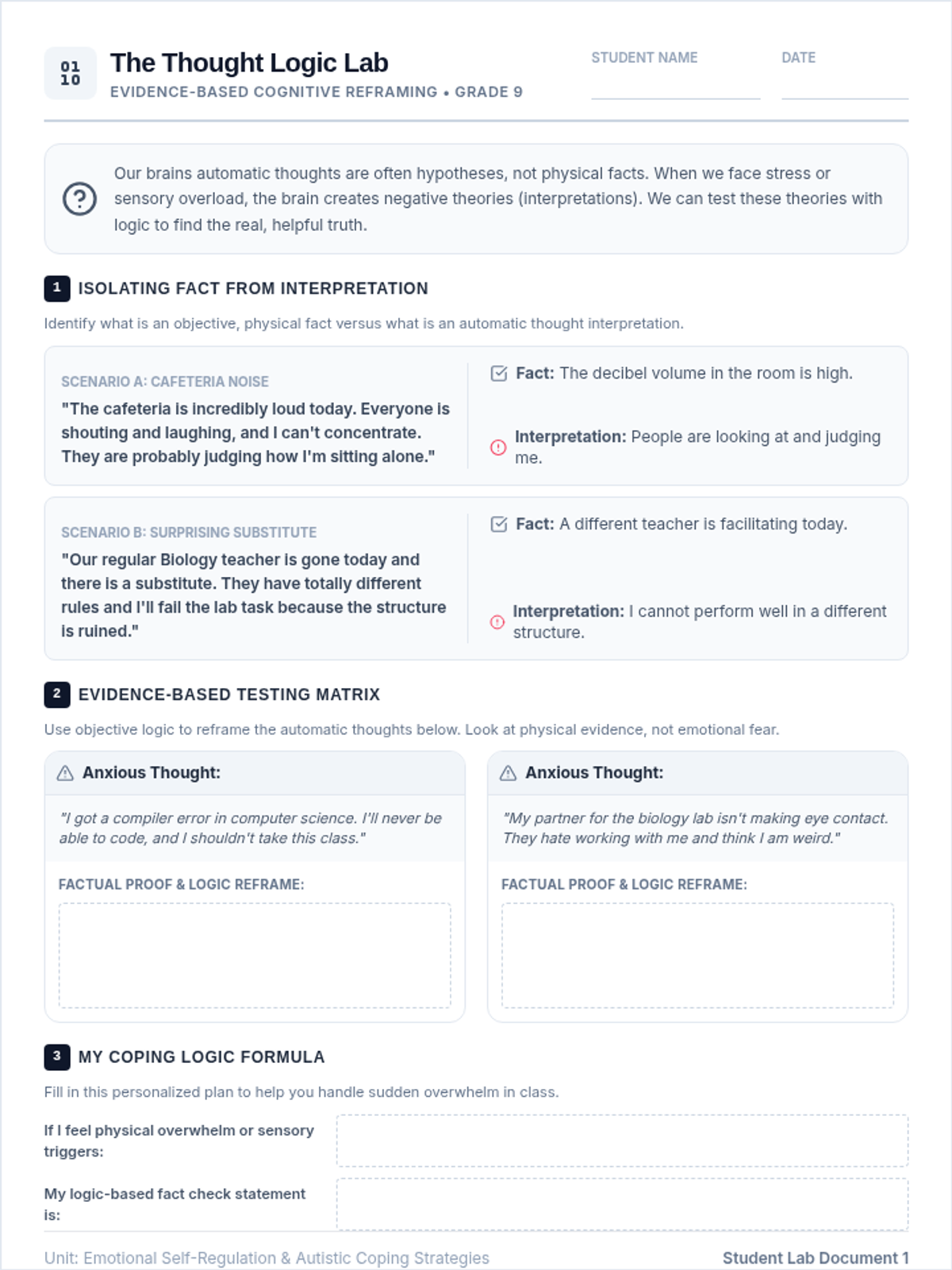
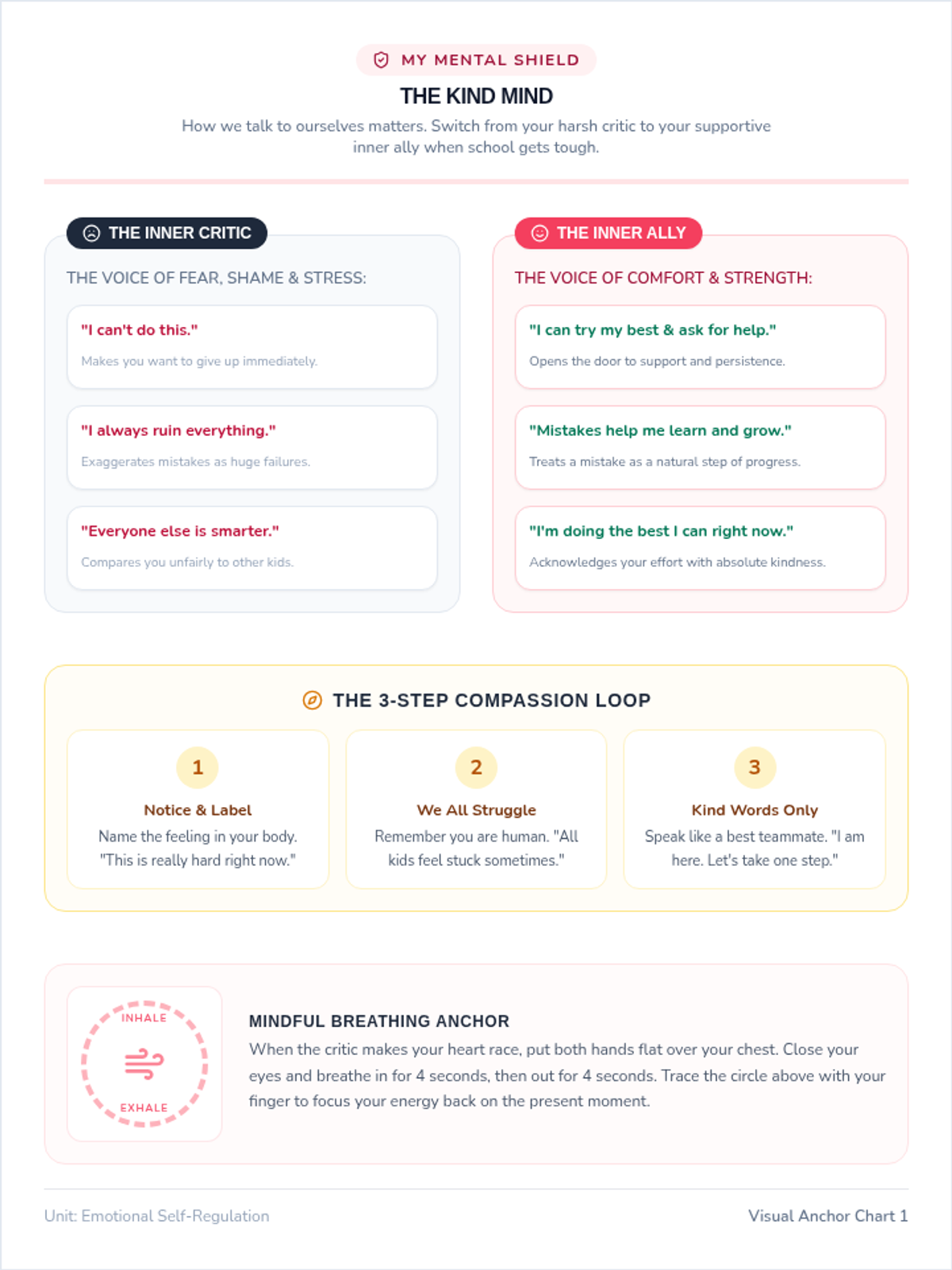
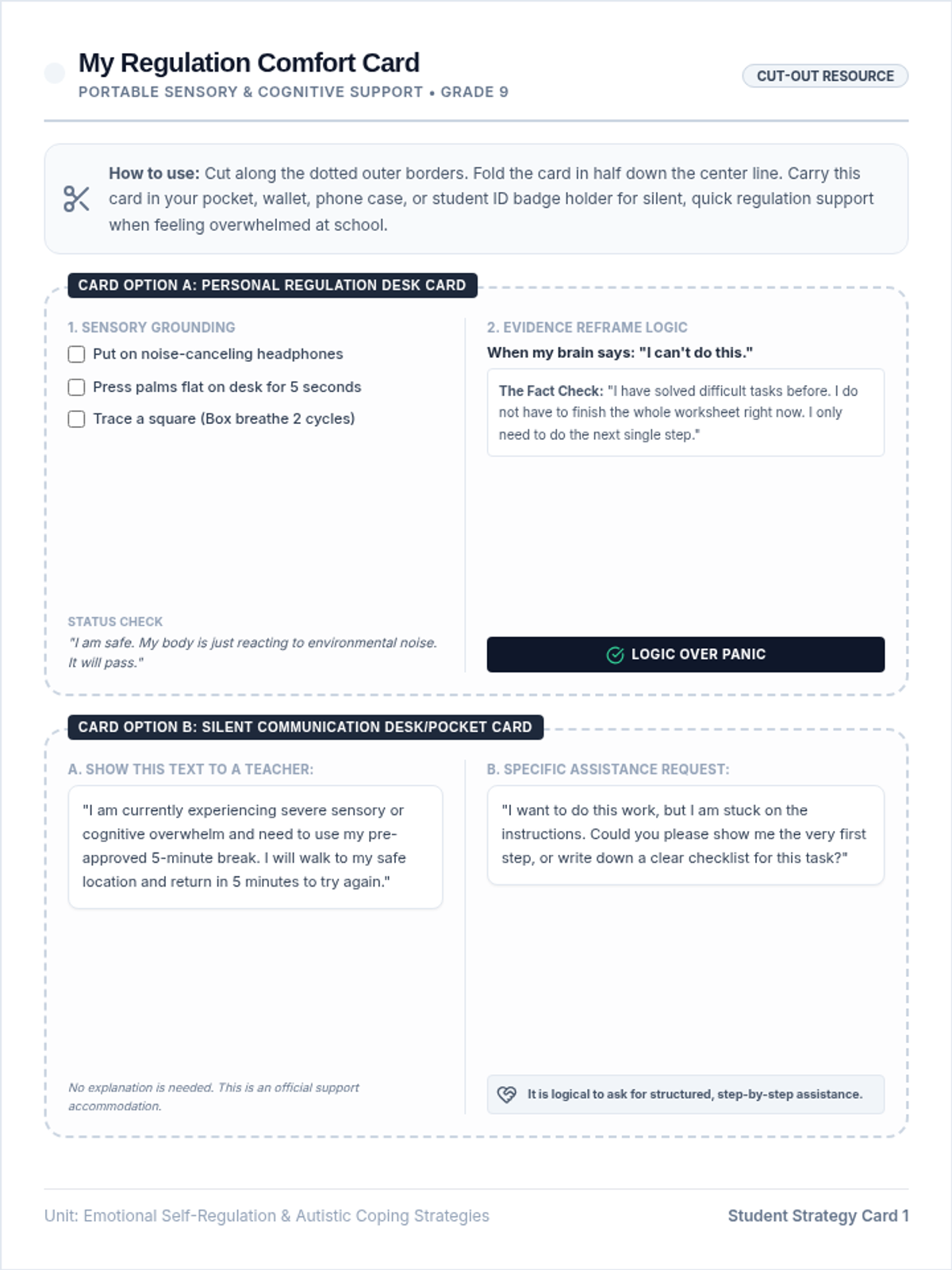
A 1:1 ERMHS (Educationally Related Mental Health Services) counseling session designed for a 9th-grade autistic student. Emphasizes evidence-based cognitive-behavioral reframing, co-regulation, factual evidence testing, and co-creating a discrete pocket-sized regulation comfort card.
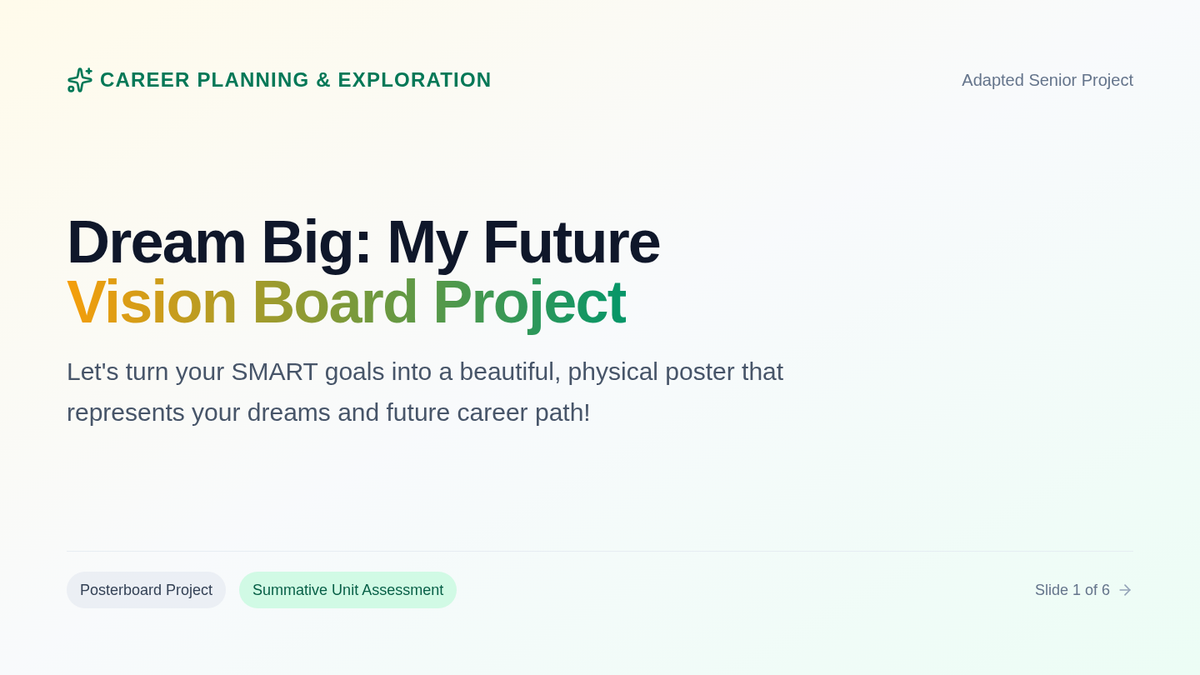
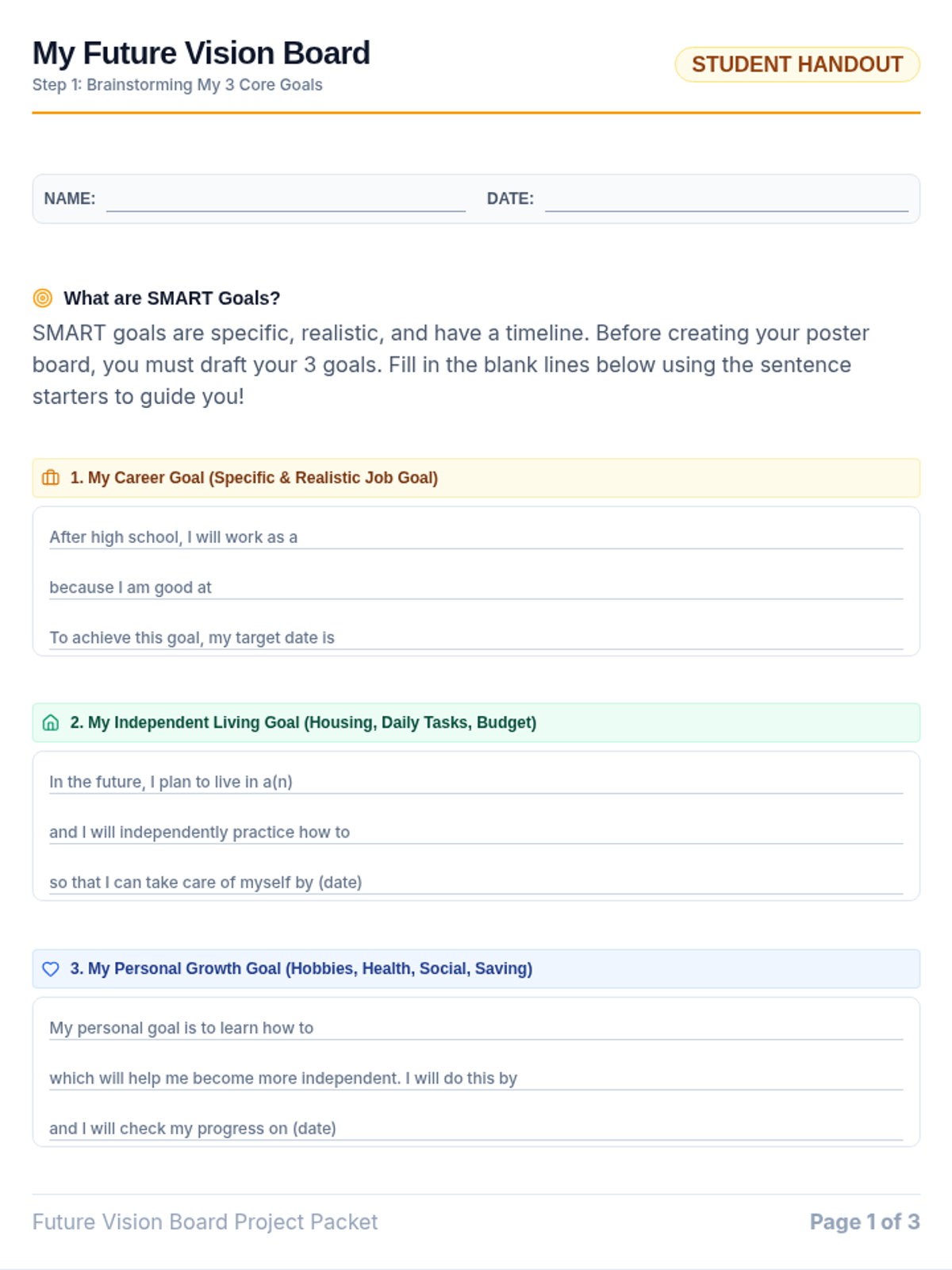
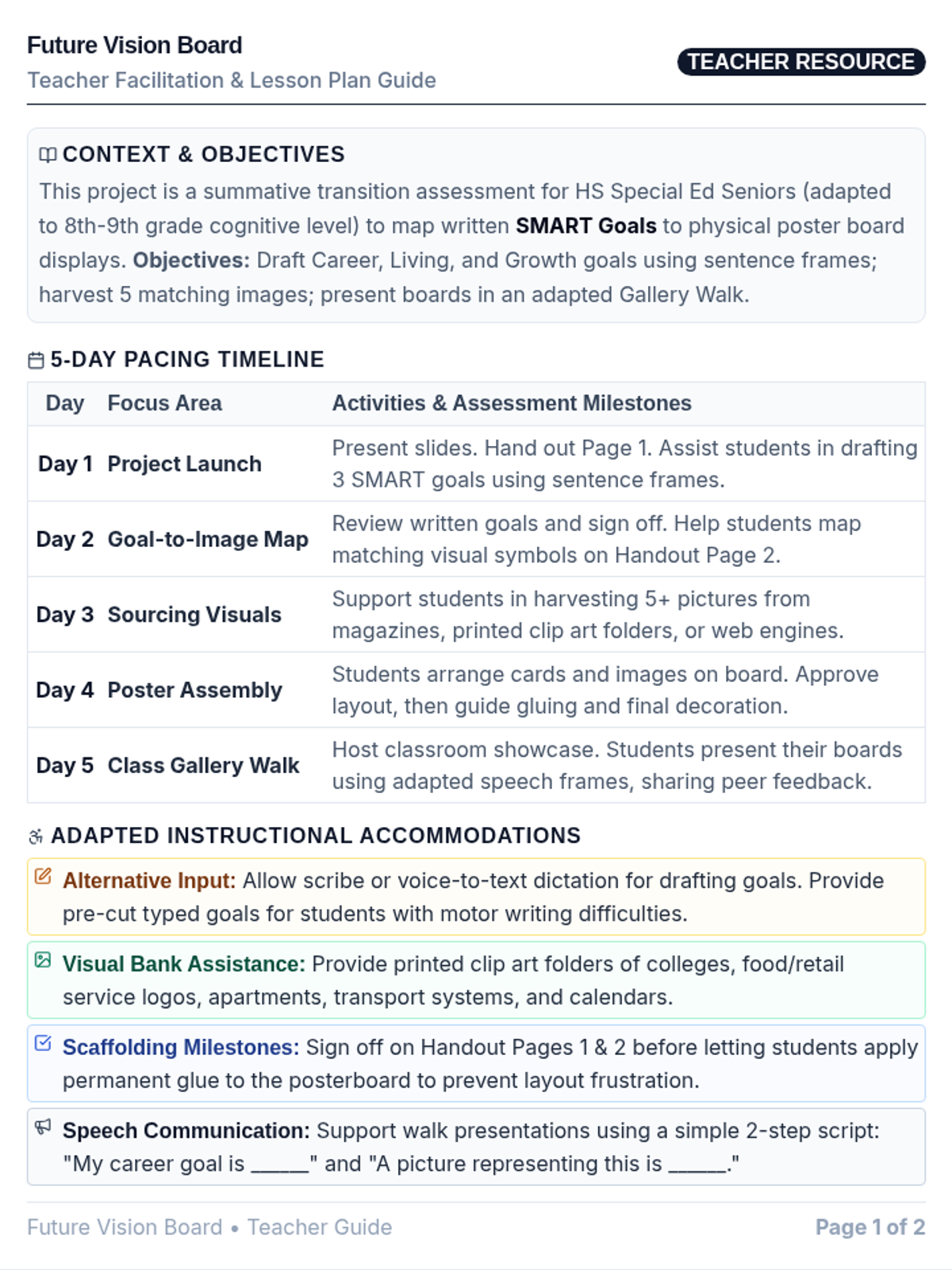
A comprehensive project bundle designed for High School Special Education students to plan, design, and create a physical vision board that maps their SMART goals to their future career and personal aspirations.
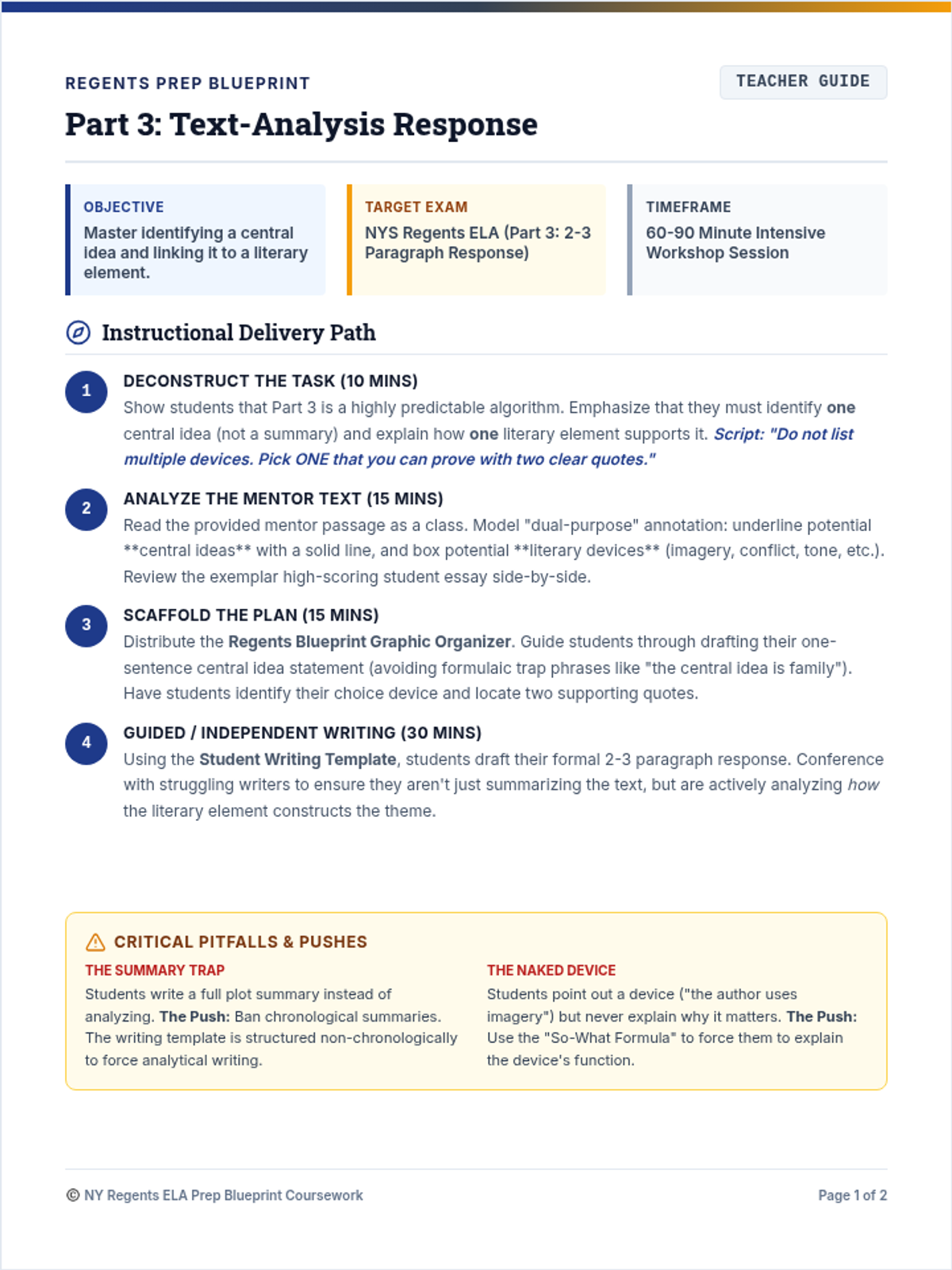
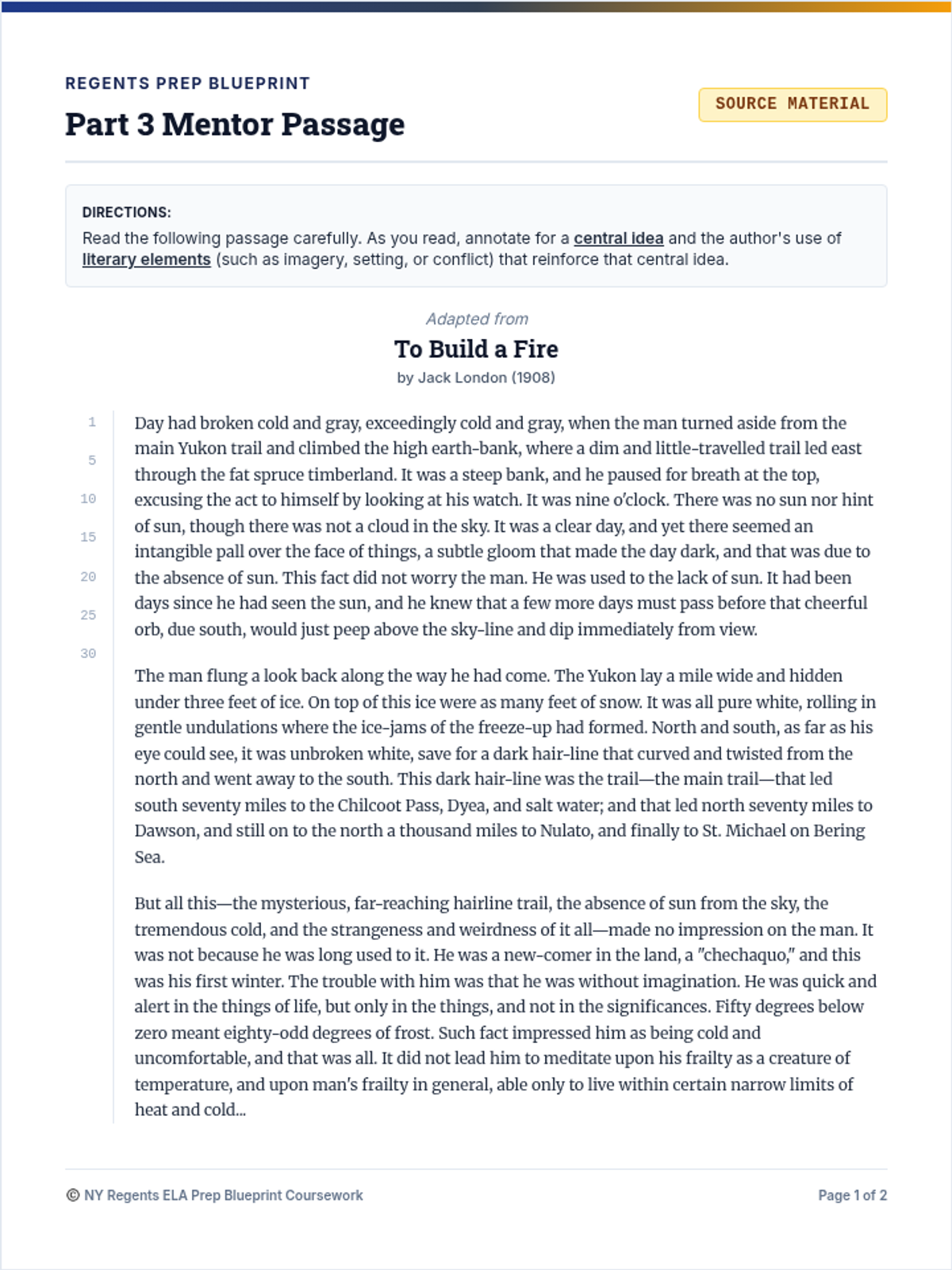
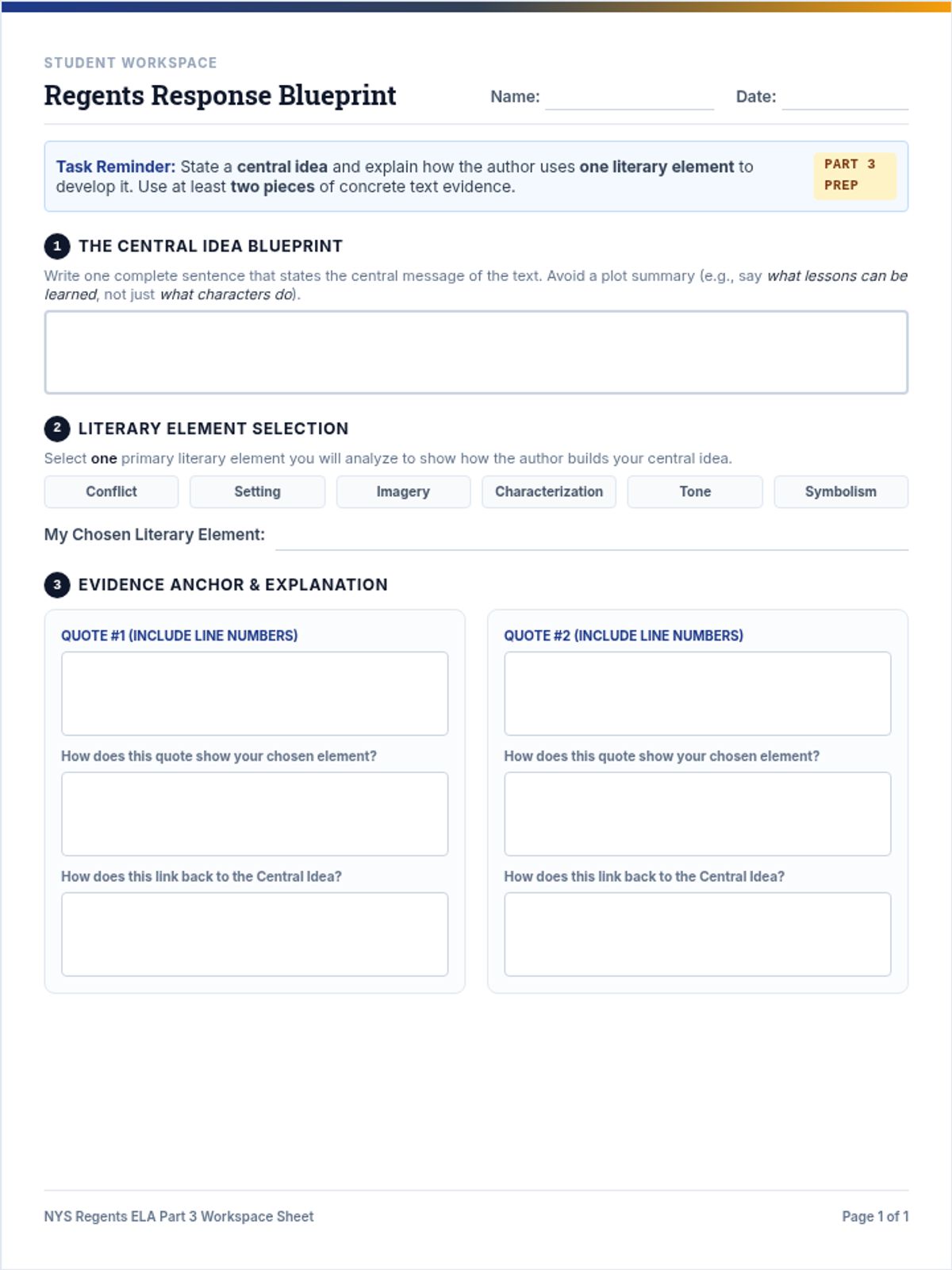
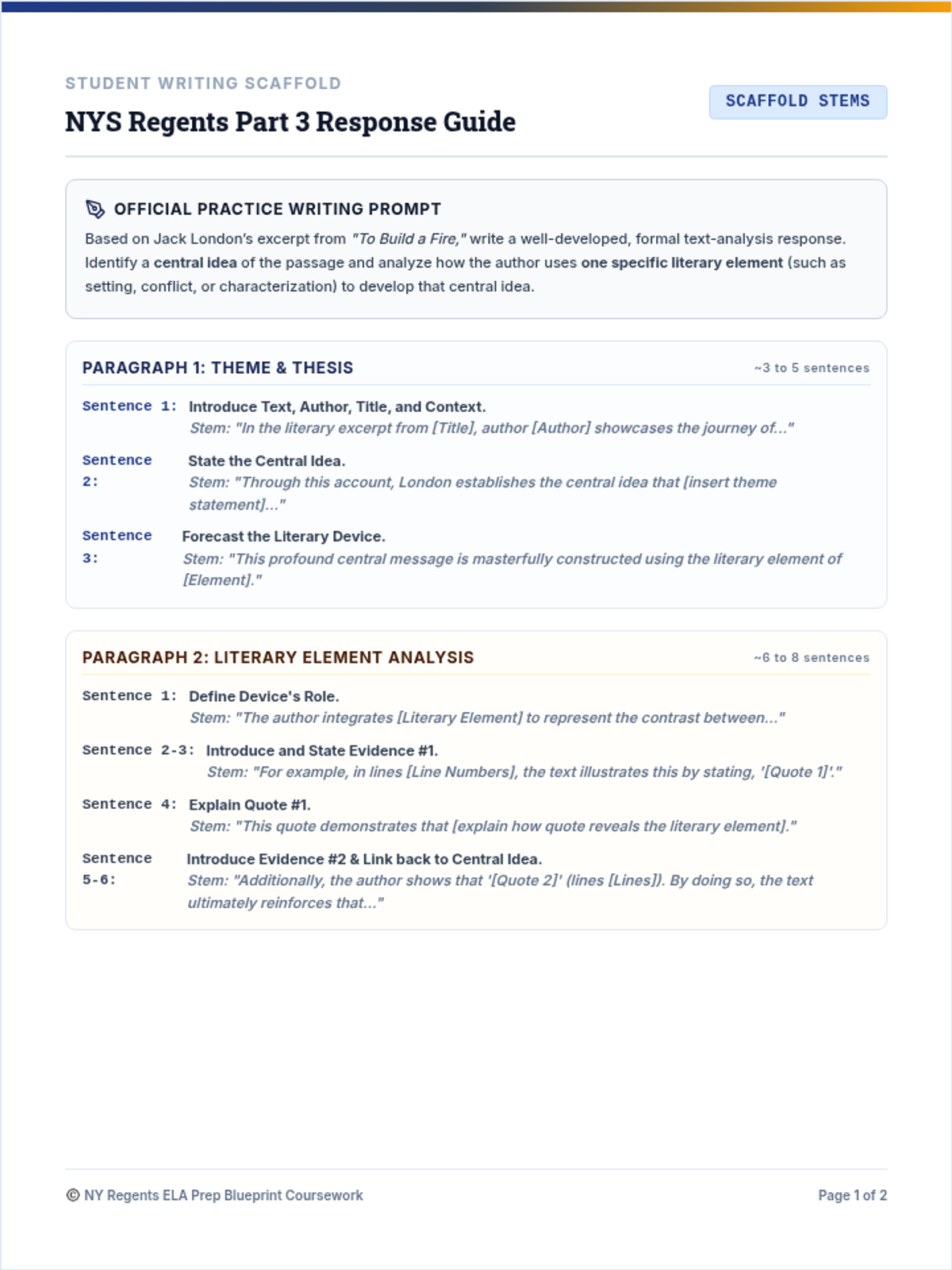
A targeted preparation module designed to scaffold student success on Part 3 of the NYS Regents ELA exam. Students dissect a mentor text, use a structured graphic organizer to identify central ideas and literary techniques, and practice writing high-scoring responses using guided templates.
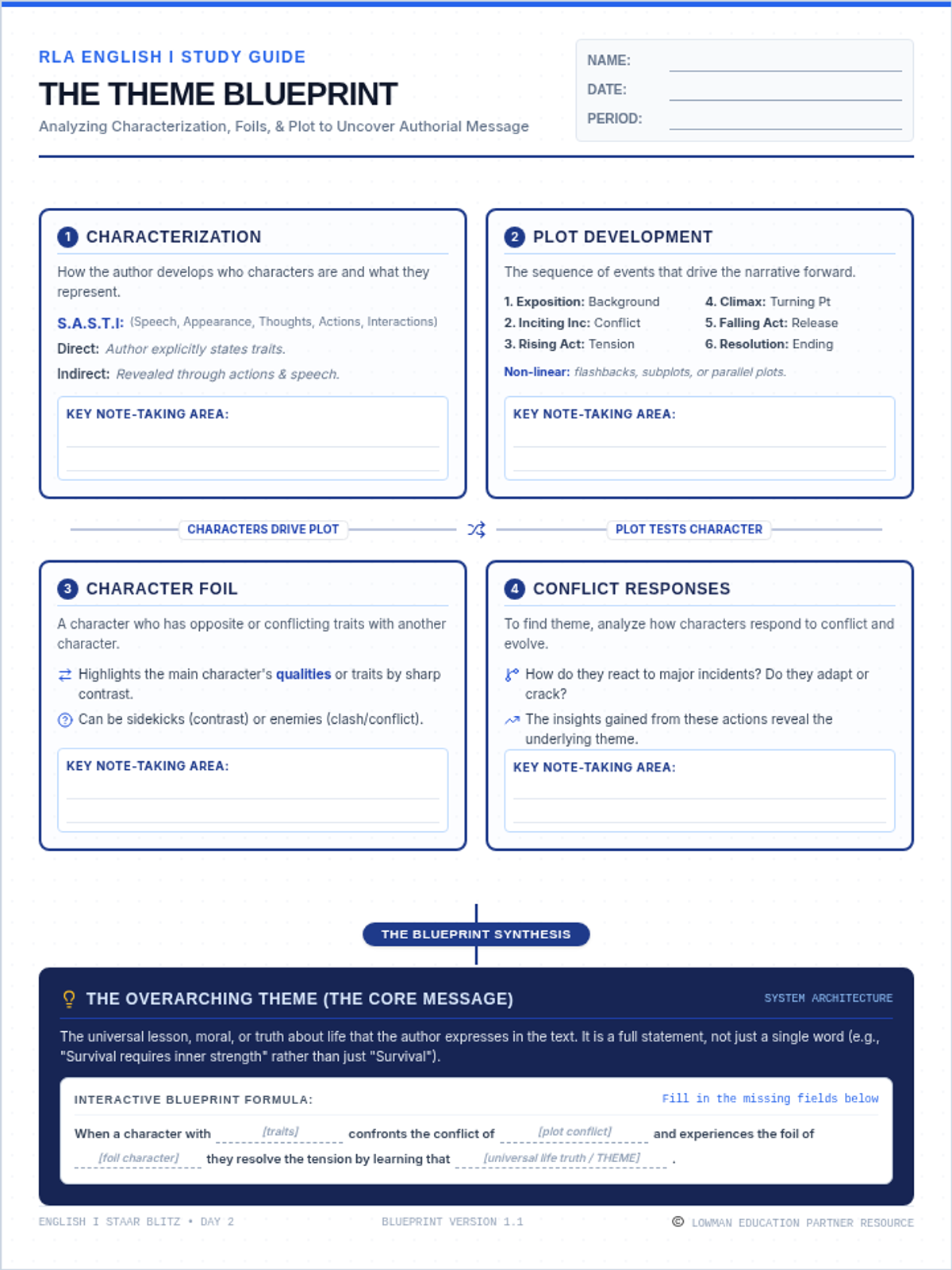
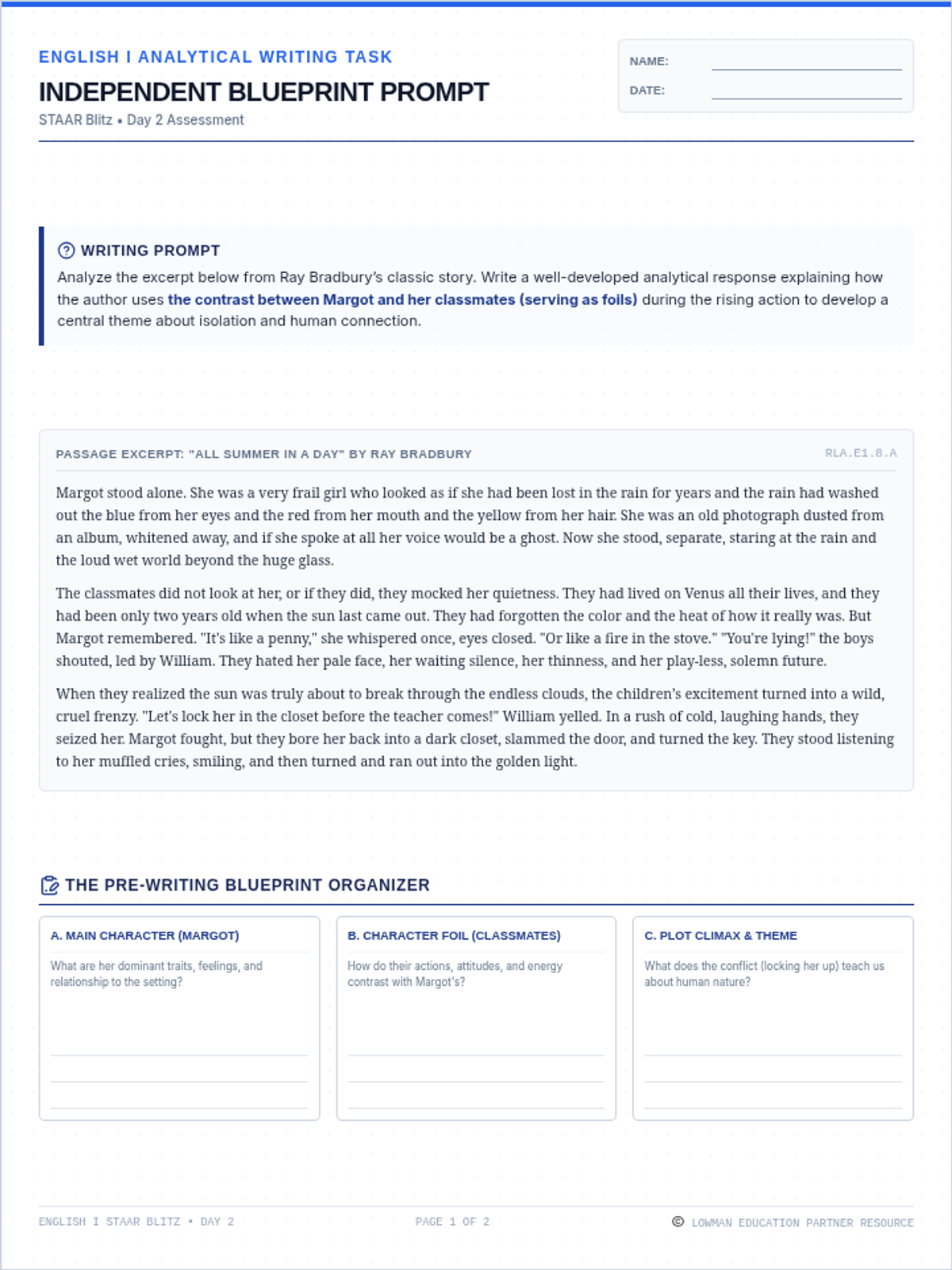
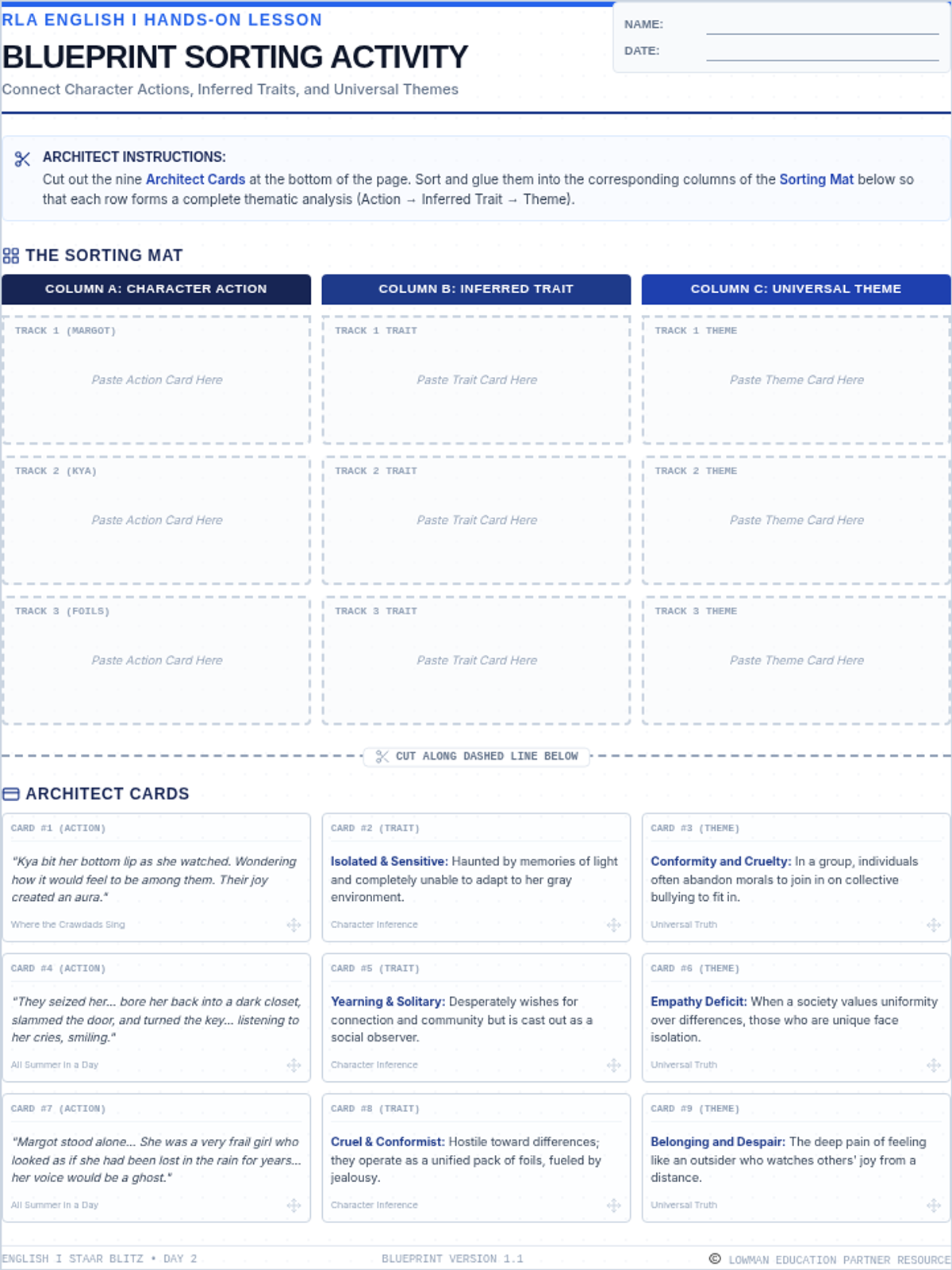
A comprehensive RLA lesson designed to guide English I students through analyzing how characterization, character foils, and plot elements intersect to develop deep thematic messages in literary texts.
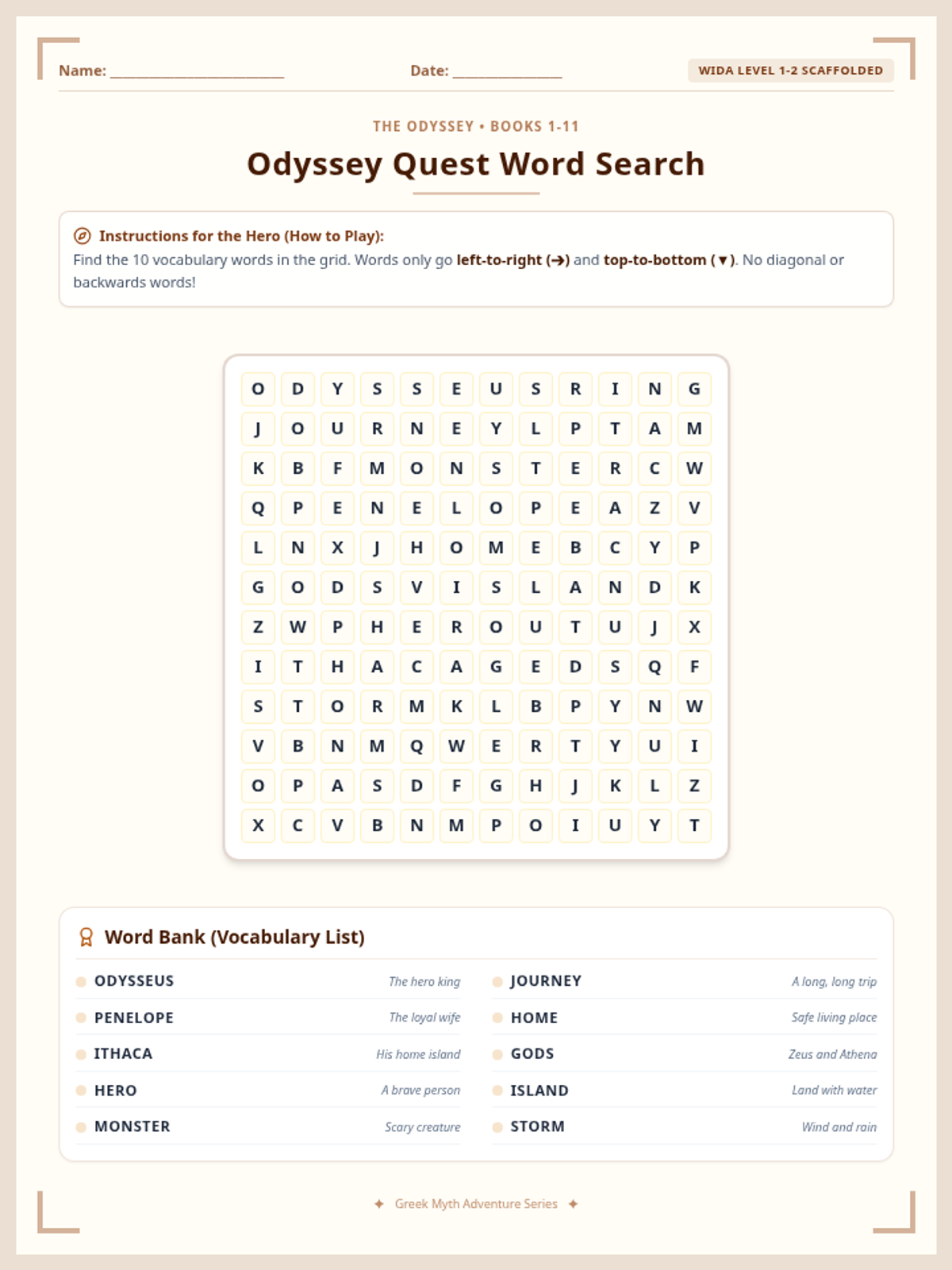
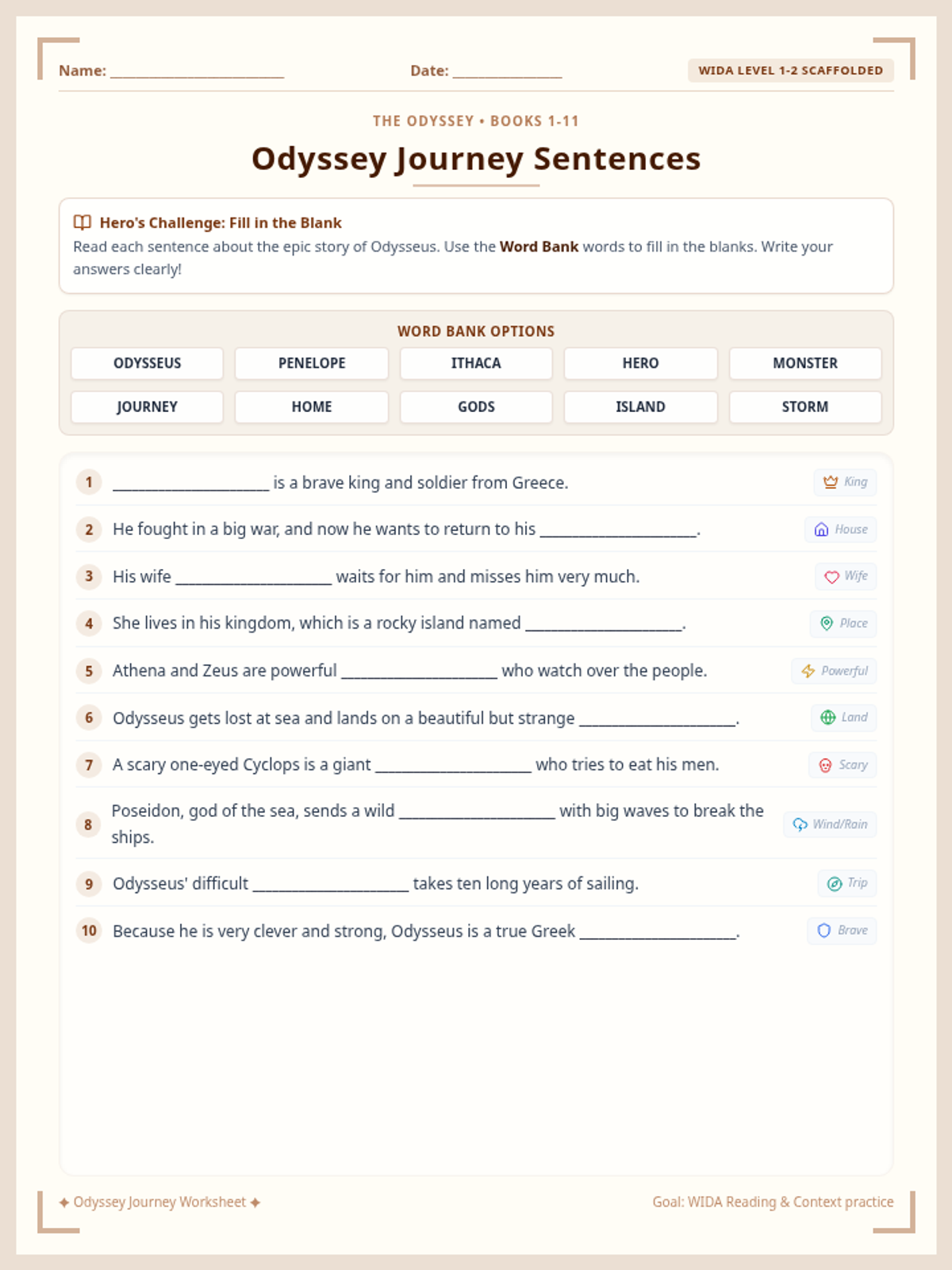
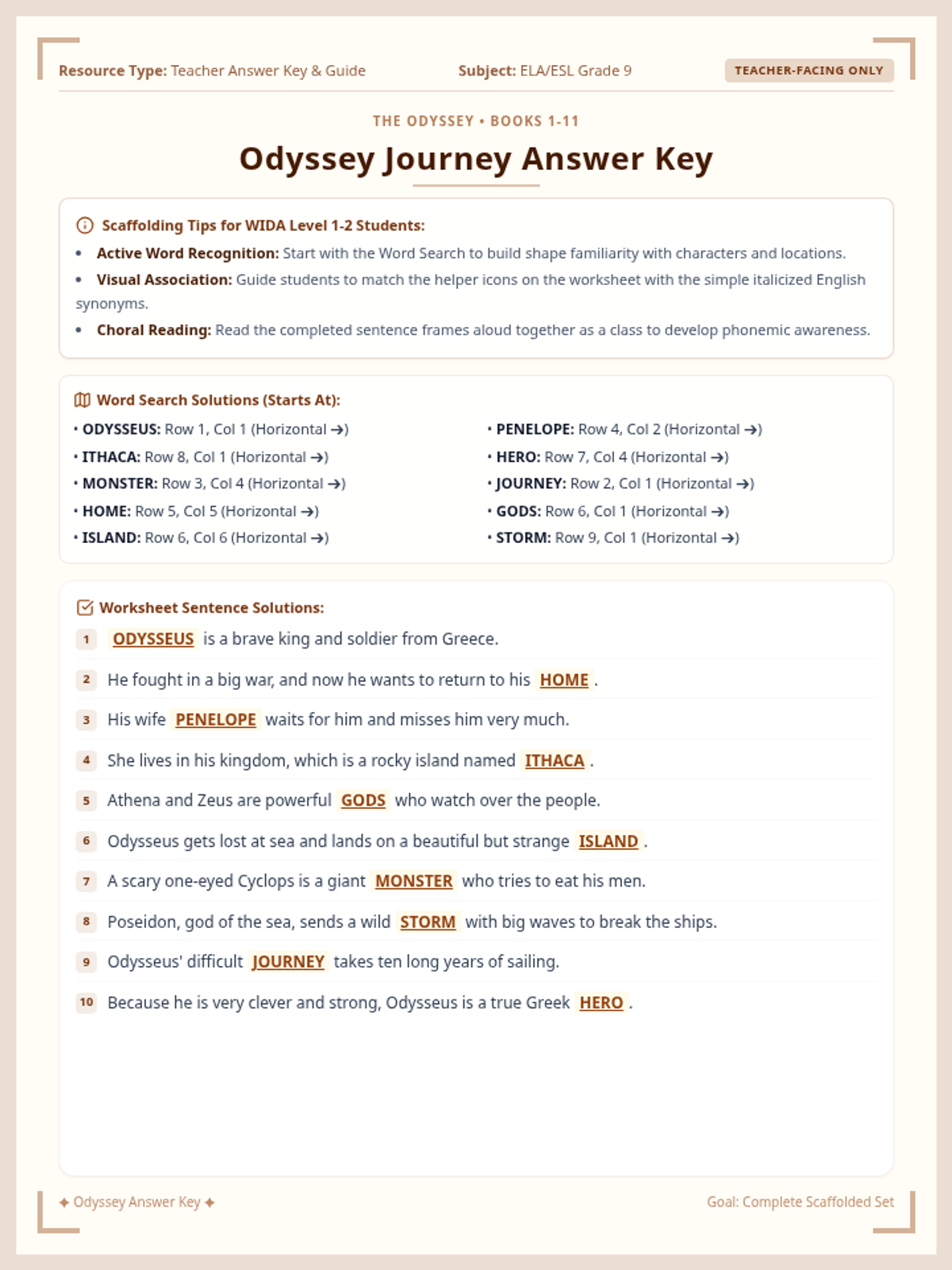
A foundational vocabulary lesson for WIDA Level 1-2 9th-grade ELL students covering Books 1-11 of The Odyssey. Includes a word search puzzle for visual word recognition and a scaffolded sentence-frame worksheet for contextual practice.
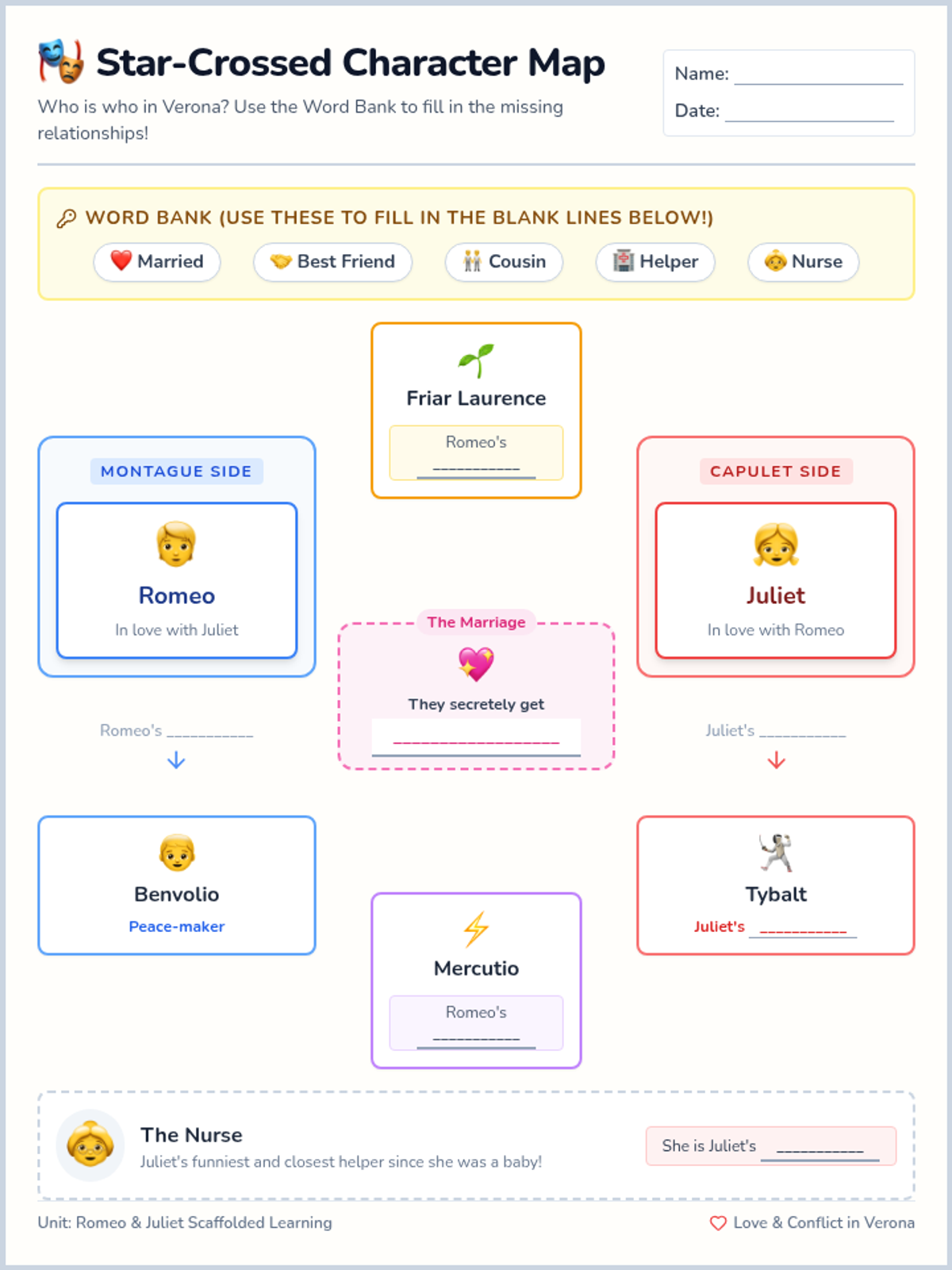
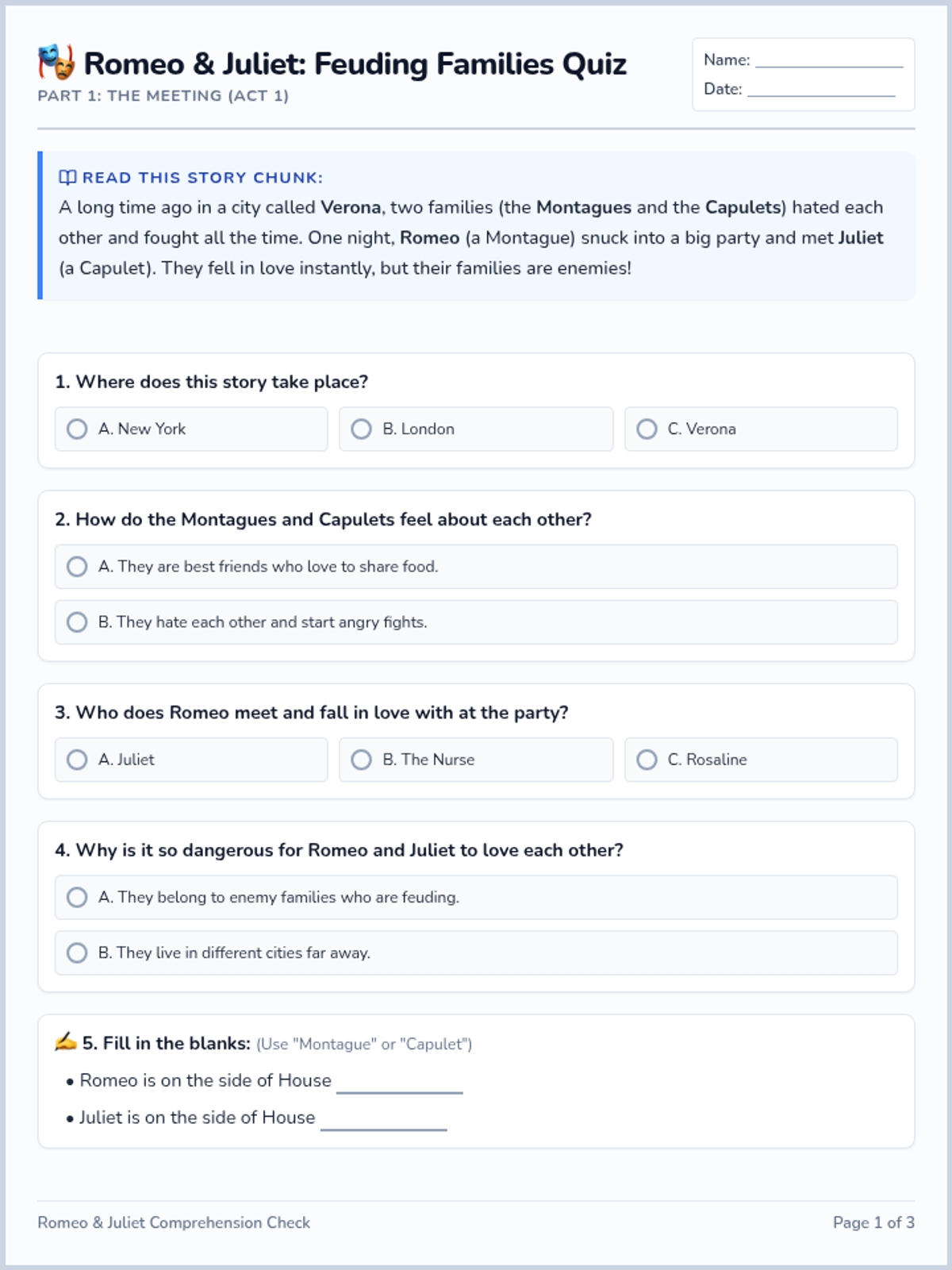
A highly scaffolded, special-education-friendly lesson on Romeo and Juliet up to Act 3, Scene 2. Includes a visual character map and a 15-question comprehension check with chunked text summaries and sentence starters.
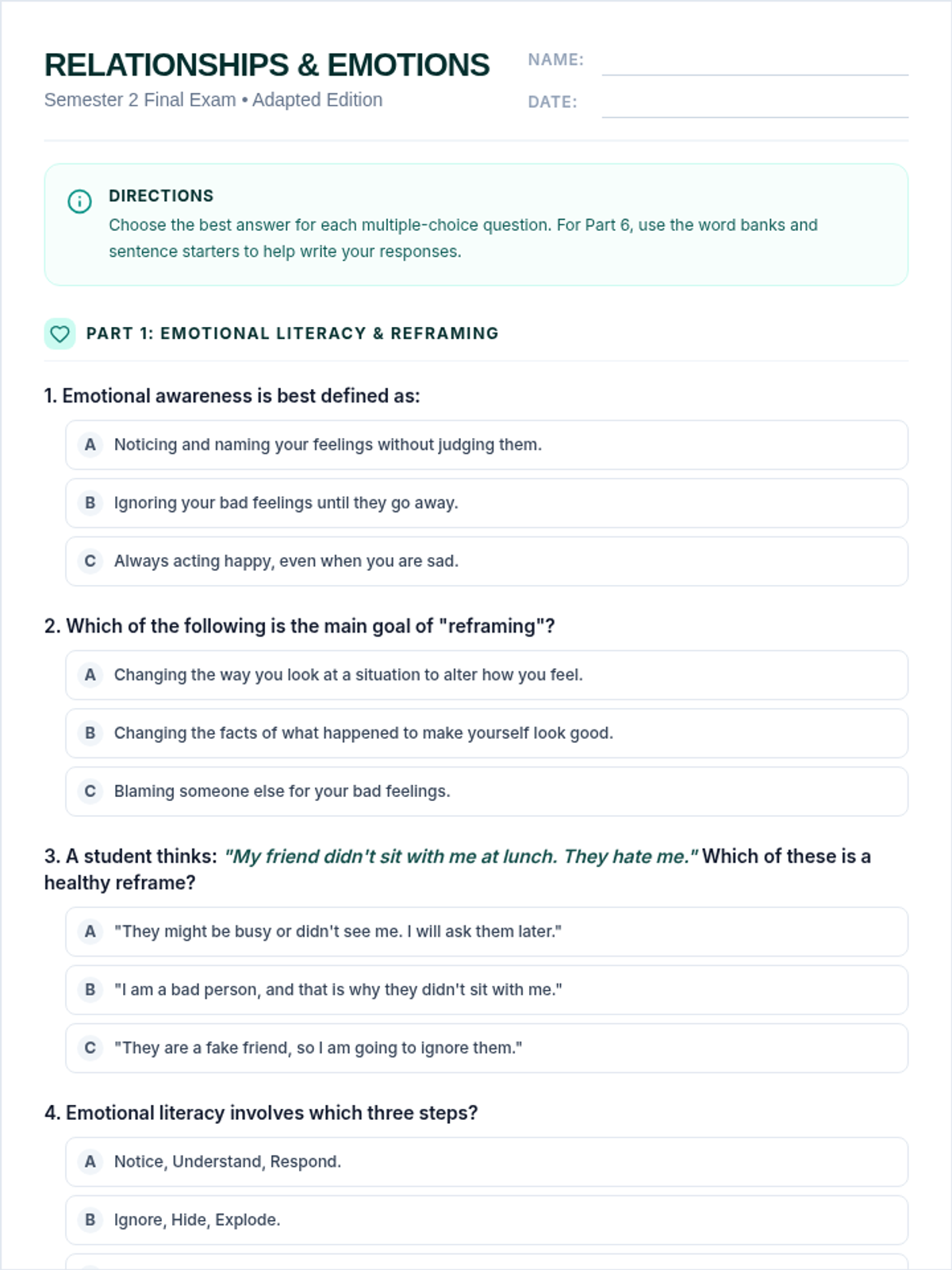
This lesson contains the adapted final exam for the Relationships and Emotions curriculum, offering customized cognitive and reading supports for students with diverse learning needs.
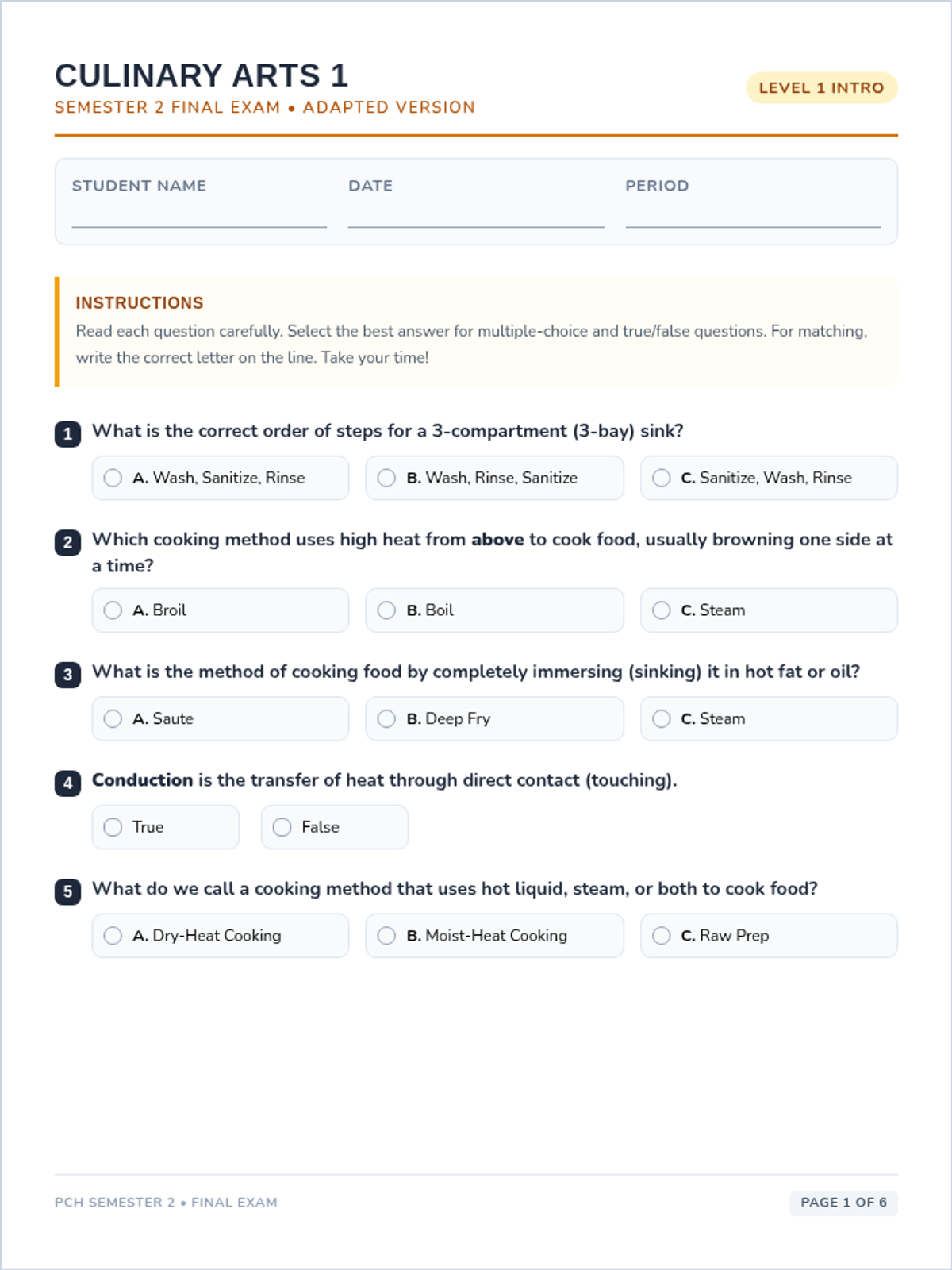
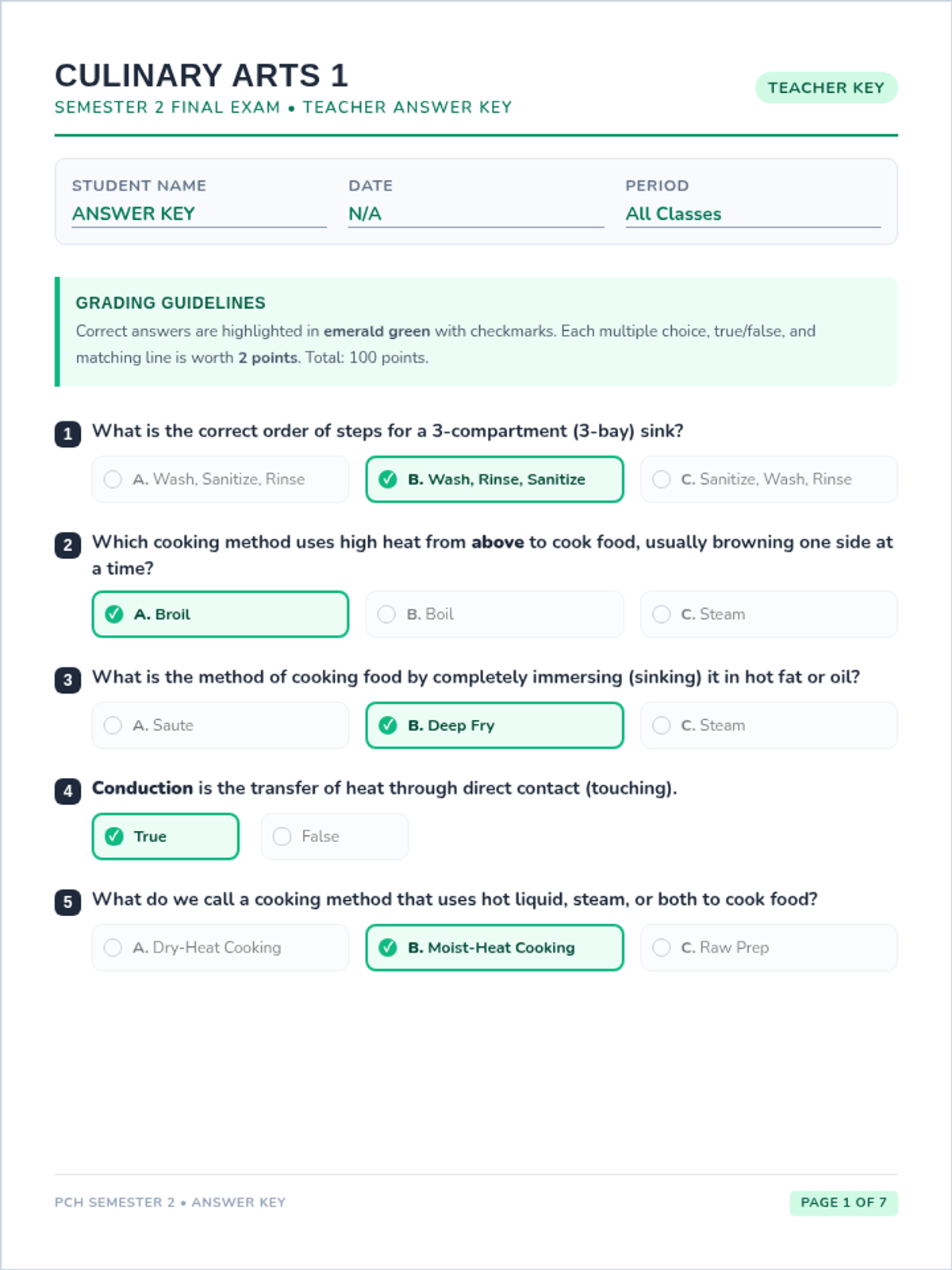
An adapted culinary arts final exam and teacher key for Level 1 introductory students, featuring simplified language, reduced multiple choice options, and scaffolded matching questions.
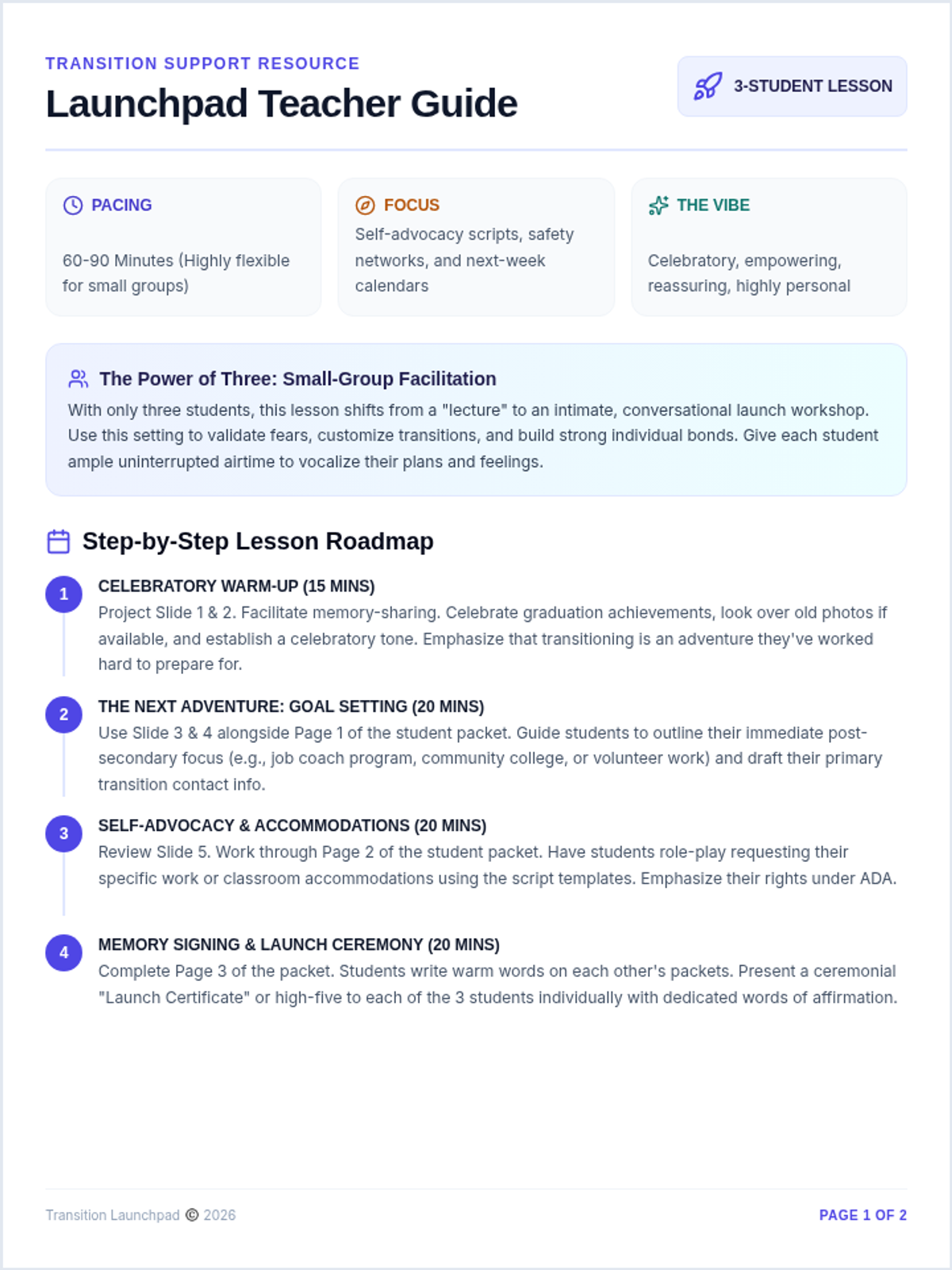
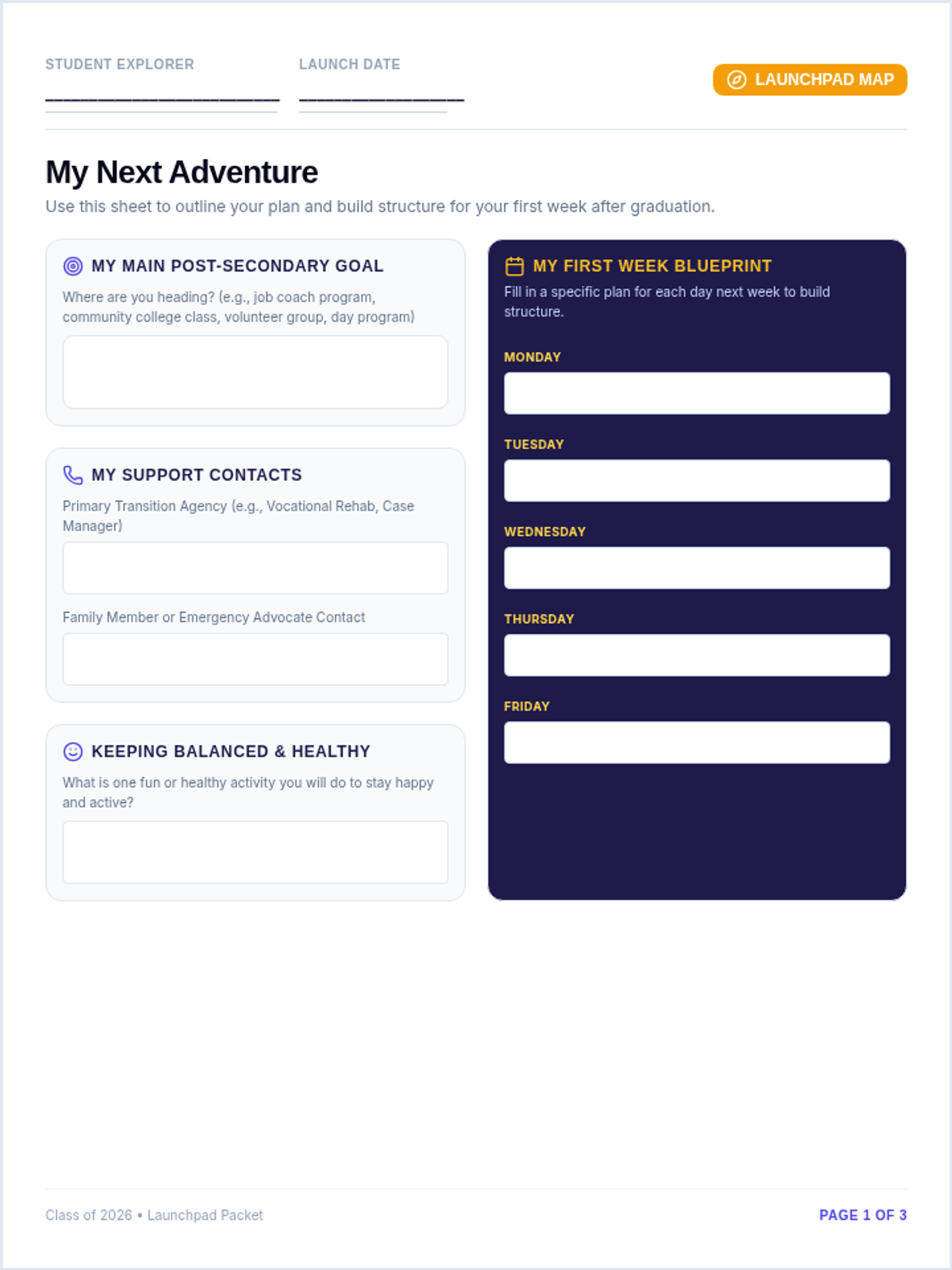
A celebration and action-planning lesson for high school special education students on their final transition day, focusing on personal achievements, self-advocacy scripts, and building concrete next-week schedules.
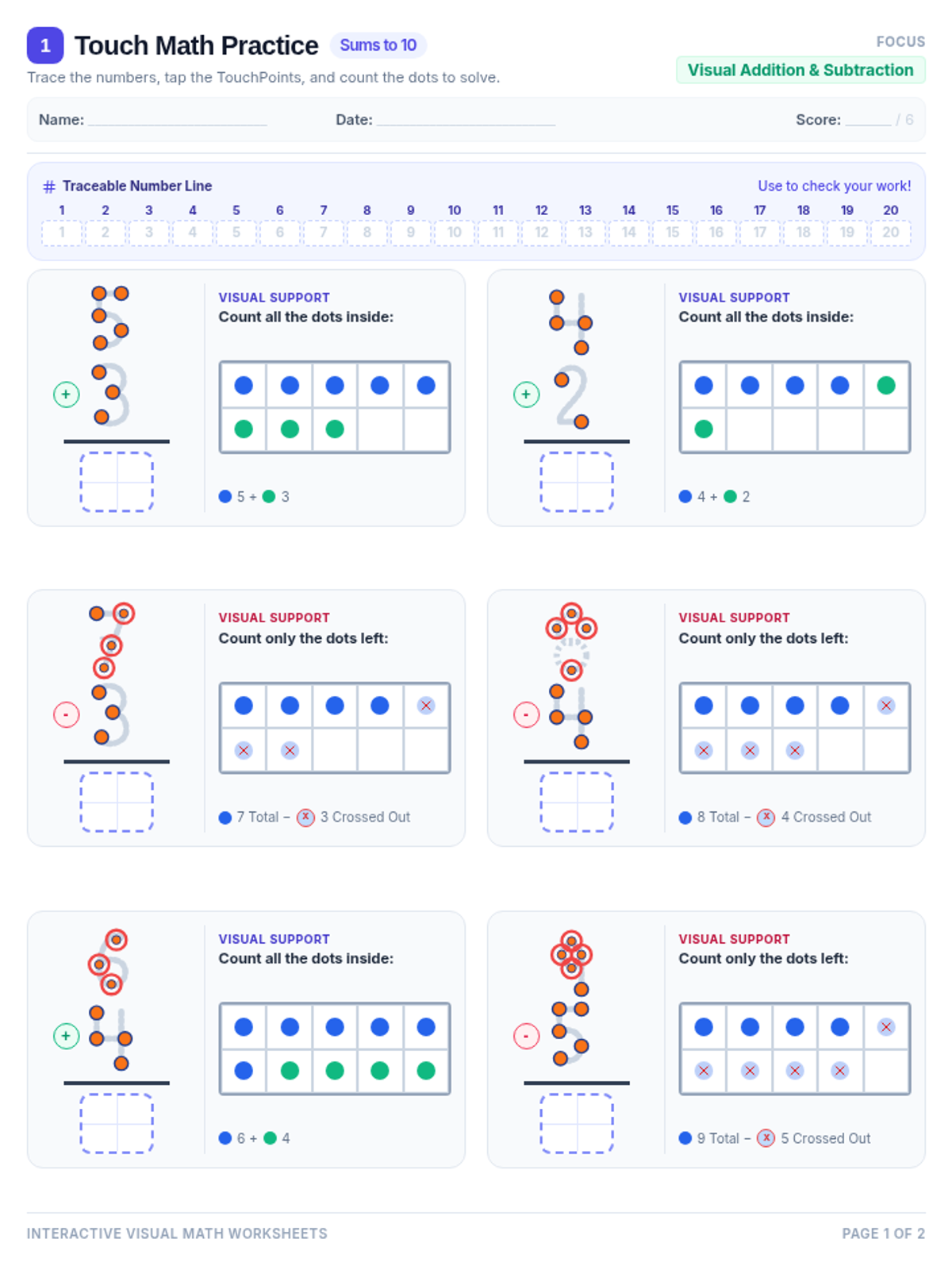
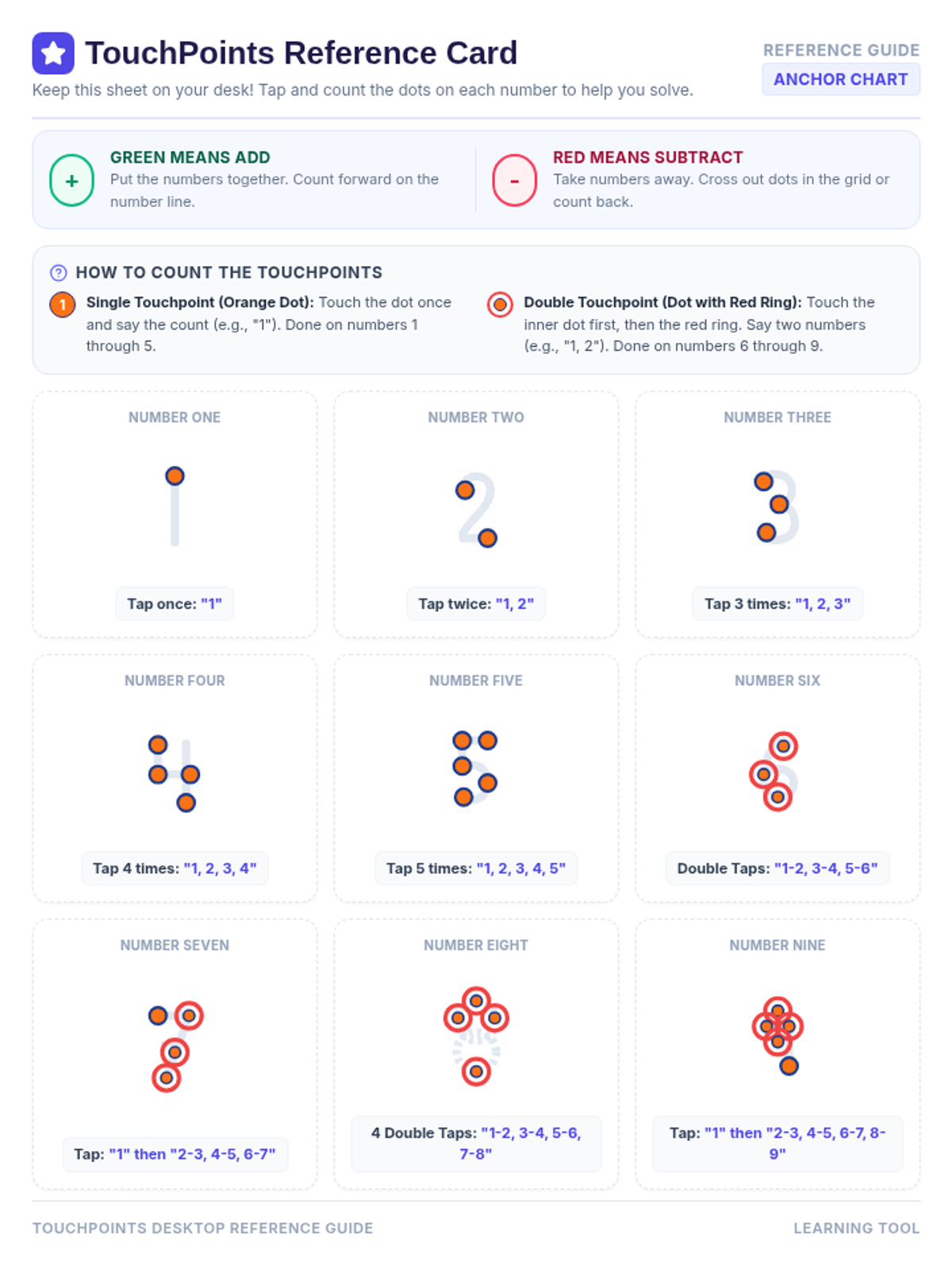
A lesson designed for neurodiverse high school students, featuring highly structured addition and subtraction worksheets with custom traceable numbers, TouchPoints, color-coded operation signs, and ten-frame visual supports to maximize independence and confidence.
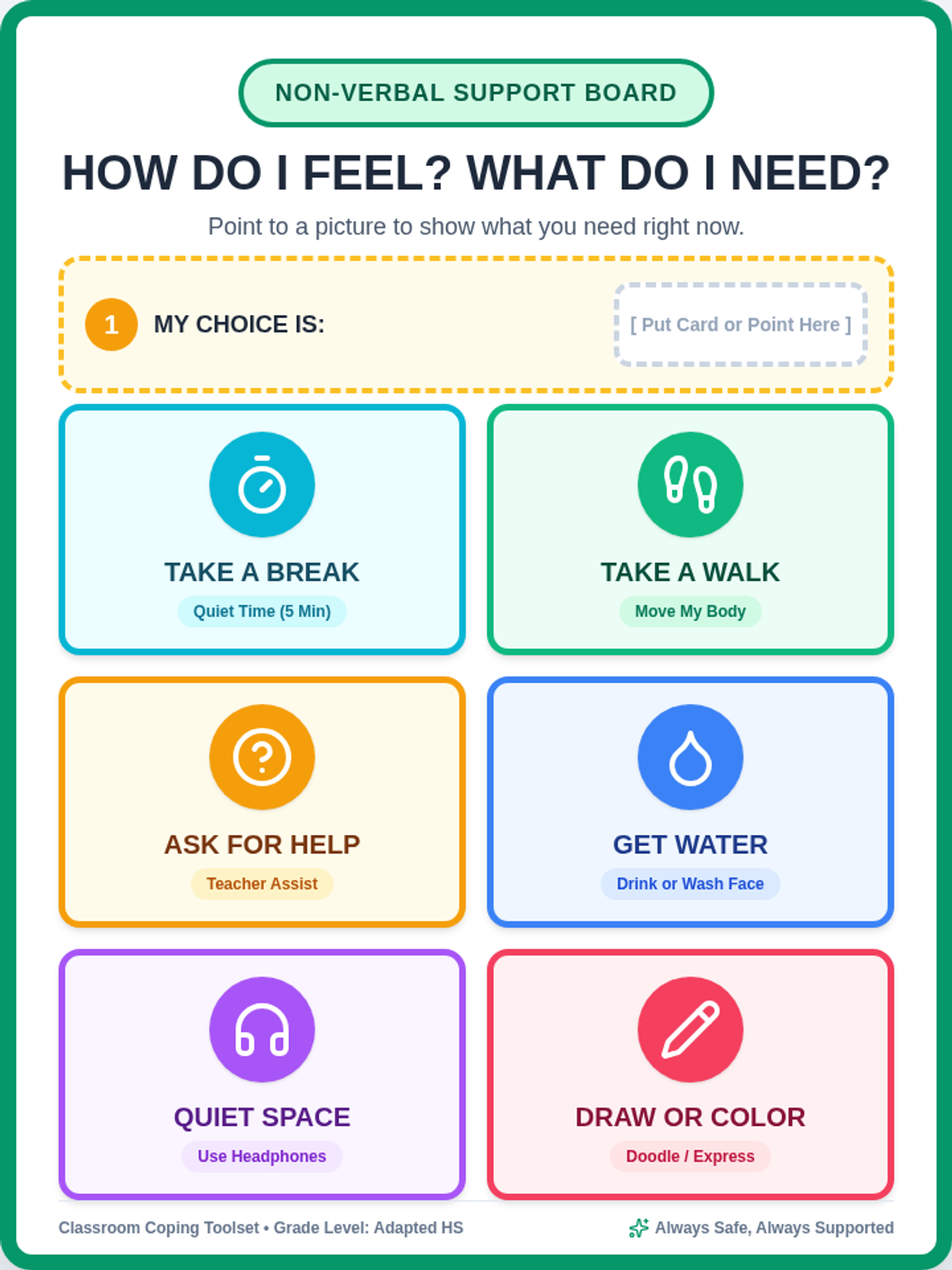
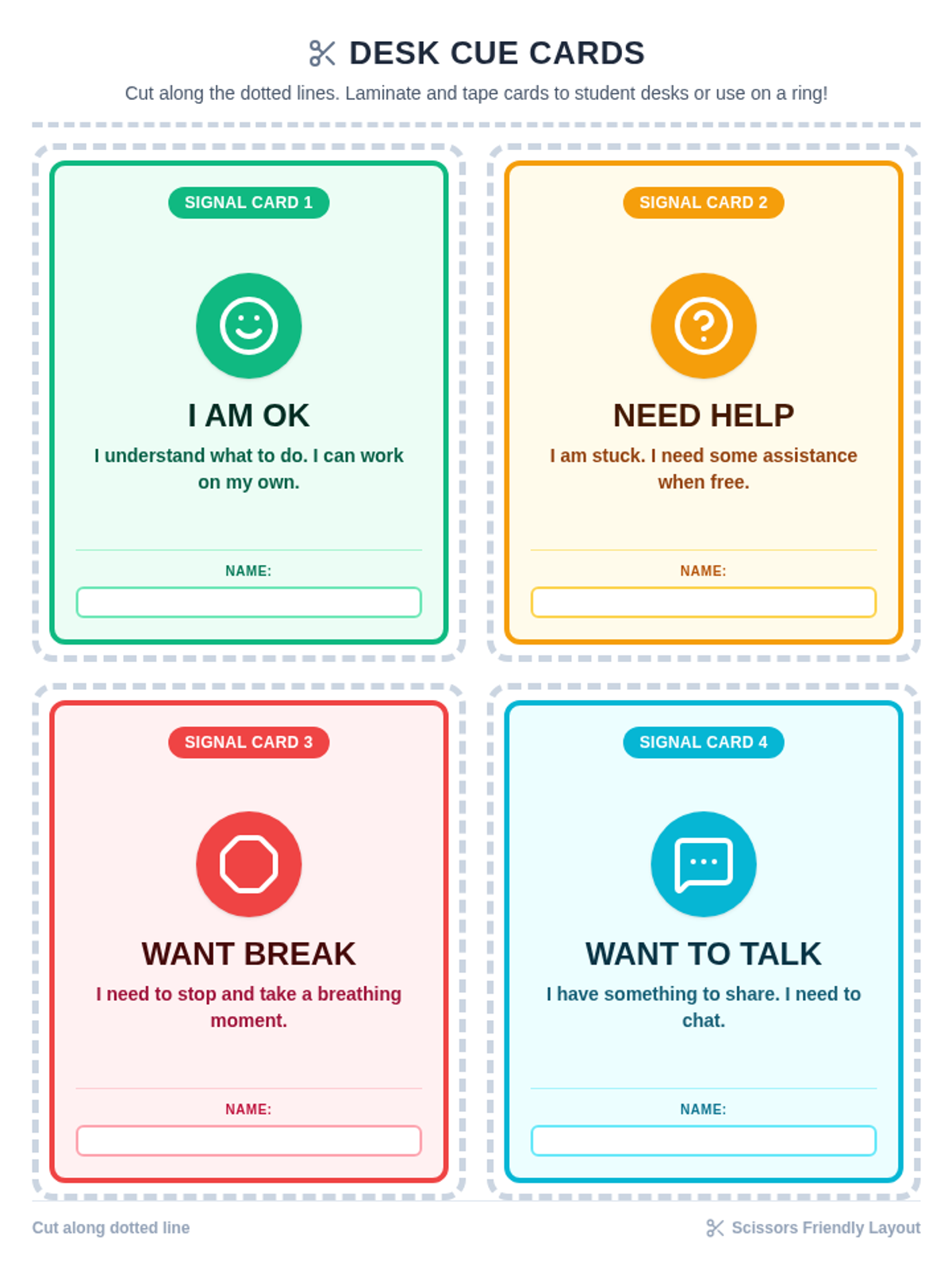
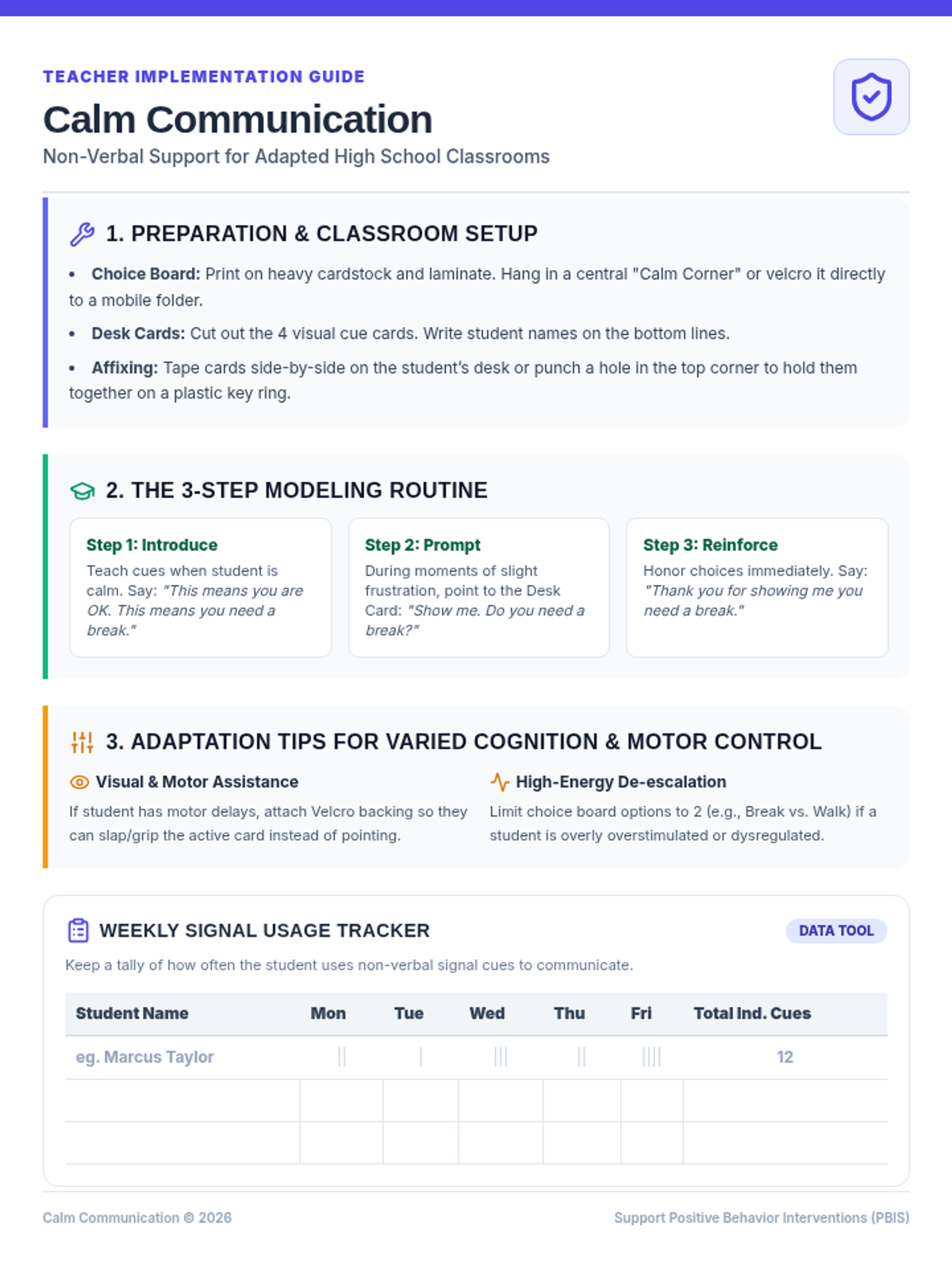
A visual communication and coping toolset designed specifically for low-cognition high school students. This lesson contains a high-contrast choice board, printable desk communication cue cards, and an educator facilitation guide to support non-verbal and adapted coping strategies.