Students are introduced to tape diagrams as a tool for visualizing part-to-part relationships by translating text descriptions into block-based drawings.
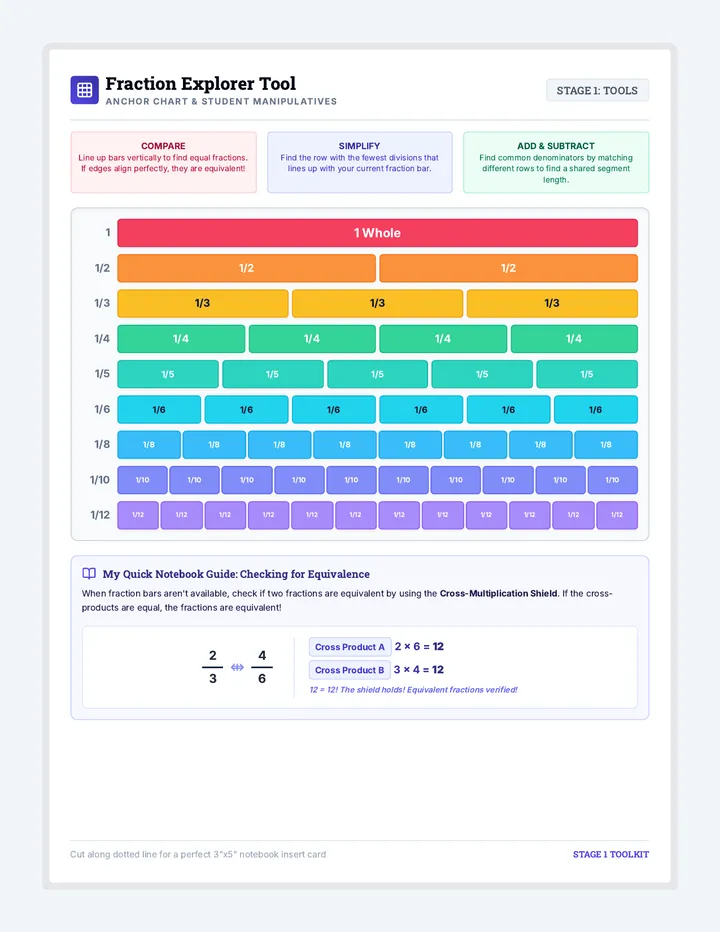
A comprehensive visual math curriculum sequence focusing on fraction equivalence, addition, subtraction, multiplication, division, and comprehensive multi-operation mastery. Includes visual lesson slides, independent practice worksheets, small-group centers, visual tools, and robust assessments.
A comprehensive review and assessment of all four fraction operations. Students demonstrate their mastery through an interactive review, final unit assessment, and student reflection.
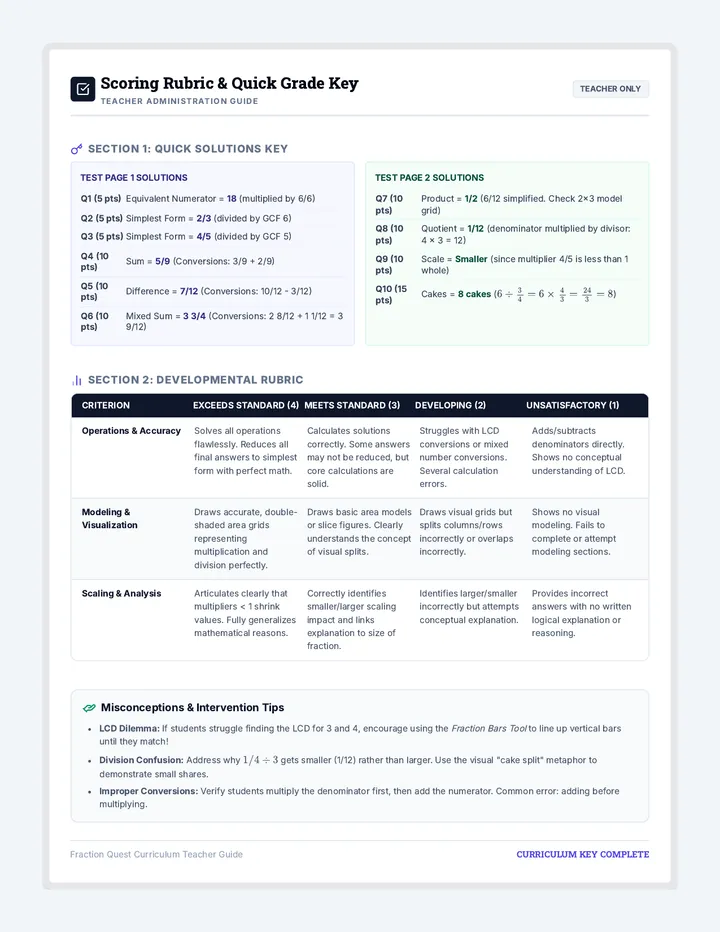
Teacher grading guide and rubric for the Fraction Quest assessment. Features quick grading solutions for all 10 problems and a 4-level developmental rubric for operations, modeling, and scaling.
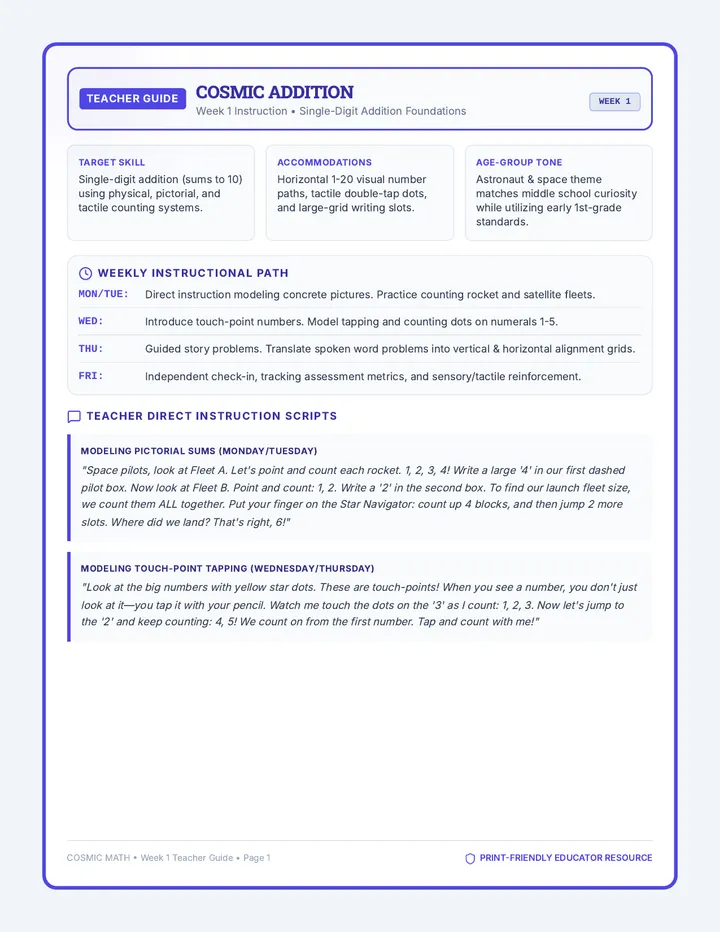
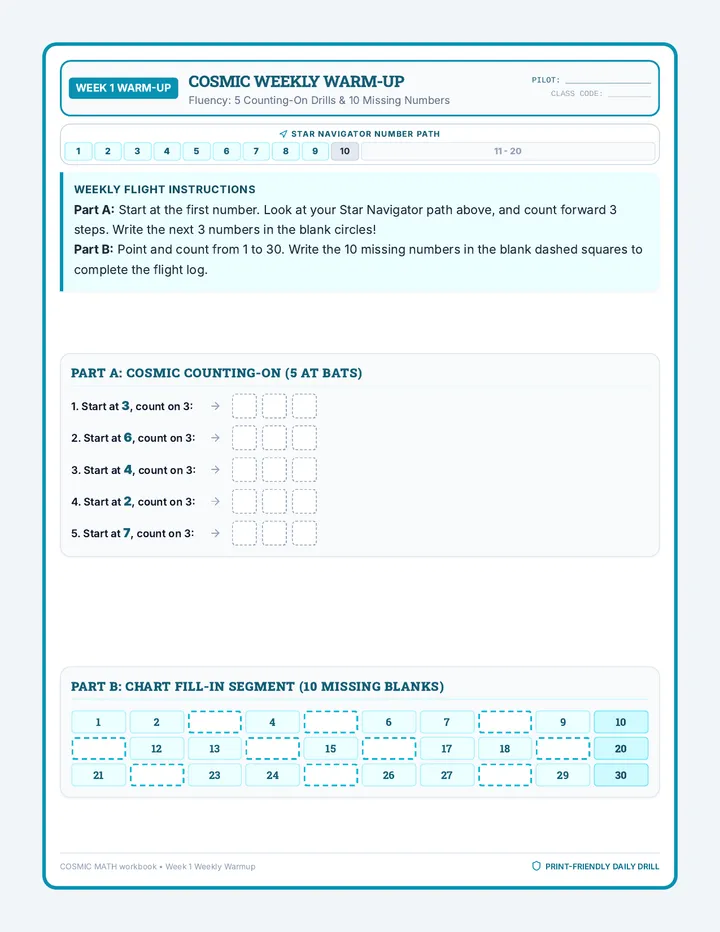
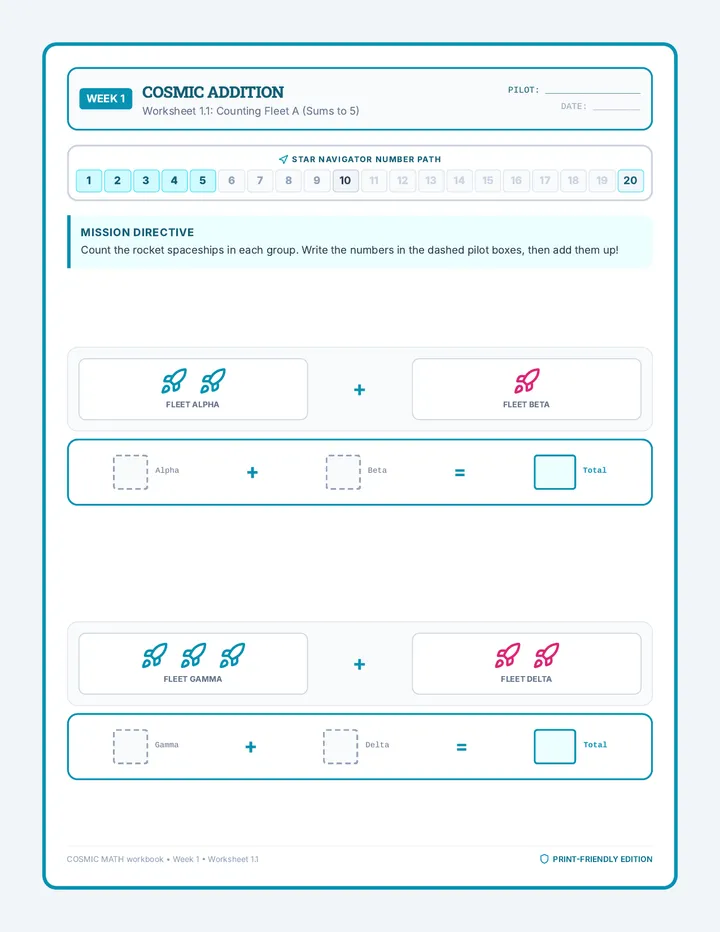
A 4-week math workbook and instructional sequence themed around outer space exploration, specifically designed for middle school students with disabilities (SWDs) working at an early 1st-grade level. Features embedded touch-points, base-ten icons, visual number paths, and age-appropriate space exploration visuals to teach single-digit operations, place value, and patterns.
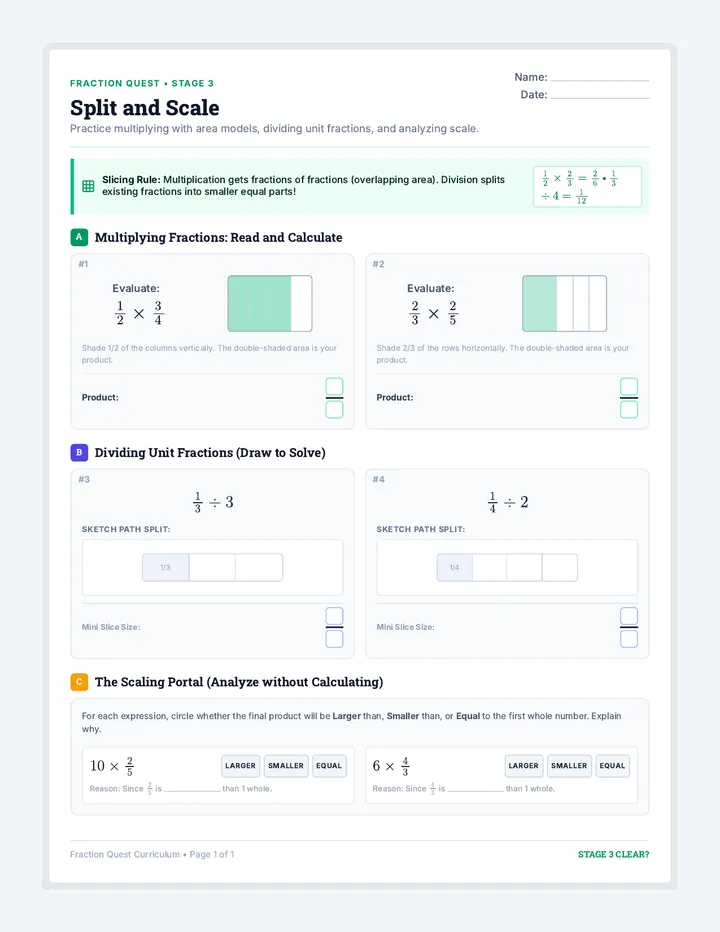
Multiplying and dividing fractions using area models, understanding scaling, and dividing unit fractions by whole numbers. Visual models help conceptualize these concepts.
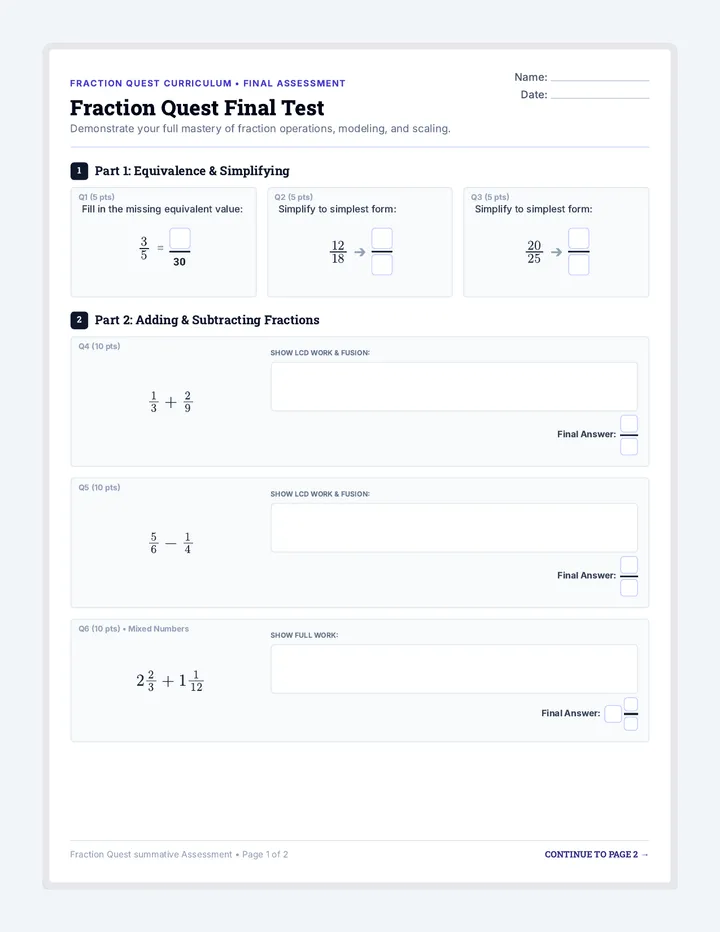
A comprehensive 2-page summative final unit assessment for all fraction operations (equivalence, addition, subtraction, multiplication, division, and scaling analysis). Features structured input blocks and blank workspace boxes.
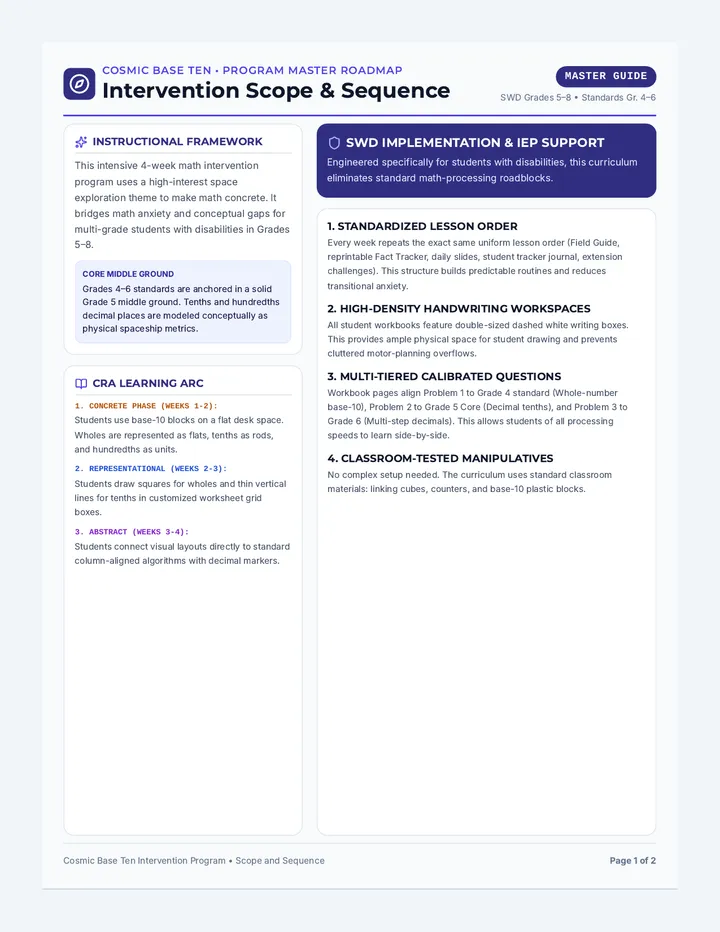
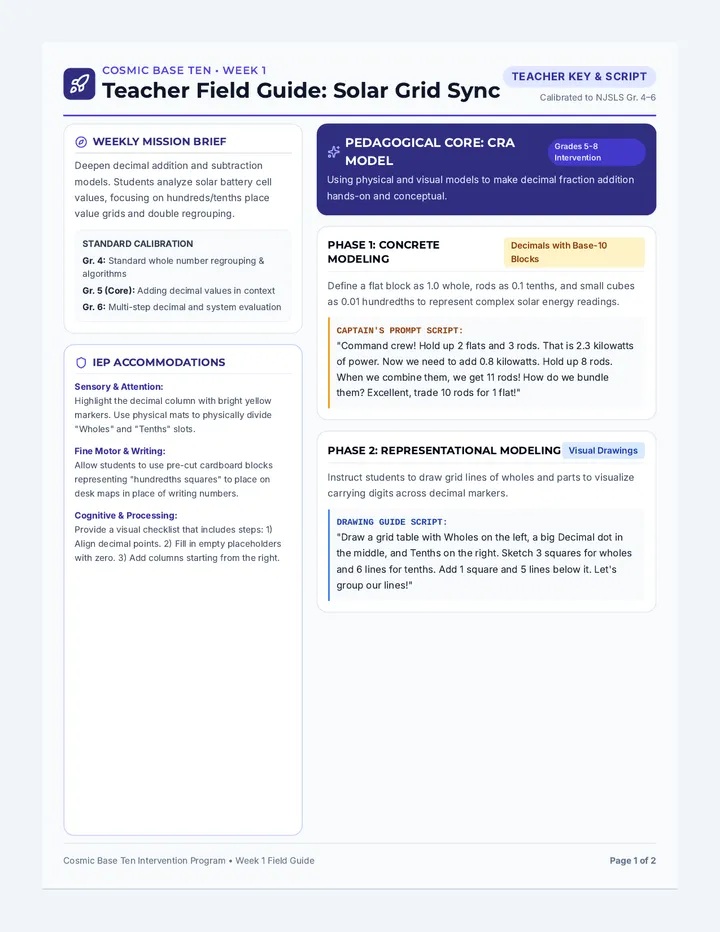
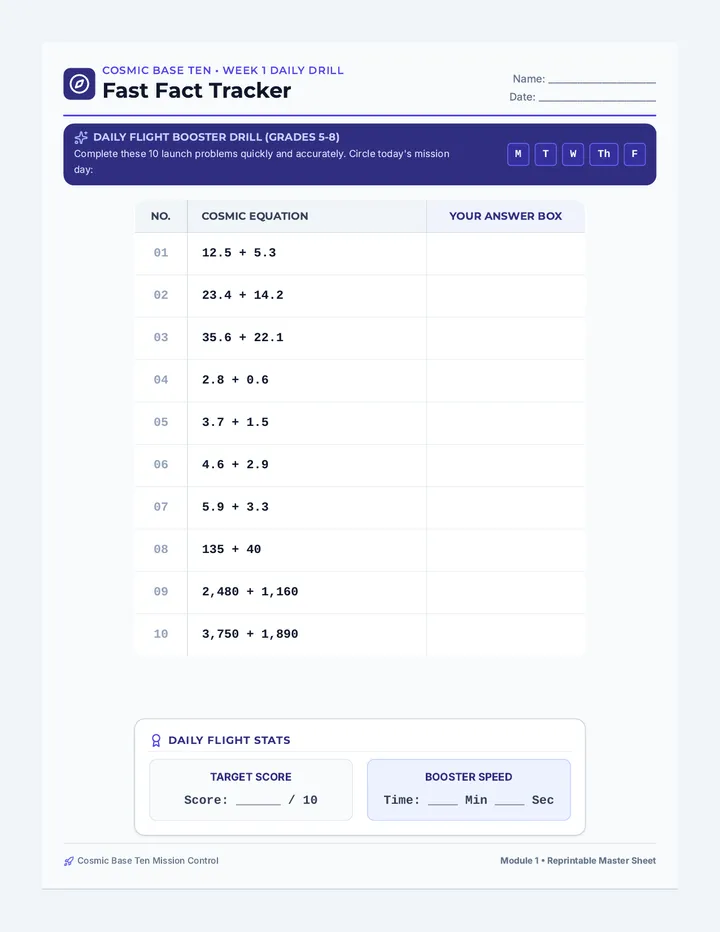
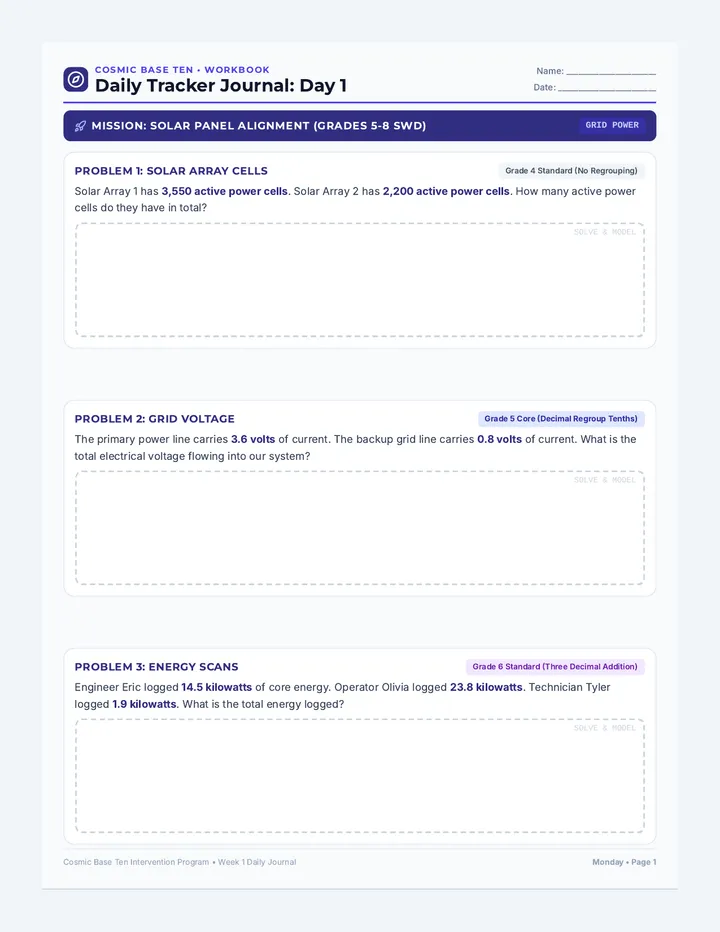
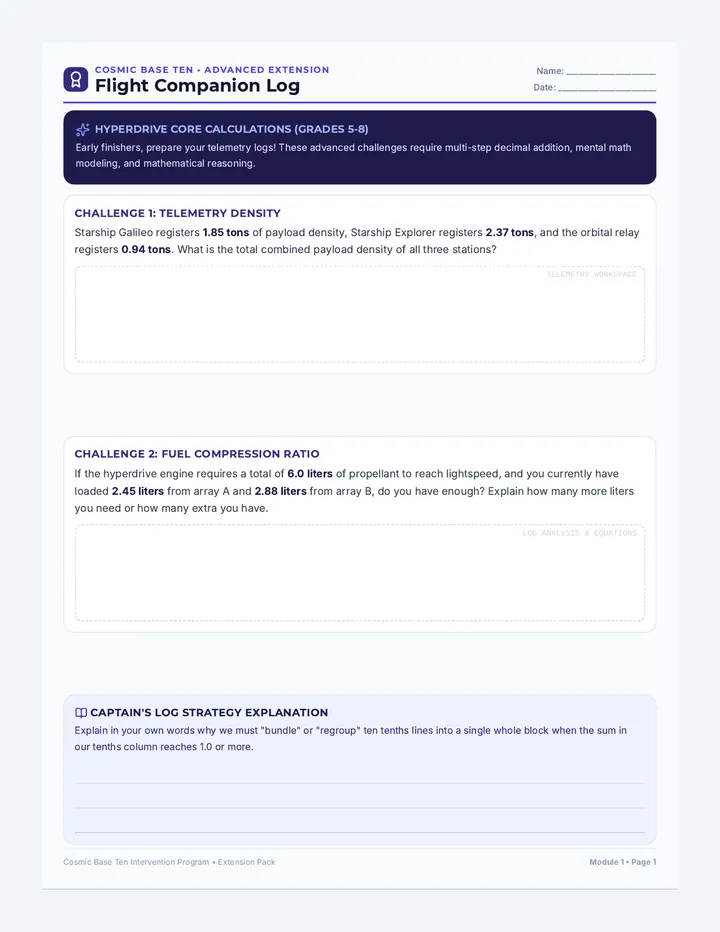
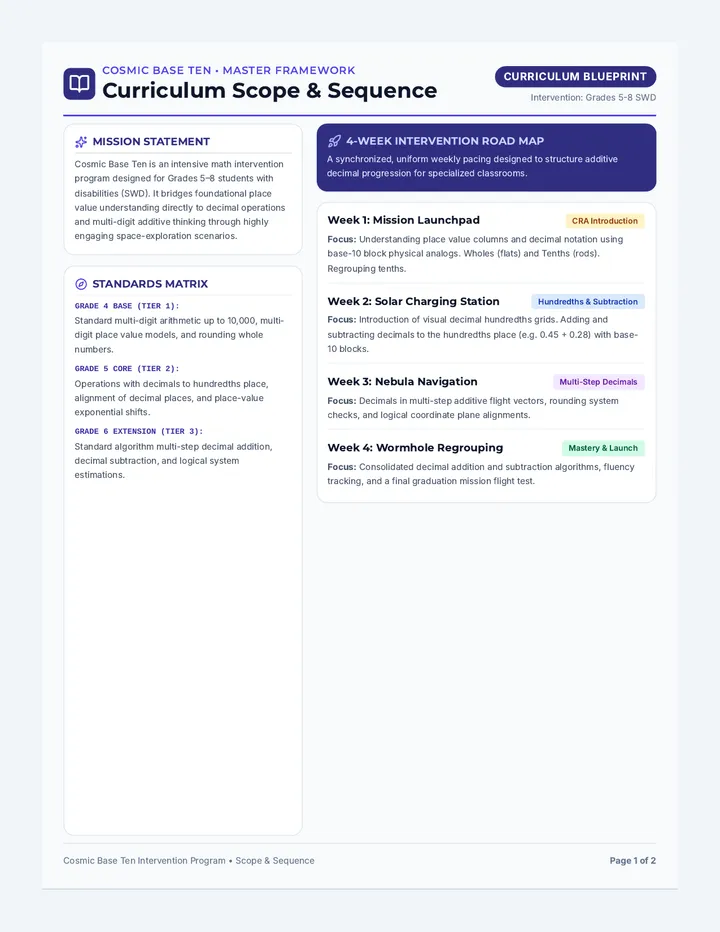
A 4-week intensive math intervention program set in a space exploration universe, designed for multi-grade students with disabilities in Grades 5–8. It covers additive thinking, place value, and decimal regrouping, anchored in Grades 4–6 standards with a Grade 5 core middle ground.
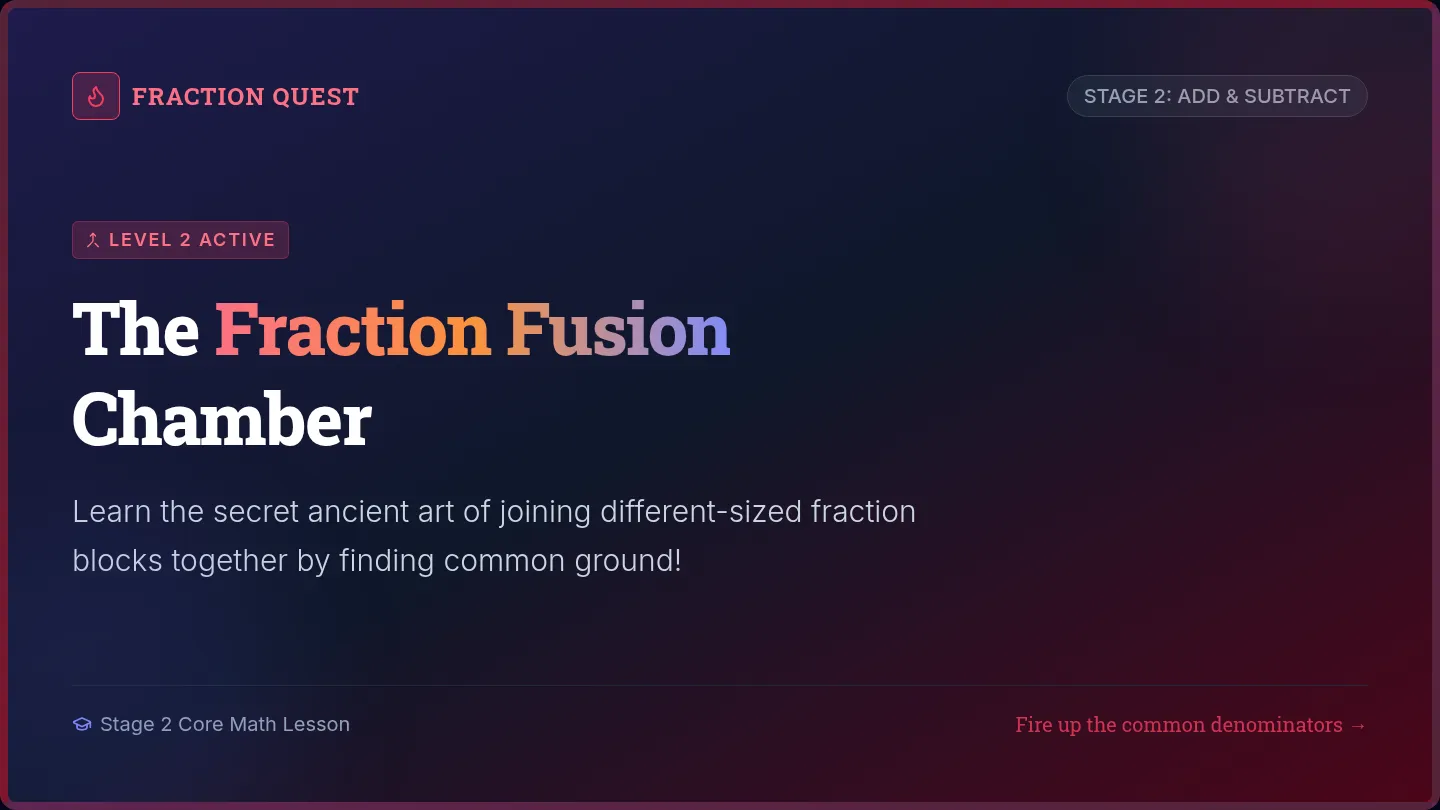
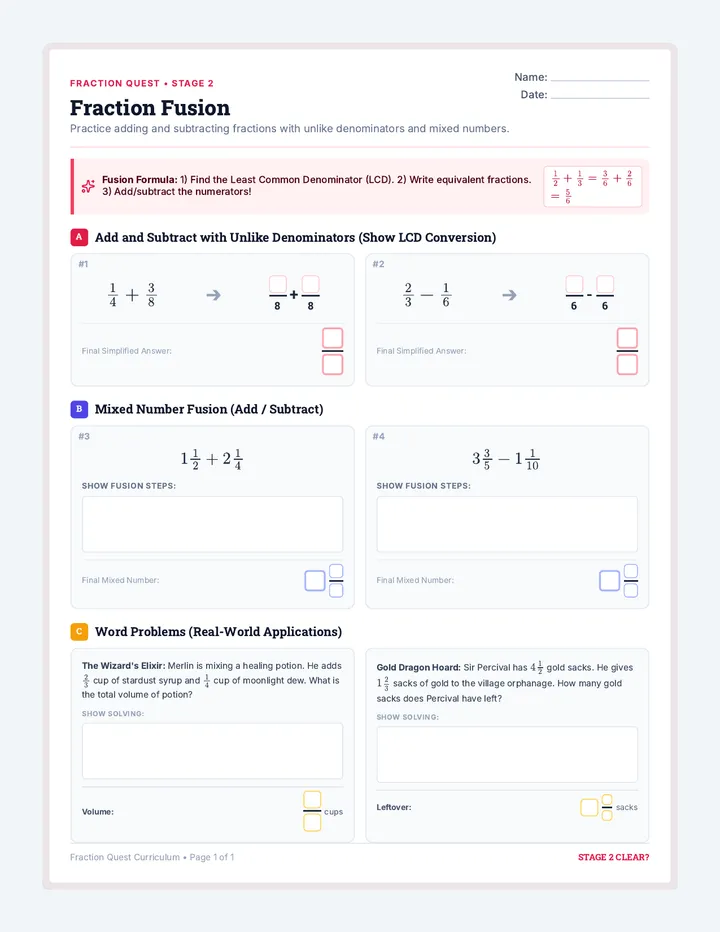
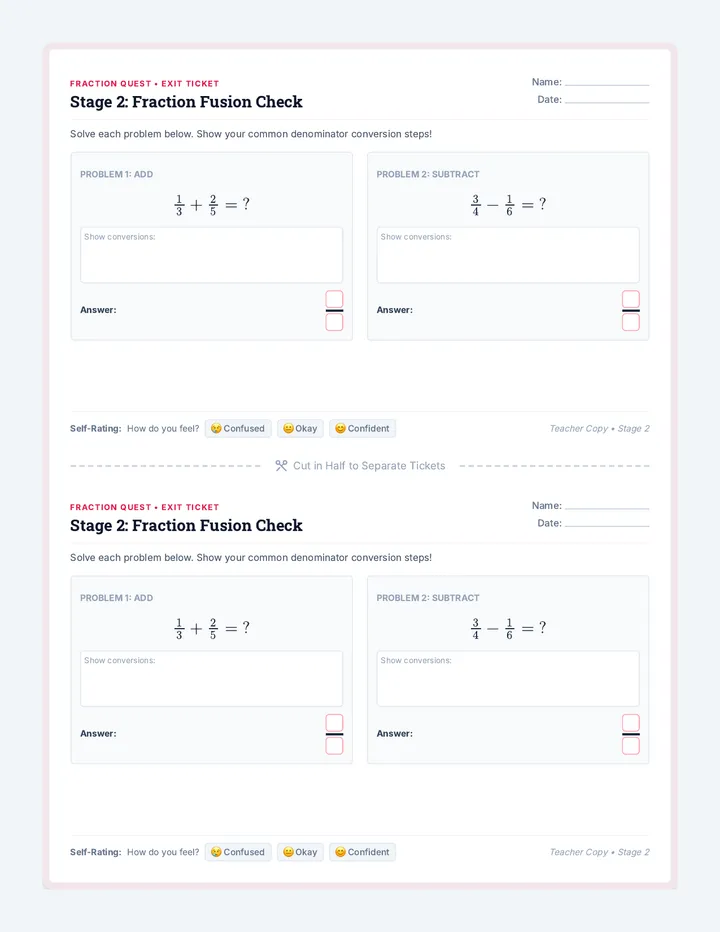
Adding and subtracting fractions with unlike denominators, including mixed numbers and standard real-world word problems. Students learn to find equivalent fractions with common denominators to add and subtract.
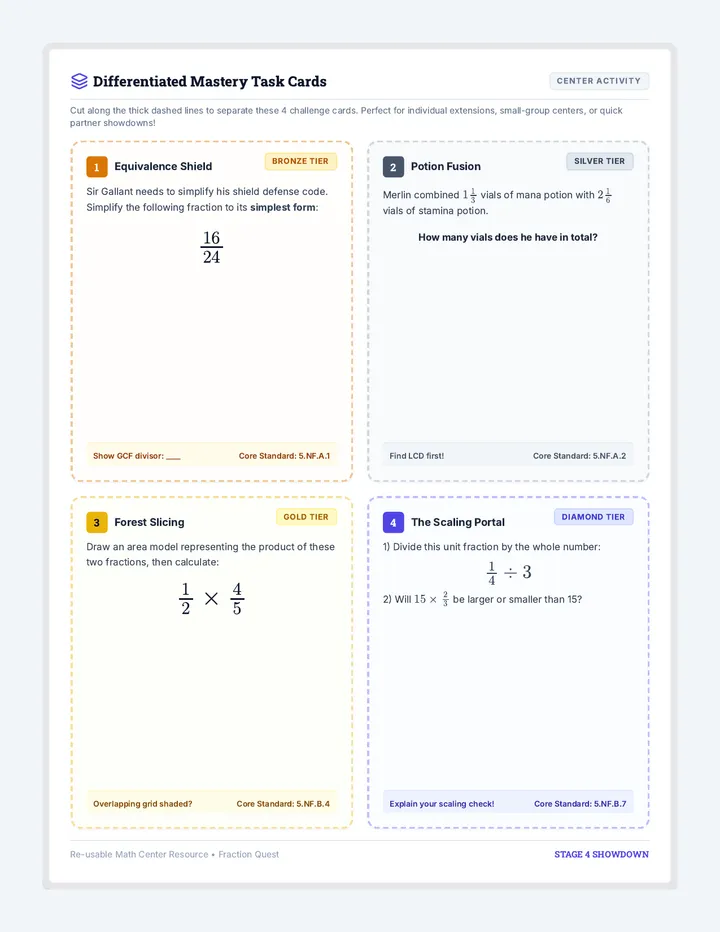
A set of 4 differentiated printable task cards for all-operations fraction review. Covers bronze, silver, gold, and diamond challenge tiers, complete with grid cutting indicators.
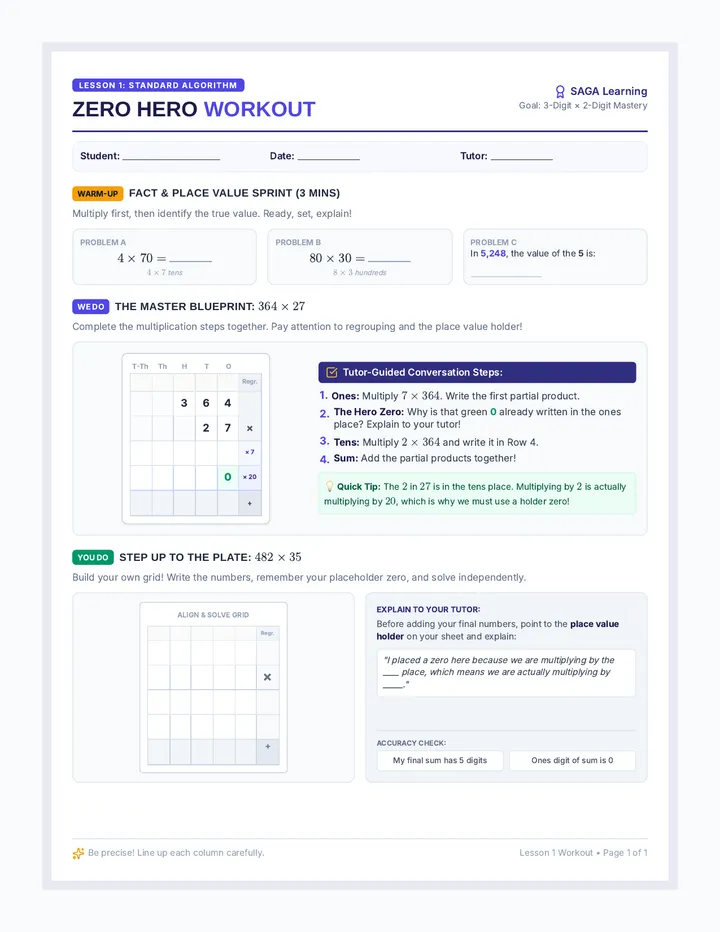
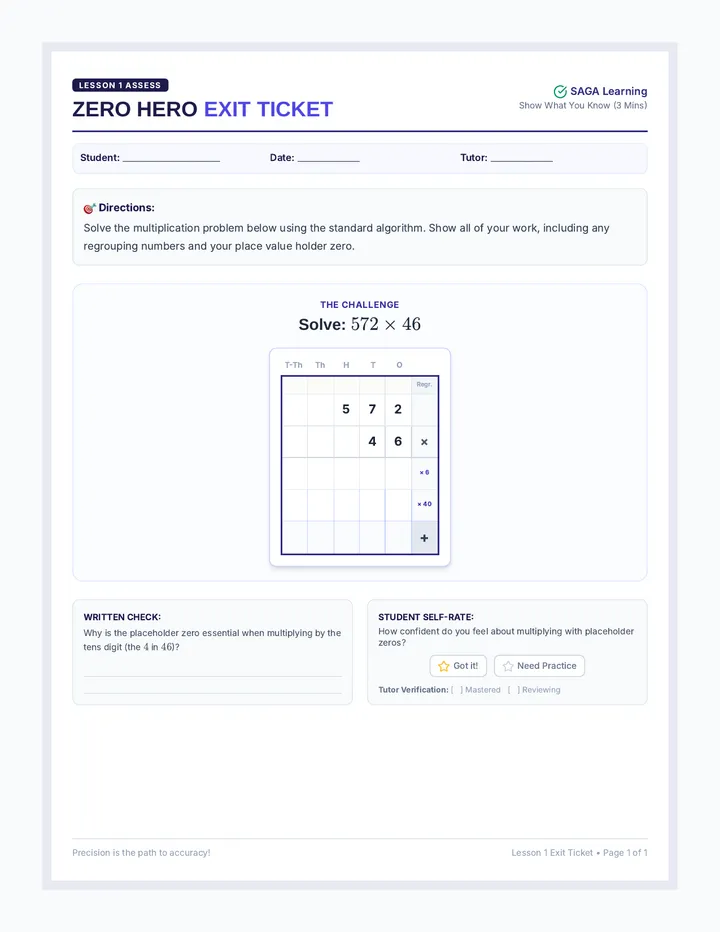
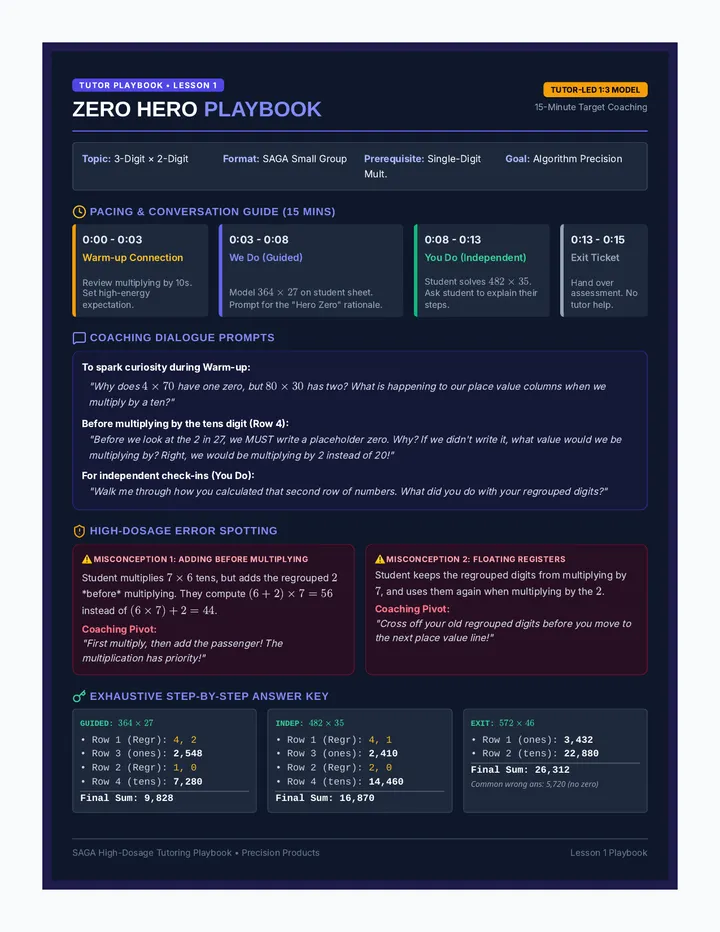
A 6th-grade standard multiplication sequence designed for high-dosage tutoring. Focuses on standard algorithm alignment, regrouping, and place value holder zeros.
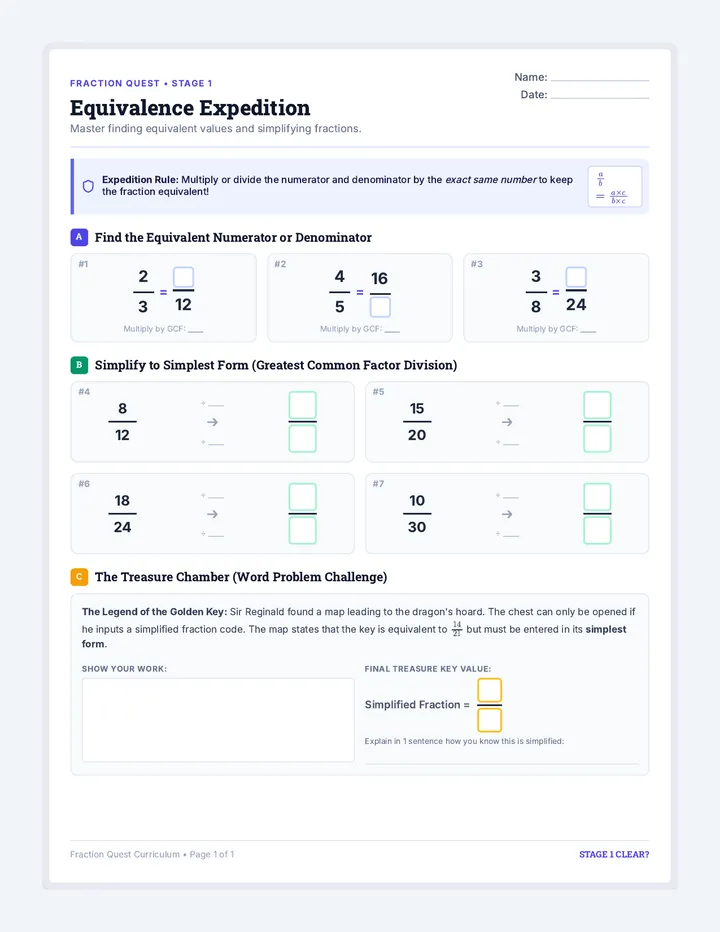
Mastering equivalent fractions and simplifying. Students discover visual equivalencies, identify common denominators, and reduce fractions to their simplest form using step-by-step mathematical reasoning.
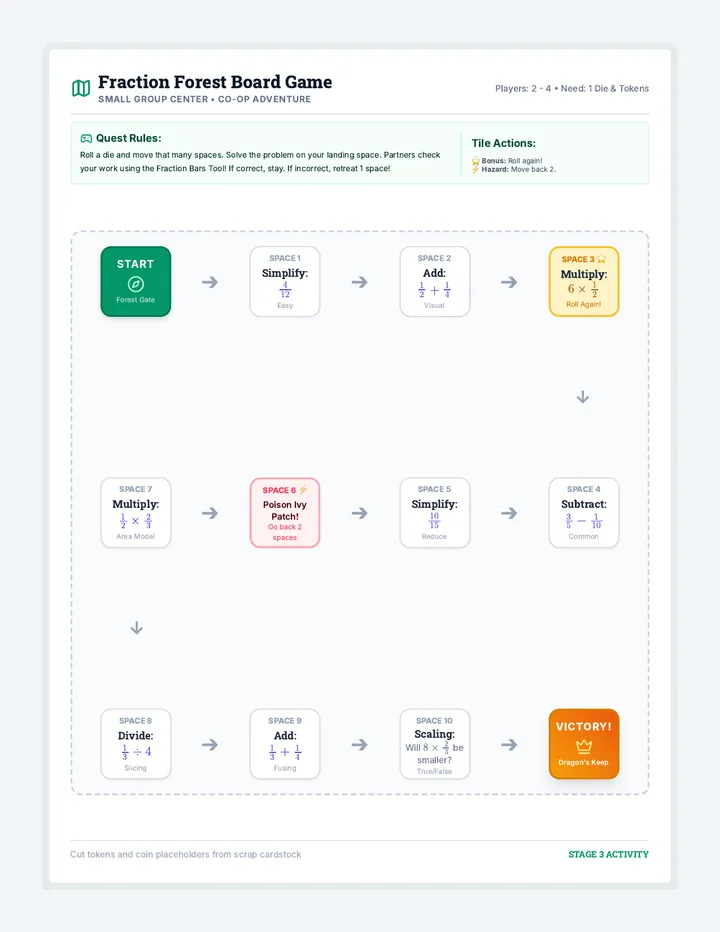
A complete print-and-play math center board game for small groups. Students roll a die and move along the Forest Path, solving equivalence, addition, subtraction, multiplication, and division problems to reach the Dragon's Keep.