Students design their own multi-stage games using independent events, calculating the 'house edge' and proving fairness through probability models.
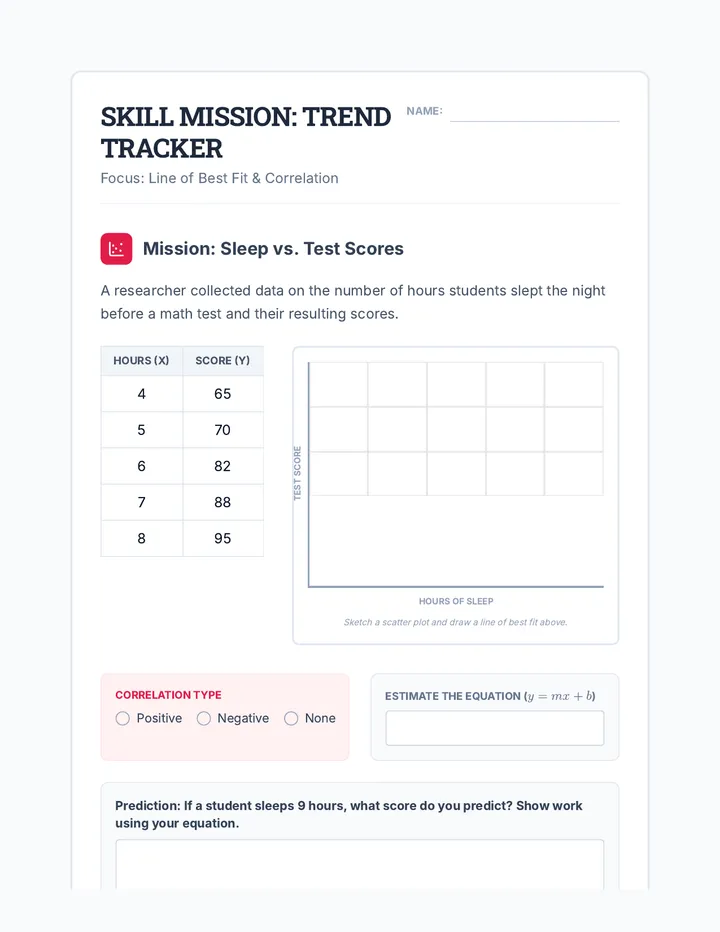
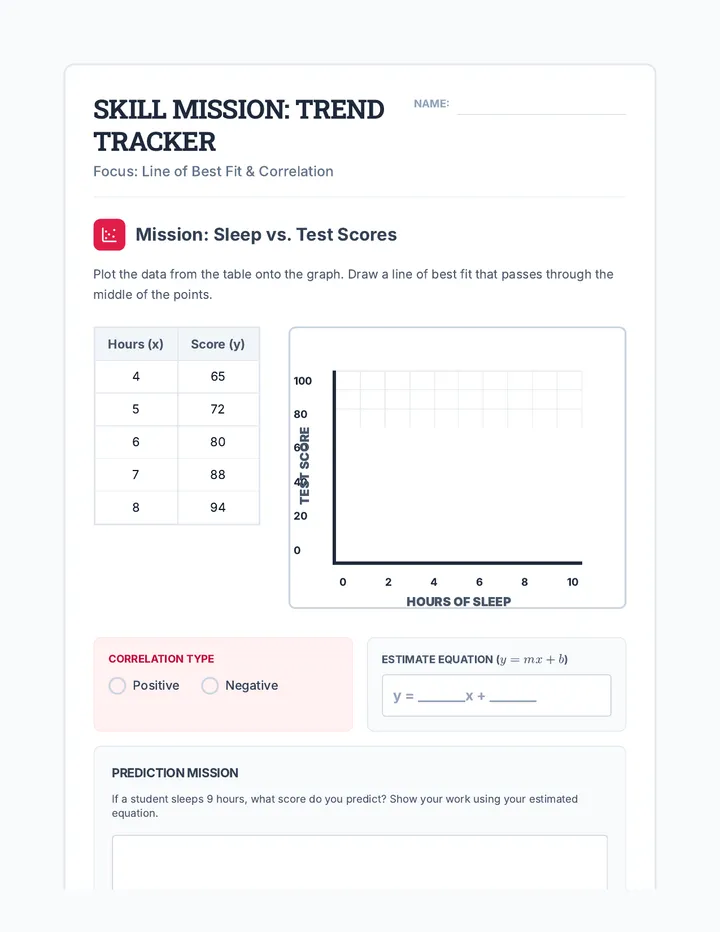
Students learn to plot bivariate data, identify trends, and spot outliers using a real-world scenario of sleep and mood.
A comprehensive guide to analyzing and graphing rational functions, covering all key features from asymptotes to holes.
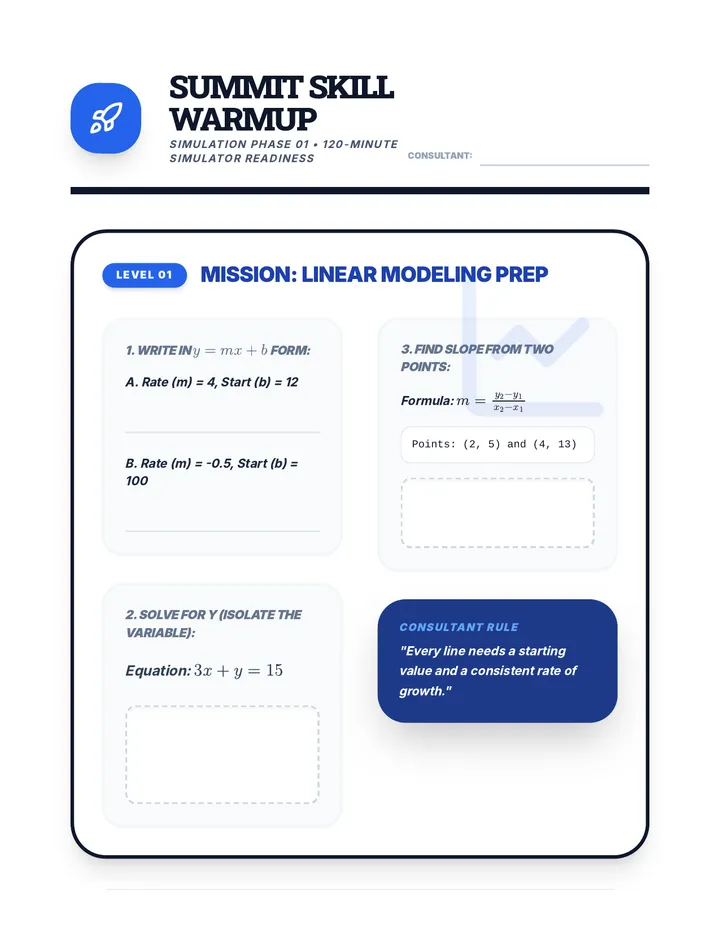
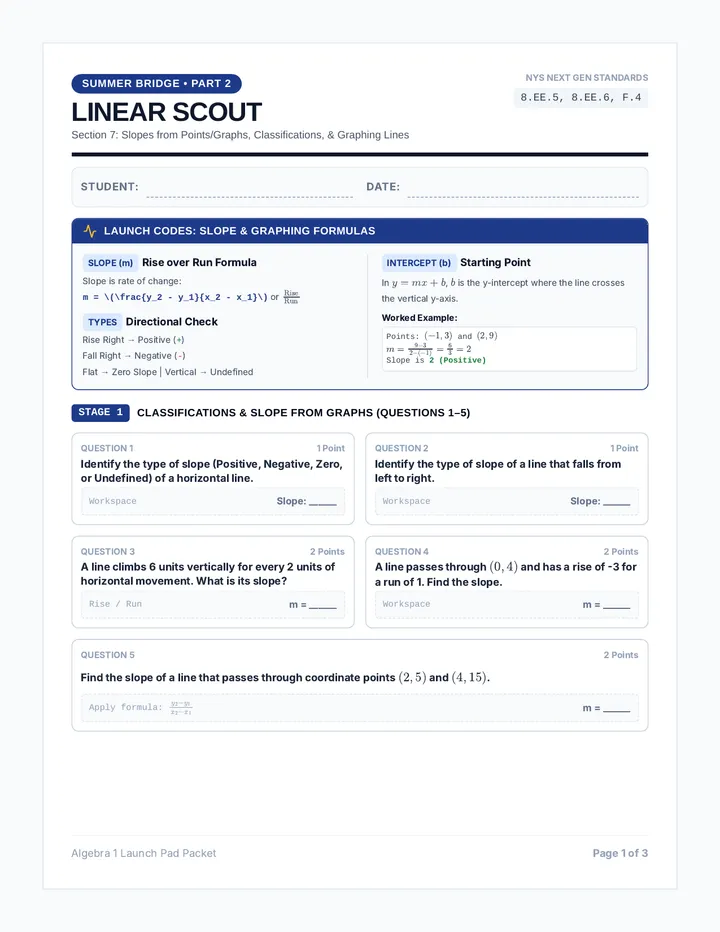
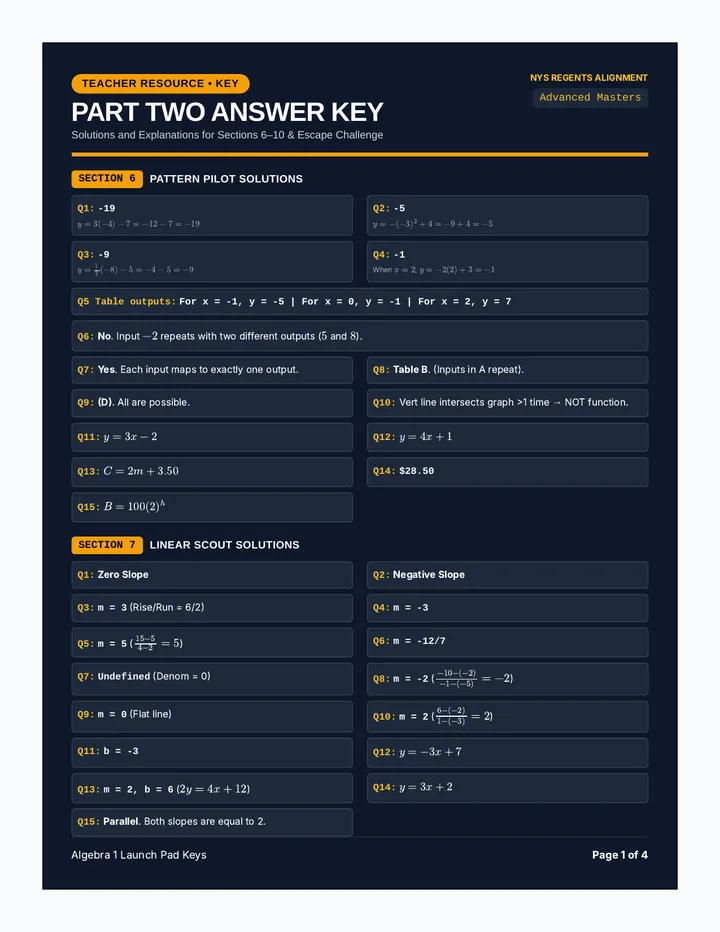
An advanced look at slope as a rate of change, including calculation from coordinates and understanding special cases like zero and undefined slopes.
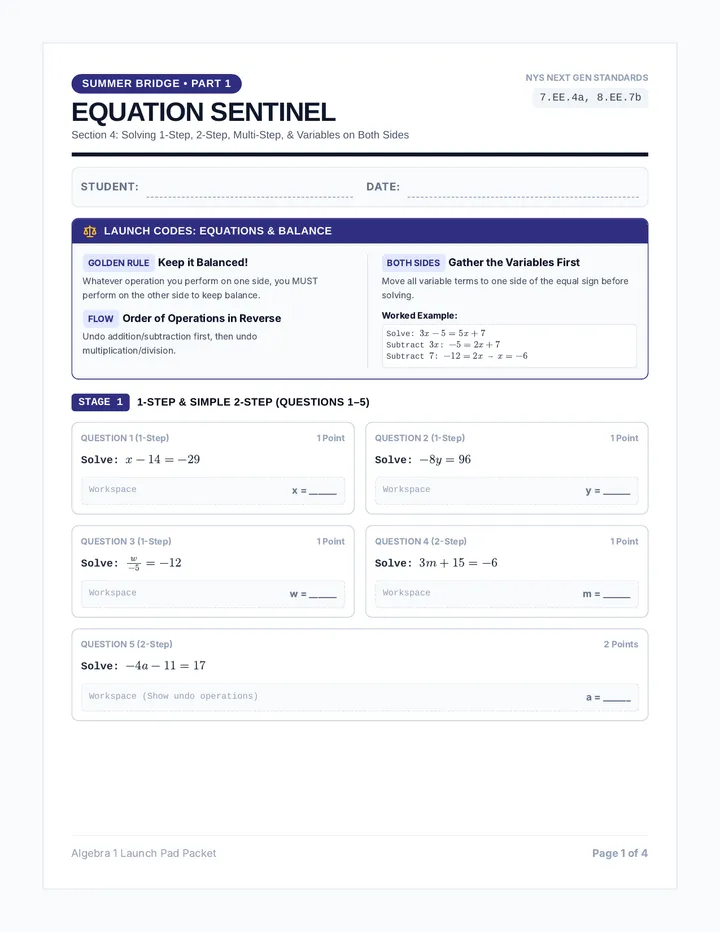
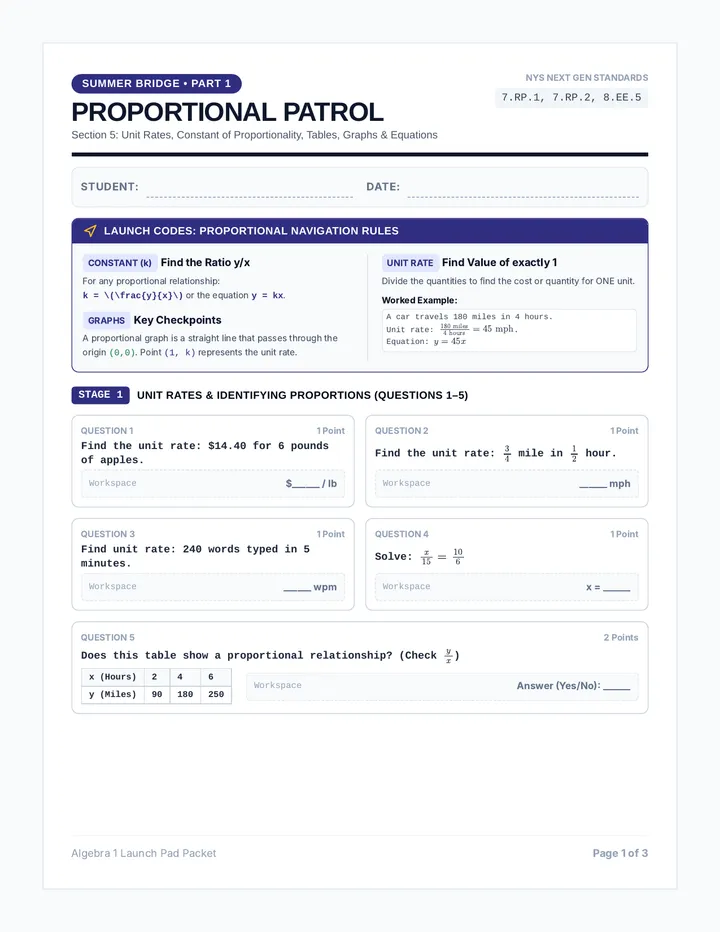
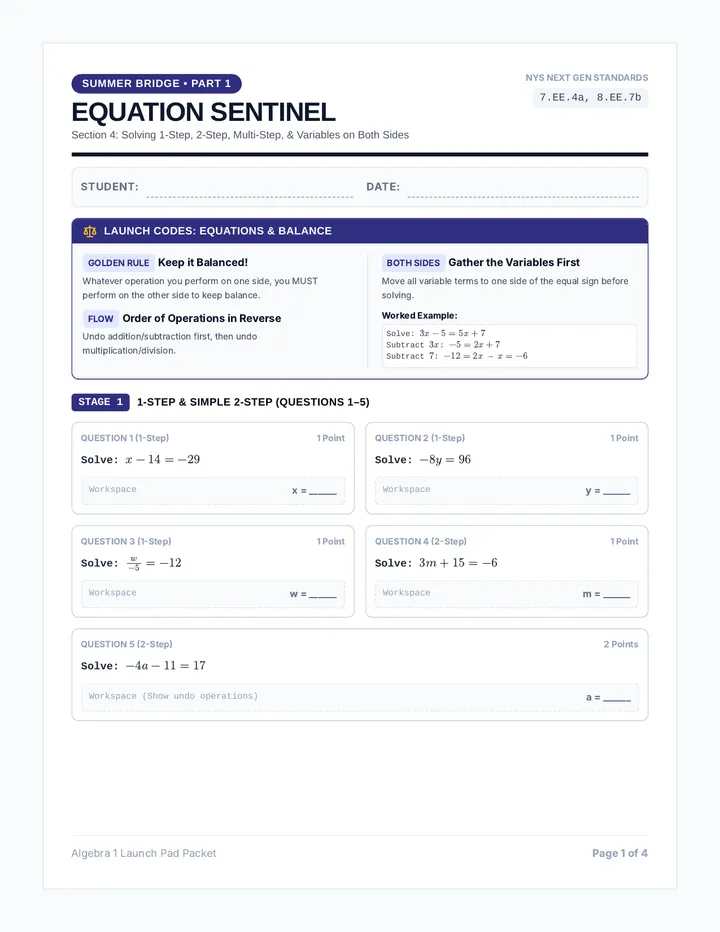
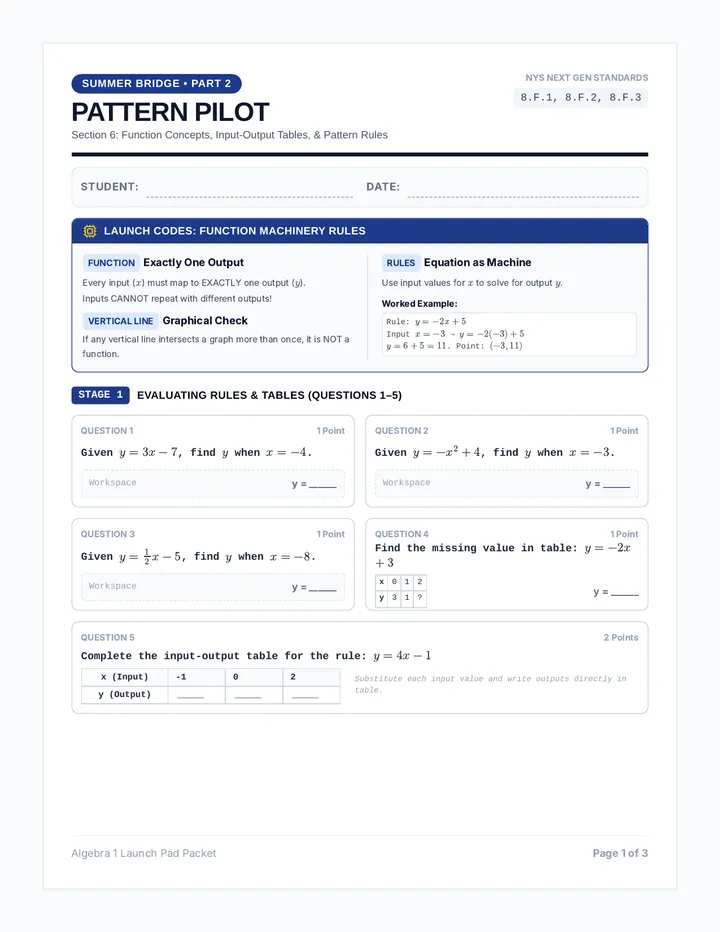
A comprehensive assessment lesson focusing on mastering one-step equations involving multiplication, division, and basic addition/subtraction.
A hands-on math project where students design carnival games to explore theoretical versus experimental probability through data collection and analysis.
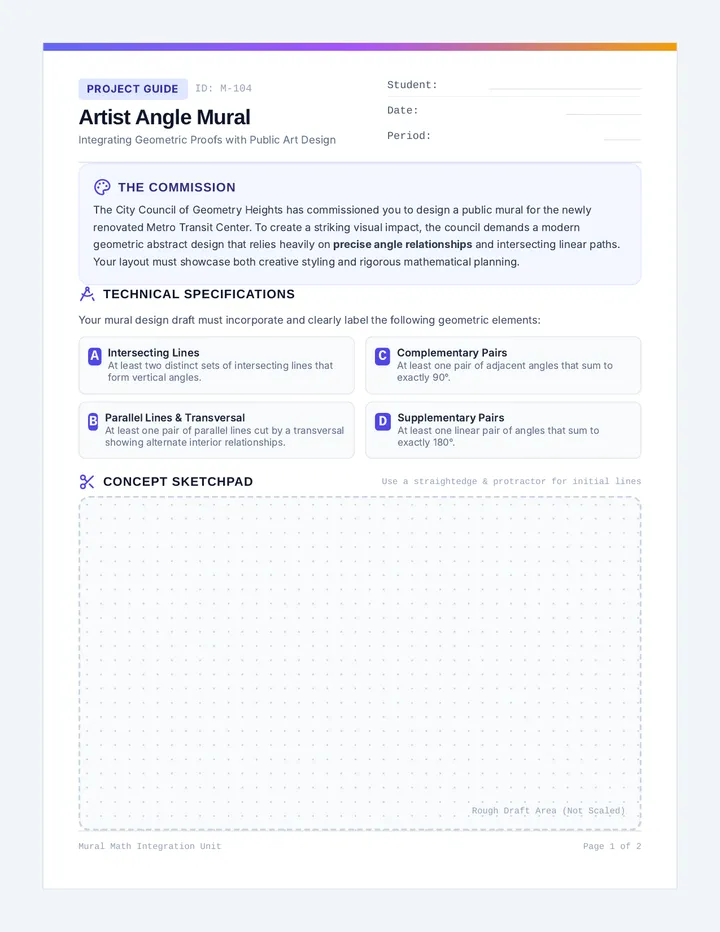
A highly scaffolded lesson on angle relationships (vertical, complementary, and supplementary) featuring an architectural blueprint theme. Includes guided notes with exemplars and step-by-step practice materials.
Advanced applications of central tendency and spread, including algebraic problem-solving, weighted means, and the mathematical impact of outliers for high school students.
A comprehensive assessment covering Level 1, Level 2, and Level 3 data analysis, designed to evaluate mastery of mean, median, mode, and range in both numerical and narrative contexts.
Students interpret and solve word problems involving mean, median, mode, and range, focusing on extracting data from narrative contexts and real-world scenarios.
A foundational lesson designed for SIFE students to understand fractions greater than one using visual models and fraction strips. Focuses on bridging concrete models to number lines with minimal text reliance.
A collection of extra practice cases for mean, median, mode, and range, ranging from single-digit warmups to double-digit challenges, themed as unsolved detective files.
Students apply their knowledge of mean, median, mode, and range to data sets featuring two-digit numbers, focusing on multi-digit addition and division.
A lesson focused on identifying and interpreting outliers in box plot data visualizations, using a forensic detective theme to engage students in data analysis.
Students learn to calculate mean, median, mode, and range using single-digit data sets through structured, step-by-step guided practice and visual aids.
A 65-minute 9th-grade mathematics lesson focusing on the practical application of proportions, percentages, and statistical measures to analyze real-world datasets. Students act as data analysts to solve problems related to urban development and global trends.
A high-energy, comprehensive review lesson for 9th-grade math students to synthesize their learning through a competitive team relay challenge covering all major domains.
A 65-minute intensive review session focusing on the integration of algebraic expressions and coordinate geometry through a collaborative escape room challenge. Students refine their skills in PEMDAS, slope calculation, and linear graphing to solve structural 'blueprint' puzzles.
A comprehensive summative assessment lesson where 9th-grade students demonstrate their mathematical proficiency across algebra, geometry, and statistics before reflecting on their year-long growth.
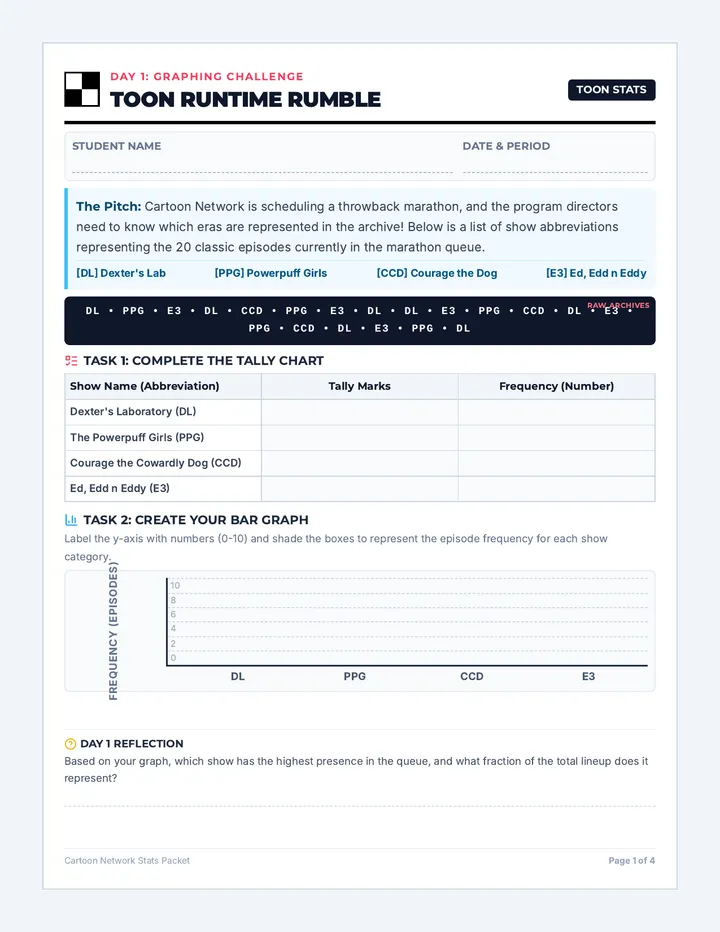
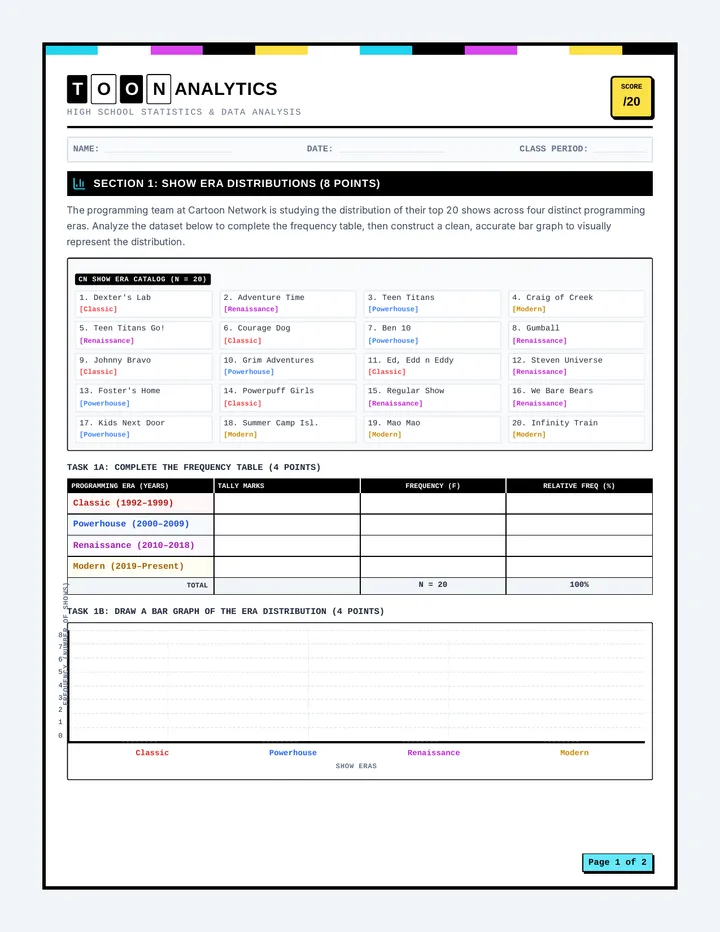
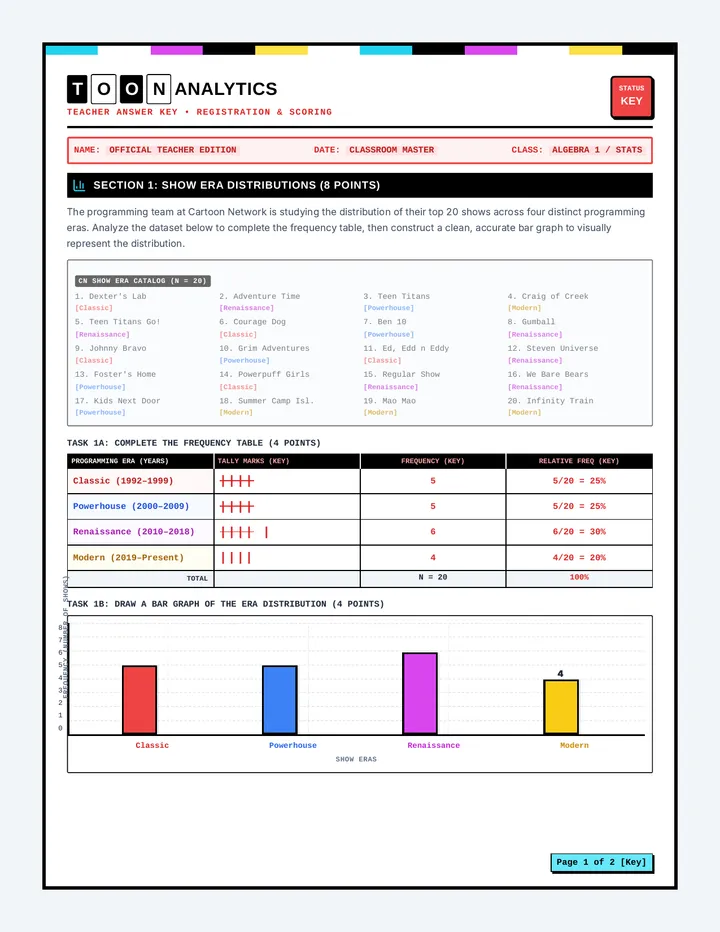
A comprehensive lesson for 9th-grade students on transforming raw data into meaningful visualizations, including frequency tables, dot plots, and box-and-whisker plots.
Review of symmetry concepts followed by a final challenge activity and a short assessment.
Identifying symmetry in everyday objects and nature, such as butterflies, leaves, and common household items.
Exploring symmetry in geometric shapes like squares, circles, and triangles, focusing on matching halves.
Introduction to the concept of symmetry and the 'line of symmetry' using mirror images and simple shapes.
A lesson focused on the geometric and algebraic relationships of parallel and perpendicular lines, teaching students how to identify slopes and write new equations using a technical blueprint aesthetic.
Une évaluation complète sur les équations et inéquations du premier degré pour les élèves de seconde professionnelle, incluant les exercices de base et des problèmes contextualisés.
Leçon focalisée sur les bases des statistiques à une variable : du recueil de données brutes à leur analyse graphique, avec un focus sur l'utilisation de LibreOffice Calc.
Une leçon complète sur les statistiques à une variable, couvrant la collecte de données, l'organisation en tableaux et la représentation graphique à travers divers exercices pratiques et activités d'introduction.
A comprehensive lesson covering geometric transformations (translations, reflections, rotations, and dilations) and the fundamentals of geometric proofs, including logical reasoning and triangle congruence.
A math assessment focusing on basic exponent rules and real-world percentage applications involving sales tax and discounts.
A lesson focused on applying exponent rules, percentage calculations, and basic arithmetic to real-world financial scenarios and budgeting. Includes two differentiated versions of a comprehensive unit test to support varied learning needs.
A comprehensive review of exponential and logarithmic functions, focusing on graphing attributes, transformations, inverse relationships, solving equations, and data modeling based on Texas Algebra 2 standards.
A quick assessment focusing on solving quadratic equations that result in complex solutions using the Quadratic Formula and Completing the Square.
A lesson focusing on the practical application of the Distance Formula and the logical structure of SAS and ASA congruence proofs.
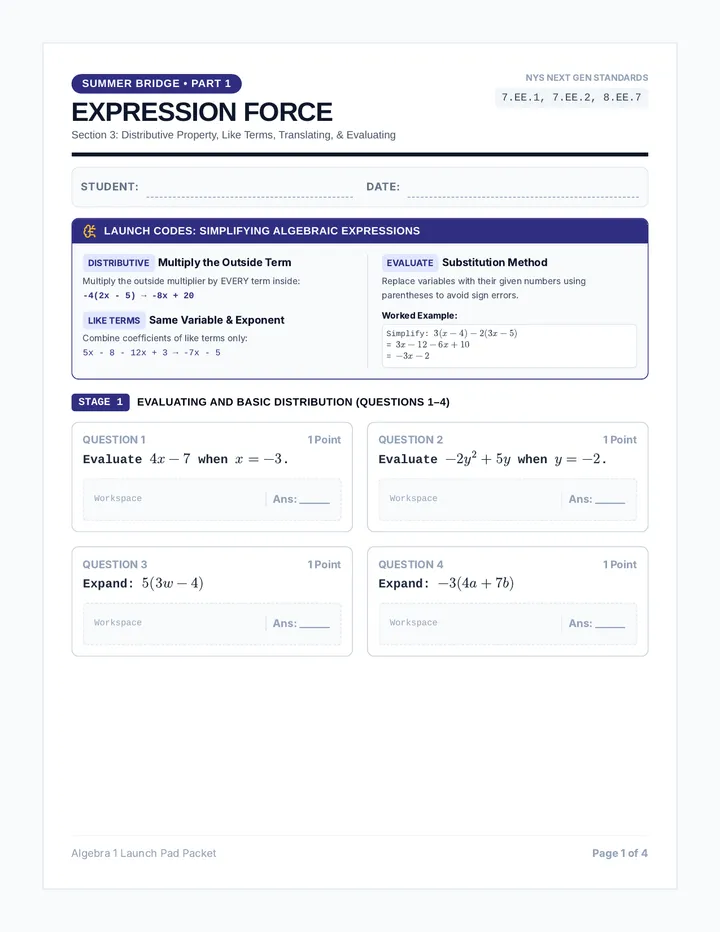
A deep dive into the fundamental properties of operations, focusing on the distributive, commutative, associative, identity, and inverse properties through a comprehensive 35-question extra credit challenge.