Lenny.com
Explore
Create
ActivitiesNewCurriculumNewMathEnglish Language ArtsScience & EngineeringSocial StudiesGlobal LanguagesHealth & Physical EducationSpecial EducationCounseling & Life SkillsArts & CreativityESL
Lenny.com
Lenny.com
Explore
Create
ActivitiesNewCurriculumNewMathEnglish Language ArtsScience & EngineeringSocial StudiesGlobal LanguagesHealth & Physical EducationSpecial EducationCounseling & Life SkillsArts & CreativityESL
Lenny.com
Lenny.com

Solutions

Lenny for EducatorsLenny for SchoolsLenny for Districts

Product

ExploreSign inCreateSupportAbout

Resources

Getting startedMTSS Acceleration Program

Newsletters

School Funding Newsletter

© 2026 Lenny Learning Inc.

TermsPrivacyAccessibility
LinkedInInstagramX
Lenny
MathNumbers & CountingCounting ObjectsNumber NamesComparing NumbersNumber OperationsCounting SequenceNumbers 0-10Place Value Understanding and SystemAdd and Subtract Within 20Addition and Subtraction ConceptsAddition and Subtraction EquationsAddition and Subtraction ProblemsFoundations for MultiplicationMultiplication and Division PropertiesMultiply and Divide Within 100Multiplication and Division ProblemsFactors and MultiplesProperties of OperationsPatterns and RelationshipsGenerate and Analyze PatternsMulti-Digit ArithmeticPlace Value OperationsMulti-Digit and Decimal OperationsNumerical ExpressionsFour Operations and PatternsFour Operations Problem SolvingMeasurement & DataMeasurable AttributesMeasuring LengthsMeasure and Estimate Lengths in Standard UnitsRelate Addition and Subtraction to LengthClassifying and Counting ObjectsTime and MoneyArea Concepts and MeasurementPerimeter and Area MeasuresAngle Concepts and MeasurementTime, Volume, and MassMeasurement Unit ConversionsGeometryIdentifying ShapesShapes and AttributesShape Attributes and ReasoningShapes and CompositionClassifying 2D FiguresGeometric Figures and RelationshipsLines, Angles, and ShapesAngle, Area, and VolumeGeometric MeasurementVolume of 3D ShapesCoordinate Plane ApplicationsTransformations in the PlaneCongruence and SimilarityUnderstand congruence in terms of rigid motionsSimilarity and TransformationsProve Theorems Involving SimilarityPythagorean TheoremTrigonometry for General TrianglesMake Geometric ConstructionsProve Geometric TheoremsTheorems About CirclesFind Arc Lengths And Areas of Sectors of CirclesVolume FormulasRelationships Between Two-Dimensional and Three-Dimensional ObjectsProve Simple Geometric Theorems AlgebraicallyTranslate Between Geometric Description and Equation for Conic SectionApply Geometric Concepts in Modeling SituationsFractions & DecimalsFractions as NumbersBuilding FractionsFraction Equivalence and OrderingAdding and Subtracting FractionsMultiplying and Dividing FractionsDividing FractionsDecimal FractionsMulti-Digit Computation and FactorsAdd, Subtract, Multiply, and Divide Rational NumbersRational Number SystemIrrational Numbers and ApproximationsRatiosRatios and ProportionsProportional RelationshipsUnit RateAlgebraAlgebraic ExpressionsGenerate Equivalent ExpressionsQuantitative RelationshipsProportional Relationships and Linear EquationsEquations and InequalitiesEquation Solving and ReasoningLinear Equations and SystemsGraph Equations and InequalitiesSystems of EquationsReal-World Algebraic ProblemsQuantitative Reasoning with UnitsExpression StructureEquivalent Expression FormsRadicals and Integer ExponentsRational ExponentsRational and Irrational NumbersPolynomial OperationsPolynomial IdentitiesPolynomial Zeros and FactorsRational ExpressionsComplex Number OperationsComplex Numbers in PolynomialsComplex Numbers on PlaneStatistics & ProbabilityRepresent and Interpret DataData DistributionsStatistical VariabilityProbability ModelsCompound Event ProbabilitiesStatistical SamplingInterpret Categorical and Quantitative DataBivariate Data PatternsInterpret Linear ModelsComparing Two PopulationsRandom Processes in StatisticsIndependence and Conditional ProbabilityExpected ValuesProbability-Based Decision MakingStatistical Inference and ConclusionsFunctionsFunction Concepts and NotationDefine and Compare FunctionsInterpret Functions in ContextAnalyze Function RepresentationsModel Relationships with FunctionsIdentify Linear vs Exponential GrowthDistinguish Between Function TypesCompare Growth RatesInterpret Function ExpressionsBuild Functions from RelationshipsConstruct and Model FunctionsTransform and Combine FunctionsModel Comparison and SelectionSolve Exponential EquationsTrigonometryTrigonometric Ratios Involving Right TrianglesTrigonometric Functions and Unit CircleModel with Trigonometric FunctionsTrigonometric IdentitiesVectors & MatricesIntroduction to Vectors and MatricesVector QuantitiesVector OperationsMatrix OperationsCalculusLimits and ContinuityDerivative Concepts and NotationDerivative Rules and TechniquesApplications of DerivativesOptimization ProblemsRelated RatesCurve Sketching and AnalysisIntegration Concepts and NotationAntiderivatives and Indefinite IntegralsDefinite Integrals and AreaFundamental Theorem of CalculusIntegration TechniquesApplications of IntegrationDifferential EquationsSequences and SeriesParametric and Polar FunctionsVector-Valued Functions

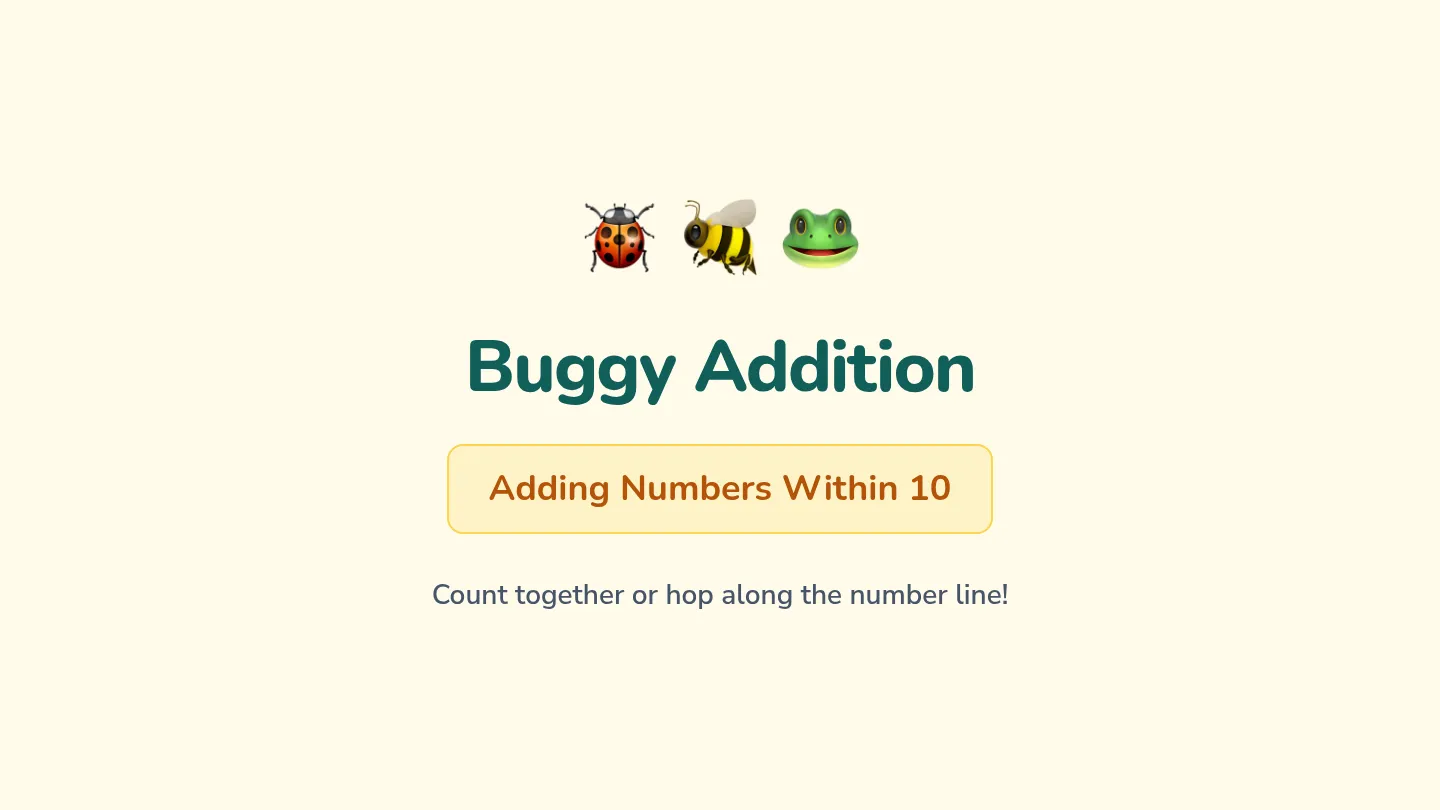
Buggy Addition

A 1st grade math lesson focused on building confidence with addition within 10 using visual counting supports and a 0–10 number line. Includes a printable independent practice worksheet and step-by-step practice slides for whole-class or small-group instruction.

Ssarah.dickson

Buggy Addition

A 1st grade math lesson focused on building confidence with addition within 10 using visual counting supports and a 0–10 number line. Includes a printable independent practice worksheet and step-by-step practice slides for whole-class or small-group instruction.

Ssarah.dickson

You might also like

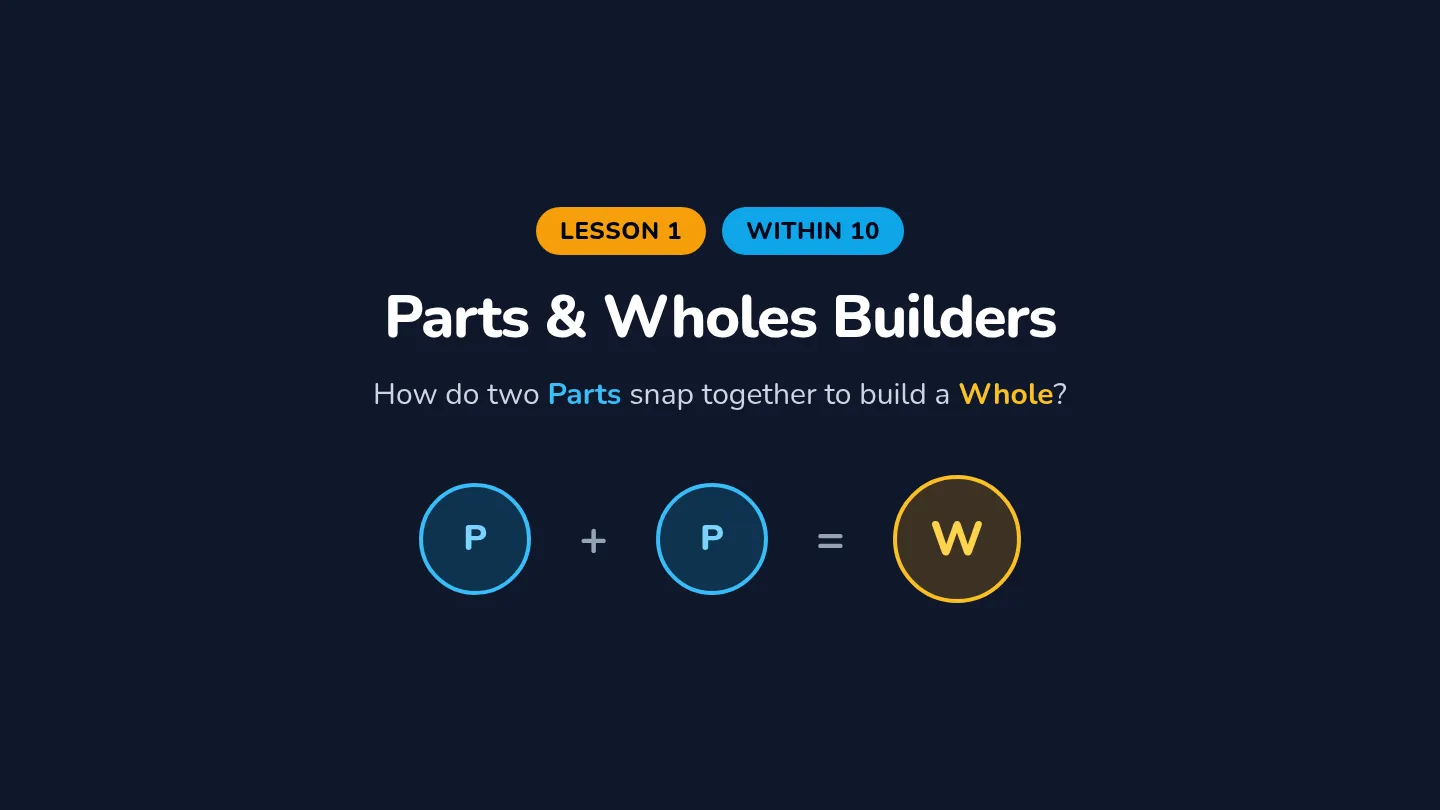
Number Bond Builders Slides

Part Whole Builders

A 3-lesson math intervention sequence targeting addition and subtraction within 10 through the part-whole model. Students build fluency with number bonds, fact families, and equations with unknowns in all positions while learning why you never add a whole and a part.

K

kfigueredo

15
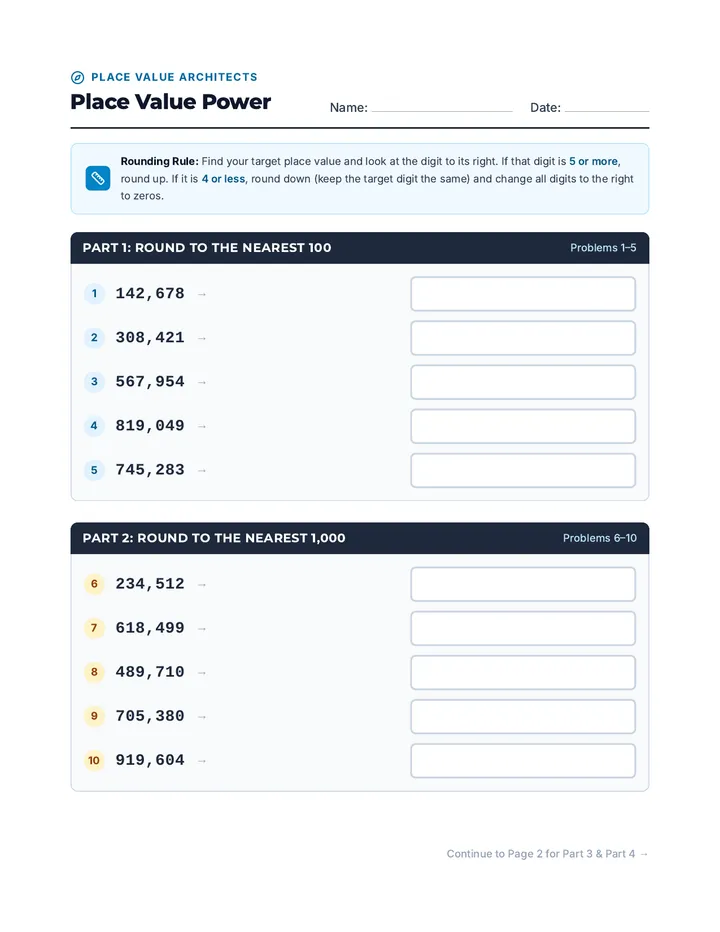
Place Value Power Worksheet

Place Value Power

Practice rounding six-digit numbers in the hundred thousands to the nearest 100, 1,000, and 10,000, along with comparing numbers up to 10,000. Includes a 20-problem student worksheet and a separate teacher answer key.

TB

Tiye Betaudier

10
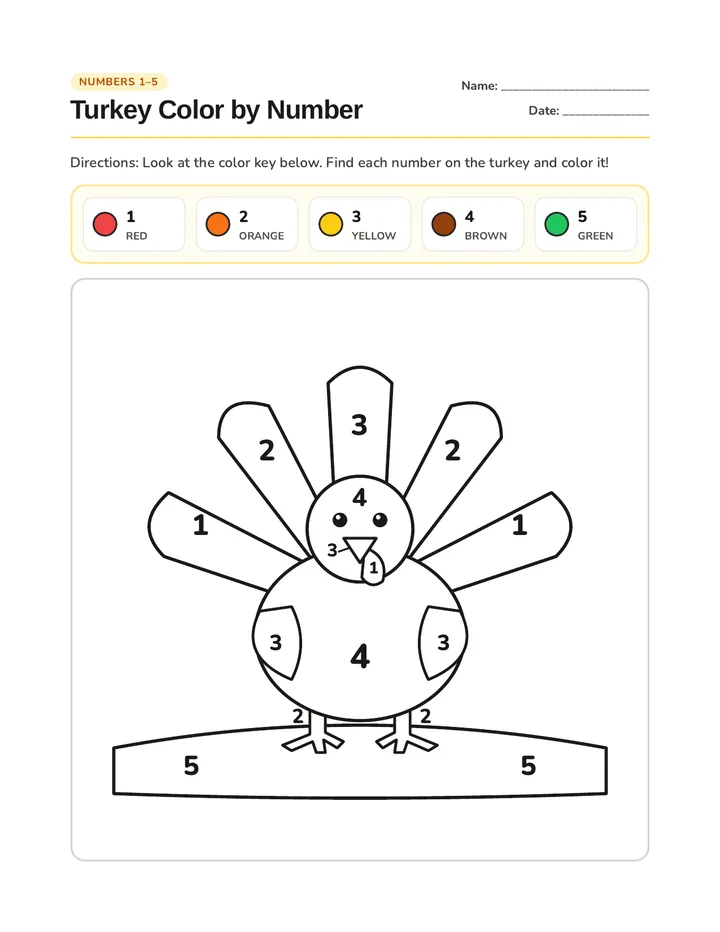
Harvest Color by Number Worksheet

Harvest Color by Number Worksheet

A three-page Thanksgiving number identification and phonics printable worksheet. Page 1 focuses on numbers 1–5 with a turkey color-by-number, Page 2 expands to numbers 1–10 with a harvest feast color-by-number, and Page 3 challenges students to write the matching number in each box to connect letters, beginning sounds, and Thanksgiving pictures.

T

toni.mickey

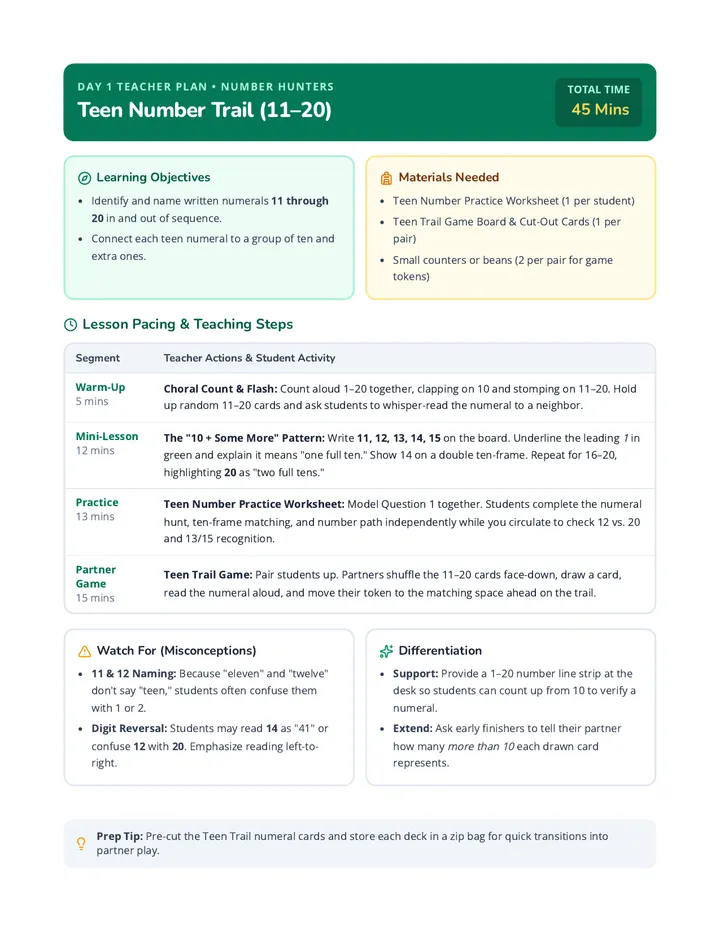
Teen Trail Lesson Plan

Number Hunters

A two-day early numeracy sequence helping students recognize numerals 11–20 on Day 1 and 0–20 on Day 2 through teacher-led lessons, printable practice worksheets, and hands-on partner games.

TG

Tyonna Gunter

6
Number Sentence Slides

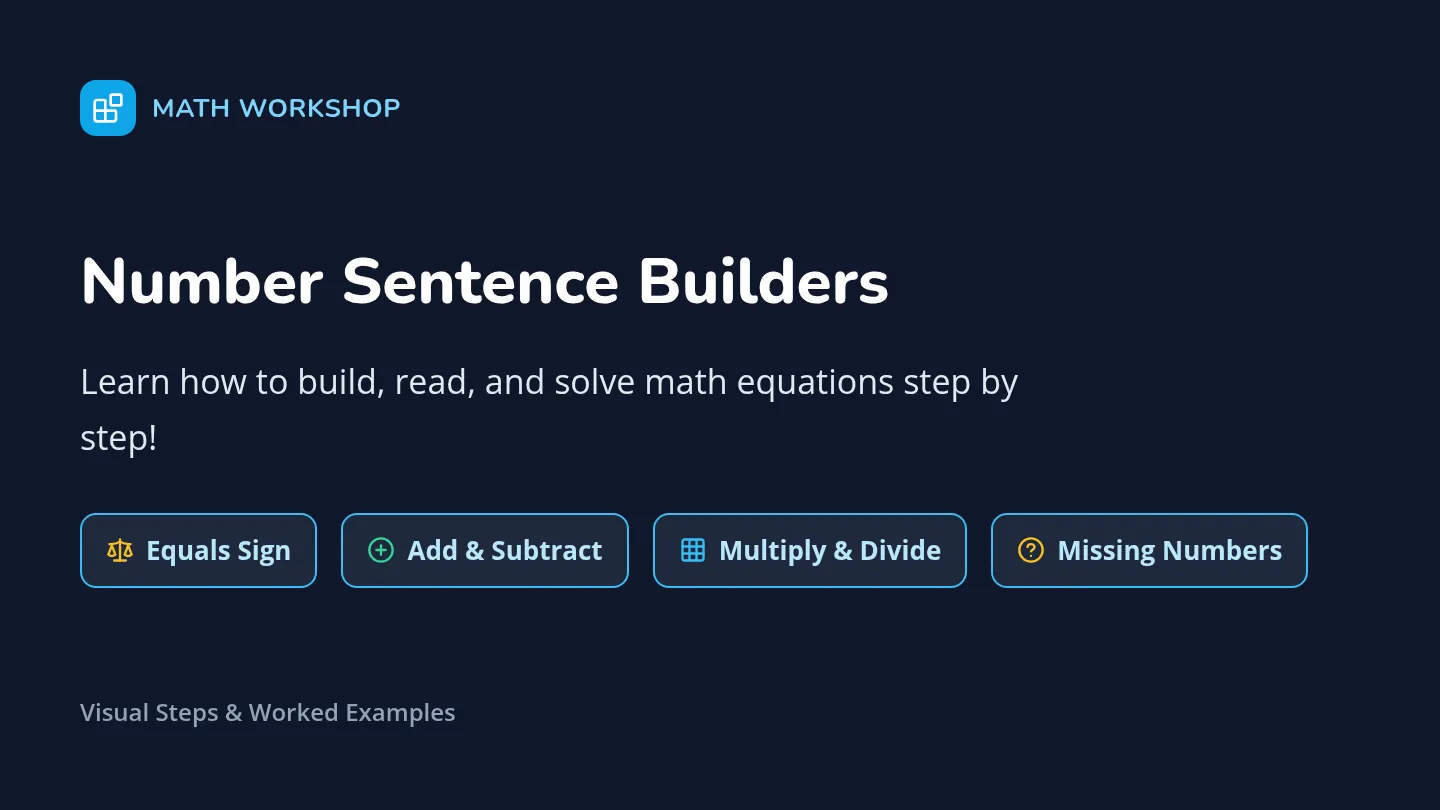
Number Sentence Builders

A differentiated math lesson introducing how to build and solve number sentences for IEP students. Covers the meaning of the equals sign, addition and subtraction, multiplication and division models, and finding missing numbers using visual steps and structured scaffolds.

CS

Courtney Scherer

4
Part Whole 20 Packet

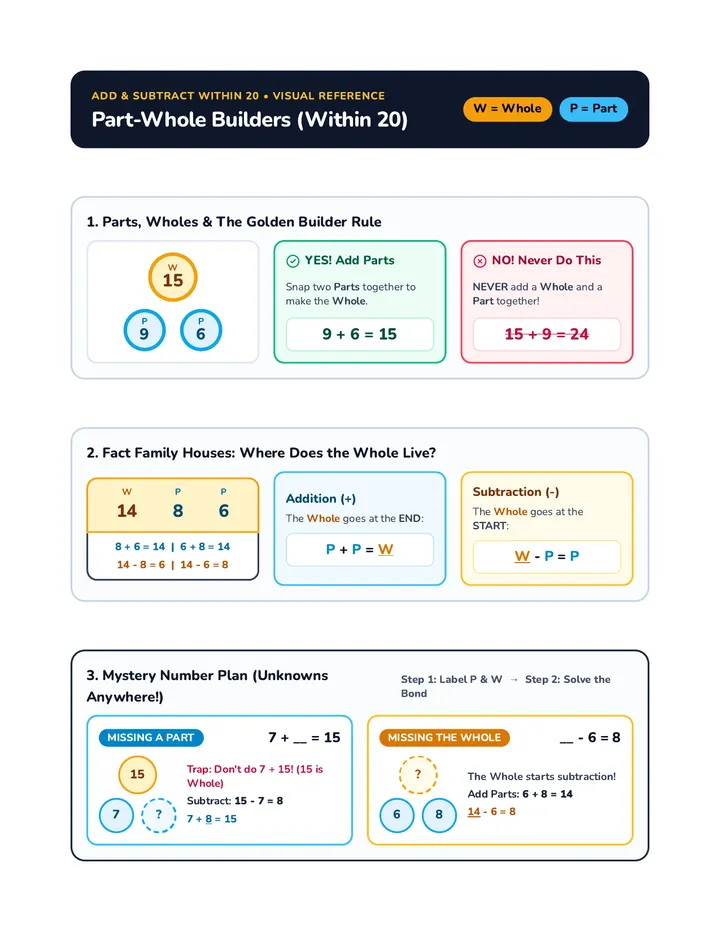
Part Whole 20 Packet

A complete 16-page printable intervention packet for addition and subtraction within 20, featuring a 1-page visual reference sheet, 3-page daily practice per lesson (including 2 spacious word problems on page 3), 3-question daily exit tickets with a word problem, and teacher guides with answer keys.

K

kfigueredo

Hydroponics Tools Cut and Paste

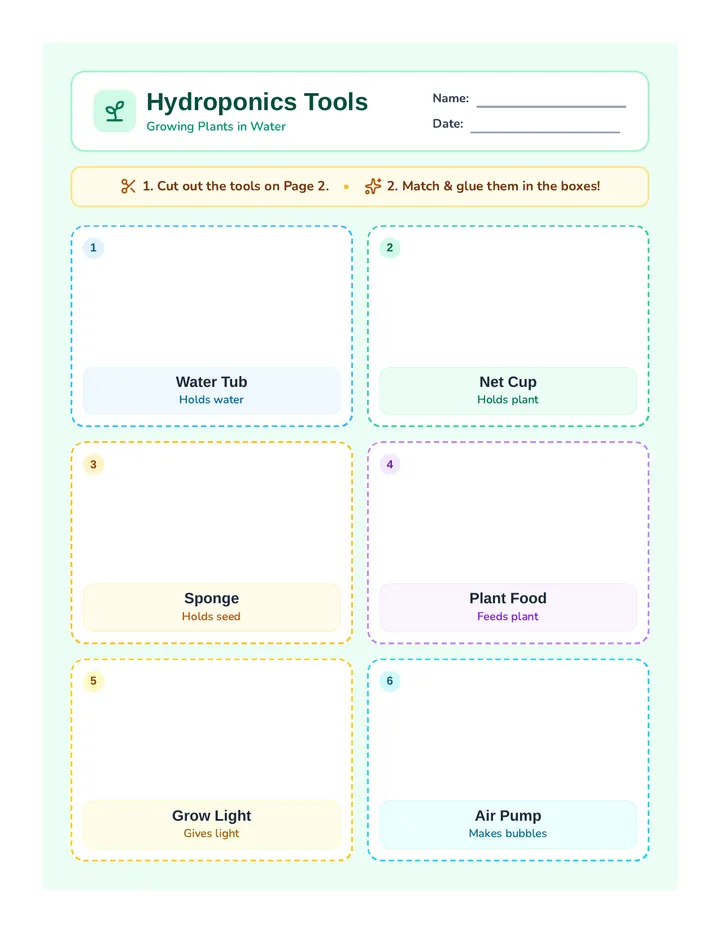
Early Elementary Pack

A collection of early elementary printable activities spanning science and math topics, designed with large visuals and simple instructions.

KF

Kaysie Francois

5
Mystery Number Slides

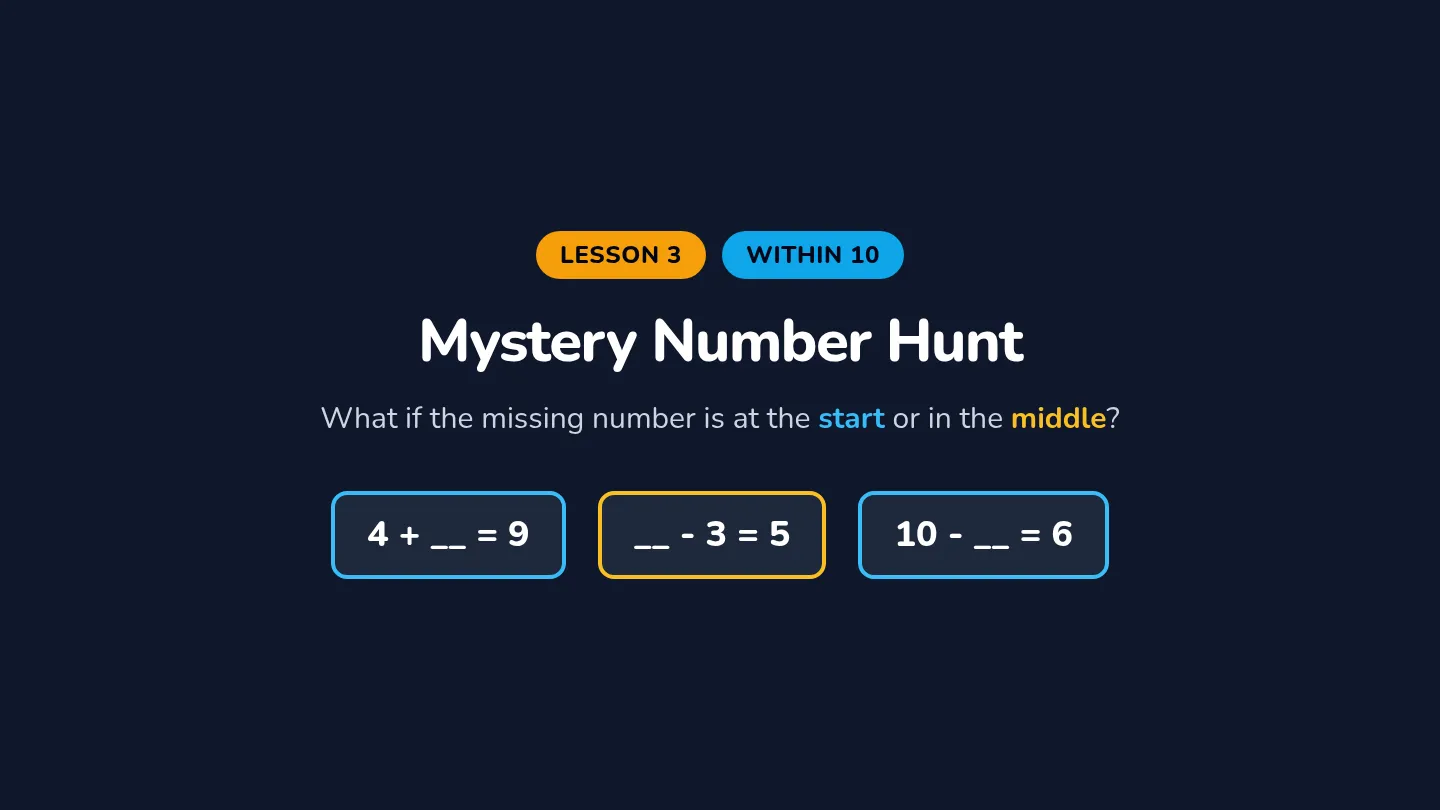
Mystery Number Hunt

Students solve addition and subtraction equations within 10 with unknowns in start, change, and result positions. Using number bonds to label parts and wholes, they decide whether to add two parts or subtract a part from the whole.

K

kfigueredo

7
Buggy Addition Slides

Buggy Addition Slides

An 8-slide 1st grade math presentation for whole-class or small-group practice with addition within 10. Introduces counting and number-line strategies, then presents 5 visual addition problems one at a time with large icons and a 0–10 number line.

S

sarah.dickson

Addition Blueprints Slides

Bot Builders

A three-day first-grade enrichment sequence exploring double-digit addition and subtraction with regrouping through visual strategies, hands-on partner games, and challenge extensions.

KE

Kathy Ellis

12
Fact Family Houses Slides

Fact Family Houses

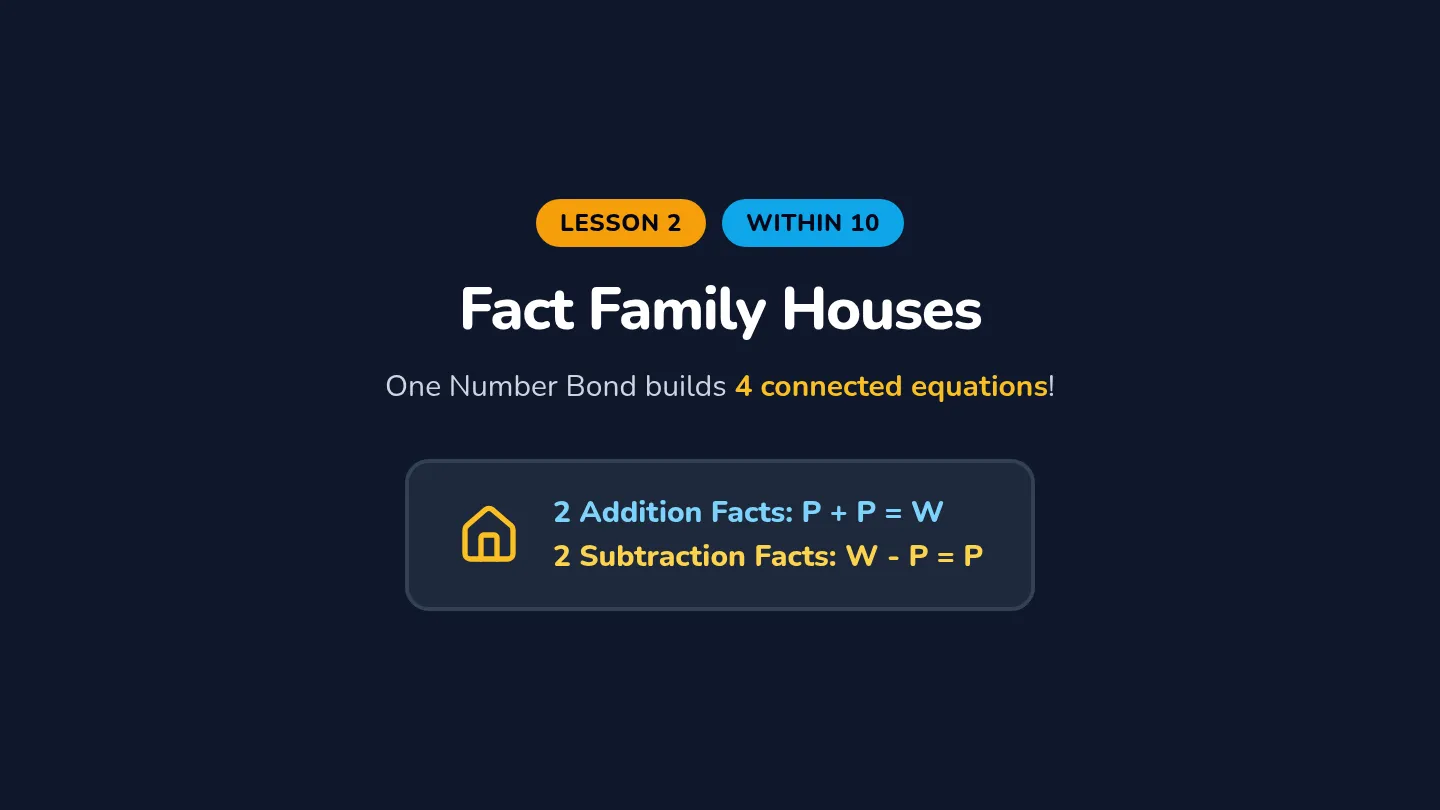
Students connect number bonds to fact families within 10, writing two addition and two subtraction equations for each bond. Emphasis is placed on keeping the whole at the end of addition equations and at the start of subtraction equations.

K

kfigueredo

4
Buggy Addition Worksheet

Buggy Addition Worksheet

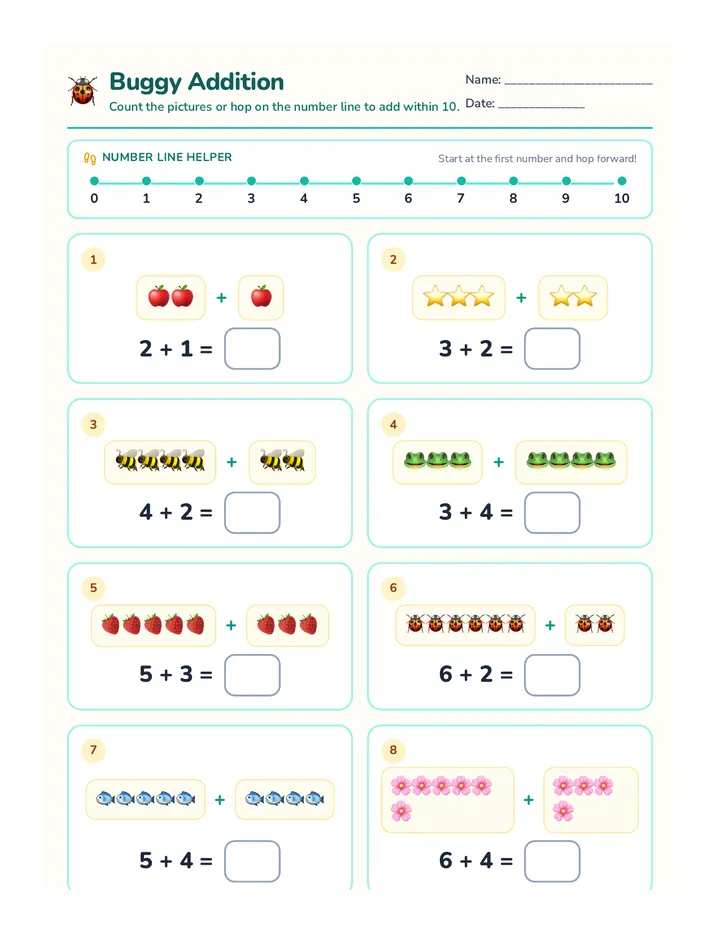
A single-page printable 1st grade math worksheet with 8 visual addition problems within 10. Features a built-in 0–10 number line scaffold, touch-and-count picture groups, and large blank answer boxes for independent practice.

S

sarah.dickson