Lenny.com
Explore
Create
ActivitiesNewMathEnglish Language ArtsScience & EngineeringSocial StudiesGlobal LanguagesHealth & Physical EducationSpecial EducationCounseling & Life SkillsArts & CreativityESL
Lenny.com
Lenny.com
Explore
Create
ActivitiesNewMathEnglish Language ArtsScience & EngineeringSocial StudiesGlobal LanguagesHealth & Physical EducationSpecial EducationCounseling & Life SkillsArts & CreativityESL
Lenny.com
Lenny.com

Solutions

Lenny for EducatorsLenny for SchoolsLenny for Districts

Product

ExploreSign inCreateSupportAbout

Resources

Getting startedMTSS Acceleration Program

© 2026 Lenny Learning Inc.

TermsPrivacyAccessibility
LinkedInInstagramX
Lenny

Foundations for Multiplication

Equal groups, repeated addition, and array structures for early learners. Connects skip counting to multiplication concepts through visual models and concrete examples.

MathNumbers & CountingCounting ObjectsNumber NamesComparing NumbersNumber OperationsCounting SequenceNumbers 0-10Place Value Understanding and SystemAdd and Subtract Within 20Addition and Subtraction ConceptsAddition and Subtraction EquationsAddition and Subtraction ProblemsFoundations for MultiplicationMultiplication and Division PropertiesMultiply and Divide Within 100Multiplication and Division ProblemsFactors and MultiplesProperties of OperationsPatterns and RelationshipsGenerate and Analyze PatternsMulti-Digit ArithmeticPlace Value OperationsMulti-Digit and Decimal OperationsNumerical ExpressionsFour Operations and PatternsFour Operations Problem SolvingMeasurement & DataMeasurable AttributesMeasuring LengthsMeasure and Estimate Lengths in Standard UnitsRelate Addition and Subtraction to LengthClassifying and Counting ObjectsTime and MoneyArea Concepts and MeasurementPerimeter and Area MeasuresAngle Concepts and MeasurementTime, Volume, and MassMeasurement Unit ConversionsGeometryIdentifying ShapesShapes and AttributesShape Attributes and ReasoningShapes and CompositionClassifying 2D FiguresGeometric Figures and RelationshipsLines, Angles, and ShapesAngle, Area, and VolumeGeometric MeasurementVolume of 3D ShapesCoordinate Plane ApplicationsTransformations in the PlaneCongruence and SimilarityUnderstand congruence in terms of rigid motionsSimilarity and TransformationsProve Theorems Involving SimilarityPythagorean TheoremTrigonometry for General TrianglesMake Geometric ConstructionsProve Geometric TheoremsTheorems About CirclesFind Arc Lengths And Areas of Sectors of CirclesVolume FormulasRelationships Between Two-Dimensional and Three-Dimensional ObjectsProve Simple Geometric Theorems AlgebraicallyTranslate Between Geometric Description and Equation for Conic SectionApply Geometric Concepts in Modeling SituationsFractions & DecimalsFractions as NumbersBuilding FractionsFraction Equivalence and OrderingAdding and Subtracting FractionsMultiplying and Dividing FractionsDividing FractionsDecimal FractionsMulti-Digit Computation and FactorsAdd, Subtract, Multiply, and Divide Rational NumbersRational Number SystemIrrational Numbers and ApproximationsRatiosRatios and ProportionsProportional RelationshipsUnit RateAlgebraAlgebraic ExpressionsGenerate Equivalent ExpressionsQuantitative RelationshipsProportional Relationships and Linear EquationsEquations and InequalitiesEquation Solving and ReasoningLinear Equations and SystemsGraph Equations and InequalitiesSystems of EquationsReal-World Algebraic ProblemsQuantitative Reasoning with UnitsExpression StructureEquivalent Expression FormsRadicals and Integer ExponentsRational ExponentsRational and Irrational NumbersPolynomial OperationsPolynomial IdentitiesPolynomial Zeros and FactorsRational ExpressionsComplex Number OperationsComplex Numbers in PolynomialsComplex Numbers on PlaneStatistics & ProbabilityRepresent and Interpret DataData DistributionsStatistical VariabilityProbability ModelsCompound Event ProbabilitiesStatistical SamplingInterpret Categorical and Quantitative DataBivariate Data PatternsInterpret Linear ModelsComparing Two PopulationsRandom Processes in StatisticsIndependence and Conditional ProbabilityExpected ValuesProbability-Based Decision MakingStatistical Inference and ConclusionsFunctionsFunction Concepts and NotationDefine and Compare FunctionsInterpret Functions in ContextAnalyze Function RepresentationsModel Relationships with FunctionsIdentify Linear vs Exponential GrowthDistinguish Between Function TypesCompare Growth RatesInterpret Function ExpressionsBuild Functions from RelationshipsConstruct and Model FunctionsTransform and Combine FunctionsModel Comparison and SelectionSolve Exponential EquationsTrigonometryTrigonometric Ratios Involving Right TrianglesTrigonometric Functions and Unit CircleModel with Trigonometric FunctionsTrigonometric IdentitiesVectors & MatricesIntroduction to Vectors and MatricesVector QuantitiesVector OperationsMatrix OperationsCalculusLimits and ContinuityDerivative Concepts and NotationDerivative Rules and TechniquesApplications of DerivativesOptimization ProblemsRelated RatesCurve Sketching and AnalysisIntegration Concepts and NotationAntiderivatives and Indefinite IntegralsDefinite Integrals and AreaFundamental Theorem of CalculusIntegration TechniquesApplications of IntegrationDifferential EquationsSequences and SeriesParametric and Polar FunctionsVector-Valued Functions

Videos

Visualizing and Mastering the 8 Times Table

Visualizing and Mastering the 8 Times Table

This educational video provides a comprehensive visual introduction to skip counting by 8s, serving as a foundational tool for learning multiplication. Using a clear, scaffolded approach, the video begins with a simple animated sequence counting from 8 to 80, followed by a concrete visual demonstration using sets of carrots. Each multiple of 8 is built systematically by adding a new "set" or box of 8 carrots, visually reinforcing the concept of multiplication as repeated addition (arrays). The video progresses from these concrete visual models to abstract fluency practice. After establishing the concept, viewers are guided through a recitation segment where the multiples appear on screen, followed by a faster "speed round" to build automaticity. The visual aids specifically link the concept of "sets" (e.g., 2 sets of 8) directly to the multiplication equation (8 x 2 = 16), helping students bridge the gap between counting objects and understanding mathematical symbols. Designed for elementary math classrooms, this resource is excellent for introducing the 8 times table or reinforcing skip counting skills. It includes a built-in assessment phase where a blank multiplication table is presented, allowing teachers to pause the video for student practice before revealing the answers. The silent, text-based format with upbeat background music makes it versatile for teacher-led narration or independent student review stations.

Sheena DoriaSheena Doria

3mins 7s

Solving Repeated Addition Word Problems with Haircuts

Solving Repeated Addition Word Problems with Haircuts

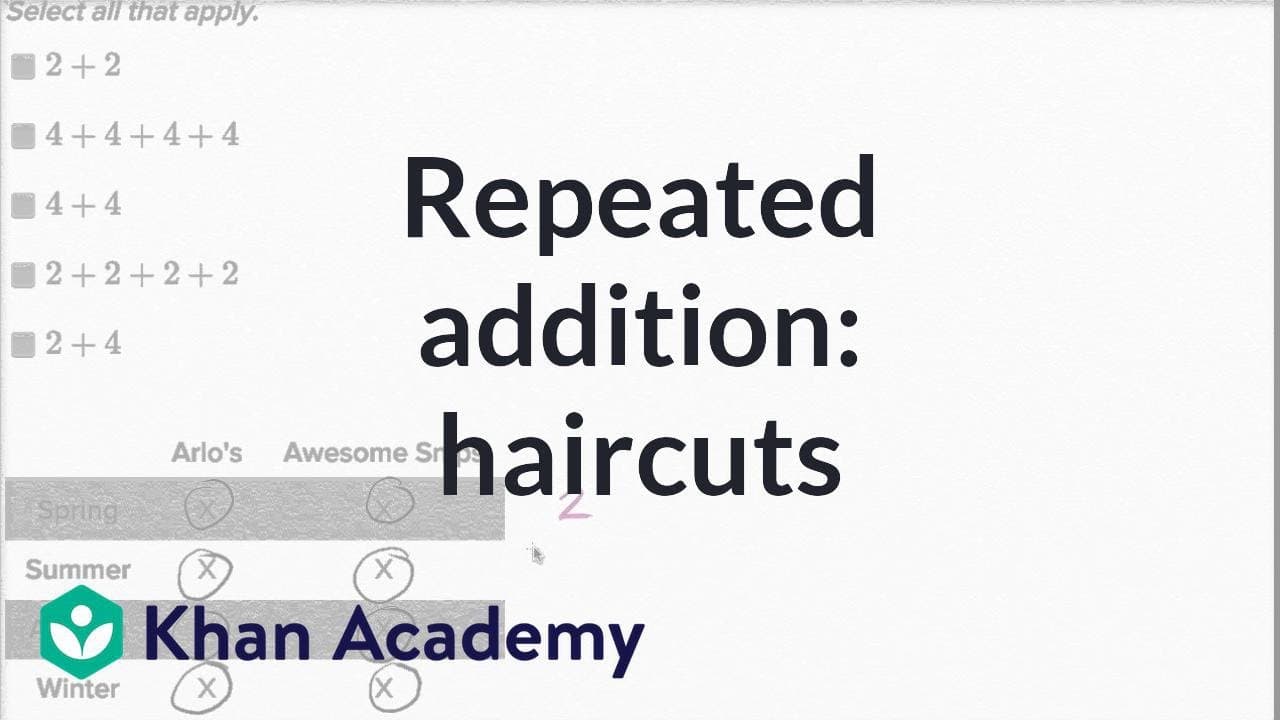
This educational video guides students through solving a math word problem involving repeated addition and data interpretation. The narrator breaks down a scenario where a character named Rafael gets two haircuts every season, using a visual table to organize the information across Spring, Summer, Autumn, and Winter. The video demonstrates how to translate a real-world situation into mathematical expressions. Key themes include repeated addition as a foundation for multiplication, interpreting data tables, and evaluating multiple mathematical expressions to find equivalent values. The video explicitly models how to extract numerical values from text and verify them against provided options, reinforcing the concept that the same total can be represented by different number sentences (e.g., 2+2+2+2 and 4+4). Ideally suited for early elementary classrooms, this resource helps teachers introduce or reinforce the connection between word problems and arithmetic operations. It provides a clear visual model for tracking data and offers a practical opportunity for students to practice checking their work by evaluating multiple-choice answers against their calculated total.

Khan AcademyKhan Academy

2mins 9s

How to Multiply by 3 Using Groups and Arrays

How to Multiply by 3 Using Groups and Arrays

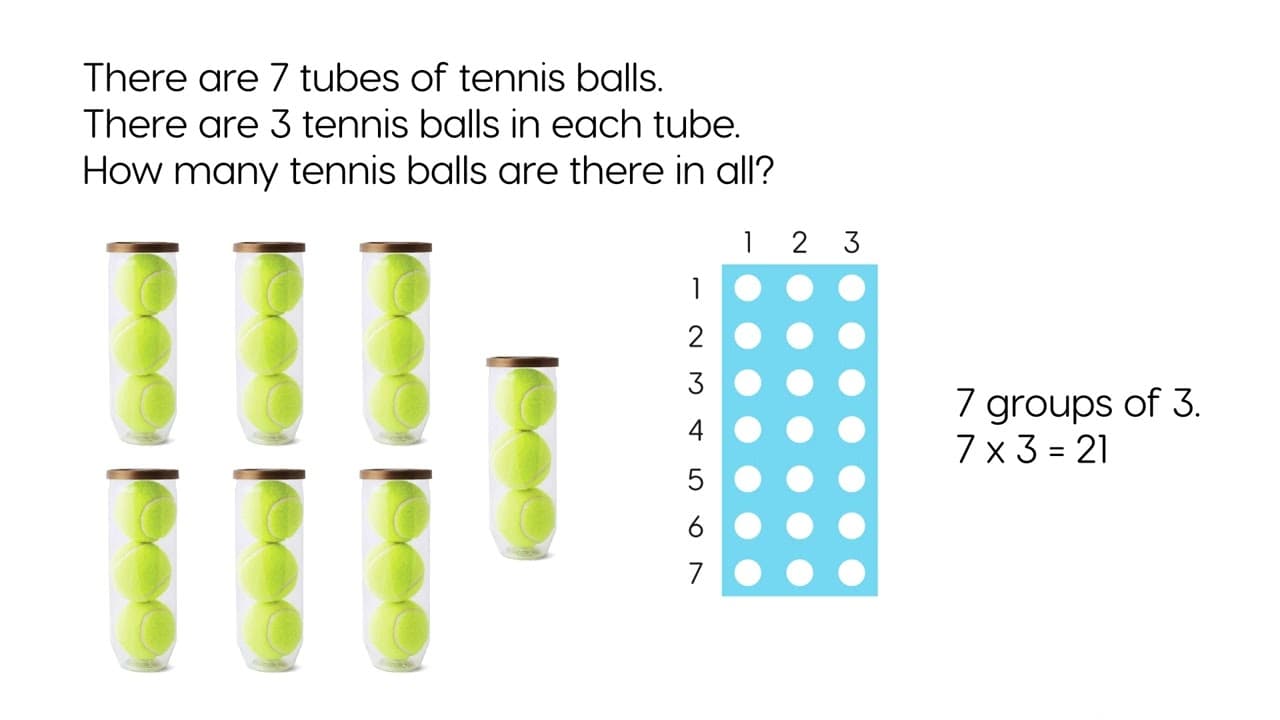
A clear, step-by-step instructional video designed to teach students how to multiply by 3. The video utilizes multiple pedagogical strategies, including real-world word problems, visual grouping models, skip counting number lines, and dot arrays to build conceptual understanding before moving to rote memorization. It begins by presenting a scenario with bunches of cherries to introduce the concept of "groups of 3," then demonstrates how to solve it using different methods. The content covers key themes such as equal grouping, the relationship between repeated addition and multiplication, and the utility of arrays (dot paper) for visualizing products. It walks viewers through two distinct word problems (cherries and tennis balls) to show practical applications, concluding with a full recitation of the 3 times table from 1x3 to 10x3, accompanied by visual counters for each step. This video is highly valuable for 2nd and 3rd-grade classrooms as it bridges concrete representation and abstract calculation. Teachers can use it to introduce the 3 times table, reinforce the strategy of skip counting, or demonstrate how arrays represent multiplication equations. The clear visuals and deliberate pacing make it an excellent resource for whole-class instruction or independent review stations.

MatholiaChannelMatholiaChannel

1min 56s

Skip Counting by Twos to 100 with Dance Moves

Skip Counting by Twos to 100 with Dance Moves

This energetic animated music video teaches students how to skip count by twos all the way to 100. Set to a catchy, rhythmic pop beat, the video features a diverse cast of colorful, animated characters who lead viewers through dance moves and physical exercises while chanting numbers. The video breaks the counting process into manageable sections, first counting to 50 on a classroom chalkboard, and then restarting to count from 2 all the way to 100 with increasing excitement. The content focuses on two primary themes: mathematical fluency through skip counting and physical engagement through movement. The lyrics explicitly define the numbers being counted as "even numbers," helping students connect the abstract concept of skip counting to the property of parity. The video uses visual cues like falling blocks, chalkboard writing, and popping text bubbles to reinforce number recognition alongside the auditory chanting. For educators, this video is an excellent tool for "brain breaks" or active learning sessions. It combines kinesthetic activity (clapping, stomping, getting up and down) with rote memorization, making it particularly effective for students who struggle with sitting still during math instruction. It can be used to introduce the concept of even numbers, practice the 2-4-6-8-0 pattern in the ones place, or simply build fluency in counting to 100.

Have Fun TeachingHave Fun Teaching

2mins 52s

Visualizing Multiplication with Groups

Visualizing Multiplication with Groups

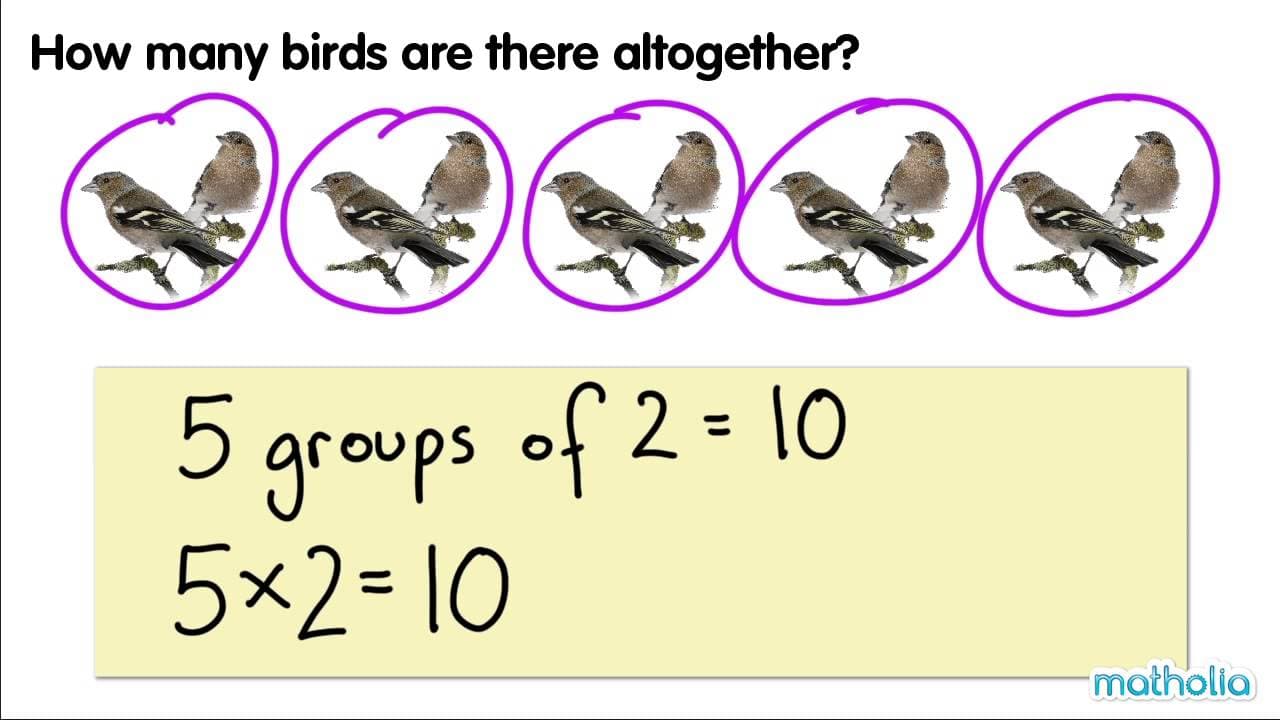
This educational video serves as a clear, step-by-step introduction to multiplication by visualizing the concept of "equal groups." Using four distinct examples involving animals and food items, the video bridges the gap between counting or repeated addition and abstract multiplication equations. It systematically demonstrates how to identify the number of groups and the number of items within each group to formulate a multiplication sentence. The video explores the fundamental themes of basic arithmetic and algebraic thinking. It specifically focuses on the transition from verbal descriptions (e.g., "2 groups of 3") to mathematical notation (e.g., "2 x 3 = 6"). The progression moves from simple, small numbers with kittens and birds to slightly larger products with cherries and fish, scaffolding the difficulty level for young learners. Visual cues, such as circling groups and underlining items, help focus student attention on the relevant data points. For educators, this video is an excellent resource for introducing the "times" symbol as a mathematical shorthand for "groups of." It is highly useful for visual learners who need concrete imagery to understand abstract operations. Teachers can use this video to model how to solve word problems, as a prompt for students to create their own "equal group" drawings, or as a review tool for students struggling with the concept of multiplication foundations.

MatholiaChannelMatholiaChannel

2mins 25s

Skip Counting by 4s with Space Rockets

Skip Counting by 4s with Space Rockets

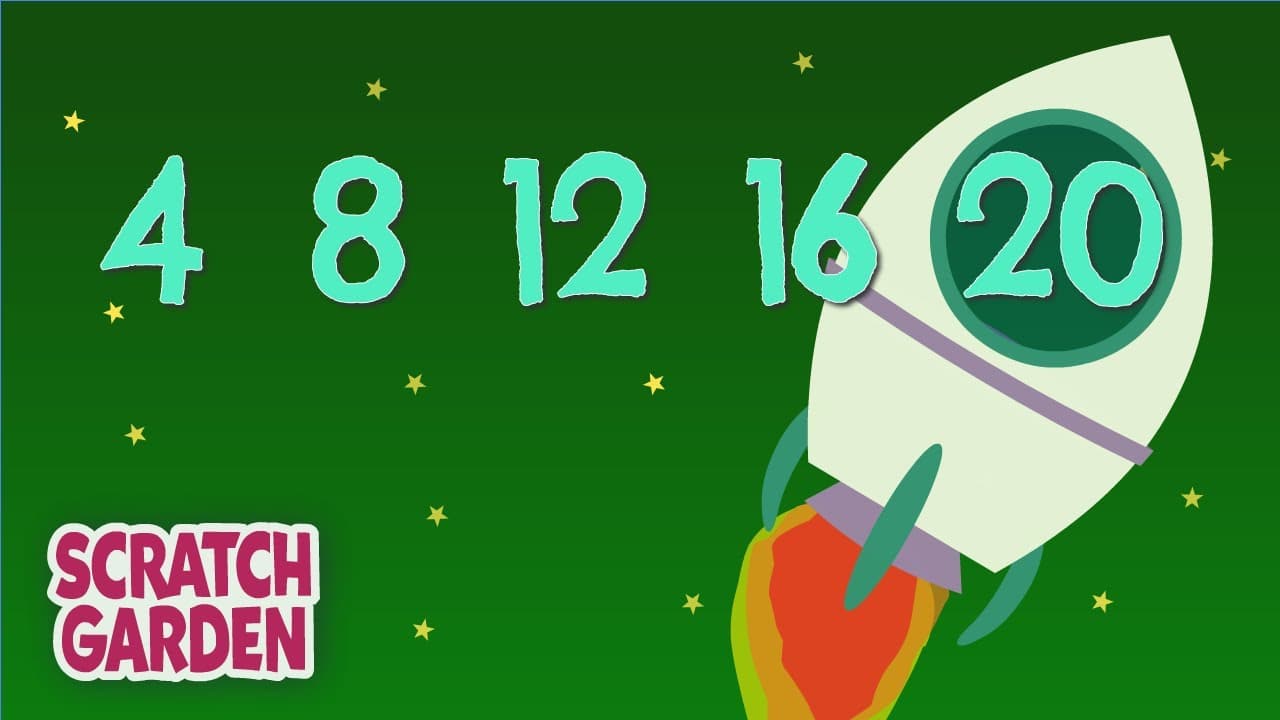
This engaging animated music video teaches students how to skip count by fours, taking them on a space-themed journey from 4 all the way to 100. Through a catchy rock-style song and vibrant animations of rockets and space cows, the video breaks down the process of adding four repeatedly, providing both auditory and visual cues to help students memorize this essential mathematical sequence. Key themes include skip counting, number patterns, and the foundations of multiplication. The video explicitly highlights the recurring pattern in the ones digit (ending in 2, 4, 6, 8, or 0), offering students a helpful rule to self-check their work. The progression builds in difficulty, starting with a count to 20, then 40, and finally reaching 100, allowing for scaffolded learning. For educators, this video serves as an excellent hook for math lessons on repeated addition or multiplication. It transforms rote memorization into a fun, rhythmic activity that improves retention. The clear visual representation of numbers appearing alongside space rockets helps visual learners connect the spoken number with its written form, while the musical element supports auditory learners in internalizing the sequence.
Scratch GardenScratch Garden

2mins 19s

Materials

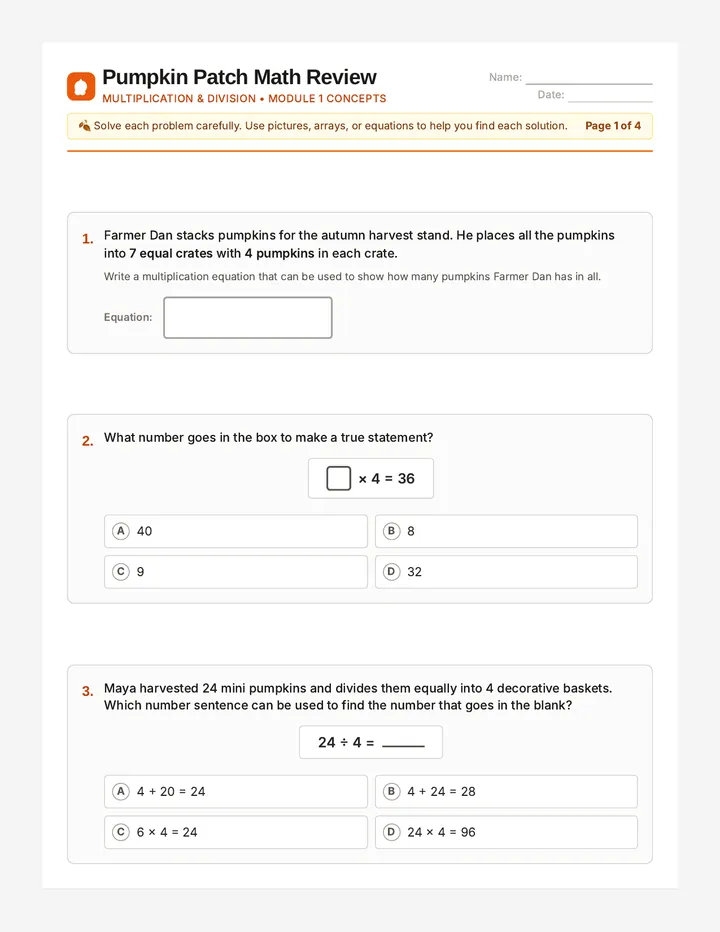
Pumpkin Patch Math Review Worksheet

Pumpkin Patch Math Review Worksheet

A 4-page fall-themed math review worksheet covering 3rd grade multiplication and division concepts, with Question 2 updated to [ ] × 4 = 36 and authentic multiple-choice options.

L

llocascio

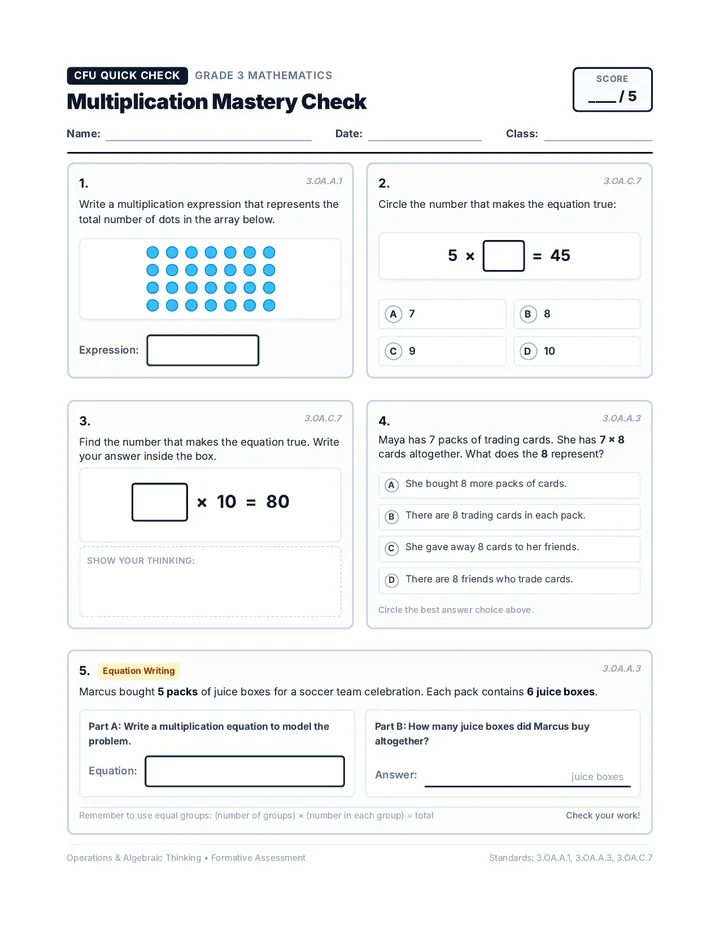
Factor Power CFU Worksheet

Factor Power CFU Worksheet

A print-ready, five-question Grade 3 Check for Understanding (CFU) worksheet assessing multiplication concepts (3.OA.A.1, 3.OA.A.3, 3.OA.C.7). Features array modeling, missing factor equations with products of 5 (5 x [ ] = 45) and 10 ([ ] x 10 = 80), factor meaning in context, and equation writing from a real-world word problem.

TD

Taylor Doucet

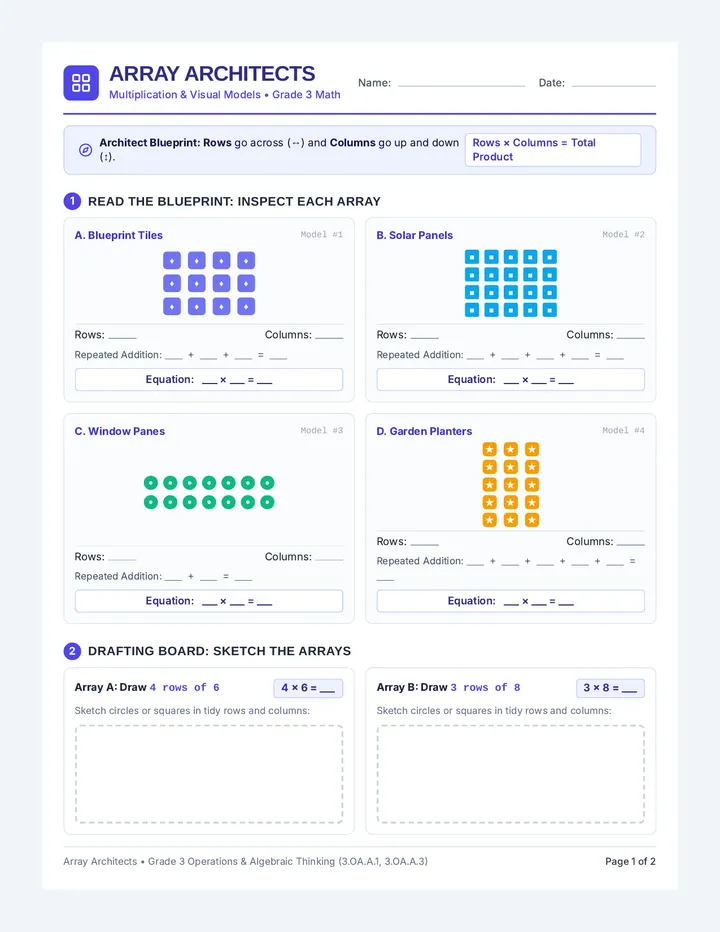
Array Architects Worksheet

Array Architects Worksheet

A comprehensive two-page 3rd-grade math worksheet on arrays. Page 1 guides students to identify rows, columns, repeated addition, and multiplication equations from visual arrays, then sketch their own models. Page 2 covers commutative turnarounds, fact families, and real-world word problems with sketching areas.

CB

Caroline Beaumier

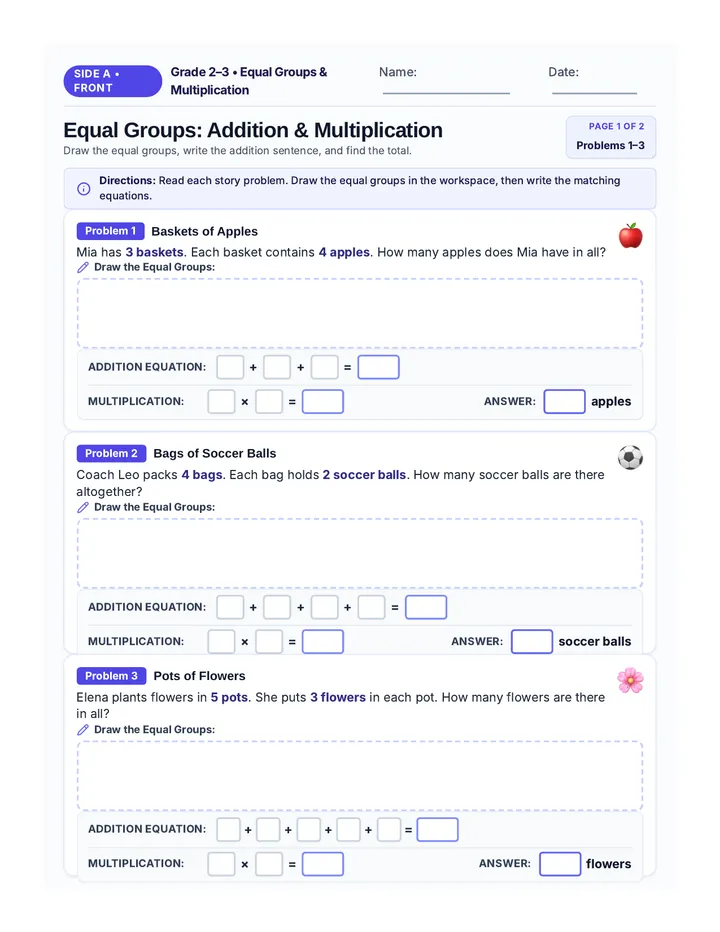
Equal Groups Math Worksheet

Equal Groups Math Worksheet

A 2-page front-and-back printable math worksheet for Grade 2–3 students with larger, high-legibility fonts, featuring six equal-groups word problems with spacious drawing workspaces and clearly defined equation boxes.

B

Bhoovaragavaswamym

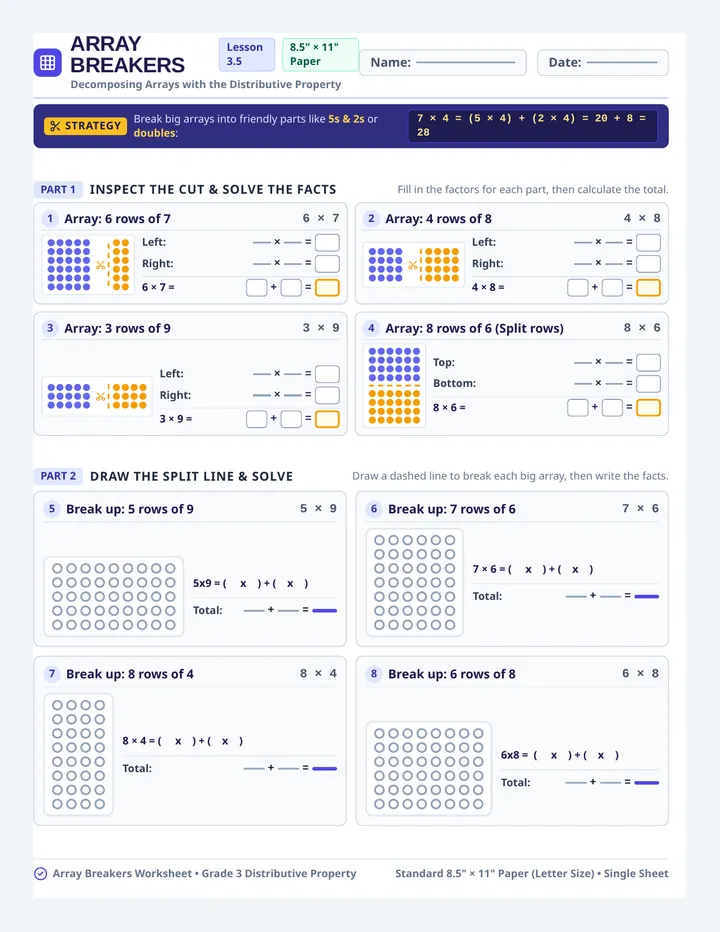
Array Breakers Worksheet

Array Breakers Worksheet

A single-page 8.5 × 11-inch math worksheet featuring enlarged arrays in Part 2 for students to divide easily, with clean student factor blanks and matching equations.

C

ckelly

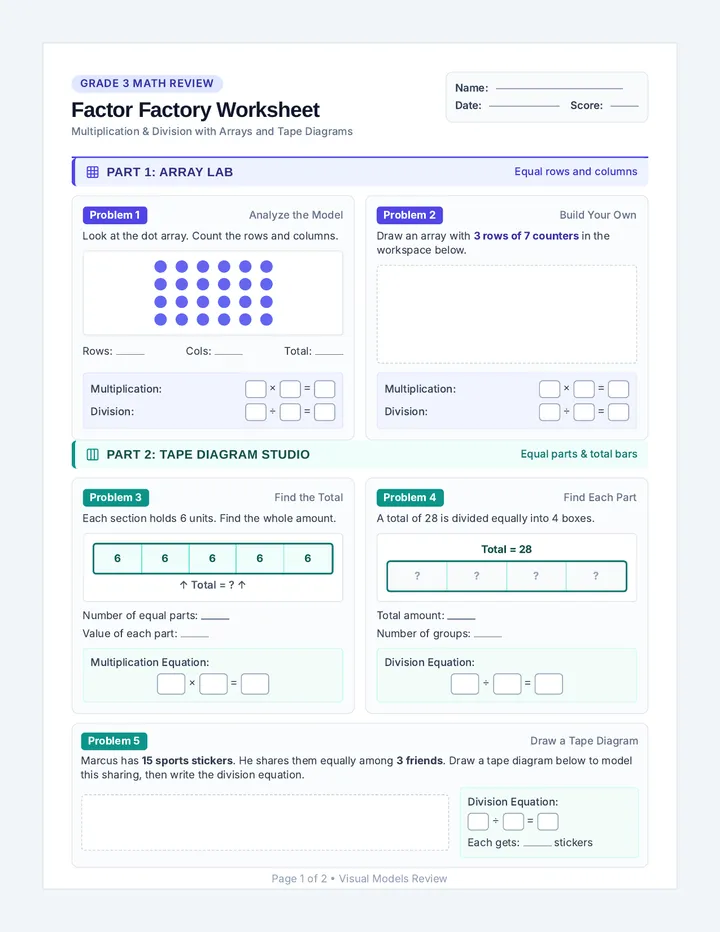
Factor Factory Worksheet

Factor Factory Worksheet

A comprehensive 3rd grade math review worksheet focused on multiplication and division concepts using arrays and tape diagrams. Includes visual models, student drawing spaces, word problems, and connection challenges.

K

kebushey

Sequences

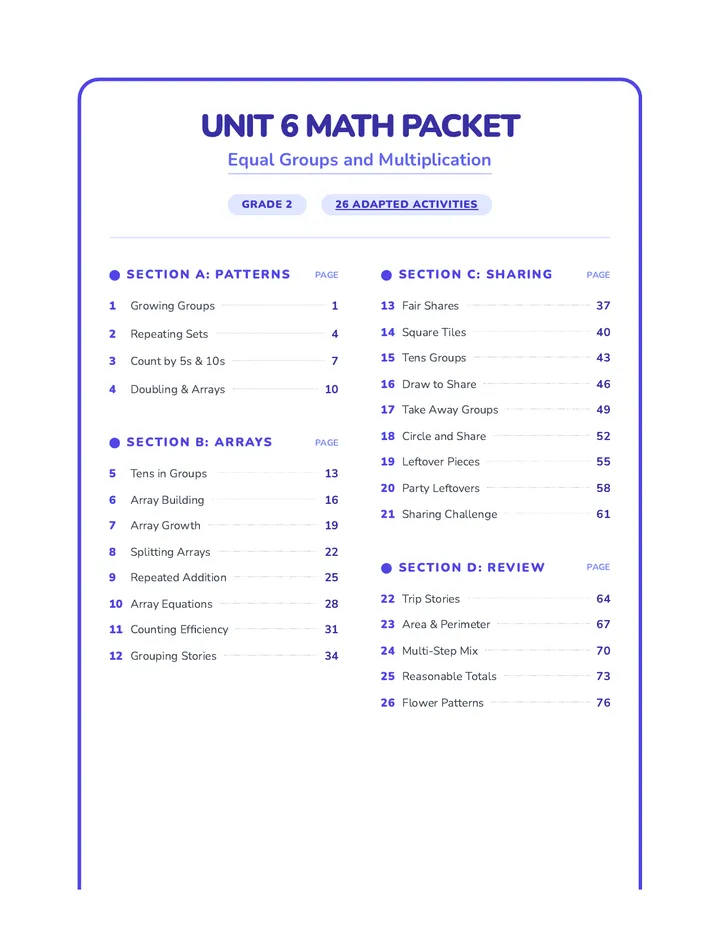
Packet Master TOC document

Unit 6 Equal Groups and Multiplication

A comprehensive Grade 2 math packet focused on skip counting, repeated addition, arrays, and equal groups.

N

nmack

39
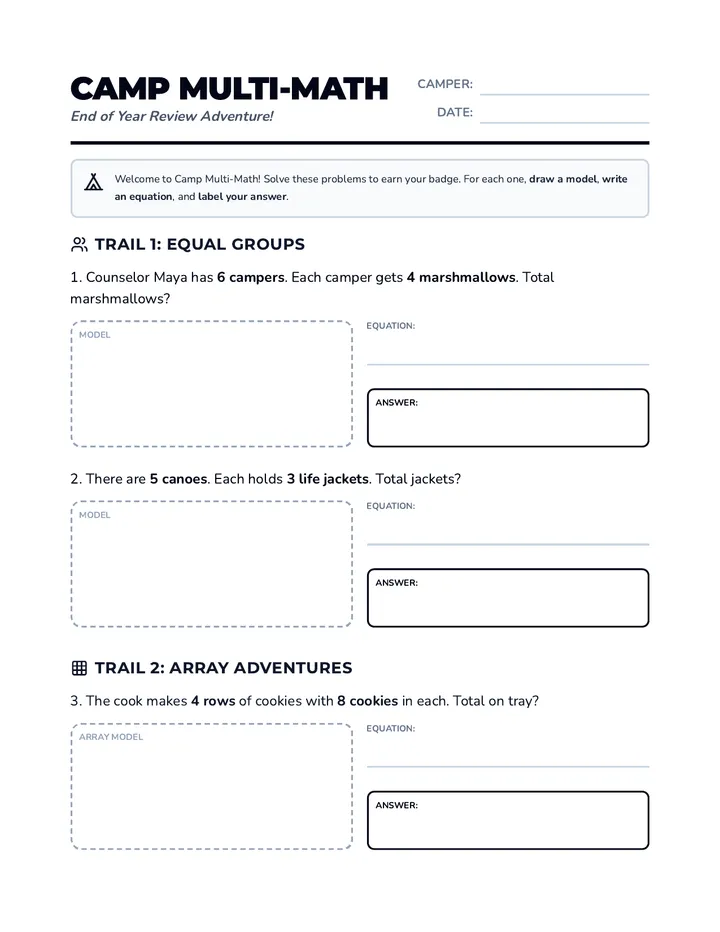
Camp Multi-Math Worksheet

Math Review Adventures

A collection of themed end-of-year math review adventures for different grade levels, focusing on spiraling key standards and problem-solving.

DB

Deborah Burton

21
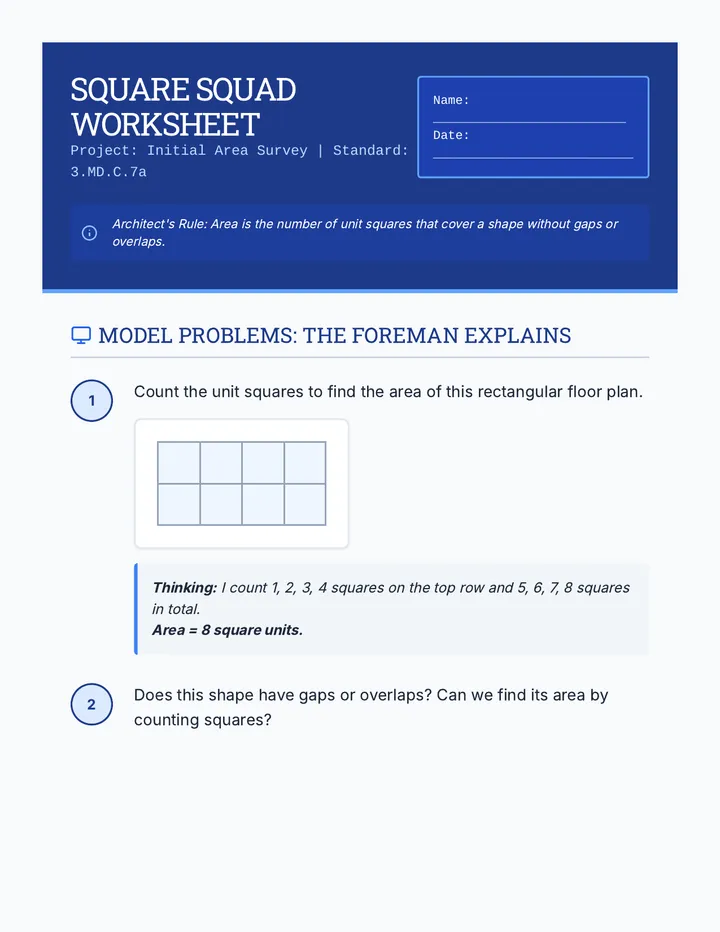
Square Squad Worksheet

Blueprint Builders

A 4-day unit on area measurement for 3rd grade students, covering tiling, the relationship between multiplication and addition, and decomposing rectilinear shapes. Designed with a 'Blueprint Builders' architectural theme.

TD

Taylor Doucet

10
The Two Sprint Quiz

Factor Frenzy

A comprehensive set of multiplication fact fluency quizzes covering facts from 0 to 12, including individual fact sprints and mixed reviews. Each material is designed as a half-page "sprint" to save paper and allow for quick daily practice.

TC

Tracey Craft

15
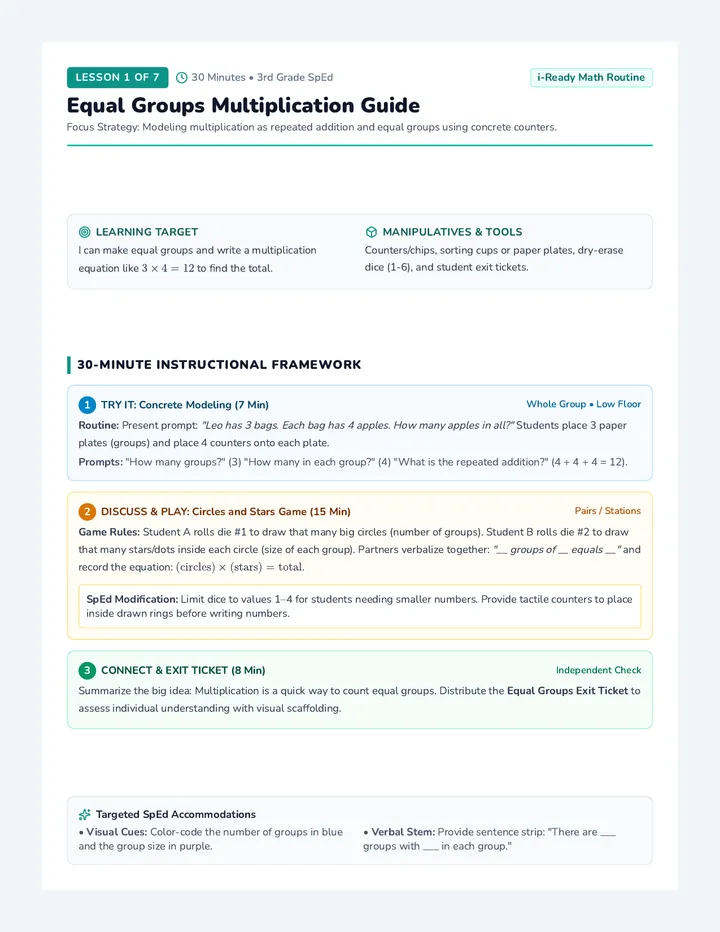
Equal Groups Lesson Guide

Strategy Champions

A 7-lesson targeted mathematics intervention sequence for 3rd grade special education students, focusing on concrete and representational multiplication and division strategies adapted from the i-Ready Try-Discuss-Connect framework.

KW

Katherine Wright

18
Butterfly Bloom Color by Number

Spring Math Sprout

A vibrant collection of 3rd-grade math resources focused on multiplication mastery and equivalent fraction exploration, all wrapped in a refreshing spring theme.

EG

Elva Garcia

31

Lessons

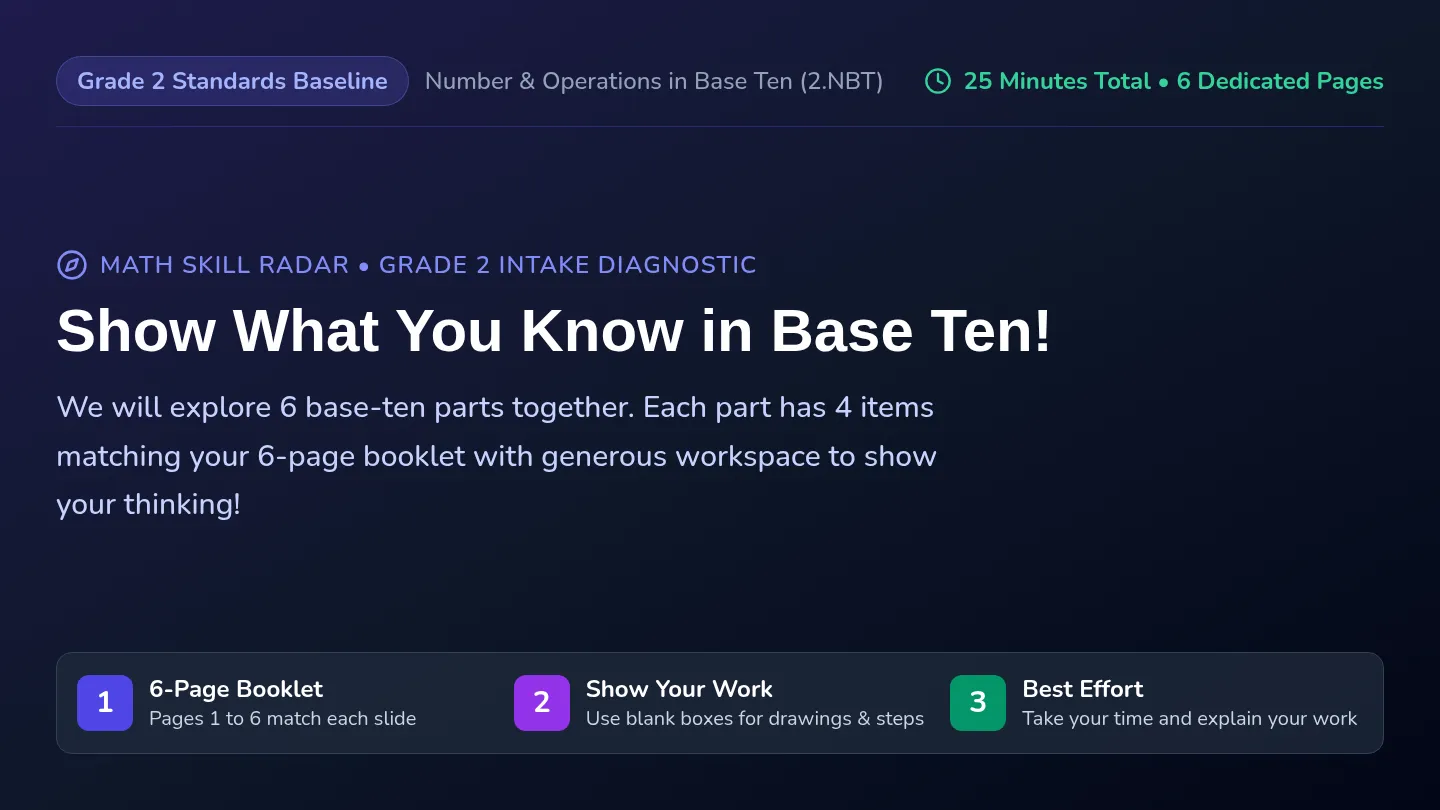
Math Radar Intake Slides

Math Skill Radar

A comprehensive baseline math diagnostic and intervention suite for special education spanning early numeracy through Grade 4. Features complete tiered intake assessments, practice packets, manipulative work mats, and master scoring keys for both 1st Grade Base Ten (1.NBT) and 2nd Grade Base Ten (2.NBT), alongside K-1 early number sense tools.

S

Sara

20
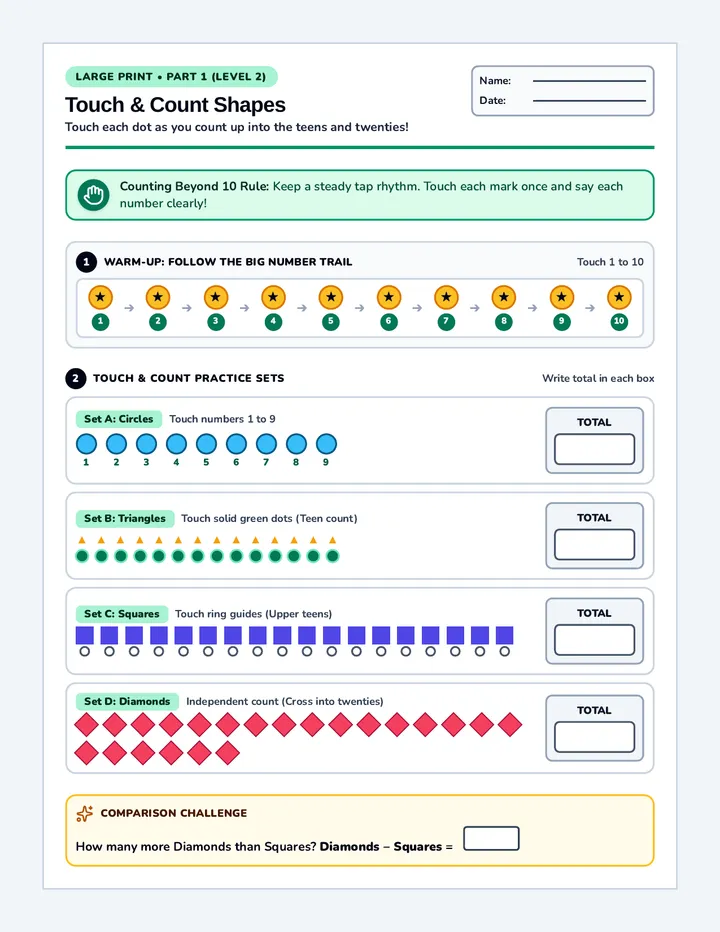
Number Fluency Practice Pack

Number Fluency Foundations

An advanced number fluency lesson combining higher-range shape tracking up to 24, tens-and-ones place value grouping up to 30, multi-interval skip counting (3s, 4s, 6s, off-decade 10s, reverse 5s), bridging-10 visual fast facts up to 20, and applied real-world word problem story worksheets with complete teacher keys.

S

Sara

10
Monday Practice Worksheet

Regrouping Masters

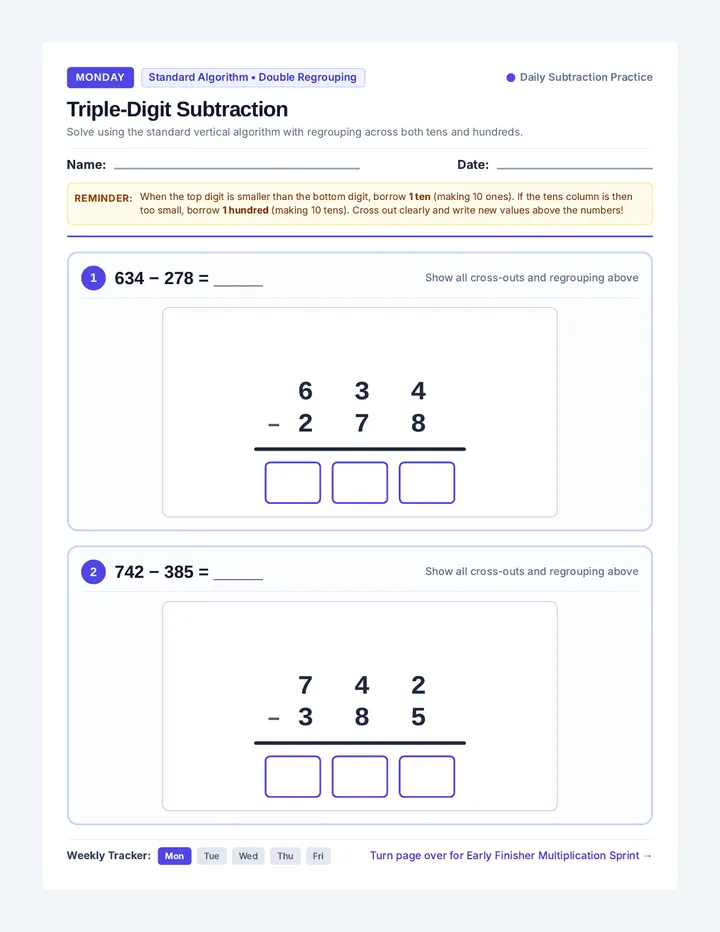
A targeted 5-day daily practice sequence mastering the standard subtraction algorithm with double borrowing across three-digit numbers. Each daily sheet features two high-focus subtraction problems with structured place-value computation frames on the front and mixed 1-12 multiplication facts on the reverse.

EB

Emily Brown

6
Double Trouble Worksheet

Multiplication Mastery Basics

A foundational multiplication lesson focusing on doubles, skip counting patterns (2s, 5s, 10s), and single-digit facts through 9. Includes focused practice worksheets and answer keys for skill building.

MR

Maddy Roberts

26
Grade 3 Math Practice Test

Tar Heel Math Mastery

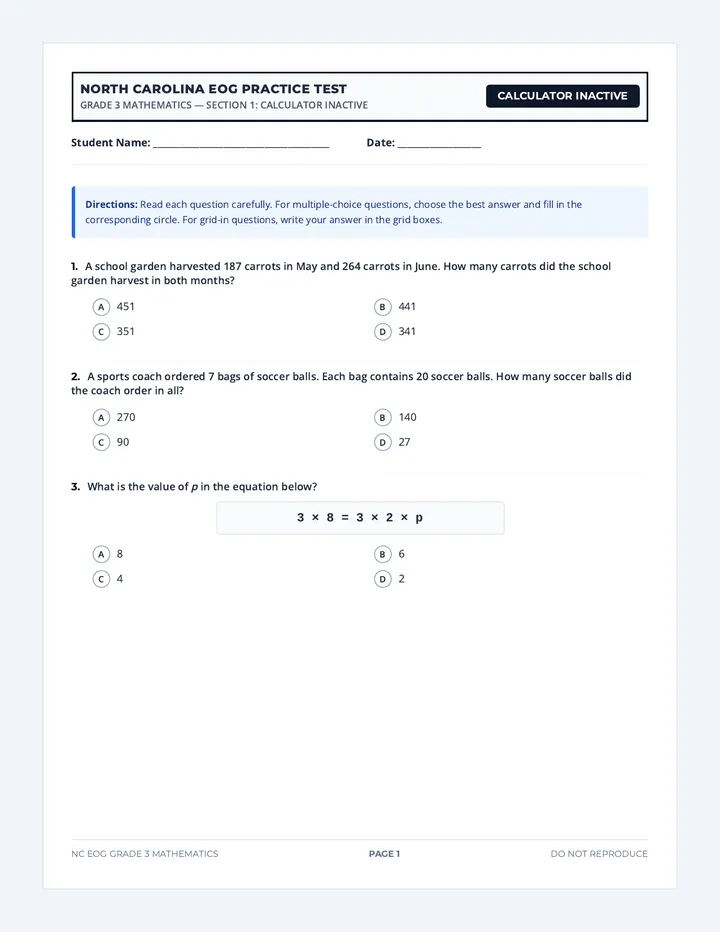
A comprehensive practice package designed for 3rd-grade students preparing for the North Carolina End-of-Grade (EOG) Mathematics assessment. It includes a complete 48-question exam covering all highly-tested standard course of study domains, an interactive student grid, an item-to-standard alignment map, and a full explanatory answer key.

SP

sashagaye Panton

3
Math Mastermind Project Guide

Math Mastermind Academy

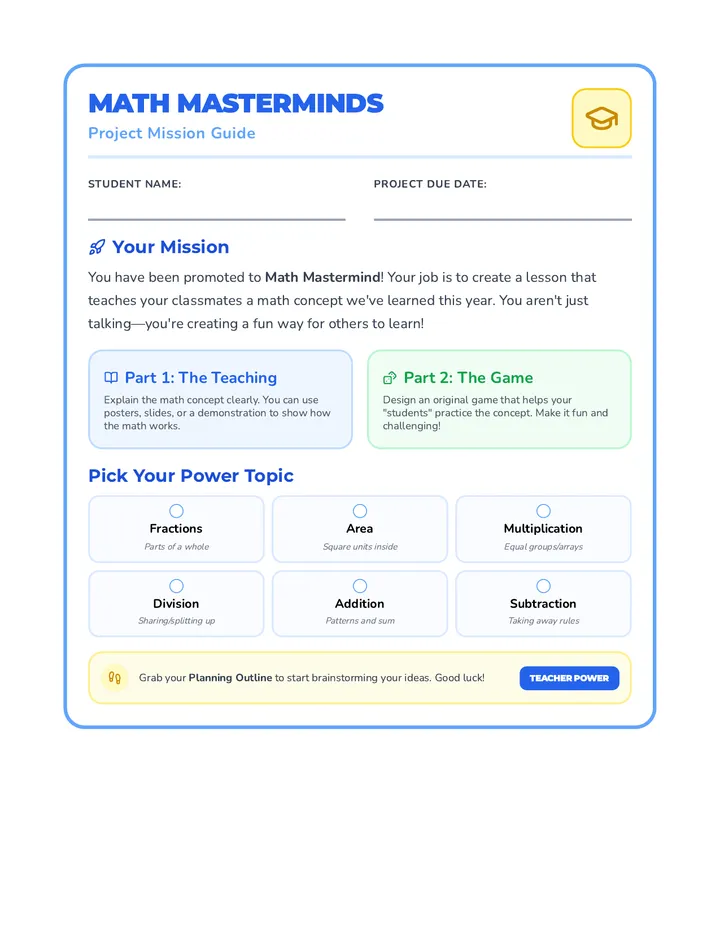
A project-based lesson where 3rd grade students become the teachers, creating a math lesson and a corresponding game on key concepts like fractions, area, and operations.

KB

Krista Bodkin

7