Lenny.com
Explore
Create
ActivitiesNewMathEnglish Language ArtsScience & EngineeringSocial StudiesGlobal LanguagesHealth & Physical EducationSpecial EducationCounseling & Life SkillsArts & CreativityESL
Lenny.com
Lenny.com
Explore
Create
ActivitiesNewMathEnglish Language ArtsScience & EngineeringSocial StudiesGlobal LanguagesHealth & Physical EducationSpecial EducationCounseling & Life SkillsArts & CreativityESL
Lenny.com
Lenny.com

Solutions

Lenny for EducatorsLenny for SchoolsLenny for Districts

Product

ExploreSign inCreateSupportAbout

Resources

Getting startedMTSS Acceleration Program

© 2026 Lenny Learning Inc.

TermsPrivacyAccessibility
LinkedInInstagramX
Lenny

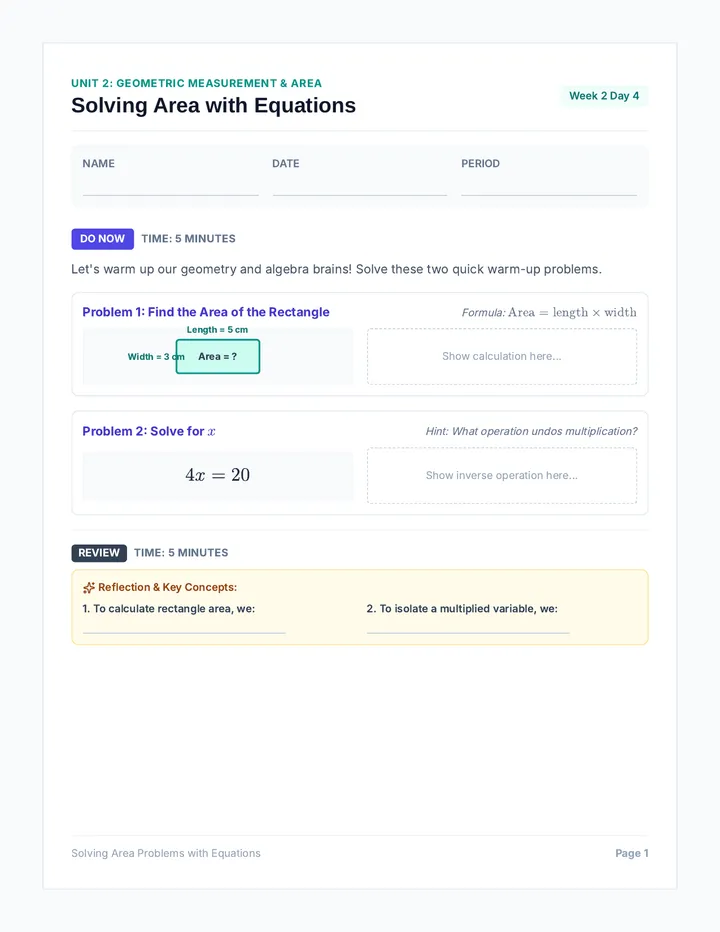
Equation Solving and Reasoning

Algebraic manipulation, inverse operations, and logical justifications for solving linear and multi-step equations. Develops the ability to verify solutions and communicate mathematical steps clearly.

MathNumbers & CountingCounting ObjectsNumber NamesComparing NumbersNumber OperationsCounting SequenceNumbers 0-10Place Value Understanding and SystemAdd and Subtract Within 20Addition and Subtraction ConceptsAddition and Subtraction EquationsAddition and Subtraction ProblemsFoundations for MultiplicationMultiplication and Division PropertiesMultiply and Divide Within 100Multiplication and Division ProblemsFactors and MultiplesProperties of OperationsPatterns and RelationshipsGenerate and Analyze PatternsMulti-Digit ArithmeticPlace Value OperationsMulti-Digit and Decimal OperationsNumerical ExpressionsFour Operations and PatternsFour Operations Problem SolvingMeasurement & DataMeasurable AttributesMeasuring LengthsMeasure and Estimate Lengths in Standard UnitsRelate Addition and Subtraction to LengthClassifying and Counting ObjectsTime and MoneyArea Concepts and MeasurementPerimeter and Area MeasuresAngle Concepts and MeasurementTime, Volume, and MassMeasurement Unit ConversionsGeometryIdentifying ShapesShapes and AttributesShape Attributes and ReasoningShapes and CompositionClassifying 2D FiguresGeometric Figures and RelationshipsLines, Angles, and ShapesAngle, Area, and VolumeGeometric MeasurementVolume of 3D ShapesCoordinate Plane ApplicationsTransformations in the PlaneCongruence and SimilarityUnderstand congruence in terms of rigid motionsSimilarity and TransformationsProve Theorems Involving SimilarityPythagorean TheoremTrigonometry for General TrianglesMake Geometric ConstructionsProve Geometric TheoremsTheorems About CirclesFind Arc Lengths And Areas of Sectors of CirclesVolume FormulasRelationships Between Two-Dimensional and Three-Dimensional ObjectsProve Simple Geometric Theorems AlgebraicallyTranslate Between Geometric Description and Equation for Conic SectionApply Geometric Concepts in Modeling SituationsFractions & DecimalsFractions as NumbersBuilding FractionsFraction Equivalence and OrderingAdding and Subtracting FractionsMultiplying and Dividing FractionsDividing FractionsDecimal FractionsMulti-Digit Computation and FactorsAdd, Subtract, Multiply, and Divide Rational NumbersRational Number SystemIrrational Numbers and ApproximationsRatiosRatios and ProportionsProportional RelationshipsUnit RateAlgebraAlgebraic ExpressionsGenerate Equivalent ExpressionsQuantitative RelationshipsProportional Relationships and Linear EquationsEquations and InequalitiesEquation Solving and ReasoningLinear Equations and SystemsGraph Equations and InequalitiesSystems of EquationsReal-World Algebraic ProblemsQuantitative Reasoning with UnitsExpression StructureEquivalent Expression FormsRadicals and Integer ExponentsRational ExponentsRational and Irrational NumbersPolynomial OperationsPolynomial IdentitiesPolynomial Zeros and FactorsRational ExpressionsComplex Number OperationsComplex Numbers in PolynomialsComplex Numbers on PlaneStatistics & ProbabilityRepresent and Interpret DataData DistributionsStatistical VariabilityProbability ModelsCompound Event ProbabilitiesStatistical SamplingInterpret Categorical and Quantitative DataBivariate Data PatternsInterpret Linear ModelsComparing Two PopulationsRandom Processes in StatisticsIndependence and Conditional ProbabilityExpected ValuesProbability-Based Decision MakingStatistical Inference and ConclusionsFunctionsFunction Concepts and NotationDefine and Compare FunctionsInterpret Functions in ContextAnalyze Function RepresentationsModel Relationships with FunctionsIdentify Linear vs Exponential GrowthDistinguish Between Function TypesCompare Growth RatesInterpret Function ExpressionsBuild Functions from RelationshipsConstruct and Model FunctionsTransform and Combine FunctionsModel Comparison and SelectionSolve Exponential EquationsTrigonometryTrigonometric Ratios Involving Right TrianglesTrigonometric Functions and Unit CircleModel with Trigonometric FunctionsTrigonometric IdentitiesVectors & MatricesIntroduction to Vectors and MatricesVector QuantitiesVector OperationsMatrix OperationsCalculusLimits and ContinuityDerivative Concepts and NotationDerivative Rules and TechniquesApplications of DerivativesOptimization ProblemsRelated RatesCurve Sketching and AnalysisIntegration Concepts and NotationAntiderivatives and Indefinite IntegralsDefinite Integrals and AreaFundamental Theorem of CalculusIntegration TechniquesApplications of IntegrationDifferential EquationsSequences and SeriesParametric and Polar FunctionsVector-Valued Functions

Videos

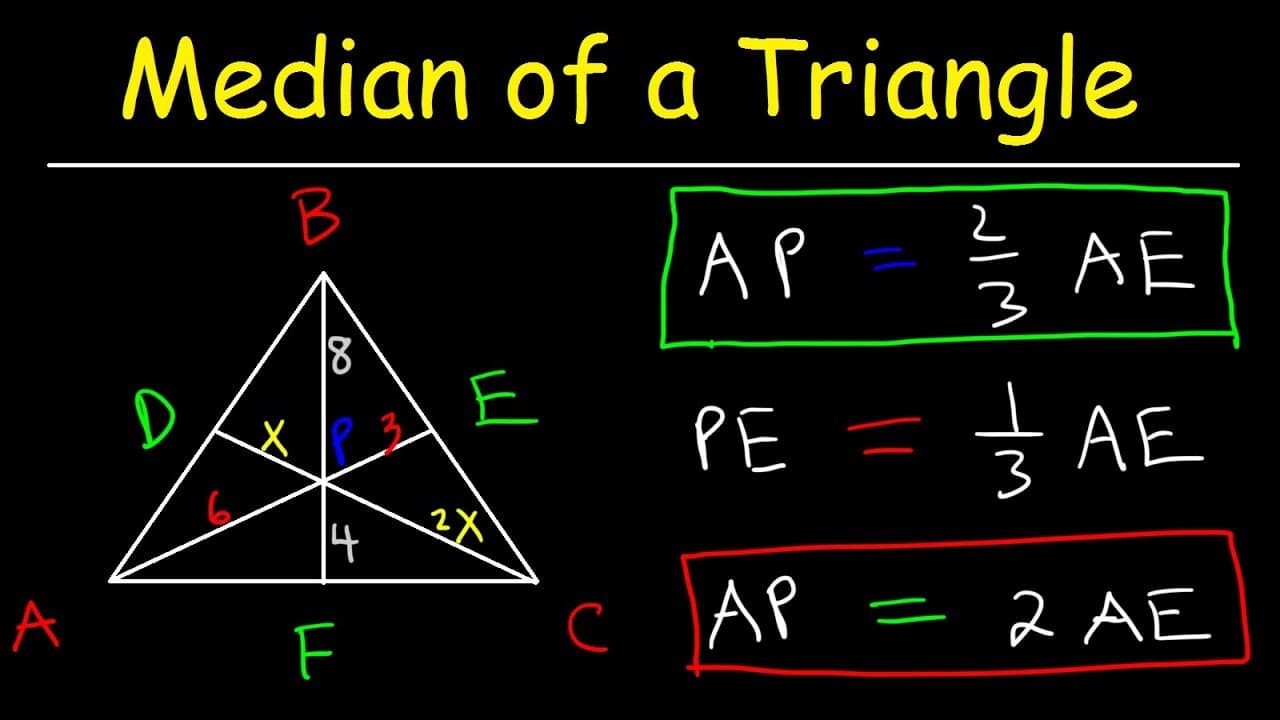
Mastering Triangle Medians and Centroids

Mastering Triangle Medians and Centroids

This comprehensive mathematics tutorial provides a deep dive into the geometric concept of triangle medians and their intersection point, the centroid. The video begins by clearly defining a median as a line segment drawn from a vertex to the midpoint of the opposite side. Through step-by-step visual construction, the narrator demonstrates how every triangle has three medians that are concurrent, intersecting at a single point called the centroid, which acts as the triangle's center of gravity.

The Organic Chemistry TutorThe Organic Chemistry Tutor

17mins 56s

Solving Right Triangles with the Pythagorean Theorem

Solving Right Triangles with the Pythagorean Theorem

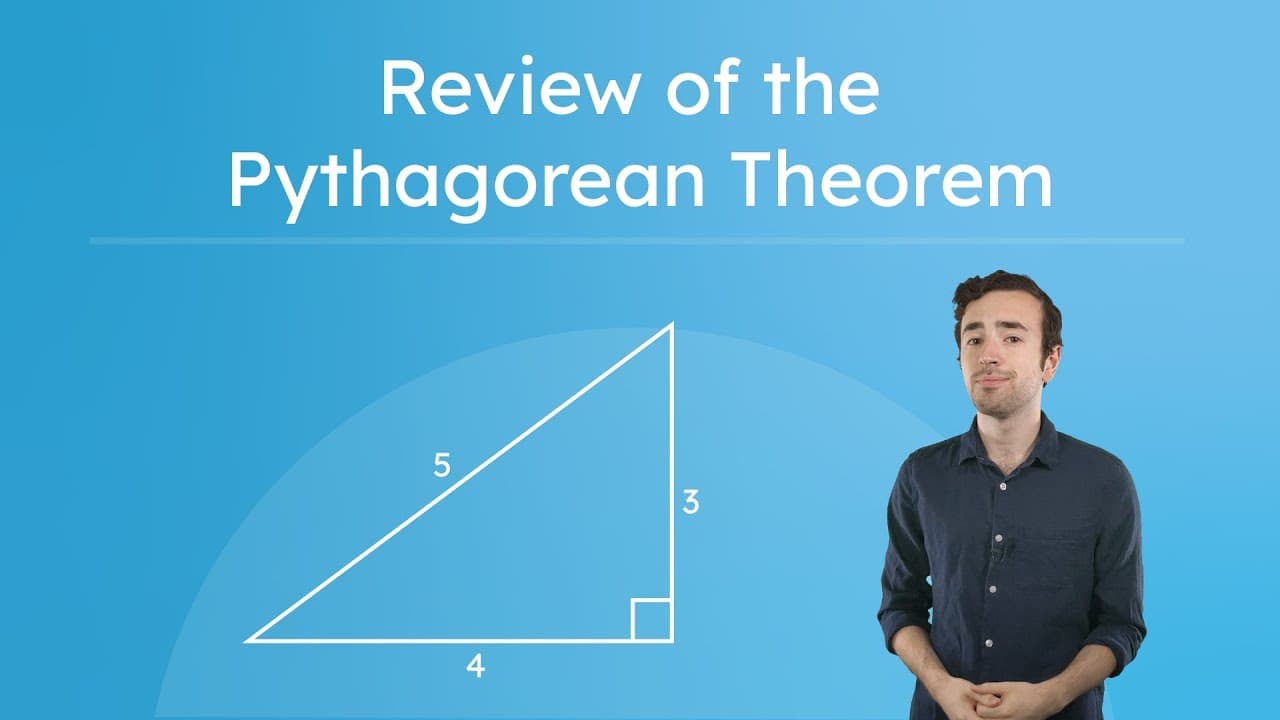
This educational video provides a comprehensive review of the Pythagorean Theorem, a fundamental concept in geometry used to find missing side lengths in right triangles. The narrator, Justin, guides viewers through the definitions of key terms like "legs" and "hypotenuse," explains the core formula ($a^2 + b^2 = c^2$), and demonstrates how to correctly identify which sides correspond to which variables. The video is designed as a refresher for students who have seen the concept before but serves equally well as a first-time introduction. The content progresses from basic definitions to practical application, covering Pythagorean triples (like 3-4-5) and solving algebraic equations to find unknown lengths. It includes three distinct examples: checking a Pythagorean triple, finding a missing hypotenuse, and finding a missing leg. The final example introduces a higher-level skill: simplifying square roots (radicals) when the answer is not a perfect square, bridging geometry with algebraic skills. For educators, this video is an excellent tool for reinforcing geometric vocabulary and algebraic manipulation. It specifically addresses common student errors, such as misidentifying the hypotenuse, and provides clear, step-by-step visual modeling of the calculation process. It prepares students for more advanced topics like trigonometry by ensuring they grasp the relationship between the sides of a right triangle.
Miacademy & MiaPrep Learning ChannelMiacademy & MiaPrep Learning Channel

5mins 19s

How to Graph Linear Equations Using Standard Form

How to Graph Linear Equations Using Standard Form

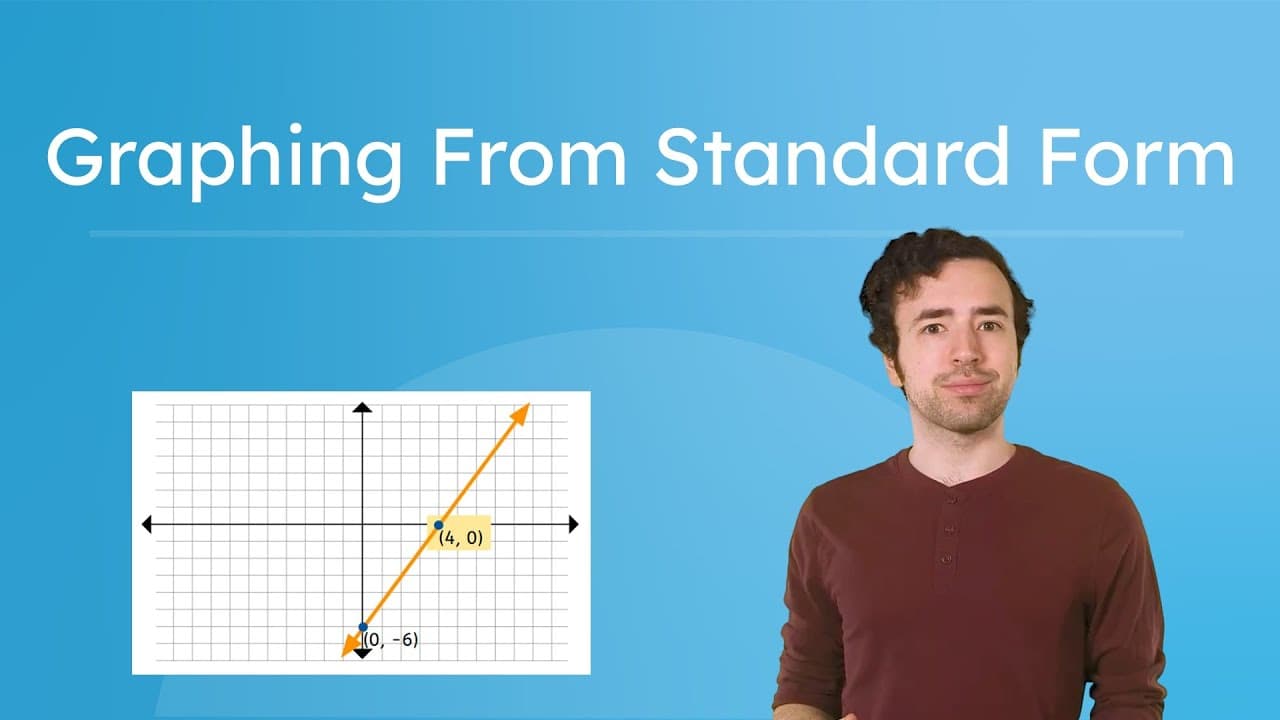
This instructional video guides students through the process of graphing linear equations provided in standard form (Ax + By = C). Hosted by a narrator named Justin, the lesson explores two primary strategies: finding the x and y-intercepts and rearranging the equation into slope-intercept form. The video emphasizes procedural fluency while also encouraging critical thinking about efficiency and choosing the best method for specific problems.

Miacademy & MiaPrep Learning ChannelMiacademy & MiaPrep Learning Channel

10mins 49s

Factoring Quadratics Using the Quadratic Formula

Factoring Quadratics Using the Quadratic Formula

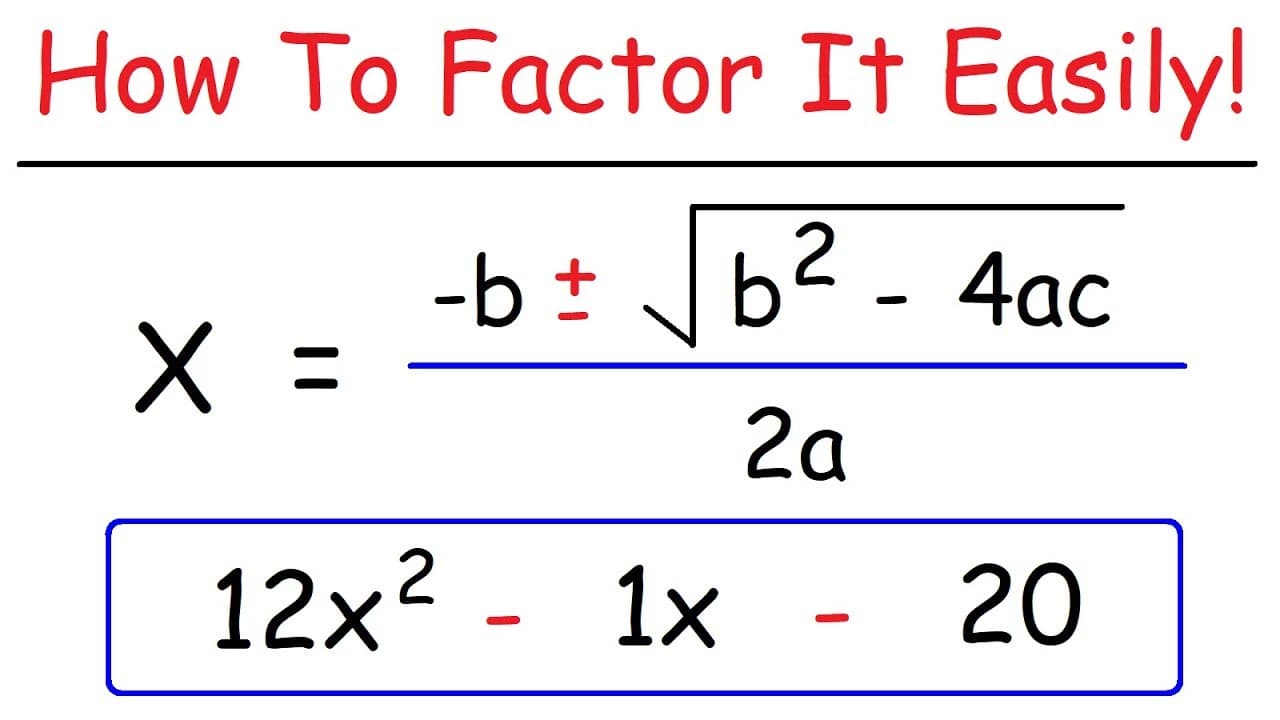
This instructional video demonstrates a specific mathematical technique: using the quadratic formula to factor difficult quadratic trinomials. While the quadratic formula is typically used to solve for 'x', the narrator shows how to work backward from the solutions to determine the original binomial factors. This method is presented as a time-saving alternative to trial-and-error factoring, particularly when dealing with equations containing large coefficients. The content covers identifying coefficients (a, b, and c), substituting them into the quadratic formula, simplifying complex arithmetic including negatives and square roots, and reducing fractions. Crucially, the video focuses on the algebraic manipulation required to convert fractional solutions (roots) back into integer-based binomial factors (e.g., turning x = 5/4 into 4x - 5). The lesson concludes with a verification step using the FOIL method to prove the factors yield the original equation. For educators, this video provides a valuable "backdoor" strategy for students who struggle with traditional factoring methods like grouping or the "AC method." It reinforces the connection between roots (zeros) and factors, a fundamental concept in Algebra. The step-by-step visual derivation makes it an excellent resource for scaffolding lessons on polynomials, serving as either a remediation tool for struggling learners or an enrichment strategy for advanced students looking for efficiency.

The Organic Chemistry TutorThe Organic Chemistry Tutor

5mins 16s

Writing Quadratic Equations from Sum and Product of Roots

Writing Quadratic Equations from Sum and Product of Roots

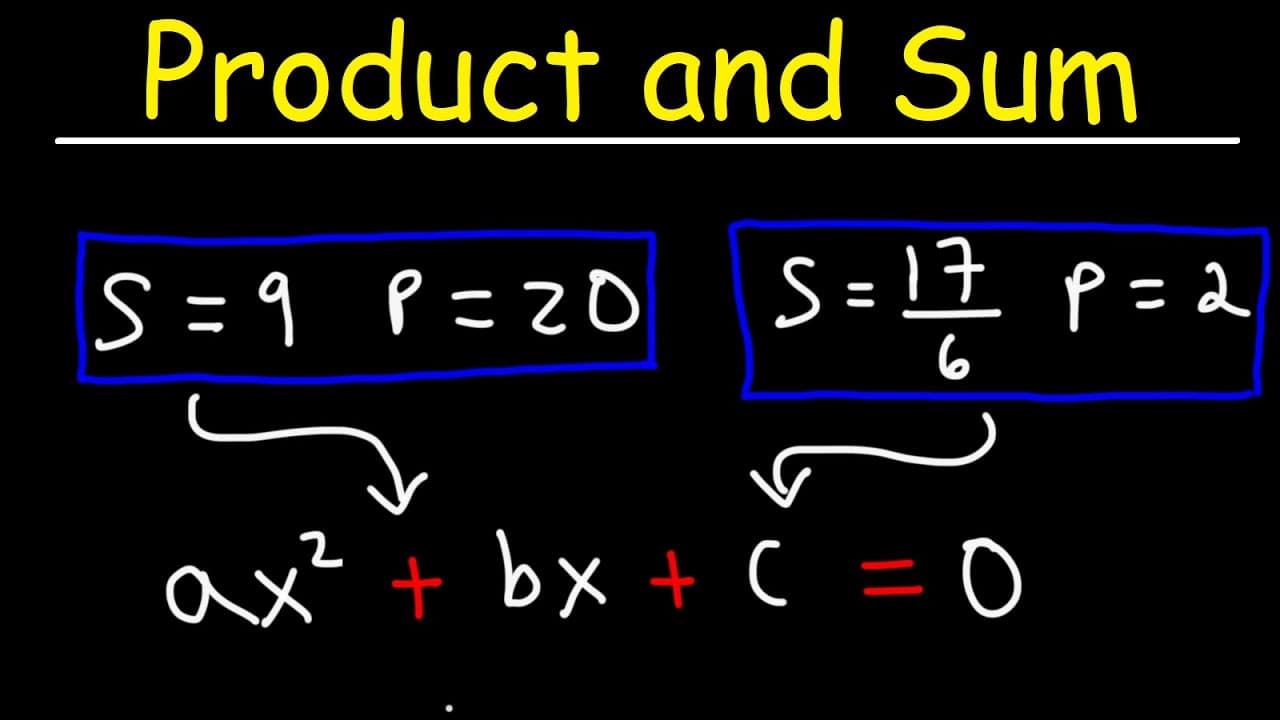
This instructional video provides a clear, step-by-step tutorial on how to construct a quadratic equation in standard form when provided with the sum and product of its roots. The video begins by deriving the formula $x^2 - (Sum)x + (Product) = 0$ from the standard form $ax^2 + bx + c = 0$, demonstrating the mathematical relationship between coefficients and roots. This theoretical foundation helps students understand the 'why' behind the formula rather than just memorizing steps.

The Organic Chemistry TutorThe Organic Chemistry Tutor

11mins 15s

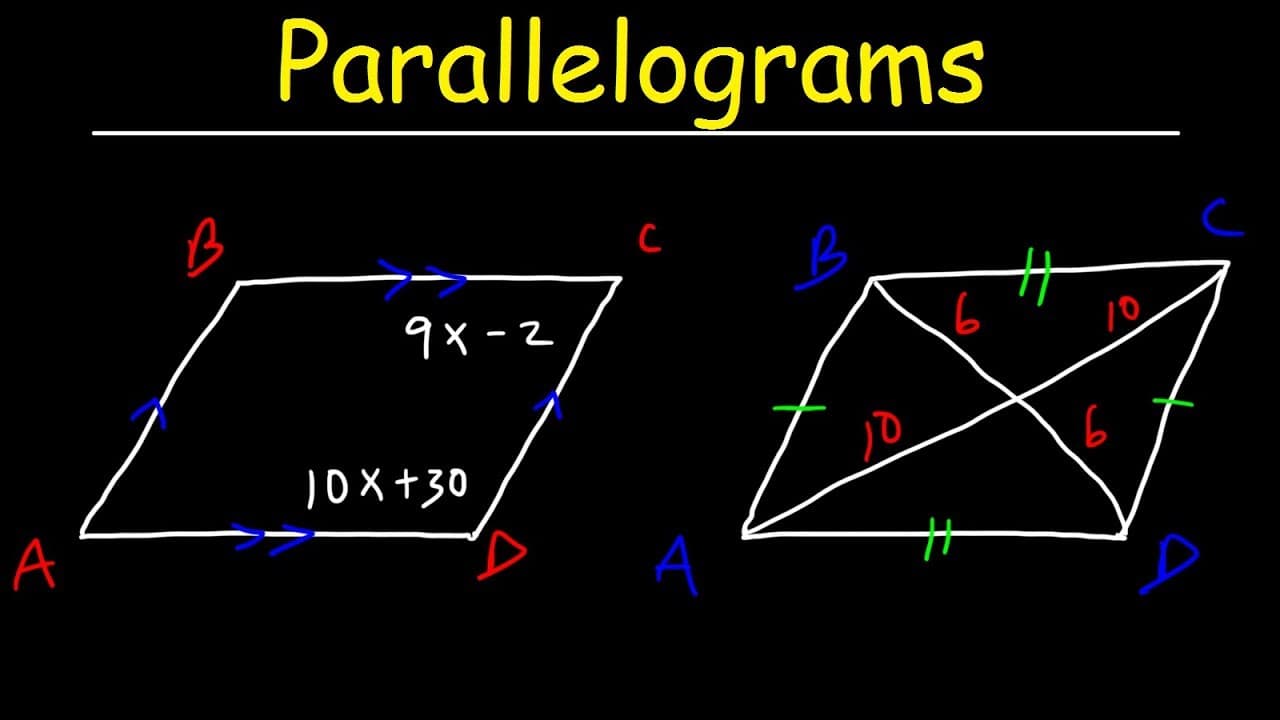
How to Solve Parallelogram Problems in Geometry

How to Solve Parallelogram Problems in Geometry

A comprehensive geometry tutorial focused on the properties and applications of parallelograms. The video begins by defining a parallelogram and outlining its four core properties: opposite sides are parallel, opposite sides are congruent, opposite angles are congruent, and diagonals bisect each other. The narrator uses clear diagrams and visual markings to demonstrate these concepts before moving into practical applications. The core of the video consists of five detailed example problems that increase in complexity. These problems require students to apply geometric properties to set up algebraic equations. The examples cover a wide range of skills, including solving linear equations involving angle measures, using quadratic equations to find unknown angles and diagonal lengths, and factoring trinomials when leading coefficients are greater than one. The final example integrates multiple variables to calculate perimeter. This resource is highly valuable for high school geometry classrooms as it bridges the gap between geometric concepts and algebraic calculation. It is excellent for teaching students how to translate visual geometric information into solvable equations. The step-by-step walkthroughs of factoring quadratics within a geometry context provide essential reinforcement of Algebra 1 skills, making this a dual-purpose tool for both geometry instruction and algebra review.

The Organic Chemistry TutorThe Organic Chemistry Tutor

23mins 7s

Materials

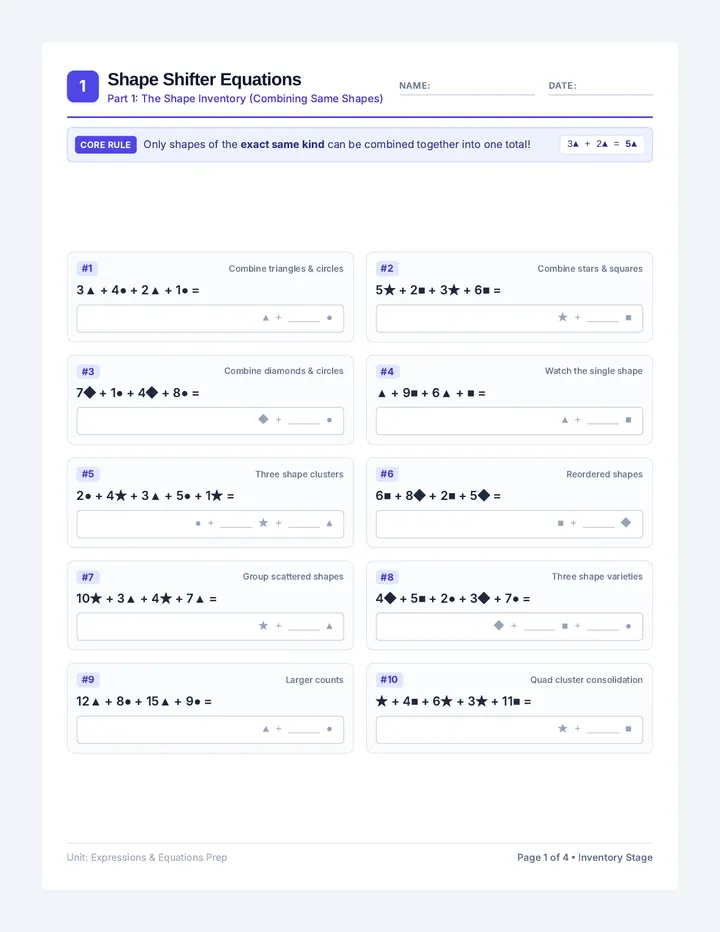
Shape Shifter Equation Worksheet

Shape Shifter Equation Worksheet

A comprehensive 4-page progressive student worksheet with 40 shape-expression questions designed to bridge visual shape combining to algebraic equations with like terms on both sides, updated with blanks in front of every shape term.

J

jeffreychadwick.inspiretx

Figurative Patterns Slides Orientation Fix

Figurative Patterns Slides Orientation Fix

Fixed Slide 6 where the visualization of two paired triangular numbers forming a rectangle was missing. Replaced the previous layout with explicit flex rows to ensure the dots render correctly and clearly show how $T_4$ and its twin create a $4 \times 5$ rectangle. Label positioning and container sizing were also refined for better clarity. Adjusted Slide 4 to fill vertical space more effectively.

BC

Brenda Coombs

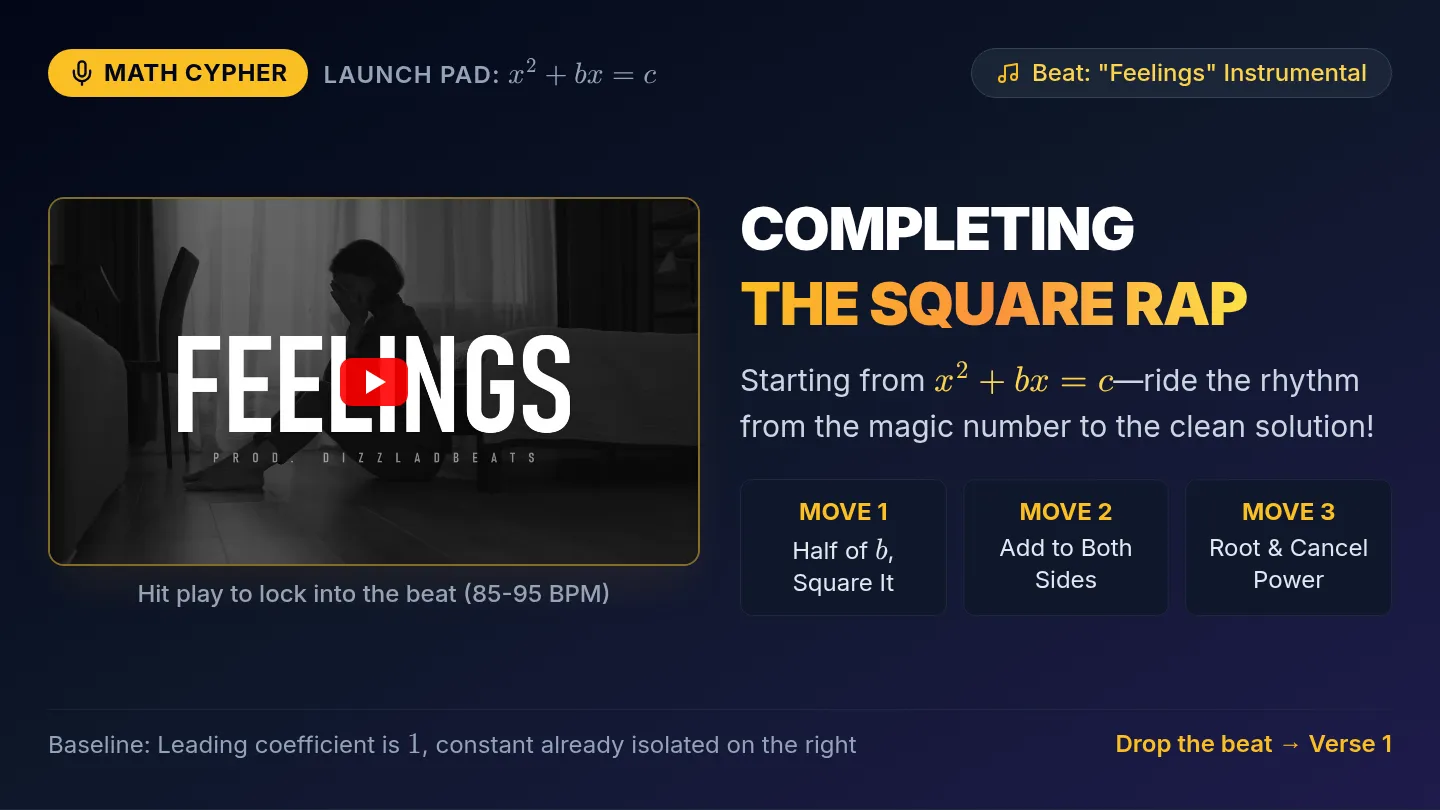
Square Steps Rap Slides

Square Steps Rap Slides

Interactive presentation slides featuring polished rap lyrics starting directly from x^2 + bx = c, an embedded backing track, rhythm counts, step-by-step algebraic breakdowns, and live example walk-throughs.

H

Harlston

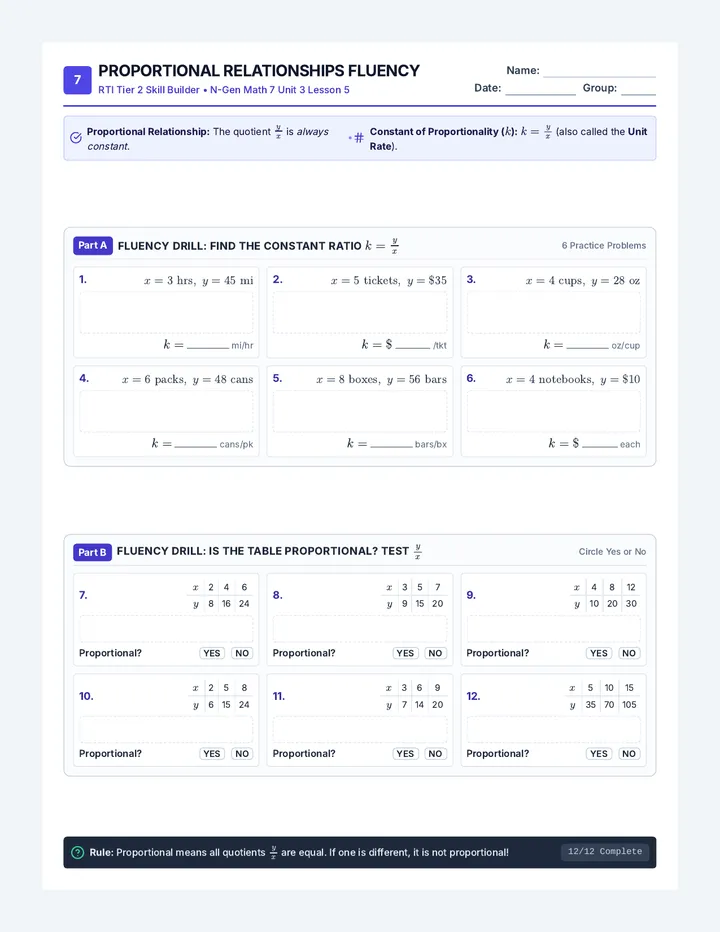
Proportional Relationships Practice Worksheet

Proportional Relationships Practice Worksheet

A fluency-focused 2-page RTI math worksheet with 20 bite-sized problems on proportional relationships, calculating unit rates, testing tables, writing equations, and scaffolded mirrors of Lesson 3-5 exercises.

JH

John Holt

Equation Matchup Cards

Equation Matchup Cards

A 16-set printable equation matching card deck with all equations and solution cards standardized to the variable x, requiring students to solve rather than match by variable letter.

M

Megan.Tanner

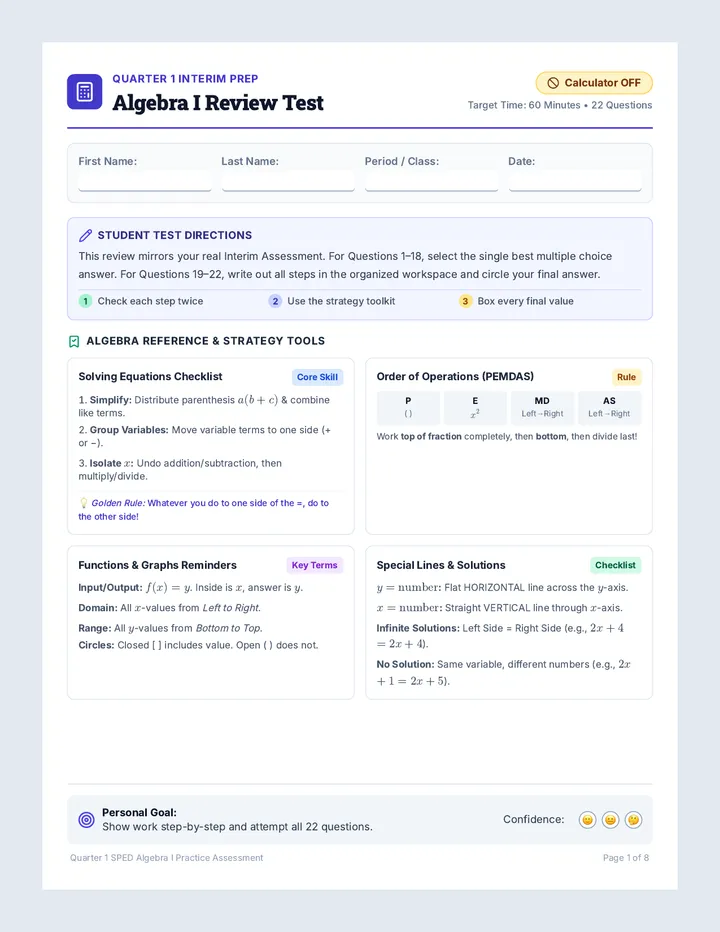
Algebra Review Test

Algebra Review Test

A comprehensive 8-page Quarter 1 Interim Review Assessment designed for 9th grade Special Education (SPED) Algebra 1 students, fully mirroring the 22-question assessment with built-in accommodations, reference toolkits, chunked questions, and scaffolded work spaces.

R

rubaiya.ahmed

Sequences

Equation Balancing Student Packet

Distance Detectives

A highly visual geometry unit focused on applying algebraic formulas to coordinate planes. Students use coordinate grids, step-by-step graphic organizers, and tactile representations to solve real-world distance and segment length problems.

D

deeohnny.jackson

64
Foundation Missions Part 1 Final

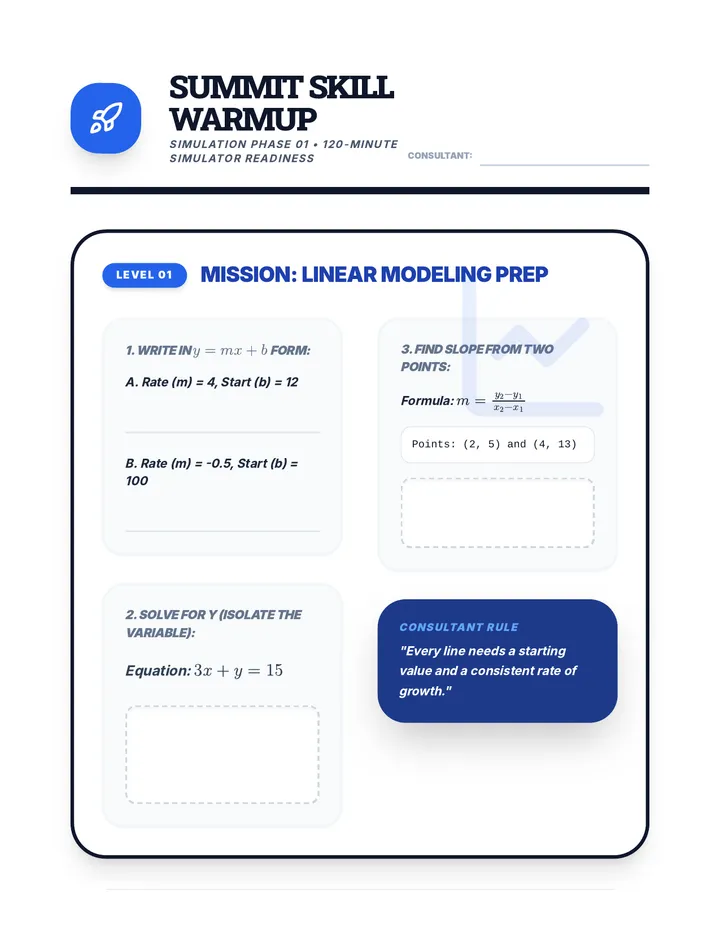
Math in Motion: The 2-Hour Summit

A high-intensity, 120-minute math simulation. Students act as lead consultants, completing a high-speed skill warmup before selecting a professional sector (Music, Urban Planning, Rocket Science, or Sports Analytics) to solve a series of complex work orders.

EL

Elsa LaLone

102
Project Mission Slides Final

Math in Motion: The 2-Hour Summit

A high-intensity, 120-minute math simulation. Students act as lead consultants, completing a high-speed skill warmup before selecting a professional sector (Music, Urban Planning, Rocket Science, or Sports Analytics) to solve a series of complex work orders.

EL

Elsa LaLone

102
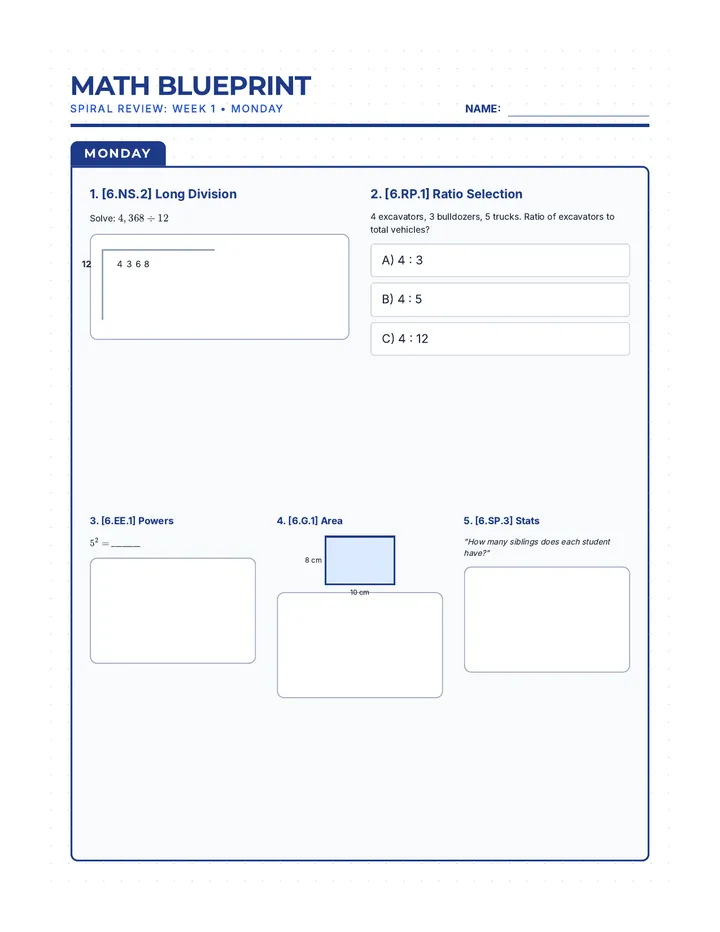
Math Blueprint Week 1 Booklet (Definitive)

Math Blueprint Spiral

A 7-week comprehensive math review sequence designed to prepare 6th-grade students for North Carolina state testing, covering Number Systems, Ratios, Expressions, Geometry, and Statistics.

MK

Michell Kisler

27
Blueprint Basics Slides

Foundational Math Builders

A foundational math sequence for special education students (grades 5-6) focusing on algebraic thinking and spatial reasoning through highly visual, themed units.

JS

Janette Sullivan

37
Inequality Blueprint Student Packet

Algebra Blueprint Series

A 5-lesson Algebra series focused on linear inequalities and systems of equations, designed for 9th-grade special education students with scaffolded instruction, visual aids, and scripted teacher guidance.

D

deeohnny.jackson

18

Lessons

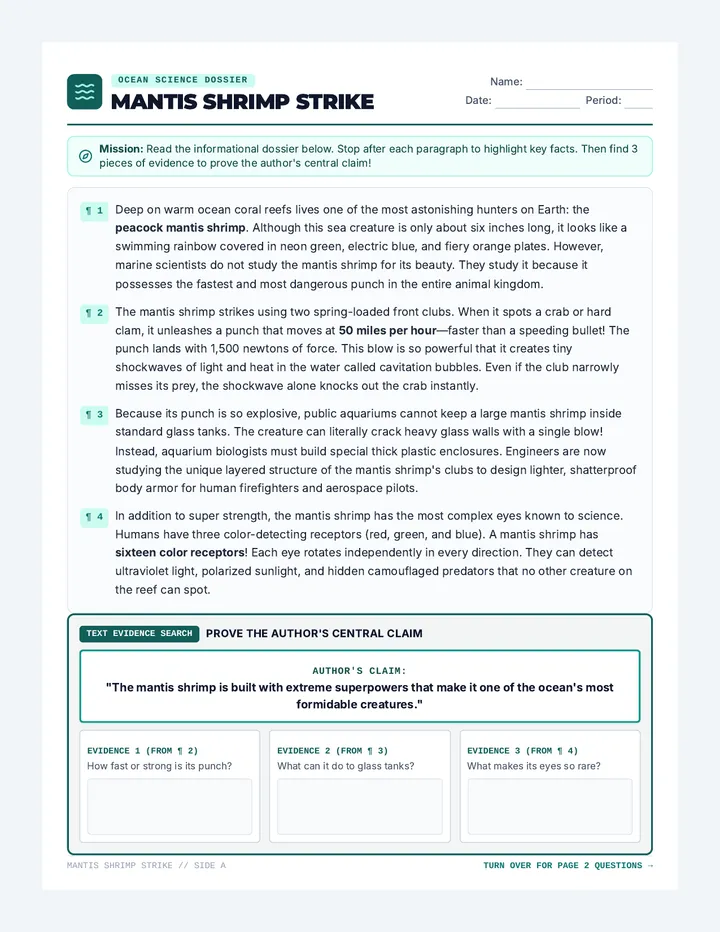
Mantis Shrimp Strike Evidence Worksheet

Sub Day Sleuths

An engaging third-grade substitute teacher lesson pack featuring an informational text evidence investigation and a word-problem-free math logic puzzle.

KS

Kathleen Suther

9
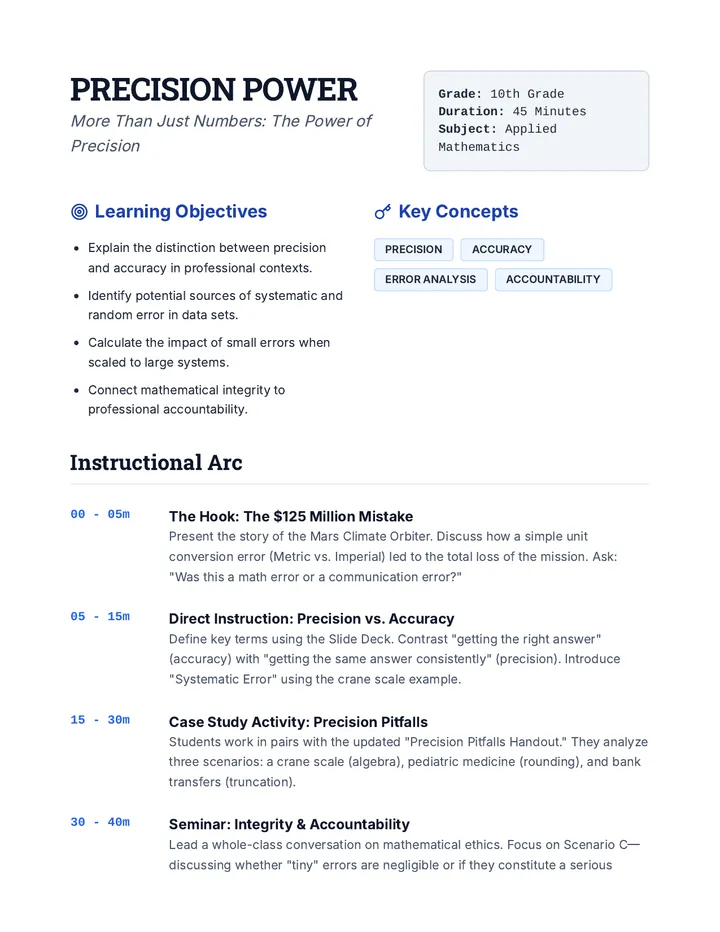
Precision Power Lesson Plan

Precision Power

A 45-minute exploration into why mathematical precision and accuracy are critical for professional success, ethical accountability, and real-world safety. Students analyze high-stakes scenarios where small errors led to significant consequences.

J

jtoomey

8
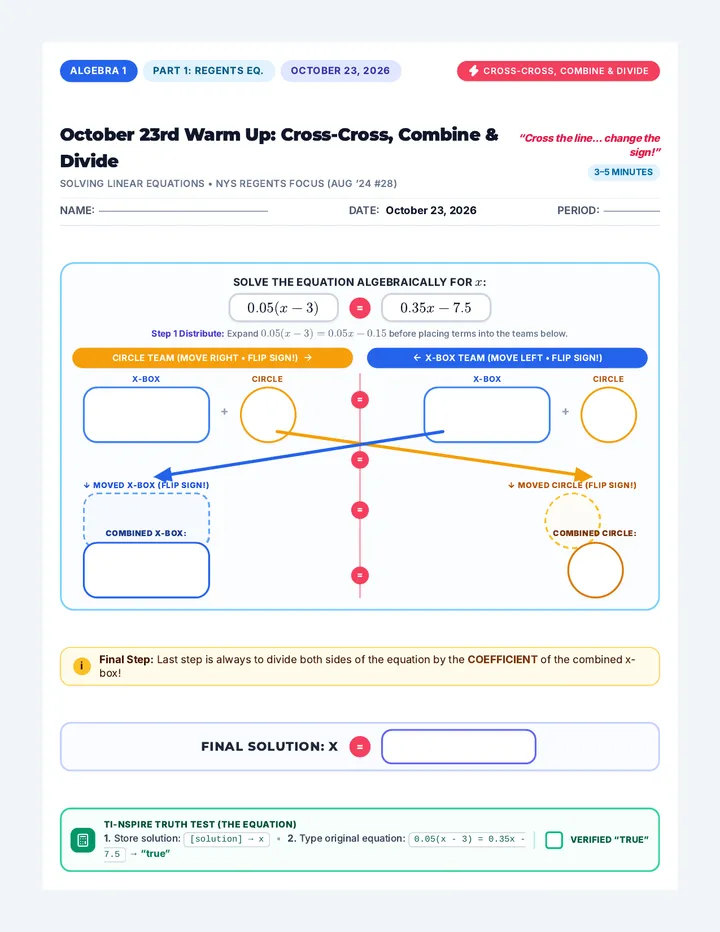
Cross Cross Combine Warmup

Cross Cross Equations

A focused algebra toolkit for mastering multi-step linear equations using the 'Cross-Cross, Combine & Divide' visual method. Includes Regents exam warm-ups and a reusable master graphic organizer template.

H

Harlston

7
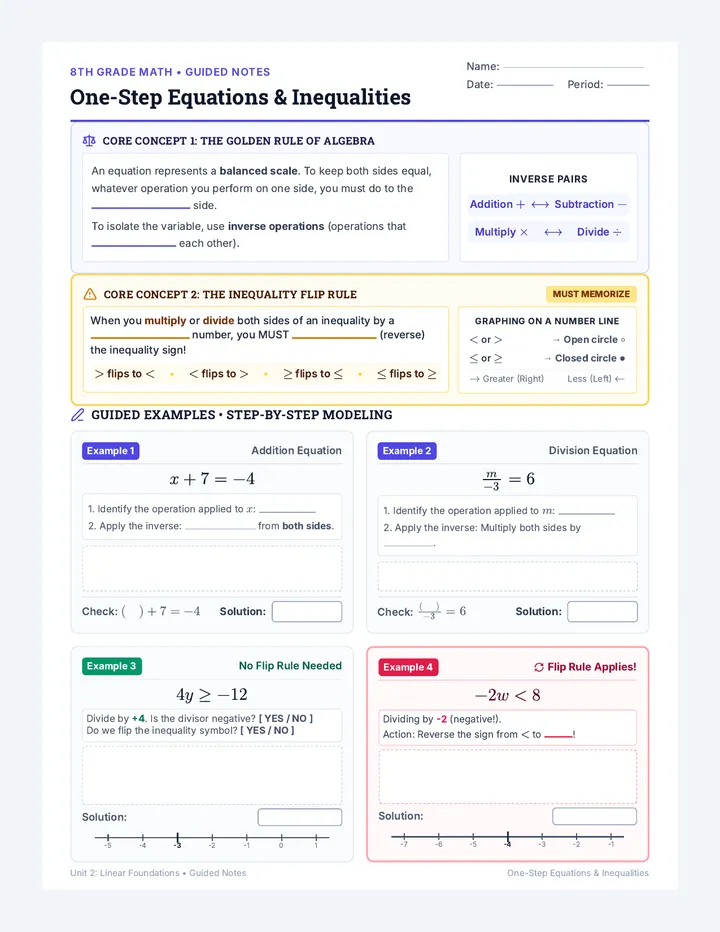
One Step Guided Notes

Balance Battles

An 8th-grade algebra unit covering foundational single-variable linear equations and inequalities, progressing from one-step operations to two-step solutions and number line graphing.

R

remenhiser

8
Algebra II Final Exam Test

Algebra II Spring Final Exam

A comprehensive Algebra II final exam covering quadratics, function operations, inverses, exponent rules, and polynomial division.

BF

Ben Freitag

2
Mission Satisfaction Slides

Mission Satisfaction

A secret agent-themed lesson where students master identifying which value satisfies a one-step equation through deduction and mental math.

TR

tim ryan

3