A Regents-style practice worksheet for Week 5, focusing on exponential growth vs. linear growth, and identifying and writing sequence formulas.
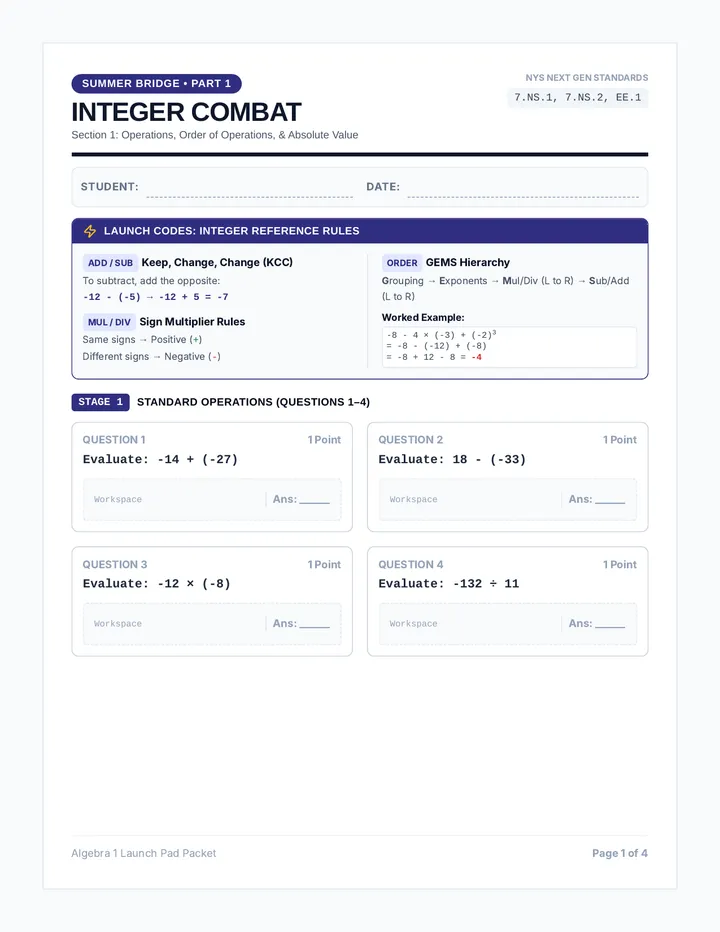
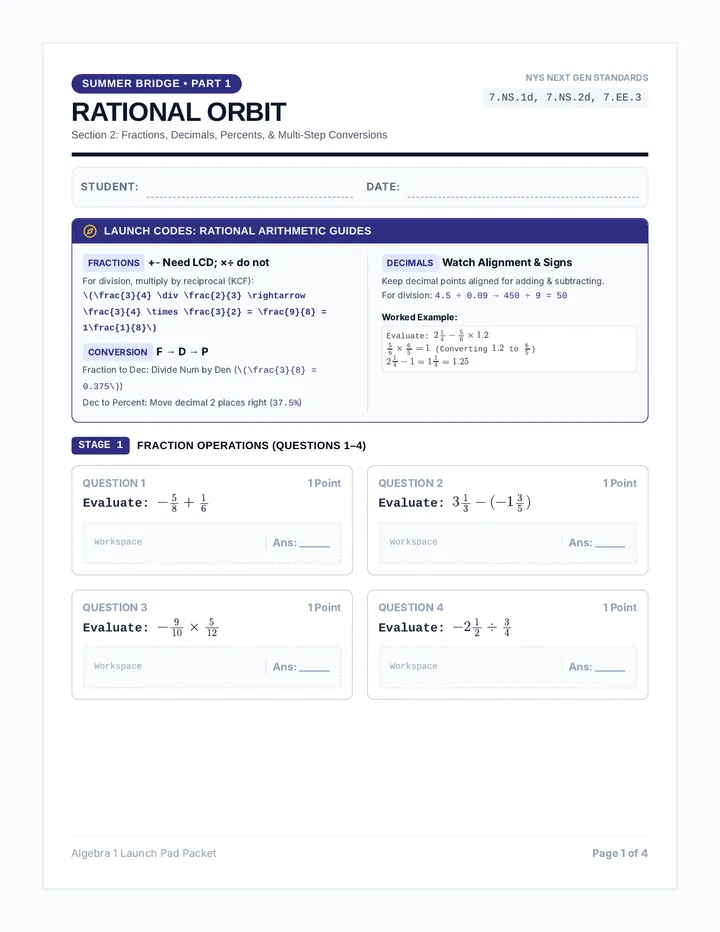
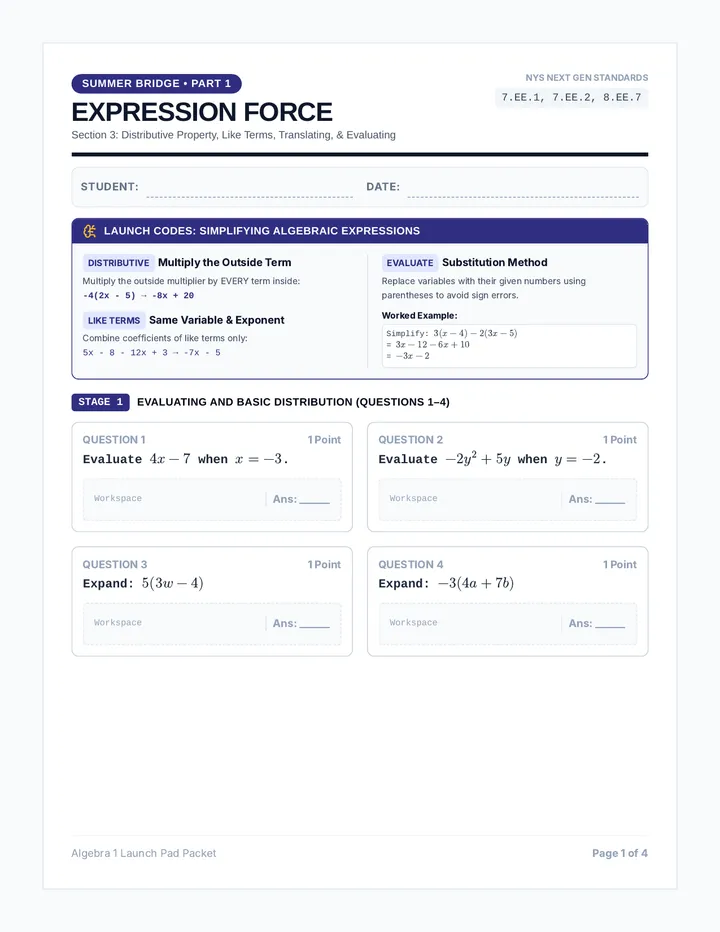
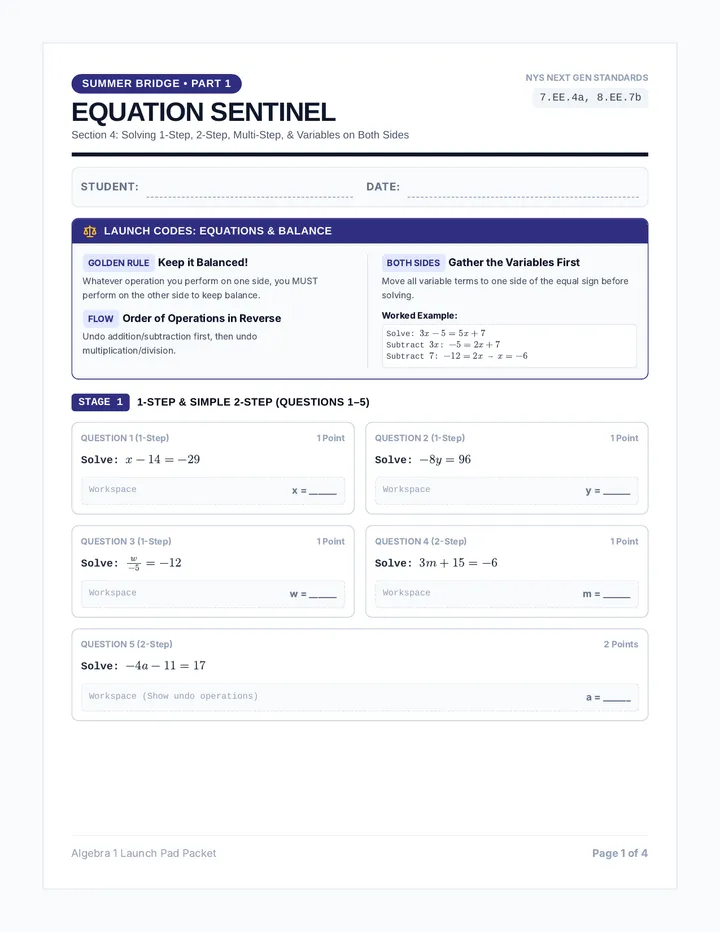
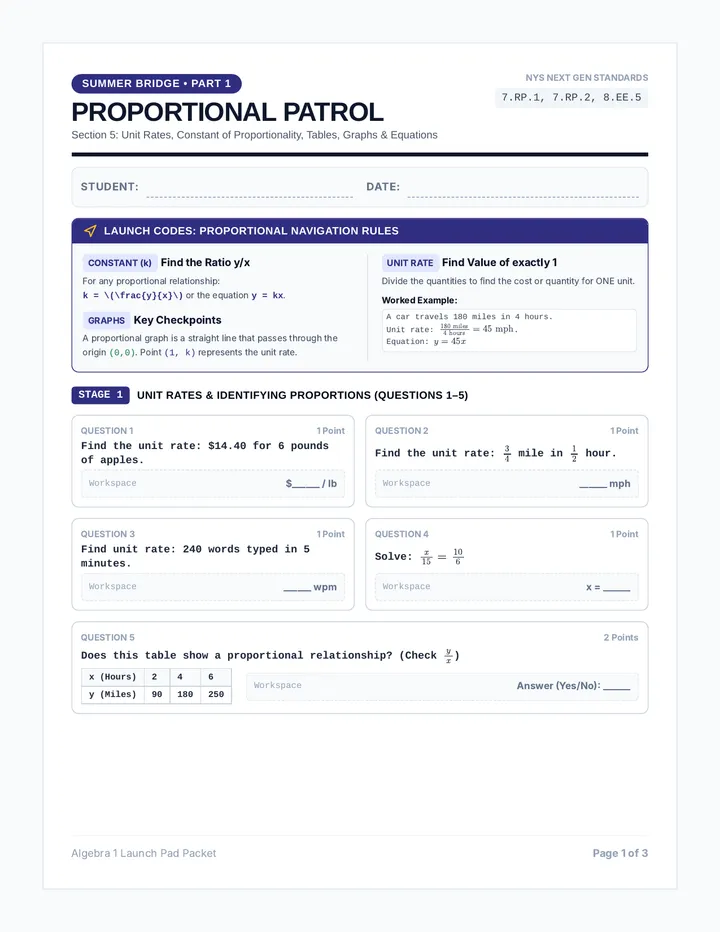
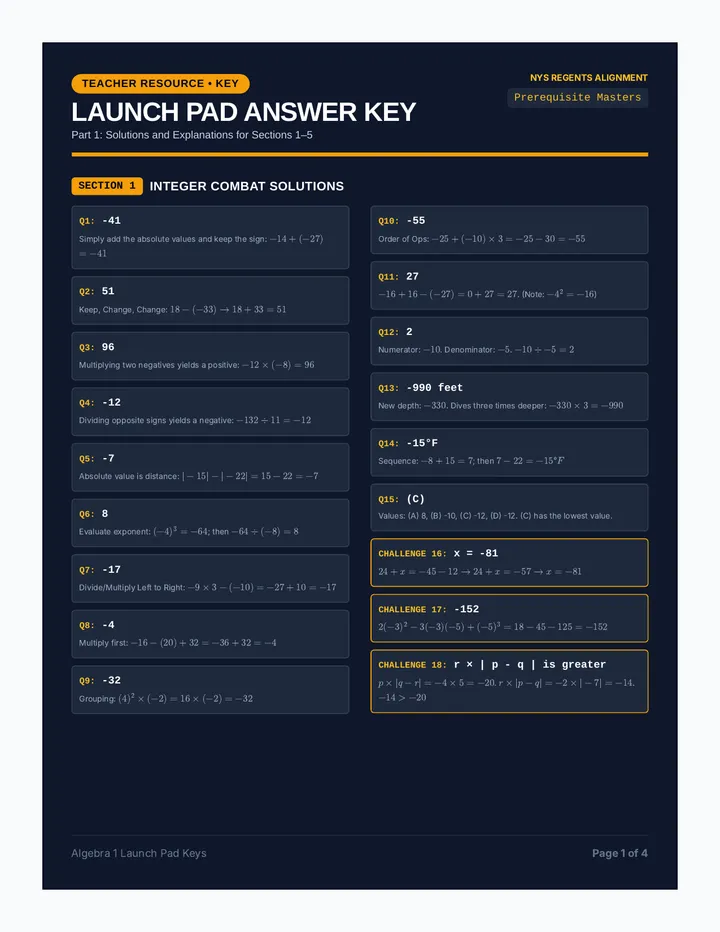
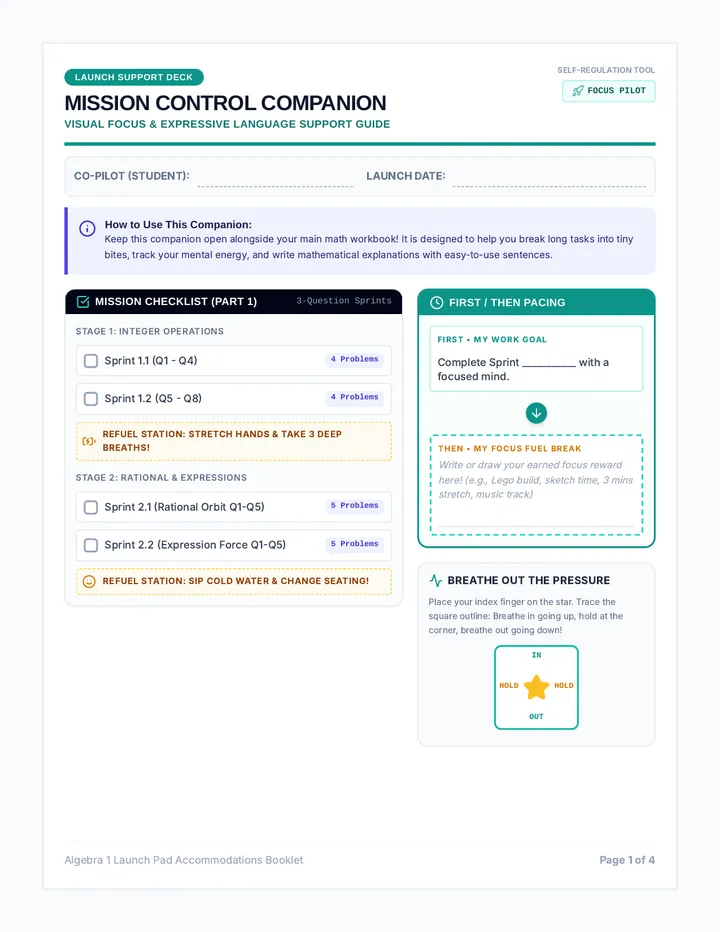
A comprehensive summer bridge workbook for rising 8th graders transitioning to Algebra 1. Contains review of prerequisite topics, advanced pre-algebra skills, real-world application, and an Algebra Escape Challenge.
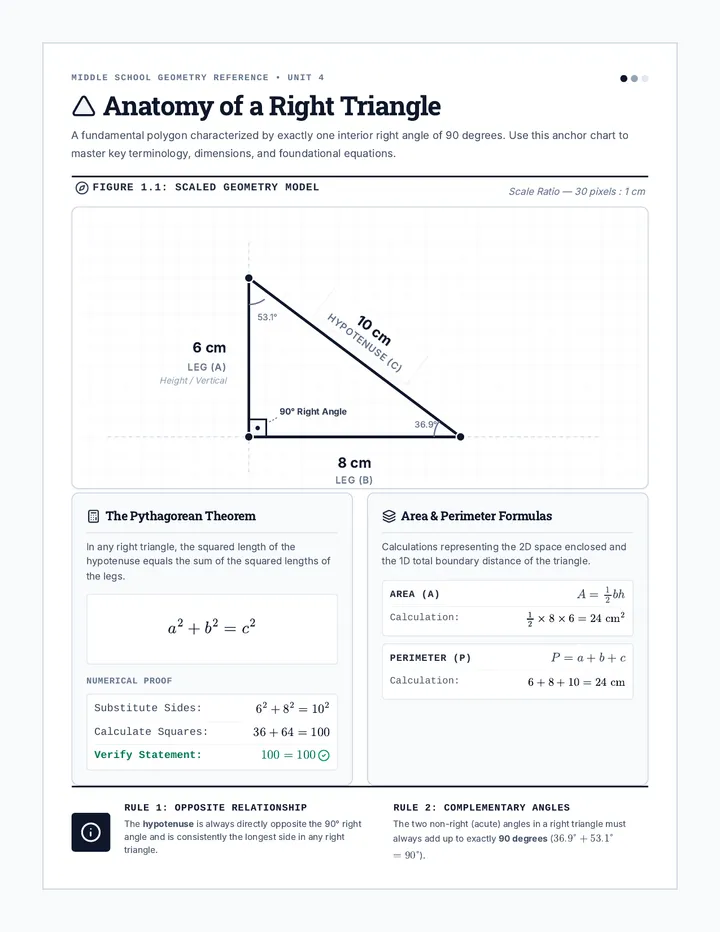
An introductory lesson exploring the properties, parts, and key formulas of right triangles for middle school students.
A clean, textbook-style reference anchor chart of a 6-8-10 right triangle, illustrating the legs, hypotenuse, right angle, and essential formulas like the Pythagorean Theorem.
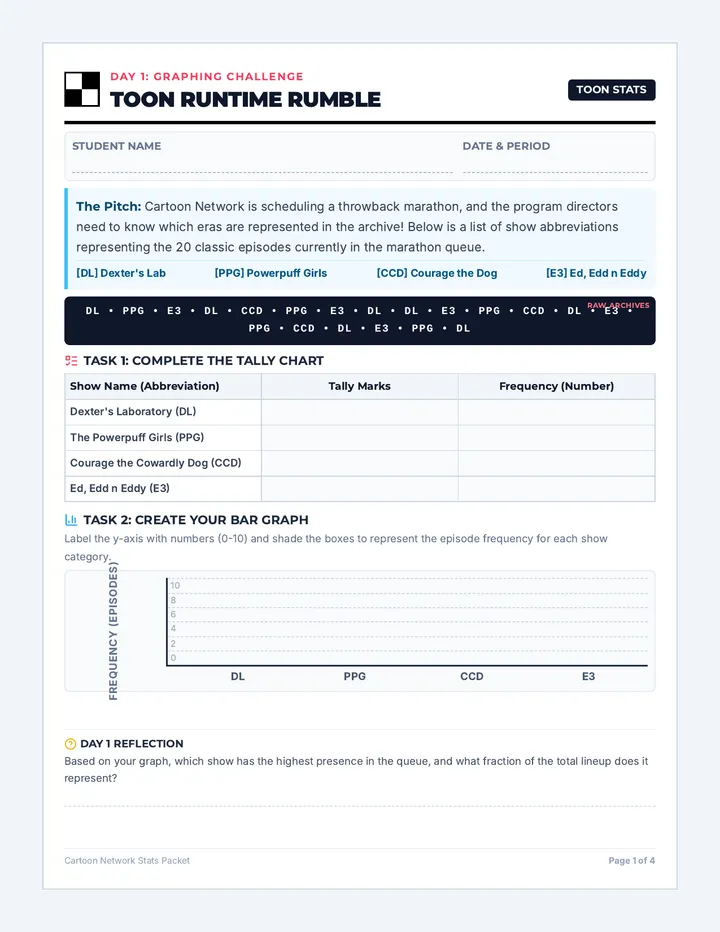
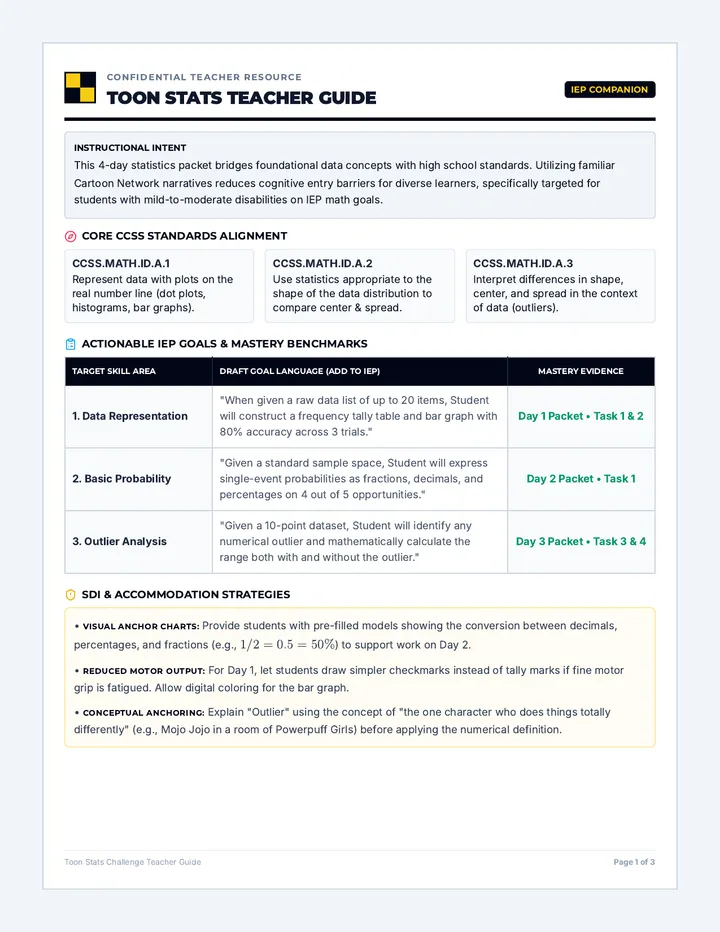
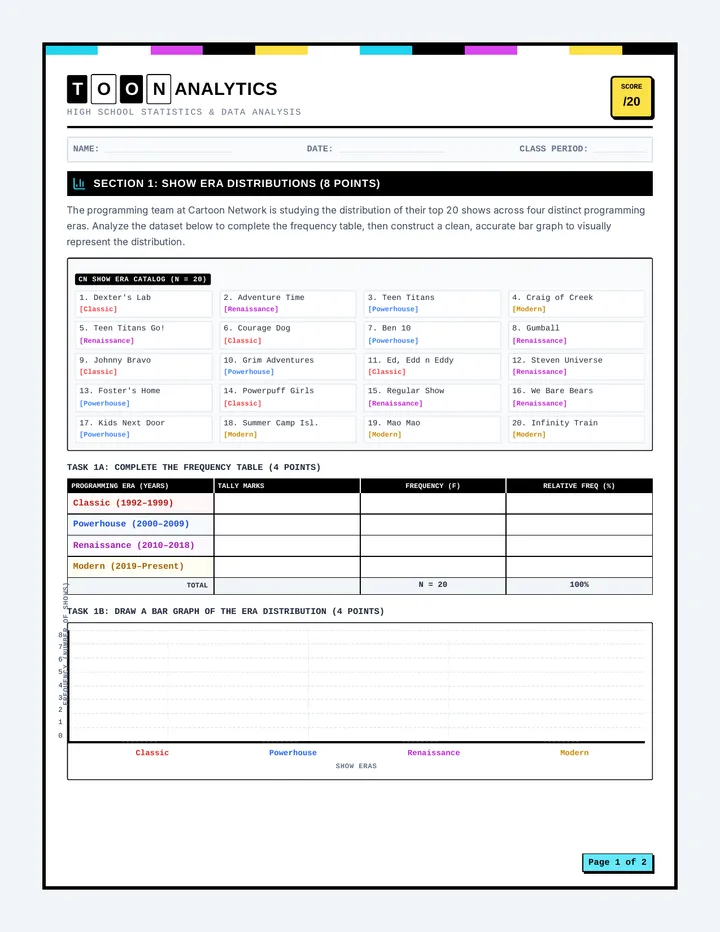
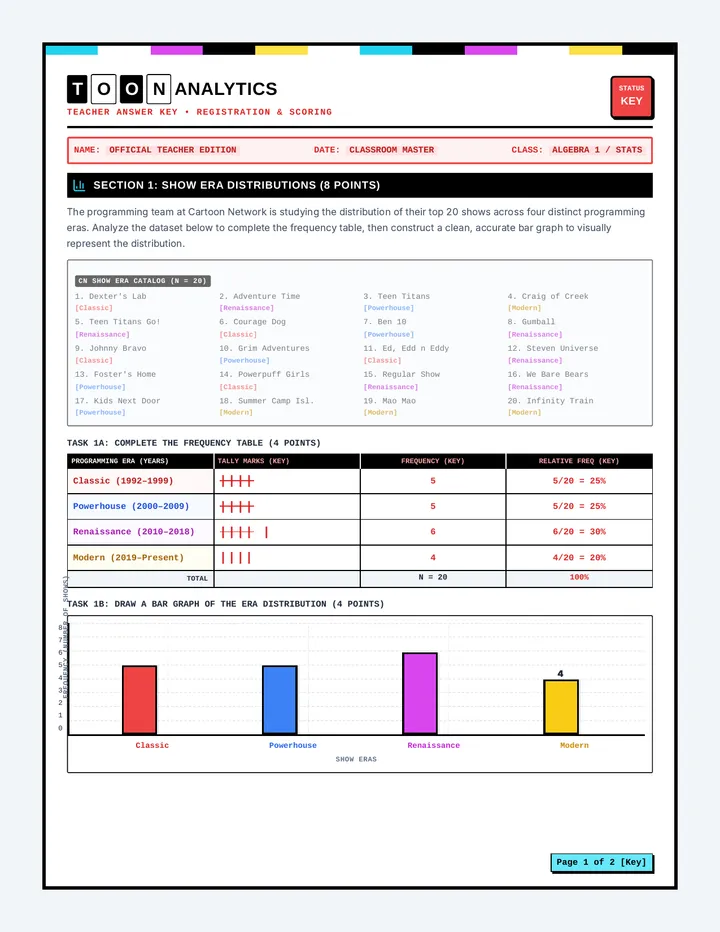
A four-day statistics packet using Cartoon Network shows to teach tallying, graphing, probability, range, and outliers, complete with a comprehensive teacher guide for IEP tracking.
A comprehensive three-page teacher guide and answer key for the Toon Stats Challenge. Page 1 details IEP alignment and accommodation trackers; Page 2 provides standard-aligned keys for Day 1 and 2; Page 3 provides keys for Day 3 and 4. This version features larger, clearer text sizes.
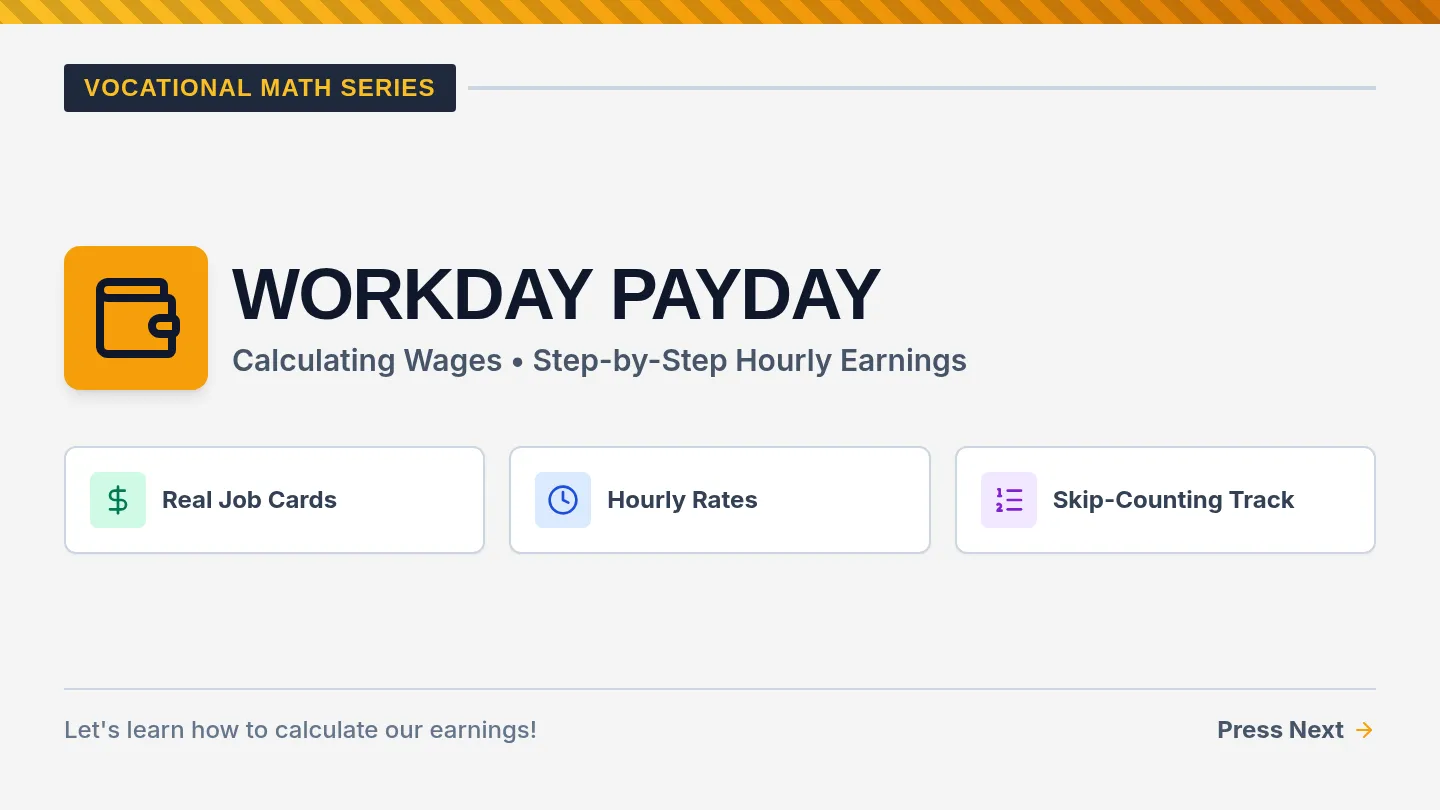
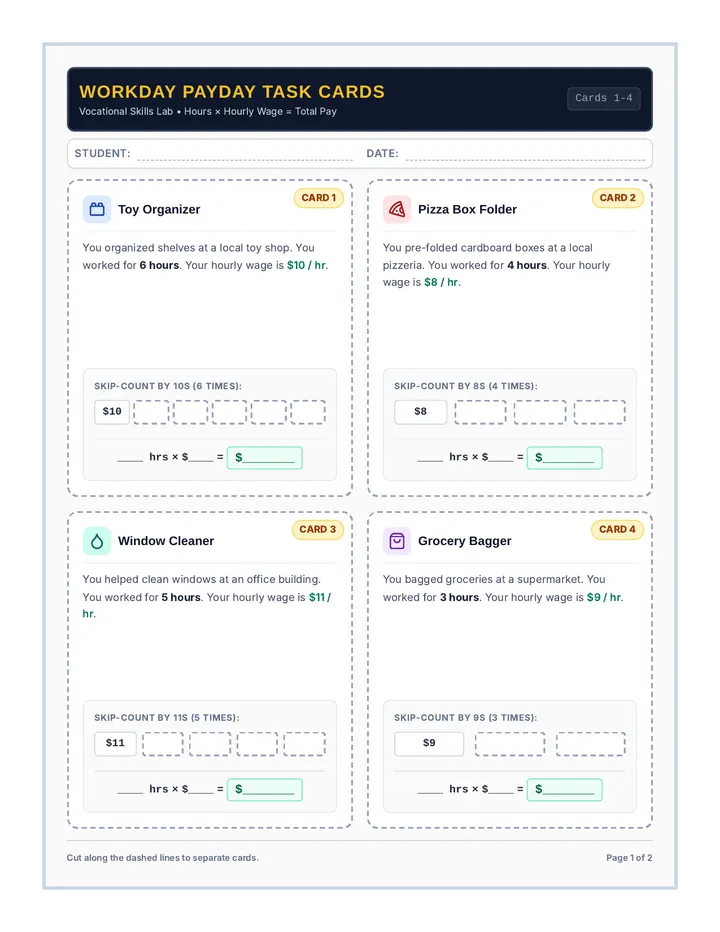
A practical vocational math lesson where students learn to calculate daily earnings by multiplying hours worked by hourly wages. Designed with real-world job-card contexts and supported by structured visual skip-counting.
A four-day printable student worksheet packet themed around Cartoon Network shows. Covers tallying and bar graphs on Day 1, probability and likelihood on Day 2, range and outliers on Day 3, and a cumulative review assessment on Day 4. This version features further increased text sizes (sm and base) for maximum readability and accessibility.
A high school statistics lesson that applies concepts of data representation, probability, and outlier analysis to Cartoon Network shows across different eras.