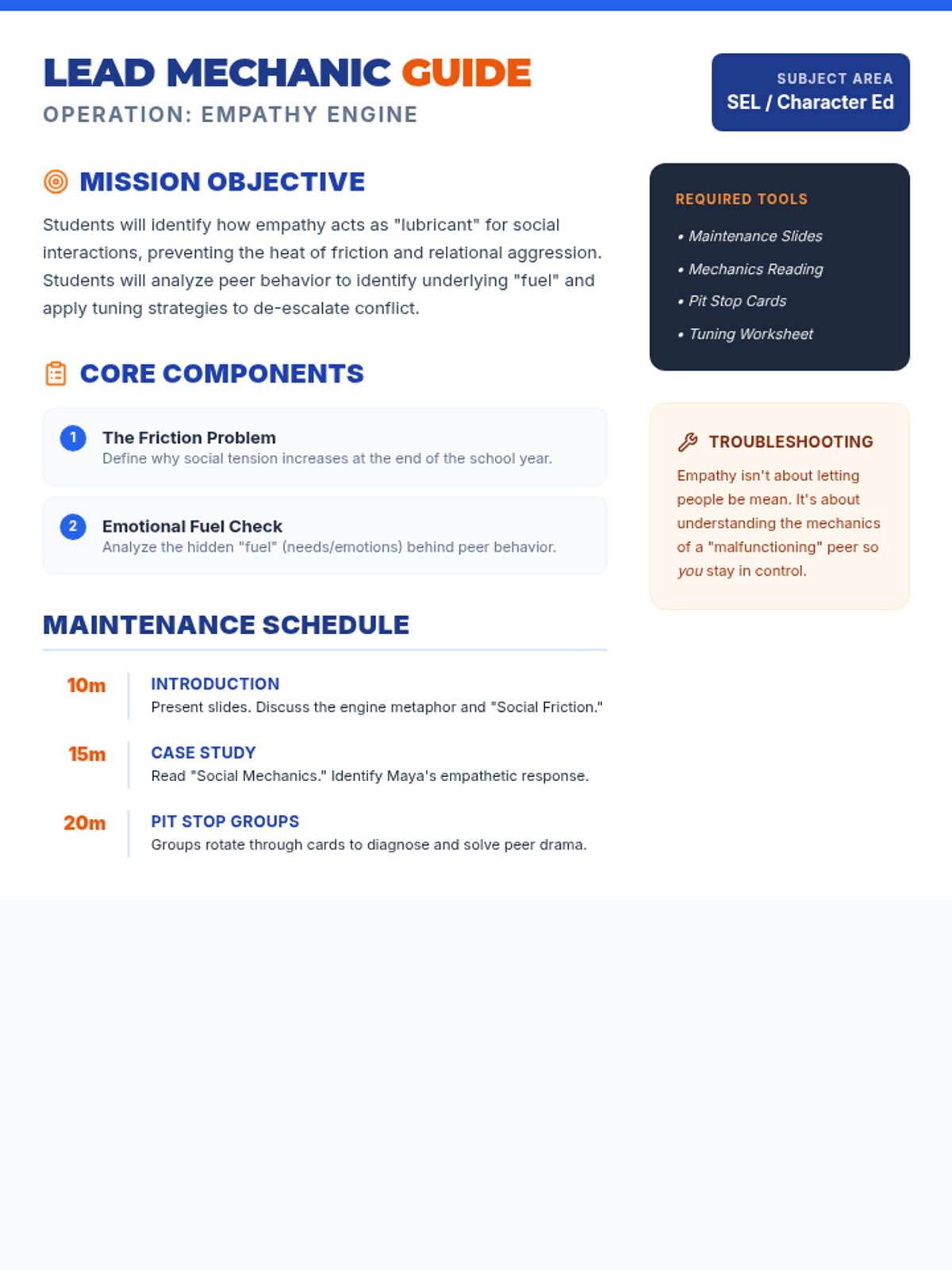
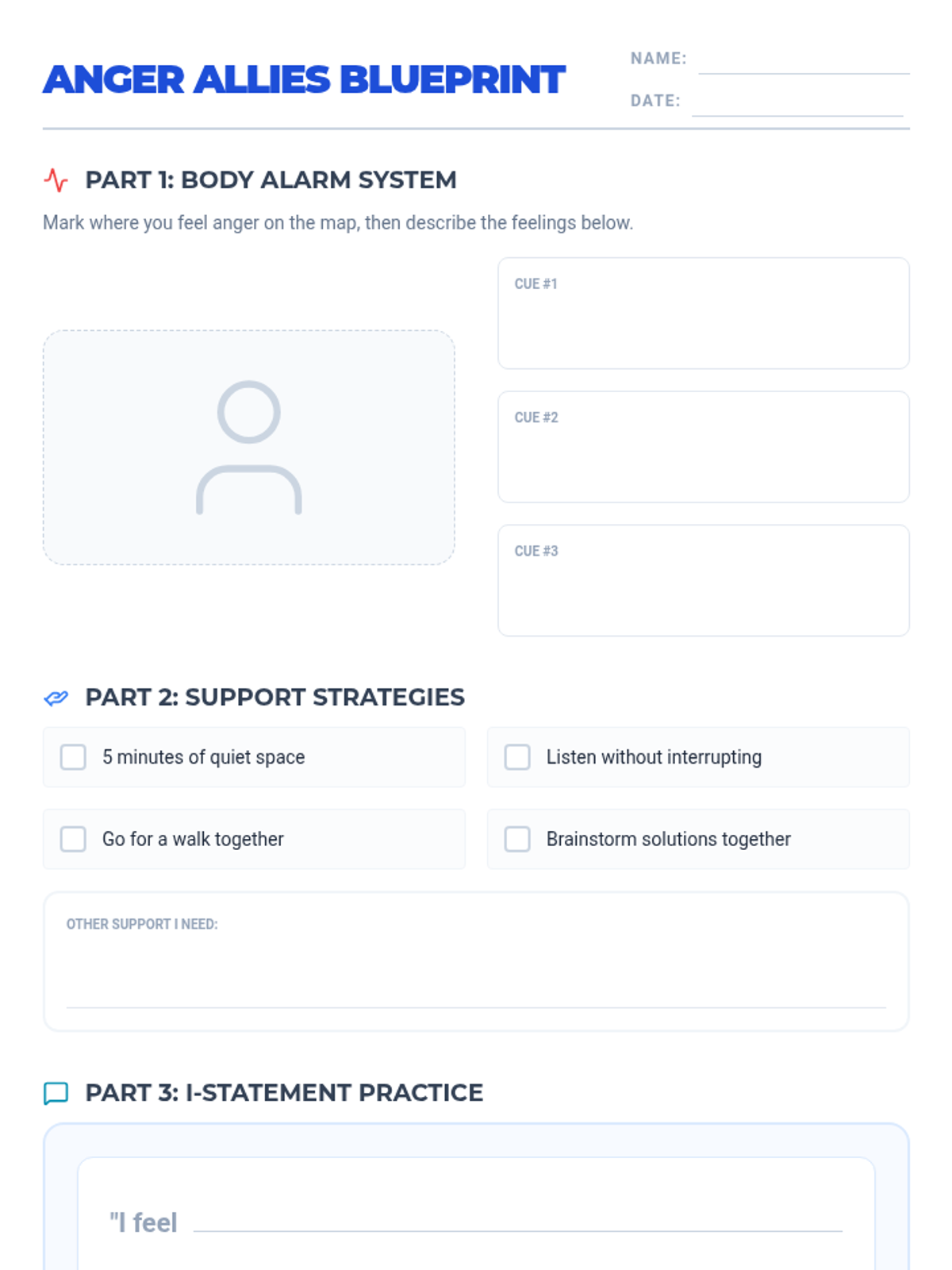
A visual reference sheet for students that defines the three social concepts using analytical, tech-themed language. Perfect for students who prefer logical or systems-based thinking.
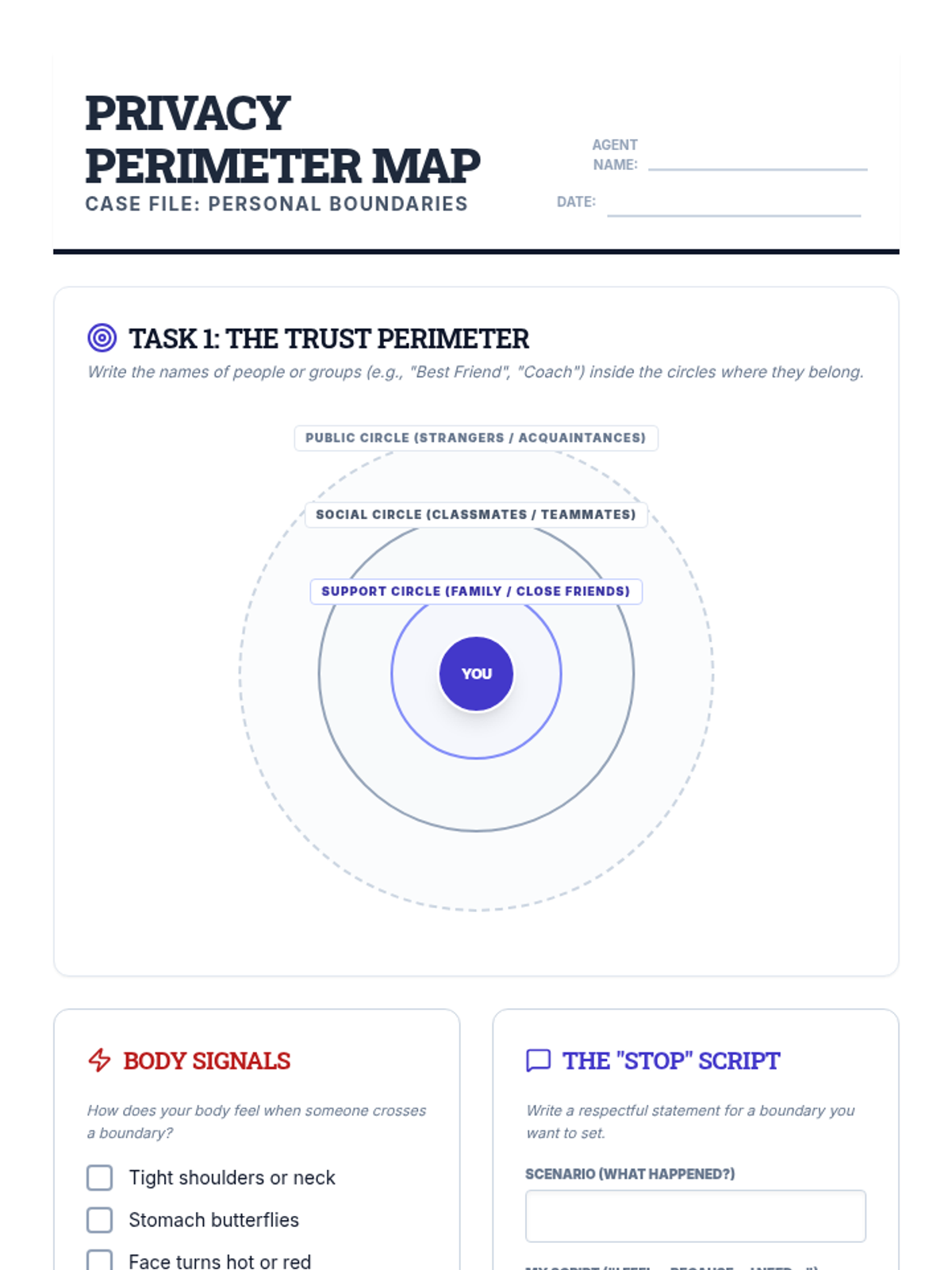
A student worksheet for identifying personal boundaries, featuring a 'Circles of Trust' mapping activity, a checklist for bodily signals of boundary violations, and a section for practicing assertive communication.
A visually striking presentation for a group session on boundaries, featuring definitions, types of boundaries (physical, emotional, digital), and scenario-based discussion prompts with a 'confidential agent' theme.
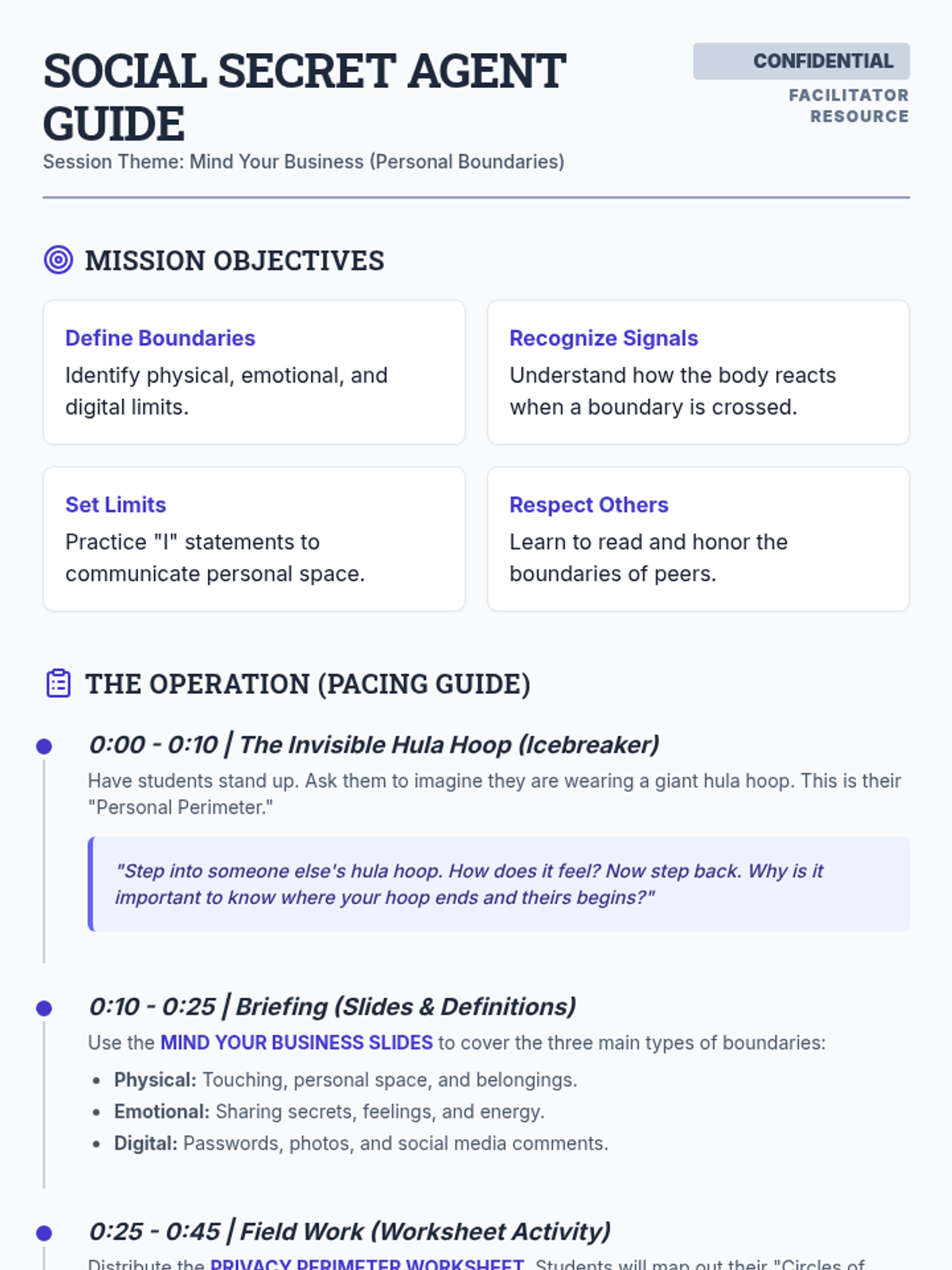
A facilitator guide for a group counseling session on boundaries, featuring a pacing guide, icebreaker activities, and discussion prompts with a 'confidential agent' theme.
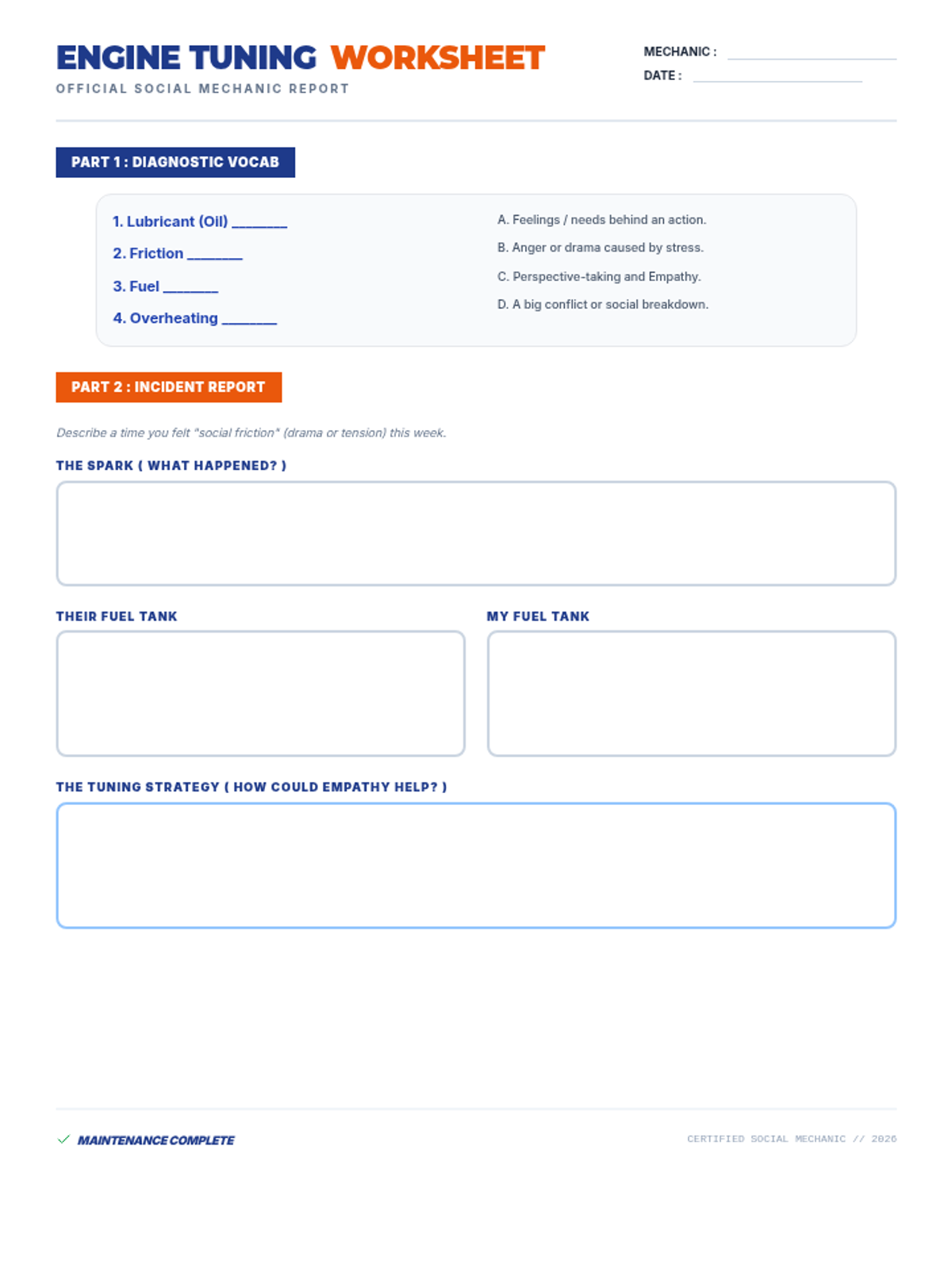
A student worksheet for individual reflection and application of the 'Empathy Engine' metaphor, featuring vocabulary matching and a personal incident report to practice perspective-taking.
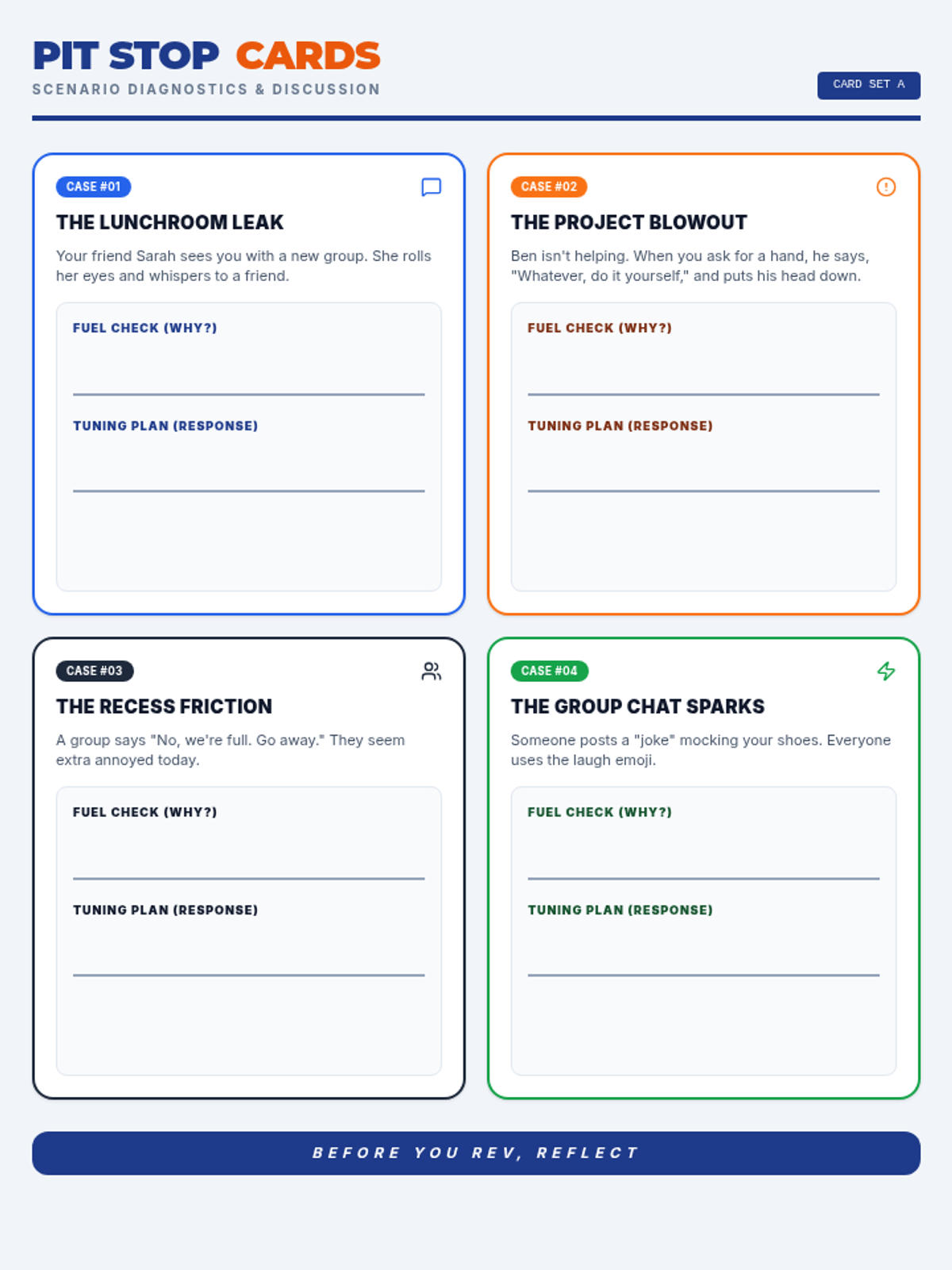
A set of four scenario cards designed for group discussion, prompting students to diagnose social friction in common peer conflicts and propose empathetic solutions.
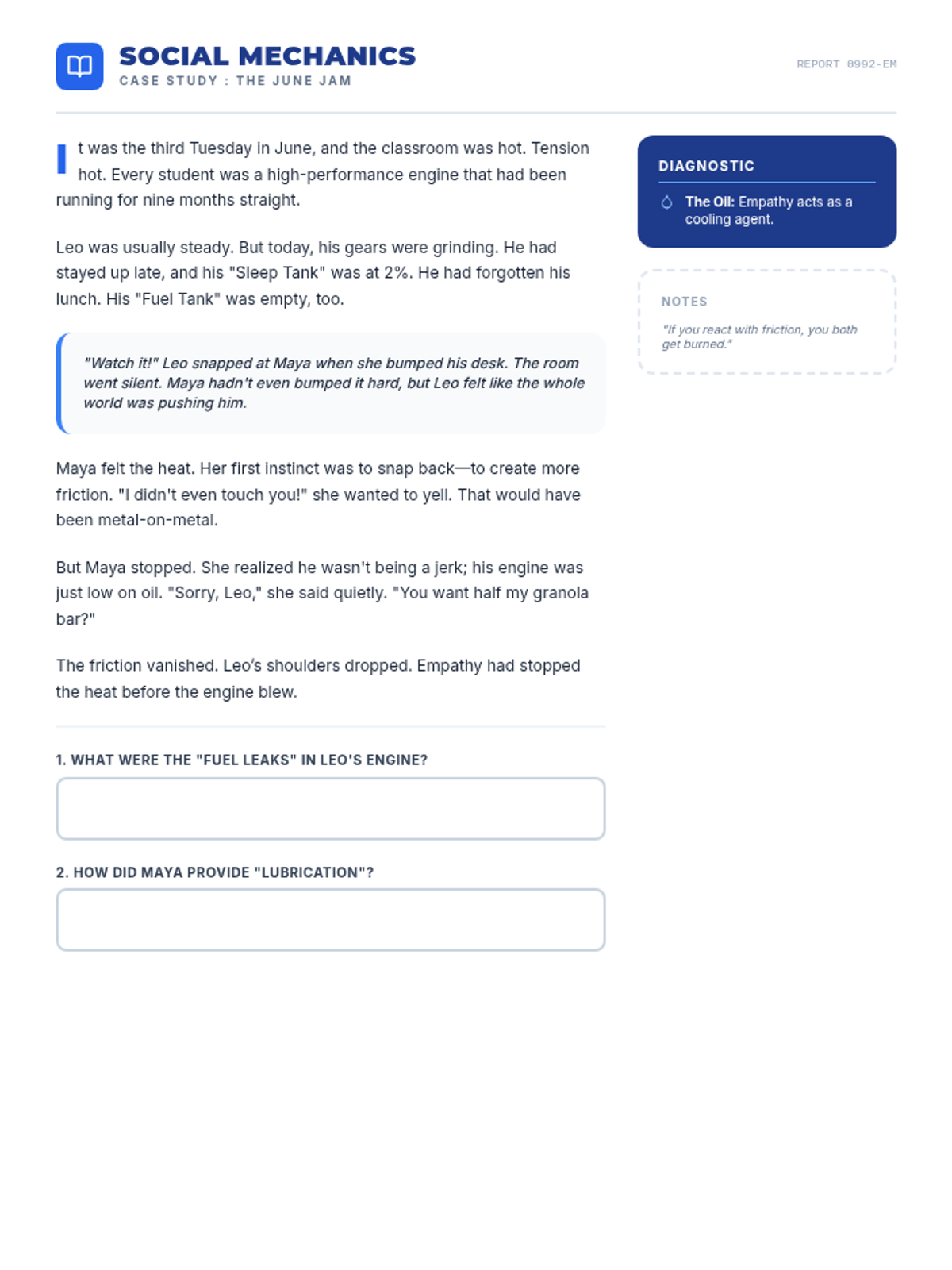
A student-facing reading passage titled 'Social Mechanics' that uses a narrative scenario to illustrate the concept of social friction and how empathy can de-escalate peer conflict.
A visual slide deck that introduces the 'Empathy Engine' metaphor, explaining social friction, the role of empathy as lubrication, and providing a diagnostic checklist for students to analyze peer behavior.
A comprehensive teacher guide for the Empathy Engine lesson, outlining learning objectives, terminology using the mechanical metaphor, and a step-by-step instructional procedure to address end-of-year social friction.
A student worksheet for identifying personal anger cues, selecting parent support strategies, and practicing I-statements. Revised to fit on a single page with improved layout and icons.