An activity where students plot raw behavioral data onto a scatterplot and analyze temporal trends and environmental triggers to identify "hot zones" of behavior.
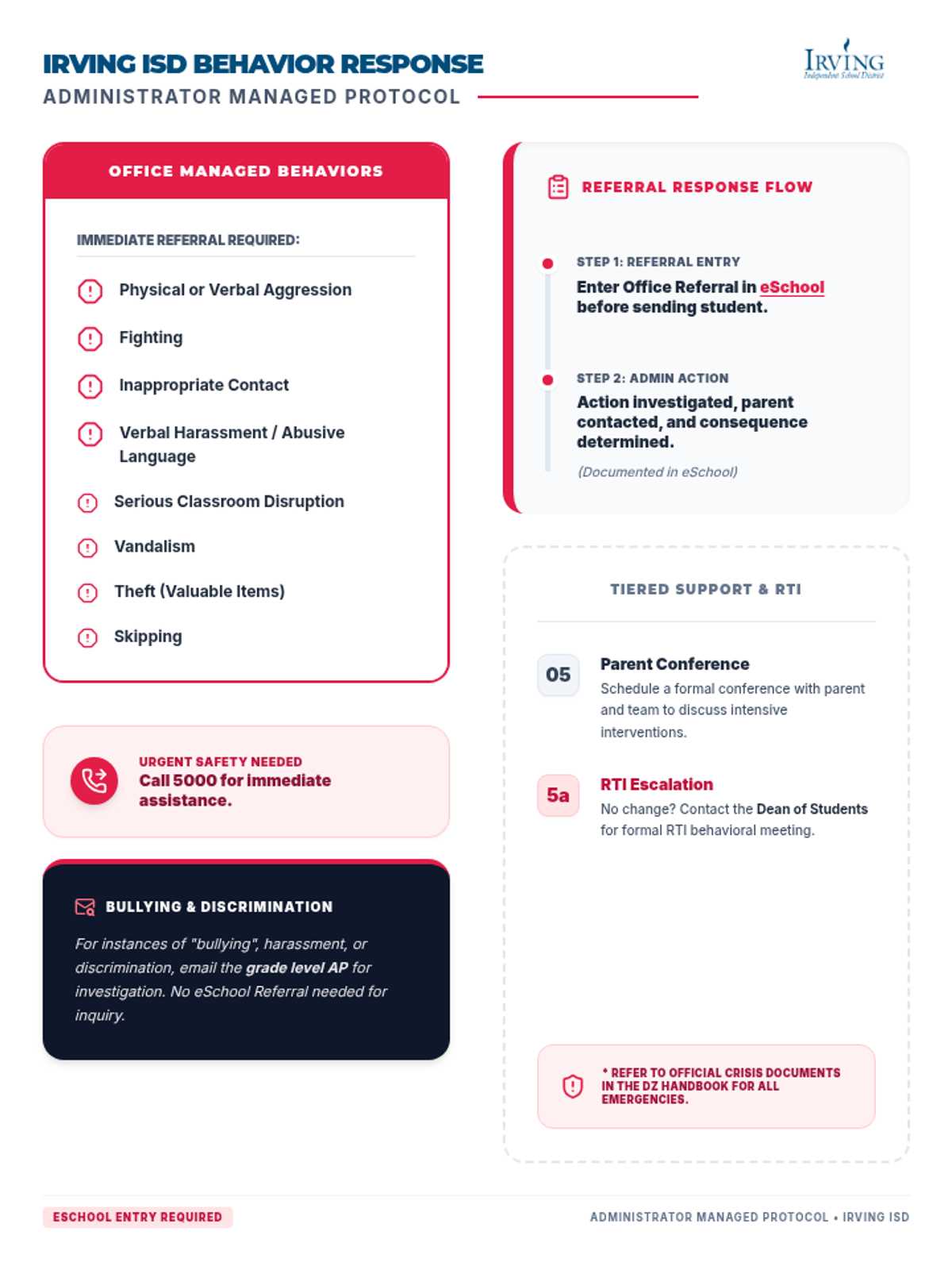
The Administrator Managed Protocol page of the Irving ISD Behavior Response handbook, detailing major behaviors and the referral response flow. Revised for better layout and cohesion.
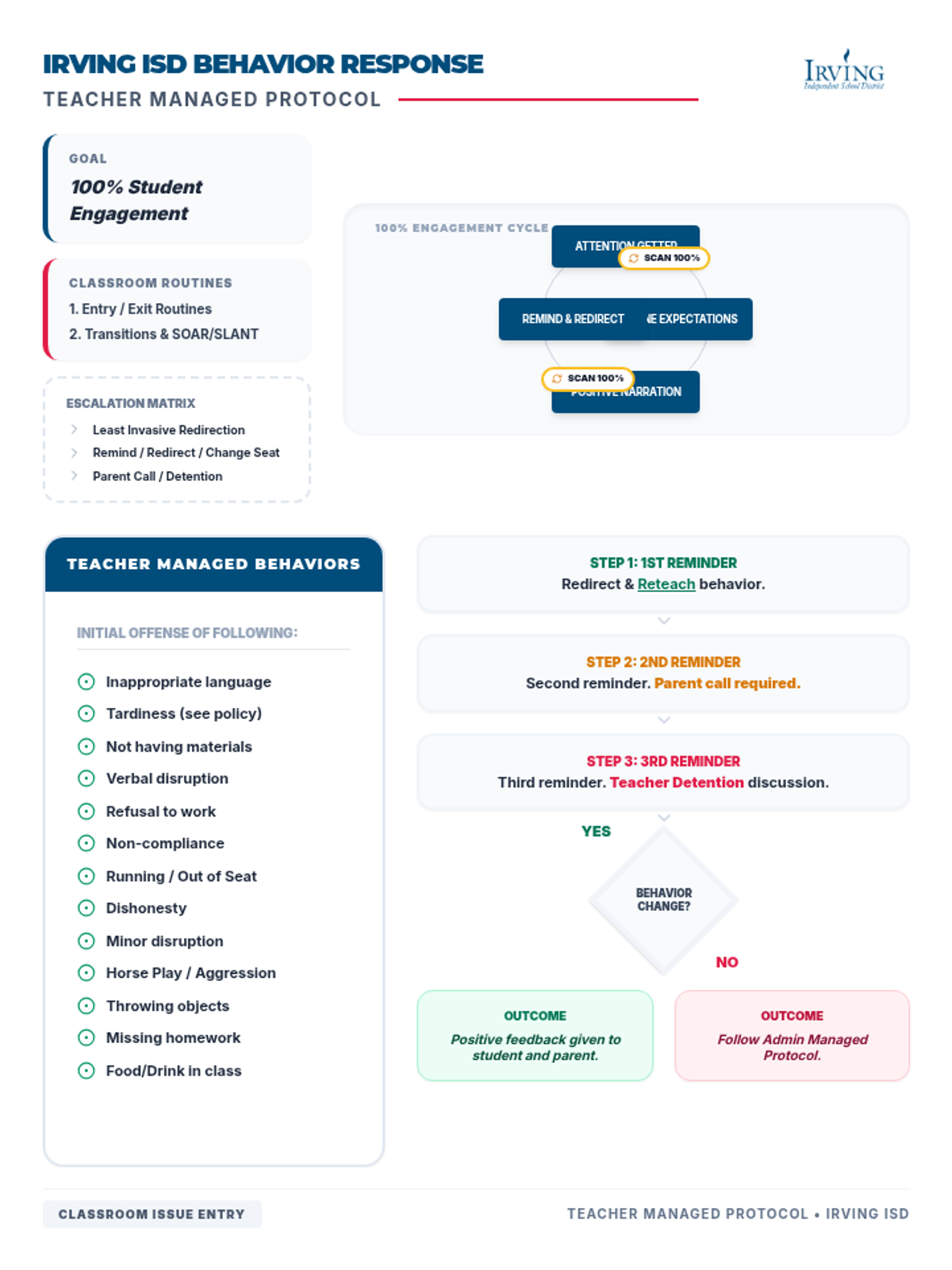
The Teacher Managed Protocol page of the Irving ISD Behavior Response handbook, outlining initial offenses, classroom routines, and the sequential response flowchart. Revised for better alignment and contrast.
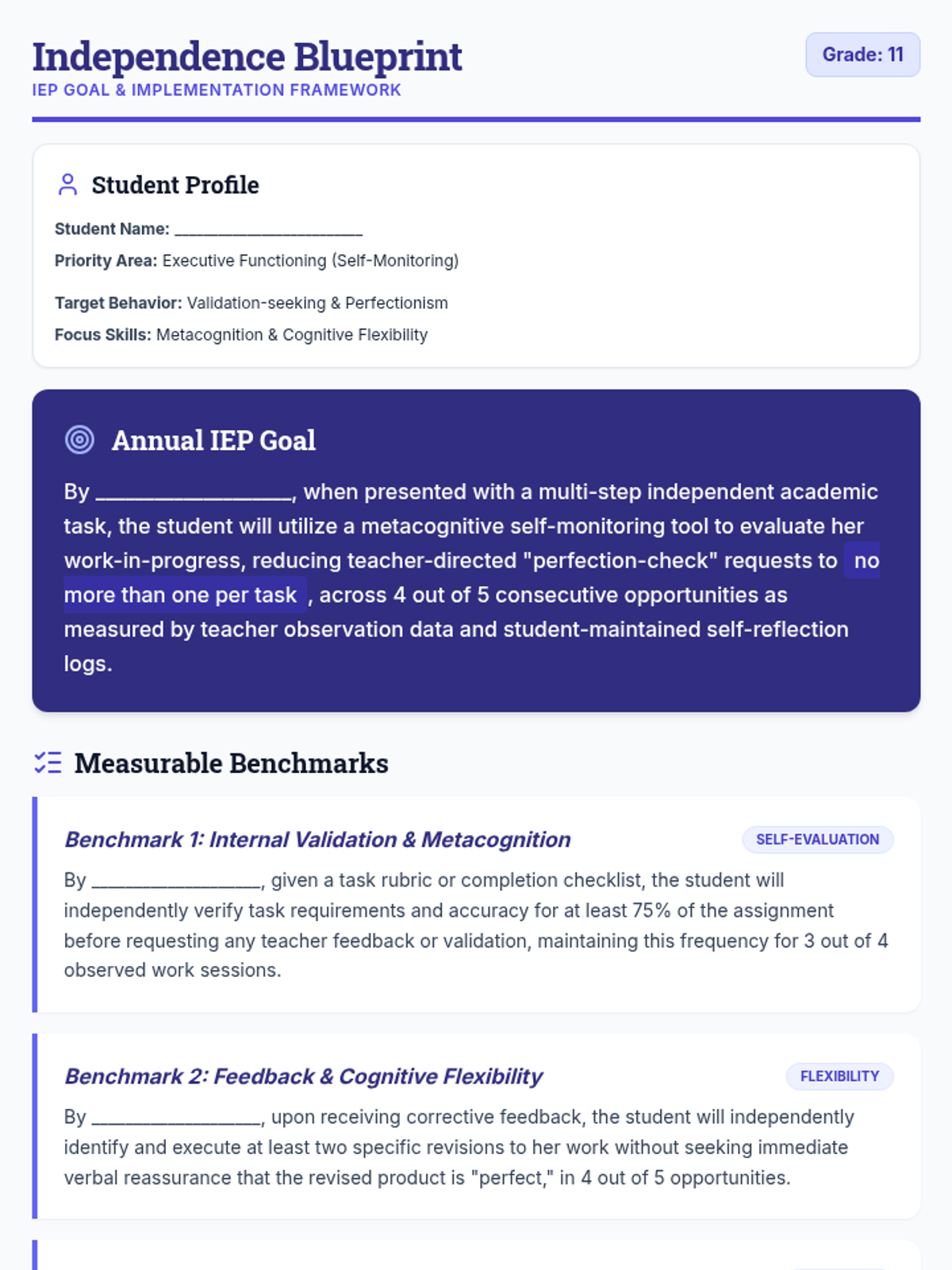
A comprehensive IEP Goal Blueprint for an 11th-grade student focusing on self-monitoring, reducing perfectionism-based validation seeking, and improving cognitive flexibility. Includes a primary annual goal and four specific, measurable benchmarks.
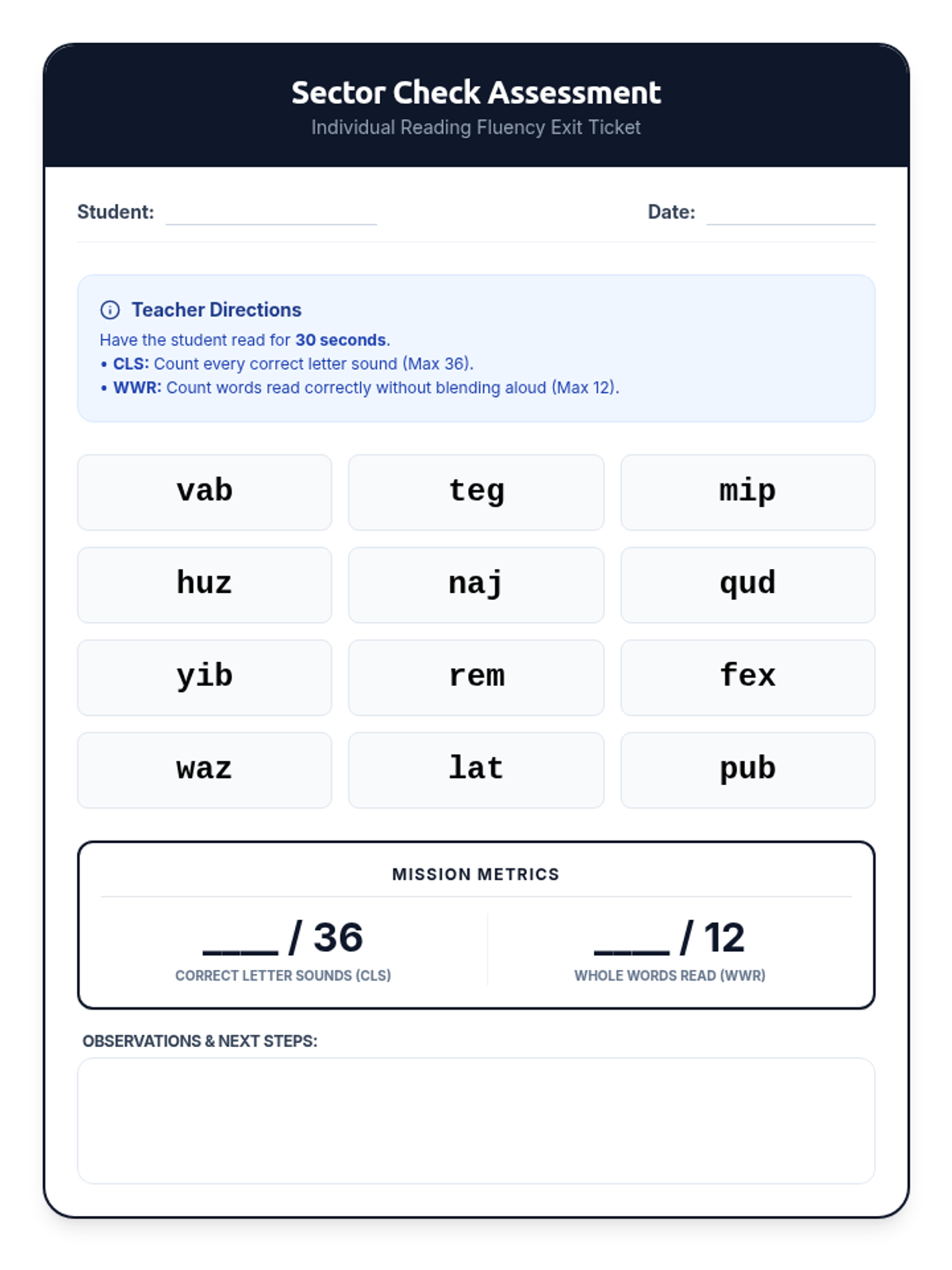
A quick assessment tool to track student progress in nonsense word fluency, specifically measuring correct letter sounds and whole words read during a 30-second sprint.
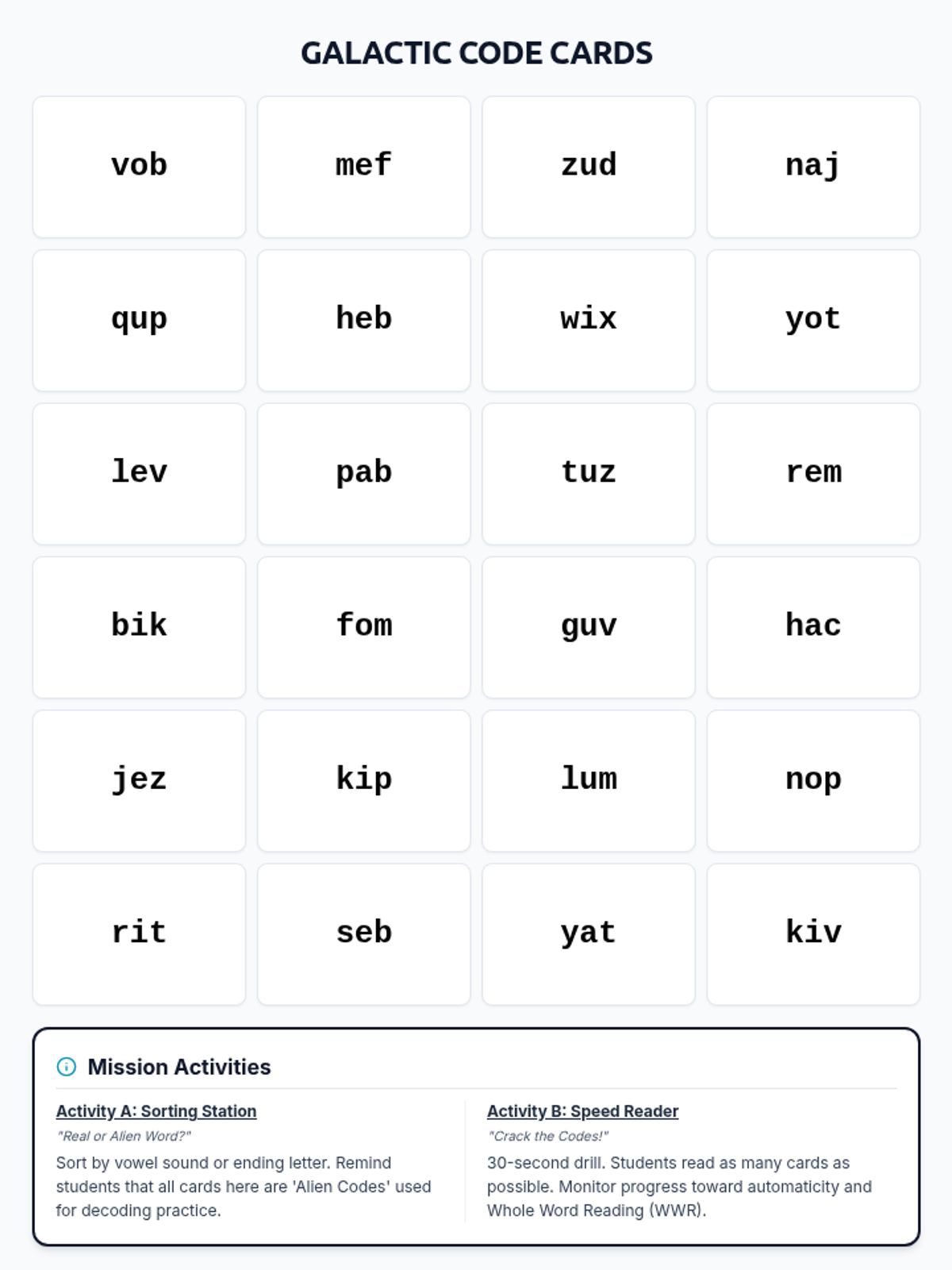
A set of printable flashcards containing CVC nonsense words for hands-on sorting activities and fluency drills.
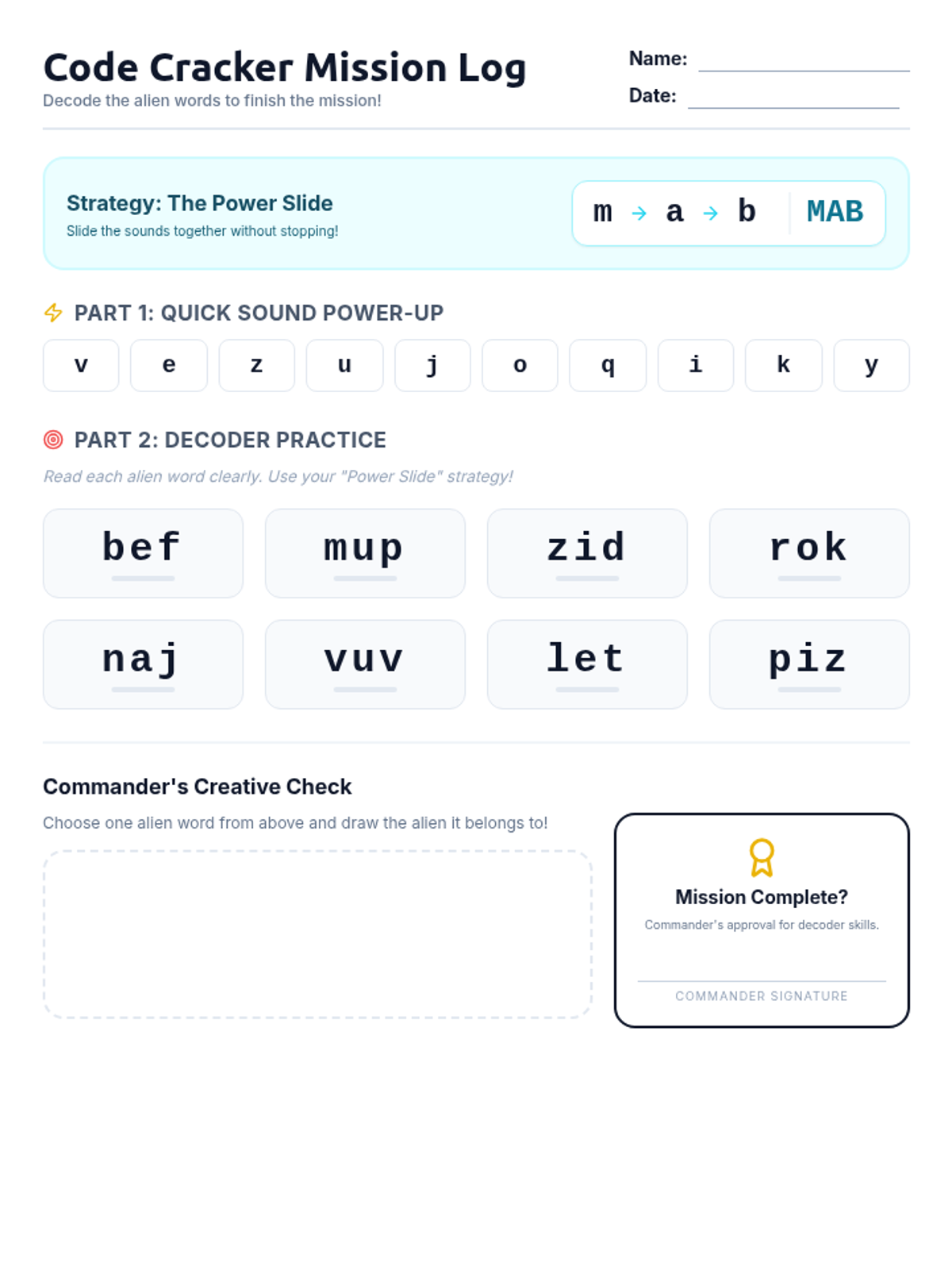
A student practice worksheet featuring sound warm-ups, a nonsense word reading grid, and a creative drawing space to maintain engagement while practicing CVC decoding.
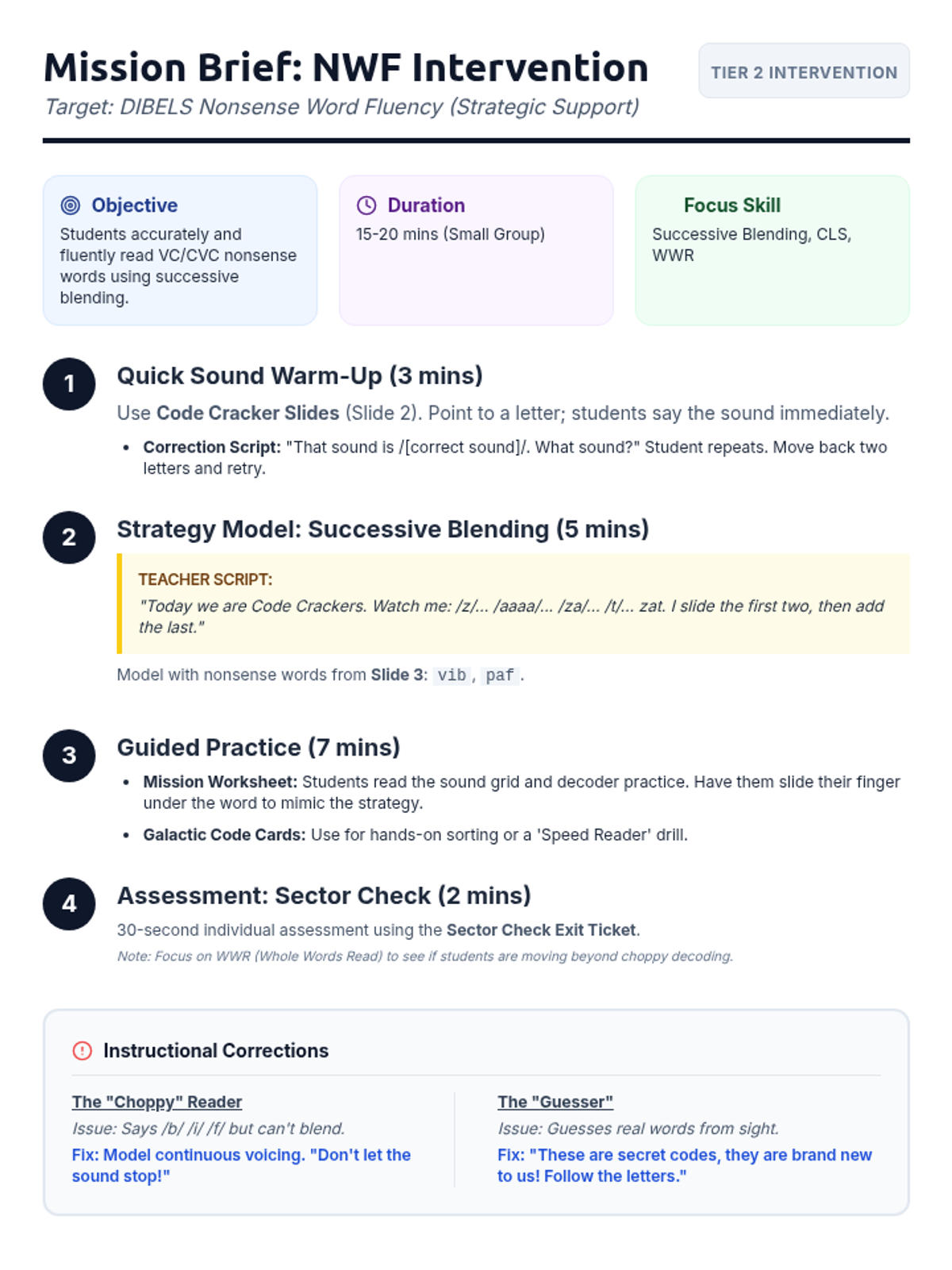
A detailed facilitation guide for teachers leading a small-group intervention on nonsense word fluency, including scripts, corrective feedback strategies, and lesson pacing.
A space-themed slide deck for nonsense word fluency intervention, featuring progressive blending drills and a successive blending strategy model.
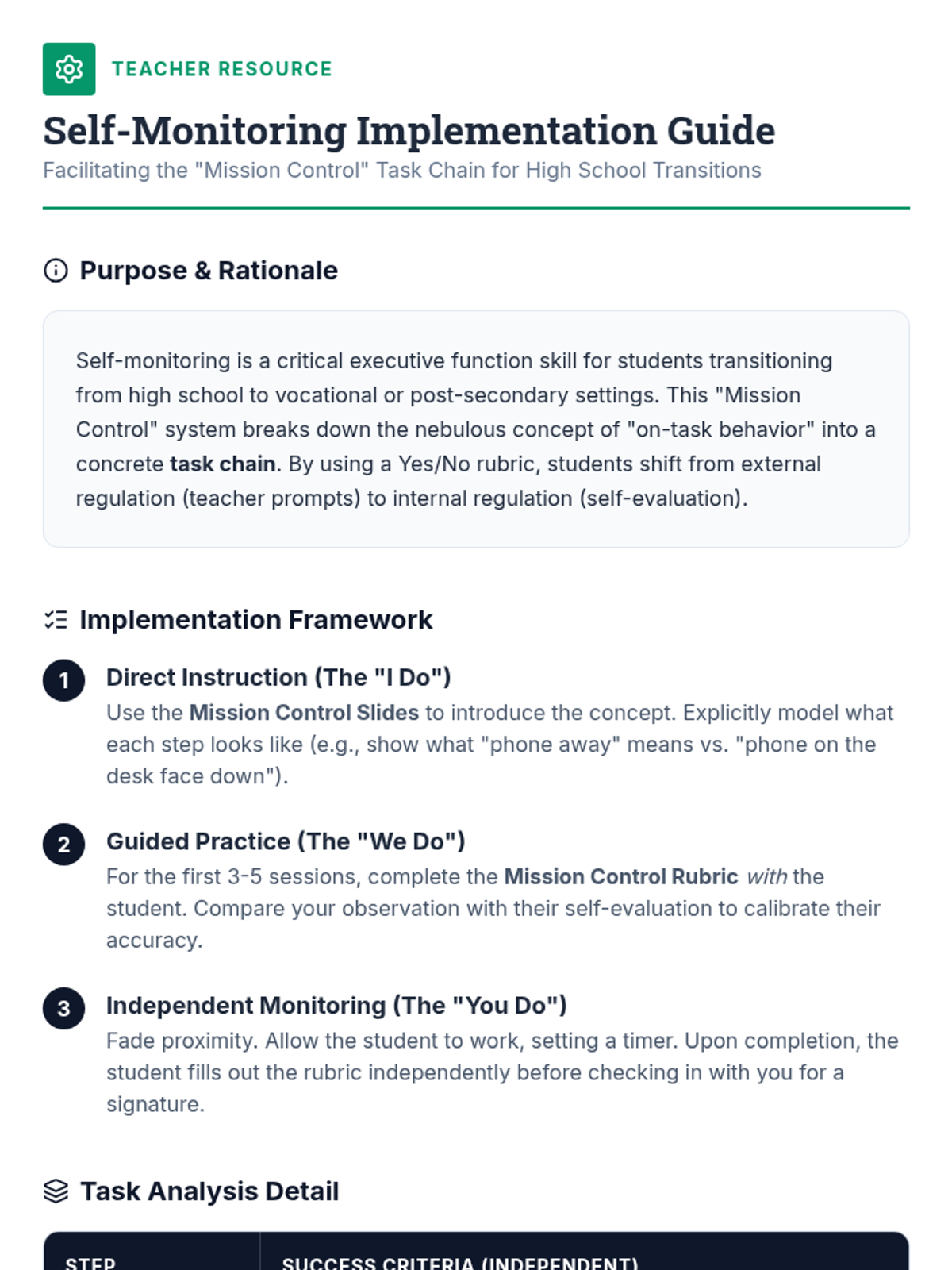
A teacher-facing guide providing instructional strategies, a detailed task analysis, and troubleshooting tips for implementing the self-monitoring rubric.
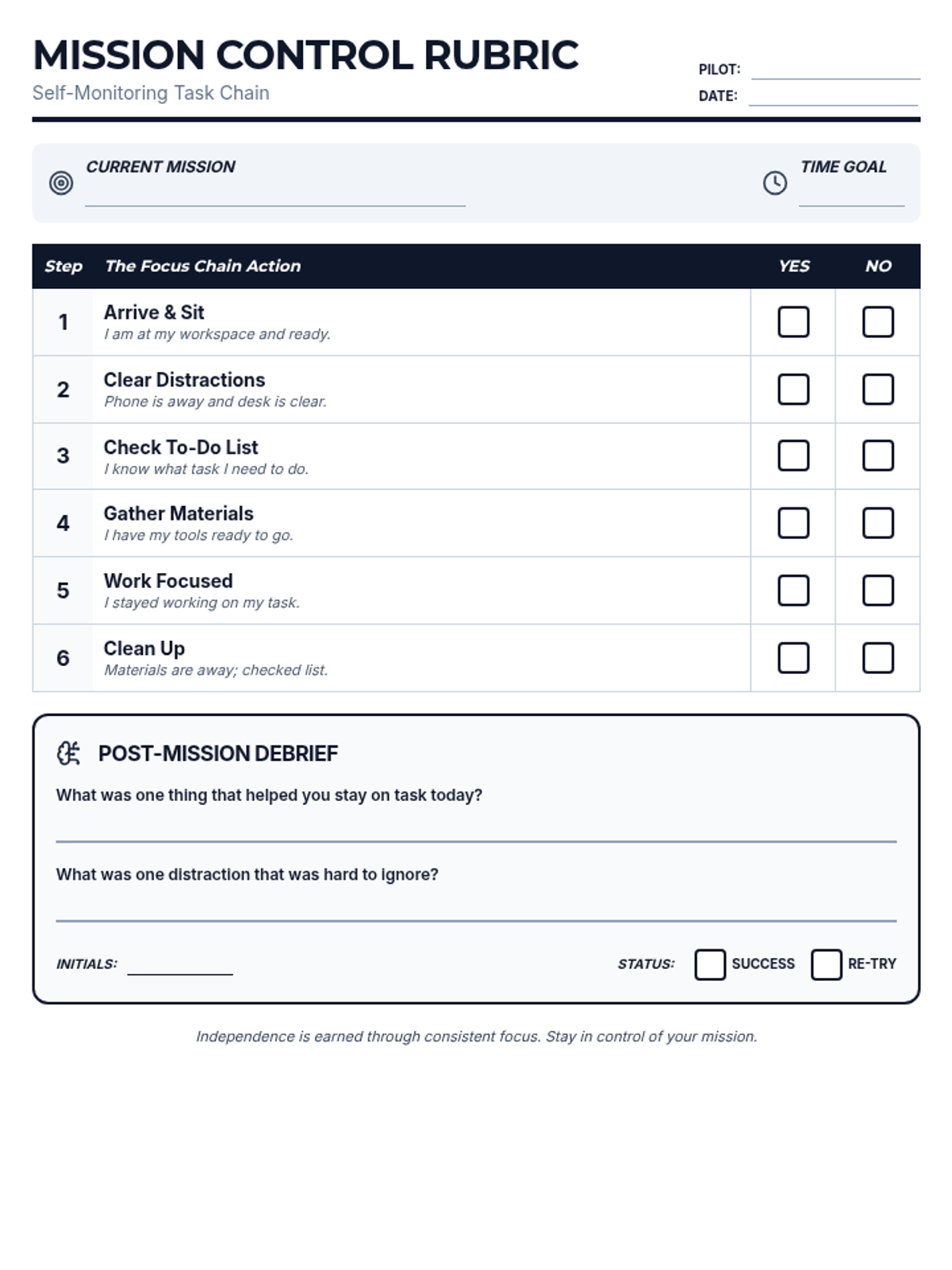
A printable Yes/No self-evaluation rubric for high school students to monitor their "on-task" behavior through a broken-down task chain.
A visual slide deck designed for high school students to explain the "Mission Control" task chain for on-task behavior and how to self-monitor using a rubric.