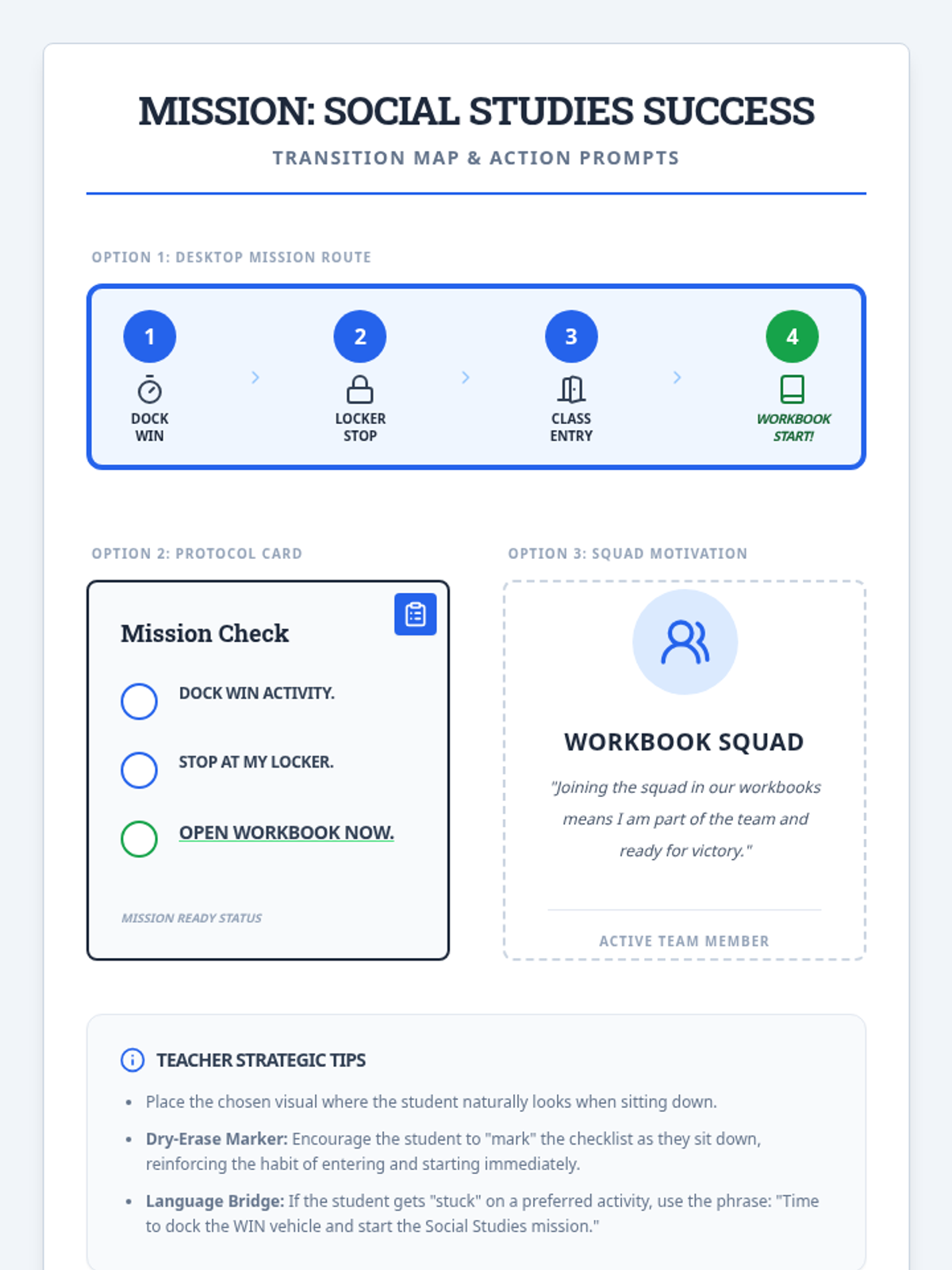
A printable social story mini-booklet using a 'Mission' theme to help a student transition from WIN class to Social Studies, including a locker stop and joining group workbook activities.
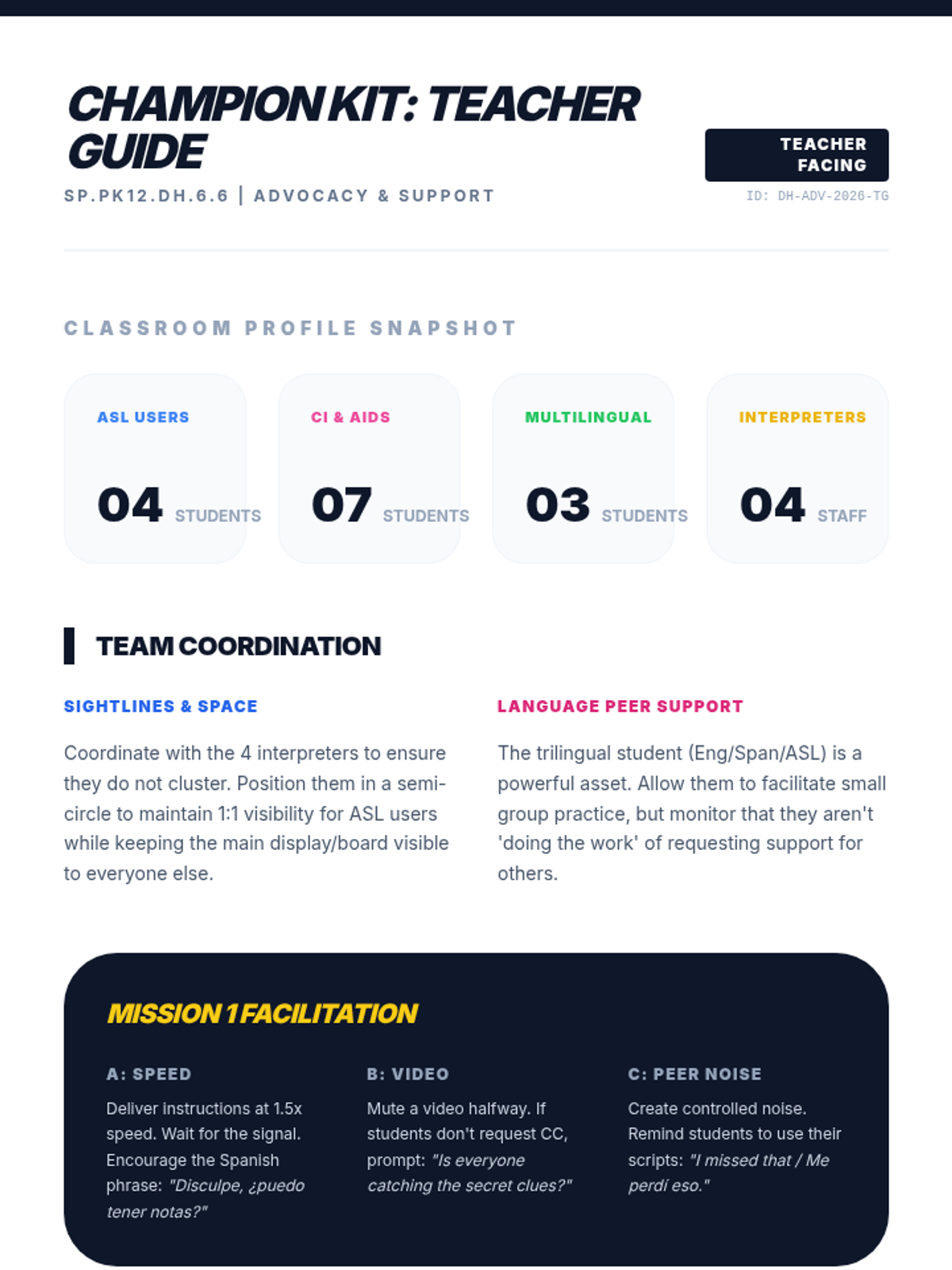
A teacher-facing facilitation guide for managing a diverse DHH classroom with multiple interpreters and multilingual learners. It includes placement strategies, role-play facilitation tips, and discussion prompts for teaching self-advocacy.
A bold, comic-book themed slide presentation designed to teach students with hearing loss about self-advocacy. It explains different types of written reinforcement (CC, transcripts, notes) and provides bilingual English/Spanish power phrases for making requests.
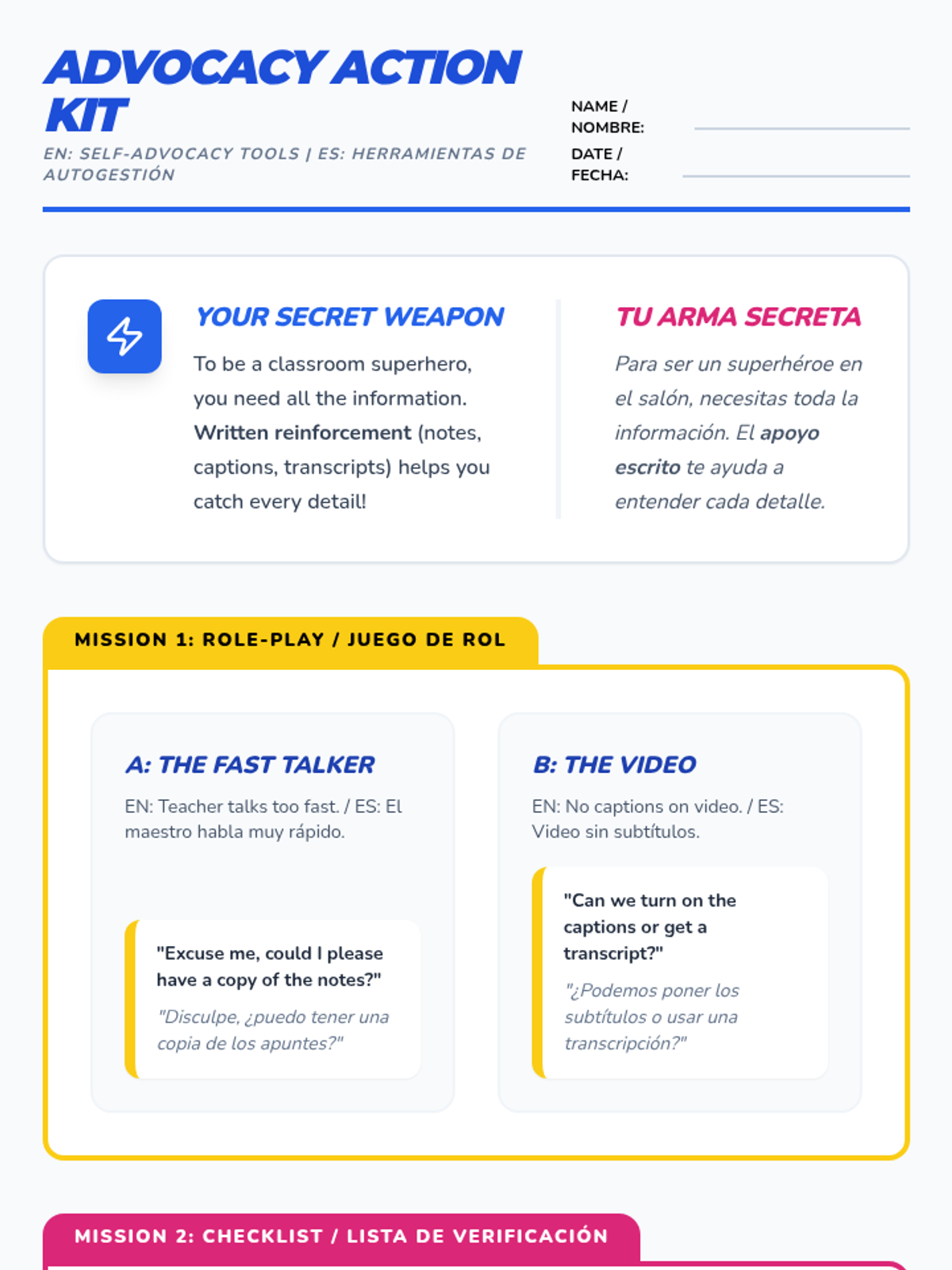
A student-facing role-play guide and self-advocacy checklist designed for students with hearing loss. It includes scripts in English and Spanish, mission-based scenarios, and a reflection area to practice requesting written reinforcements.
A set of desk-based visual reminders and action maps using a 'Mission' theme to reinforce classroom transitions and immediate task initiation.
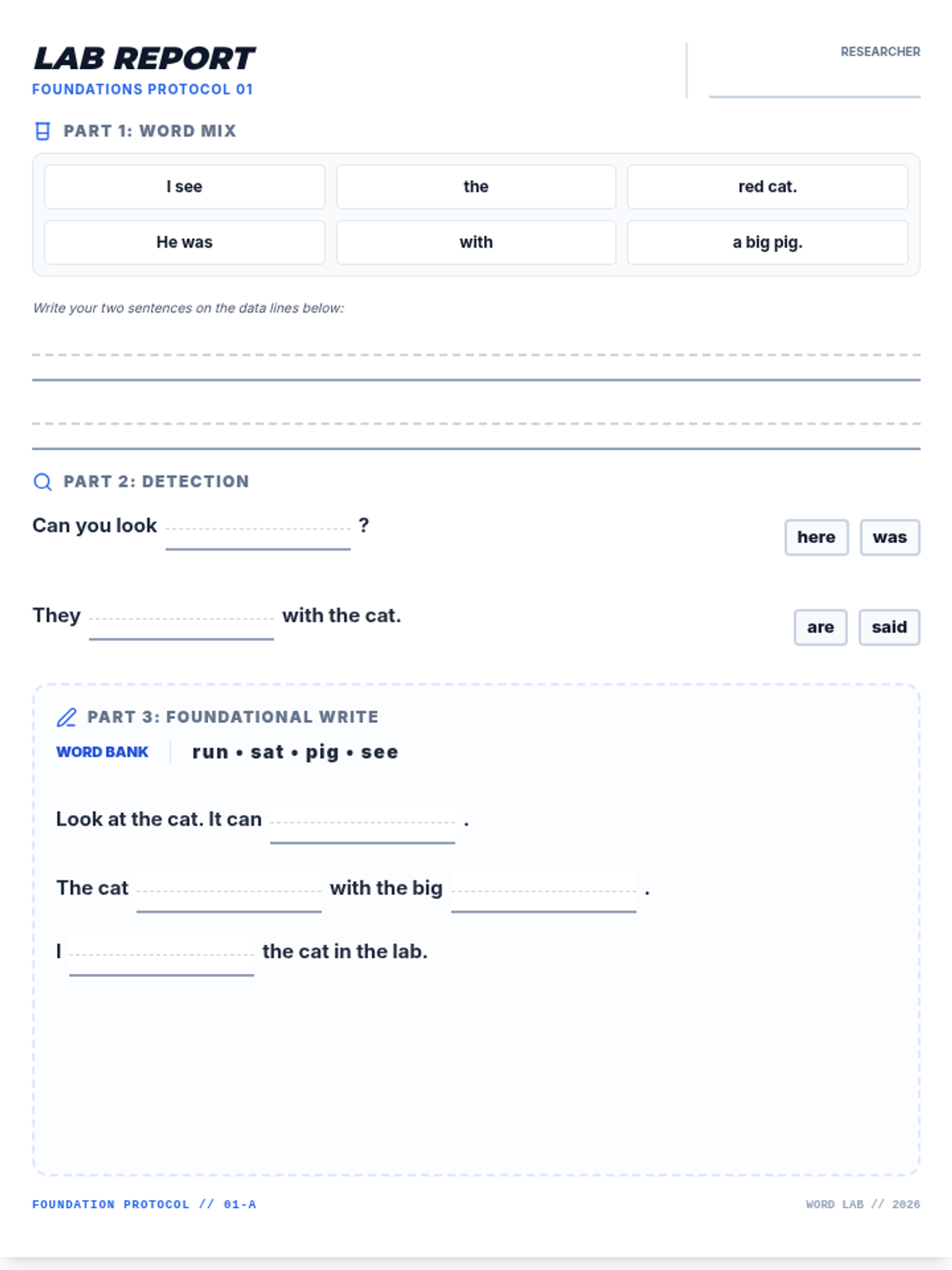
A foundational worksheet for early reading intervention. It includes a mix-and-match activity, a 'Word Detection' multiple-choice section, and a simple fill-in-the-blank passage focusing on Pre-K and Kindergarten sight words and CVC patterns.
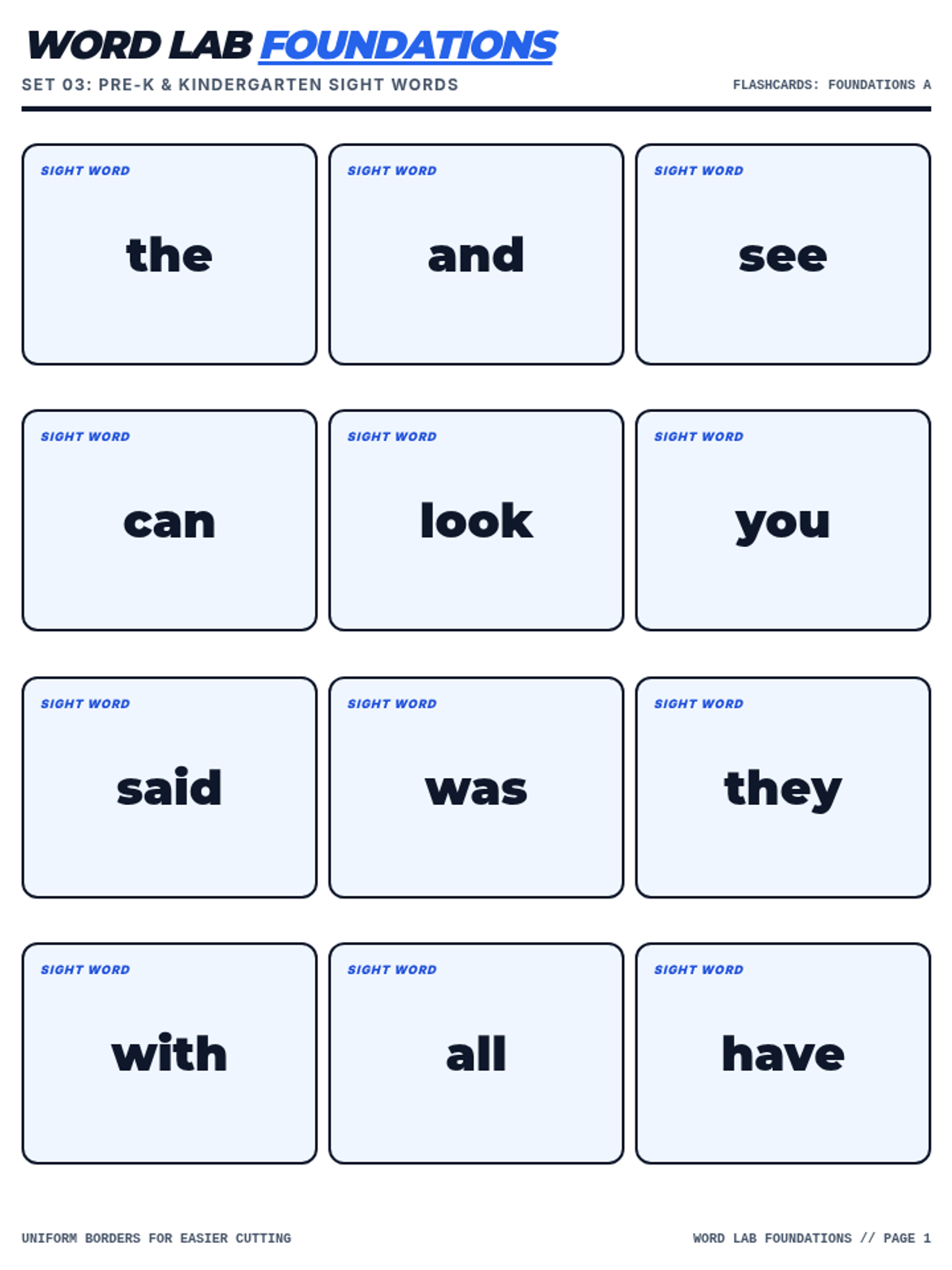
A two-page set of printable flashcards focusing on Pre-K through 1st Grade sight words and early CVC decoding patterns. The cards maintain the 'Word Lab' theme with a clean, high-contrast design suitable for older students.
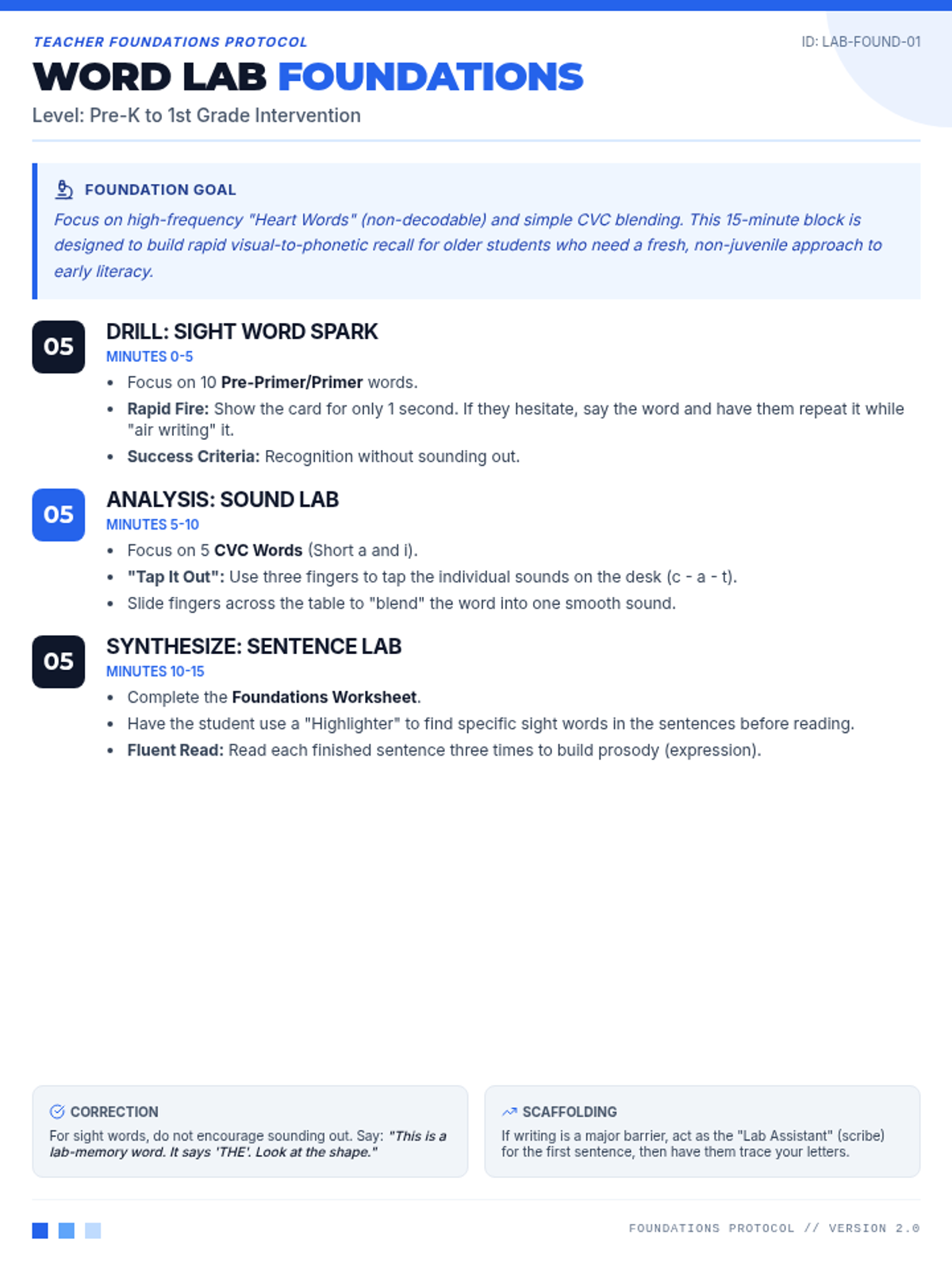
A 15-minute daily teacher routine focused on Pre-K to 1st Grade foundations. It outlines a structured three-phase approach for sight word recognition, phonics-based CVC decoding, and sentence-level application, tailored for older students with significant delays.
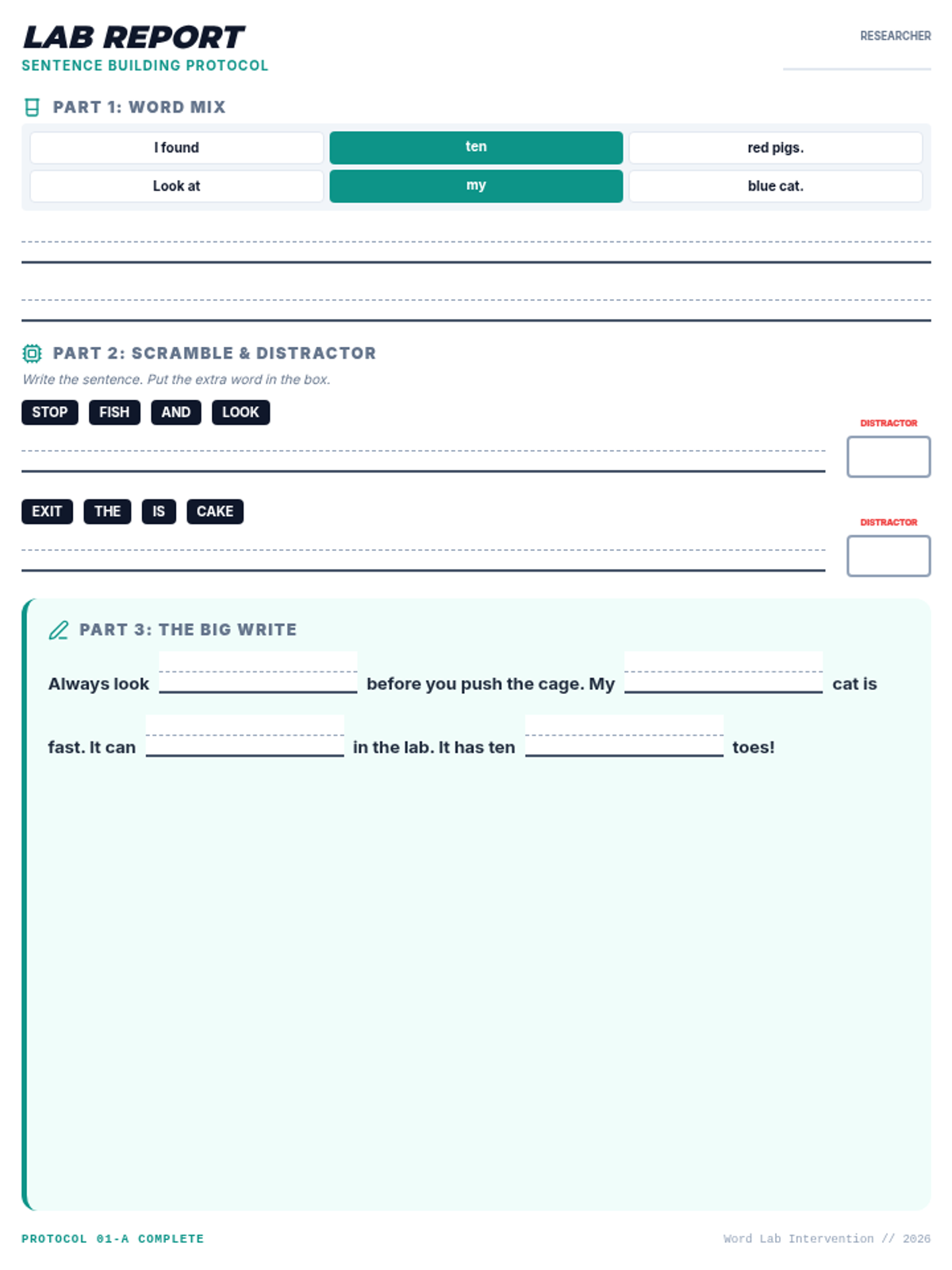
A sentence-building worksheet that integrates CVC words, survival vocabulary, and Dolch sight words. It features a mix-and-match activity, uniform scramble chips, and primary-ruled lines to support writing delays. Updated with correct page breaks and themed content.
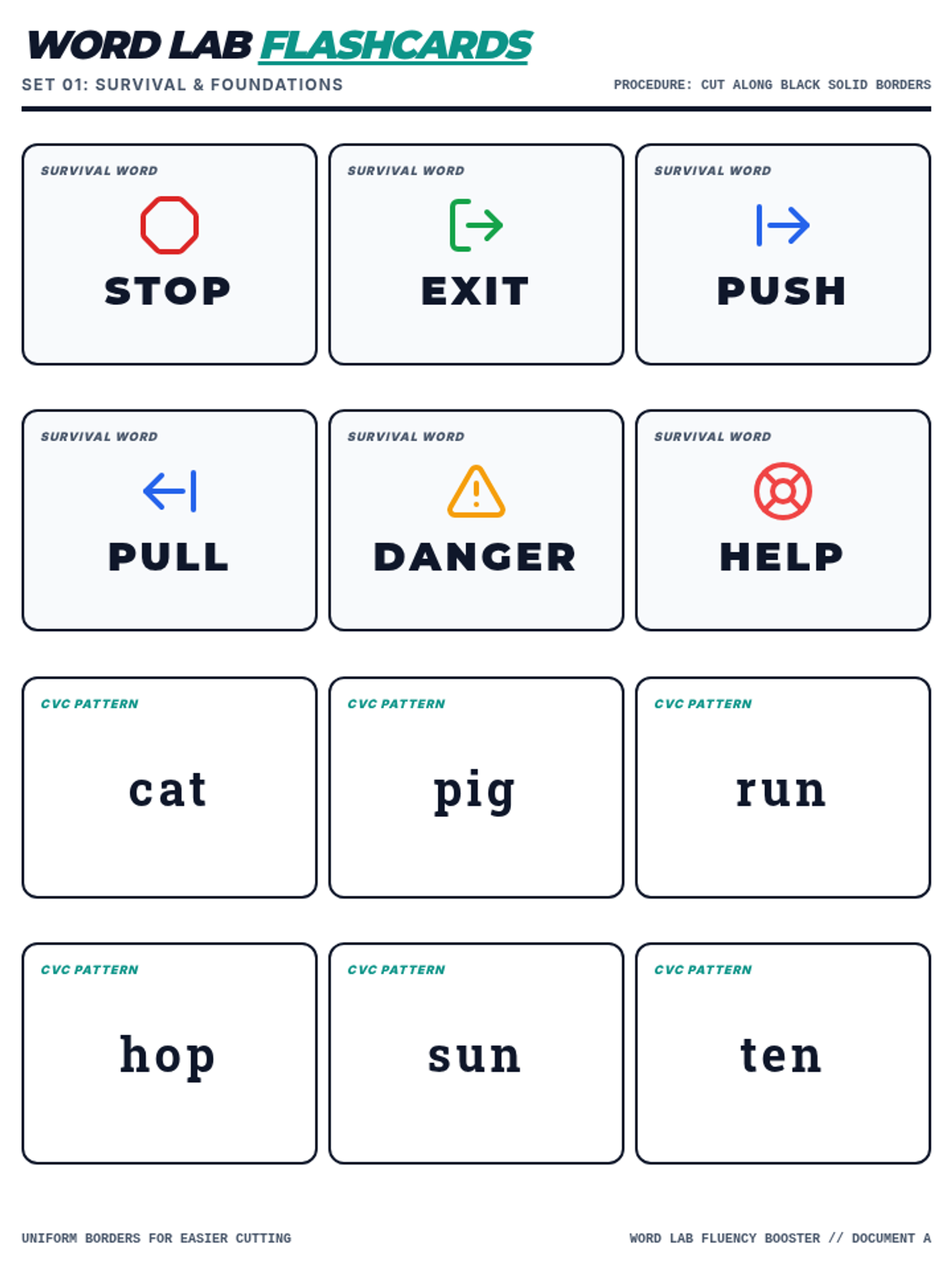
A two-page set of printable flashcards featuring functional survival words with icons, basic CVC phonetic words for decoding practice, and a selection of Dolch Second Grade high-frequency words. The clean, modern 'Word Lab' design is tailored for older students. Updated with uniform borders and clear cut instructions.
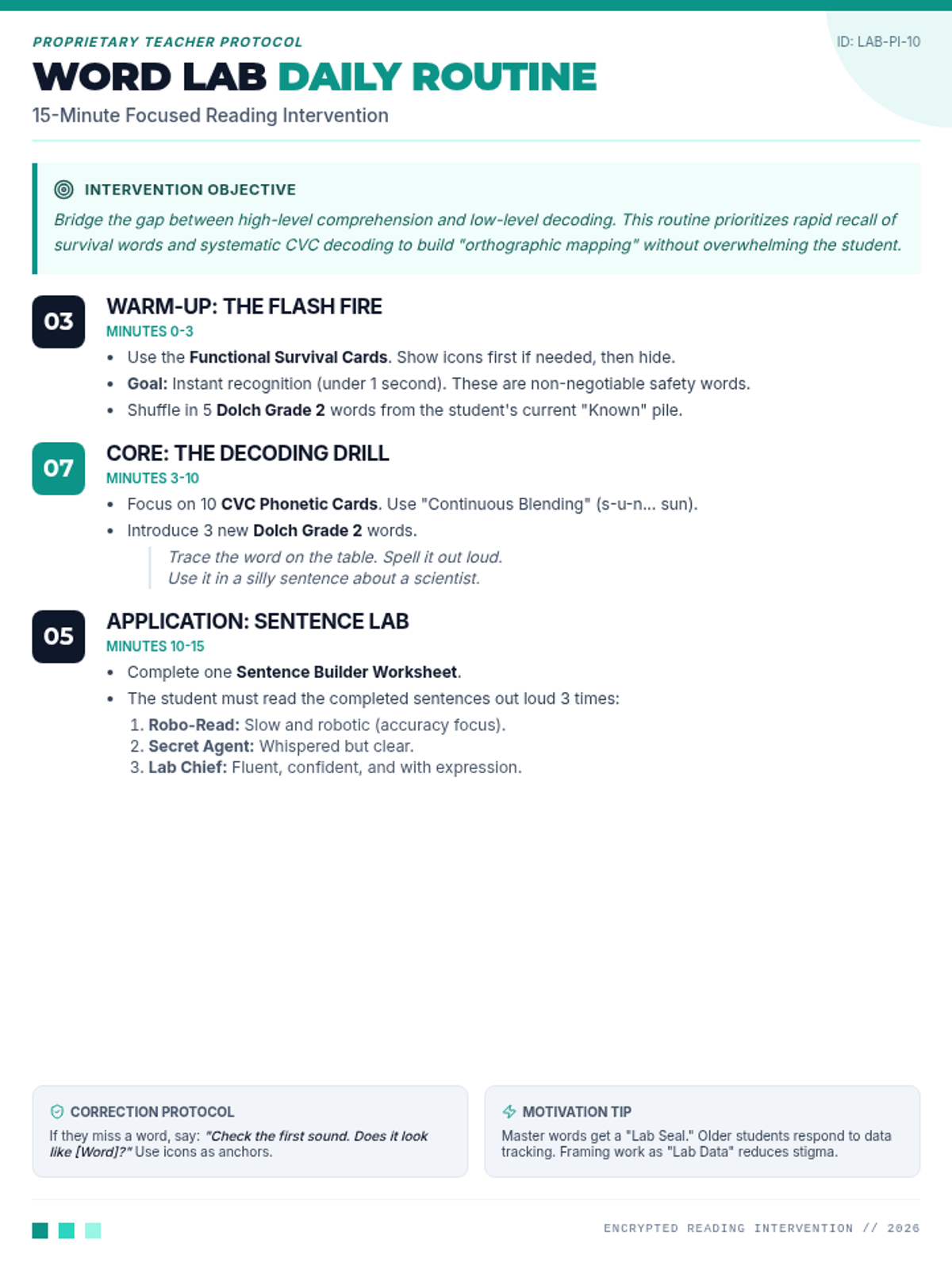
A detailed 15-minute daily teacher routine for a structured reading intervention. It breaks the session into three distinct phases: a rapid sight-word warm-up, a core decoding drill for CVC words, and an application phase for sentence building and fluency. Darkened text for print contrast and fixed page breaks.
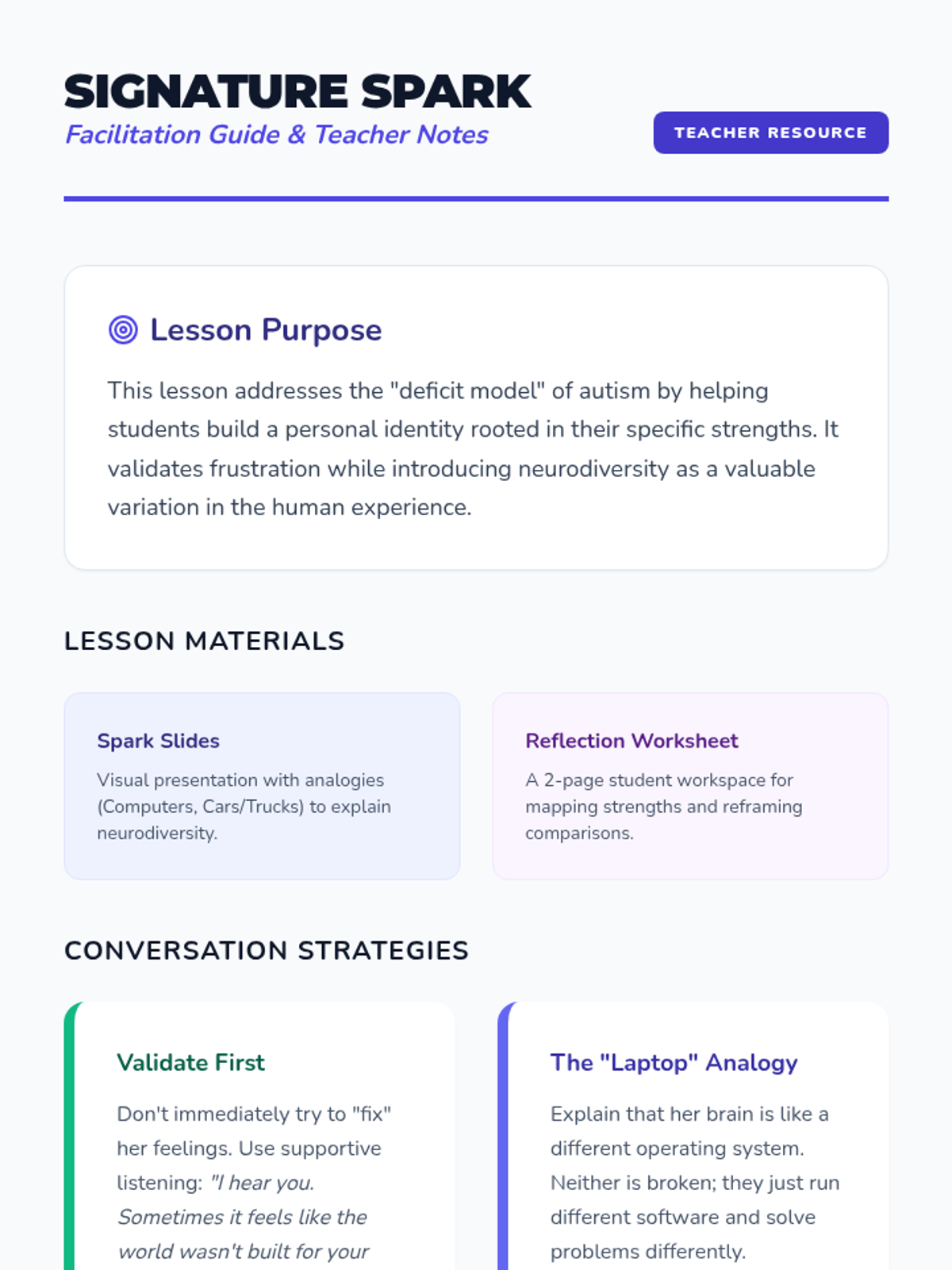
A guide for teachers or parents to facilitate the Signature Spark lesson. (Revised for better page breaks and clarity on materials).
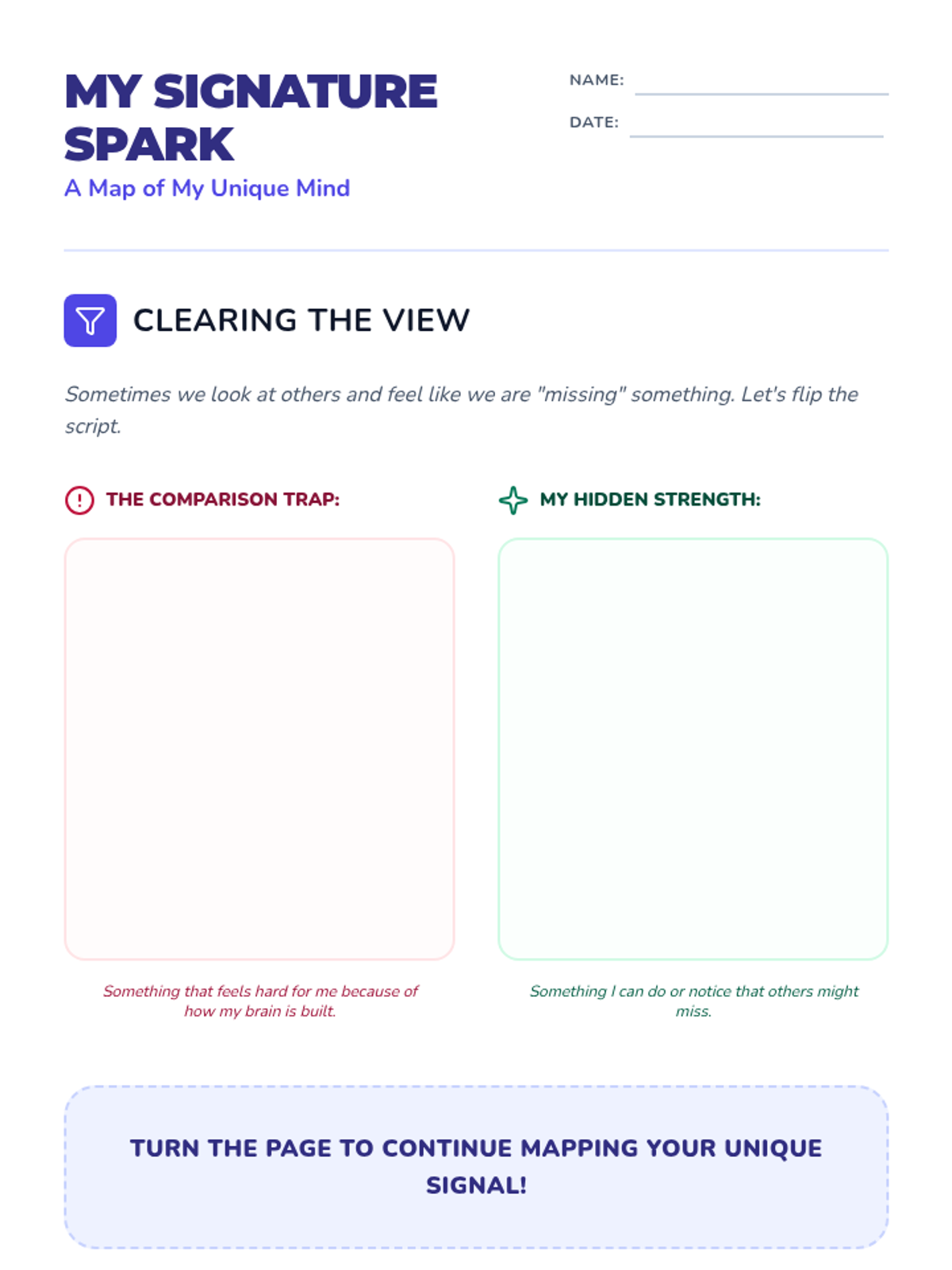
A reflective worksheet for 5th-grade students to identify their strengths, reframe comparisons, and celebrate their neurodivergent perspective. (Revised layout for better page flow and contrast).
A supportive slide deck for facilitating a conversation about neurodiversity, uniqueness, and the 'comparison trap' specifically for autistic students. (Fixed spelling error and improved contrast/layout).
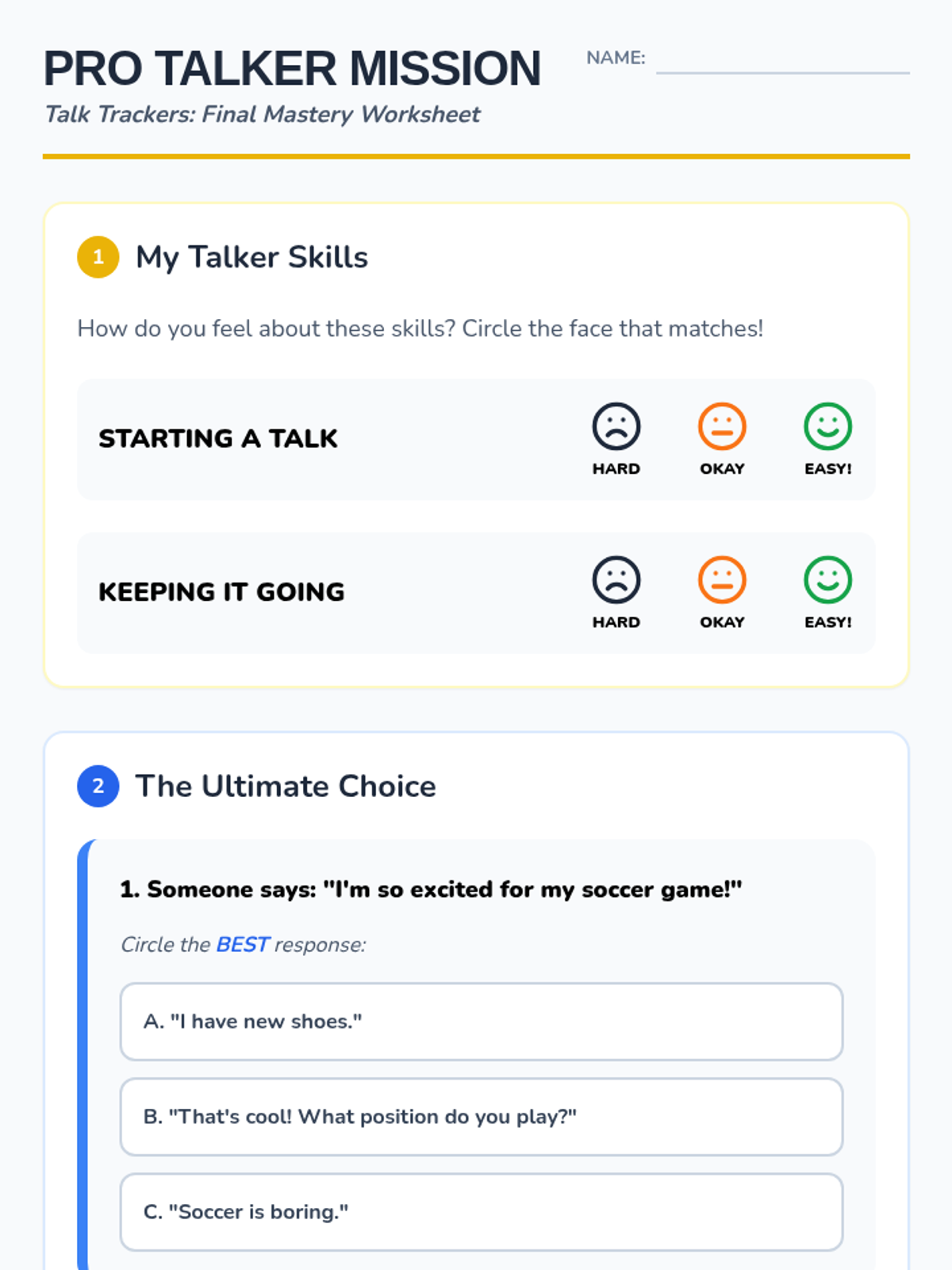
A Lesson 5 final mastery worksheet including a skill self-reflection, a multiple-choice quiz on key concepts, and a guided conversation planning section. (Updated for page breaks, contrast, and increased writing space).
Lesson 5 slides featuring a comprehensive review of all conversation skills through a multi-level "Pro Talker Challenge," concluding with a celebration of the student's progress. (Updated for fixed layout, uniform styling, and virtual chain activity).
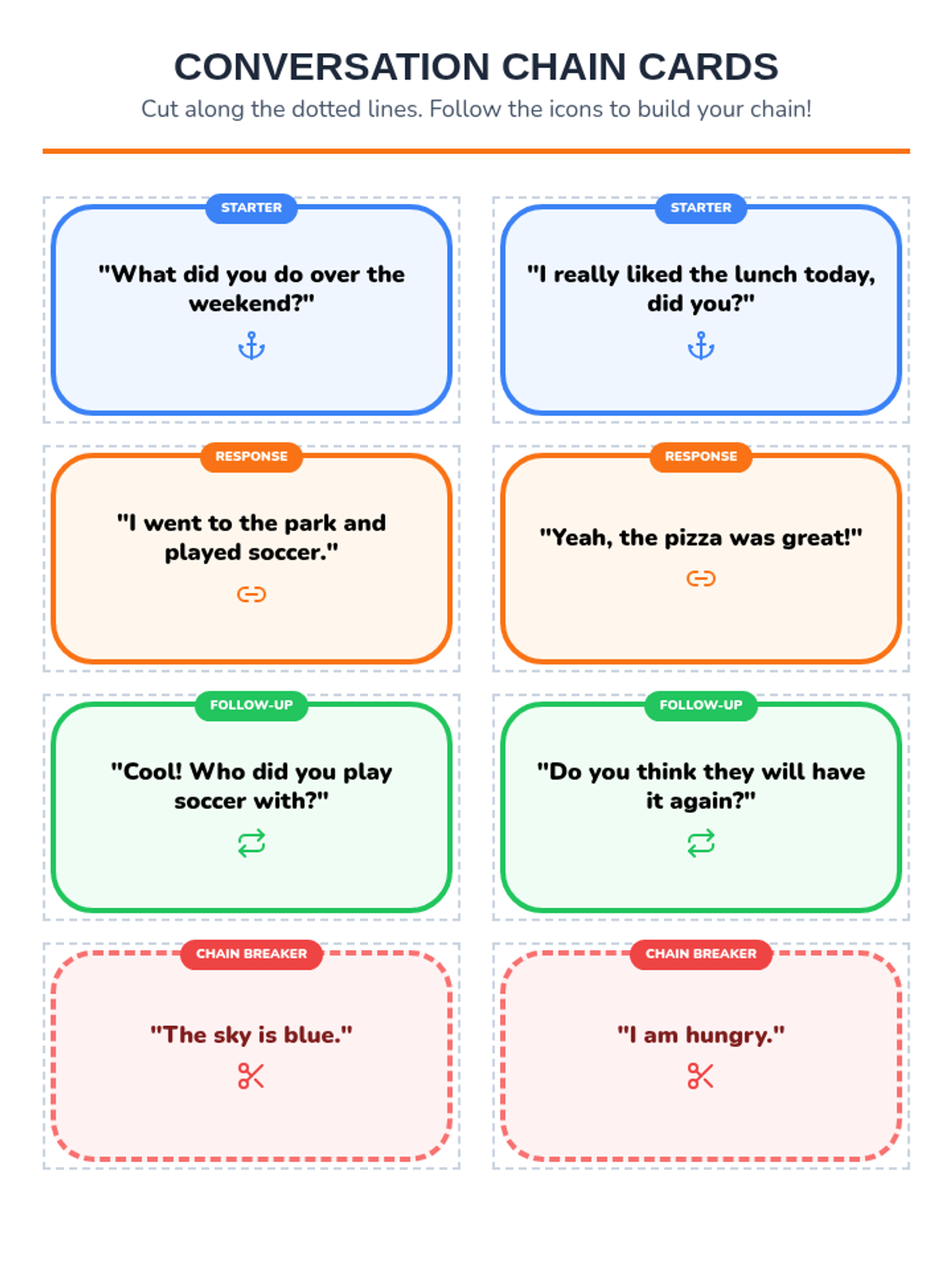
A hands-on activity material featuring printable "Conversation Chain" cards for students to cut and arrange, reinforcing topic maintenance and appropriate responding. (Updated for page fit, contrast, and cut lines).
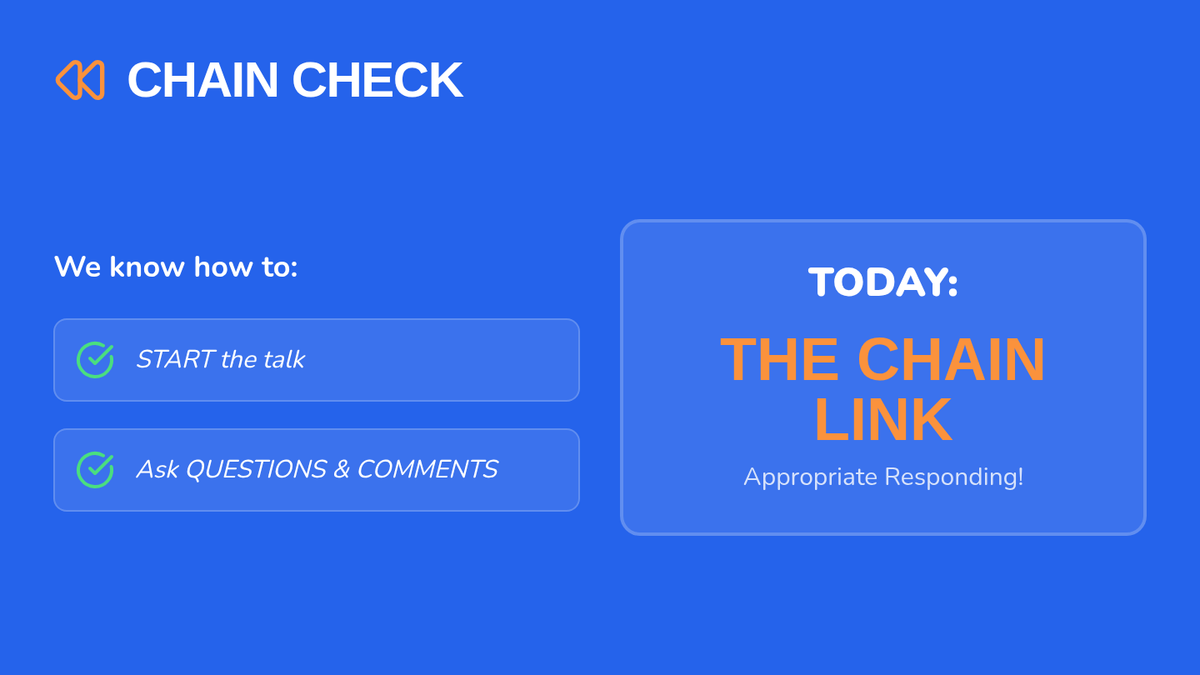
Lesson 4 slides focusing on appropriate responding using the "Conversation Chain" metaphor, including matching activities and scenarios to prevent "chain breaking" off-topic comments. (Updated for uniform styling).
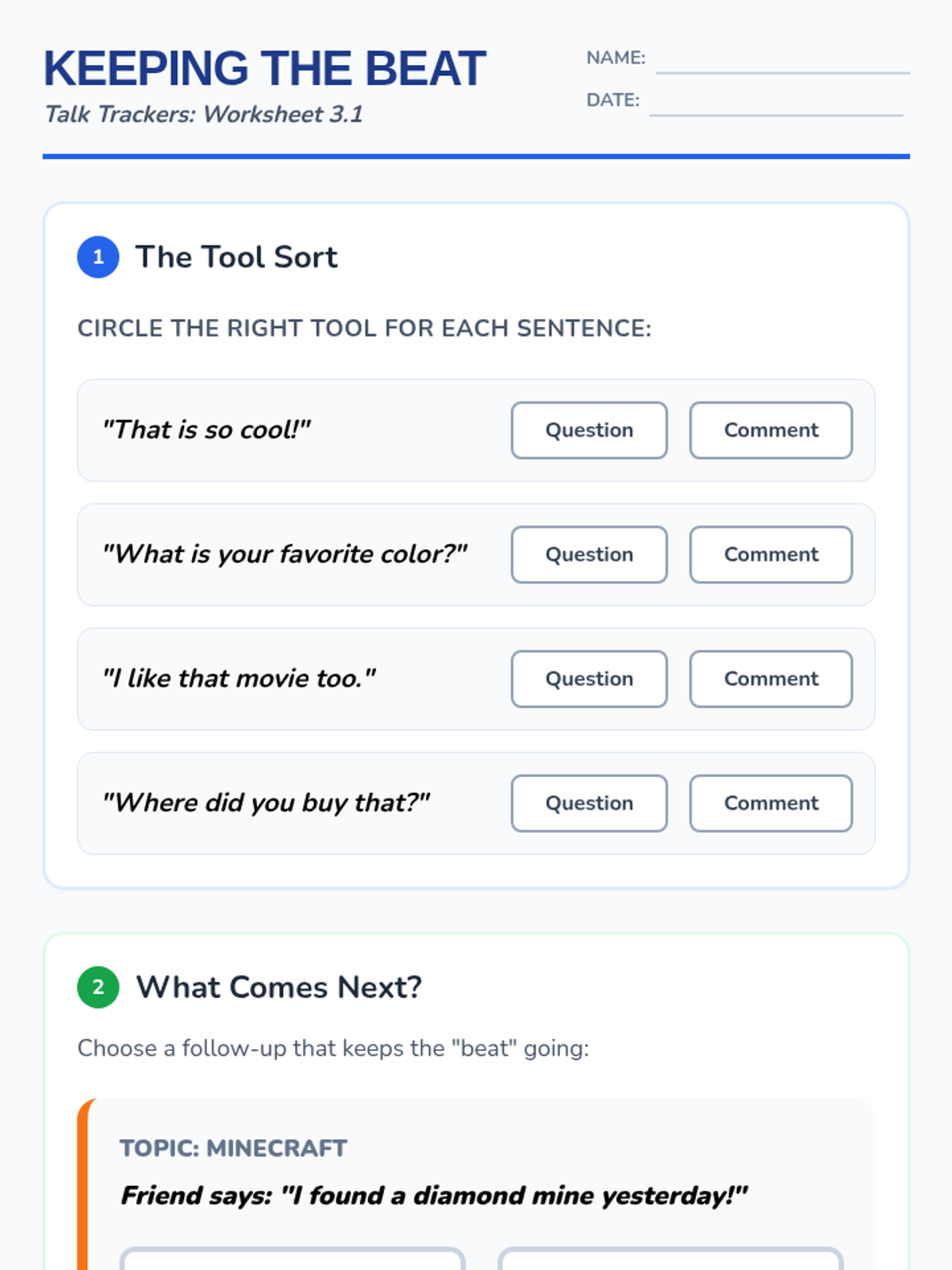
A Lesson 3 worksheet for categorizing questions vs. comments, selecting appropriate follow-up responses, and practicing the bridge technique with guided sentence starters. (Updated for page breaks and uniform styling).
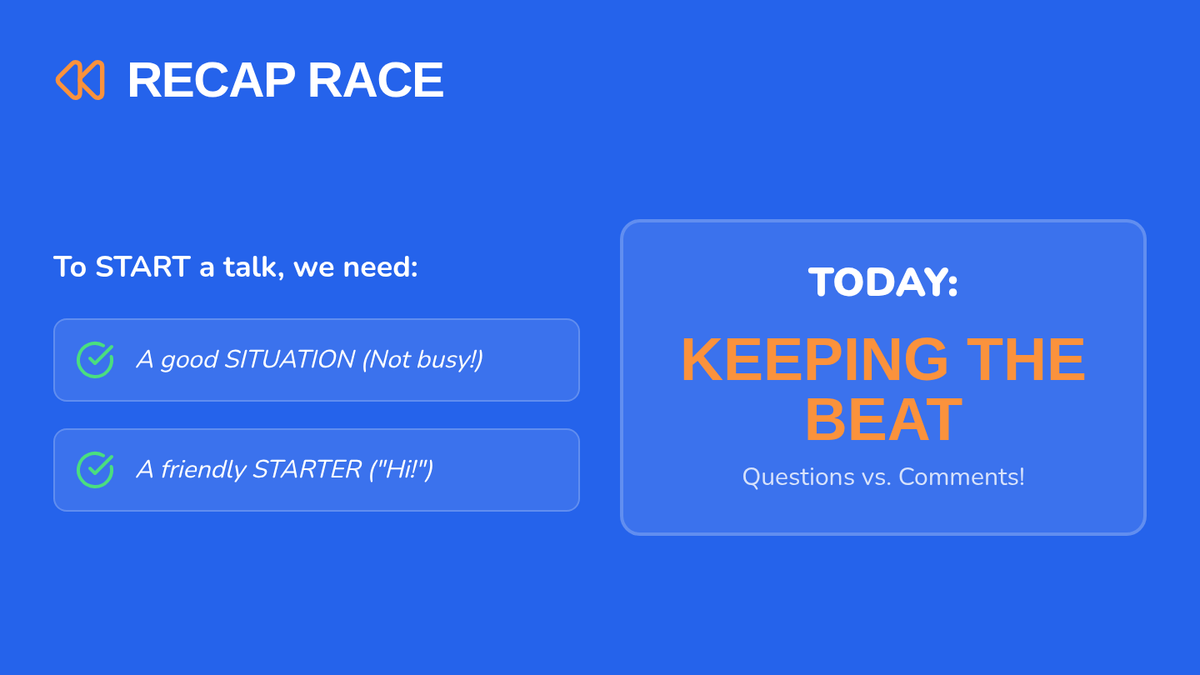
Lesson 3 slides on maintaining conversations using questions and comments, featuring interactive scenarios for practicing "the bridge" technique and a review of previous concepts. (Updated for uniform answer choices and improved contrast).
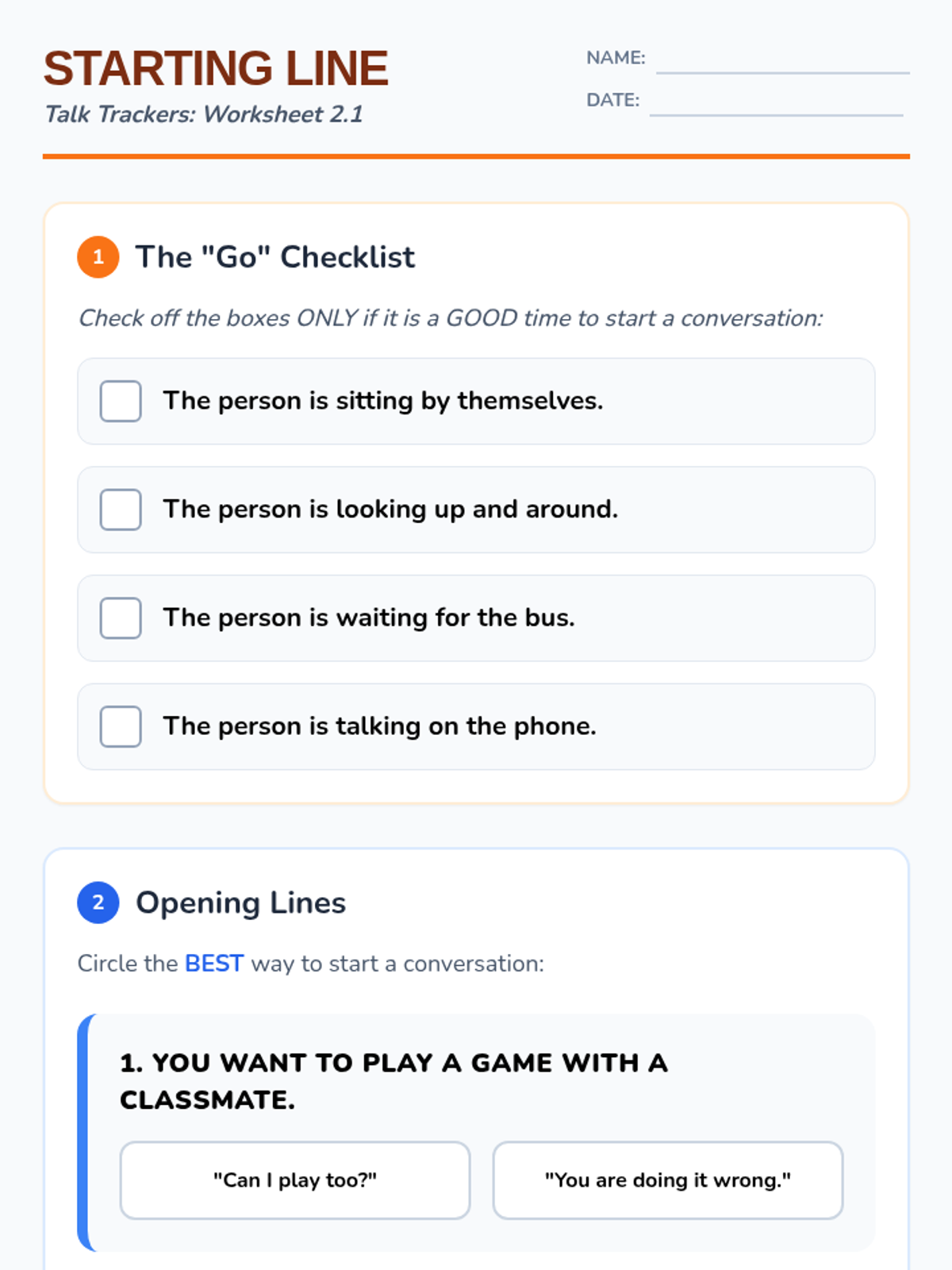
A Lesson 2 worksheet including an initiation checklist, multiple-choice starter sorting, and a guided section for practicing opening lines with sentence starters. (Updated for page breaks, uniform styling, and removed pre-filled content).
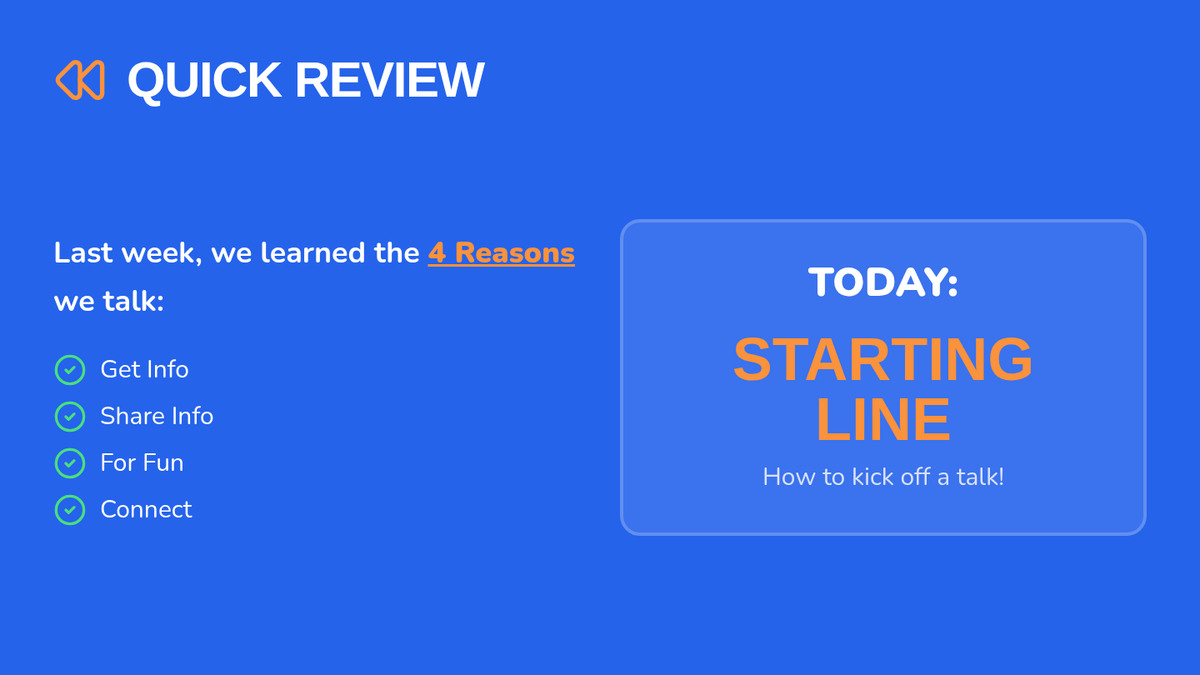
Lesson 2 slides focusing on initiating conversations, including a review of Lesson 1 and 5 interactive scenarios centered on timing, approach, and opening lines. (Updated for uniform answer choices and spacing).
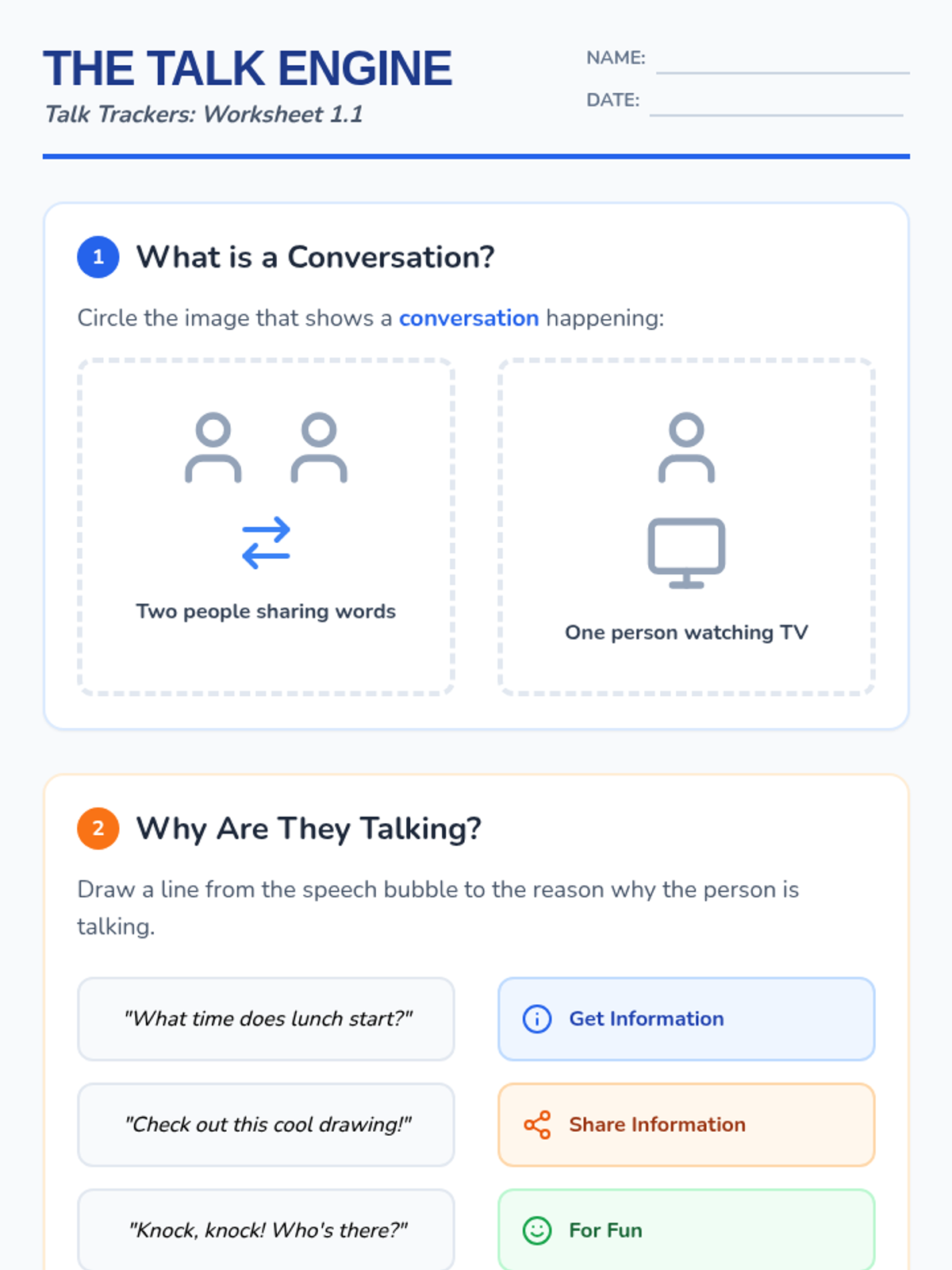
A reinforcement worksheet for Lesson 1 that includes a matching activity for conversation motives and a guided writing section with sentence starters. (Updated for page breaks and increased writing space).
A fast-paced, highly visual slide deck for Lesson 1, introducing the definition and purpose of conversations through relatable scenarios and vibrant imagery. (Updated for uniform answer choices and polished layout).
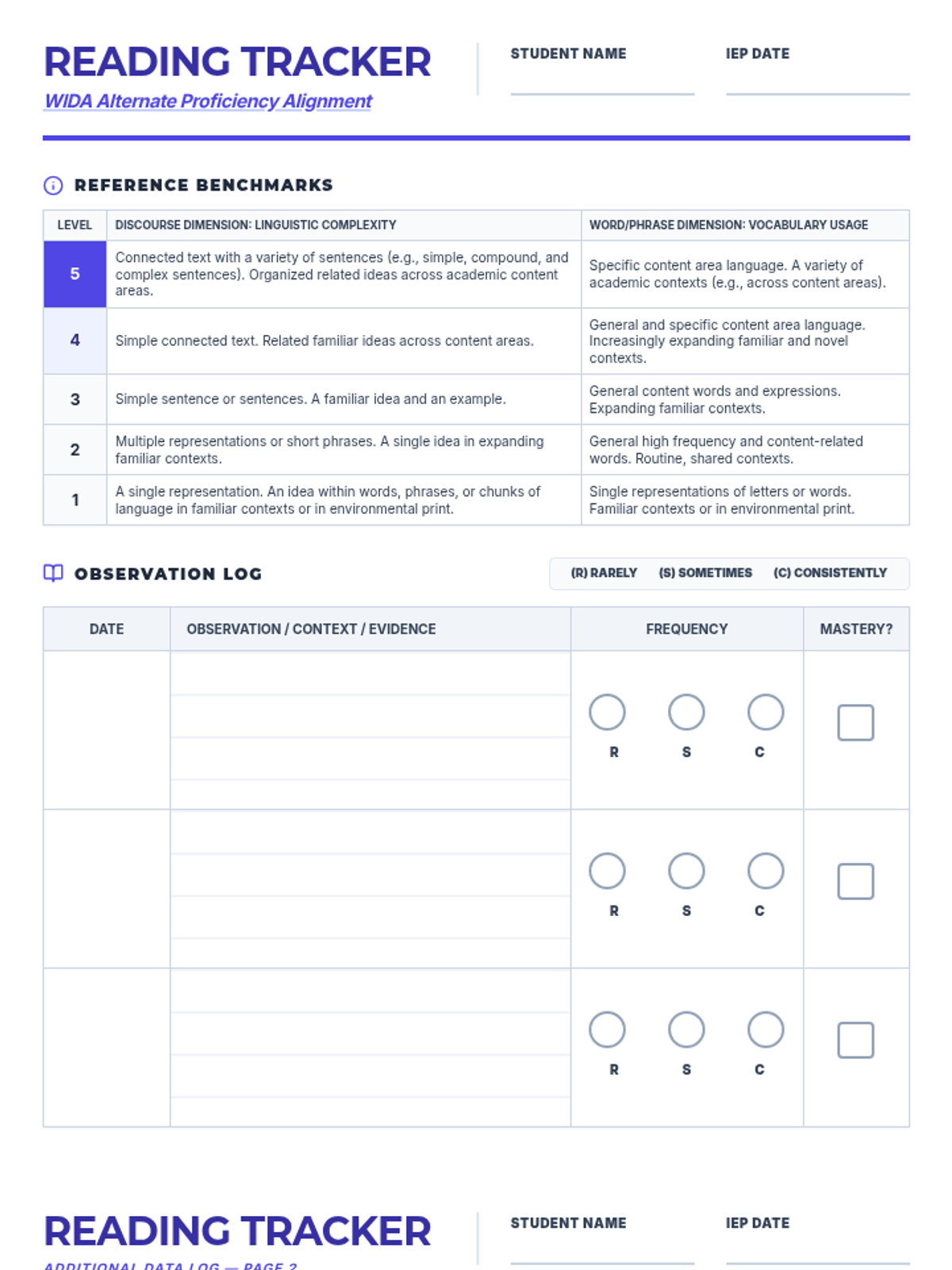
A data tracking sheet for the Reading domain of the WIDA Alternate Proficiency Levels, featuring observation logs across two pages for comprehensive data collection. Updated with exact proficiency benchmark language and improved layout.
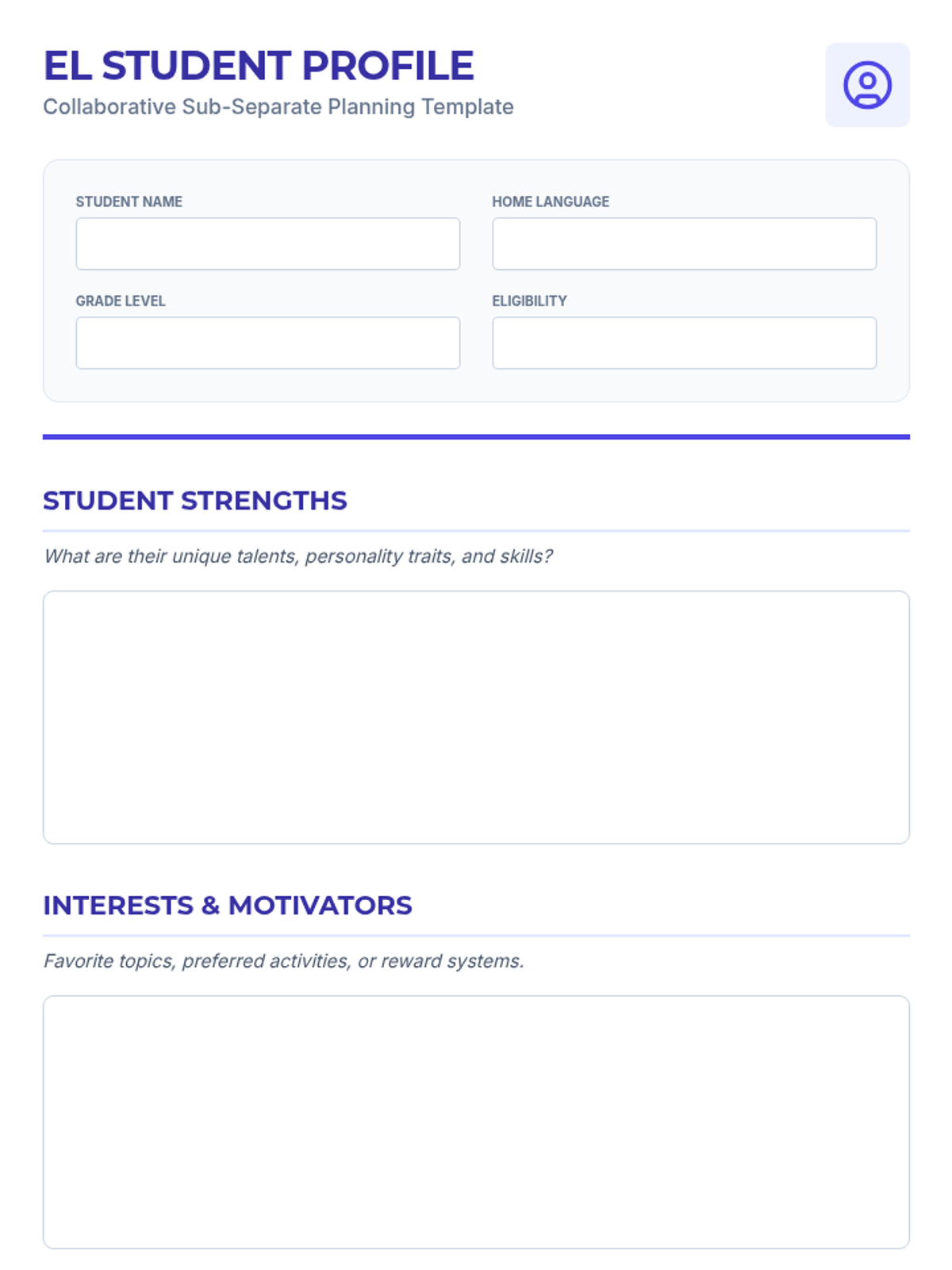
A comprehensive student profile template designed for ESL and Special Education teachers to collaborate on English Learners in sub-separate settings. It features dedicated sections for assistive technology/AAC, detailed home language usage (including family patterns and community context), sensory needs, and academic supports.
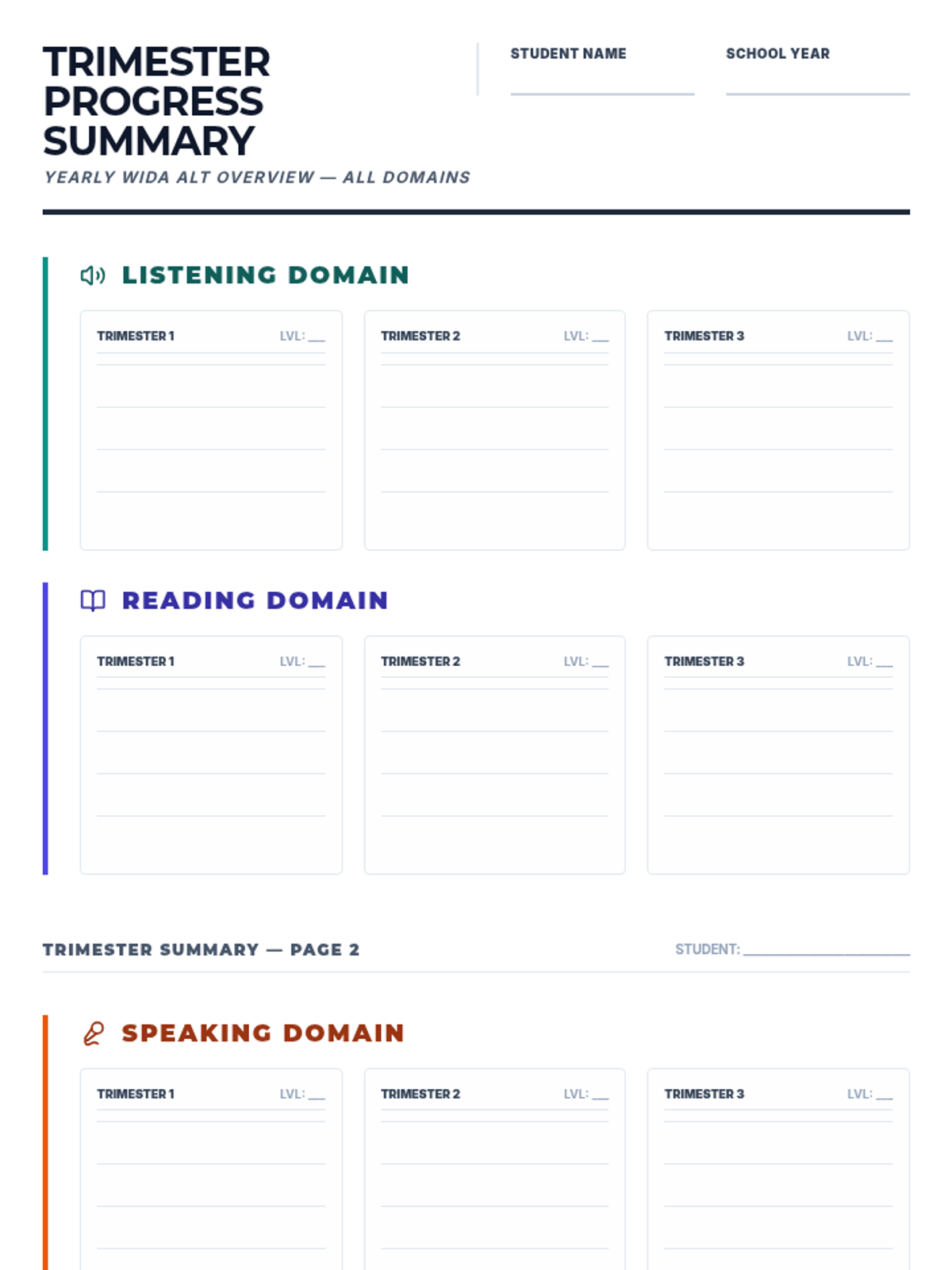
A comprehensive trimester-based progress summary sheet covering all four WIDA domains (Listening, Reading, Speaking, and Writing) for a high-level overview of student performance across the entire year. Updated with improved space and high-contrast labels.
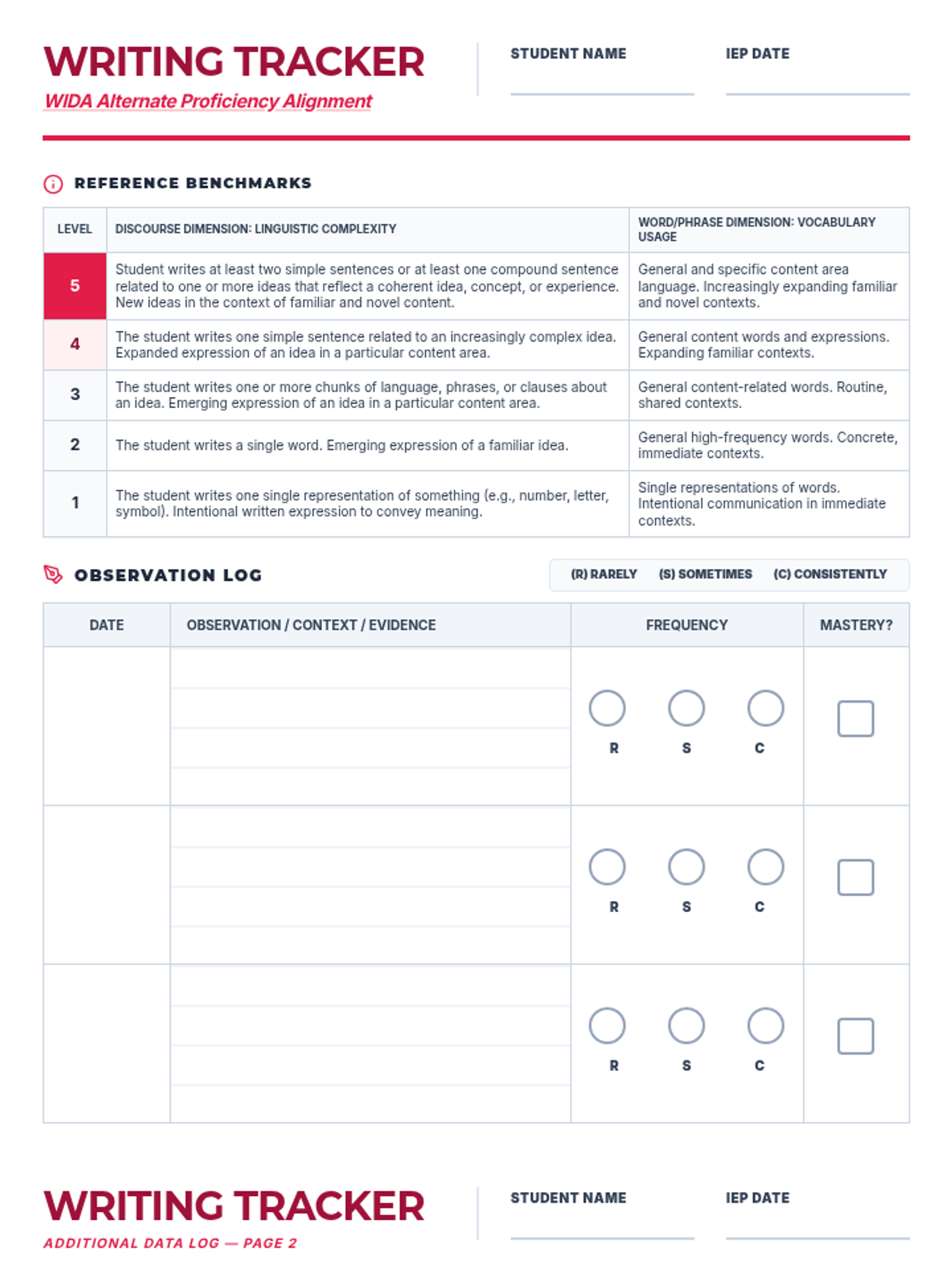
A data tracking sheet for the Writing domain of the WIDA Alternate Proficiency Levels, featuring observation logs across two pages for comprehensive data collection. Updated with exact proficiency benchmark language and improved layout.
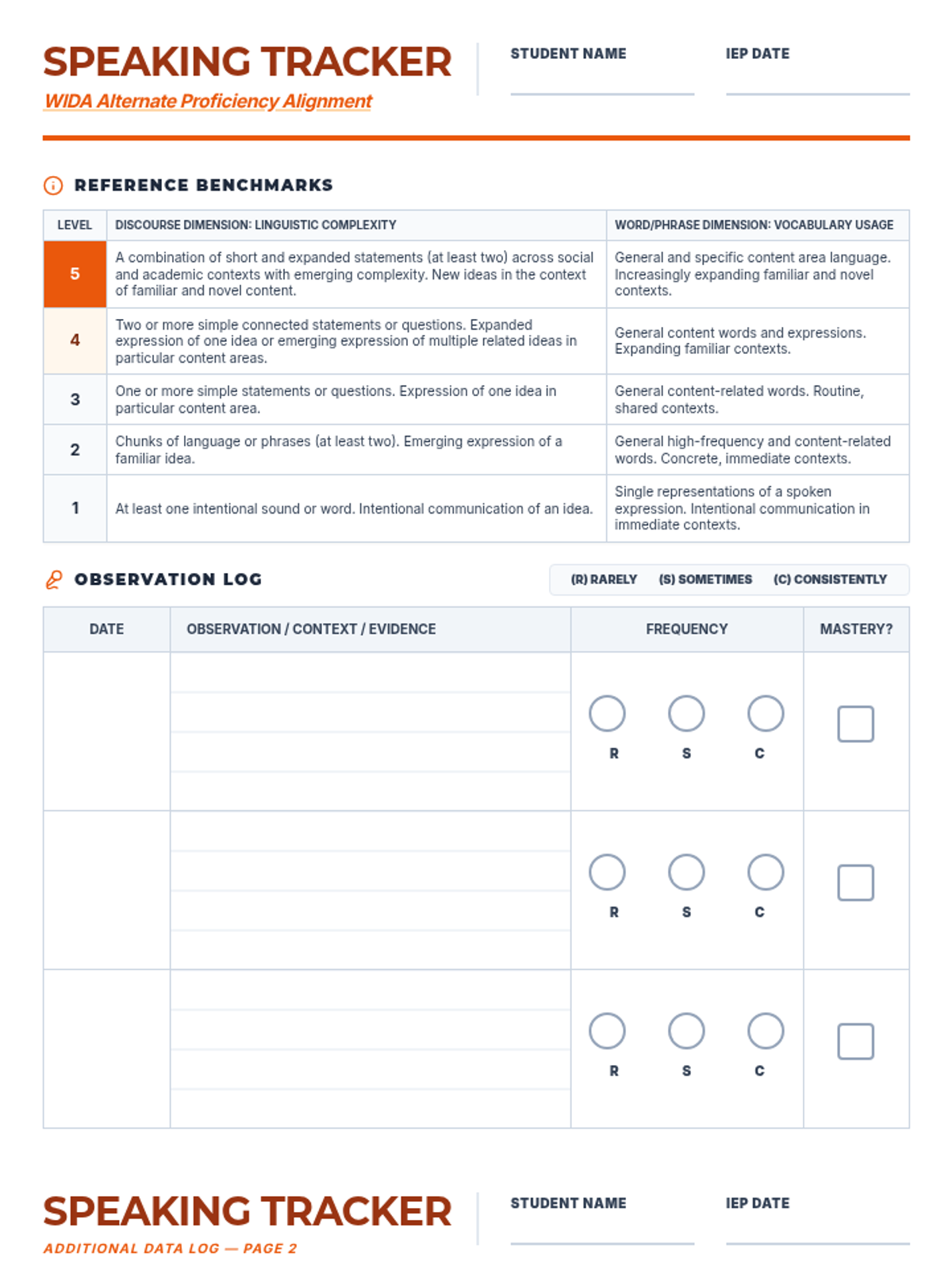
A data tracking sheet for the Speaking domain of the WIDA Alternate Proficiency Levels, featuring observation logs across two pages for comprehensive data collection. Updated with exact proficiency benchmark language and improved layout.
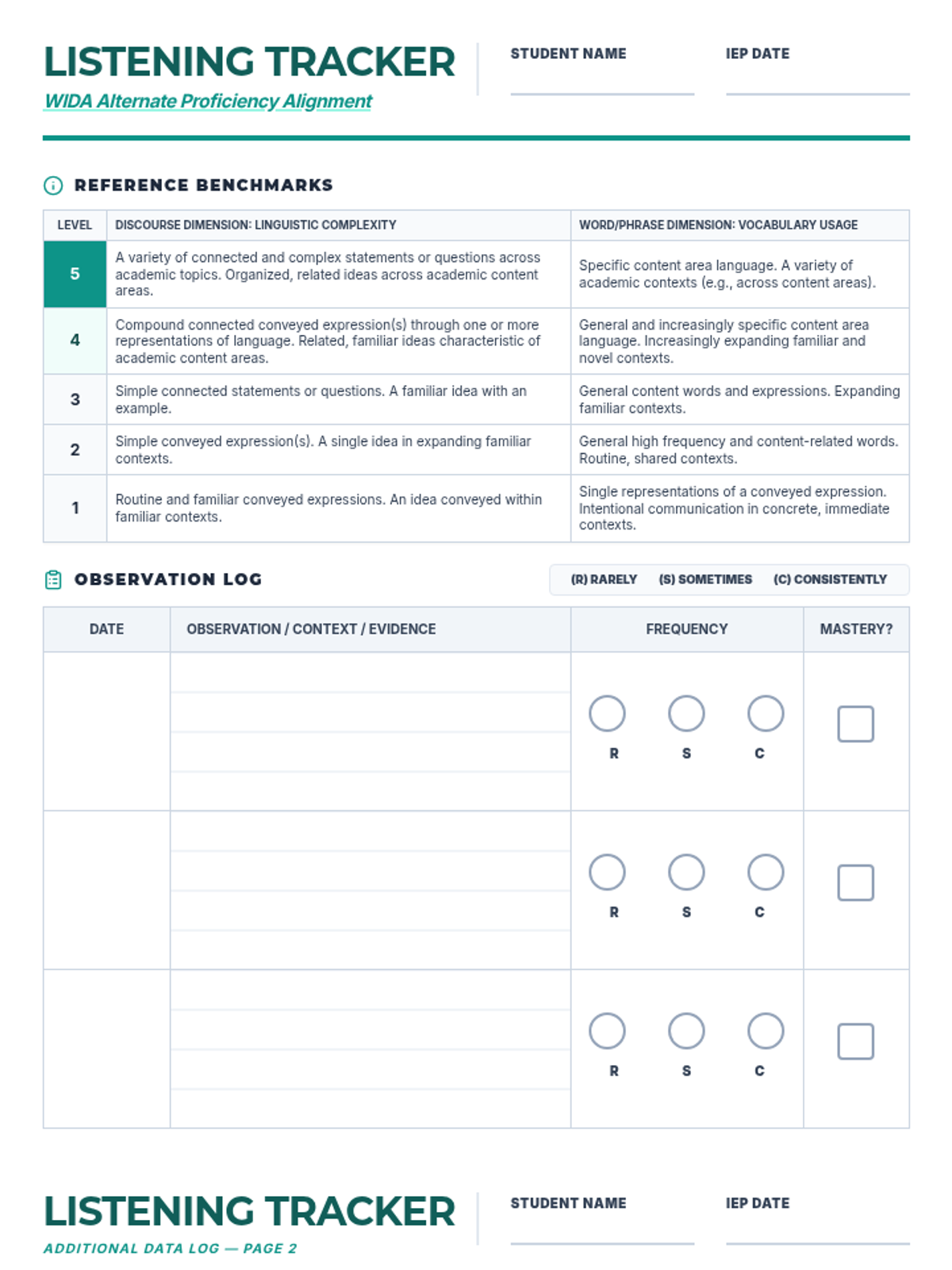
A data tracking sheet for the Listening domain of the WIDA Alternate Proficiency Levels, featuring observation logs across two pages for comprehensive data collection. Updated with exact proficiency benchmark language and improved layout.
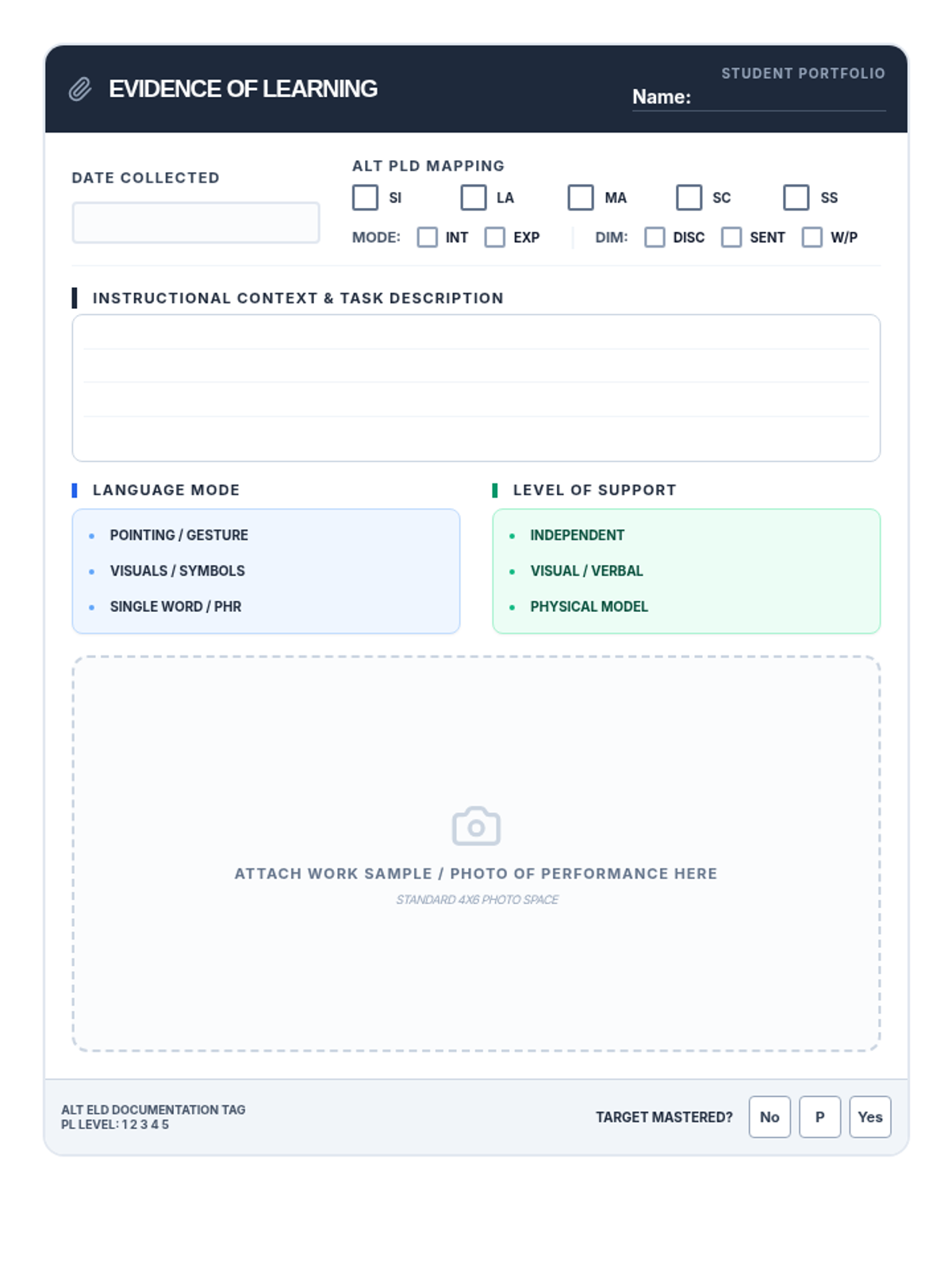
A work sample documentation tag that provides context for student work, including task descriptions, language use observations, and support level tracking. Optimized for single-page use with Sentence dimension included.
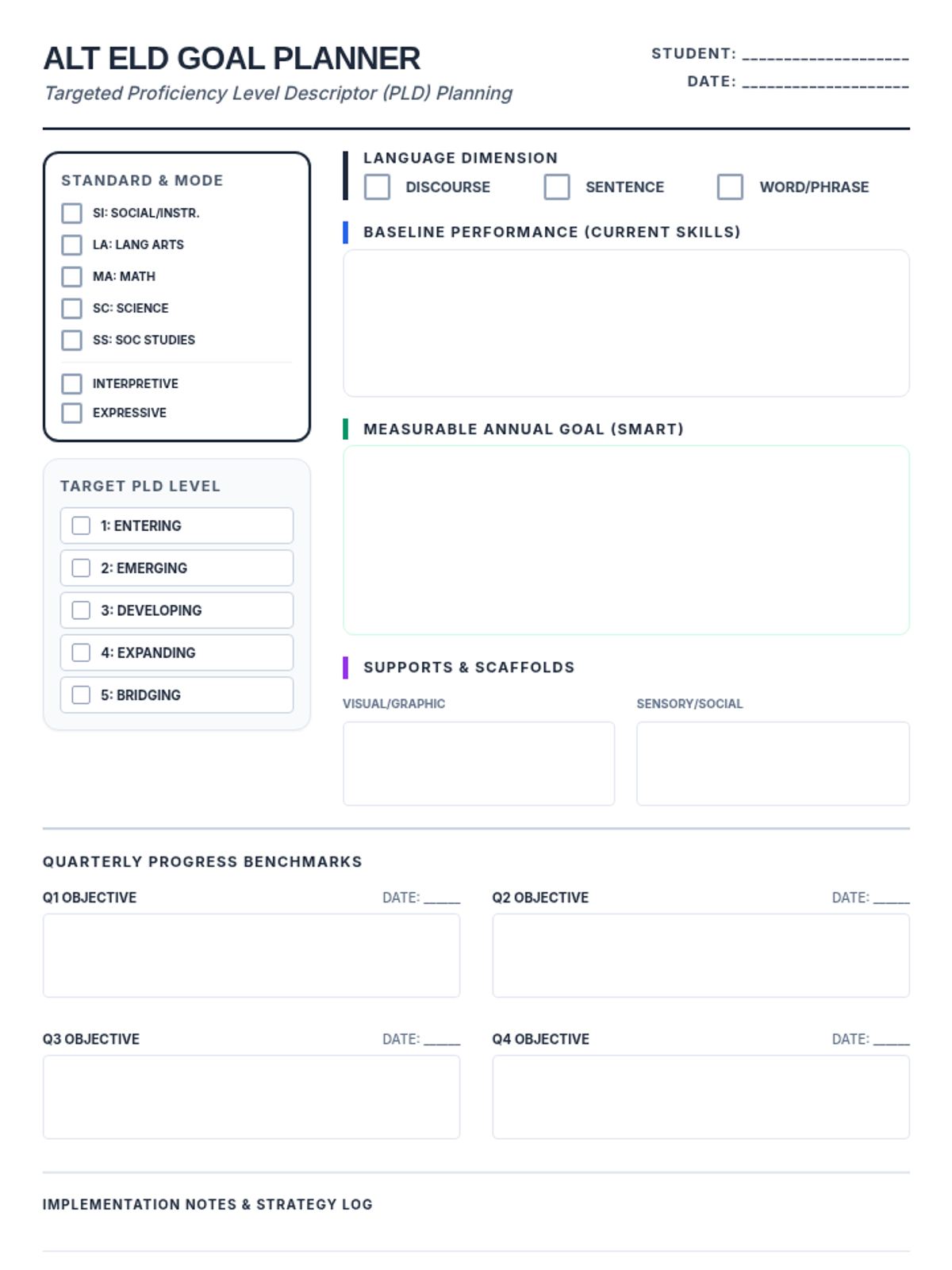
A detailed goal-setting template specifically designed for Alt ELD proficiency levels, allowing teachers to align IEP goals with WIDA standards and track quarterly benchmarks. Optimized for single-page use with expanded note space.
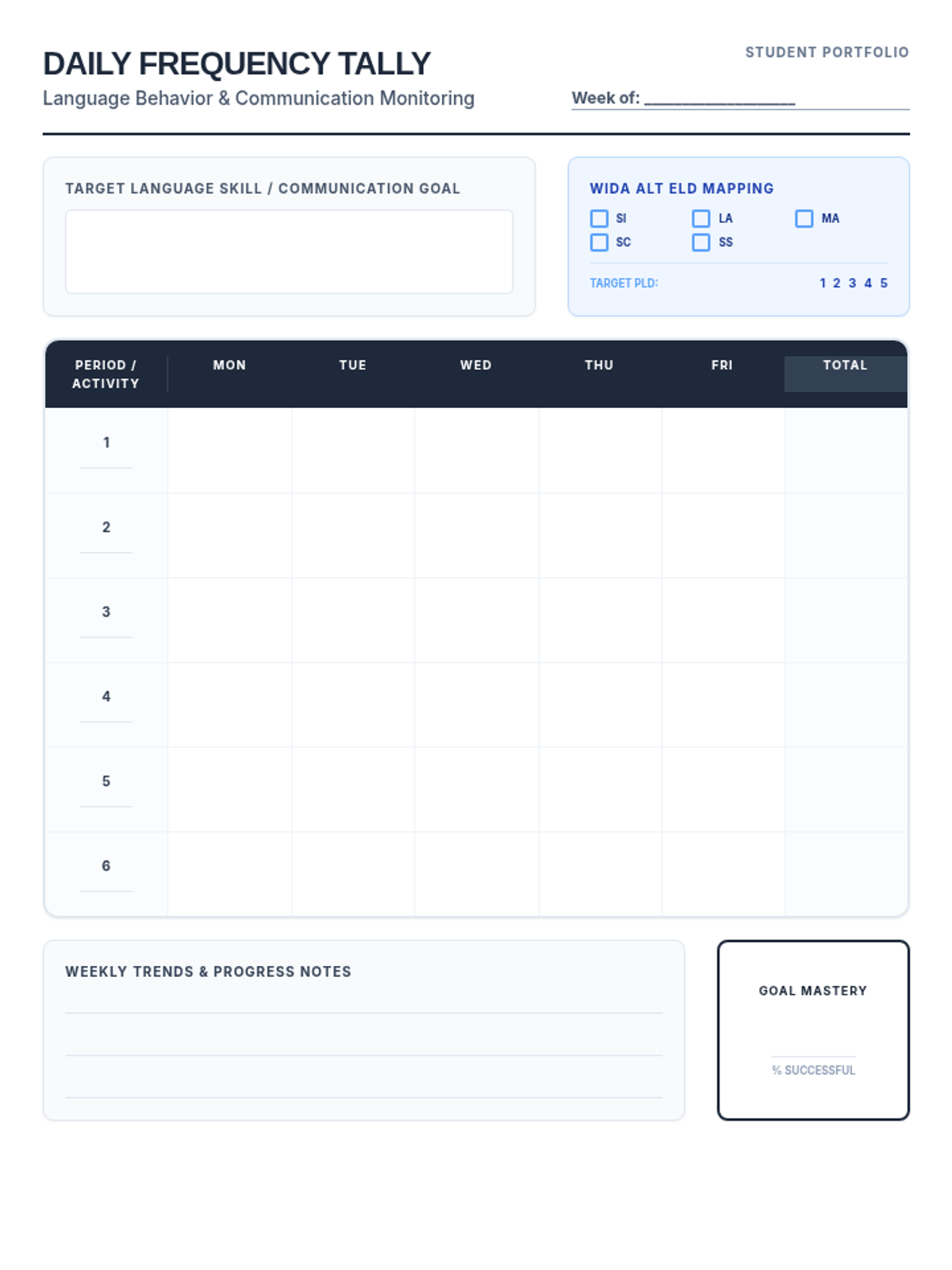
A weekly frequency tally sheet for tracking specific target language behaviors or communication goals, organized by day and period. Updated to include explicit standard selection and expanded note space.
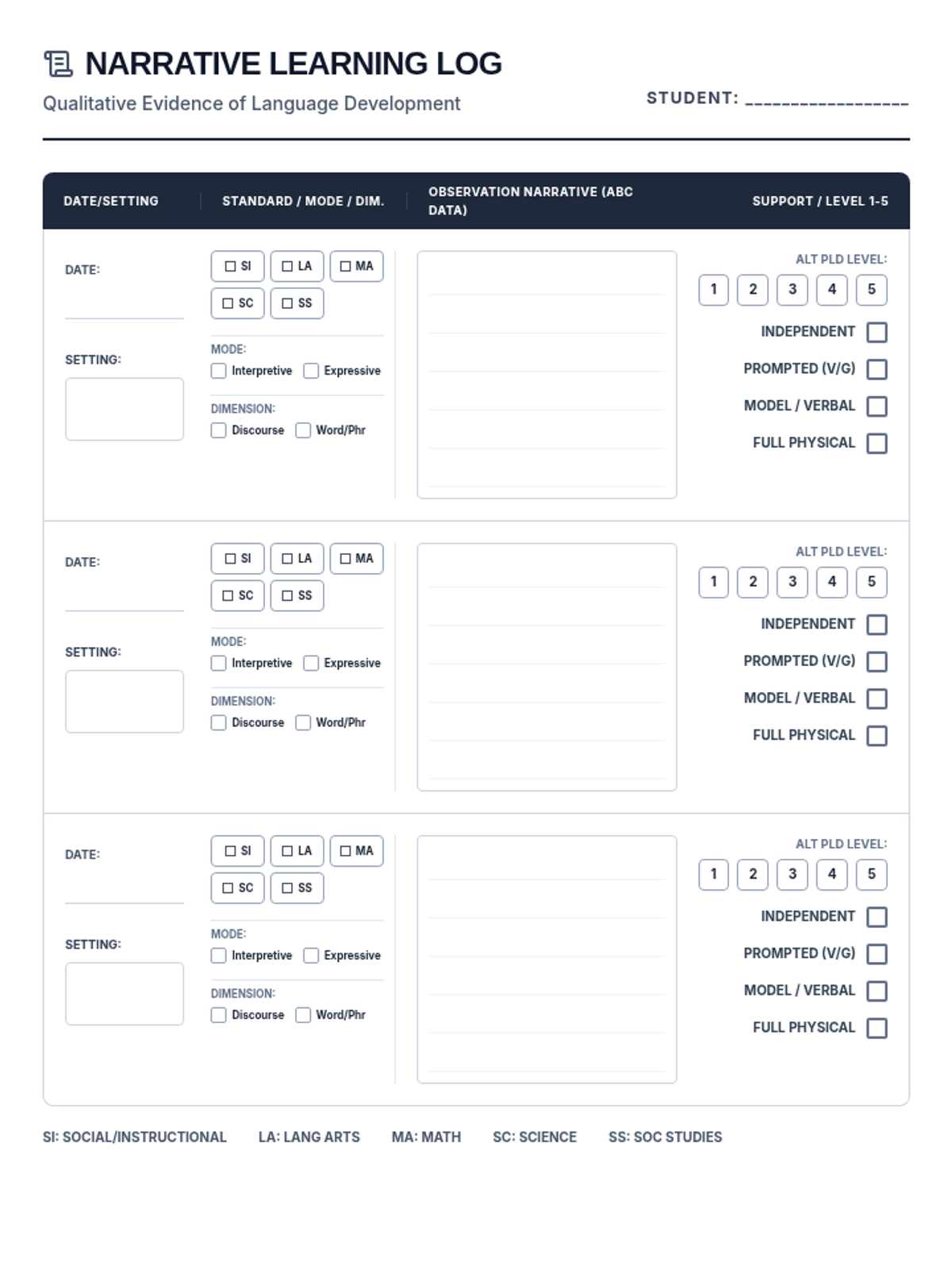
A narrative observation log designed for anecdotal evidence, featuring sections for setting, standard alignment, detailed notes, and prompt level tracking. Updated with checkboxes and level indicators.
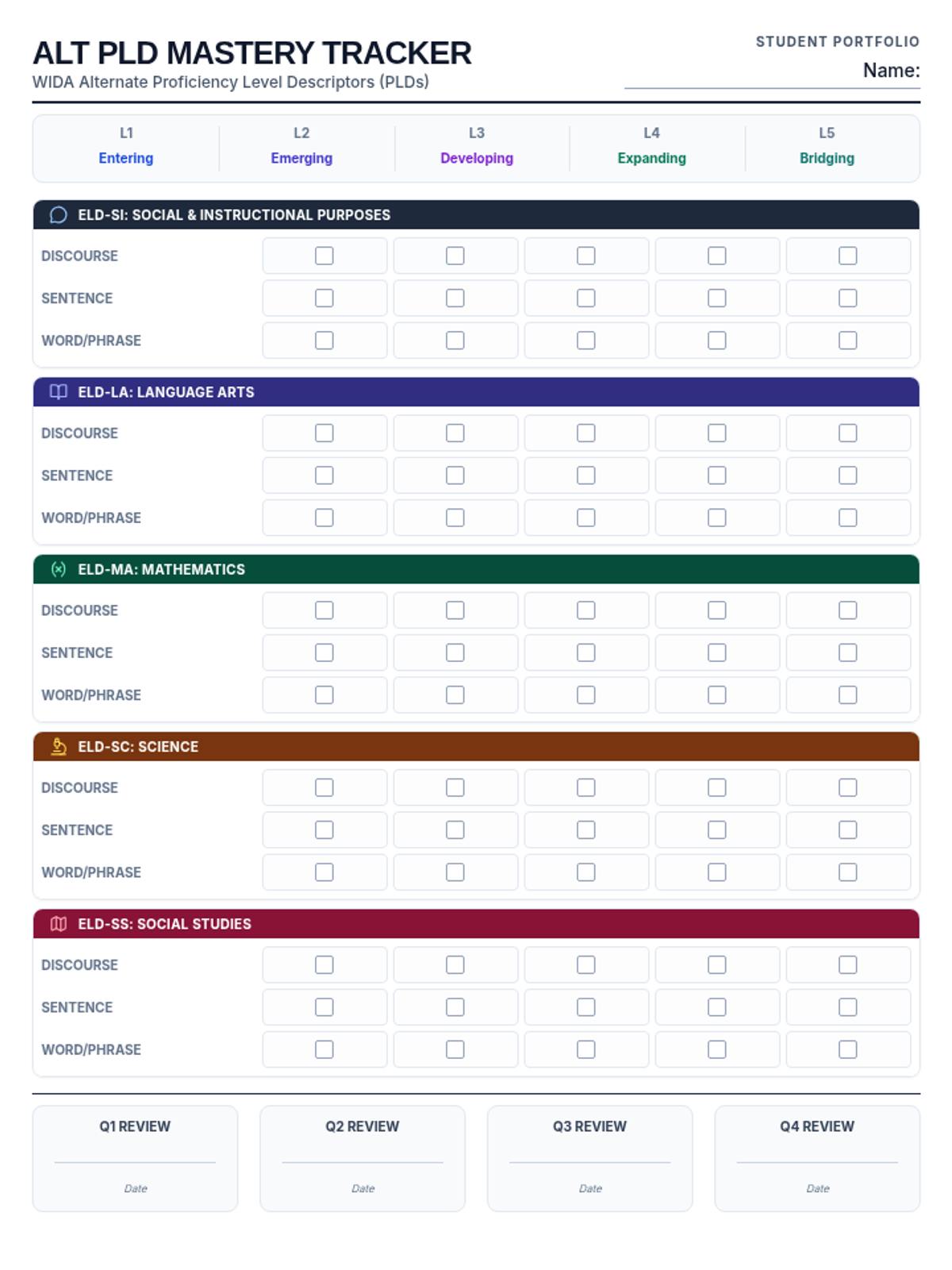
A high-level standards tracking sheet that allows educators to visualize student progress across all five WIDA Alternate ELD standards and proficiency levels in one view. Updated with Discourse, Sentence, and Word/Phrase dimensions.
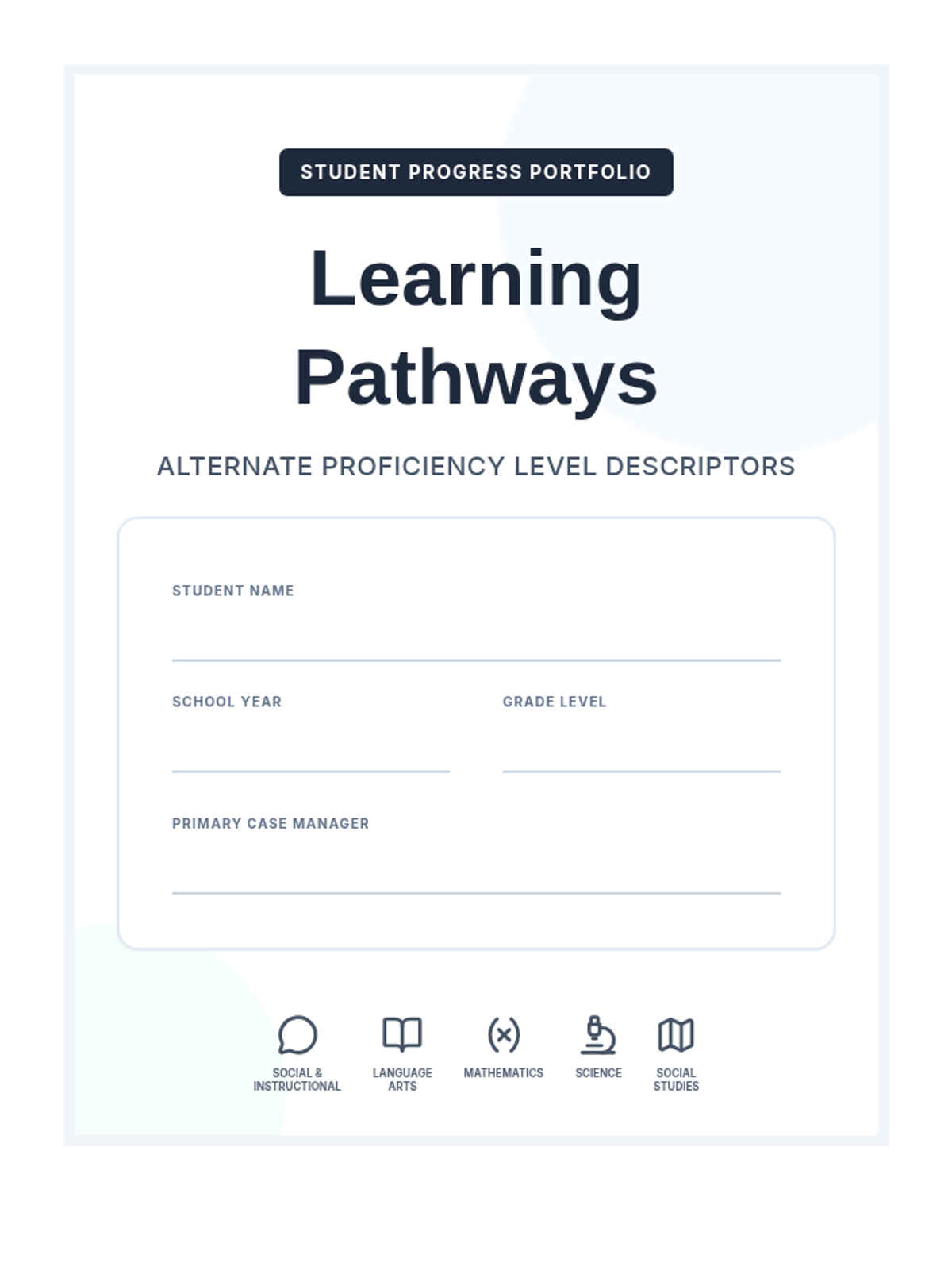
A clean and professional binder cover page for student portfolios, featuring a structured layout for identification and subtle iconography representing the five WIDA ELD standards. Updated to reflect Alternate PLDs.
Large-scale visual prompt cards to be used by a teacher or sub to visually signal high and low pitch changes to students in an adaptive setting.