A visual categorized reference sheet of 20 goal examples (missions) to help students brainstorm ideas for their Strategy Mission Worksheet. Categories include Academic, Social, Life Skills, Regulation, and Personal Projects.
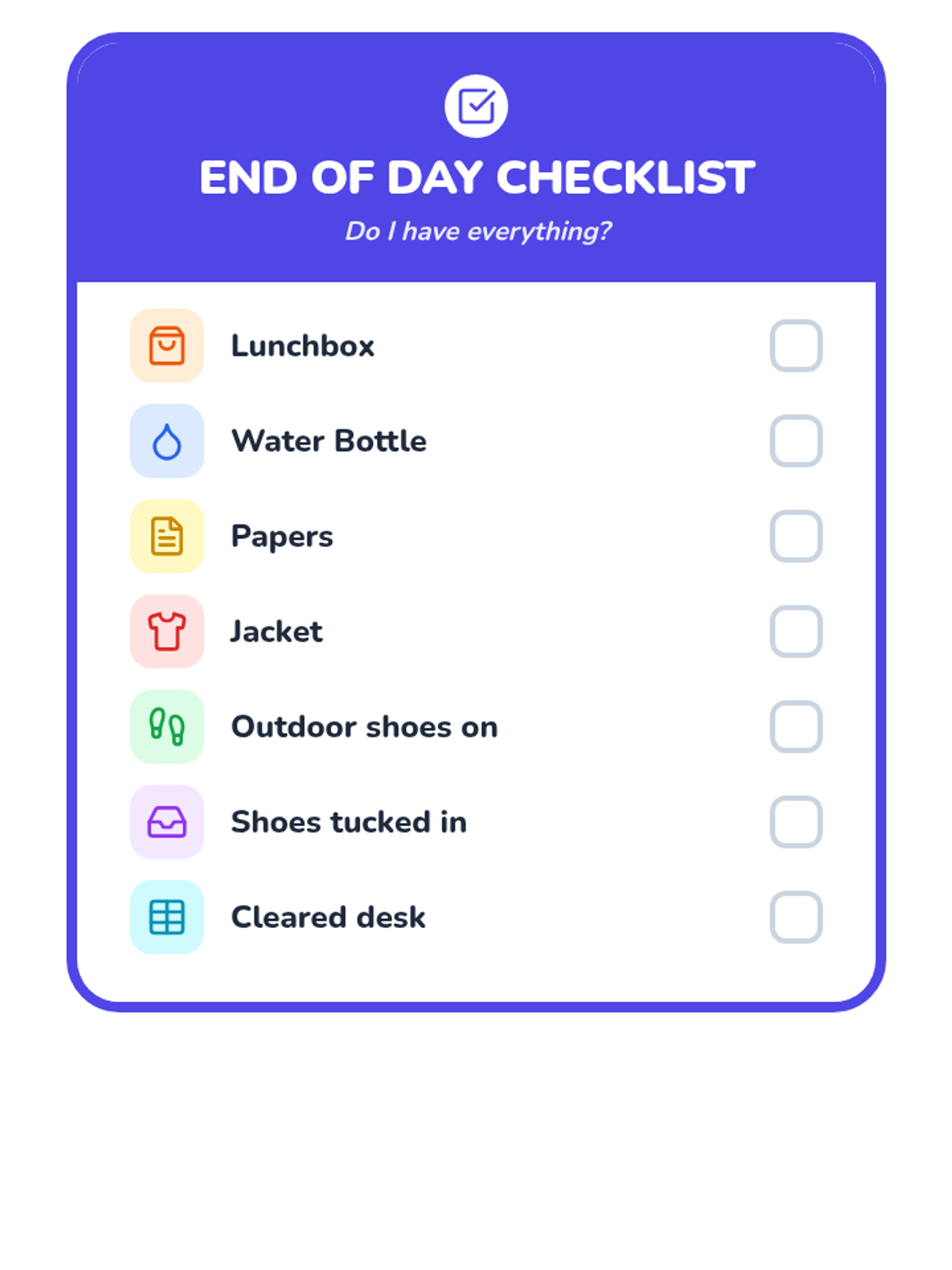
A bold, vertical "End of Day Checklist" for a student cubby. It includes visual icons for lunchboxes, water bottles, papers, jackets, shoes, and a cleared desk.
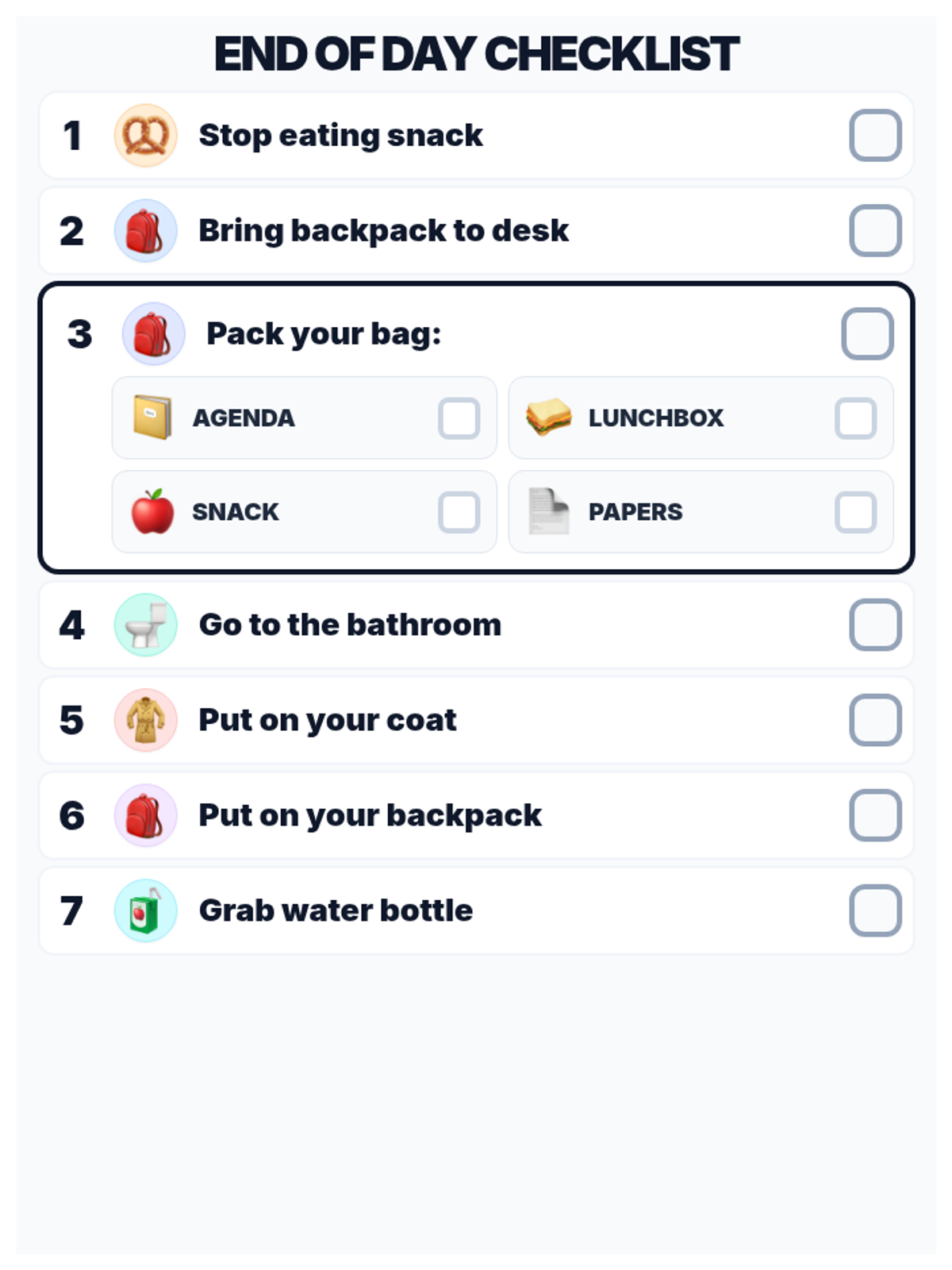
A high-contrast, clean end-of-day checklist for children. Features large text, colorful sticker-style icons, and a dedicated sub-checklist for packing essentials. Designed for independence with clear checkboxes for every task.
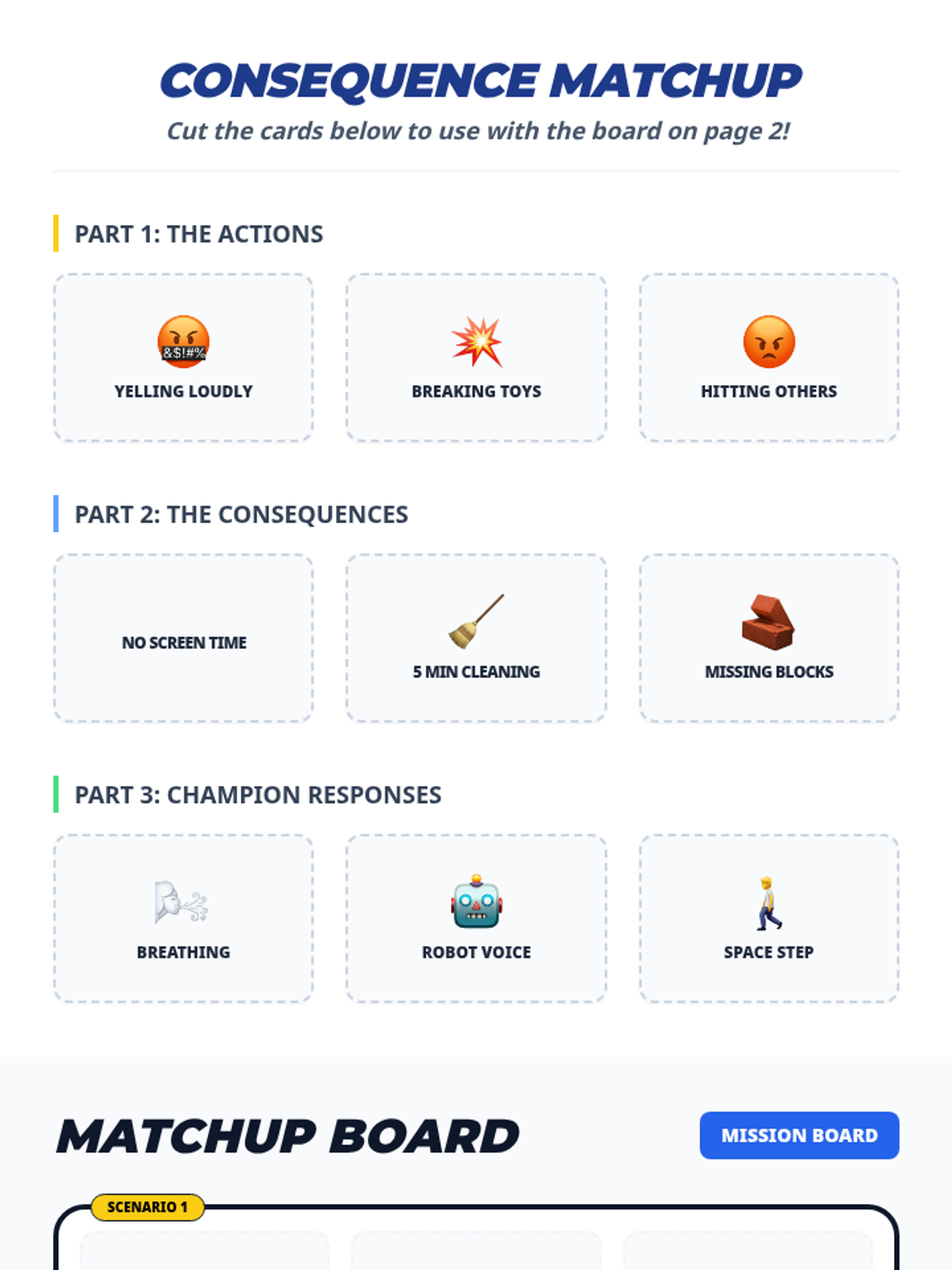
A hands-on matching activity for students to link specific behaviors (actions) with logical consequences and productive, calm self-regulation responses.
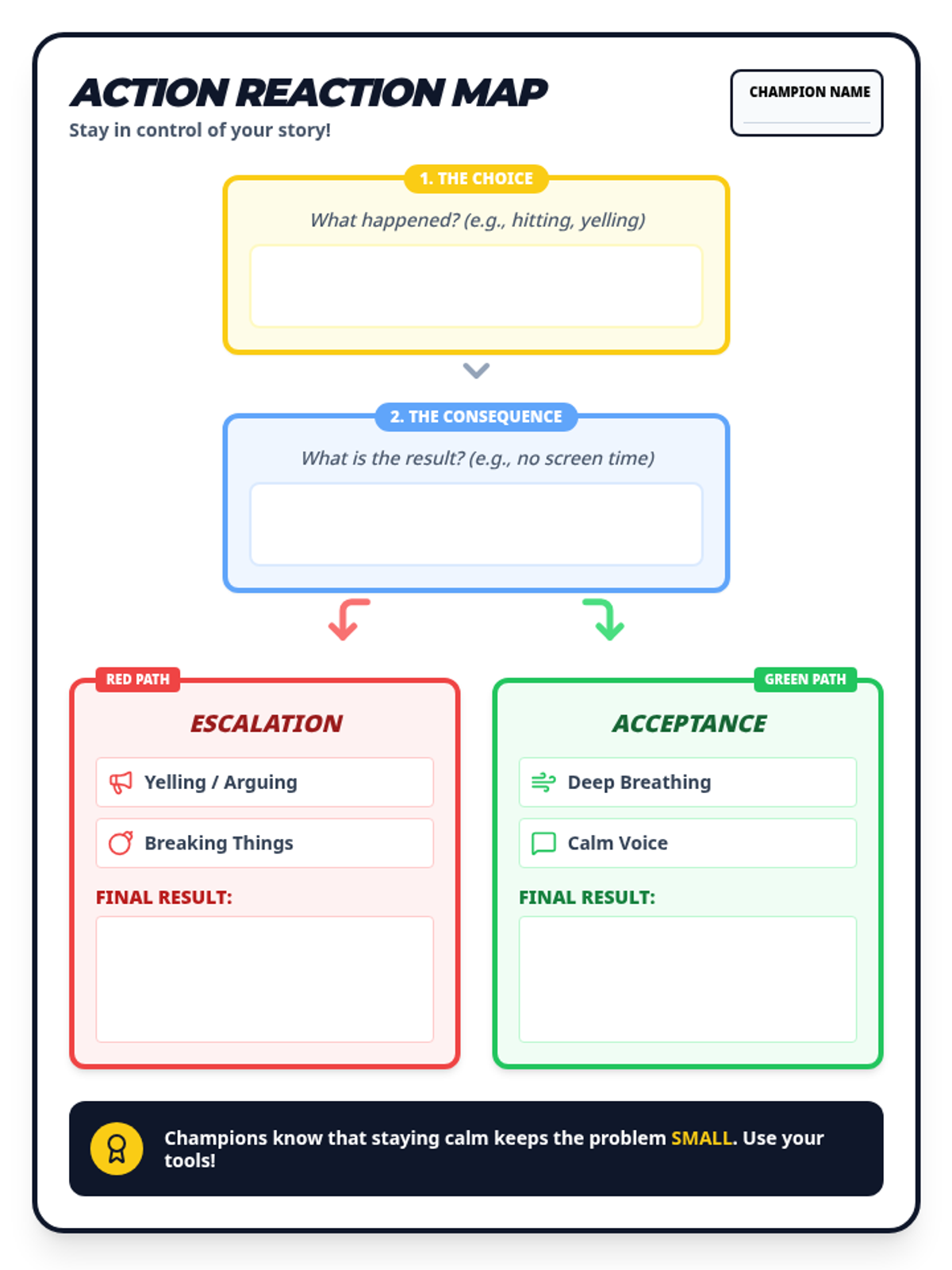
A visual graphic organizer (consequence map) for students to trace the path between an action, its consequence, and the two possible ways to react (escalation vs. acceptance).
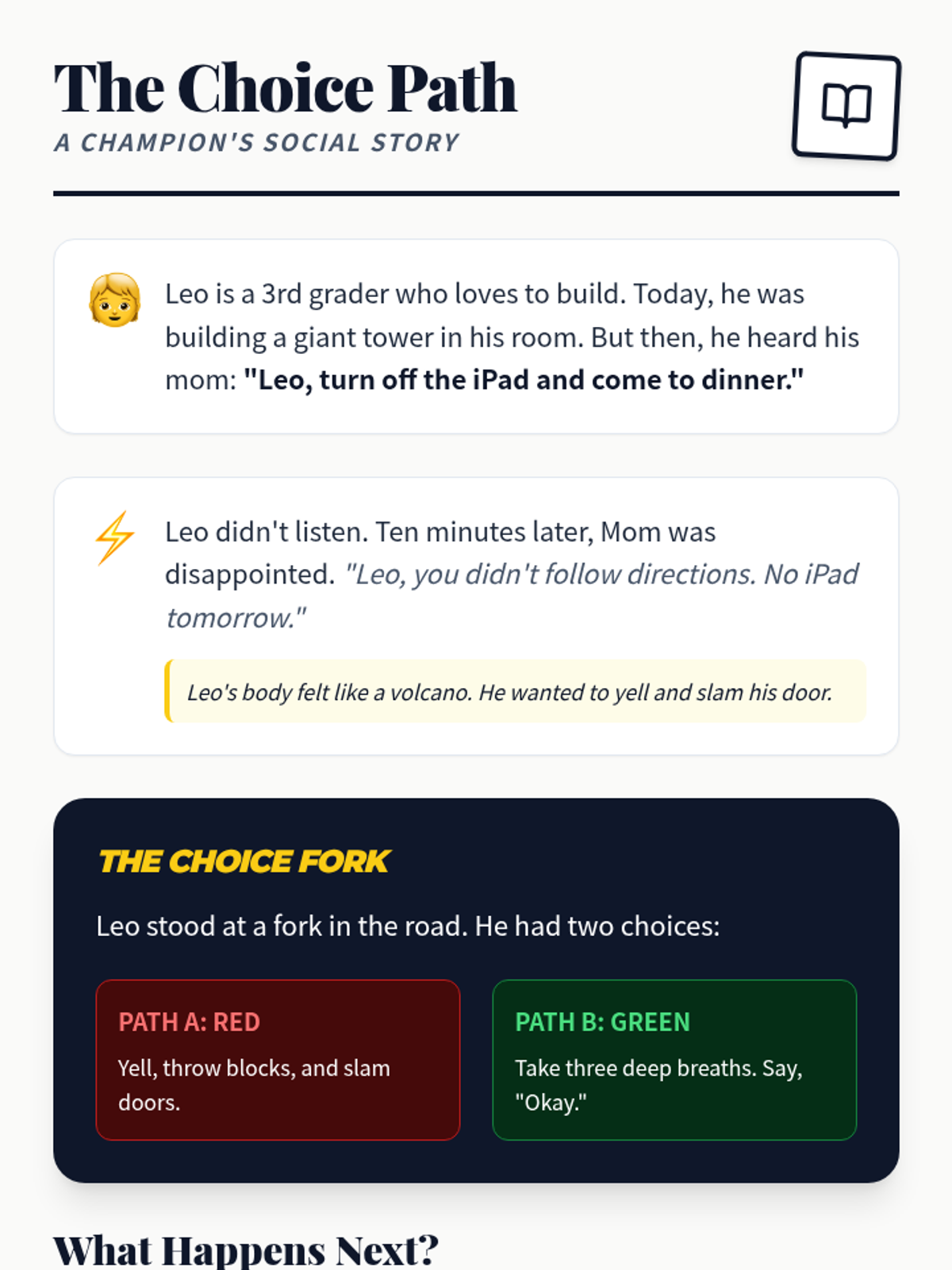
A two-page social story focusing on a relatable scenario (iPad time) and the diverging results of escalated vs. calm reactions, specifically addressing property destruction and yelling.
A 6-slide visual presentation for teaching students with ADHD the difference between escalated and calm reactions to consequences, including specific self-regulation tools.
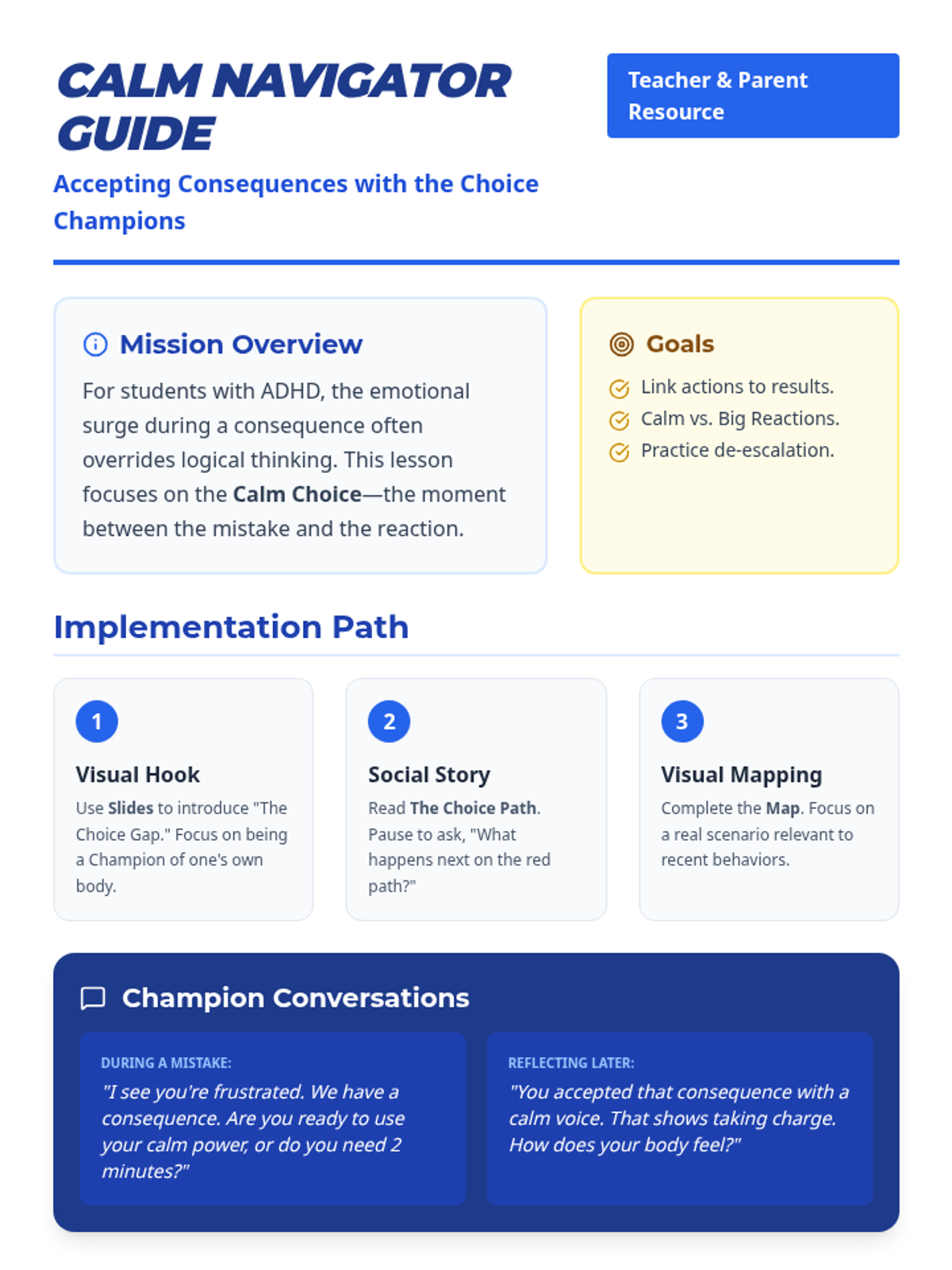
A 2-page teacher and parent guidance document providing implementation steps, discussion prompts, and behavioral strategies for teaching calm reactions and consequence acceptance.
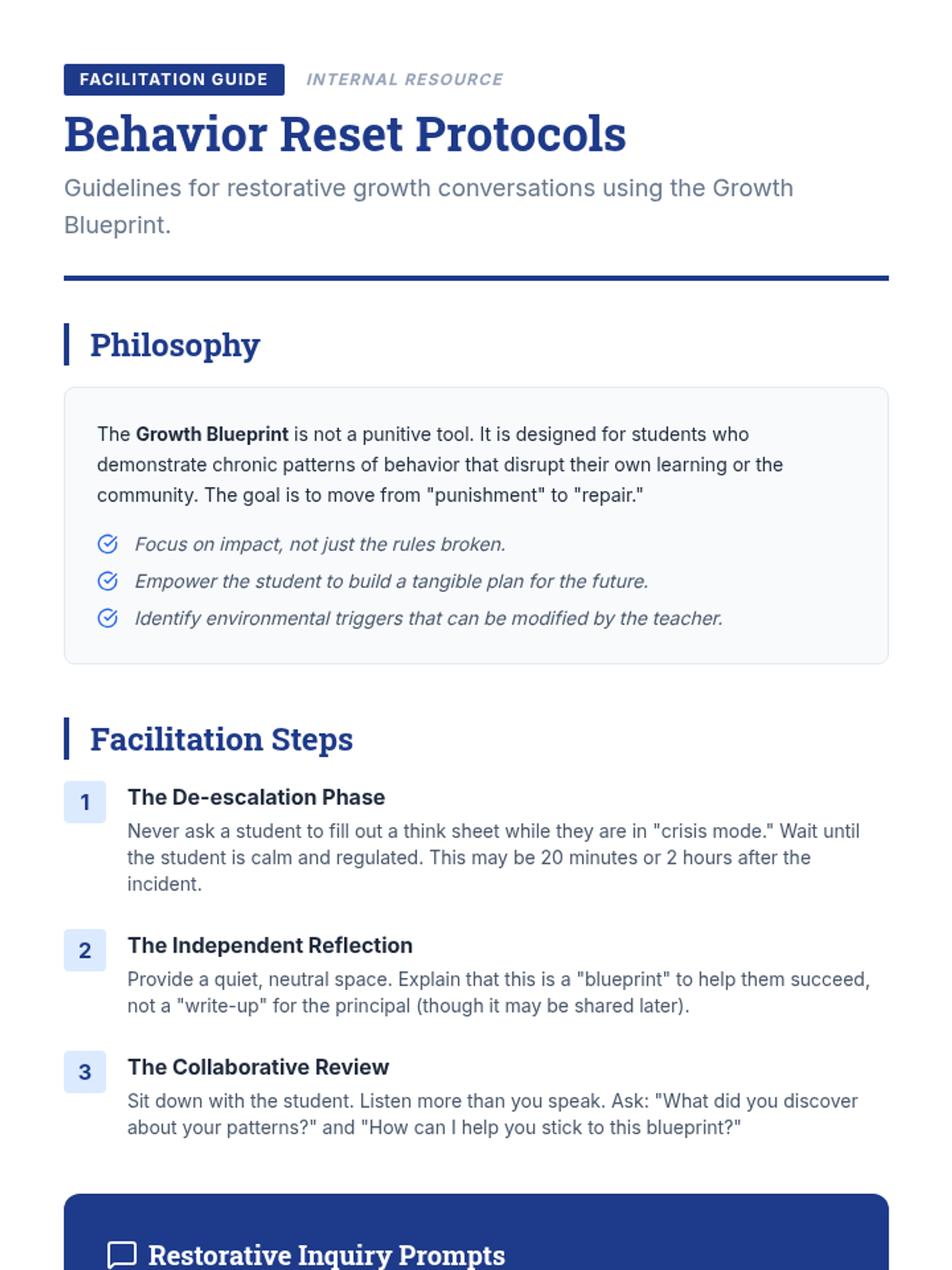
A comprehensive guide for teachers on facilitating restorative behavior conversations. It includes philosophy, step-by-step implementation, discussion prompts, and strategies for tracking long-term progress.
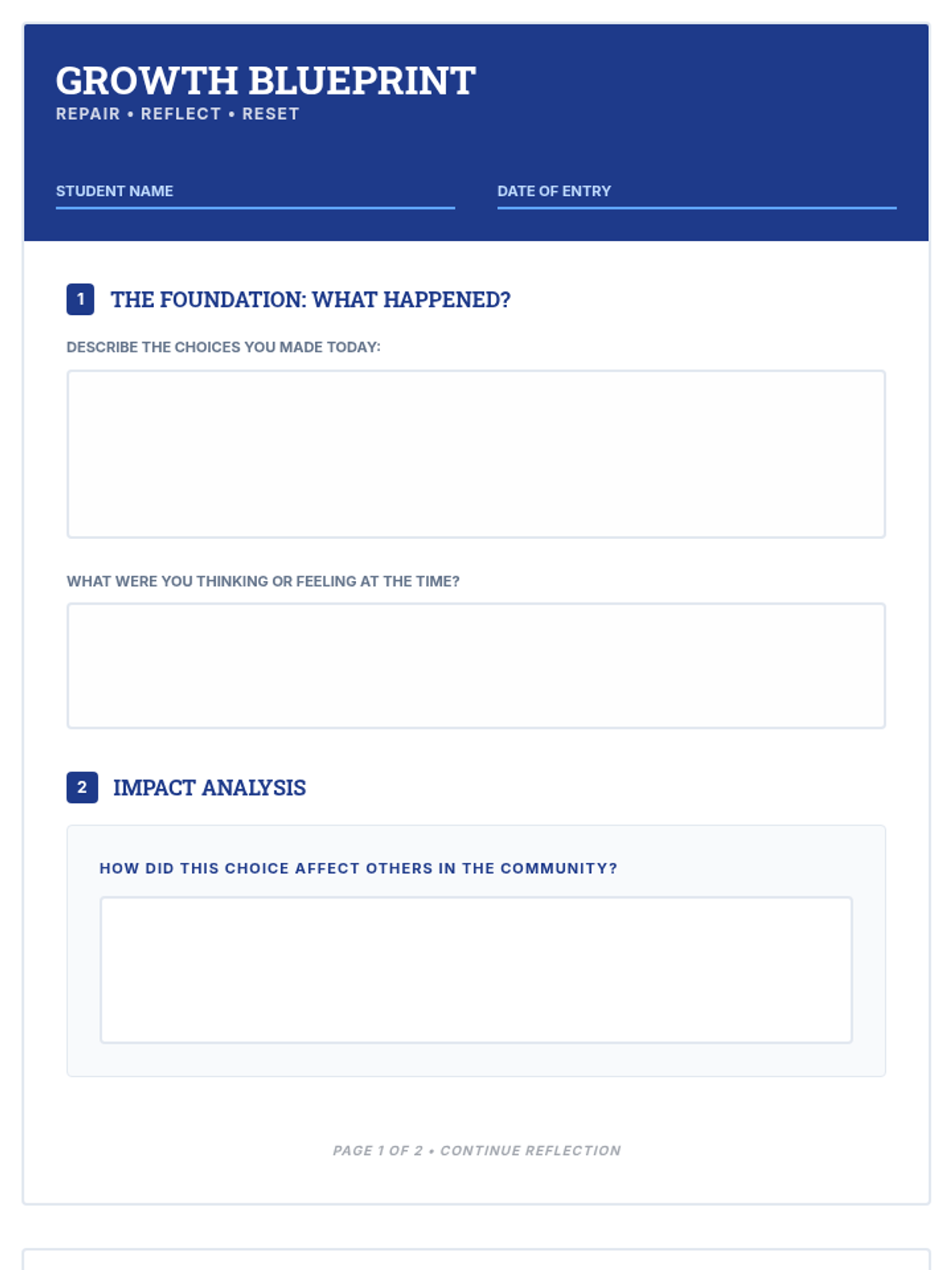
A restorative behavior reflection sheet designed for students to analyze chronic patterns and create a 'blueprint' for future success. It includes sections for incident description, impact analysis, trigger identification, and goal setting.
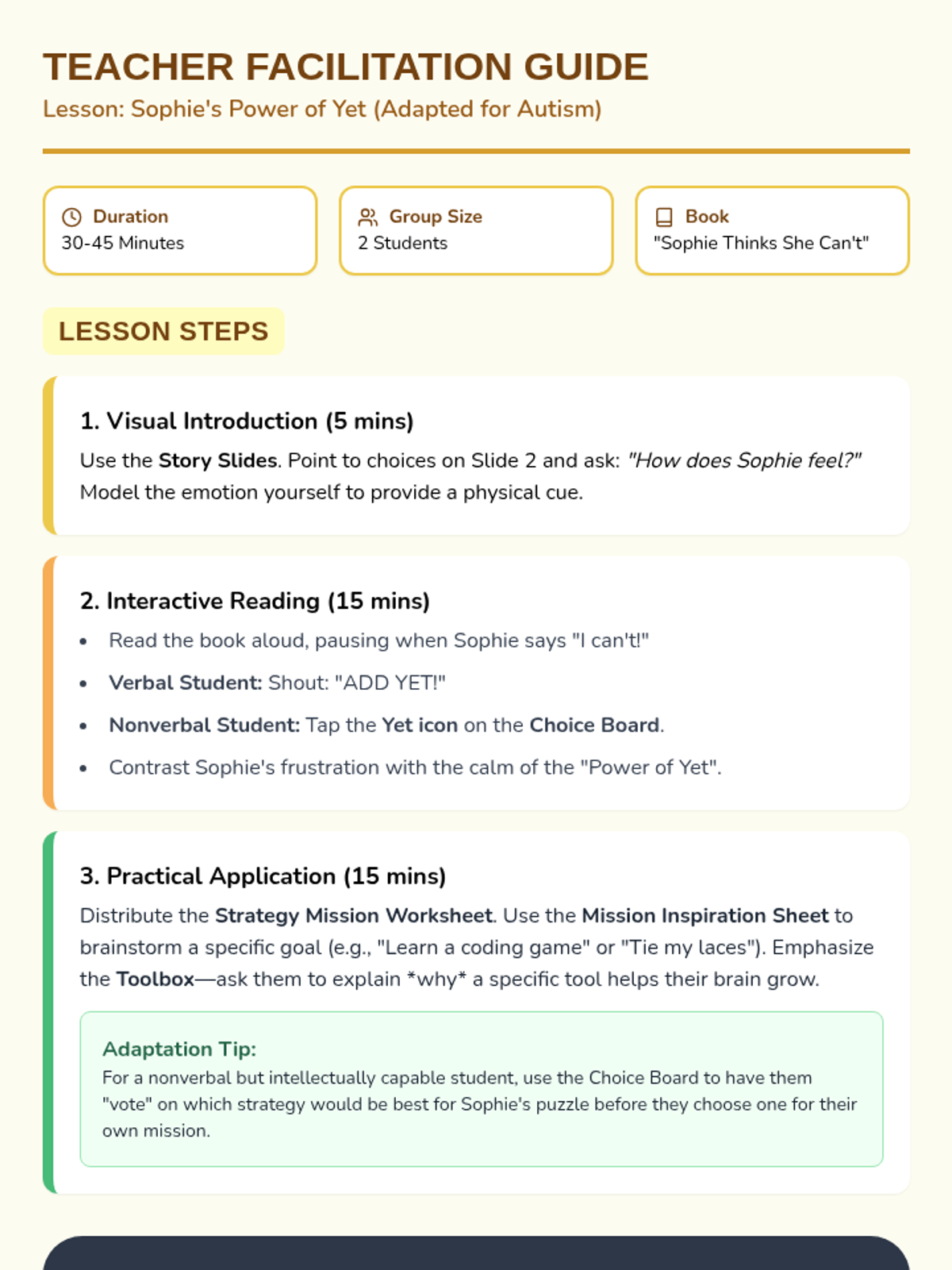
A comprehensive facilitation guide for teachers, offering step-by-step instructions and specific adaptations for teaching perseverance to students with autism. Includes strategies for both verbal and nonverbal learners.
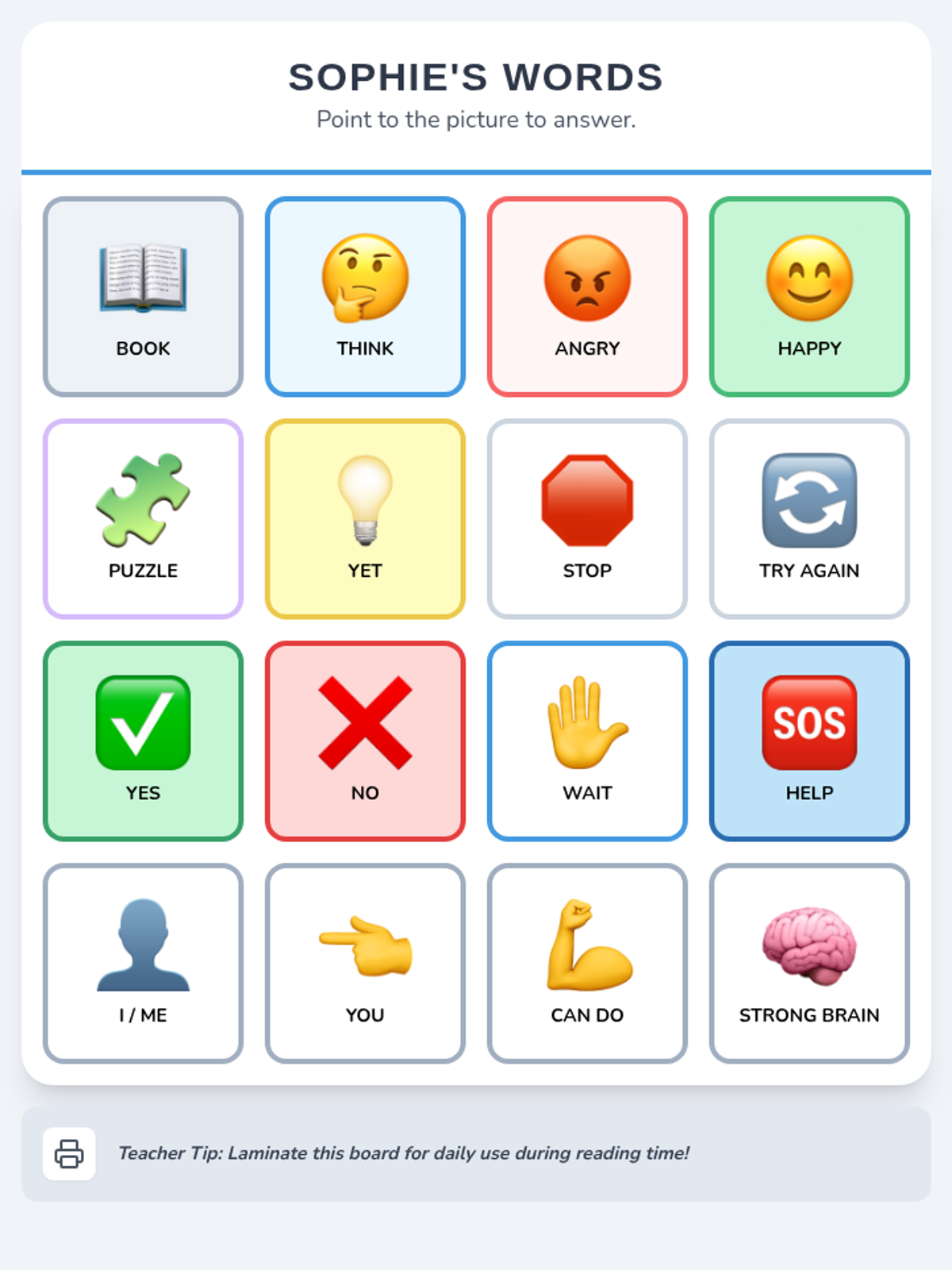
A simple communication choice board featuring 16 high-contrast icons to help nonverbal students respond to questions about 'When Sophie Thinks She Can't'. Includes feelings, actions, and key concept icons like 'Yet'.