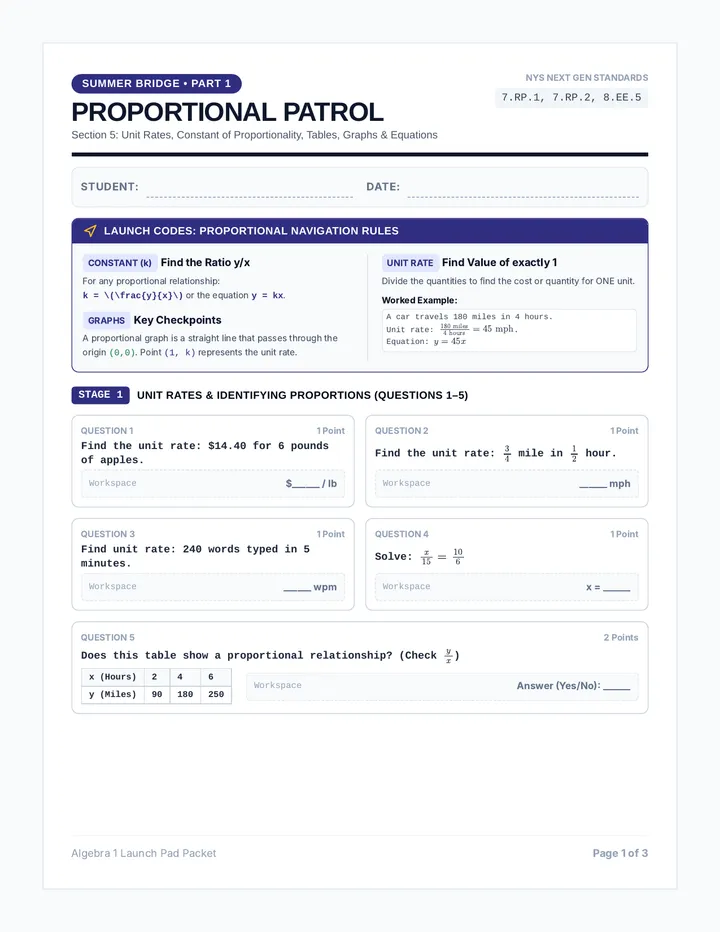
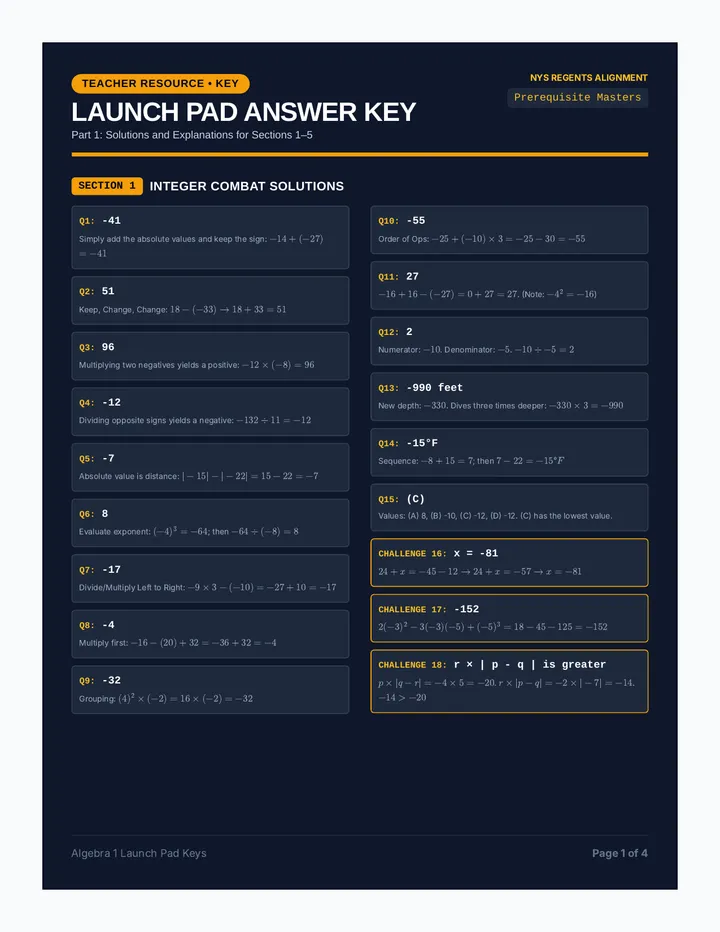
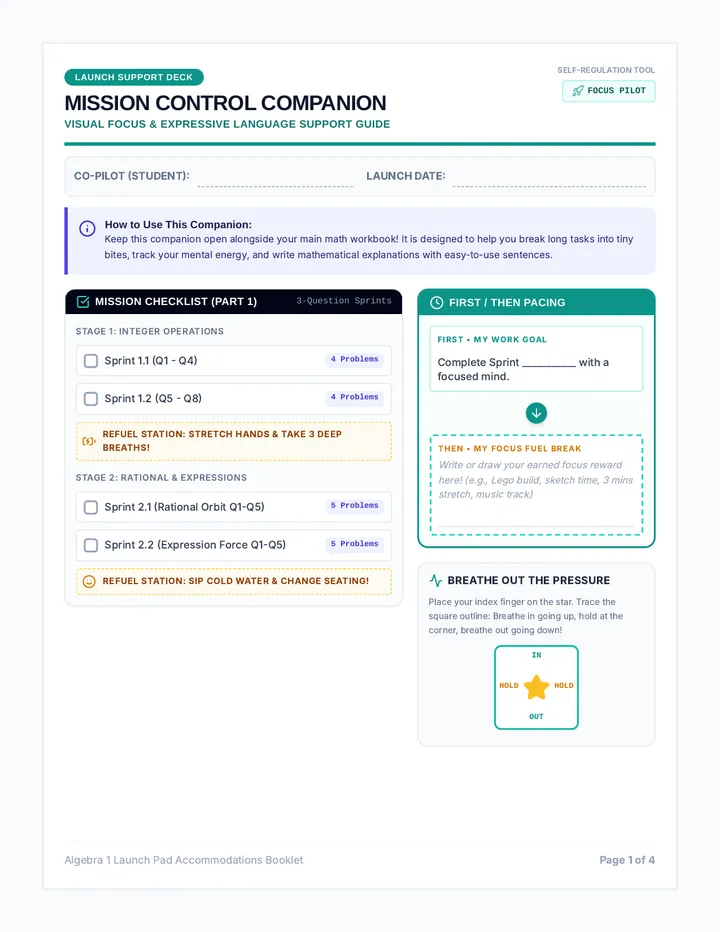
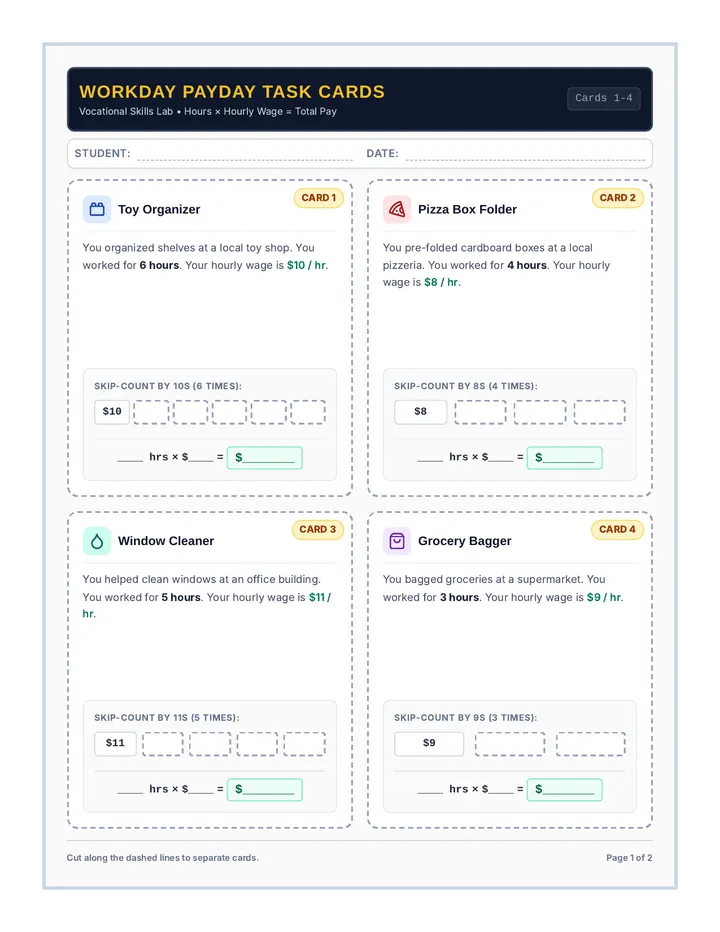
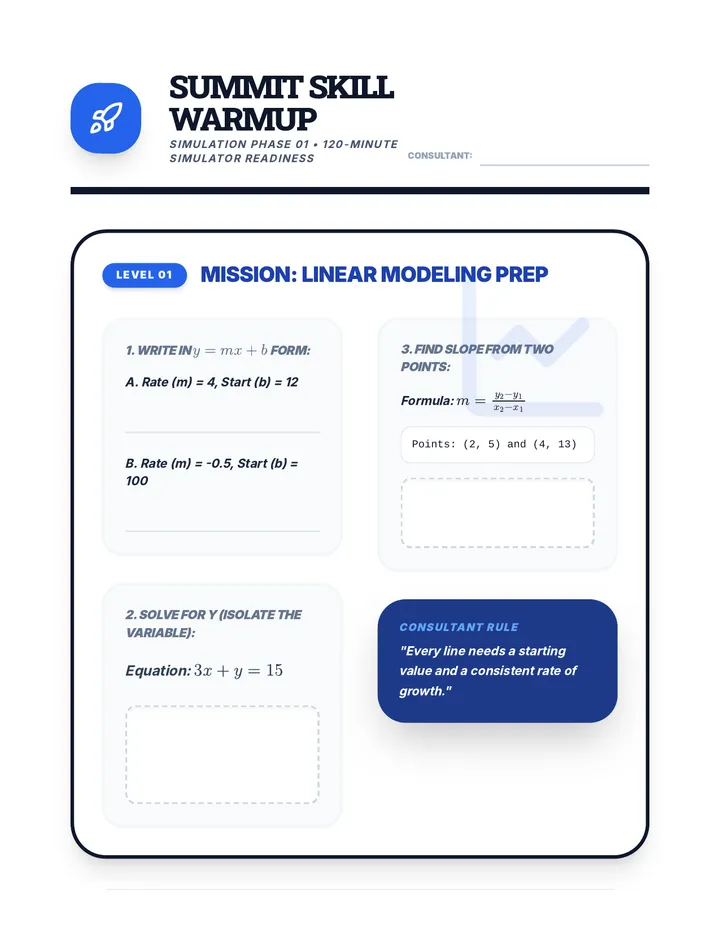
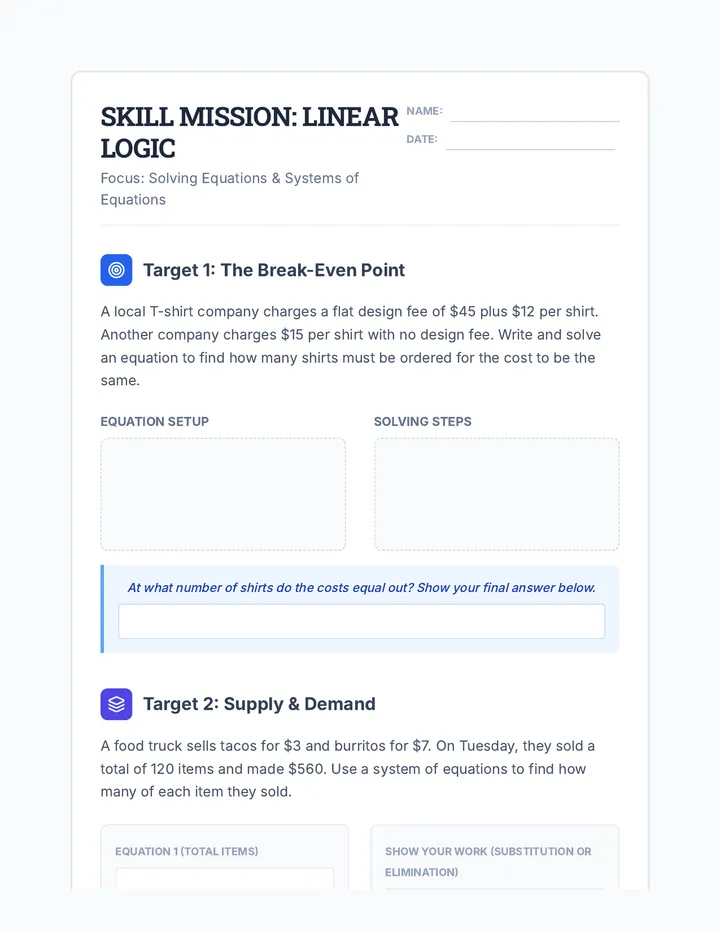
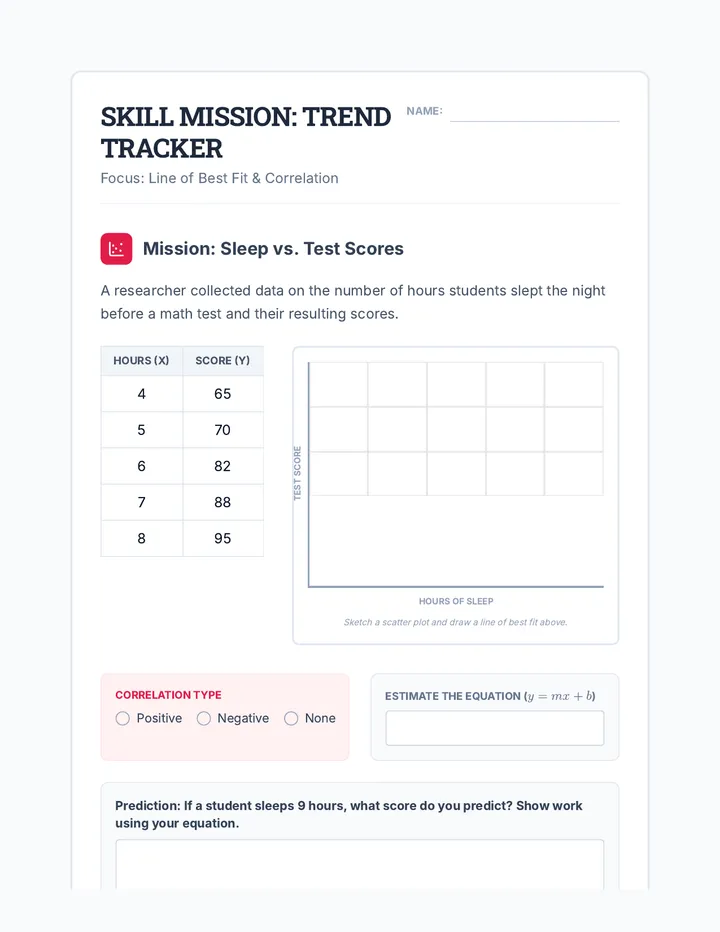
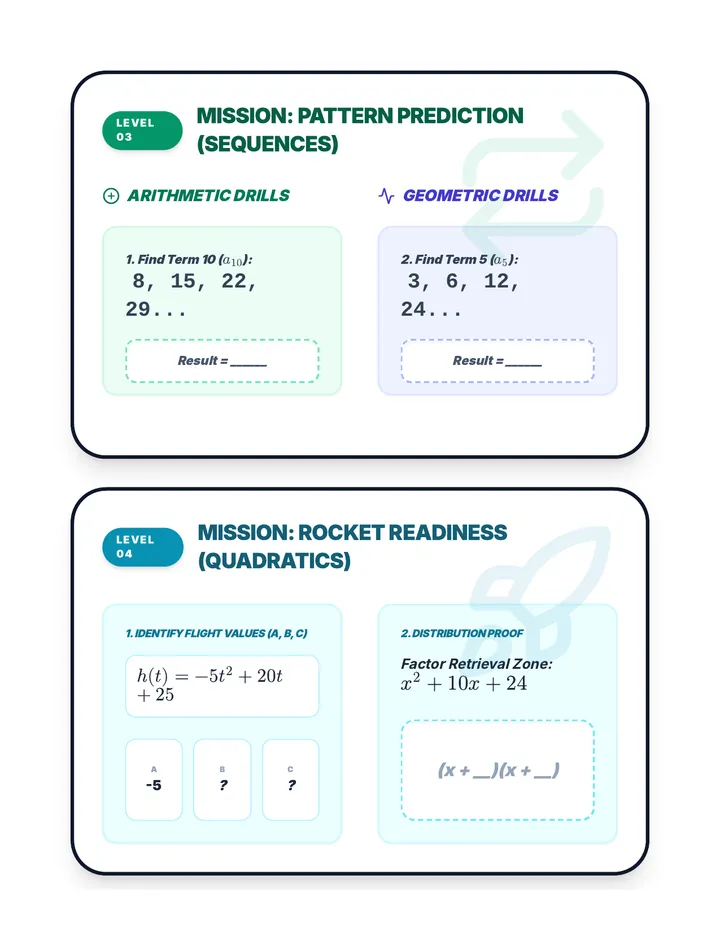
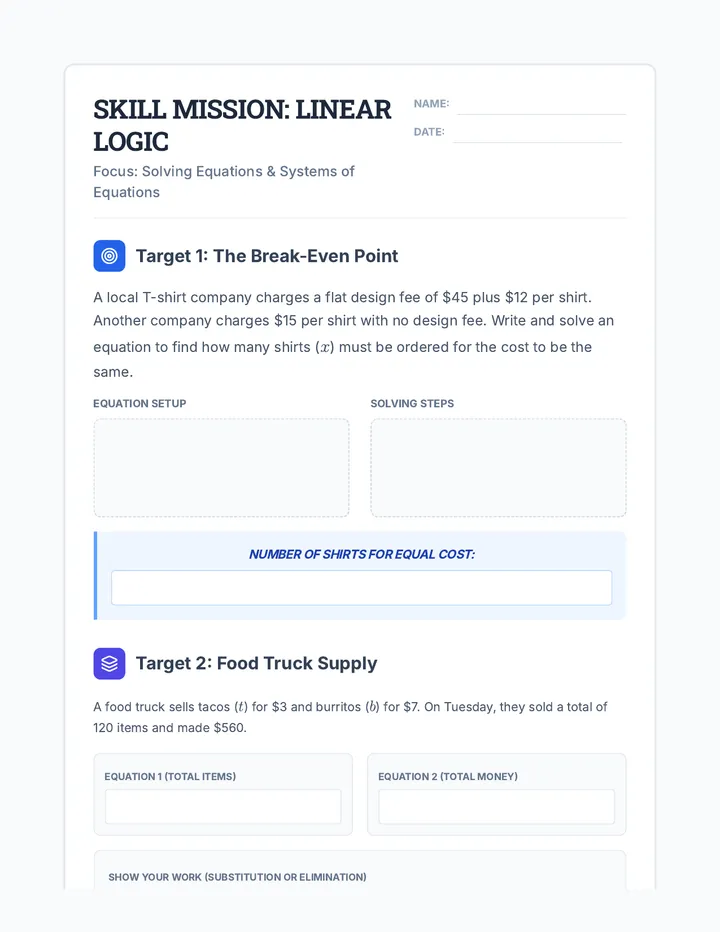
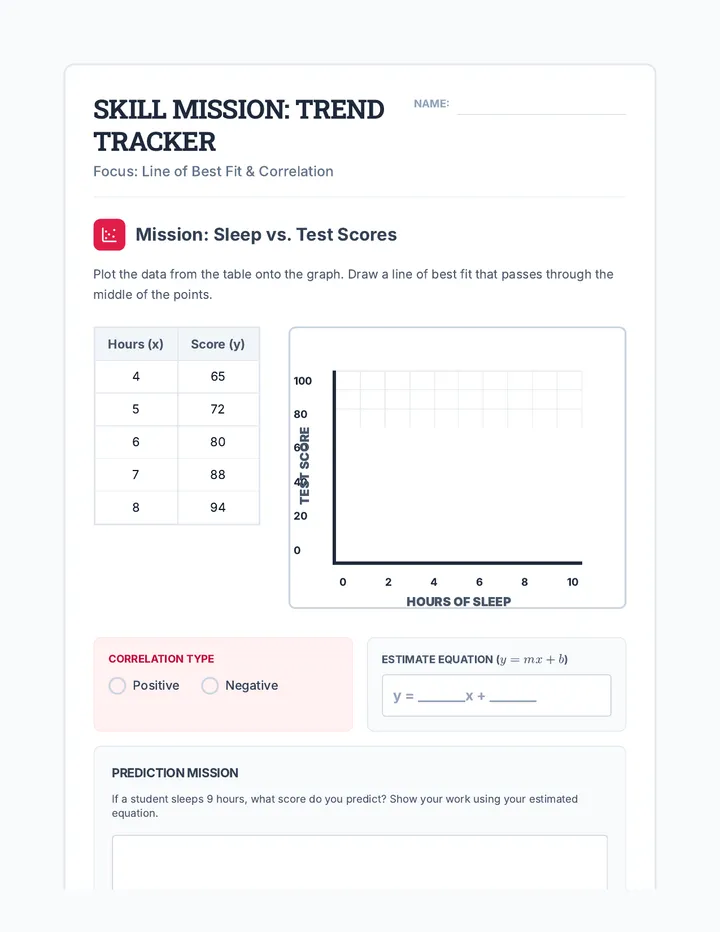
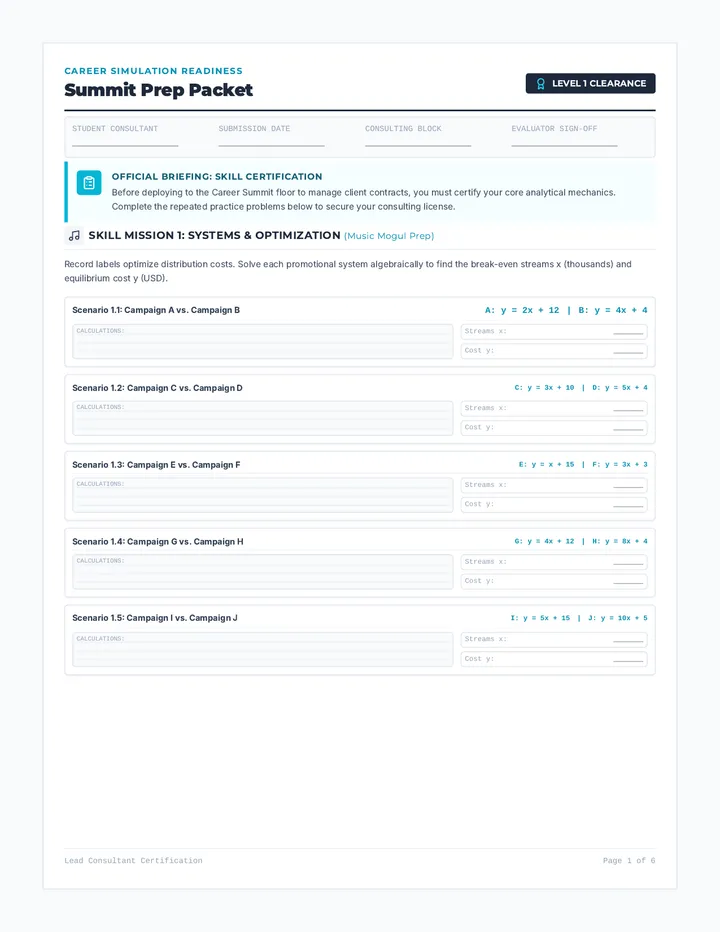
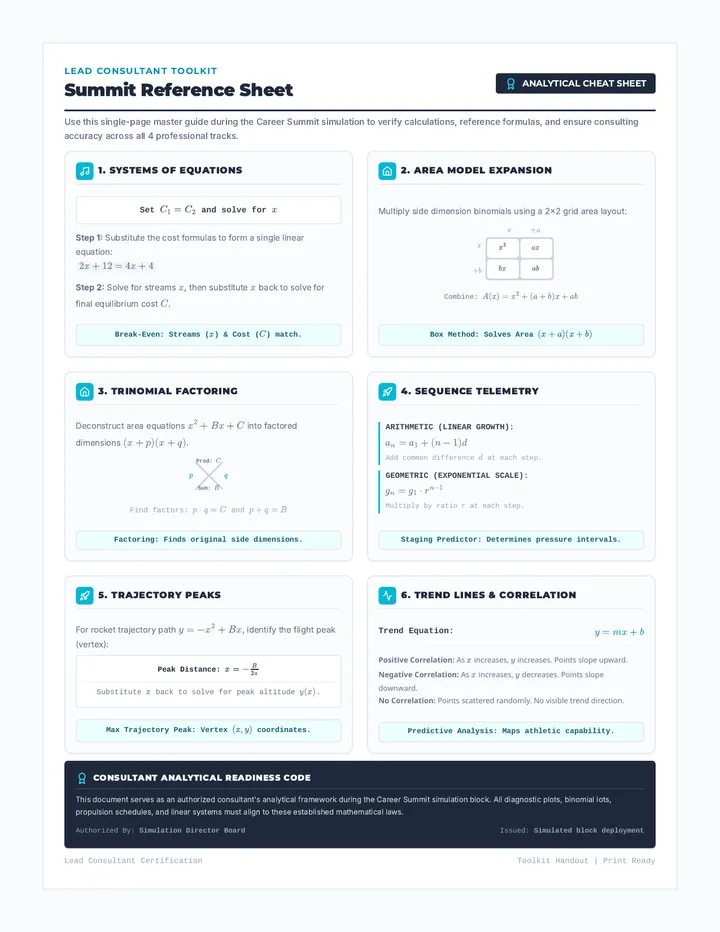
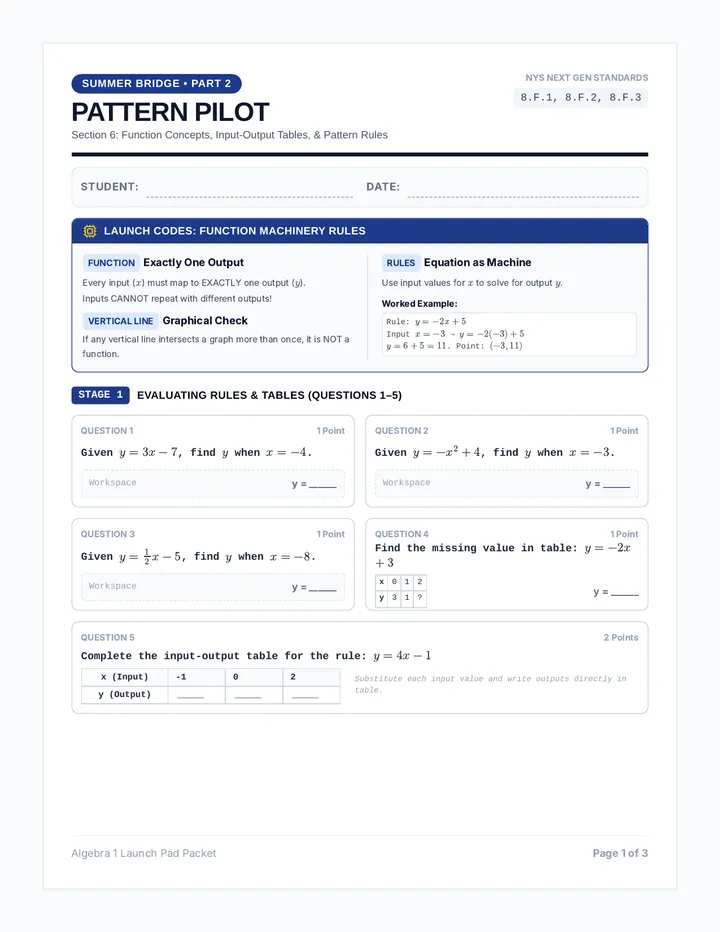
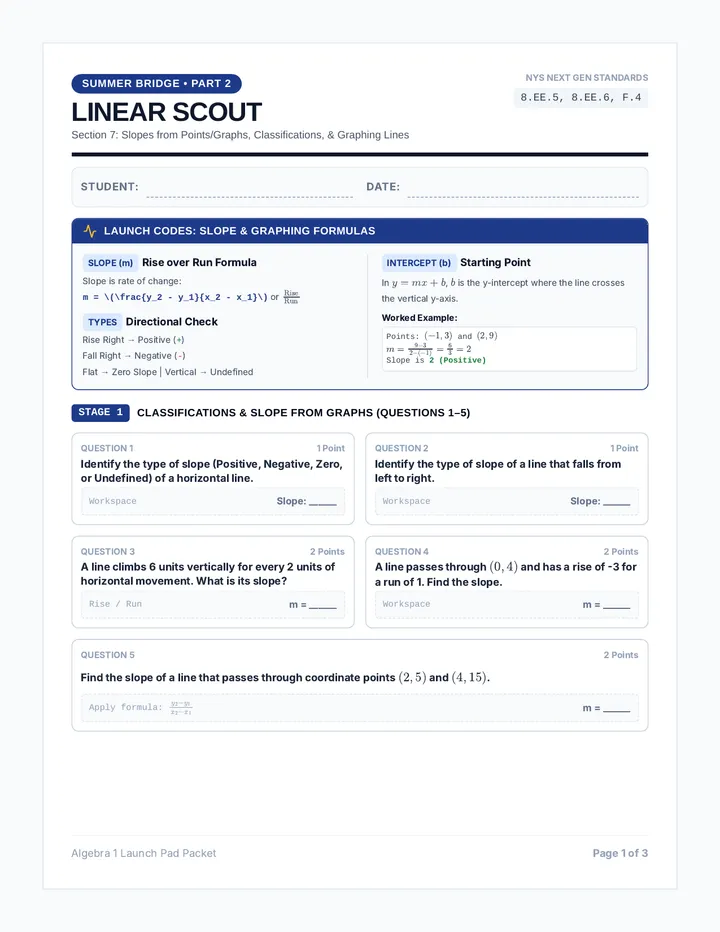
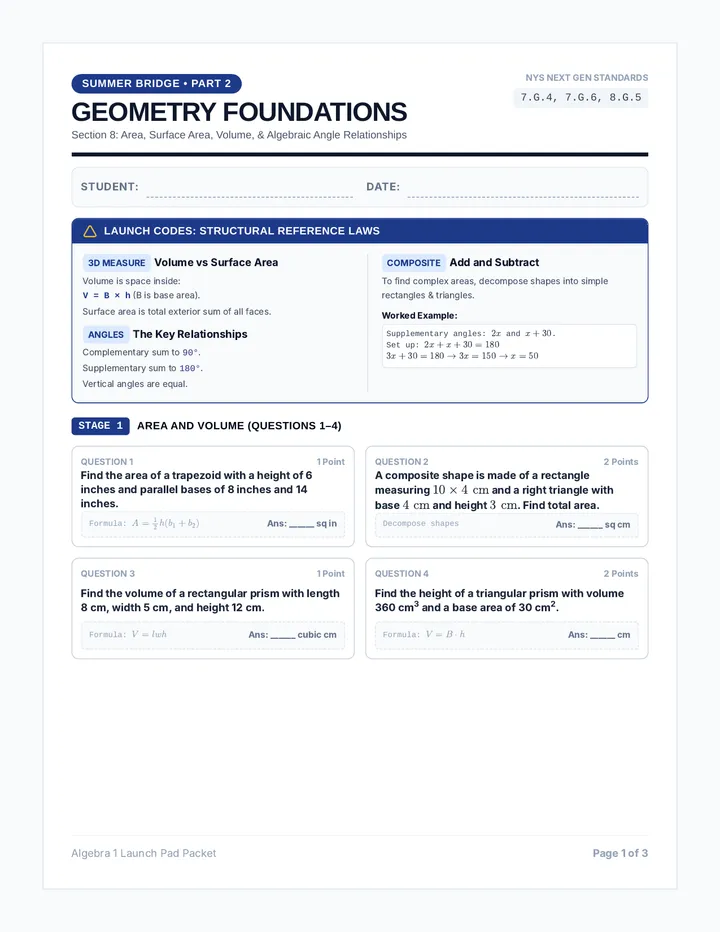
A set of 6 discussion prompt cards for 8th-grade math students. These focus on conceptual understanding of the y-intercept, its real-world applications, and its relationship with the origin.
An answer key for the Blueprint Builders lesson, providing correct matches for vocabulary and step-by-step solutions for the practice quiz with standardized mathematical notation.
A 10-question multiple-choice assessment for calculating the area of composite figures, featuring actual SVG diagrams for every problem and dedicated show-your-work spaces.
A vocabulary matching activity for the Blueprint Builders lesson, covering key terms like Composite Figure, Decompose, and Area, featuring a larger response area and improved alignment.
Instructional slides for teaching the Area of Composite Figures. Includes visual examples of decomposing shapes into rectangles, triangles, and semi-circles with step-by-step calculations, plus a challenge preview.
A teacher's answer key for the Butterfly Plot activity, showing the correctly plotted butterfly across four quadrants with a visual solution guide.
A student worksheet for a coordinate plane activity. Students plot a series of integer coordinates in four quadrants to reveal a butterfly image, which can then be colored.
A vibrant slide deck introducing 6th-grade students to the coordinate plane, covering the four quadrants, the origin, and tips for plotting points with zeros.
The teacher-facing answer key for the Checkout Quiz Assessment. Revised to fit onto a single page and improve clarity.
A formal summative assessment on Mean, Median, Mode, and Range. Revised to fix page breaks, improve contrast, and expand student work areas.
A set of 4 task cards for center activities, revised to include recording areas for all cards, cut lines, and improved legibility.
A student practice worksheet featuring three different shopping data sets (video games, sneakers, and smoothies). Revised to fix page breaks, increase work area sizes, and balance white space.
Guided notes for students to follow along with the Price Tag Patrol presentation. Revised to improve layout, page breaks, and student work areas.
A vibrant set of slides introducing Mean, Median, Mode, and Range using shopping-themed examples. Features clear definitions, step-by-step calculations, and a "Your Turn" practice scenario. Revised for layout and accessibility.
A final reflection activity where students compare their theoretical predictions to experimental results, analyze the difference, and reflect on the fairness of their carnival game.
A scorecard worksheet for students to record outcomes (wins vs. losses) during their carnival gameplay, ensuring they collect enough experimental data for analysis.
A design activity document where students plan their carnival game, list materials, and calculate the theoretical probability of winning before construction.
An engaging slide deck for 'The Chance Fair' introducing probability concepts, theoretical vs. experimental outcomes, and project rules.
A comprehensive teacher lesson plan for 'The Chance Fair', including learning objectives, required materials, a step-by-step facilitation guide, and differentiation strategies.
Condensed teacher answer key and instructional guide. Fits all worksheet solutions, notes keys, and pedagogical tips onto a single page for easy reference. Uses full terminology as requested.
Highly scaffolded practice worksheet for angle relationships. Features enlarged work boxes for equations and substitution steps, improved SVG clarity, and high-contrast visual hints for student accessibility.
Comprehensive practice slides for angle relationships. Features 3-step scaffolds (Identify, Equation, Solve) for complementary, supplementary, and vertical angle problems, ensuring "one step per slide" instruction as requested.
Scaffolded guided notes for teaching angle relationships. Includes a word bank with "intersecting", visual cues (L-shape, Line, X), and step-by-step practice problems with enlarged handwriting areas. All definitions fit on the first page.
Answer key for the high-school statistics test, featuring detailed algebraic steps, frequency table summations, and conceptual justifications. Standardized layout for better teacher reference.
A comprehensive high-school level statistics assessment covering central tendency, algebraic solving, frequency tables, and outlier analysis with a professional academic aesthetic. Revised for improved layout and student writing space. Unicode mean symbol used for stability.
Answer key for the Academy Final Evaluation, featuring step-by-step solutions, correct extraction orders, and grading tips for the final assessment. Standardized layout for better teacher reference.
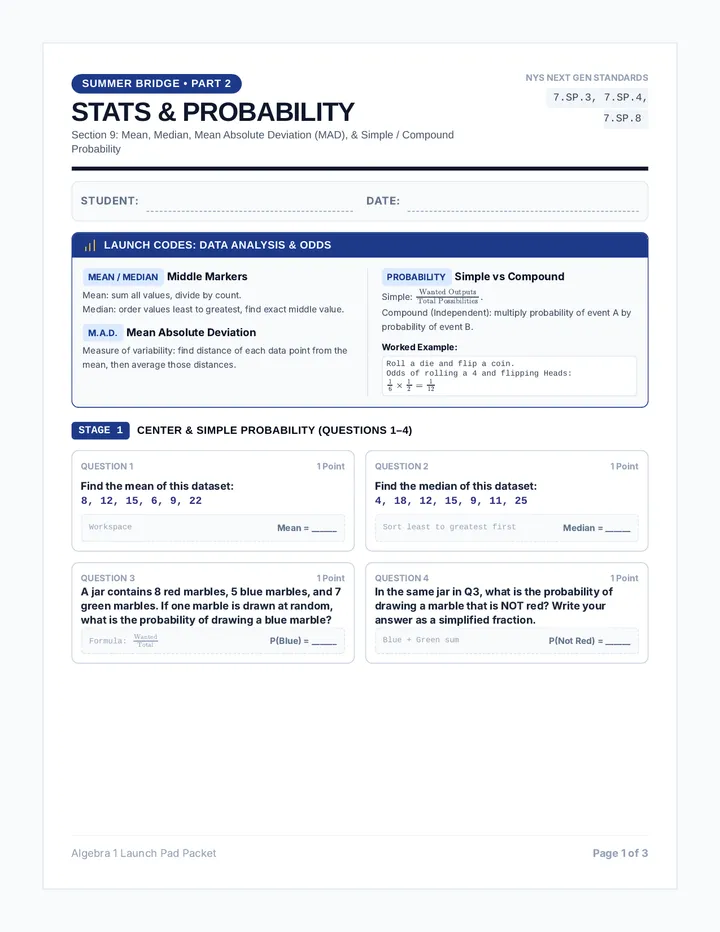
A comprehensive assessment covering Level 1, Level 2, and Level 3 data analysis, designed to evaluate mastery of mean, median, mode, and range in both numerical and narrative contexts. Improved layout for student handwriting.