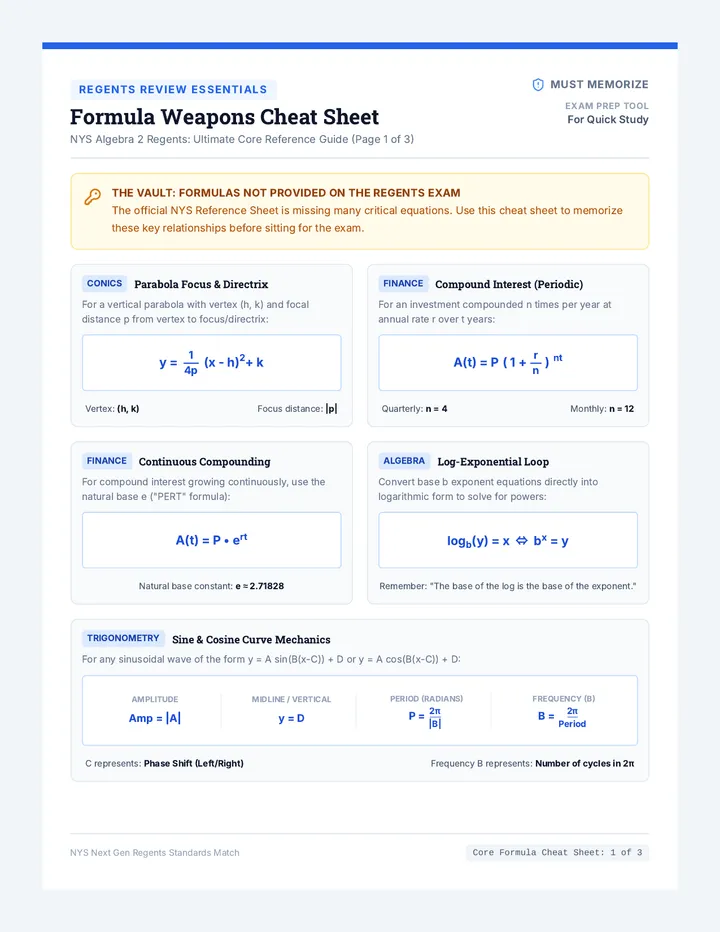
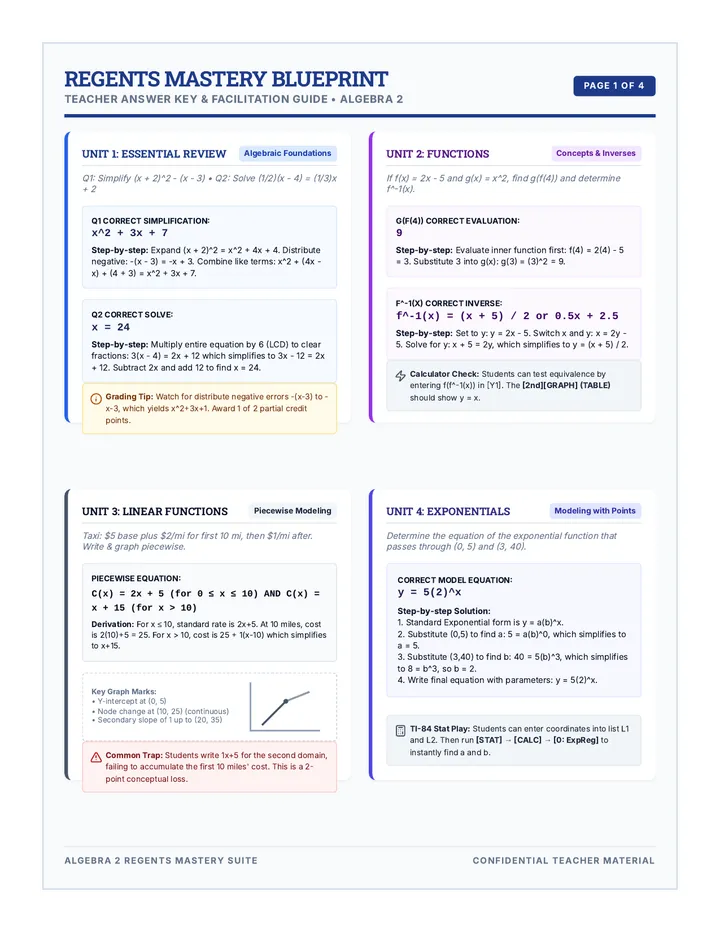
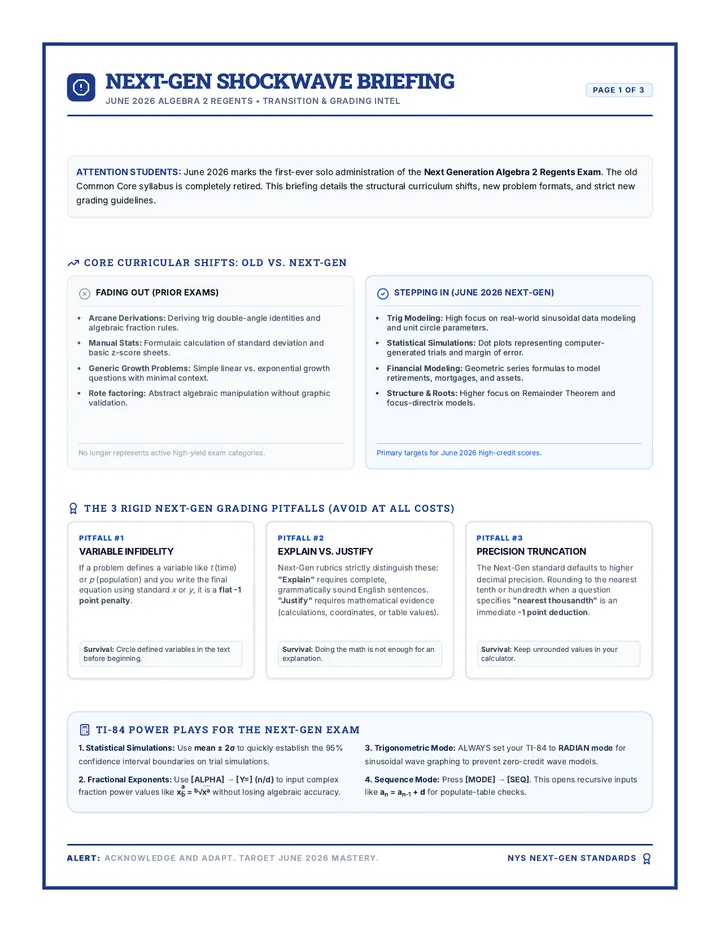
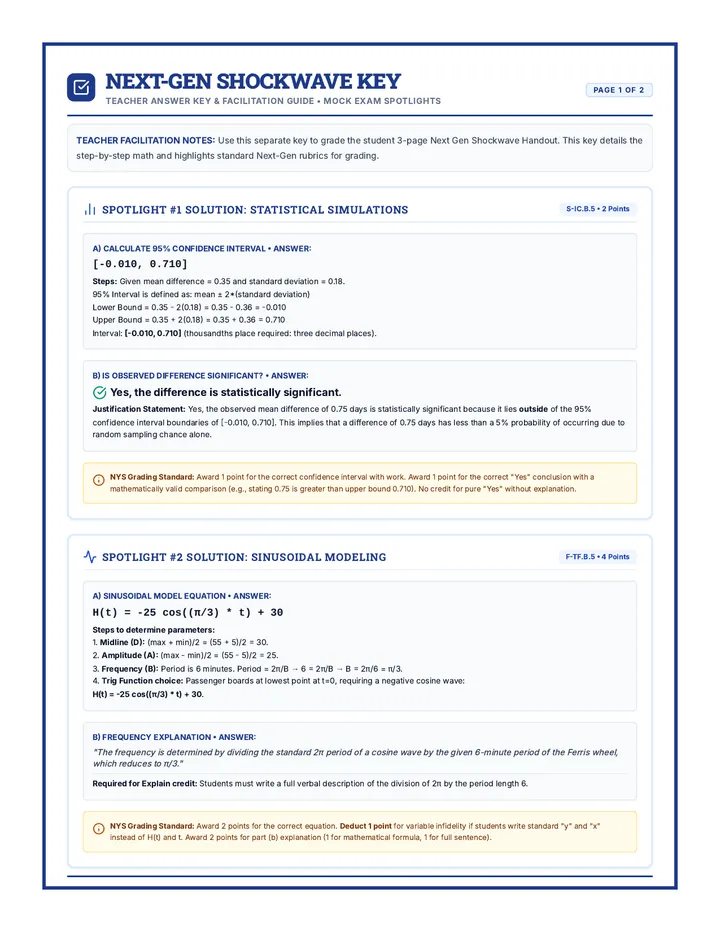
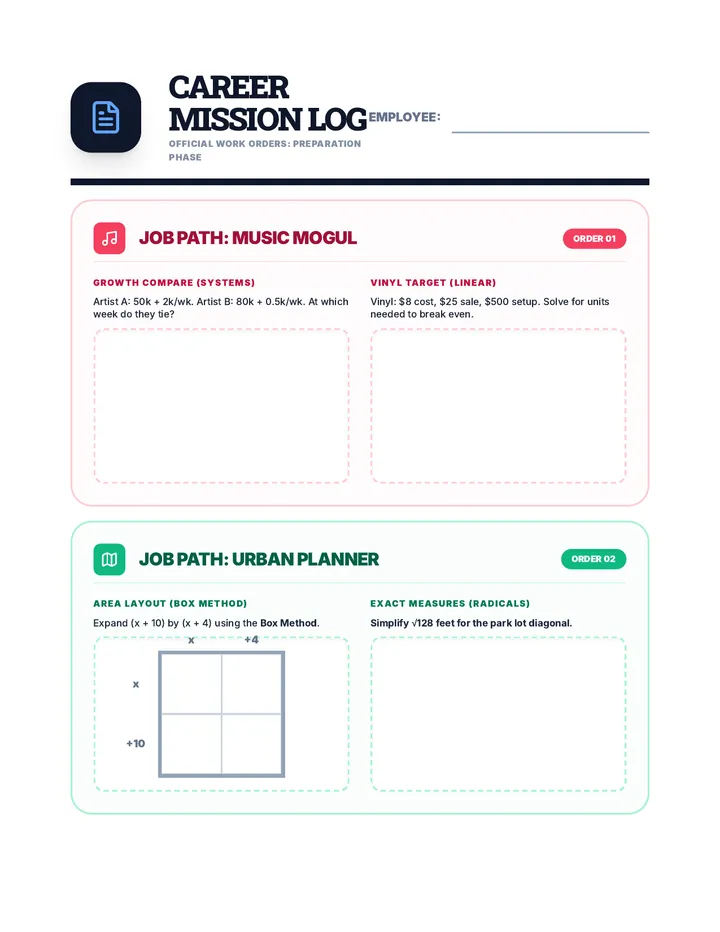
Students will master solving exponential equations using logarithms by creating a tactical flowchart. The lesson focuses on decision points like isolating the base and applying the Change of Base formula.
A focused lesson on the binomial distribution, covering the BINS criteria, identifying parameters, and calculating probabilities using digital spreadsheet tools.
A comprehensive unit review and summative assessment covering three key methods for solving quadratic equations: graphing, factoring, and the quadratic formula. Students practice identifying key features of parabolas, algebraic manipulation for factoring, and the step-by-step application of the quadratic formula.
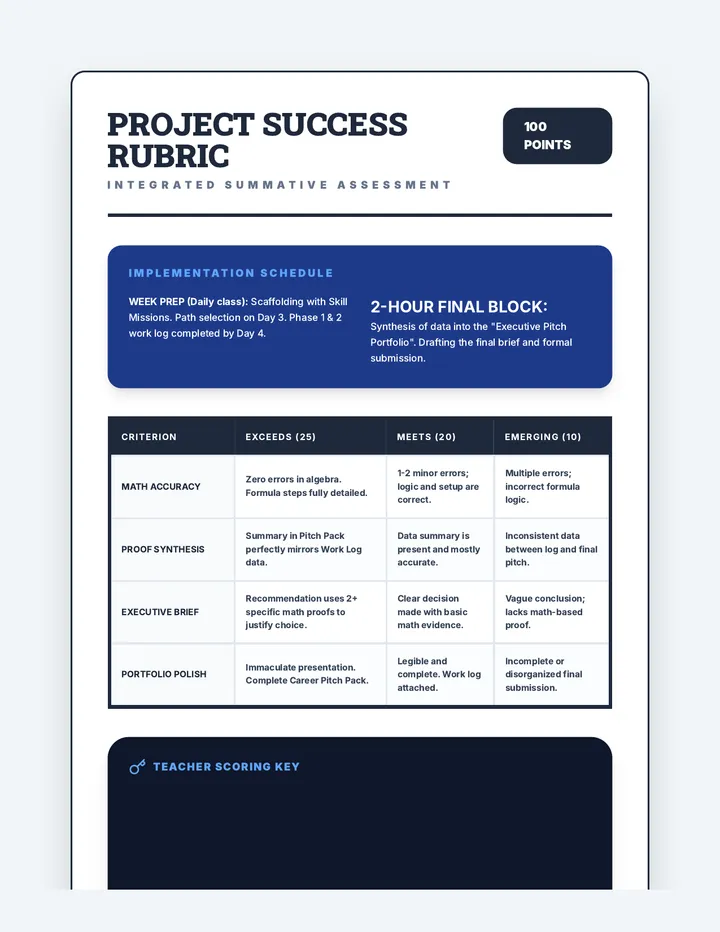
A comprehensive guide to analyzing and graphing rational functions, covering all key features from asymptotes to holes.
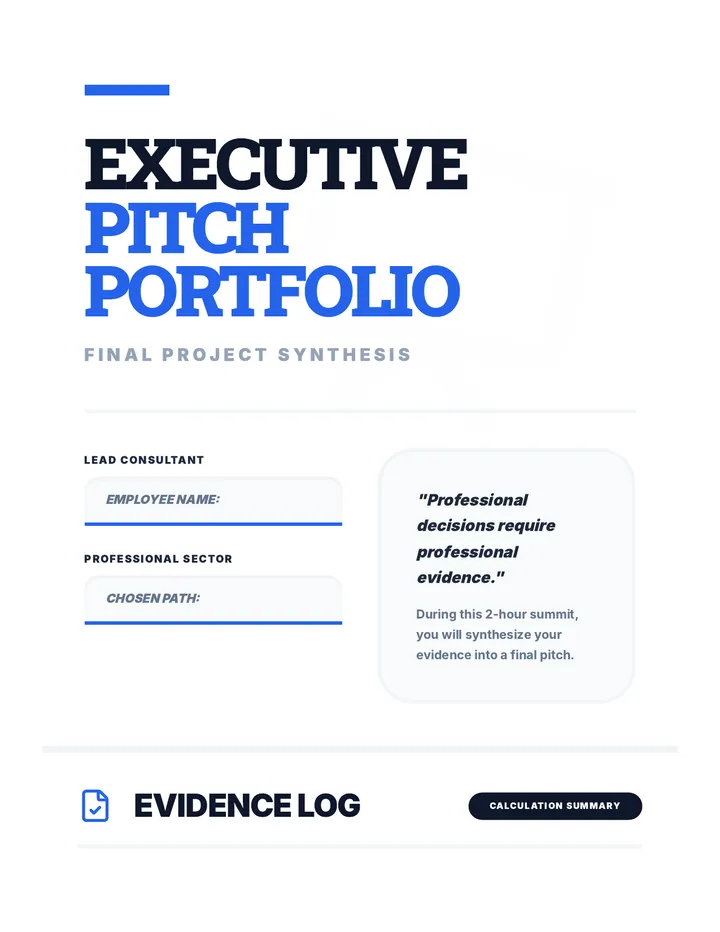
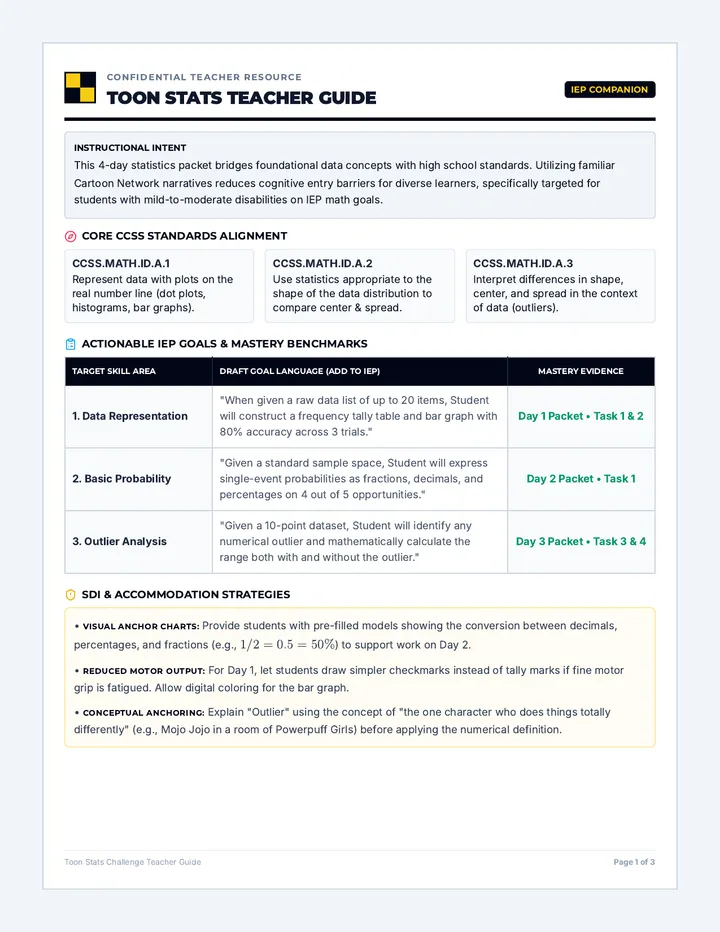
Advanced applications of central tendency and spread, including algebraic problem-solving, weighted means, and the mathematical impact of outliers for high school students.

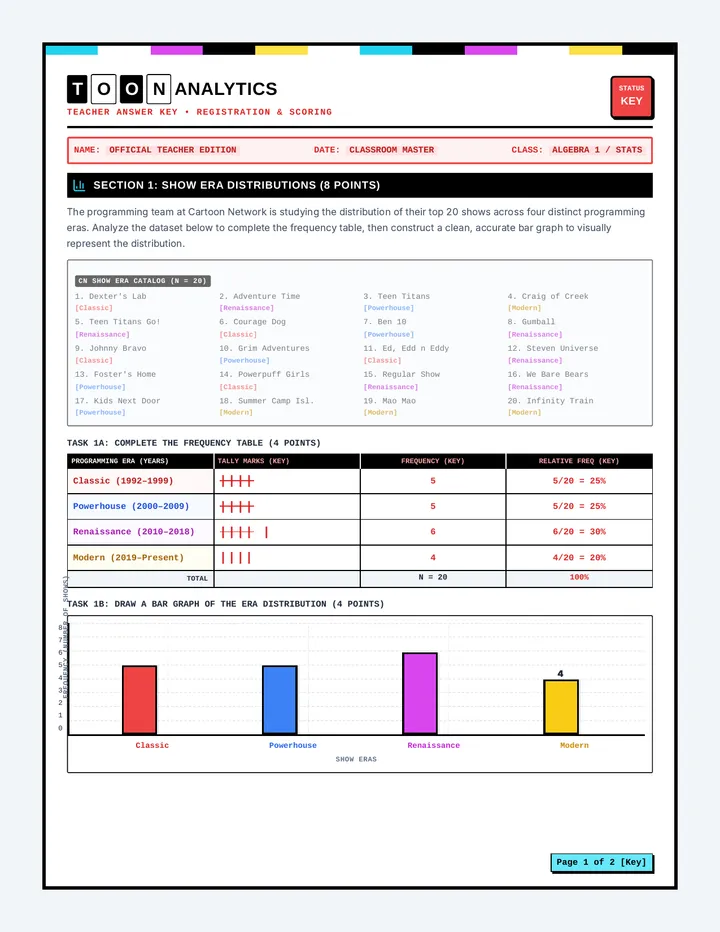
A comprehensive assessment covering Level 1, Level 2, and Level 3 data analysis, designed to evaluate mastery of mean, median, mode, and range in both numerical and narrative contexts.
Students interpret and solve word problems involving mean, median, mode, and range, focusing on extracting data from narrative contexts and real-world scenarios.
A foundational lesson designed for SIFE students to understand fractions greater than one using visual models and fraction strips. Focuses on bridging concrete models to number lines with minimal text reliance.
A collection of extra practice cases for mean, median, mode, and range, ranging from single-digit warmups to double-digit challenges, themed as unsolved detective files.
Students apply their knowledge of mean, median, mode, and range to data sets featuring two-digit numbers, focusing on multi-digit addition and division.
Students learn to calculate mean, median, mode, and range using single-digit data sets through structured, step-by-step guided practice and visual aids.
Review of symmetry concepts followed by a final challenge activity and a short assessment.
Identifying symmetry in everyday objects and nature, such as butterflies, leaves, and common household items.
Exploring symmetry in geometric shapes like squares, circles, and triangles, focusing on matching halves.
Introduction to the concept of symmetry and the 'line of symmetry' using mirror images and simple shapes.
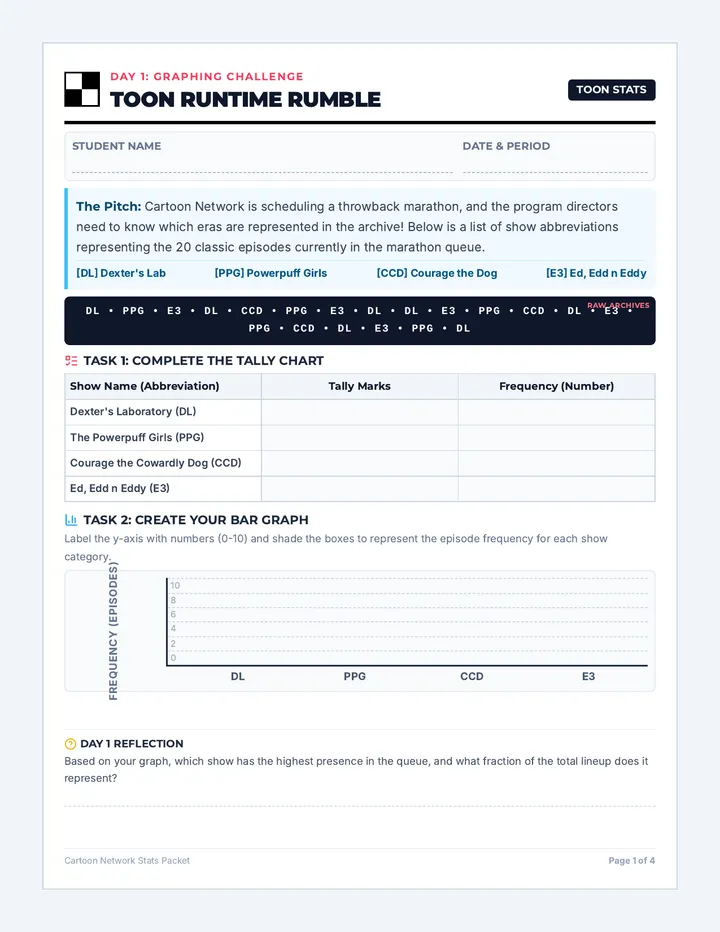
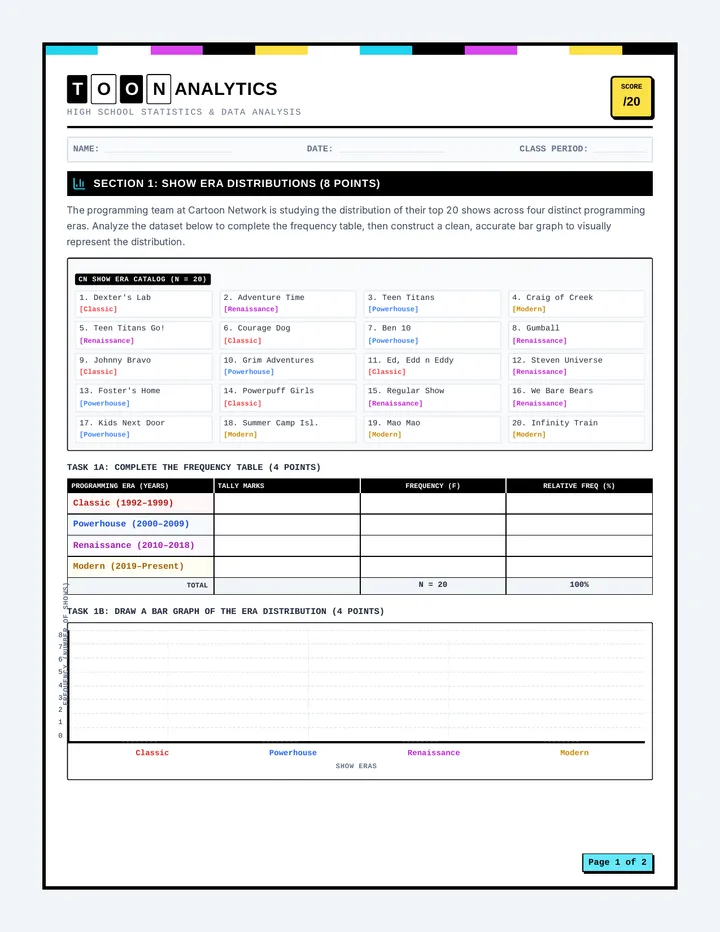
Une leçon complète sur les statistiques à une variable, couvrant la collecte de données, l'organisation en tableaux et la représentation graphique à travers divers exercices pratiques et activités d'introduction.