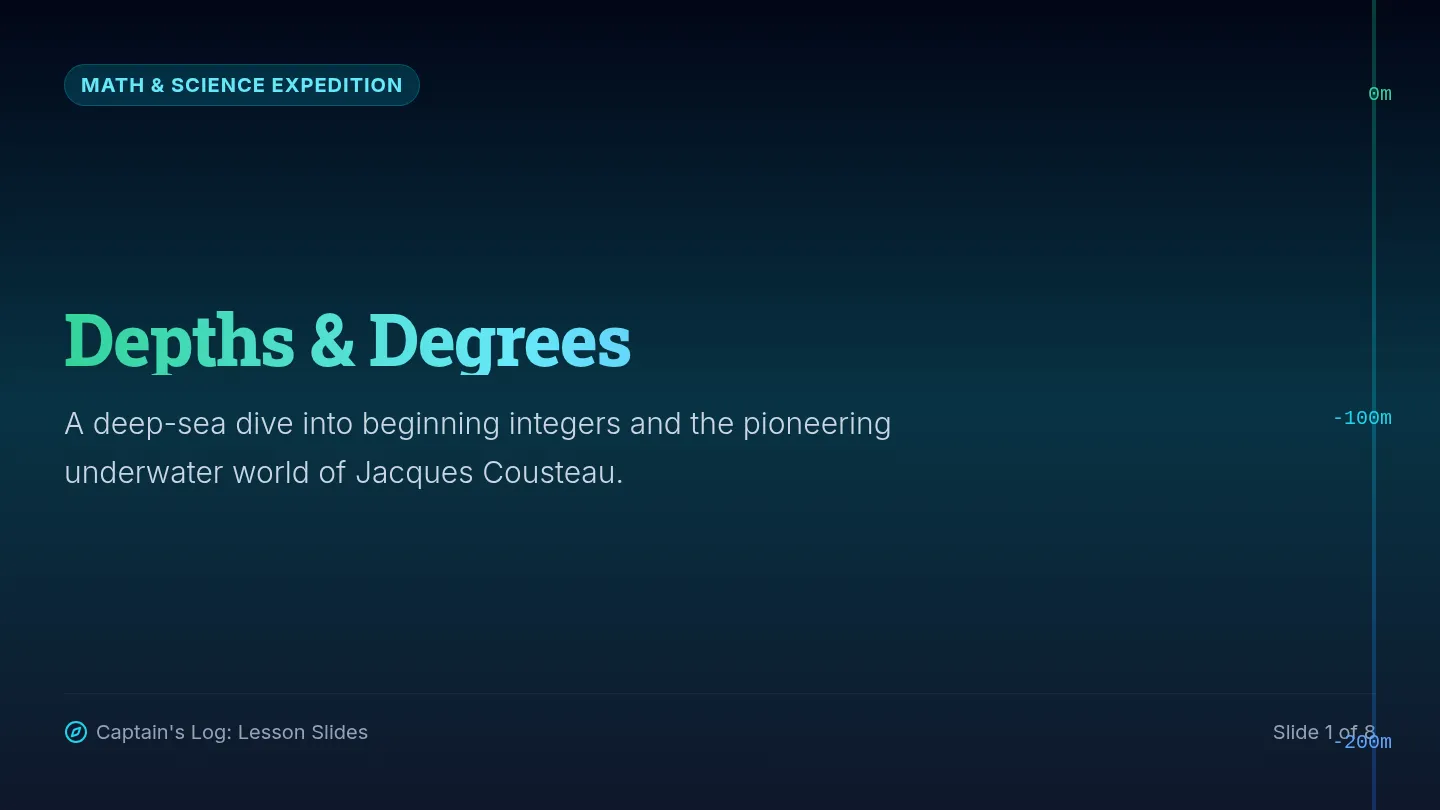
Similarity Studio Slides Similarity Design Studio
The Mathematics of Scale and Proportion
What is Similarity?
Same Shape, Different Size
Two figures are similar if their corresponding angles are equal and their corresponding sides are proportional.
Same ratio of sides (Scale Factor)
Identical internal angles
Rigid motion + Dilation
10 cm 8 cm 5 cm 4 cm
Project Phase 2: Shadow Hunter
How do you measure a giant object without a ladder? Use the sun's similar triangles!
Height 1 Shadow 1
=
Height 2 Shadow 2
Because the sun's rays are parallel, the triangles formed are similar .
Height X Shadow X 1.0 m
Project Phase 3: Dilation Art
Dilations transform a shape by stretching or shrinking it from a Center .
1
Pick a "Seed" shape on a coordinate plane.
2
Apply different scale factors (k = 0.5, 1.5, 3).
3
Connect vertices to create 3D effects.
Center (0,0)
Ready to Design?
Form Teams
Groups of 3 designers
Grab Guides
The Blueprint Guide
Measure
Precision is everything
"Mathematics is the foundation of every structure ever built."
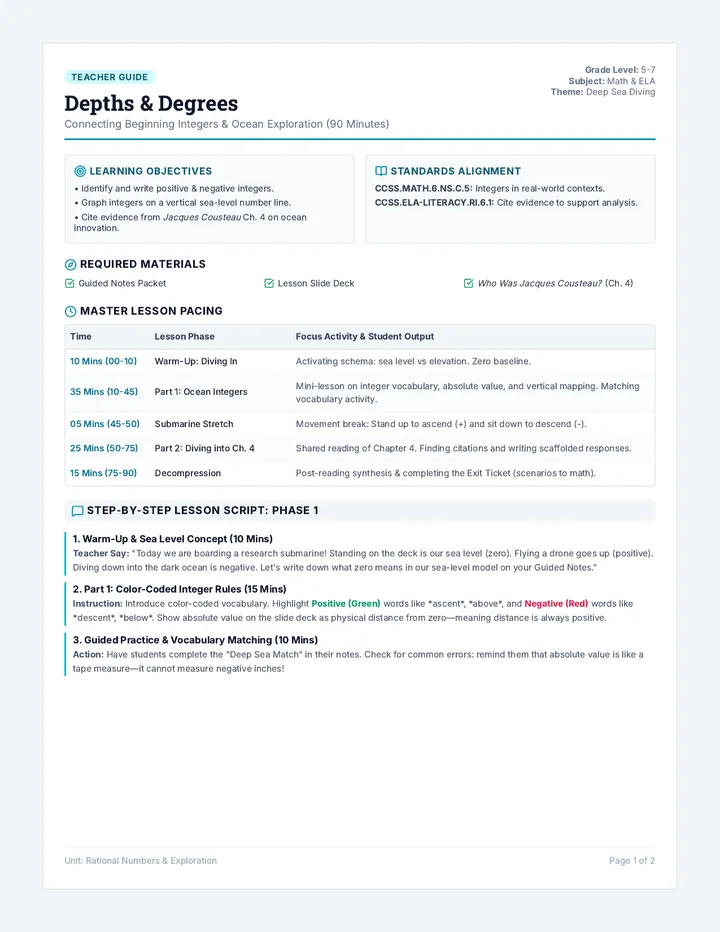
Similarity Blueprint Guide SIMILARITY BLUEPRINT GUIDE
Studio Design & Field Operations Manual
DESIGNER(S):
The Mission
Welcome to the Similarity Design Studio. Your team will master the geometry of proportion through three distinct phases: Physical Modeling , Outdoor Surveying , and Abstract Art . Your goal is to demonstrate how scale factors transform the world around us.
PHASE 1
The Architect's Model
1. Selection & Measurement
Pick an object. Measure its dimensions with precision.
Object: ________
Height: ________
Width: ________
Depth: ________
2. Scaling Down
Apply a scale factor of k = 0.1 .
Model Dim = Real Dim × 0.1
PHASE 2
The Shadow Hunter
Head outdoors to find a tall target object. Use a reference object (meter stick) to calculate the height.
Proportion Logic
<table class="inline-table"><tbody><tr><td class="border-b border-black text-center px-2">Unknown Height</td></tr><tr><td class="text-center px-2">Unknown Shadow</td></tr></tbody></table>
=
<table class="inline-table"><tbody><tr><td class="border-b border-black text-center px-2">Ref Height</td></tr><tr><td class="text-center px-2">Ref Shadow</td></tr></tbody></table>
Solar Geometry
Step A: Field Data
• Reference shadow: _________
• Target shadow: _________
• Reference height: _________
Step B: Studio Math
Calculate Target Height here...
PHASE 3
Dilation Artistry
Design a simple polygon "Seed". Choose a Center of Dilation (0,0) and apply scale factors.
k = 0.5, 2.0, and 3.5
Connect vertices for 3D depth
(x, y) → (kx, ky)
Studio Deliverables:
Model
Shadow Sheet
Art Graph
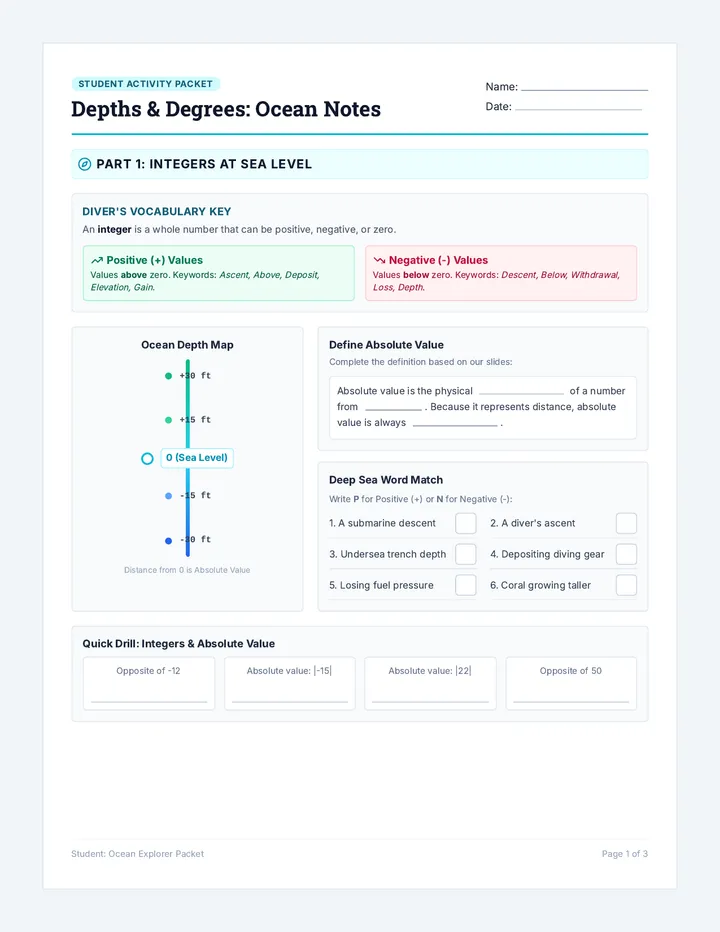
Shadow Hunter Worksheet SHADOW HUNTER WORKSHEET
Field Data Collection & Proportional Reasoning
Date:
Time:
Objective: Use the property of similar triangles created by parallel sun rays to determine the height of objects that are too tall to measure directly.
1 Reference Object Measurements
Choose a student or a meter stick as your known reference.
Name of Reference:
Actual Height (Hr):
Shadow Length (Sr):
Sketch your reference triangle
2 Target Object Measurements
Choose a tall object (flagpole, tree, building edge).
Description of Target:
Shadow Length (St):
Target Height (Ht) = ?
Sketch your target triangle
3 Show Your Work
Set up the proportion and solve for the unknown height. Use units!
Final Target Height:
units
4 Reflection
1. Why is it critical to measure both shadows at the same time? Explain using geometric properties.
2. Identify a specific source of error in your measurement. How would this affect your final height result?
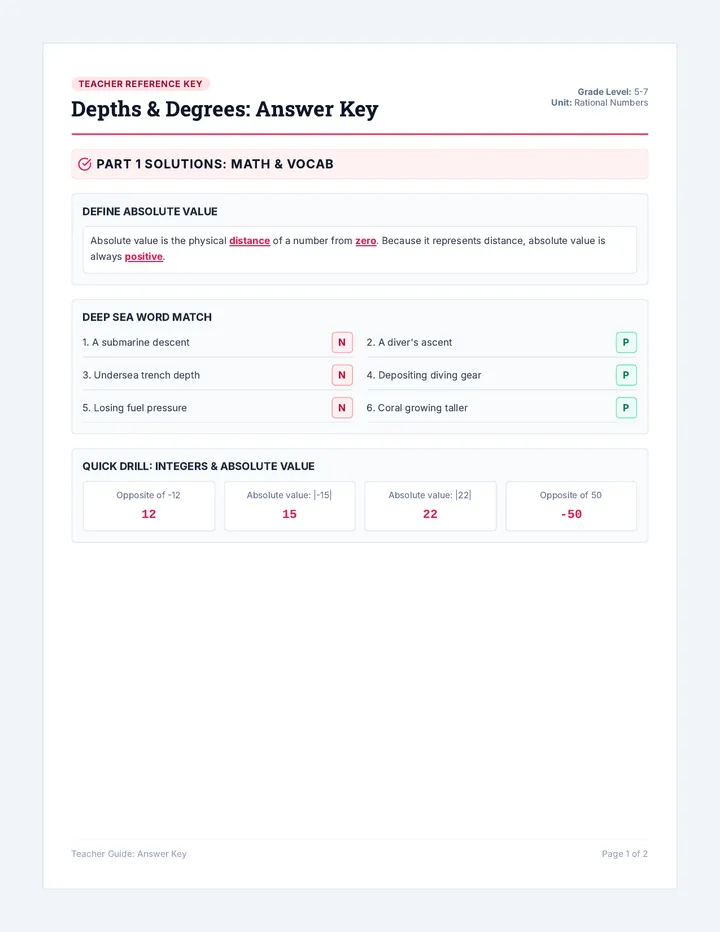
Studio Master Teacher Guide STUDIO MASTER TEACHER GUIDE
Similarity & Proportions Unit Project
Recommended Pacing
5-7 Days
Instructional Pacing
Day Focus Deliverable 1 Intro to Similarity & Scale Factors Concept Notes 2-3 Phase 1: Scale Model Construction Physical Model 4 Phase 2: Outdoor Shadow Measurement Data Sheet 5 Phase 3: Dilation Art creation Geometric Art 6-7 Gallery Walk & Math Reflections Final Portfolio
Supply List
Cardboard / Foam Core (Scraps)
Precision Rulers / Meter Sticks
Protractors & Tape
Coordinate / Graph Paper
X-Acto Knives (Adult supervision)
Studio Assessment Rubric
Criteria
Advanced (4)
Proficient (3)
Emerging (1-2)
Scale Accuracy
All model measurements are precisely 0.1 of original object. Ratio is consistent across all axes.
Most measurements are scaled correctly; minor deviation in assembly.
Scale factor is applied inconsistently; model is visibly distorted.
Shadow Math
Proportions set up correctly with clear steps. Final height is mathematically sound.
Proportion setup is correct; minor arithmetic error in solving.
Setup is incorrect; calculation does not use proportional reasoning.
Dilation Art
Dilation points perfectly mapped; art demonstrates deep understanding of k > 1 and k < 1.
Points mapped correctly; art lacks precision or perspective lines.
Dilation errors present; coordinates do not follow the dilation rule.
Common Pitfalls
• Shadow Timing: Remind students that the sun moves. If there's a 15-min gap between measurements, the angle changes.
• Unit Mismatch: Watch for students mixing cm and inches. Require one consistent unit for all measurements.
• Dilation Center: Students often forget to measure from the origin (0,0) and instead measure from the object's corners.
Differentiation
• Provide pre-structured proportion templates (fractions with blanks) for the shadow activity.