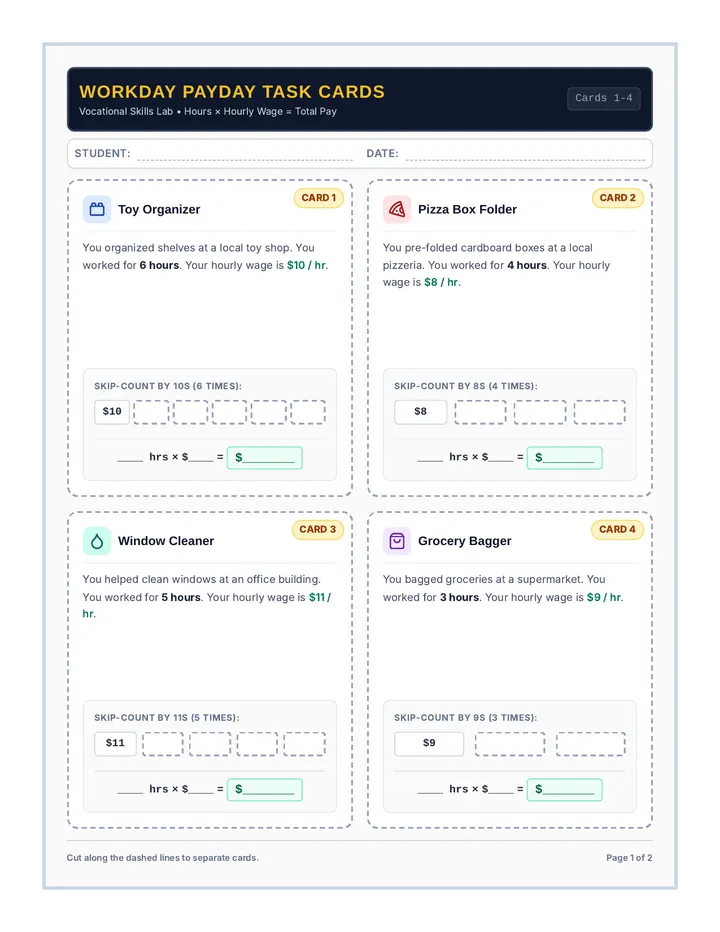
Students explore the difference between a ratio and a rate, learning the specific vocabulary of 'per' and 'for each' through real-world examples like speed and heart rate.
A focused lesson on solving one-step addition and subtraction equations using a variety of number types including whole numbers, decimals, and fractions.
A comprehensive assessment lesson focusing on mastering one-step equations involving multiplication, division, and basic addition/subtraction.
A comprehensive lesson on solving one-step equations using addition, subtraction, multiplication, and division, featuring visual models and real-world applications.
A comprehensive lesson on measures of center (mean, median, mode) where students learn to summarize numerical data and find missing values using time, temperature, and group size data.
A hands-on math project where students design carnival games to explore theoretical versus experimental probability through data collection and analysis.
A comprehensive 7th-grade math lesson on mean, median, mode, and range, themed around a 'Data Detective' investigation. It includes differentiated materials for math, executive functioning, and reading comprehension goals.
A comprehensive lesson on calculating the area of composite figures by decomposing them into simpler shapes like rectangles, triangles, and semi-circles using integer-based measurements.
A focused lesson on calculating area and perimeter of complex rectilinear shapes by determining missing side lengths and applying geometric formulas.
A coordinate plane lesson where students plot integer coordinates in four quadrants to reveal a butterfly. The activity combines math precision with creative coloring for a spring-themed classroom experience.
A comprehensive lesson on calculating and interpreting mean, median, mode, and range using real-world shopping and pricing data. Students will analyze price lists for various items to master basic statistics.
A hands-on probability project where students design, build, and test carnival games. They will calculate theoretical probability, collect experimental data, and analyze the results to understand statistical likelihood.
A lesson focused on mastering addition and subtraction of fractions with unlike denominators using the cross-multiplication (butterfly) method. Students use structured graphic organizers to visualize each step of the process.
A highly scaffolded lesson on angle relationships (vertical, complementary, and supplementary) featuring an architectural blueprint theme. Includes guided notes with exemplars and step-by-step practice materials.
Advanced applications of central tendency and spread, including algebraic problem-solving, weighted means, and the mathematical impact of outliers for high school students.
A comprehensive assessment covering Level 1, Level 2, and Level 3 data analysis, designed to evaluate mastery of mean, median, mode, and range in both numerical and narrative contexts.
In this hands-on geometry exploration, students venture outside to measure the angles of shadows cast by playground equipment and trees at different times of day. They apply their protractor skills to record data and analyze how the sun's position changes angle measurements.
Students interpret and solve word problems involving mean, median, mode, and range, focusing on extracting data from narrative contexts and real-world scenarios.
A foundational lesson designed for SIFE students to understand fractions greater than one using visual models and fraction strips. Focuses on bridging concrete models to number lines with minimal text reliance.
A collection of extra practice cases for mean, median, mode, and range, ranging from single-digit warmups to double-digit challenges, themed as unsolved detective files.
Students apply their knowledge of mean, median, mode, and range to data sets featuring two-digit numbers, focusing on multi-digit addition and division.
A comprehensive lesson on identifying and analyzing outliers within scatter plots using a 'Data Detective' theme. Students will learn to spot anomalous data points and understand their impact on trends.
A lesson focused on identifying and interpreting outliers in box plot data visualizations, using a forensic detective theme to engage students in data analysis.
Students learn to calculate mean, median, mode, and range using single-digit data sets through structured, step-by-step guided practice and visual aids.
A focused lesson on mastering long division (3-digit by 1-digit) with remainders, using grid-aligned blueprints to help students organize their calculations and maintain place value accuracy.
A lesson focused on identifying, writing, and graphing inequalities and intervals on a number line, framed as a wilderness scouting mission.
A lesson focused on the geometric and algebraic relationships of parallel and perpendicular lines, teaching students how to identify slopes and write new equations using a technical blueprint aesthetic.
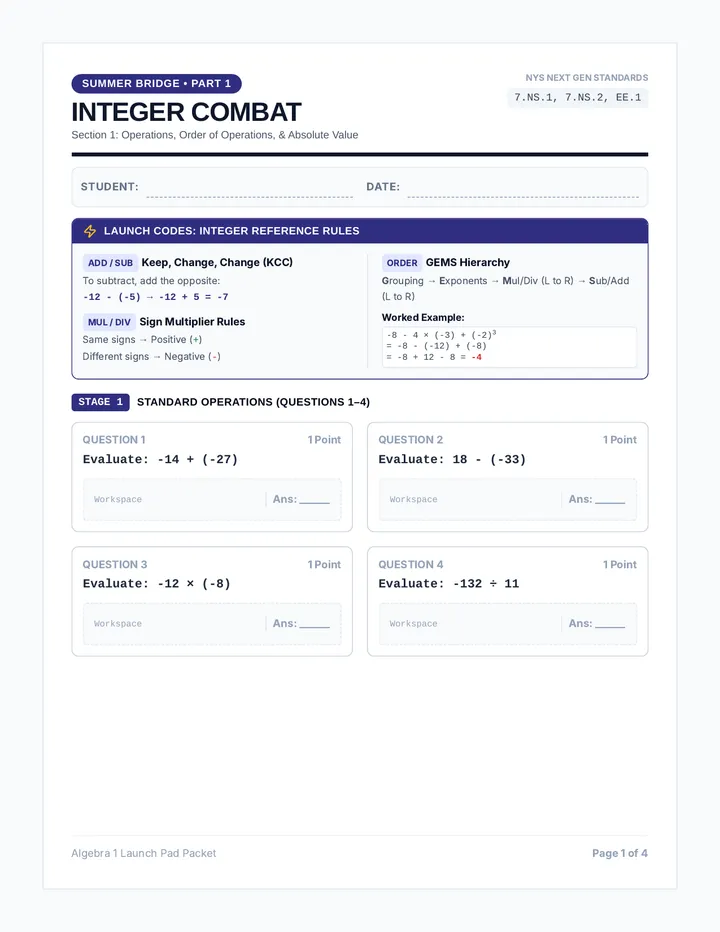
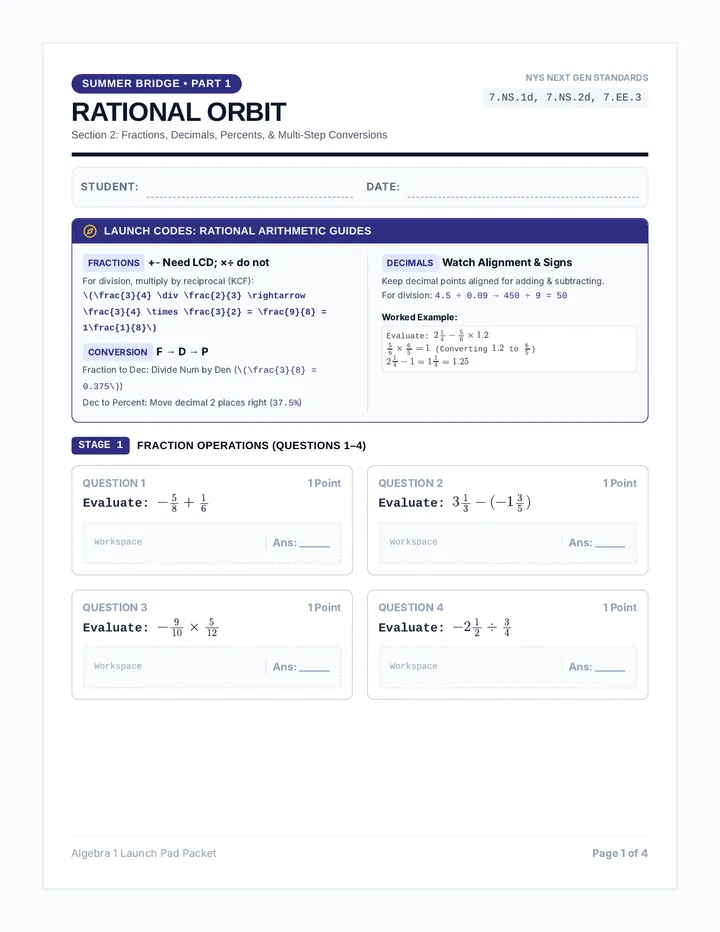
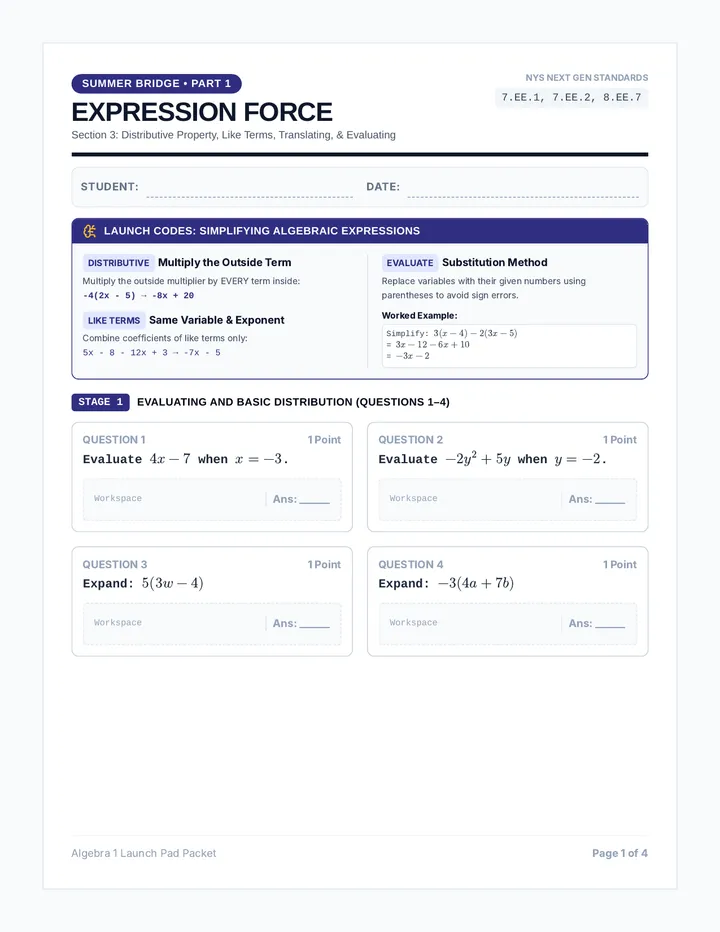
A collection of four double-sided homework assignments focusing on foundational 7th-grade math skills. Each "Sprint" contains seven standardized questions covering all major test categories to build stamina and accuracy.
A comprehensive lesson covering geometric transformations (translations, reflections, rotations, and dilations) and the fundamentals of geometric proofs, including logical reasoning and triangle congruence.
A comprehensive math lesson focused on solving one-step addition and subtraction equations using a secret agent 'Operation Equation' theme, specifically designed for middle school SPED students with heavy visual scaffolding.
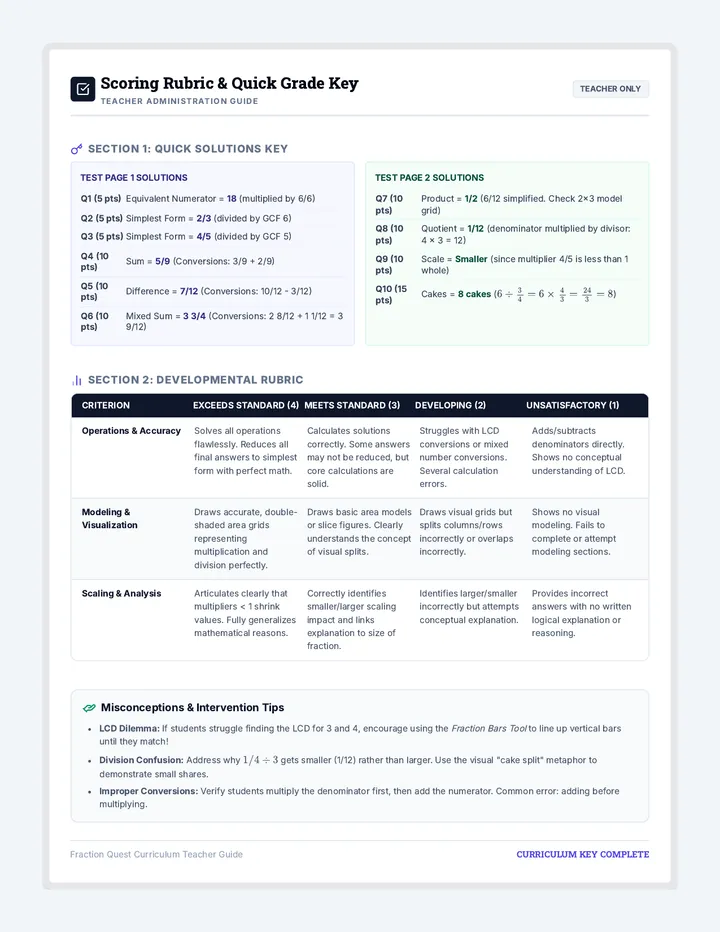
Students will learn to decompose numbers into prime factors, identify the greatest common factor between numbers, and apply these skills to factor simple algebraic expressions.
A comprehensive 90-minute math lesson focused on organizing data into intervals and creating/interpreting histograms using test score data. Students act as 'Data Detectives' to uncover trends in numerical information.
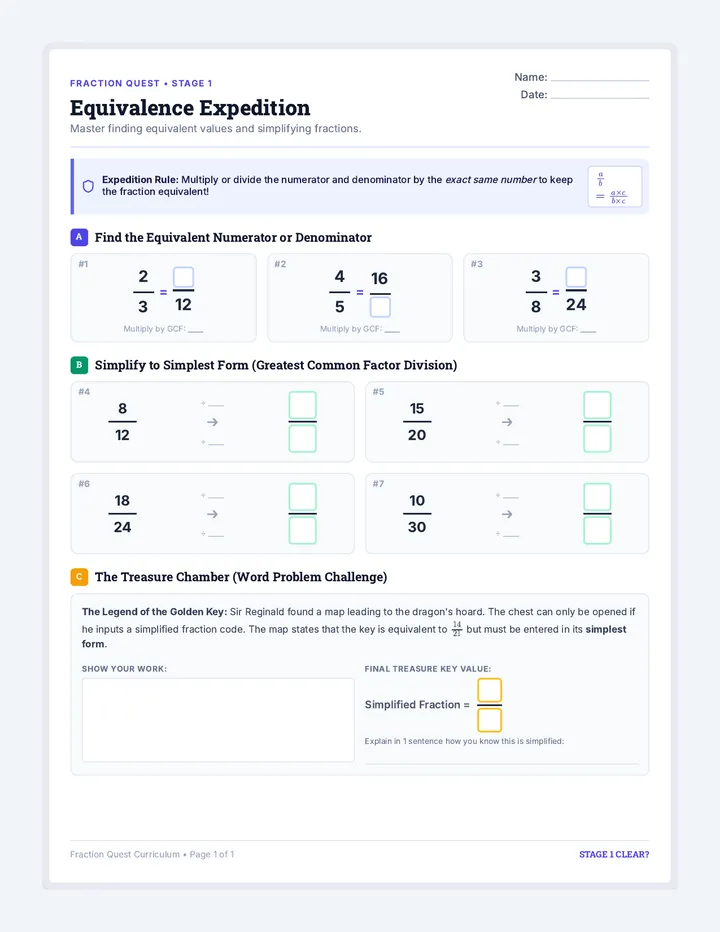
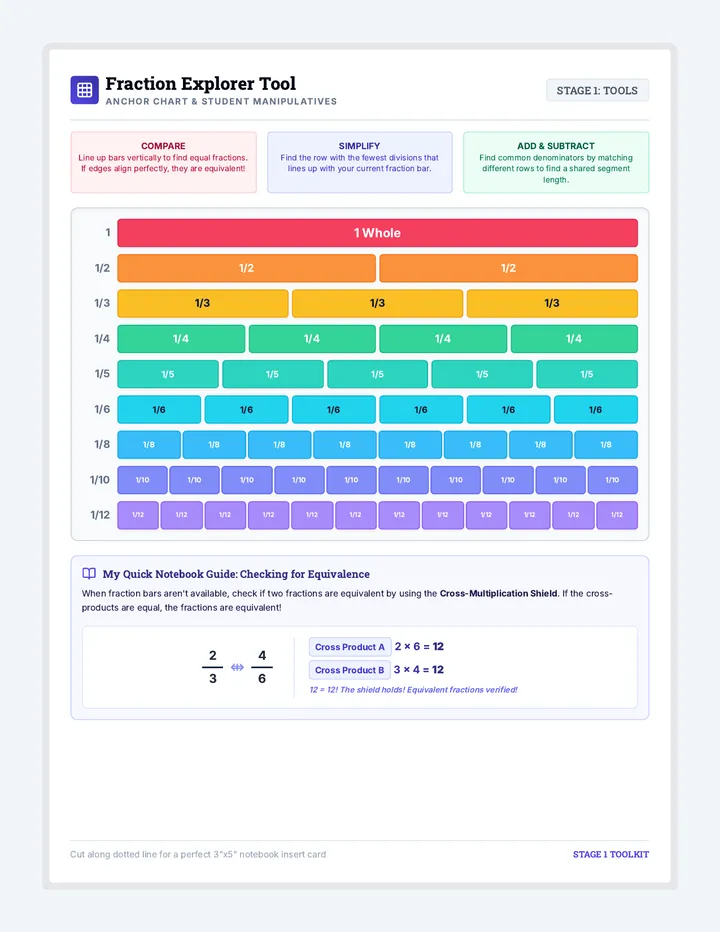
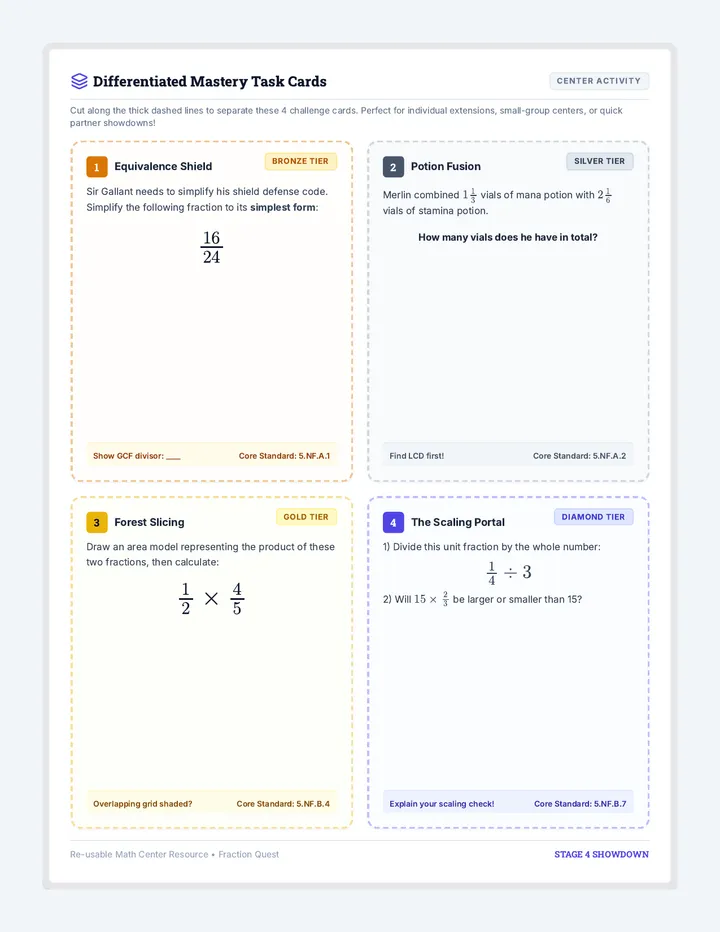
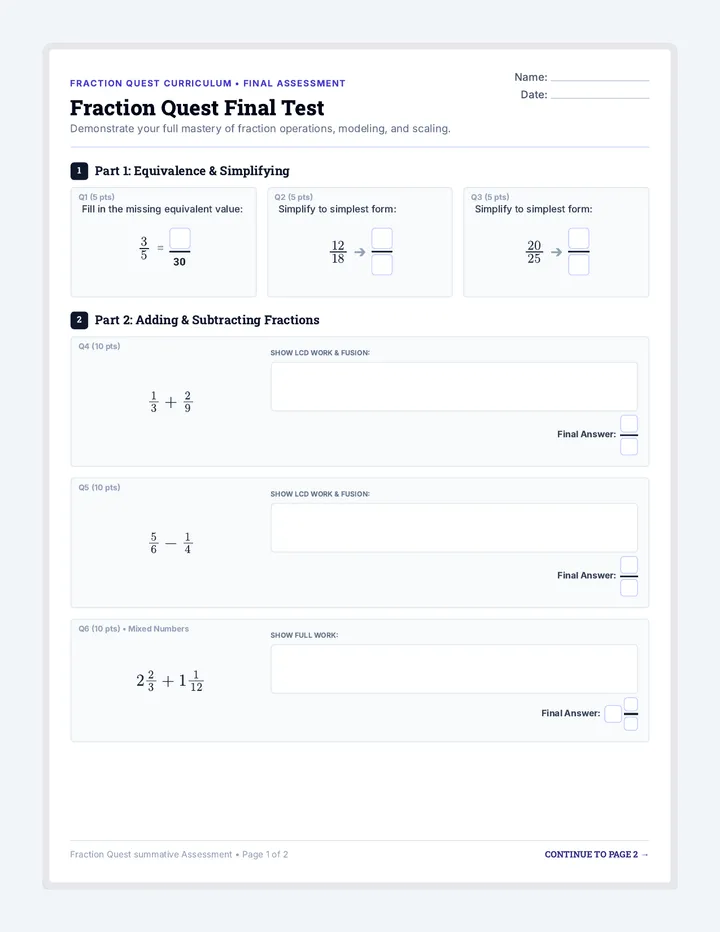
This lesson covers the fundamentals of comparing fractions with like and unlike denominators and the basics of simplifying fractions using common factors.
A comprehensive 7th-grade math lesson focused on test-taking strategies for the NYS exam, covering Ratios, Number Systems, Expressions, Geometry, and Statistics. Students learn the 'Blueprint Method' for deconstructing complex problems and apply specific tactics to standard-aligned questions.
An all-in-one review lesson covering the five major 6th-grade math domains. Designed for IEP support with visual scaffolds and simplified 2-option choices.
A math assessment focusing on basic exponent rules and real-world percentage applications involving sales tax and discounts.
A 6th-grade math review lesson designed specifically for students with IEPs, focusing on foundational concepts in ratios, the number system, expressions, geometry, and statistics with visual scaffolds and simplified language.