A 6th-grade math lesson exploring physics through the lens of geometry. Students learn to define physics and use benchmark angles (0, 45, 90) to predict the behavior of ramps and inclined planes.
A space-themed math journey where students use decimal operations and proportional relationships to chart courses, calculate planetary scales, and manage spaceship systems.
A focused lesson on finding constant of proportionality, writing equations, and graphing proportional relationships through interstellar weight and scale conversions.
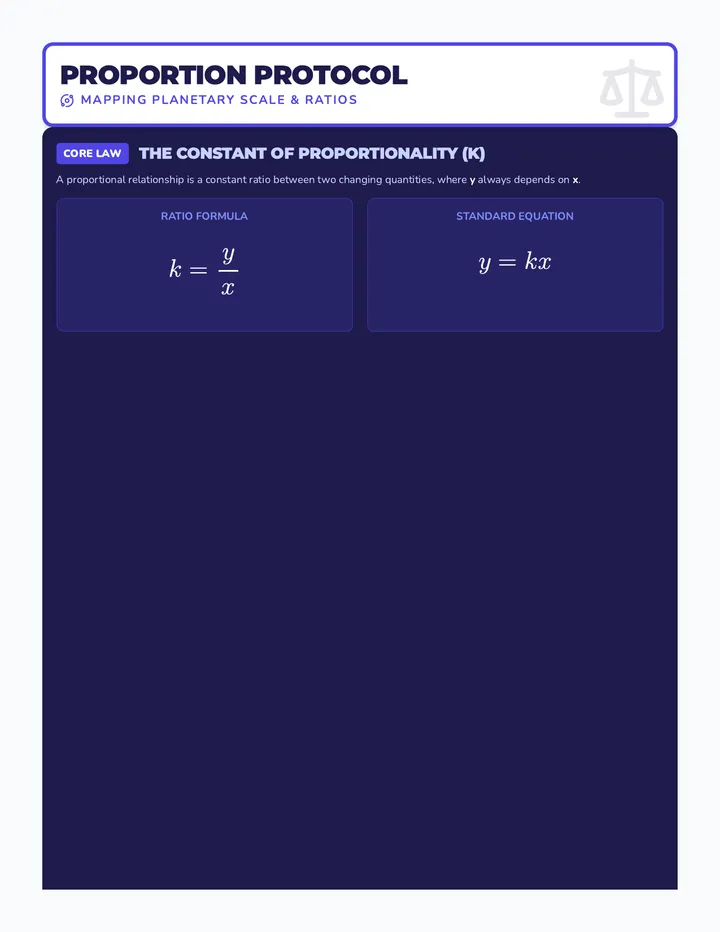
A visually engaging slide deck introducing constant of proportionality, writing proportional equations, and graphing relationships with a high-tech planetary gravity theme.
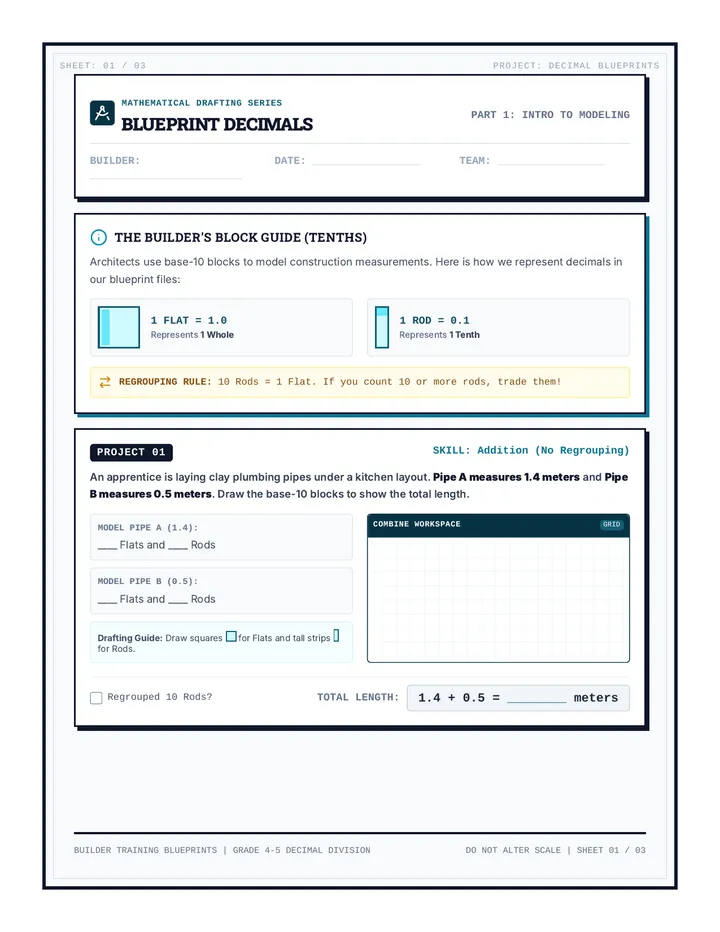
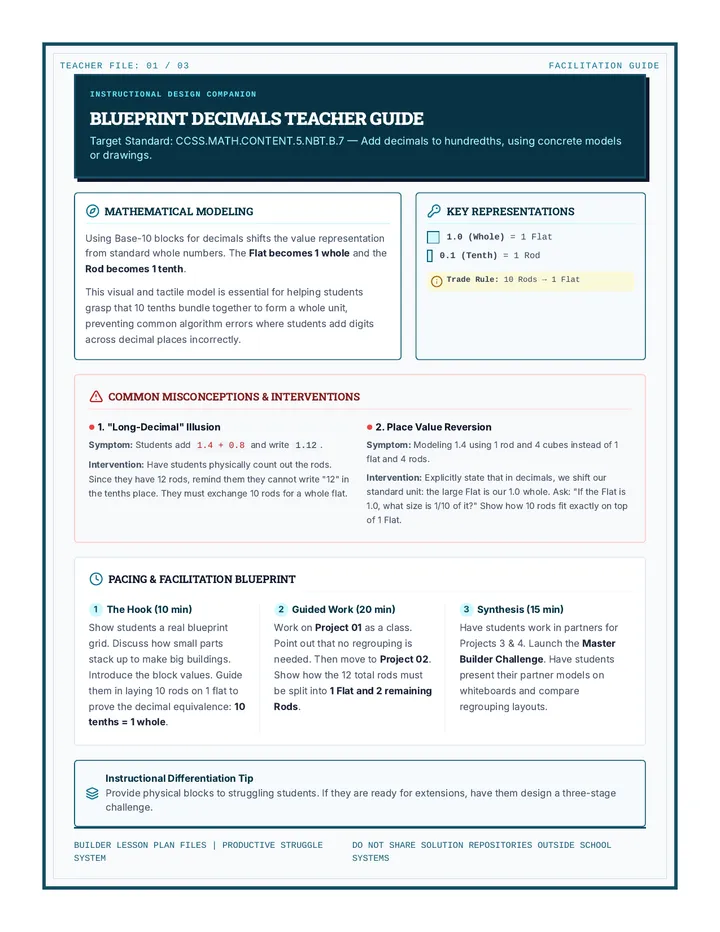
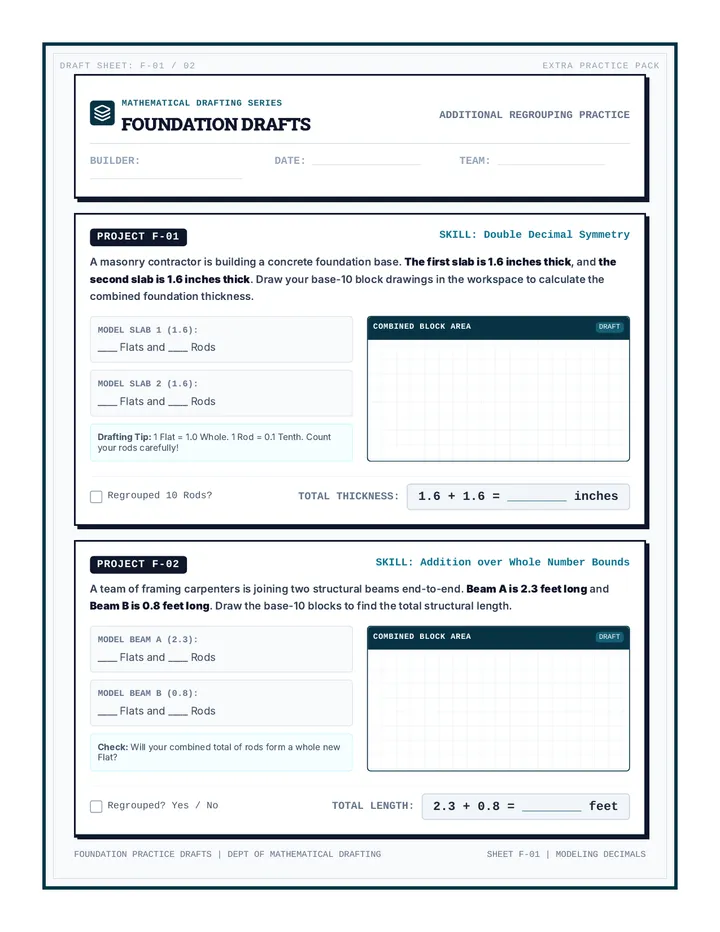
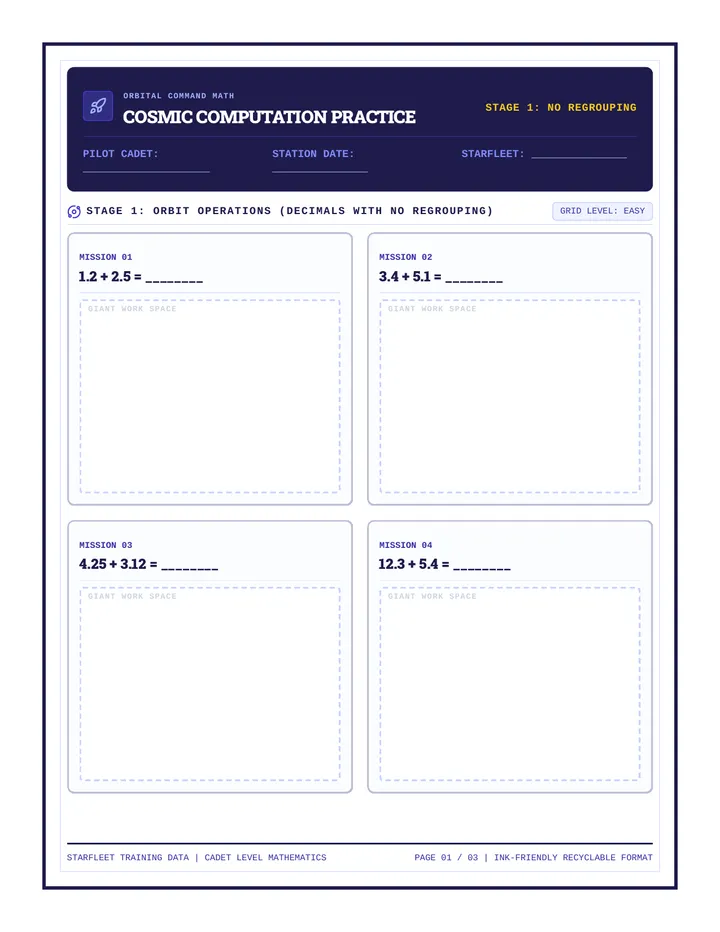
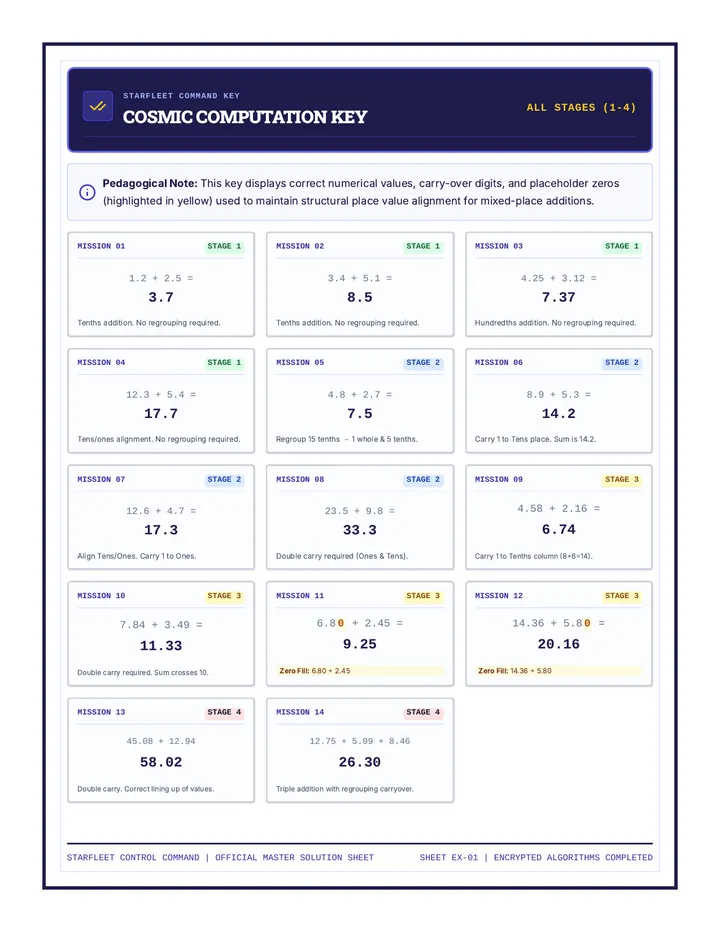
A complete sequence on decimal addition and regrouping. Students transition from modeling tenths with architectural blueprints to mastering computational algorithms through cosmic missions and space exploration calculations.
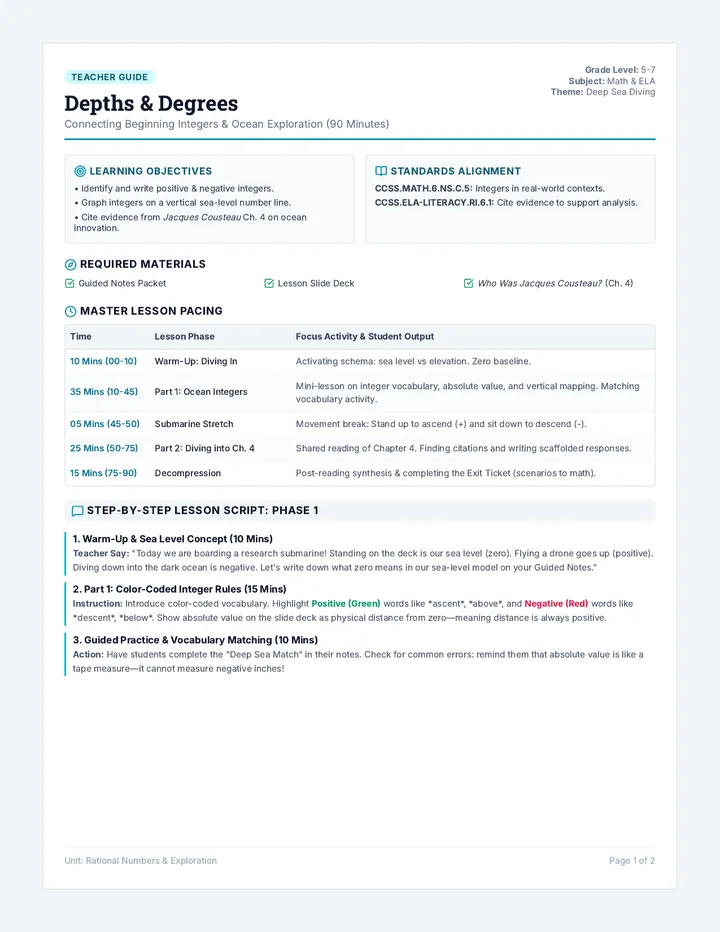
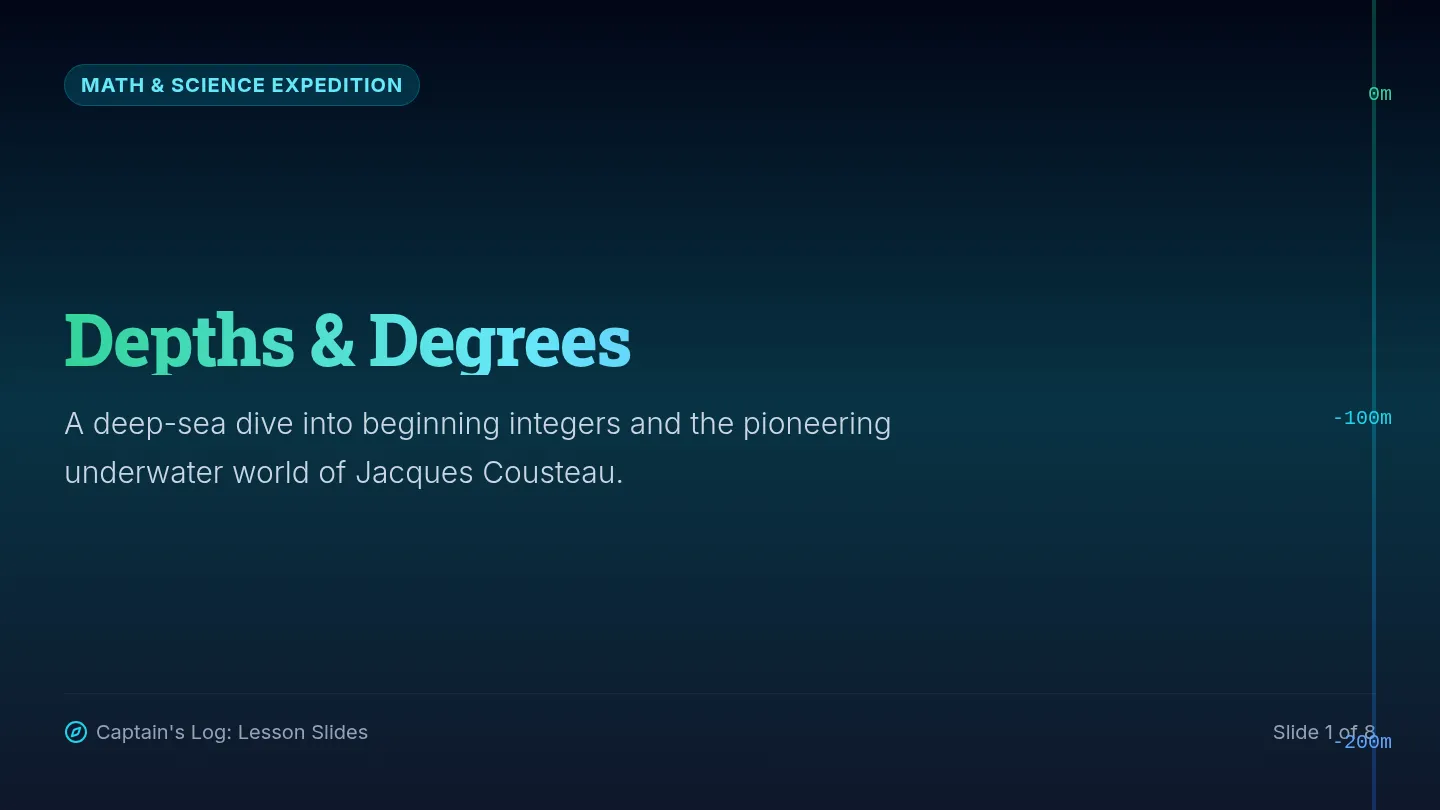
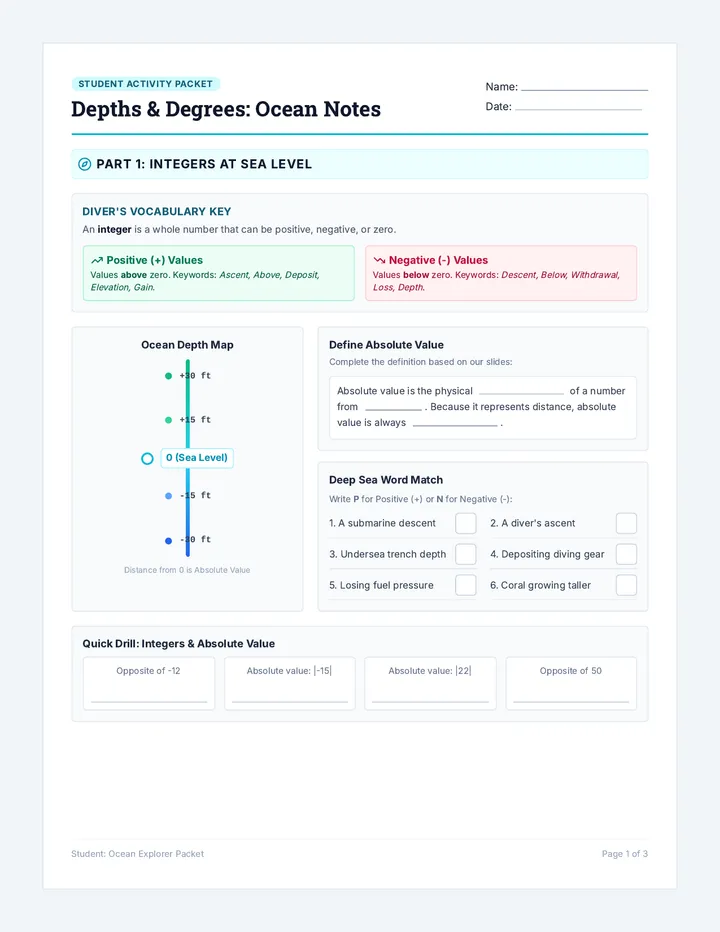
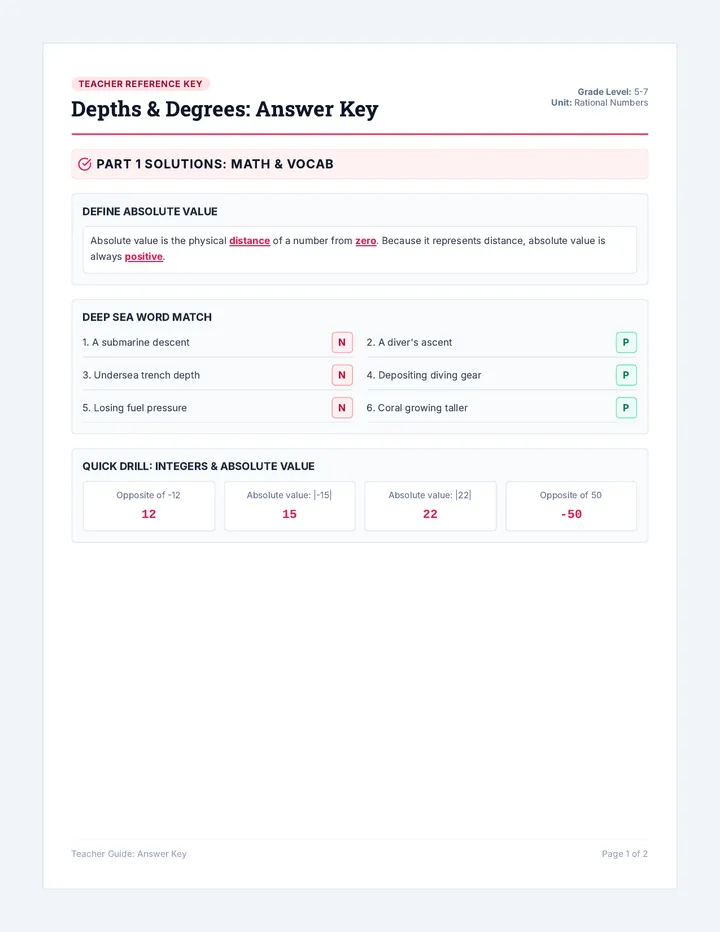
A highly visual 90-minute lesson connecting introductory integer rules with ocean exploration. Students use deep-sea diving concepts to understand negative and positive numbers, and dive into Chapter 4 of 'Who Was Jacques Cousteau?' to explore his underwater journeys with structured scaffolding.
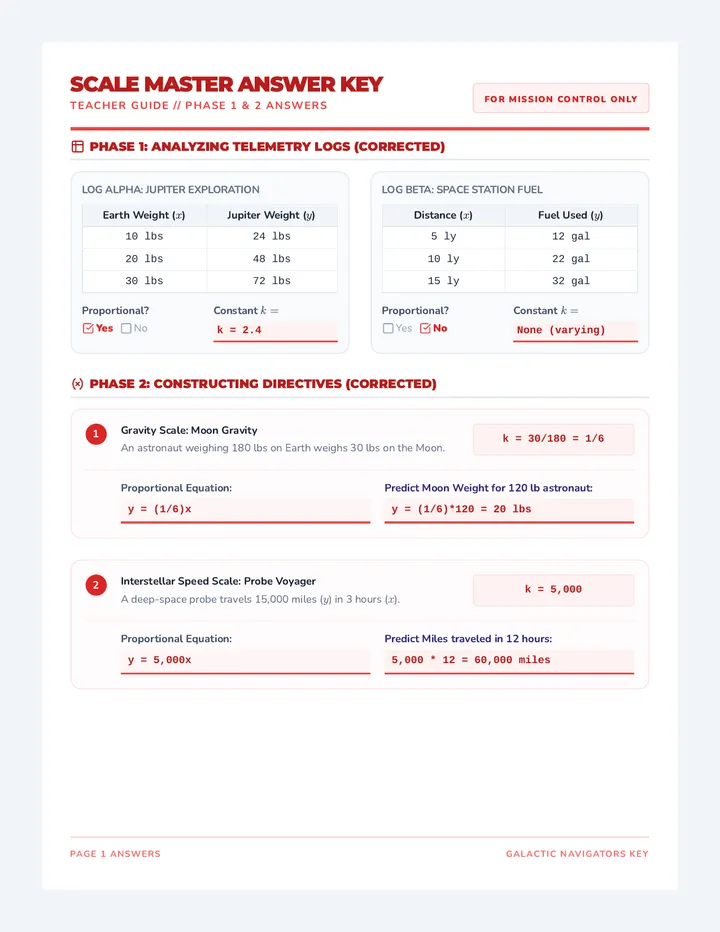
A teacher-facing 2-page answer key for the Scale Master Worksheet, indicating correct values, equations, graphs, and classifications.
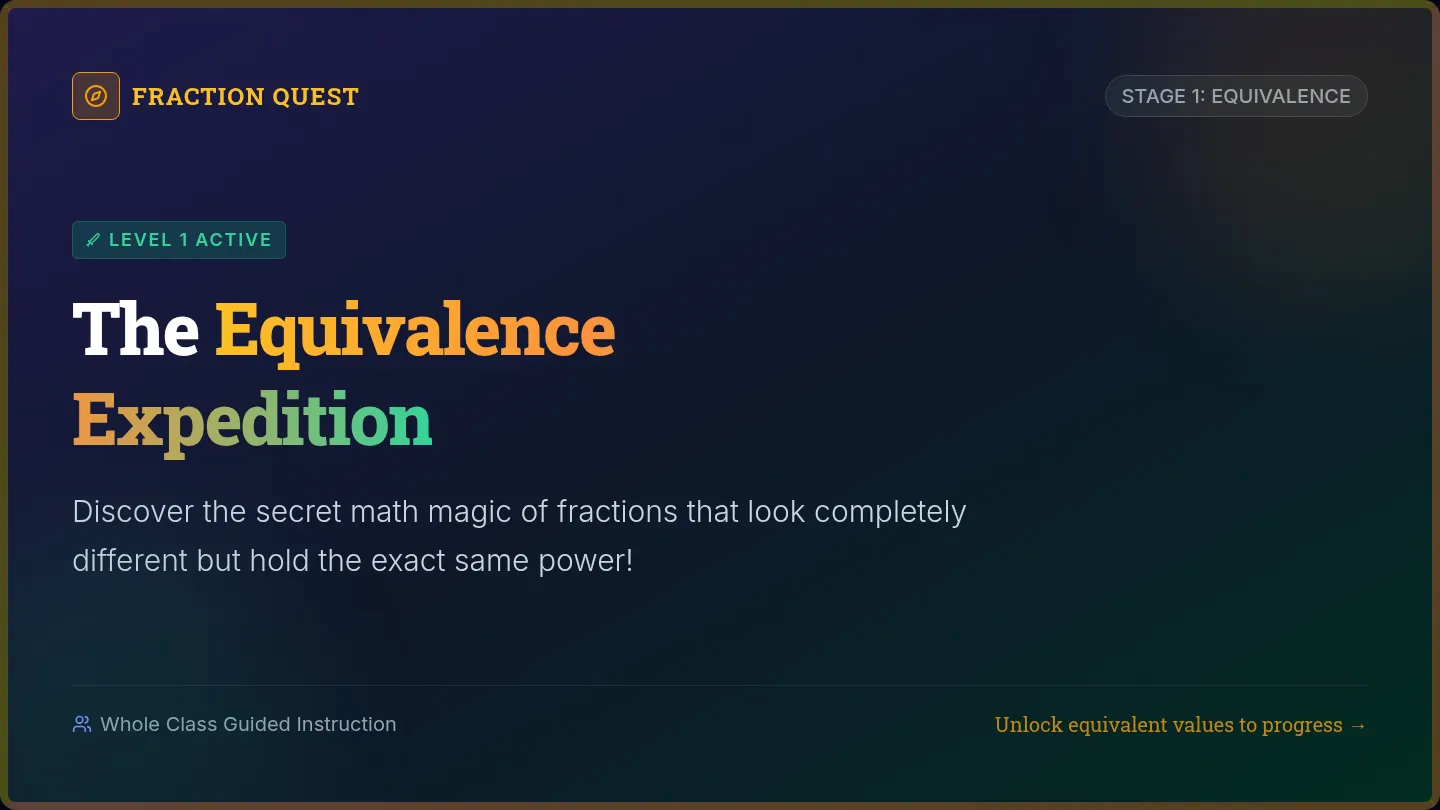
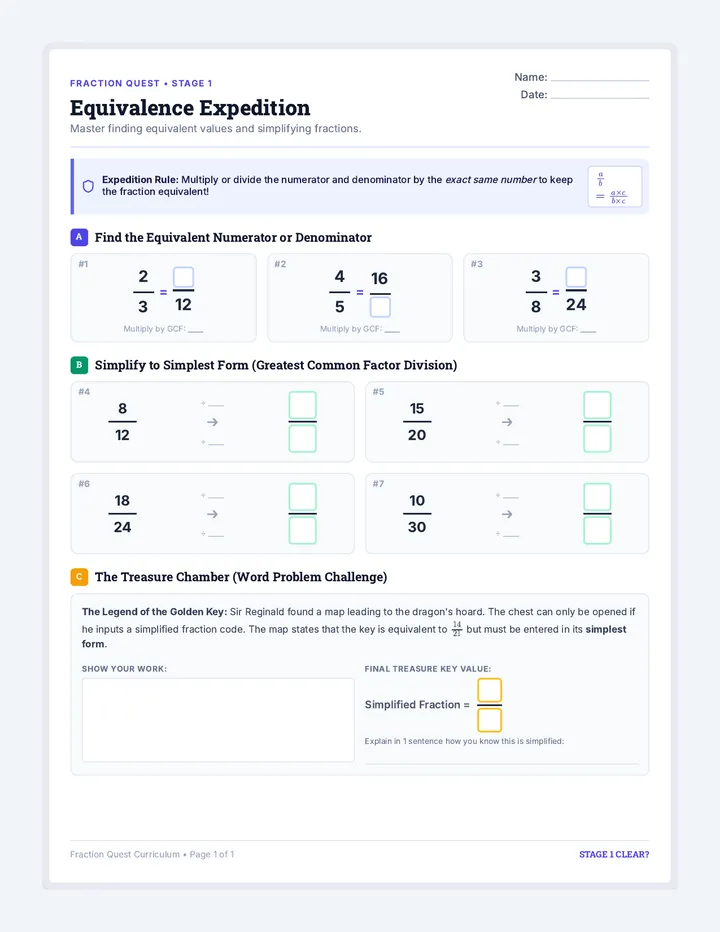
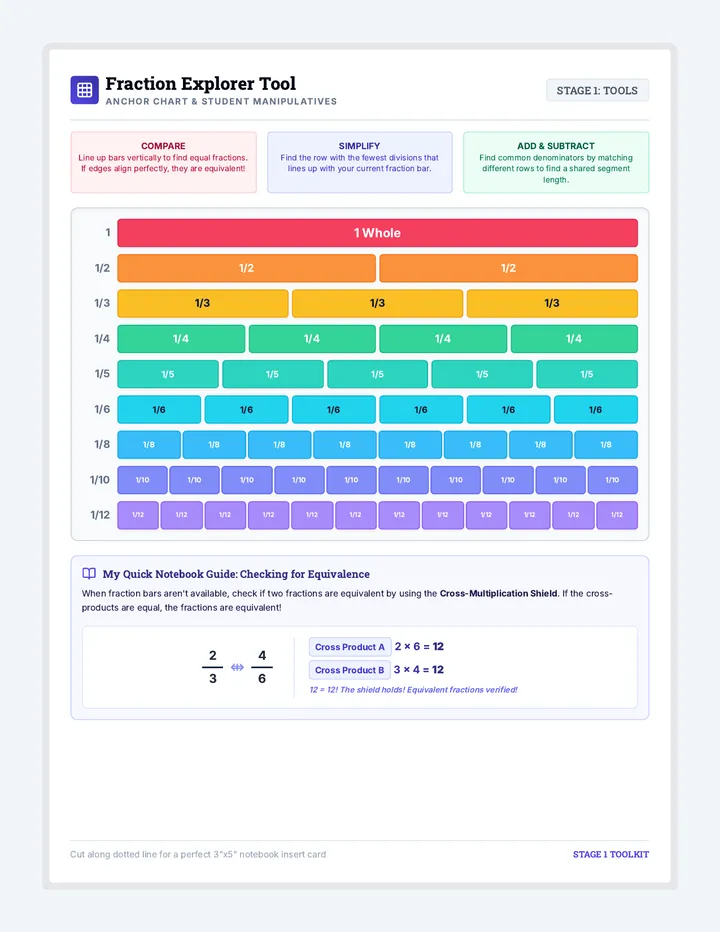
A comprehensive visual math curriculum sequence focusing on fraction equivalence, addition, subtraction, multiplication, division, and comprehensive multi-operation mastery. Includes visual lesson slides, independent practice worksheets, small-group centers, visual tools, and robust assessments.
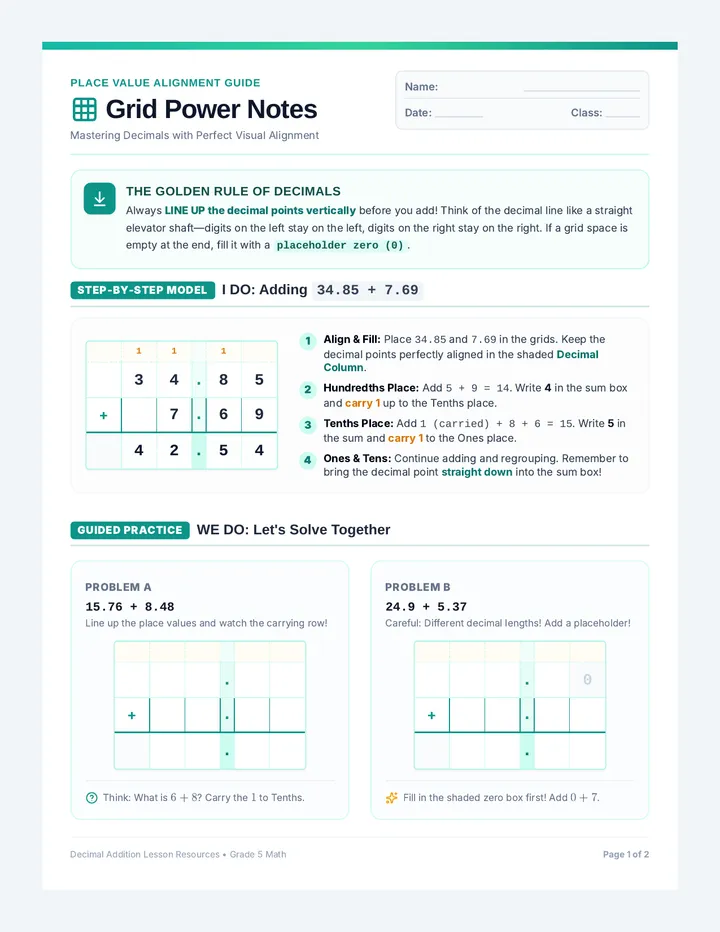
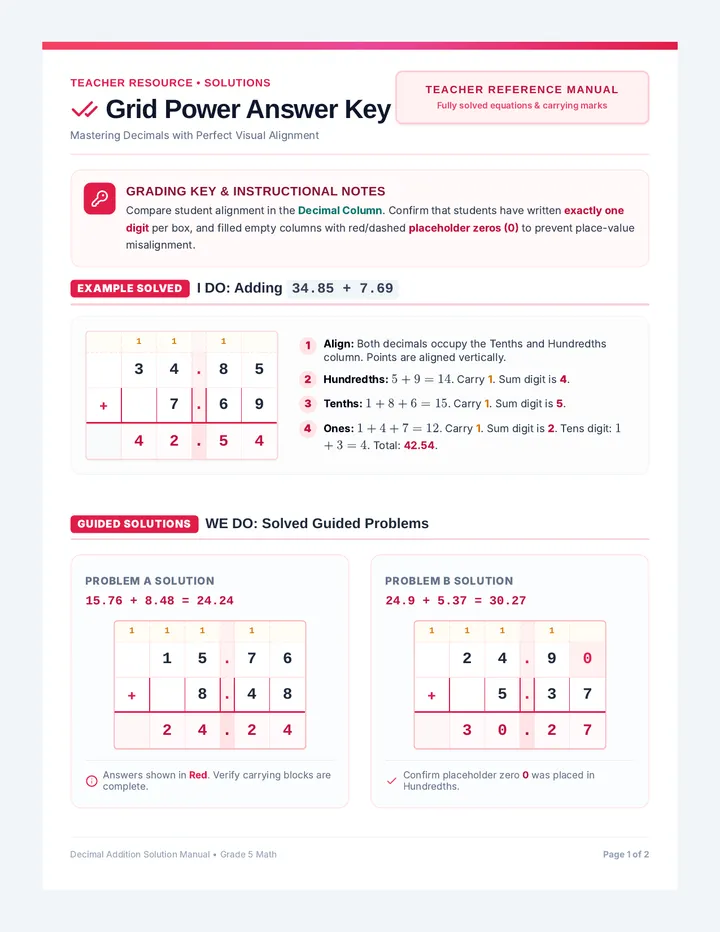
A structured lesson on adding decimals with carrying, using faded grid paper backgrounds to scaffold alignment and ensure place value accuracy.
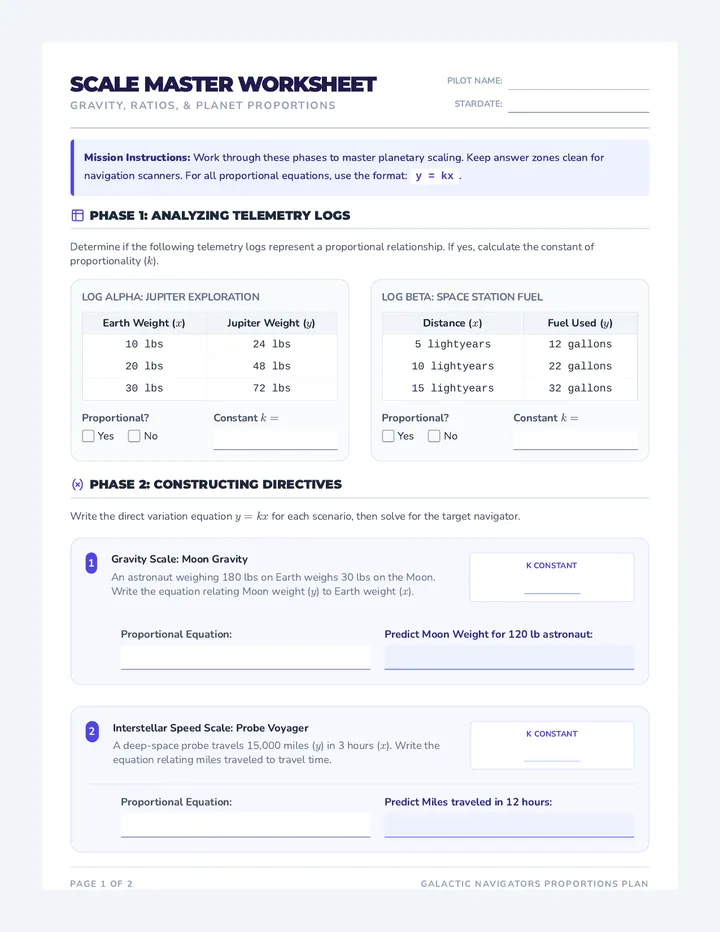
A 2-page student worksheet covering constant of proportionality, writing proportional equations, and graphing planetary relationships.
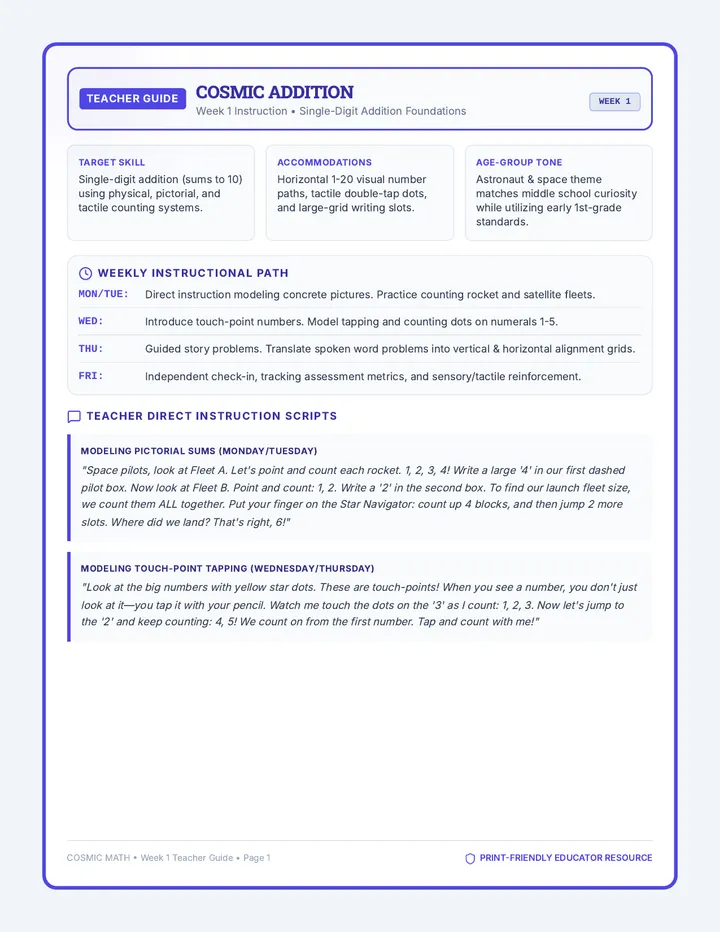
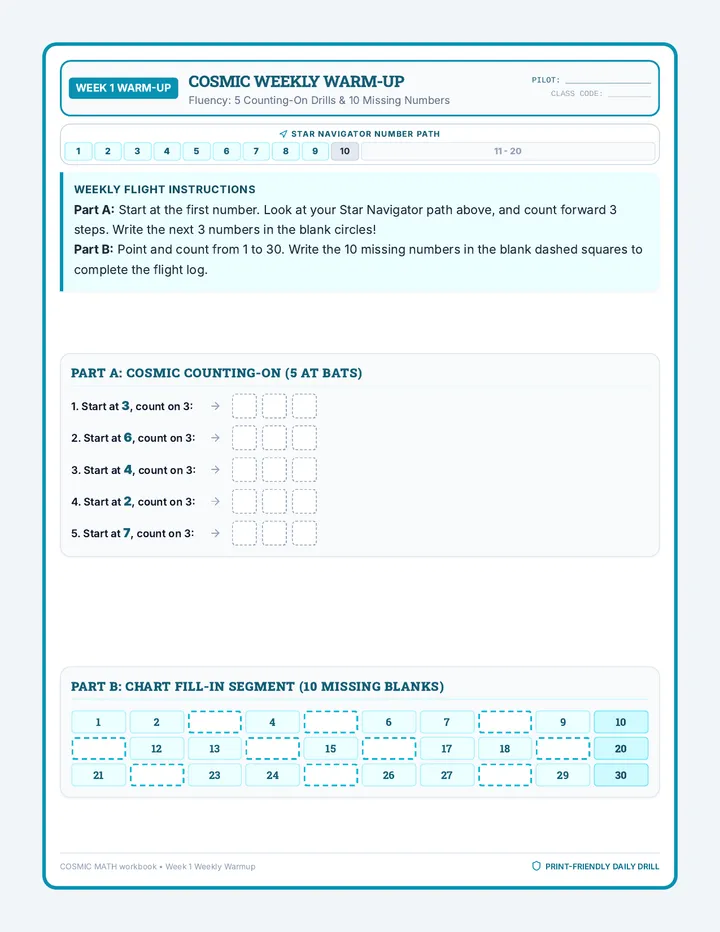
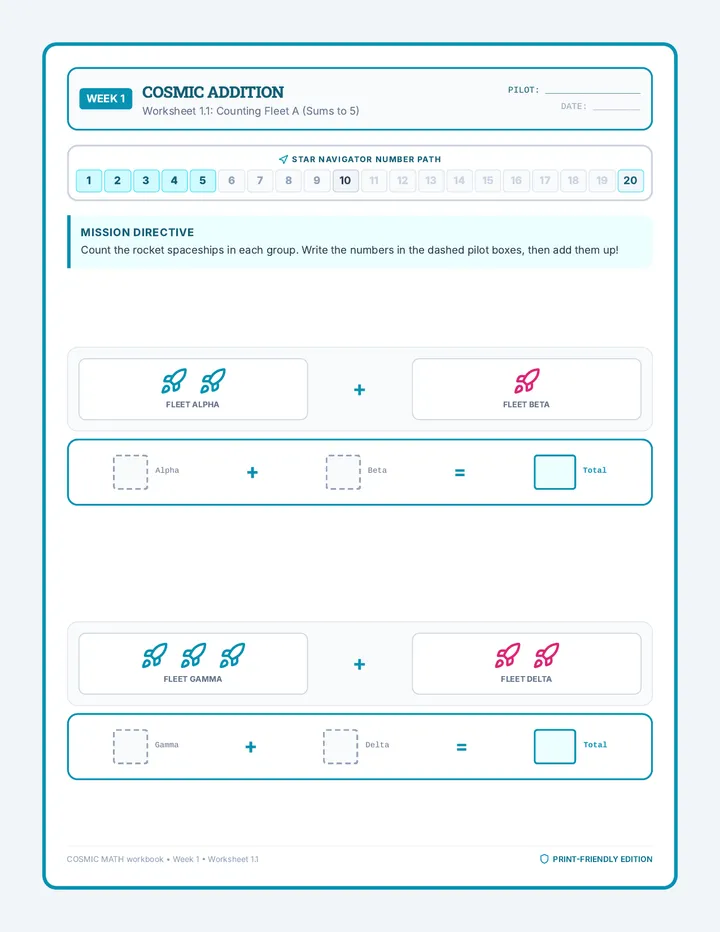
A 4-week math workbook and instructional sequence themed around outer space exploration, specifically designed for middle school students with disabilities (SWDs) working at an early 1st-grade level. Features embedded touch-points, base-ten icons, visual number paths, and age-appropriate space exploration visuals to teach single-digit operations, place value, and patterns.
A decimal addition and regrouping lesson focused on computational fluency. Students calculate rocket payloads, planetary distances, and cosmic data using standard addition algorithms with decimals up to the hundredths.
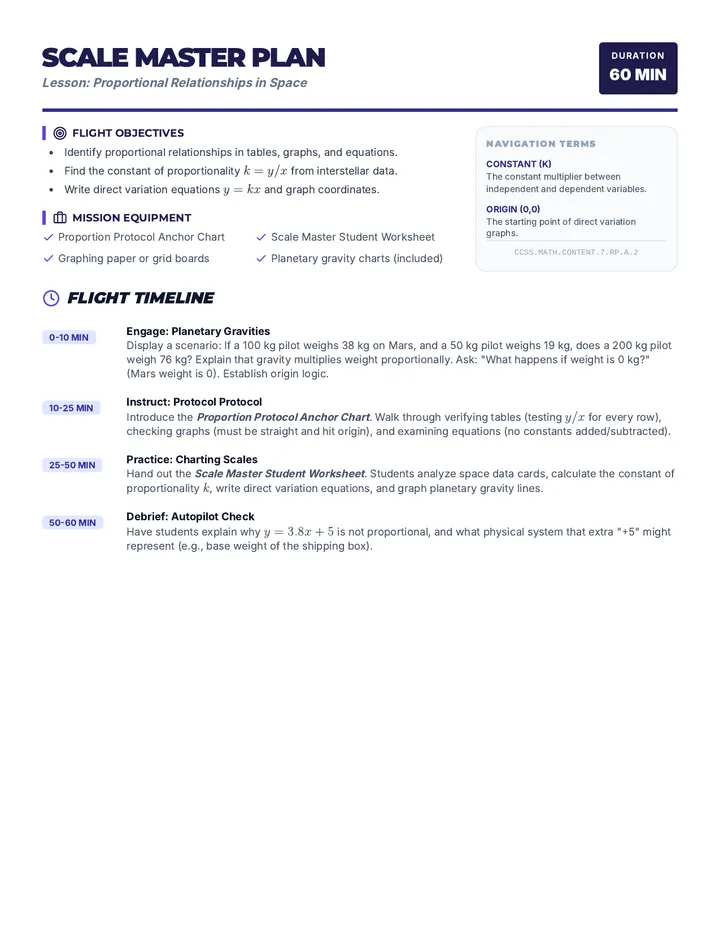
A professional 1-page lesson plan for teachers covering how to present constant of proportionality, writing proportional equations, and graphing with a spaceship navigation theme.