A lesson focusing on strategies for multiplying numbers greater than 20 and exploring various methods for division, including visual representations and mental math strategies, all presented in Japanese.
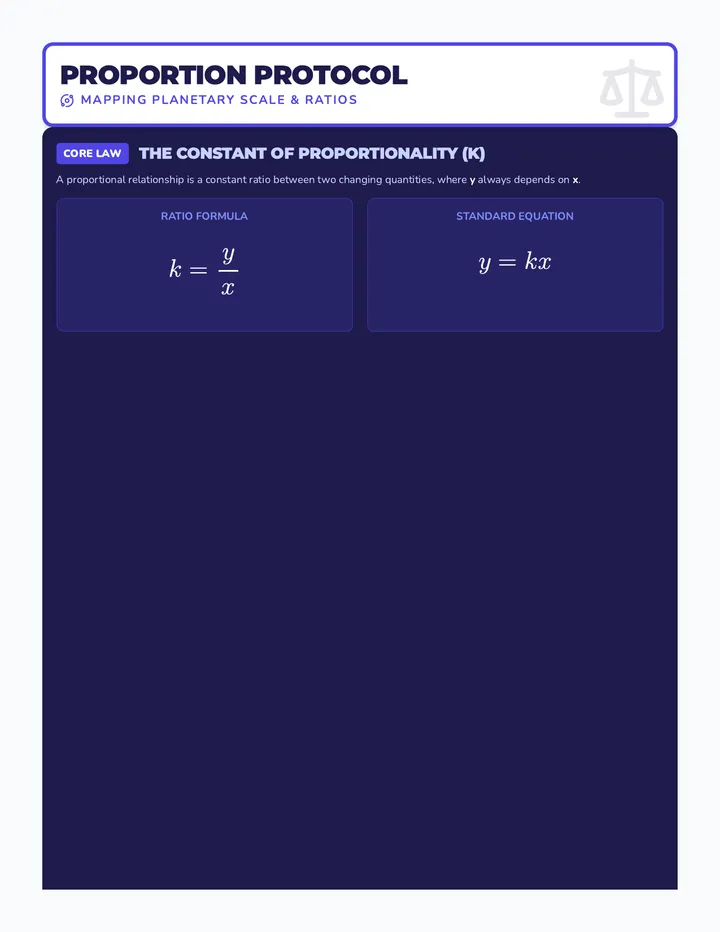
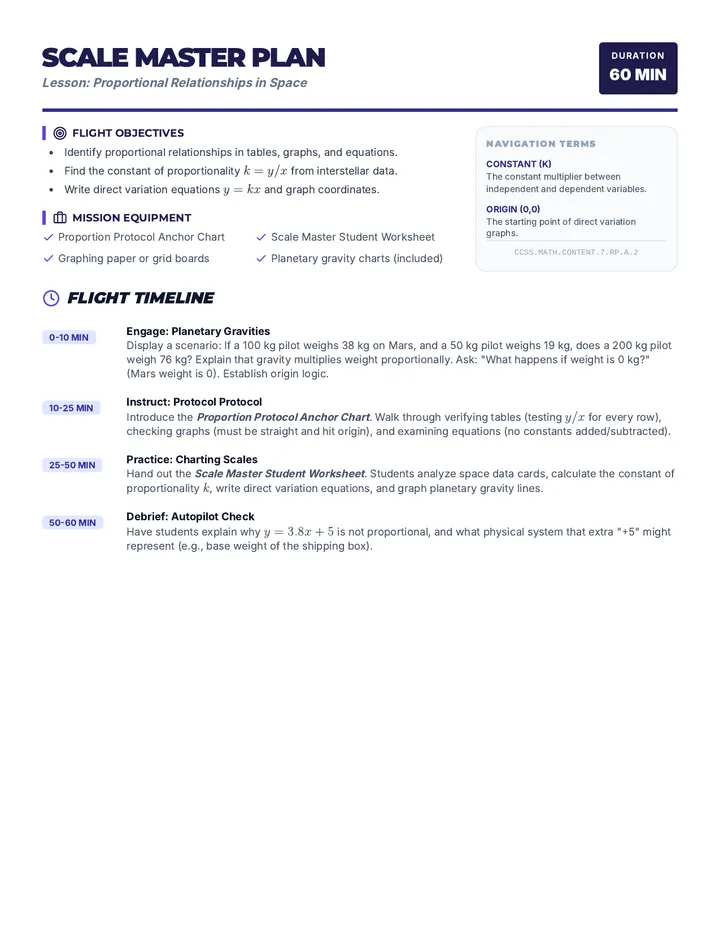
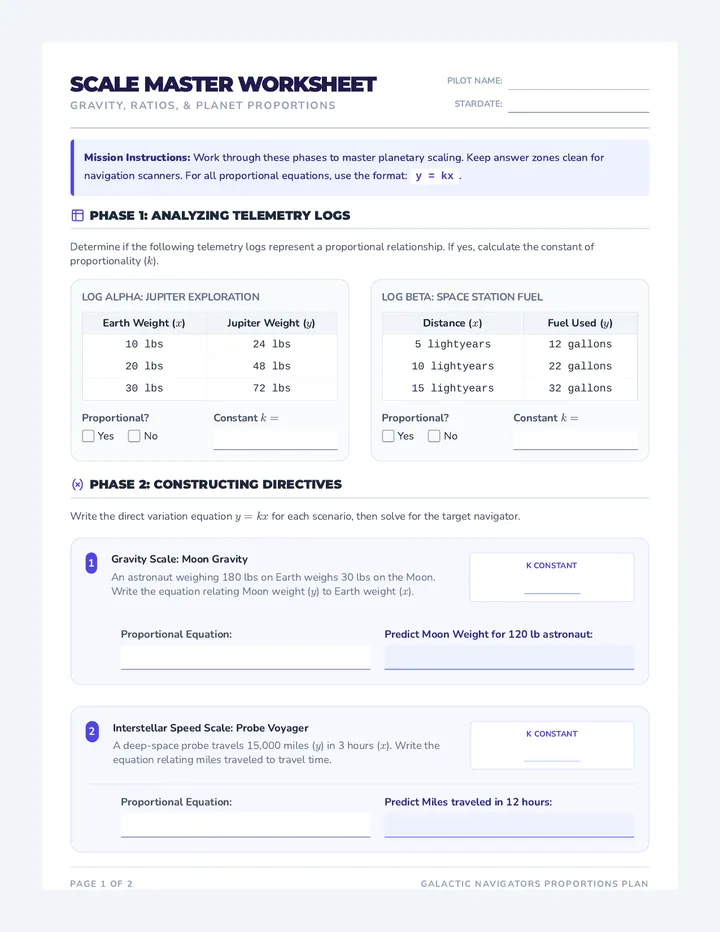
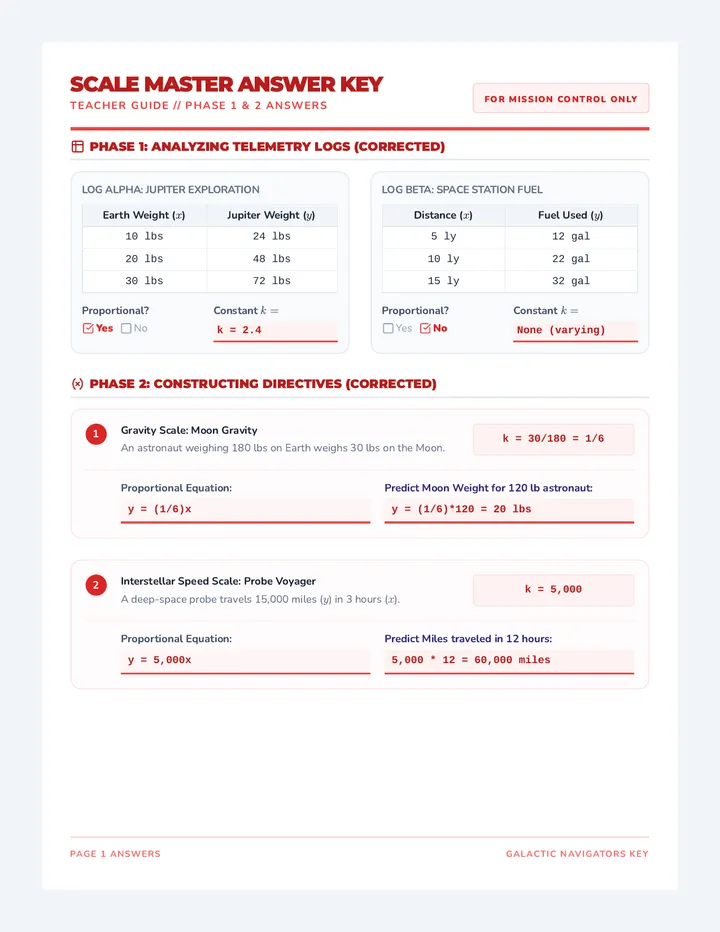
A space-themed math journey where students use decimal operations and proportional relationships to chart courses, calculate planetary scales, and manage spaceship systems.
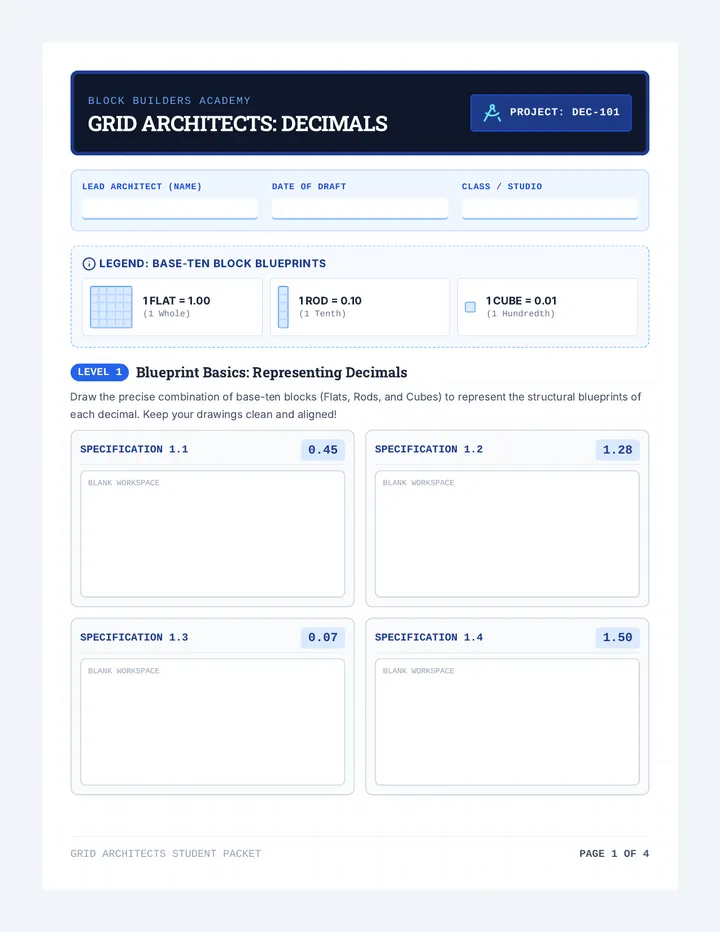
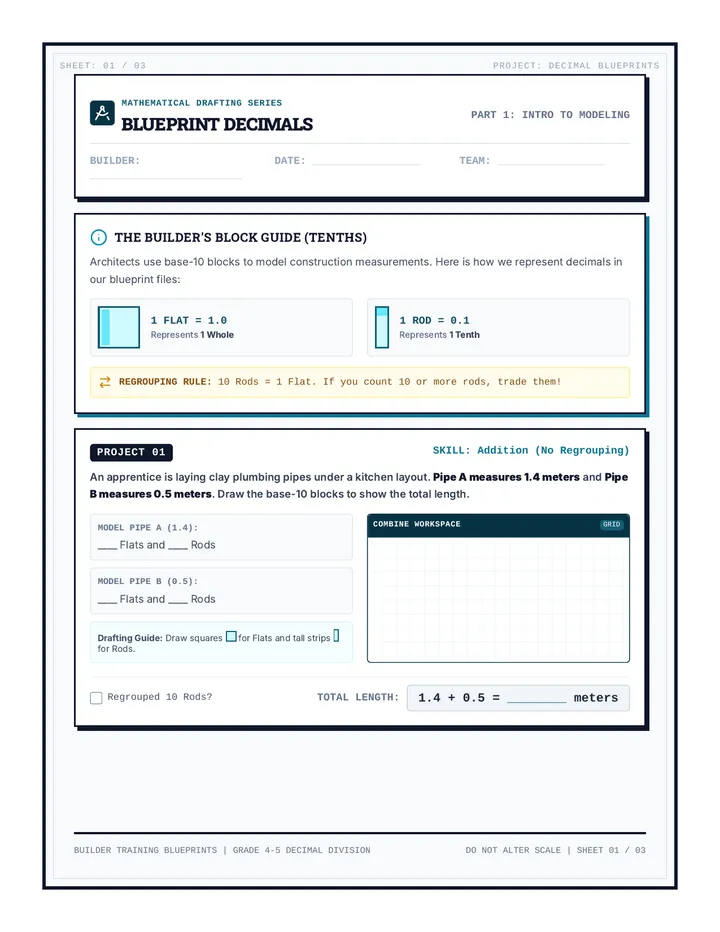
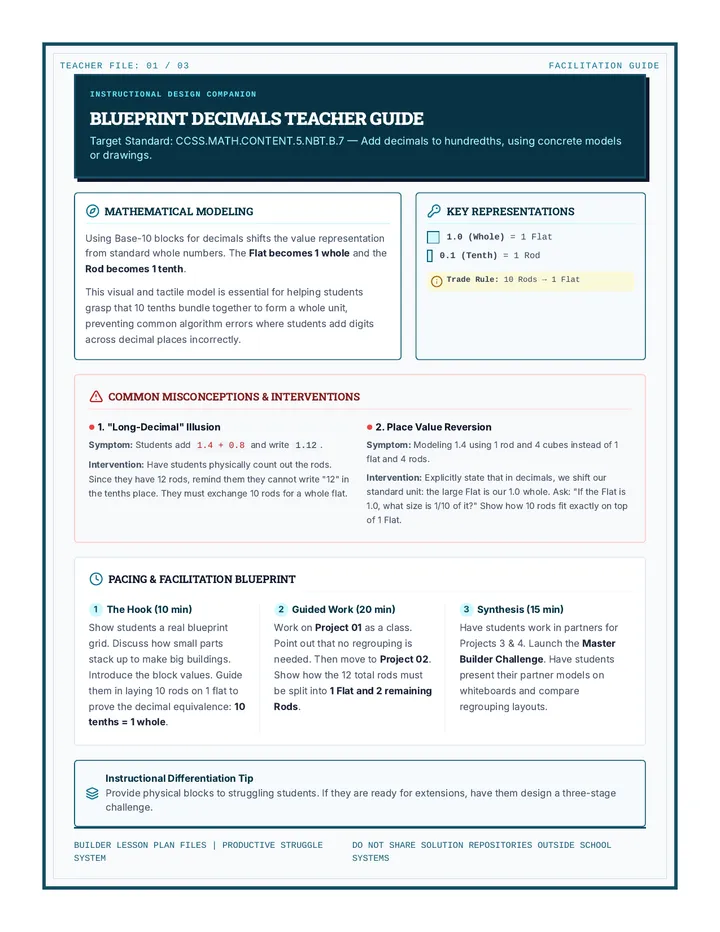
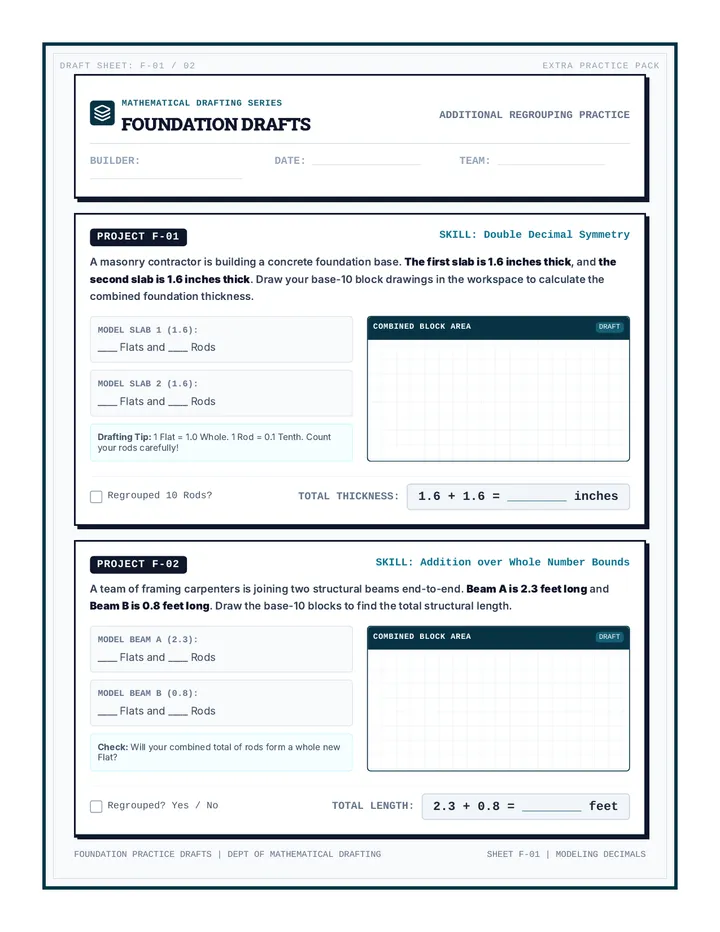
A structured math lesson where students use base-ten block blueprints to model, add, and regroup decimals up to the hundredths across four progressive levels of difficulty.
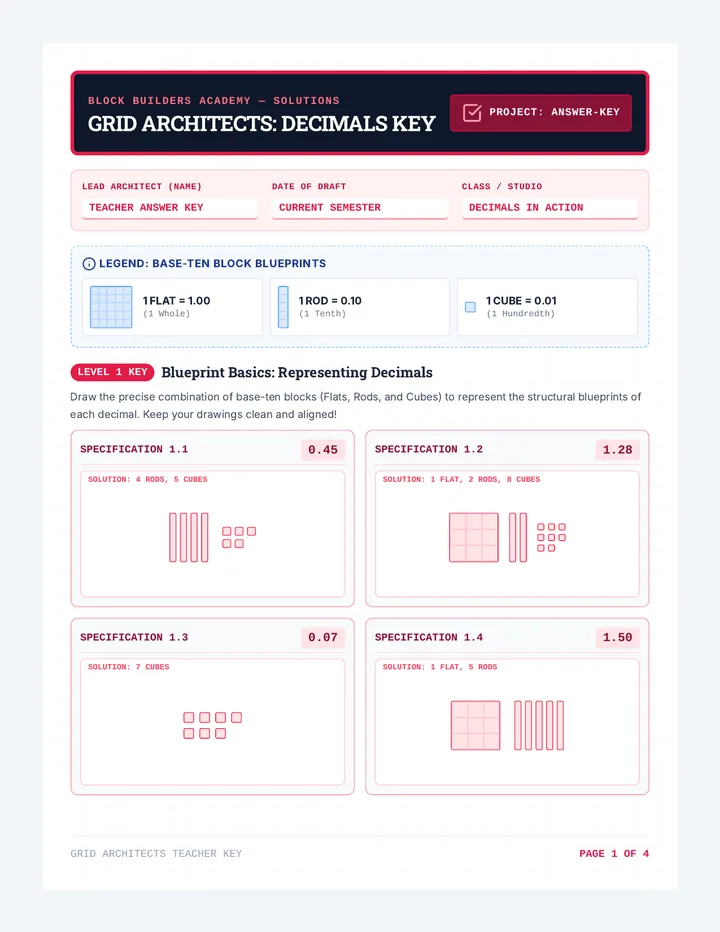
A comprehensive four-page teacher answer key that matches the student work packet. It features realistic, hand-drawn red-ink solutions for block drawings, completed regrouping prompts, and fully worked-out decimal addition grids with carrying annotations.
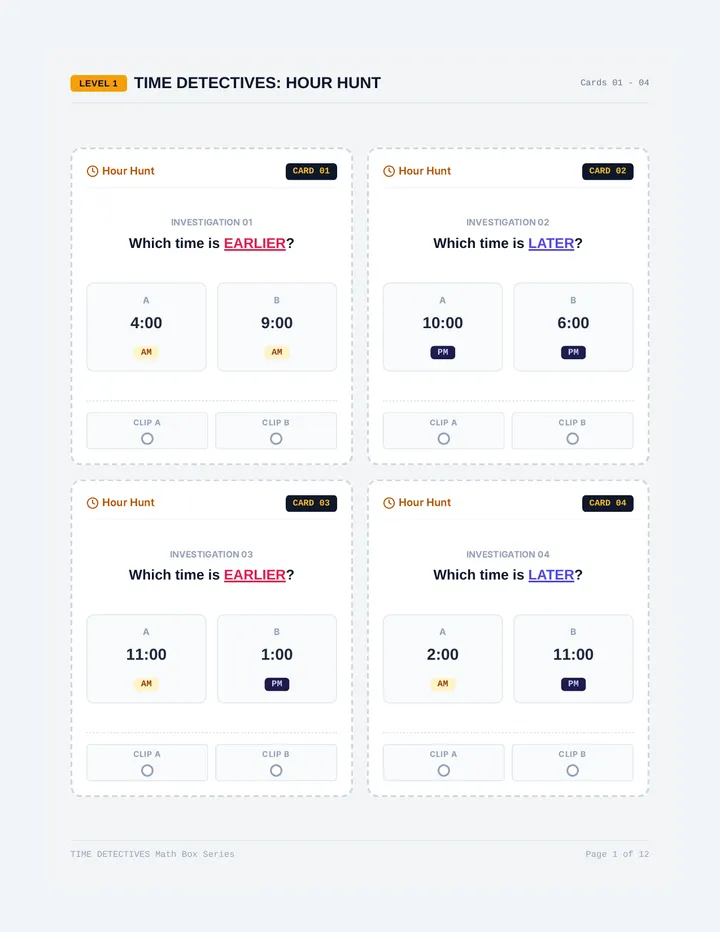
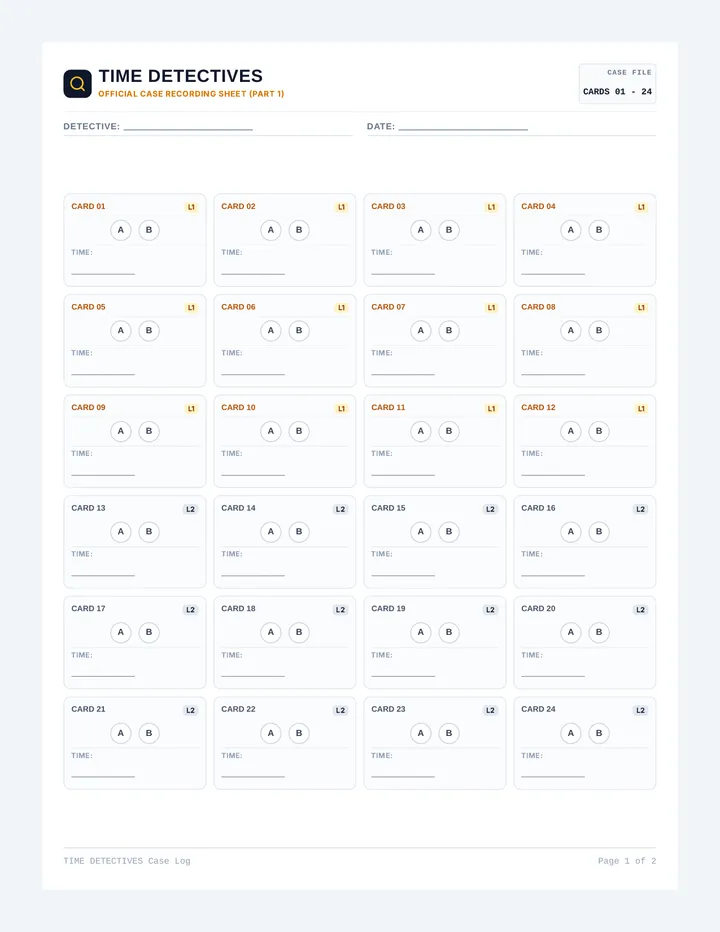
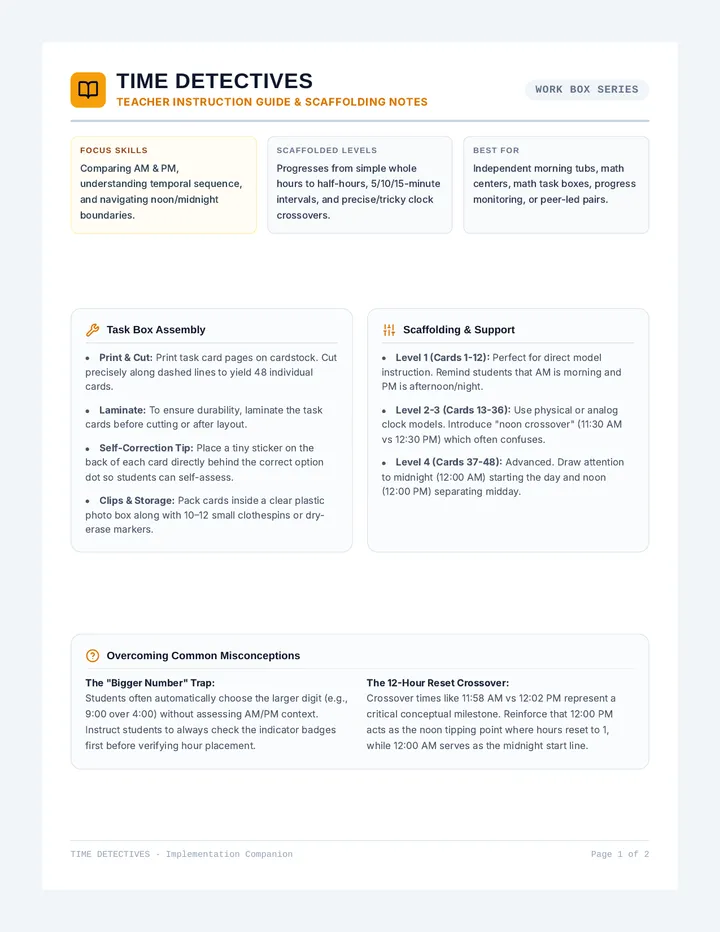
A complete series of independent math box activities designed to master telling time, comparing intervals, and calculating elapsed time. Students progress through scaffolded challenges in time logic, chronological sequencing, and temporal shifts.
A structured lesson focusing on representing decimals using base-ten drawings and performing vertical decimal addition with regrouping in the tenths column using grid alignment tools.
A four-level student math work packet styled as a technical drafting blueprint. Students model decimals using base-ten block drawings, align values in custom decimal grids, and perform decimal addition with carrying in the tenths.
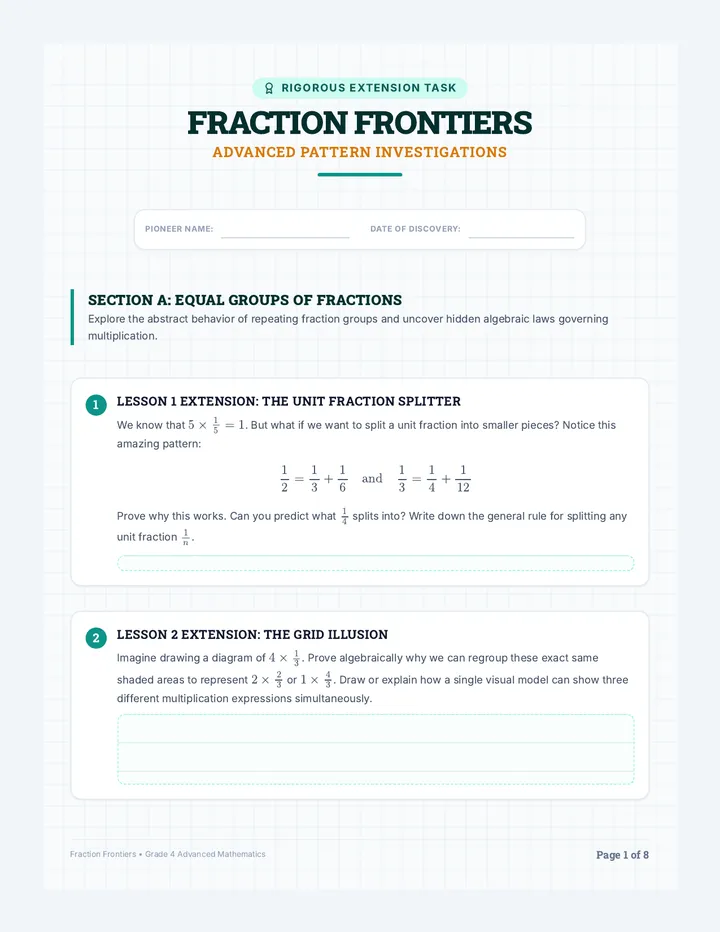
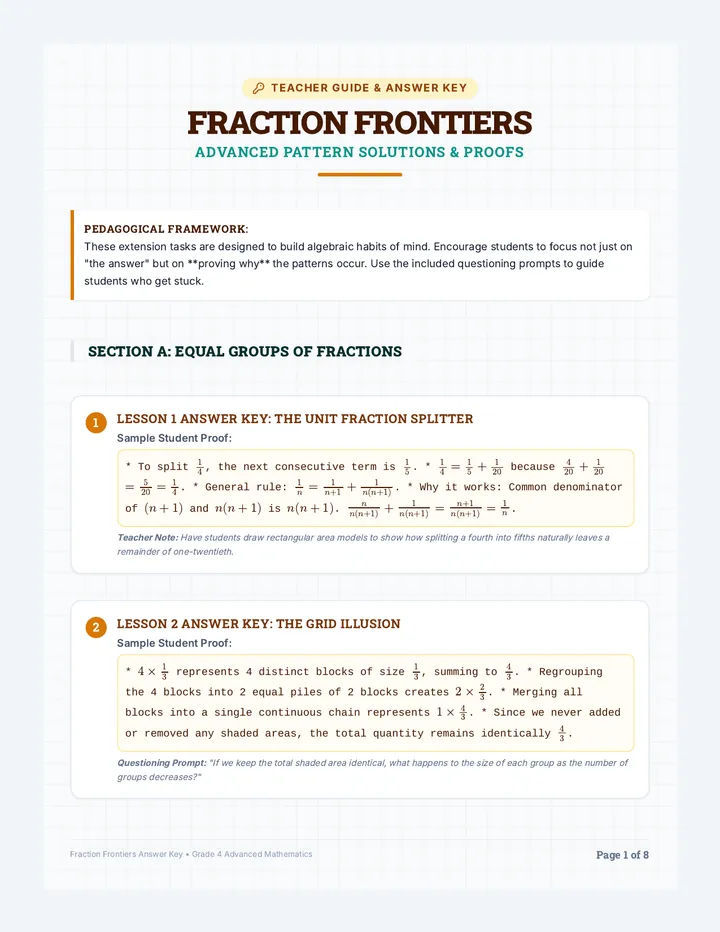
An advanced extension packet covering all 20 lessons of Unit 3, focused on abstract pattern exploration, number play, and algebraic relationships with fractions.
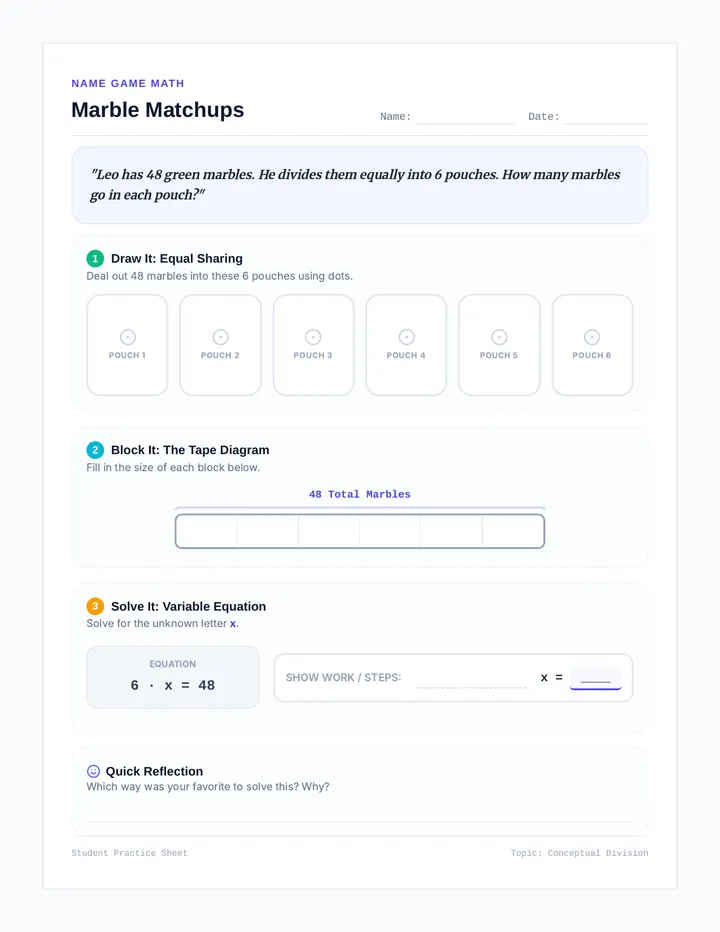
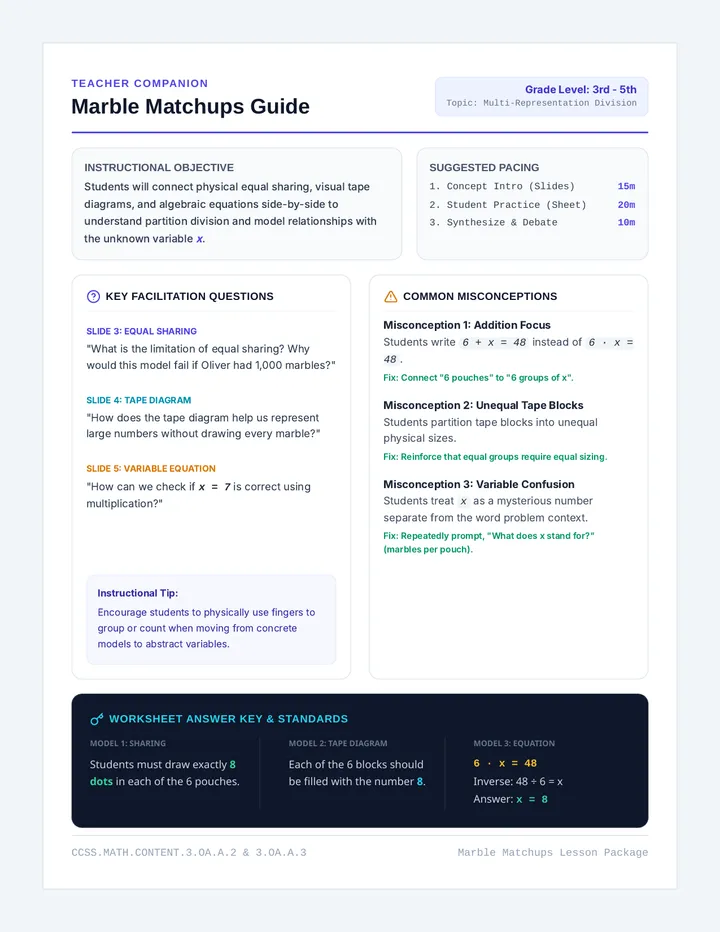
A lesson focused on conceptual division and multi-representation solving using a marble-sharing word problem. Students explore equal sharing groups, tape diagrams, and algebraic equations side-by-side to build a deep understanding of division.
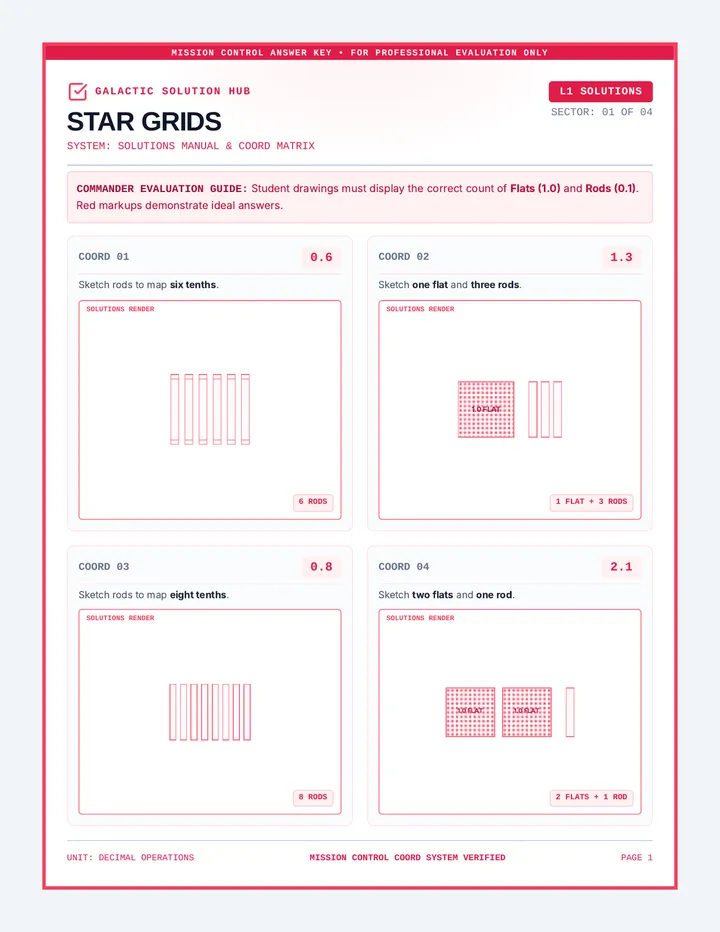
The teacher answer key for the Star Grids Practice Packet. It features high-fidelity visual replicas of the 4 space-themed levels, with completed base-ten drawings (showing grouped rods for regrouping) and math grids filled in with red handwriting-style indicators for quick visual inspection.
A complete sequence on decimal addition and regrouping. Students transition from modeling tenths with architectural blueprints to mastering computational algorithms through cosmic missions and space exploration calculations.
A focused lesson on finding constant of proportionality, writing equations, and graphing proportional relationships through interstellar weight and scale conversions.
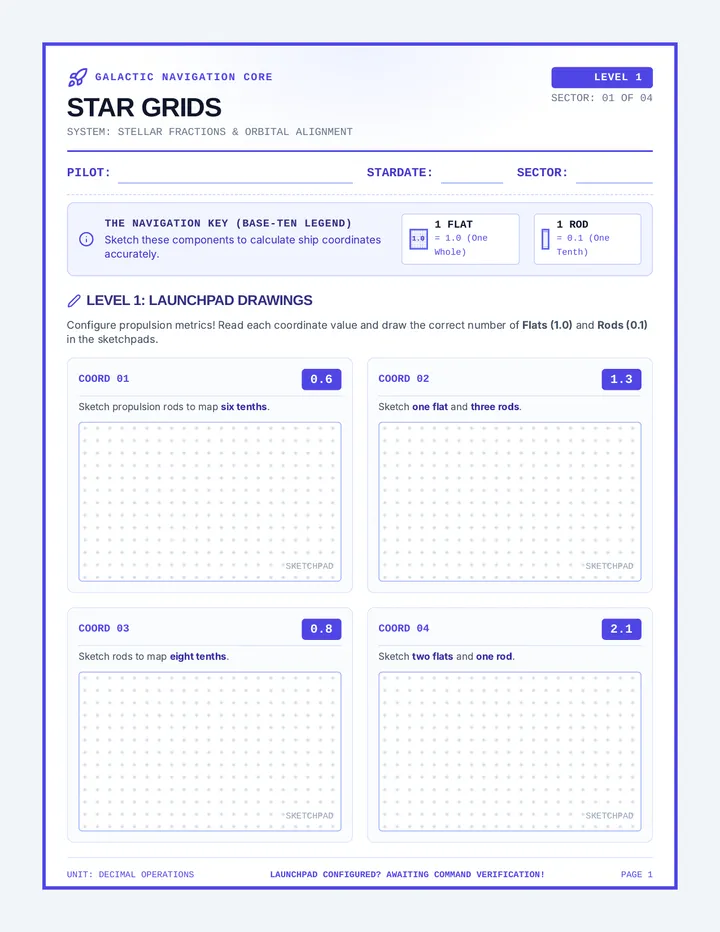
A clean, premium light-themed 4-page student work packet with a white background for easy printing. Terms have been updated to 'Flats' and 'Rods' for base-ten alignment. Features Launchpad Drawings, Orbit Docking, Fuel Tank Overload, and Deep Space Missions with specialized handwriting-friendly grids.