An end-of-year educational movie unit and math workbook based on the story of Super Mario Galaxy. Students explore gravity, orbits, and space physics through active viewing, followed by high-energy space-themed math puzzles.
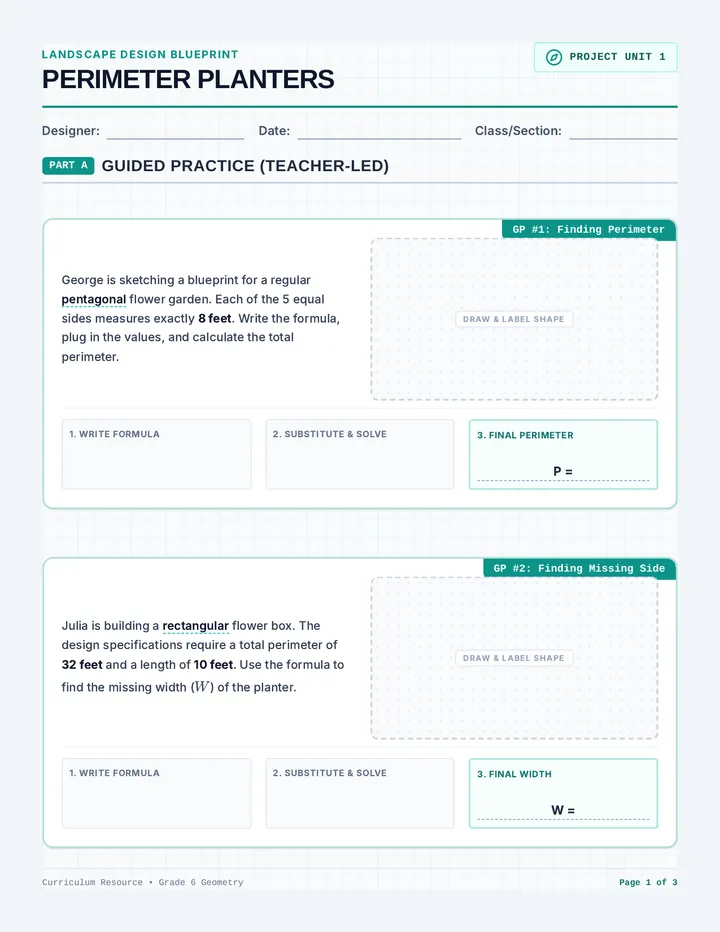
A comprehensive 6th-grade math unit that applies area and perimeter formulas to real-world garden planter designs. Students sketch architectural blueprints, calculate boundaries, determine surface coverage, and solve for missing dimensions across squares, rectangles, triangles, parallelograms, circles, and pentagons.
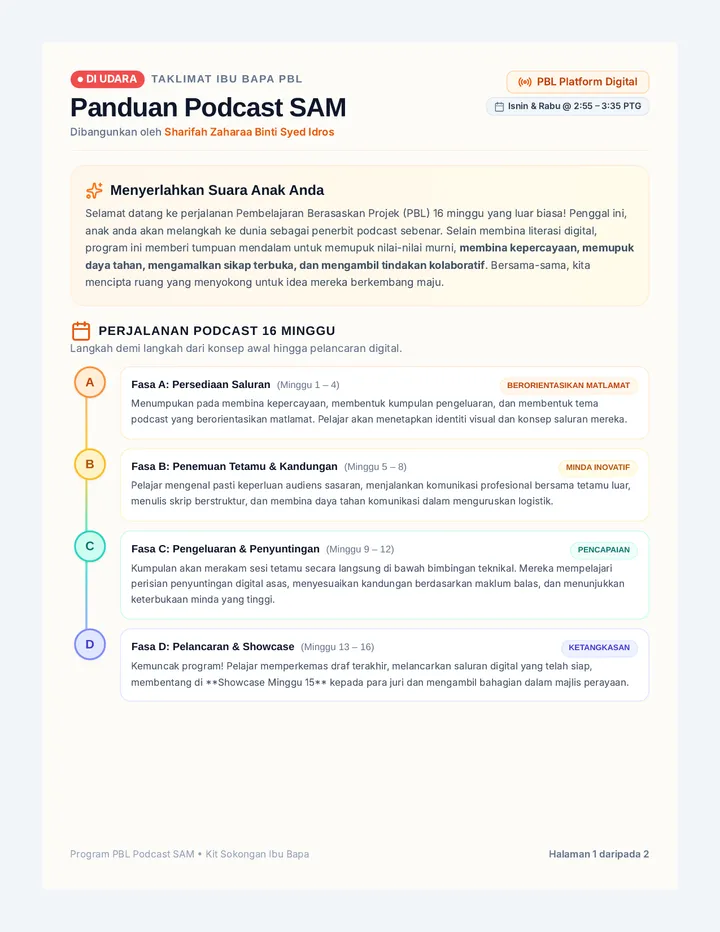
A comprehensive introductory lesson set for the SAM Podcast Project-Based Learning program. This lesson incorporates critical parent communication tools alongside specialized teacher lesson plans linking core academic subjects like KSSM Mathematics to real-world digital podcast applications.
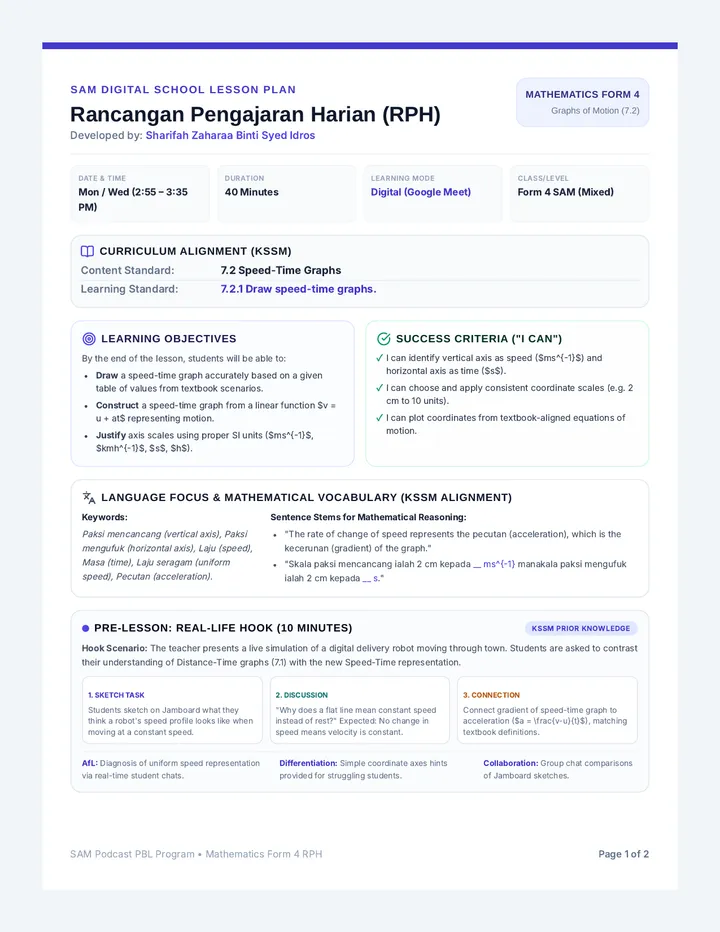
Rancangan Pengajaran Harian (RPH) Matematik KSSM Tingkatan 4 (Bab 7: Graf Gerakan) untuk sub-standard 7.2.1 Melukis Graf Laju-Masa. Dokumen ini diselaraskan sepenuhnya dengan Contoh 10 & 11 Buku Teks Matematik Tingkatan 4 KSSM.
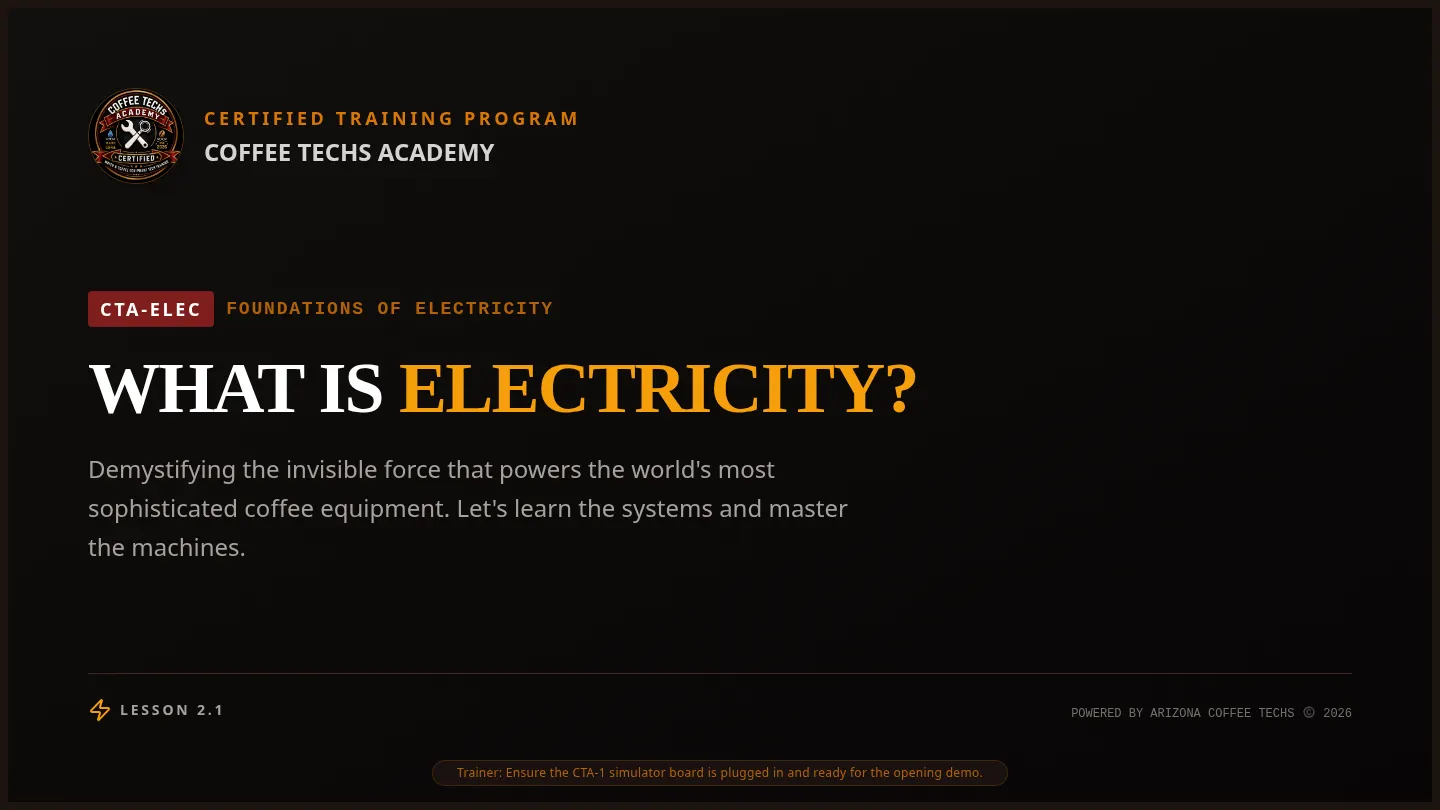
A comprehensive technical certification sequence designed to teach commercial coffee equipment technicians how to demystify electricity, safely troubleshoot components, and master electrical systems.
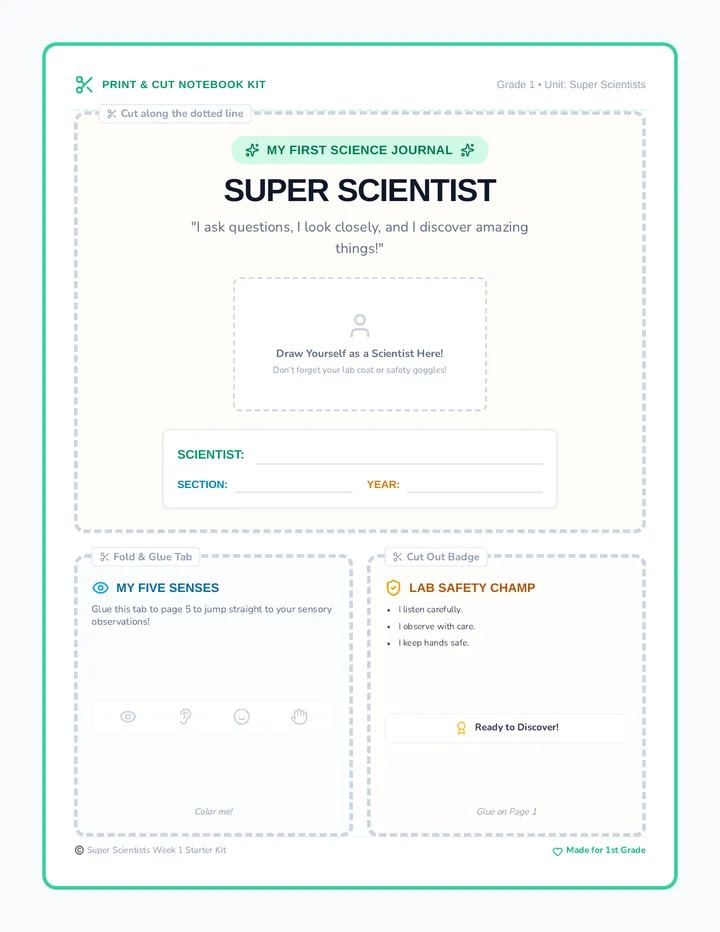
An introductory first-week science unit for 1st graders to explore scientific identity, observation, and the five senses through interactive notebooks.
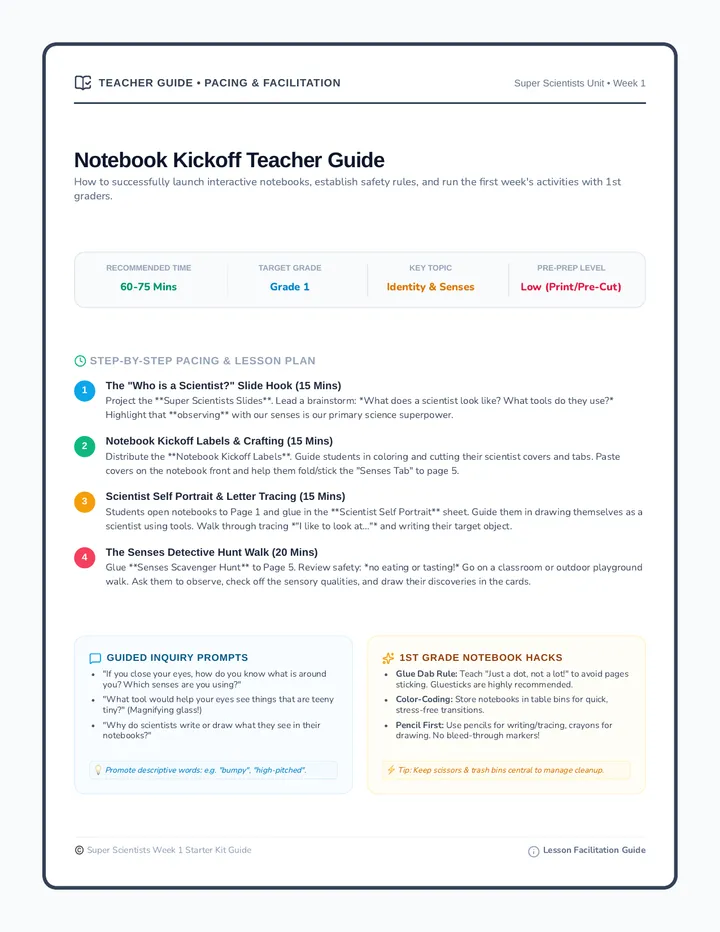
A comprehensive guide for teachers detailing how to set up science notebooks, facilitate the first week's activities, and prompt sensory observations in 1st grade.
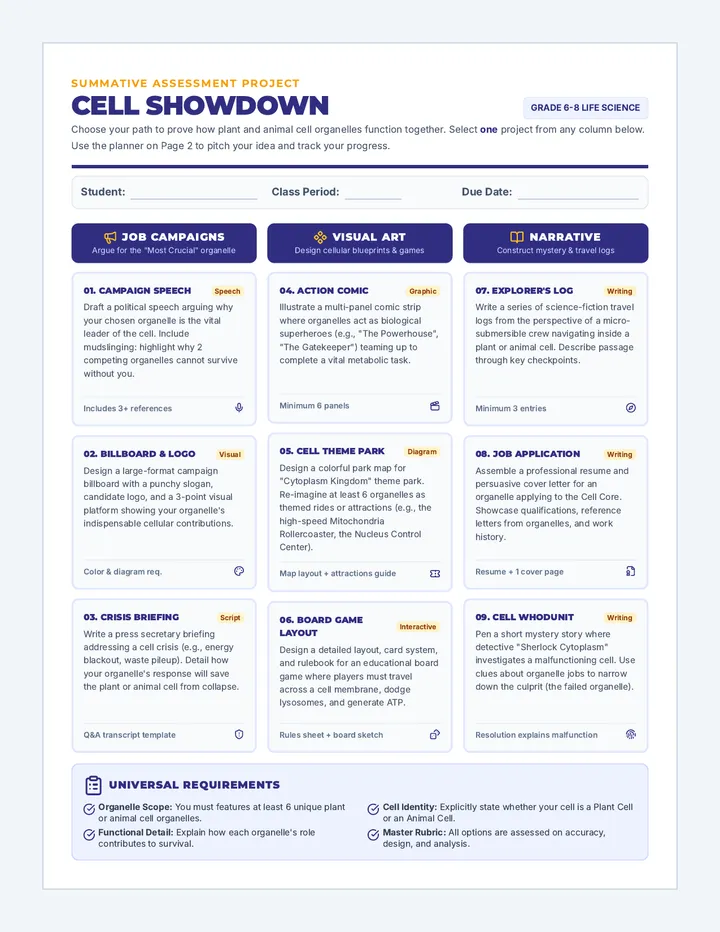
An ecology and life science curriculum sequence exploring the microscopic and macroscopic systems of our planet, from cellular organelles and biological organization to Earth's interconnected spheres.
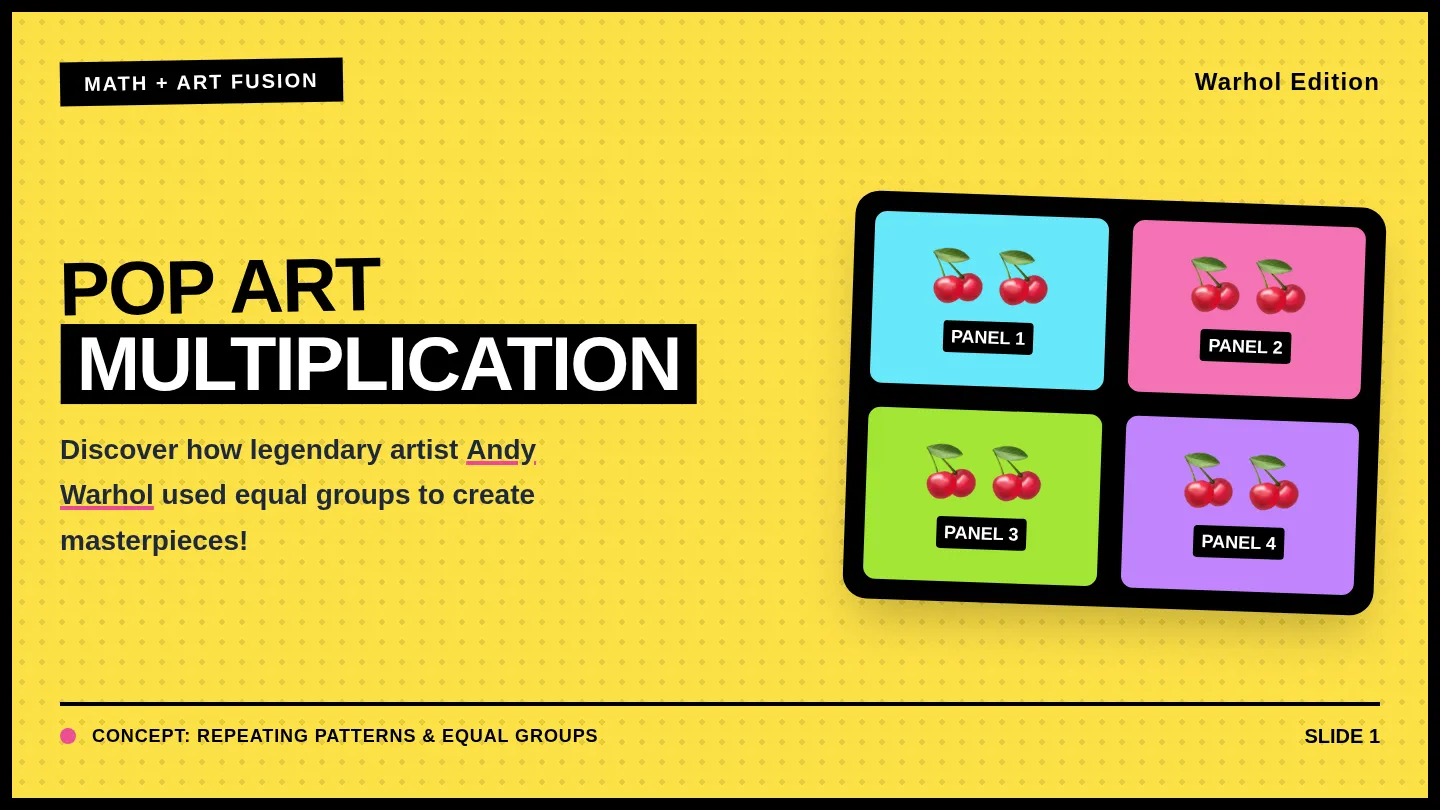
An interdisciplinary lesson blending beginning multiplication (equal groups and arrays) with Andy Warhol-style Pop Art. Students analyze grid-based repeating art, design their own multi-panel cartoon masterpieces, and express their creations using equal groups and multiplication sentences.
An interactive slide deck introducing first graders to what a scientist is, the five senses as their primary scientific tools, and notebook organization.
A comprehensive teacher professional development and model lesson plan sequence. It equips educators with hands-on mineral testing protocols, inquiry-based (3D) NGSS teaching strategies, geological vocabulary support, and formative assessment tools for grades 4-8.
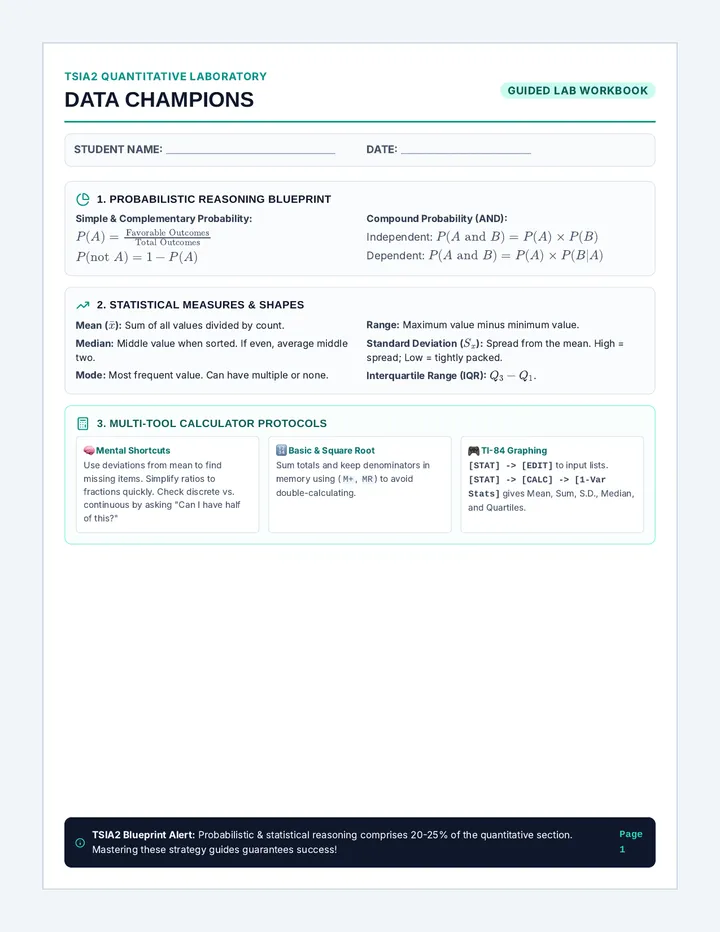
A comprehensive TSIA2 math lesson focusing on Probabilistic and Statistical Reasoning, including classifying data, computing probability, and analyzing measures of center and spread. Features a guided workbook with multi-tool calculator strategies, an independent practice worksheet, and a detailed teacher answer key.
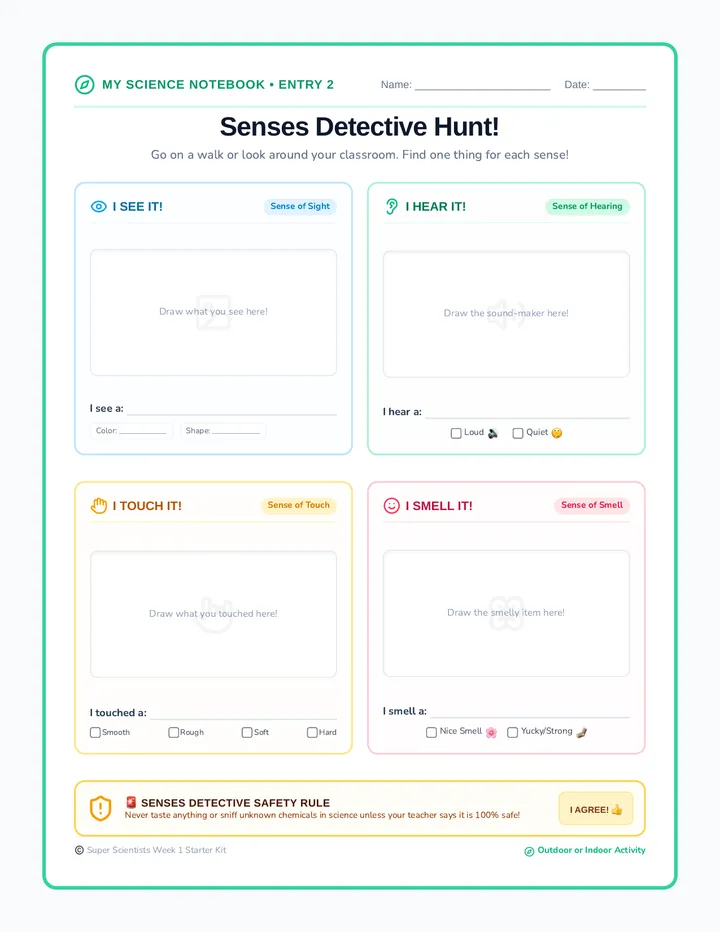
A five senses classroom and outdoor scavenger hunt sheet designed for 1st graders to record sensory observations with drawings and simple descriptive words.