Students audit a relief mission ledger, practicing decimal alignment for addition and subtraction to ensure budget accuracy.
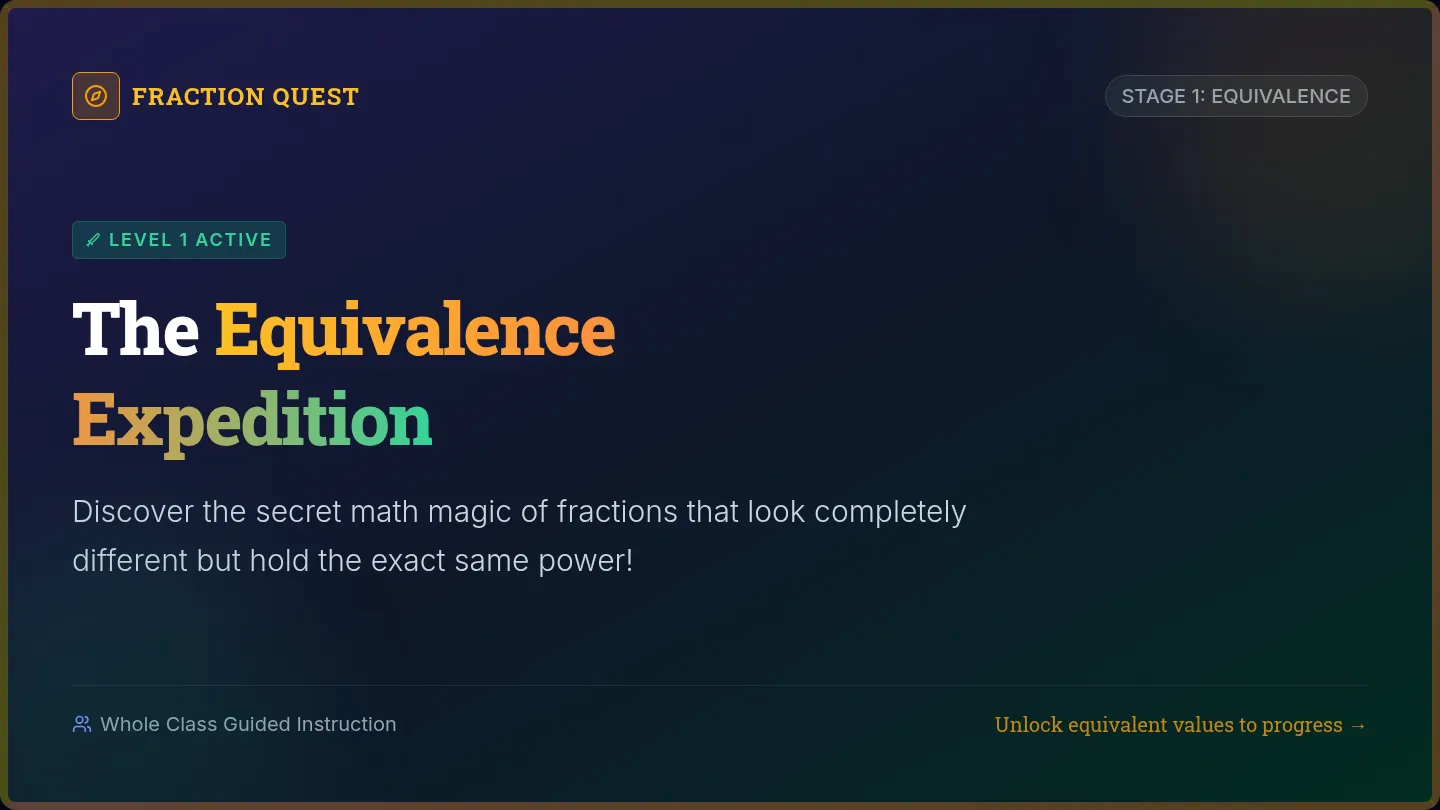
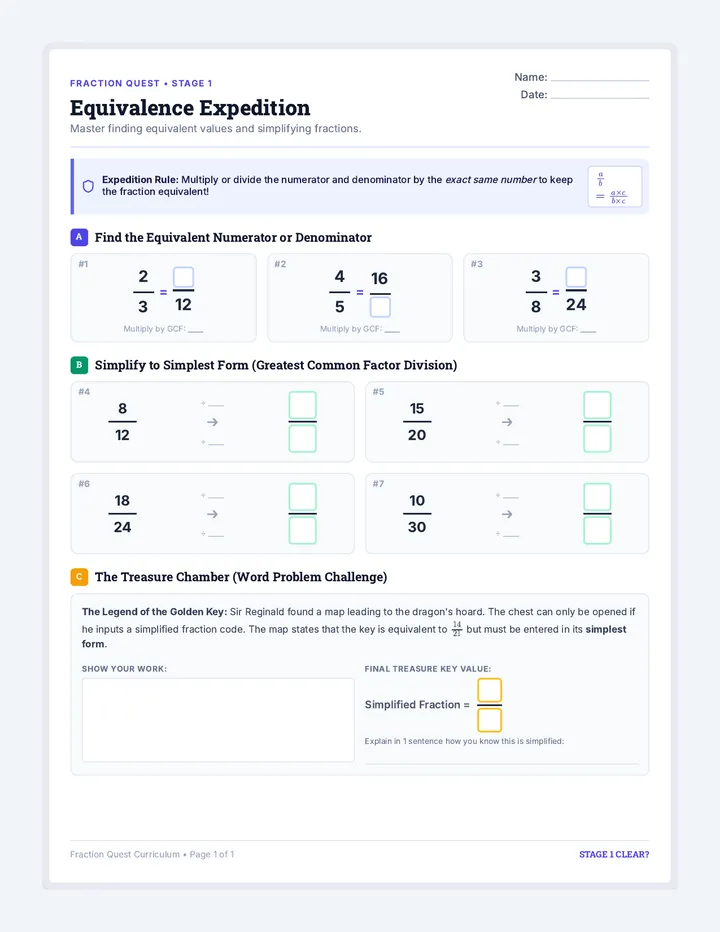
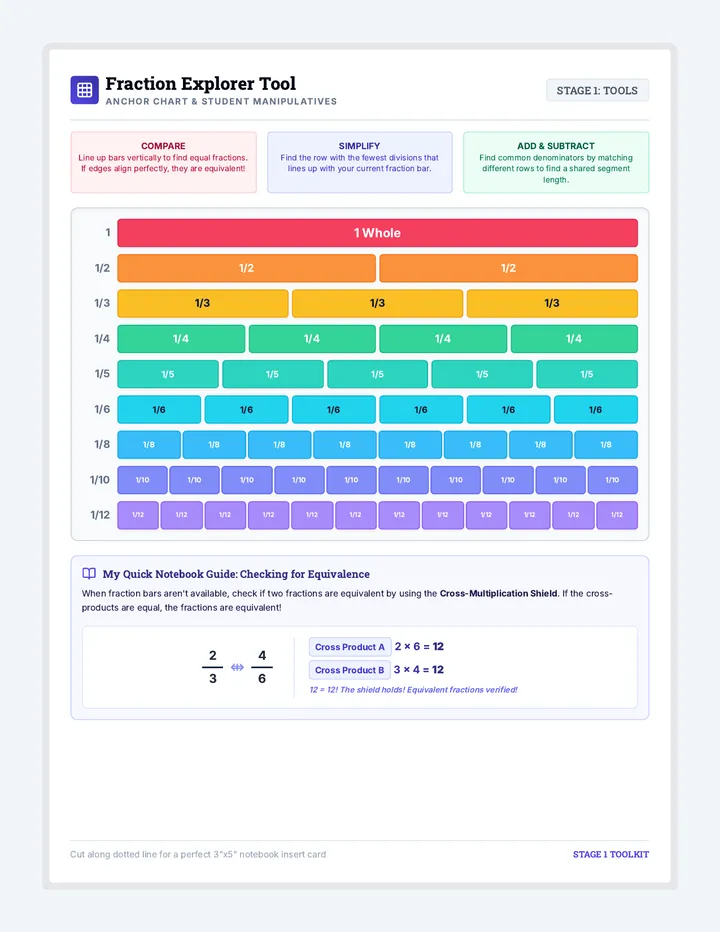
A comprehensive visual math curriculum sequence focusing on fraction equivalence, addition, subtraction, multiplication, division, and comprehensive multi-operation mastery. Includes visual lesson slides, independent practice worksheets, small-group centers, visual tools, and robust assessments.
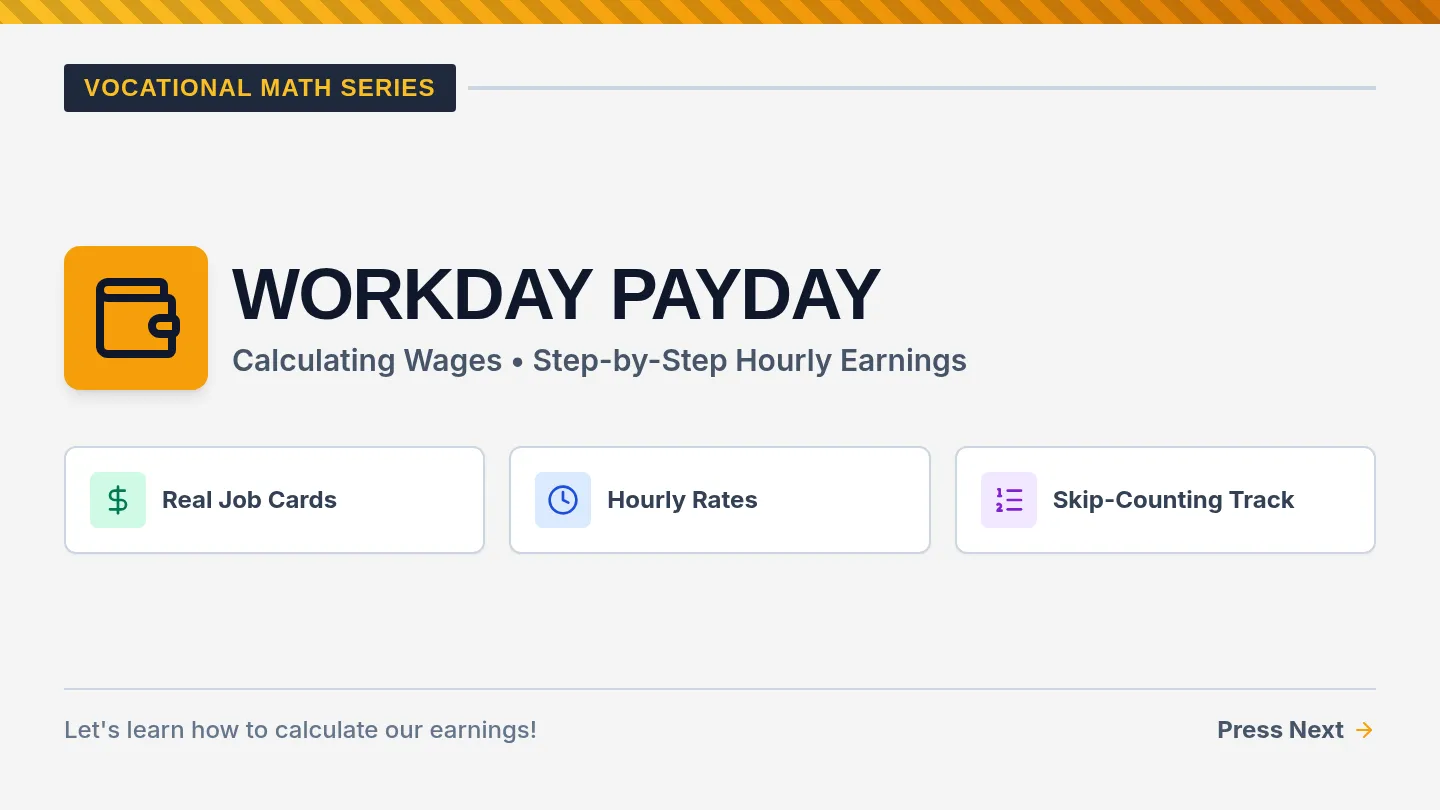
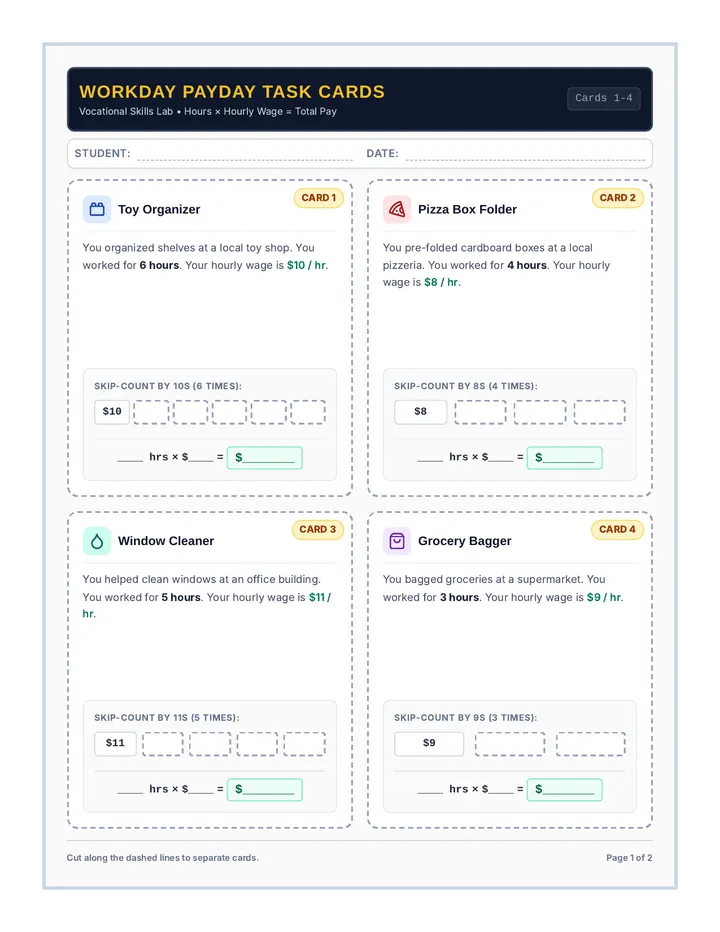
A practical vocational math lesson where students learn to calculate daily earnings by multiplying hours worked by hourly wages. Designed with real-world job-card contexts and supported by structured visual skip-counting.
A printable set of 8 vocational job-card task cards for student stations. Each card presents a distinct workplace scenario with clear numbers and visual guides to support independent double-digit skip-counting and wage calculations.
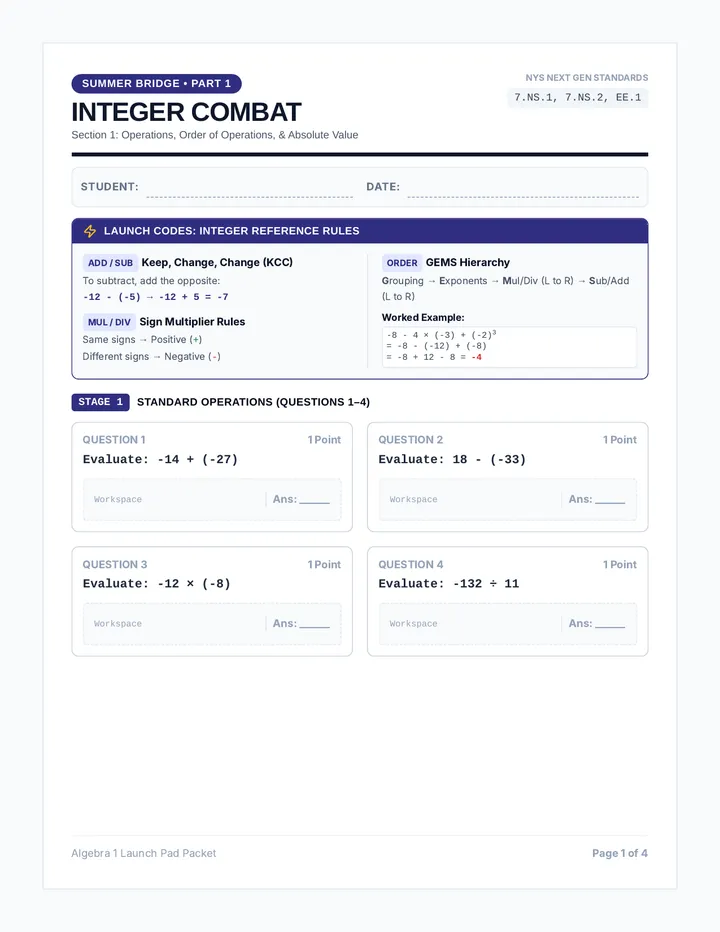
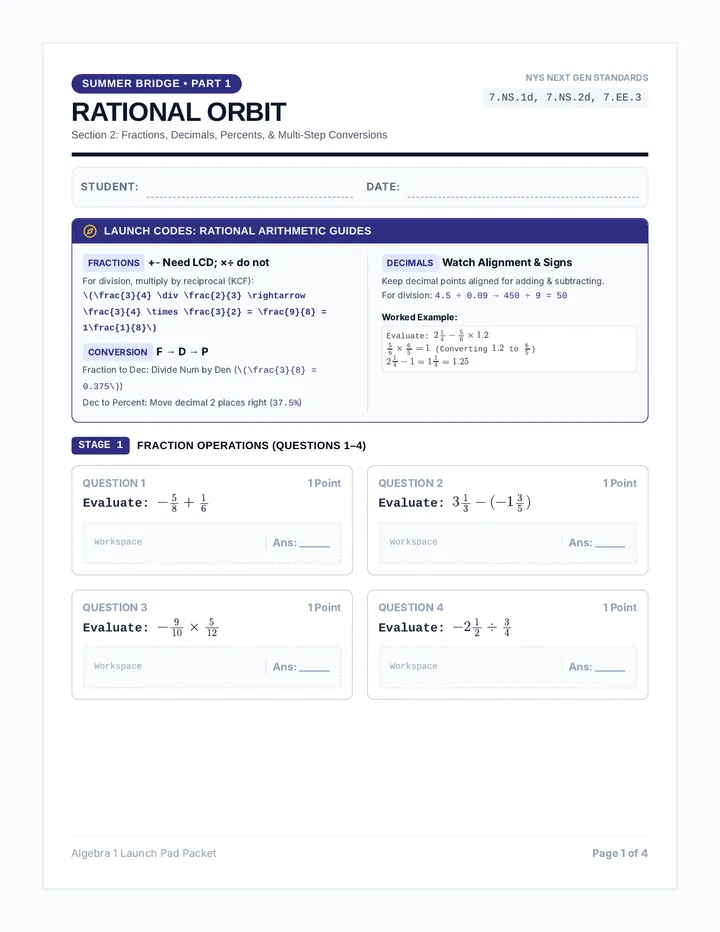
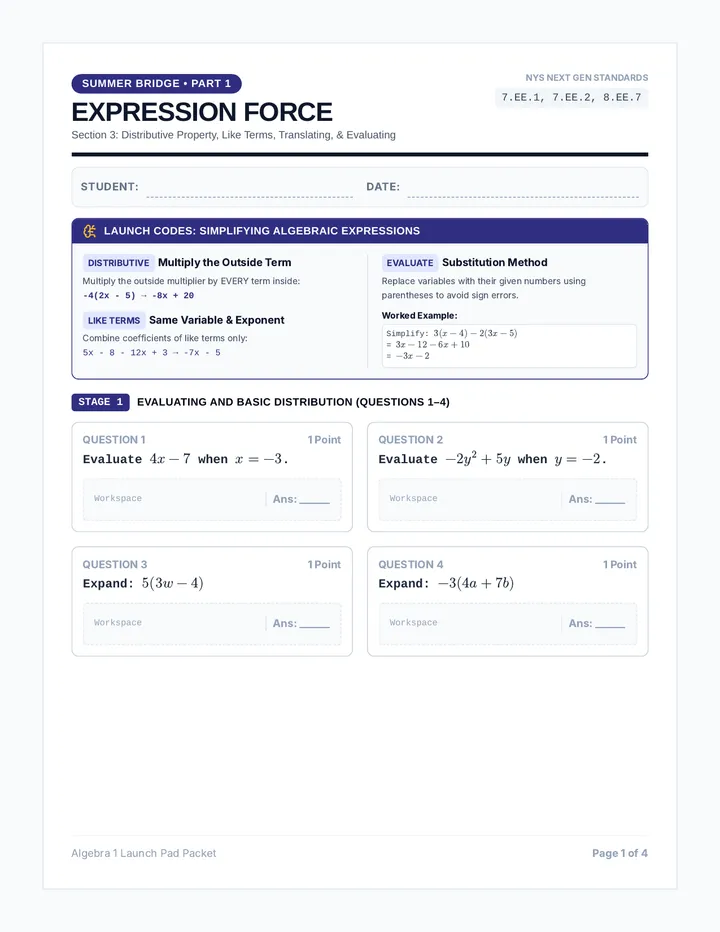
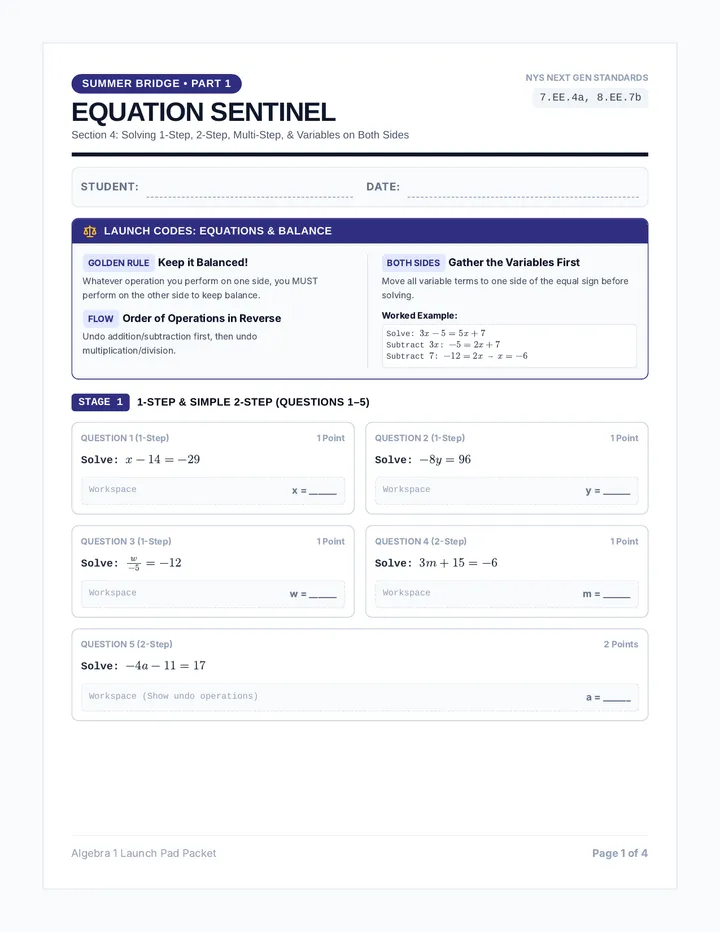
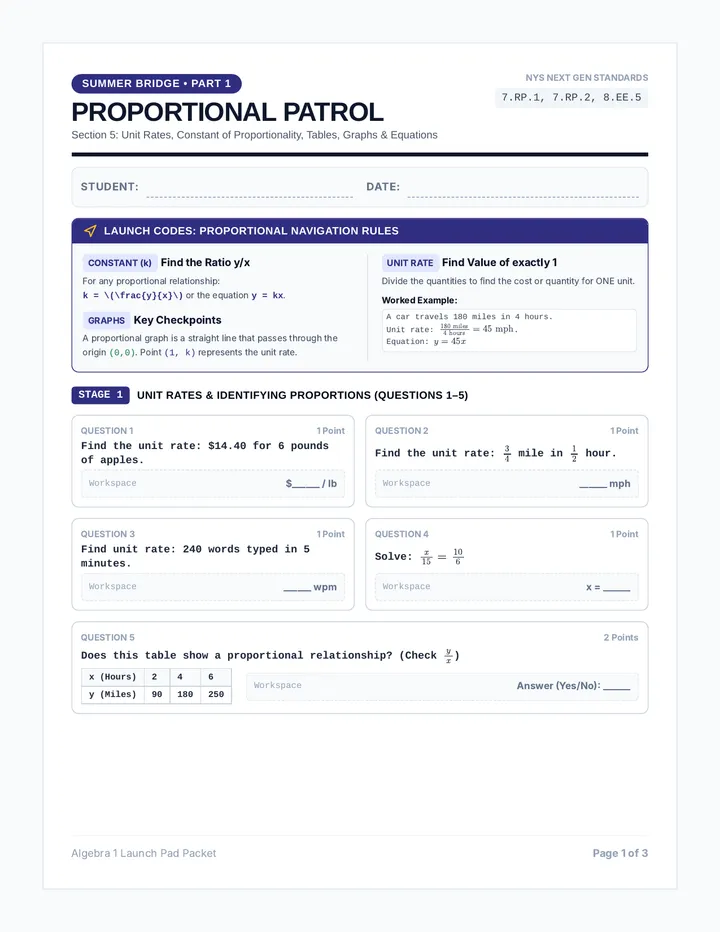
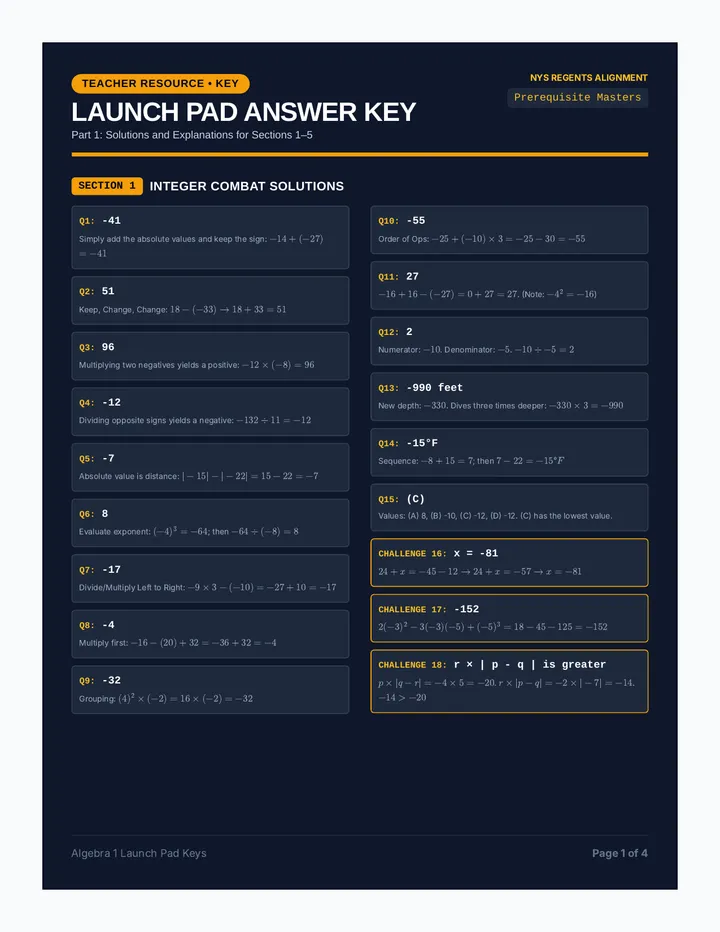
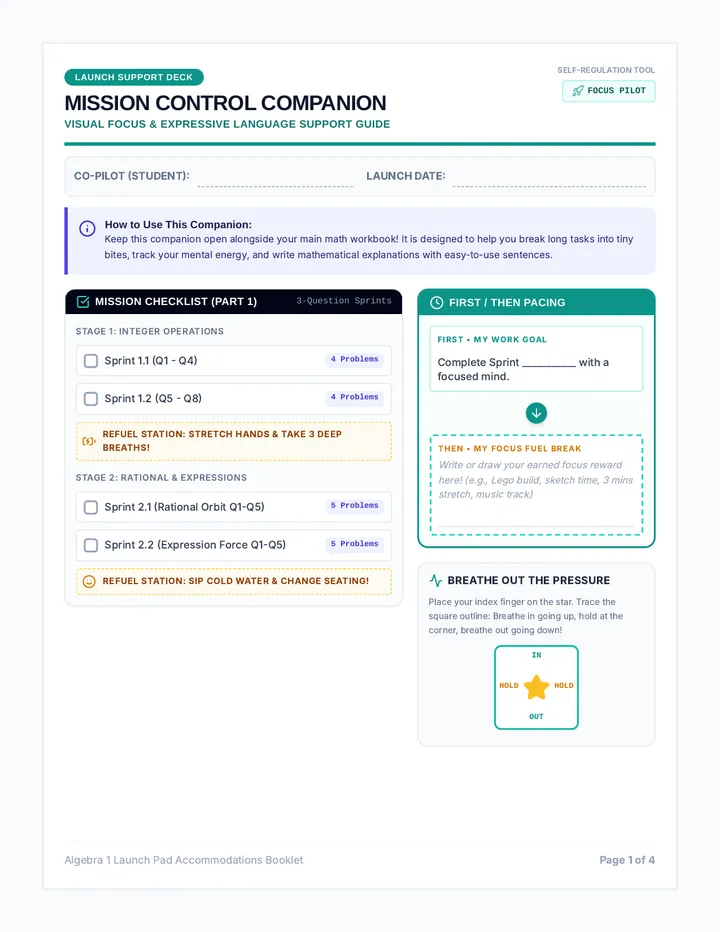
A comprehensive summer bridge workbook for rising 8th graders transitioning to Algebra 1. Contains review of prerequisite topics, advanced pre-algebra skills, real-world application, and an Algebra Escape Challenge.
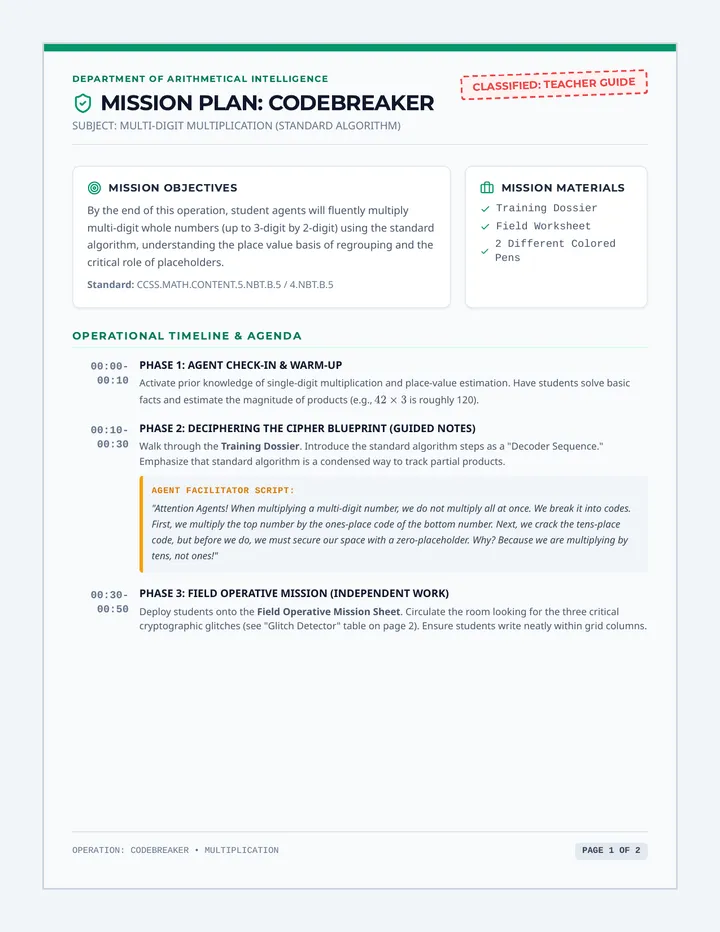
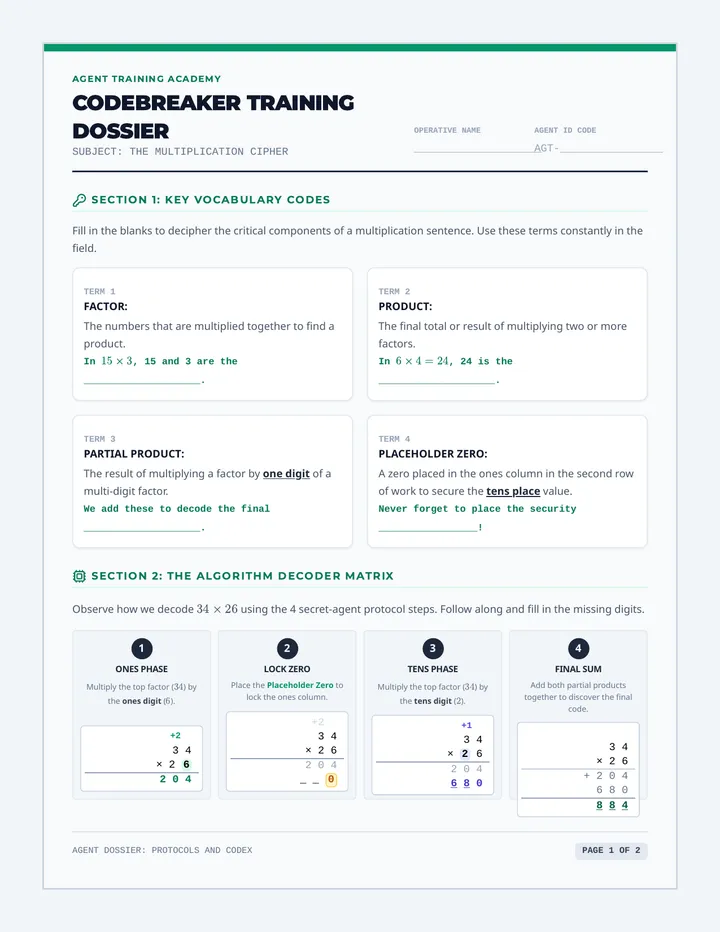
A covert-agent themed math lesson focusing on mastering the multi-digit whole number multiplication standard algorithm. Students step into the shoes of cryptography agents to learn, practice, and apply regrouping procedures.
A comprehensive 7-slide presentation that introduces hourly wage calculations using real-world vocational scenarios. Designed with a retro industrial clipboard theme, featuring bold graphics, clear icons, and visual skip-counting tracks. All slide text elements are strictly 24px or larger.
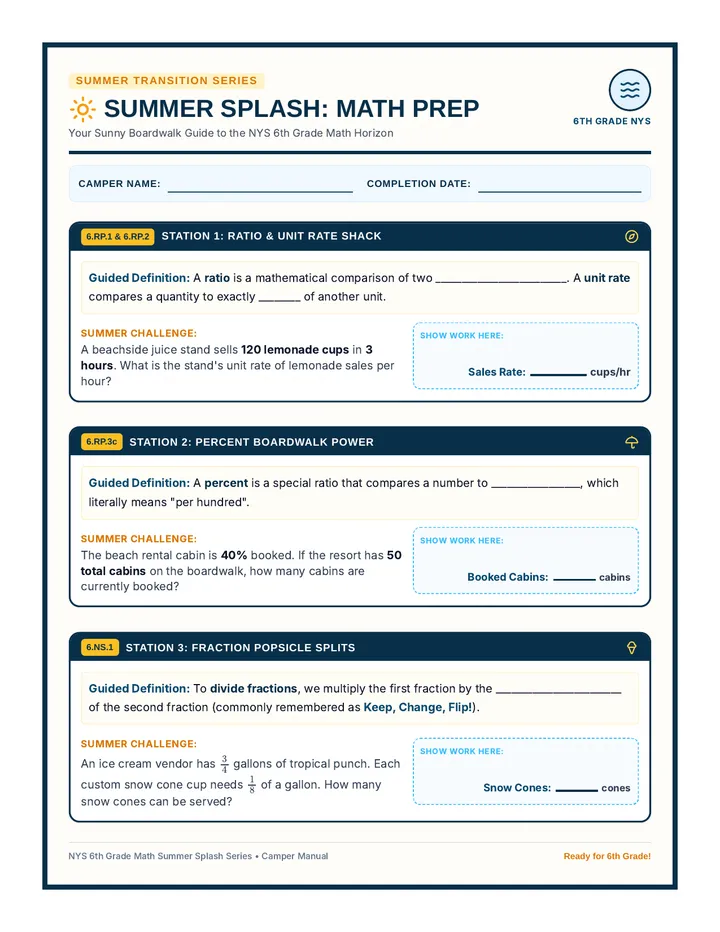
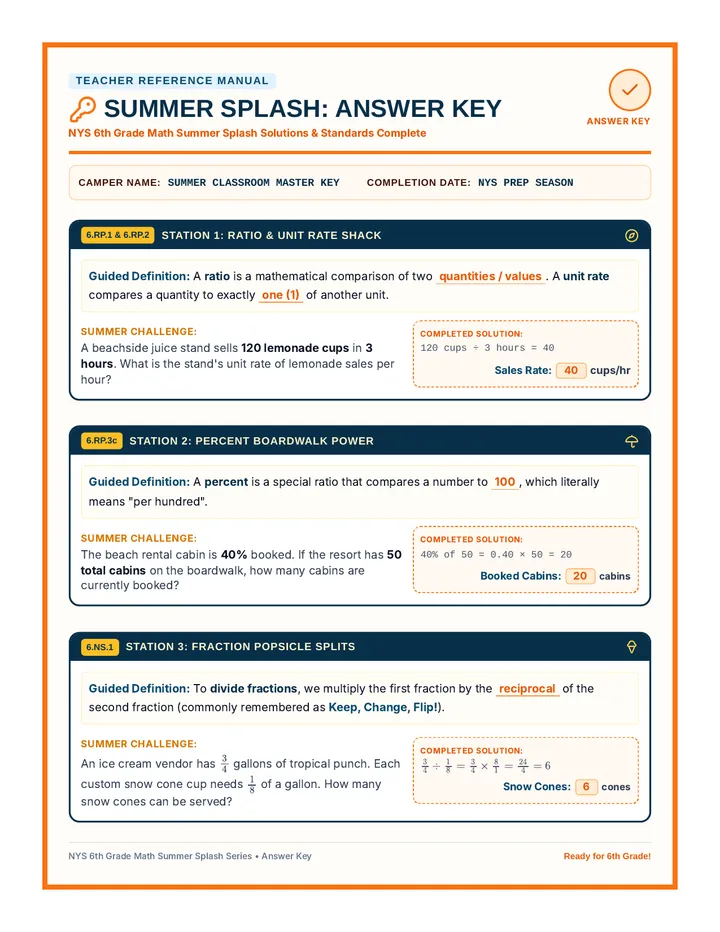
A transitional math prep lesson for rising 6th graders entering the NYS math curriculum. It introduces key concepts across all major domains including Ratios & Proportions, the Number System, Expressions & Equations, Geometry, and Statistics through structured definition spaces and scaffolded example problems.
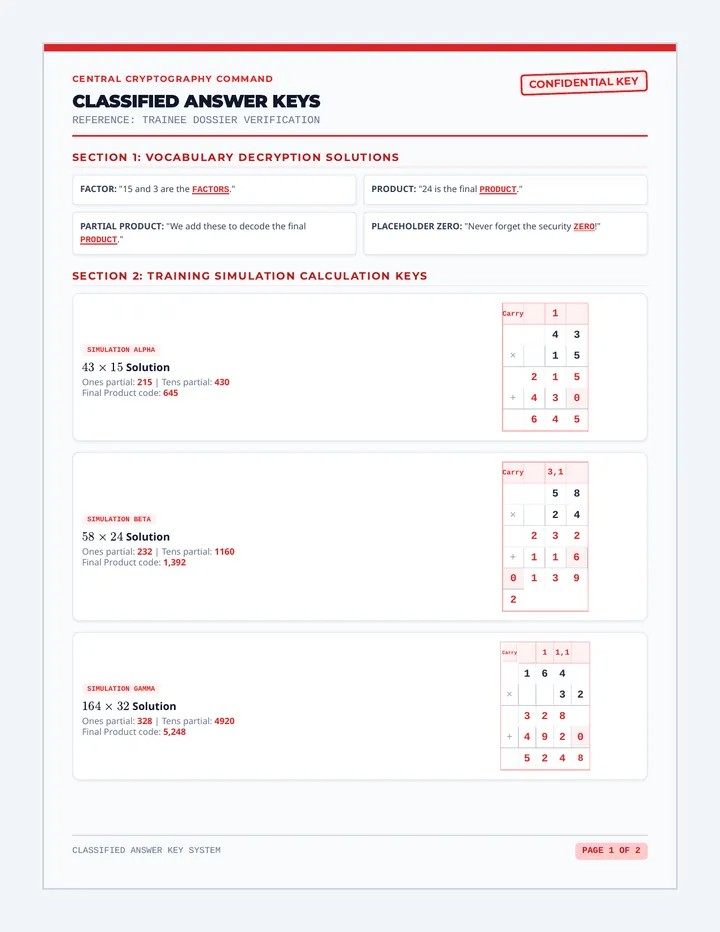
A teacher-facing 2-page answer key showing completed ciphers, filled vocabulary terms, and detailed grid calculations in high-contrast red ink for quick assessment of student dossiers and worksheets.
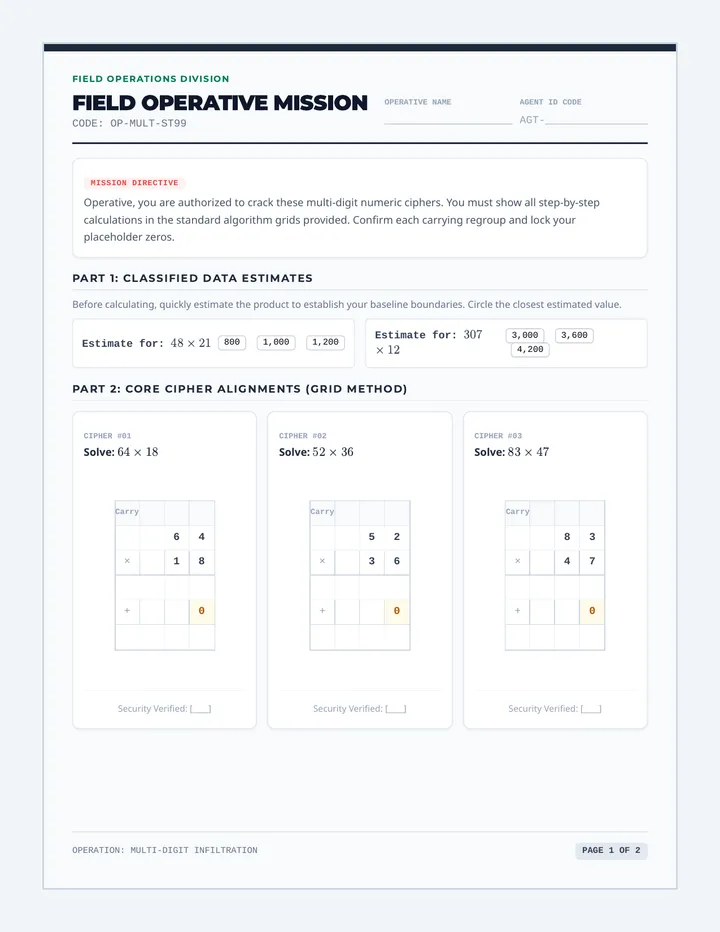
A student-facing 2-page independent practice worksheet themed as an espionage field operations sheet. Features scaffolded grid problems, real-world agent word problems, and self-reflection metrics.