A Tier 2 small group intervention focused on solving quadratic equations with complex solutions using the quadratic formula. Students will learn to identify negative discriminants and express results in the standard form a ± bi.
A master sequence containing curriculum-aligned lessons for Malaysian secondary school students. It covers Form 5 Mathematics and Form 2 English UASA revision.
A comprehensive introductory lesson set for the SAM Podcast Project-Based Learning program. This lesson incorporates critical parent communication tools alongside specialized teacher lesson plans linking core academic subjects like KSSM Mathematics to real-world digital podcast applications.
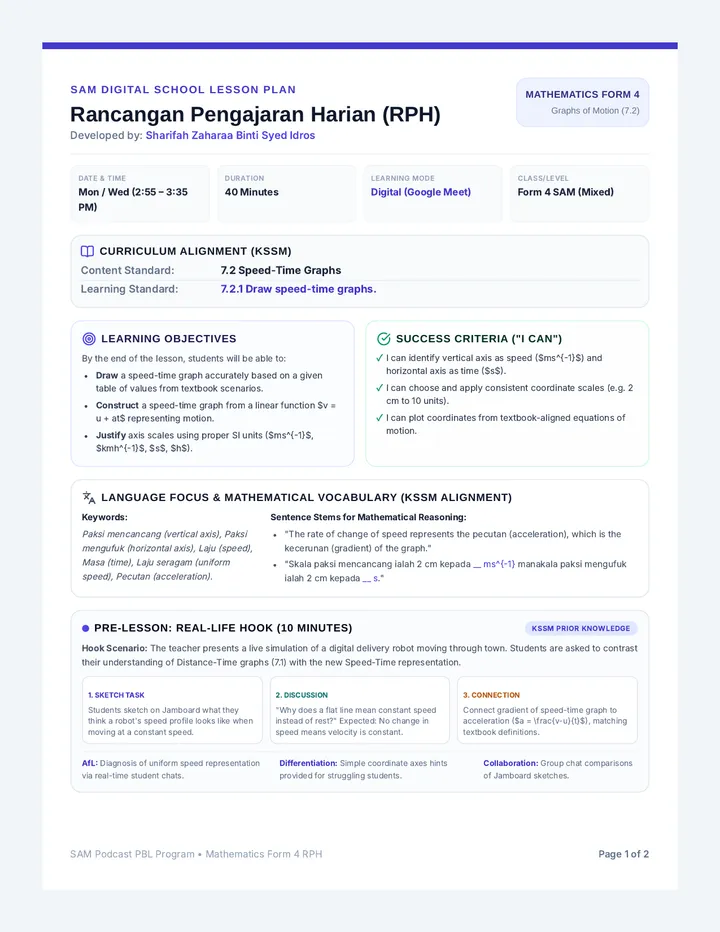
Rancangan Pengajaran Harian (RPH) Matematik KSSM Tingkatan 4 (Bab 7: Graf Gerakan) untuk sub-standard 7.2.1 Melukis Graf Laju-Masa. Dokumen ini diselaraskan sepenuhnya dengan Contoh 10 & 11 Buku Teks Matematik Tingkatan 4 KSSM.
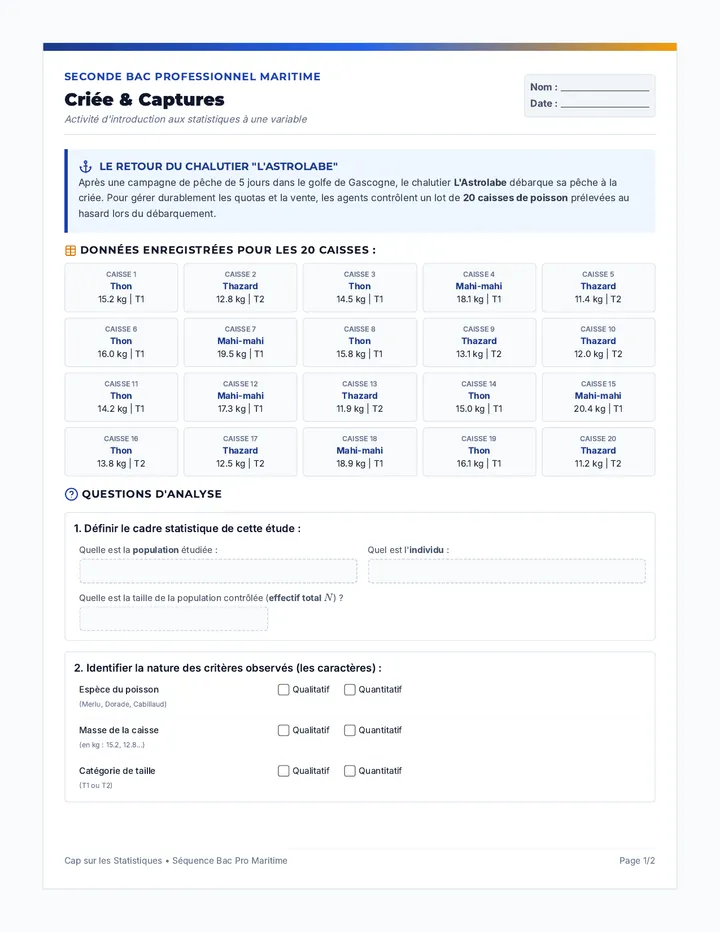
Séquence clé en main sur le module de chimie « Comment caractériser une solution ? » du programme de Seconde Bac Pro, contextualisée dans l'univers de la marine et de l'analyse des eaux.
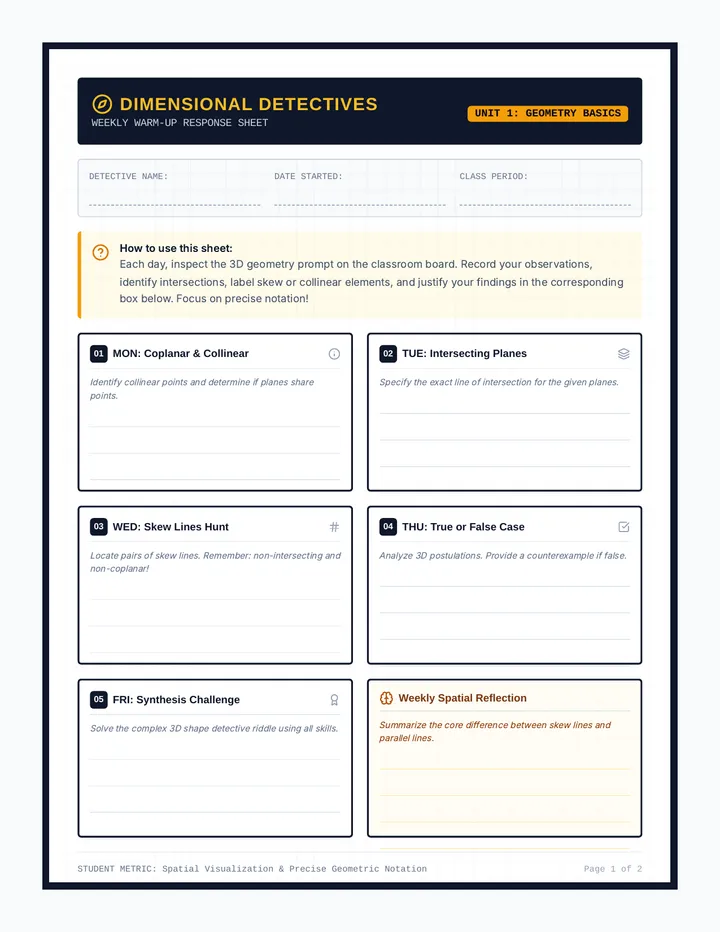
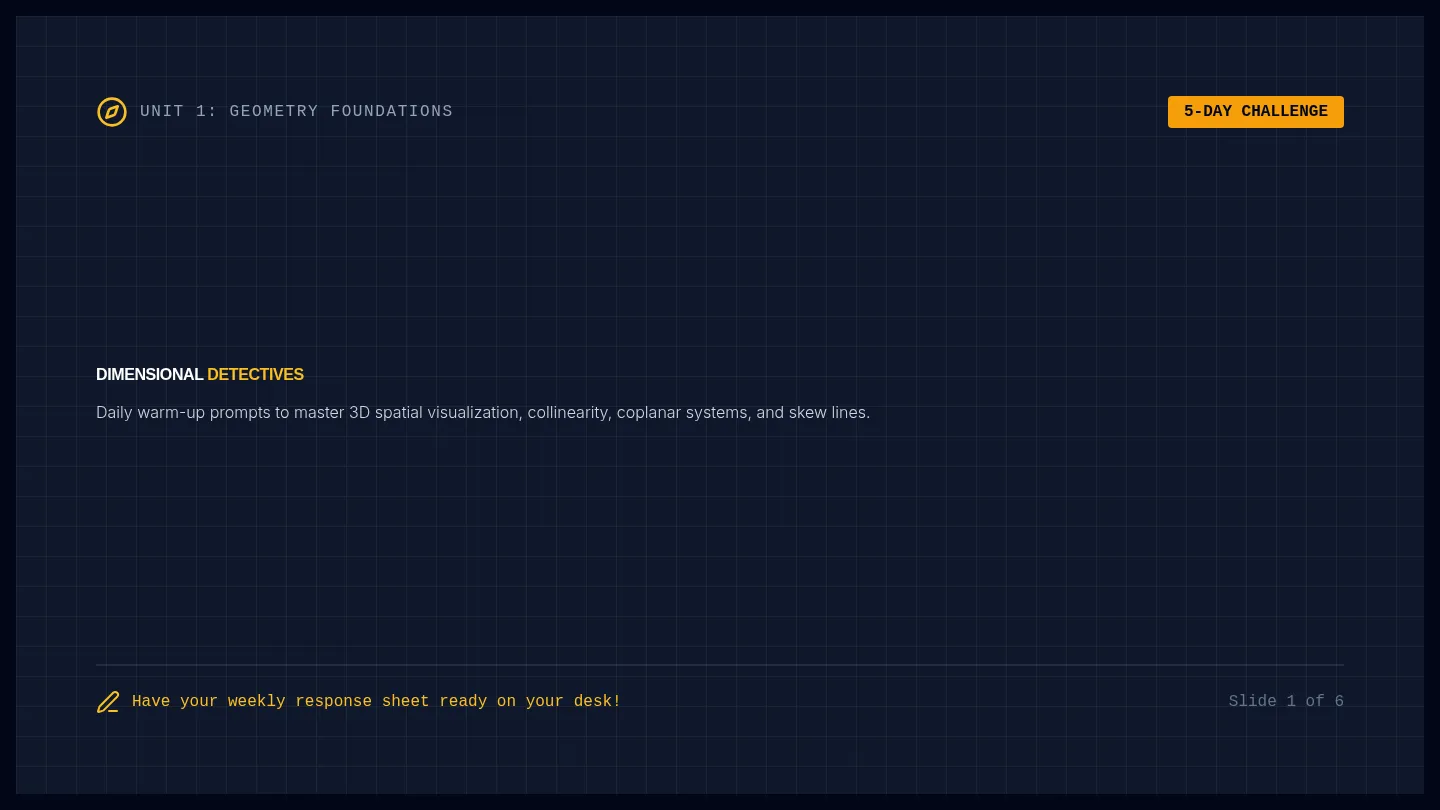
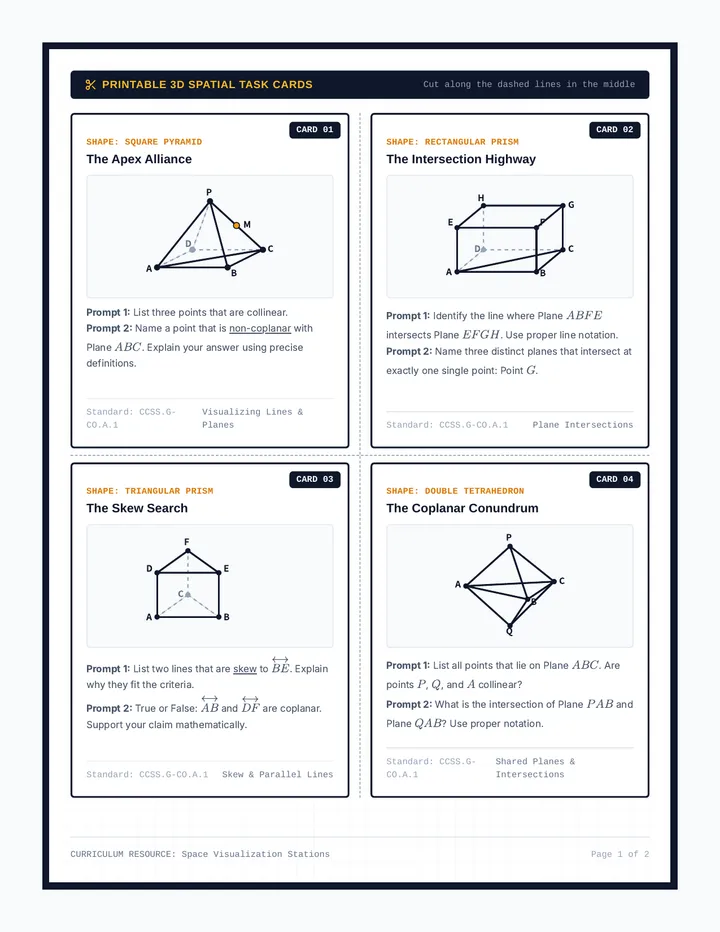
A geometry lesson focusing on visualizing 3D relationships, including intersecting planes, collinear points, coplanar lines, and skew lines in space. Includes projection-ready slide decks, task cards, and a weekly response sheet.
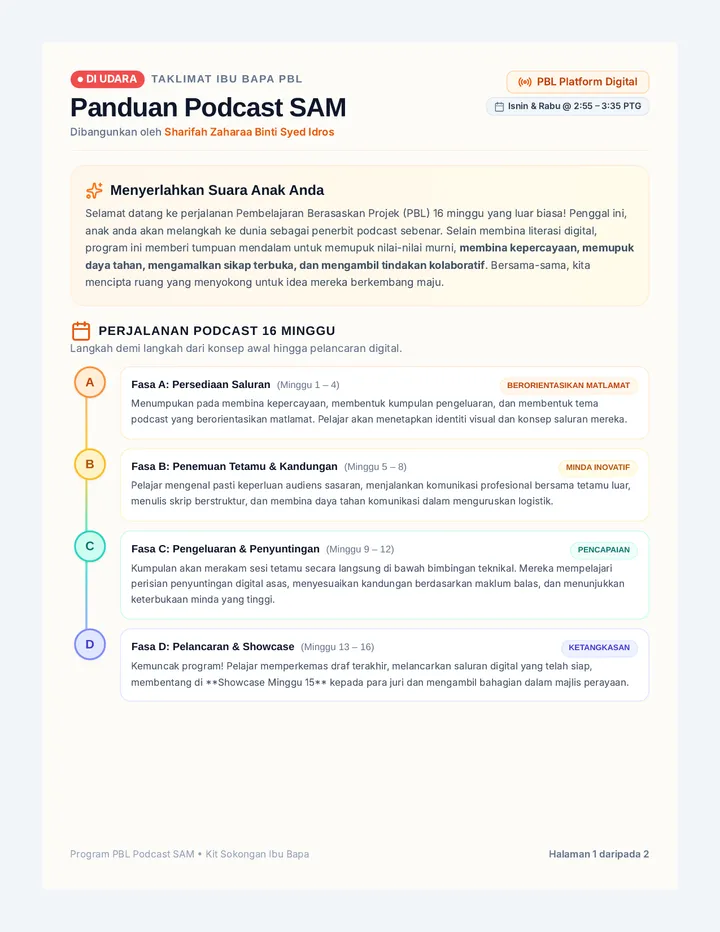
Satu Panduan Taklimat Ibu Bapa dan Kit WhatsApp Sedia-Salin 2 halaman yang komprehensif, mesra, dan penuh inspirasi dalam Bahasa Melayu untuk program Pembelajaran Berasaskan Projek (PBL) Projek Podcast SAM. Merangkumi peta jalan visual 16 minggu, butiran jadual kelas (Isnin & Rabu jam 2:55-3:35 petang), panduan sokongan rumah, dan templat mesej siaran mudah alih yang dioptimumkan.
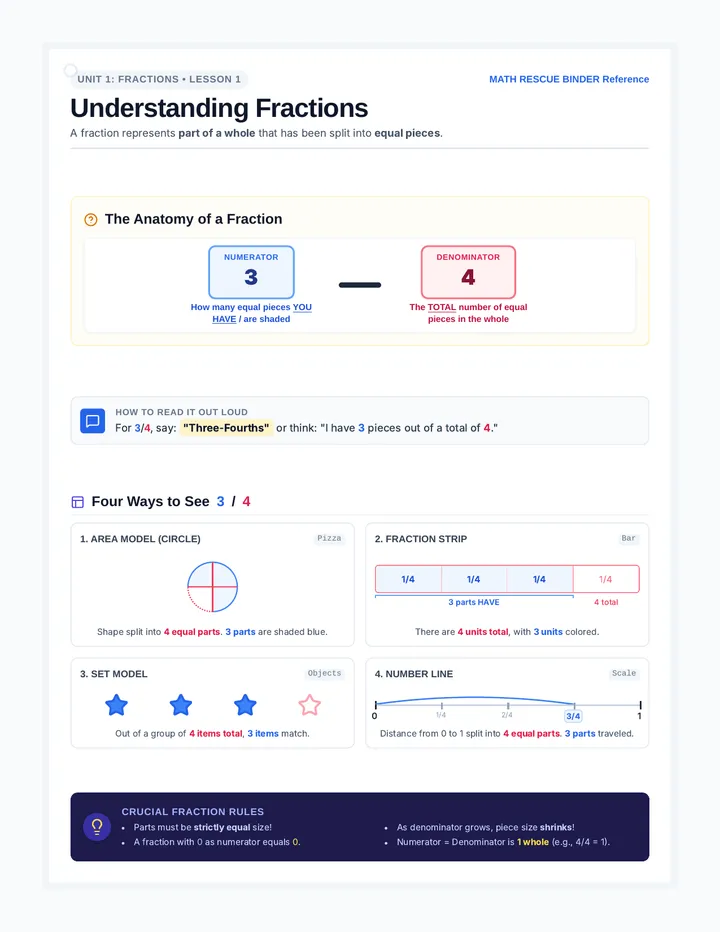
An intensive high-school math intervention binder focused on rebuilding foundational rational number operations, equivalent representations, and visual modeling for resource room or co-taught classrooms.
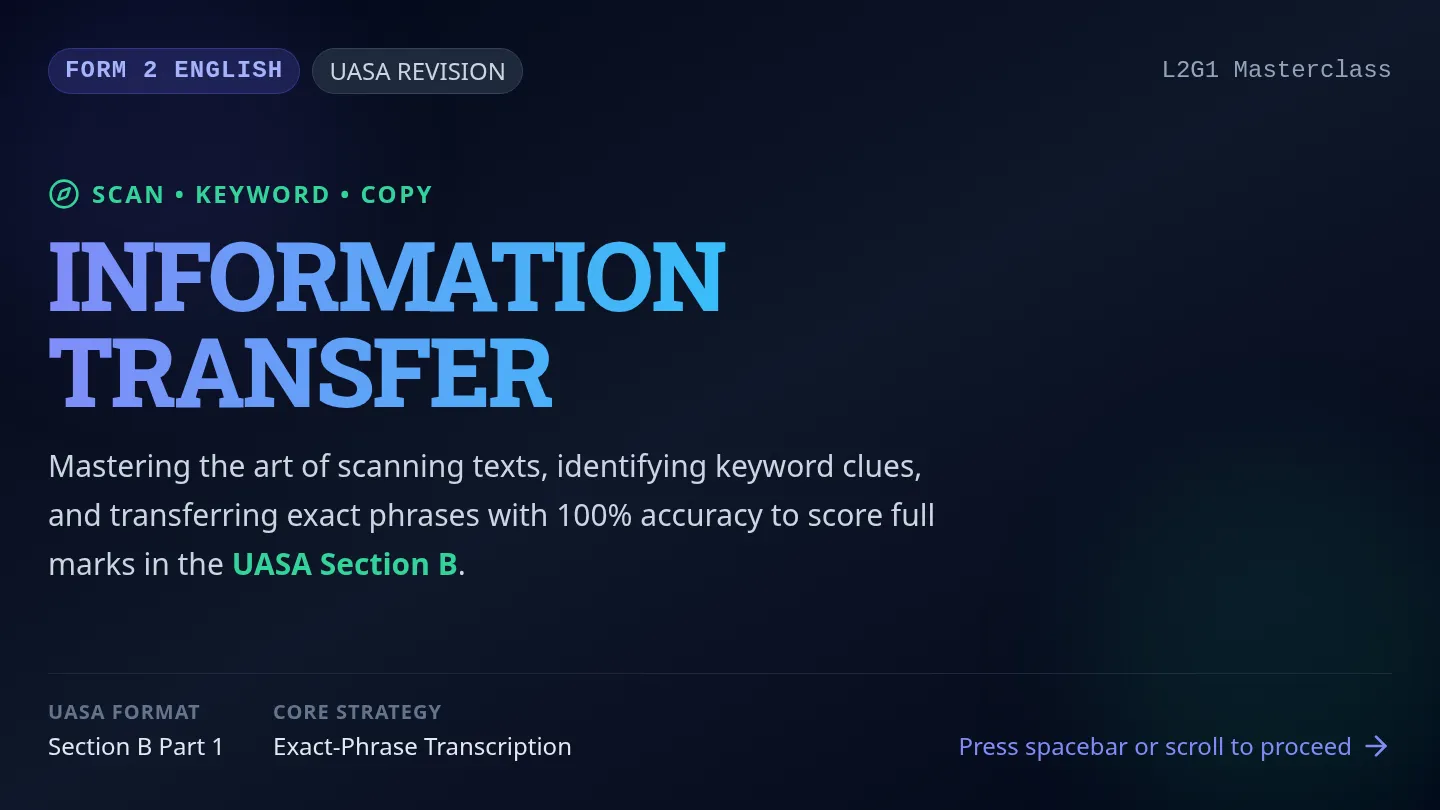
Form 2 English lesson focusing on the UASA Information Transfer format. Teaches scanning, keywording, and exact-phrase transcription strategies through real-world texts, hands-on graphic organizers, peer collaboration, and a post-lesson assessment.
A daily visual slide deck designed for front-of-class projection, guiding students through one-to-two high-contrast prompt slides for each day of the week, complete with beautifully scaled, large geometric 3D diagrams and strict adherence to 24px+ legibility.
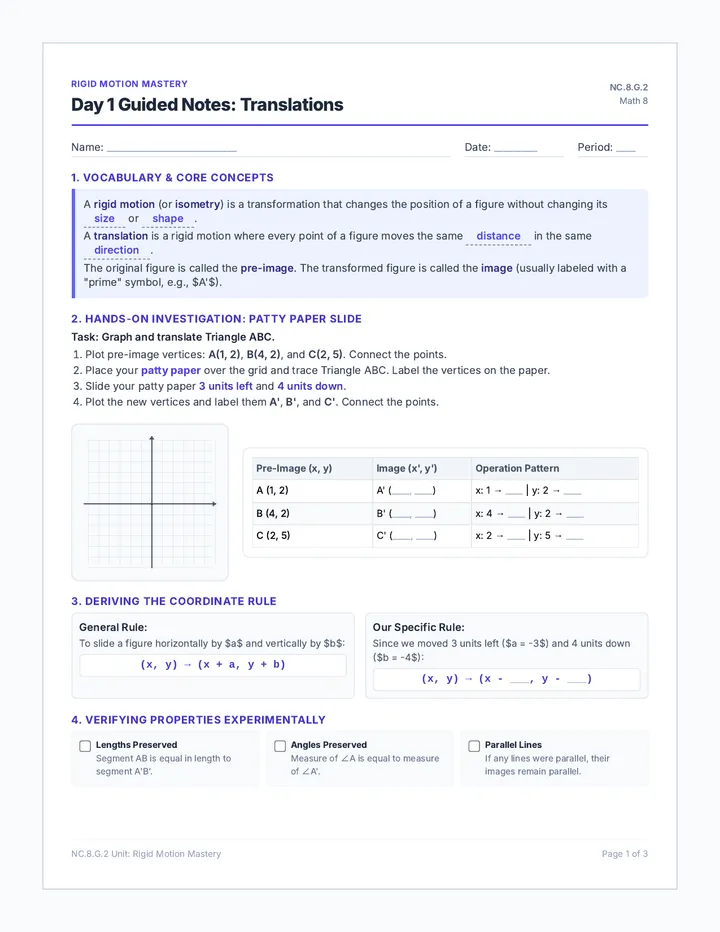
A 10-day instructional unit on rigid transformations and congruence mapping for 8th-grade mathematics, aligned with NC Math Standard 8.G.2. The sequence covers translations, reflections, and rotations, emphasizing coordinate rules, properties verification using patty paper, and composition of transformations to define and prove congruence.
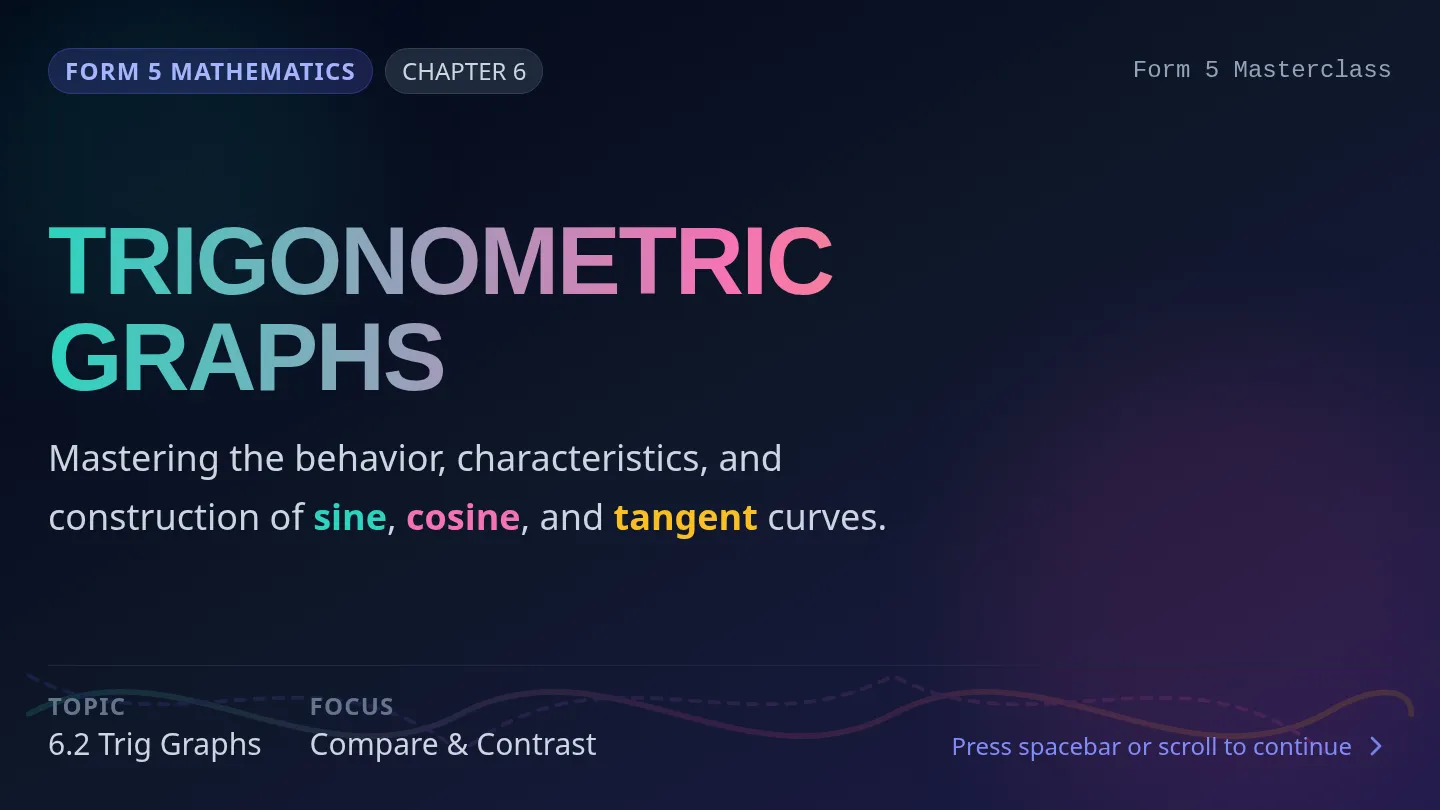
Form 5 Mathematics Lesson on trigonometric functions, covering graphing of sine, cosine, and tangent curves, exploring key features like amplitude, period, intercepts, and asymptotes. Includes assessment for learning, collaboration, and differentiated instruction.
A printable set of four beautifully illustrated 3D geometry task cards featuring detailed vector-drawn geometric solids (pyramids, prisms, cubes). Includes dashed hidden-edge rendering to challenge spatial visualization, along with a handy student recording sheet and teacher key on page 2.