A culminating activity where students compare bisection and Heron's method to determine which algorithm is more efficient for high-precision tasks.
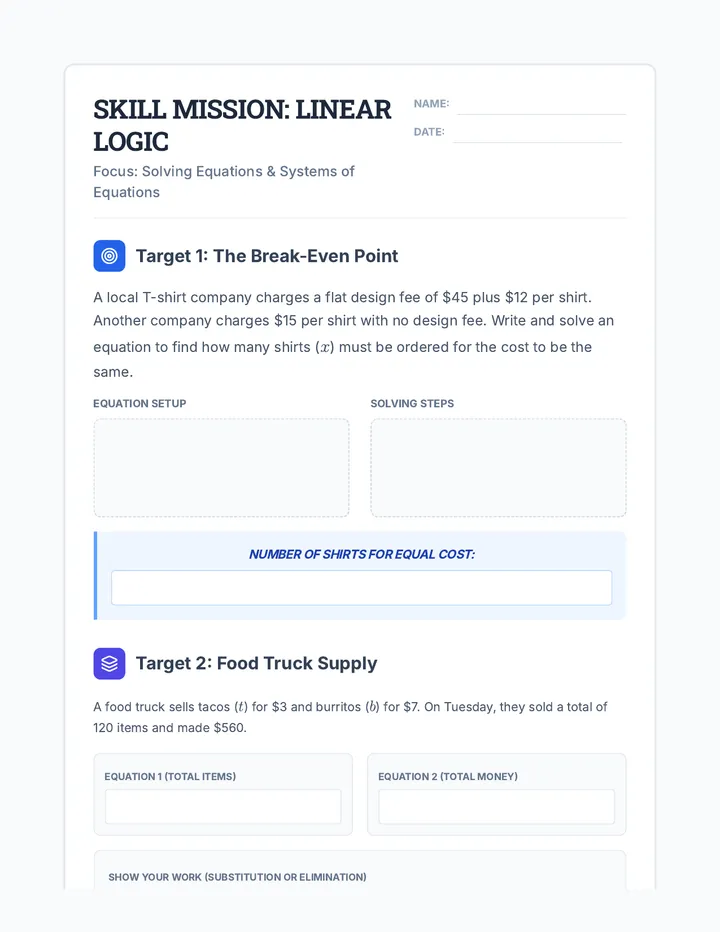
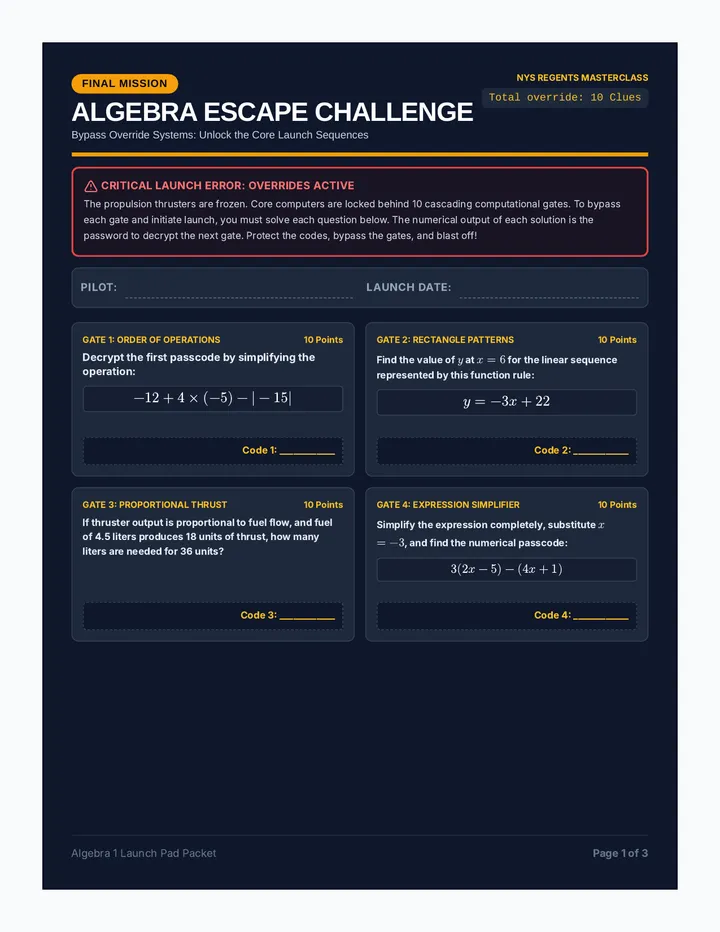
A comprehensive summer bridge workbook for rising 8th graders transitioning to Algebra 1. Contains review of prerequisite topics, advanced pre-algebra skills, real-world application, and an Algebra Escape Challenge.
A high school statistics lesson that applies concepts of data representation, probability, and outlier analysis to Cartoon Network shows across different eras.
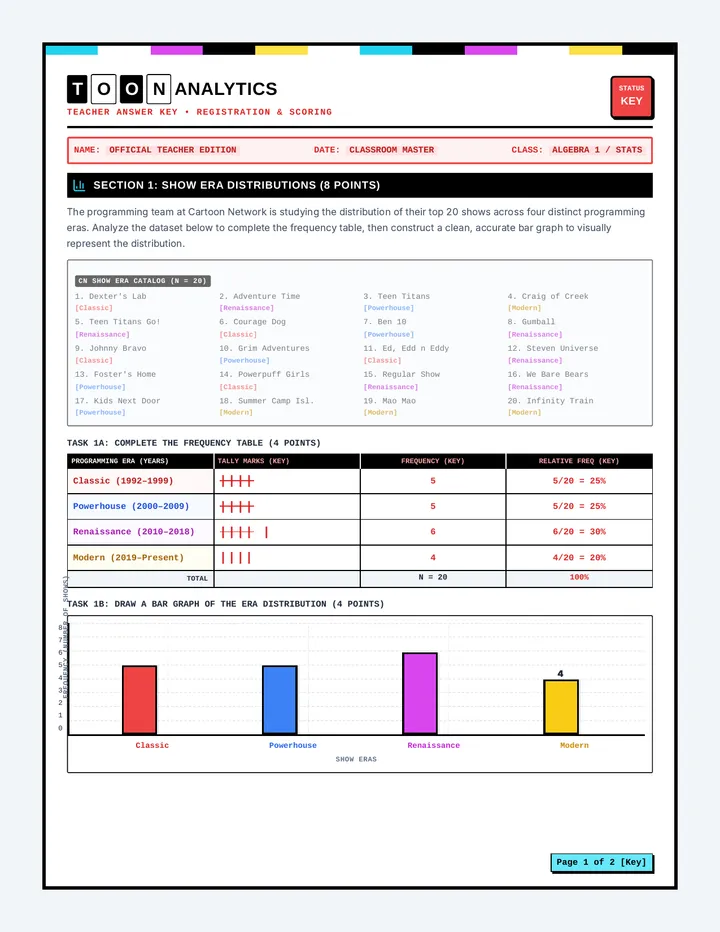
The corresponding 2-page teacher answer key for the Cartoon Network statistics worksheet, providing all solved values, completed tally charts, filled-in bar graphs, two-way contingency table solutions, exact probability fractions, and step-by-step IQR outlier calculations in high-contrast red font.
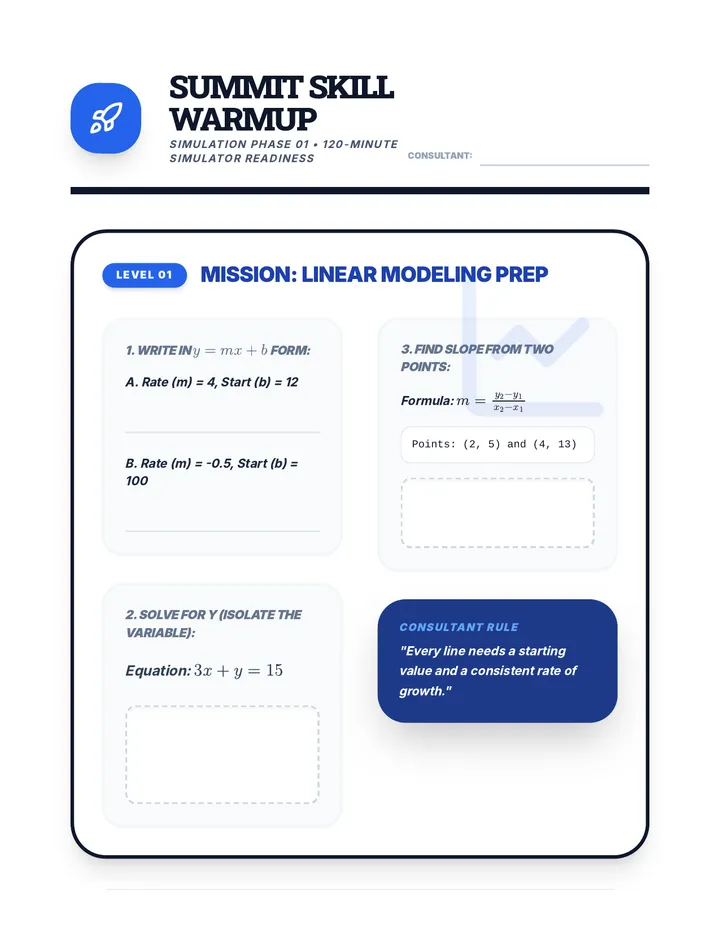
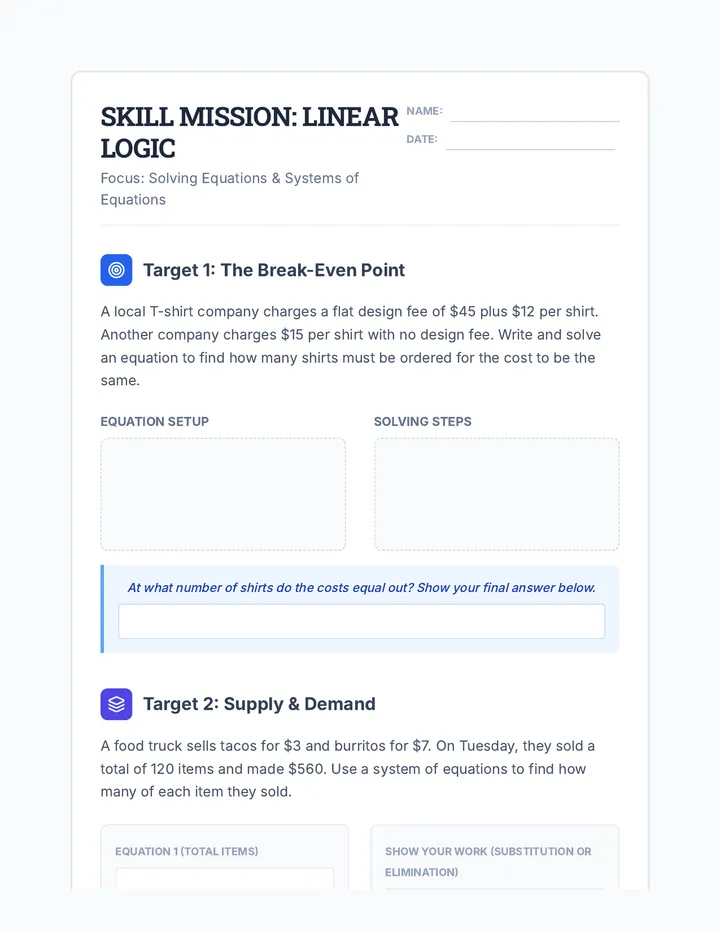
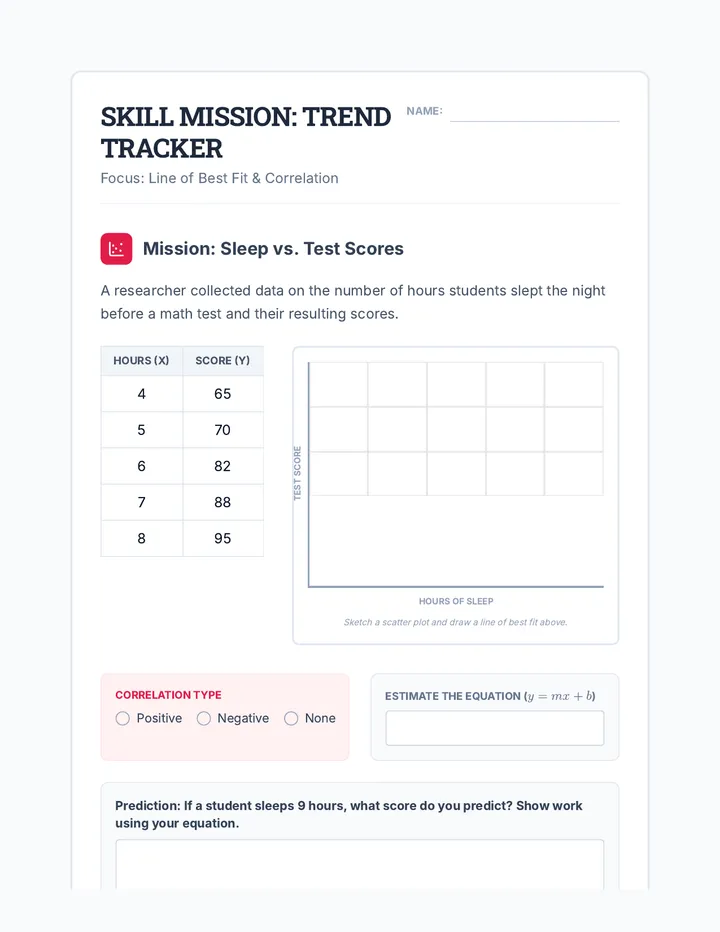
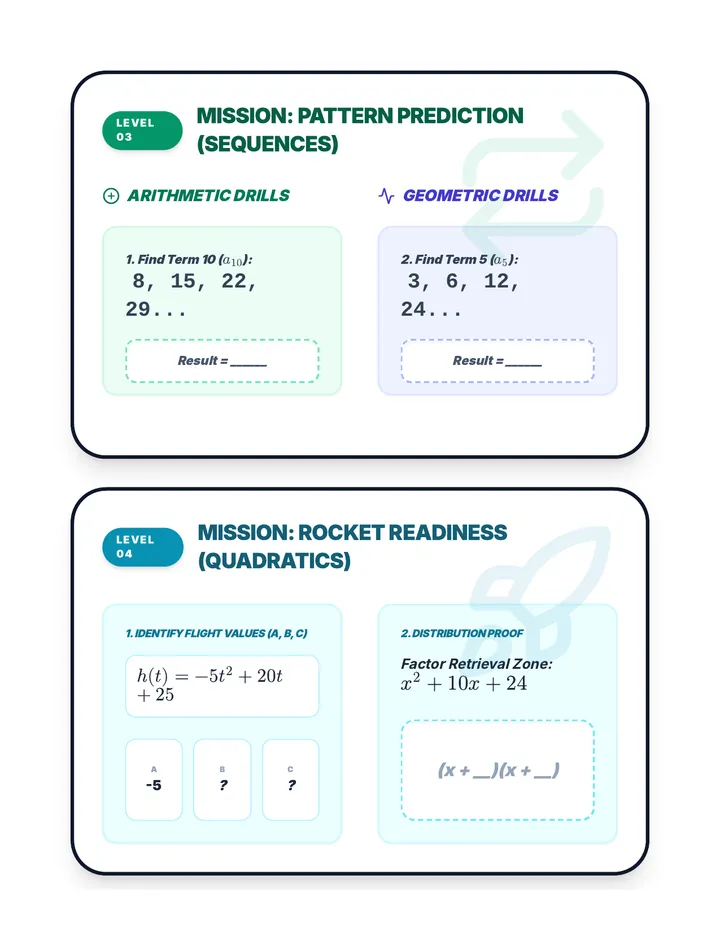
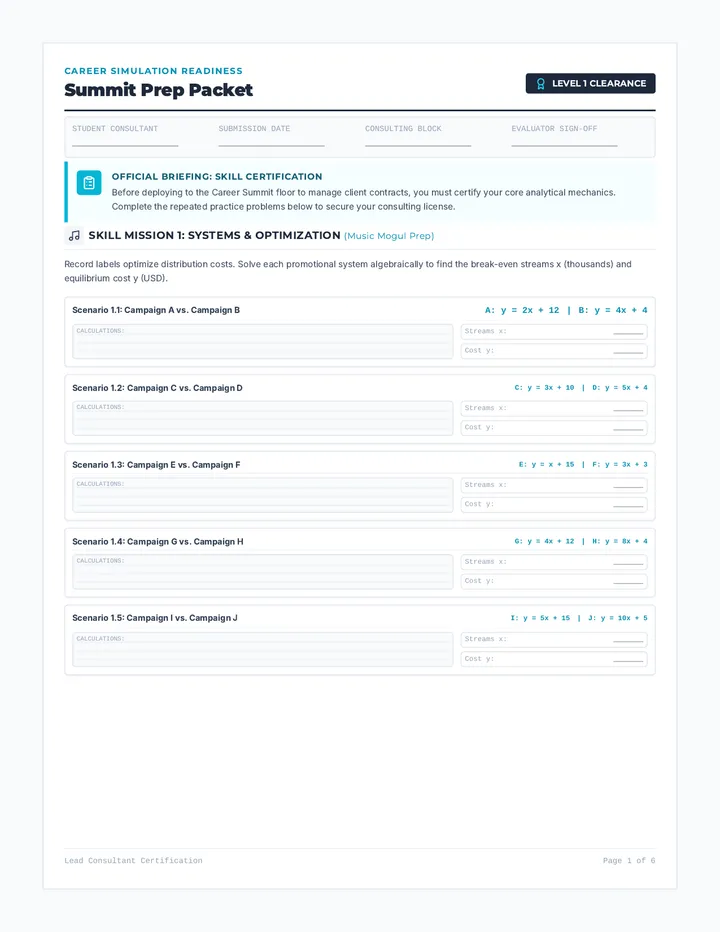
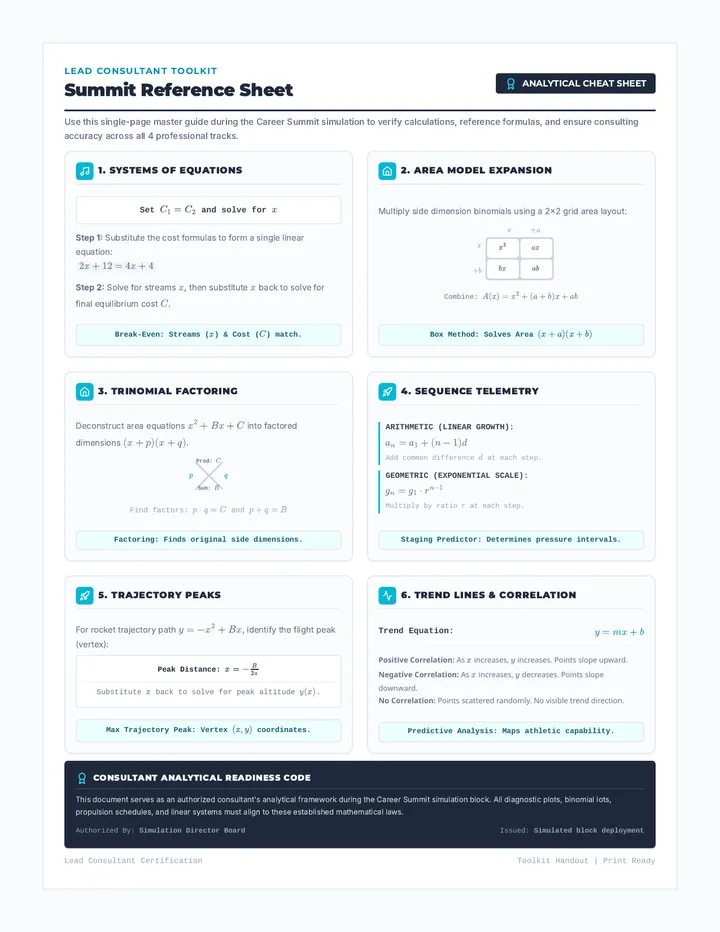
A high-intensity, 120-minute math simulation. Students act as lead consultants, completing a high-speed skill warmup before selecting a professional sector (Music, Urban Planning, Rocket Science, or Sports Analytics) to solve a series of complex work orders.
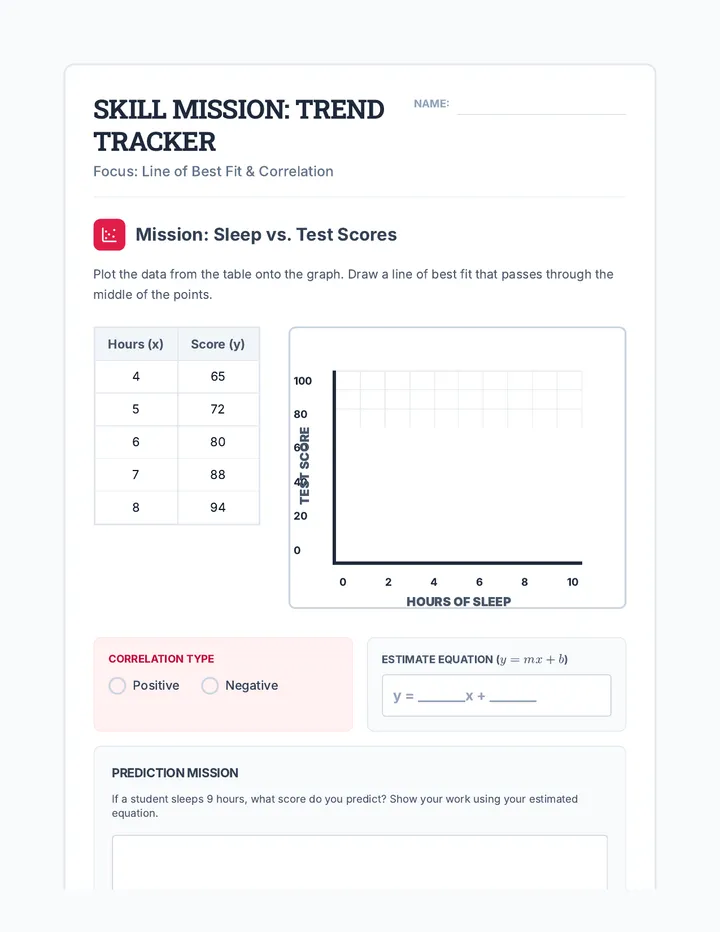
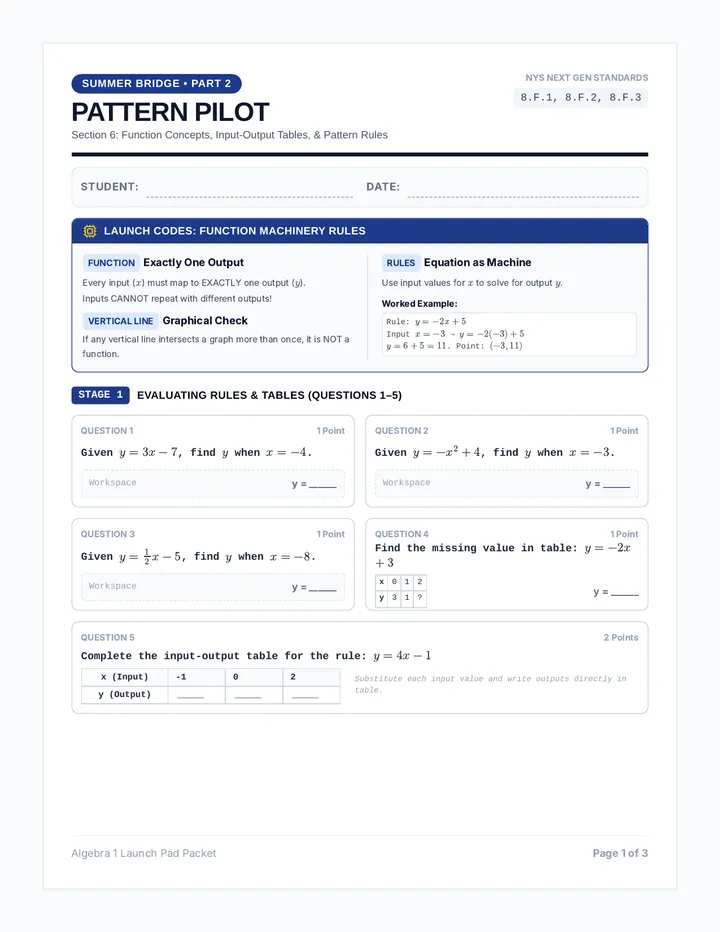
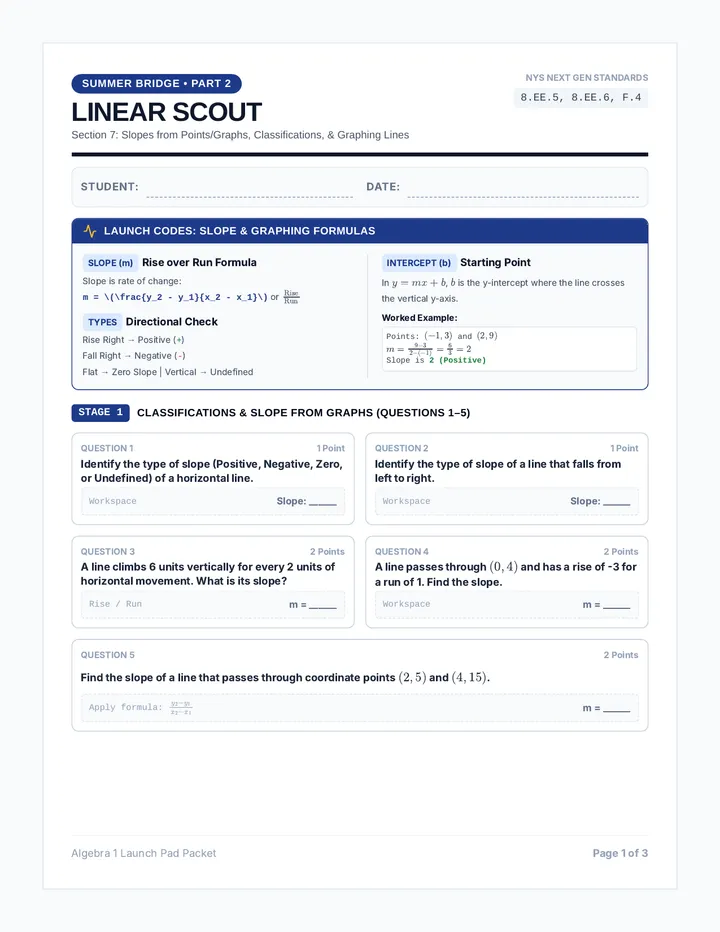
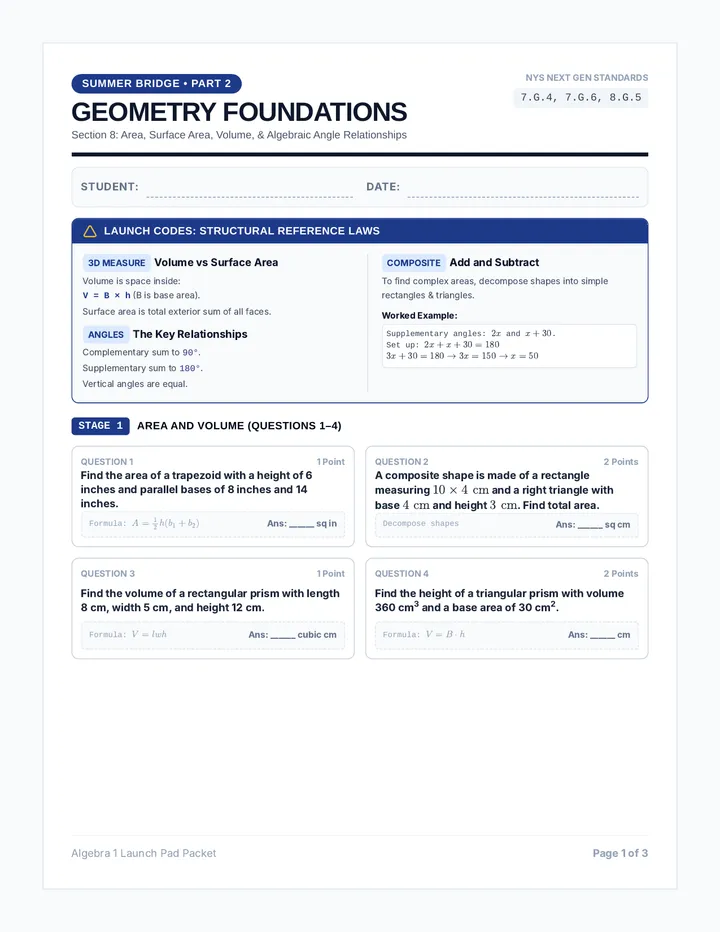
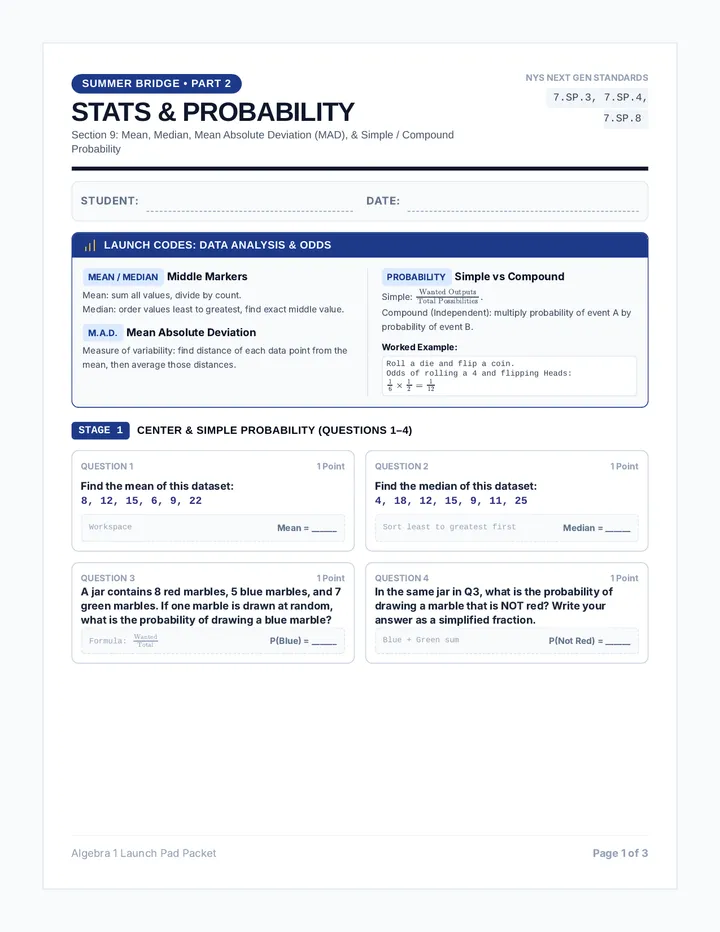
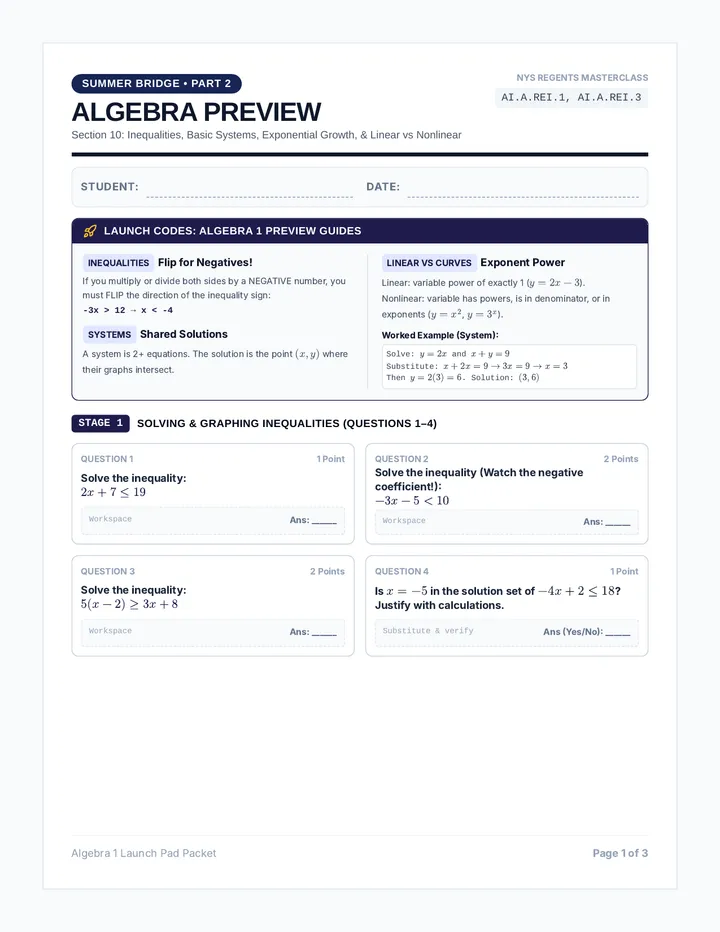
The second part of the Algebra 1 Summer Bridge Packet. It covers functions & patterns, linear relationships, geometric foundations, statistics & probability, and an advanced Algebra 1 preview.
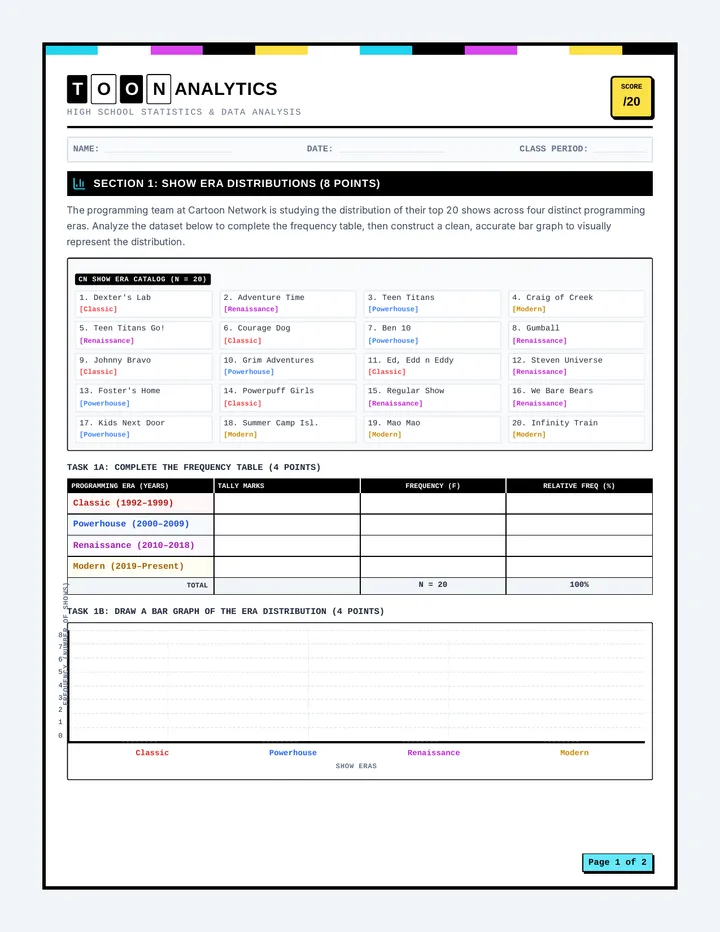
A 2-page statistics worksheet for high school freshmen featuring a Cartoon Network theme. It covers frequency tallying and bar graphing (Page 1), and probability contingency tables and runtime outlier analysis using the 1.5 IQR rule (Page 2).
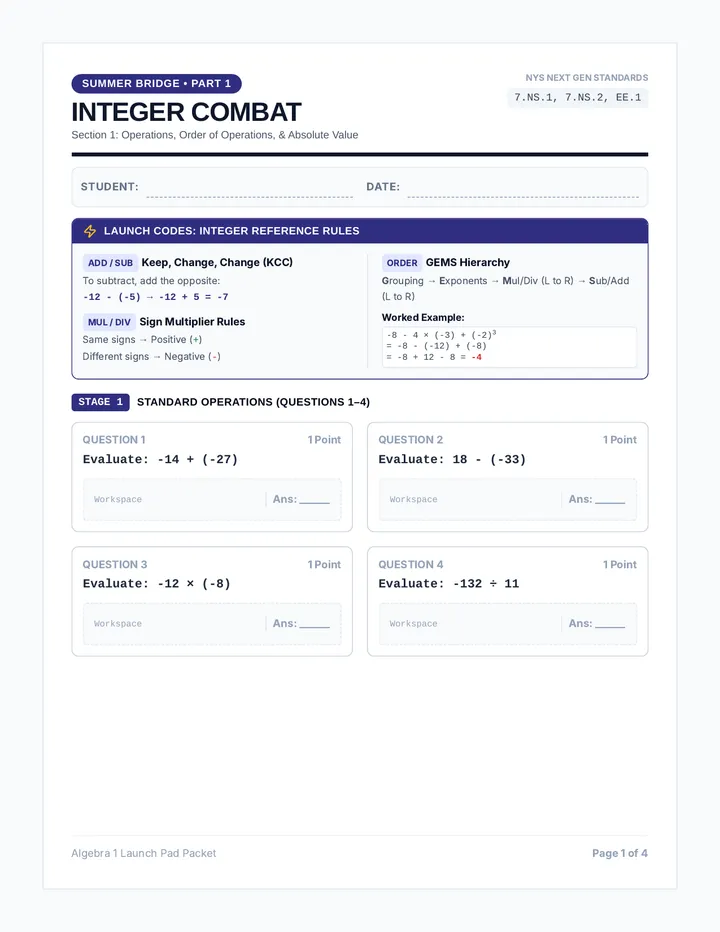
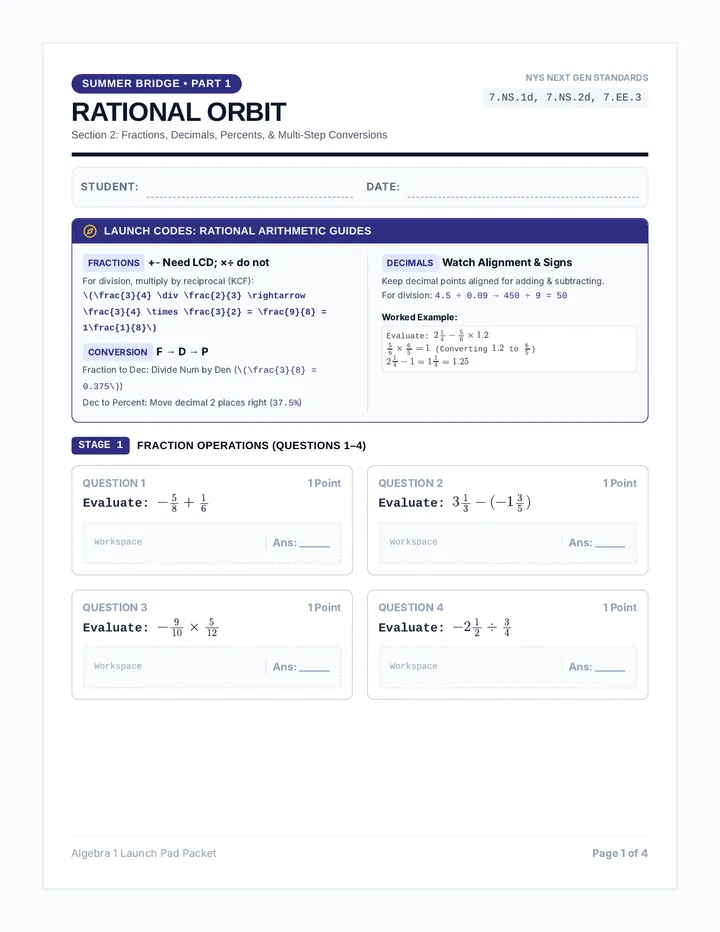
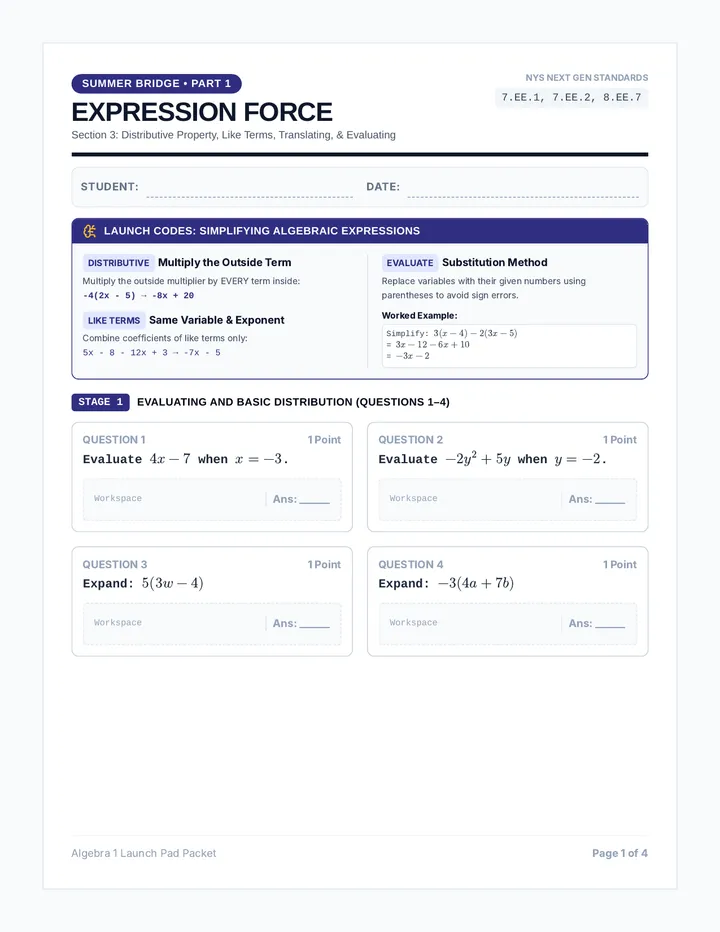
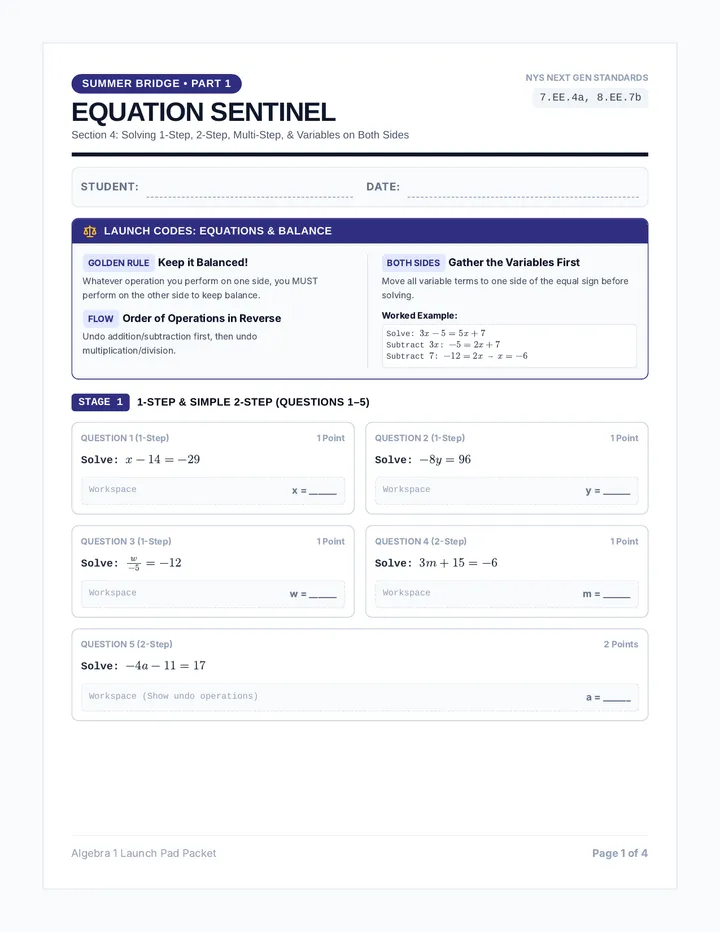
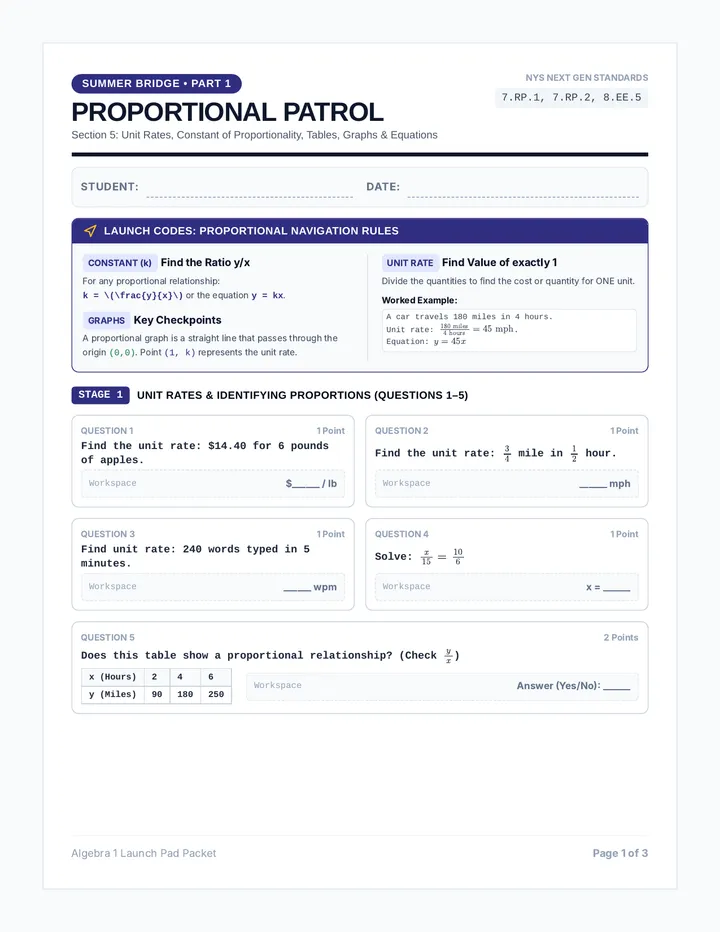
The first part of the Algebra 1 Summer Bridge Packet for rising 8th graders. It covers integer operations, rational numbers, expressions, solving equations, and proportional relationships with worked examples and workspaces.
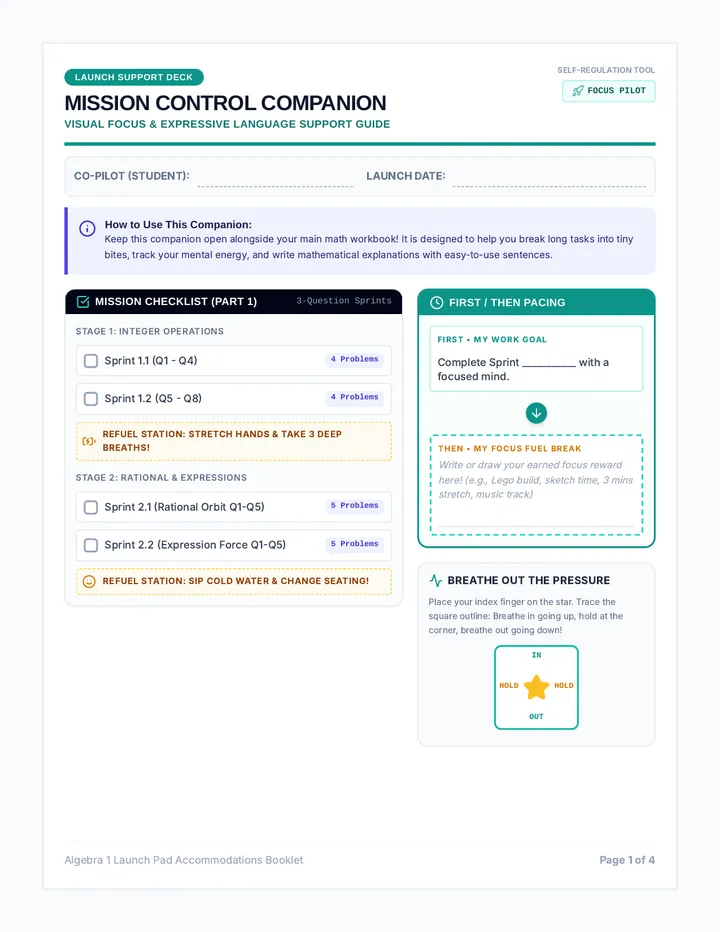
A specialized 4-page student-facing support and accommodation packet designed specifically for students with expressive language challenges and focus difficulties. Includes visual schedules, 'First-Then' pacing boards, structured sentence frames, and simplified graphic organizers with rocket-themed visuals.
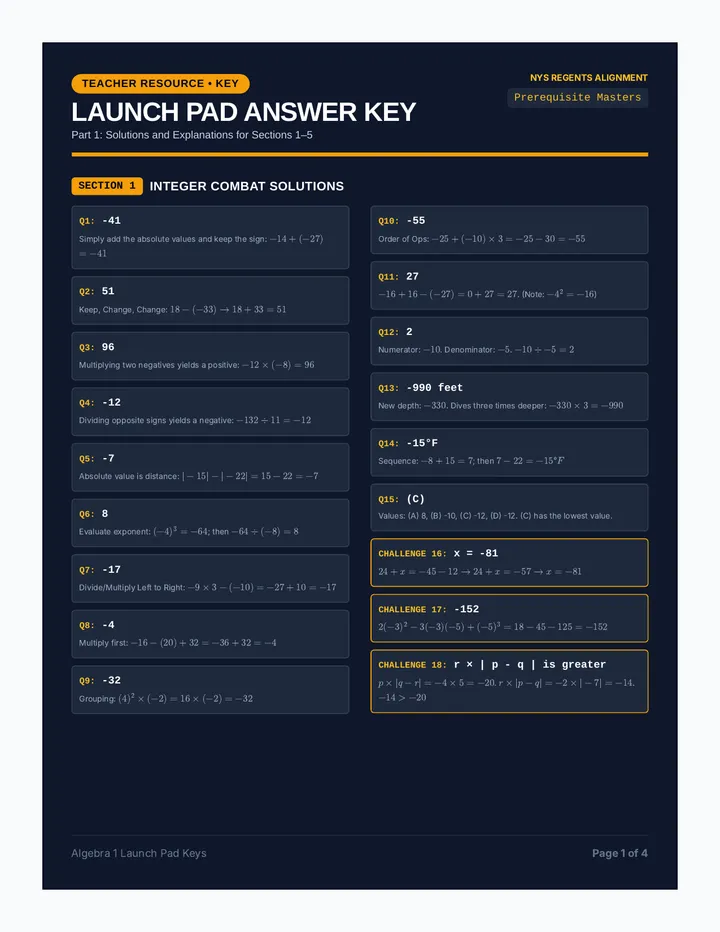
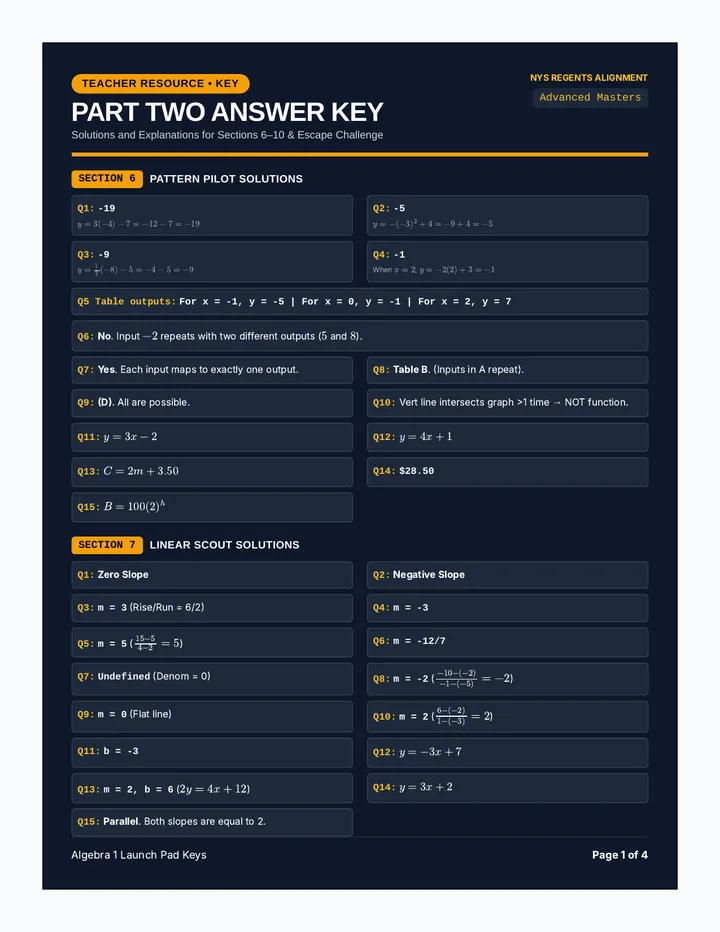
Comprehensive Teacher Answer Key for sections 6-10 and the Final Escape Challenge of the Summer Bridge Packet. Features step-by-step solutions, final values, and scoring rubrics.