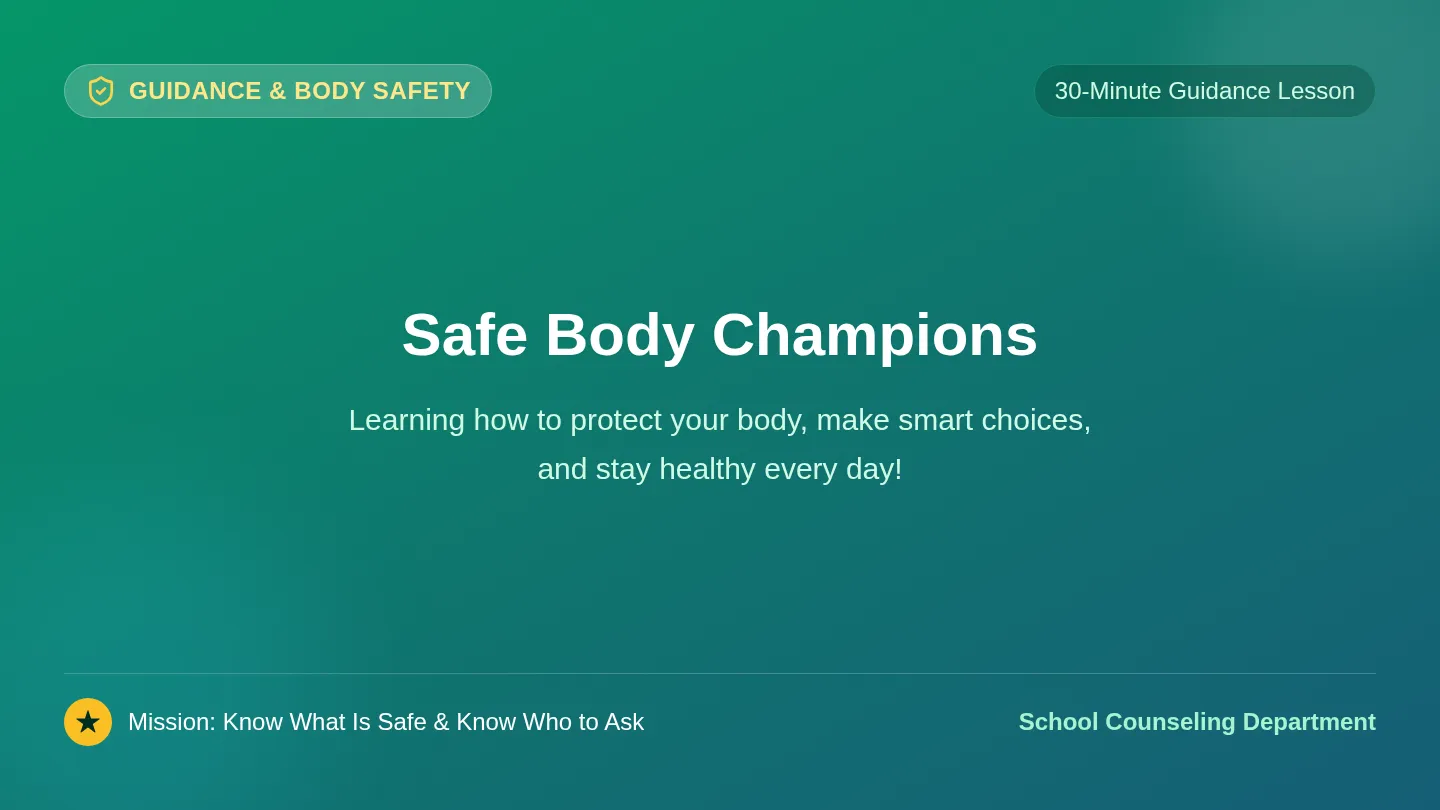
Foundational Compass Slides Spiritual Health Unit
CORE NORTH STAR
"Your values are the soul's fingerprints. They are what you stand for, even when you're standing alone."
The Big Question
If someone looked at your actions for one week...
What would they say you actually care about?
The Internal Distinction
Beliefs
The concepts we hold to be true. They are our understanding of how the world works.
"I believe that honesty is the best policy."
Values
The standards by which we live. They are what we deem important and worthy.
"I value integrity in my relationships."
Group Challenge
Hands-On
1
Gather your sorting cards and group handout.
2
Categorize each statement: Is it a Belief or a Value?
3
Discuss: Why did your group place them there?
Tip for Success
"Values usually look like one word or a short phrase. Beliefs are usually full sentences or thoughts about reality."
Belief Value Sorting Cards Belief vs. Value Sorting Cards
Core North Star Activity Material
Instructions: Cut along the dotted lines.
1 set per group of 3-4 students.
Honesty is the most important trait in a friend.
Integrity
Loyalty
"I believe that everyone deserves a second chance."
"Hard work always leads to success eventually."
Perseverance
Compassion
"People are basically good at heart."
Adventure
"Climate change is the biggest threat to our future."
Tradition
"Family should always come before career."
Add your own: Core North Star Worksheet Core North Star
Spiritual Health: Beliefs & Values
Name:
Date:
Part 1: The Sorting Log
As your group sorts the cards, record your final decisions here. Look for patterns in how "Beliefs" and "Values" are phrased.
Beliefs
Concepts held to be true
Values
Standards worthy of pursuit
Part 2: Personal North Star
1. Choose one value from the list (or your own) that you feel is non-negotiable for you:
2. How does this value show up in your life? Give a specific example of an action you took because of it:
3. If values are our "Internal Compass," what happens when we ignore them to fit in with a group?
Pro Tip: Spiritual health isn't necessarily about religion—it's about finding meaning, purpose, and staying true to your inner core.
Core North Star Teacher Guide Teacher Guide
Lesson 1: Core North Star
Wellness 9
Objective
Students will distinguish between personal beliefs and core values, recognizing how these internal drivers form the foundation of spiritual health.
Materials Needed
Foundational Compass Slides
Compass Match Game Cards (1 set for class)
Belief Value Sorting Cards (1 set per group)
Core North Star Worksheets (1 per student)
Pacing
Intro/Slides: 10 min
Compass Match Game: 10 min
Sorting Activity: 15 min
Reflection: 10 min
Total: 45 min
The Compass Match Game (Warm-Up)
Use this activity to get students moving and thinking about definitions before the desk-work begins.
1. Distribute: Give each student one card (either a Belief or a Value).2. Hunt: Students walk around the room to find the person holding their match.3. Verify: Once found, pairs stand together. Quickly review the pairings as a class.4. Transition: Have pairs discuss: "Why does this belief lead to this specific value?"
Facilitation Notes
Key Distinction:
Students often struggle with the overlap. Remind them: Beliefs are about "Truth" (e.g., "I believe education is important"). Values are about "Actionable Importance" (e.g., "Knowledge").
The Hook: Use the "Big Question" slide to start. Then move immediately into the Compass Match Game to break the ice and introduce the terminology.
Sorting Answer Key
Classified as Beliefs
• Honesty is the most important trait...
• "I believe everyone deserves a 2nd chance."
• "Hard work always leads to success..."
• "People are basically good..."
• "Climate change is the biggest threat..."
• "Family should come before career."
Classified as Values
• Integrity
• Loyalty
• Perseverance
• Compassion
• Adventure
• Tradition
Debrief Questions
1. "Which card was hardest for your group to categorize? Why?"
2. "Can you have a value that isn't based on a belief?"
Compass Match Game Cards Compass Match Game Cards
Matching Activity: Beliefs to Values
Instructions: Cut along the dotted lines. Shuffle and distribute. Students must find the partner whose card completes their pair.
Belief Card
"I believe that being honest and following your moral principles is more important than being popular."
Value Card
Integrity
Belief Card
"I believe that you should never give up on someone you care about, even when things get difficult."
Value Card
Loyalty
Belief Card
"I believe that if you work hard enough and keep trying, you can eventually achieve anything you want."
Value Card
Perseverance
Belief Card
"I believe that everyone is fighting a hard battle and deserves to be treated with kindness."
Value Card
Compassion
Belief Card
"I believe that it is our duty to protect the Earth and preserve nature for future generations."
Value Card
Stewardship
Belief Card
"I believe that people should be judged on their character, not their appearance or background."
Value Card
Equality
Belief Card
"I believe that stepping out of your comfort zone is the only way to truly learn about yourself."
Value Card
Adventure
Belief Card
"I believe that we have two ears and one mouth for a reason: so we can hear others more than we speak."
Value Card
Respect
Belief Card
"I believe that every problem has a solution if you are willing to look at it from a new perspective."
Value Card
Creativity
Belief Card
"I believe that helping others who are less fortunate is the most meaningful thing a person can do."
Value Card
Generosity
Belief Card
"I believe that we are the only ones responsible for the outcomes and consequences of our own actions."
Value Card
Accountability
Belief Card
"I believe that you cannot truly take care of others unless you first take care of your own well-being."
Value Card
Health
Belief Card
"I believe that there is always something new to learn from every person you meet."
Value Card
Curiosity
Belief Card
Source Streams Facilitation Guide Source Streams
Facilitation Guide: The Value Roots Activity
The Concept
"Our values don't grow in a vacuum. They are fed by 'Source Streams' like family, media, culture, and experience. Understanding the roots helps us decide if we want to keep nurturing that value or let it go."
Prep Checklist
Large Easel Paper (1 per group)
Thick Markers (various colors)
Masking Tape (to hang work)
Step 1: Planting the Seed
Assign each group one common value (e.g., Loyalty, Success, Respect, Courage, Health ). Have them write the value in large letters in the center of their easel paper and circle it.
Step 2: Mapping the Roots
Ask groups to draw roots growing down from the value. Each root should represent a "Source Stream." Prompt them with these categories:
"How does FAMILY feed this value?"
"How does MEDIA (movies, social, ads) shape it?"
"What ROLE MODELS promote this value?"
"What PERSONAL EXPERIENCES made this important?"
Step 3: Gallery Walk
Hang the posters around the room. Students walk silently and place a "dot" (or a checkmark) next to the "roots" that they also share for that value.
The "Why" Questions
• Internal vs. External: "Which roots come from inside you, and which are put there by someone else?"
• Conflicting Roots: "What happens when your Family root and your Media root tell you two different things about what is important?"
• Pruning: "Is there a root on your poster that someone might want to 'prune' or stop nurturing as they get older?"
Influence Map Worksheet Influence Map
Tracing the roots of your internal compass
Student ID:
Section:
1
Gallery Walk Notes
As you view the "Value Roots" posters created by other groups, answer the following:
Which "root" (source stream) appeared most frequently across all posters?
Which value poster had the most roots that you personally connected with?
2
My Internal Roots
Choose one value that is important to YOU. Trace its roots below.
My Value
Source: Family/Heritage
Source: Media/Culture
Source: Experience
Source: Role Models
3
The "Pruning" Reflection
Sometimes we realize a value we hold was "forced" on us by media or pressure, and it doesn't actually align with who we want to be. Is there any part of your "Internal Compass" that you've started to question or change? Describe it below.
Dilemma Deck Cards Dilemma Deck
Choice Charting Activity
Instructions: Cut along the dotted lines.
1 set per group of 3-4 students.
Scenario: The Group Chat
A group chat you're in starts making fun of a student in your class who has been going through a hard time. You like the people in the chat and want to stay included, but you know the student being mocked would be crushed if they saw this.
Primary Conflict: Belonging vs. Compassion
Scenario: The Unfair Advantage
You are struggling in Math and need a high grade to play on the school sports team. During a big test, you notice that the student next to you has their notes clearly visible. You could easily see all the answers without anyone noticing.
Primary Conflict: Achievement vs. Integrity
Scenario: The Secret Party
Your parents trust you and have given you a late curfew for Friday. Your friends invite you to a party at a house where there will be no adults. You know your parents would never let you go if they knew, but you don't want to be the only one who misses out.
Primary Conflict: Freedom vs. Trust
Scenario: The Credit Stealer
You worked really hard on a group project, doing about 80% of the work. Your partner, who is very popular, tells the teacher they did most of the research. The teacher praises them in front of the whole class.
Primary Conflict: Fairness vs. Harmony
Create Your Own Scenario
Choice Compass Worksheet Choice Compass
Values in Action Decision Matrix
NAME:
1
The Dilemma
Which scenario from the Dilemma Deck are you analyzing?
2
The Values at War
Value A (e.g., Integrity)
Value B (e.g., Popularity)
3
The Navigation Grid
Possible Action Short-Term Consequence Alignment with My Values
4
The Final Course
My decision & why it matches my internal compass:
"It's not hard to make decisions when you know what your values are." — Roy E. Disney
Choice Charting Teacher Guide Teacher Guide
Lesson 3: Choice Charting
Unit 4: Spiritual Health
Lesson Objective
"Students will apply their personal values to navigate complex social and ethical dilemmas using a structured decision-making matrix."
Required Materials
• Dilemma Deck Cards (1 set per group)
• Choice Compass Worksheets (1 per student)
• Scissors
Instructional Sequence
1
Dilemma Discovery (10 min)
Distribute Dilemma Deck cards to small groups. Have them read the scenarios aloud. Ask them to identify the "Competing Values" in each scenario (e.g., in the party scenario, the values are Loyalty to Friends vs. Honesty with Parents ).
2
The Matrix Method (20 min)
Individually, students choose one dilemma to analyze on their "Choice Compass" worksheet. Encourage them to think beyond just "right vs. wrong" and focus on "alignment vs. misalignment" with their own internal compass.
3
The Debrief Circle (15 min)
Gather as a class. Facilitate a discussion on why two people might choose different actions for the same scenario based on their different core values.
Common Misconceptions
Students often choose the "easiest" path rather than the "valued" path. Ask: "Is this choice easy, or is it right for your compass?"
Discussion Starters
• "Does your decision change if you know NO ONE will ever find out?"
• "What if your best friend pressure you to do the opposite?"