Lenny.com
Explore
Create
ActivitiesNewMathEnglish Language ArtsScience & EngineeringSocial StudiesGlobal LanguagesHealth & Physical EducationSpecial EducationCounseling & Life SkillsArts & CreativityESL
Lenny.com
Lenny.com
Explore
Create
ActivitiesNewMathEnglish Language ArtsScience & EngineeringSocial StudiesGlobal LanguagesHealth & Physical EducationSpecial EducationCounseling & Life SkillsArts & CreativityESL
Lenny.com
Lenny.com

Solutions

Lenny for EducatorsLenny for SchoolsLenny for Districts

Product

ExploreSign inCreateSupportAbout

Resources

Getting startedMTSS Acceleration Program

© 2026 Lenny Learning Inc.

TermsPrivacyAccessibility
LinkedInInstagramX
Lenny
Health & Physical EducationMovement Skills and ConceptsBody ControlLocomotor SkillsNon-Locomotor SkillsFine Motor SkillsManipulative SkillsBalance and CoordinationSpatial AwarenessMovement PatternsRhythmic Activities and DanceRhythm and TimingDance BasicsIndividual and Dual SportsGymnastics and TumblingTrack and FieldRacket SportsSelf-Defense and Martial ArtsTeam SportsCooperative GamesSportsmanshipTeam CommunicationBasketball SkillsSoccer SkillsVolleyball SkillsFootball SkillsGame StrategiesFitness and Physical ActivityCardio FitnessFlexibility and StretchingMuscular Strength and EnduranceSetting Fitness GoalsHealthy HabitsHygiene PracticesSleep and RestPhysical Activity HabitsHydrationInjury PreventionBody Awareness and Self-CareDisease PreventionHealth Decision-MakingHelp-Seeking and Self-AdvocacyMental HealthMental Health BasicsEmotional AwarenessStress ManagementCoping StrategiesMindfulness PracticesBreathing and Relaxation TechniquesMeditation BasicsResilience and PerseveranceHealthy RelationshipsSocial and Emotional SkillsHelp-Seeking and Support SystemsDigital WellbeingNutritionNutrition BasicsFood GroupsBalanced MealsHealthy Eating HabitsReading Food LabelsPersonal SafetyRecognizing Unsafe SituationsHuman and Child TraffickingStranger DangerPersonal BoundariesFire and Water SafetyEmergency ResponseConflict Resolution BasicsInternet and Social Media SafetySafe Personal RelationshipsSubstance AwarenessTobacco AwarenessAlcohol AwarenessCannabis AwarenessOpioid AwarenessStimulant AwarenessPrescription Drug AwarenessRefusing Peer PressureOutdoor and Adventure ActivitiesOutdoor Recreation SafetyHiking and OrienteeringTeam Building Activities

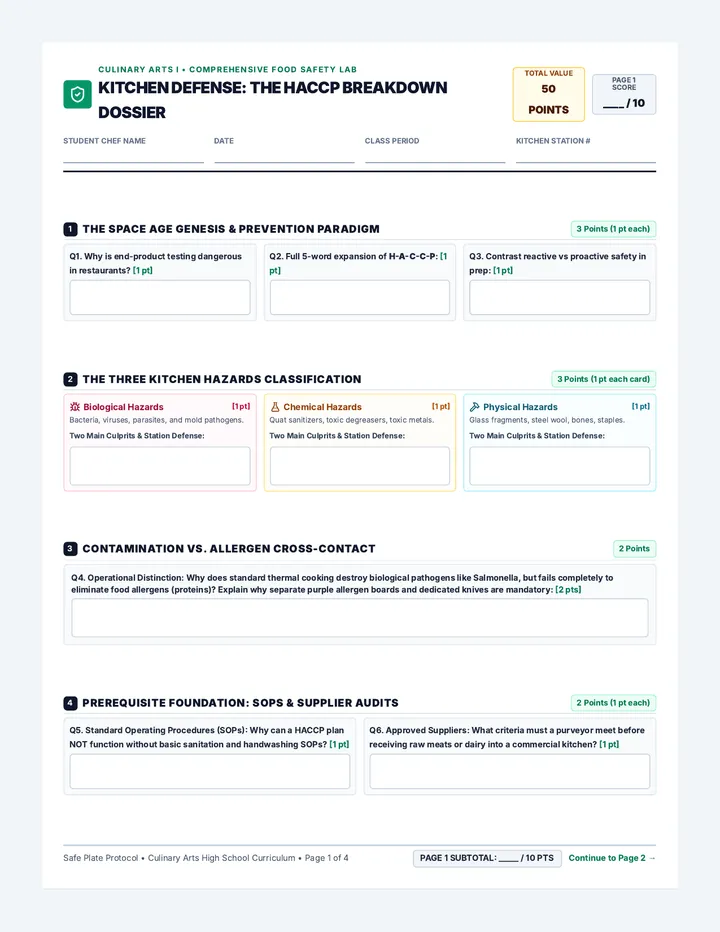
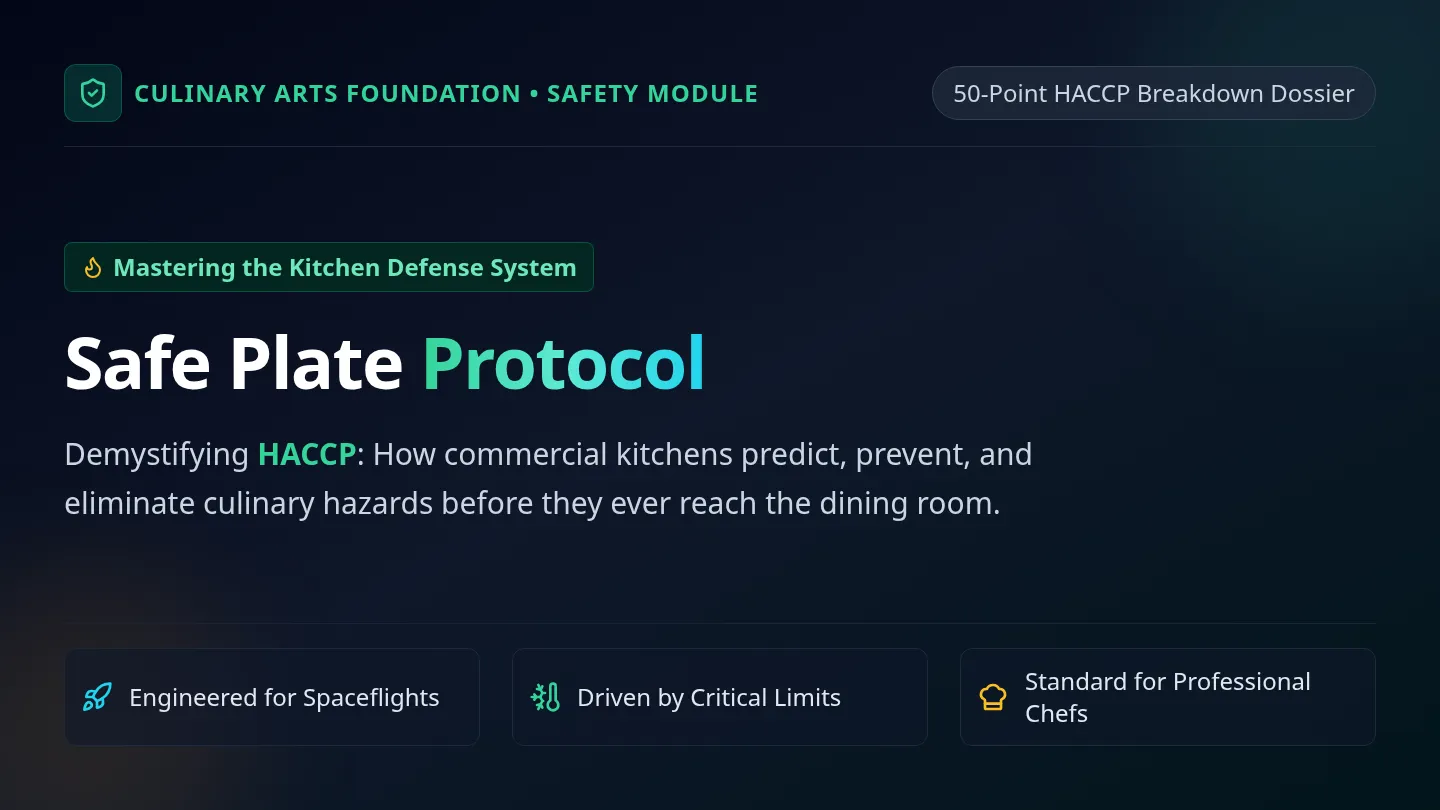
Safe Plate Protocol

A foundational culinary arts lesson introducing freshman students to Hazard Analysis Critical Control Point (HACCP) principles. Through a visual slide presentation and an investigative research worksheet, students examine kitchen safety protocols, hazard categories, and critical control points.

BBonnie.Gomez

3 Points (1 pt each)

Q10. Danger Zone Limits: What are the exact lower and upper boundaries (°F)? [1 pt]

Q11. The 70°F - 125°F Super Zone: Why does bacteria multiply fastest in this sub-range? [1 pt]

Q12. Numeric Limits: Why CANNOT critical limits rely on visual cues like "looks done"? [1 pt]

7 Cooling Curves, Rapid-Chilling & Hot Reheating

6 Points (2 pts each)

Q13. Two-Stage Cooling Rule [2 pts]

Specify the temperature targets and strict maximum hours allowed for Stage 1 and Stage 2:

Q14. Commercial Chilling Tools [2 pts]

Describe two specialized kitchen techniques used to cool hot stocks (e.g. ice wands, shallow pans):

Q15. Safe Hot Reheating Rule [2 pts]

What is the mandatory minimum internal temperature and time limit for reheating TCS food for hot holding?

Safe Plate Protocol • Culinary Arts High School Curriculum • Page 2 of 4

PAGE 2 SUBTOTAL: _____ / 12 PTS Continue to Page 3 →

Part III: The 7 Principles Operational Blueprint

Commercial Line Recipe Application • Herb-Roasted Chicken Breast

Chef: ________________________ Page 3: 14 Pts

8 The 7 Principles Step-by-Step Culinary Breakdown

14 Points (2 pts each principle)

HACCP Principle

Culinary Investigation & Practical Application [2 pts each]

1

Hazard Analysis (Severity vs. Likelihood)

Q16. Primary raw poultry biological pathogens and why their likelihood is high:

2

Determine CCPs (Kill-Step Location)

Q17. Exact line production step where pathogens are destroyed (Roasting oven):

3

Critical Limits (Measurable Standard)

Q18. Mandatory FDA internal cooking temperature & required dwell time (seconds):

4

Monitoring (Tool, Place & Time)

Q19. Exact thermometer type, anatomical insertion point, and checking frequency:

5

Corrective Action (Deviation Protocol)

Q20. Step-by-step protocol if chicken registers only 152°F when timer rings:

6

Verification (System Audit)

Q21. How the Sous Chef or Chef de Cuisine verifies that line cooks execute properly:

7

Record Keeping (Legal Compliance)

Q22. Official station log name, retention period, and required chef initial:

Recipe Synergy Analysis: If raw chicken is prepared on a sanitized board but cooked to only 155°F, has HACCP succeeded or failed? Explain:

Safe Plate Protocol • Culinary Arts High School Curriculum • Page 3 of 4

PAGE 3 SUBTOTAL: _____ / 14 PTS Continue to Page 4 →

Part IV: Verification Mechanics & Crisis Incident

Calibration, Incident Management, & Executive Synthesis

Chef: ________________________ Page 4: 14 Pts

9 Thermometer Calibration & Monitoring Systems

4 Points (2 pts each)

Q23. Ice-Point Calibration Procedure: Describe the exact 3 steps to calibrate a bimetallic stem thermometer to 32°F: [2 pts]

Q24. Continuous vs. Periodic Monitoring: Compare digital walk-in data-loggers vs manual clipboards: [2 pts]

10 Culinary Emergency: Walk-In Cooler Failure at 7:00 AM

6 Points (2 pts each)

The Scenario: You arrive at 7:00 AM to prep for banquet service. The walk-in digital thermometer reads 53°F. Inside, two trays of raw ground beef patties probe at 51°F. The automated refrigeration logger confirms power was lost at 1:15 AM (5 hours and 45 minutes above 41°F).

Q25. Critical Call [2 pts] Salvage or Discard? Justify via the 4-hour rule:

Q26. Physical Quarantine [2 pts] How do you label & isolate product from line cooks?

Q27. Corrective Log [2 pts] List 3 mandatory items logged on the formal incident form:

11. Executive Chef Reflection & Station Sign-Off 4 Points

Q28. Synthesis Prompt: Why is HACCP described as an active managerial control system rather than a passive inspection checklist? How does proactive documentation protect both guest lives and restaurant legal survival? [4 pts]

Student Chef Signature

Instructor Verification

P1: __/10 P2: __/12 P3: __/14 P4: __/14

FINAL SCORE: _____ / 50 PTS

Safe Plate Protocol • Culinary Arts High School Curriculum • Page 4 of 4 End of HACCP Research Dossier • 50 Points Total
You might also like

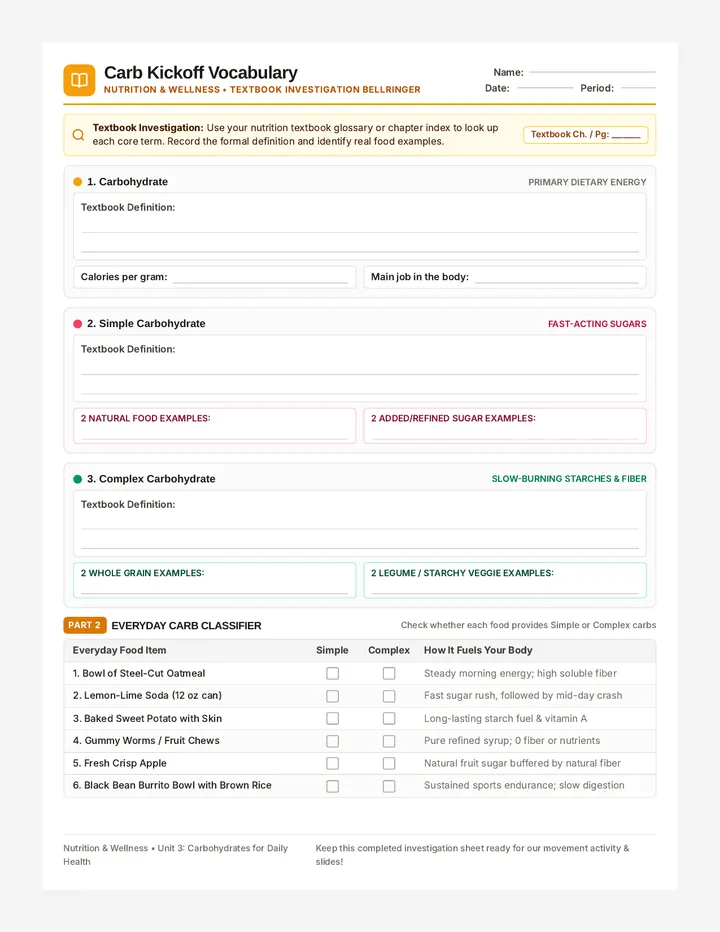
Carb Kickoff Vocabulary Worksheet

Smart Fuel Blueprint

A dynamic high school nutrition and wellness unit examining macronutrient fuel, protein synthesis, food label literacy, and practical meal strategies for athletic stamina and everyday focus.

J

Jennifer.Leber

7
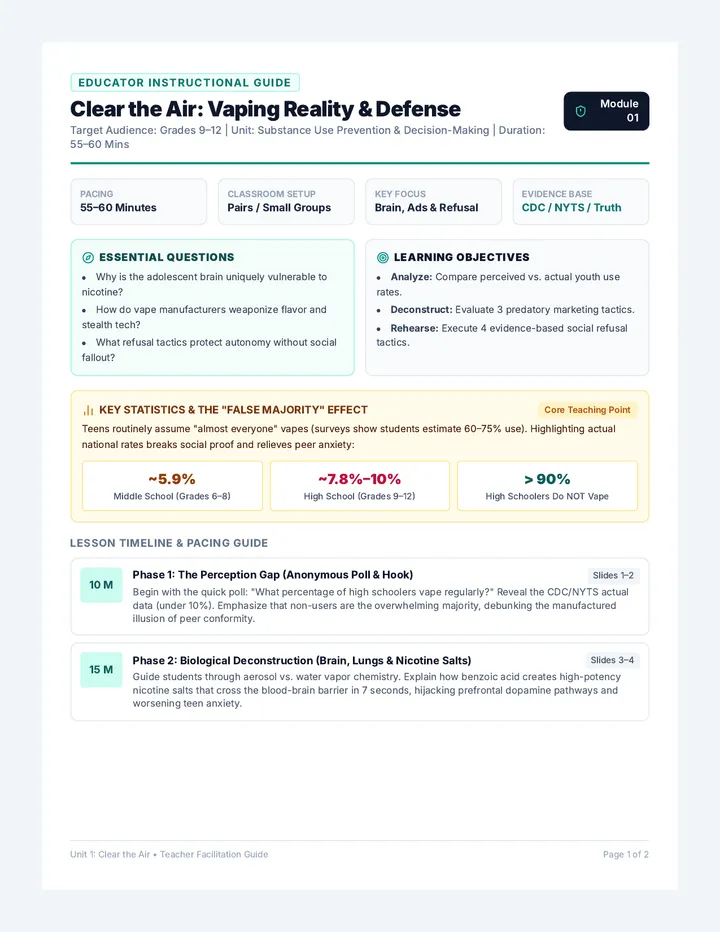
Clear Air Teacher Guide

Clear the Air

A comprehensive high school health unit exploring the neurobiology of nicotine addiction, deceptive vaping marketing tactics, real youth usage statistics, and practical peer pressure refusal strategies.

Lenny Avatar
Lenny
4
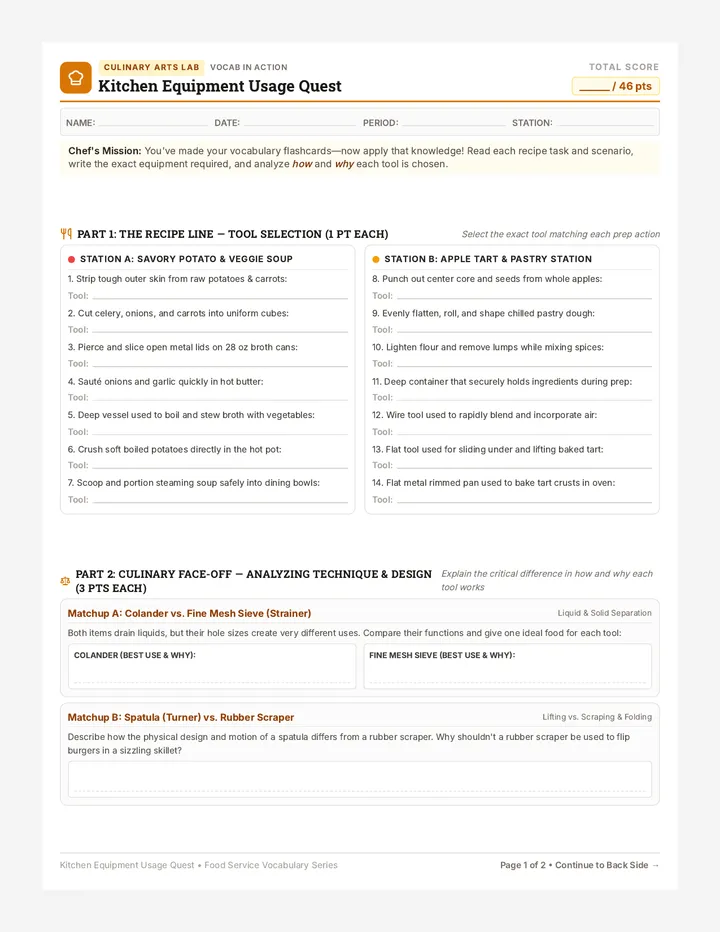
Kitchen Equipment Quest Worksheet

Kitchen Equipment Quest Worksheet

A hands-on culinary arts worksheet guiding students through practical cooking scenarios, tool comparisons, and kitchen disaster investigations to master the usage and technique of 23 food service tools.

BF

Brandi Flanigan

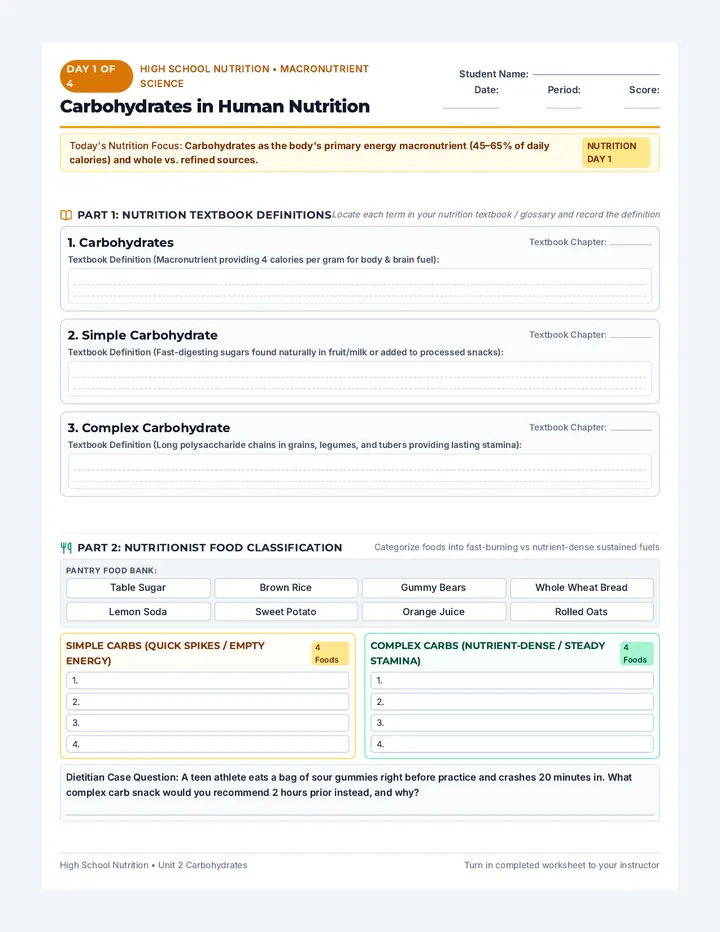
Day 1 Foundations Worksheet

Carb Masters Nutrition

A comprehensive 4-day nutrition curriculum exploring dietary carbohydrates, digestion mechanics, fiber benefits, insulin homeostasis, and glycemic meal planning.

J

Jennifer.Leber

16
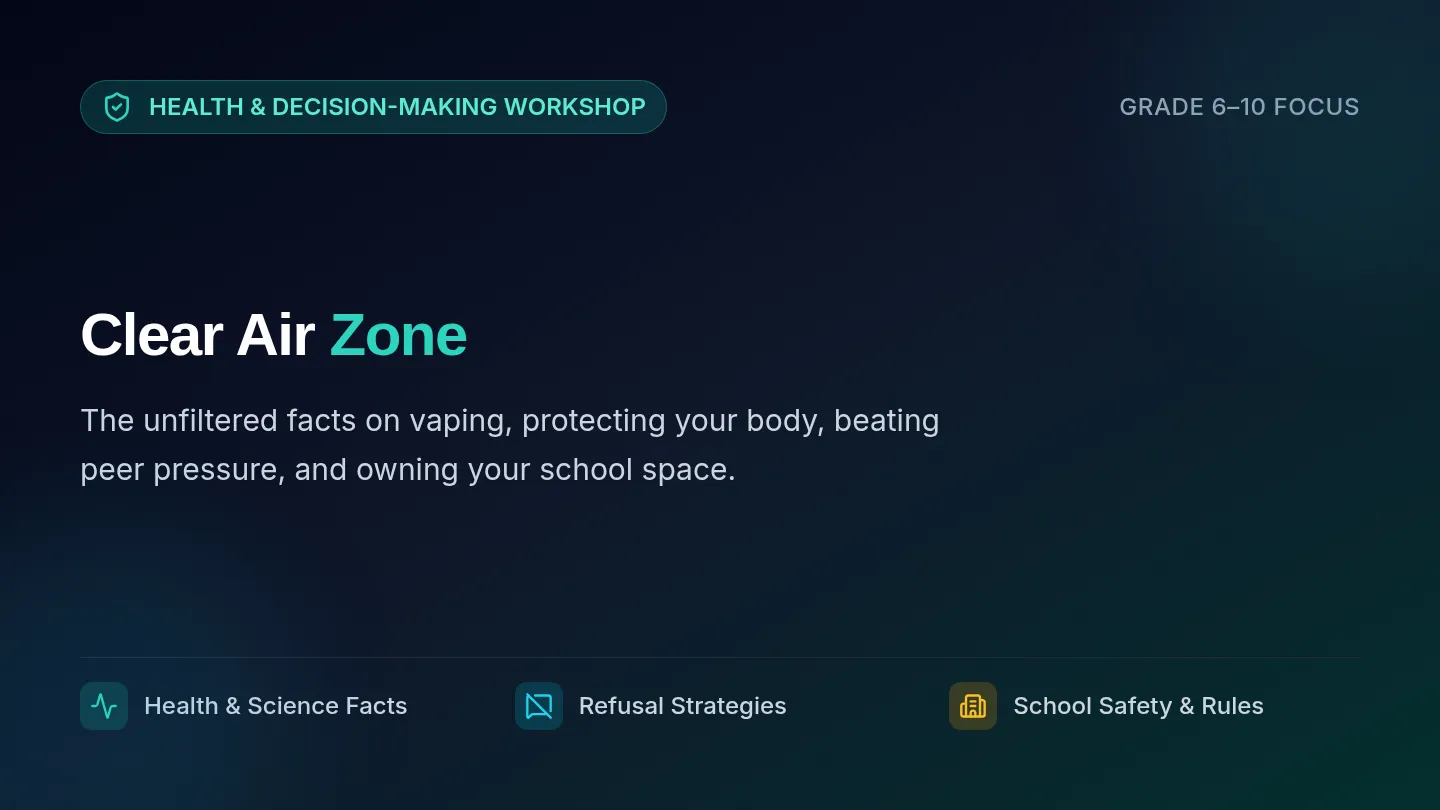
Clear Air Slides

Clear Air Zone

A proactive prevention lesson designed to equip students with clear facts on vaping harms, practical refusal strategies for peer pressure, and an understanding of vape-free school rules and support systems.

D

derrickwomack

4
Kitchen Defense Worksheet

Kitchen Defense Worksheet

A comprehensive 4-page print-ready investigative research packet for freshman culinary students worth 50 points. Expanded with 15 in-depth breakdown questions covering prerequisite programs, the CCP decision tree, numeric critical limits, two-stage cooling curves, calibration mechanics, traceability, and an emergency incident simulation.

B

Bonnie.Gomez

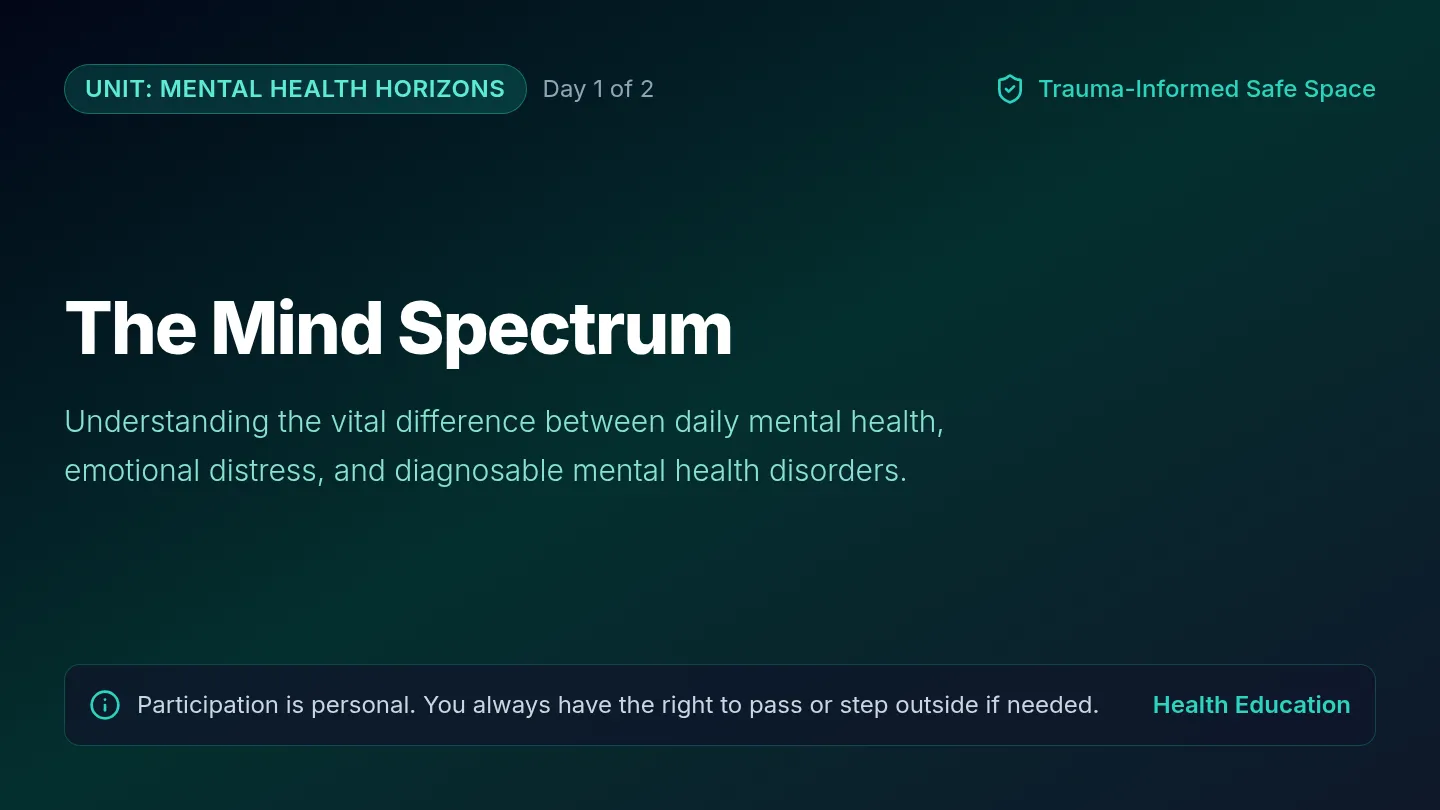
Mind Spectrum Slides

Mental Health Horizons

A two-day high school health sequence exploring the distinction between mental health and mental health disorders, destigmatizing conditions, and examining major disorder categories through a trauma-informed lens.

KJ

Katia Jones

6
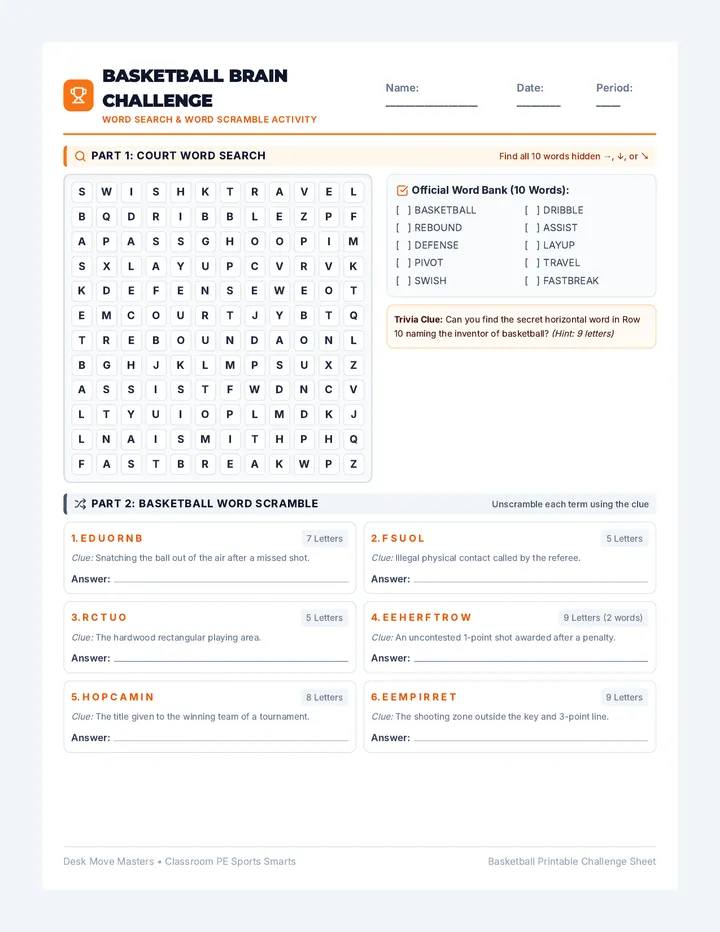
Hoop Words Activity

Hoop Smarts

A quiet classroom sports literacy lesson featuring a printable basketball word search, vocabulary scramble, and rules challenge.

KW

Kenny WItte

2
Safe Plate Protocol Slides

Safe Plate Protocol Slides

A high-engagement introductory slide deck for freshman culinary students on Hazard Analysis Critical Control Point (HACCP) principles. It covers HACCP origins with NASA, biological/chemical/physical hazards, critical control points, the 7 fundamental principles, and launches the 50-point comprehensive HACCP breakdown dossier.

B

Bonnie.Gomez

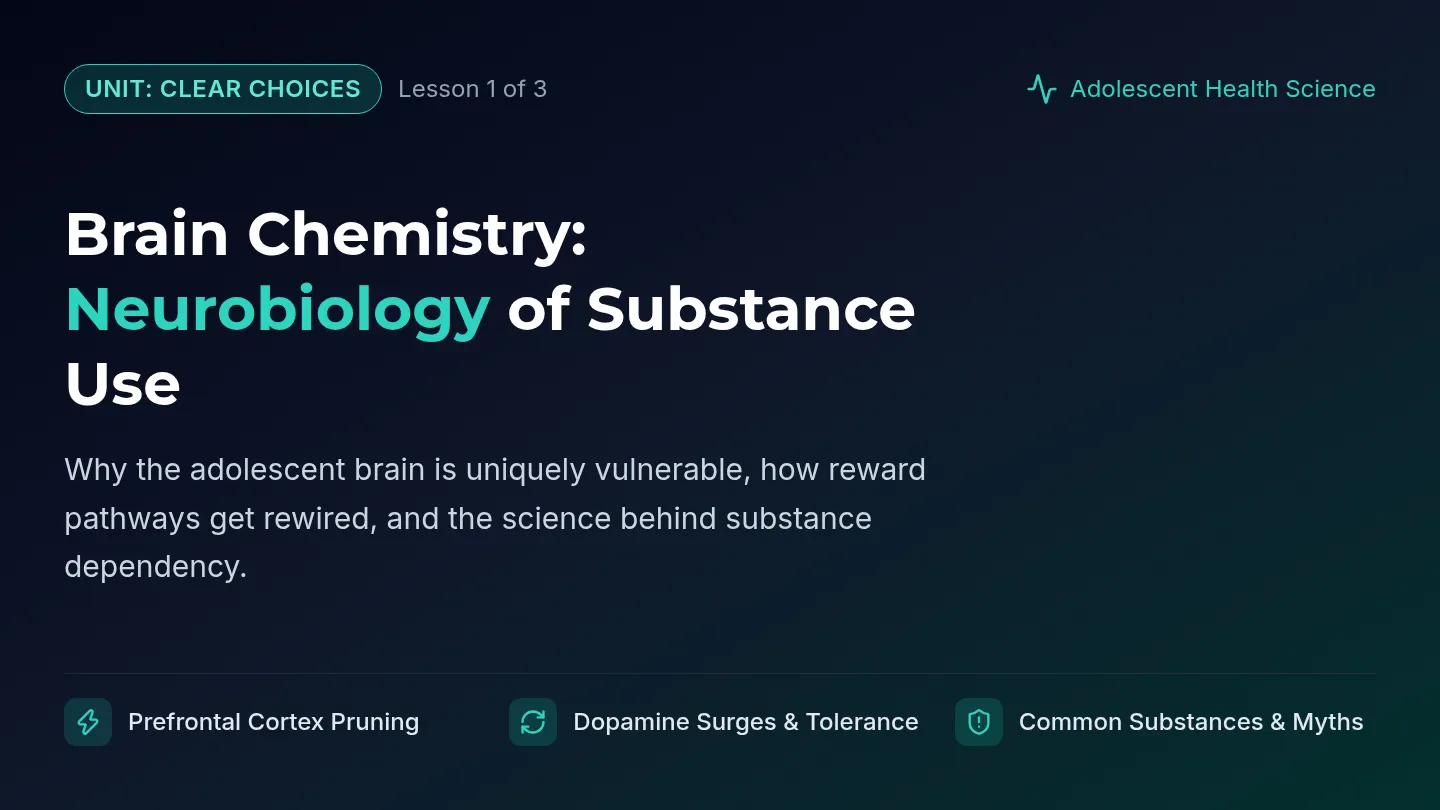
Brain Chemistry Slides

Clear Choices

A multi-day substance awareness and prevention sequence for high school students exploring substance neurobiology, risk assessment and warning signs, and proactive refusal and support strategies.

SA

Sara Allen

6
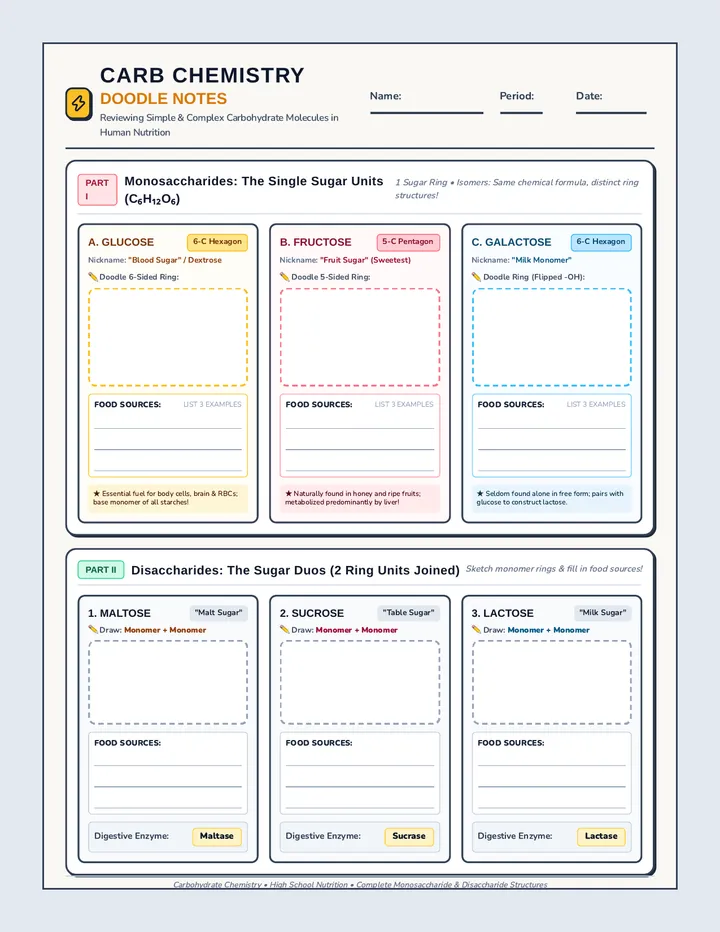
Carb Chemistry Doodle Notes

Carb Chemistry

A high school nutrition lesson exploring carbohydrate chemistry, simple sugars, disaccharide duos, starch vs. fiber chemical bonds, insulin regulation, and metabolic syndrome.

A

Avery.Murphy

4
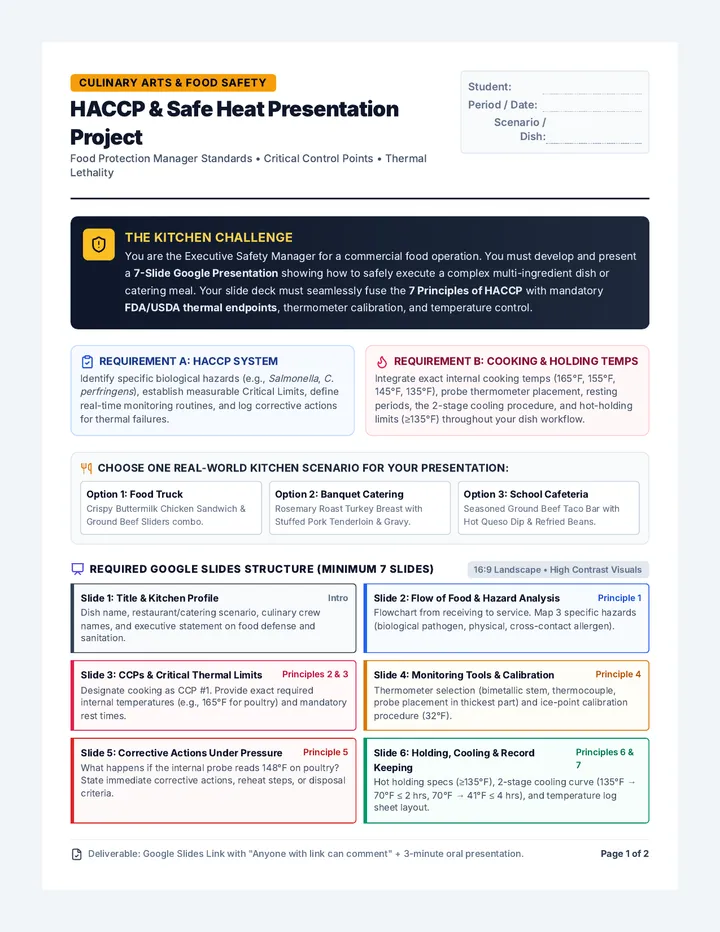
HACCP Heat Project Handout

HACCP Heat Project Handout

A comprehensive, two-page project assignment handout guiding students to create a real-world Google Slides presentation integrating HACCP principles and proper cooking temperatures. Includes project specifications, scenario options, slide-by-slide guidelines, culinary temperature benchmarks, a pre-submission checklist, and a detailed scoring rubric.

B

Bonnie.Gomez