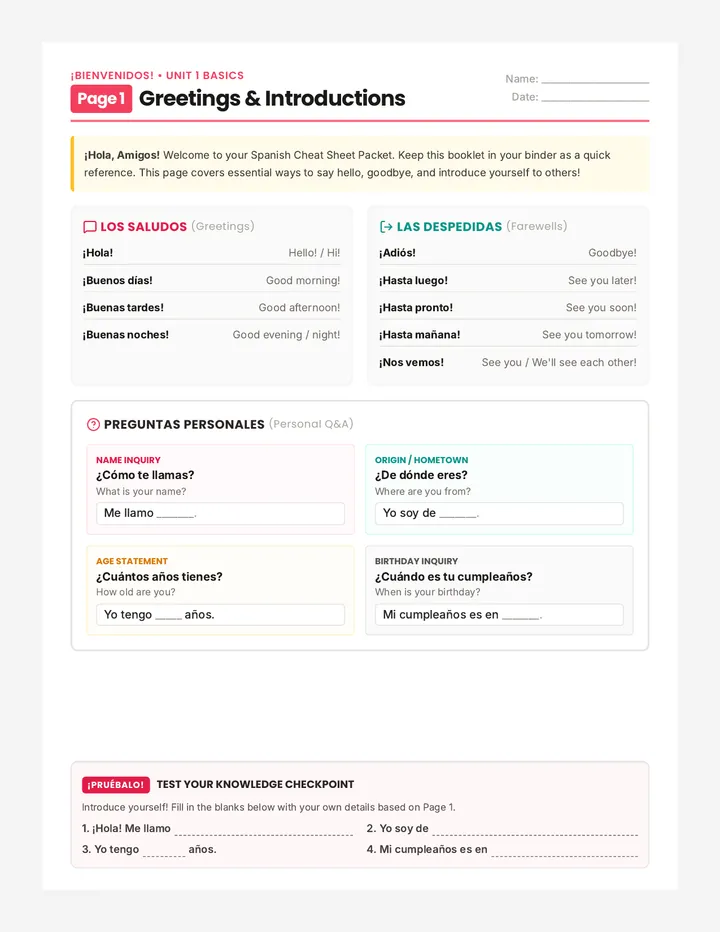
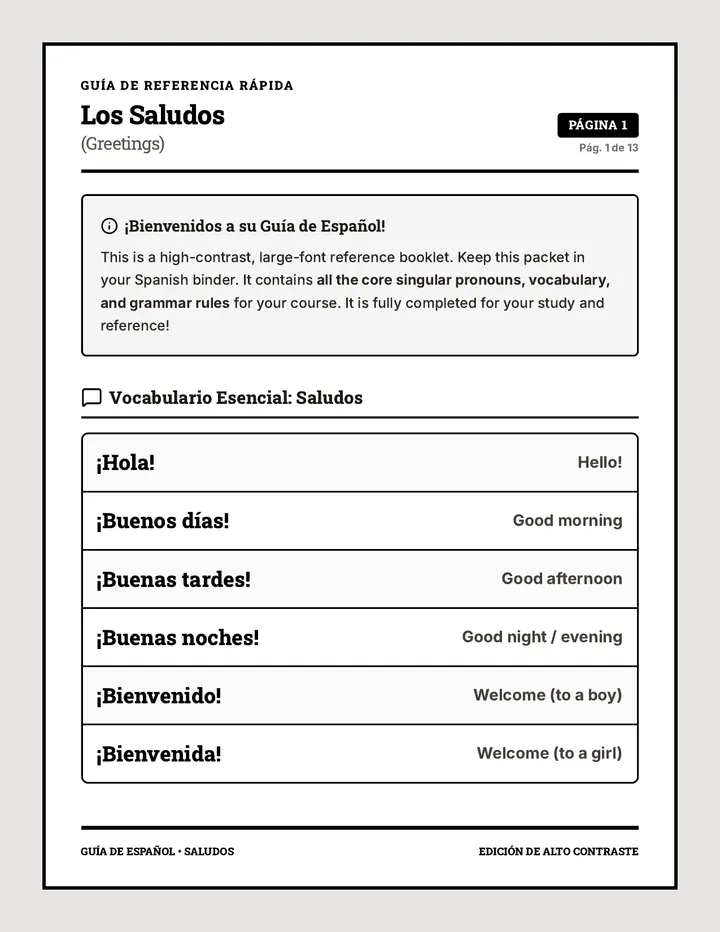
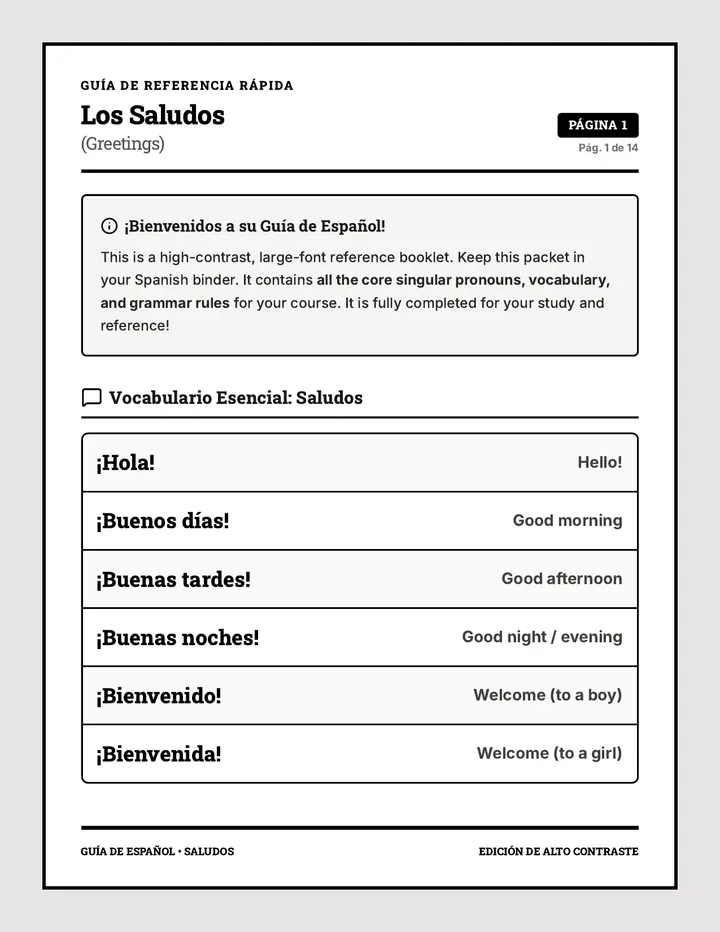
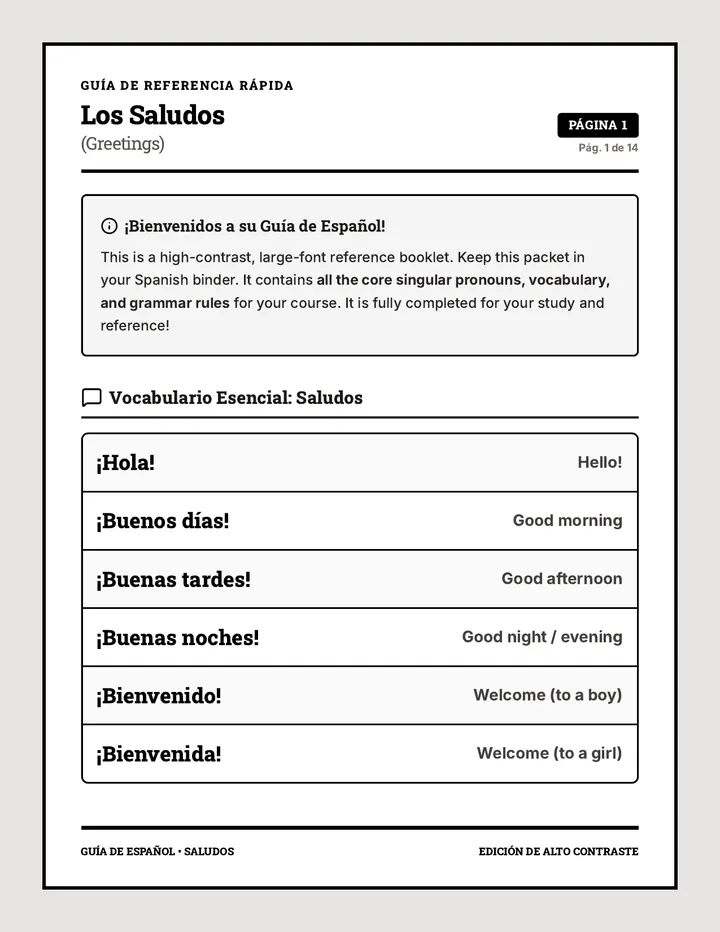
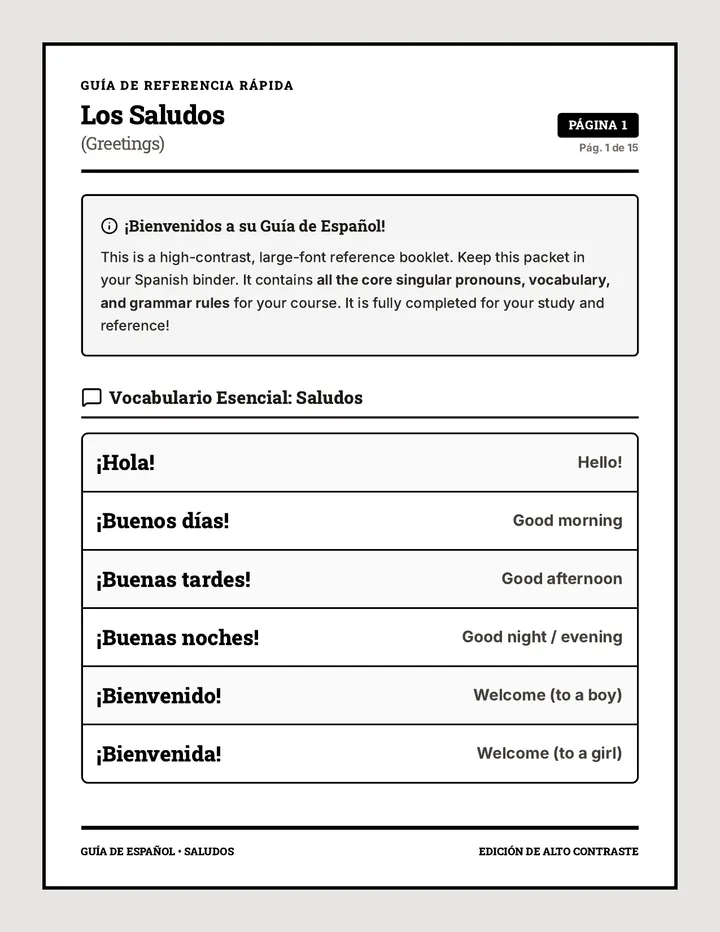
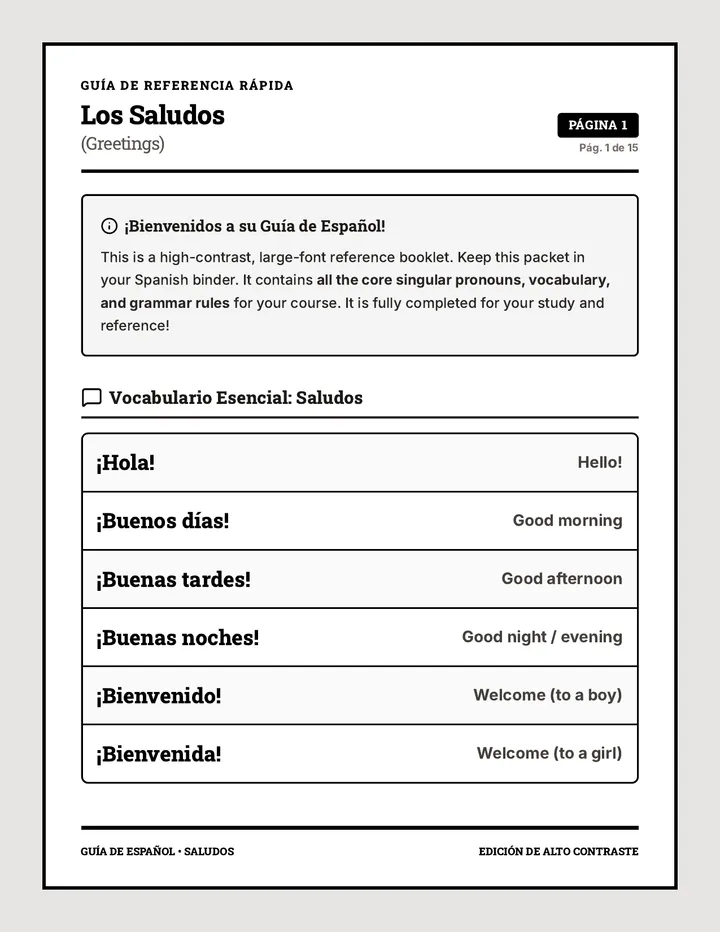
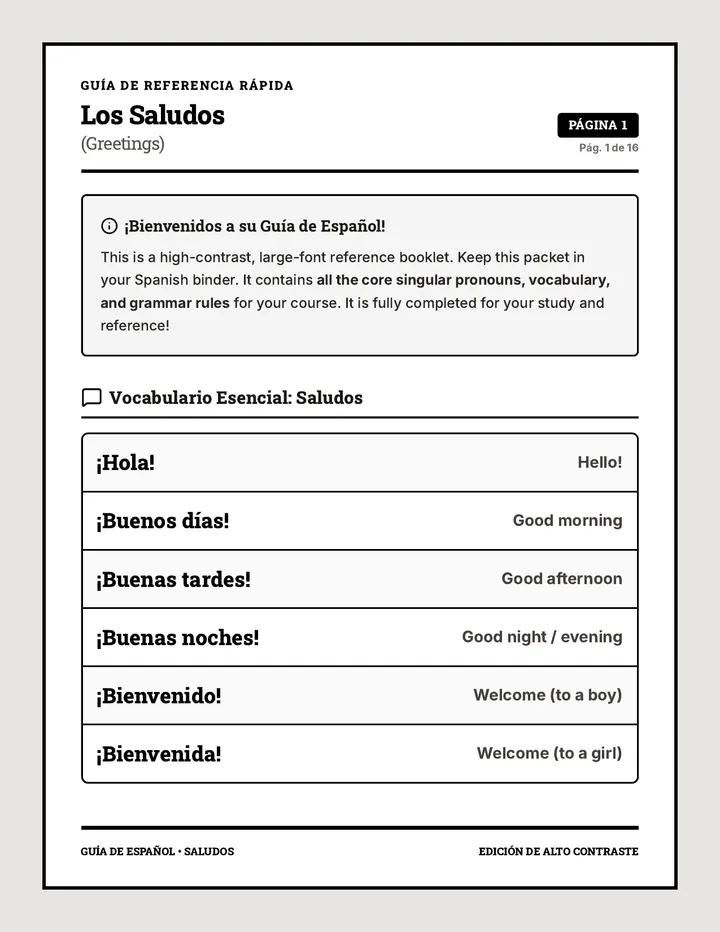
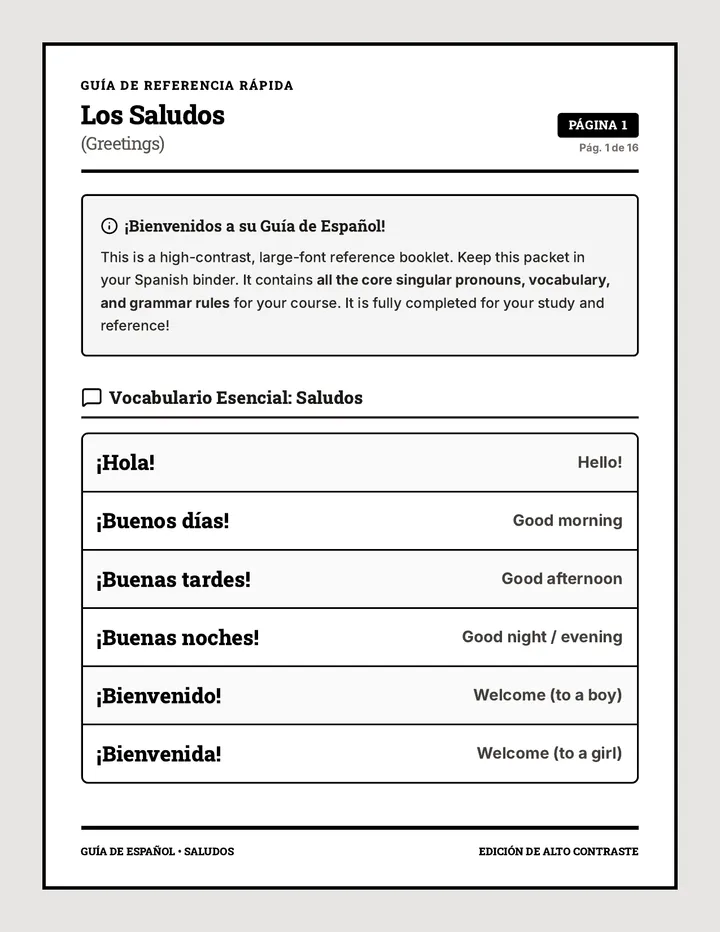
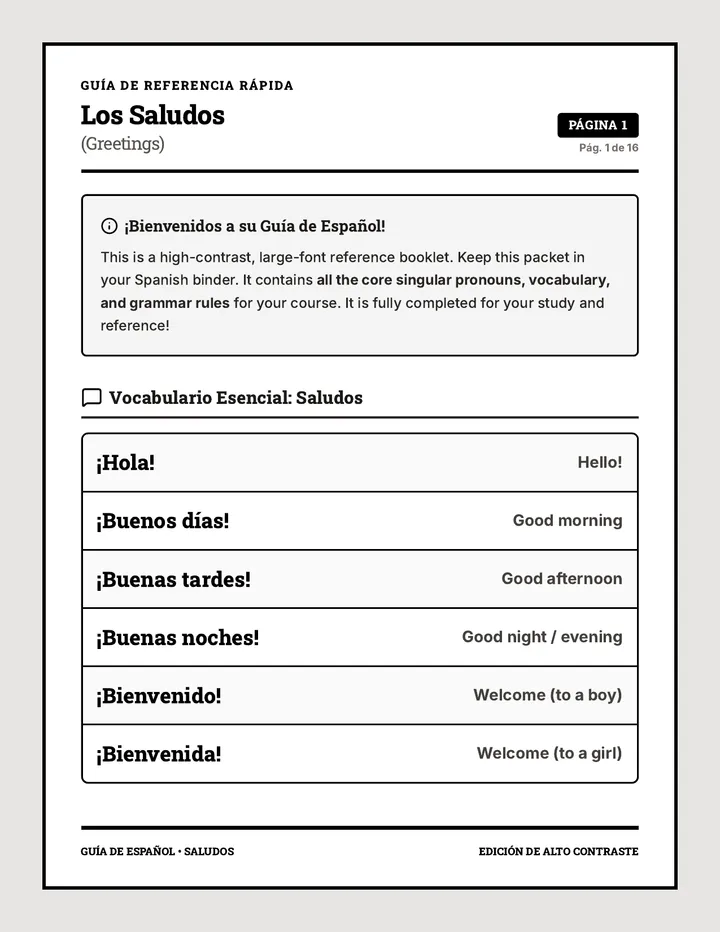
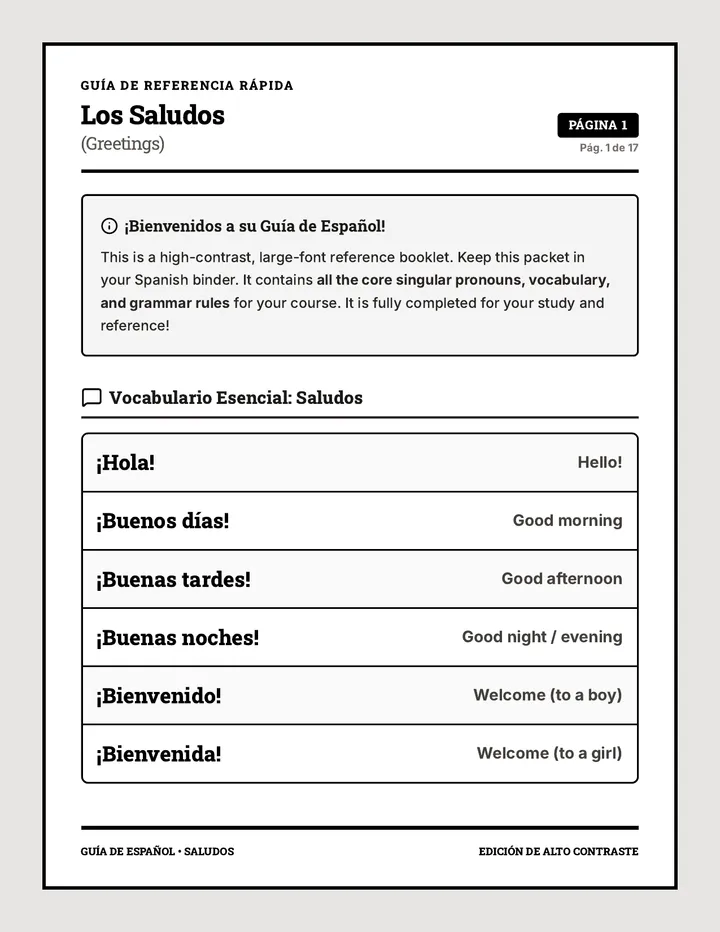
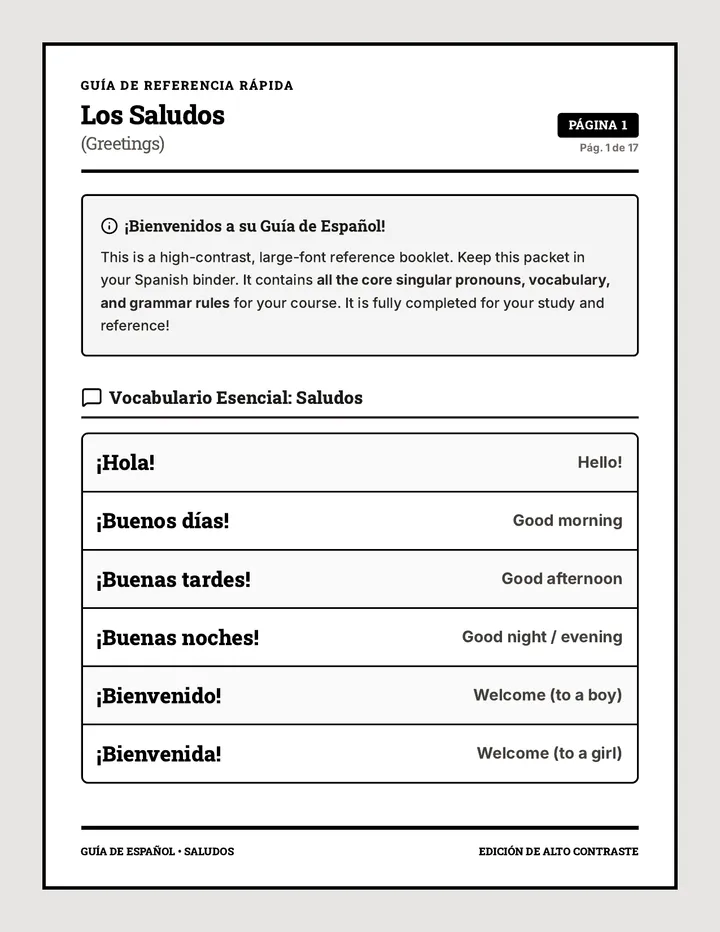
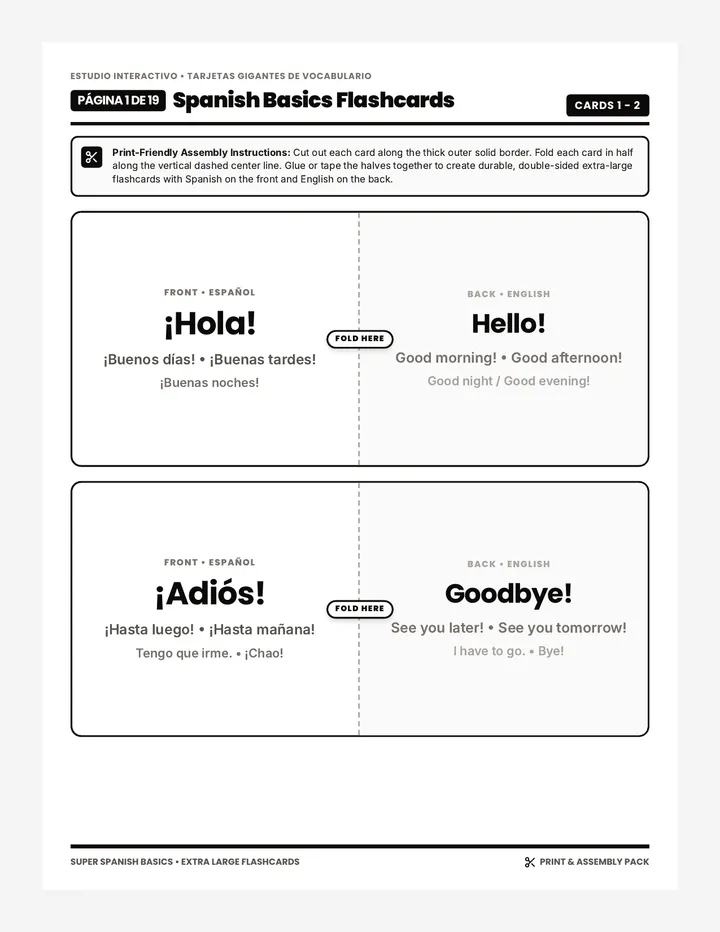
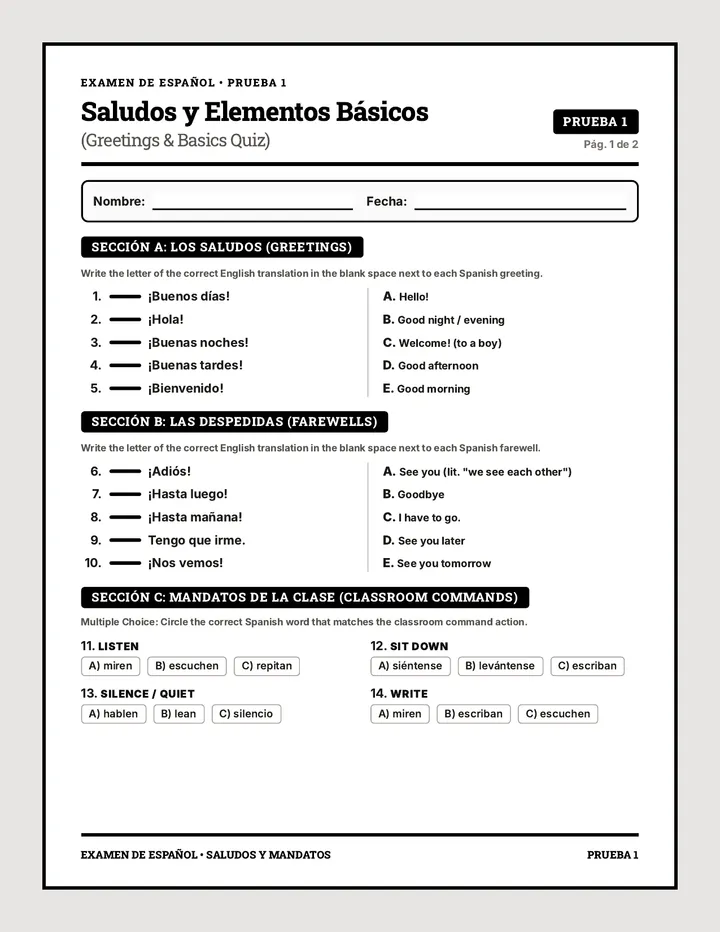
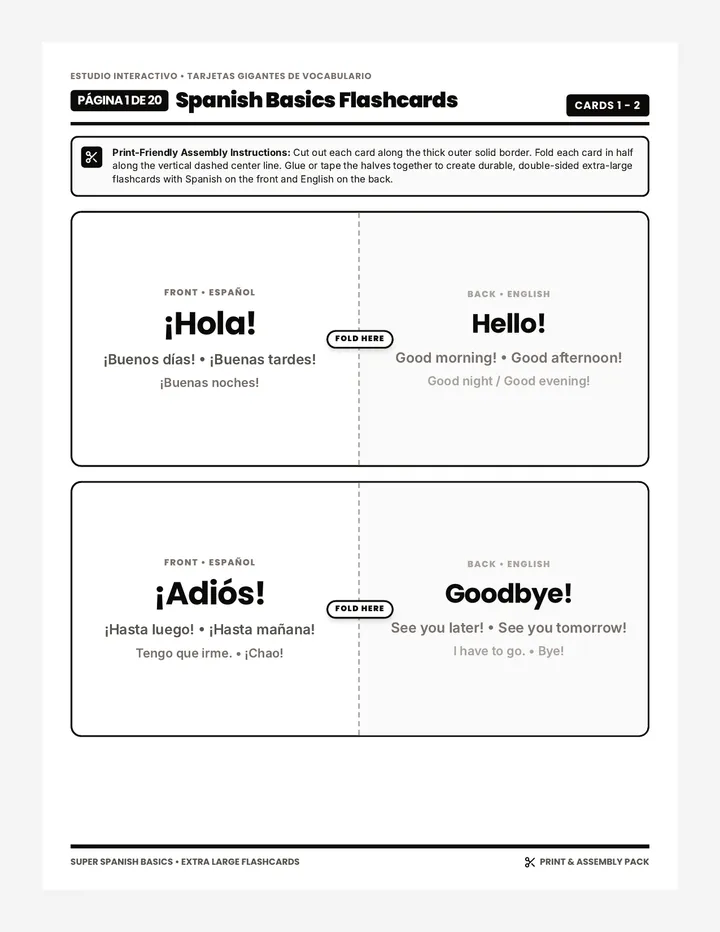
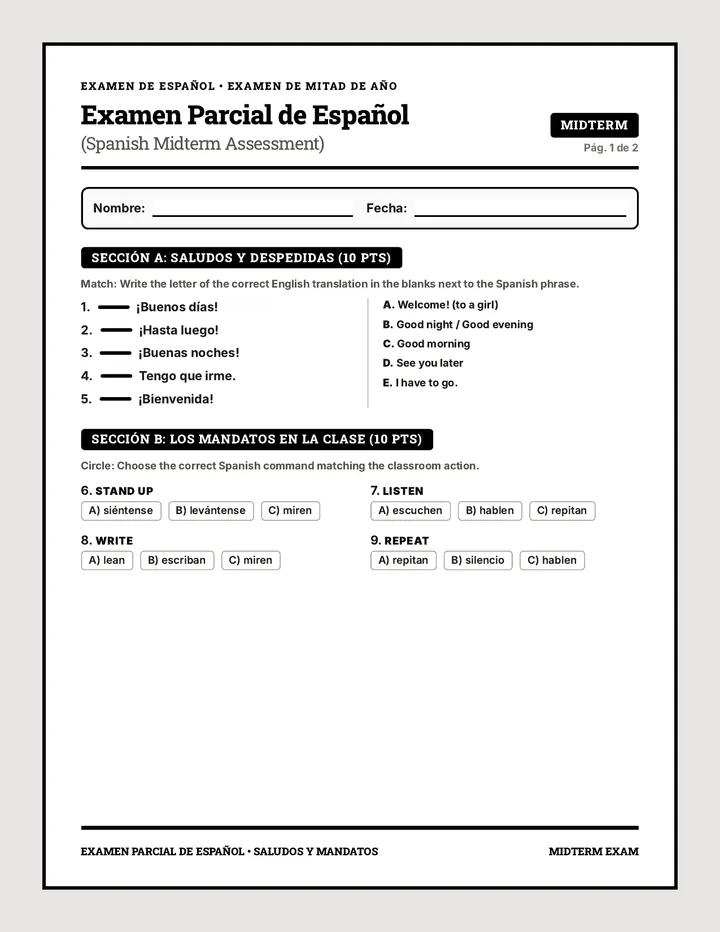
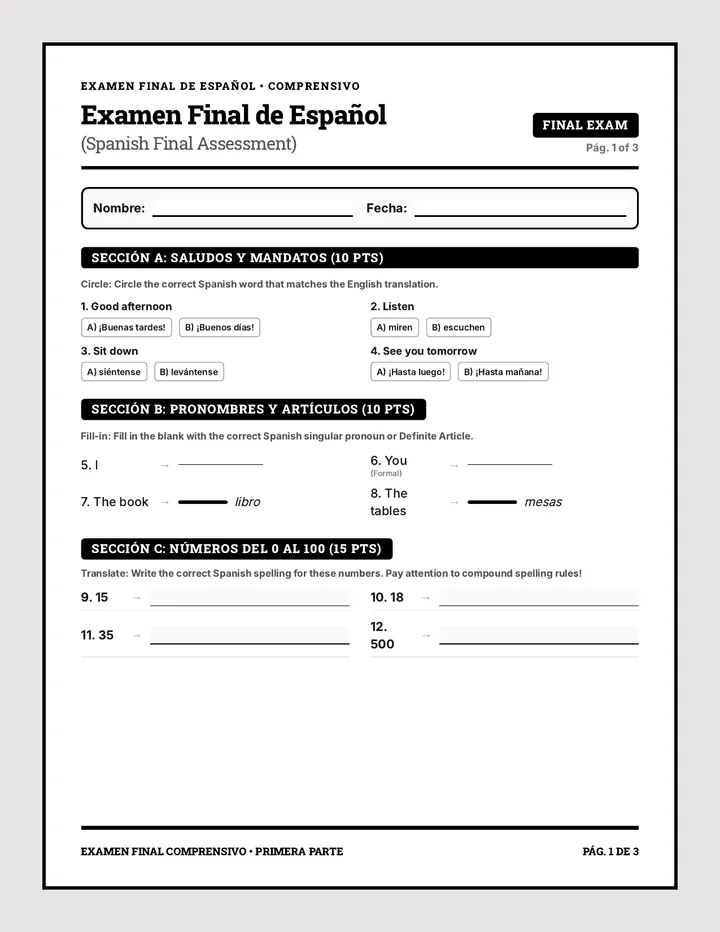
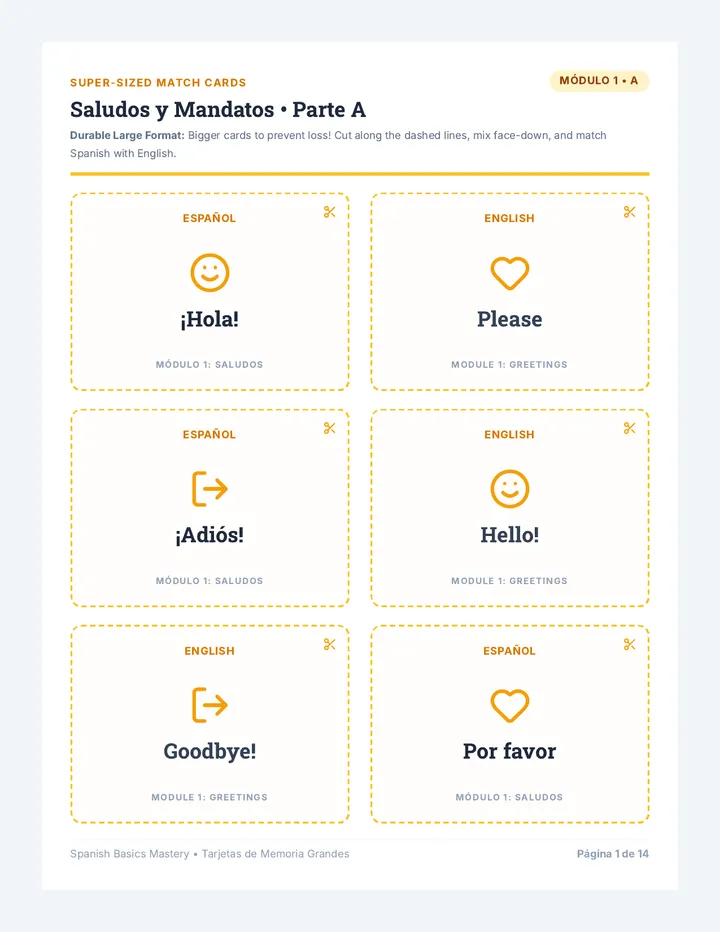
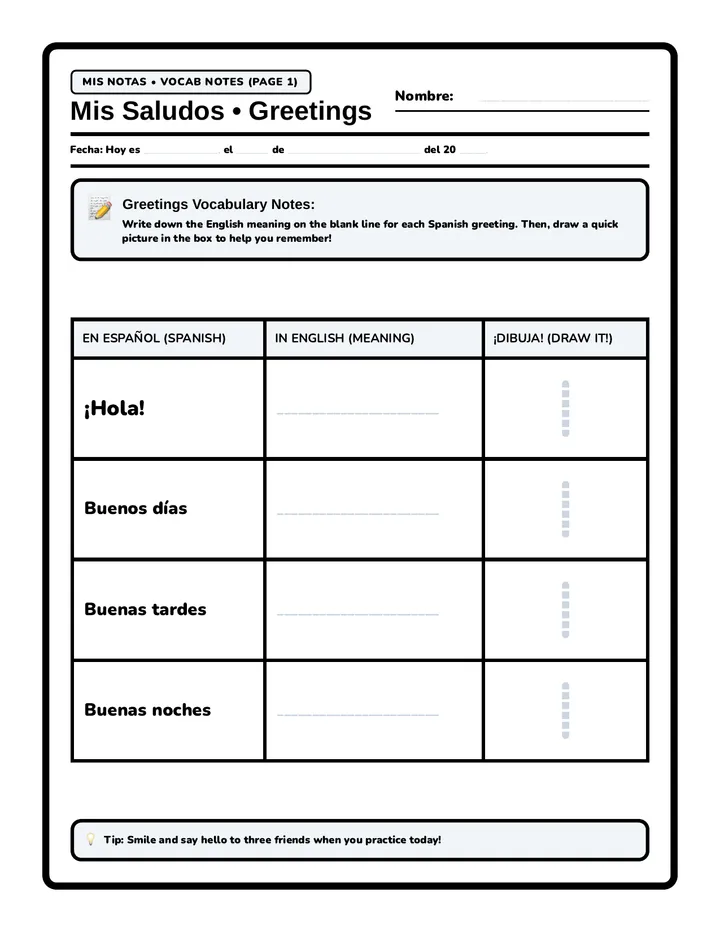
Fundamental greetings, self-introductions, and high-frequency vocabulary for novice learners. Develops phonetic accuracy and basic conversational structures through practical prompts.
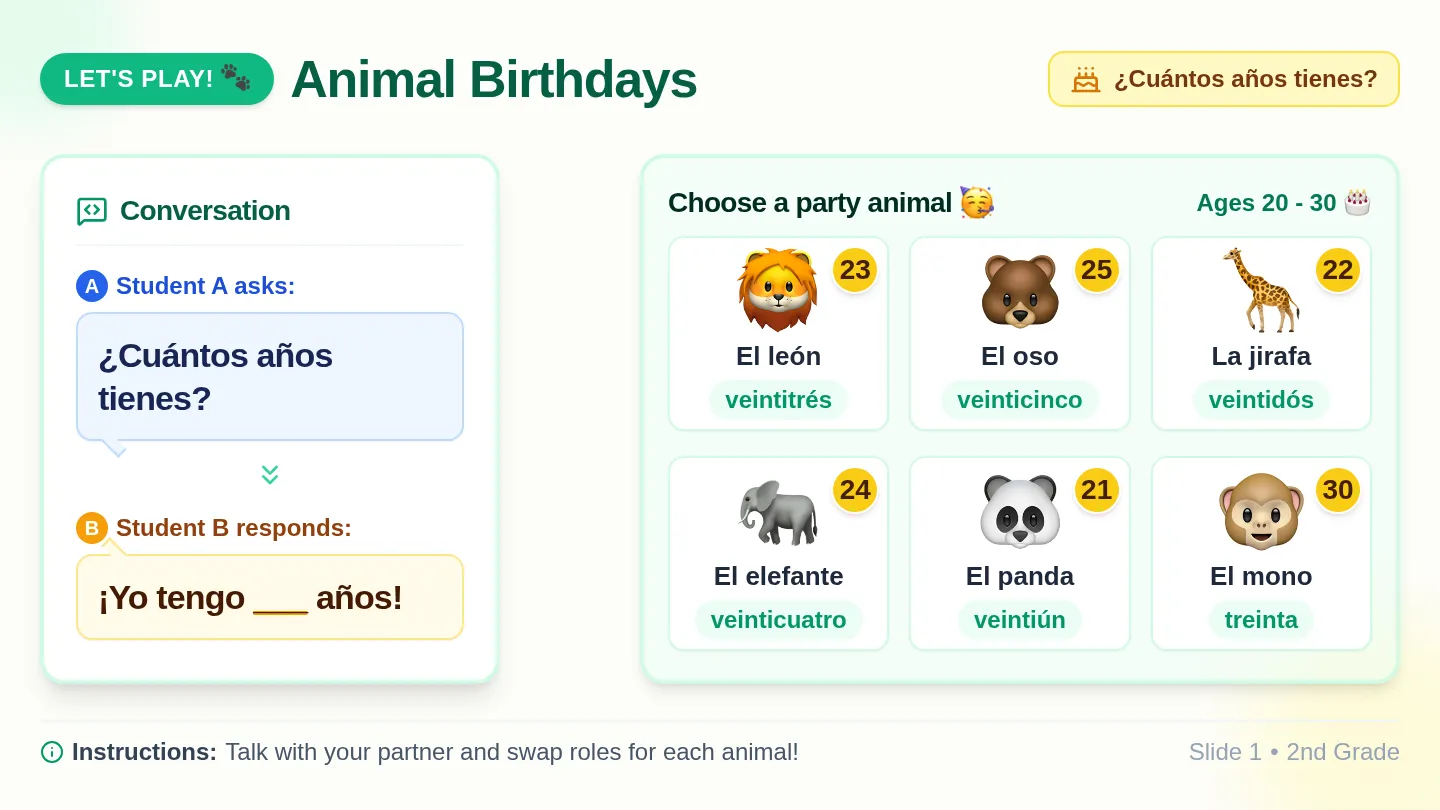
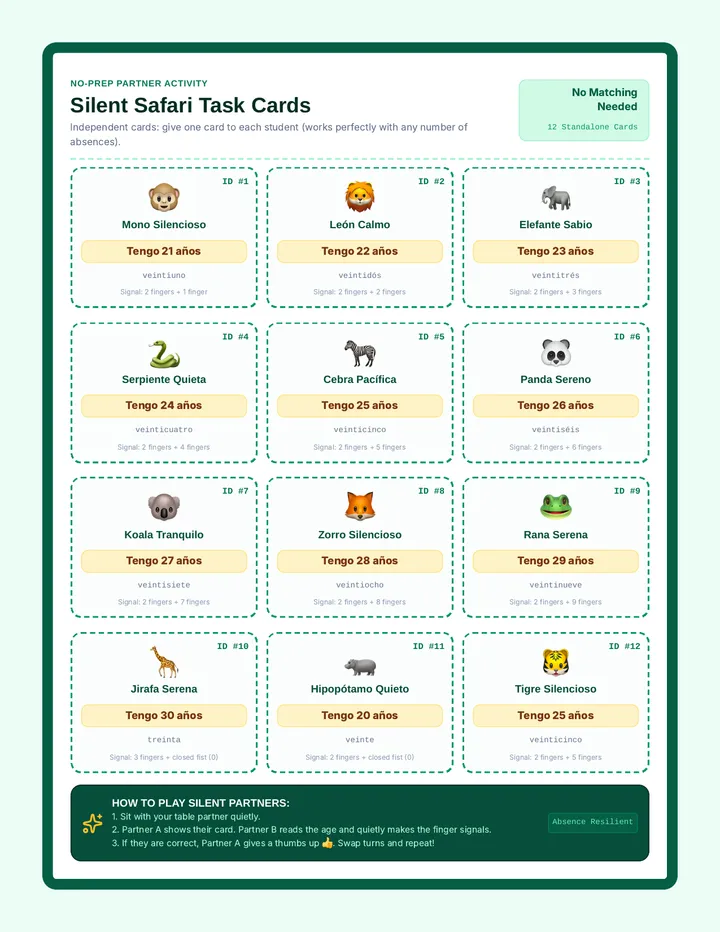
An updated two-slide deck for 2nd grade Spanish students. Slide 1 practices animal ages from 20-30, and Slide 2 instructs students to play a classroom mingle game using physical animal cards and a place-value finger system (e.g., 2 fingers on one hand and 5 on the other for 25).
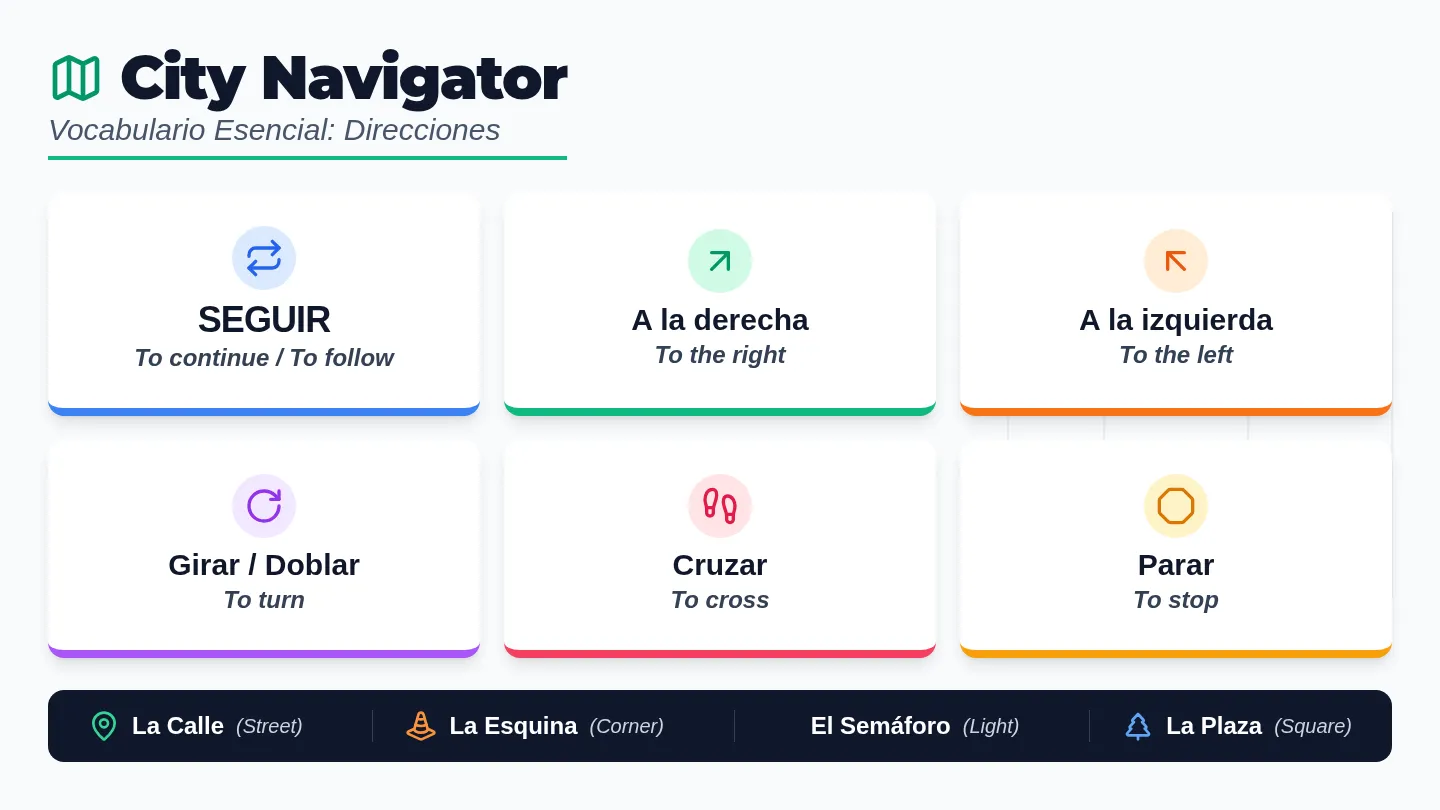
An updated city navigation slide featuring 'Seguir' as a primary vocabulary term, alongside other common directions and landmarks like 'A la derecha' and 'La Esquina'.
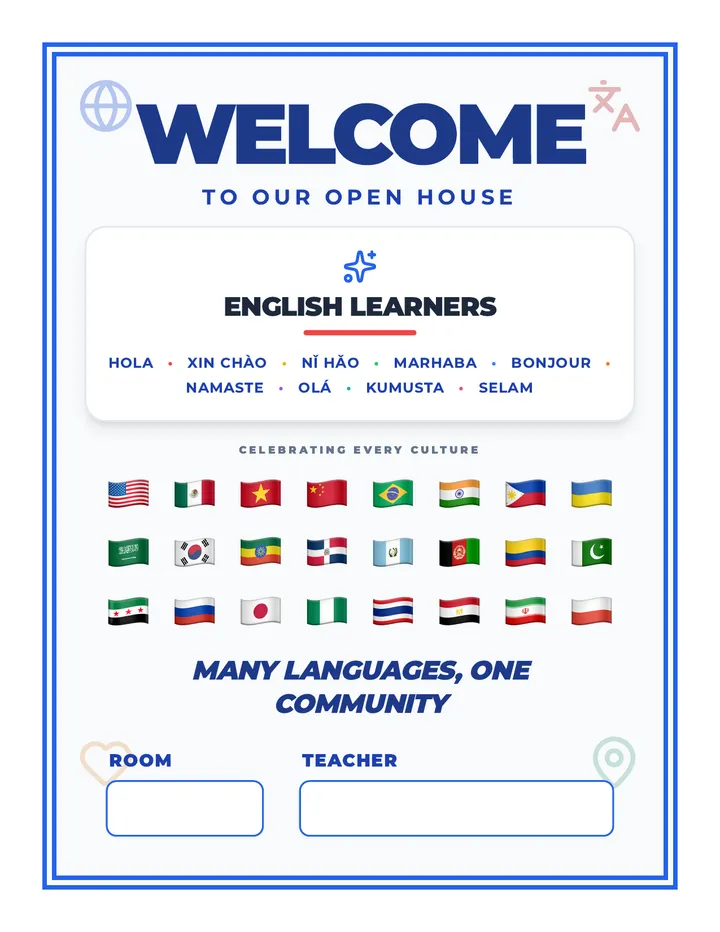
A vibrant, high-impact welcome poster for an EL (English Learners) classroom door. Features multilingual "Hello" greetings, a diverse set of flags, and the quote "Many Languages, One Community." Includes designated spaces for teacher name and room number.
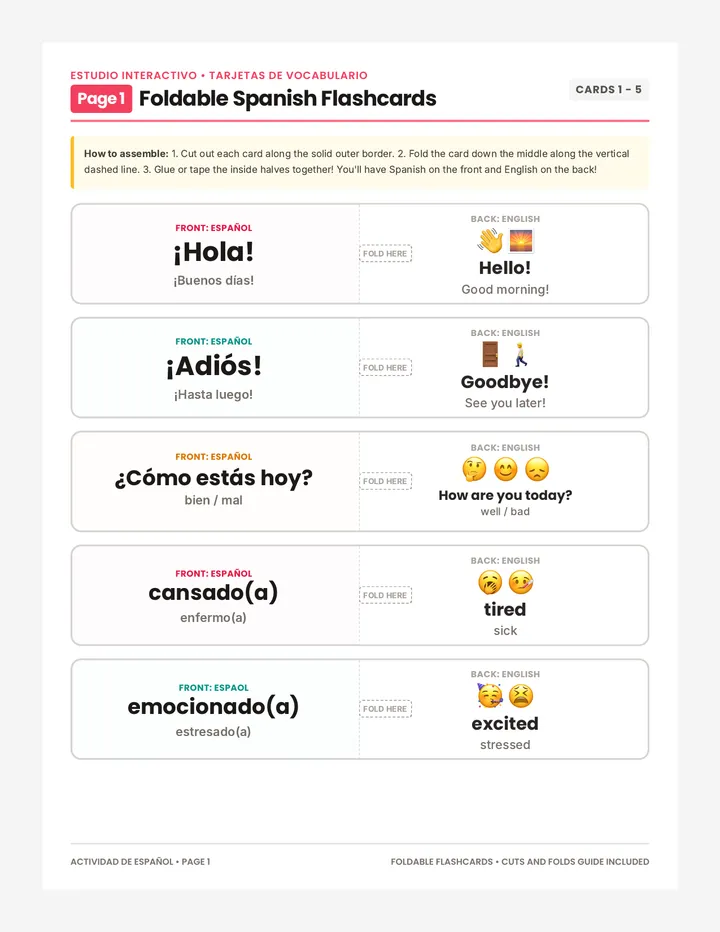
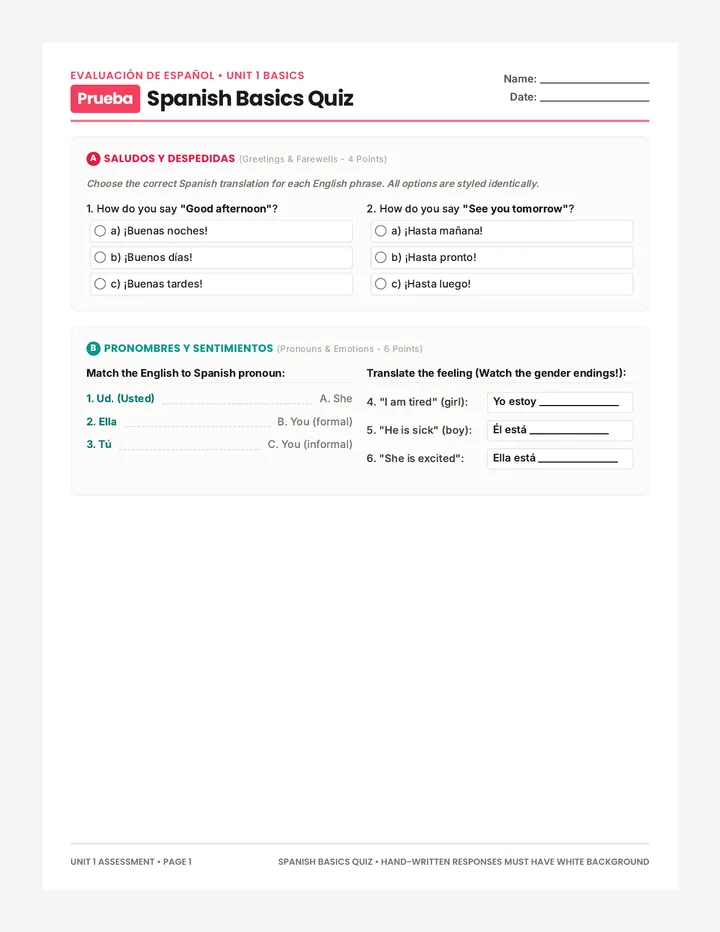
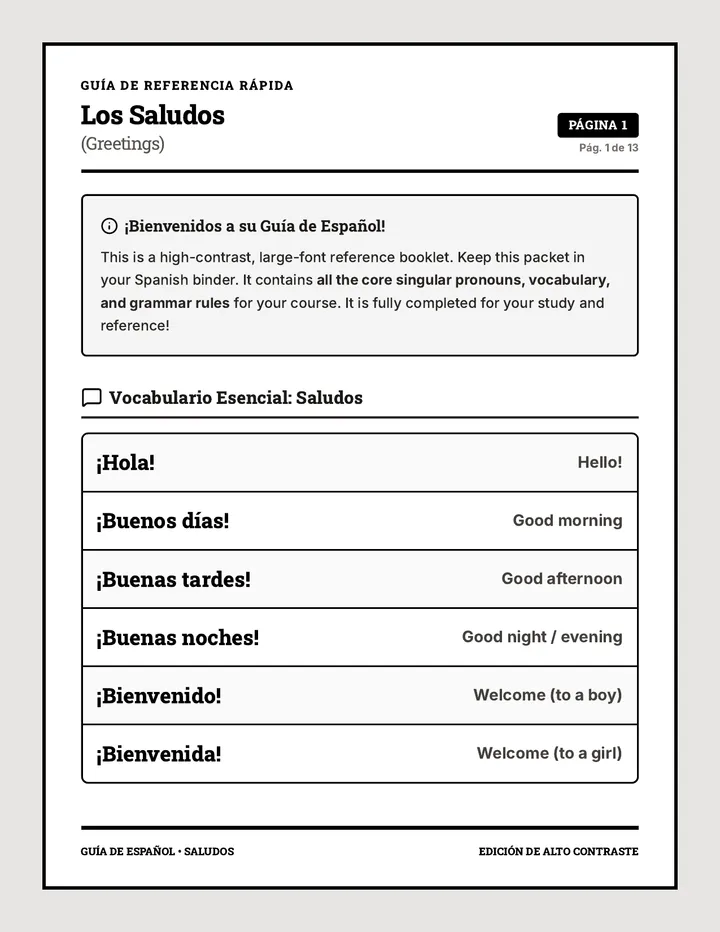
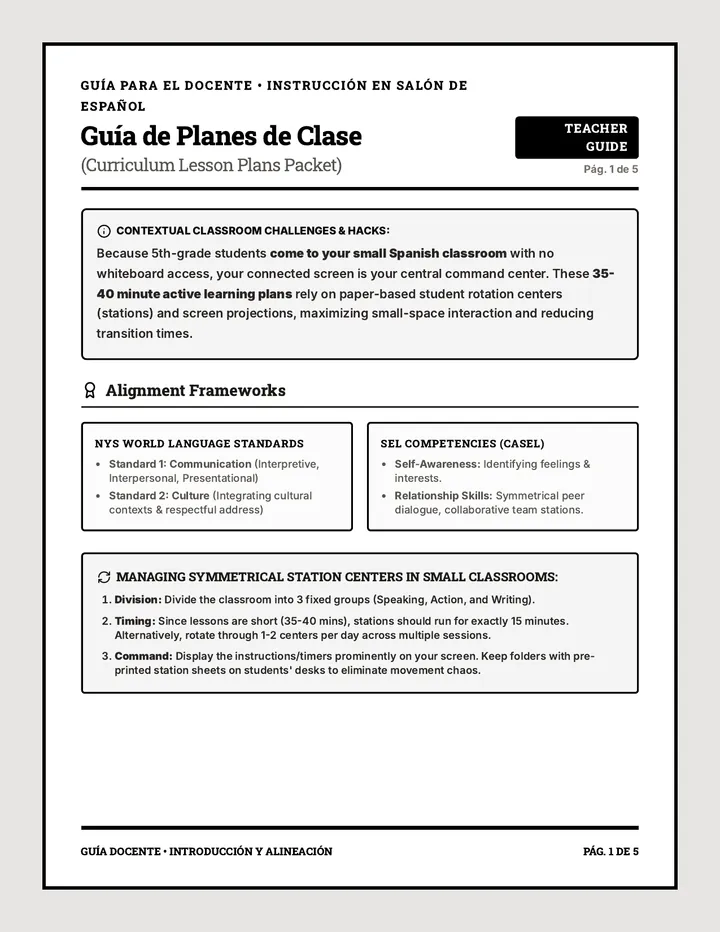
A comprehensive introductory Spanish curriculum designed for 5th-grade students. Features highly structured lessons with focused active-learning centers spanning greetings, grammar, numbers, calendar, weather, nature, animals, and adjectives.
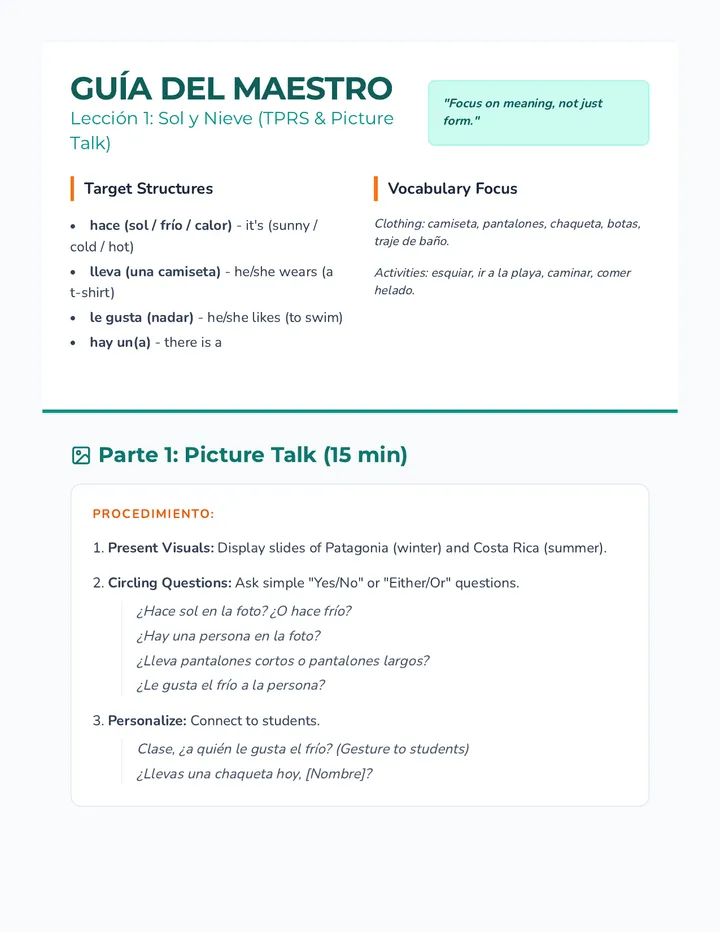
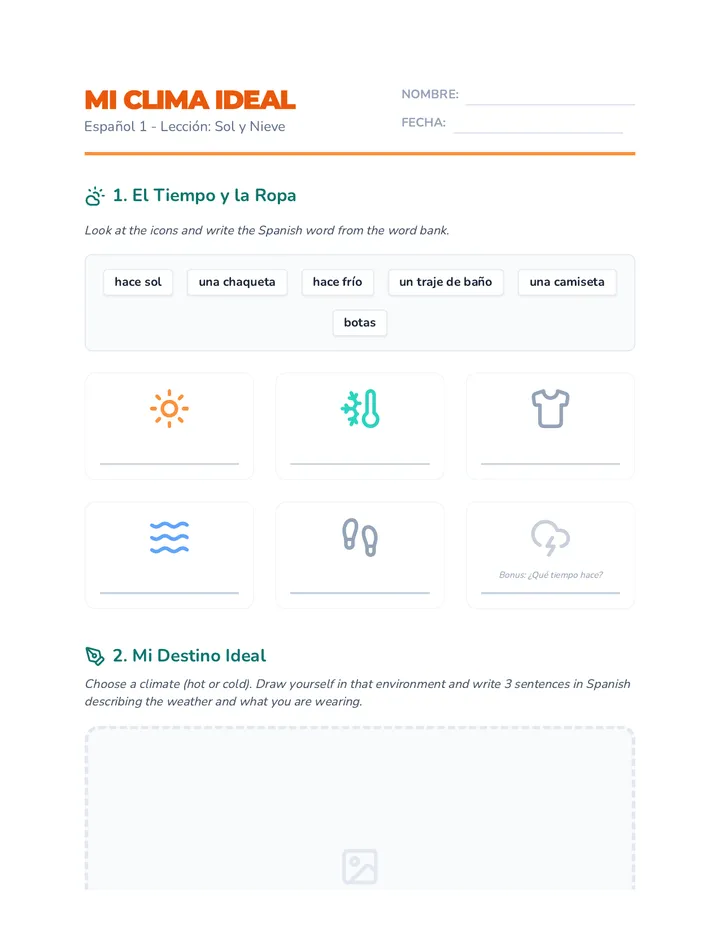
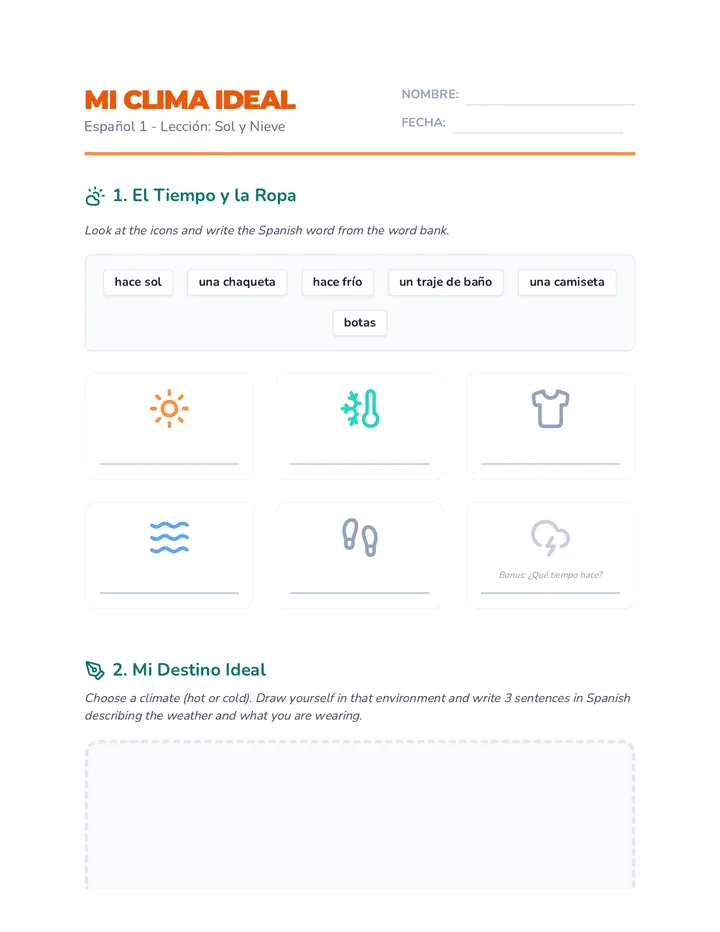
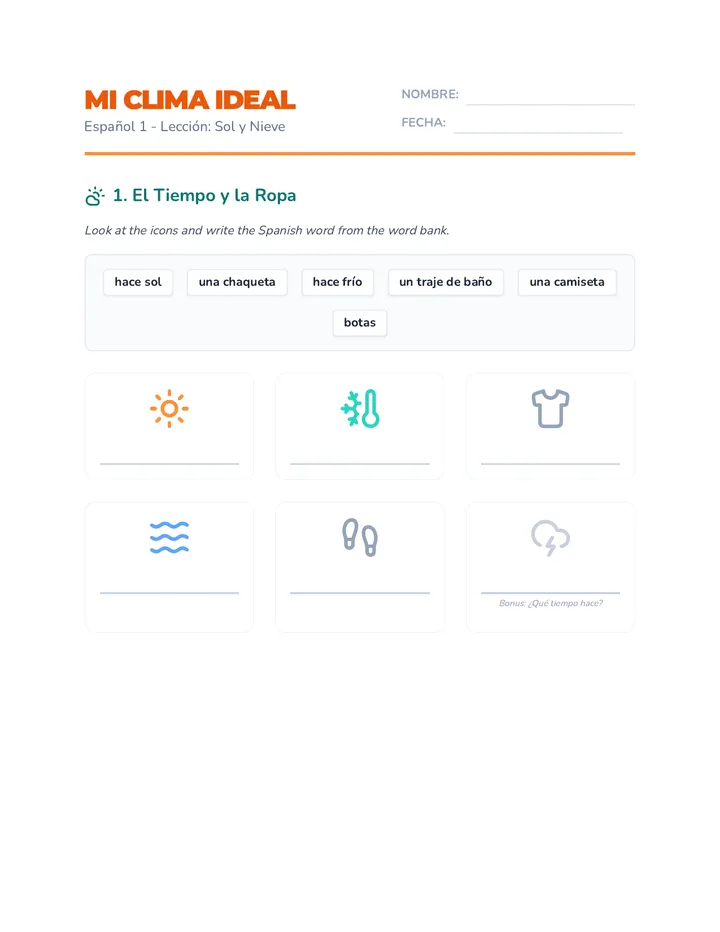
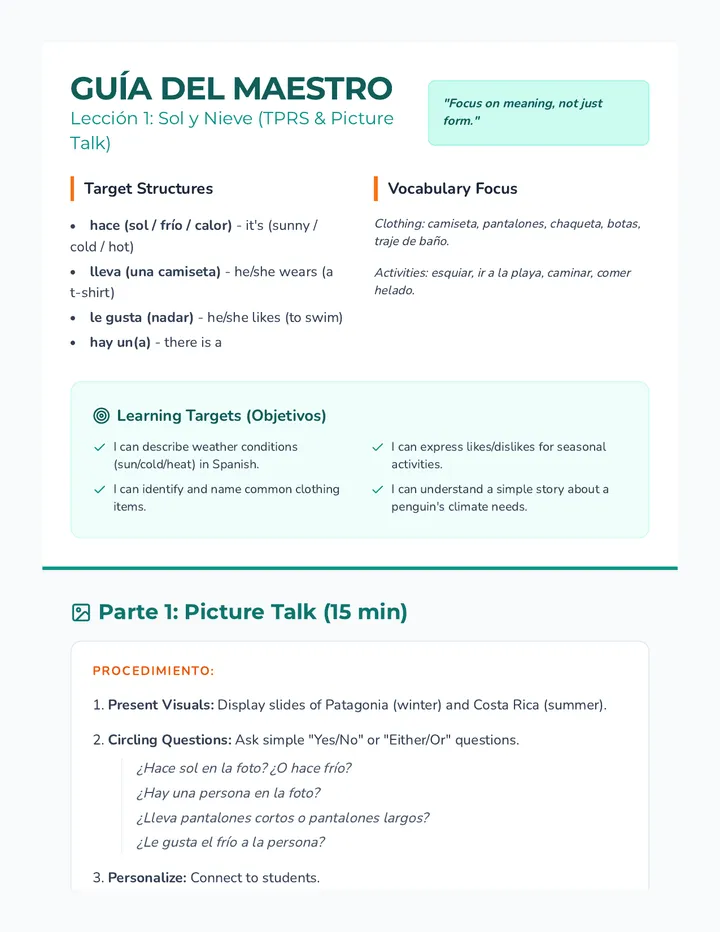
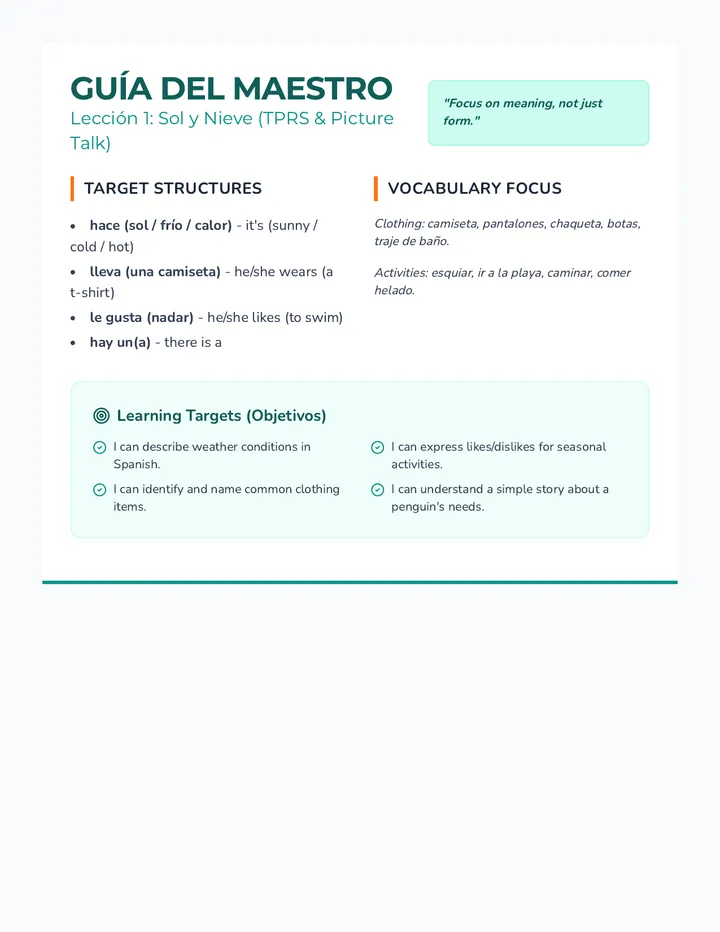
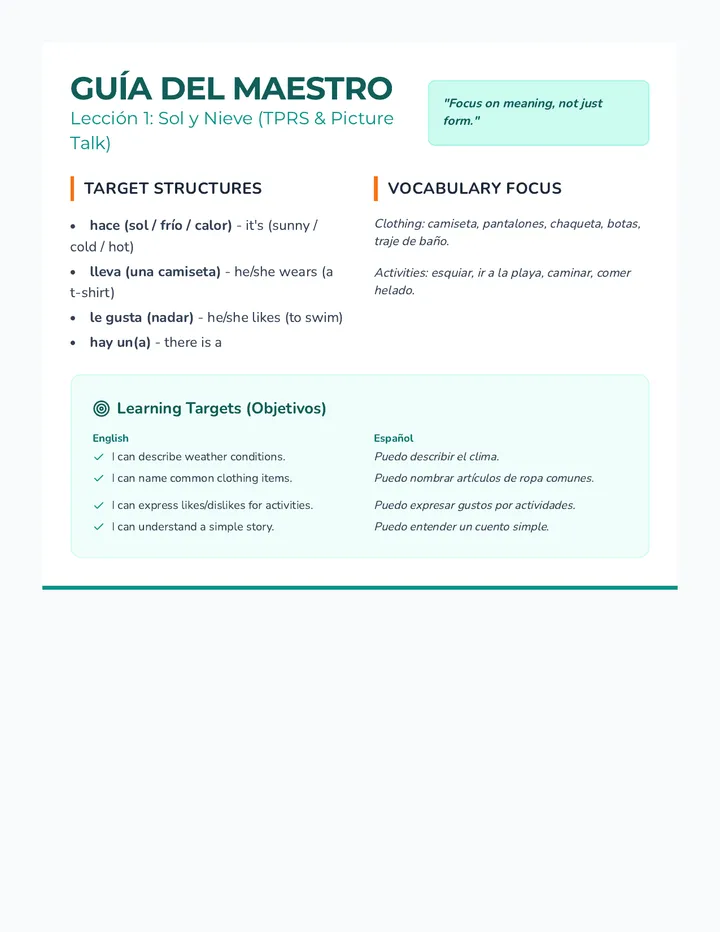
A two-part introductory Spanish sequence focusing on clothing, weather, and activities through Comprehensible Input (CI) strategies like TPRS and Picture Talk. Students explore cultural contexts and seasonal variations in the Spanish-speaking world while building basic communicative proficiency.
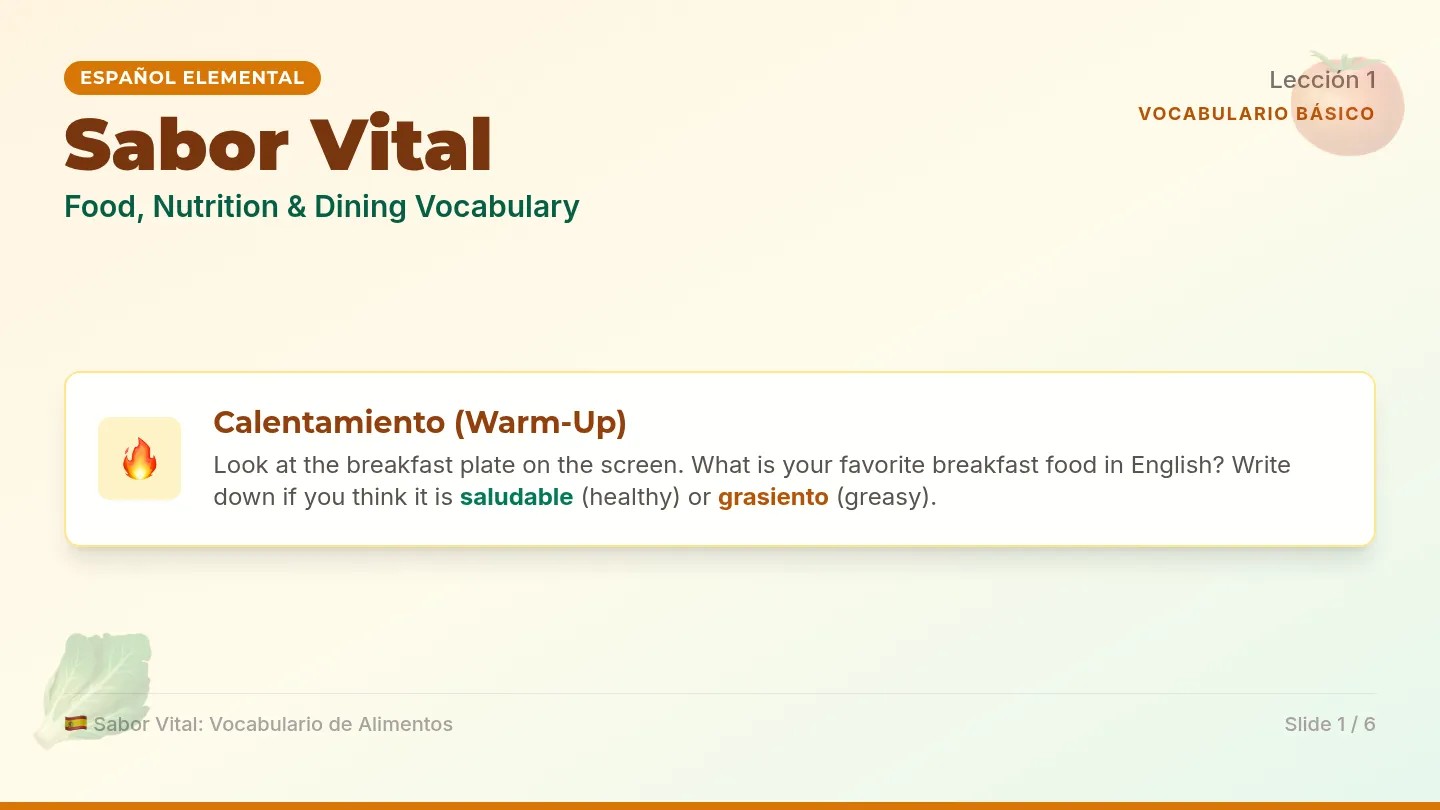
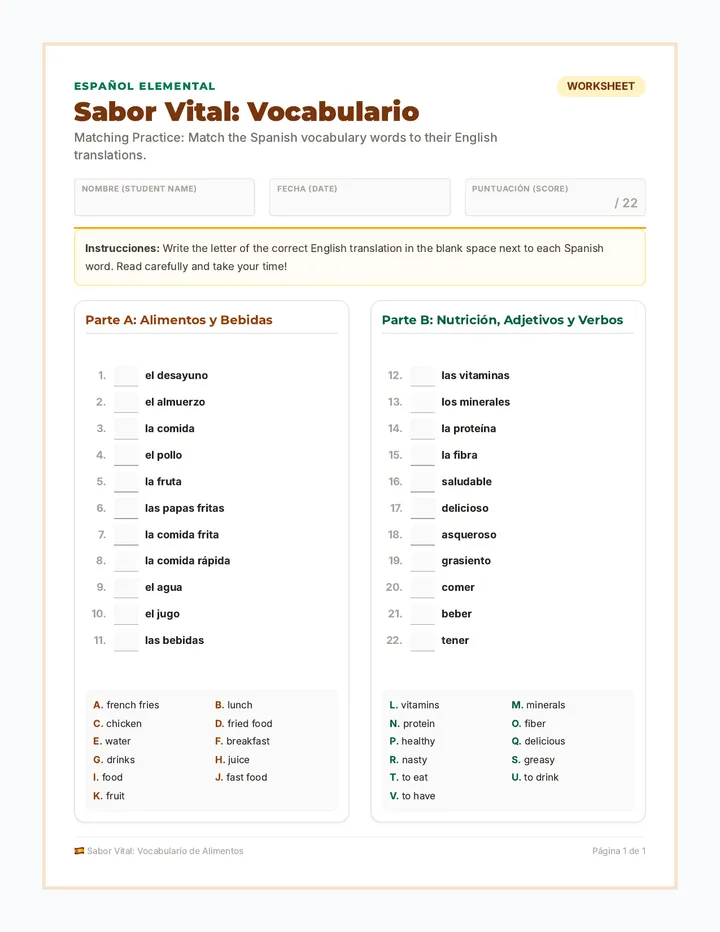
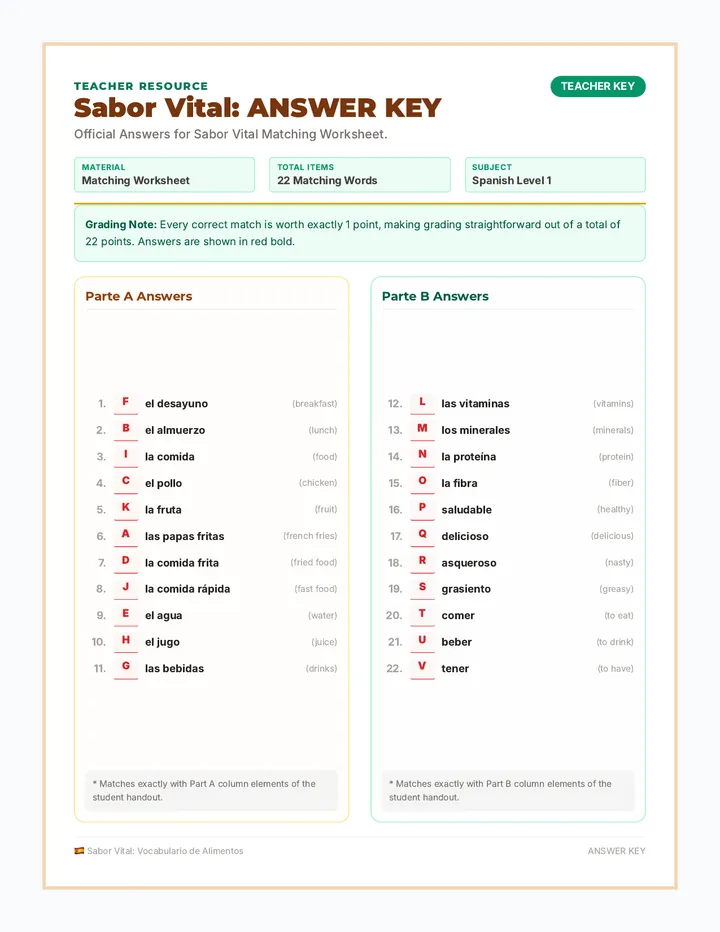
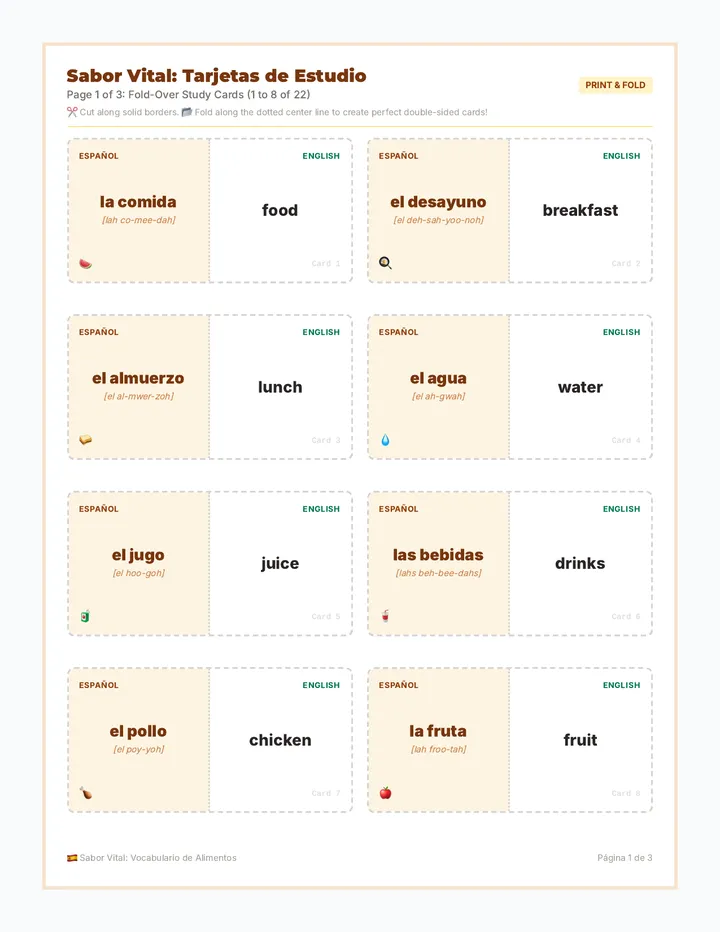
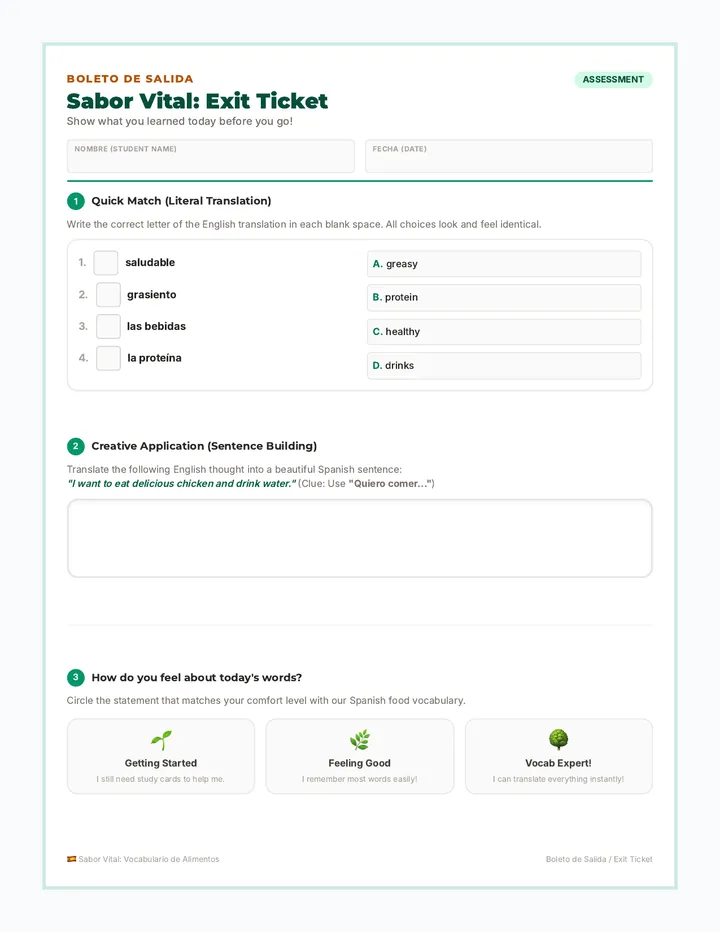
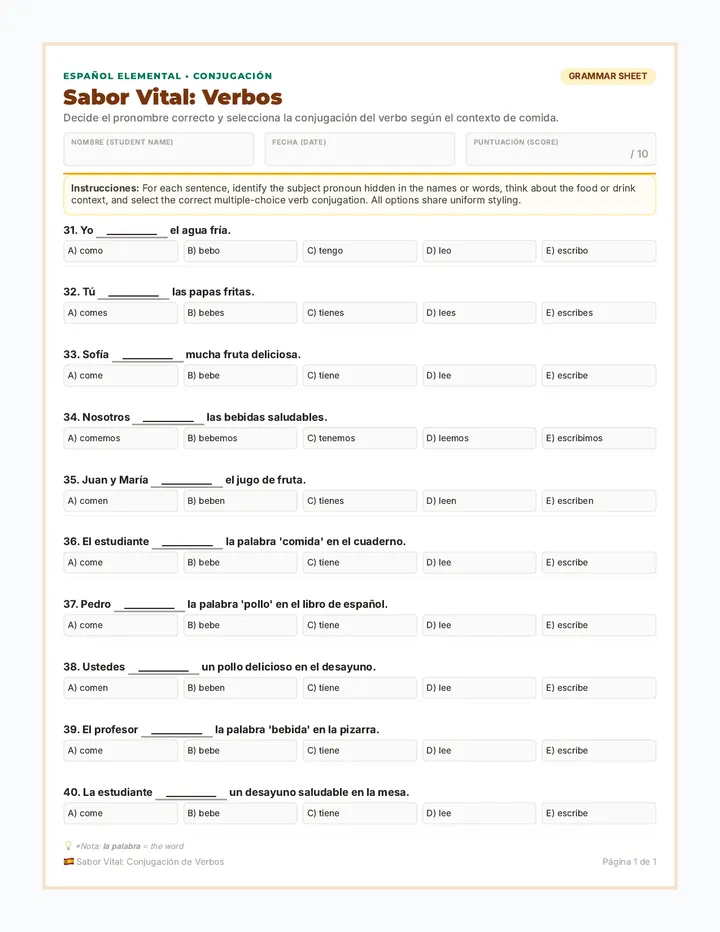
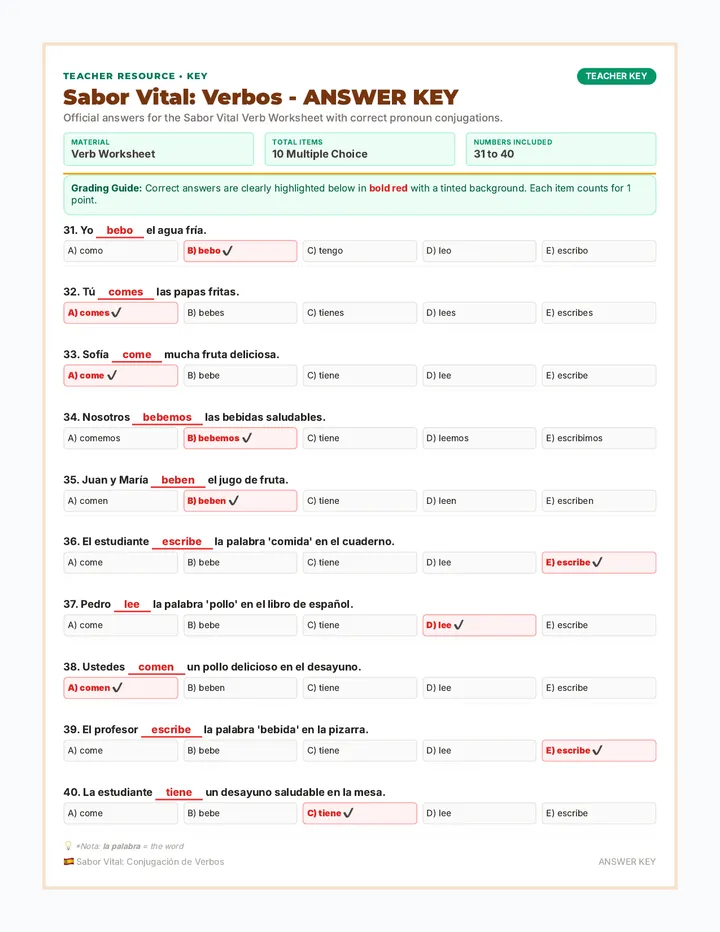
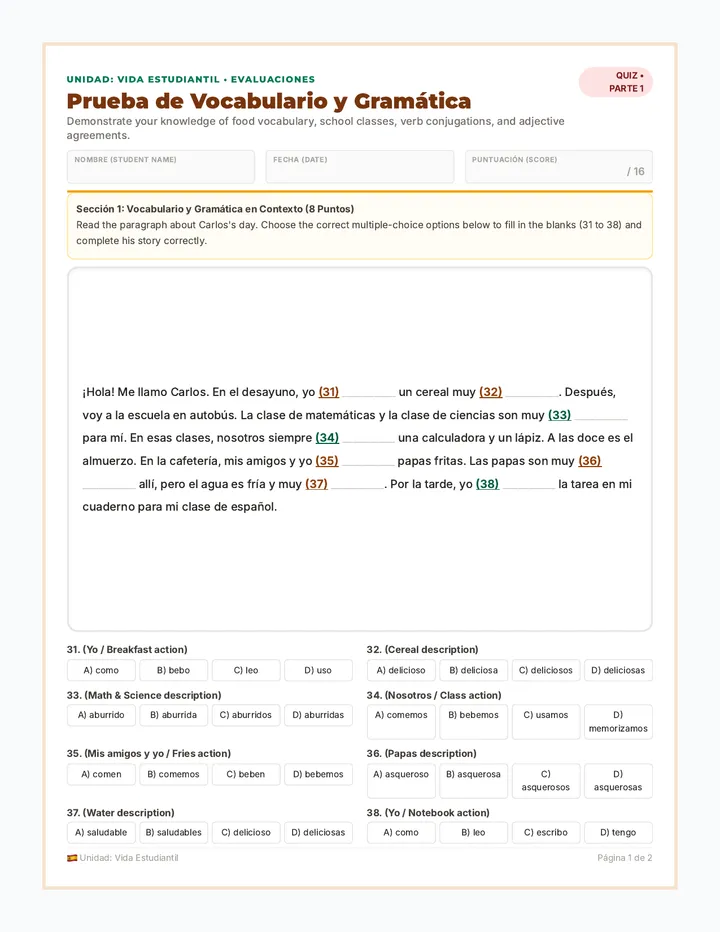
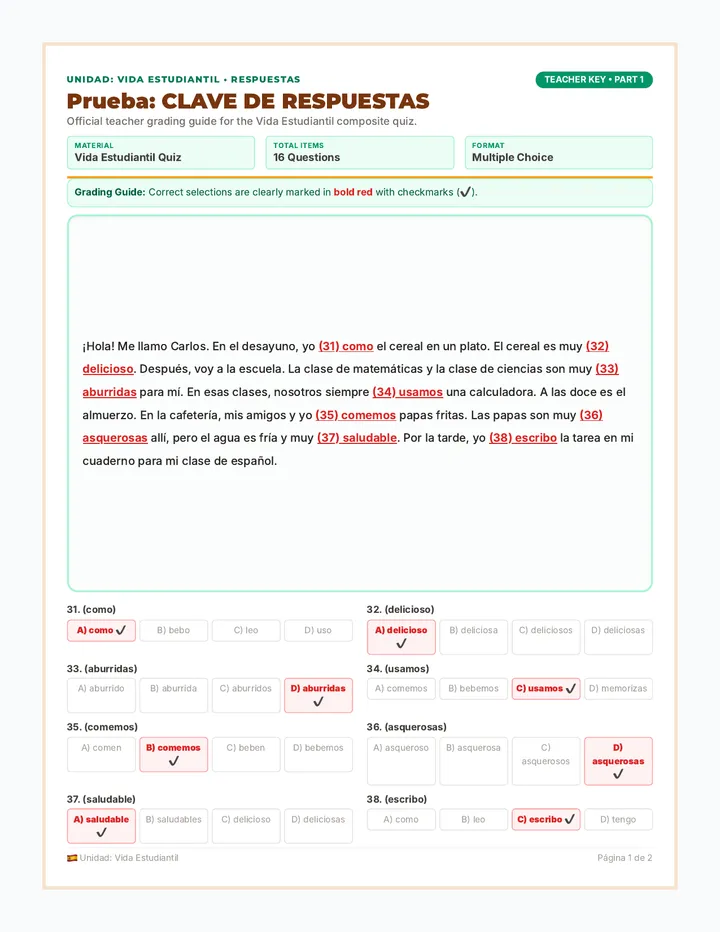
A beginner-level Spanish unit covering daily student life. It connects practical vocabulary for food and dining with descriptions of school schedules, classroom objects, and academic courses.
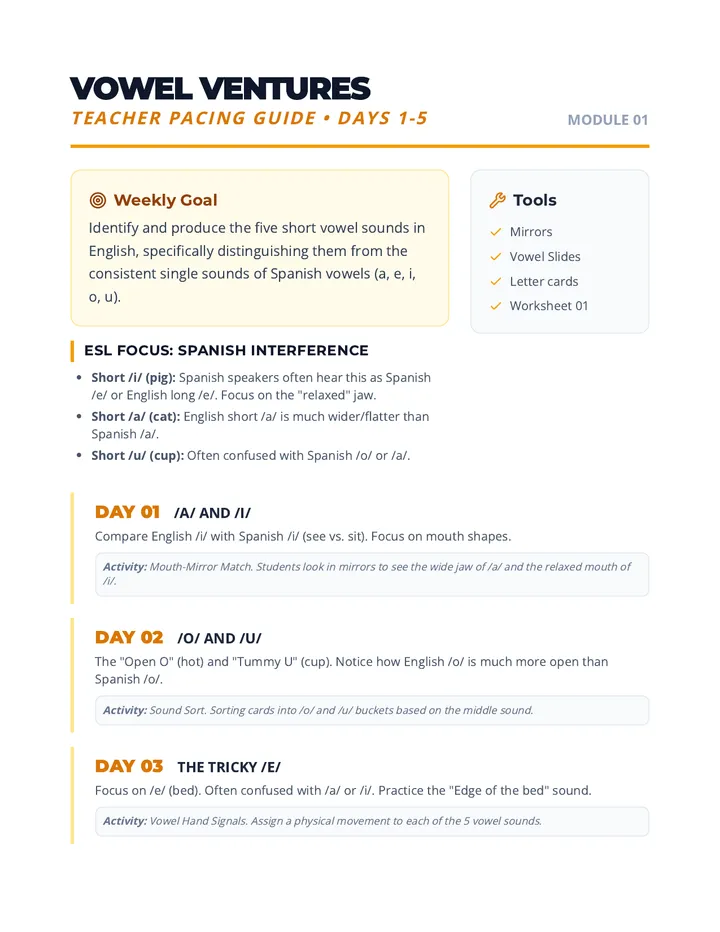
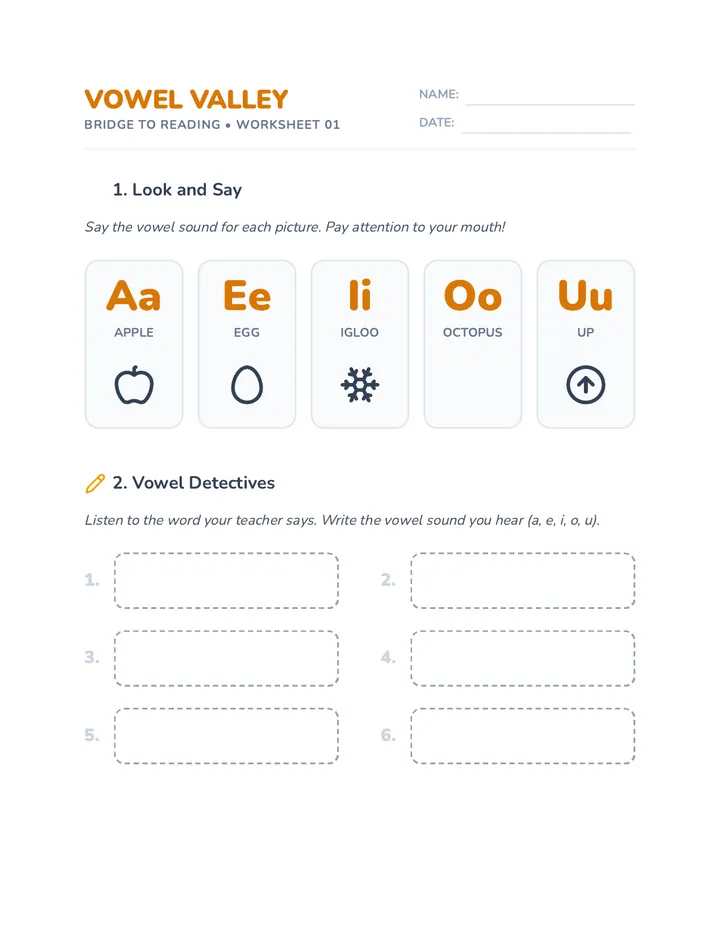
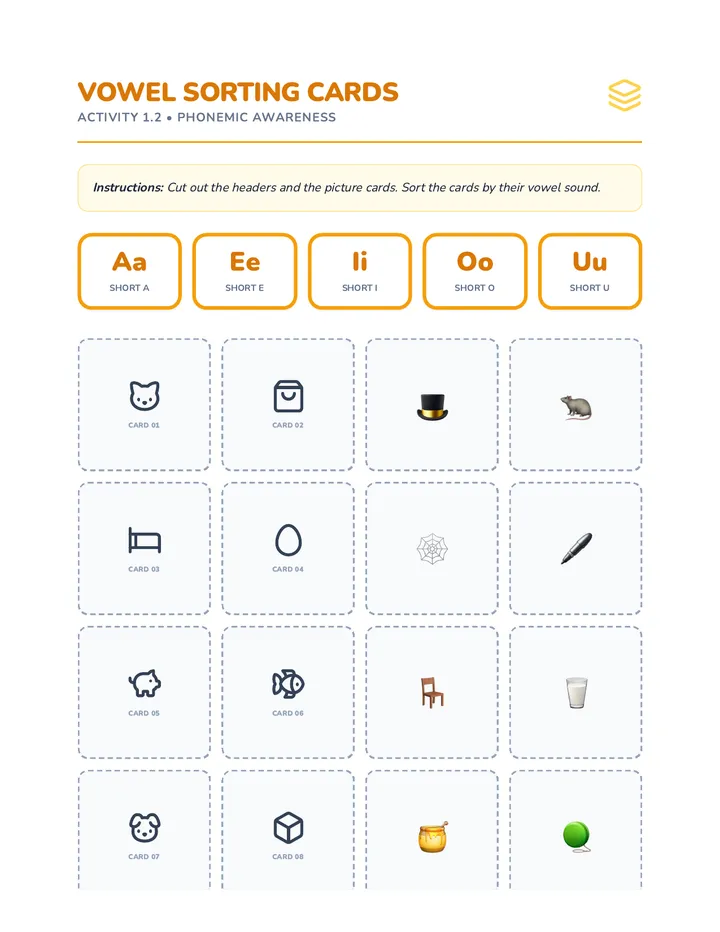
A comprehensive 30-day literacy program designed for Spanish-speaking English Learners, focusing on vowels, CVC blending, rhyming, and multisyllabic word decoding. The curriculum uses a 'construction' theme to build reading skills from the ground up, with specific support for ESL phonetic challenges.
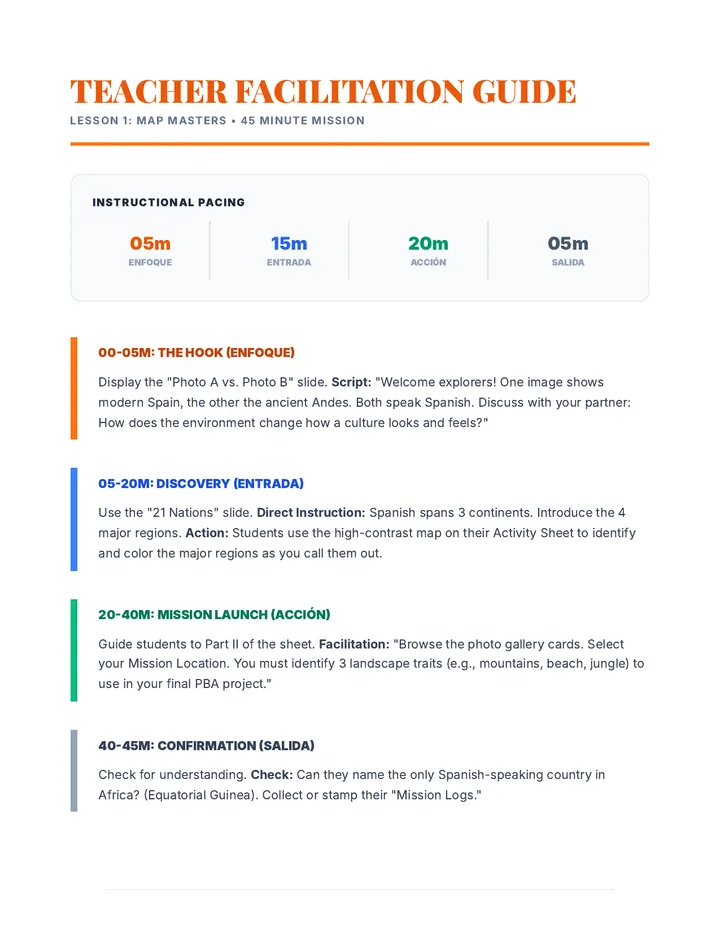
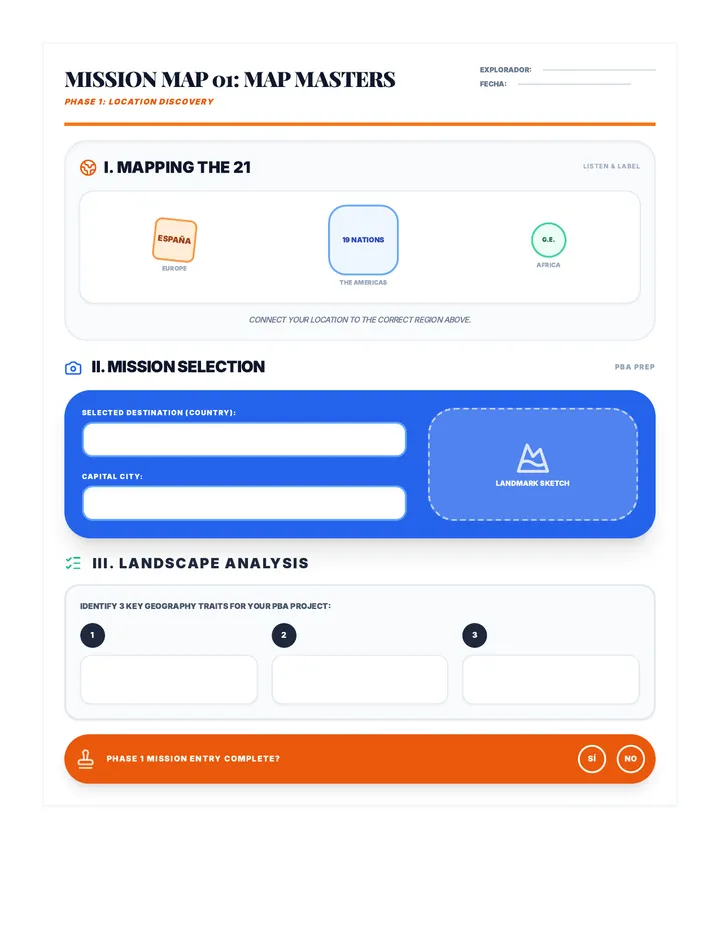
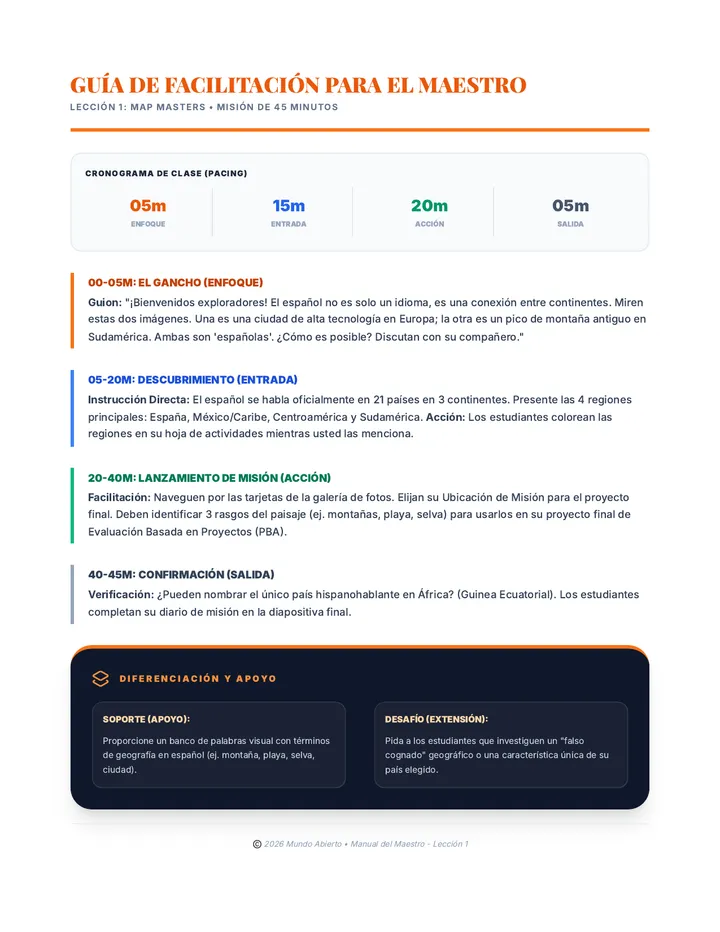
A comprehensive introductory unit for 8th-grade Spanish, focusing on global geography, essential communication, and rich cultural traditions through a 'Cultural Passport' lens.
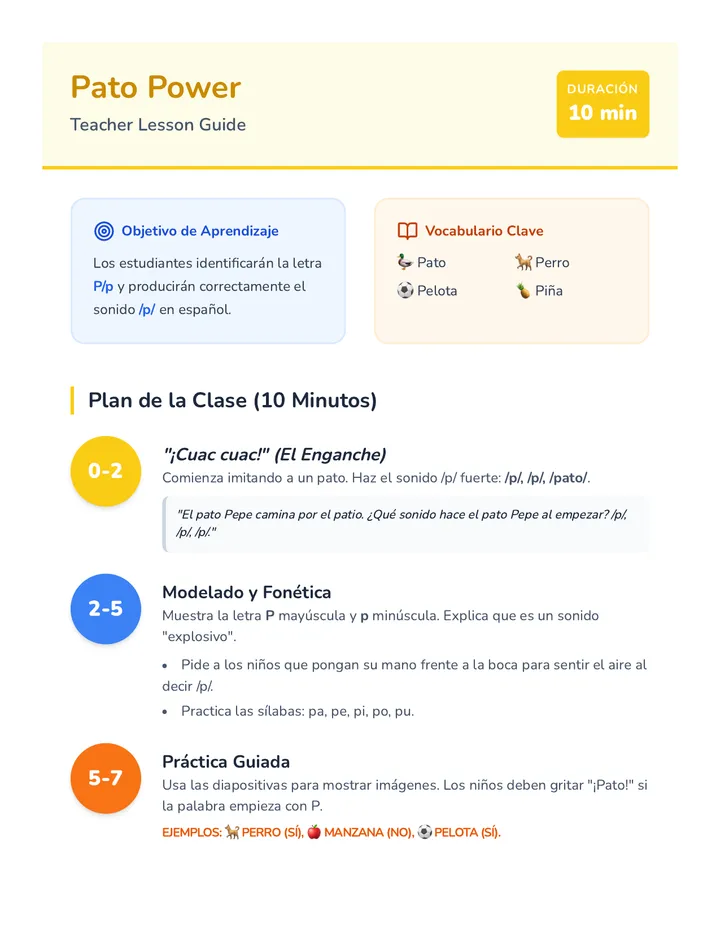
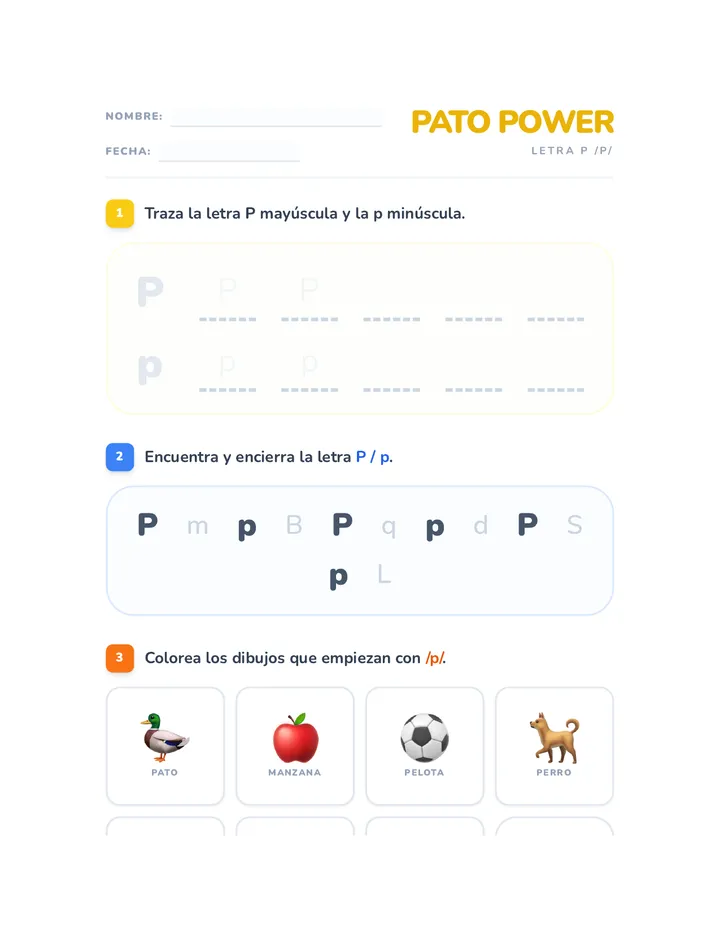
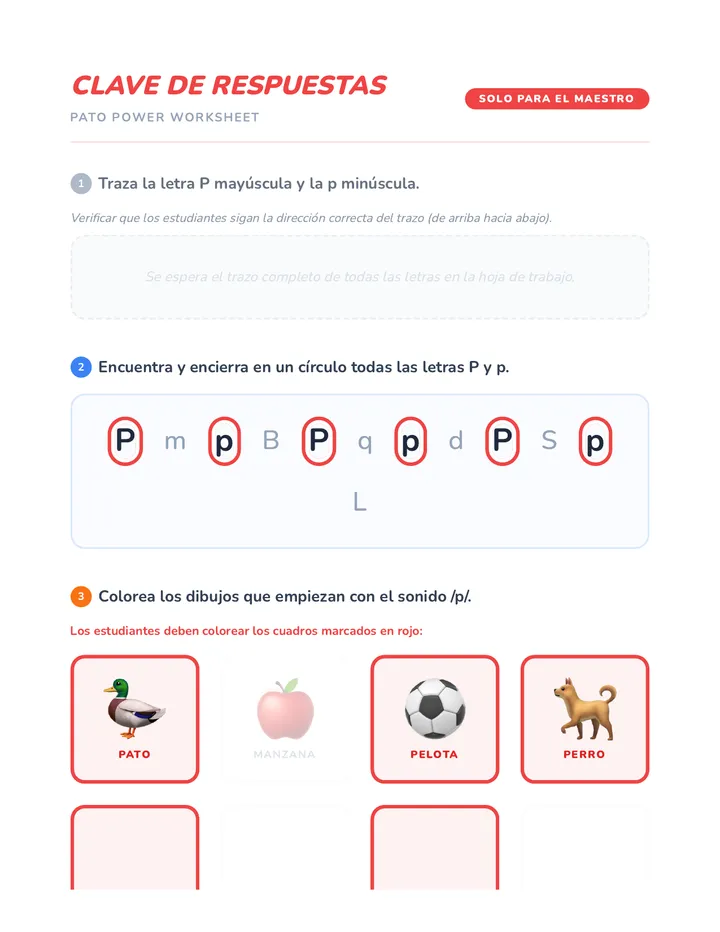
A series of fast-paced 10-minute Spanish phonics mini-lessons for kindergarteners, focusing on letter sounds, blending, and initial syllables through engaging jungle and animal themes.
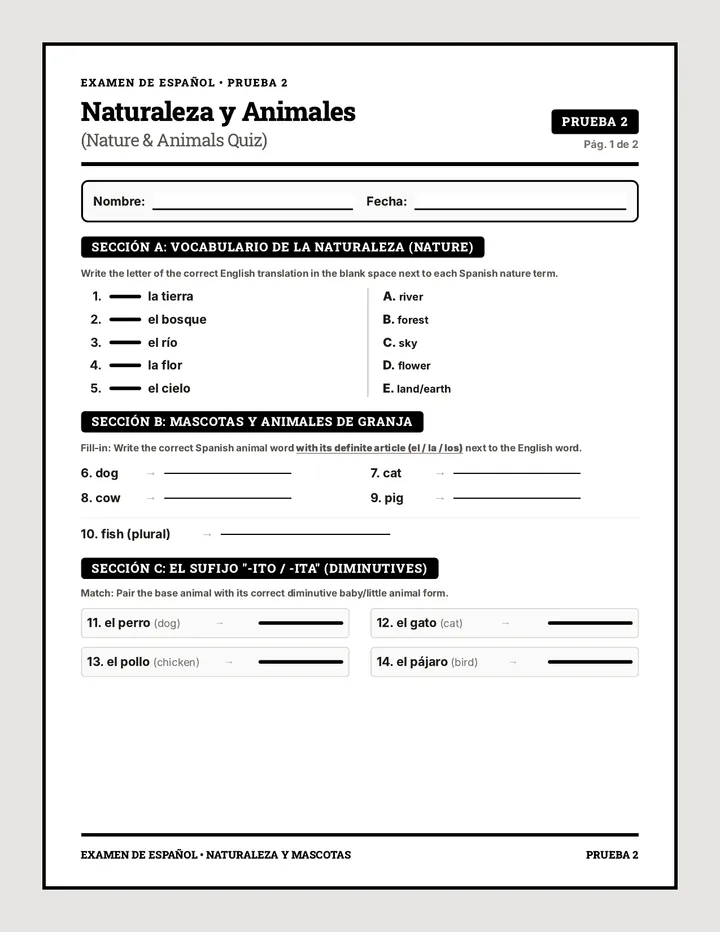
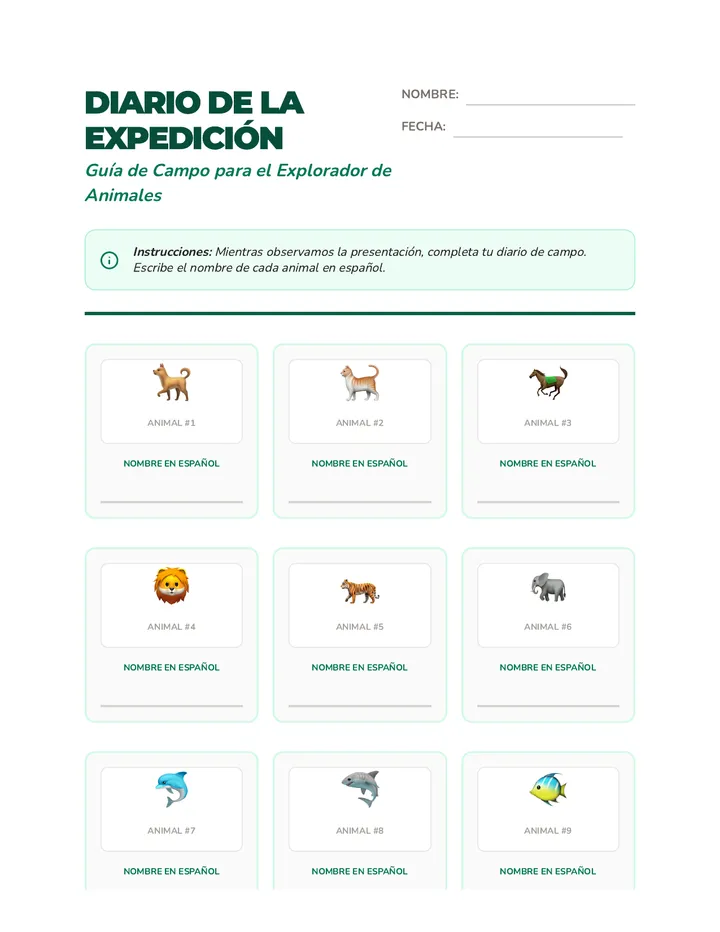
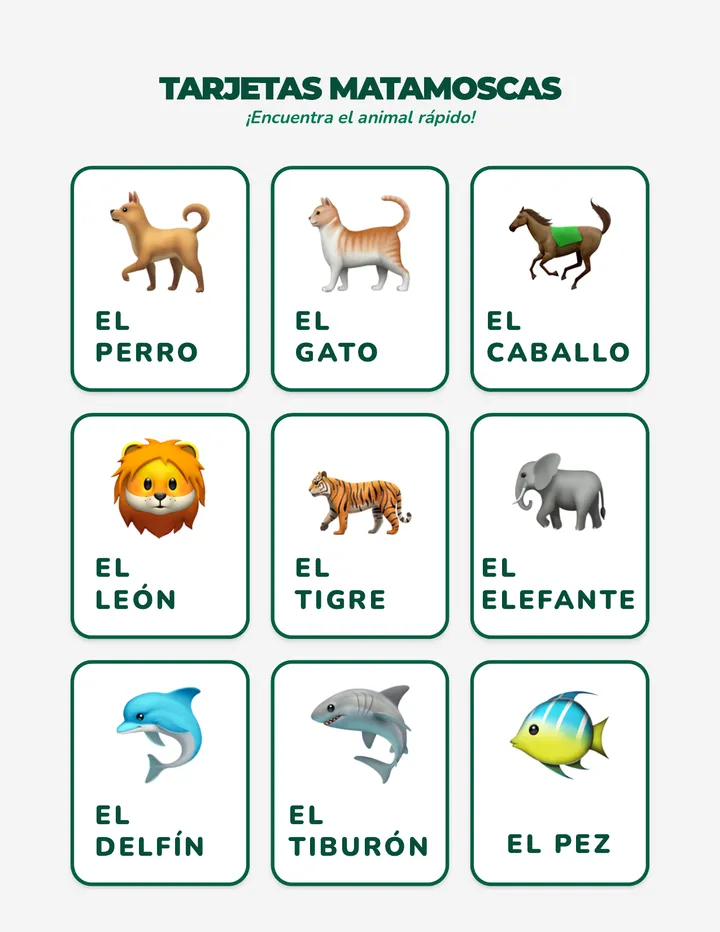
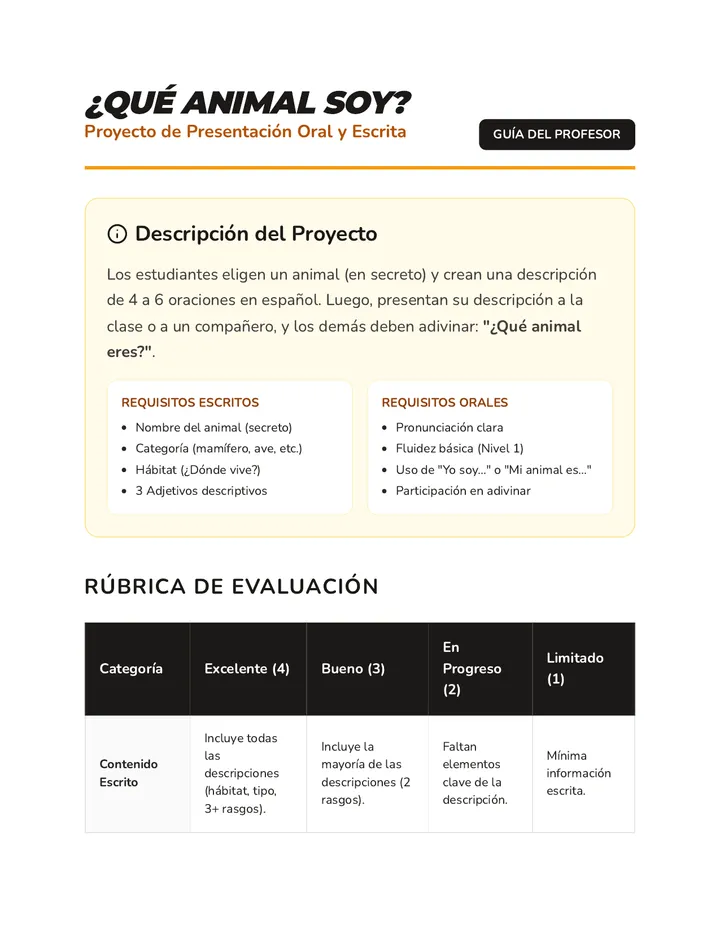
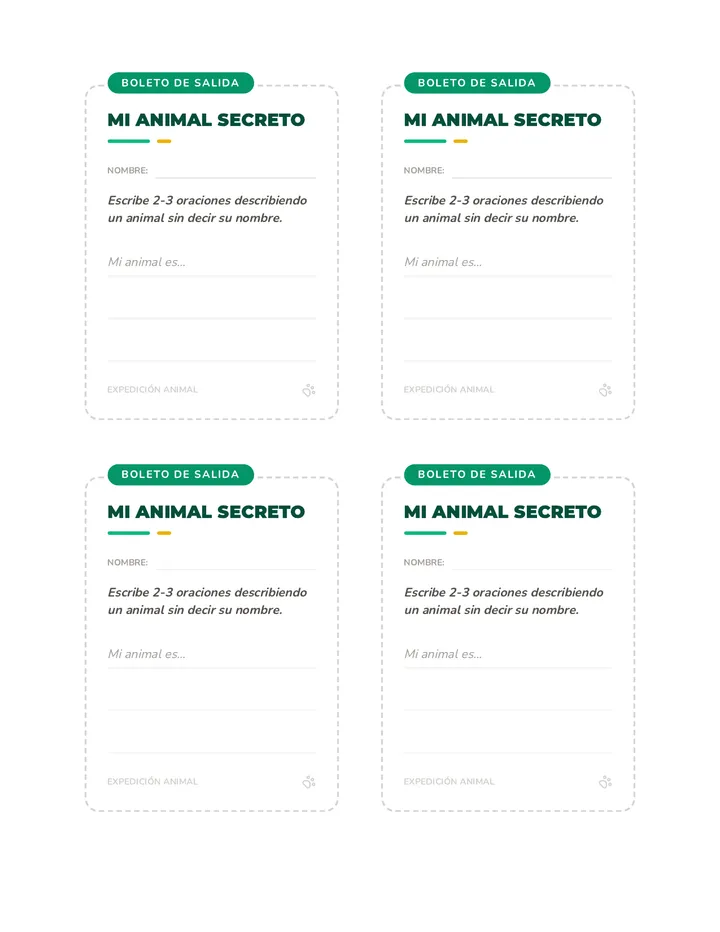
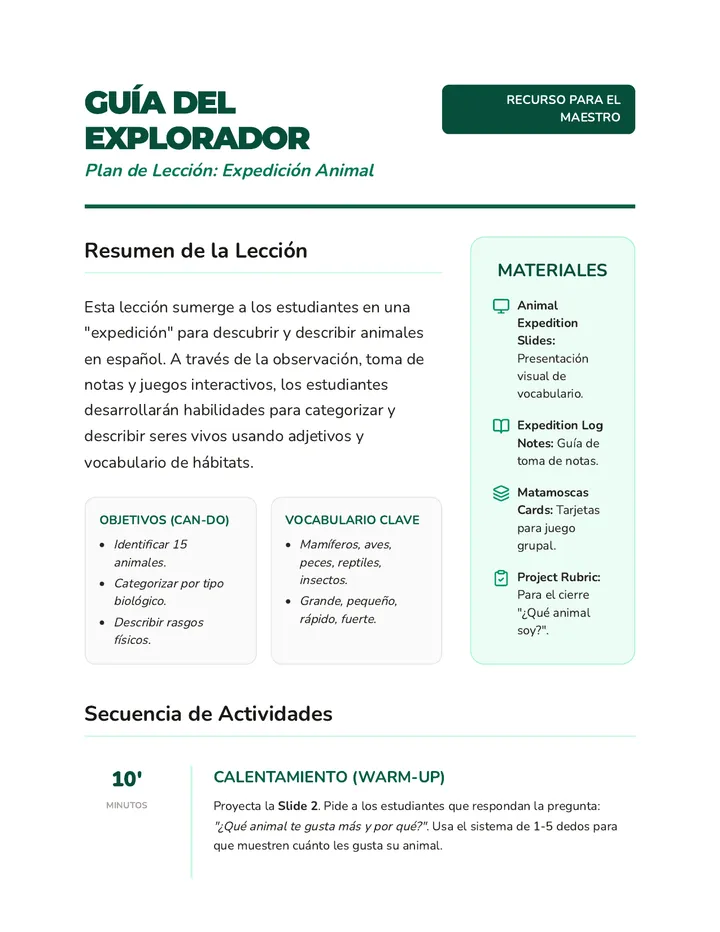
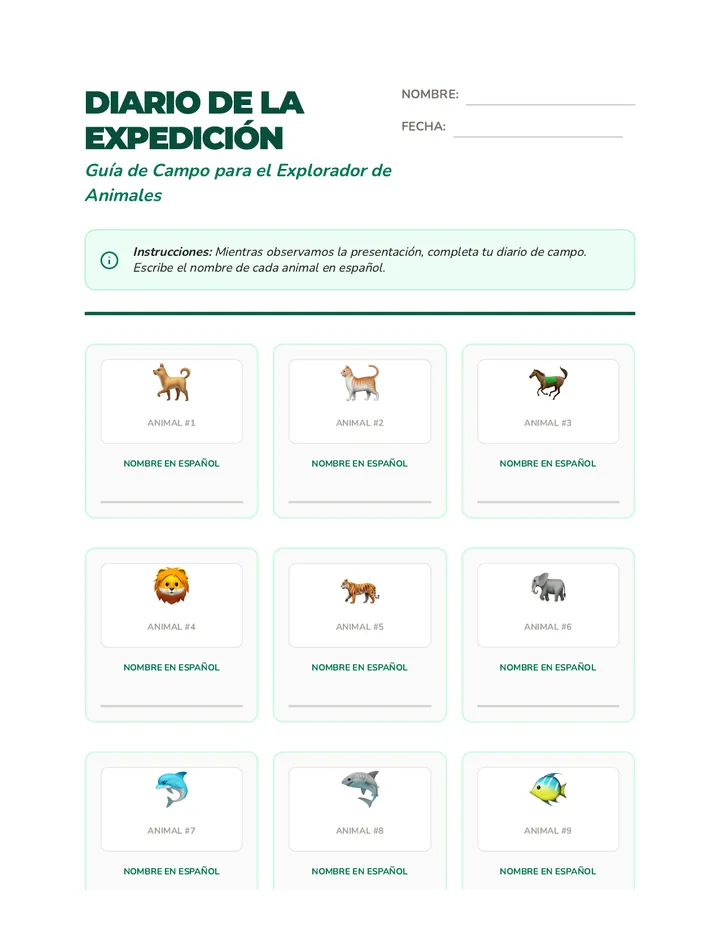
A unit covering animal vocabulary, descriptions, and likes/dislikes in Spanish, designed for Level 1 learners to build foundational communication skills about the natural world.
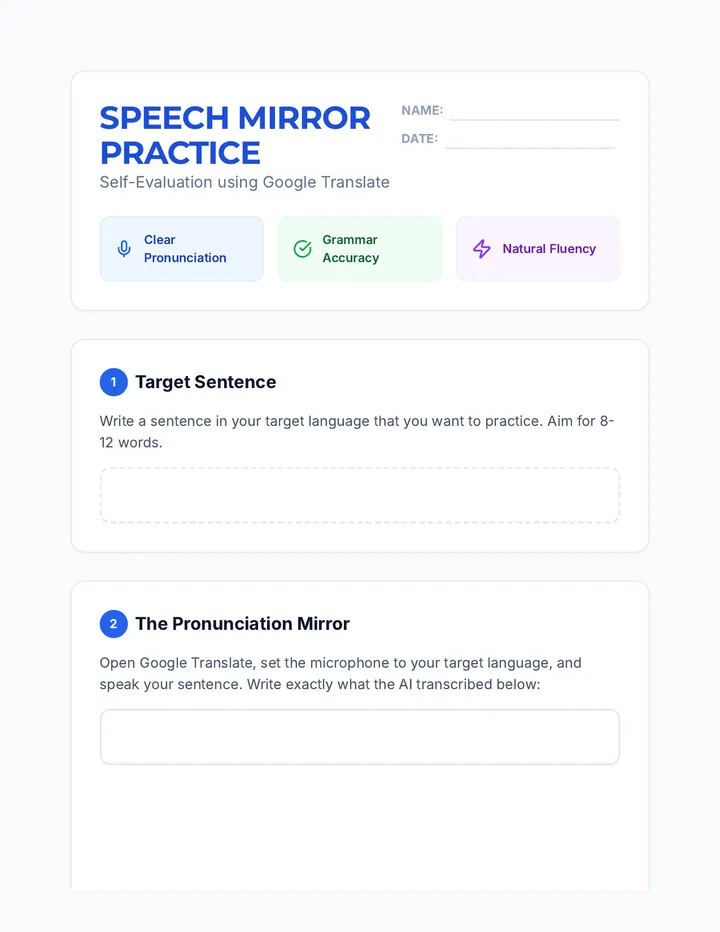
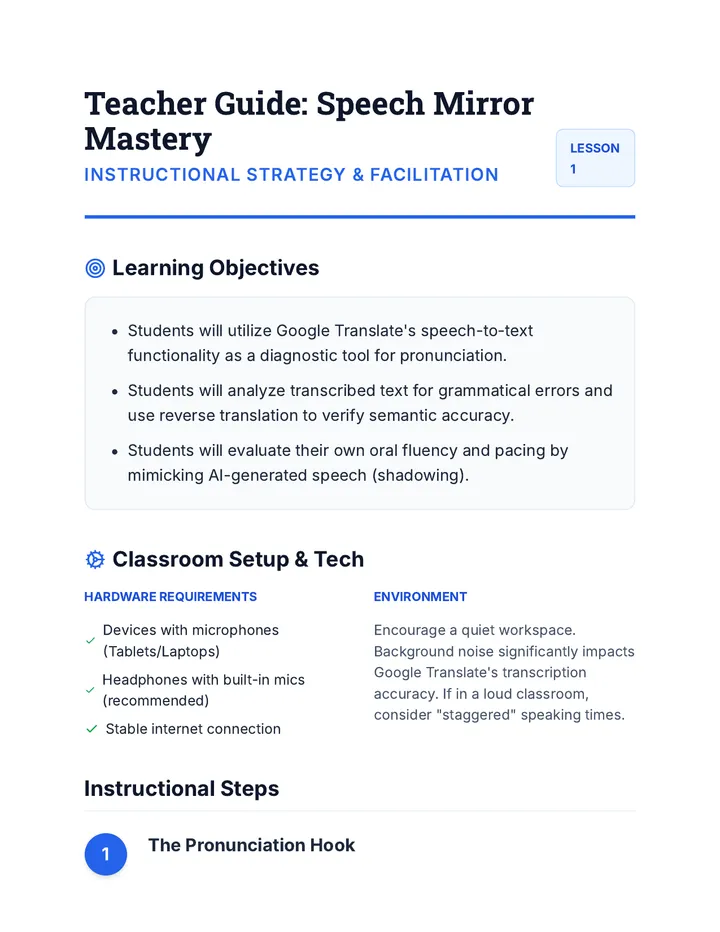
A sequence focused on leveraging digital translation tools for language self-assessment and speech improvement. Students learn to use Google Translate not just for translation, but as a 'mirror' for their own pronunciation, grammar, and fluency.
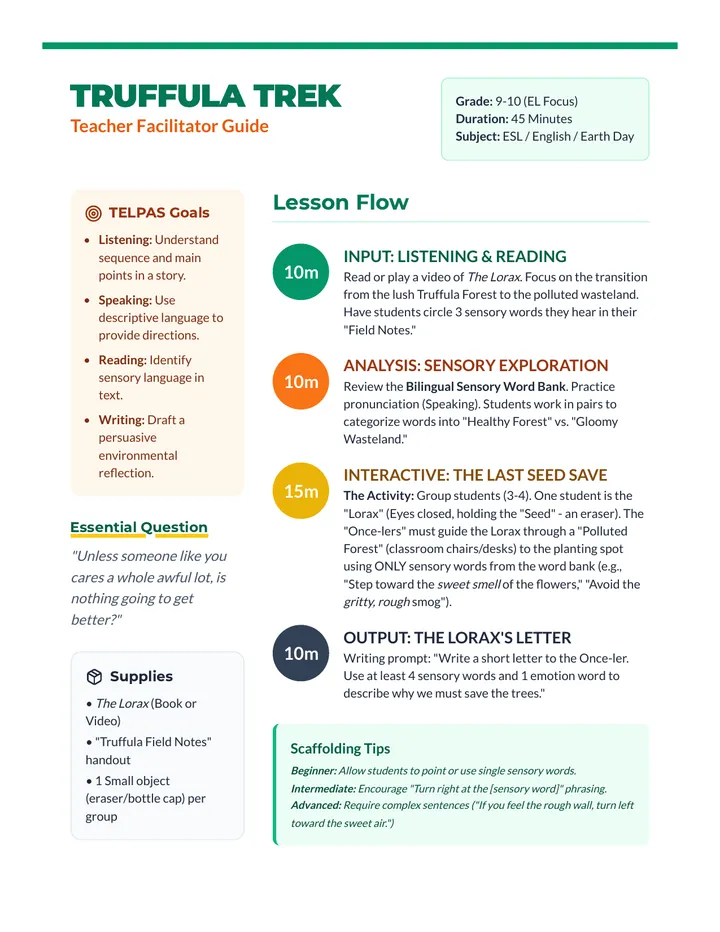
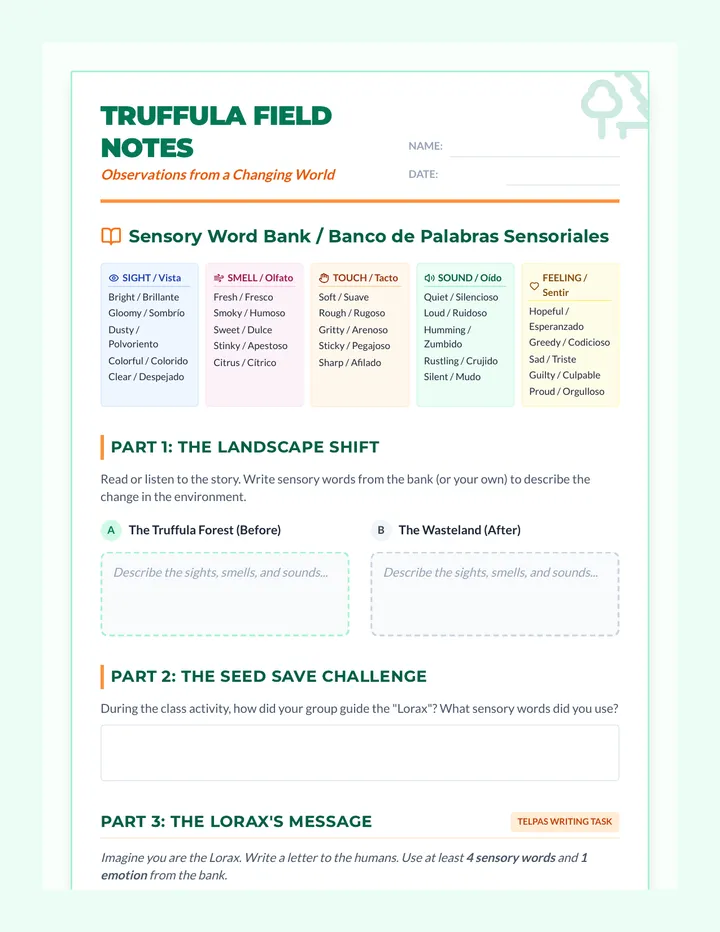
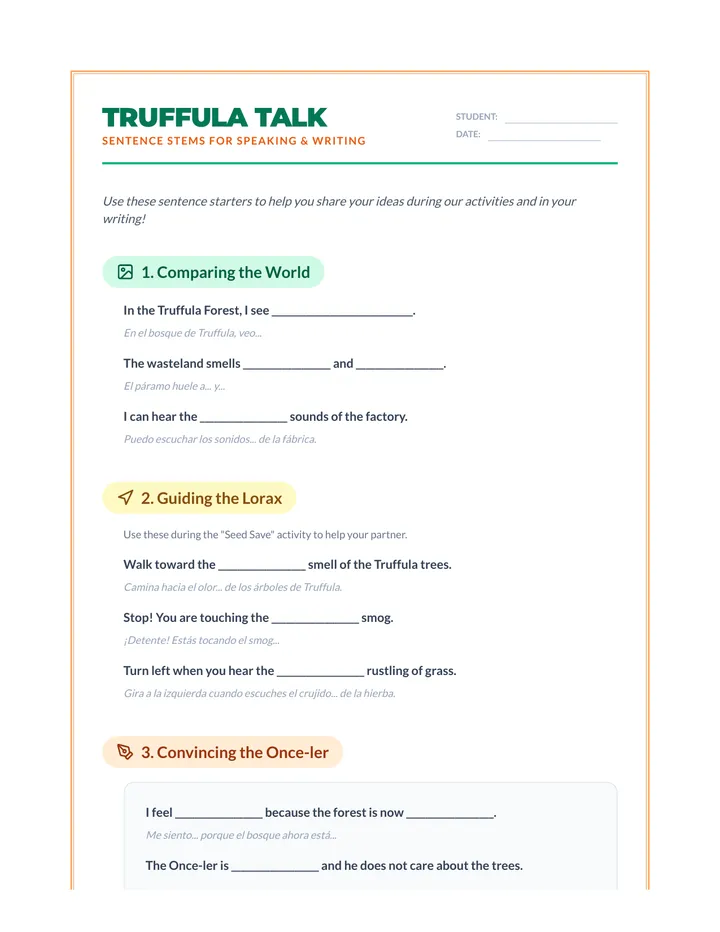
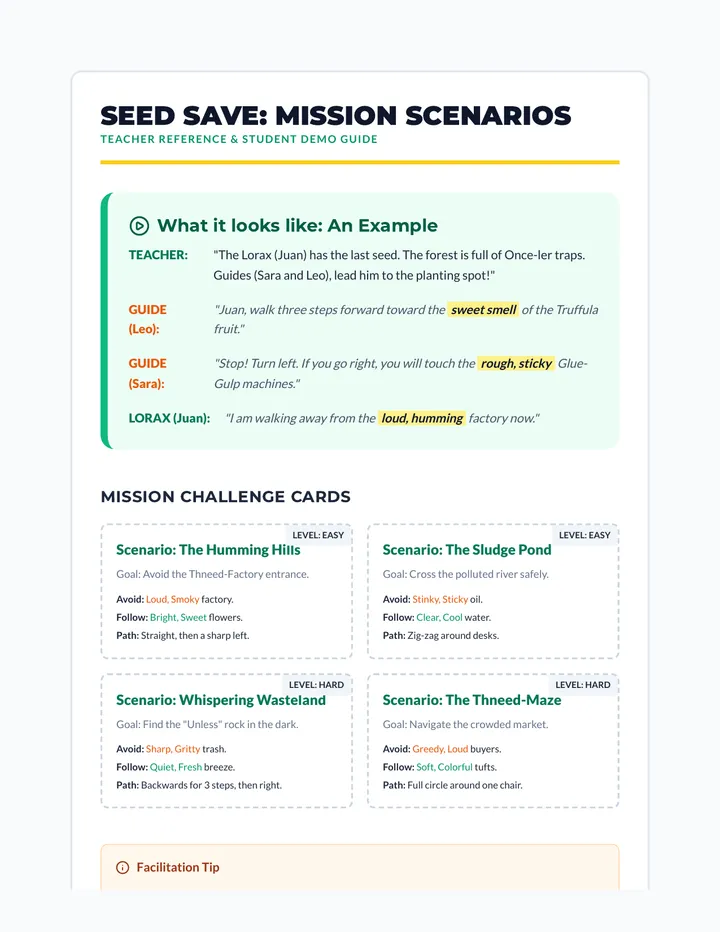
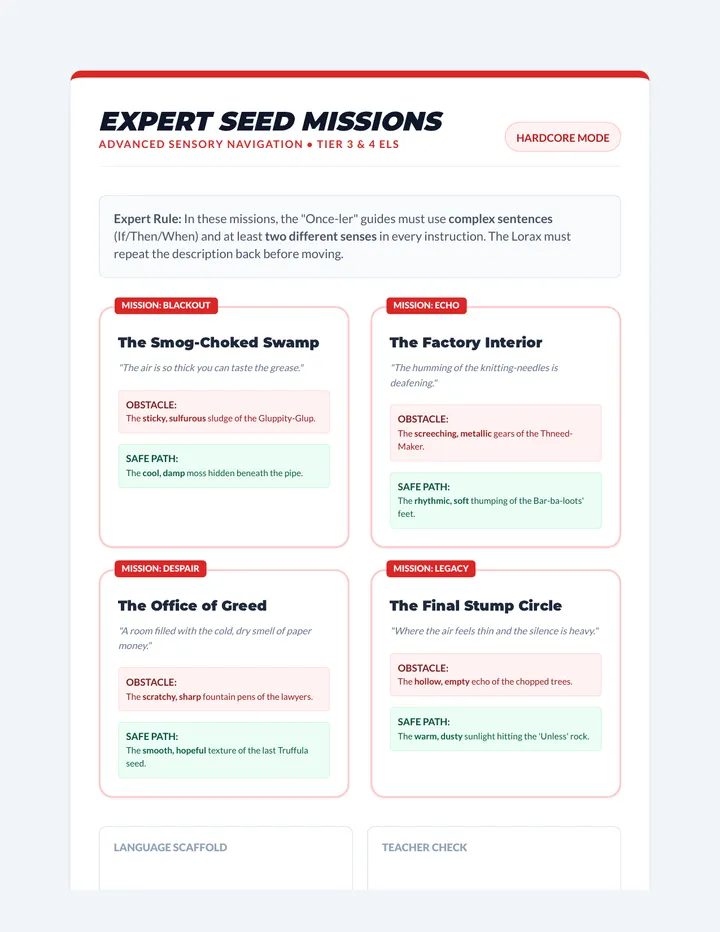
A comprehensive Earth Day lesson for 9th-10th grade ELs based on The Lorax, focusing on TELPAS domains: listening, speaking, reading, and writing through sensory language.
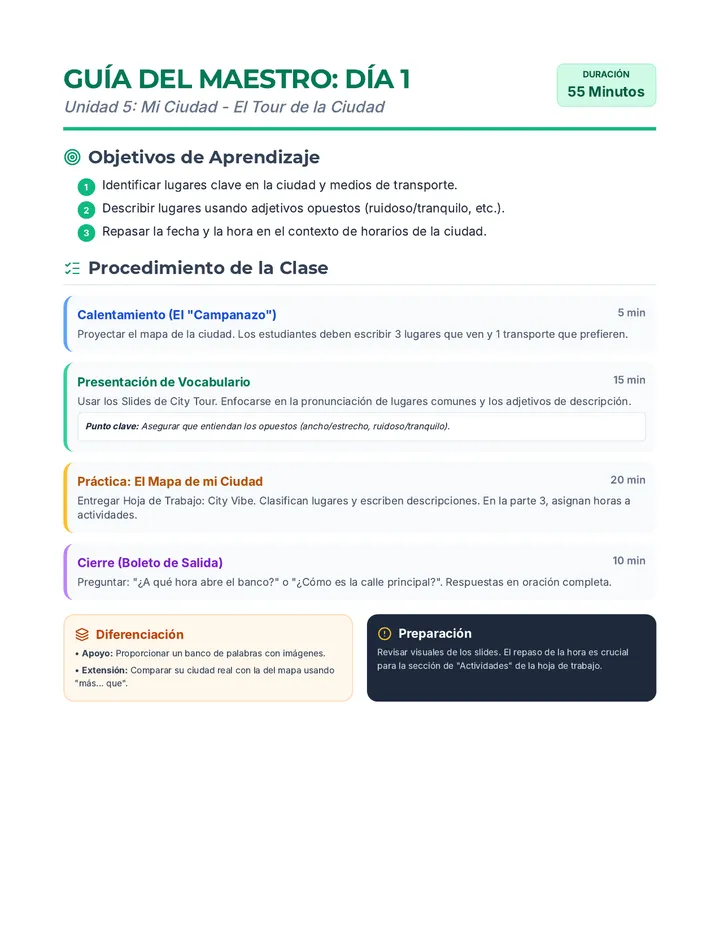
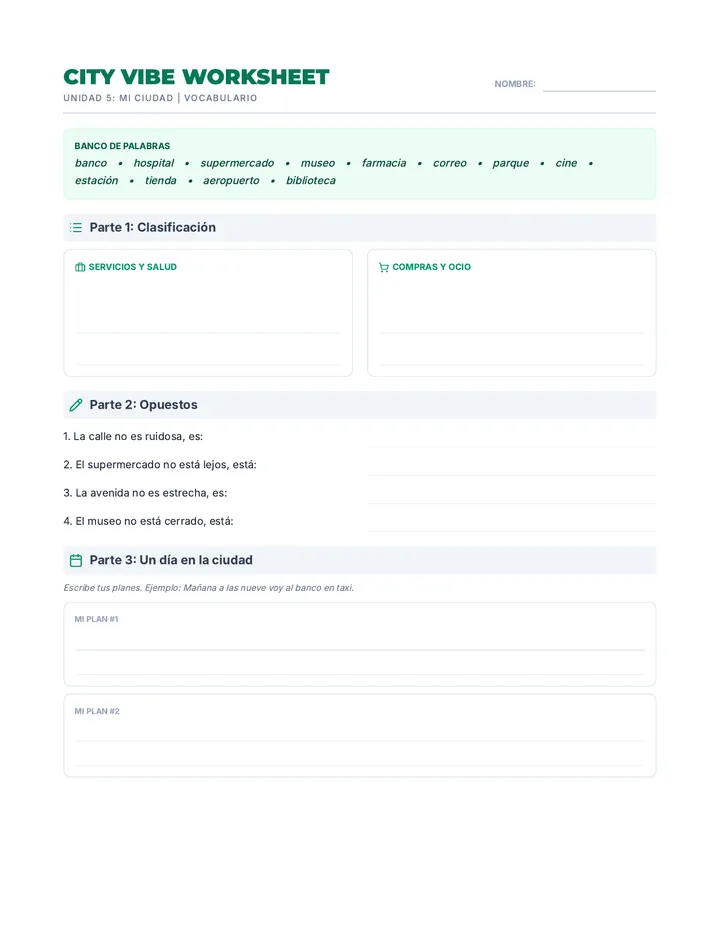
A comprehensive 3-day review sequence for Spanish 1 students focusing on city vocabulary, directions, and describing urban environments to prepare for Unit 5 summative assessments.
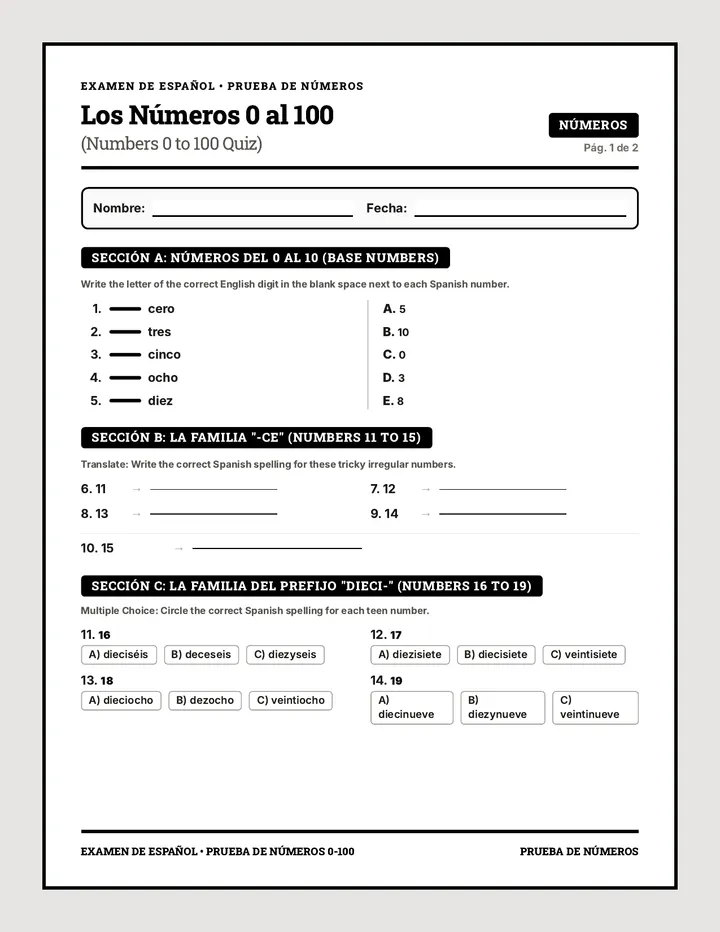
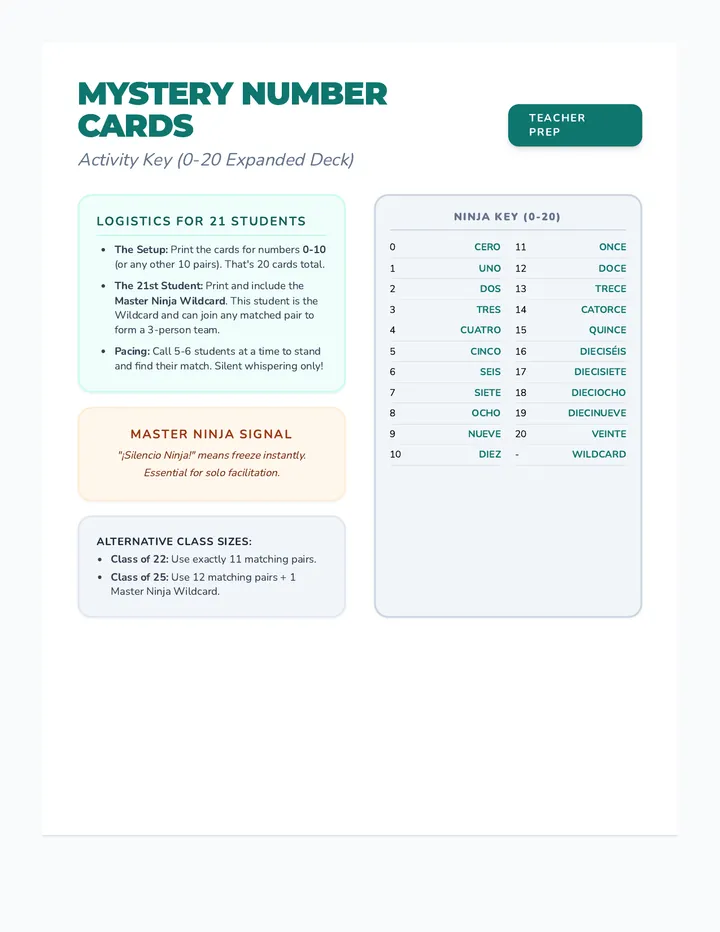
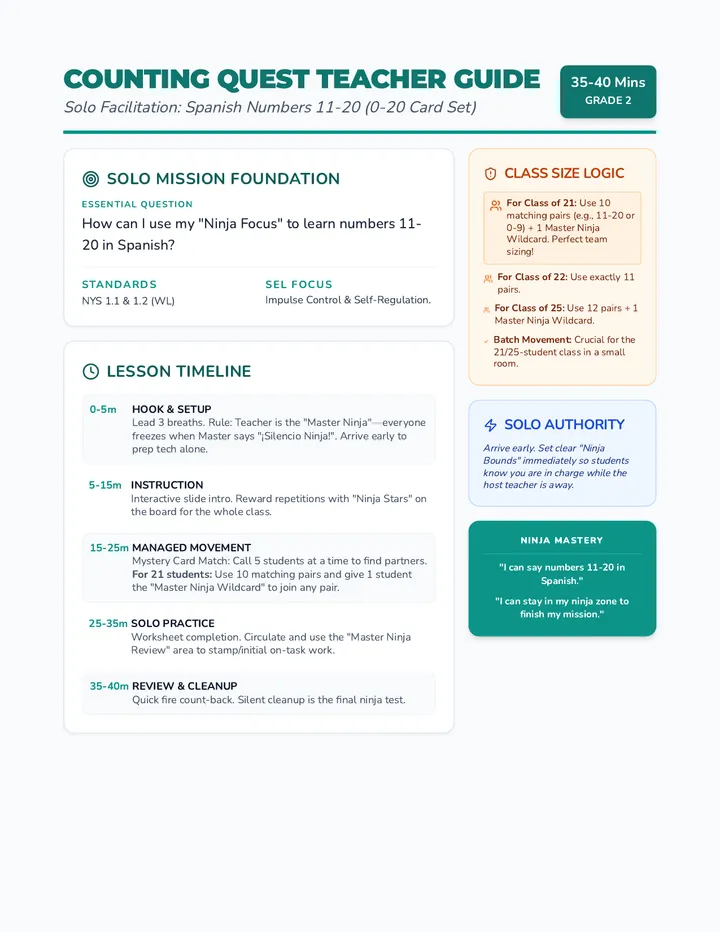
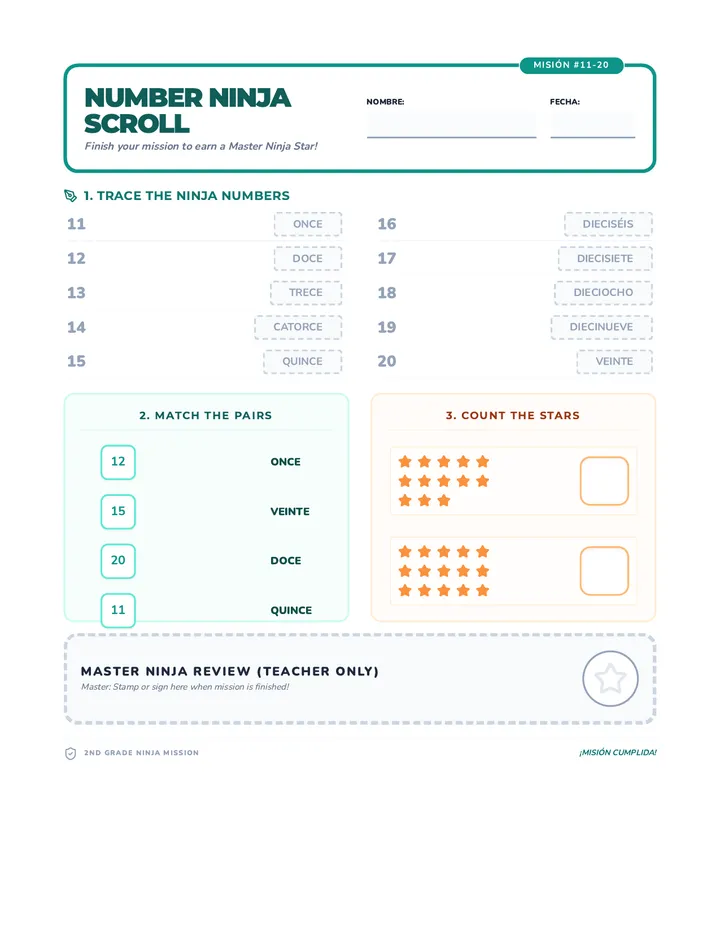
A structured Spanish introductory series focusing on numbers 11-20 through a "Number Ninja" theme, designed to support self-regulation and focus in small classrooms.
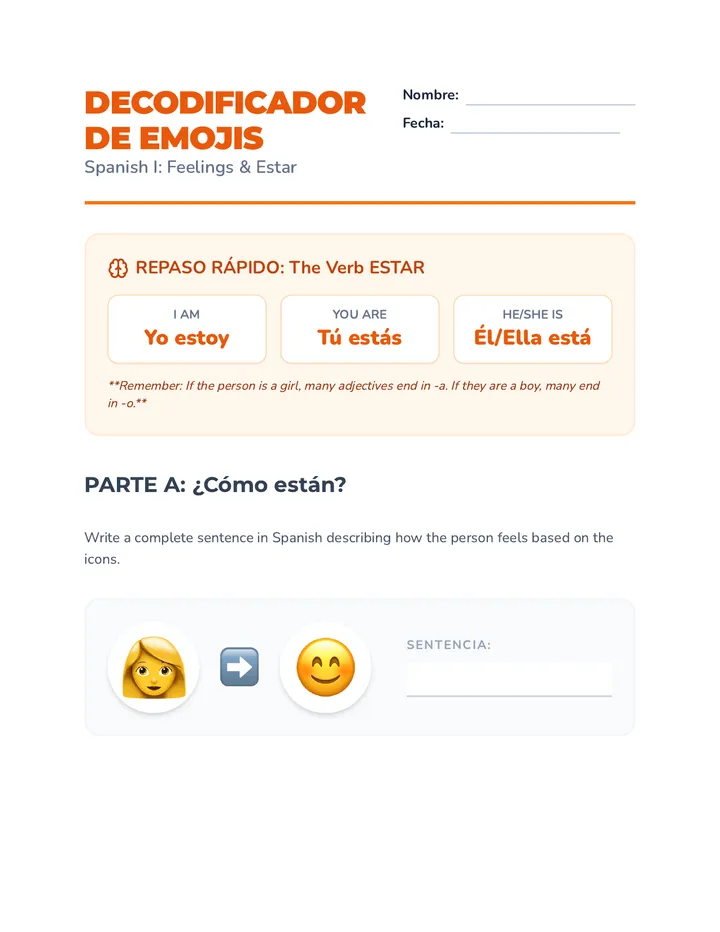
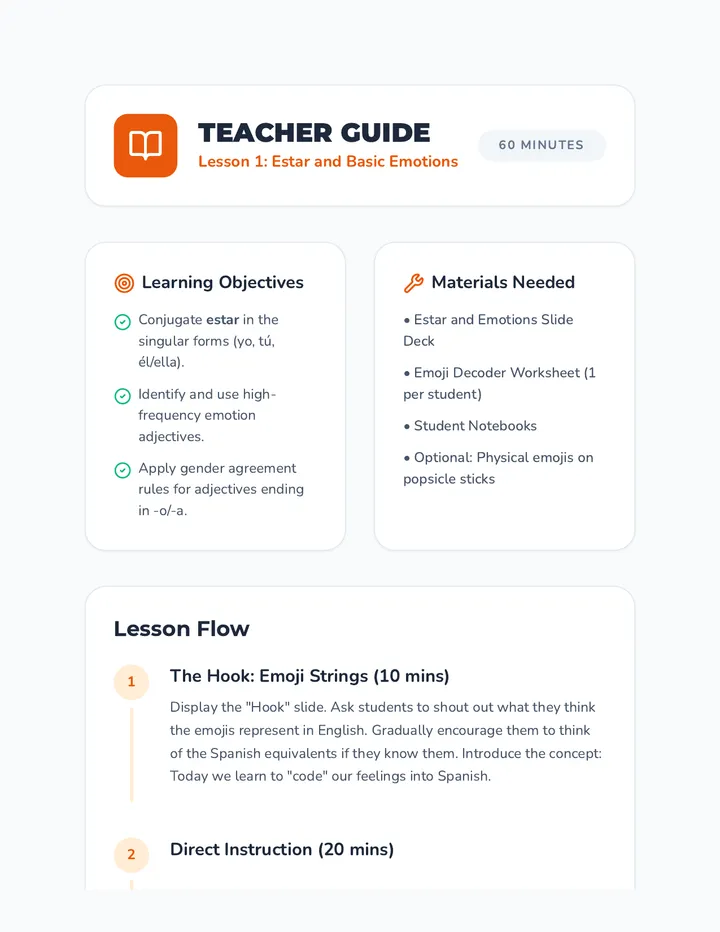
A comprehensive unit for beginner Spanish students to master the verb 'estar' and 'tener' idioms for expressing emotions, physical states, and needs. Through interactive games, role-plays, and data collection, students learn to articulate their internal feelings and conduct wellness checks on others.
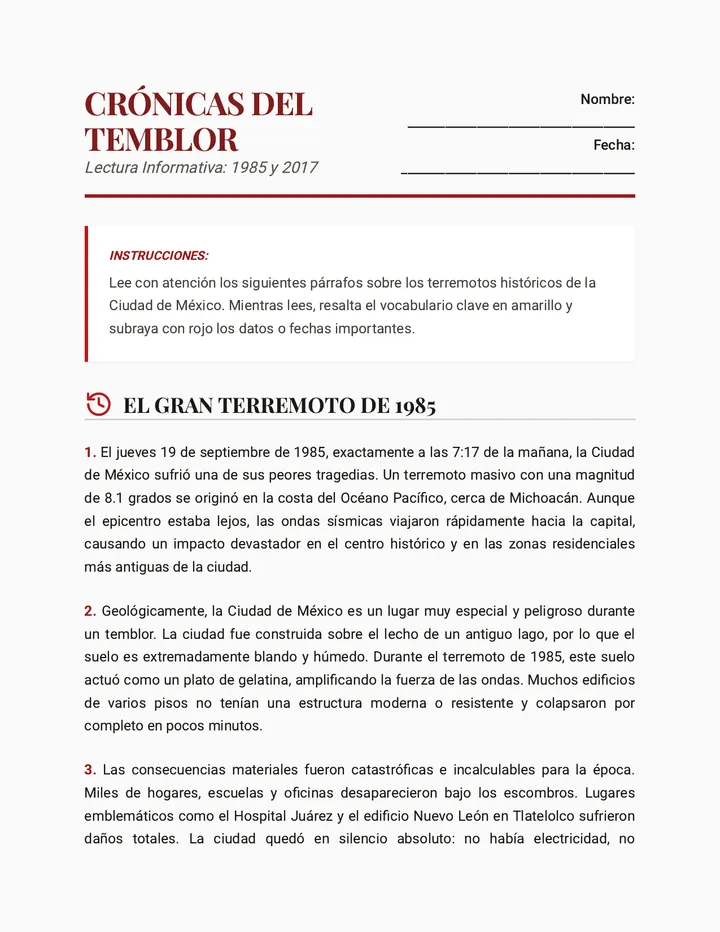
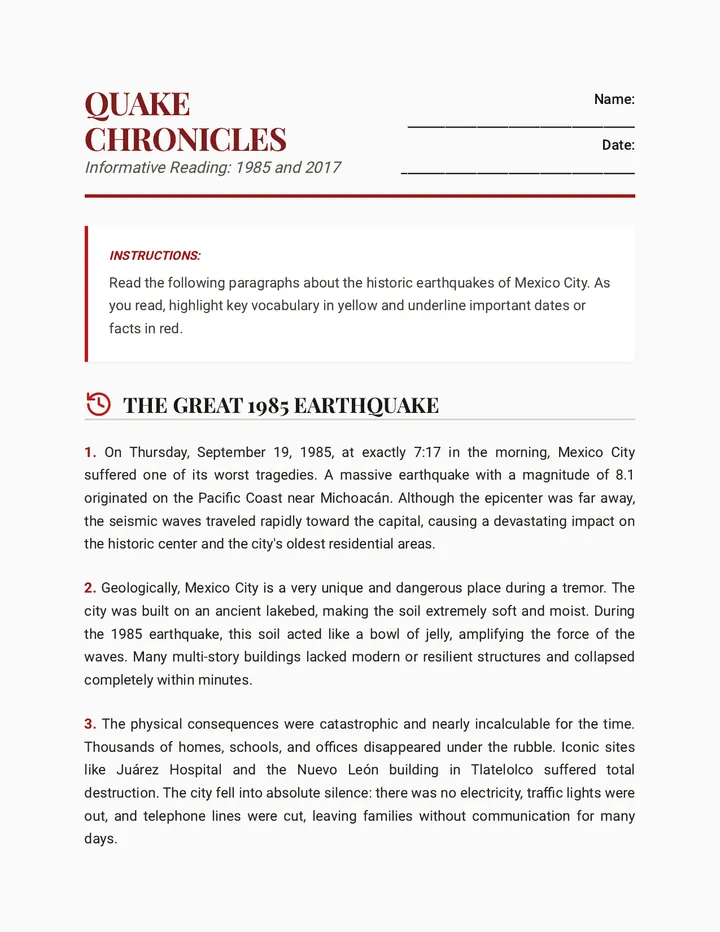
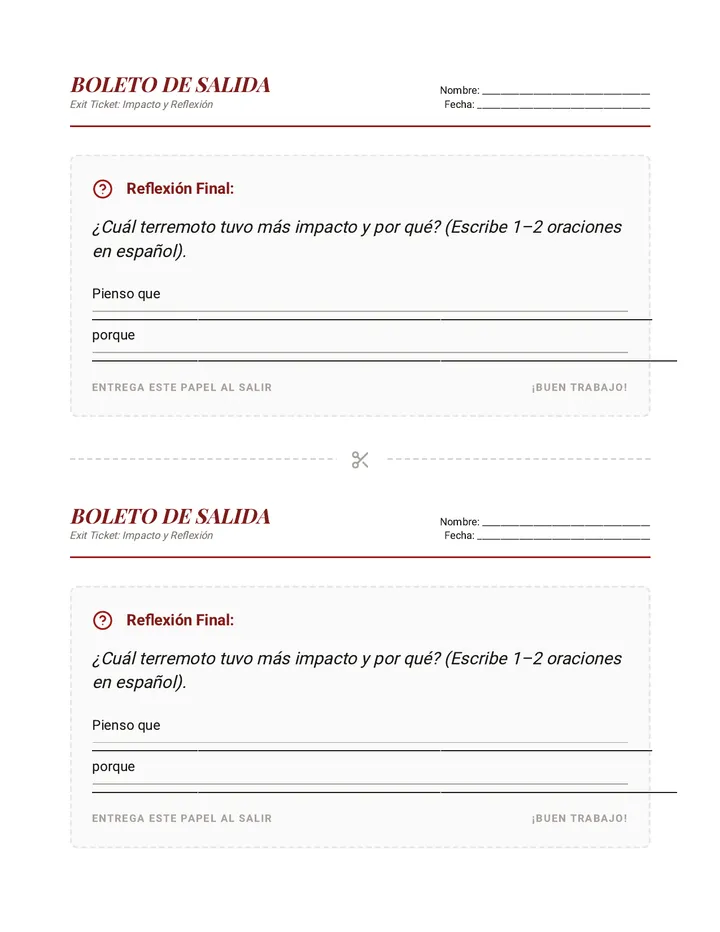
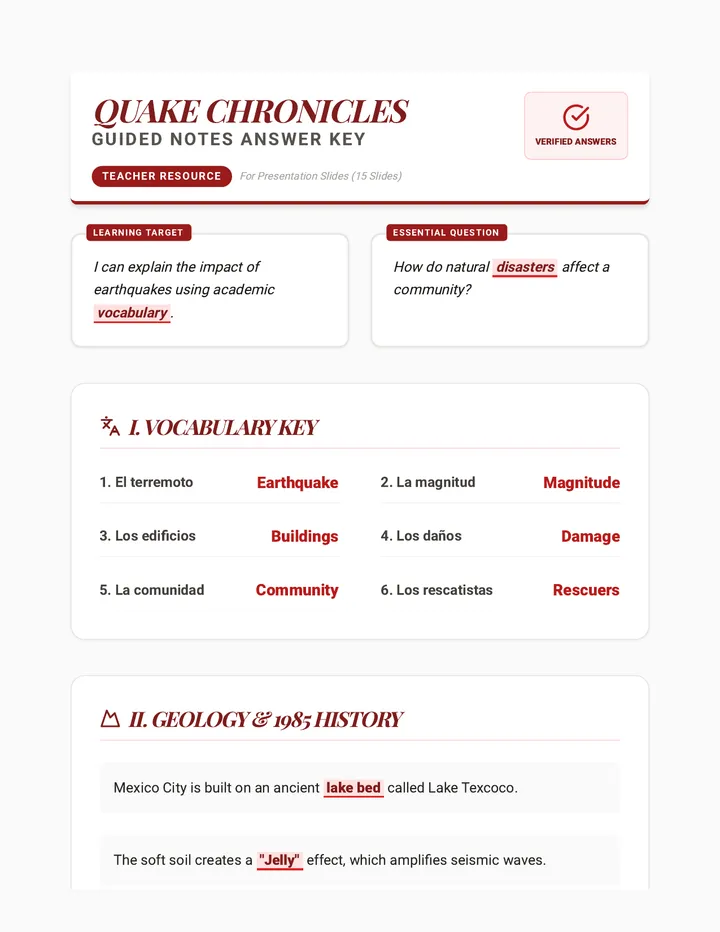
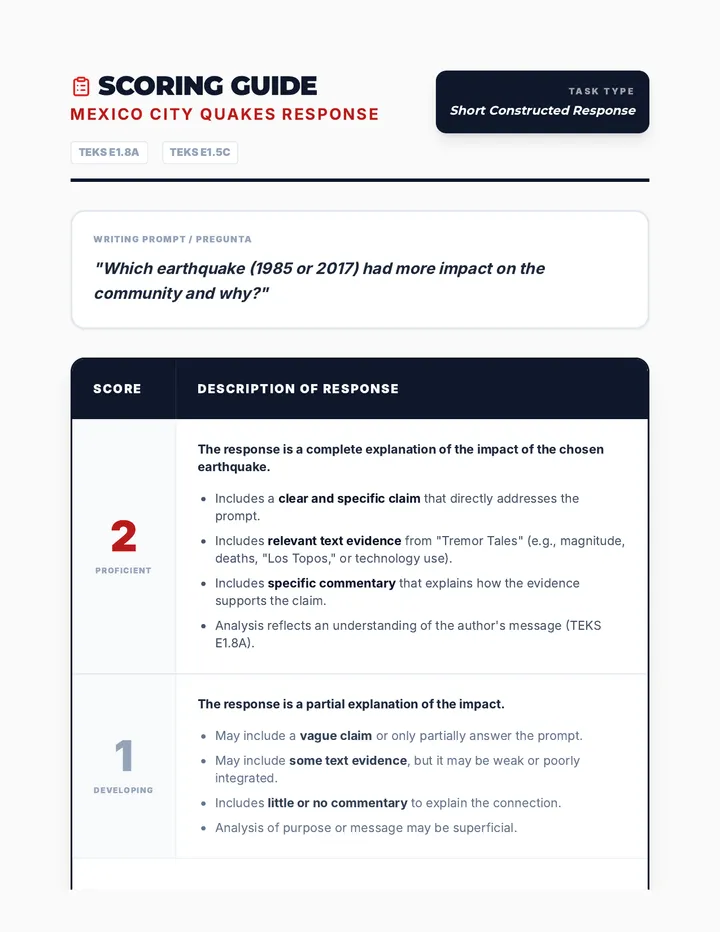
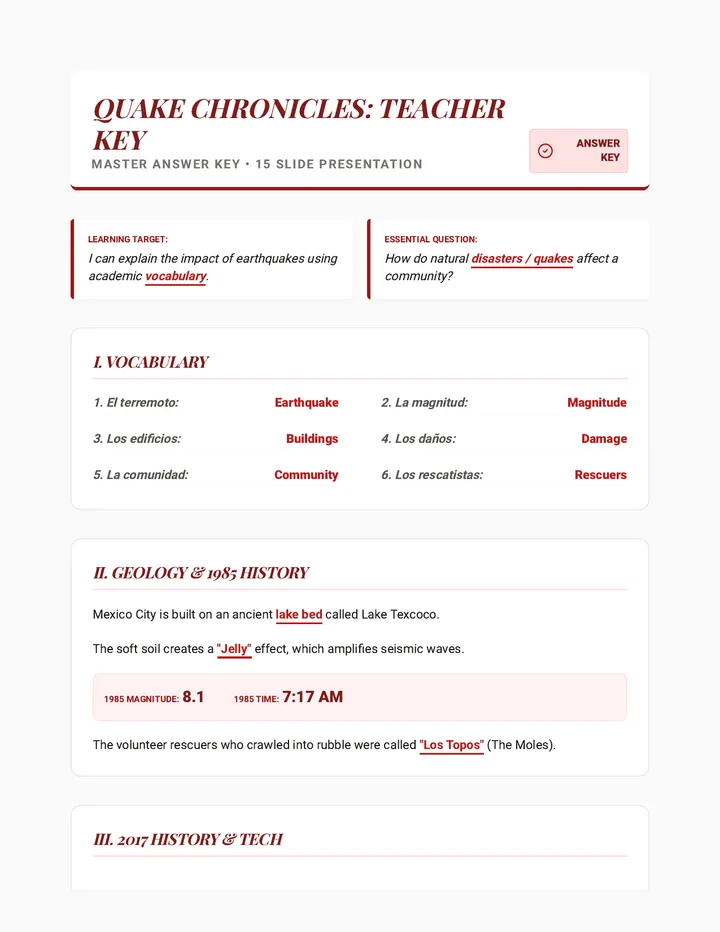
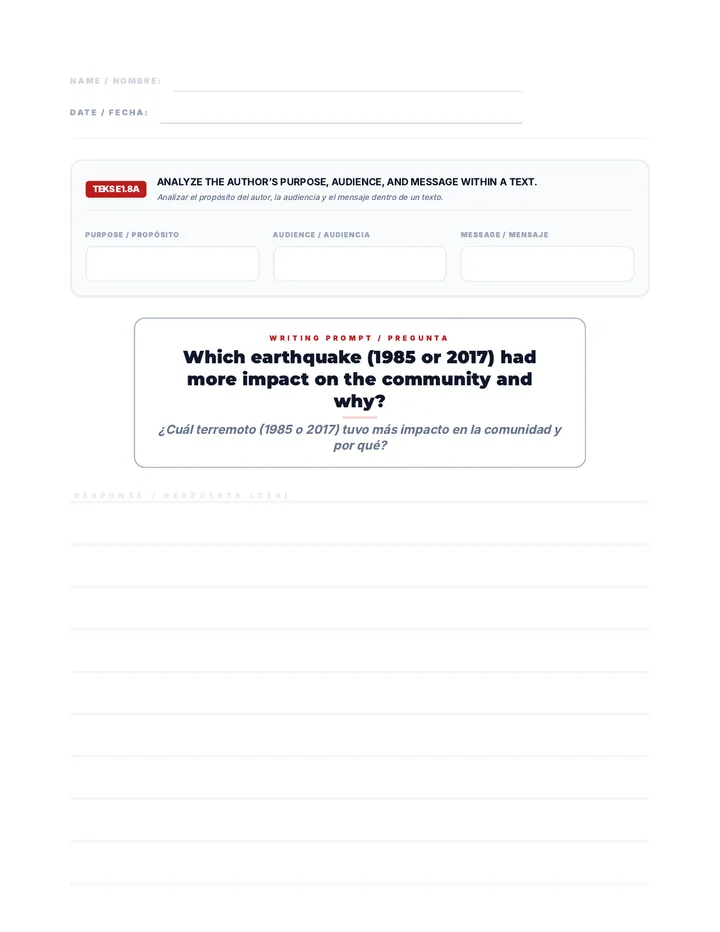
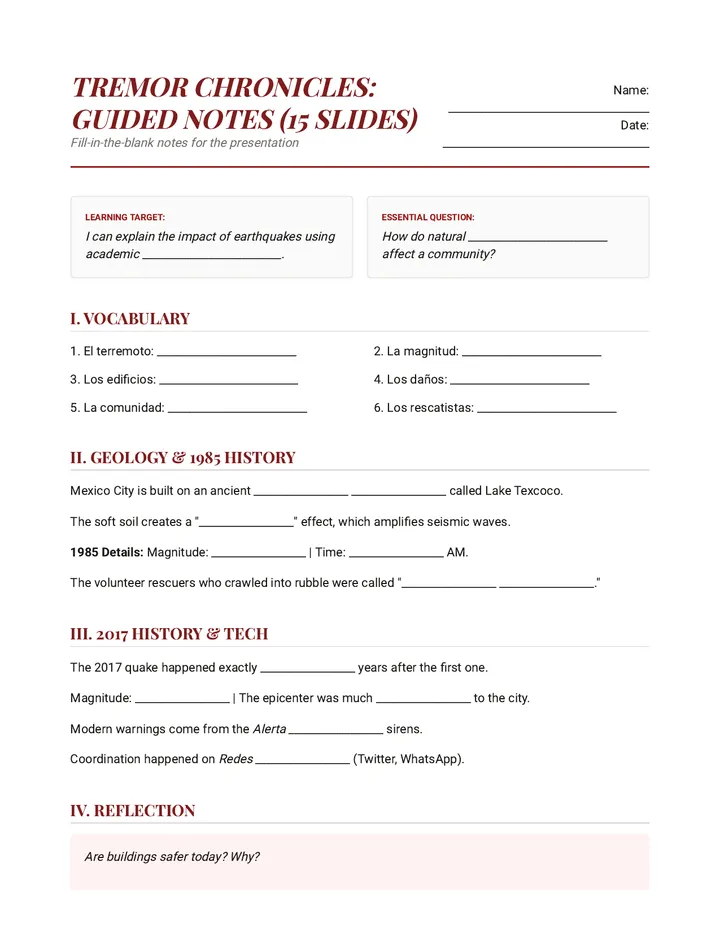
A comprehensive lesson on the historic earthquakes of Mexico City (1985 and 2017), focusing on interpretive reading and academic writing using the Claim, Evidence, Reasoning (CER) framework. Students explore community impact, resilience, and historical comparison.
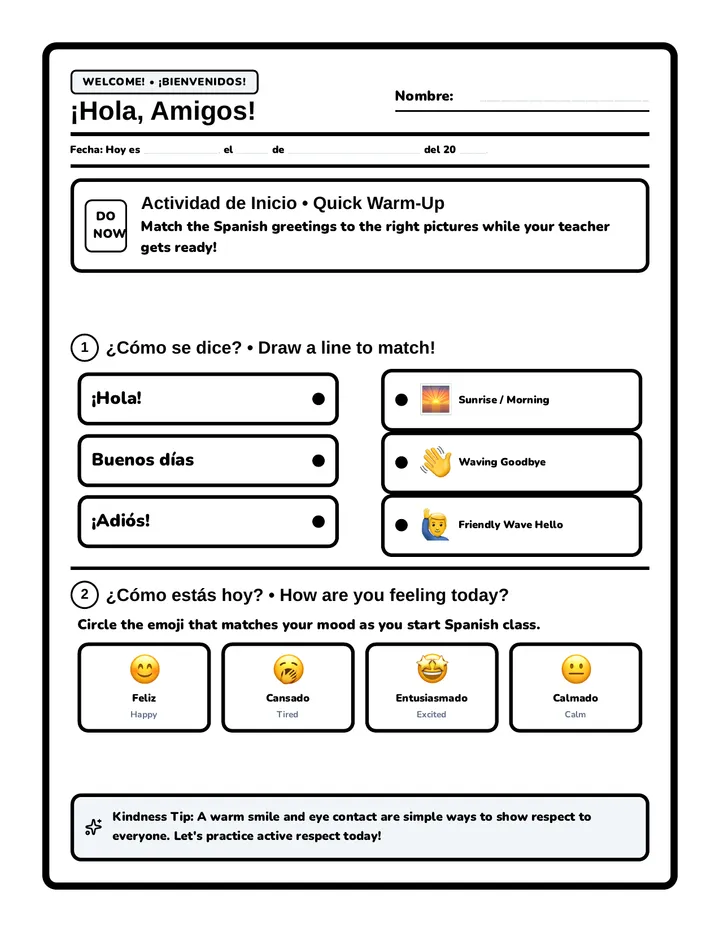
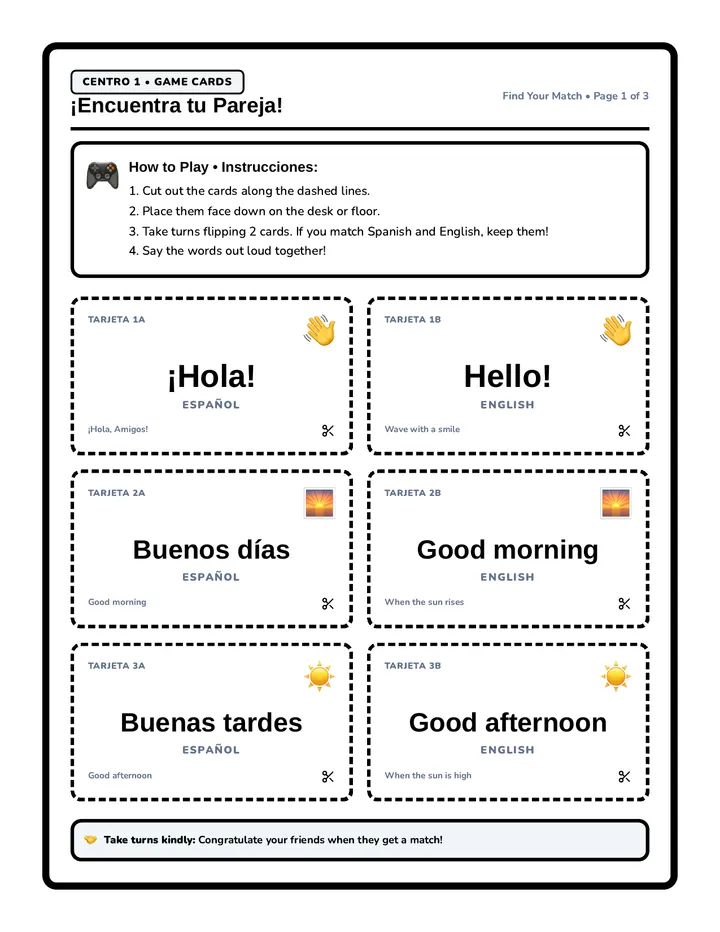
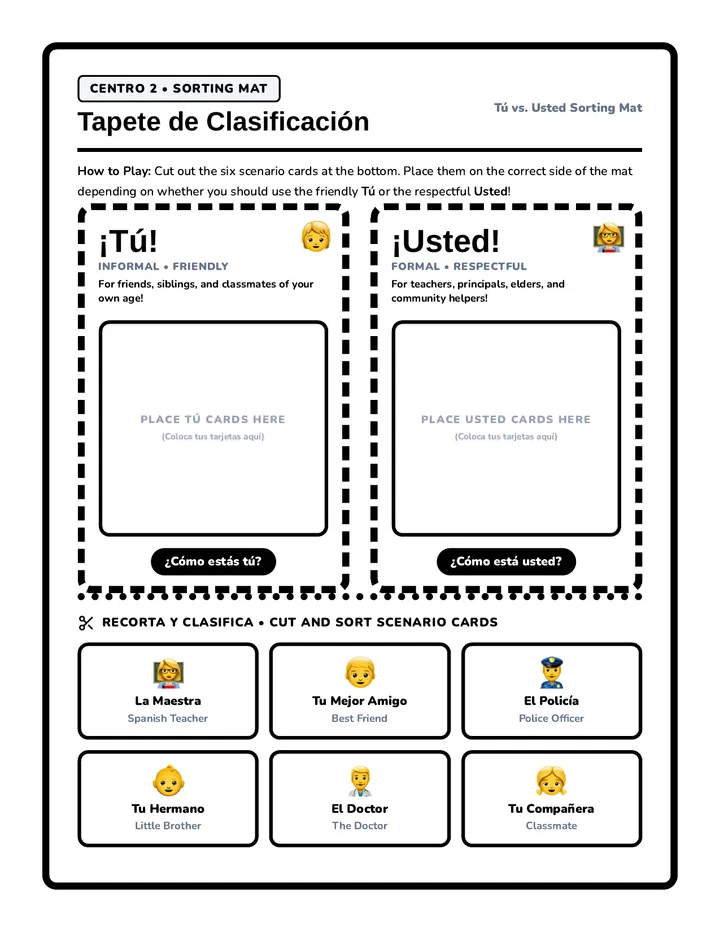
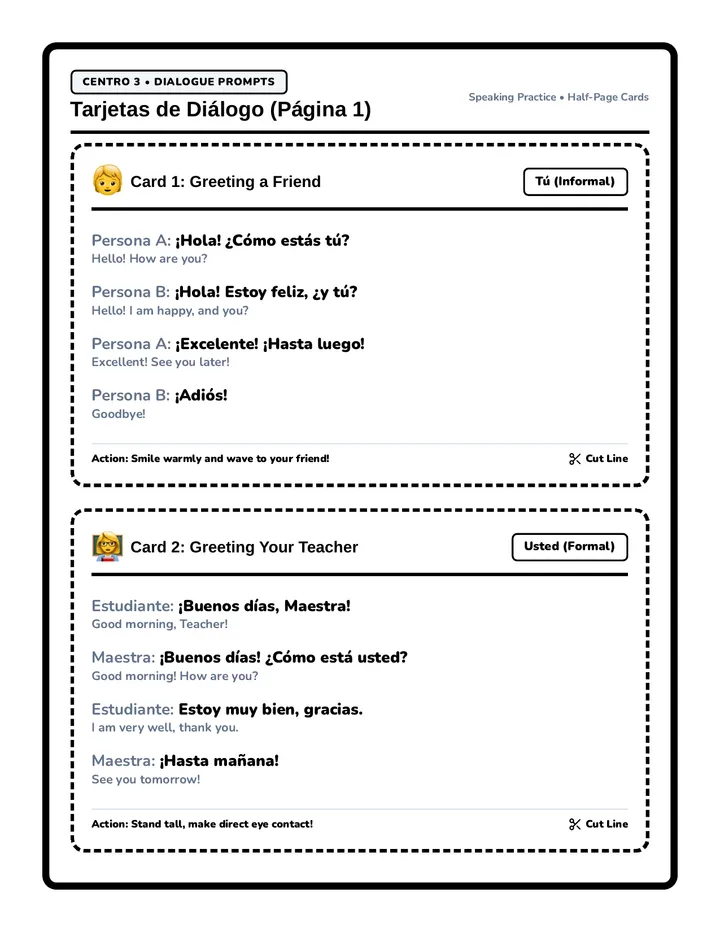
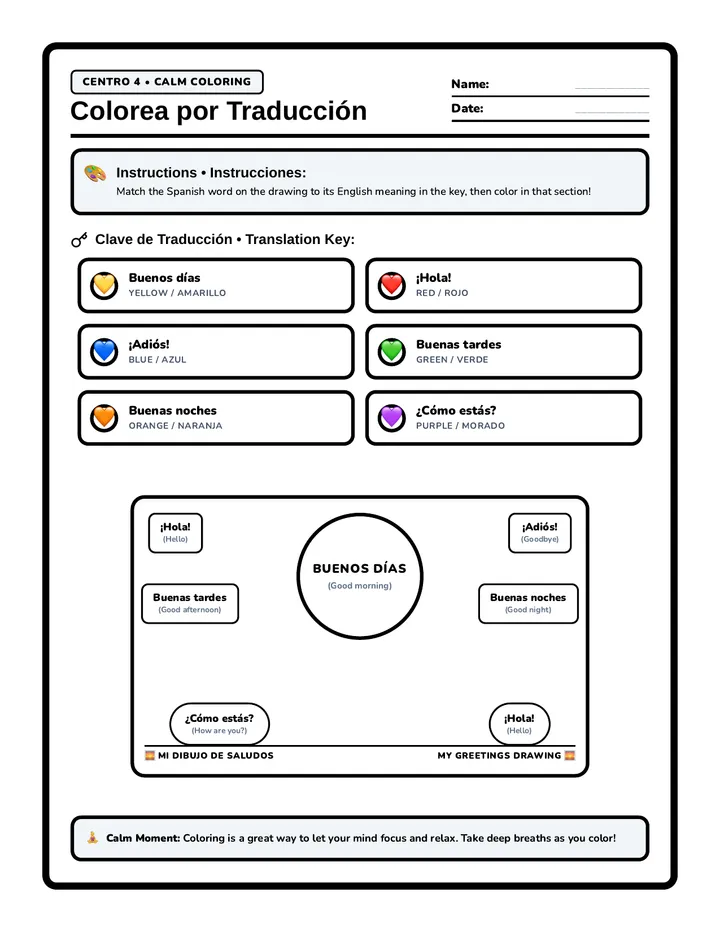
A comprehensive 2nd-grade Spanish lesson focusing on greetings, farewells, and the social awareness of respect (formal vs. informal). The lesson uses an 'I Do, We Do, You Do' format, starting with a projection-based introduction and transition into four interactive learning centers to accommodate 23 students in a 35-40 minute push-in context.
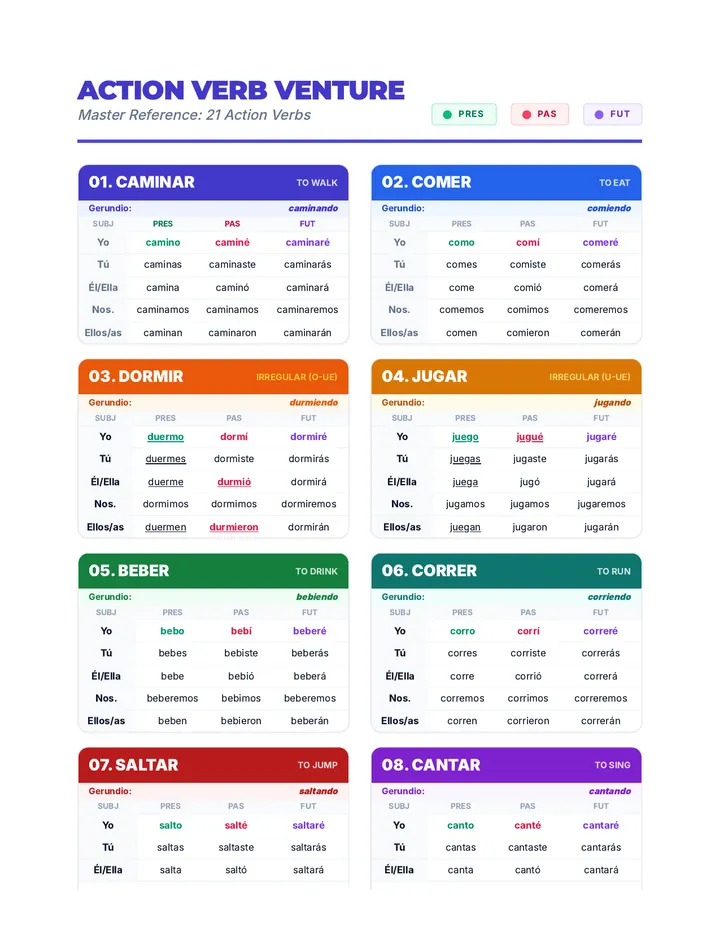
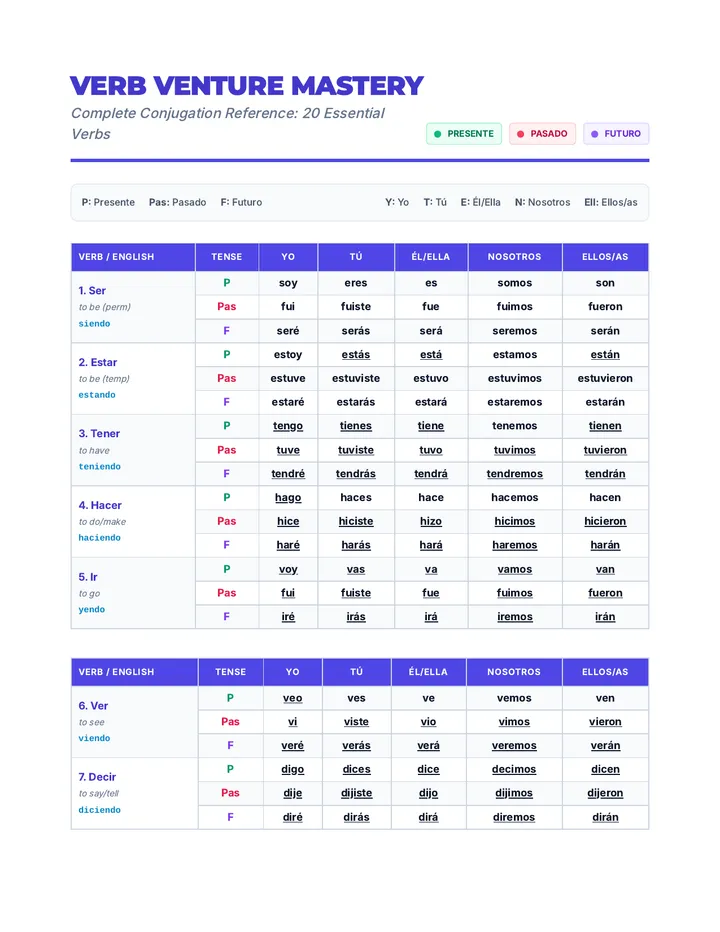
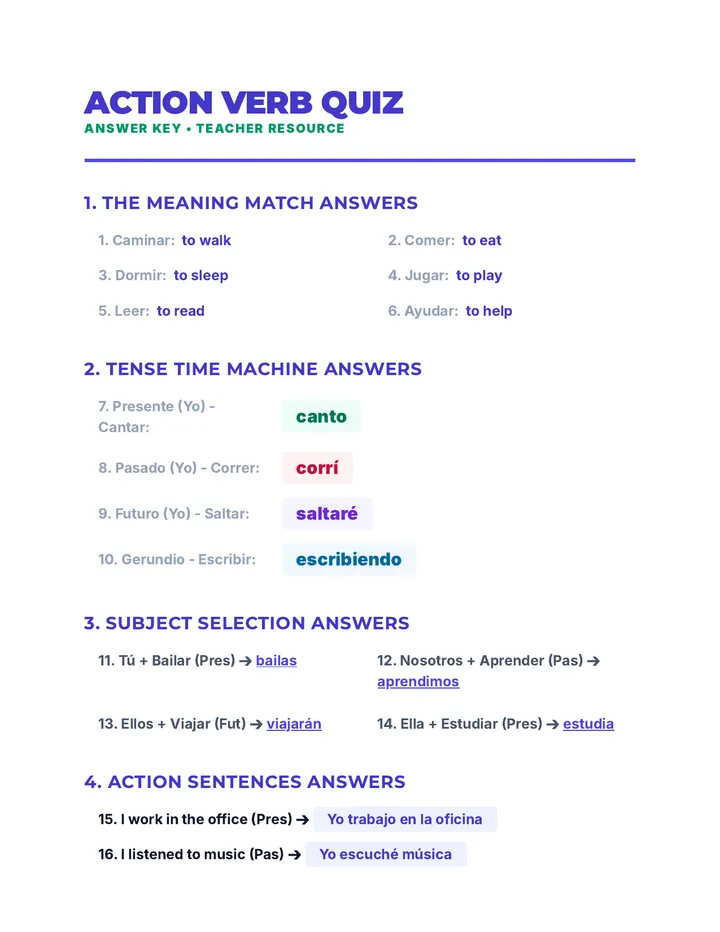
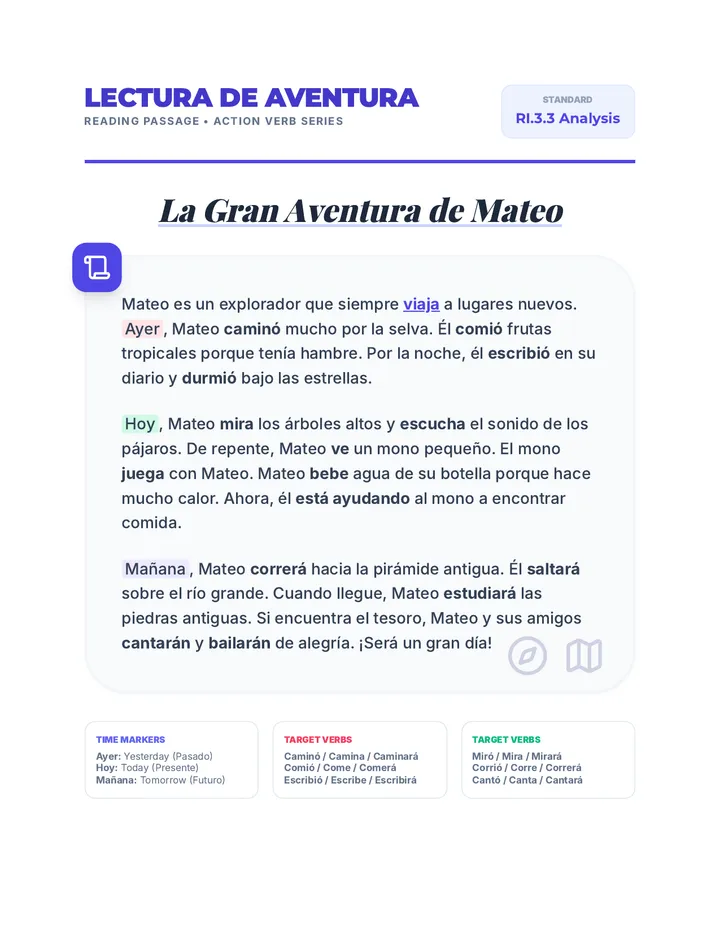
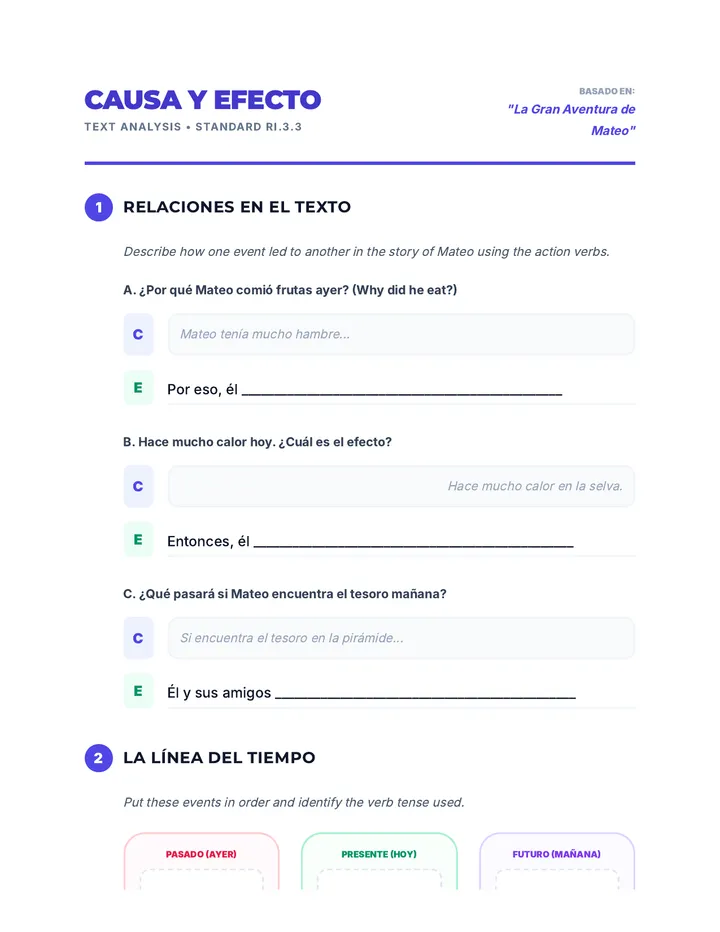
A comprehensive visual guide to the 20 most frequently used Spanish verbs, featuring conjugations, translations, and color-coded tenses.
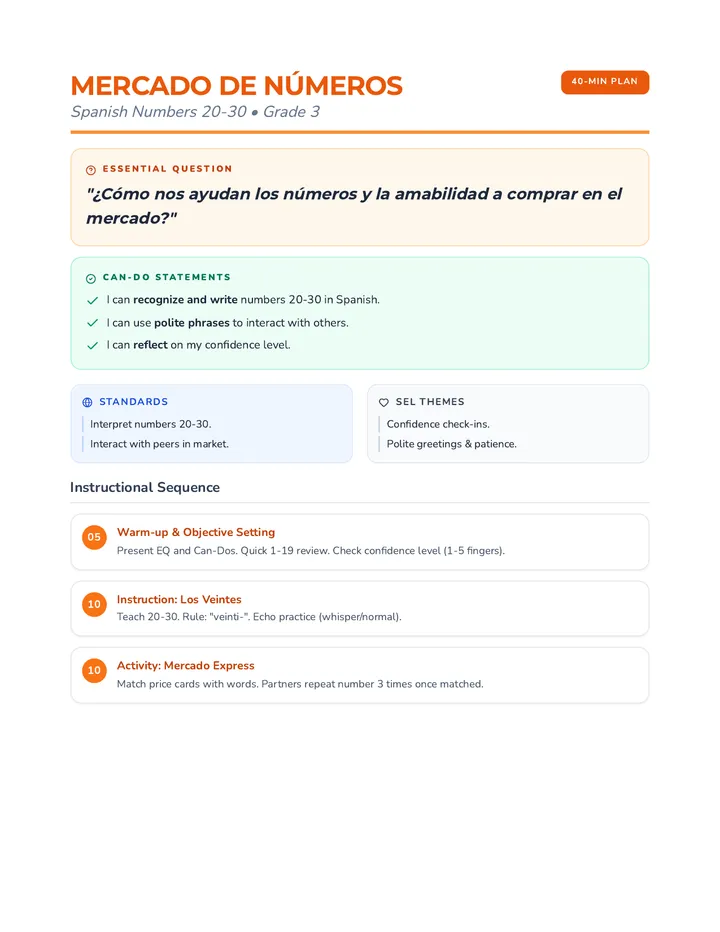
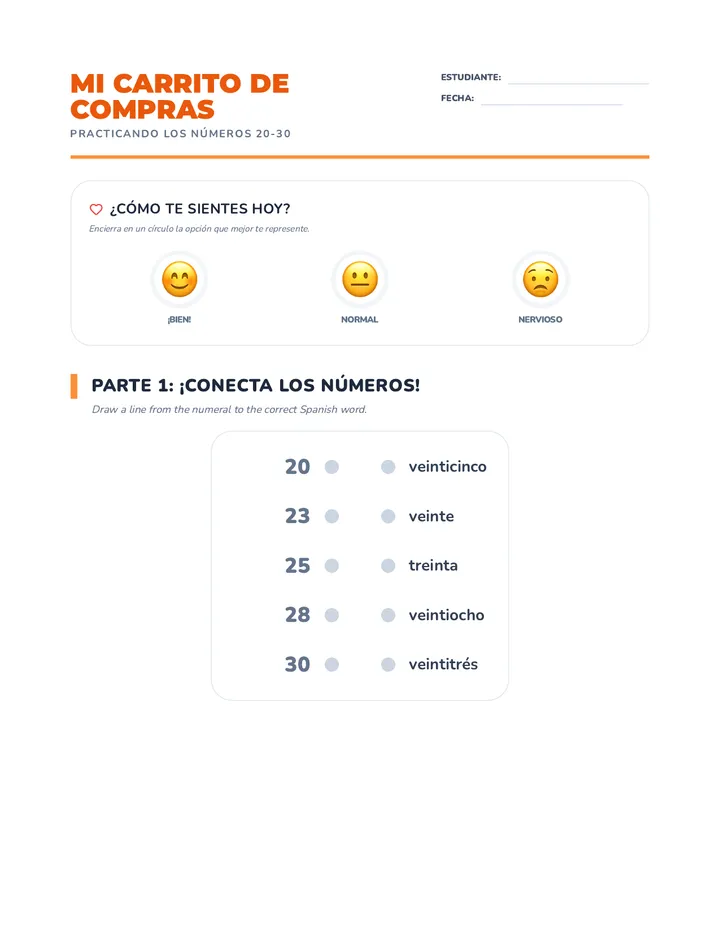
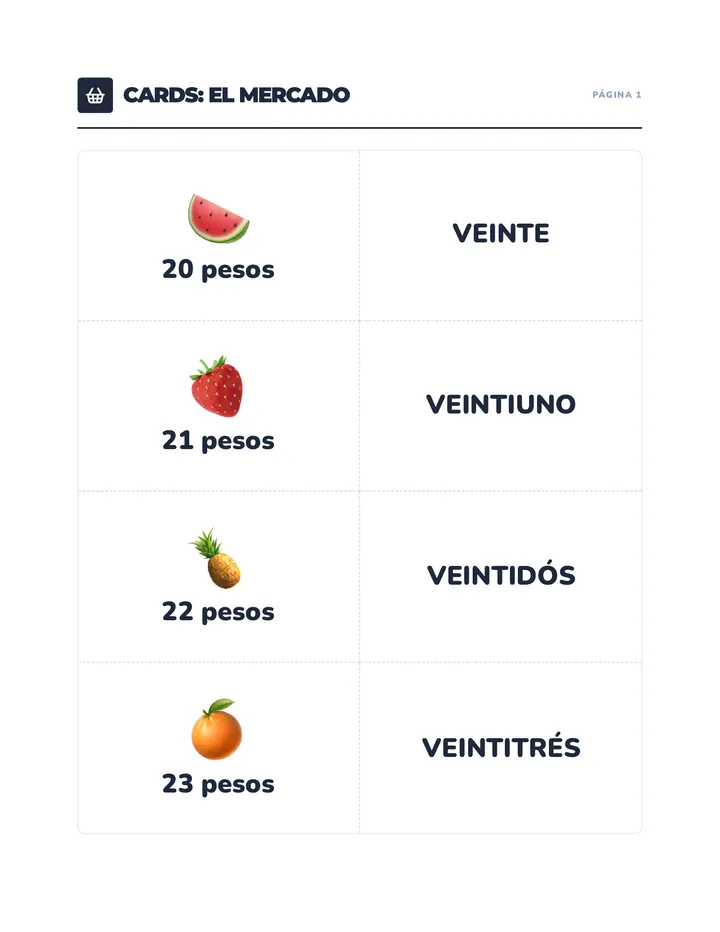
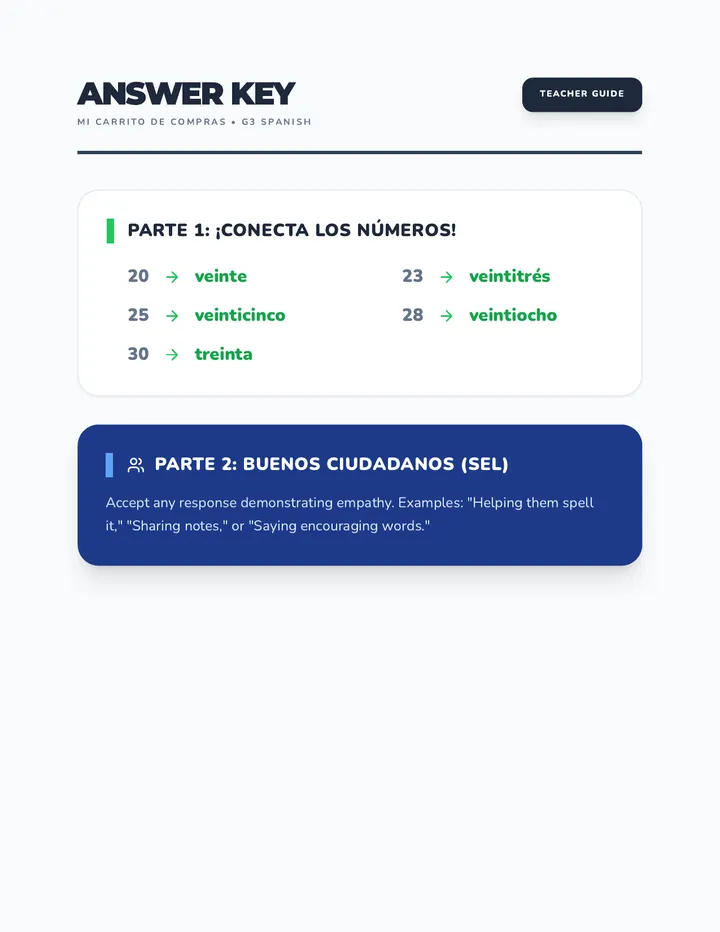
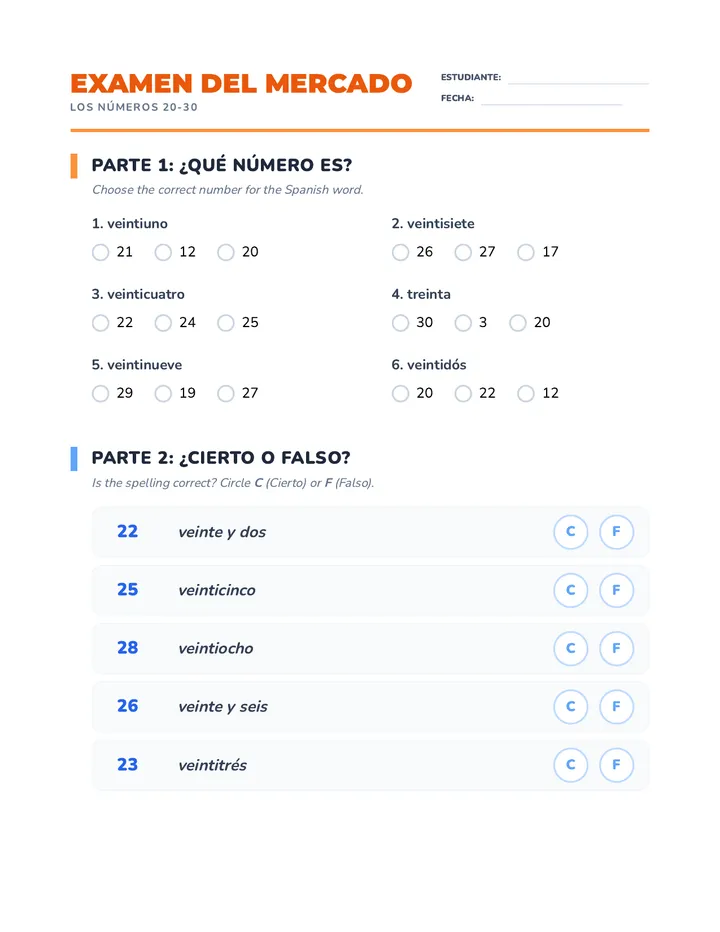
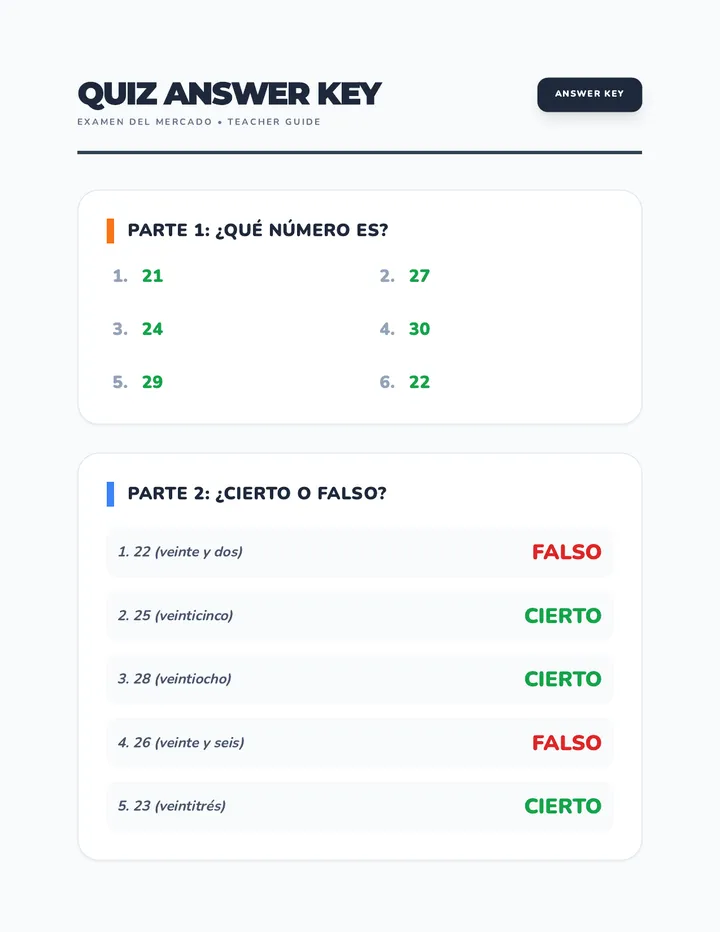
A vibrant 3rd-grade Spanish lesson teaching numbers 20-30 through the lens of a bustling Mexican market. Students develop linguistic proficiency while practicing self-awareness and social collaboration.
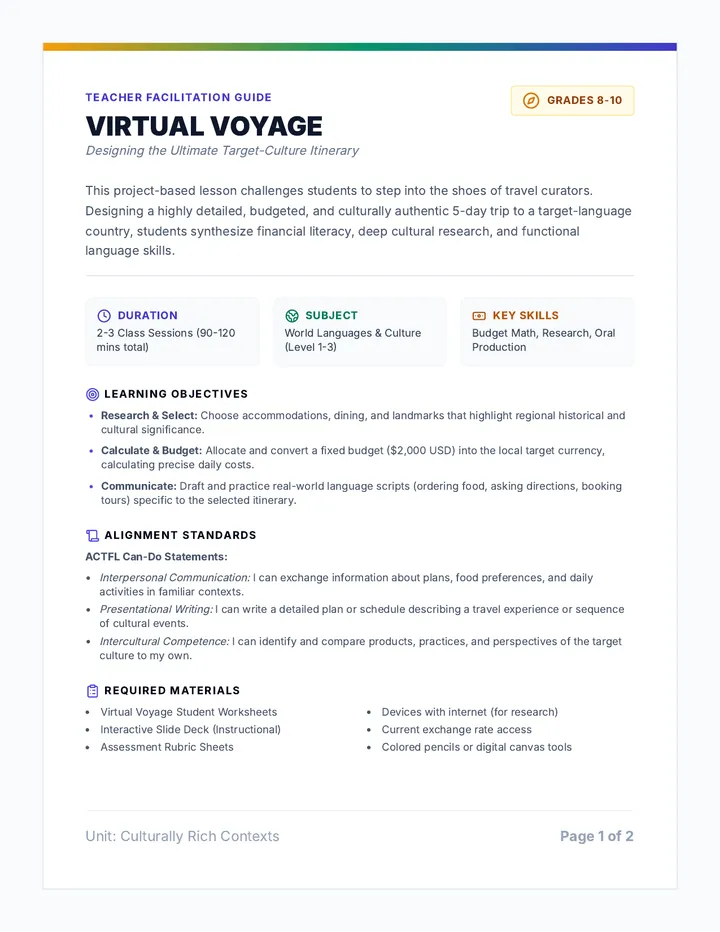
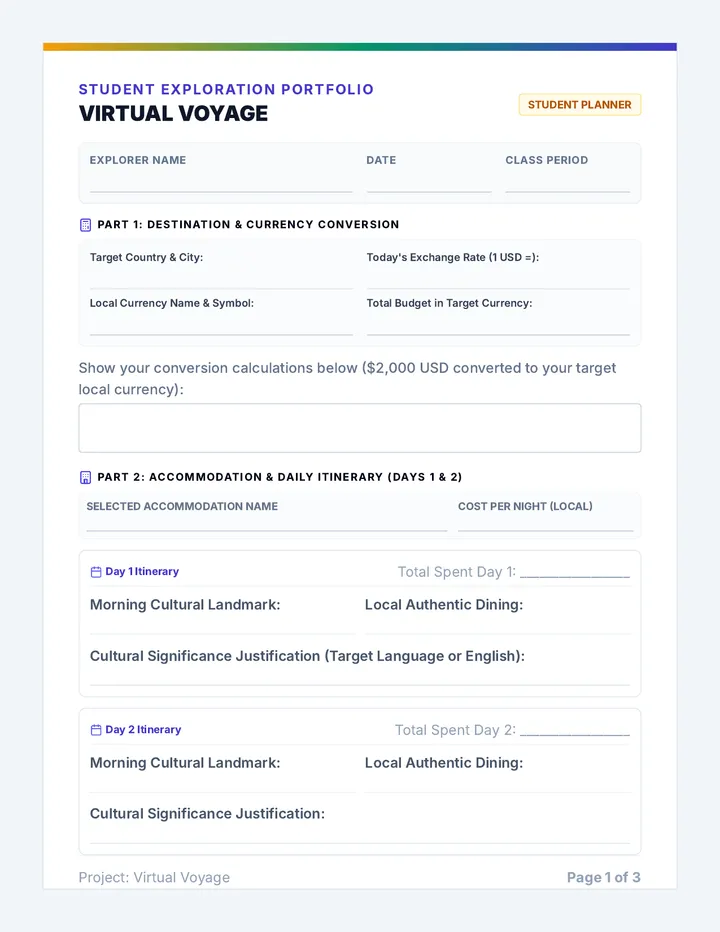
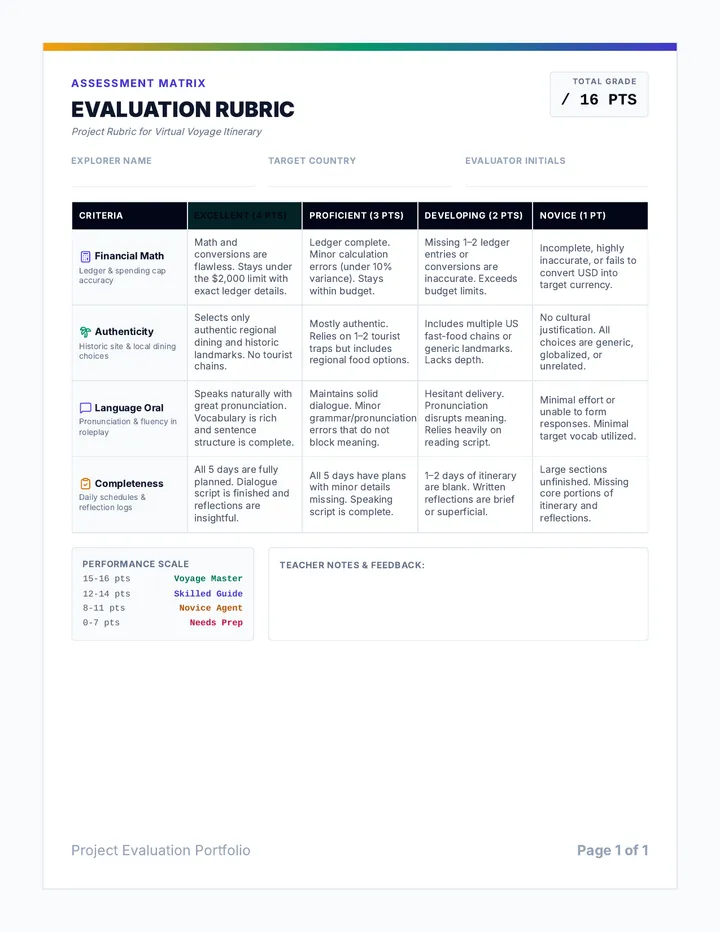
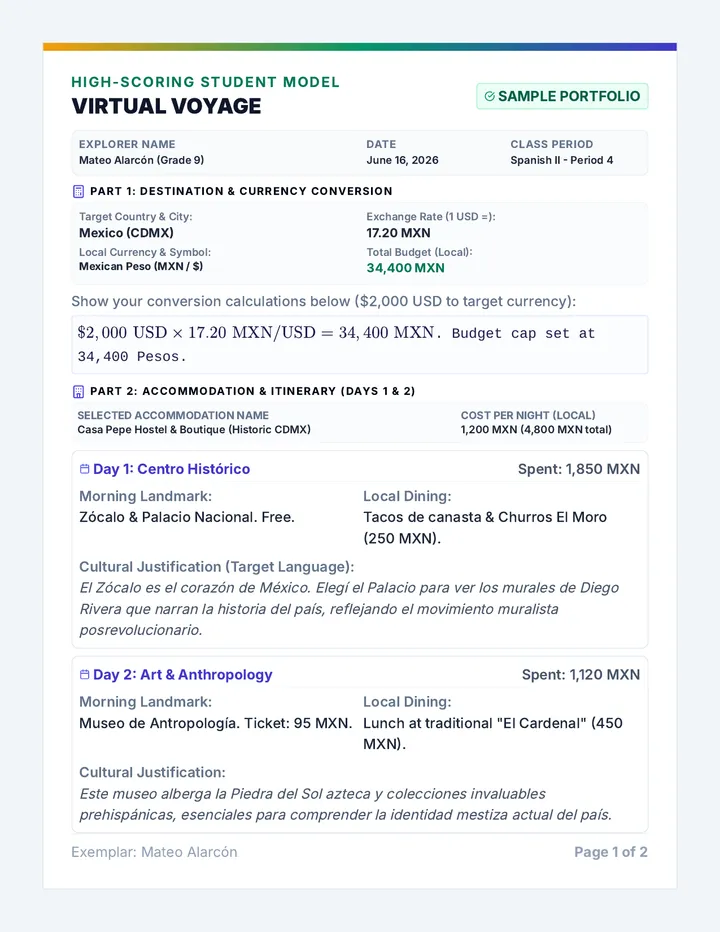
A comprehensive lesson where students in grades 8-10 design a detailed, budgeted travel itinerary for a target-language country, incorporating cultural research and speaking challenges.
A multisensory lesson focusing on the phonetic distinction between the English short /ɪ/ and long /i/ sounds, specifically designed for students bridging from Spanish.
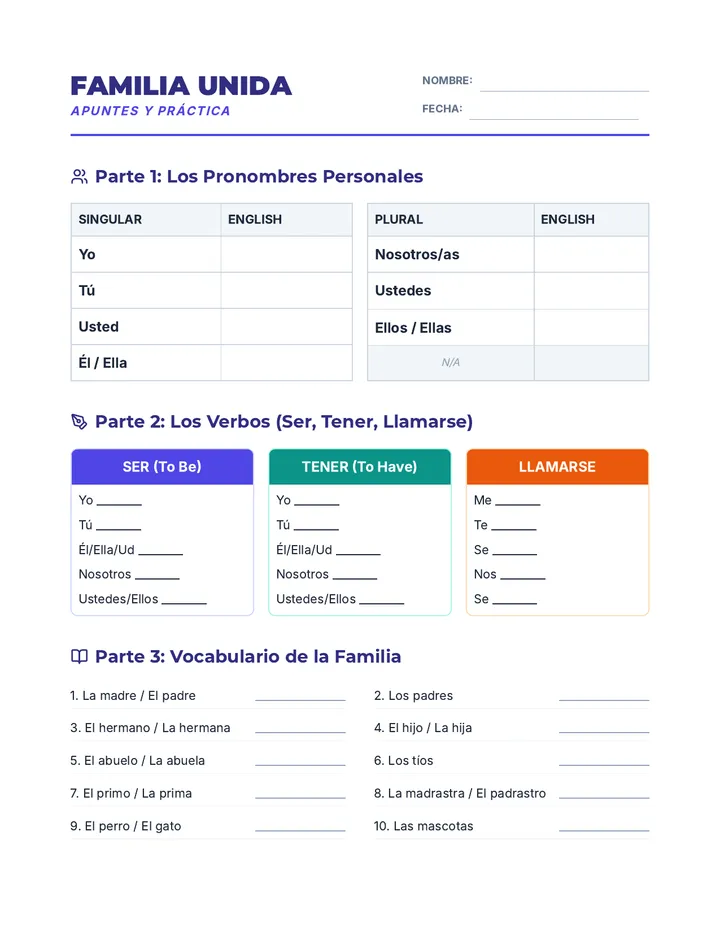
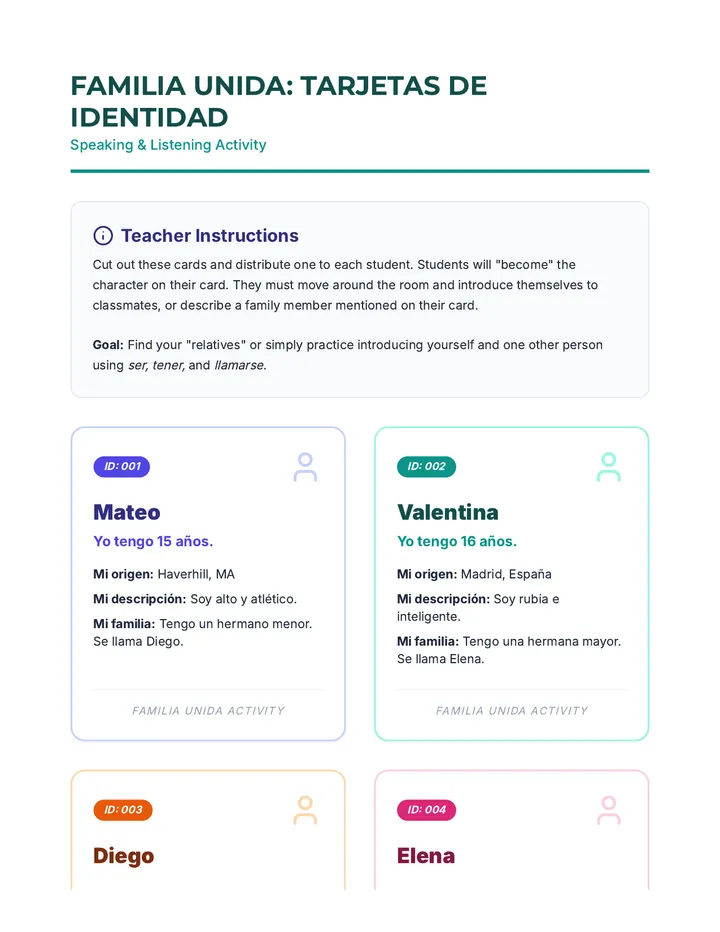
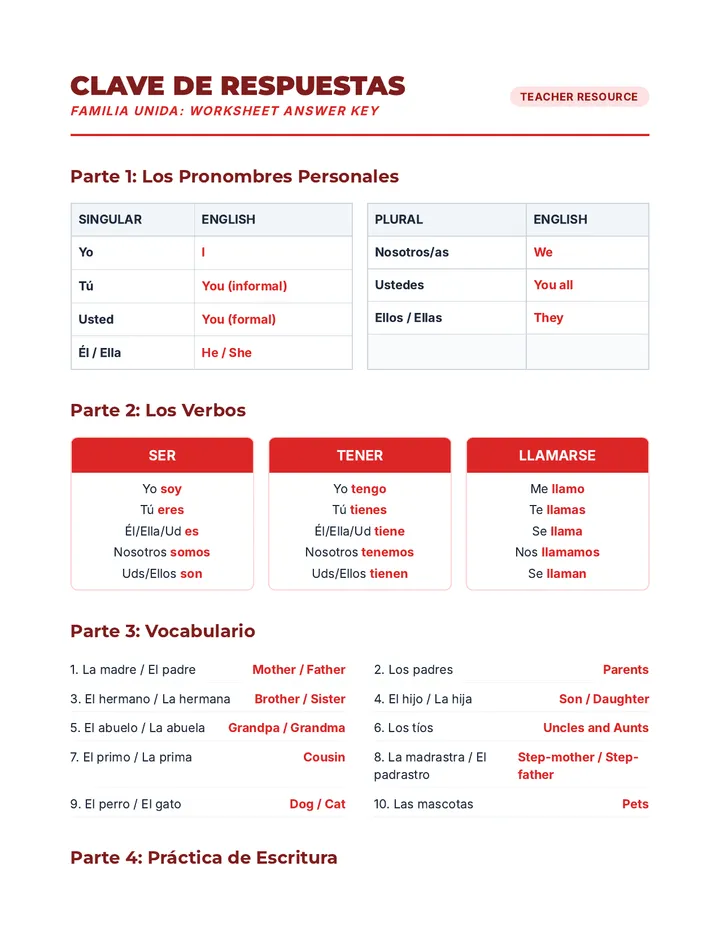
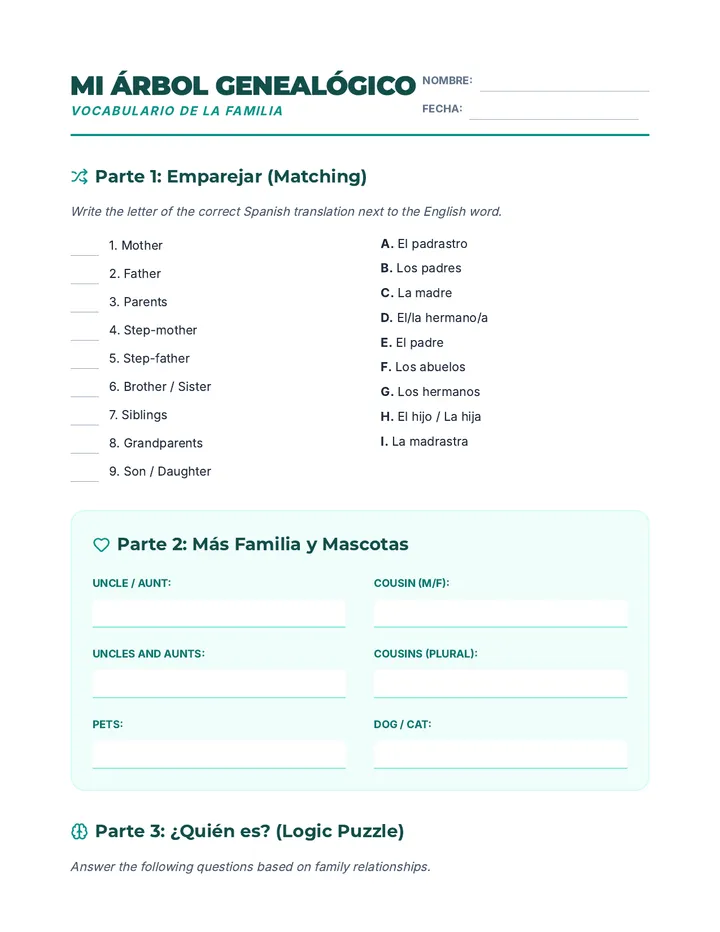
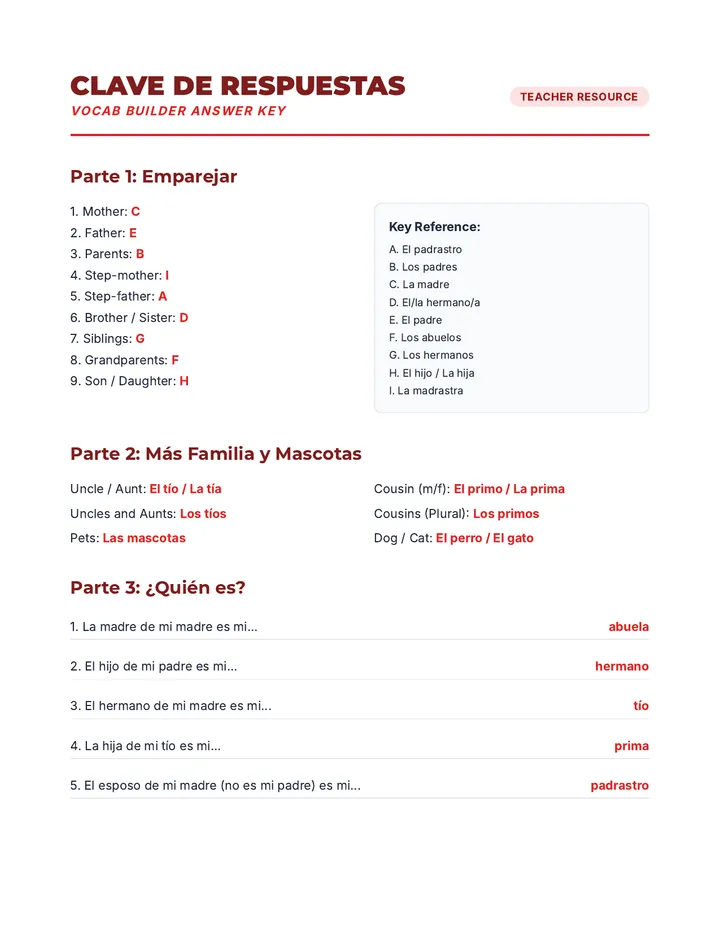
A comprehensive Spanish lesson focused on family and relatives vocabulary through a detective-themed investigation. Students will identify, describe, and discuss family members using a variety of interactive and written exercises.
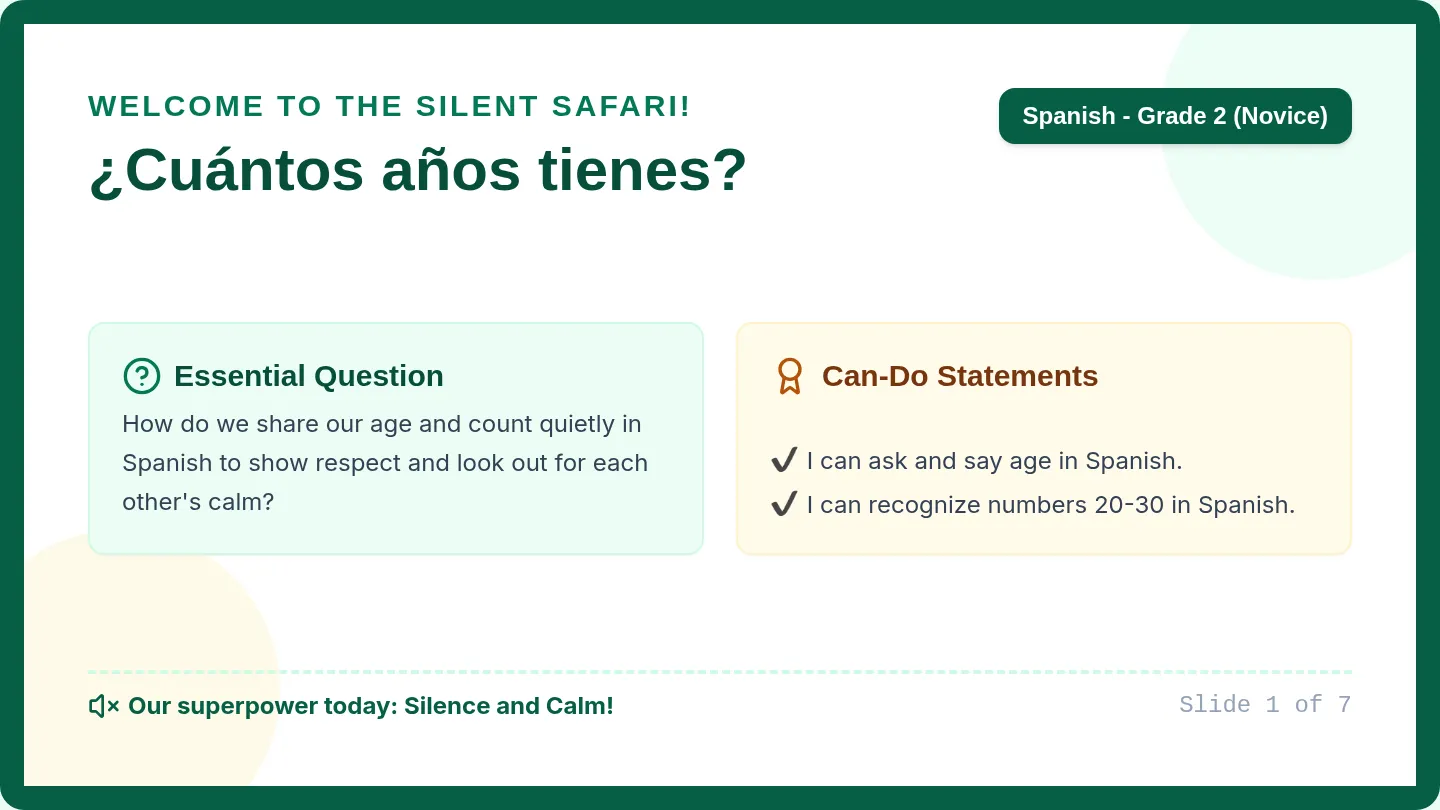
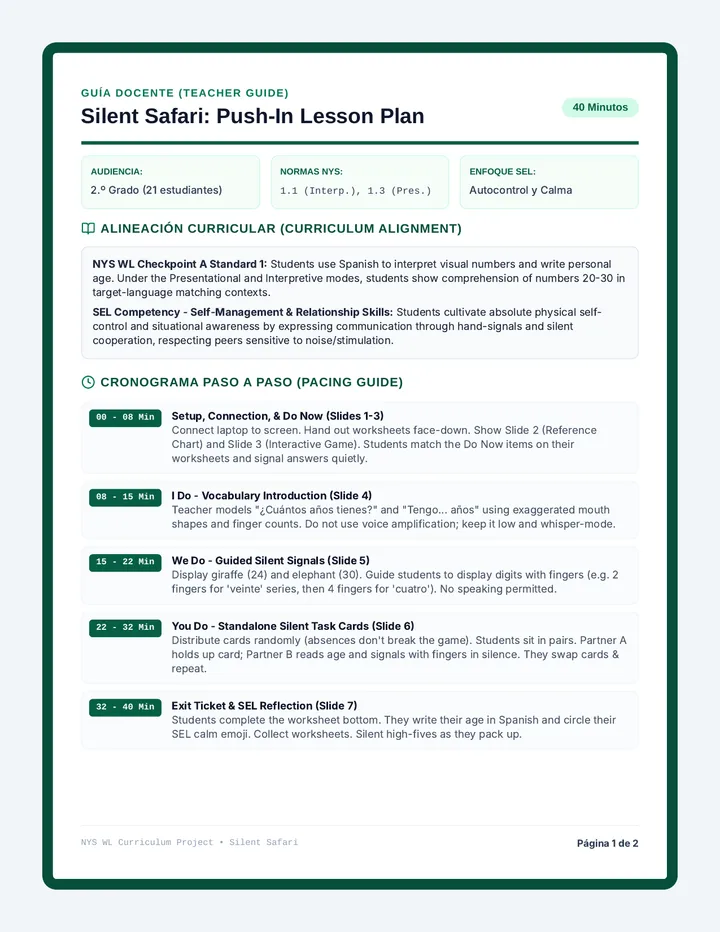
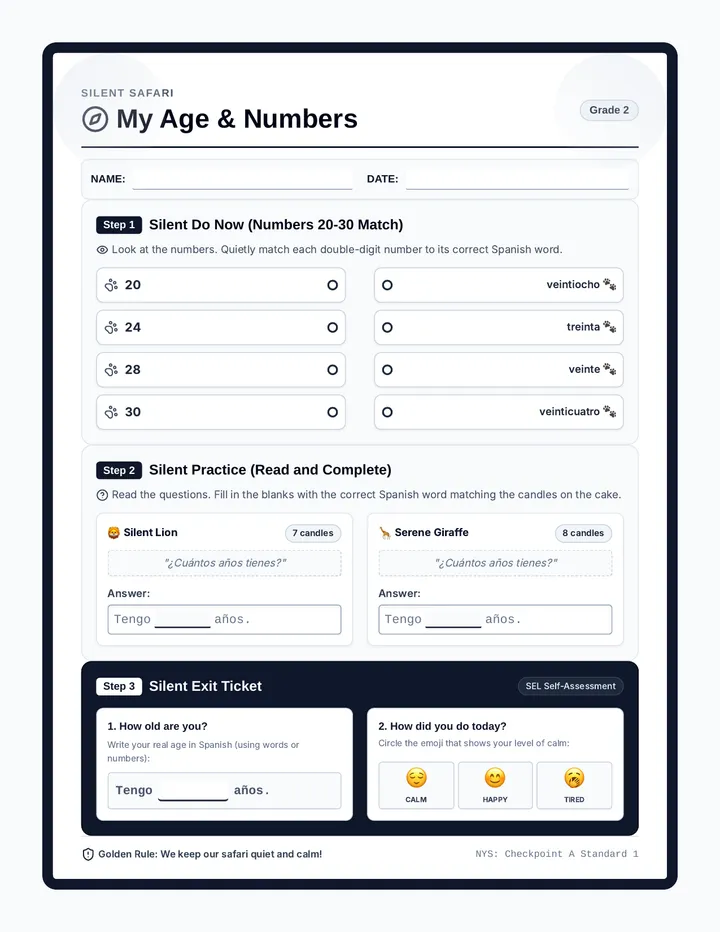
A calm, highly visual Spanish lesson for 2nd graders to learn and practice asking and stating age, plus numbers 20-30, using silent signals and partner matching to respect low-stimulation classroom needs. This lesson aligns with NYS World Language Standards and incorporates SEL elements through self-reflection and cooperative quiet sharing.
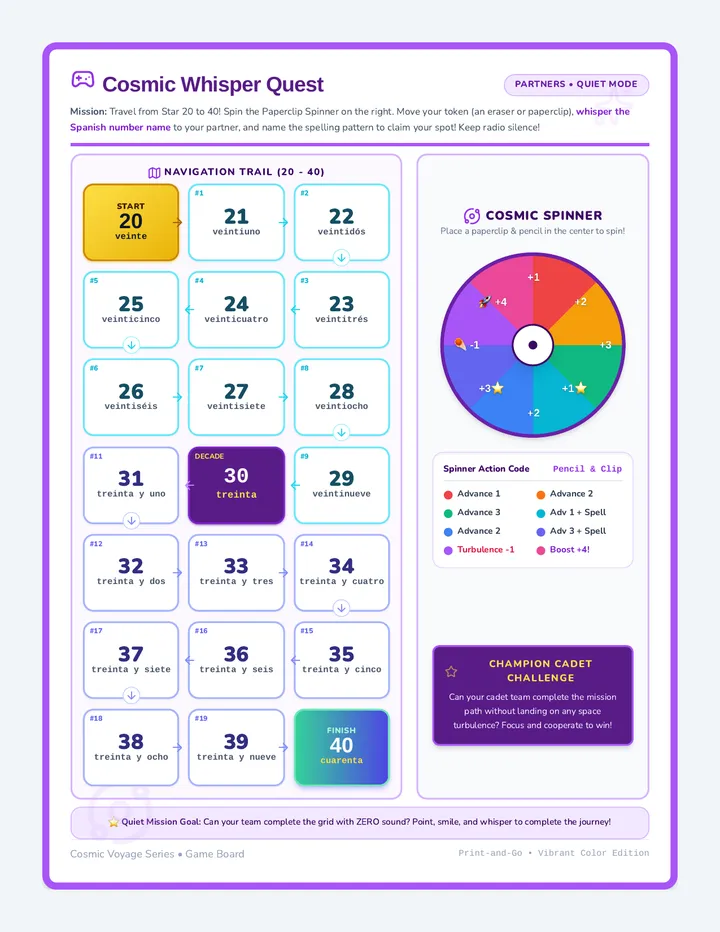
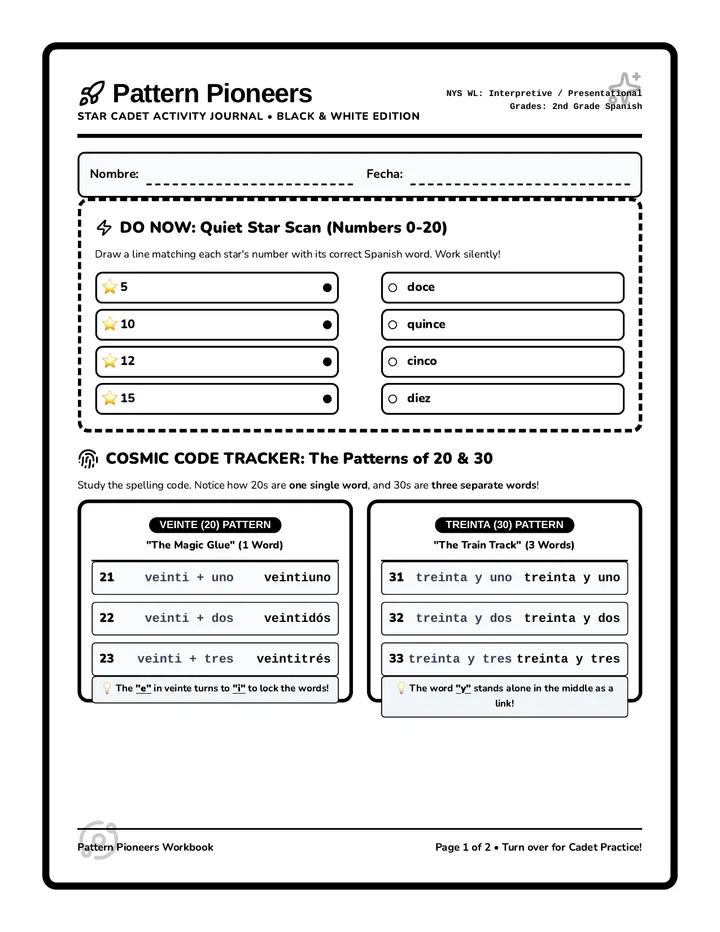
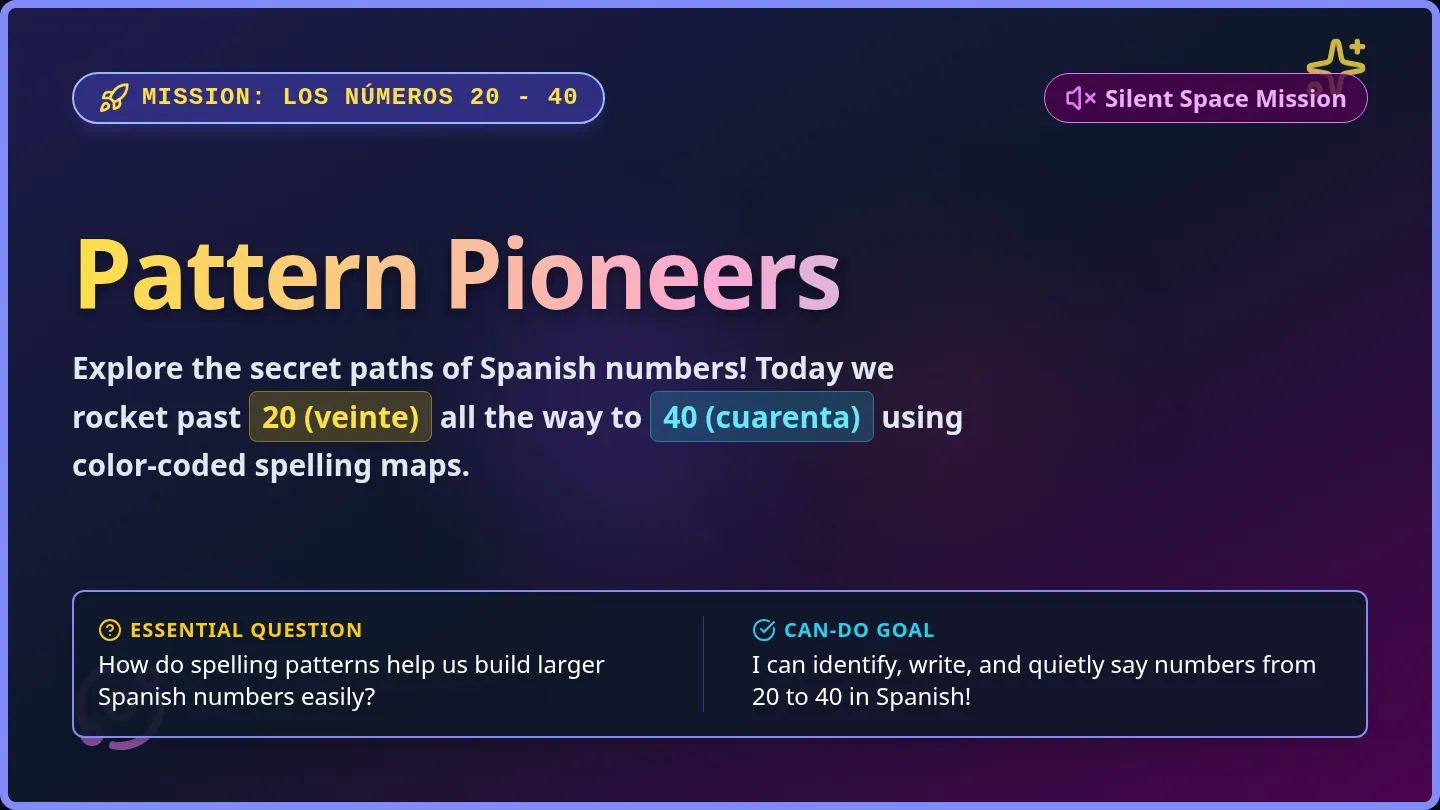
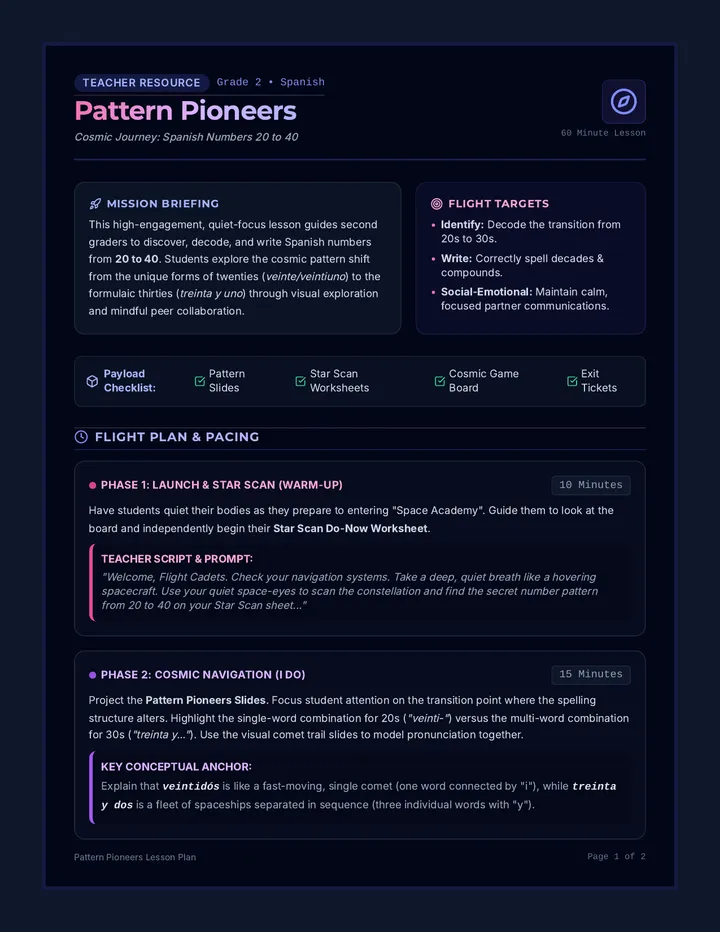
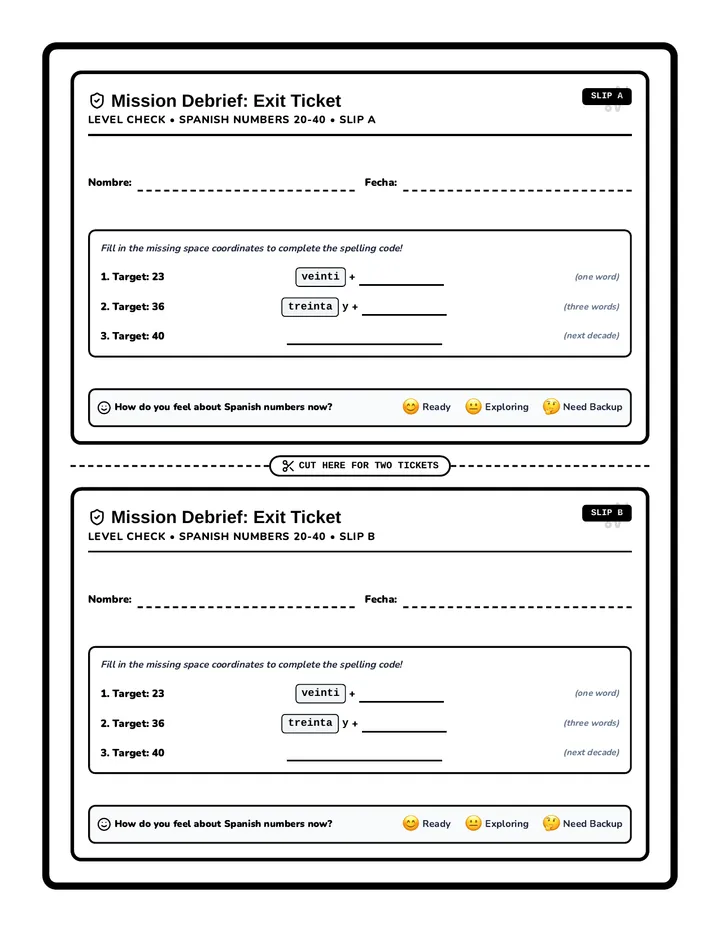
A Spanish numbers lesson for 2nd graders focusing on decades and patterns from 20 to 40. The lesson follows the I Do, We Do, You Do framework, integrates social-emotional learning, and uses quiet, high-engagement visual activities.
This lesson introduces students to social issues and real-world events through the context of the Chilean mine collapse, focusing on vocabulary acquisition and sentence stems for proposing solutions.
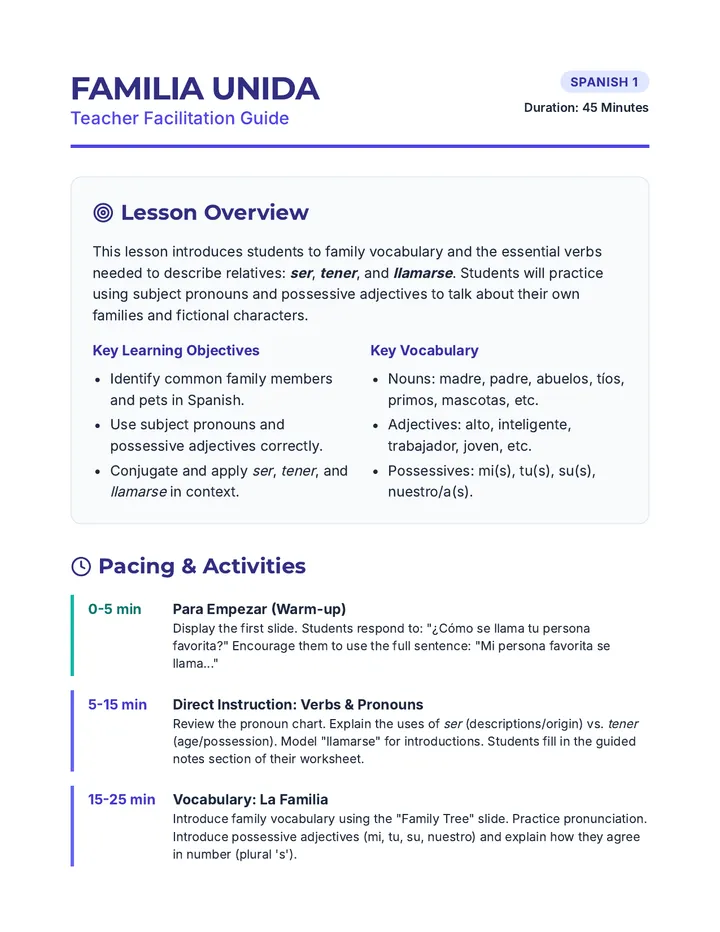
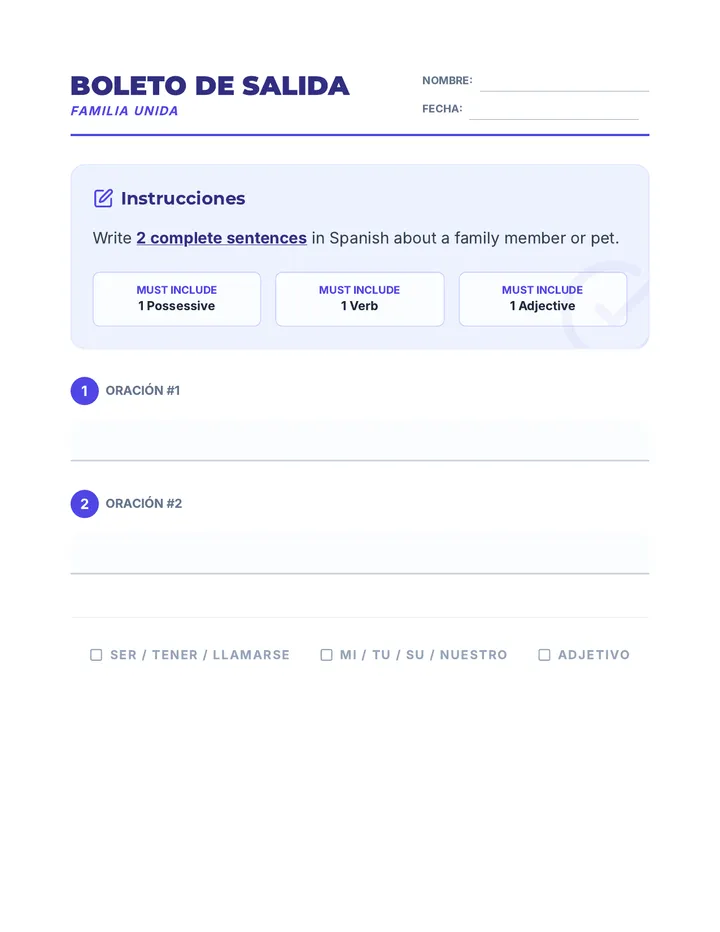
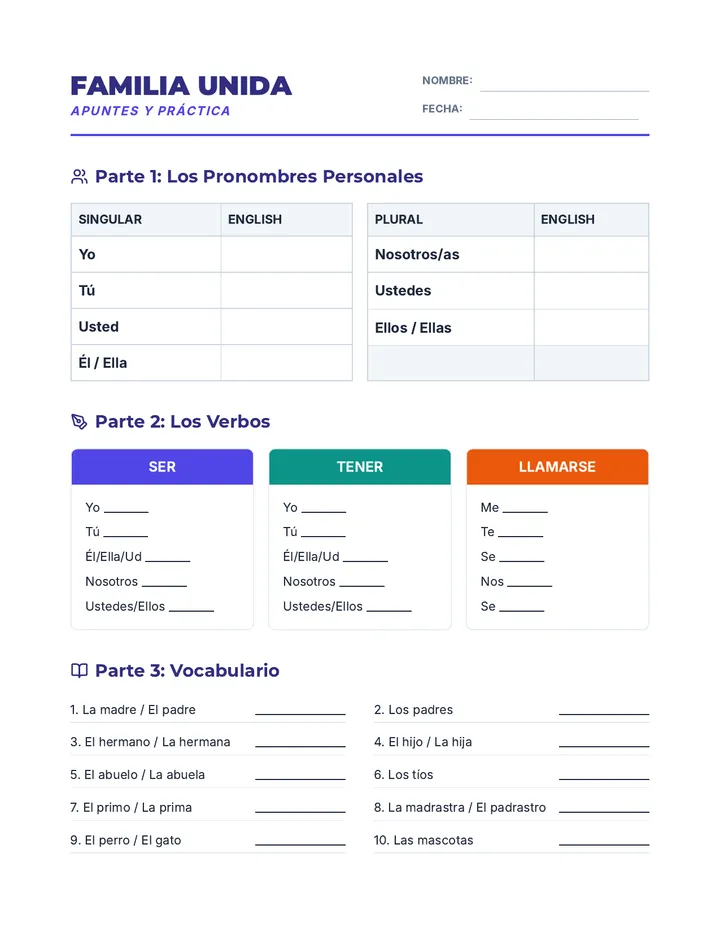
An introductory Spanish 1 lesson focused on family vocabulary, possessive adjectives, and the verbs ser, tener, and llamarse. Students will learn to describe their family members and pets while practicing subject pronouns.
A vibrant 4th-grade Spanish lesson on expressing age, integrating SEL self-awareness by exploring personal growth and feelings about growing older. Includes NYS Checkpoint A standards alignment.