Authentic short stories, news articles, and literary excerpts designed to expand vocabulary and mastery of complex tenses. Develops comprehension strategies for identifying main ideas and cultural nuances in Spanish-language texts.
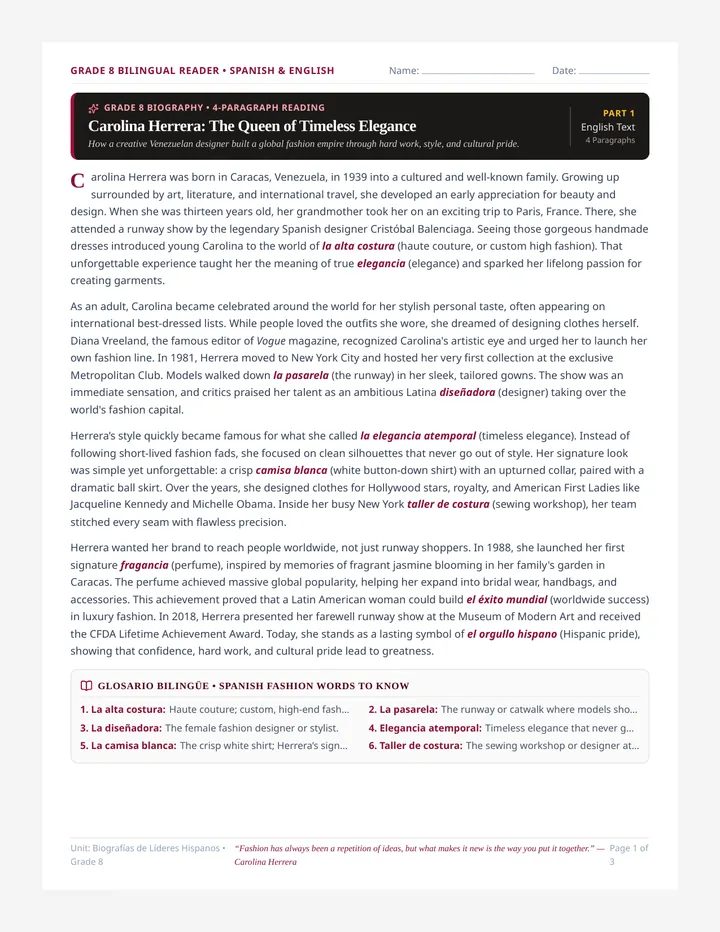
A three-page bilingual reading comprehension handout on Carolina Herrera leveled for Grade 8 readers. Features four-paragraph English and Spanish biographies with integrated Spanish vocabulary, a bilingual glossary, milestone cards, six multiple-choice questions, and a reflection prompt.
A comprehensive, bilingual (English & Spanish) 2-page print-ready travel reading and CER (Claim-Evidence-Reasoning) worksheet based on 'Mi Viaje a Madrid' for Grade 8 level. It features a side-by-side Spanish and English reading passage formatted as a travel journal, bilingual comprehension questions, a glossary, a CER graphic organizer with dual-language prompts, and lined student response sections.
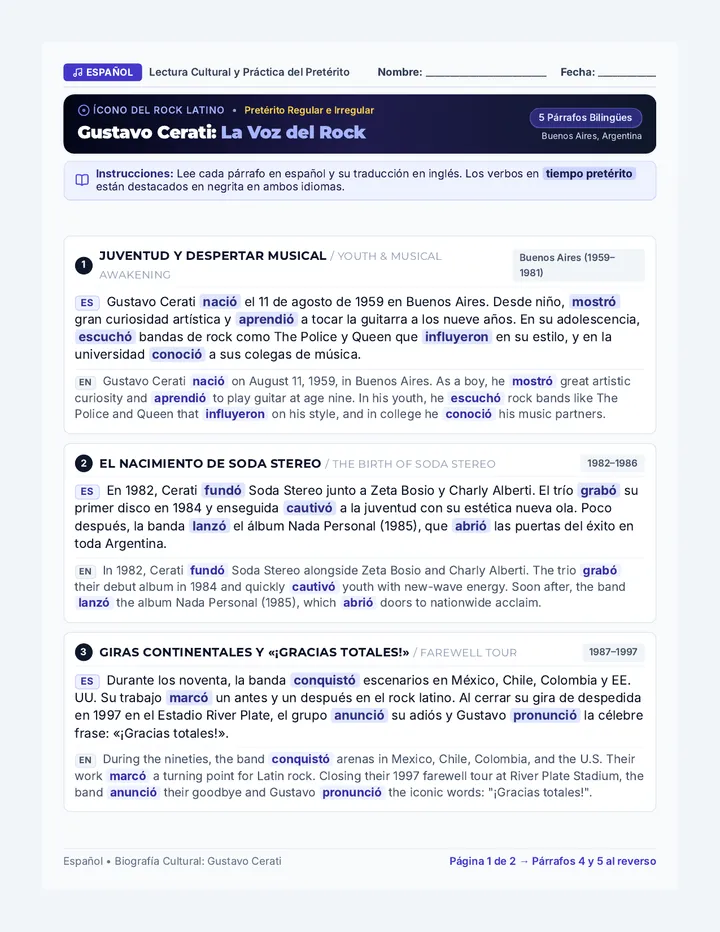
Bilingual Spanish-English cultural reading on Argentine rock legend Gustavo Cerati, featuring significantly enlarged text (15px body font), clear preterite verb highlights, and a comprehensive verb bank across two balanced pages.
A detailed, professional three-page syllabus for High School Spanish III. It outlines course objectives, conversational and cultural focus, quarterly projects, literature and history integration, grading policies, and technology honor codes.
A comprehensive bilingual English-Spanish series based on New Concept English (Book 2). Each lesson features complete vocabulary guides, contrastive grammar lessons, reading comprehension, and beautifully structured print-ready exercises.
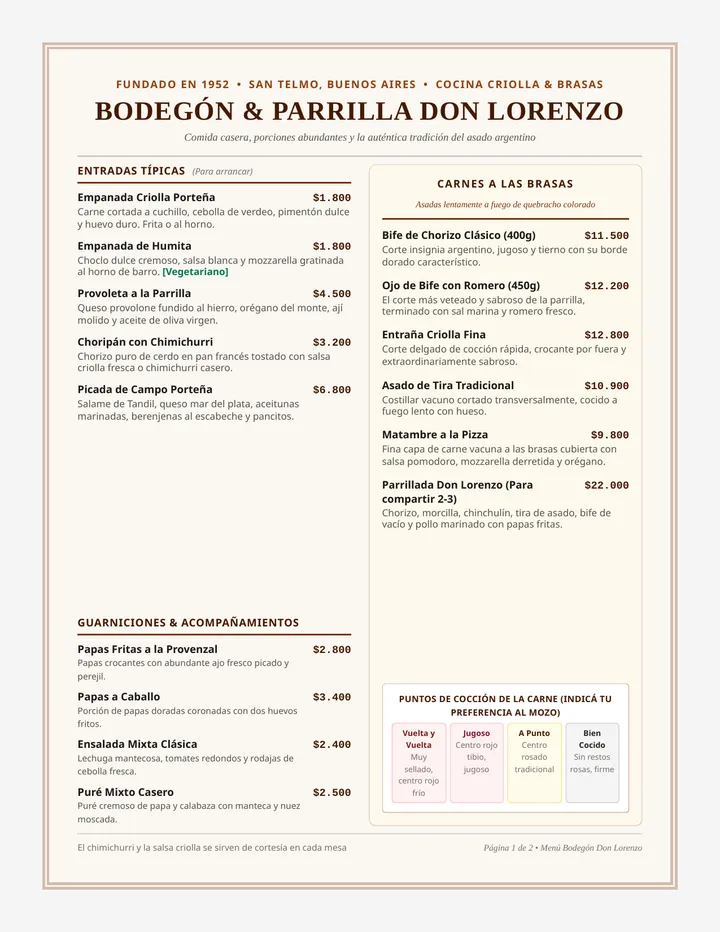
A two-part communicative Spanish travel sequence for 10th graders visiting Buenos Aires. Students decode an authentic Argentine bodegón menu, master essential regional culinary vocabulary, and execute restaurant ordering and payment role-plays.
An intermediate Spanish sequence for 8th graders focused on decoding and using idiomatic expressions (modismos) to achieve cultural fluency. Students progress from distinguishing literal vs. figurative meanings to creating original narratives using culturally authentic language.
Une séquence pédagogique de 5 séances explorant l'ascension, le régime et la chute du fascisme en Italie, adaptée pour une classe de 1ère LV2. La séquence analyse les mécanismes de pouvoir, la propagande, les lois raciales et la résistance.
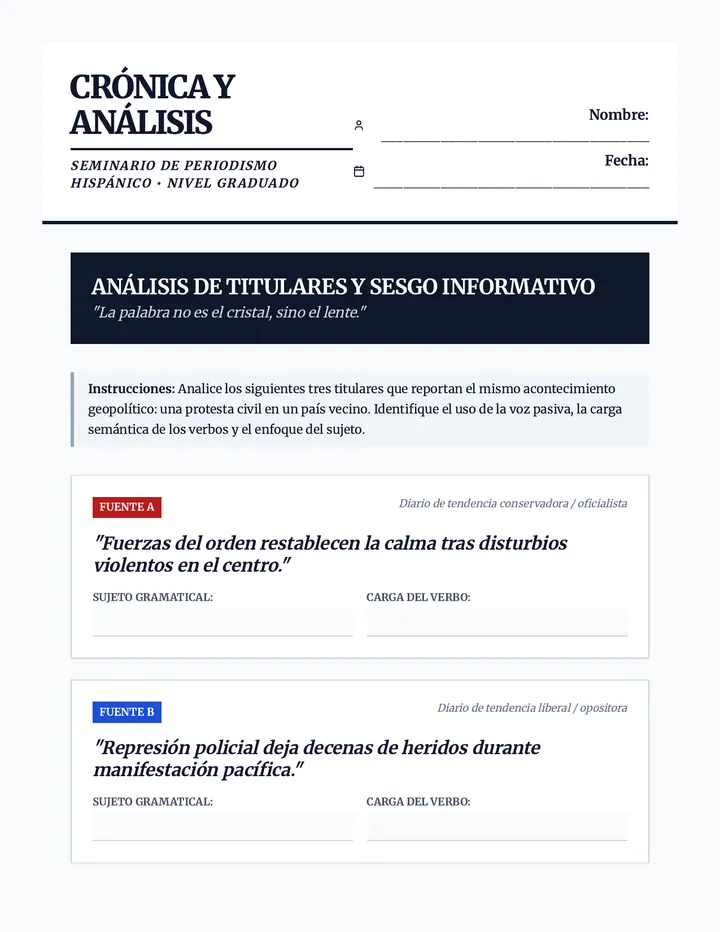
This graduate-level sequence examines how linguistic choices, syntax, and grammatical structures like the subjunctive mood shape political narratives in Spanish-language journalism. Students analyze authentic texts from various Hispanic regions to deconstruct bias, recognize regionalisms, and synthesize conflicting perspectives.
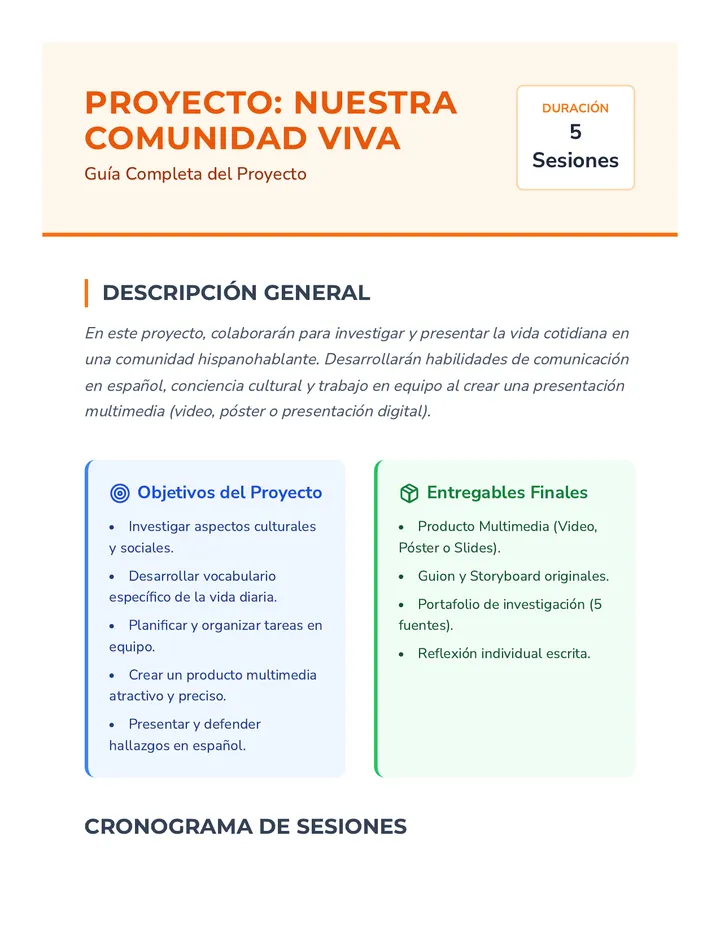
A 5-session high school Spanish project where students research, design, and present a multimedia project about daily life in a Spanish-speaking community, fostering cultural awareness and communication skills.
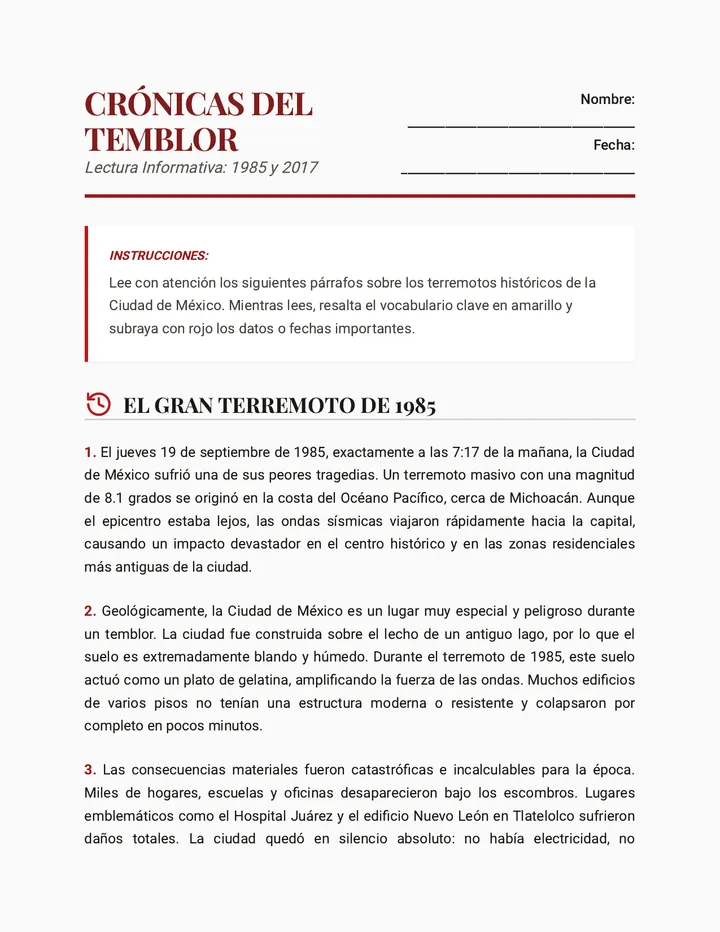
A comprehensive lesson on the historic earthquakes of Mexico City (1985 and 2017), focusing on interpretive reading and academic writing using the Claim, Evidence, Reasoning (CER) framework. Students explore community impact, resilience, and historical comparison.
An interactive, historical-themed lesson bundle designed to master the contrast between the Preterite and Imperfect tenses in Spanish. Students explore the grammar through historical biographies and narrative rules.
A Spanish 2 lesson focused on interpreting relationships and emotions through Selena's 'Cómo la flor' and a narrative text, with a focus on preterite vs. imperfect and narrative structure.
A bilingual reading and writing lesson centered around the life, art, and resilience of Frida Kahlo for Grade 8 students. Features 6-paragraph separate Spanish and English passages, critical writing tasks, and a comprehensive teacher guide.
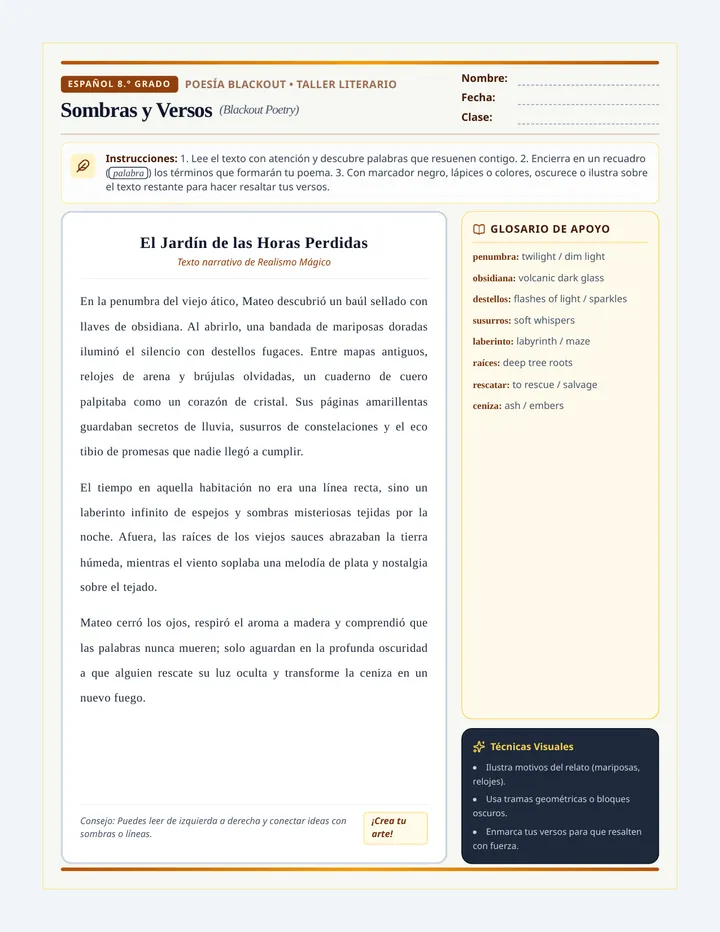
A creative middle school Spanish unit centered on blackout poetry analysis and creation across diverse literary genres.
Explore the origins, legends, and cultural significance of Mexican mole. This lesson covers the indigenous roots of 'mulli', the colonial legends of Puebla, and the modern recognition of mole as a global cultural heritage through a reading passage and assessment.