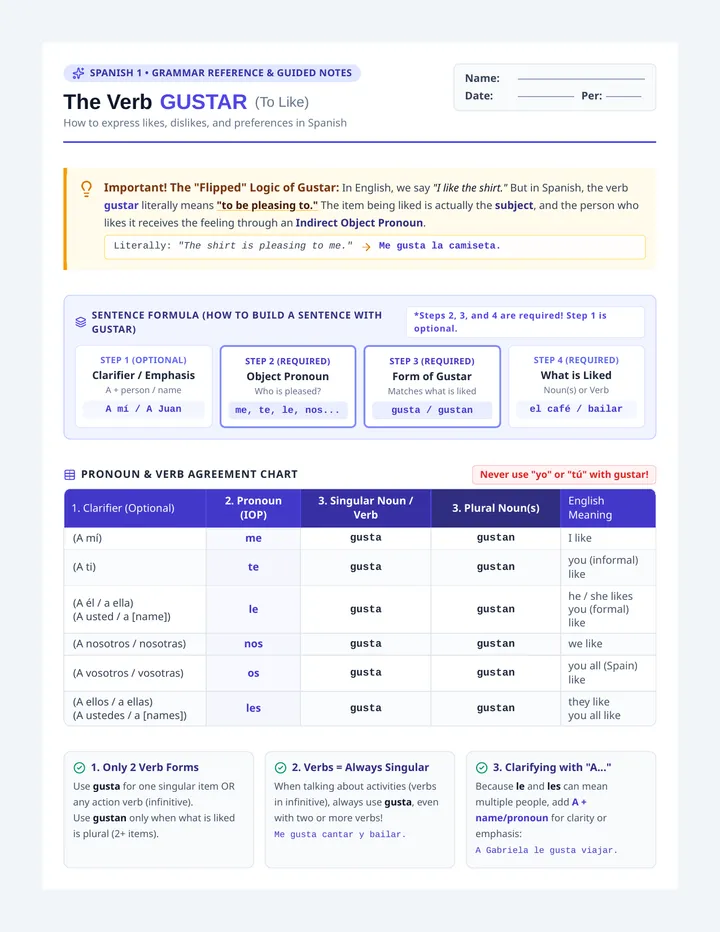
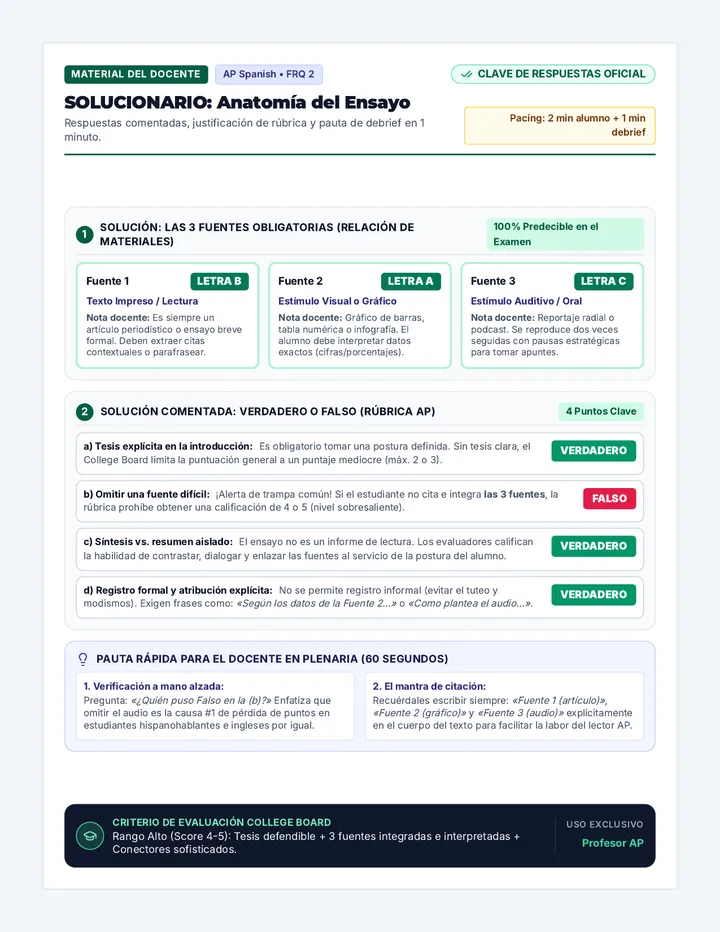
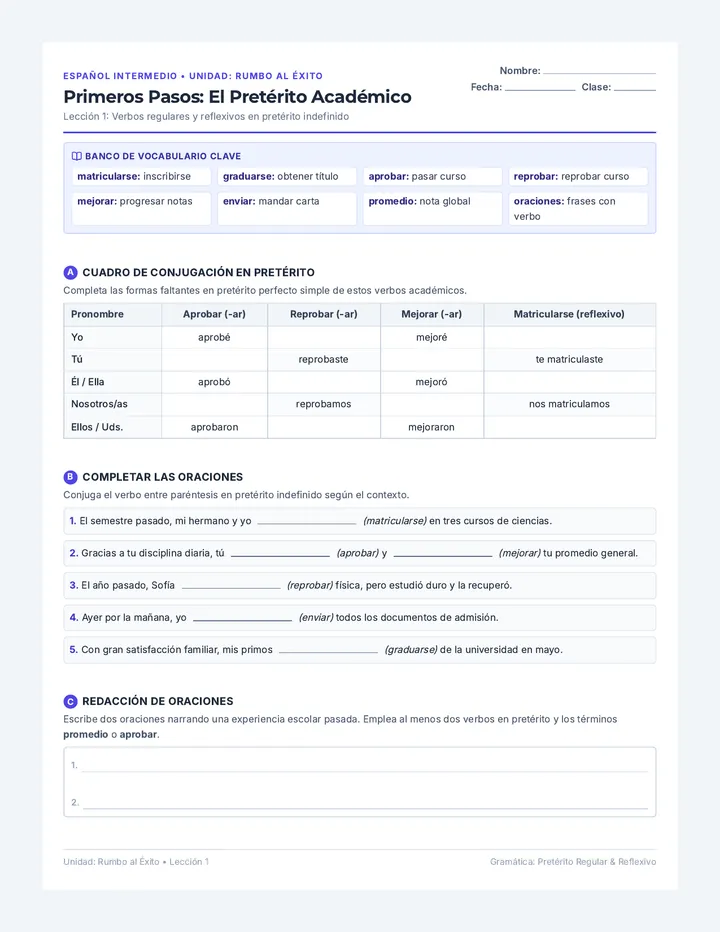
Literal Trap Slides The Literal Trap
Mastering Spanish Idioms: Lesson 1
¿Qué significa realmente?
The Literal Trap
💇♂️🤏
"Tomar el pelo"
(Literal: To take the hair)
What does the AI see?
If you ask a robot to draw this, it might show someone literally grabbing hair. But what do humans mean when they say it?
Hint:
It's what you do when you are joking with someone or "pulling their leg."
¿Qué es un modismo?
Definition:
A group of words established by usage as having a meaning not deducible from those of the individual words.
Literal
Exact word-for-word meaning. (The "Boring" Truth)
Figurativo
The cultural, hidden meaning. (The "Cool" Truth)
Example #1
Intermediate
Estar en las nubes
(To be in the clouds)
☁️🧘♂️☁️
Literal Meaning
Physically floating in the sky.
💭🤔💤
Figurative Meaning
To be daydreaming or distracted.
Your Mission
1. Identify 5 common Spanish idioms.
2. Sketch the "Literal" vs "Real" meaning.
3. Use them in a sentence!
Let's beat the literal trap!
Literal Meanings Worksheet The Literal Trap
Decoding Spanish Modismos
Nombre
Fecha
Instrucciones
Idiomatic expressions (modismos ) are phrases that have a figurative meaning different from their literal translation. For each expression below, draw what it sounds like literally (the trap!) and what it actually means. Then, write a short sentence in Spanish using the expression correctly.
1
Tomar el pelo
(To pull someone's leg / To tease)
Literal Meaning (What AI sees)
Figurative Meaning (The Truth)
Tu oración (Sentence):
2
Estar en las nubes
(To be daydreaming / distracted)
Literal Meaning (What AI sees)
Figurative Meaning (The Truth)
Tu oración (Sentence):
3
Tirar la casa por la ventana
(To spare no expense / go all out)
Literal Meaning (What AI sees)
Figurative Meaning (The Truth)
Tu oración (Sentence):
¿Por qué es difícil traducir modismos?
Explain why you can't just use Google Translate for these phrases.
Idiom Intro Teacher Guide Teacher Guide: The Literal Trap
Lesson 1: Literal vs. Figurative Language
Level: Intermediate Spanish
Lesson Overview
This lesson introduces students to modismos (idioms) by highlighting the absurdity of literal translation. Students will visualize the disconnect between words and meaning to build a conceptual framework for cultural fluency.
Inquiry-Based Visual Literacy Game-Based
Essential Question
"Why is literal translation a trap for language learners?"
The Hook (10 mins)
Use the Literal Trap Slides . Show the AI-generated "Literal" representation of a phrase. Ask students to guess what the idiom actually means before revealing the figurative truth.
Teacher Tip: If you have access to an AI image generator, create images for "Ser un pan comido" (literal: a piece of bread being eaten) or "Tener un cacao" (literal: having a cocoa bean).
Main Activity: Sketch & Solve (25 mins)
Distribute the Literal Meanings Worksheet . Students work individually or in pairs to:
Sketch the literal version (the silly one).
Sketch the figurative version (the real one).
Draft a sentence in Spanish that places the idiom in a logical context.
Key Vocabulary for Lesson 1
Tomar el pelo
To tease / pull someone's leg.
Estar en las nubes
To be daydreaming.
Tirar la casa por la ventana
To go all out (spending).
Ser pan comido
To be a piece of cake.
Assessment & Differentiation
Check for Understanding
Ask students: "If someone tells you 'tirar la casa por la ventana', are they literally destroying their house?" Use their responses to gauge their grasp of non-literal language.
Differentiation
Support: Provide pre-drawn literal images for students to label.Extension: Challenge students to find an English idiom that means the SAME thing (e.g., Pulling leg vs. Tomar el pelo).
Answer Key / Sentence Examples
1. Tomar el pelo: "Mi hermano me dijo que no hay escuela mañana, pero me está tomando el pelo."
2. Estar en las nubes: "Juan no escuchó la pregunta porque está en las nubes hoy."
3. Tirar la casa por la ventana: "Para la fiesta de quinceañera, mis tíos tiraron la casa por la ventana."
Body Idioms Slides Body Language
Somatic Modismos
Lesson 2: Body & Emotion
Desafío Silencioso
How do you act out:
"Costar un ojo de la cara"
(Without using words!)
1
Use gestures to show extreme value .
2
Show the physical part involved (Ojo).
3
Can the class guess the meaning?
Common Somatic Idioms
🦶
Meter la pata
(Literal: To put in the foot/leg)
Meaning: To mess up / "To put your foot in your mouth"
🤚
Echar una mano
(Literal: To throw a hand)
Meaning: To help someone / Give a hand.
👅
Tener lengua larga
(Literal: To have a long tongue)
Meaning: To be a gossip / Talk too much.
Emotion Sort
Negative / Stress
Meter la pata
Estar hasta las narices
Tener mala pata
Positive / Helpful
Echar una mano
Ser uña y carne
Hablar por los codos
Let's Watch & Listen
Search: "Spanish Idioms with Body Parts Tutorial"
Listen for: "Estar hasta las narices" — What does it mean?
Emotion Sorting Cards Activity Modismo Match: Emotion Sort
Cut out the cards and group them by the emotion or situation they describe.
🦶
Meter la pata
Literal: To put in the leg
¿Qué emoción?
🤚
Echar una mano
Literal: To throw a hand
¿Qué emoción?
👃
Estar hasta las narices
Literal: To be up to the noses
¿Qué emoción?
👀
Costar un ojo de la cara
Literal: To cost an eye
¿Qué situación?
🥩
Ser uña y carne
Literal: To be nail and flesh
¿Qué emoción?
👄
Hablar por los codos
Literal: To talk through elbows
¿Qué emoción?
¡Qué Problema! (Stress/Negative)
¡Qué Bien! (Positive/Social)
Desafío Final:
Choose one idiom and explain its English equivalent. Are they similar or totally different?
Body Idioms Teacher Guide Teacher Guide: Body Language
Lesson 2: Somatic Idioms & Emotions
Kinesthetic Learning
Lesson Overview
This lesson focuses on idioms that use parts of the body (hands, eyes, feet, elbows) to express complex emotions or social situations. Students will engage in physical acting (charades) and categorization to cement these high-frequency phrases.
Skills Focus
Vocabulary Retention
Kinesthetic Learning
Emotional Intelligence
The Hook: Modismo Charades
Show Slide 2. Call a volunteer to the front. Whisper one of these idioms to them:
- Echar una mano
- Costar un ojo de la cara
- Meter la pata
- Hablar por los codos
The student must act out the meaning (not the words!) until the class guesses correctly.
Main Activity: Emotion Sort
Students use the Emotion Sorting Cards Worksheet to categorize modismos. This helps them understand when to use a phrase, not just what it means.
¡Qué Problema!
• Meter la pata (Accident/Mistake)
• Estar hasta las narices (Fed up)
• Costar un ojo de la cara (Expensive)
¡Qué Bien! / Social
• Echar una mano (Helping)
• Ser uña y carne (Close friends)
• Hablar por los codos (Very talkative)
Common Misconceptions
Students often confuse "Tener mala pata" (Bad luck) with "Meter la pata" (To make a mistake). Clarify that one is about luck, the other is about an action you took.
Spanish Scaffolding
Encourage students to use the phrase "Me parece que..." (It seems to me...) when guessing charades to practice sentence starters.
Food and Animal Slides Tacos & Turkeys
Food & Animal Metaphors
Lesson 3: Cultural Comparisons
Idiom Match-Up
"Ser pan comido"
(Literal: To be eaten bread)
"A piece of cake"
(Literal: Un pedazo de pastel)
Why the difference?
In English, easy things are cake . In Spanish, easy things are bread . Why do you think different cultures choose different foods for their idioms?
"The culture is hidden in the kitchen!"
The Animal Menagerie
🦃
La edad del pavo
(The age of the turkey)
Meaning: The "awkward phase" of being a teenager / puberty.
🍝
Estar como un fideo
(To be like a noodle)
Meaning: To be very skinny / thin.
🐐
Estar como una cabra
(To be like a goat)
Meaning: To be acting crazy or totally nuts.
🎃
Dar calabazas
(To give pumpkins)
Meaning: To reject someone (usually romantically).
Idiom Detective
Match these Spanish phrases to their closest English "cousins":
1. Ser un gallina Chicken
2. Ser pan comido Bread
3. Estar como una cabra Goat
A
To be crazy / nuts
B
To be a wimp
C
Piece of cake
Culture Discussion
Why do you think Spanish uses turkeys (pavos) to describe awkward teenagers while English says "ugly ducklings" or just "the awkward phase"?
Think about how turkeys behave vs. how ducks behave!
Idiom Comparison Worksheet The Great Idiom Swap
Nombre: ___________
Part 1: Connect the Cousins
Match the Spanish modismo on the left with its closest English meaning on the right.
1. Ser un gallina
2. Estar como una cabra
3. Ser pan comido
4. Dar calabazas
5. Estar como un fideo
A To be very thin (like a noodle)
B To reject/turn someone down
C To be crazy/acting nuts
D A piece of cake (very easy)
E To be a coward / wimp
Part 2: The Literal Menu
Imagine you are opening a restaurant where the menu is taken LITERALLY. Pick two food idioms and draw what the "Special" would look like on the plate.
Plato #1: ___________________
¿Qué significa realmente?
Plato #2: ___________________
¿Qué significa realmente?
Part 3: Mini-Dialogo
Write a 3-line dialogue between two friends using at least ONE animal idiom.
Amigo A:
Amigo B:
Amigo A:
Food and Animal Teacher Guide Teacher Guide: Tacos & Turkeys
Lesson 3: Food & Animal Metaphors
Cultural Case Study
Lesson Overview
Food and animals are universal, but how we use them in metaphors varies wildly between cultures. This lesson explores the "why" behind idioms like "La edad del pavo" and "Ser pan comido" , encouraging students to compare Spanish cultural markers with their own.
Vocabulary Pillars
Food: Pan, Calabazas, Fideos, Cacao.
Animals: Pavo, Cabra, Gallina, Perro.
Cross-Cultural Comparisons
Spanish Idiom English "Cousin" Literal Translation Ser pan comido A piece of cake To be eaten bread Dar calabazas To shoot someone down To give pumpkins La edad del pavo The awkward phase The turkey age Ser un gallina To be a chicken To be a hen/rooster
Activity Guide: The Literal Menu
In Part 2 of the worksheet, students design a menu. Encourage them to be as silly as possible.
Example 1
"Plato de Calabazas" — They should draw a person handing a pumpkin to a sad date, representing rejection.
Example 2
"El Fideo Humano" — A drawing of a stick person made of spaghetti, representing being thin.
Pro Tip: Ask students if they know any other animal idioms. If they mention "Estar como una regadera" or "Perro que ladra no muerde" , explain the cultural origins of those too!
Context Code Slides The Context Code
Cracking Idioms in Dialogue
Reading
Listening
Decoding
Idiom Detection Radar
🤨
The "Wait, What?" Test
Does the sentence make sense literally in this situation? If not, it's likely an idiom.
🏘️
Surrounding Clues
Look at the sentences before and after . Do they talk about an emotion or a conflict?
🎭
The Tone Check
Is the speaker happy, angry, or joking? Idioms usually carry a strong emotional tone.
Case Study: El Chisme
Dialogue Practice
MARTA: "Oye, ¿viste a Pablo ayer? Estaba muy extraño."
CARLOS: "¡Sí! No paraba de hablar. Estaba hablando por los codos."
MARTA: "Pues, creo que tiene un secreto..."
Detective Challenge:
Based on "No paraba de hablar", what does "hablando por los codos" mean?
Modismos in Music
Authentic Audio Context
"Tiraste mi amor por la ventana... No quiero saber nada."
02:14 / 03:45
Phrase to analyze:
"Tirar por la ventana"
Context Clue:
"No quiero saber nada" (Rejection/Done)
Your Mission: Paraphrase Pro
"Mi hermano siempre me toma el pelo, pero hoy tiró la casa por la ventana con su broma."
Task: Rewrite this sentence in "Boring" (Non-idiomatic) Spanish.
1
Identify
2
Decode
3
Rewrite
Paraphrase Pro Worksheet Paraphrase Pro
Cracking the Context Code
Detective:
La Misión:
Idioms are fun, but sometimes we need to say exactly what we mean. Read the dialogues below. Use context clues to determine what the idiom means, then rewrite the final line in "Boring" Spanish (Standard/Non-idiomatic).
1
El Regalo de Cumpleaños
SARA: "¿Viste el nuevo coche de Alejandro? ¡Es increíble!"
MARCOS: "Sí, pero escuché que sus padres tiraron la casa por la ventana para comprárselo."
Detective Notes (Meaning):
¿Qué significa aquí?
Boring Rewrite (Standard Spanish):
2
La Excursión
LUCAS: "¿Terminaste el proyecto para mañana? Yo no entiendo nada."
ELENA: "¡Tranquilo! El profesor dijo que solo son tres fotos. Es pan comido ."
Detective Notes (Meaning):
¿Qué significa aquí?
Boring Rewrite (Standard Spanish):
3
El Chisme de la Escuela
ANTONIO: "No le digas nada a Sofía sobre la fiesta sorpresa."
DANIELA: "Lo sé. Ella siempre se va de la lengua y todos se enteran."
Detective Notes (Meaning):
¿Qué significa aquí?
Boring Rewrite (Standard Spanish):
Final Challenge: The Idiom Story
Rewrite this entire paragraph into standard Spanish. No modismos allowed!
"Hoy metí la pata en clase de español. Estaba en las nubes y cuando el profesor me preguntó, yo hablé por los codos sin decir nada coherente. ¡Qué vergüenza!"
Context Clues Teacher Guide Teacher Guide: Context Code
Lesson 4: Inferring Meaning in Dialogue
Advanced Decoding
Lesson Purpose
"You don't need a dictionary to understand an idiom—you need a detective's eyes."
By this stage, students have the vocabulary. Now they must practice inference . This lesson moves away from isolated phrases and into authentic usage scenarios where the meaning is revealed by social cues.
Strategy: The "Wait, What?" Test
Teach students that if a sentence sounds "out of place" or physically impossible, it's a signal to look for a non-literal meaning. Example: "His parents threw the house through the window."
"Marcos, did they actually pick up their home and toss it? No? Okay, so what else could it mean?"
Worksheet Walkthrough (Paraphrase Pro)
Dialogue 1: Tirar la casa...
Meaning: To spend a lot of money/be extravagant.Standard Rewrite: Sus padres gastaron muchísimo dinero.
Dialogue 2: Pan comido
Meaning: Very easy.Standard Rewrite: Es muy fácil / Es sencillo.
Assessment: The Final Challenge
The final paragraph on the worksheet is a "boss battle" that combines three idioms. Successful students will produce something like:
"Hoy cometí un error en clase de español. Estaba distraído/soñando y cuando el profesor me preguntó, yo hablé demasiado sin decir nada coherente."
Support
Provide a "Word Bank" of standard Spanish verbs (e.g., gastar, distraerse, hablar mucho) for students to use in their rewrites.
Challenge
Ask students to write their OWN context clue dialogue for an idiom we haven't covered yet (e.g., "Hacerse el sueco").
Storytelling Project Slides Idiom Storytellers
The Grand Finale Project
Let's Get Creative!
Your Final Mission
The Task:
Create a Comic Strip or Live Skit that features a "Literal vs. Figurative" misunderstanding.
"One character says an idiom... the other character takes it literally!"
1
Must use at least 4 modismos correctly.
2
Must have a clear beginning, middle, and end .
3
Incorporate visual humor !
Story Spark: The Literal Alien
👽
"Imagine an alien just landed on Earth. He speaks Spanish, but only the dictionary version. He doesn't know modismos yet."
Scenario:
Someone says "Echa una mano" . The alien tries to literally pull off his hand!
Scenario:
Someone says "Ser pan comido" . The alien looks for bread in the trash.
What is a 5/5?
Usage
Idioms are used in the correct emotional context.
Creativity
The story is funny and original, not just a list of phrases.
Grammar
Verbs are conjugated correctly (e.g., "Yo metí la pata" ).
¡Manos a la obra!
"Time to show off your cultural fluency."
Check your notes
Pick your team
Start sketching!
Storytelling Planner Worksheet Idiom Story Planner
Proyecto Final: El Modismo Loco
Nombre: ___________
Project Mastery
Brainstorming
1. Which 4 idioms will you use?
2. Who is your main character?
3. What is the central misunderstanding?
Project Checklist
4+ modismos used correctly.
Dialogue is mostly in Spanish.
Visuals show the "Literal" confusion.
Grammar check (conjugations!).
Storyboard (Draft)
Panel 1: Introduction
Dialogue/Script...
Panel 2: The Idiom is Said
Dialogue/Script...
Panel 3: Literal Misunderstanding
Dialogue/Script...
Panel 4: The Resolution
Dialogue/Script...
Storytelling Rubric Teacher Guide Assessment Guide: Storytellers
Lesson 5: Project-Based Mastery
Rubric & Facilitation
Project Goal
Students demonstrate mastery of idiomatic language by creating a narrative context that relies on the difference between literal and figurative meaning. This pushes them beyond rote memorization into creative application and cultural nuance.
Performance Rubric
Category Excels (5) Approaching (3) Idiom Accuracy Uses 4+ modismos correctly in context with proper verb conjugation. Uses 2-3 modismos; some grammatical errors in verb usage. Narrative Flow Story has a clear arc. Misunderstanding is clever and drives the plot. Story exists but feels rushed; misunderstanding is unclear. Spanish Usage Dialogue is 80%+ Spanish. Vocabulary is varied and appropriate. Relies heavily on English for plot transitions; limited vocabulary. Presentation Comic is polished/colorful OR Skit is performed with energy and clear audio. Comic/Skit is incomplete or lacks visual/auditory effort.
Teacher Facilitation
"How do I help them start?"
• Step 1: Pair students by similar interest (Comics vs. Acting).
• Step 2: Use the "Alien" or "Robot" prompt for those stuck on a plot.
• Step 3: Circulate and check for the "Literal" panel—this is where the humor lives!
Peer Feedback
"The Gallery Walk"
Once comics are done, display them around the room. Give students stickers to vote for:Más cómico (Funniest)Mejor uso de modismo (Best idiom usage).
Project Completion Target: 2 Class Periods