Chronological evolution of musical styles, genres, and influential composers from historical eras to the modern day. Develops critical listening skills and contextual understanding of global musical traditions.
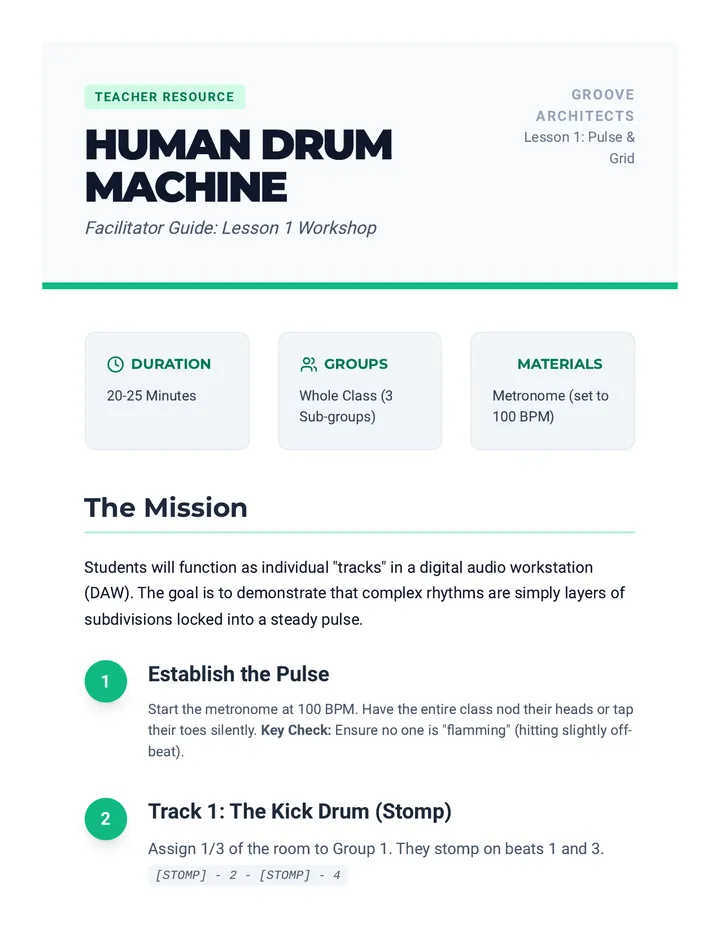
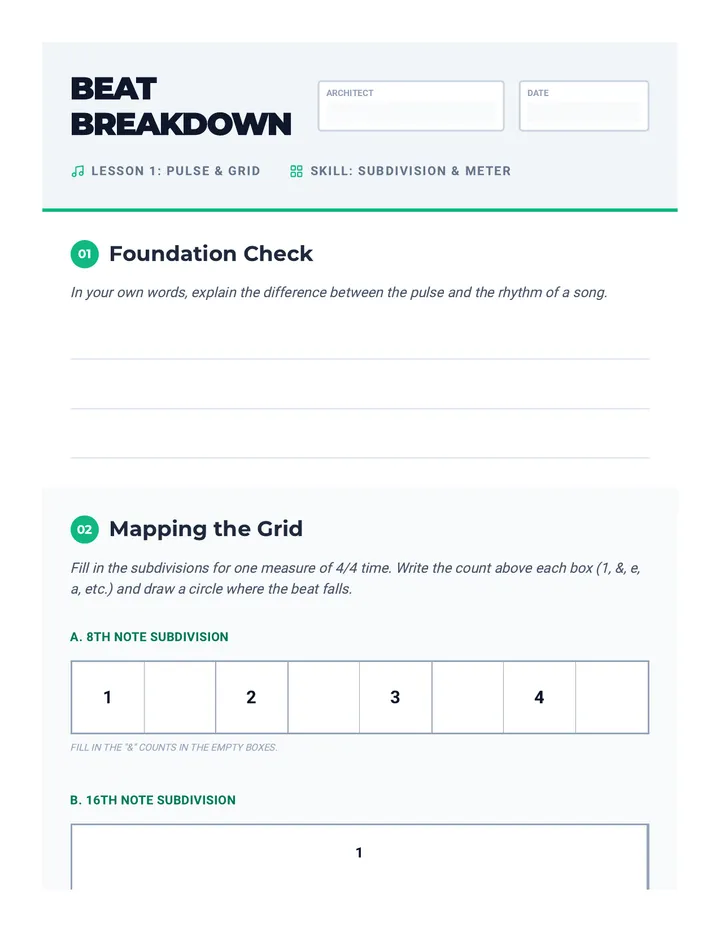
A comprehensive 5-lesson sequence for 7th-grade students on the fundamentals of rhythm, exploring subdivision, syncopation, ostinatos, and polyrhythms, culminating in an original percussion ensemble composition.
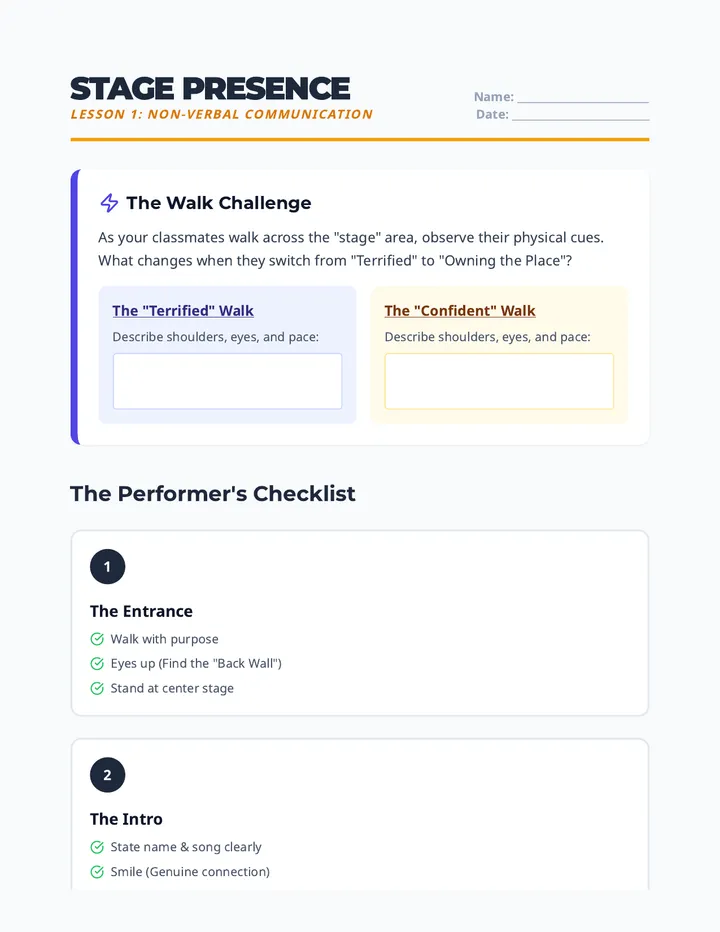
This sequence guides 6th-grade students through the intersection of vocal technique, performance psychology, and genre stylization. Students explore how to adapt their voice and physical presence for Folk and Musical Theater while building the emotional resilience needed for public performance.
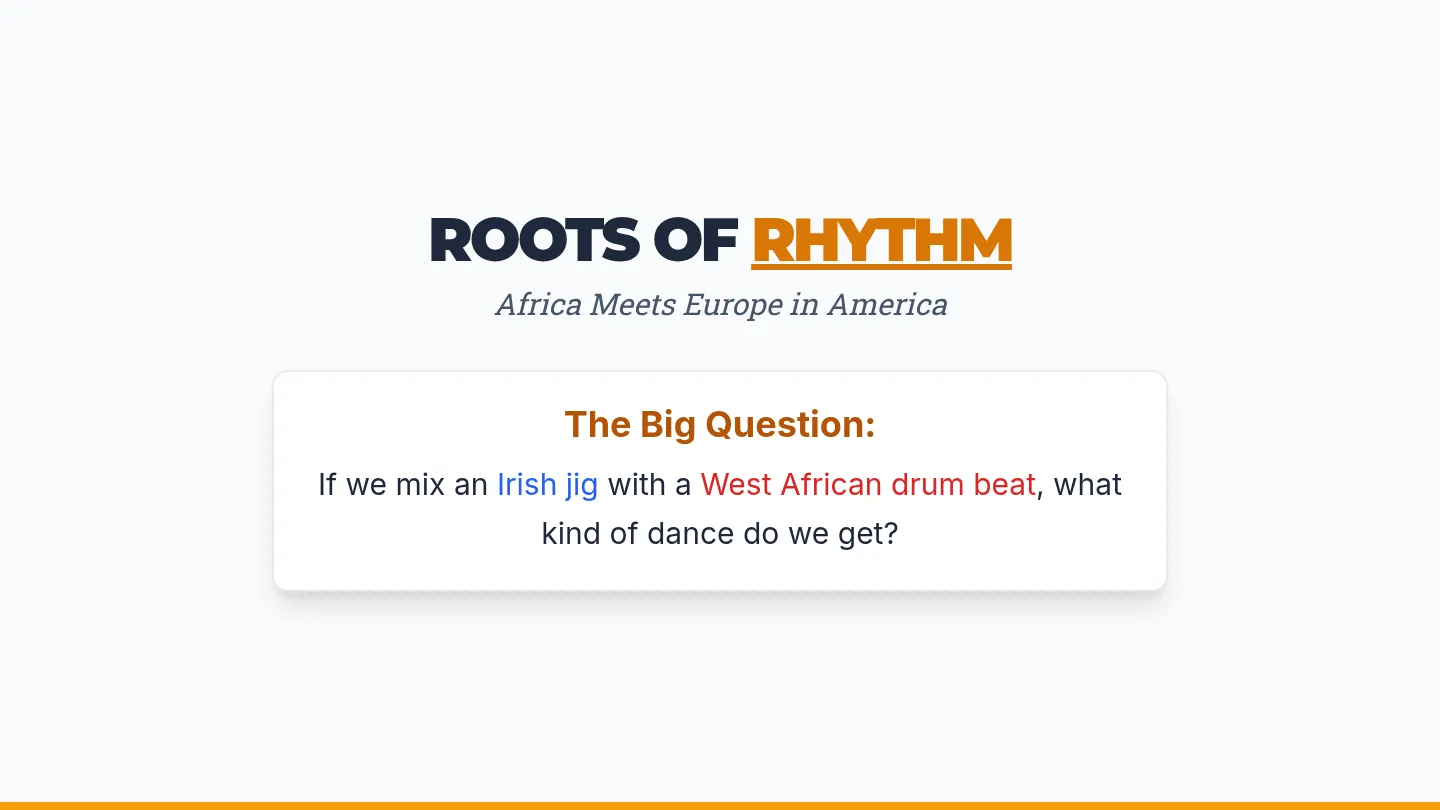
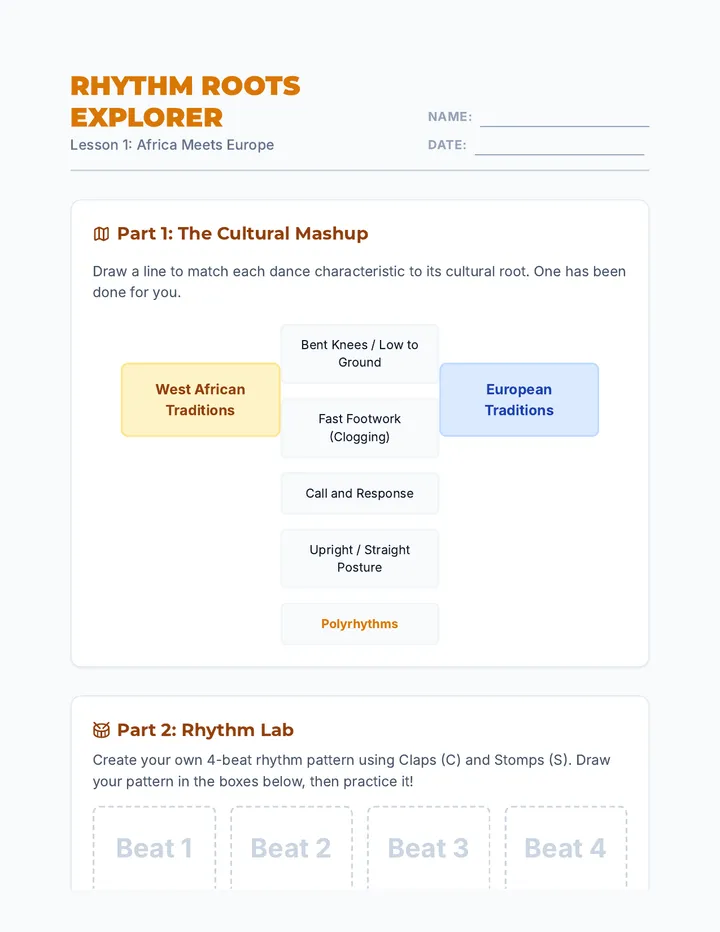
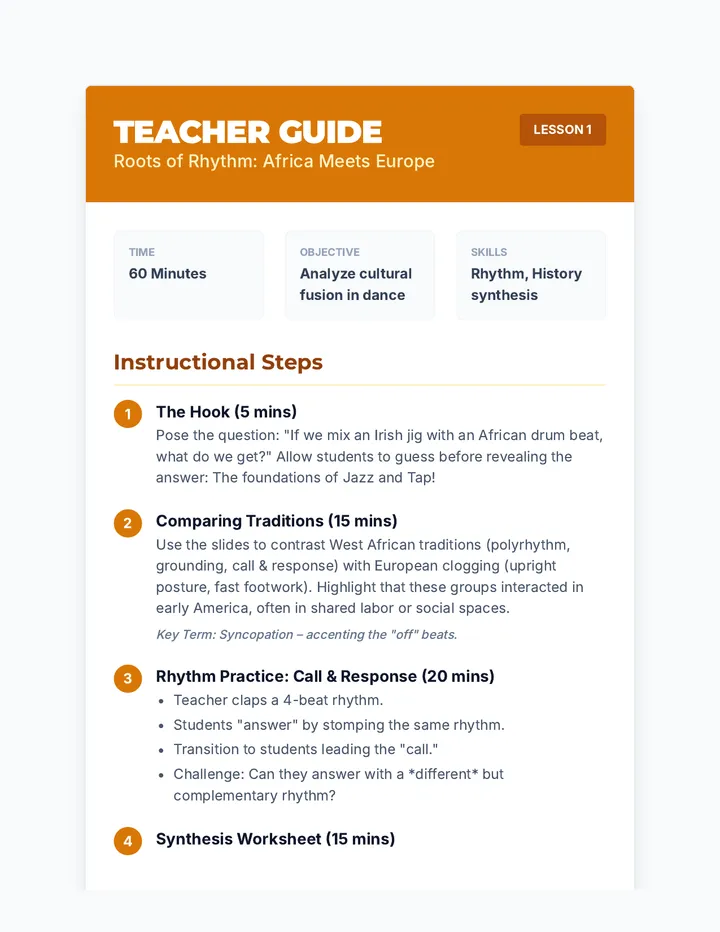
A 5-lesson unit for 4th graders exploring the cultural origins and evolution of American Jazz and Tap dance, from African and European roots to the Harlem Renaissance and Broadway.
A 5th-grade music history sequence exploring the development of Jazz and Blues, from African call-and-response roots to the birth of Rock n' Roll. Students investigate structural forms like the 12-bar blues, concepts like syncopation and improvisation, and the cultural resilience behind the music.
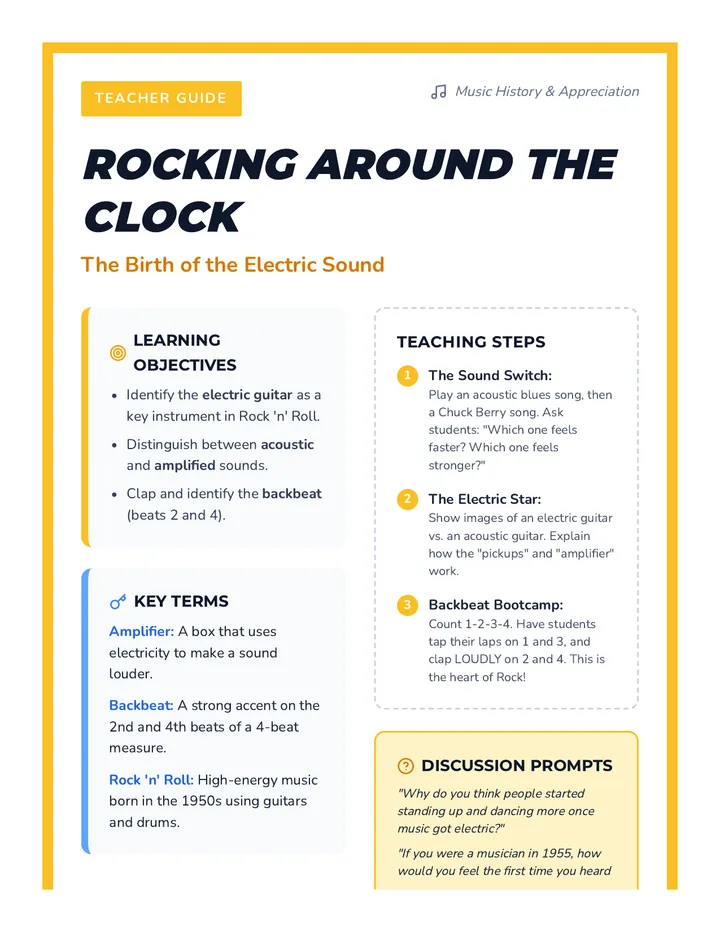
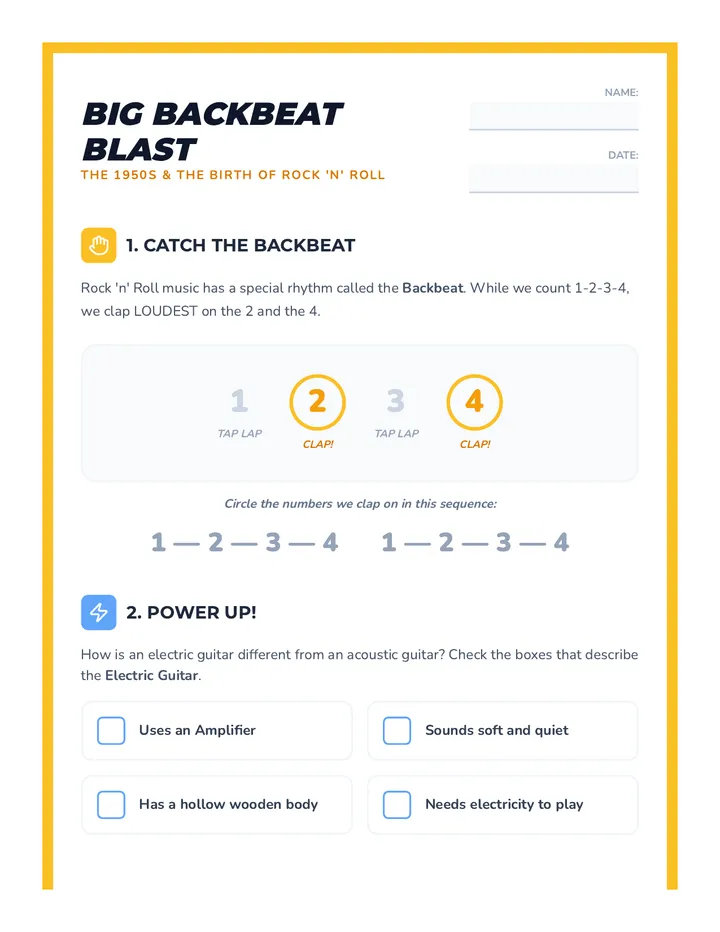
A journey through the 20th and 21st centuries, exploring how technology like electric guitars and synthesizers shaped genres from Rock 'n' Roll to Pop. Students analyze rhythm, structure, and sound to build a chronological timeline of musical evolution.
A global musical expedition for 2nd graders to discover how geography and culture shape instruments and traditions across four continents. Students explore materials, physics of sound, and the cultural roles of music through inquiry and hands-on activities.
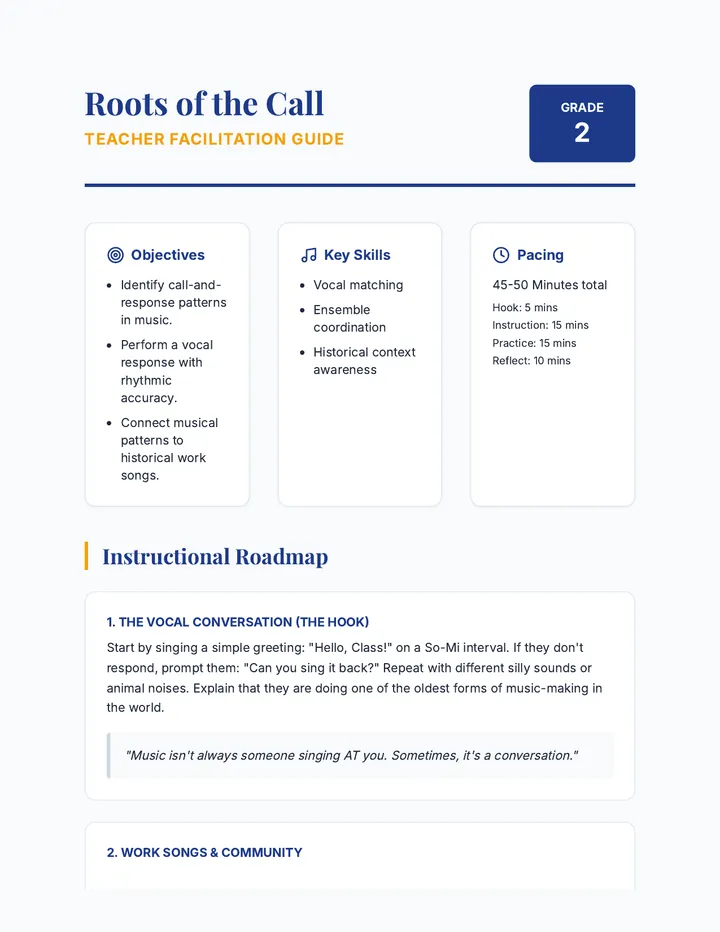
An immersive workshop-style sequence for 2nd graders exploring the roots of Jazz, Blues, and Folk music through call-and-response, syncopation, and improvisation. Students trace American musical history from work songs to the Swing era through active music-making.
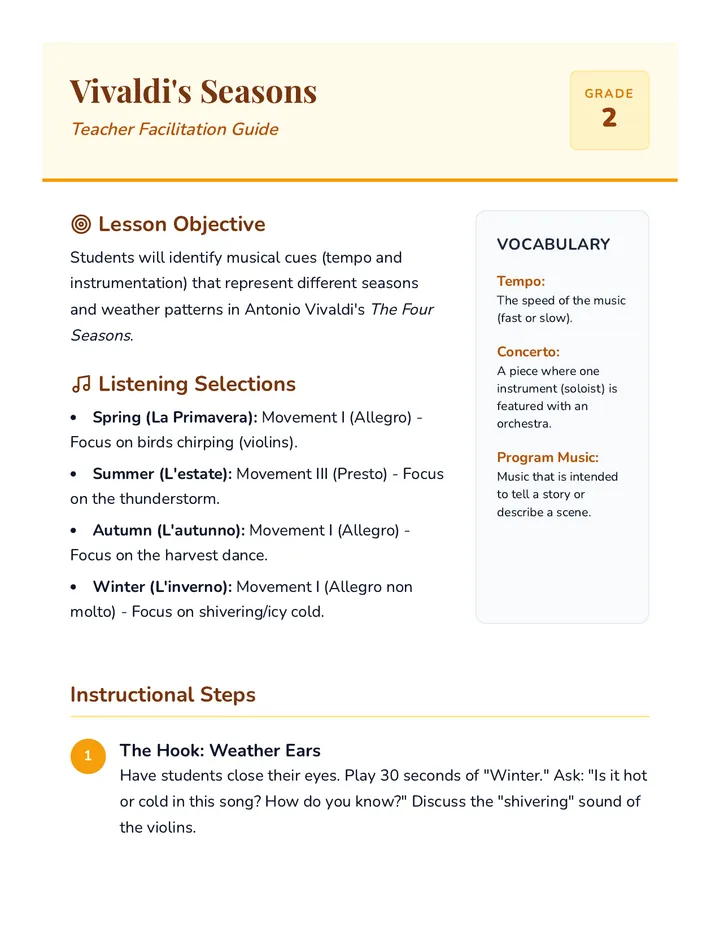
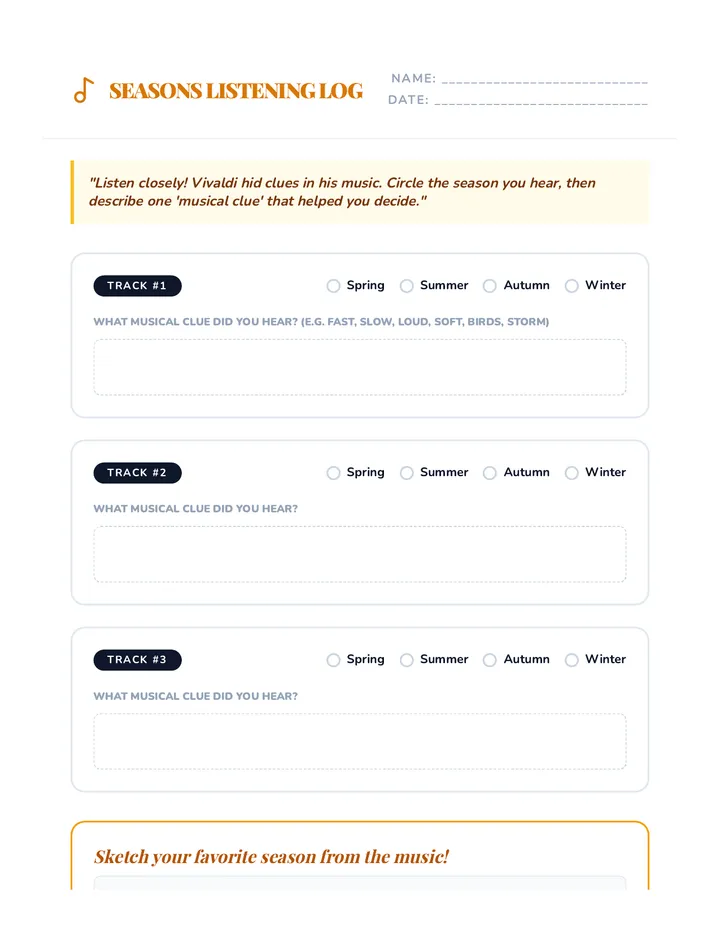
A 5-lesson sequence for 2nd graders exploring how classical composers use musical elements to tell stories and express emotions. Students 'meet' famous composers like Vivaldi and Beethoven, identifying tempo, dynamics, and leitmotifs in iconic works.
A comprehensive introduction to the four families of the orchestra for 2nd graders. Students explore timbre, mechanics, and historical roles of strings, woodwinds, brass, and percussion, culminating in a conductor simulation.
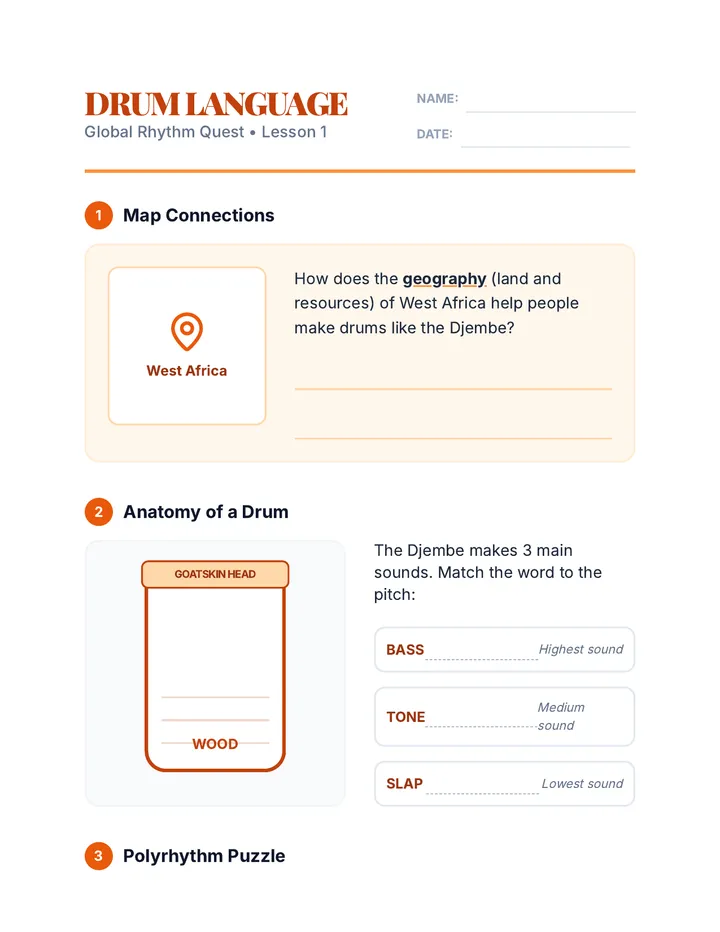
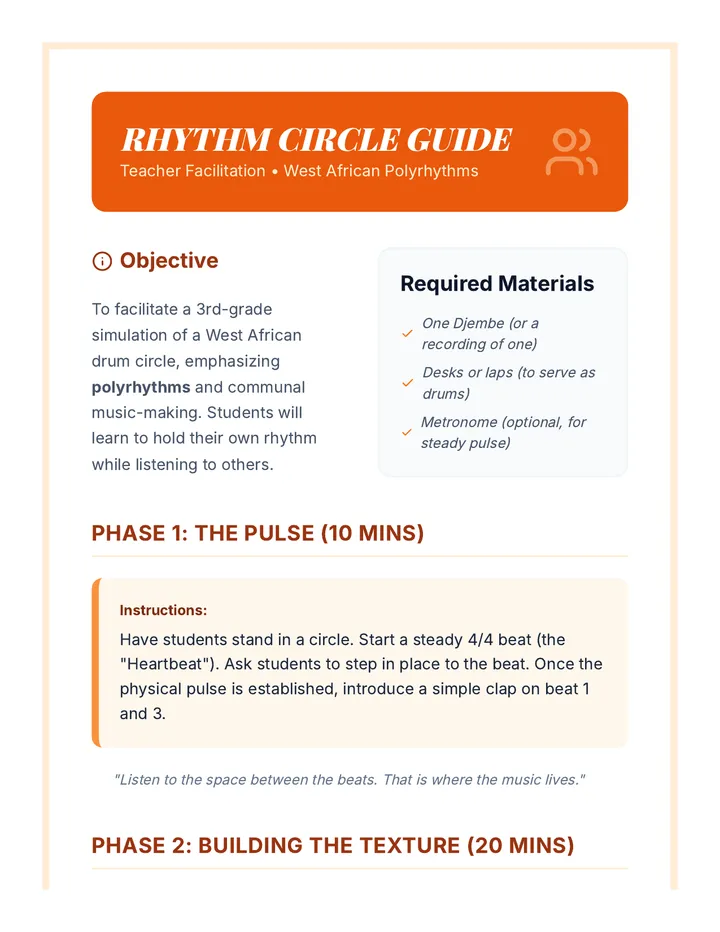
A 5-lesson sequence for 3rd graders exploring the music and instruments of West Africa, Asia, the Andes, and North America, focusing on how geography and culture shape sound.
This sequence explores how technology—from the electric guitar to digital software—transformed music from the mid-20th century to today, focusing on genre evolution, song structure, and production.
A comprehensive introduction to the orchestra and the Classical era for 3rd graders, covering instrument families, specific sections, key composers (Mozart and Beethoven), and the art of conducting.
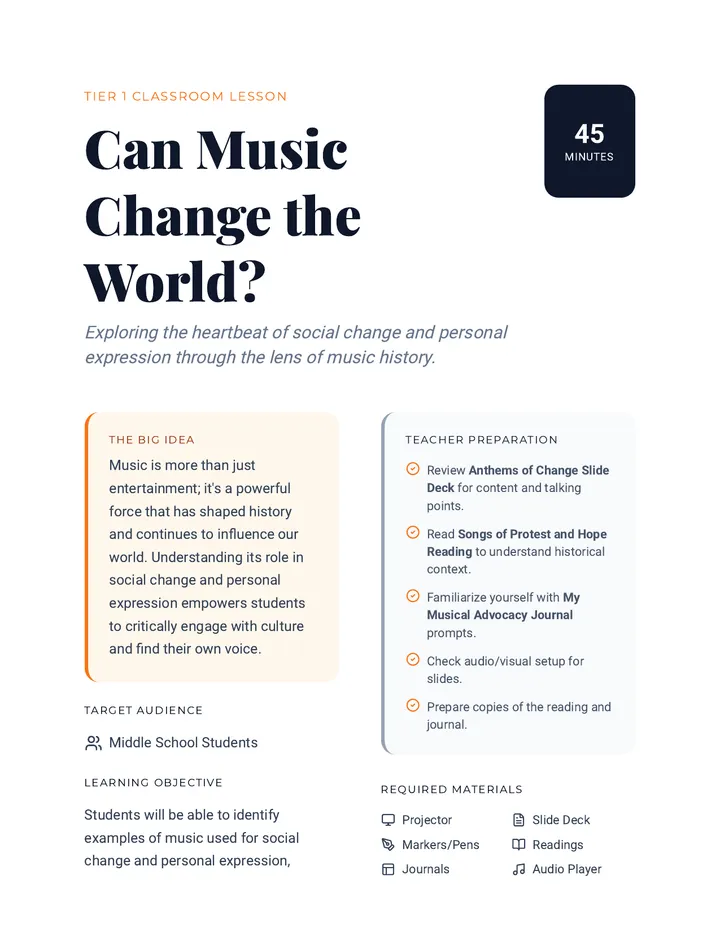
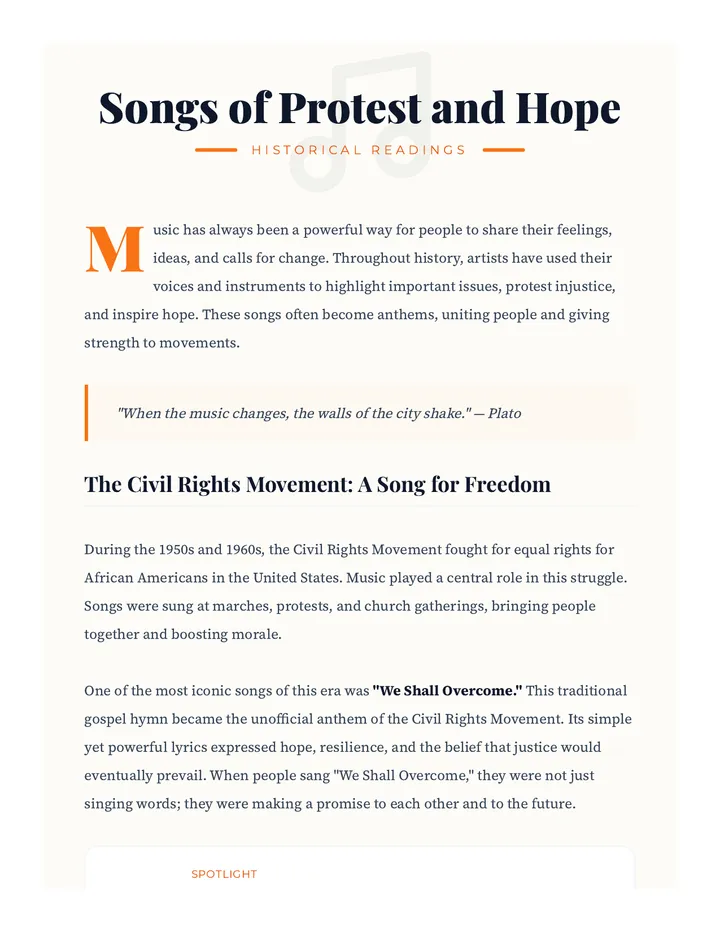
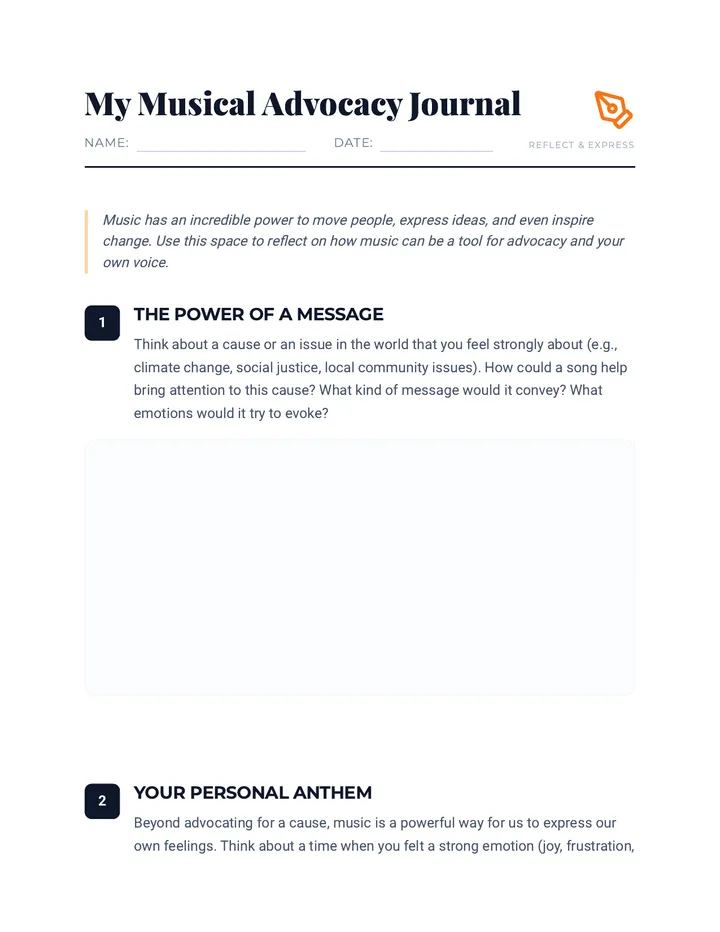
Explore the powerful impact of music as a tool for social change and personal expression throughout history. This lesson encourages middle school students to think critically about music's role beyond entertainment and inspires them to find their own voice through a guided journal activity.
A middle school music lesson exploring how tempo, harmony, and instrumentation influence emotional responses to music, using the metaphor of a mood ring.
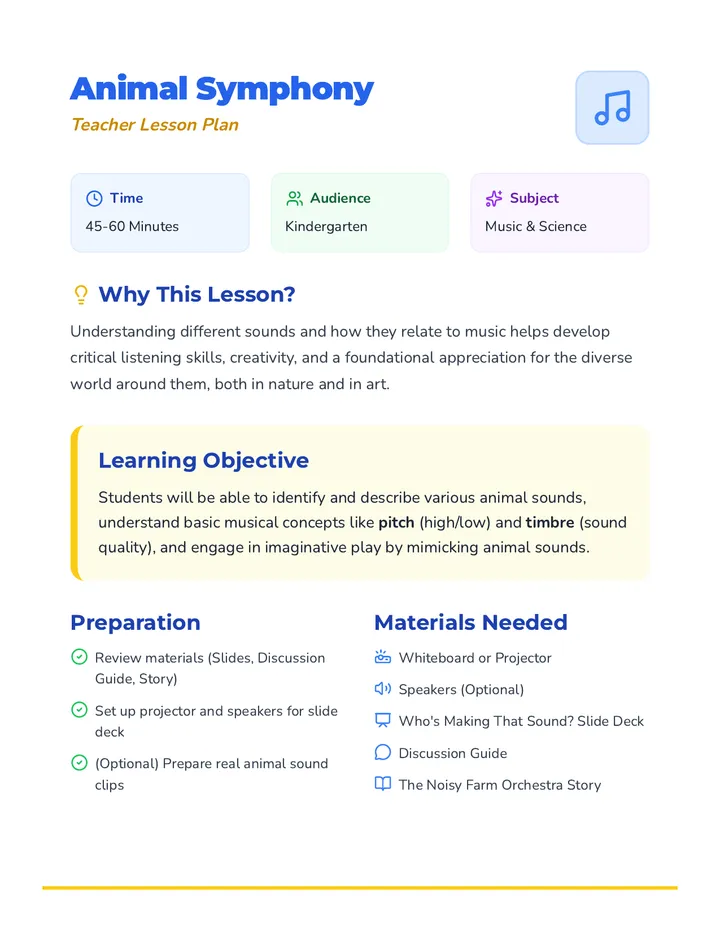
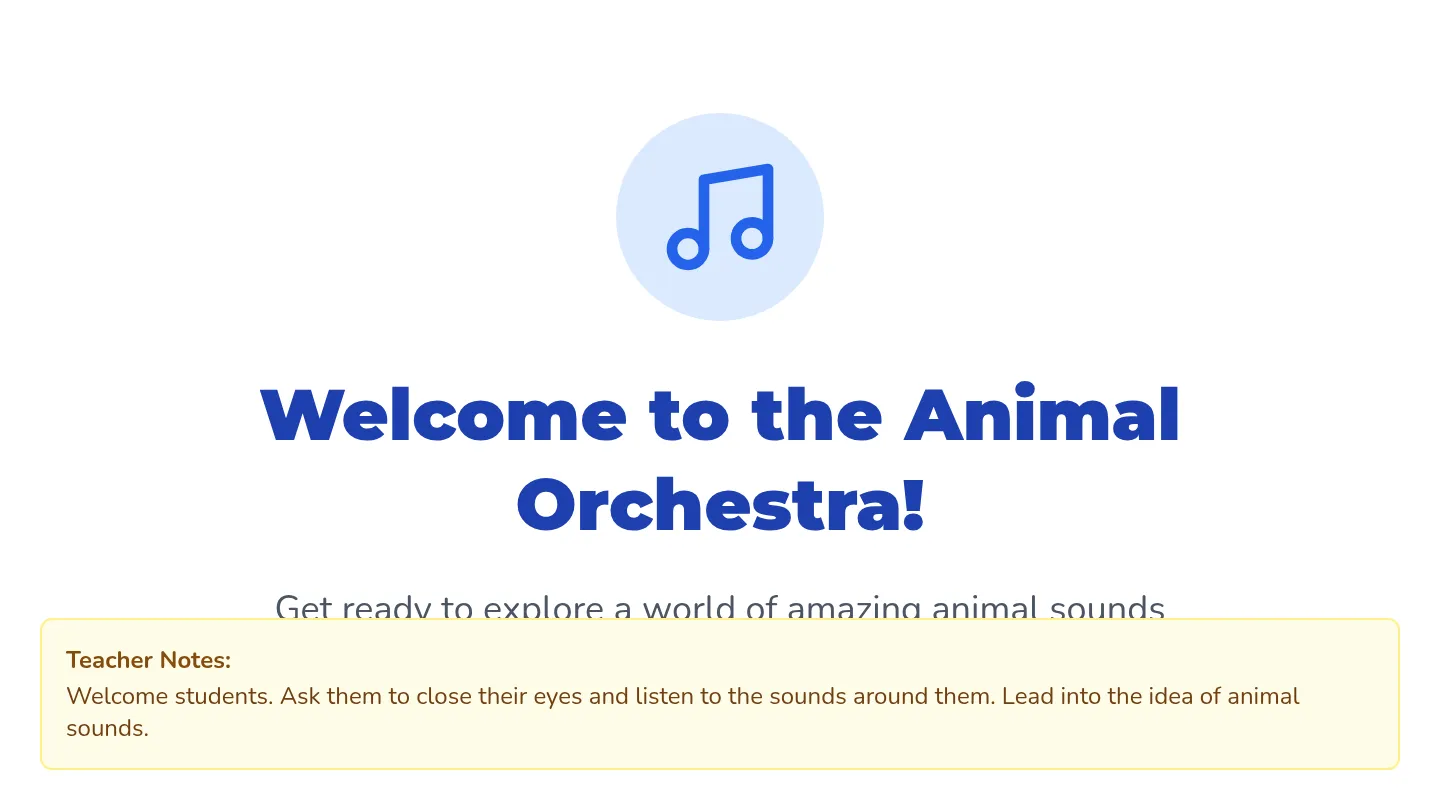
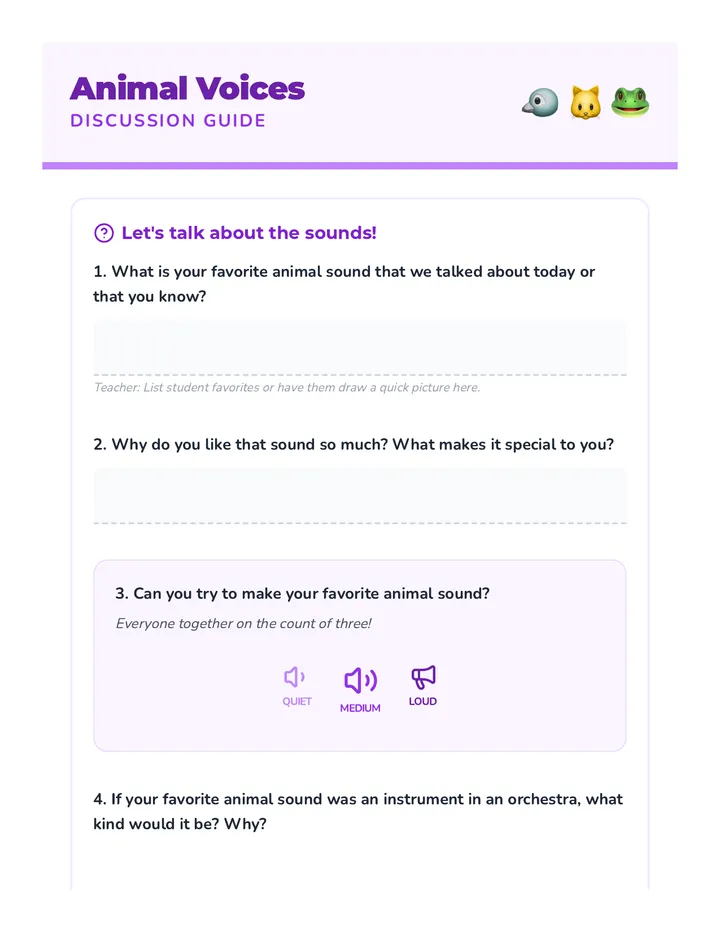
A Kindergarten music and science lesson exploring animal sounds through the lens of pitch and timbre, culminating in a 'class orchestra' of animal mimics.
A festive 30-minute activity where students identify popular Christmas carols and lyrics through a crossword puzzle, enhancing cultural literacy and vocabulary.
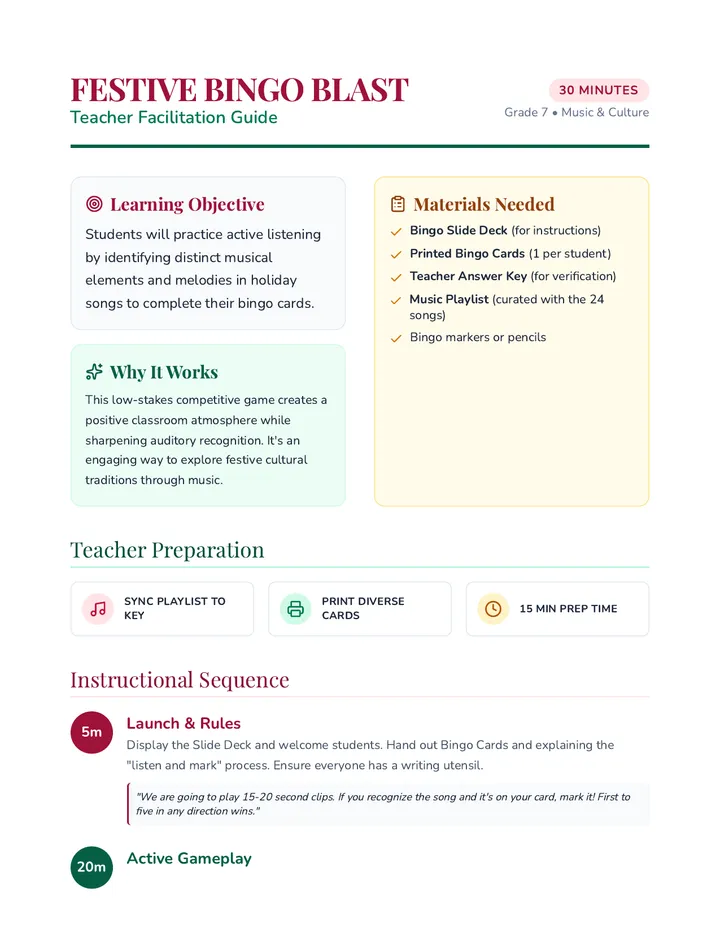
An interactive, festive listening game where students identify popular holiday tunes to win at bingo. Perfect for building active listening skills and classroom community during the holiday season.
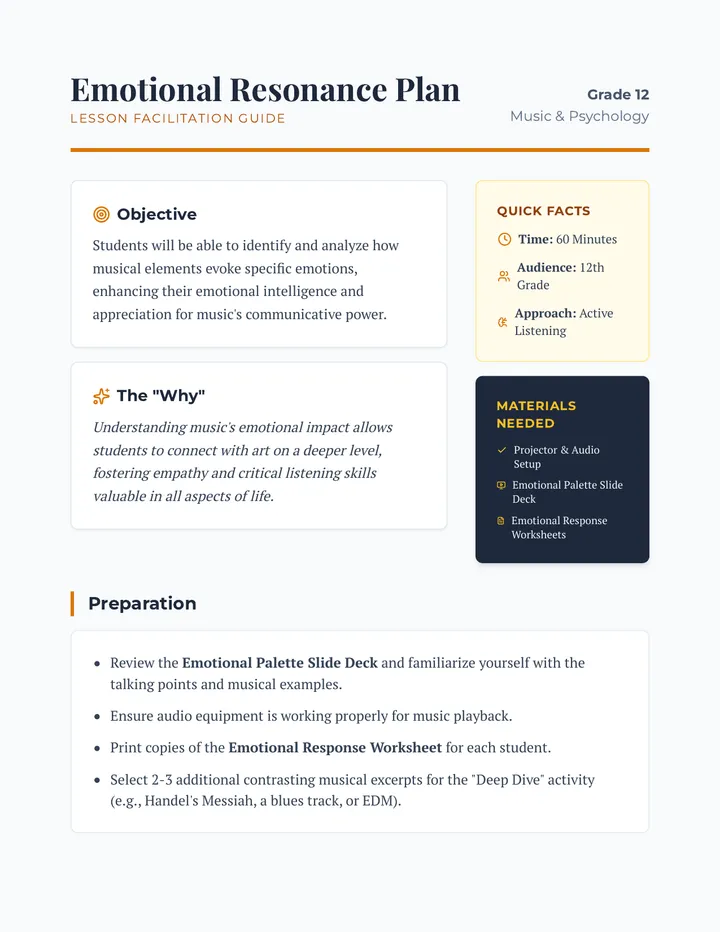
This lesson investigates how music evokes and expresses a wide range of human emotions by analyzing specific pieces for their affective qualities. 12th graders will develop emotional intelligence and a deeper connection to music by identifying how melody, harmony, rhythm, and other elements communicate feeling.
This interactive 30-minute lesson introduces 7th-grade students to the essential etiquette of attending a symphony concert, focusing on respect for performers and fellow audience members. Students will explore traditional norms through discussion, visual aids, and scenario-based practice.
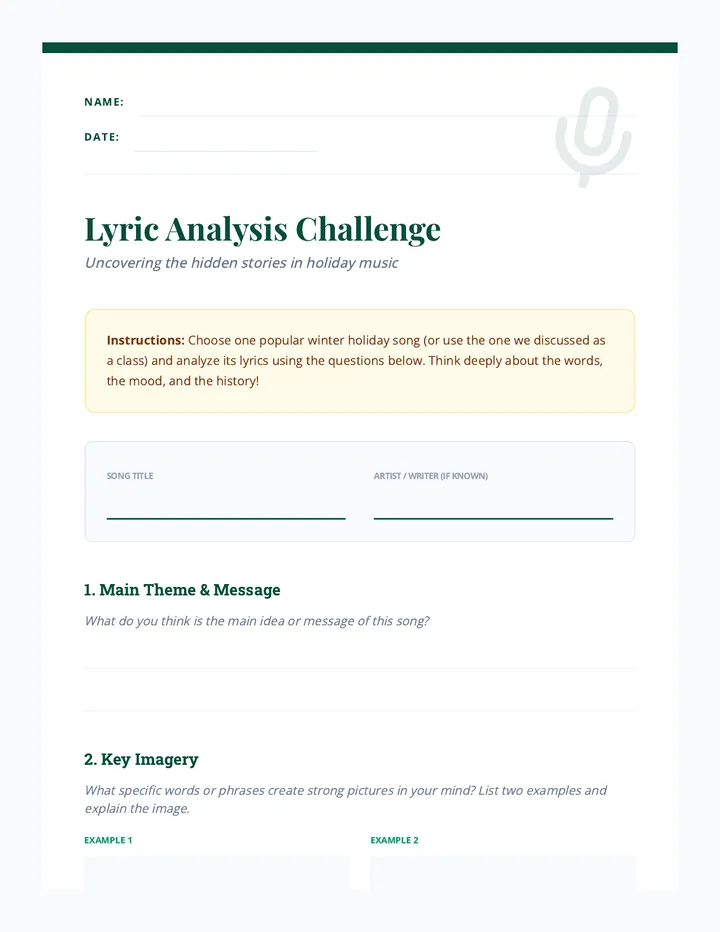
This lesson explores the history and cultural significance of popular winter holiday songs, encouraging students to analyze lyrics and understand musical traditions.
A 60-minute journey for 6th graders to explore diverse musical cultures, instruments, and traditions from around the world through interactive slides, reading, and group activities.
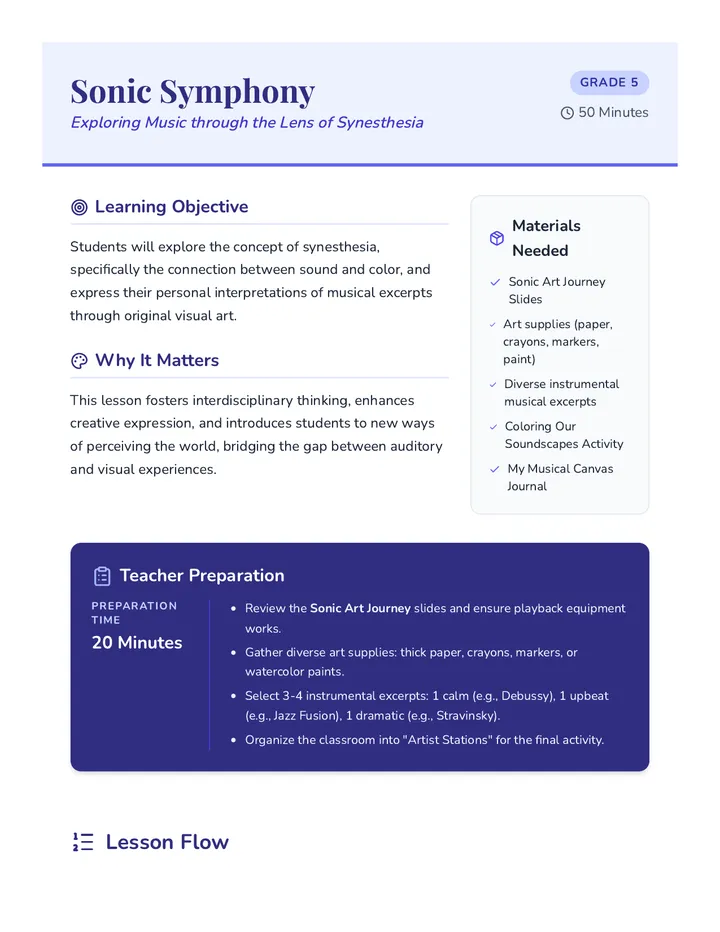
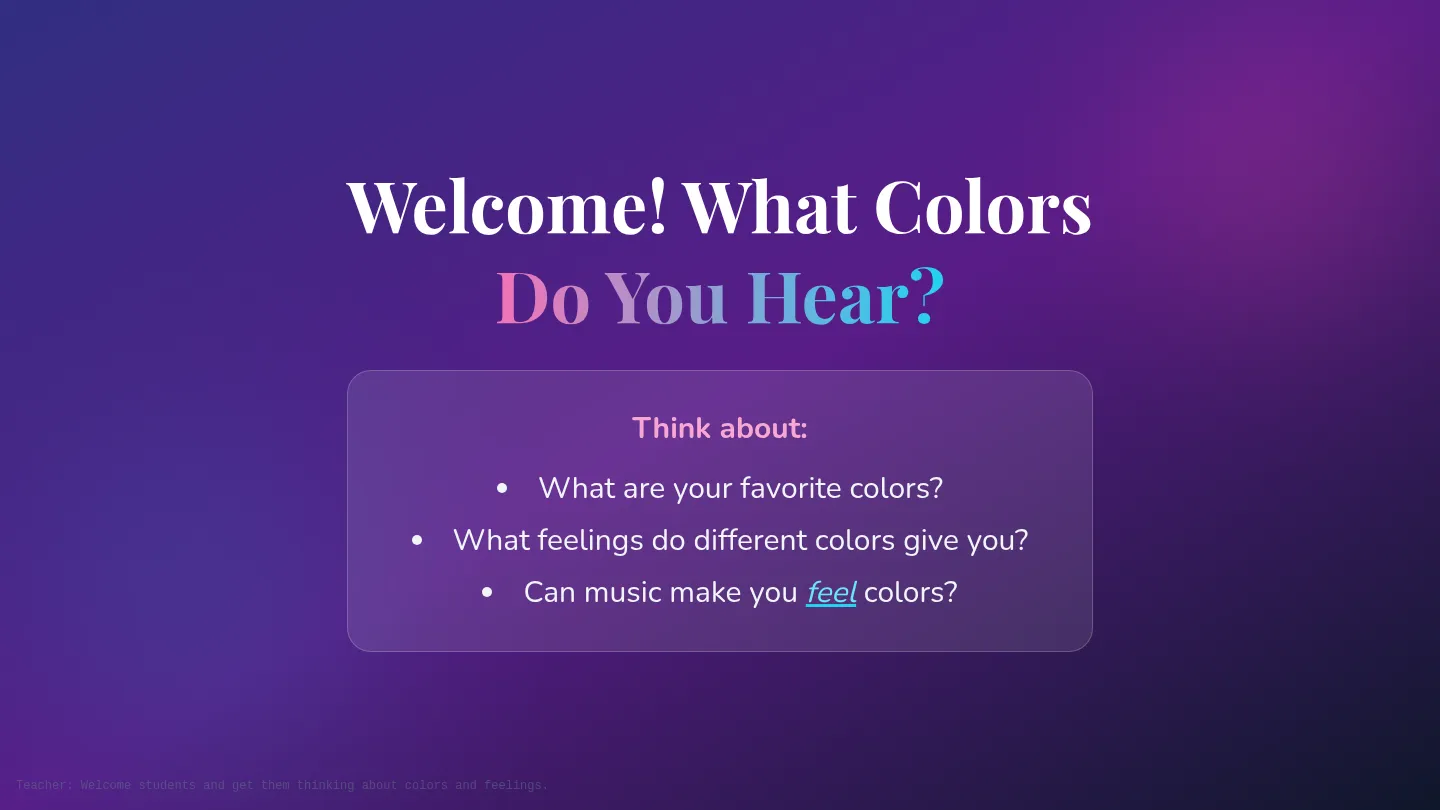
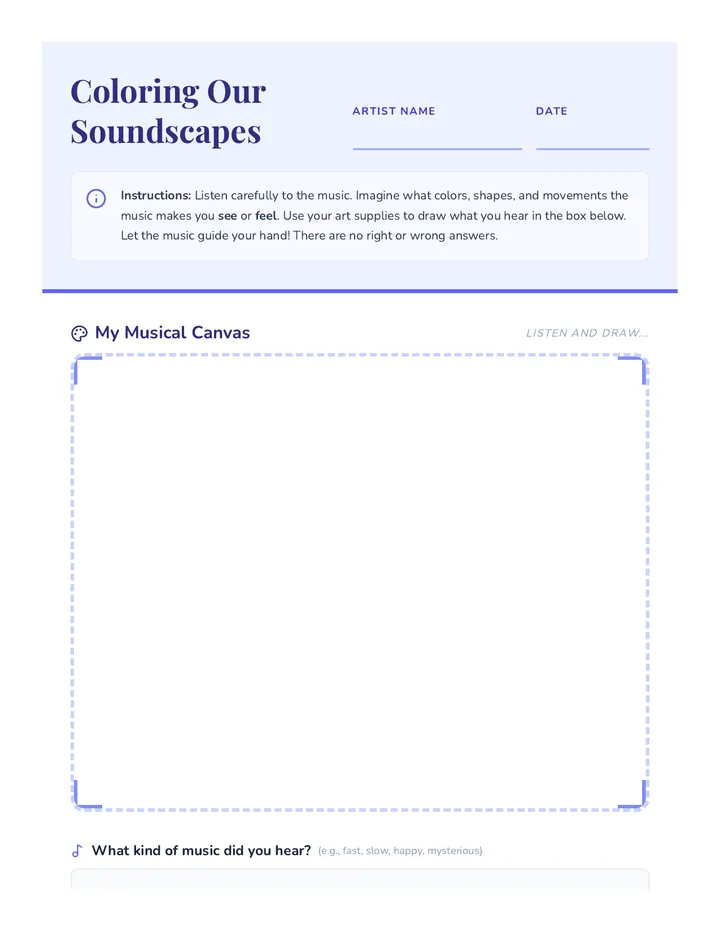
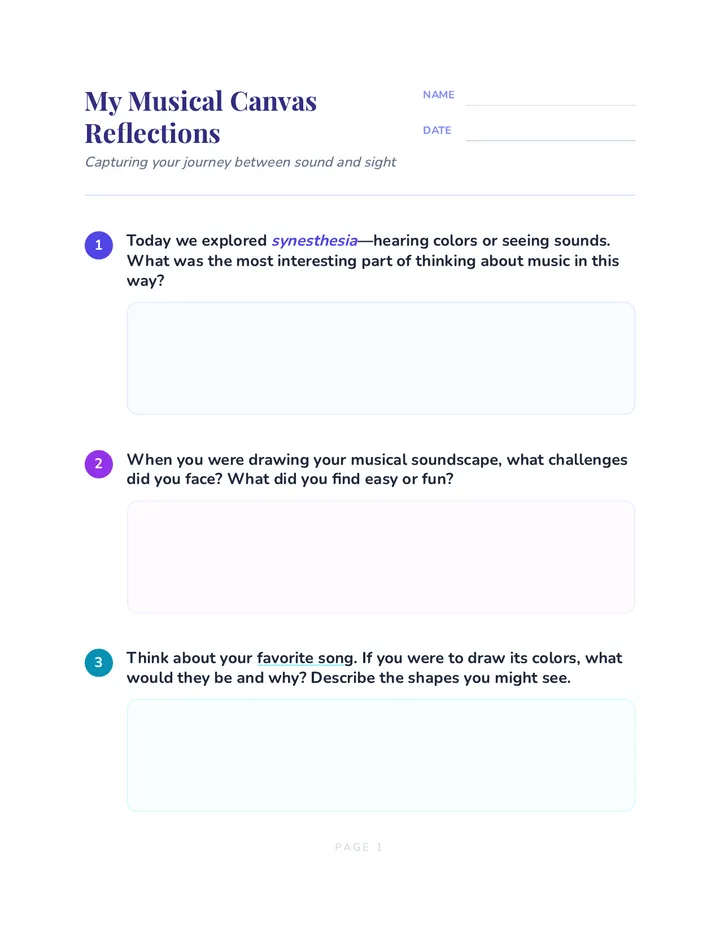
A 50-minute interdisciplinary lesson for 5th graders exploring synesthesia through guided listening and abstract art creation, bridging the gap between auditory and visual perception.
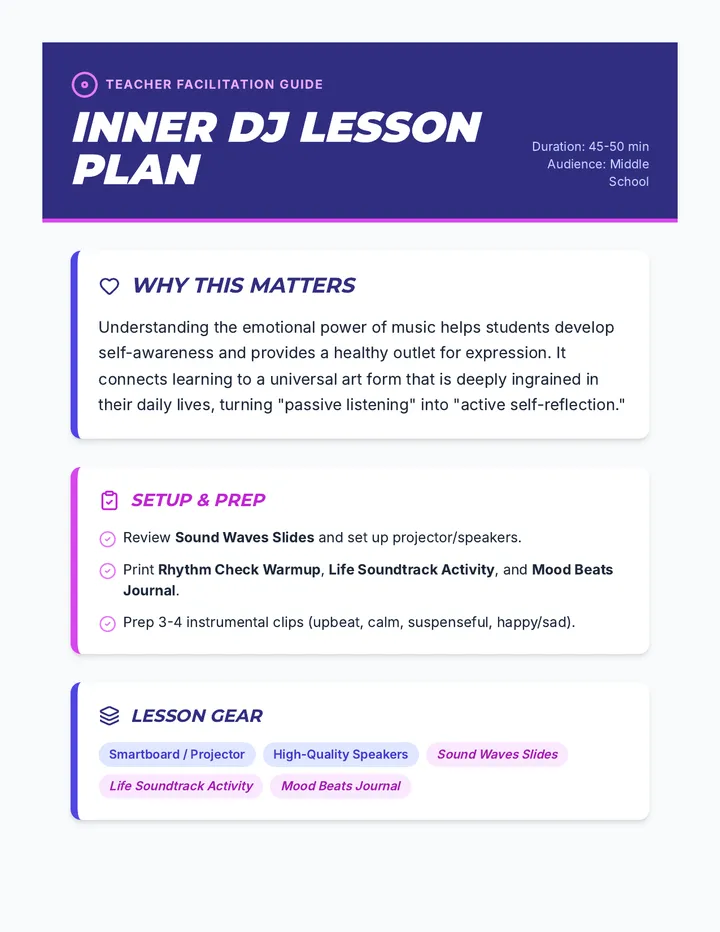
A high-energy lesson exploring the emotional impact of music and its role in personal identity, featuring guided listening and playlist creation.
An individualized 47-minute lesson for 8th-grade students exploring how visual and musical arts convey powerful themes and cultural messages through analysis and personal reflection.