Lenny.com
Explore
Create
ActivitiesNewMathEnglish Language ArtsScience & EngineeringSocial StudiesGlobal LanguagesHealth & Physical EducationSpecial EducationCounseling & Life SkillsArts & CreativityESL
Lenny.com
Lenny.com
Explore
Create
ActivitiesNewMathEnglish Language ArtsScience & EngineeringSocial StudiesGlobal LanguagesHealth & Physical EducationSpecial EducationCounseling & Life SkillsArts & CreativityESL
Lenny.com
Lenny.com

Solutions

Lenny for EducatorsLenny for SchoolsLenny for Districts

Product

ExploreSign inCreateSupportAbout

Resources

Getting startedMTSS Acceleration Program

© 2026 Lenny Learning Inc.

TermsPrivacyAccessibility
LinkedInInstagramX
Lenny
Health & Physical EducationMovement Skills and ConceptsBody ControlLocomotor SkillsNon-Locomotor SkillsFine Motor SkillsManipulative SkillsBalance and CoordinationSpatial AwarenessMovement PatternsRhythmic Activities and DanceRhythm and TimingDance BasicsIndividual and Dual SportsGymnastics and TumblingTrack and FieldRacket SportsSelf-Defense and Martial ArtsTeam SportsCooperative GamesSportsmanshipTeam CommunicationBasketball SkillsSoccer SkillsVolleyball SkillsFootball SkillsGame StrategiesFitness and Physical ActivityCardio FitnessFlexibility and StretchingMuscular Strength and EnduranceSetting Fitness GoalsHealthy HabitsHygiene PracticesSleep and RestPhysical Activity HabitsHydrationInjury PreventionBody Awareness and Self-CareDisease PreventionHealth Decision-MakingHelp-Seeking and Self-AdvocacyMental HealthMental Health BasicsEmotional AwarenessStress ManagementCoping StrategiesMindfulness PracticesBreathing and Relaxation TechniquesMeditation BasicsResilience and PerseveranceHealthy RelationshipsSocial and Emotional SkillsHelp-Seeking and Support SystemsDigital WellbeingNutritionNutrition BasicsFood GroupsBalanced MealsHealthy Eating HabitsReading Food LabelsPersonal SafetyRecognizing Unsafe SituationsHuman and Child TraffickingStranger DangerPersonal BoundariesFire and Water SafetyEmergency ResponseConflict Resolution BasicsInternet and Social Media SafetySafe Personal RelationshipsSubstance AwarenessTobacco AwarenessAlcohol AwarenessCannabis AwarenessOpioid AwarenessStimulant AwarenessPrescription Drug AwarenessRefusing Peer PressureOutdoor and Adventure ActivitiesOutdoor Recreation SafetyHiking and OrienteeringTeam Building Activities

Fuel and Filter

A comprehensive unit exploring human nutritional science, dietary guidelines, food literacy through nutrition label analysis, and the physiological pathway of the human digestive system.

JJennifer.Leber

Fuel and Filter

A comprehensive unit exploring human nutritional science, dietary guidelines, food literacy through nutrition label analysis, and the physiological pathway of the human digestive system.

JJennifer.Leber
encourage healthy dietary patterns

Unit 3 Answer Key • Human Health, Nutrition & Digestion Page 1 of 4

Teacher Resource • Grading Reference

Macronutrients & Heart Health — Answer Key

Page 2 of 4 • Nutrients

Biochemistry of Fuel, Fiber, and Cardiovascular Health Complete Model Answers & Criteria

1. Macronutrient Roles & Functions

2 pts each

7. Carbohydrates vs. Proteins: Immediate energy vs. structural & cellular roles:

Model Answer: Carbohydrates are the body's primary and preferred source of immediate cellular energy (broken down into glucose). Proteins are essential structural builders and functional molecules used for tissue repair, muscle growth, enzyme synthesis, hormone signaling, and immune antibody formation.

8. Heart Health & Dietary Fats: Most effective fat adjustment for cardiovascular health:

Model Answer: Replacing saturated fats and trans fats with unsaturated fats (monounsaturated and polyunsaturated fats, including omega-3s) alongside increasing soluble dietary fiber. Saturated and trans fats elevate LDL ("bad") cholesterol and arterial plaque, whereas unsaturated fats support healthy blood lipid levels.

2. Whole Foods, Dietary Fiber & Processing

2 pts each

9. Whole Fruits vs. 100% Fruit Juice: Why whole fruit is recommended:

Model Answer: Whole fruits provide intact dietary fiber along with vitamins. Fiber slows gastric emptying and carbohydrate absorption, preventing sharp blood sugar and insulin spikes while promoting satiety. Fruit juice has stripped fiber, delivering rapidly absorbed liquid fructose that causes blood glucose fluctuations.

10. Whole Grains vs. Refined Grains: Structural differences and key nutrients:

Model Answer: Whole grains (e.g., brown rice, whole oats) keep all three kernel components: the bran, germ, and endosperm. They are the principal provider of complex carbohydrates and dietary fiber, plus B vitamins and minerals. Refined grains (white bread) strip the fibrous bran and germ, leaving only starchy endosperm.

3. Practical Recipe & Meal Modification

2 pts

11. Nutritional Application: Boosting protein using whole foods without powder supplements:

Model Answer: A student can substitute or add whole-food protein sources such as cottage cheese, Greek yogurt, chia or hemp seeds, natural peanut butter, or silken tofu. Protein enhances meal satiety, slows digestion, stabilizes blood sugar levels, and provides the essential amino acids needed for muscle synthesis and cellular repair throughout the day.

Unit 3 Answer Key • Human Health, Nutrition & Digestion Page 2 of 4

Teacher Resource • Grading Reference

The Path of Digestion — Answer Key

Page 3 of 4 • Digestion

Gastrointestinal Anatomy, Motility, Villi & Secretions Complete Key & Solutions

1. Sequential GI Pathway Key (Chronological Order)

6 pts (1 pt/step)

Step 1 Mouth (Oral Cavity)

Mastication (chewing) & salivary amylase start starch digestion.

Step 2 Esophagus

Rhythmic muscular peristalsis propels swallowed food bolus.

Step 3 Stomach

Gastric acid & pepsin churn food into acidic liquid chyme.

Step 4 Small Intestine

Primary site: 90%+ of all nutrient absorption across villi.

Step 5 Large Intestine (Colon)

Reabsorbs water & electrolytes; compacts indigestible waste.

Step 6 Rectum / Anus

Stores compacted feces prior to controlled defecation/elimination.

2. Anatomy Matching Answer Key

8 pts (1 pt/item)

G 1. Produces bile to break down dietary fats. (Liver)

D 5. Site of 90%+ nutrient absorption. (Small Intestine)

E 2. Microscopic projections expand area. (Villi)

C 6. Churns food with acid into chyme. (Stomach)

H 3. Wave-like muscular contractions. (Peristalsis)

A 7. Chewing occurs; saliva breaks starch. (Mouth)

F 4. Reabsorbs water & compacts stool. (Large Intestine)

B 8. Tube from throat to stomach. (Esophagus)

3. Short-Answer Digestive Analysis Solutions

2 pts each

12. Chewing (Mastication) & Saliva:

Model Answer: Mastication mechanically breaks large food items into smaller pieces, vastly increasing the surface area for enzymes to act upon. Chemically, saliva moistens food and introduces salivary amylase to begin starch breakdown. Thorough chewing creates a lubricated bolus, preventing choking and easing esophageal transport.

13. Liver, Gallbladder & Fat Digestion:

Model Answer: The liver produces bile; bile is stored and concentrated in the gallbladder. When fats enter the duodenum of the small intestine, bile is released. Bile acts as an emulsifier, breaking large hydrophobic fat globules into tiny droplets so pancreatic lipases can efficiently digest them.

14. Small Intestine vs. Large Intestine Functions:

Model Answer: The small intestine absorbs 90%+ of all macro- and micronutrients. The large intestine reabsorbs water and electrolytes, turning liquid residue into firm stool. If transit is too fast, inadequate water is reabsorbed, resulting in diarrhea and dehydration; if transit is too slow, excessive water is reabsorbed, causing constipation.

Unit 3 Answer Key • Human Health, Nutrition & Digestion Page 3 of 4

Teacher Resource • Grading Reference

Nutrition Label Investigation — Answer Key

Page 4 of 4 • Evaluation

Food Label Literacy, %DV Rules & Ingredient Transparency Complete Model Answers & Criteria

Product Comparison Summary & Key Flags

Teacher Comparison Reference

Product A (Ultra-Processed Snack):

  • High Added Sugar: 16g (32% DV, exceeding safe thresholds).
  • High Saturated Fat: 4.5g (23% DV from palm oil).
  • Very Low Fiber: only 1g (4% DV) & low protein (2g).
  • Ingredient red flags: high-fructose corn syrup, bleached flour, red 40.

Product B (Minimally Processed Bowl):

  • Zero Added Sugar: 0g (0% DV); natural berry sugar only.
  • High Fiber: 5g (18% DV for gut health and satiety).
  • Low Saturated Fat: 0.5g (3% DV) & excellent whole protein (6g).
  • Clean whole-food ingredients: whole oats, chia seeds, blueberries.

Critical Analysis Model Answers

2 pts each

15. Defining "Processed Food": Definition and why "processed" doesn't equal unhealthy:

Model Answer: A processed food is any food changed from its natural state through methods like cooking, freezing, milling, canning, or adding ingredients. Processing exists on a spectrum; minimally processed foods (like frozen spinach, canned tuna in water, or rolled oats) retain vitamins and fiber and are highly nutritious.

16. Nutrient Red Flags & The 5/20 Rule: 5% DV low vs. 20% DV high analysis:

Model Answer: On Product A, two major red flags are Added Sugars at 32% DV and Saturated Fat at 23% DV (both exceed the 20% high benchmark for nutrients to limit). On Product B, two nutrient-dense highlights are Dietary Fiber at 18% DV (near 20% benchmark for nutrients to get more of) and 0% Added Sugars.

17. Added Sugars vs. Dietary Fiber: Metabolic and digestive impacts:

Model Answer: Added sugars deliver empty calories that absorb rapidly into the bloodstream, triggering sharp insulin spikes, energy crashes, and increased fat storage. In contrast, dietary fiber forms a gel matrix in the gut, slowing carbohydrate breakdown, maintaining steady blood glucose, lowering LDL cholesterol, and signaling fullness.

18. Decoding Ingredient Lists: Order of weight and identifying Product A red flags:

Model Answer: Ingredients are listed in descending order by weight. Reviewing ingredients exposes hidden sugars, saturated fats, and artificial additives masked by deceptive packaging claims. On Product A, key red flags include high-fructose corn syrup listed second by weight, palm oil (high in saturated fat), and artificial color Red 40.

Unit 3 Answer Key • Human Health, Nutrition & Digestion Page 4 of 4
You might also like

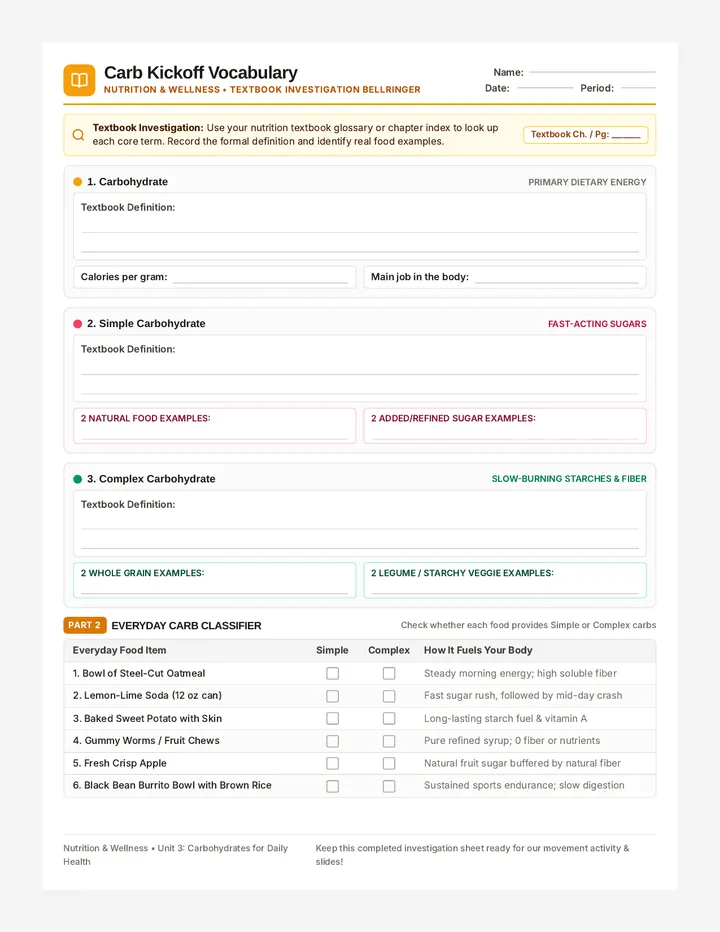
Carb Kickoff Vocabulary Worksheet

Smart Fuel Blueprint

A dynamic high school nutrition and wellness unit examining macronutrient fuel, protein synthesis, food label literacy, and practical meal strategies for athletic stamina and everyday focus.

J

Jennifer.Leber

7
Pitch IQ Strategy Workbook

Pitch IQ Mastery

A comprehensive tactical and mental performance module for competitive youth soccer players, featuring in-depth strategy workbooks and field-ready tactical drill sheets.

T

temetropolis

2
Types of Fat Guided Notes

Types of Fat Guided Notes

Updated two-page guided notes handout closely following the slide presentation with enlarged blanks and writing spaces for student handwriting, expanded interactive sections for slides 1-10, and the exit ticket completely removed.

J

Jennifer.Leber

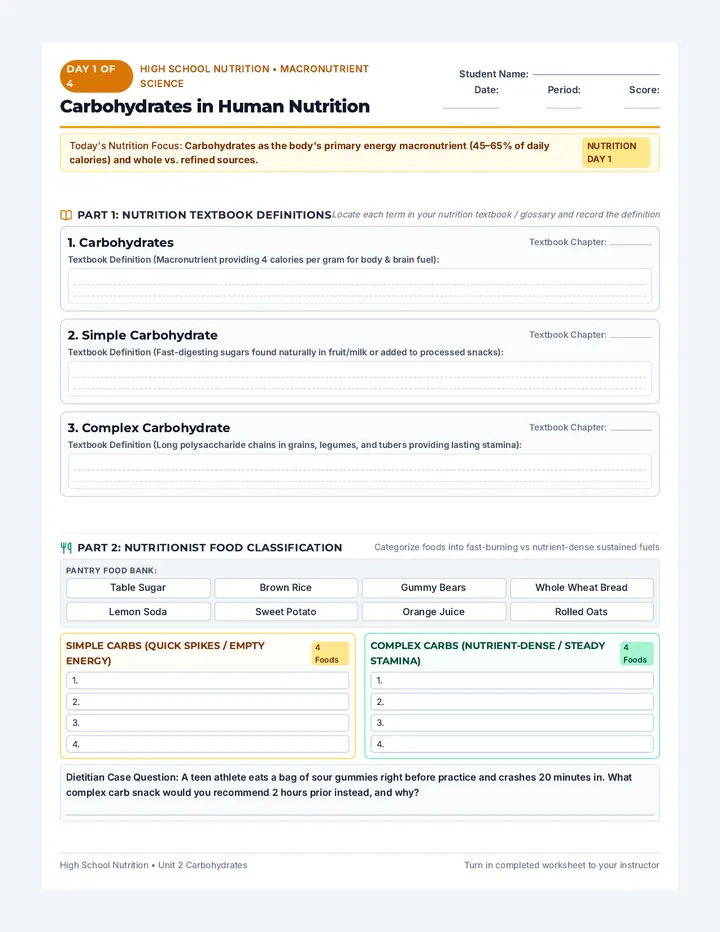
Day 1 Foundations Worksheet

Carb Masters Nutrition

A comprehensive 4-day nutrition curriculum exploring dietary carbohydrates, digestion mechanics, fiber benefits, insulin homeostasis, and glycemic meal planning.

J

Jennifer.Leber

16
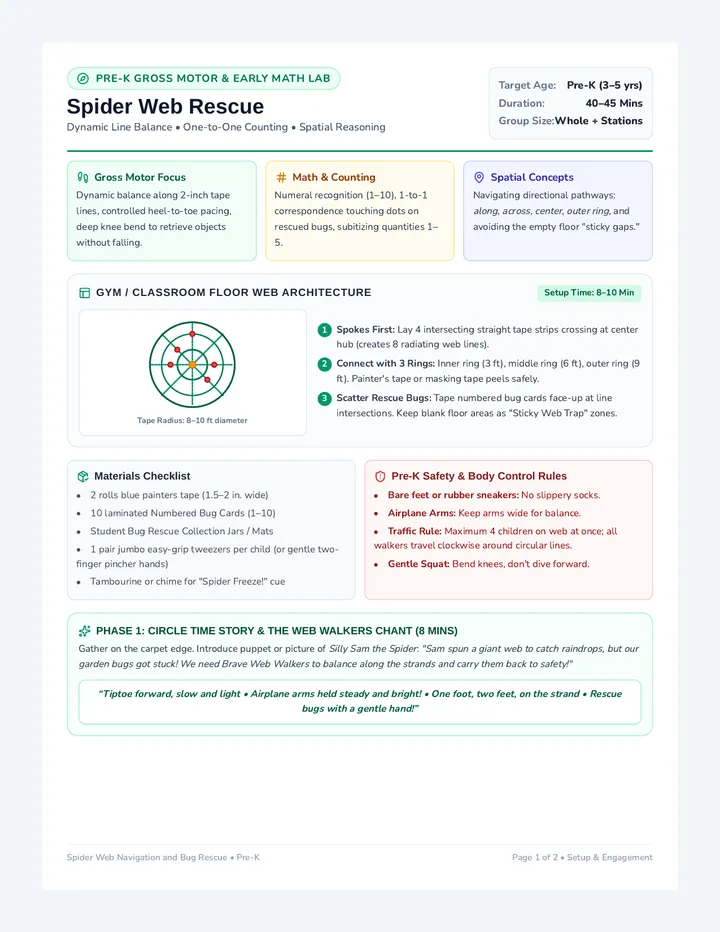
Web Rescue Lesson Plan

Spider Web Rescue

A dynamic Pre-K gross-motor and early numeracy lesson where young learners navigate floor-tape web lines to rescue trapped numbered insects, building balance, core stability, spatial awareness, and one-to-one correspondence.

SP

Sav Per

4
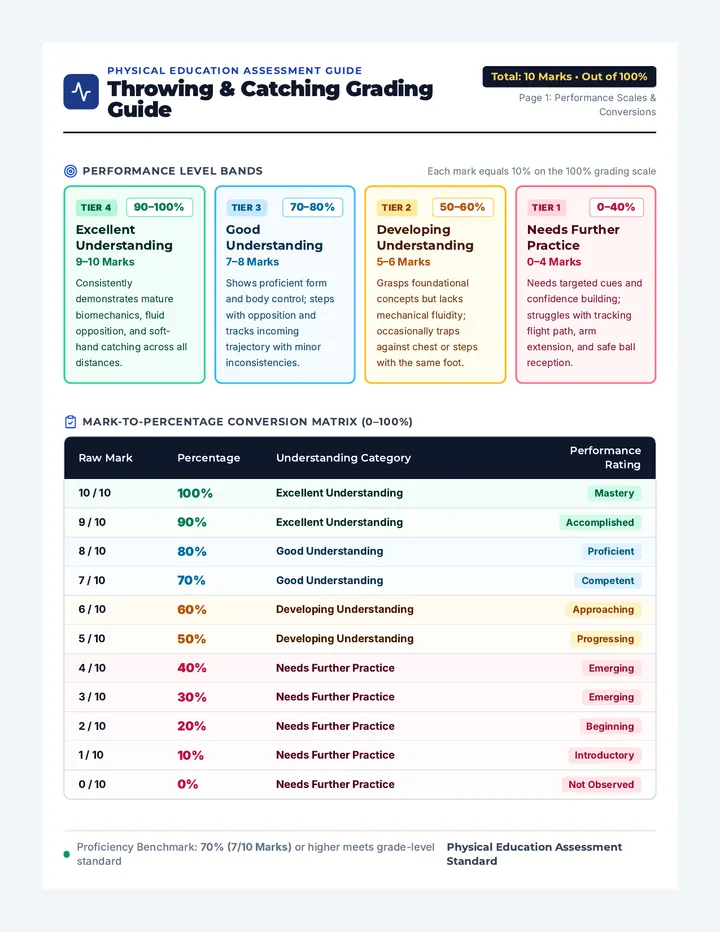
Throw Catch Grading Guide

Throw Catch Grading Guide

A streamlined 2-page grading guide for Throwing & Catching Assessment featuring a clean mark-to-percentage conversion table out of 100% across the four performance bands, technical rubric criteria, and an observation tracker.

KA

Kashif Anthony

Safe Body Champions Slides

Body Safety Champions

A bilingual drug awareness and medicine safety guidance program for 2nd and 3rd grade elementary students, featuring complete classroom materials in both English and Spanish.

V

vsifuentes

8
Safe Plate Protocol Slides

Safe Plate Protocol

A foundational culinary arts lesson introducing freshman students to Hazard Analysis Critical Control Point (HACCP) principles. Through a visual slide presentation and an investigative research worksheet, students examine kitchen safety protocols, hazard categories, and critical control points.

B

Bonnie.Gomez

2
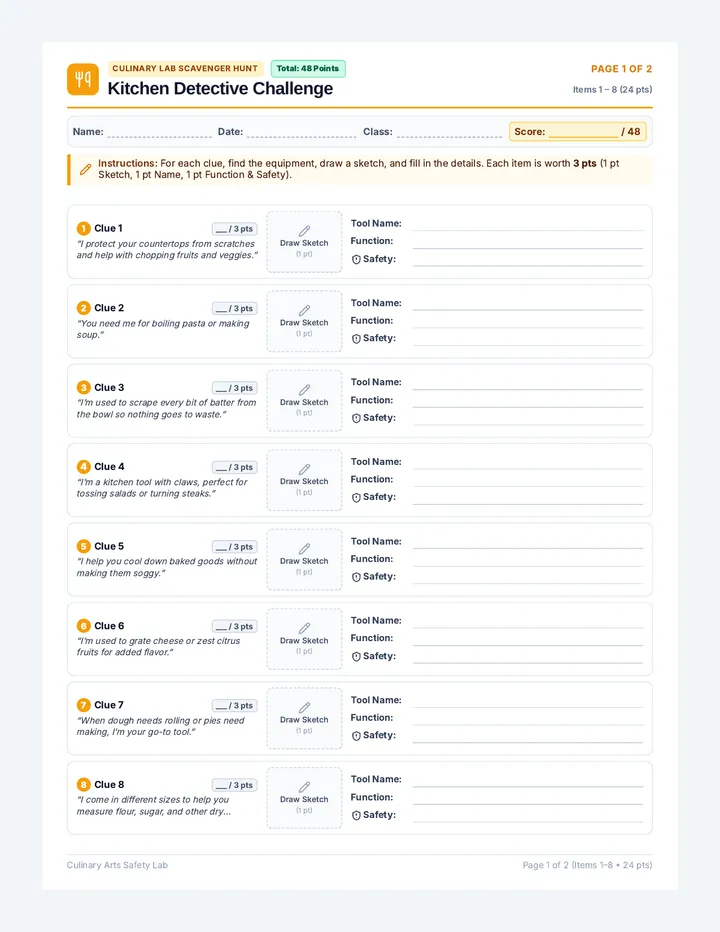
Kitchen Detective Scavenger Worksheet

Kitchen Detective Scavenger Worksheet

A compact two-page culinary lab scavenger hunt worksheet worth 48 points, featuring all 16 equipment clues, dedicated sketch drawing frames, and write-in sections for tool names, functions, and safety tips.

B

Bonnie.Gomez

Food Fuel Slides

Nutri Power Academy

A comprehensive two-session 6th grade health sequence covering food groups, essential nutrients, balanced plate design, and decoding nutrition facts labels for informed everyday choices.

BM

Brian Millea

6
Glow Germs Slides

Glow Germ Detectives

A fast-paced 30-minute 5th-grade health and microbiology lesson using UV glow lotion and powder to reveal how invisible microbes spread and where standard washing fails. Students conduct a contact transmission test, evaluate washing techniques under blacklight, and practice proper scrubbing protocols.

AA

Amanda Azevedo

3
Fentanyl Facts Slides

Fentanyl Facts Slides

A comprehensive, high-impact educational slide deck on fentanyl awareness, counterfeit pills, overdose signs, Naloxone (Narcan) administration, and youth decision-making.

KP

Kerri Parker