Energy Buzz Teacher Guide Energy Buzz Breakdown
TEACHER FACILITATION GUIDE
Grade Level: 6th Grade
Duration: 60 Minutes
Subject: Health & Wellness
Learning Objectives
Identify common ingredients in energy drinks (caffeine, sugar, taurine).
Analyze short-term and long-term health risks of high caffeine consumption.
Compare energy drinks with healthy hydration alternatives.
Recognize internal "body signals" for tiredness and hunger.
Apply decision-making skills to select healthy beverages.
Materials Needed
Energy Buzz Slides (Presentation)Sip Search Handout (Comparison Chart)Healthy Energy Guide (Reference Infographic)Drink Decisions Worksheet (Scenario Analysis)Energy Exit Ticket (Assessment)
Lesson Procedure
15 min Intro & Hook
Body Signal Detective
Ask: "How do you know when you're actually tired?" List symptoms (yawning, heavy eyes, irritability). Transition to how energy drinks "mask" these signals.
Discussion: "Why might it be dangerous to ignore your body's signal that it needs rest? What is your brain trying to tell you?"
25 min Instruction
The Stimulant Cycle
Slide Deck: Focus on the "Hidden Ingredients" and "The Numbers Game." Explain the Caffeine Cycle : Fatigue → Caffeine → False Energy → Crash → More Fatigue.
Discussion: "Look at the Healthy Energy Guide. Why does water win? Think about what your cells actually need to function versus what caffeine does to your heart."
20 min Activity
Sustainable Energy Brainstorm
Complete Drink Decisions Worksheet . After, host a "Healthy Hack" brainstorm. What are 3 things anyone can do in 5 minutes to get a 'natural' boost? (Sunlight, water, stretching, quick walk).
Advanced Healthy Habit Discussion Guide
Mental Health & Anxiety Connection
Caffeine mimics the "fight or flight" response. For middle schoolers already facing social stress, this can trigger or worsen anxiety.
Prompt: "If you're already feeling nervous about a test, how might a stimulant like caffeine make your body feel even more stressed?"
The Sleep Architecture
Explain that caffeine blocks adenosine , the chemical that makes us feel sleepy. It doesn't give energy; it just prevents us from feeling the need for sleep. This leads to a "sleep debt."
Prompt: "If you use caffeine to stay up, are you actually 'recharging' your battery, or just turning off the low-battery warning light?"
Nutrient vs. Stimulant
Discuss the difference between calories (true energy from food) and stimulants (fake energy). 6th graders need complex carbs and healthy fats for brain growth.
Prompt: "Why do you think companies use the word 'energy' on drinks that don't actually have many nutrients?"
Classroom Extension: "The Water Challenge"
Challenge students to track their hydration for one week. Have them note their mood and focus levels on days they drink 6-8 glasses of water versus days they drink soda or juice.
Health & Wellness Series • © 2026
Standards: NHES 1, 5, 7
Energy Buzz Slides Energy Buzz
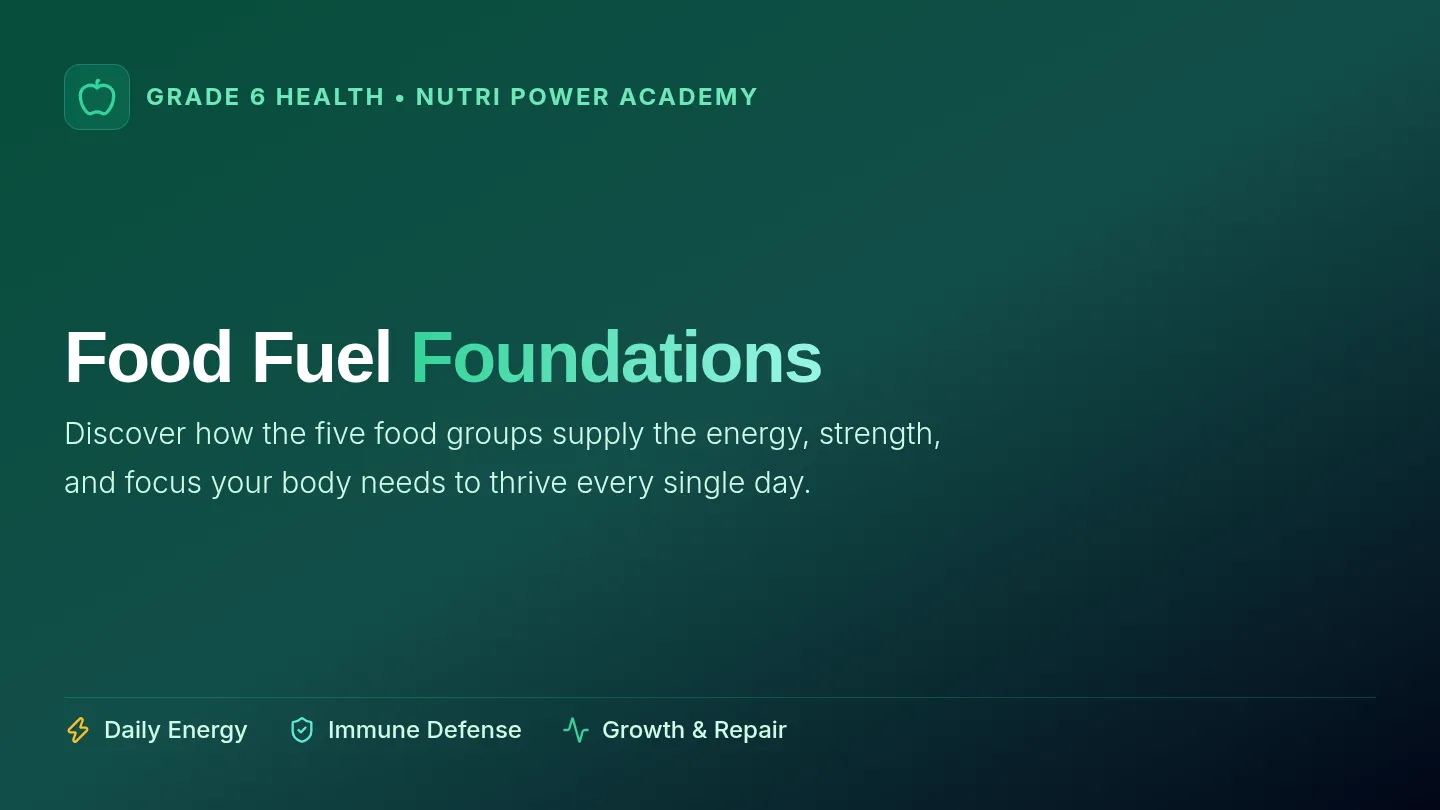
The Truth Behind the Can
Body Detective
How do you know when you're actually tired?
Can't focus on simple tasks
Feeling grumpy or irritable
"Heavy" eyes or yawning
The Warning Light
Energy drinks don't fix tiredness. They just turn off the warning light in your brain.
Hidden Ingredients
Caffeine
A stimulant that tricks your brain into feeling "awake."
Sugar
Up to 15 teaspoons per can. Leads to a massive crash.
Taurine/Guarana
Added to hide even higher levels of caffeine.
Stimulant ≠ Energy
The Numbers Game
35mg
12oz Soda
95mg
8oz Coffee
300mg
Energy Drink
Expert Health Recommendation:
The Tiredness Trap
1. Feel Tired
2. Drink Caffeine
3. Huge Crash
4. More Tired!
Discussion: "Have you ever been stuck in this cycle?"
The Mind Game
Anxiety Spike
Caffeine mimics "fight or flight." It can make you feel panicked, jittery, or super stressed for no reason.
Sleep Debt
It stays in your body for 6-10 hours. Drinking one at lunch can keep your brain from resting at 10 PM.
Caffeine doesn't recharge your battery—it just hides the low percentage.
Real Power Ups
Cold Water
Hydrates your cells & wakes up your brain.
5-Min Sunlight
Resets your internal clock naturally.
Whole Fruit
Natural sugars + fiber for steady focus.
The Best Hack?
Your Turn
Open your Drink Decisions Worksheet.
Scenario Lab: GO
Sip Search Handout Sip Search
THE DRINK INVESTIGATOR'S GUIDE
Health Resource
"Know before you drink."
Feature Energy Drink Sports Drink The "Gold" Standard Main Ingredient Caffeine & Stimulants Sugar & Electrolytes Pure Water (H2O) Caffeine (Approx) 150mg - 300mg 0mg 0mg Sugar (Approx) 12 - 15 tsp 6 - 9 tsp 0 tsp Best Used For... Not recommended for teens Intense sports (1hr+) Everyday Life! The Verdict Danger Zone Use Only When Training Smart Choice
The "High"
Heart Race: Your heart beats faster than normal, which can feel scary or uncomfortable.
Jittery Brain: Difficulty focusing, feeling "on edge," or sudden anxiety.
The "Crash"
Extreme Fatigue: Once the sugar wears off, you feel more tired than you did before the drink.
Mood Drop: Irritability and headaches often follow a large caffeine dose.
Better Energy Hacks
Natural energy comes from nutrient-dense food, hydration, and 9-11 hours of sleep for your growing brain.
Fruit
Sleep
Water
Drink Decisions Worksheet Drink Decisions
Scenario Analysis Lab
Name:
Date:
Mission Briefing
Read each scenario below. Identify the risks of choosing an energy drink in that situation, and suggest a healthier alternative that provides real energy.
1
The Late Night Gamer
"Leo is playing a new video game with his friends. It’s 9:00 PM, and he’s starting to feel tired. He reaches for a large 'Ultra-Volt' energy drink because he wants to stay awake and keep his reaction time fast for the final boss battle."
What is the risk for Leo later tonight?
A healthier way to stay alert?
2
The Basketball Tryout
"Maya has basketball tryouts after school. She skipped lunch because she was nervous. She sees a vending machine with a 'Mega-Fuel' drink that promises 'maximum performance.' She thinks it will give her the boost she needs to make the team."
How could this drink affect her performance?
What should she have instead?
3
The Morning Slump
"Jordan stayed up late studying and is exhausted during first-period math. His friend offers him half of an energy drink 'to wake his brain up' for the quiz. Jordan knows his heart sometimes races when he drinks soda."
What physical signs should Jordan watch for?
The best 'brain fuel' for a quiz?
4
The Sleepover Challenge
"Chloe is at a sleepover. Her friends brought a 12-pack of mini energy shots so they can stay up all night talking. Everyone else is already on their second one and they are pressuring Chloe to 'join the party' so she doesn't fall asleep first."
Why are energy shots especially risky for kids?
How can Chloe say no while staying cool?
5
The Influencer Ad
"Sam sees their favorite YouTuber advertising a new 'Gaming Formula' powder. It claims to give you 'laser focus' and 'infinite energy' for long gaming sessions. It has bright, cool packaging and Sam really wants to try it to be like their idol."
Why might these 'natural' powders be misleading?
A better way to build gaming focus?
Energy Exit Ticket Energy Exit Ticket
THE BUZZ BREAKDOWN
Name:
1. Name one main ingredient found in most energy drinks:
2. List one short-term effect of high caffeine consumption:
3. What is a long-term risk of drinking too much sugar and acid?
4. What is your go-to healthy drink for energy?
Self-Reflection: How confident are you in choosing healthy drinks?
Confused
Getting it
Expert
Energy Exit Ticket
THE BUZZ BREAKDOWN
Name:
1. Name one main ingredient found in most energy drinks:
2. List one short-term effect of high caffeine consumption:
3. What is a long-term risk of drinking too much sugar and acid?
4. What is your go-to healthy drink for energy?
Self-Reflection: How confident are you in choosing healthy drinks?
Confused
Getting it
Expert
Drink Decisions Answer Key Drink Decisions
Teacher Answer Key
Lesson: Energy Buzz Breakdown
Grade 6 Health
Grading Guidance
Answers may vary. Students should identify specific physical/mental risks and suggest hydrating, non-stimulant alternatives.
1
The Late Night Gamer (Leo)
9:00 PM tired gamer wanting to stay awake.
Risk Analysis
Caffeine prevents deep sleep, leading to exhaustion tomorrow. Reaction times actually drop once the caffeine wears off (the crash).
Healthier Alternative
Splash cold water on face, drink ice water, or have a piece of fruit. Best: Save the game and go to sleep.
2
The Basketball Tryout (Maya)
Skipped lunch and wanting "maximum performance."
Risk Analysis
Causes dehydration and heart palpitations. High caffeine + intense exercise can lead to dizziness or fainting.
Healthier Alternative
Complex carbs (banana/oat bar) and plenty of water. Real fuel comes from food, not stimulants.
3
The Morning Slump (Jordan)
Exhausted during a math quiz.
Risk Analysis
Caffeine sensitivity can cause anxiety and the 'jitters,' making it harder to solve complex math problems.
Healthier Alternative
Stretching, drinking water, or eating a healthy protein breakfast before school.
4
The Sleepover Challenge (Chloe)
Peer pressure to drink mini energy shots to stay awake.
Risk Analysis
Energy shots are highly concentrated caffeine. Small bodies can react severely, leading to dangerous heart rates or severe anxiety.
Healthier Alternative
Suggest a group activity like a movie or game. Chloe can say, "My heart races when I drink those, I'll stick to water."
5
The Influencer Ad (Sam)
Ad for 'Gaming Formula' powder claiming 'infinite energy.'
Risk Analysis
Powdered supplements are often unregulated and can contain dangerous doses of caffeine or unlisted stimulants.
Healthier Alternative
Taking short screen breaks, eye exercises, and proper hydration with water to maintain natural focus.
Healthy Energy Guide Handout Power-Up Guide
REAL FUEL FOR GROWING BRAINS
Natural Energy Toolkit
"No crash, just fuel."
The "Fake" Boost
Stimulants (caffeine) just trick your brain into ignoring tiredness. They don't actually give you energy.
The "Real" Deal
Real energy comes from nutrients that your cells turn into power. This provides steady focus without the "jitters" or the "crash."
Steady Focus
Better Mood
Stronger Body
Amazing Sleep
1. Smart Hydration
Your brain is about 75% water. Even a tiny bit of dehydration makes you feel sluggish and foggy.
The Hack:
"The Cold Start" — Drink a large glass of ice-cold water immediately when you feel a slump. The temperature jump-starts your nervous system!
2. Brain Fuel
Skip the candy. Combine Complex Carbs (energy) with Protein (staying power).
Apple slices + Peanut Butter
Greek Yogurt + Berries
Hummus + Carrots
3. Tactical Movement
Sitting still for too long lowers your oxygen. Moving your muscles tells your heart to pump more fuel to your brain.
30 Jumping Jacks
Quick Stair Climb
Sunlight (3 mins)
Big Stretches
4. Deep Recharge
Nothing replaces sleep. It's the only time your brain "washes" away toxins and locks in what you learned.
The 9-Hour Goal
"Screens off 1 hour before bed to let your natural melatonin wake up."
My Natural Energy Pledge
Pick TWO strategies you will try this week instead of reaching for a sugary or caffeinated drink:
Drink a glass of water before my first class.
Leave my phone in another room at 9 PM.
Go outside for 5 minutes during lunch break.
Swap my afternoon soda for a fruit snack.