Health Hero Study GuideHealth Hero Final Exam Study Guide Name: Date: I. The Knowledge Vault Nutrition Essentials Macronutrients: Carbohydrates, proteins, and fats. These provide the body with energy. Micronutrients: Vitamins and minerals needed in smaller amounts. The Big Six: Carbs, proteins, fats, vitamins, minerals, and water. Calories: The unit of measurement for energy released by nutrients. The Human Machine Digestive Trio: Absorption, Digestion, and Elimination. Order of Operations: Mouth → Pharynx → Esophagus → Stomach → Small Intestine → Large Intestine. Insulin: Pancreas hormone that helps cells take up blood sugar. Asthma: Chronic respiratory inflammation triggered by smoke, stress, or cold. Mind & Emotion Self-Esteem Boosters: Focusing on strengths, positive attitude, avoiding risky behaviors. Primary Emotions: Happiness, sadness, and anger. The Adolescent Quest: Searching for identity is the primary challenge. Substances & Safety Depressants: Drugs (like alcohol) that slow down brain and body reactions. Nicotine: A highly addictive insecticide found in tobacco leaves. Opportunistic Infection: Attacks when the immune system is already weakened. II. Guided Discovery A Nutrition & Digestion 1. ____________________ is a type of complex carbohydrate found specifically in plants that helps with digestion. 2. The process of ____________________ occurs when nutrients pass through the lining of the digestive system into the bloodstream. 3. There are two distinct types of digestion: ____________________ (physical breakdown) and ____________________ (chemical breakdown). 4. The ____________________ acts as a storage tank for urine before it is released from the body. B Mental Health & Growth 5. People with high ____________________ ____________________ tend to stay relaxed and calm even during difficult or stressful situations. 6. Three major risk factors for suicide include previous attempts, social ____________________, and a lack of access to mental health care. 7. Low self-esteem is often characterized by ____________________ too much about what others think or feeling "not smart enough." C Infectious & Chronic Disease 8. STIs like HPV can increase a person's risk of developing ____________________ later in life. 9. Sharing ____________________ can transmit highly infectious diseases like HIV and Hepatitis. 10. ____________________ is a disease where the body's ability to use glucose (sugar) is significantly impaired. 11. Substance use, like alcohol, plays a role in the STI epidemic because it ____________________ judgement. III. Practice Lab 1. Which of the following describes the "Zero Tolerance" policy regarding underage drinking? Only drinking with parents present No punishment for first-time offenders Automatic punishment for any amount of alcohol Allowing small amounts if over 18 2. Select ALL of the fluids that can transmit HIV: Blood Saliva (Kissing) Breast Milk Semen/Vaginal Secretions 3. True or False: Nicotine is considered a harmless substance found in tobacco products. True False 4. List four common causes of stress in a teenager's life: 5. Explain how poor dental hygiene can lead to more serious health issues like endocarditis: Good health is not just about what you eat. It's about what you think and say!
Pulse Check Answer KeyAnswer Key Pulse Check: Final Vocabulary Review Teacher Resource I. Fuel & Processing Nutrient Matching Answers Macronutrients C Micronutrients D Fiber E Absorption A Elimination B Key Reference A. Absorption B. Elimination C. Macronutrients D. Micronutrients E. Fiber The Digestive Path (Correct Order 1-6) 1 Mouth 2 Pharynx 3 Esophagus 4 Stomach 5 Small Int. 6 Large Int. II. Minds & Decisions Decision Decoder Answers 1. Define "Zero Tolerance" policy: A policy where any amount of alcohol possession/consumption by minors leads to immediate punishment/legal consequences. 2. How does alcohol affect judgement? It impairs decision-making, slows down reactions, and reduces inhibitions, leading to risky choices. 3. Define "Self-Esteem": The level of respect and appreciation a person has for themselves; how much they like themselves. Quick Checks (T/F) Depressants increase brain activity and speed up body reactions. T F Nicotine is an addictive chemical naturally found in tobacco leaves. T F Searching for identity is the primary challenge of adolescence. T F Isolation and previous attempts are major risk factors for suicide. T F III. Defense & Disease Chronic Disorders Answers Insulin & Diabetes: Insulin is a hormone from the pancreas that allows cells to take in glucose for energy. In diabetes, the body cannot produce or use insulin correctly, causing high blood sugar. Asthma Triggers: Cold air, stress, tobacco smoke, pet dander, dust mites, or vigorous exercise. Infection Prevention Answers STI Transmission Pathogens: Bacteria, Viruses, Protozoans.
Health Vocabulary Review WorksheetPulse Check Final Vocabulary Review Name: Date: I. Fuel & Processing Nutrient Matching Macronutrients Micronutrients Fiber Absorption Elimination Definitions Bank A. The process where nutrients pass into the blood. B. The final stage where wastes are removed. C. Carbs, proteins, and fats that supply energy. D. Vitamins and minerals needed in small amounts. E. A complex carbohydrate in plants that aids digestion. The Digestive Path Order the organs 1-6 as food travels through the body: Mouth Pharynx Esophagus Stomach Small Int. Large Int. II. Minds & Decisions Decision Decoder 1. Define "Zero Tolerance" policy: 2. How does alcohol affect judgement? 3. Define "Self-Esteem": Quick Checks (T/F) Depressants increase brain activity and speed up body reactions. T F Nicotine is an addictive chemical naturally found in tobacco leaves. T F Searching for identity is the primary challenge of adolescence. T F Isolation and previous attempts are major risk factors for suicide. T F III. Defense & Disease Chronic Disorders Insulin & Diabetes: Explain how the pancreas hormone affects body cells: Asthma Triggers: List three common environmental triggers: Infection Prevention STI Transmission: Identify three pathogens that cause STIs: HIV Transmission: List four body fluids that transmit HIV: Vocabulary Scavenger Opportunistic Infection Endocarditis Halitosis Abstinence Total Body Health = Knowledge + Action
Blueprint Answer KeyAnswer Key The Blueprint: Health Essentials Review Teacher Resource I. Nutrition & Energy 1. The body's main source of energy comes from carbohydrates, while proteins are essential for cell growth and repair. 2. Carbohydrates, fats, and proteins are known as "macronutrients" because they provide energy, whereas vitamins and minerals are considered micronutrients. 3. The unit used to measure the amount of energy released by nutrients is called a calorie. 4. Fiber is a type of complex carbohydrate found in plants that is not digested but helps the digestive system function properly. II. Digestive & Body Systems 5. The three main functions of the digestive system are digestion, absorption, and elimination. 6. Digestion can be mechanical (physical breakdown) or chemical (breakdown by enzymes). 7. After leaving the stomach, food enters the small intestine, followed by the large intestine. 8. Poor dental hygiene can lead to plaque, halitosis (bad breath), and a serious heart condition called endocarditis. III. Mental & Social Wellness 9. Focusing on your strengths and avoiding risky behaviors are two ways to boost your self-esteem. 10. A person who stays relaxed and calm during a difficult situation is demonstrating emotional stability. 11. Searching for identity is identified as the primary challenge people face during the period of adolescence. 12. Major risk factors for suicide include previous attempts, lack of access to mental health treatment, and social isolation. IV. Substances & Disease 13. Drugs like alcohol that slow down brain and body reactions are classified as depressants. 14. The highly addictive chemical found in tobacco leaves that acts as an insecticide is nicotine. 15. Diabetes is a chronic disease where the body's ability to use glucose is impaired; it is often managed using the hormone insulin. 16. Opportunistic infections are those that attack a person whose immune system has already been weakened.
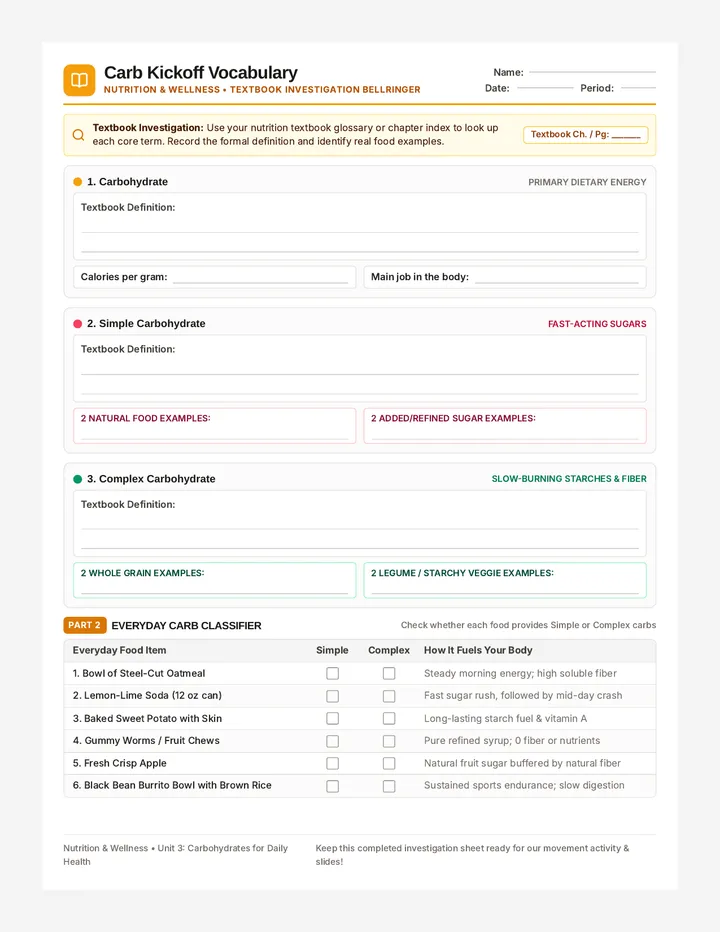
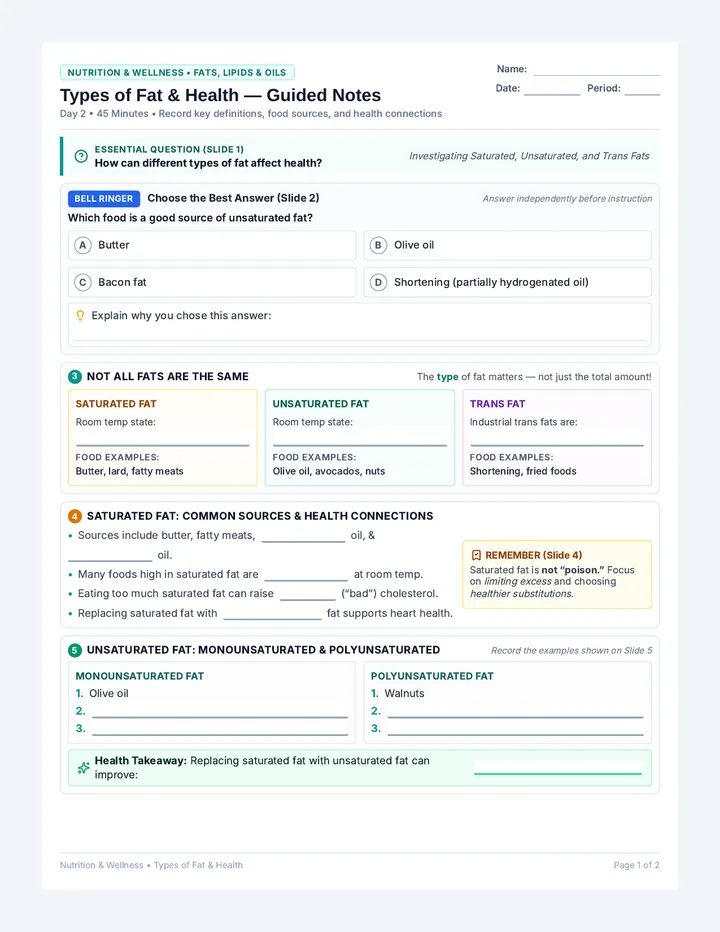
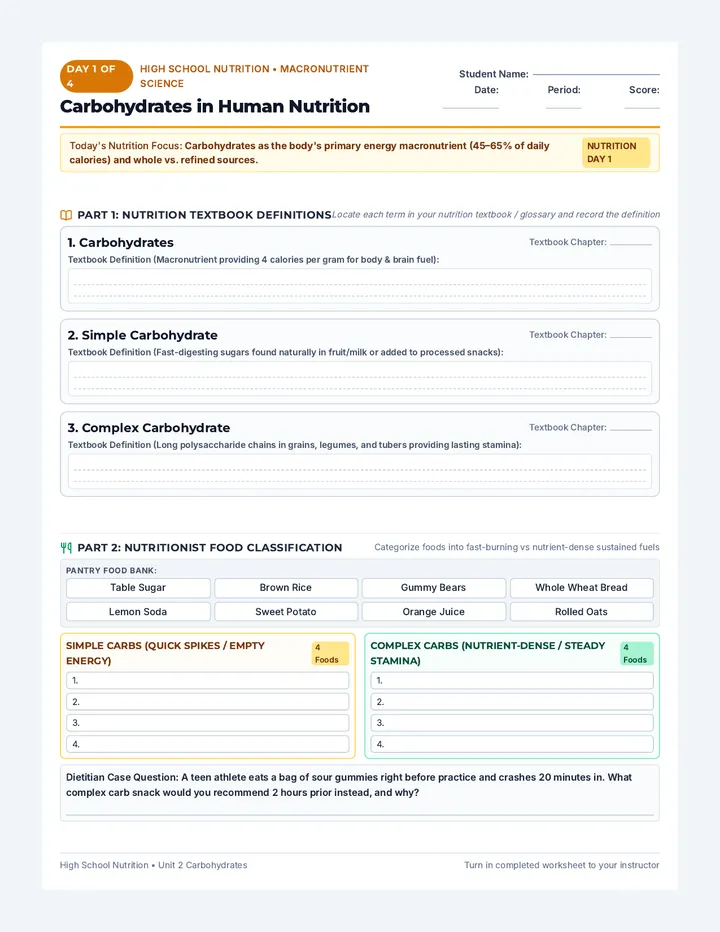
Health Essentials Summary HandoutHealth Essentials Core Concept Reference Guide Nutrition & Energy The 6 Essential Nutrients 1. Carbohydrates: Main energy source. 2. Proteins: Cell growth and repair. 3. Fats: Energy, cell formation, temp, nerves. 4. Vitamins: Micronutrients for body processes. 5. Minerals: Micros for bone/blood health. 6. Water: Critical for all body functions. Macros vs. Micros Macros: Fat, Protein, Carbs (supply energy). Micros: Vitamins and Minerals. Key Energy Terms Calories: Units of energy released by nutrients. Fiber: Complex carb in plants; aids digestion. Digestive & Body Systems Digestion Physical/Chemical food breakdown. Absorption Nutrients passing into blood. Elimination Waste removal from body. Path of Food MOUTH → PHARYNX → ESOPHAGUS → STOMACH → SMALL INT. → LARGE INT. Body Basics Bladder: Stores urine before release. Dental Risks Plaque, halitosis, decay, and endocarditis. Mental & Social Wellness Mind & Emotions Boosters: Focus on strengths, positive attitude, avoiding risky behaviors. Low Self-Esteem: Likely to use drugs, feel "not smart enough," worry about others' opinions. Stability: Relaxed/calm during stress. Emotions: Happiness, sadness, anger. Adolescence Main challenge: Identity search. Stress causes: school, peers, family. Suicide Risks Previous attempts, isolation, and lack of mental health care access. Substances & Disease Drugs & Tobacco Depressants: Slow down body reactions (e.g., alcohol). Zero Tolerance: Punishment for any amount of alcohol for minors. Nicotine: Addictive insecticide. Risk: Substances .
Health Hero Answer KeyHealth Hero Teacher Answer Key: Study Guide Final Key I. Guided Discovery Answers A Nutrition & Digestion 1. Fiber 2. Absorption 3. Mechanical and Chemical 4. Bladder B Mental Health & Growth 5. Emotional Stability 6. Isolation 7. Worrying C Infectious & Chronic Disease 8. Cancer (HPV link) 9. Needles / Syringes 10. Diabetes 11. Impairs (judgement) II. Practice Lab Answers 1. Zero Tolerance Policy Automatic punishment for any amount of alcohol 2. HIV Fluids: Blood, Breast Milk, Semen/Vaginal Secretions 3. Nicotine is harmless: False 4. Four causes of stress: Accept: School, family, peers, health, future, social media. 5. Dental hygiene and endocarditis explanation: Bacteria from dental plaque or gum disease enters the bloodstream through inflamed gums. This bacteria travels through the circulatory system to the heart, potentially causing infection or inflammation of the heart lining, known as endocarditis. Health Essentials • Answer Key • Page 2
Health Essentials Blueprint WorksheetThe Blueprint Health Essentials Review Worksheet Name: Date: I. Nutrition & Energy 1. The body's main source of energy comes from _________________________________, while _________________________________ are essential for cell growth and repair. 2. _________________________________ are known as "macronutrients" because they provide energy, whereas vitamins and minerals are considered _________________________________. 3. The unit used to measure the amount of energy released by nutrients is called a _________________________________. 4. _________________________________ is a type of complex carbohydrate found in plants that is not digested but helps the digestive system function properly. II. Digestive & Body Systems 5. The three main functions of the digestive system are _________________________________, _________________________________, and _________________________________. 6. Digestion can be _________________________________ (physical breakdown) or _________________________________ (breakdown by enzymes). 7. After leaving the stomach, food enters the _____________________________ intestine, followed by the _____________________________ intestine. 8. Poor dental hygiene can lead to plaque, _________________________________ (bad breath), and a serious heart condition called _________________________________. III. Mental & Social Wellness 9. Focusing on your strengths and avoiding risky behaviors are two ways to boost your _________________________________. 10. A person who stays relaxed and calm during a difficult situation is demonstrating _________________________________ _________________________________. 11. Searching for _________________________________ is identified as the primary challenge people face during the period of adolescence. 12. Major risk factors for suicide include previous attempts, lack of access to mental health treatment, and social _________________________________. IV. Substances & Disease 13. Drugs like alcohol that slow down brain and body reactions are classified as _________________________________. 14. The highly addictive chemical found in tobacco leaves that acts as an insecticide is _________________________________. 15. _________________________________ is a chronic disease where the body's ability to use glucose is impaired; it is often managed using the hormone _________________________________. 16. _________________________________ infections are those that attack a person whose immune system has already been weakened. 17. Identify the four main body fluids that transmit HIV: