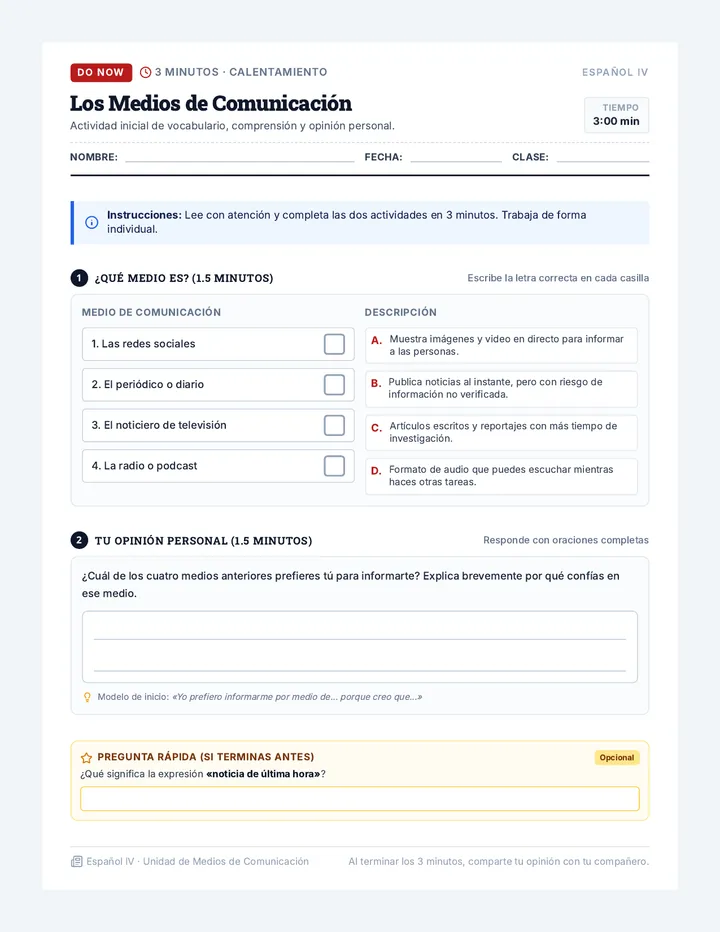
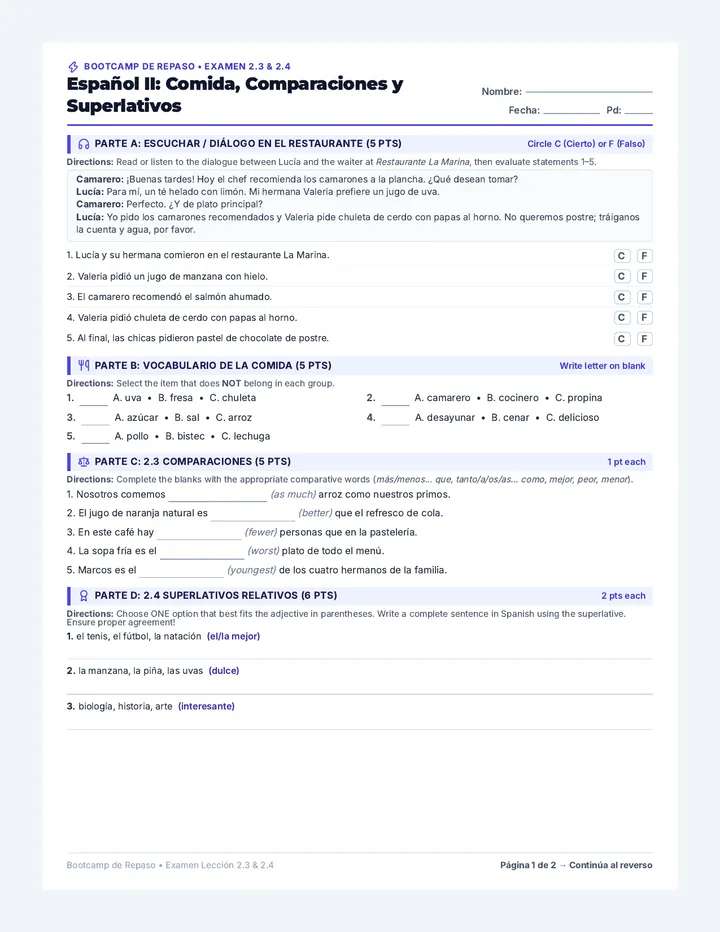
Nature Radicals Slides 木 火 土 金 水
Elemental Foundations
Radical Analysis: Part 1
What is a Radical?
Radicals (部首 bùshǒu) are the building blocks of Chinese characters.
"Think of them as the DNA of a word. They tell you which 'family' a character belongs to."
Today's Focus: The Five Elements (Wǔxíng)
林
Lín (Forest)
Radical: 木 (Wood)
The Elemental Radicals
木
Wood
Mù
林, 树, 桥
火
Fire
Huǒ
烧, 炒, 灯
氵
Water
Shuǐ
河, 海, 游
钅
Metal
Jīn
铁, 银, 钱
土
Earth
Tǔ
地, 城, 场
How to Infer
海
Hǎi (Ocean)
You see 氵. You know it has something to do with water.
Your Turn!
If you see 燃 (Rán) and notice the 火 radical...
What might this word relate to?
Elemental Sorting Race
Get ready to race! Your team must sort 20 character cards into the correct elemental buckets.
Speed + Accuracy = Victory
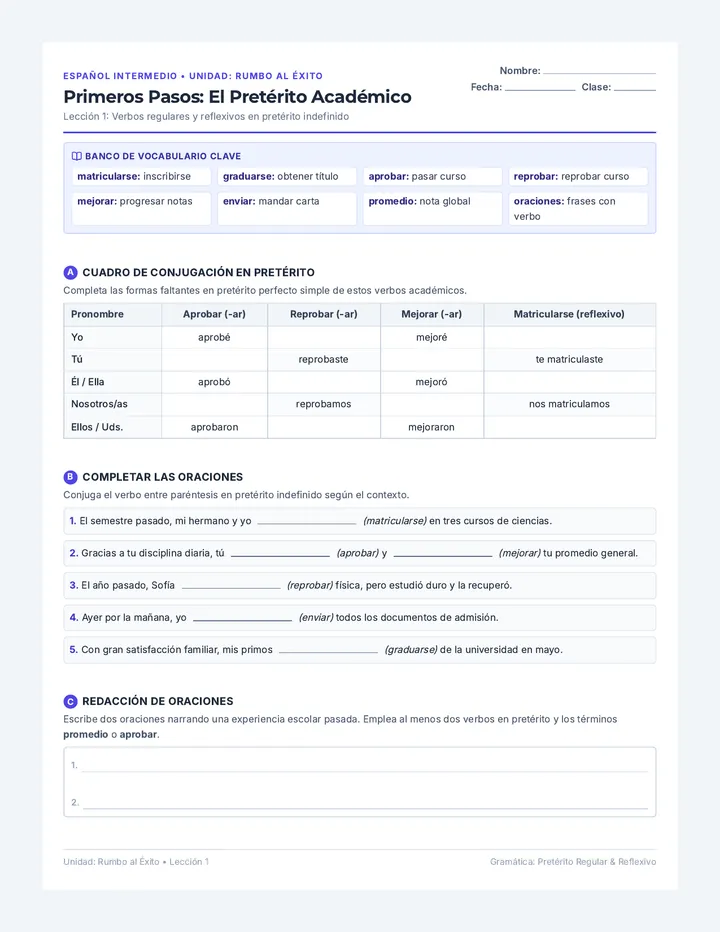
Elemental Sorting Activity Elemental Sorting Race
Character Codebreakers: Level 1
Team Name
Time Score
MISSION INSTRUCTIONS
Cut out the character tokens below. Your team must race to place each character into its correct "Elemental Bucket" based on its radical. Once sorted, write the pinyin or meaning (if known) next to each one.
林 Lín
河 Hé
烧 Shāo
地 Dì
钱 Qián
桥 Qiáo
游 Yóu
炒 Chǎo
城 Chéng
银 Yín
树 Shù
海 Hǎi
灯 Dēng
场 Chǎng
铁 Tiě
木 WOOD
火 FIRE
氵 WATER
土 EARTH
钅 METAL
Detective Notes:
Did you find any characters where the radical was hard to spot? Why?
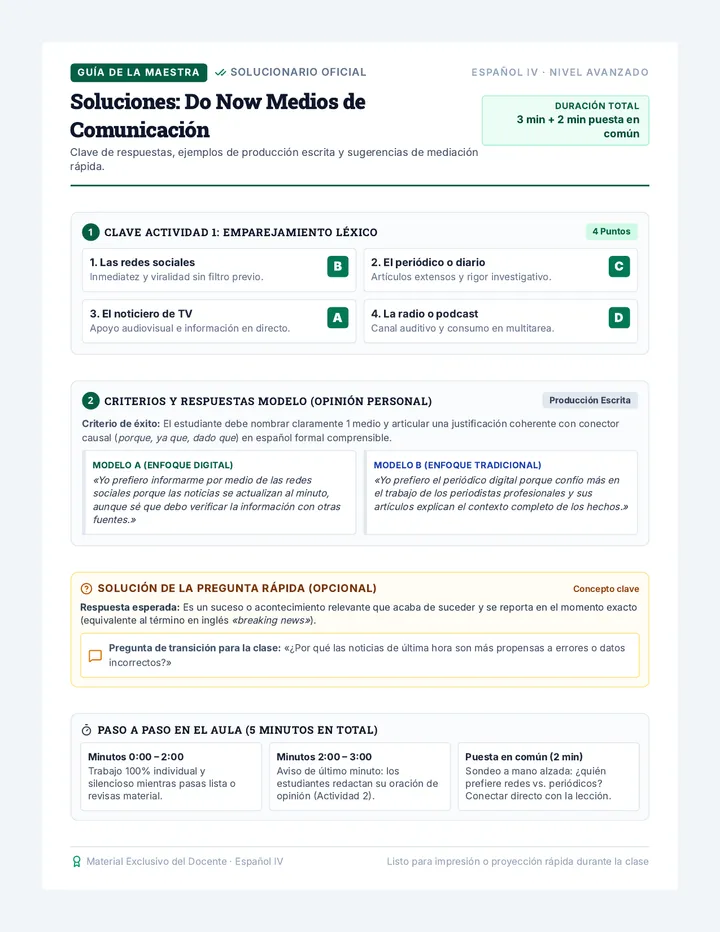
Nature Radicals Teacher Guide Teacher Guide: Elemental Foundations
Lesson 1: Nature and Element Radicals
Learning Objectives
Identify the five elemental radicals: 木, 火, 土, 钅, 氵.
Apply radical knowledge to infer the broad category of unknown characters.
Collaborate in teams to categorize vocabulary quickly.
Key Vocabulary
Radicals: Mù (木), Huǒ (火), Tǔ (土), Jīn (钅), Shuǐ (氵/水).
Character Examples: 林 (Forest), 烧 (Burn), 地 (Ground), 铁 (Iron), 海 (Ocean).
Pacing
Hook/Intro 10m
Radical Breakdowns 15m
Sorting Race 20m
Debrief 10m
Instructional Steps
01
The Hook: Flash Sorting
Show the nature slides. Ask students if they can see a pattern in the characters on the title slide. Introduce the concept that Chinese characters are categorized by these "roots."
02
The Sorting Race
Divide students into groups of 3-4. Provide each group with the character tokens and buckets.
Teacher Tip
Use physical buckets labeled with the radical if space allows. Make it a relay where one student runs a card to the bucket at a time!
03
Discussion & Debrief
Review the "Detective Notes" section of the worksheet. Ask: "If you saw a new character with the water radical, what could you guess about its meaning?" Point out how 氵 is the 'water' radical even though it looks different from 水.
Differentiation Strategies
Support
Provide a 'Cheat Sheet' that shows the relationship between the full character (水) and its radical form (氵).
Challenge
Ask students to find three more characters in their textbooks that use these radicals and add them to their buckets.
Heart and Mind Slides 心 忄 想 忙
The Heart and Mind
Radical Analysis: Part 2
The Heart Radical
In ancient Chinese philosophy, the Heart (心 Xīn) was the home of both emotion and thought .
Two Forms, One Meaning:
心 (Bottom Radical)
忄 (Side Radical)
Can you spot the heart in these?
想
Xiǎng (Think)
忙
Máng (Busy)
Feeling the Heart
Cognition
思, 忘
Thinking, Forgetting
Emotions
怕, 惊
Fear, Surprised
Attitude
态度, 慢
Attitude, Arrogant/Slow
Why the Heart?
"Why do you think the ancient Chinese chose the Heart radical for 'Thinking' (想) instead of a 'Head' radical?"
Intuition vs. Logic
Holistic View
Emoji Emotion Match Worksheet Emoji Emotion Match
Character Codebreakers: Level 2
Name
Chinese characters often contain a radical that hints at their meaning. The 心 (xīn) radical—sometimes written as 忄—is all about feelings and thoughts.
Character
Radical Shape
Match the Emoji!
1
想
Xiǎng (To think)
心
😱 🤔 😴 😡
2
忙
Máng (Busy)
忄
🏃♂️ 😊 😭 😎
3
怕
Pà (Fear)
忄
😨 🥳 😇 🤒
4
忘
Wàng (To forget)
心
🤩 😅 ❓ 💖
The Detective Challenge
Look at the character 惊 (jīng) . It contains the heart radical 忄. Based on the radical, circle which category this word likely falls into:
A. An animal name
B. A type of building
C. A sudden emotion
Self-Check: How many shapes does the heart radical have?
Heart and Mind Teacher Guide Teacher Guide: Heart and Mind
Lesson 2: Emotional Radicals
Learning Objectives
Identify the two forms of the heart radical: 心 (bottom) and 忄 (side).
Explain the cultural connection between the heart and cognition in Chinese history.
Identify HSK 3 vocabulary related to feelings and thought.
Discussion Starters
1. The Biological Connection
"When you get really scared or excited, where do you feel it in your body?"
Connection: Explain that Chinese philosophers viewed the heart as the center of reason, not just blood pumping.
2. The Visual Evolution
"Why do you think the side radical (忄) looks so different from the full character (心)?"
Connection: Discuss how characters were squeezed to fit into a square grid, causing radicals to 'slim down.'
Instructional Steps
01
Emoji Hook: Show a variety of emojis on the board. Ask students to pick one and find a Chinese character in their textbook that matches the 'vibe.' Most will have the heart radical.
02
Guided Practice: Use the Emoji Emotion Match worksheet. Walk through the first two examples (想 and 忙) together. Emphasize the radical position (bottom vs. side).
03
Detective Challenge: Have students work independently on the '惊' challenge. Reveal that it means 'shock/surprise.'
Scaffold
Provide a list of English words (think, busy, afraid, forget) for students to match to the Chinese characters before matching to emojis.
Extend
Ask advanced students to research why the word 'Slow' (慢) has a heart radical. (Answer: Attitude/mental state of being slow/unhurried).
Action Movement Slides 扌 ⻊ 辶 打 跑
Motion in Meaning
Radical Analysis: Part 3
The Power of Action
If a character is a verb (action word) , it almost always contains one of these "Action Centers":
扌
The Hand
Shǒu / Tíshǒupáng
打 (Hit), 找 (Find)
⻊
The Foot
Zú / Zúzìpáng
跑 (Run), 踢 (Kick)
辶
Movement
Chuò / Zǒuzhìpáng
进 (Enter), 远 (Far)
Quick Quiz!
跳
Tiào
VS
推
Tuī
Which one involves your feet? Which one involves your hands?
Radical Charades
Rule: You can only act out the meaning of a character if you correctly name its Action Radical first!
Example: If you see 跑, say "Foot radical!" then start running in place.
Radical Charades Cards Charade Mission Cards
Character Codebreakers: Level 3
Teacher Material
Cut these cards along the dashed lines. Give one card to the "Actor" for each round. Remind students: Identify the radical first , then act it out!
打
Hand Radical
Dǎ (To Hit / Play Ball)
跑
Foot Radical
Pǎo (To Run)
踢
Foot Radical
Tī (To Kick)
提
Hand Radical
Tí (To Lift / Carry)
进
Movement Radical
Jìn (To Enter)
跳
Foot Radical
Tiào (To Jump)
拉
Hand Radical
Lā (To Pull)
送
Movement Radical
Sòng (To Give/Send)
Action Movement Teacher Guide Teacher Guide: Motion in Meaning
Lesson 3: Kinesthetic Verb Radicals
Learning Objectives
Distinguish between hand (扌), foot (⻊), and movement (辶) radicals.
Associate physical actions with their corresponding radical anchors.
Rapidly identify the radical of a new verb to classify its type.
How to Play: Radical Charades
1. Setup: Cut the mission cards. Divide the class into two teams.
2. The Actor: One student from Team A draws a card. They show it only to the teacher.
3. The Rule: Before acting, the student must call out: "This is a [Hand/Foot/Movement] Radical!"
4. The Guess: Team A has 30 seconds to guess the character or its English meaning. If they fail, Team B gets a 10-second steal attempt.
5. Bonus: Award an extra point if the team can name another character with the same radical.
Radical Variation Notes
The hand radical (扌) is a transformed version of 手. Point out that the 3rd stroke is an upward flick (tí).
The movement radical (辶) always wraps around the bottom and left. It's often called the "walking" radical.
Pacing Guide
Intro Slide 5m
Radical Identification 10m
Charades (Game) 30m
Closing Wrap-up 5m
Scaffolding and Extensions
Support:
Keep the 'Action Centers' slide visible during the game as a visual anchor.
Challenge:
Require students to say a full sentence using the character they just acted out.
Abstract Radicals Slides 讠 宀 疒 说 家
Abstract Roots
Radical Analysis: Part 4
Communication (讠)
The Speech Radical (Yánzìpáng) comes from the character for "words."
讠
说
Shuō (Speak)
Radical + 兑
语
Yǔ (Language)
Radical + 五 + 口
Shelter (宀)
宀
The Roof Radical
Miánzìpáng
This radical covers the top of the character like a roof.
家
Jiā (Home)
A "pig" (豕) under a "roof."
Sickness (疒)
疒
Bìngzìpáng
Imagine a person leaning on a hospital bed or a crutch.
病
Bìng (Sick)
疼
Téng (Ache/Pain)
Warning: If you see this radical, someone is probably having a bad day!
Radical Memory Match Worksheet Radical Memory Match
Character Codebreakers: Level 4
Name
Abstract radicals are trickier because they don't always look like "things" you can touch. Match the radical to its general concept and then to a specific character!
1. Radical
讠 A
宀 B
疒 C
2. General Concept
Sickness / Medical ___
Speech / Talking ___
Roof / Shelter ___
3. Example
语 ___
安 ___
疼 ___
Codebreaker Deduction
Look at these "Mystery Characters." Even if you don't know the pinyin, use the radical to infer the meaning.
词
Radical:
Likely Meaning:
宿
Radical:
Likely Meaning:
Hint Box: One of these means "vocabulary/word" and the other means "lodging/to stay overnight."
Abstract Radicals Teacher Guide Teacher Guide: Abstract Roots
Lesson 4: Abstract Categorization
Learning Objectives
Identify abstract radicals: 讠(speech), 宀 (roof), 疒 (sickness).
Explain the thematic grouping of characters within these radical sets.
Infer the meaning of unknown HSK 3-4 characters using abstract radicals.
Conceptual Deep Dive
1. The "Pig Under the Roof"
Character Focus: 家 (Home)
Explain that in agricultural society, keeping livestock (the pig 豕) safe under a roof was the definition of home/family prosperity.
2. Speech as a Tool
Character Focus: 语 (Language), 词 (Word), 课 (Lesson)
Notice how anything related to learning or communicating uses the 讠 radical. It's the 'academic' radical.
Instructional Steps
01
Storytelling Intro: Use the slides to tell the 'story' of the roof and the pig. Visualization helps abstract radicals stick.
02
Matching Activity: Hand out the Memory Match worksheet. Have students work in pairs to see who can solve the 'Codebreaker Deduction' first.
03
Visual Search: If using physical textbooks, have students scan a random page and count how many speech (讠) radicals they can find in 2 minutes.
Support
Give students a color-coded chart where each abstract radical is highlighted in a different color.
Challenge
Ask students to draw their own 'pictograph' version of the sickness (疒) radical to remember its meaning.
Dictionary Challenge Slides The Great Dictionary Escape
Final Challenge
The Master Key: Radical Index
How do you look up a word when you don't know how to say it? You use the Radical Index .
The Process:
Identify the radical.
Count the radical's strokes.
Find the radical in the index.
Count the remaining strokes.
渴
Kě (Thirsty)
氵
3 Strokes
曷
9 Strokes
Escape Mission Rules
Teams
Work in pairs. Two heads are faster than one!
No Pinyin
You must find characters using radicals only.
Unlock
Each character you find provides a digit for the final code.
The Clock is Ticking...
20:00
Good luck, Codebreakers.
Escape Room Riddles Worksheet Escape Room Mission
Character Codebreakers: Final Level
Team
MISSION BRIEFING
Detectives, a secret message has been intercepted. The characters below contain the clues to unlock the digital vault. You have 20 minutes to find these characters in your dictionary using the Radical Index . Once you find the page number, the last digit of that page is your code digit.
01
渴
Radical Analysis:
Radical: 氵
Strokes: 3 + 9
"I have water, but I am still dry."
Page # (Last Digit)
02
睡
Radical Analysis:
Radical: 目
Strokes: 5 + 8
"The eye closes when the sun goes down."
Page # (Last Digit)
03
饿
Radical Analysis:
Radical: 饣
Strokes: 3 + 7
"The food radical meets the 'me' character."
Page # (Last Digit)
The Final Vault Code
Once decoded, bring this to your teacher to claim your reward.
Dictionary Challenge Teacher Guide Teacher Guide: The Great Escape
Lesson 5: Radical Dictionary Navigation
Lesson Goal
To synthesize four lessons of radical knowledge into a practical skill: using a dictionary (digital or physical) via radical indexing. Students will prove their mastery by solving a riddle-based escape room.
Setup Checklist
[ ] One Chinese-English dictionary per pair (or access to MDBG/Pleco radical search).
[ ] Escape Room worksheets printed (one per team).
[ ] A physical "Vault" (box) or a digital password-protected file for the final reward.
[ ] Timer visible to the whole class.
The Mission Flow
01
Refresher: Stroke Counting
Quickly review how to count strokes for radicals. Remind them that for the radical index, they count the radical first, then the rest of the character.
02
The Challenge Starts
Distribute the worksheets. Start the 20-minute timer. Move around the room to help students who get stuck on stroke counts (the most common error).
03
Unlocking
As teams finish, they bring the code to you. If the code matches your dictionary's page numbers (last digits), they "escape."
Teacher Note: Page Numbers
Because different dictionaries have different page numbers, you must pre-fill the page numbers based on the dictionaries your class uses before printing or write them on your own master key. The characters are: