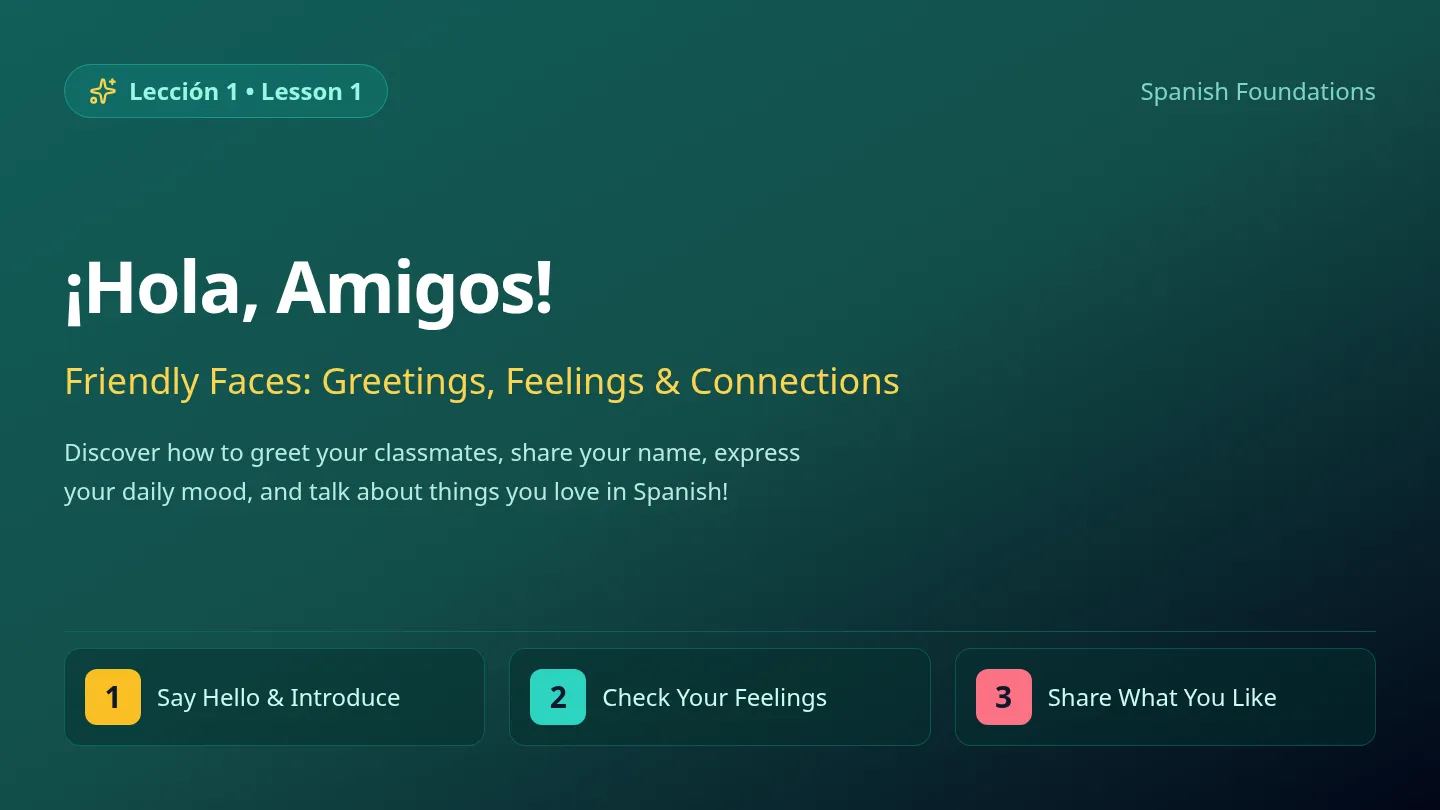
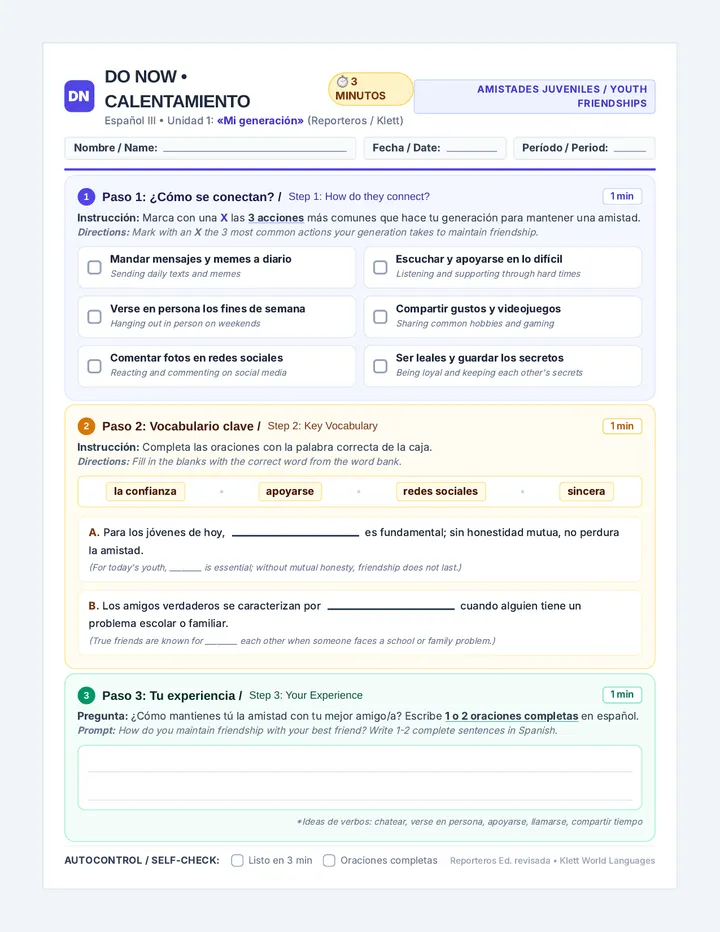
The Storytelling Tense Slides The Storytelling Tense
Introduction au Passé Simple
Advanced French Grammar • Lesson 1
Once Upon a Time...
"Lorsque j'avais six ans j'ai vu, une fois, une magnifique image... J'ai beaucoup réfléchi ensuite sur les aventures de la jungle et, à mon tour, je réussis , avec un crayon de couleur, à tracer mon premier dessin."
— Antoine de Saint-Exupéry, Le Petit Prince
What looks different?
Why not "j'ai réussi"?
Is it a typo? No! It's the Passé Simple .
Le Passé Simple : The Concept
Literary Register
It is used almost exclusively in formal writing: literature, history, and official speeches.
Not Spoken
In modern spoken French, we use the Passé Composé . If you use Passé Simple in a café, people will think you're from the 17th century!
Essential Question:
"Why do written narratives employ a distinct temporal system from spoken language?"
Regular Conjugation: -ER Verbs
Subject Parler (to speak) Je parlai Tu parlas Il / Elle parla Nous parlâmes Vous parlâtes Ils / Elles parlèrent
Regular Conjugation: -IR & -RE
Subject Finir / Vendre Je finis Tu finis Il / Elle finit Nous finîmes Vous finîtes Ils / Elles finirent
How to Spot Them
The "A" Roots
ER verbs love the letter "a" (aima , chantèrent ).
The "I" Roots
IR and RE verbs love the letter "i" (finirent , vendis ).
The "Chapeau"
The circumflex (^ ) appears on the "Nous" and "Vous" forms only.
L'Objectif
"Our goal is not to write poetry in the Passé Simple, but to recognize it so we can dive into the great stories of the French-speaking world."
The Princes Past Worksheet The Prince's Past
Analyse littéraire du Passé Simple
Nom:
Date:
Instructions
Lisez l'extrait ci-dessous tiré de Le Petit Prince par Antoine de Saint-Exupéry. Identifiez les verbes conjugués au passé simple . Ensuite, complétez les exercices d'identification et de conjugaison.
Extrait : Chapitre II
« Alors j’ai sauté sur mes pieds comme si j’avais été frappé par la foudre. J’ai bien frotté mes yeux. J’ai bien regardé. Et je vis un petit bonhomme tout à fait extraordinaire qui me regarda gravement. [...] Je dessinai donc. Il regarda attentivement, puis : "Non ! Celui-là est déjà très malade. Fais-en un autre." Je dessinai de nouveau. Mon ami sourit gentiment, avec indulgence : "Tu vois bien... ce n'est pas un mouton, c'est un bélier. Il a des cornes..." »
1 Extraction et Identification
Forme (Texte)
Infinitif
Type (-ER, -IR, -RE)
2 L'Art de la Narration
Réécrivez ces phrases quotidiennes dans le registre littéraire en utilisant le Passé Simple .
Exemple : Il a fini ses devoirs. → Il finit ses devoirs.
A. Le chat a mangé la souris.
B. Elles ont marché vers la forêt.
C. Nous avons entendu un cri étrange.
D. Vous avez choisi le chemin difficile.
3 Mini-Conte
Écrivez deux phrases courtes pour commencer un conte de fées. Utilisez au moins deux verbes réguliers au passé simple (un en -er et un en -ir).
Literary Legend Teacher Guide Literary Legend Guide
Teacher Resource • Lesson 1: Introduction to Passé Simple
Instructional Objective
Students will understand the linguistic register of the Passé Simple, identifying it as a literary tense distinct from the spoken Passé Composé. By the end of this lesson, students should be able to recognize regular -er, -ir, and -re endings in context.
Key Terms
• Registre soutenu
• Narration
• Passé Simple
• Passé Composé
Facilitation Notes
The "Why" Behind the Tense
Prompt: "Why would a language have one set of rules for talking and a completely different set for writing stories?"
Discussion points: Preservation of formal traditions, clear distinction between 'everyday life' and 'the world of the story', and the rhythmic quality of the endings.
Misconception Alert: Production vs. Recognition
Students often feel overwhelmed by the endings. Remind them: Recognition is the priority. They will rarely, if ever, need to produce this in a spoken conversation. Focus on the 'sound' of the endings (the 'A' sound for -ER and the 'EE' sound for -IR/RE).
Answer Key: The Prince's Past
Part 1: Text Identification
• vis (voir) - IR Pattern*
• regarda (regarder) - ER
• dessinai (dessiner) - ER
• sourit (sourire) - RE/IR Pattern
*Note: 'Voir' is irregular but follows the 'i' pattern, a good segue for Lesson 2.
Part 2: Transformation
A. Le chat mangea la souris.
B. Elles marchèrent vers la forêt.
C. Nous entendîmes un cri étrange.
D. Vous choisîtes le chemin difficile.
Irregular Ink Slides Irregular Ink
Les Verbes Irréguliers du Passé Simple
Advanced French Grammar • Lesson 2
The "Phantom" Verbs
Some verbs change so much in the Passé Simple they look like a completely different language.
"Il fut une fois..." (He was? No, There was!)
Recognizing these "roots" is the secret to reading classic French literature without a dictionary on every page.
Top 4 Irregulars
ÊTRE → FU-
AVOIR → EU-
FAIRE → FI-
VENIR → VIN-
The Three Irregular Families
I
The "i" Group
Sounds like "ee"
FAIRE → fis
U
The "u" Group
Sounds like "ew"
AVOIR → eus
IN
The "in" Group
Nasal "ah-n"
VENIR → vins
Wait! The Endings stay regular!
Even if the root is weird, the endings follow the pattern you know.
ÊTRE (Root: FU-)
Je
fus
Tu
fus
Il
fut
Nous
fûmes
Vous
fûtes
Ils
furent
AVOIR (Root: EU-)
Je
eus
Tu
eus
Il
eut
Nous
eûmes
Vous
eûtes
Ils
eurent
Verb Vault Challenge
It's time to match the "phantom" forms with their standard selves. Can you spot the difference between Nous eûmes and Nous avons eu ?
Let's Play
Verb Vault Matching Activity Verb Vault Matching
Le Défi des Irréguliers
Goal: Match the "Phantom" Passé Simple form to its modern "Passé Composé" twin. Cut out the cards below and pair them up to unlock the vault.
Passé Simple Il fut
Passé Composé Il a été
Passé Simple Nous eûmes
Passé Composé Nous avons eu
Passé Simple Je fis
Passé Composé J'ai fait
Passé Simple Ils vinrent
Passé Composé Ils sont venus
Passé Simple Elle vit
Passé Composé Elle a vu
Passé Simple Vous dîtes
Passé Composé Vous avez dit
Passé Simple Je voulus
Passé Composé J'ai voulu
Passé Simple Il put
Passé Composé Il a pu
Sentence Challenge
Convert these dramatic story sentences using the forms you matched above.
1. He was very brave. (Passé Simple)
2. They came at midnight. (Passé Simple)
3. We had the key. (Passé Simple)
Verb Vault Answer Key Verb Vault Answer Key
Teacher Resource • Irregular Passé Simple Recognition
Matching Table
<table class="w-full text-sm"><tbody><tr class="border-b border-slate-200"><td class="py-2 font-mono text-blue-700">Il fut</td><td class="py-2 italic text-slate-500">→</td><td class="py-2 font-bold text-slate-800">Il a été</td></tr><tr class="border-b border-slate-200"><td class="py-2 font-mono text-blue-700">Nous eûmes</td><td class="py-2 italic text-slate-500">→</td><td class="py-2 font-bold text-slate-800">Nous avons eu</td></tr><tr class="border-b border-slate-200"><td class="py-2 font-mono text-blue-700">Je fis</td><td class="py-2 italic text-slate-500">→</td><td class="py-2 font-bold text-slate-800">J'ai fait</td></tr><tr class="border-b border-slate-200"><td class="py-2 font-mono text-blue-700">Ils vinrent</td><td class="py-2 italic text-slate-500">→</td><td class="py-2 font-bold text-slate-800">Ils sont venus</td></tr><tr class="border-b border-slate-200"><td class="py-2 font-mono text-blue-700">Elle vit</td><td class="py-2 italic text-slate-500">→</td><td class="py-2 font-bold text-slate-800">Elle a vu</td></tr><tr class="border-b border-slate-200"><td class="py-2 font-mono text-blue-700">Vous dîtes</td><td class="py-2 italic text-slate-500">→</td><td class="py-2 font-bold text-slate-800">Vous avez dit</td></tr><tr class="border-b border-slate-200"><td class="py-2 font-mono text-blue-700">Je voulus</td><td class="py-2 italic text-slate-500">→</td><td class="py-2 font-bold text-slate-800">J'ai voulu</td></tr><tr class="border-b border-slate-200"><td class="py-2 font-mono text-blue-700">Il put</td><td class="py-2 italic text-slate-500">→</td><td class="py-2 font-bold text-slate-800">Il a pu</td></tr></tbody></table>
Common Traps
Confusing Vit/Vinrent: Vit comes from voir , whereas vint/vinrent comes from venir . Point out the 'n' in venir/vint.Fut vs Fit: Students often swap these. Fut is short and stable (to be), Fit is active (to do/make).The Circumflex: Remind students it only appears in 1st/2nd person plural (Nous/Vous), like a "royal hat" for the more formal plural forms.
Sentence Challenge Solutions
1. He was very brave.
Il fut très courageux.
2. They came at midnight.
Ils vinrent à minuit.
3. We had the key.
Nous eûmes la clé.
Foreground and Background Slides Foreground & Background
Passé Simple vs. Imparfait
Advanced French Grammar • Lesson 3
The Camera Analogy
The Imparfait
The "Set Decorator"
Descriptions (weather, feelings)
Ongoing states (Habits)
The Background
The Passé Simple
The "Action Director"
Specific, completed events
Interrupting actions
The Foreground
Visualizing the Narrative
"Il pleuvait et les rues étaient désertes..." (Background)
"Soudain, une porte s'ouvrit !" (Action)
Imparfait = Static
The world stays the same. Time is a blurred line.
Passé Simple = Dynamic
The story moves forward. Time is a sharp point.
Analyse d'un texte
"La pluie tombait doucement. Marie lisait un livre près du feu. Soudain, son chat sauta sur la table et renversa la lampe."
Imparfait Establishes the atmosphere.
Passé Simple Drives the plot forward.
Your Turn: Chronicle Colors
You are about to receive a classic passage. Your job is to be the "narrative artist" and color-code the background vs. the foreground.
Background
Foreground
Chronicle Colors Activity Chronicle Colors
L'art de l'aspect narratif
Imparfait
P. Simple
Le Défi de Coloration
Lisez l'extrait ci-dessous tiré d'un conte classique. Utilisez deux couleurs pour mettre en évidence les verbes :
Bleu (ou souligné) : L'Imparfait (le décor, les états, les actions répétées).Jaune (ou encadré) : Le Passé Simple (les événements précis, les changements).
C’était une nuit d’hiver. Le vent soufflait avec violence à travers les arbres nus. Tout le village dormait profondément. Soudain, un cavalier solitaire apparut au bout du chemin. Il s’arrêta devant la vieille auberge. La porte grinça et un homme en sortit. Il portait un grand manteau noir et ses yeux brillaient dans l'obscurité. Sans dire un mot, il tendit une lettre au cavalier qui la saisit nerveusement.
1. L'Analyse du Décor
Quels sont les trois verbes à l'Imparfait qui décrivent l'atmosphère de la scène ? Pourquoi l'auteur n'utilise-t-il pas le Passé Simple ici ?
2. Le Pivot Narratif
Quel mot de transition signale le passage du "décor" à l'"action" ? Quel est le premier verbe au Passé Simple qui lance l'histoire ?
3. Changement de Perspective
Si on changeait le verbe "dormait" en "dormit" , comment le sens de la phrase changerait-il ?
Narrative Nuance Teacher Guide Narrative Nuance Notes
Teacher Guide • Lesson 3: Pacing & Aspect
The Learning Goal
Students will transition from identifying tenses to analyzing their narrative function . They should see the Imparfait as the "still image" or "video loop" and the Passé Simple as the "button press" that triggers the next scene.
Pedagogical Strategy
Use the "Theater Lighting" metaphor. The Imparfait is the house lights and the ambient music that is already playing when the curtain rises. The Passé Simple is the spotlight moving, a character entering, or a sudden sound effect.
Note: In advanced literature, the lines blur, but for 10th grade, keep the distinction sharp: Atmosphere vs. Action.
Questioning Framework
• "Is time moving while this verb is happening?"
• "Could we take a photo of this action, or is it a long video?"
• "If we removed this sentence, would the plot still happen?"
Answer Key: Chronicle Colors
Imparfait (Background)
était (state)
soufflait (ongoing weather)
dormait (ongoing state)
portait (description)
brillaient (description)
Passé Simple (Action)
apparut (event)
s’arrêta (event)
grinça (sudden sound)
sortit (movement)
tendit (action)
saisit (action)
Analysis Question 3 Highlight
Changing "dormait" to "dormit" implies the village went to sleep at that exact moment, rather than being in the state of sleep already. It creates a sudden sequence of events rather than a setting.
The Lost Pluperfect Slides The Lost Pluperfect
Introduction au Passé Antérieur
Advanced French Grammar • Lesson 4
The "Past of the Past"
Just as the Passé Simple is the literary twin of the Passé Composé...
Passé Antérieur
Is the literary twin of the Plus-que-parfait .
It describes an action that happened right before another action in the past.
"Dès qu'il eut fini son repas, il partit."
VS
"Dès qu'il avait fini son repas, il partait." (Habit)
How to Build It
Auxiliary
Passé Simple (eus / fus)
Past Participle
e.g., fini, chanté, vu
"J'eus parlé "
"Elle fut partie "
The Trigger Words
The Passé Antérieur almost always follows specific time markers. Look for these "Anteriority Signals":
Dès que
As soon as...
Aussitôt que
Immediately when...
Quand
When...
Après que
After...
Sequencing Time
"Life is lived forward, but understood backward."
In our next activity, we will reconstruct a story. You'll need to use these subtle tense cues to place events in the correct order on a timeline.
Time Traveler Timeline Worksheet Time Traveler Timeline
Séquençage narratif et Passé Antérieur
Lesson 4 • Activity Sheet
Le Défi Chronologique
Une histoire a été découpée en morceaux. Pour la reconstruire, vous devez prêter attention aux verbes au Passé Antérieur . Rappelez-vous : le Passé Antérieur précède toujours le Passé Simple .
A
"Quand ils eurent franchi la porte du château, ils virent un trésor immense."
B
"Aussitôt que la lumière fut éteinte , le silence tomba sur la pièce."
C
"Dès que le roi eut parlé , tous les chevaliers s’agenouillèrent."
D
"Après que la pluie eut cessé , un arc-en-ciel apparut dans le ciel."
Analyse de la Séquence
1. Dans la phrase A, quelle action s'est produite en premier ? Pourquoi ?
2. Identifiez le verbe auxiliaire et le participe passé dans la phrase B.
Auxiliaire :
Participe Passé :
3. Transformez cette phrase moderne en phrase littéraire :
Timeline Answer Key Timeline Answer Key
Teacher Resource • Passé Antérieur Logic
Task 1: First Actions
Phrase A Analysis:
The action that occurred first is "franchi la porte" (crossed the door). We know this because it is in the Passé Antérieur , which marks an action completed immediately before the main action (seeing the treasure).
Task 2: Identification
Phrase B (fut éteinte):
• Auxiliaire: fut (être)
• Participe: éteinte (éteindre)
Phrase C (eut parlé):
• Auxiliaire: eut (avoir)
• Participe: parlé (parler)
Task 3: Transformation
"Dès qu'il a fini ses devoirs, il est sorti."
→ "Dès qu'il eut fini ses devoirs, il sortit."
*Note: Remind students that when the first verb moves to Passé Antérieur, the second verb must move to Passé Simple to maintain the literary register.
The Translators Ink Workshop The Translator's Ink
Workshop: Literary Translation
Nom:
Date:
La Mission du Traducteur
Votre défi est de traduire un extrait d'une fable célèbre en anglais. L'objectif n'est pas seulement de traduire les mots, mais de capturer le ton narratif . Comment allez-vous traduire le Passé Simple pour que le lecteur anglais ressente l'action dramatique ?
Texte Source (Français)
« Le Corbeau, honteux et confus, jura, mais un peu tard, qu'on ne l'y prendrait plus. La Cigale, ayant chanté tout l'été, se trouva fort dépourvue quand la bise fut venue. Elle alla crier famine chez la Fourmi sa voisine, la priant de lui prêter quelque grain pour subsister jusqu'à la saison nouvelle. »
Votre Traduction (Anglais)
Stratégie de Traduction
Expliquez comment vous avez choisi de traduire les verbes au Passé Simple et au Passé Antérieur . Quel temps anglais avez-vous utilisé pour préserver le rythme ?
Closing the Story Exit Ticket Closing the Story
Billet de sortie : Réflexion Finale
Exit Ticket
The Final Insight
En un court paragraphe, répondez à notre question essentielle :
Votre Réponse
Nom: _______________________ Classe: _____________________
Echoes of the Past • Final Assessment
Translation Standards Rubric Translation Standards
Assessment Rubric • Literary Narrative Analysis
Criteria Exemplary (4) Proficient (3) Developing (2) Tense Recognition Correctly identifies all Passé Simple and Passé Antérieur forms in the source text. Identifies most literary tenses with 1-2 minor errors. Struggles to distinguish between irregular P. Simple and Imparfait. Narrative Tone English translation maintains a formal, "storytelling" register using evocative vocabulary. Translation is accurate but uses modern, colloquial English phrasing. Translation is literal and lacks the rhythmic flow of the original fable. Tense Accuracy Effectively translates P. Antérieur as an earlier event (Past Perfect) and P. Simple as a sharp action. Most tenses are translated into logical English equivalents. Uses incorrect temporal sequence in English, making the story confusing. Linguistic Analysis Provides deep insight into why the author chose literary tenses over spoken ones. Explains the basic difference between atmosphere and action. Provides a surface-level explanation of the grammatical rules.
Narrative Strengths
Target for Growth