Color theory, perspective, and composition techniques using diverse media like charcoal, watercolor, and acrylics. Develops foundational sketching skills and advanced painting methods.
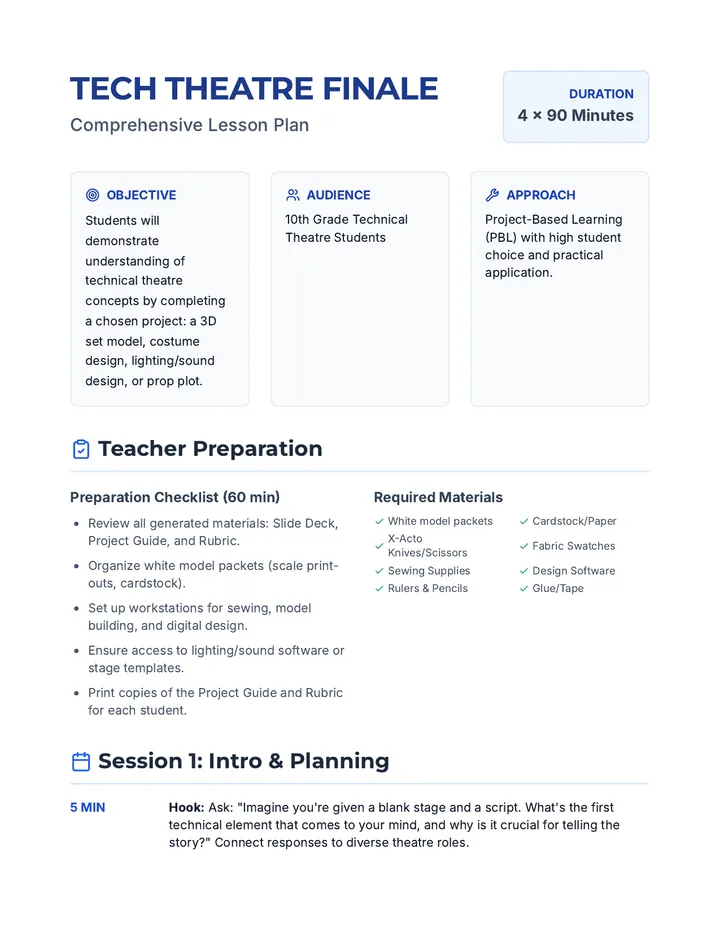
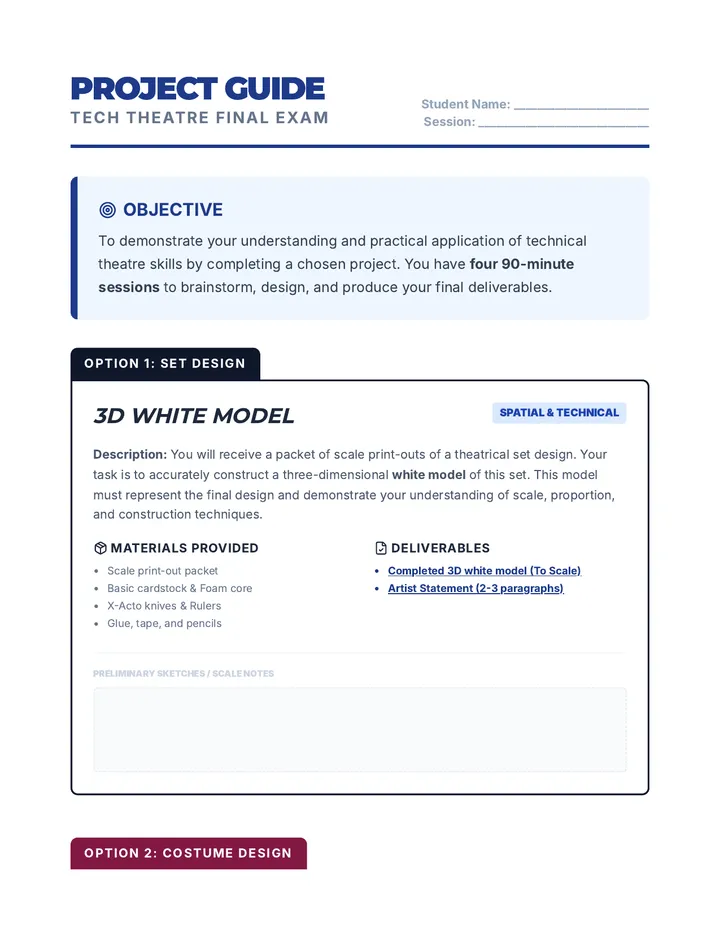
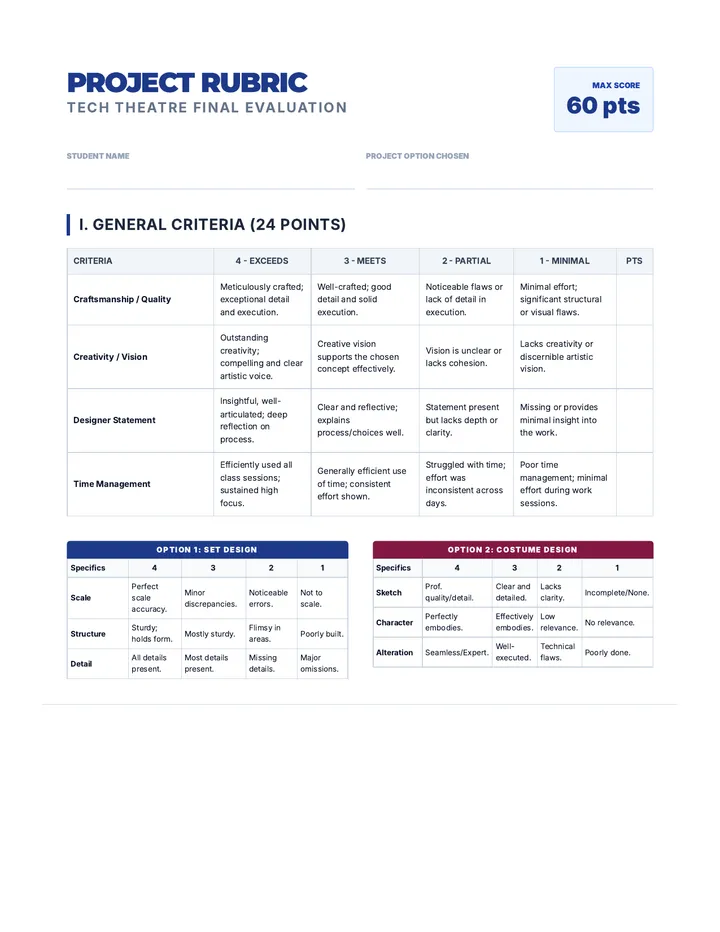
A 4-session project-based final exam where 10th-grade students demonstrate technical theatre mastery through set, costume, lighting, sound, or prop design.
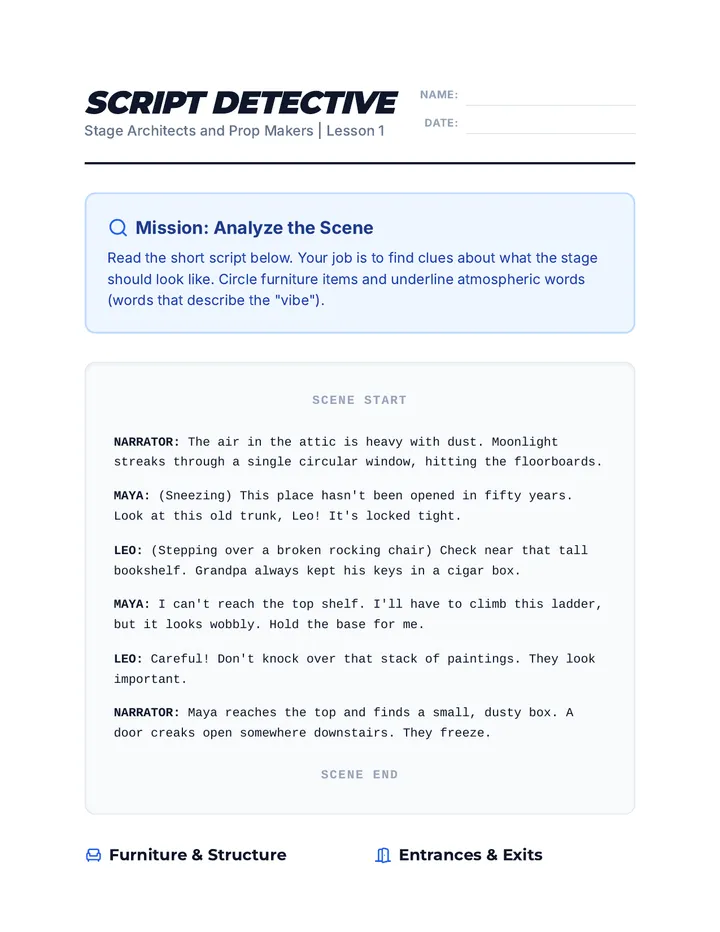
This hands-on sequence introduces 4th graders to the visual and engineering side of theater. Students analyze scripts to design environments, draft scale floor plans, build 3D scenic models, and fabricate props, emphasizing spatial reasoning and storytelling through physical space.
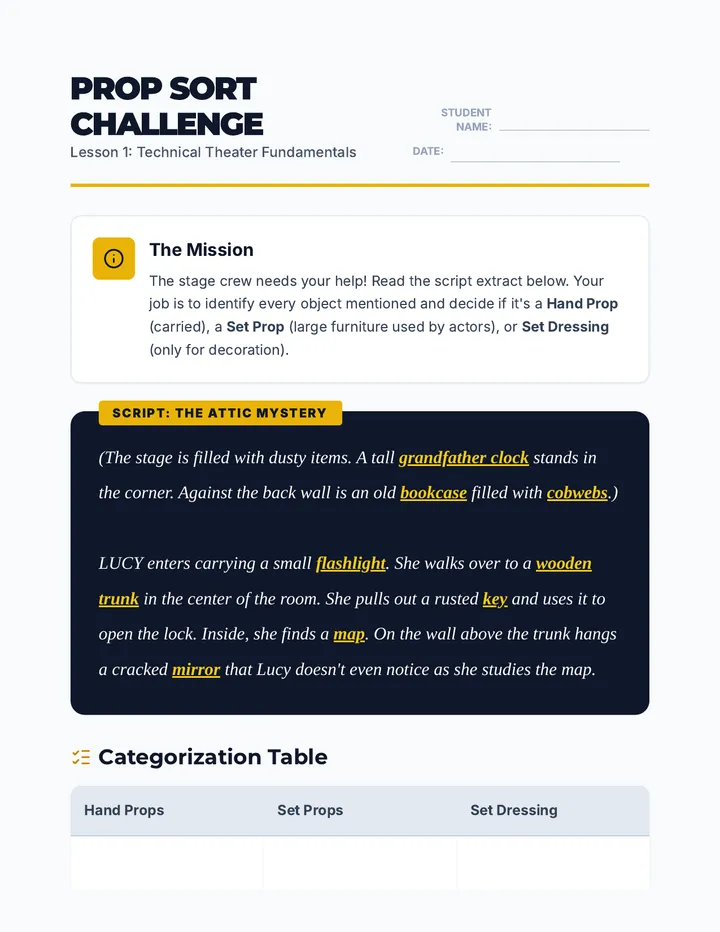
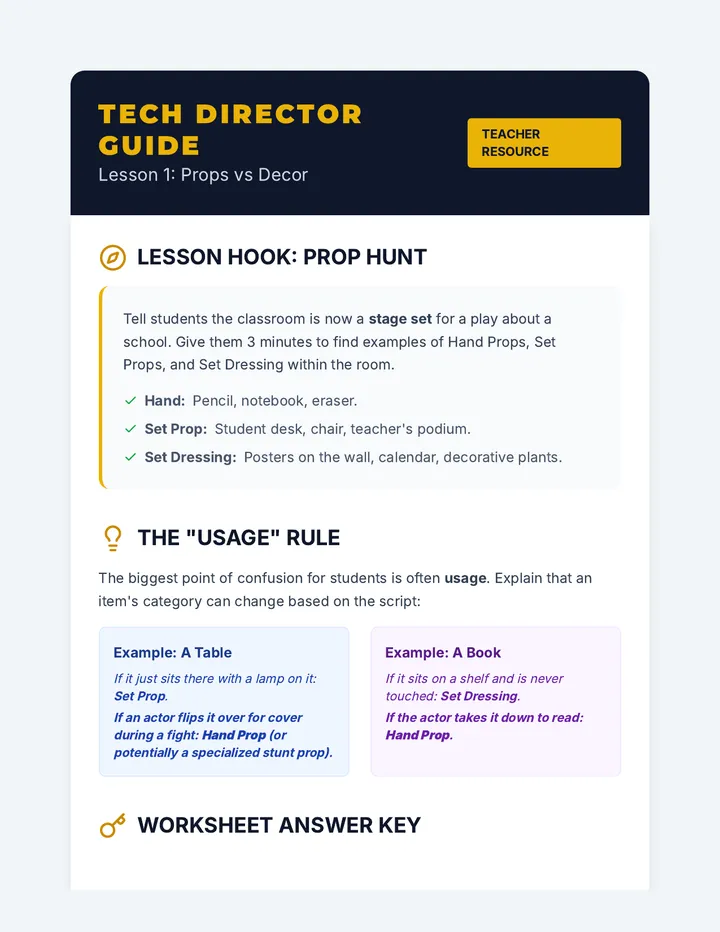
Students investigate how costumes and properties (props) function as tools for character development and storytelling. The sequence guides students through the process of distinguishing between prop types, exploring costume psychology, fabricating safe props, and mastering backstage organization.
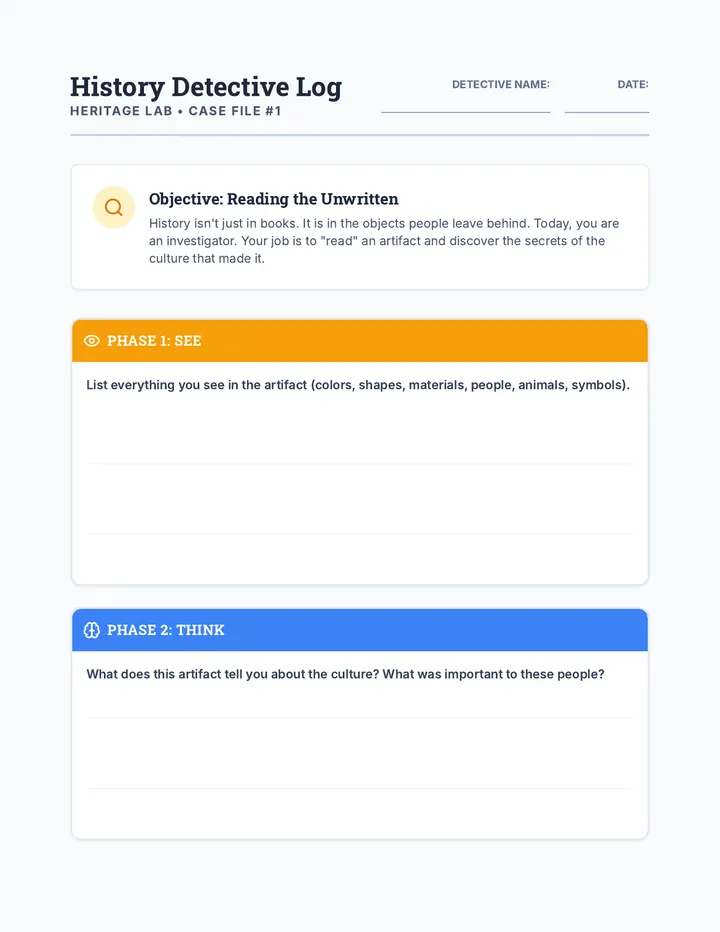
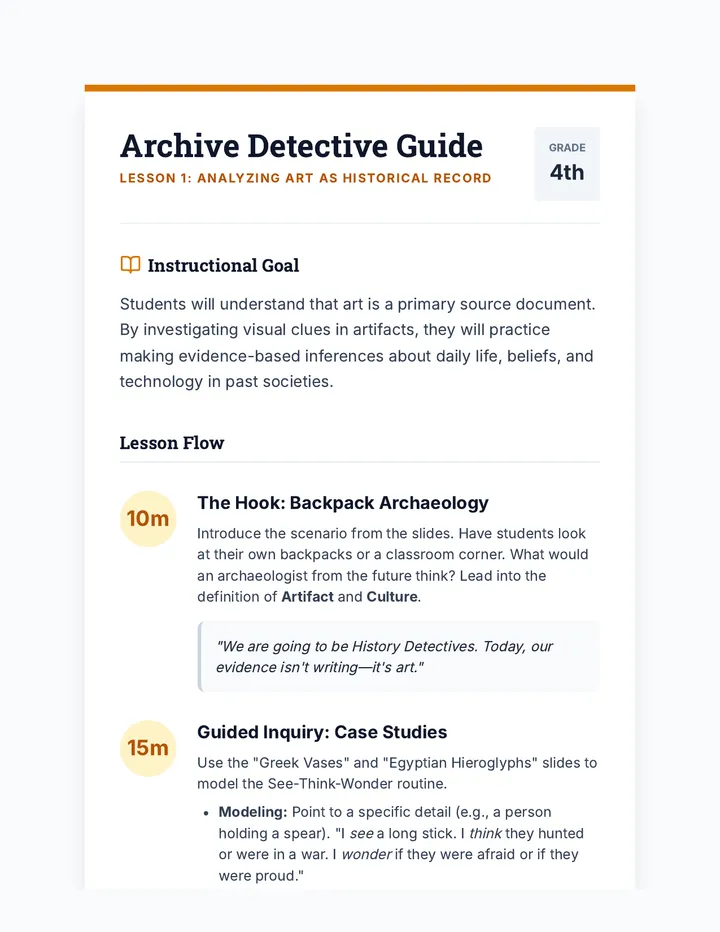
This 4th-grade sequence explores how traditional arts and crafts function as vessels for cultural heritage. Students learn to 'read' artifacts like narrative quilts and pottery as historical texts, ultimately creating their own heritage artifacts to preserve personal or family stories.
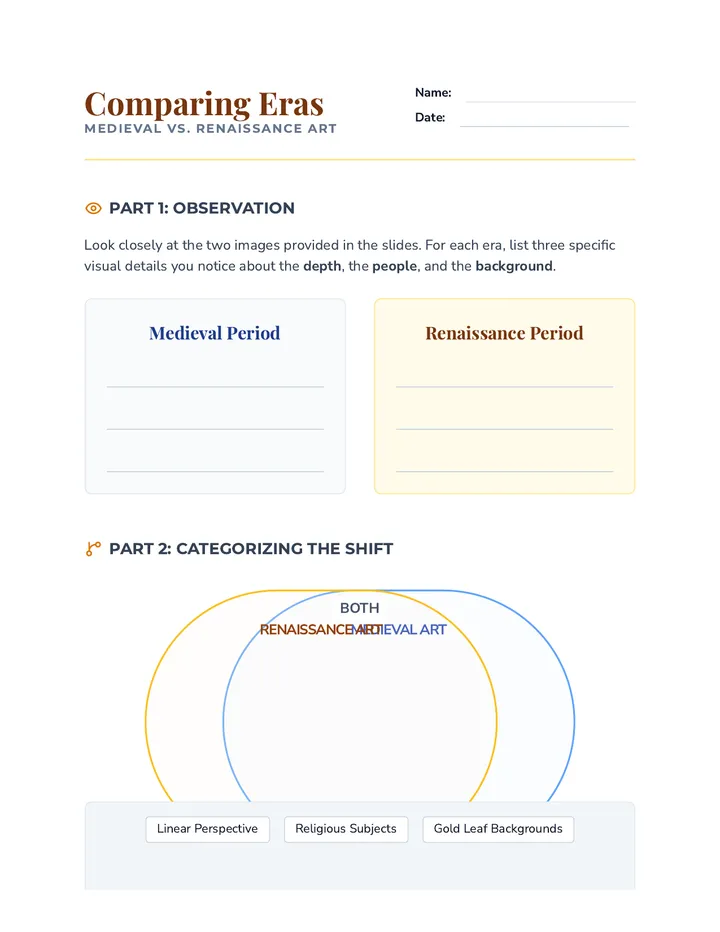
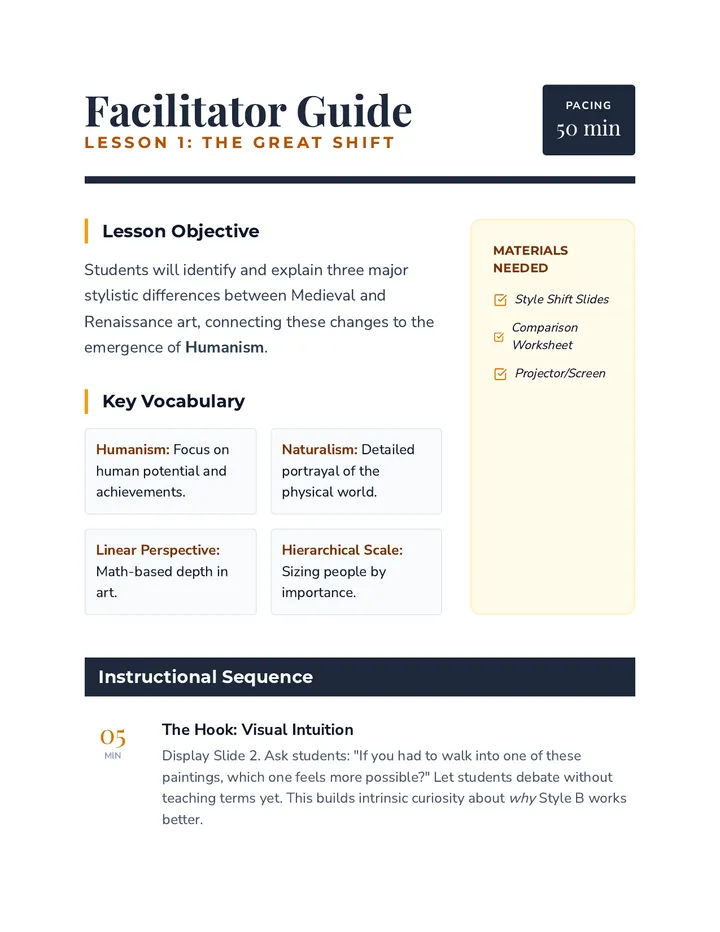
This sequence explores the transition from Medieval to Renaissance art, focusing on the development of linear perspective, human anatomy in art, and the cultural shift toward Humanism. Students will analyze masterpieces like 'The School of Athens' and apply mathematical principles to create their own realistic artworks.
This sequence explores the artistic revolution of the Renaissance, focusing on the shift from Medieval symbolism to Renaissance realism through the lens of mathematics and anatomy. Students will analyze historical works and apply technical skills like linear perspective to understand how art reflects cultural values.
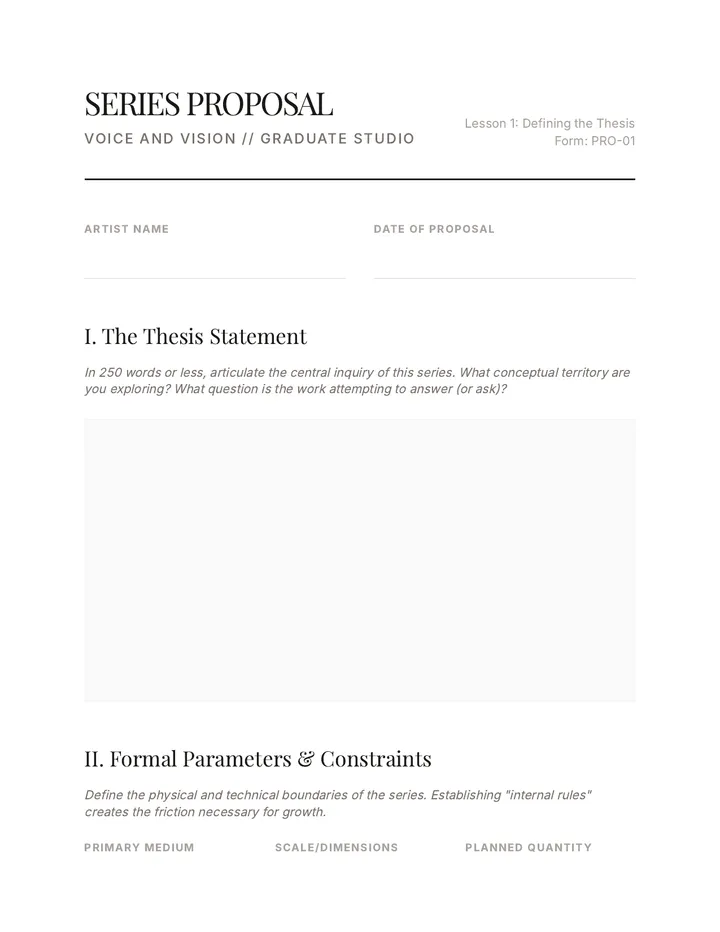
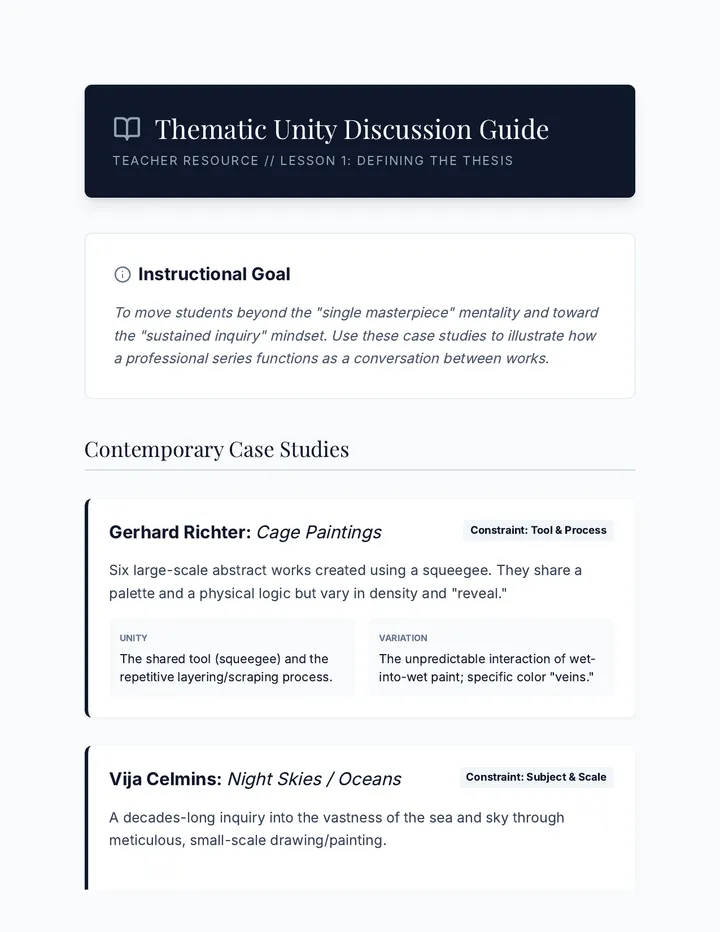
A graduate-level studio sequence focused on the transition from technical exercises to a cohesive, professional body of work. Students develop a thematic series, tackle the challenges of large-scale execution, engage in rigorous formal critiques, and curate a final presentation.
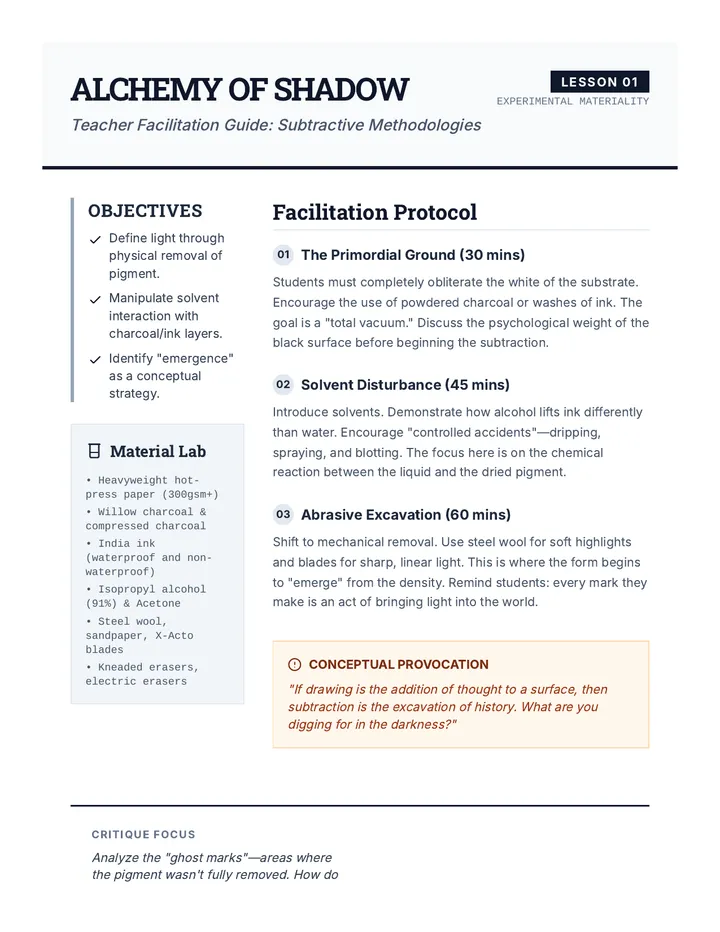
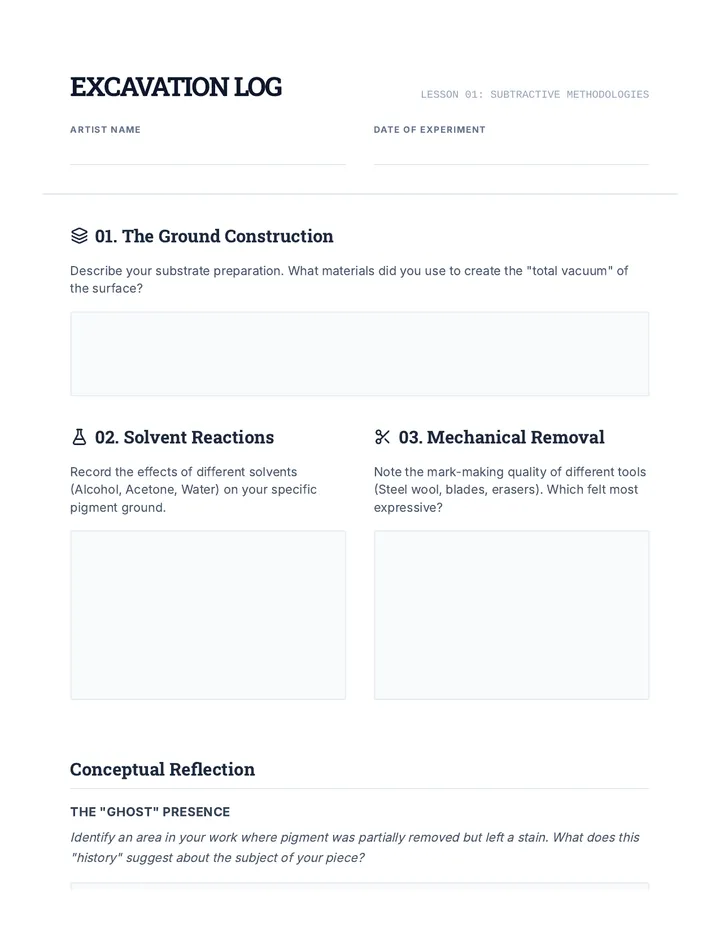
A graduate-level exploration of the intersection between medium and meaning. Students innovate with traditional materials, exploring chemical interactions, substrate manipulation, and mixed-media synthesis to develop a unique 'mark-making' vocabulary where physical texture contributes to conceptual depth.
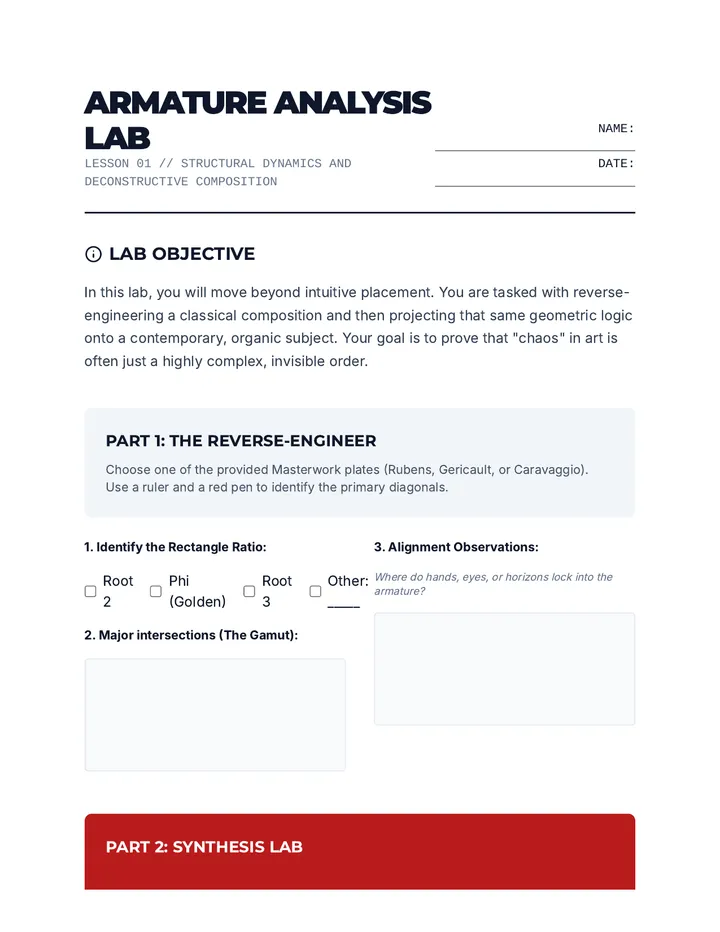
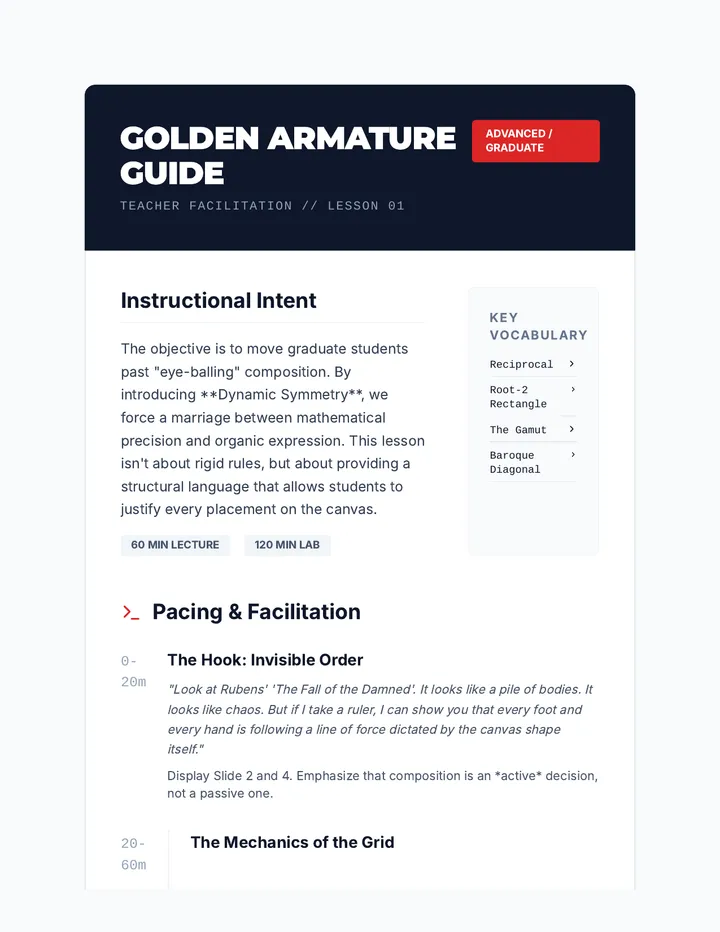
This advanced sequence for graduate students explores the deconstruction of classical composition through dynamic symmetry, edge tension, non-Euclidean perspective, and visual hierarchy. Students will move from rigid geometric analysis to 'anti-compositional' strategies to create contemporary, tension-filled imagery.
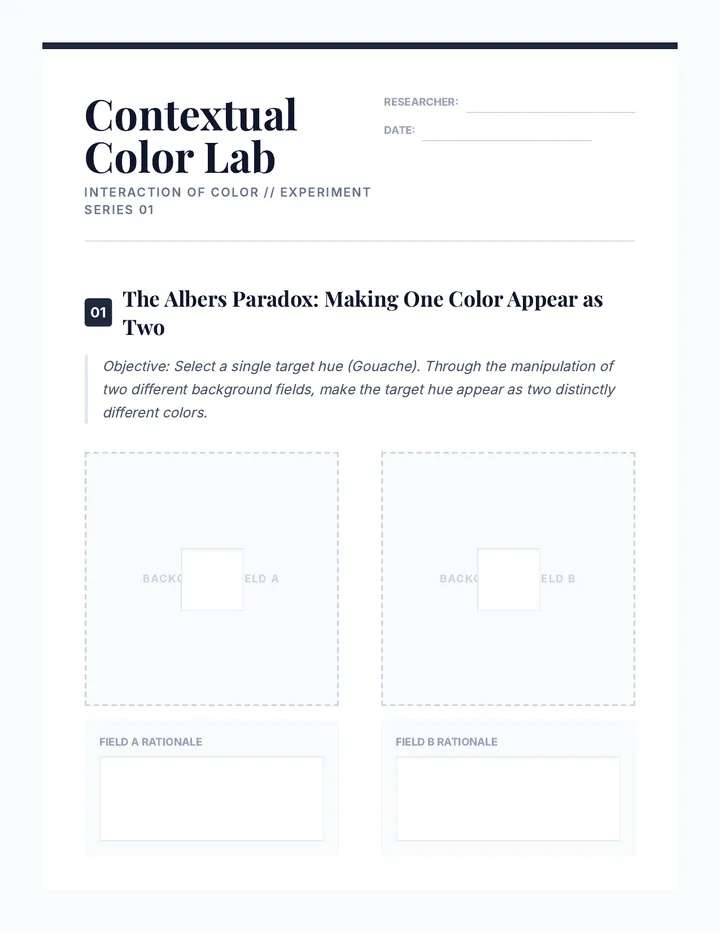
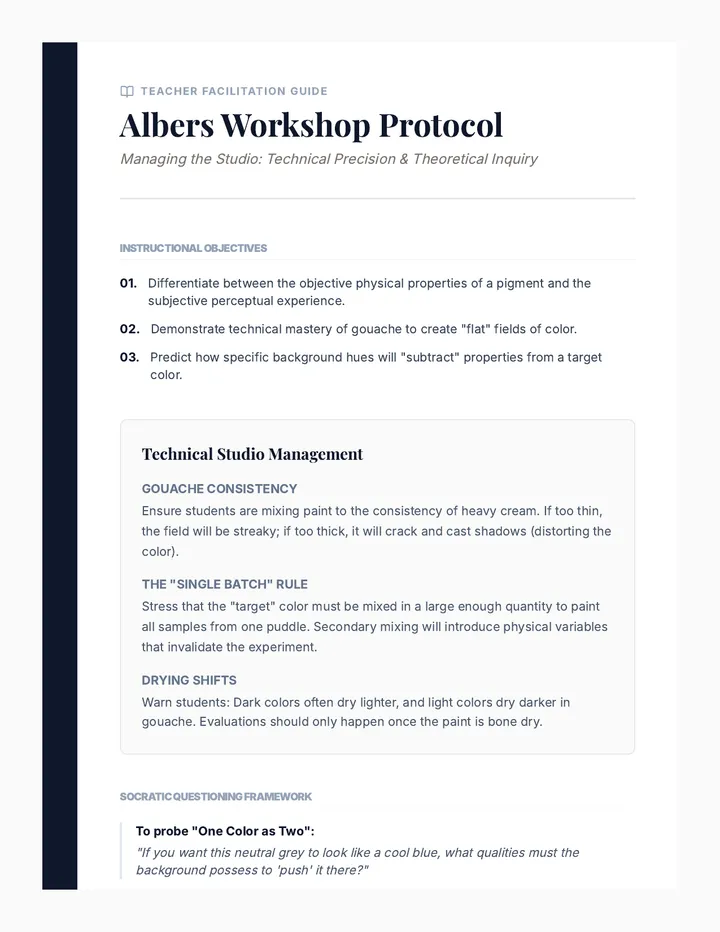
An intensive graduate-level investigation into the physics, psychology, and application of color in fine art, focusing on relativity, semiotics, and narrative.
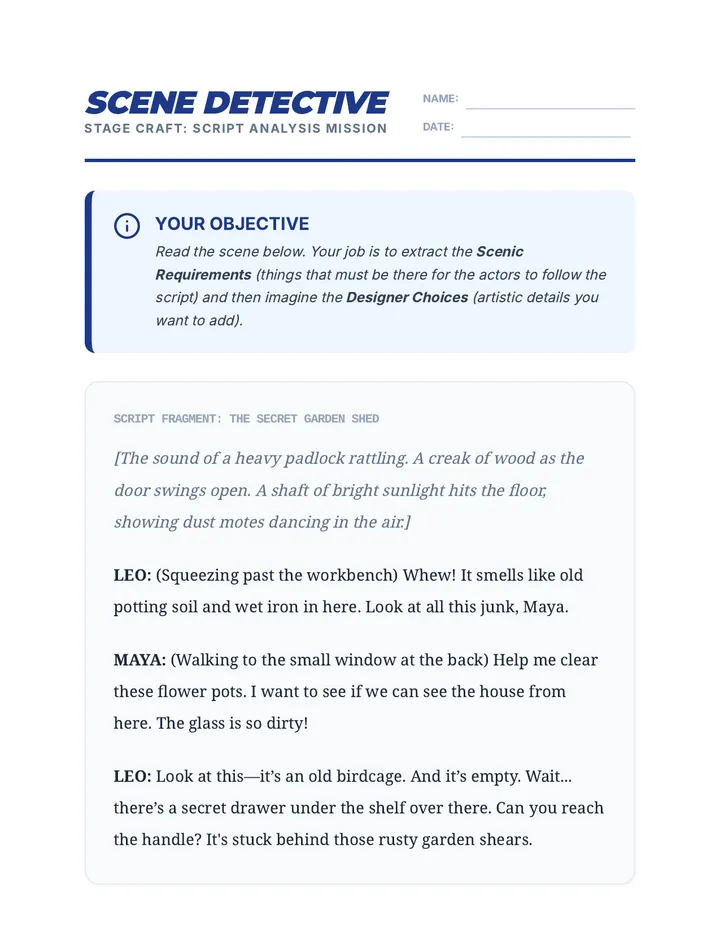
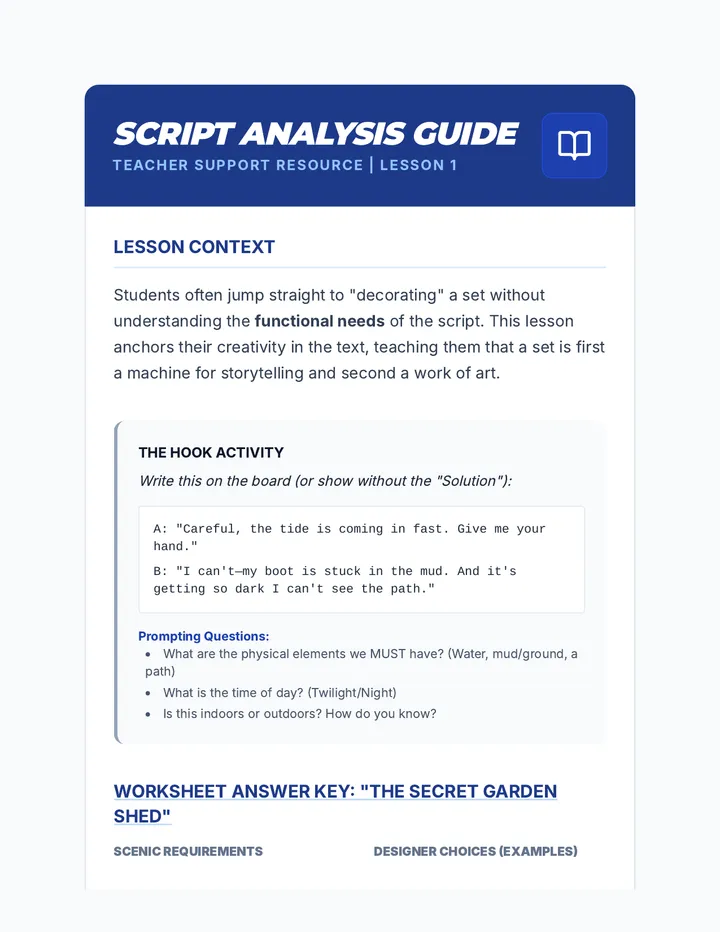
Students step into the shoes of a set designer to transform a written script into a physical world through script analysis, floor planning, mood boards, and 3D model construction. The sequence emphasizes how visual choices in color, texture, and space support the storytelling.
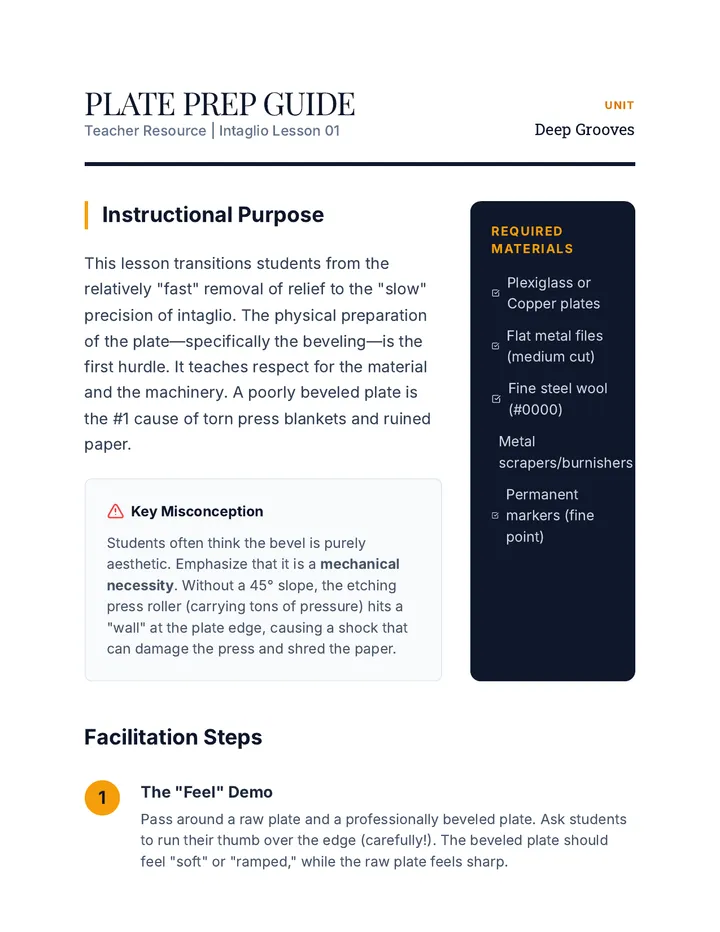
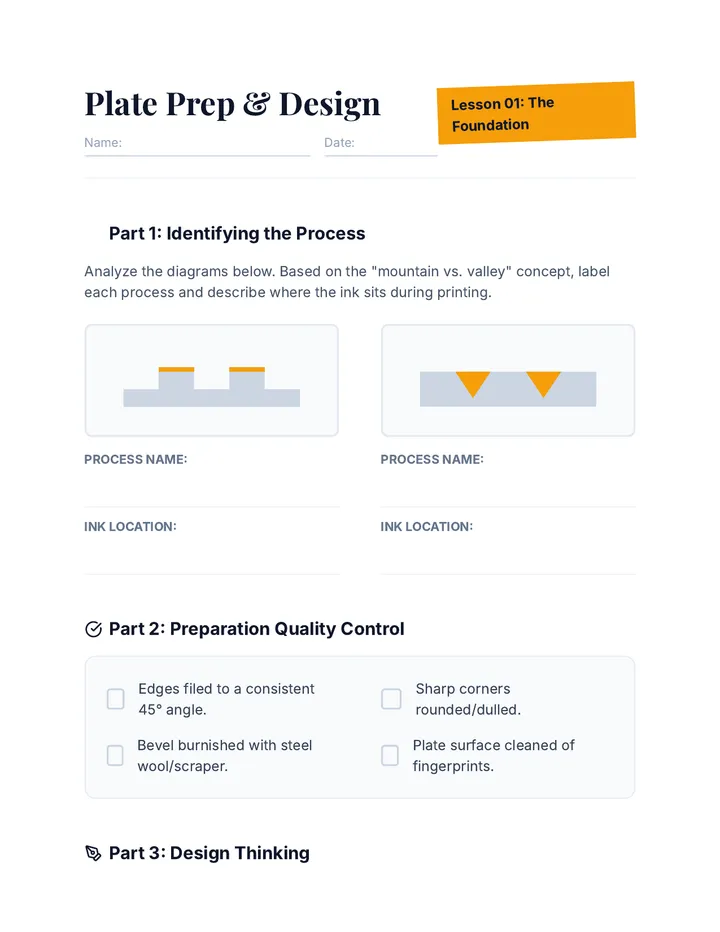
A comprehensive 12th-grade unit on intaglio drypoint printing, covering historical context, plate preparation, incising techniques, inking/wiping, press operation, and chine-collé integration. Students move from raw plate preparation to pulling professional-grade prints.
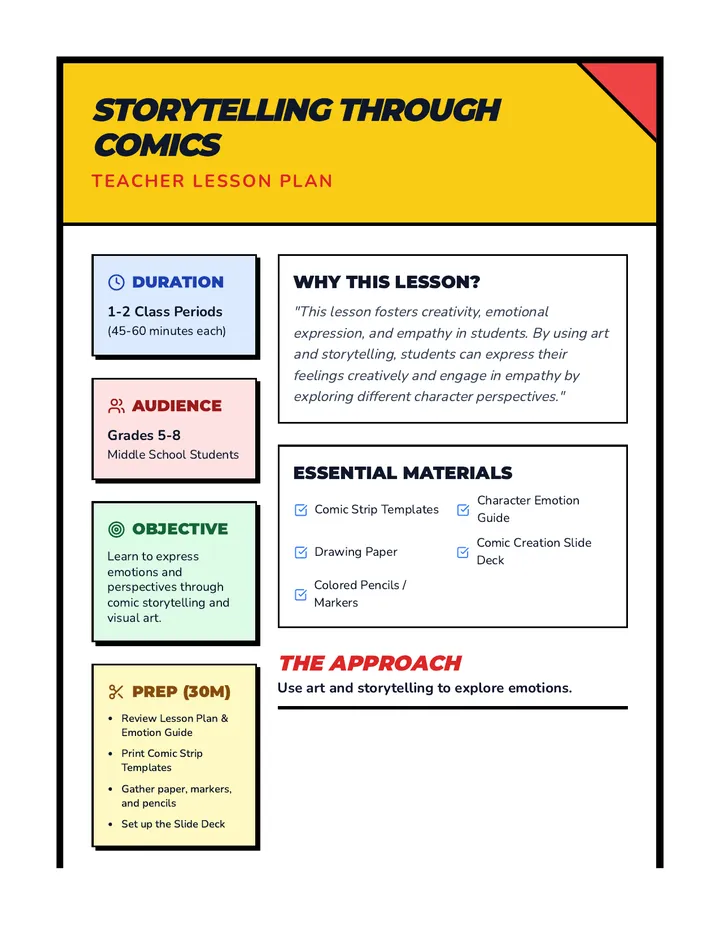
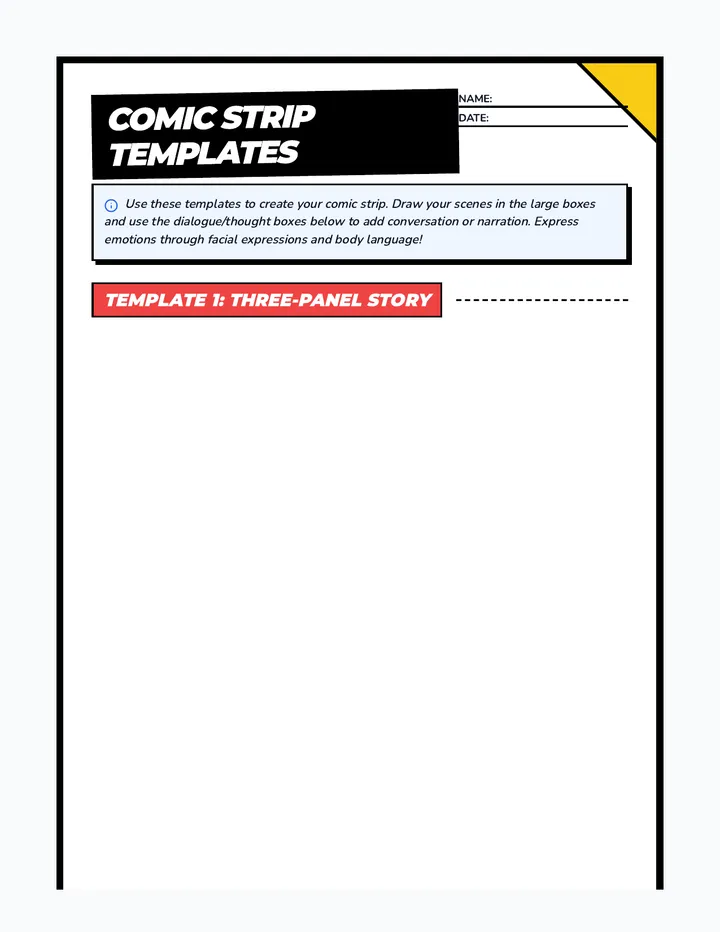
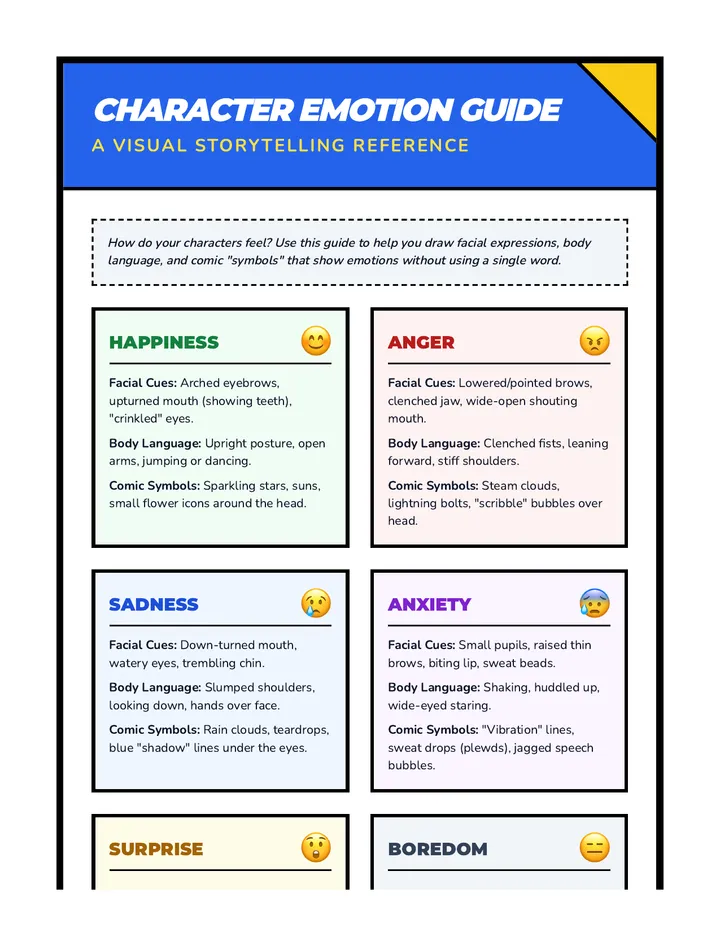
A creative arts and social-emotional learning lesson where students use the medium of comics to explore and express complex emotions. Designed for middle schoolers, this lesson focuses on visual storytelling, character perspective, and empathy.
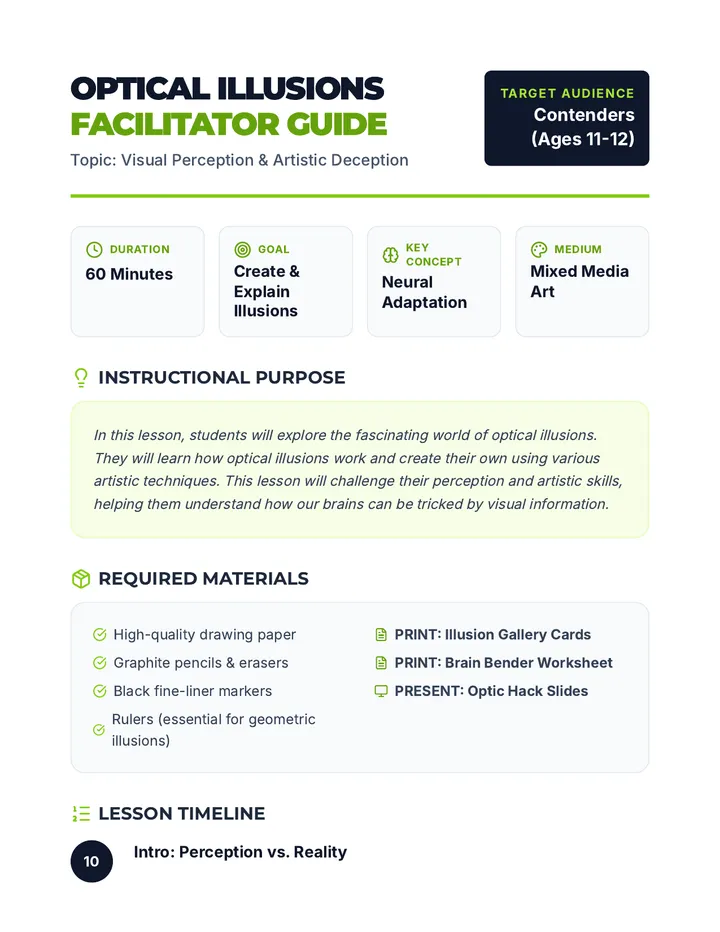
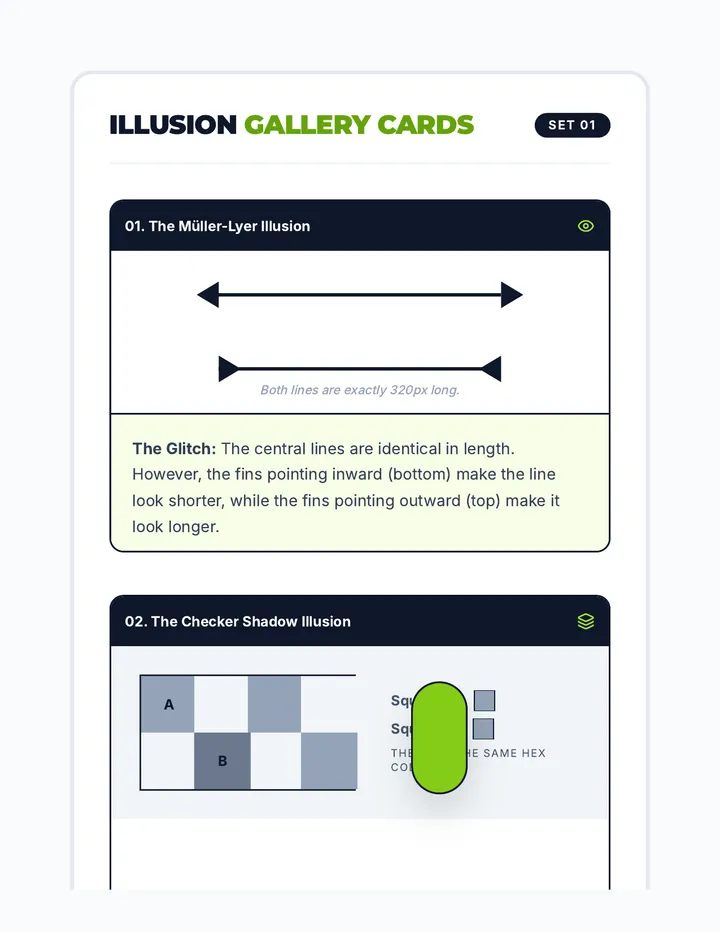
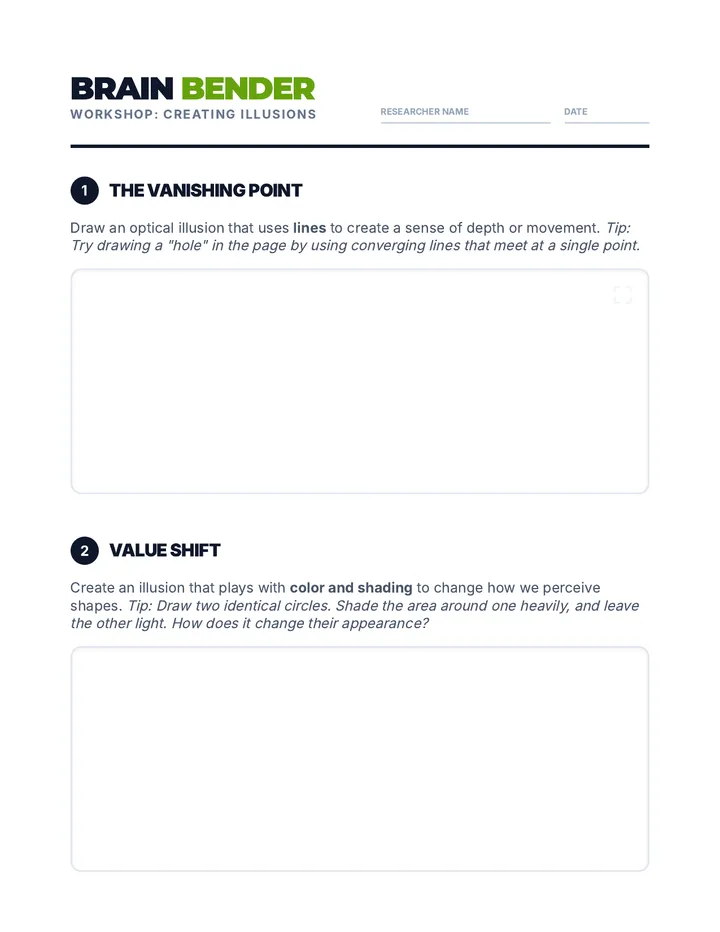
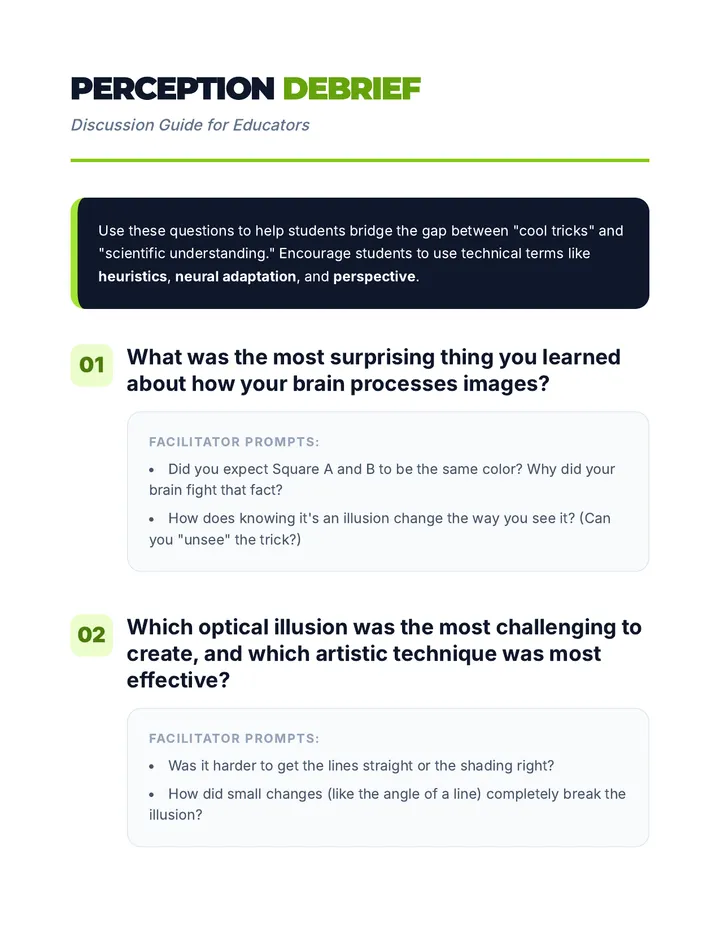
A hands-on exploration of how visual information can trick the brain, culminating in students creating their own mind-bending optical illusions.
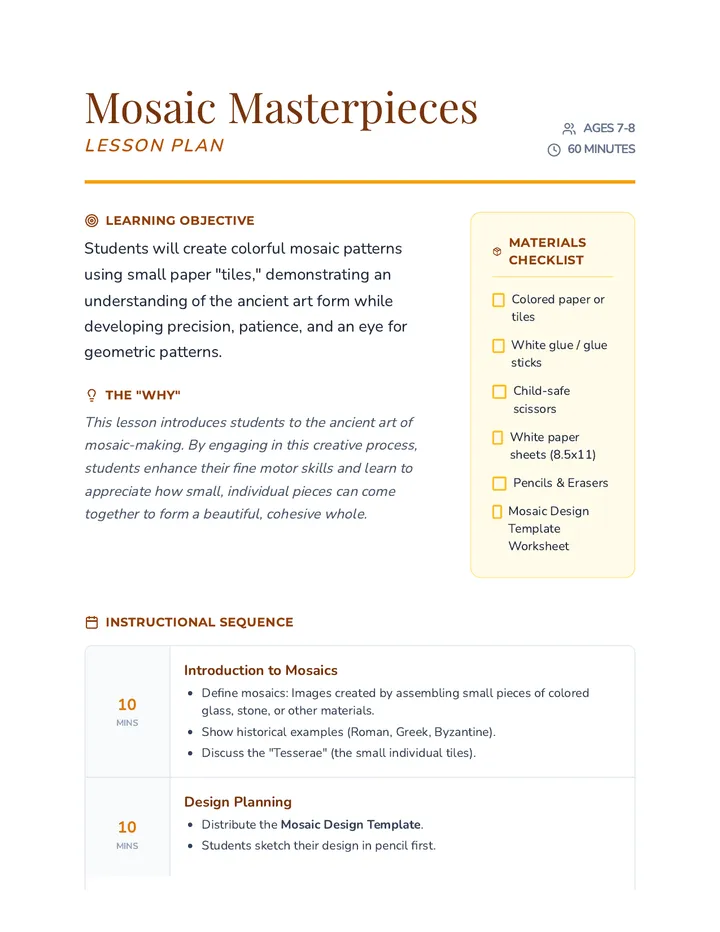
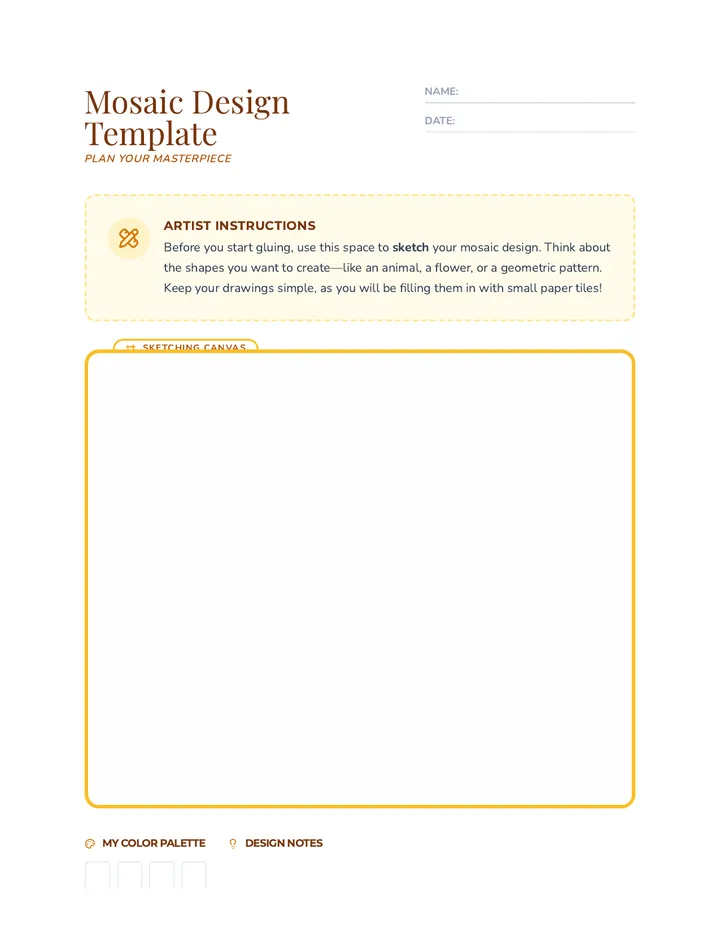
A creative art lesson where students explore the ancient art of mosaic-making. They will learn about the history of mosaics and create their own vibrant designs using paper 'tiles' to develop fine motor skills, patience, and an eye for patterns.
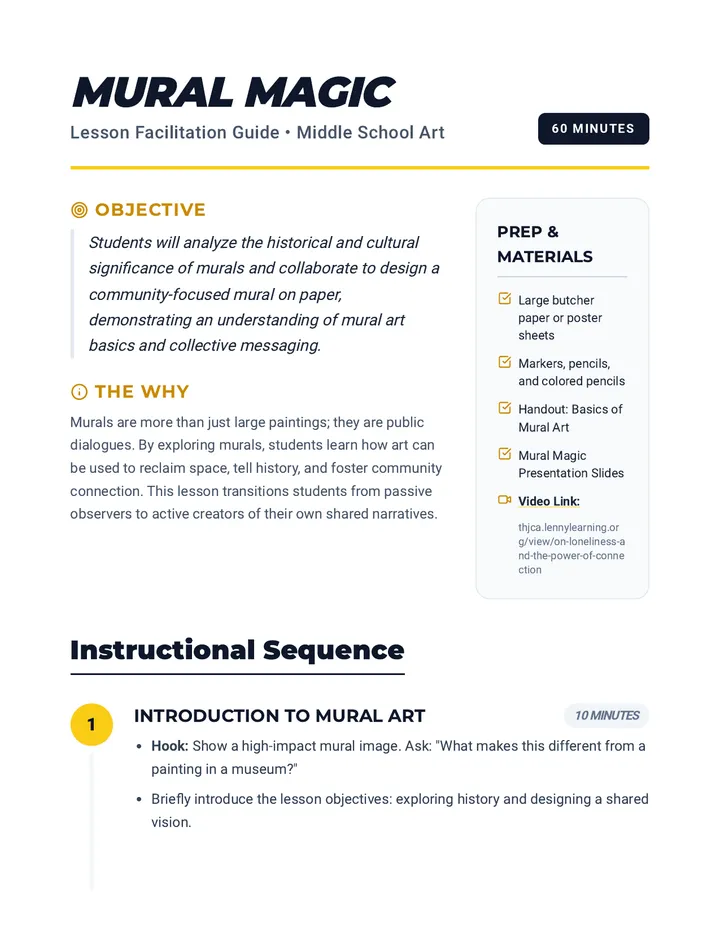
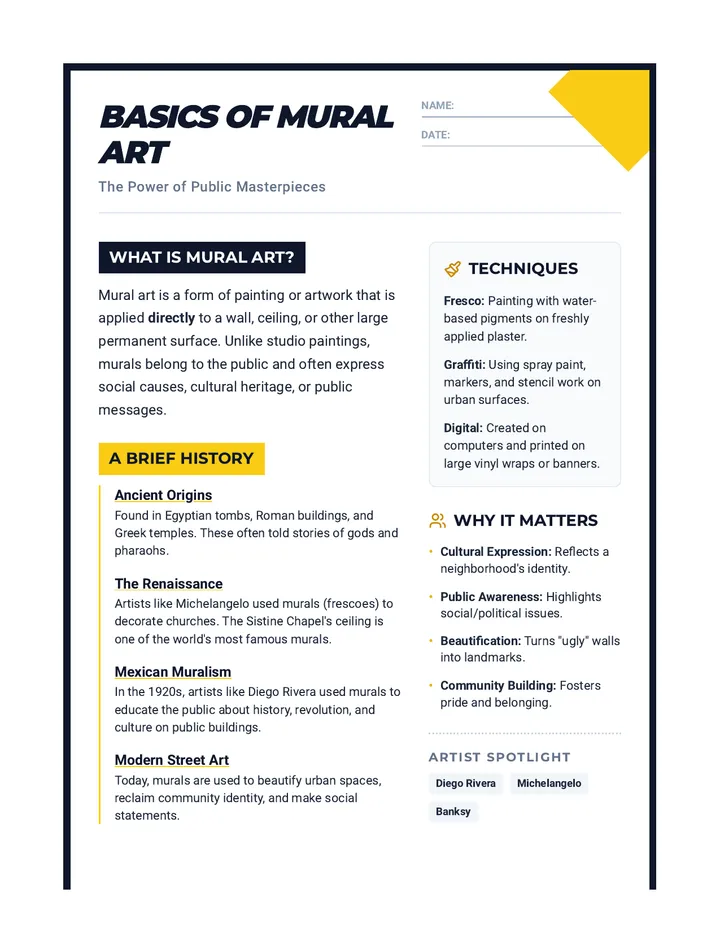
Students explore the history and cultural significance of mural art before collaborating to design their own community-themed mural.
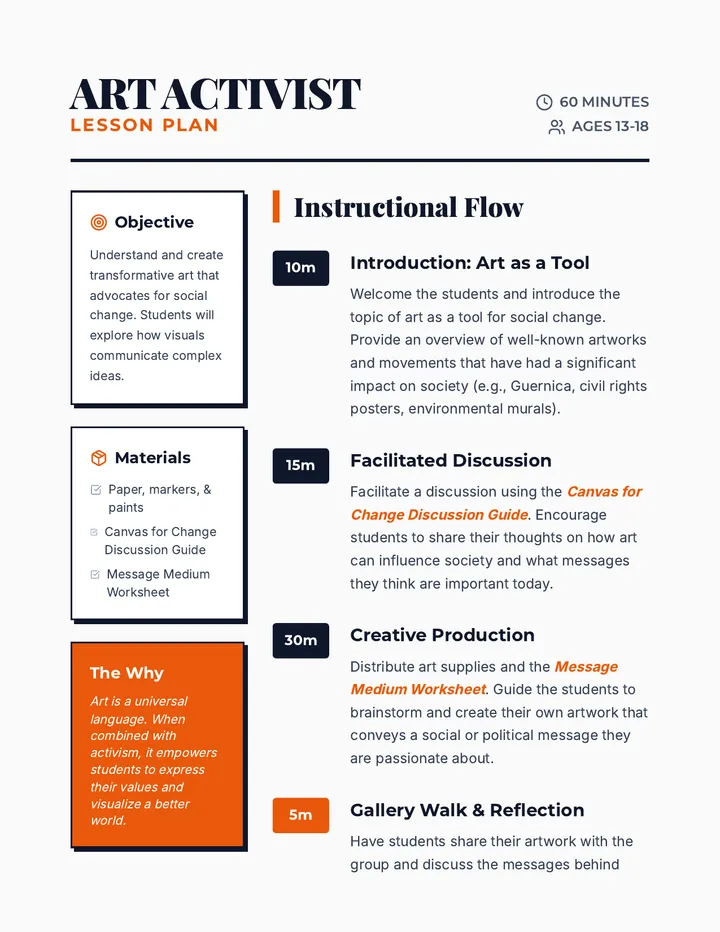
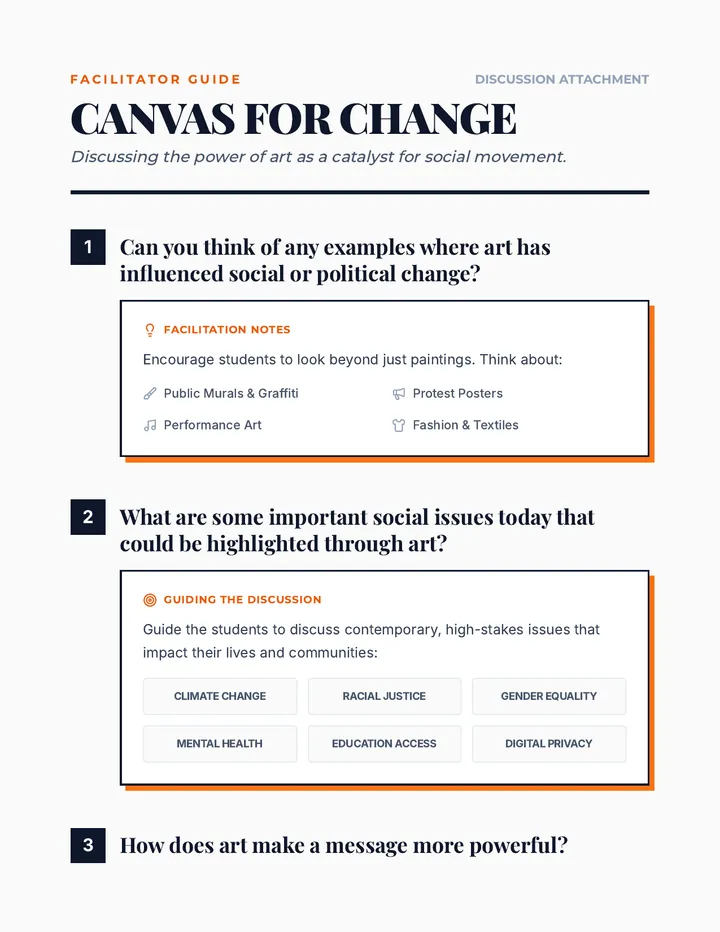
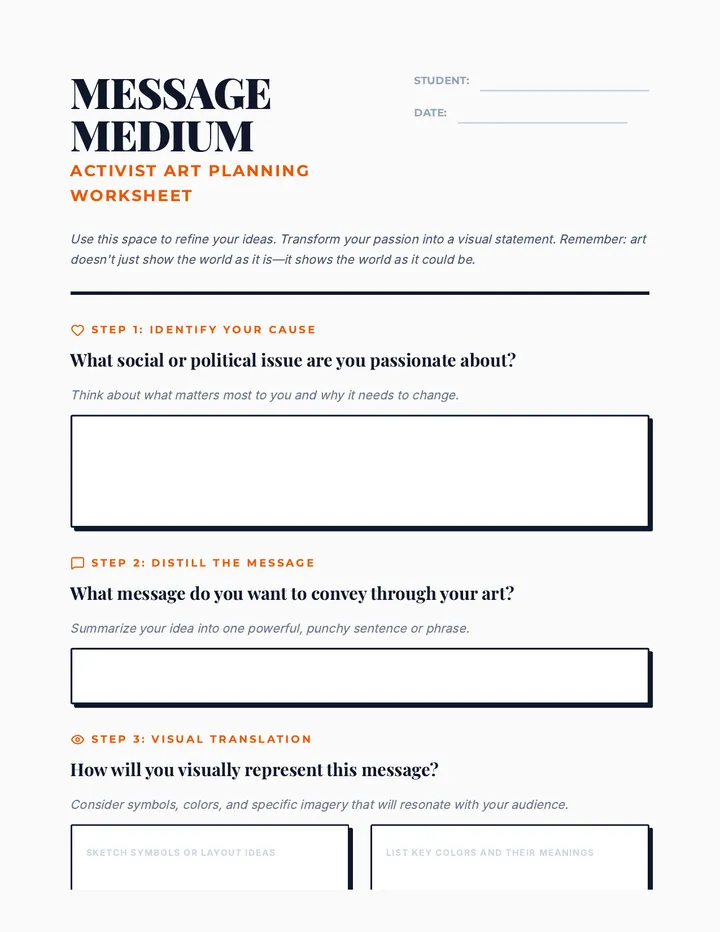
Students explore the history and impact of art in social movements, then brainstorm and plan their own activist artwork focused on contemporary issues.
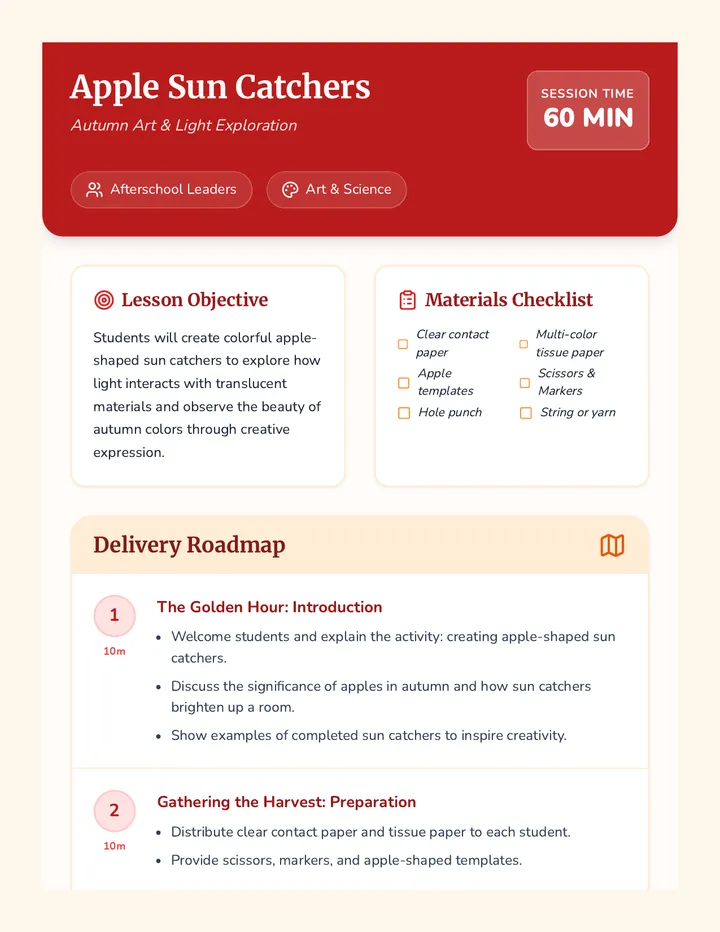
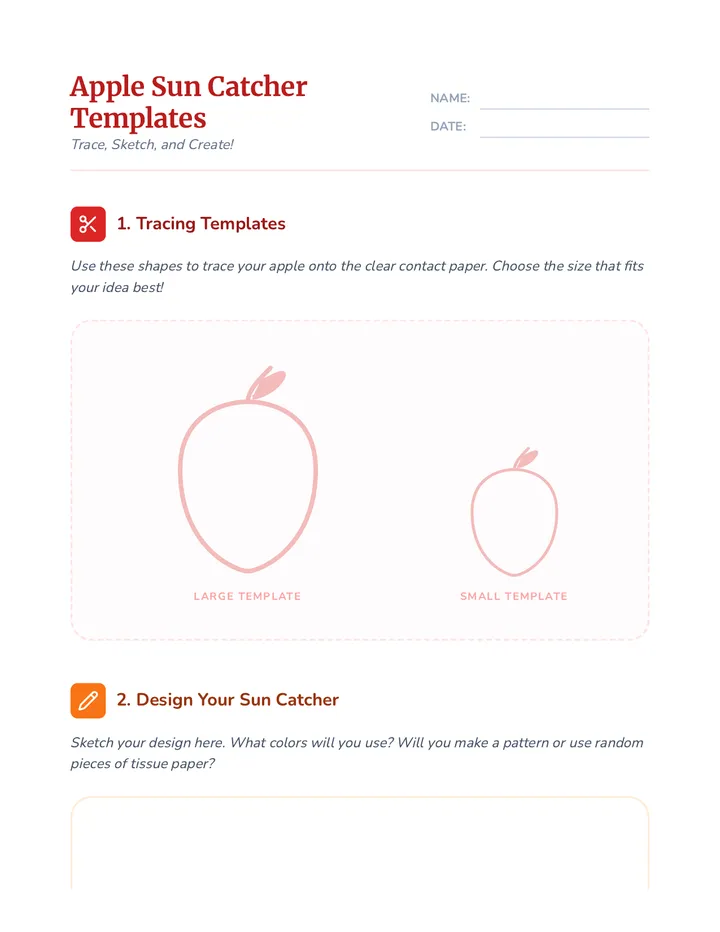
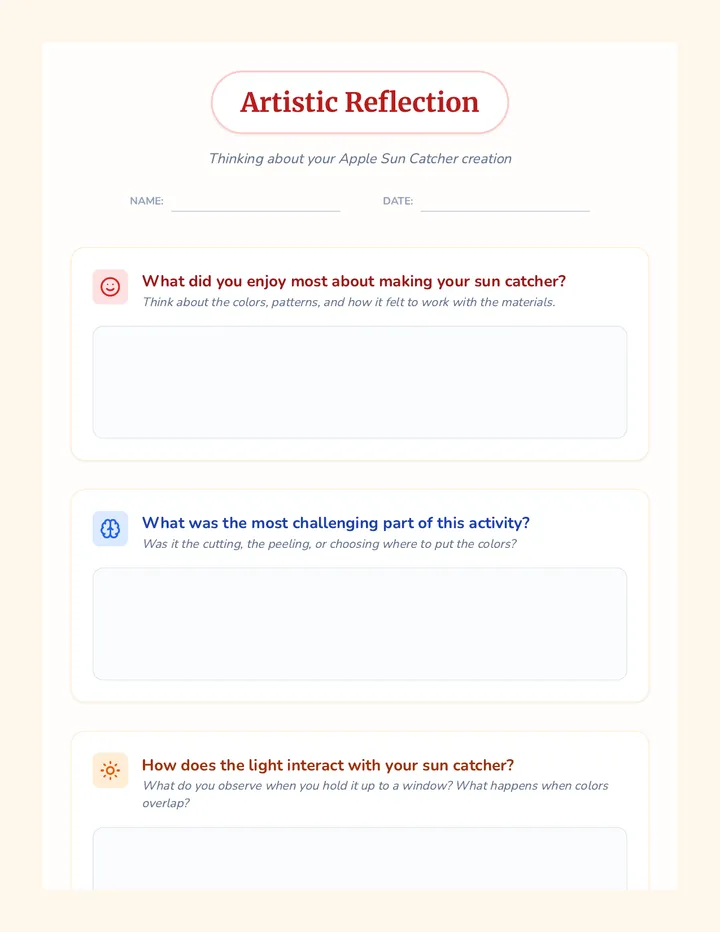
A hands-on autumn art lesson where students create apple-shaped sun catchers using tissue paper and contact paper to explore color and light.
A 1-hour active learning lesson where 7-8 year olds engage in collaborative free drawing to boost creativity and teamwork skills. Students work in small groups on large-scale art, concluding with a gallery walk to share and appreciate each others' work.
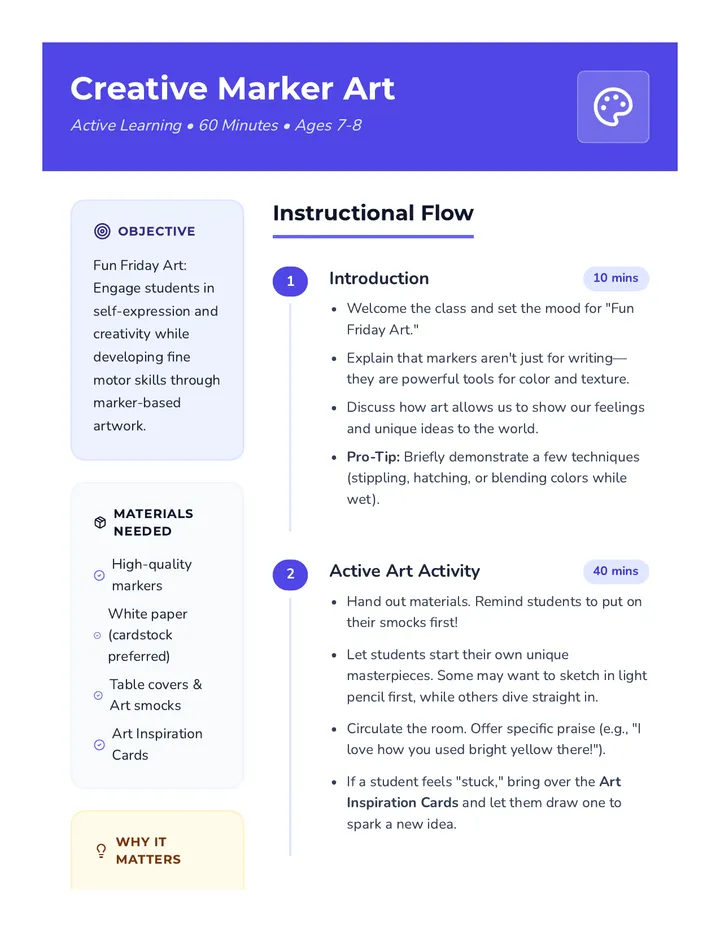
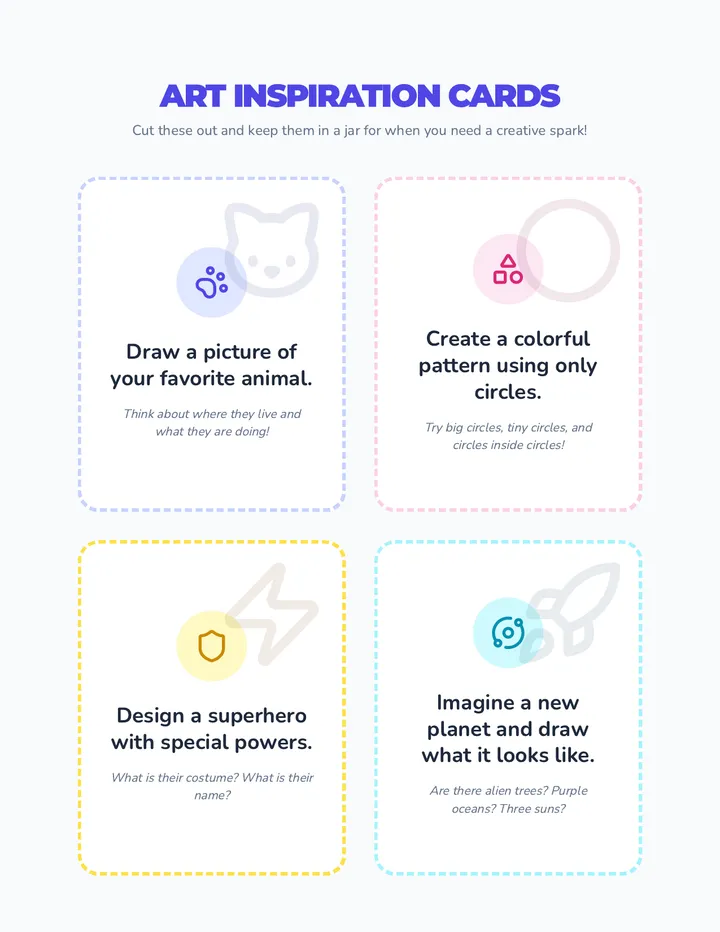
A vibrant 60-minute art lesson for 7-8 year olds focusing on self-expression and fine motor skills through marker art. Students explore creativity using inspiration cards and active guided practice.
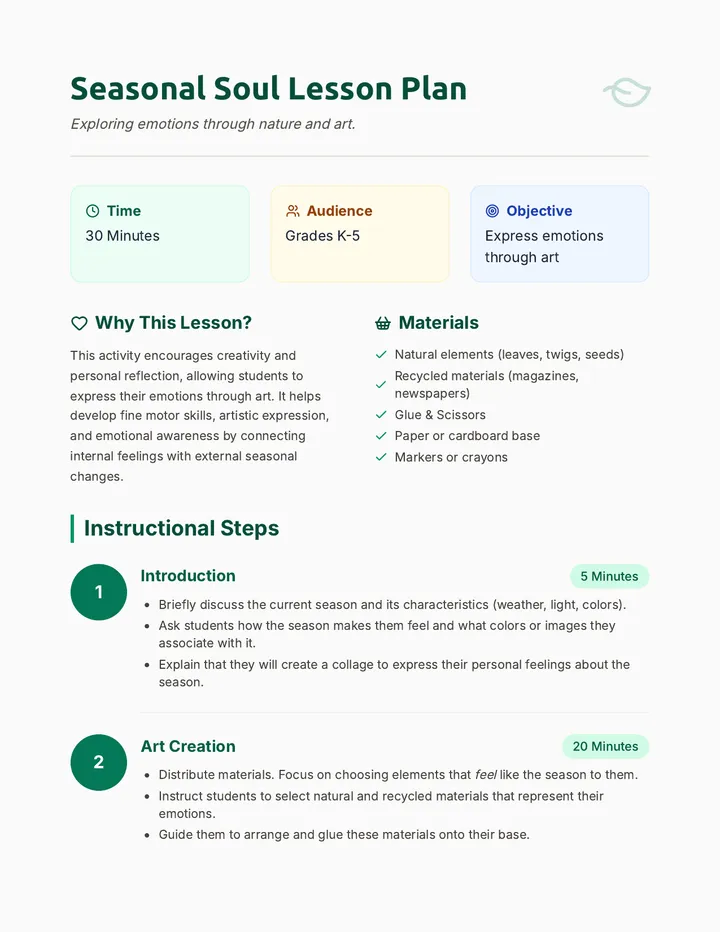
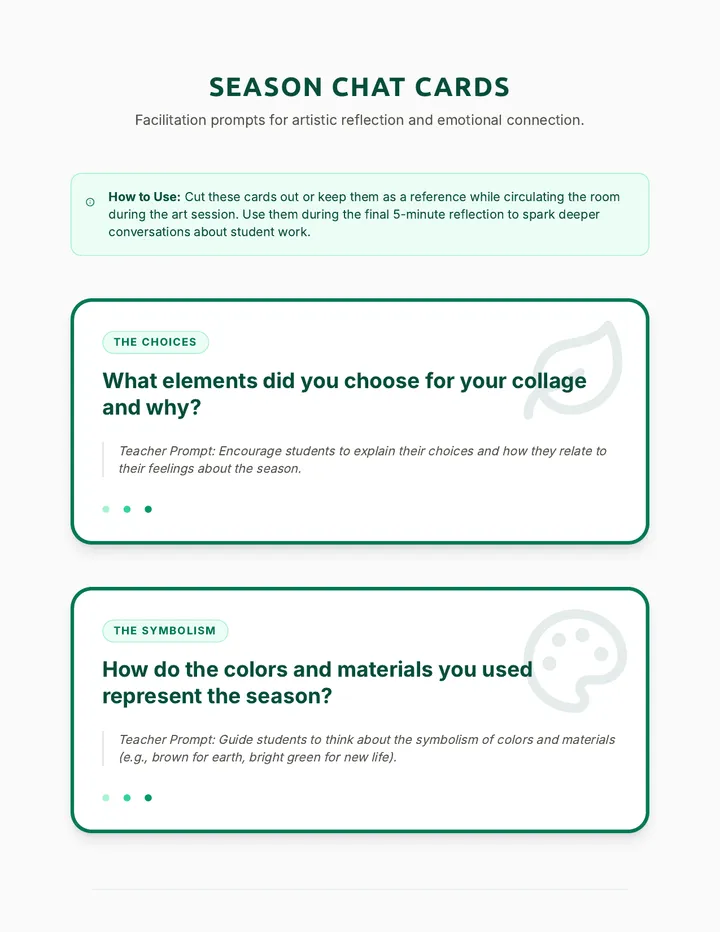
In this lesson, students will create collage artworks that represent their feelings about the current season using elements from nature and recycled materials. This activity encourages creativity and personal reflection, allowing students to express their emotions through art. It helps develop fine motor skills, artistic expression, and emotional awareness.
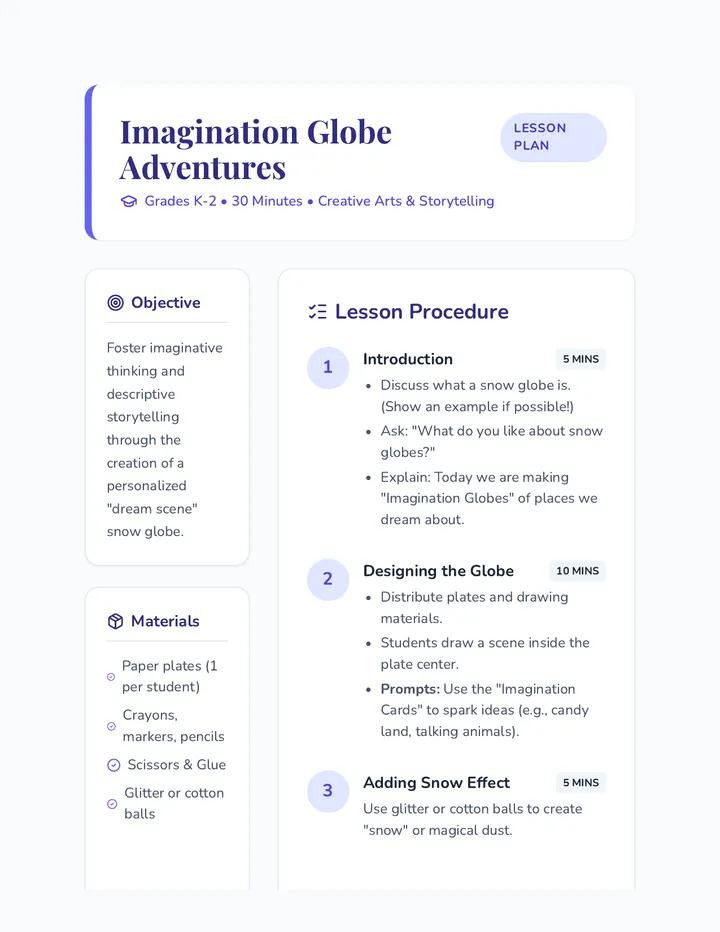
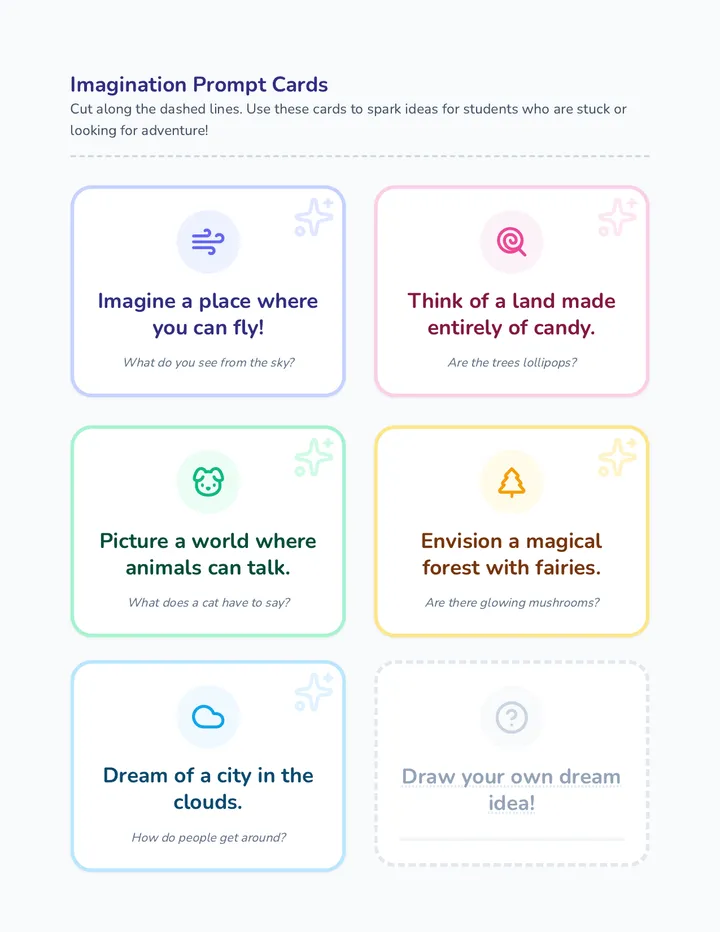
Students design personalized snow globes using paper plates to explore imaginative storytelling and creative expression. This K-2 lesson fosters dreaming and aspirational thinking through hands-on art.
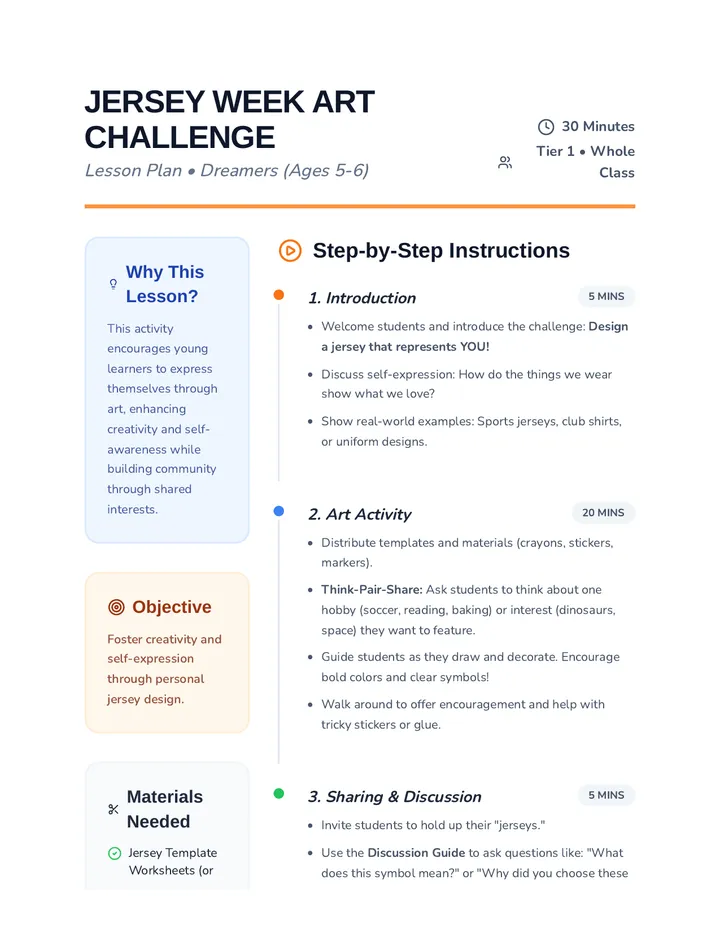
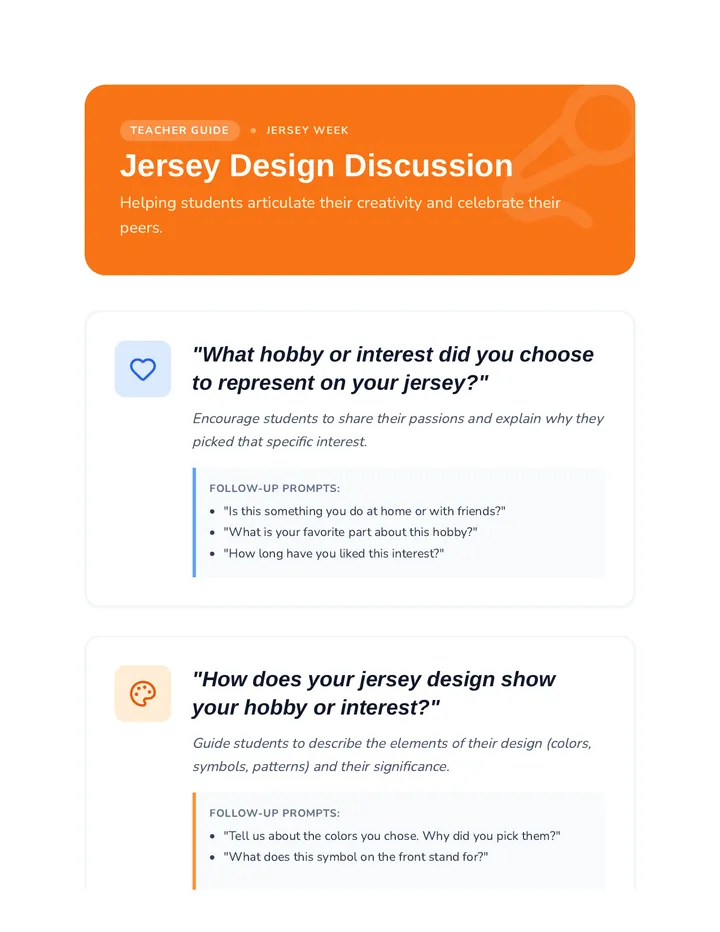
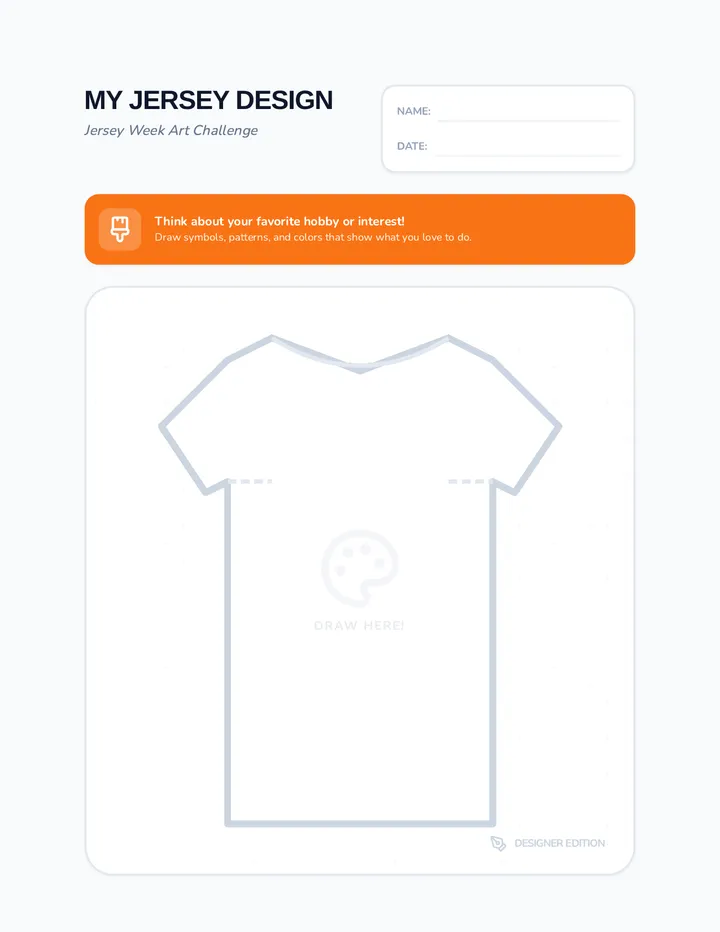
A creative art challenge where students design jerseys representing their favorite hobbies or interests, fostering self-expression and community.
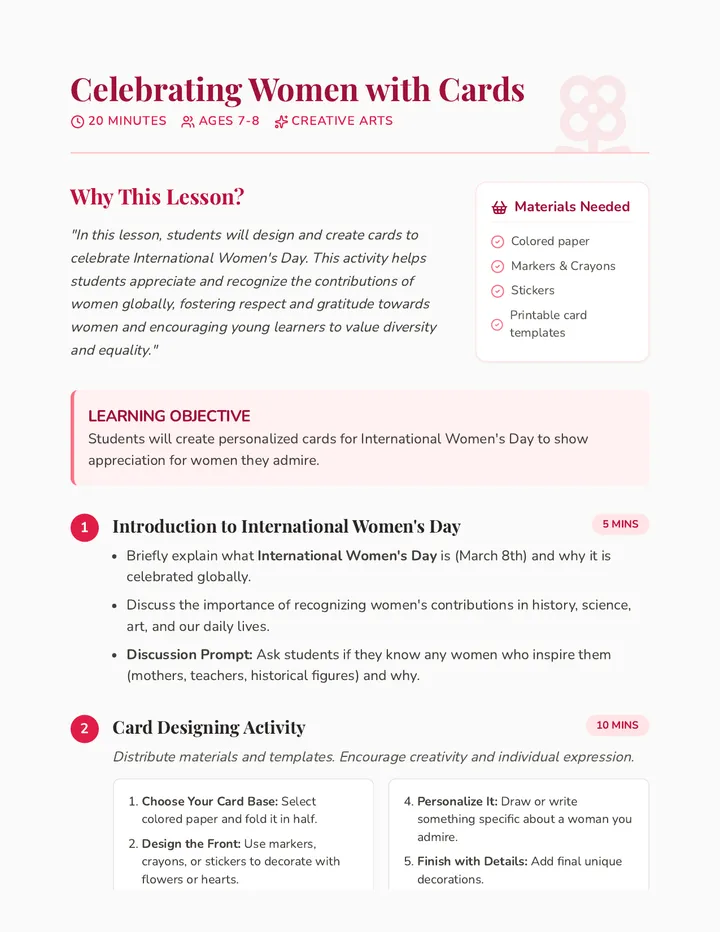
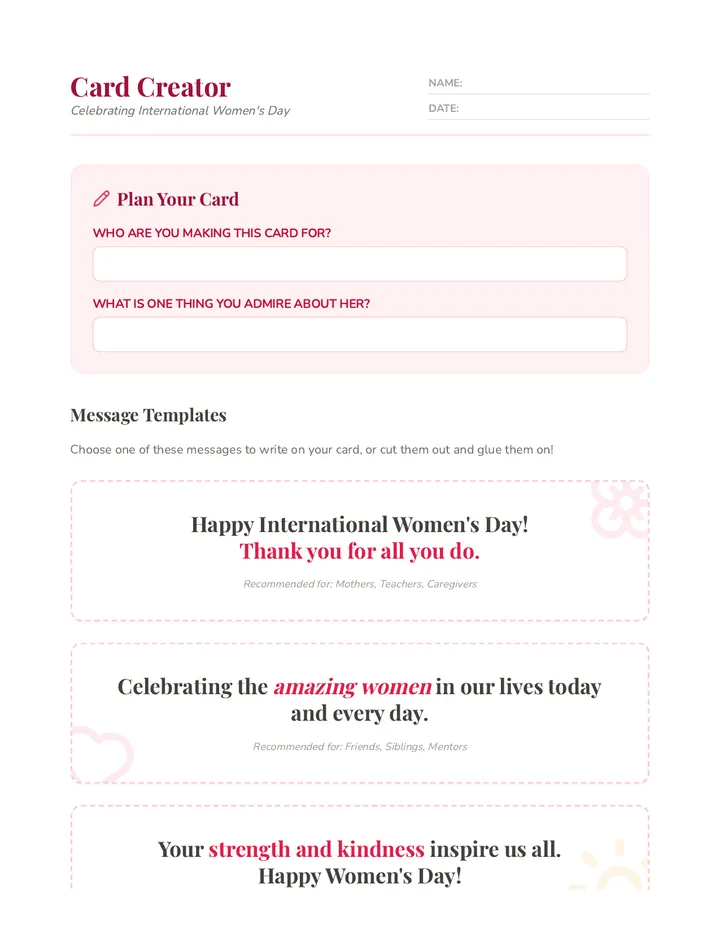
A lesson where students design and create cards to celebrate International Women's Day, fostering respect and gratitude towards women's contributions globally.