Golden Armature Slides The Golden Armature
Dynamic Symmetry and the Architecture of Chaos
RECONSTRUCTING RUBENS: THE FALL OF THE DAMNED
Beyond the Rule of Thirds
Classical "rules" are often taught as simple guides for amateurs. For the master, composition is a mathematical scaffold that supports emotional violence.
"The grid is not a cage; it is a launchpad."
Anatomy of the Armature
1
The Basic Enclosure
Defining the ratio (Root 2, Phi, Root 3). Every rectangle dictates its own internal geometry.
2
The Gamut
Diagonals and their reciprocals create a web of intersections where the eye naturally rests.
3
Structural Mapping
Aligning organic limbs, horizons, and focal points to the mathematical intersections.
Reciprocal Intersection Points
Case Study: The Raft of the Medusa
Théodore Géricault, 1819
The Pyramid of Despair
The composition is built on two distinct pyramids. Notice how the apexes hit the golden sections exactly.
Directional Force
Every arm and reaching hand follows a reciprocal diagonal, driving the viewer toward the horizon line.
DECONSTRUCT THE GRID
LAB: Organic Mapping
Select a high-speed movement photograph or a biological specimen. Overly a Root-2 grid. Re-draw the subject, forcing every major joint and transition to lock into an armature intersection.
Deliverable
One structural analysis overlay and one finished charcoal study that "vibrates" with geometric precision.
The Challenge
Hide the grid. The viewer should feel the order without seeing the lines.
Armature Analysis Lab Armature Analysis Lab
Lesson 01 // Structural Dynamics and Deconstructive Composition
NAME: ___________________________
DATE: ___________________________
LAB OBJECTIVE
In this lab, you will move beyond intuitive placement. You are tasked with reverse-engineering a classical composition and then projecting that same geometric logic onto a contemporary, organic subject. Your goal is to prove that "chaos" in art is often just a highly complex, invisible order.
PART 1: THE REVERSE-ENGINEER
Choose one of the provided Masterwork plates (Rubens, Gericault, or Caravaggio). Use a ruler and a red pen to identify the primary diagonals.
1. Identify the Rectangle Ratio:
Root 2 Phi (Golden) Root 3 Other: _____
2. Major intersections (The Gamut):
3. Alignment Observations:
Where do hands, eyes, or horizons lock into the armature?
Part 2: Synthesis Lab
Apply the armature you just analyzed to your own organic subject (charcoal or graphite).
Project Your Composition Here
Tension Check
Subconscious Order
Critique Notes
GRADUATE FINE ARTS // DECONSTRUCTIVE COMPOSITION
PLATE REF: L1-DYN-01
Golden Armature Teacher Guide Golden Armature Guide
TEACHER FACILITATION // LESSON 01
Advanced / Graduate
Instructional Intent
The objective is to move graduate students past "eye-balling" composition. By introducing **Dynamic Symmetry**, we force a marriage between mathematical precision and organic expression. This lesson isn't about rigid rules, but about providing a structural language that allows students to justify every placement on the canvas.
60 MIN LECTURE 120 MIN LAB
Key Vocabulary
Reciprocal
Root-2 Rectangle
The Gamut
Baroque Diagonal
Pacing & Facilitation
0-20m
The Hook: Invisible Order
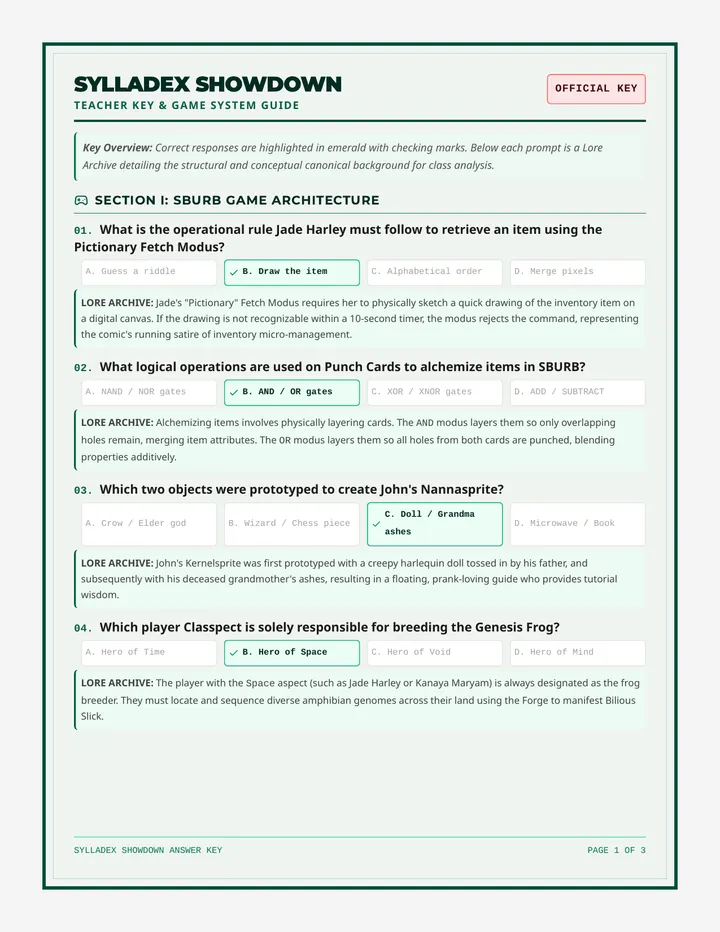
"Look at Rubens' 'The Fall of the Damned'. It looks like a pile of bodies. It looks like chaos. But if I take a ruler, I can show you that every foot and every hand is following a line of force dictated by the canvas shape itself."
Display Slide 2 and 4. Emphasize that composition is an *active* decision, not a passive one.
20-60m
The Mechanics of the Grid
Demonstrate how to construct a Root-2 grid on a whiteboard or digital overlay. Focus on the Reciprocal Diagonal (the line that intersects the primary diagonal at a 90-degree angle). This is the secret to classical tension.
60-180m
The Lab: Synthesis
Distribute the Armature Analysis Lab Worksheet . Circulate and check for:
Students identifying the correct rectangle ratio (most masterworks are near Root-2 or Phi).
The "lock" point: ensuring focal points aren't just near lines, but *at* intersections.
Charcoal studies: look for students pushing organic forms (muscles, branches, cloth) to align with the rigid armature.
CRITICAL INQUIRY QUESTIONS
"If the viewer doesn't see the grid, does the math still matter? How do we explain the 'feeling' of stability in a mathematically perfect composition?"
"When does a grid become a crutch? At what point should a contemporary artist break the armature to create narrative dissonance?"
Instructional Material © 2026 // Structural Dynamics Sequence // Page 01 of 05
Edge Tension Slides Edge Tension
The Psychology of the Frame
The Anxiety of the Edge
In classical art, the center is power. In contemporary art, the edge is where the narrative lives.
"How far can you push a subject before it falls off the world?"
Minimal Focal Point
Spatial Psychology
Claustrophobia
Cropping tight on the head or limbs to remove environmental context, trapping the subject within the four walls of the frame.
Voyeurism
Using foreground elements to "partially block" the view, creating the sensation of looking through a keyhole or gap.
Expansion
Pushing the subject to a tiny corner of a massive field, suggesting the world continues infinitely beyond the canvas.
Edgar Degas // The Orchestra at the Opera
The Master of the "Bad" Crop
Degas was heavily influenced by photography and Japanese prints. He intentionally cut off heads, legs, and instruments to create a sense of candid, un-composed life.
Tangential intersections
Off-balance focal weight
Obscured key information
WORKSHOP: Edge Play
You have 15 minutes per sketch. Use charcoal for high speed and high contrast.
01
The Claustrophobic Portrait: Crop everything but the eyes and mouth.
02
The Peripheral Figure: Subject must occupy less than 5% of the surface.
Rapid Iteration
Do not seek beauty. Seek tension. If it feels comfortable, it is wrong.
Edge Tension Workshop Activity Extreme Cropping Workshop
Spatial Anxiety & Narrative Dissonance
NAME: ___________________________
DATE: ___________________________
Workshop Mission
"To strip away the 'safety' of the center. You will create a series of rapid charcoal studies that force the viewer to engage with the edges of the canvas, utilizing negative space as an active, aggressive participant."
TASK 01
The Claustrophobic Crop
Tight portraiture. Eliminate 80% of the head. Focus on a single point of emotional data (e.g., an eye, a clenched jaw). The frame must feel like it is crushing the subject.
TASK 02
The Peripheral Void
The subject is placed at the extreme edge or corner. 90% of the canvas is 'empty' but charged. How does the negative space push against the subject?
Psychological Audit
Choose your most successful sketch and perform a brief analysis of the spatial psychology at play.
1. Narrative Implication:
What story does the cropping tell? (e.g., Is the subject hiding? Being watched? Is the space lonely or overwhelming?)
2. Eye Movement & Exit Points:
Where does the eye enter the frame, and where is it forced to "fall off" the edge?
Tension Rating
1 - 10
Viewer Anxiety
1 - 10
L2 // Workshop // Edge Tension © 2026 Deconstructive Composition Series
Edge Tension Teacher Guide Edge Tension Facilitator
LESSON 02 // PSYCHOLOGICAL SPATIAL MANIPULATION
The Philosophy of the Crop
In this lesson, we challenge the graduate student's desire for "neatness." Classical training often leads to a default centering of subjects. We want to disrupt this by exploring Narrative Anxiety . A subject pushed to the edge suggests movement, transience, or exclusion. A subject cut off by the frame suggests a world that is too large to be contained.
Lecture Phase (30m)
The Tangent: Discuss how near-misses at the edge create "optical static."
The Degas Method: Analysis of "The Orchestra at the Opera." Why cut off the top of the stage? Focus on the voyeuristic perspective.
The Japanese Influence: How Hiroshige used foreground framing to push subjects into the mid-ground.
Workshop Phase (90m)
Iteration 1 (Claustrophobia): Force students to use 4:5 vertical orientation. Focus on extreme proximity.
Iteration 2 (Peripheral): Force students to use panoramic 2:1 orientation. Focus on the weight of empty space.
The Feedback Loop: Have students trade sketches and describe the "narrative mood" of each crop without knowing the intent.
Critique Prompts for Graduate Students
Topic: Tension
"Does the edge feel like a boundary or a door? How does the cropping change the subject's relationship with the viewer?"
Topic: Balance
"How is the visual weight compensated for in the negative space? Does the 'void' feel heavy or light?"
Topic: Narrative
"What is happening *outside* the frame? Is the most important part of the story something we can't see?"
© 2026 // L2 TEACHER GUIDE // DECONSTRUCTIVE COMPOSITION
Breaking the Horizon Slides Breaking the Horizon
Deconstructive Perspective & Multi-Point Realities
The Tyranny of the Vanishing Point
"Linear perspective is a lie. It assumes a static eye in a static head. But we inhabit space through movement and memory."
Today, we build spaces that visually 'work' but physically cannot exist.
Spatial Distortion Techniques
Horizon Stacking
Layering multiple horizon lines within one image to allow for bird's-eye and worm's-eye views simultaneously.
Reciprocal Distortion
Curving perspective lines (Fisheye) to suggest architectural mass and viewer vertigo.
Axonometric Shifts
Mixing isometric views with linear perspective to create a "broken" technical drawing aesthetic.
Case Study: Piranesi
"Giovanni Battista Piranesi's 'Carceri' (Prisons) series used impossible architecture to suggest infinite, psychological despair."
Constructing the Impossible
The Process
Map three distinct horizon lines (High, Mid, Low).
Draft a central architectural column that obeys the Mid horizon.
Branch out: floorboards follow the Low point; ceiling beams follow the High point.
Bridge the gap with 'transitional' objects that curve between grids.
Perspective Breakdown
"Perspective is a tool for storytelling, not a geometric law."
PROJECT: THE VERTIGO ROOM
Draw an interior space that forces the viewer to look down at the floor and up at the ceiling simultaneously.
Minimum Req
3 Horizon Lines + 5 Vanishing Points.
The Challenge
Make the space feel physically heavy and coherent.
Deliverable
Final A2 Charcoal Perspective Study.
Impossible Spaces Project Guide The Vertigo Room
Project Guide // Multi-Point Deconstruction
Phase: Construction
Subject: Architecture
Instructional Brief
You are to design a "Non-Euclidean" interior. This is a space that maintains the *appearance* of physical reality while violating the laws of three-dimensional geometry. Using stacked horizons , you will force the viewer's eye to navigate conflicting spatial logics.
Technical Requirements
• 3 Parallel Horizon Lines
• 5 Minimum Vanishing Points
• Transitional Curvilinear Lines
• High-Contrast Charcoal Tone
01 THE PERSPECTIVE SCAFFOLD
Map your three horizons below. Label your vanishing points (VP1-VP5) and establish which architectural elements follow which grid.
Draft Initial Horizons Here
02 SPATIAL NARRATIVE PLANNING
The "Anchor" Element
What central object (pillar, doorway, staircase) serves as the visual glue between the conflicting perspectives?
The Point of Vertigo
Identify the specific intersection where the perspective distortion is most aggressive.
Aesthetic Warning
The goal is not to make a "trippy" image. The goal is to make a "heavy" image. The viewer should feel the weight of the architecture even as it defies logic.
Technique: Deep Tenebrism
Synthesis Critique Checklist
Does the floor recede to a different point than the ceiling?
Are the vertical lines truly vertical (or intentionally curved)?
Is there a "logical bridge" between the two spatial zones?
Is the light source consistent across the warped space?
L3 // PROJECT // BREAKING THE HORIZON
PLATE REF: L3-PERS-01
Breaking the Horizon Teacher Guide Breaking the Horizon Guide
TEACHER FACILITATION // LESSON 03
Deconstructive Perspective
Linear perspective is a convention of the Enlightenment—a single, fixed viewpoint. In this lesson, we teach students to treat perspective as a fluid narrative tool . By stacking horizons, we simulate the way the eye actually experiences space: through scanning and movement. This creates a psychological "vertigo" that keeps the viewer engaged.
The Multi-Grid Roadmap
01
The Foundation: Have students draw a simple cube in 2-point perspective. This is the "Control."
02
The Disruption: Introduce a second horizon line 4 inches above the first. Force the student to draw a second cube sitting *on* the first one, but obeying the *new* horizon.
03
The Bridge: This is the hardest part. Students must draw a staircase or a ramp that connects Cube A and Cube B, curving its lines to transition between the two grids.
Common Roadblocks
// RIGIDITY: Students try to make it "right." Remind them that if it feels dizzying, they are succeeding.
// SHADING: Shading usually stays consistent (one sun). Encourage students to use a single light source to ground the impossible space.
Graduate Level Inquiry
"How does multi-point perspective mimic the experience of a digital space (like a video game or a scrolling feed)? Does linear perspective feel 'old'?"
"Is it possible to communicate a sense of peace in a non-Euclidean space, or is spatial distortion inherently anxious?"
© 2026 // L3 TEACHER GUIDE // DECONSTRUCTIVE COMPOSITION
Visual Hierarchy Slides Visual Hijack
Eye Tracking & The Chronology of Vision
You Don't See All At Once
Vision is a chronological act. You see object A, then B, then C. As an artist, you are a director. You choose the sequence.
"If you can't predict where the viewer will look first, you have lost control of the narrative."
Entry Point Focal Lock
Hijacking the Gaze
01. Edge Sharpness
The human eye is biologically programmed to seek out sharp edges. Soft, blurred edges suggest 'background' or 'unimportant'.
02. Value Delta
The greatest difference between light and dark is where the eye will land. A white dot on a black field is an inescapable focal point.
03. Vectors
Literal lines or 'psychological' lines (pointed fingers, eye gazes) act as tracks for the viewer's eye to follow.
The Chronological Map
We assign "Viewing Stages" to our composition to control the tempo of information.
STAGE 1 The Entry Point (The most contrast / sharpest edge).
STAGE 2 The Sub-Plot (Secondary details linked by vectors).
STAGE 3 The Exit / Loop (Elements that keep the eye inside the canvas).
1
2
3
WORKSHOP: THE EYE PATH
Create a complex charcoal composition where you can predict exactly which object the viewer will look at third.
Method
Use three levels of edge quality: Sharp, Lost, and Found. Use one 'High Key' highlight at your Stage 1 entry point.
Test
Swap drawings. Do not speak. Watch your partner's eyes as they scan your work. Trace their path.
Eye Path Mapping Worksheet Eye Path Mapping
Chronological Visual Hierarchy // Lesson 04
NAME: ___________________________
CRITIQUE PARTNER: ________________
Phase 1: Intentional Design
In the space below, plan your hierarchy. Before you touch charcoal to paper, you must decide the order of operations. What is the **Primary Entry Point**, and how do you intend to pull the eye away from it into the rest of the composition?
Stage 1: The Hook
Technical Lever: Highest Contrast or Sharpest Edge.
Stage 2: The Journey
Technical Lever: Directional Lines or Vectors.
Stage 3: The Anchor
Technical Lever: Texture or Sub-plot detail.
Phase 2: Live Tracking
"Swap your finished drawing with your partner. Place a sheet of tracing paper over their drawing. Observe where your eyes travel in the first 10 seconds. Trace the path."
Map Partner's Eye Path Here
(Trace the movement of the gaze using numbered nodes)
Phase 3: Divergence Report
Predicted Path vs. Actual Path
Did the viewer look where you intended? If not, what 'hijacked' their gaze unexpectedly?
Hierarchy Failure/Success
Which technical lever (contrast, edge, vector) was most effective in this composition?
Visual Hierarchy Lab // Structural Dynamics Ref: L4-EYE-MAP
Visual Hierarchy Teacher Guide Visual Hijack Guide
TEACHER FACILITATION // LESSON 04
The Chronology of the Image
Graduate students often think of composition as a static "balance." This lesson reframes composition as a time-based medium . We are teaching them how to control the *sequence* of seeing. By manipulating biological eye-tracking responses (seeking high contrast and sharp edges), students learn to engineer the viewer's journey through the image.
1. Entry Points
The "Screamer." High Delta (White vs Black) or Razor Edges. This is where the eye lands in the first 0.5 seconds.
2. The Vectors
The "Highway." Directional strokes or psychological gazes that connect focal points. Use these to bridge "Stage 1" and "Stage 2."
3. The Loop
The "Retention." Elements at the edges that curve the eye back toward the center, preventing the viewer from "falling off."
Workshop: The Tracking Test
1
The Silent Scan: Pair students up. One student shows their work; the other looks for 10 seconds without speaking. The artist *must* watch the viewer's pupils. Where do they move first? Second?
2
The Tracing Paper Test: Overlay tracing paper. Viewer traces their "path of seeing" with a marker. Compare this to the artist's original "intent map."
3
The Correction: If the eye path "leaks" out of the canvas, have the student identify which edge needs to be "closed" (softened or darkened).
Questioning Strategies
"Was your Stage 1 focal point too aggressive? Did the viewer get 'stuck' there and never find the rest of the image?"
"Identify a 'ghost' focal point—something that attracted the viewer's eye that you didn't intend. How can you kill it?"
© 2026 // L4 TEACHER GUIDE // EYE TRACKING
Anti-Composition Slides The Anti-Composition
Chaos, Rhythm, and All-Over Cohesion
Can Everything Be Equally Important?
The "All-Over" composition rejects the concept of a focal point. It treats the entire canvas as a singular, democratic field of energy.
"If there is no center, where does the eye rest? The answer is: It doesn't."
Democratic Distribution of Weight
How to Maintain Cohesion
Rhythmic Repetition
Using recurring shapes, textures, or colors to create a 'beat' that unifies the surface.
Uniform Density
Ensuring no area of the canvas is significantly 'quieter' or 'louder' than another.
Structural Texture
The composition is the material itself. The way charcoal is applied becomes the narrative.
Inspiration: Jackson Pollock
"I can control the flow of paint: there is no accident."
The Pattern of Meaning
Even in 'chaos', the artist must decide the Frequency of information. Is the rhythm frantic and jagged, or slow and pulsing?
High Frequency
Short, sharp marks. Dense clusters. Evokes anxiety, static, or crowds.
Low Frequency
Large, sweeping forms. Open intervals. Evokes landscape, ocean, or breath.
PROJECT: THE DEMOCRATIC FIELD
Create a balanced large-scale charcoal drawing that lacks a traditional focal point. Use rhythm as your only structural tool.
The Constraint
No single element may occupy more than 1% of the surface area.
The Requirement
Maintain 'All-Over' density. No 'dead' corners.
Critique Goal
If someone points to a focal point, you have failed.
Anti-Composition Evaluation The Anti-Composition Audit
Mastery Review // All-Over Cohesion // Lesson 05
Phase: Final Portfolio
Self-Assessment Mandate
"Your final challenge was to create a 'democratic' field—a composition where every square inch carries equal weight. In this audit, you must prove that your 'chaos' is structurally coherent."
1. Rhythmic Frequency
Define the 'beat' of your marks. Are you using a consistent interval of information?
2. Focal Point Denial
Identify any area where contrast or edge sharpness accidentally created a hierarchy. How did you 'kill' that focal point?
3. Surface Density Map
Sketch a low-fidelity "density map" of your work. Every sector should have an equal amount of "visual noise."
Noise Distribution Area
Peer Inquest
The "Flinch" Test
"Does the eye find a place to rest in the first 5 seconds? If so, mark it with an 'X' on the student's work."
Rest Points Found:
Rhythmic Coherence
"Describe the 'tempo' of the marks. Is the rhythm consistent across the entire field?"
L5 // Audit // Anti-Composition © 2026 Deconstructive Composition Series
Anti-Composition Teacher Guide The Anti-Composition Guide
TEACHER FACILITATION // LESSON 05
Cohesion Without Hierarchy
This final lesson is the ultimate challenge for a graduate student. It requires them to unlearn the most basic rule of art: the focal point. By creating an "all-over" composition, students must find cohesion through rhythm, repetition, and material application . This is not "messy" art; it is a highly controlled distribution of visual energy.
Critical Principles
Democratic Density: Every sector of the canvas must have the same amount of 'data' (marks, contrast, texture).
The Infinite Field: The composition should feel like it was cut from a much larger cloth—it suggests the pattern continues forever.
The Non-Resting Eye: The viewer's gaze should be in a state of constant 'scanning'.
Facilitation Notes
The Speed Test: Encourage students to work across the *entire* canvas at once. No 'completing' one section.
The Step-Back: Students must step back 10 feet every 15 minutes. From a distance, the 'chaos' should turn into a singular, vibrating grey or patterned field.
Final Critique Strategy
The "Focal Point Search"
"I'm going to scan this drawing. If my eye stops for more than 2 seconds on any one mark, we need to discuss why that mark is 'louder' than its neighbors. How can we re-integrate it into the rhythm?"
Rhythmic Consistency
"Does the rhythm of the marks change at the edges? Often students 'weaken' their energy near the corners. The energy must be relentless and edge-to-edge."
Sequence Mastery Reflection
As this is the final lesson, remind students how this connects to Lesson 1: Dynamic Symmetry. Even in an all-over composition, the underlying armature can be used to dictate the *frequency* of marks. The sequence ends by merging rigid math with total abstract expression.
© 2026 // L5 TEACHER GUIDE // THE ANTI-COMPOSITION