Stay Substance Free Lesson Plan Stay Substance-Free
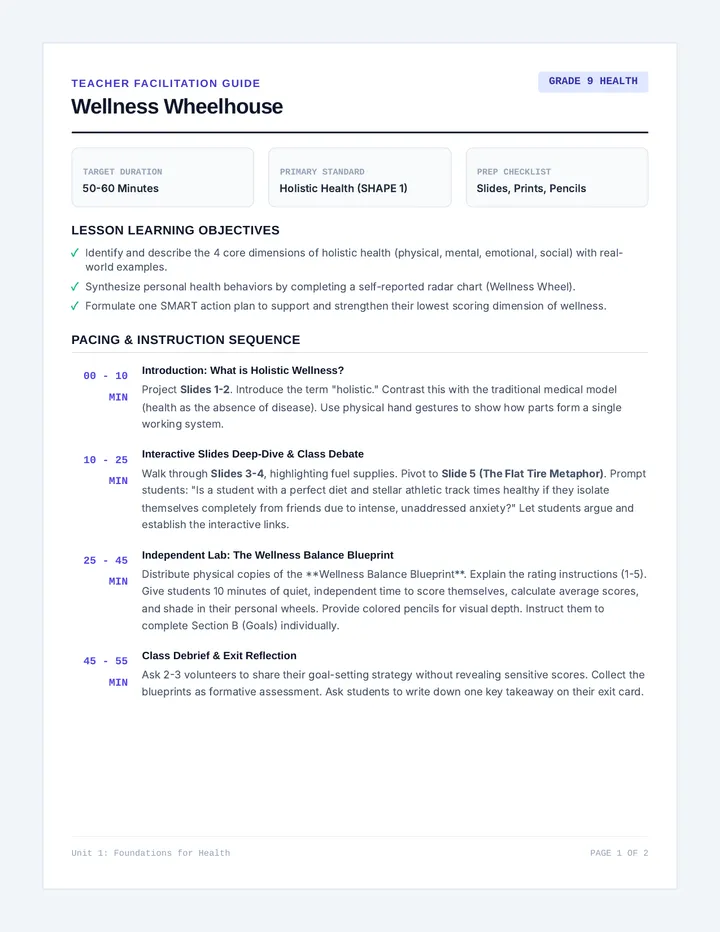
Lesson Facilitation Guide
Time Estimate
60 MINS
Lesson Objective
Students will understand the physical, social, and legal risks associated with drug and alcohol use. By the end of this lesson, students will be equipped with refusal strategies and a personal commitment to making healthy choices.
Audience
Grades 7 - 12 (Tier 1 Prevention)
Approach
A multi-modal instructional approach combining visual case studies (video), collaborative discussion, individual reflection, and creative commitment (the pledge).
Materials Needed
Discussion Guide
Worksheet (1 per student)
Printable Pledge Cards
Art supplies (markers, colored pencils)
Instructional Sequence
10 MIN
Introduction & Ground Rules
Establish a safe space for dialogue. Students need to know that their privacy is respected, but that the goal is shared learning about health risks.
Overview the lesson: Focus on risk awareness and decision-making.
Explain why this matters: Early prevention leads to lifelong healthy outcomes.
5 MIN
Video Viewing
Watch: "Teen Substance Use & Abuse"
Have students note one thing that "felt real" or surprising during the video. This anchors the content to their emotional response.
15 MIN
Deep Dive Discussion
Use the Discussion Guide to move from facts to application. Focus on Jeremiah's experience as a case study for peer influence.
15 MIN
Worksheet & Review
Distribute the worksheet. This provides individual accountability for the content learned in the video. Review answers as a whole group to clarify misconceptions.
10 MIN
The Personal Pledge
Distribute Pledge Cards. Emphasize that a pledge is a promise to one's future self. Allow time for decorating to make it personal.
5 MIN
Closure
Recap: Knowledge is power. Encourage students to identify one trusted adult they can talk to. End on a note of empowerment.
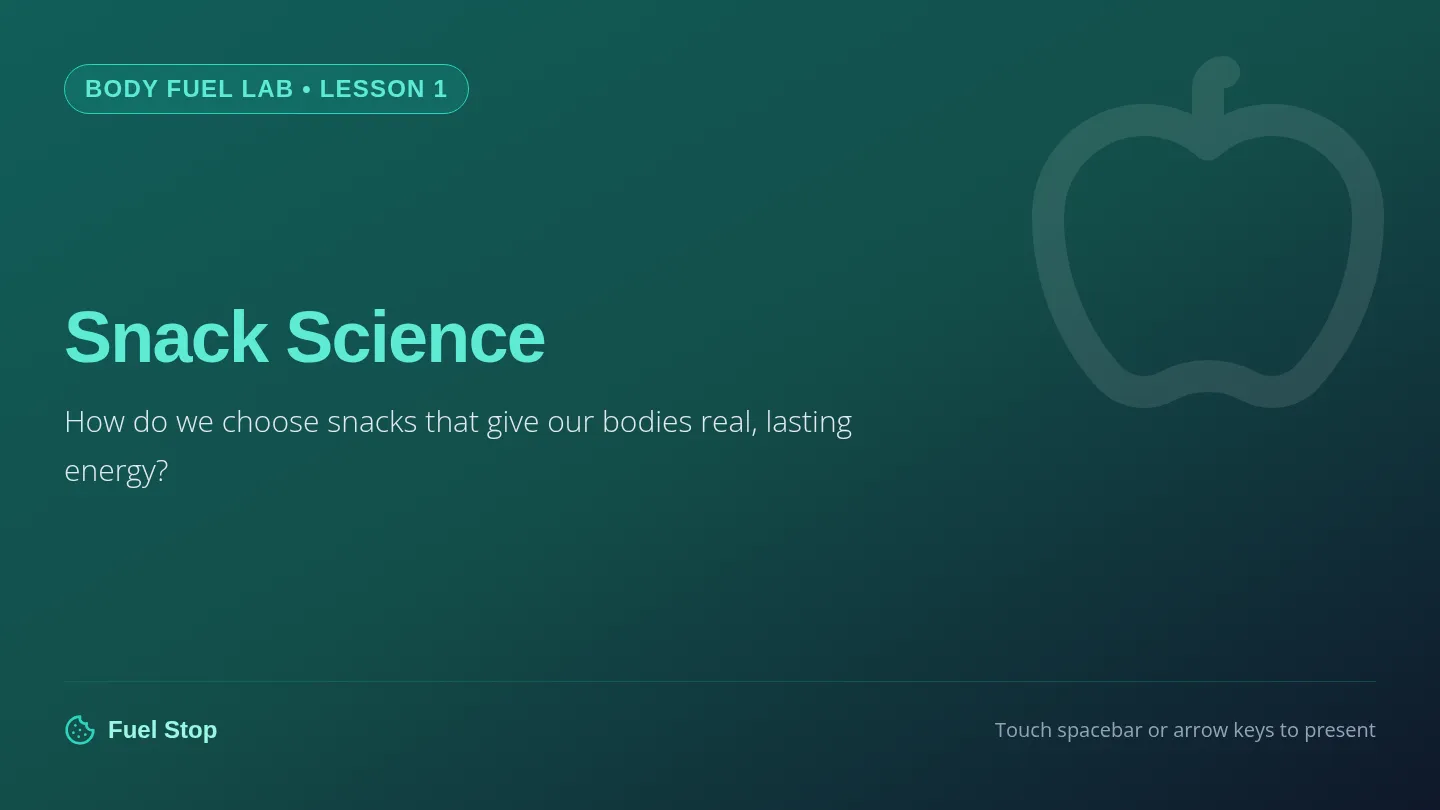
Stay Substance Free Presentation Slides STAY SUBSTANCE FREE
Protecting Your Future Self
Why are we here?
Informed Choices
Knowledge gives you the power to say no with confidence.
Brain Health
Your brain is developing until age 25. Protect your potential.
"The best time to decide is BEFORE you're in the moment."
Video Case Study
Teen Substance Use & Abuse
Watch & Take Notes
Open Video Link
Watch for: Jeremiah's experience and the influence of his surroundings.
Discussion Part 1
What stood out to you in the video?
Was there anything surprising? What felt the most "real" to you?
What are the potential risks of experimenting?
Think beyond just physical health—think about school, law, and social life.
Discussion Part 2
How did peer pressure influence Jeremiah?
How much control did he have in that moment? What changed his mind?
What can you do if you are offered a substance?
Brainstorm "Exit Strategies" that work in the real world.
Your Power Toolkit
The Pivot
"Nah, let's go get food instead."
The Excuse
"I have a game/test tomorrow. Can't risk it."
The Direct No
"No thanks, I don't do that."
Active Learning
Worksheet Time
Complete the Prevention Worksheet . Use what we discussed and what you saw in the video to answer clearly.
15 Minutes
Work Solo or in Pairs
Make a Pledge
This is a commitment to YOUR future. Write it down. Own it. Keep it as a reminder of your goals.
"I pledge to stay drug-free because..."
Closing Thoughts
You are in control of your choices. If you ever have questions or feel overwhelmed, reach out to a trusted adult.
Thank you for your participation
Stay Substance Free Discussion Guide Discussion Guide
Stay Substance-Free Lesson
Resource Type
Teacher Support
This guide is designed to help you facilitate a meaningful conversation following the "Teen Substance Use & Abuse" video. Encourage open, non-judgmental dialogue while reinforcing core health facts.
1
What stood out to you in the video?
Facilitation Notes:
Allow students to share their initial visceral reactions. Some may focus on the emotional tone, while others may focus on specific facts.
Ask follow-ups:
"Was there a moment you felt like Jeremiah was making a good choice vs. a risky one?"
"What did you notice about the environment he was in?"
2
What are some potential risks and consequences of experimenting with substances?
Key Discussion Points:
Physical Risks: Immediate health issues, lack of control over what is in a non-prescribed substance.Social Consequences: Damage to trust with parents/guardians, losing focus on sports or hobbies.Legal/School Issues: Suspension from teams/clubs, legal record affecting future college or job applications.Brain Development: Mention that the adolescent brain is "under construction" and highly sensitive to chemical changes.
3
How did peer pressure influence Jeremiah's actions in the video?
Focus Area:
Discuss how friends and social situations can impact decisions. Peer pressure isn't always someone "bullying"—it can be the feeling of wanting to belong or not wanting to look "lame."
Emphasis: Emphasize the importance of making individual, informed choices that prioritize your own safety over social standing.
4
What can you do if you find yourself in a situation where you’re offered drugs or alcohol?
Brainstorming Strategies:
The Deflector
Changing the subject or suggesting a different activity immediately.
The Exit
Simply walking away or calling for a ride home without over-explaining.
The Scapegoat
Blaming a parent, coach, or upcoming sports event as the reason you can't participate.
The Direct No
Clear, confident refusal without hesitation.
Stay Substance Free Worksheet Prevention Power
Stay Substance-Free Student Worksheet
Name:
Date:
Think back to the "Teen Substance Use & Abuse" video and our class discussion. Use your critical thinking skills to answer the following questions.
1
Why is it risky to take a substance that isn't prescribed to you?
2
What were the main concerns Jeremiah had after taking the unknown substance?
3
List three potential consequences of using drugs or alcohol mentioned in the video.
Consider physical, mental, or social health impacts.
A.
B.
C.
4
What strategies can you use to avoid peer pressure to use substances?
Your Choices Define Your Future
Stay Substance Free Pledge Card MY PLEDGE
My Commitment
"I pledge to stay drug-free because..."
Signature
Date
MY PLEDGE
My Commitment
"I pledge to stay drug-free because..."
Signature
Date
Cut Here
Stay Substance Free Worksheet Answer Key Answer Key
Stay Substance-Free Worksheet
Resource Type
Teacher Resource
Use this key to review student responses. Note that for open-ended questions, student wording may vary, but the core concepts should align with the points below.
1
Why is it risky to take a substance that isn't prescribed to you?
Taking unprescribed substances is dangerous because you cannot be sure of the ingredients, the dosage, or how it will react with your specific body chemistry. Unlike prescription medication, there is no medical professional monitoring the effects or ensuring safety standards.
2
What were the main concerns Jeremiah had after taking the unknown substance?
Jeremiah expressed anxiety about losing control, physical side effects (like heart racing or dizziness), and the potential legal and social fallout if he got caught. He was also concerned about how it would affect his future opportunities and the trust he had with his family.
3
List three potential consequences of using drugs or alcohol mentioned in the video.
Example A:
Physical health risks (addiction, organ damage, overdose).
Example B:
Loss of motivation and focus on school, sports, or goals.
Example C:
Strained relationships with family and friends; loss of trust.
4
What strategies can you use to avoid peer pressure to use substances?
Students might list:
Directly saying "No thanks."
Suggesting a different activity (The Pivot).
Making an excuse related to sports or parents (The Scapegoat).
Leaving the situation entirely (The Exit).