Fresh Start Slides
Life Skills Series
Middle School Wellness
Fresh Start
The Science of staying clean, fresh, and confident during puberty.
The Science of Sweat Odor Blockers Daily Routines
Let's talk about habits & hydration Slide 1 of 6
The Sweat Story
PART 1: THE BIOLOGY
Sweating is your body's built-in air conditioner. It keeps you cool! But during puberty, new glands activate that change the game.
1
Eccrine Glands (All over)
Produce water & salt sweat to cool you down. Virtually odorless!
2
Apocrine Glands (Underarms & Groin)
Activate during puberty. Produce thicker, milky sweat triggered by stress and warmth.
Skin Cross-Section
Why Does It Change Now?
🧒
Childhood
Eccrine active. Quiet apocrine. Very little scent.
➡️
🧑🎤
Puberty & Beyond
Hormones wake up apocrine glands. Scent changes.
This is 100% normal and happens to every single person!
Sweating is healthy; managing it is easy! Slide 2 of 6
The Odor Equation
PART 2: THE SCIENCE
💧
Apocrine Sweat
Milky & nutrient-rich
👾
Skin Bacteria
Harmless & natural
=
💨
Body Odor (B.O.)
Bacteria digesting sweat
Deodorant
Targets the bacteria. Contains antimicrobials and fragrances to keep you smelling clean. Use daily.
Antiperspirant
Targets the sweat. Temporarily plugs sweat pores to reduce wetness. Best applied to dry skin.
Did you know? Sweat itself has absolutely no smell! Slide 3 of 6
The Daily Routine Blueprint
PART 3: HABITS
🚿
1. Shower Regularly
Use soap to clean your entire body, focusing on high-sweat areas. Wash hair every 1-3 days depending on oil level.
Pro-Tip: Dry off completely before dressing! Bacteria thrive in warm, damp spots.
🧴
2. Apply Deodorant
Apply to clean, dry underarms every single morning. Reapply after sports, gym class, or hard activities.
Pro-Tip: Keep a backup deodorant stick in your PE locker or backpack for quick top-ups.
👕
3. Clean Clothes
Underwear, socks, and shirts absorb old sweat and skin flakes. Wash them after each wear—don't wear them twice!
Pro-Tip: The "Sniff Test" is a trap. If you wore it to school, it needs to go in the laundry hamper!
Consistency builds confidence and starts a better morning. Slide 4 of 6
The Hidden Odor Hotspots
PART 4: SECRET SITES
🪥
Dental Hygiene
Bacteria in your mouth digest leftover food and produce sulfur gases (bad breath).
- Brush twice daily for 2 minutes
- Floss daily to clear trapped food particles
- Brush your tongue where bacteria build up
👟
Shoes & Clothes
Your feet have 250,000+ sweat glands! Sweaty shoes and dirty socks harbor lots of odor.
- Change socks daily—no repeats!
- Let shoes air out (don't leave them in bags)
- Separate clean and dirty clothes instantly
Good breath and clean clothes round out your perfect daily defense. Slide 5 of 6
Putting It To Work
PART 5: CLASS DISCUSSION
Class Scenarios to Talk Through
Scenario A: The PE Gym Class Locker
"Devon just finished PE. He is sweaty and has a math test next period. What are 3 quick hygiene actions he can take?"
Scenario B: The Favorite Hoodie Trap
"Sarah loves her black hoodie and has worn it 4 days in a row. It 'looks clean' and 'passes the sniff test' to her. Is she safe?"
Your "Fresh Start" Plan
We are handing out the Daily Habit Tracker today. Make a commitment to build these habits over the next 7 days:
- ☀️ Morning: Shower (if AM) + Deodorant + Clean Socks & Shirt + Brush Teeth
- 🌙 Night: Shower (if PM) + Wash Face + Brush Teeth + Dirty Clothes in Hamper
Remember: Clean habits = Peak Confidence! 🌟
Time to grab your tracker and build your custom morning blueprint! Slide 6 of 6
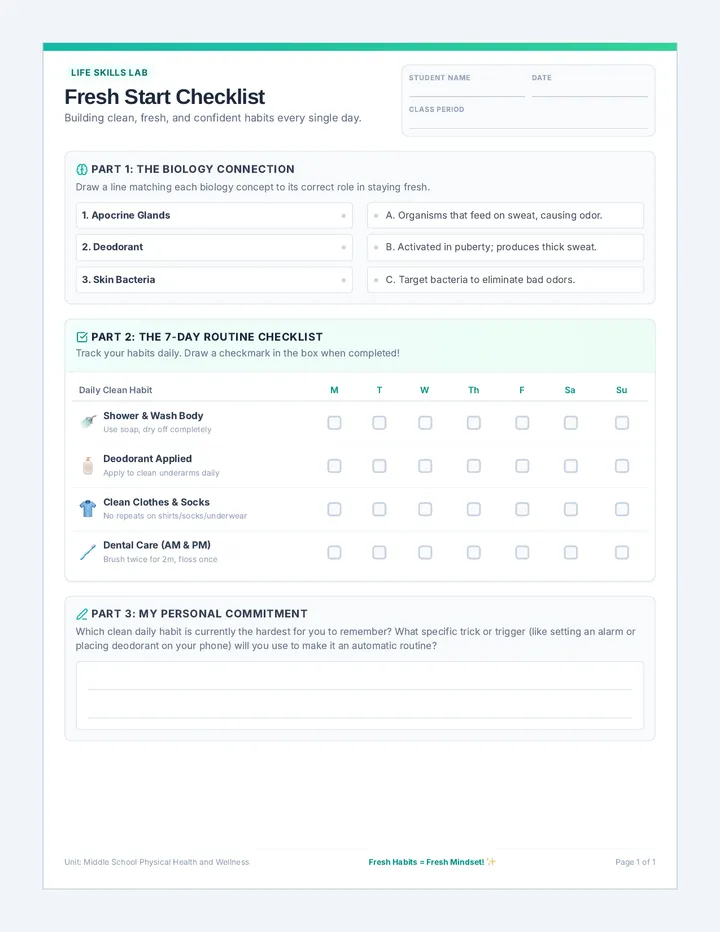
Fresh Start Checklist Worksheet
Life Skills Lab
Fresh Start Checklist
Building clean, fresh, and confident habits every single day.
Student Name
Date
Class Period
Part 1: The Biology Connection
Draw a line matching each biology concept to its correct role in staying fresh.
1. Apocrine Glands ●
2. Deodorant ●
3. Skin Bacteria ●
● A. Organisms that feed on sweat, causing odor.
● B. Activated in puberty; produces thick sweat.
● C. Target bacteria to eliminate bad odors.
Part 2: The 7-Day Routine Checklist
Track your habits daily. Draw a checkmark in the box when completed!
| Daily Clean Habit | M | T | W | Th | F | Sa | Su |
|---|
| | | | | | | |
| 🚿 | | | | | | | |
Shower & Wash Body Use soap, dry off completely
|
|
|
|
|
|
|
|
|
🧴
Deodorant Applied Apply to clean underarms daily
|
|
|
|
|
|
|
|
|
👕
Clean Clothes & Socks No repeats on shirts/socks/underwear
|
|
|
|
|
|
|
|
|
🪥
Dental Care (AM & PM) Brush twice for 2m, floss once
|
|
|
|
|
|
|
|
Part 3: My Personal Commitment
Which clean daily habit is currently the hardest for you to remember? What specific trick or trigger (like setting an alarm or placing deodorant on your phone) will you use to make it an automatic routine?
Unit: Middle School Physical Health and Wellness Fresh Habits = Fresh Mindset! ✨ Page 1 of 1
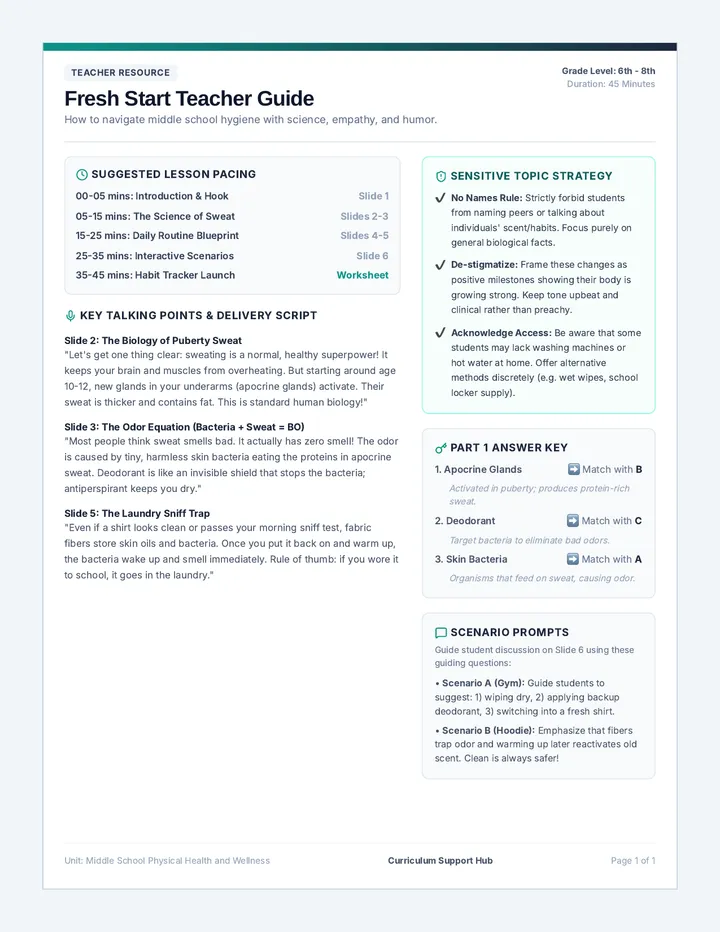
Fresh Start Teacher Guide
Teacher Resource
Fresh Start Teacher Guide
How to navigate middle school hygiene with science, empathy, and humor.
Grade Level: 6th - 8th Duration: 45 Minutes
Suggested Lesson Pacing
- 00-05 mins: Introduction & Hook Slide 1
- 05-15 mins: The Science of Sweat Slides 2-3
- 15-25 mins: Daily Routine Blueprint Slides 4-5
- 25-35 mins: Interactive Scenarios Slide 6
- 35-45 mins: Habit Tracker Launch Worksheet
Key Talking Points & Delivery Script
Slide 2: The Biology of Puberty Sweat
"Let's get one thing clear: sweating is a normal, healthy superpower! It keeps your brain and muscles from overheating. But starting around age 10-12, new glands in your underarms (apocrine glands) activate. Their sweat is thicker and contains fat. This is standard human biology!"
Slide 3: The Odor Equation (Bacteria + Sweat = BO)
"Most people think sweat smells bad. It actually has zero smell! The odor is caused by tiny, harmless skin bacteria eating the proteins in apocrine sweat. Deodorant is like an invisible shield that stops the bacteria; antiperspirant keeps you dry."
Slide 5: The Laundry Sniff Trap
"Even if a shirt looks clean or passes your morning sniff test, fabric fibers store skin oils and bacteria. Once you put it back on and warm up, the bacteria wake up and smell immediately. Rule of thumb: if you wore it to school, it goes in the laundry."
Sensitive Topic Strategy
- ✔ No Names Rule: Strictly forbid students from naming peers or talking about individuals' scent/habits. Focus purely on general biological facts.
- ✔ De-stigmatize: Frame these changes as positive milestones showing their body is growing strong. Keep tone upbeat and clinical rather than preachy.
- ✔ Acknowledge Access: Be aware that some students may lack washing machines or hot water at home. Offer alternative methods discretely (e.g. wet wipes, school locker supply).
Part 1 Answer Key
1. Apocrine Glands ➡️ Match with B
Activated in puberty; produces protein-rich sweat.
2. Deodorant ➡️ Match with C
Target bacteria to eliminate bad odors.
3. Skin Bacteria ➡️ Match with A
Organisms that feed on sweat, causing odor.
Scenario Prompts
Guide student discussion on Slide 6 using these guiding questions: