Lenny.com
Explore
Create
ActivitiesNewMathEnglish Language ArtsScience & EngineeringSocial StudiesGlobal LanguagesHealth & Physical EducationSpecial EducationCounseling & Life SkillsArts & CreativityESL
Lenny.com
Lenny.com
Explore
Create
ActivitiesNewMathEnglish Language ArtsScience & EngineeringSocial StudiesGlobal LanguagesHealth & Physical EducationSpecial EducationCounseling & Life SkillsArts & CreativityESL
Lenny.com
Lenny.com

Solutions

Lenny for EducatorsLenny for SchoolsLenny for Districts

Product

ExploreSign inCreateSupportAbout

Resources

Getting startedMTSS Acceleration Program

© 2026 Lenny Learning Inc.

TermsPrivacyAccessibility
LinkedInInstagramX
Lenny
Health & Physical EducationMovement Skills and ConceptsBody ControlLocomotor SkillsNon-Locomotor SkillsFine Motor SkillsManipulative SkillsBalance and CoordinationSpatial AwarenessMovement PatternsRhythmic Activities and DanceRhythm and TimingDance BasicsIndividual and Dual SportsGymnastics and TumblingTrack and FieldRacket SportsSelf-Defense and Martial ArtsTeam SportsCooperative GamesSportsmanshipTeam CommunicationBasketball SkillsSoccer SkillsVolleyball SkillsFootball SkillsGame StrategiesFitness and Physical ActivityCardio FitnessFlexibility and StretchingMuscular Strength and EnduranceSetting Fitness GoalsHealthy HabitsHygiene PracticesSleep and RestPhysical Activity HabitsHydrationInjury PreventionBody Awareness and Self-CareDisease PreventionHealth Decision-MakingHelp-Seeking and Self-AdvocacyMental HealthMental Health BasicsEmotional AwarenessStress ManagementCoping StrategiesMindfulness PracticesBreathing and Relaxation TechniquesMeditation BasicsResilience and PerseveranceHealthy RelationshipsSocial and Emotional SkillsHelp-Seeking and Support SystemsDigital WellbeingNutritionNutrition BasicsFood GroupsBalanced MealsHealthy Eating HabitsReading Food LabelsPersonal SafetyRecognizing Unsafe SituationsHuman and Child TraffickingStranger DangerPersonal BoundariesFire and Water SafetyEmergency ResponseConflict Resolution BasicsInternet and Social Media SafetySafe Personal RelationshipsSubstance AwarenessTobacco AwarenessAlcohol AwarenessCannabis AwarenessOpioid AwarenessStimulant AwarenessPrescription Drug AwarenessRefusing Peer PressureOutdoor and Adventure ActivitiesOutdoor Recreation SafetyHiking and OrienteeringTeam Building Activities

Policy Crossroads

A comprehensive health education lesson aligned with the 2023 Massachusetts Comprehensive Health and Physical Education Framework (Practice 1: Analyzing Influences). Features tiered simulations (Tier 1 Foundational, Tier 2 Targeted, and Tier 3 Comprehensive) examining how punitive zero-tolerance drug policies versus supportive health-diversion pathways pull students either away from or towards health.

MDMichelle Davignon

Open your Student Simulation Dossier and analyze Milestone 1 to 4. 18-Minute Pair Simulation


Analyzing Influences MA HPE Standard 1.12.AI

External School Policies Drive Internal Health Decisions

Away From Health

  • • Fear of punishment blocks honest communication
  • • Academic failure increases chronic stress
  • • Stigmatization pushes youth to marginalized peers
  • • Substance use increases to cope with isolation

Towards Health

  • • Confidentiality creates safe environment to ask for help
  • • Professional screening detects root mental health needs
  • • Ongoing connection preserves positive adult mentors
  • • Harm reduction education builds lasting self-efficacy

Conclusion: Punishment punishes symptoms; support treats root causes. Phase 3: Matrix Audit


Policy Redesign Phase 4: Synthesis & Action

Building a Health-First School Policy

Pillar 1: Amnesty

Medical Safety First

Zero disciplinary penalties when reporting a substance emergency for oneself or a classmate.

Pillar 2: Diversion

Care Over Exclusion

Tiered SBIRT screening, confidential counseling, and substance education instead of suspension.

Pillar 3: Connection

Academic Retention

Guaranteed tutoring, sports continuation agreements, and adult mentorship to prevent alienation.

Complete the Policy Redesign Challenge on Page 2 of your worksheet. Massachusetts Chapter 222 Compliant

[ ] ↑ Towards Health [ ] ↓ Away from Health

Rule 3: "Trusted Adult Check-In" Students who have questions about drugs or vaping can have a confidential chat with the counselor.

[ ] ↑ Towards Health [ ] ↓ Away from Health

Activity 3: Mapping My School Support Team

Who are 3 trusted adults in our school building you could talk to if you or a friend were pressured to vape or try drugs?

Adult 1 (Role/Name):

Adult 2 (Role/Name):

Adult 3 (Role/Name):

Student Voice: Advice for the Principal

If our principal asked: "What rule would help students feel safe coming to us for help instead of hiding secrets?" What would you tell them?

Safety First Curriculum • Tier 1 Health Education Page 2 of 2

[ ] ↑ [ ] ↓

Good Samaritan Rule: No punishment for reporting an overdose

[ ] ↑ [ ] ↓

Stripping students of sports, band, and all club activities

[ ] ↑ [ ] ↓

Part 3: Tier 2 Voice • School Transition Ready Policy Recommendation

As you prepare for the next school year, write two specific recommendations for the administrative team to ensure students feel safe seeking help:

Recommendation 1: How should the school respond when a student asks for help with stress or vaping?

Recommendation 2: What should the rule be if someone needs medical help at a school event or party?

Safety First Curriculum • Tier 2 Health Education Page 2 of 2

Part 2 & 3 • TIER 3

School policies act as powerful environmental influences. Categorize each institutional policy action below by checking whether it pushes a student Towards Health (↑) or Away From Health (↓), and explain why.

Institutional Policy Feature

Direction

Health Impact Rationale

Automatic 10-day out-of-school suspension for first offense

[ ] ↑ [ ] ↓

Confidential SBIRT mental health screening with social worker

[ ] ↑ [ ] ↓

Mandatory reporting to police and juvenile justice referral

[ ] ↑ [ ] ↓

Medical Amnesty: Zero discipline when calling 911 in a drug crisis

[ ] ↑ [ ] ↓

Deep-Dive: How Fear of Consequences Influences Emergency Disclosure

If a student is having a terrifying reaction to an unknown laced substance at a party or in school, how does Oakland High's zero-tolerance rule influence whether their peers call 911 or alert staff? Contrast this with Brookfield High.

Part 3: Policy Redesign Challenge MA Ch. 222 Compliant

Imagine you are appointed to your district's School Wellness Advisory Committee. Draft 3 specific policy provisions to replace zero tolerance with a health-centered pathway:

Pillar 1: Emergency Amnesty & Protected Help-Seeking

Pillar 2: Health Screening & Restorative Education

Pillar 3: Academic Retention & Positive School Connection

Safety First Curriculum • TIER 3 • MA HPE Practice 1: Analyzing Influences Page 2 of 2

Standards-Based Evaluation

Exemplar: Emergency Disclosure Analysis (Part 2)

"Under Oakland's zero tolerance, peers fear that calling an adult or 911 will lead to suspensions, police records, or expulsion for everyone present. Consequently, students often delay calling or abandon an unconscious peer. Under Brookfield's medical amnesty, peers know their priority is medical survival and that seeking help carries no punitive sanction, ensuring life-saving intervention occurs immediately."

Exemplar: 3-Pillar Policy Redesign (Part 3)

Pillar 1 (Amnesty): Immediate medical exemption: no suspensions or athletic bans for students who seek medical assistance for drug-related distress or overdose.

Pillar 2 (Diversion): Multi-tiered care replacing expulsion: mandatory confidential SBIRT screening with social worker, 4 restorative education sessions on coping, and family engagement.

Pillar 3 (Retention - MA Ch. 222): Preserved academic enrollment: continued access to classes, homework coaching, and structured athletic participation under a mutual wellness contract.

MA HPE 2023 Practice 1 Analytical Rubric

Performance Dimension

Developing (1-2 pts)

Proficient (3 pts)

Exemplary (4 pts)

1. Analyzing External Influences (1.12.AI.1)

Identifies school rules as good or bad without analyzing how they alter student behavior.

Explains clearly how punitive rules deter help-seeking and how supportive rules foster disclosure.

Deconstructs complex institutional dynamics; evaluates how policy stigma shapes peer culture and student identity.

2. Towards vs Away Trajectory (1.12.AI.3)

Categorizes features with simplistic reasons (e.g. "suspension is mean").

Distinguishes between addressing root causes (mental health) vs punishing symptoms (vaping).

Maps systemic trajectories: links exclusion to pushout, increased stress, peer re-affiliation, and chronic use.

3. Policy Redesign & Advocacy

Suggests vague reforms with no clear connection to health or legal standards.

Designs viable provisions incorporating medical amnesty, counseling, and academic retention.

Synthesizes harm reduction, Massachusetts legal mandates (Ch. 222), and multi-tiered restorative frameworks.

Pedagogical Coaching: Common Student Misconceptions

Misconception: "Strict suspensions scare students into stopping drug use."
Evidence: National public health studies show suspended youth are 2.5x more likely to experience substance dependence due to severed school bonding and unsupervised idle time.

Misconception: "Amnesty policies encourage students to use more drugs."
Evidence: Good Samaritan and amnesty policies do not promote drug use; they remove barriers to calling 911 during life-threatening medical emergencies.

Safety First Curriculum • Practice 1 Assessment Key Page 2 of 2
You might also like

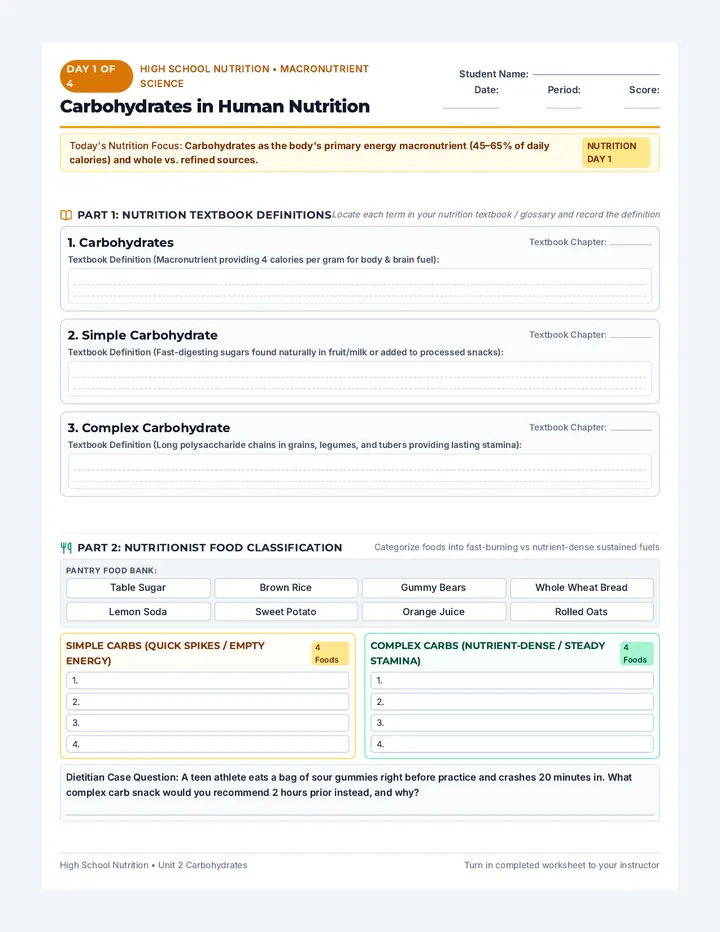
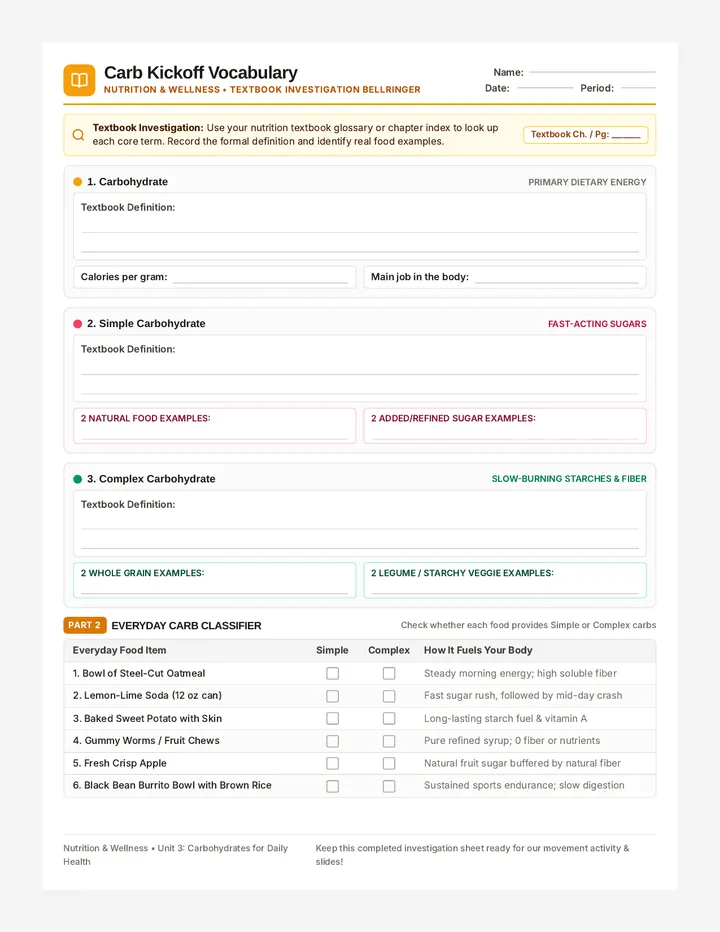
Carb Kickoff Vocabulary Worksheet

Smart Fuel Blueprint

A dynamic high school nutrition and wellness unit examining macronutrient fuel, protein synthesis, food label literacy, and practical meal strategies for athletic stamina and everyday focus.

J

Jennifer.Leber

7
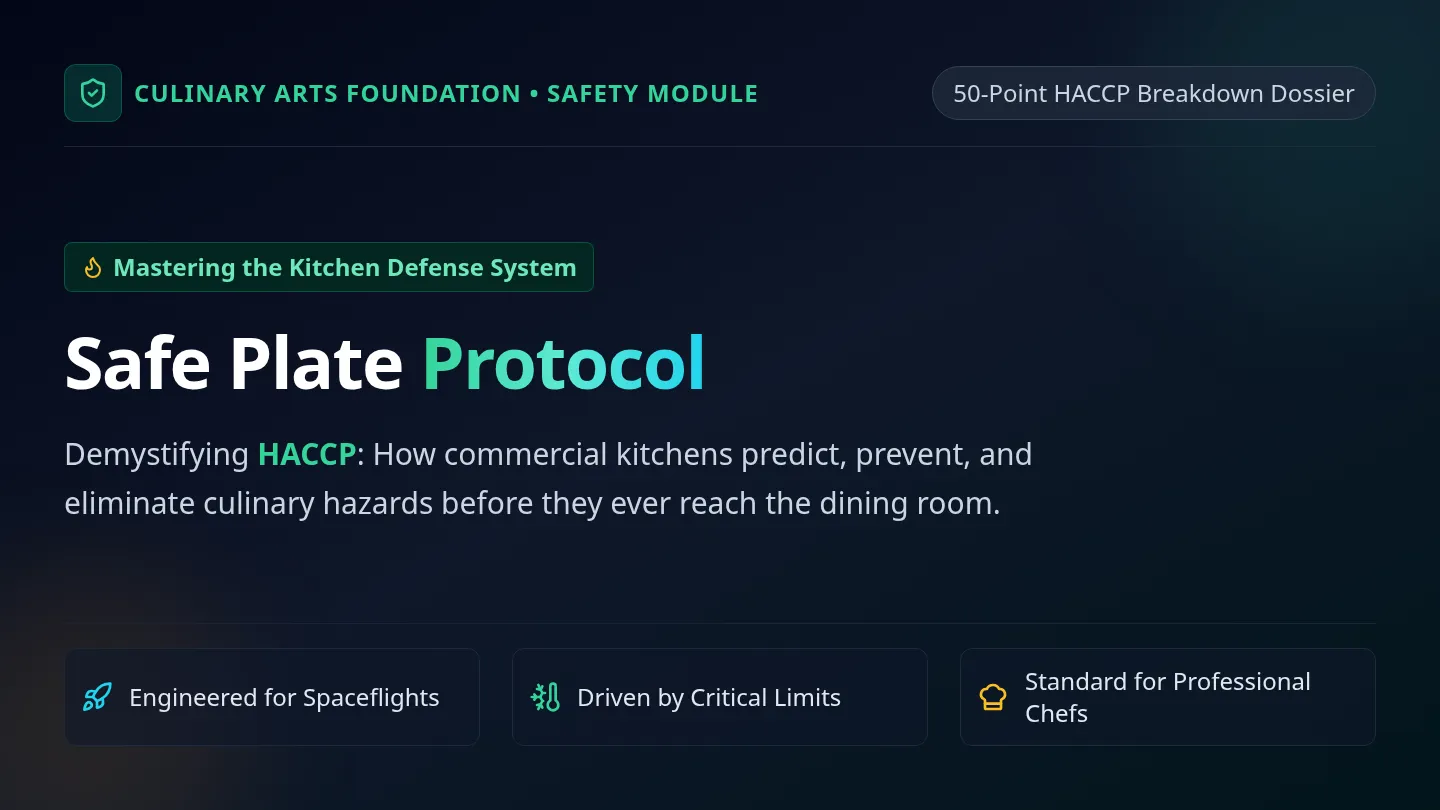
Safe Plate Protocol Slides

Safe Plate Protocol

A foundational culinary arts lesson introducing freshman students to Hazard Analysis Critical Control Point (HACCP) principles. Through a visual slide presentation and an investigative research worksheet, students examine kitchen safety protocols, hazard categories, and critical control points.

B

Bonnie.Gomez

2
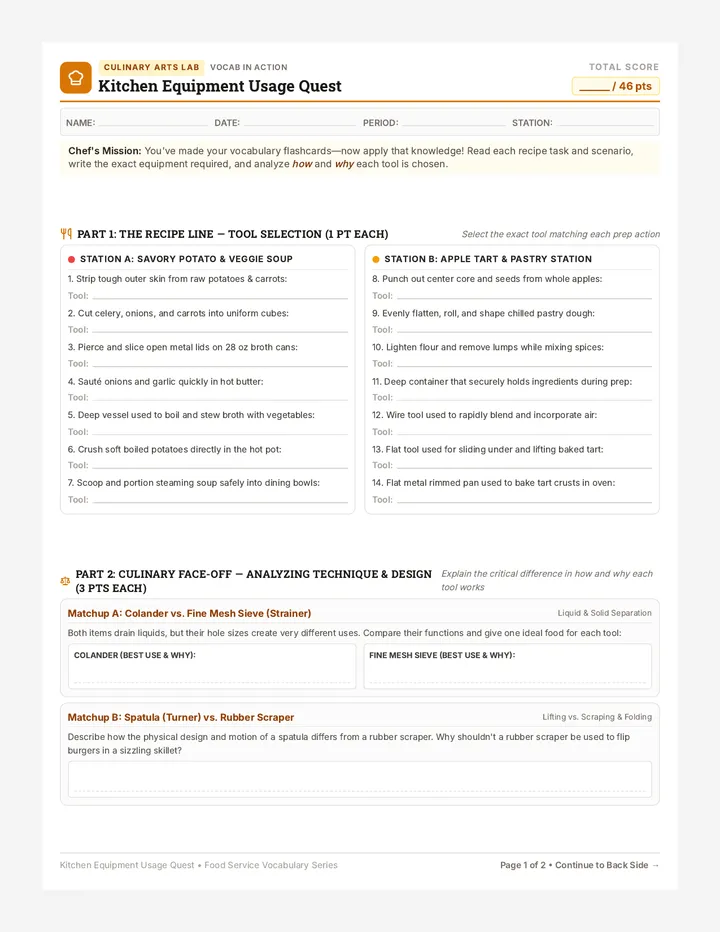
Kitchen Equipment Quest Worksheet

Kitchen Equipment Quest Worksheet

A hands-on culinary arts worksheet guiding students through practical cooking scenarios, tool comparisons, and kitchen disaster investigations to master the usage and technique of 23 food service tools.

BF

Brandi Flanigan

Day 1 Foundations Worksheet

Carb Masters Nutrition

A comprehensive 4-day nutrition curriculum exploring dietary carbohydrates, digestion mechanics, fiber benefits, insulin homeostasis, and glycemic meal planning.

J

Jennifer.Leber

16
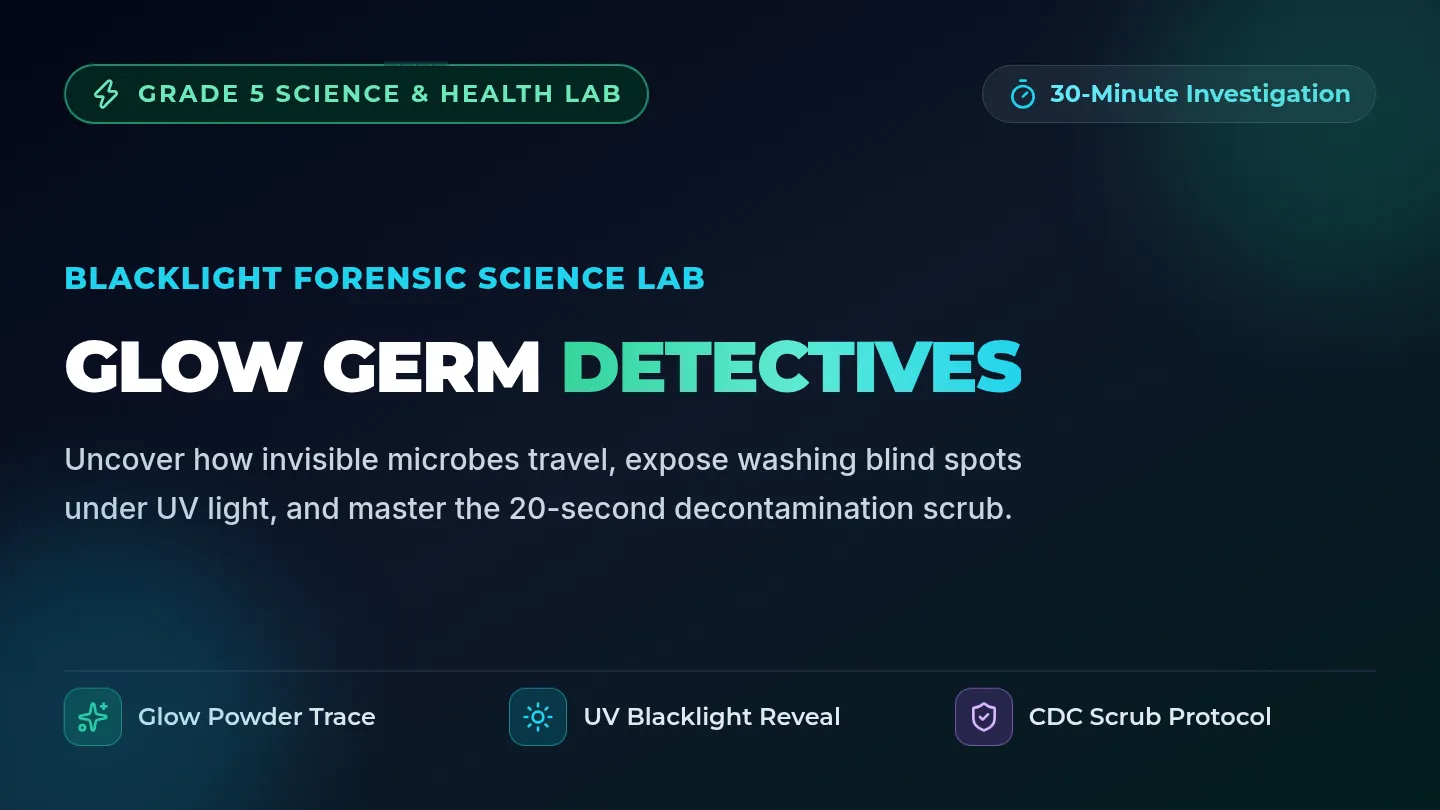
Glow Germs Slides

Glow Germ Detectives

A fast-paced 30-minute 5th-grade health and microbiology lesson using UV glow lotion and powder to reveal how invisible microbes spread and where standard washing fails. Students conduct a contact transmission test, evaluate washing techniques under blacklight, and practice proper scrubbing protocols.

AA

Amanda Azevedo

3
Kitchen Defense Worksheet

Kitchen Defense Worksheet

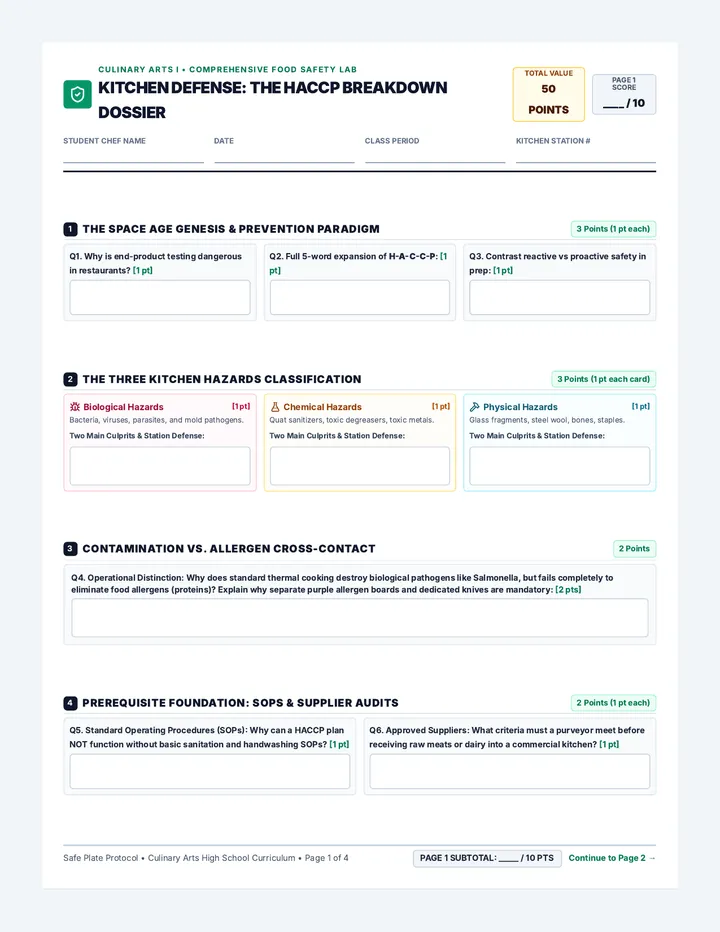
A comprehensive 4-page print-ready investigative research packet for freshman culinary students worth 50 points. Expanded with 15 in-depth breakdown questions covering prerequisite programs, the CCP decision tree, numeric critical limits, two-stage cooling curves, calibration mechanics, traceability, and an emergency incident simulation.

B

Bonnie.Gomez

Safe Body Champions Slides

Body Safety Champions

A bilingual drug awareness and medicine safety guidance program for 2nd and 3rd grade elementary students, featuring complete classroom materials in both English and Spanish.

V

vsifuentes

8
Clear Air Teacher Guide

Clear the Air

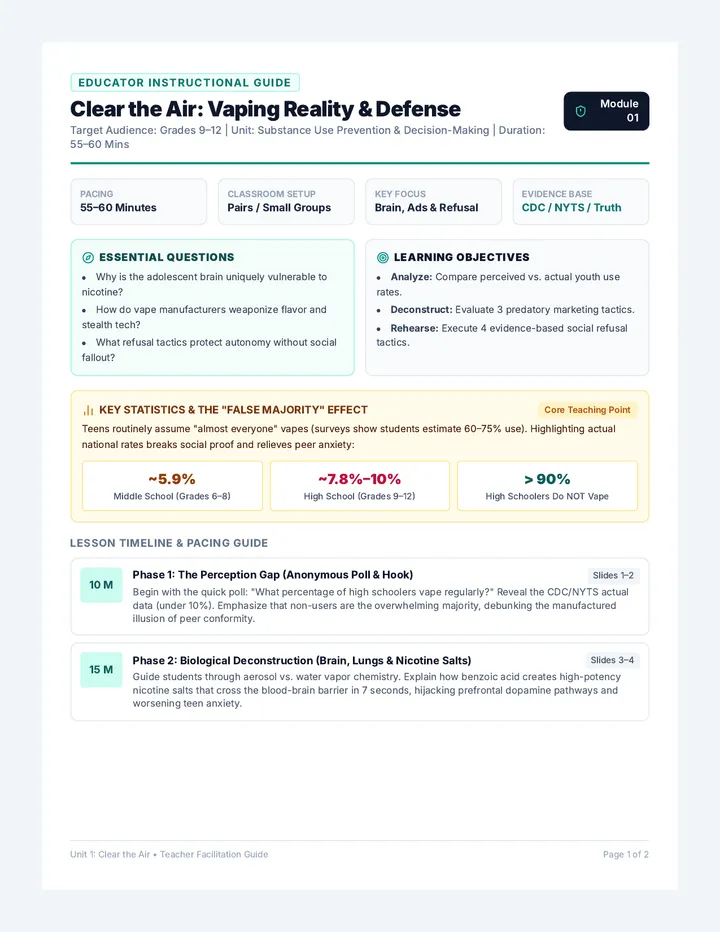
A comprehensive high school health unit exploring the neurobiology of nicotine addiction, deceptive vaping marketing tactics, real youth usage statistics, and practical peer pressure refusal strategies.

Lenny Avatar
Lenny
4
Safe Plate Protocol Slides

Safe Plate Protocol Slides

A high-engagement introductory slide deck for freshman culinary students on Hazard Analysis Critical Control Point (HACCP) principles. It covers HACCP origins with NASA, biological/chemical/physical hazards, critical control points, the 7 fundamental principles, and launches the 50-point comprehensive HACCP breakdown dossier.

B

Bonnie.Gomez

Food Fuel Slides

Nutri Power Academy

A comprehensive two-session 6th grade health sequence covering food groups, essential nutrients, balanced plate design, and decoding nutrition facts labels for informed everyday choices.

BM

Brian Millea

6
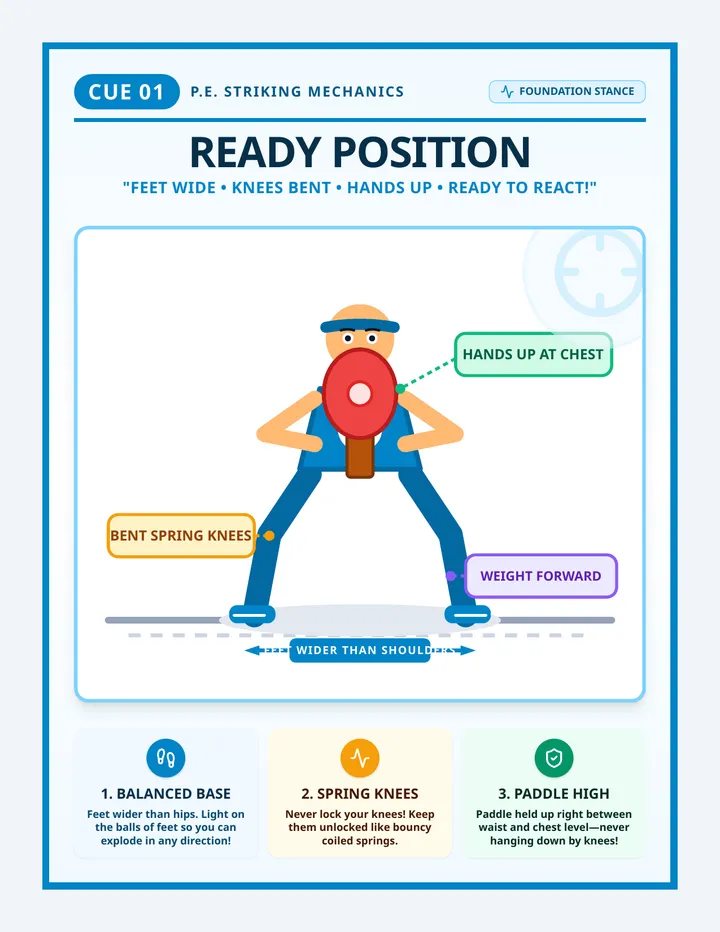
Strike Cues Posters

Strike Zone

An active physical education lesson teaching foundational striking mechanics and hand-eye coordination. Students learn and apply four core cues through visual station posters, partner drills, and engaging gym games.

RY

RYAN YOUNG

3
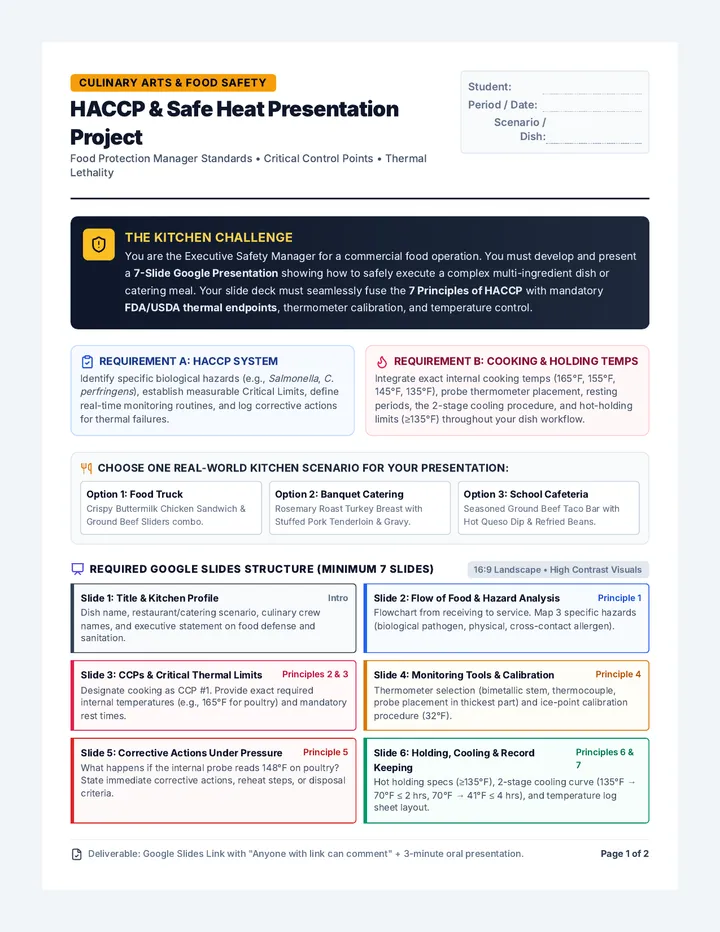
HACCP Heat Project Handout

HACCP Heat Project Handout

A comprehensive, two-page project assignment handout guiding students to create a real-world Google Slides presentation integrating HACCP principles and proper cooking temperatures. Includes project specifications, scenario options, slide-by-slide guidelines, culinary temperature benchmarks, a pre-submission checklist, and a detailed scoring rubric.

B

Bonnie.Gomez