Lenny.com
Explore
Create
ActivitiesNewMathEnglish Language ArtsScience & EngineeringSocial StudiesGlobal LanguagesHealth & Physical EducationSpecial EducationCounseling & Life SkillsArts & CreativityESL
Lenny.com
Lenny.com
Explore
Create
ActivitiesNewMathEnglish Language ArtsScience & EngineeringSocial StudiesGlobal LanguagesHealth & Physical EducationSpecial EducationCounseling & Life SkillsArts & CreativityESL
Lenny.com
Lenny.com

Solutions

Lenny for EducatorsLenny for SchoolsLenny for Districts

Product

ExploreSign inCreateSupportAbout

Resources

Getting startedMTSS Acceleration Program

© 2026 Lenny Learning Inc.

TermsPrivacyAccessibility
LinkedInInstagramX
Lenny
Health & Physical EducationMovement Skills and ConceptsBody ControlLocomotor SkillsNon-Locomotor SkillsFine Motor SkillsManipulative SkillsBalance and CoordinationSpatial AwarenessMovement PatternsRhythmic Activities and DanceRhythm and TimingDance BasicsIndividual and Dual SportsGymnastics and TumblingTrack and FieldRacket SportsSelf-Defense and Martial ArtsTeam SportsCooperative GamesSportsmanshipTeam CommunicationBasketball SkillsSoccer SkillsVolleyball SkillsFootball SkillsGame StrategiesFitness and Physical ActivityCardio FitnessFlexibility and StretchingMuscular Strength and EnduranceSetting Fitness GoalsHealthy HabitsHygiene PracticesSleep and RestPhysical Activity HabitsHydrationInjury PreventionBody Awareness and Self-CareDisease PreventionHealth Decision-MakingHelp-Seeking and Self-AdvocacyMental HealthMental Health BasicsEmotional AwarenessStress ManagementCoping StrategiesMindfulness PracticesBreathing and Relaxation TechniquesMeditation BasicsResilience and PerseveranceHealthy RelationshipsSocial and Emotional SkillsHelp-Seeking and Support SystemsDigital WellbeingNutritionNutrition BasicsFood GroupsBalanced MealsHealthy Eating HabitsReading Food LabelsPersonal SafetyRecognizing Unsafe SituationsHuman and Child TraffickingStranger DangerPersonal BoundariesFire and Water SafetyEmergency ResponseConflict Resolution BasicsInternet and Social Media SafetySafe Personal RelationshipsSubstance AwarenessTobacco AwarenessAlcohol AwarenessCannabis AwarenessOpioid AwarenessStimulant AwarenessPrescription Drug AwarenessRefusing Peer PressureOutdoor and Adventure ActivitiesOutdoor Recreation SafetyHiking and OrienteeringTeam Building Activities

Kitchen Sanitation Protocols

A comprehensive culinary arts lesson focused on commercial kitchen sanitation, chemical handling safety, warewashing sequences, and food safety inspection compliance.

BBonnie.Gomez

Kitchen Sanitation Protocols

A comprehensive culinary arts lesson focused on commercial kitchen sanitation, chemical handling safety, warewashing sequences, and food safety inspection compliance.

BBonnie.Gomez

Critical Check Key [3 pts]: Detergents are alkaline surfactants that neutralize chemical sanitizers (chlorine/quat) on contact, destroying their bactericidal power. Residue also forms a film shielding pathogens.

Part 3: Equipment & Chemical Safety Guidelines

9 Points Total (3 pts each)

Meat Slicer [3 pts]

Mandatory primary step:

Unplug electrical cord from wall and turn blade thickness dial to "0" before touching or disassembling parts.

Non-Stick Cookware [3 pts]

Tool restriction & alternative:

Steel wool destroys PTFE coating, creating toxic flakes (physical hazard). Use soft nylon pads or sponges.

Chemical Storage [3 pts]

OSHA labeling & shelf rules:

  1. Label secondary bottles with chemical name & hazard. 2) Store on bottom shelves below and away from food.

Instructor Resource • Commercial Kitchen Sanitation Standards Page 1 of 2 • Page 1 Subtotal: 25 Points

Part II

Shift Inspection & Corrective Action Analysis (Key)

Master Key • Page 2: 15 Points (Grand Total: 40 Points)

Part 4: Workplace Inspection — Violations & Corrective SOPs

6 Points Total (3 Violations × 2 pts: 1 pt hazard, 1 pt SOP)

Model Audit Findings (Accept any 3 of the following 4 major violations — 2 pts each):

1 Hazard [1 pt]: Used noon rag without disassembling slicer blade guard.

[2 pts total]

Corrective SOP [1 pt]:

Fully disassemble blade carriage; wash, rinse, and sanitize each part separately. Use a fresh, single-use sanitizing cloth from a newly mixed sanitizer bucket tested at proper PPM.

2 Hazard [1 pt]: Oven cleaner applied without safety gloves; used dish sponge.

[2 pts total]

Corrective SOP [1 pt]:

Mandatory PPE (chemical-resistant rubber gloves & eye protection) required for caustic oven cleaners. Discard sponges (bacterial harborage/chemical erosion); use commercial scrubbing pads.

3 Hazard [1 pt]: Wet-nesting sheet pans & storing degreaser above burger buns.

[2 pts total]

Corrective SOP [1 pt]:

Invert sheet pans individually on drying racks to air dry (prevent mold/bacteria). Relocate all cleaning chemicals to a designated chemical locker or bottom shelf below and away from food.

Part 5: Kitchen Floor Decision Matrix

4 Points Total (2 pts each scenario)

The 4-Hour Rule Key [2 pts]

Mandatory 4-hour re-sanitizing rationale:

Pathogen Bloom: Bacteria reproduce exponentially within 4 hours at room temperature (TDZ 41°F–135°F). Even if visually clean, microscopic bacterial biofilms form; FDA Food Code mandates a full wash/rinse/sanitize cycle every 4 hours of continuous food contact use.

Unlabeled Bottle Key [2 pts]

OSHA protocol execution steps:

Immediate Quarantine: Remove bottle immediately from food zone. Never guess or smell contents. Notify chef/manager to verify chemical identity and dispose of safely or label with chemical name, dilution, and hazard warnings per OSHA HazCom standard.

Part 6: Health Inspector Debrief (Synthesis Question)

5 Points Total (Grading Rubric Below)

Master Exemplar Response:

[5 pts total]

Cleaning vs. Sanitizing: Cleaning removes physical soil and grease where microbes harbor. Sanitizing destroys pathogens (Salmonella, Norovirus, Listeria) that soap alone cannot kill.

Contamination Dynamics: Detergent film left behind neutralizes sanitizers, allowing surviving bacteria to multiply rapidly into protective biofilms and cross-contaminate ready-to-eat foods.

Impact & Consequences: Contamination causes customer foodborne illness outbreaks, hospitalizations, health department red-tag closures, civil liabilities, and business failure.

Rubric: Cleaning vs. Sanitizing distinction (2 pts) • Contamination & biofilm dynamics (2 pts) • Outbreak & regulatory impacts (1 pt)

Instructor Resource • Commercial Kitchen Sanitation Standards Page 2 of 2 • Page 2: 15 Points • Total Audit Score: 40 Points
You might also like

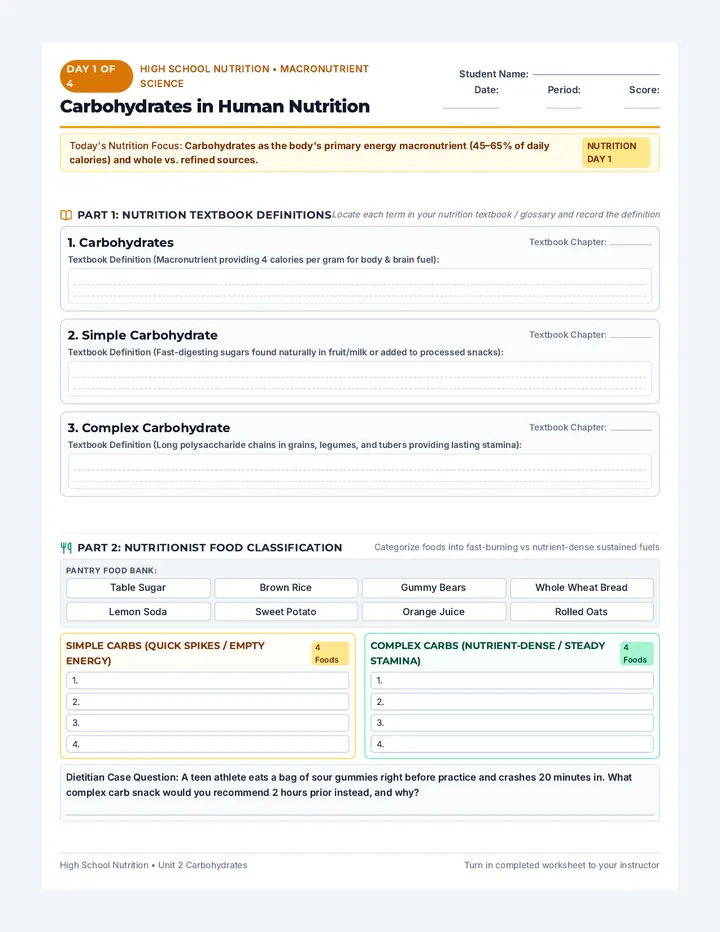
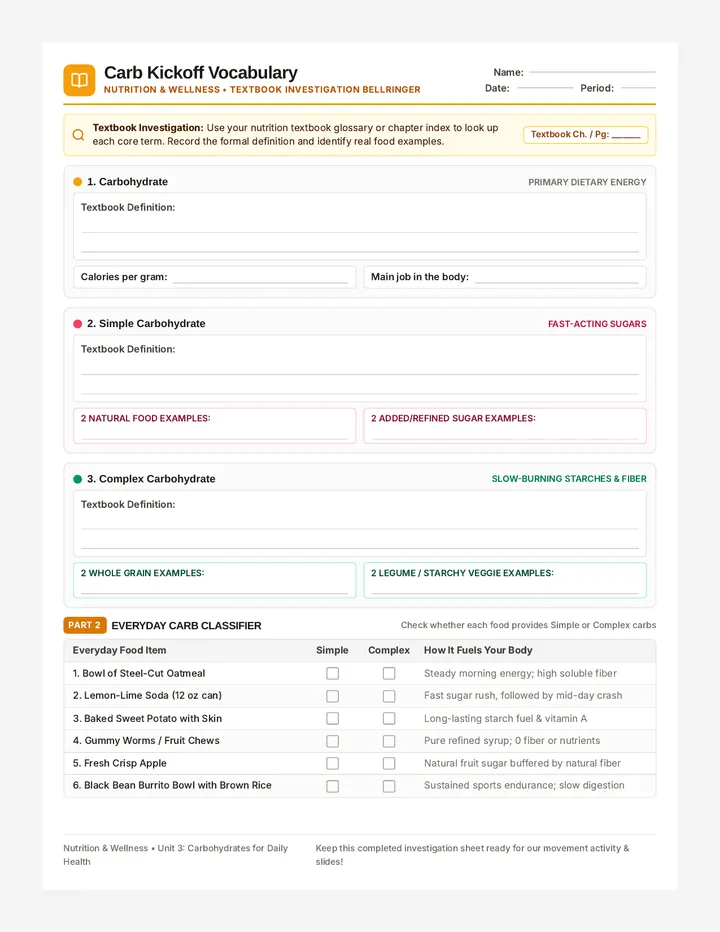
Carb Kickoff Vocabulary Worksheet

Smart Fuel Blueprint

A dynamic high school nutrition and wellness unit examining macronutrient fuel, protein synthesis, food label literacy, and practical meal strategies for athletic stamina and everyday focus.

J

Jennifer.Leber

7
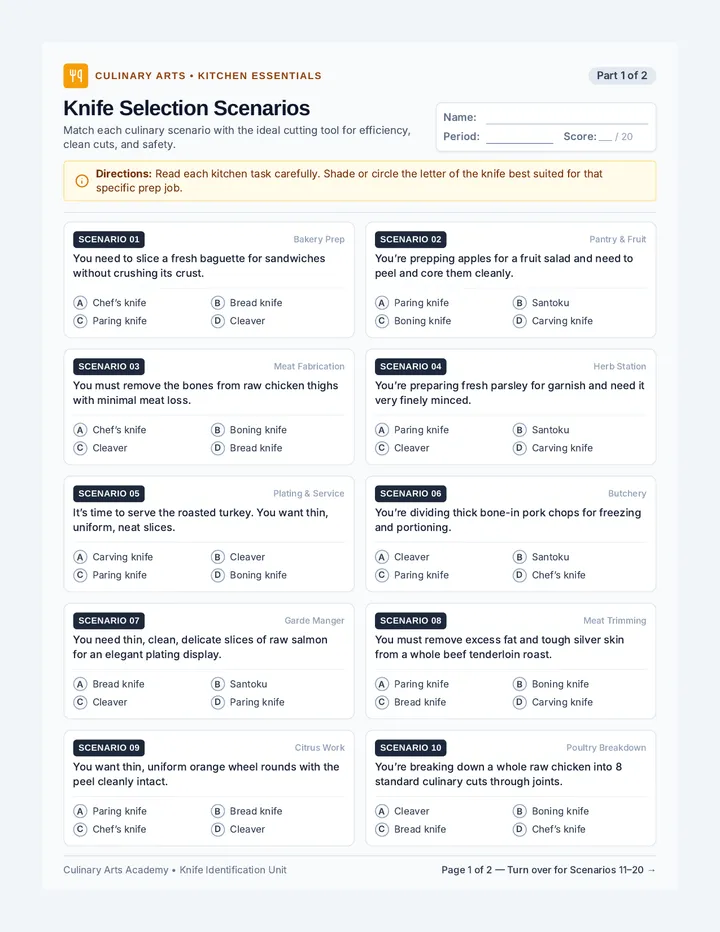
Knife Selection Scenarios Worksheet

Knife Mastery

A practical culinary arts lesson focusing on kitchen knife identification, proper tool selection for specific cutting tasks, and foundational kitchen safety.

B

Bonnie.Gomez

2
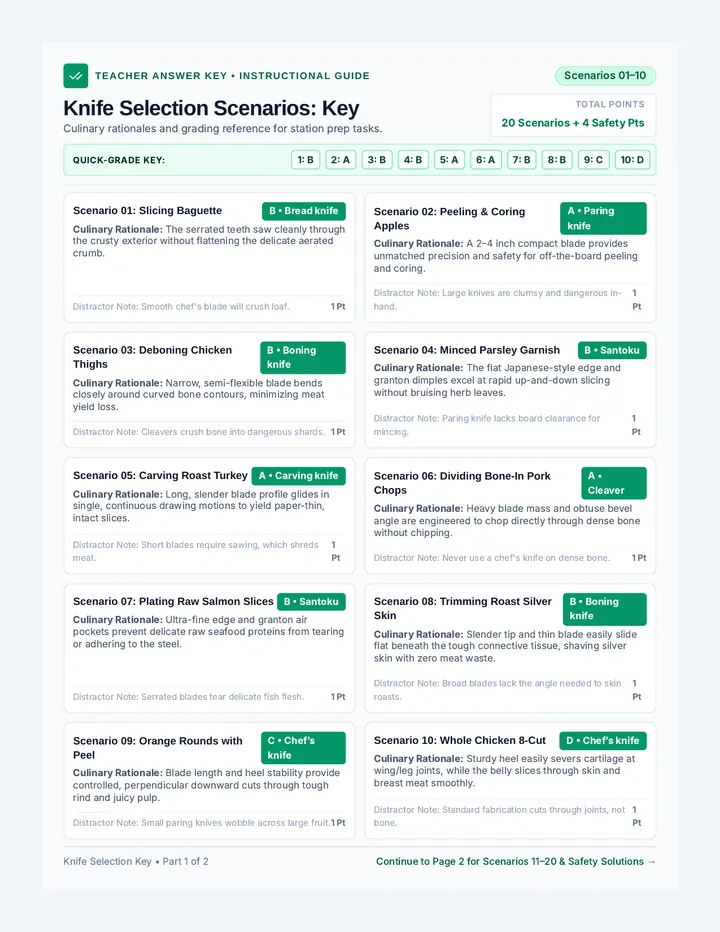
Knife Selection Answer Key

Knife Selection Answer Key

A comprehensive two-page teacher answer key and instructional guide for the Knife Selection Scenarios Worksheet, including quick-scan grading matrices, culinary rationales for every item, and model safety responses.

B

Bonnie.Gomez

Day 1 Foundations Worksheet

Carb Masters Nutrition

A comprehensive 4-day nutrition curriculum exploring dietary carbohydrates, digestion mechanics, fiber benefits, insulin homeostasis, and glycemic meal planning.

J

Jennifer.Leber

16
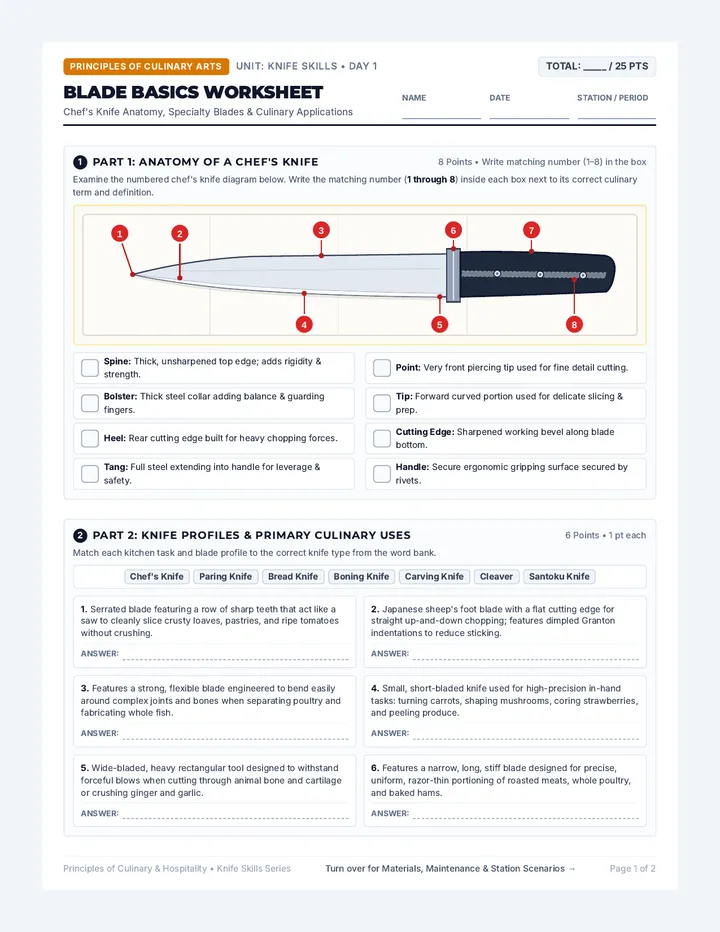
Blade Basics Worksheet

Knife Skills Fundamentals

An introductory culinary arts lesson exploring chef's knife anatomy, specialty blade types, blade manufacturing methods, edge maintenance, and kitchen safety.

B

Bonnie.Gomez

2
Knife Selection Scenarios Worksheet

Knife Selection Scenarios Worksheet

A two-page culinary arts scenario worksheet where students identify the correct knife for twenty real-world kitchen tasks and reflect on knife safety.

B

Bonnie.Gomez

Stretching and Mobility Slides

Zen and Standing Yoga Series

A comprehensive yoga series featuring a deep-dive chair yoga masterclass with guided videos and a follow-up standing flow session for beginners. Designed to build both mental calm and physical strength.

KB

Kelly Brown

4
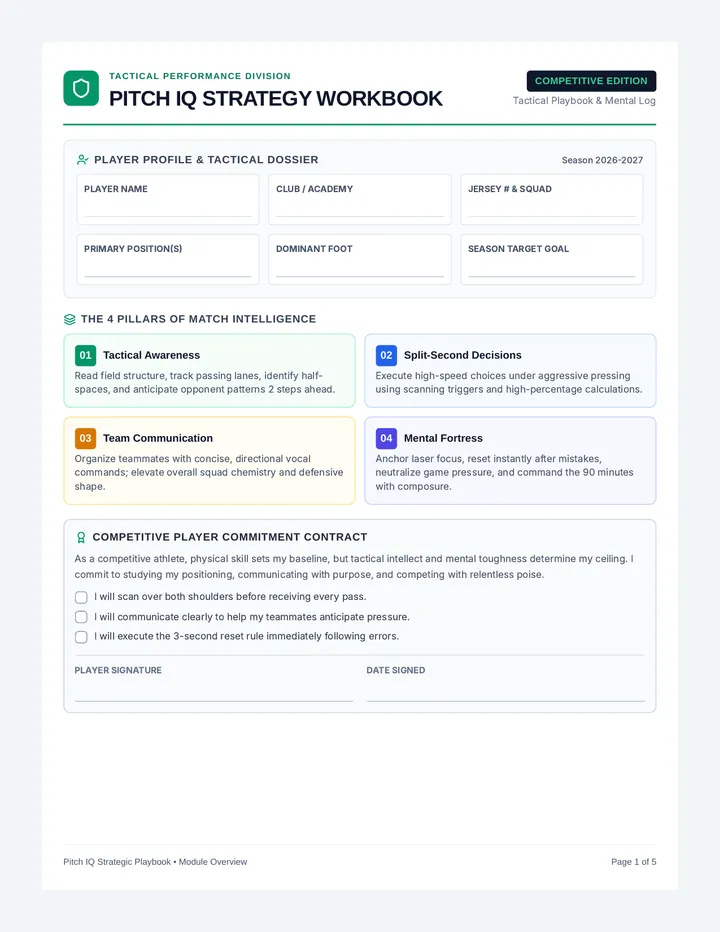
Pitch IQ Strategy Workbook

Pitch IQ Mastery

A comprehensive tactical and mental performance module for competitive youth soccer players, featuring in-depth strategy workbooks and field-ready tactical drill sheets.

T

temetropolis

2
Blade Basics Answer Key

Blade Basics Answer Key

A complete teacher answer key and grading guide for the 25-point Blade Basics Worksheet, featuring full solutions, diagram numbers, and scoring criteria.

B

Bonnie.Gomez

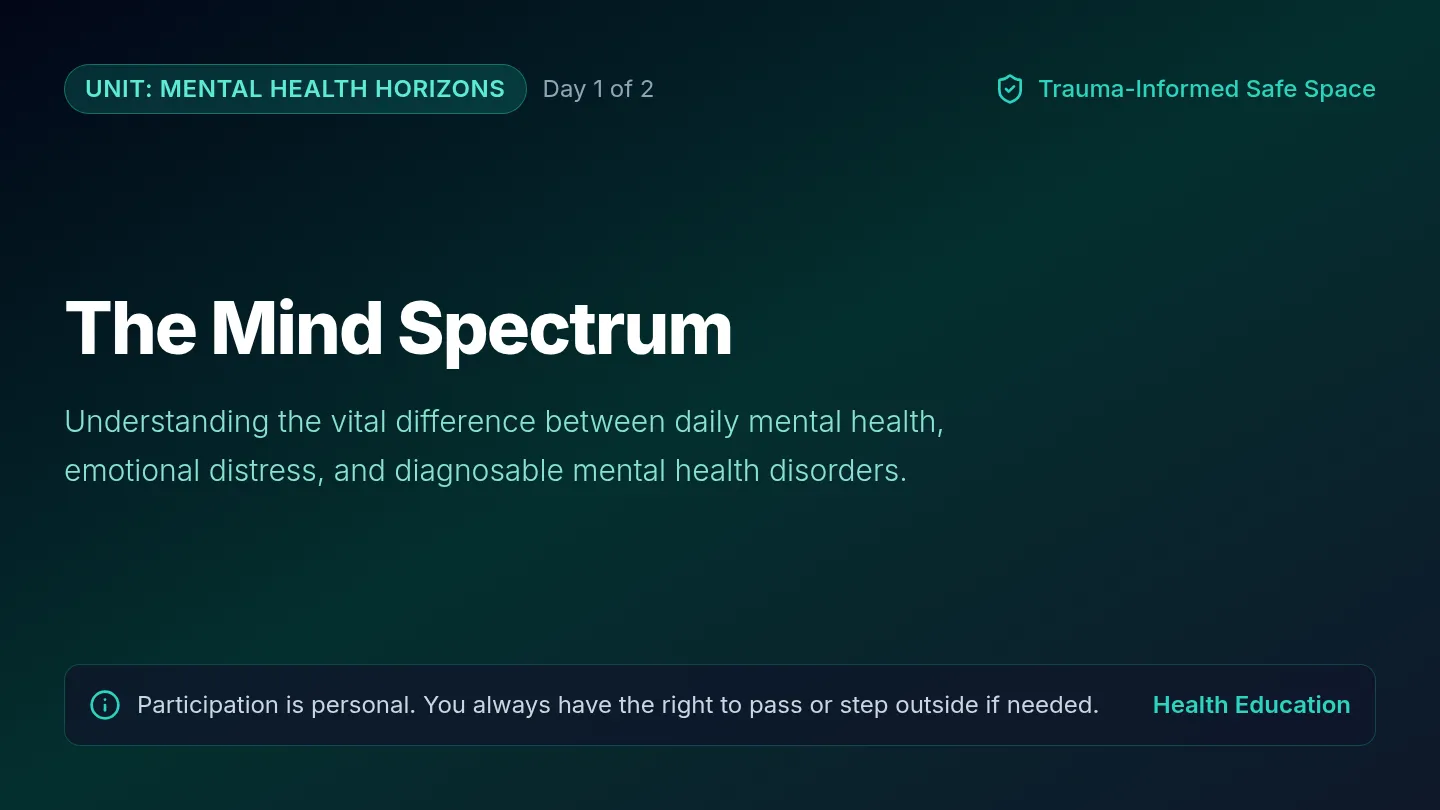
Mind Spectrum Slides

Mental Health Horizons

A two-day high school health sequence exploring the distinction between mental health and mental health disorders, destigmatizing conditions, and examining major disorder categories through a trauma-informed lens.

KJ

Katia Jones

6
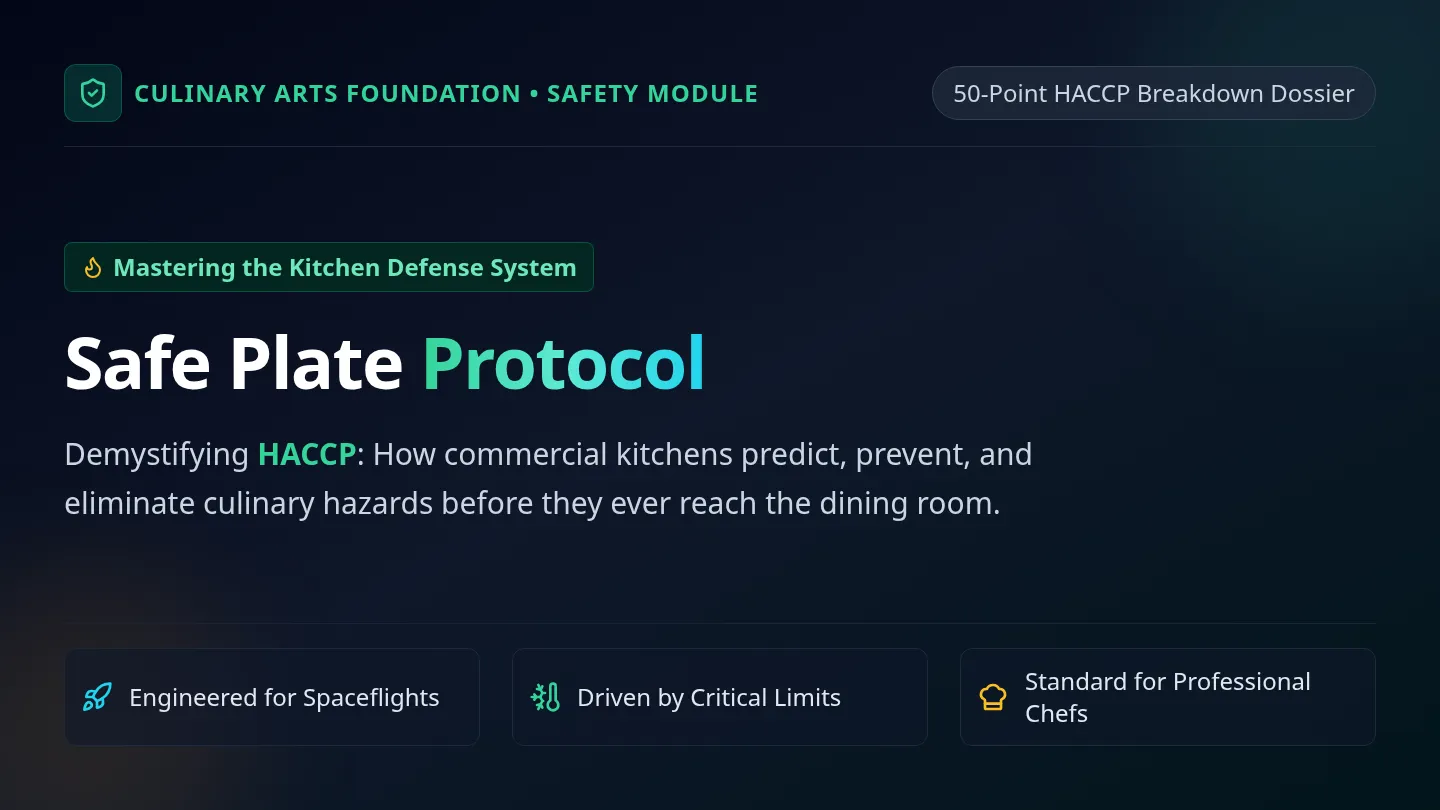
Safe Plate Protocol Slides

Safe Plate Protocol

A foundational culinary arts lesson introducing freshman students to Hazard Analysis Critical Control Point (HACCP) principles. Through a visual slide presentation and an investigative research worksheet, students examine kitchen safety protocols, hazard categories, and critical control points.

B

Bonnie.Gomez

2
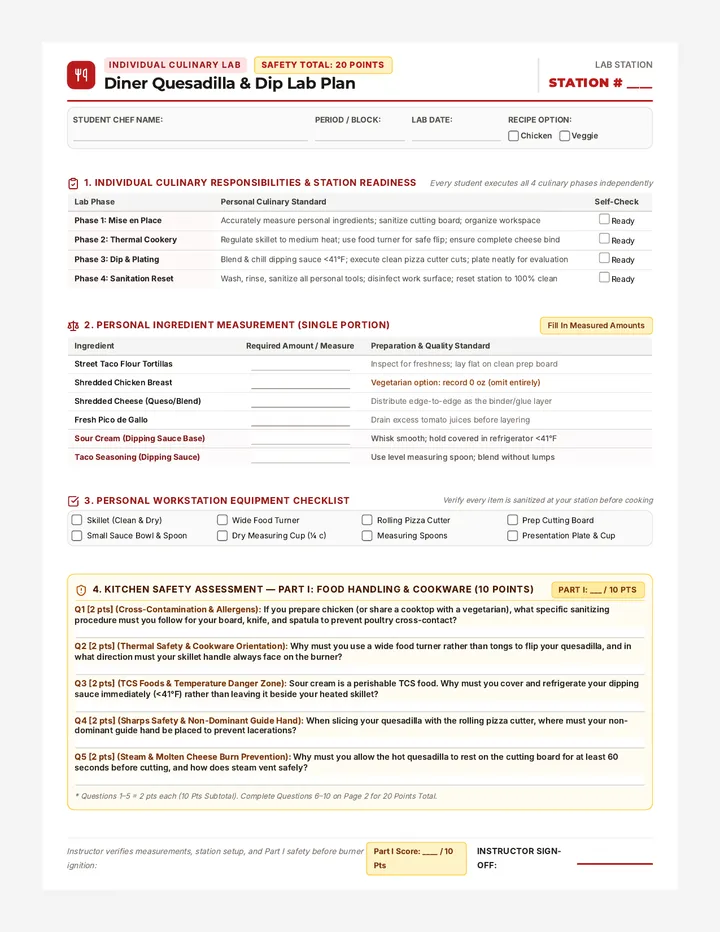
Diner Quesadilla Lab Sheet

Diner Quesadilla Lab Sheet

An individualized 2-page culinary arts lab planning sheet for American Diner Style Chicken and Cheese Quesadillas and Chilled Dipping Sauce, updated to replace the instructor evaluation rubric with 10 comprehensive kitchen safety questions worth 20 points total.

B

Bonnie.Gomez