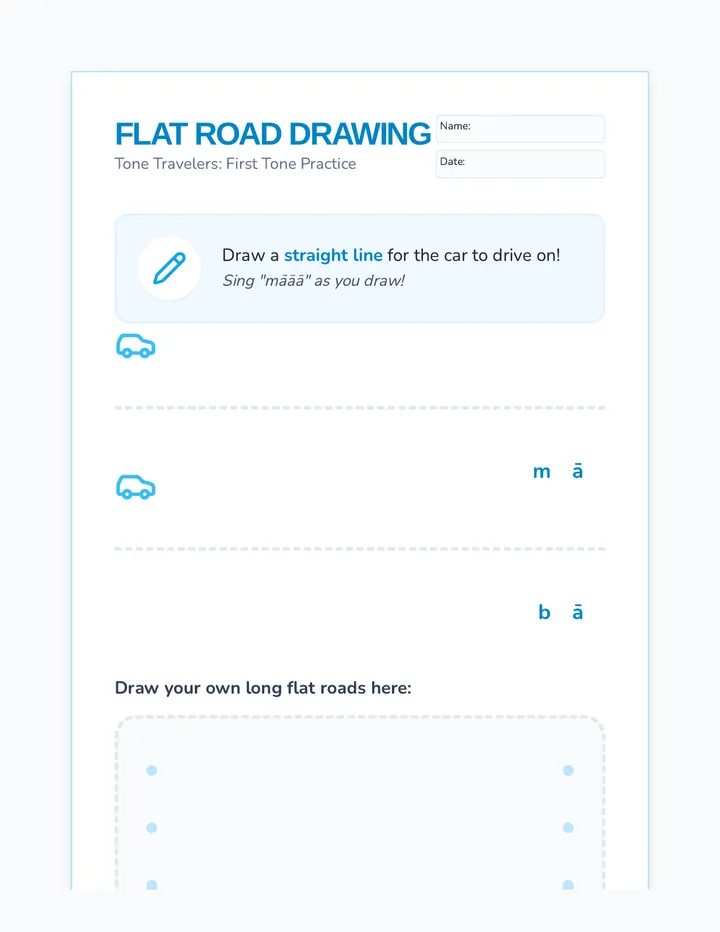
Four basic pitch contours and the neutral tone in Mandarin Chinese. Focuses on Pinyin tone marks, auditory differentiation, and pronunciation techniques to distinguish word meanings.
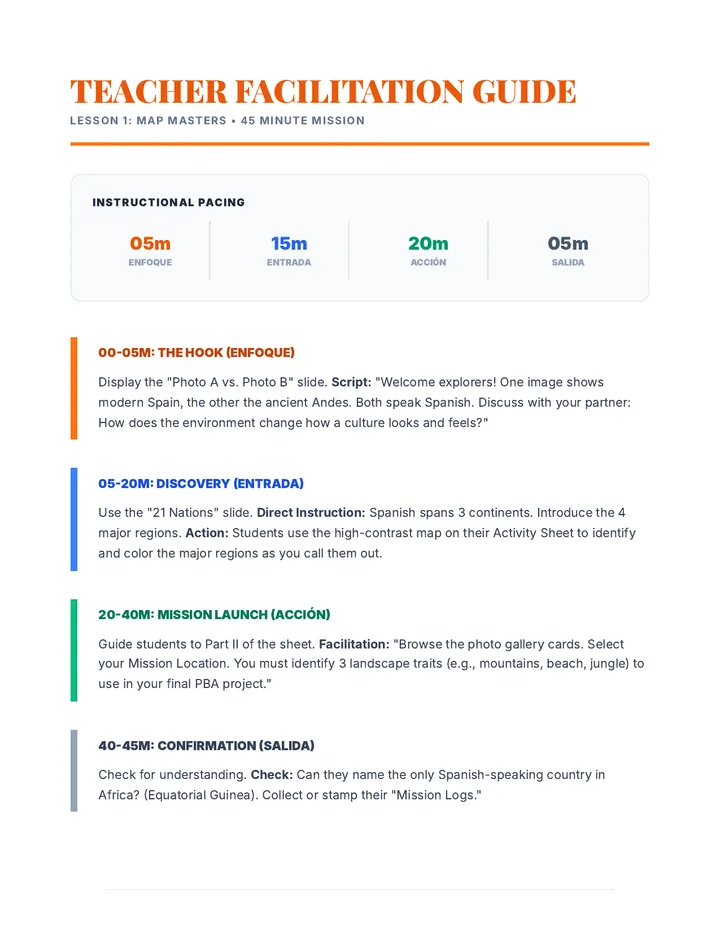
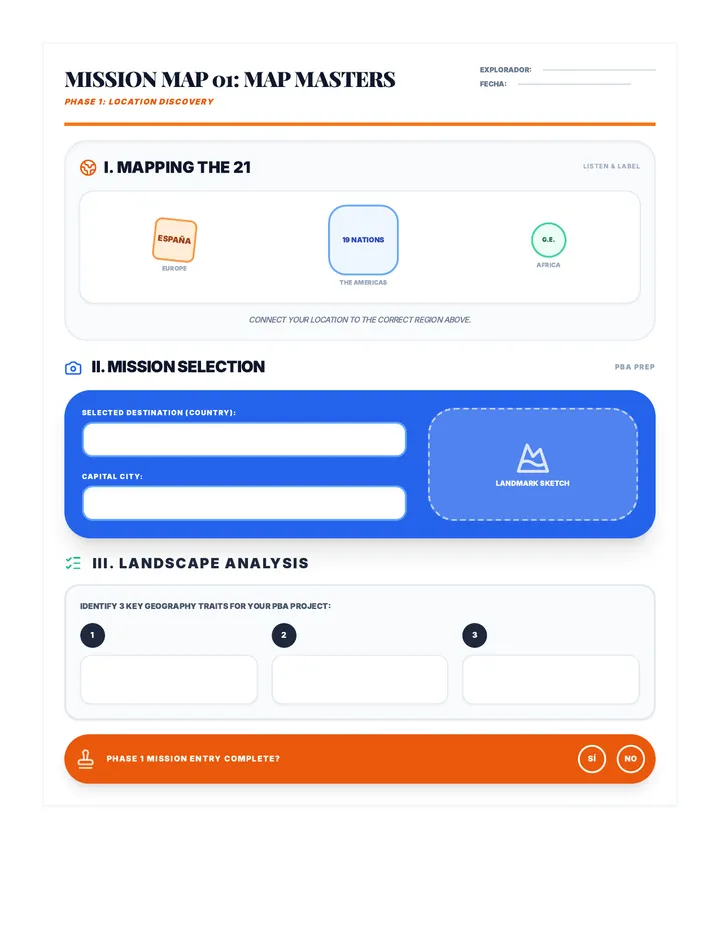
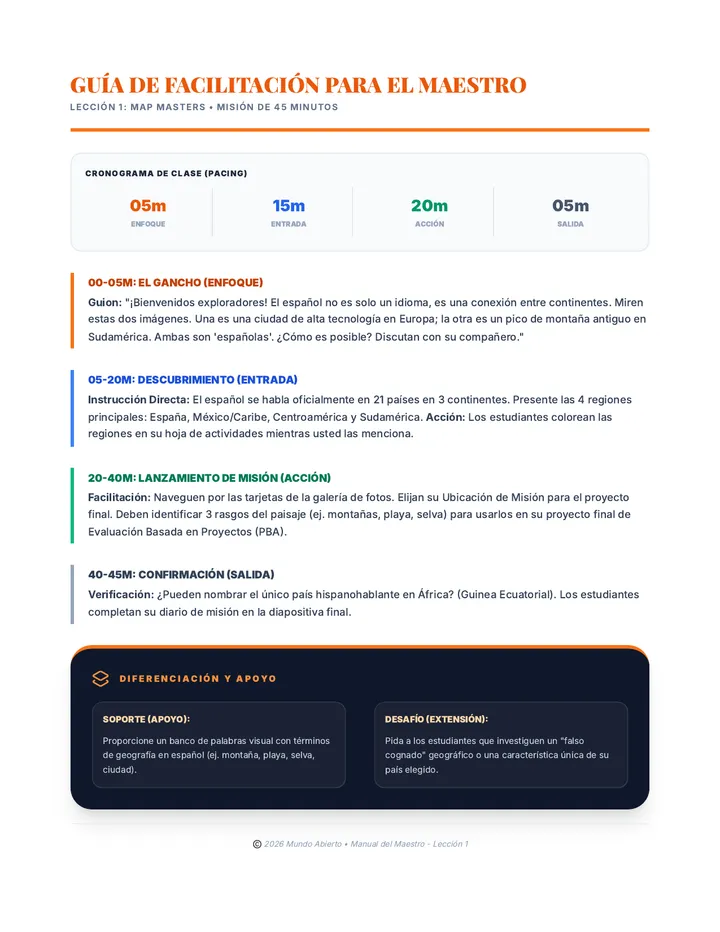
A comprehensive introductory unit for 8th-grade Spanish, focusing on global geography, essential communication, and rich cultural traditions through a 'Cultural Passport' lens.
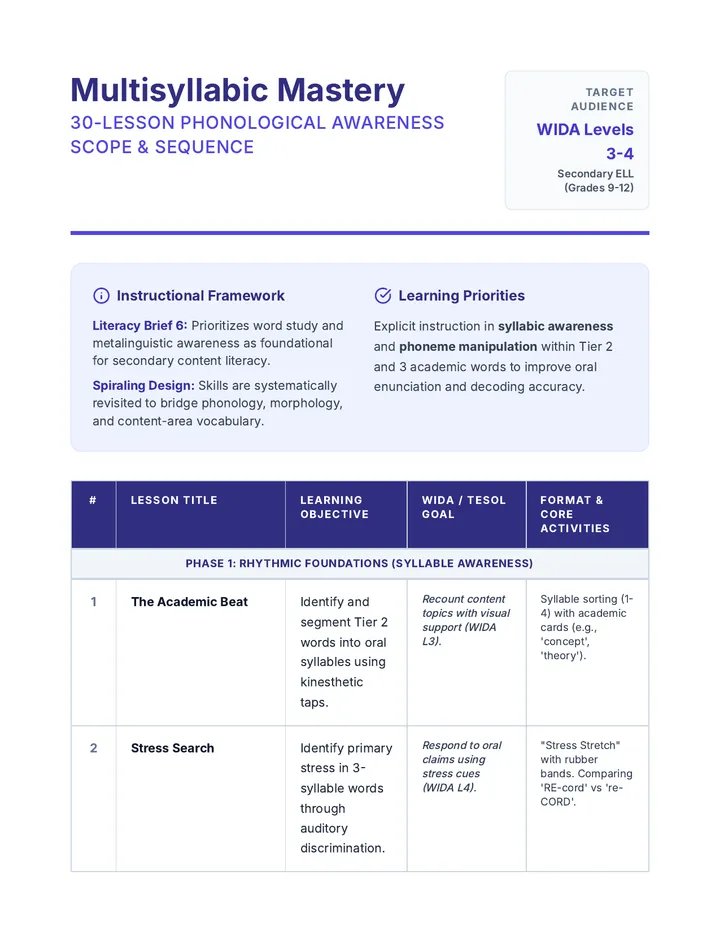
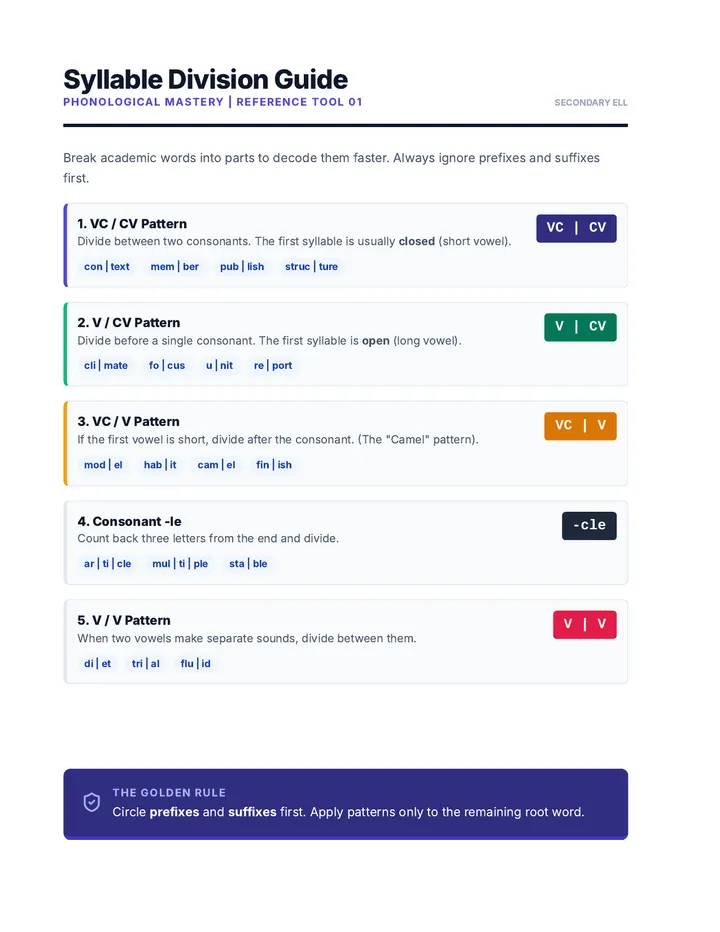
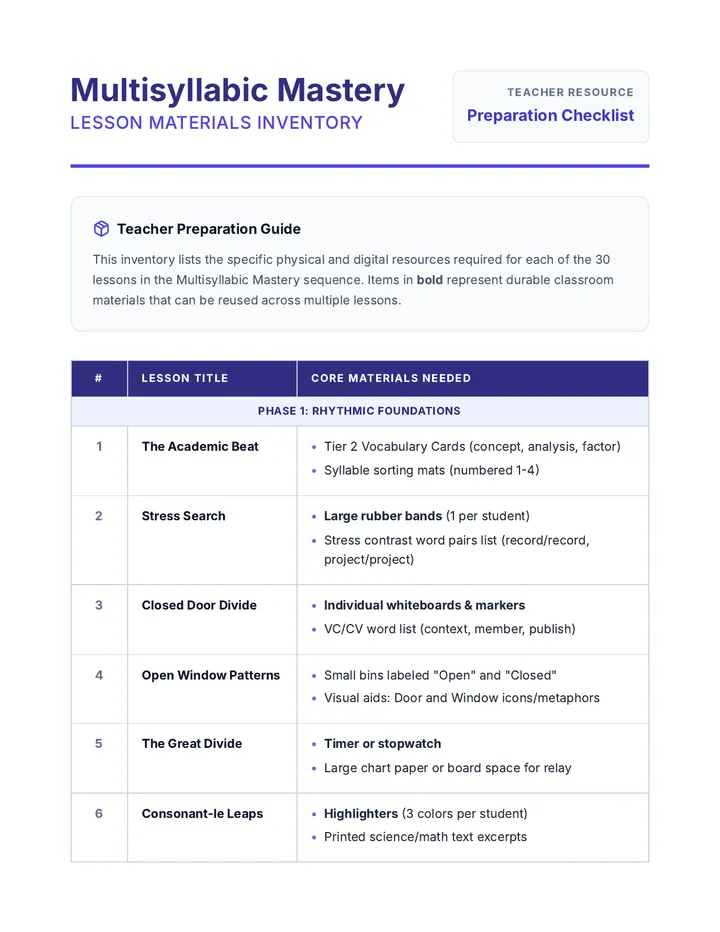
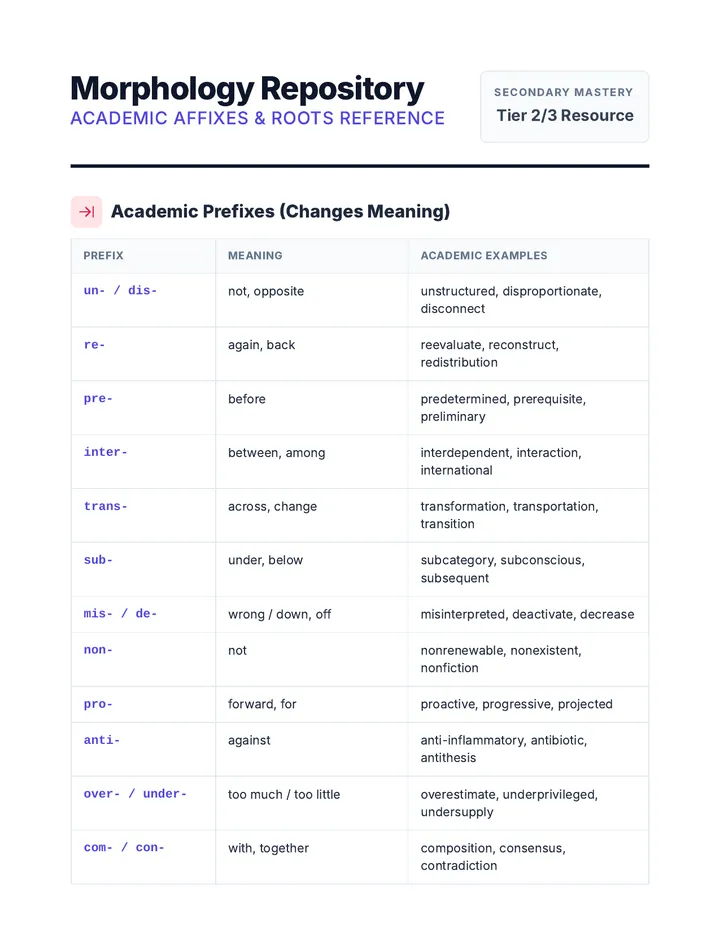
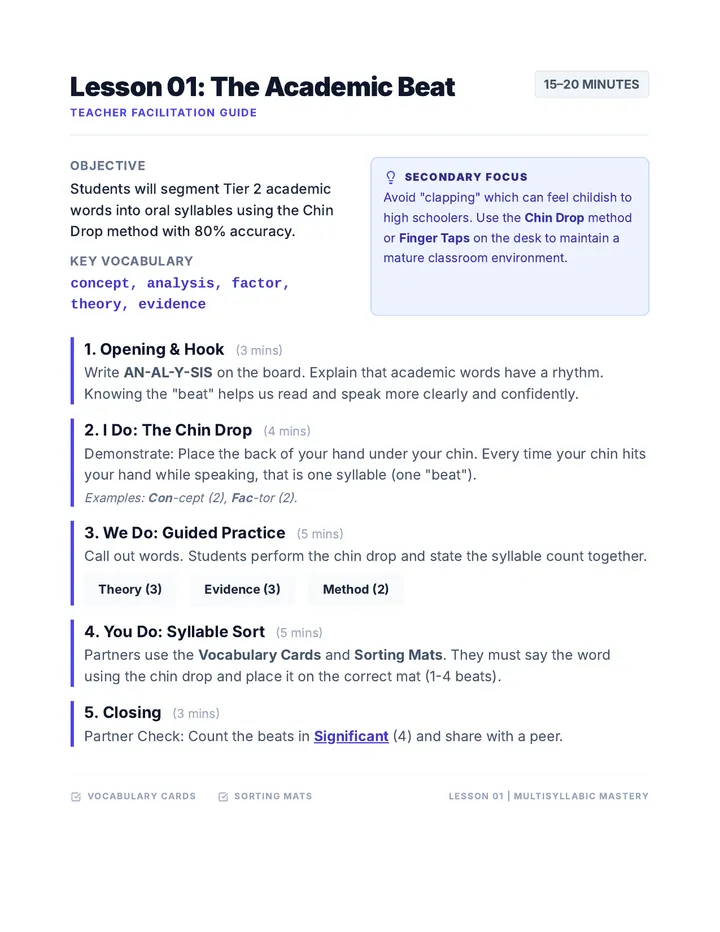
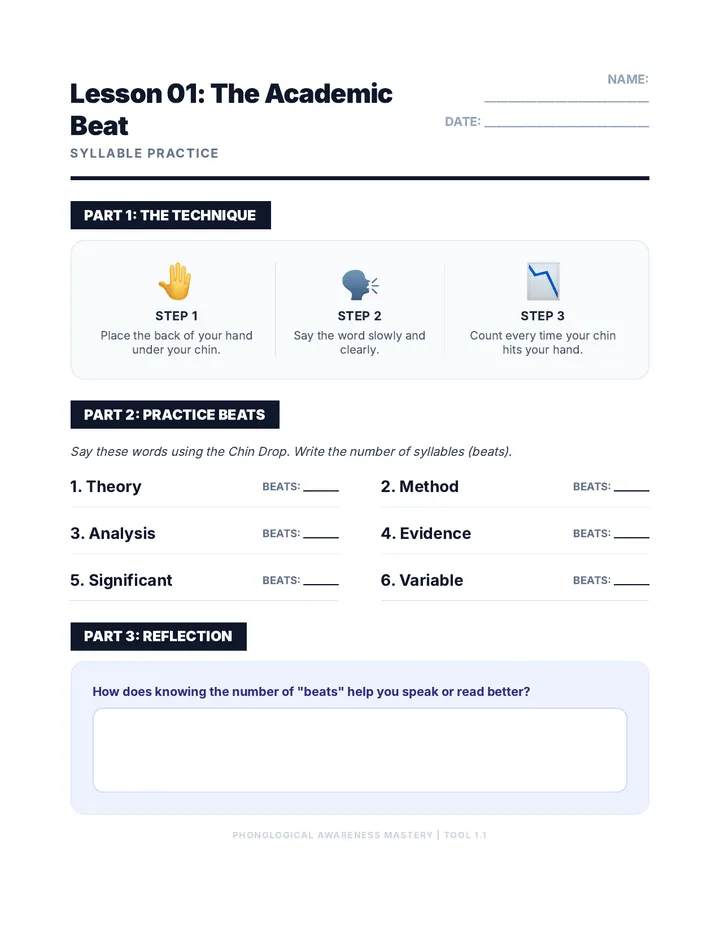
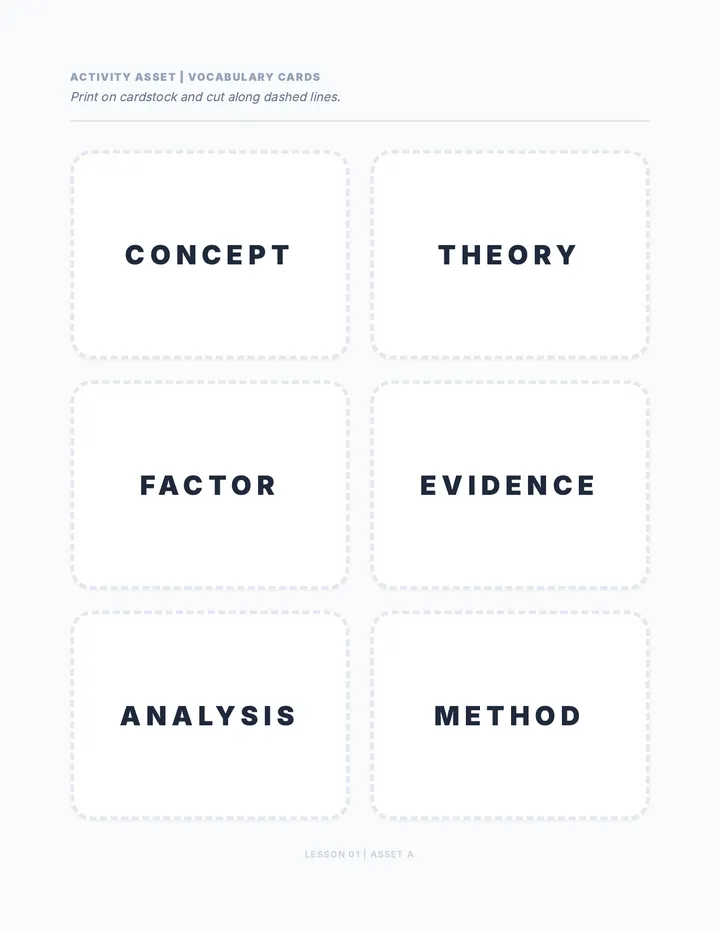
A comprehensive program for teaching phonological awareness to secondary ELLs, focusing on multisyllabic academic vocabulary and phoneme manipulation.
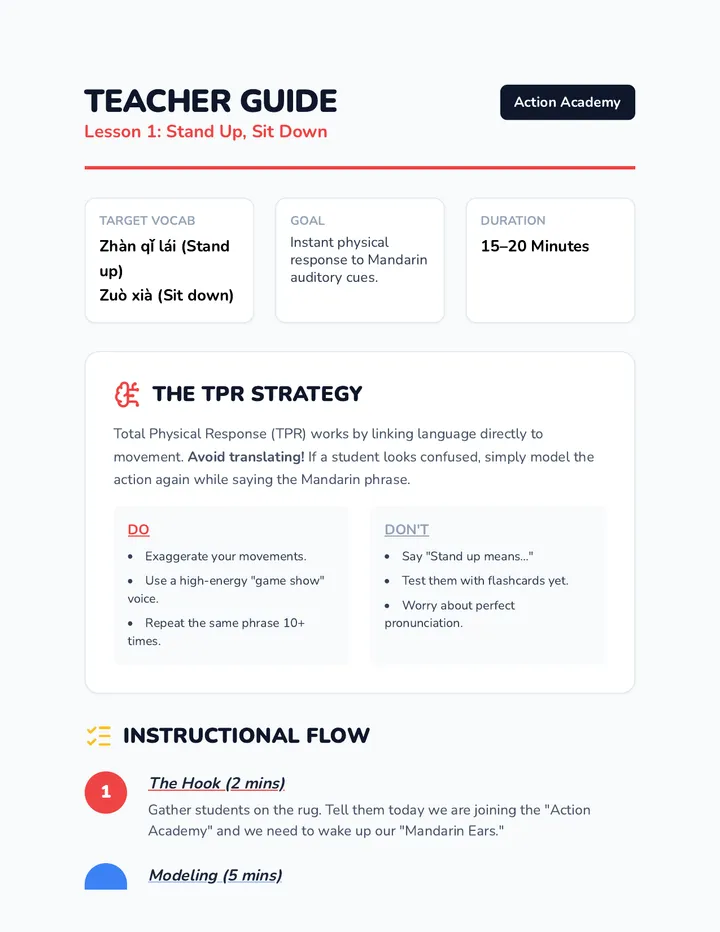
A high-energy Mandarin Chinese sequence for Pre-K students using the Total Physical Response (TPR) method. Students learn to respond to physical commands and action verbs through games and movement, building direct meaning without translation.
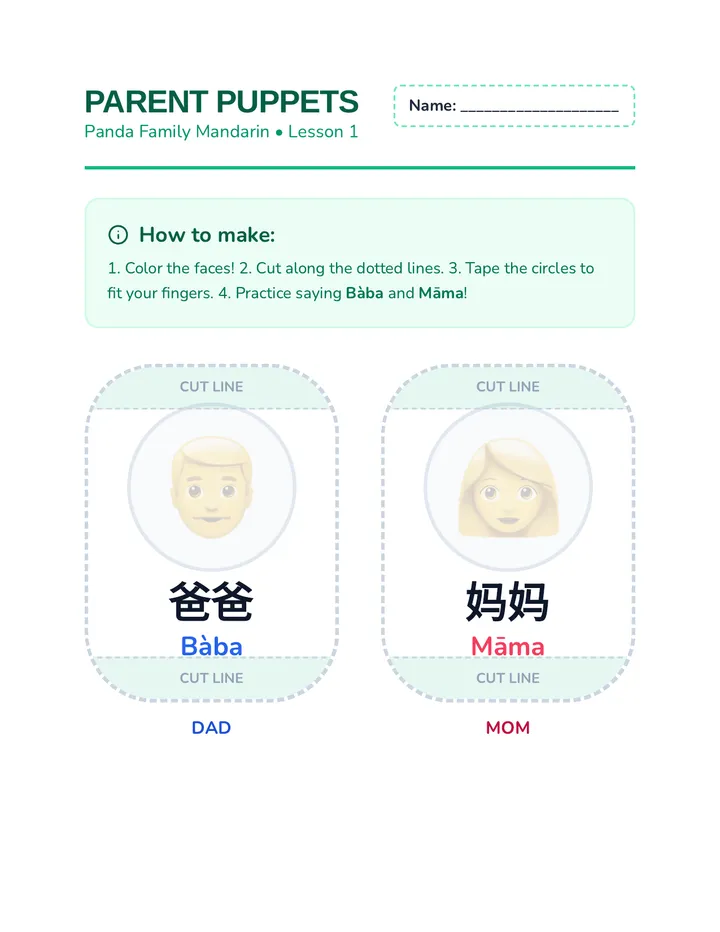
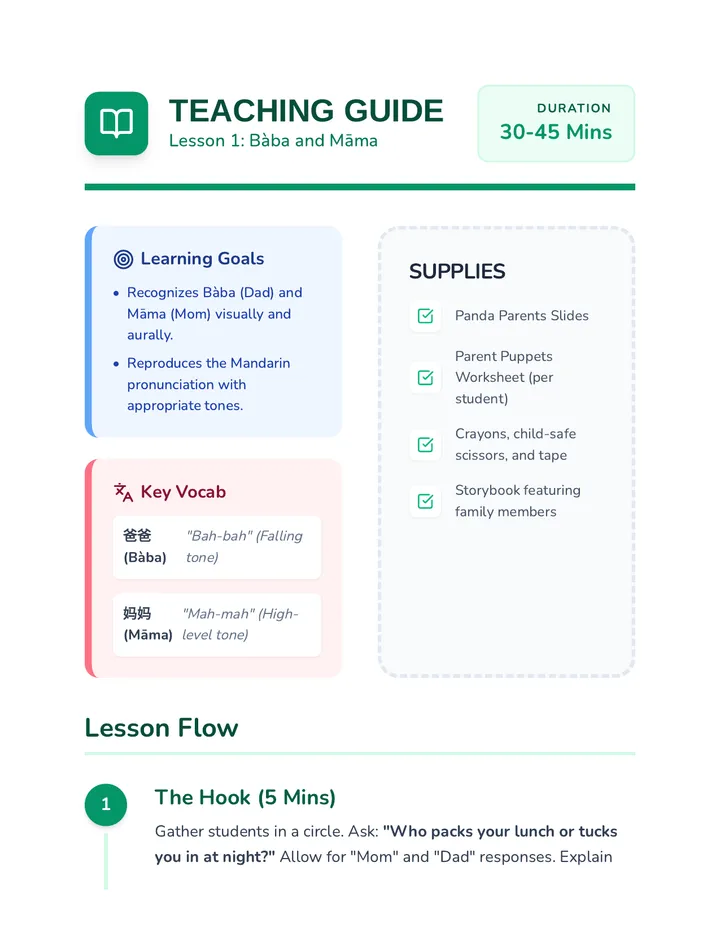
A foundational Mandarin Chinese sequence for Pre-K students focused on identifying family members. Students learn vocabulary for parents, siblings, and grandparents through interactive games, songs, and visual inquiry.
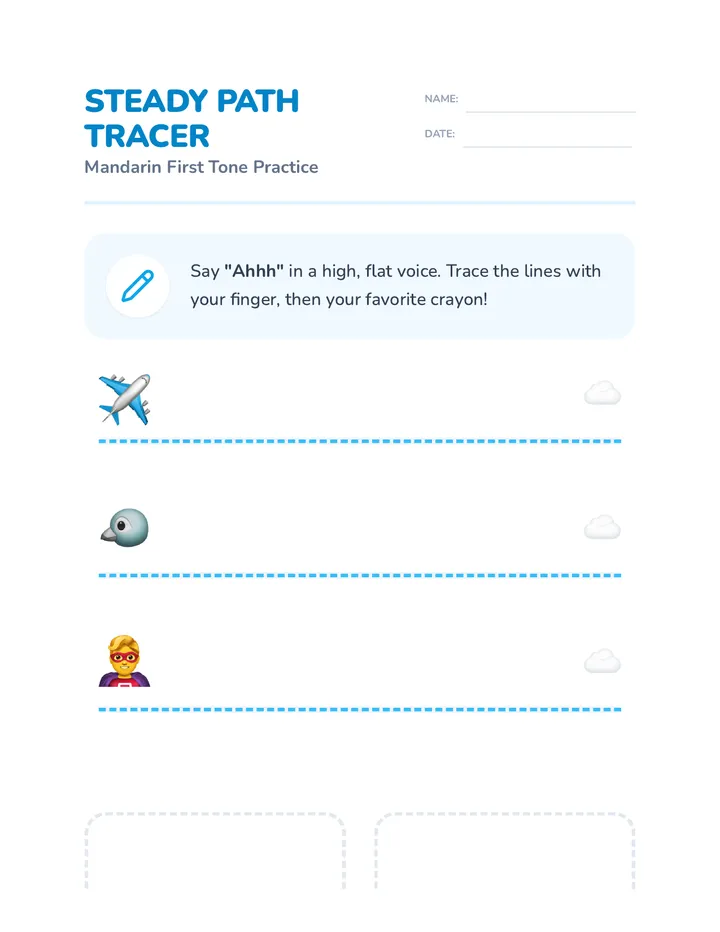
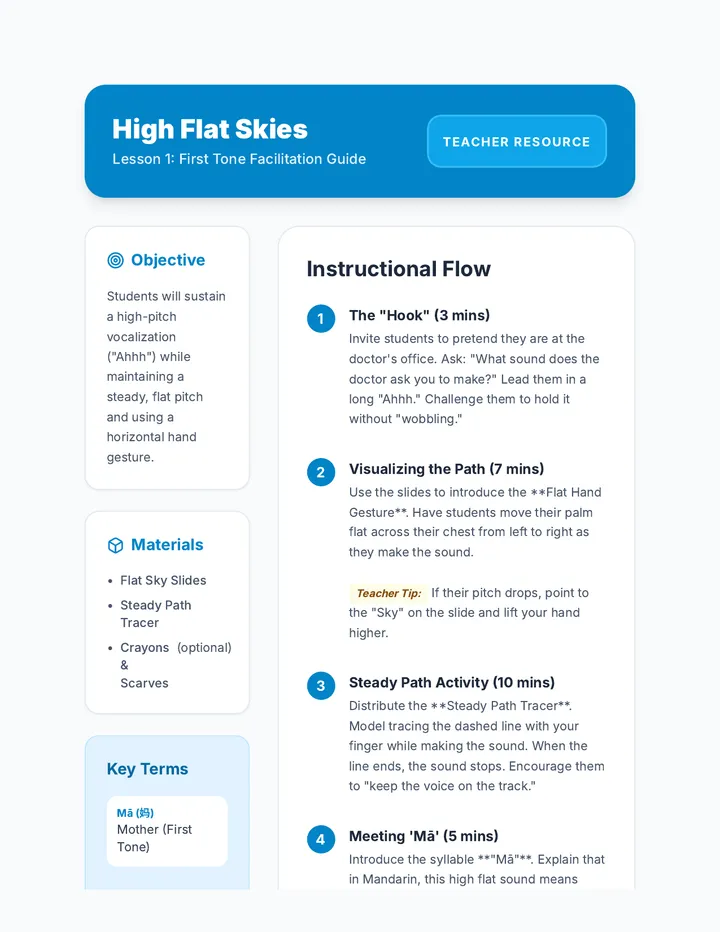
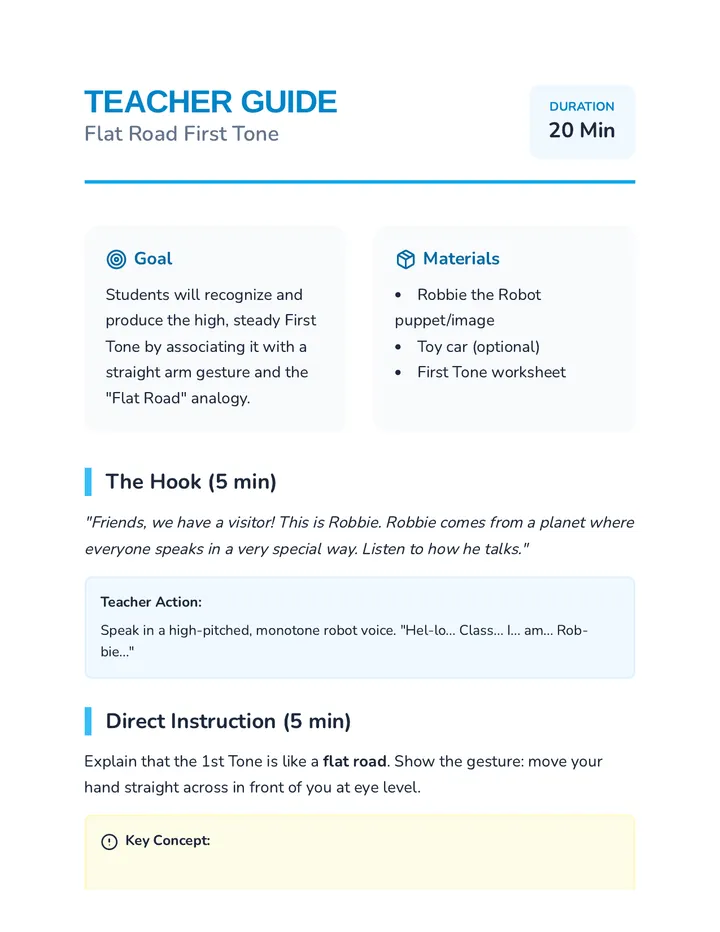
A foundational sequence for Pre-K learners to explore the four tones of Mandarin Chinese through auditory play, physical movement, and vocal exploration. Students learn to associate pitch changes with meaning using relatable sounds like questioning 'Huh?' or firm 'No!' gestures.
A physical and auditory introduction to the four Mandarin tones for Pre-K learners, using movement, animal analogies, and games to make pitch concrete.
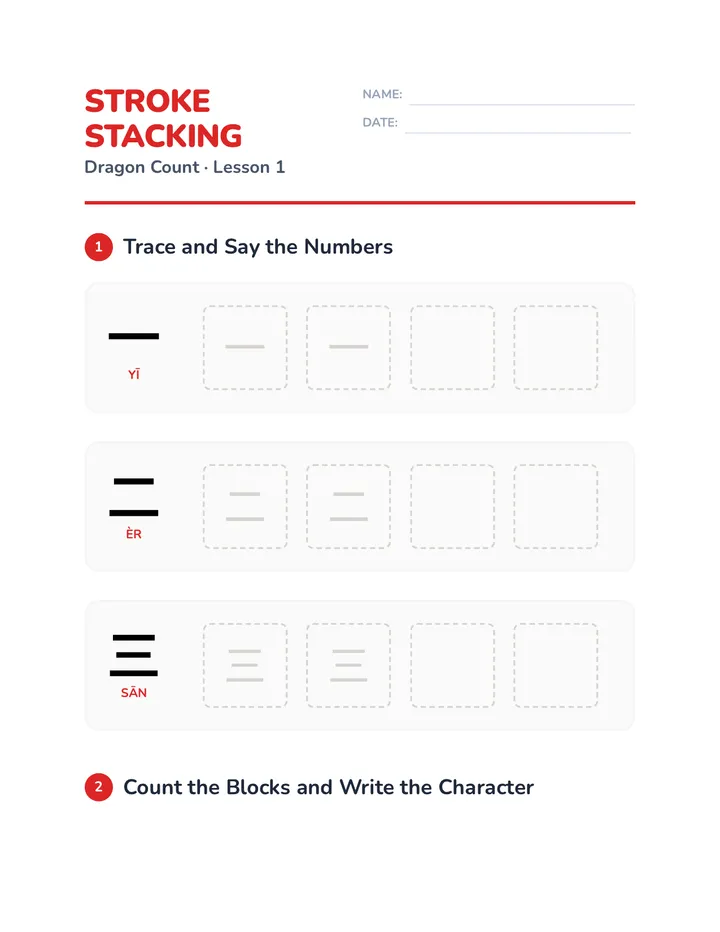
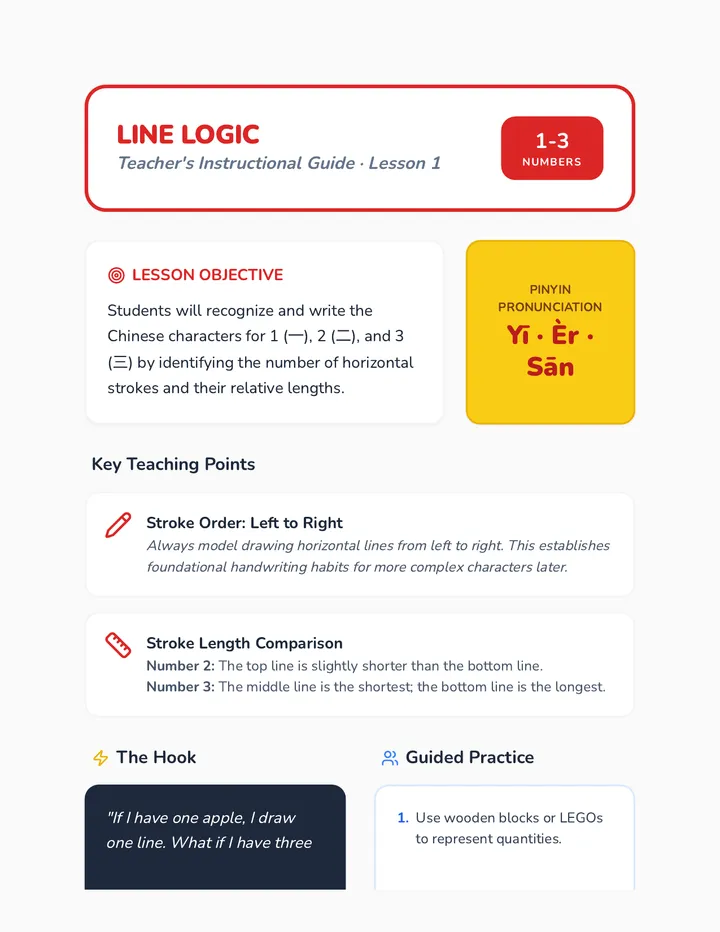
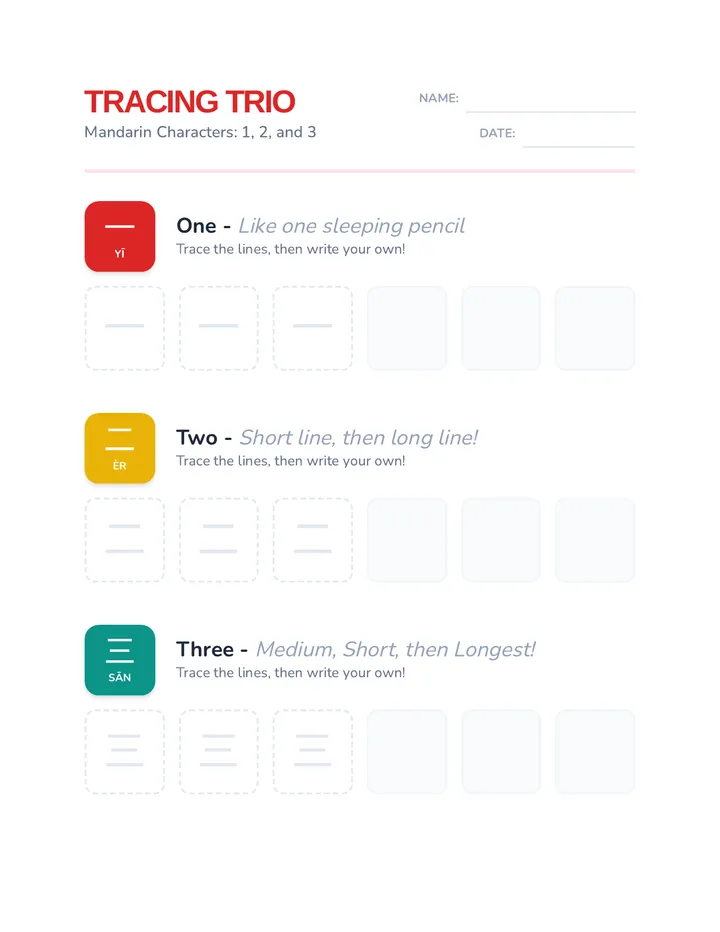
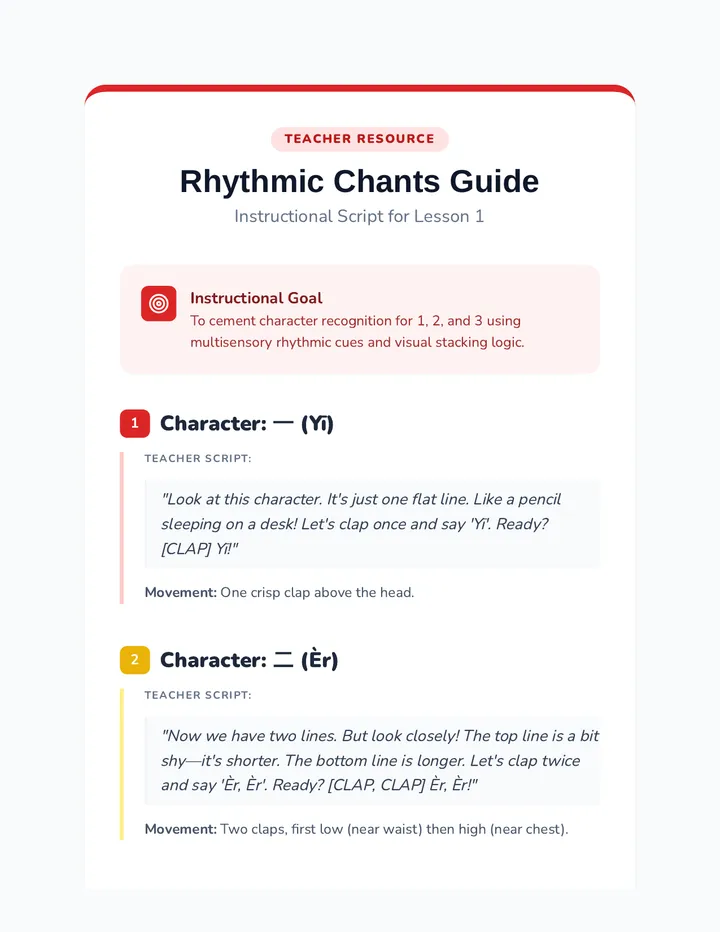
This sequence introduces Kindergarten students to Mandarin Chinese characters for numbers 1-10 through visual mnemonics, hand gestures, and playful simulations. Students progress from simple horizontal lines to complex symbols, culminating in a classroom shop and Bingo game to reinforce character recognition.
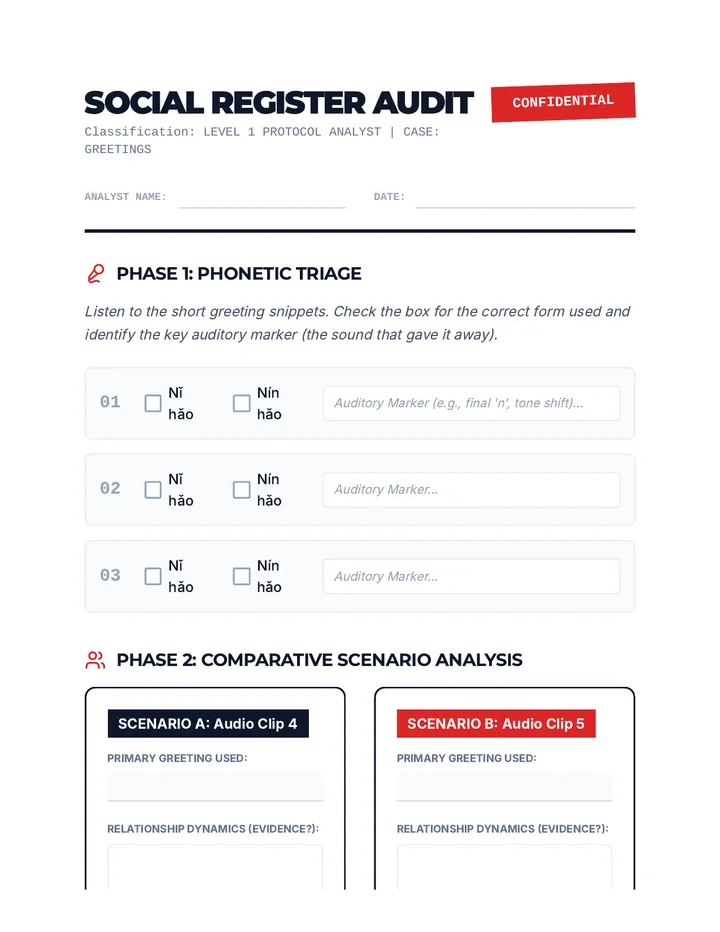
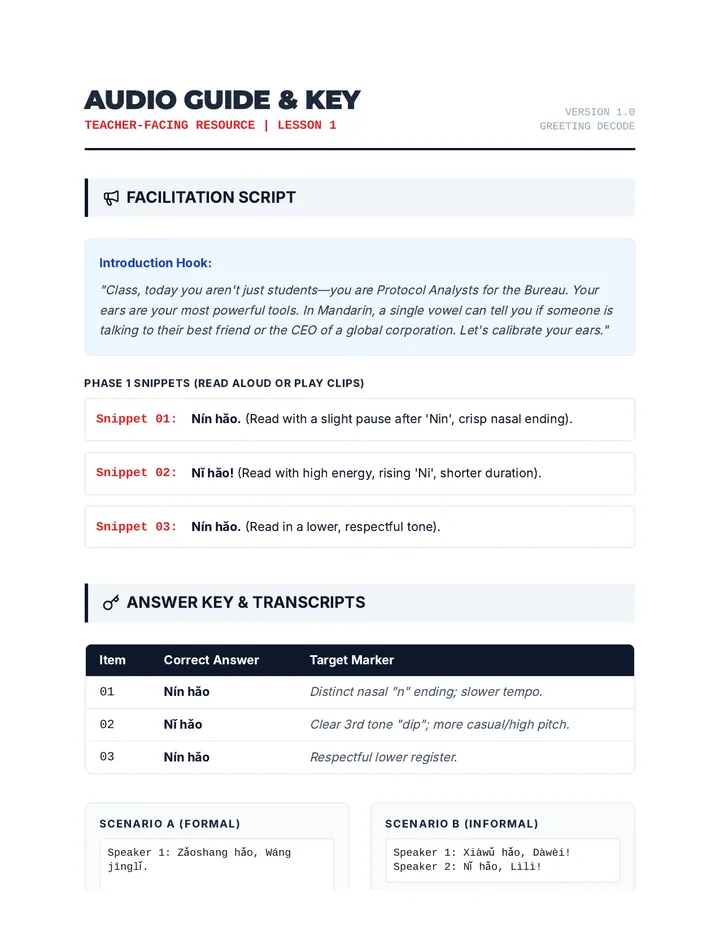
A high-stakes immersive sequence where 12th-grade students act as 'Protocol Analysts' to master Mandarin greetings and introductions. Students progress from basic register recognition to complex social deduction through simulated audio audits and role-play analysis.
A foundational sequence for 12th-grade Mandarin students focusing on the auditory discrimination of the four tones, pinyin initials and finals, and tone sandhi rules. Students move from isolated sound recognition to full word transcription and auditory assessments.
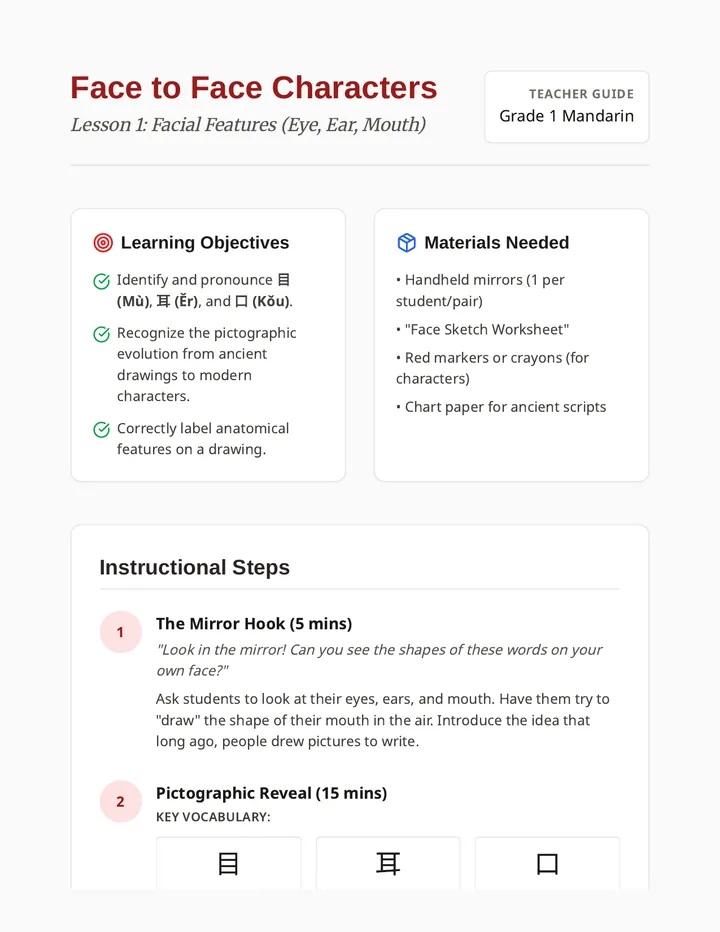
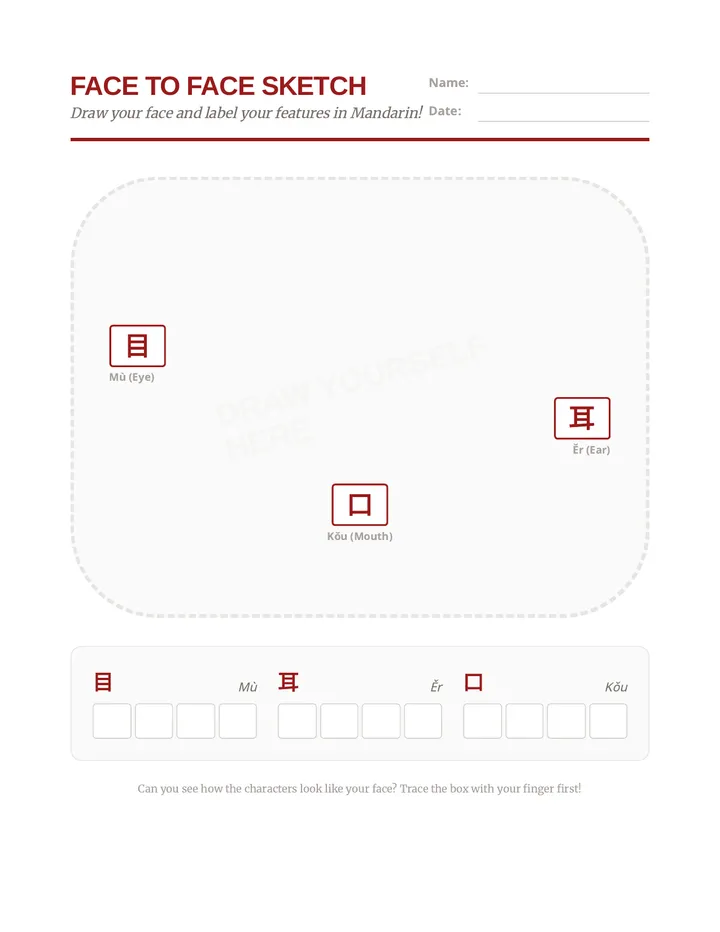
A physical-first Mandarin sequence for 1st graders focusing on body parts and action characters. Students use Total Physical Response (TPR) and pictographic analysis to connect written Hanzi to their own bodies and movements.
A vibrant 5-lesson sequence teaching 1st-grade students Mandarin numerals 1-10 through rhythmic movement, tactile playdough modeling, traditional hand signs, and a culminating marketplace simulation.
A 5-lesson sequence for 4th grade students to learn Mandarin Chinese characters related to classroom objects, furniture, spatial locations, and the concept of measure words, culminating in a classroom scavenger hunt.