Fuel Factor Slides
Grade 6 Health & Wellness
Module 3 • Lesson 1
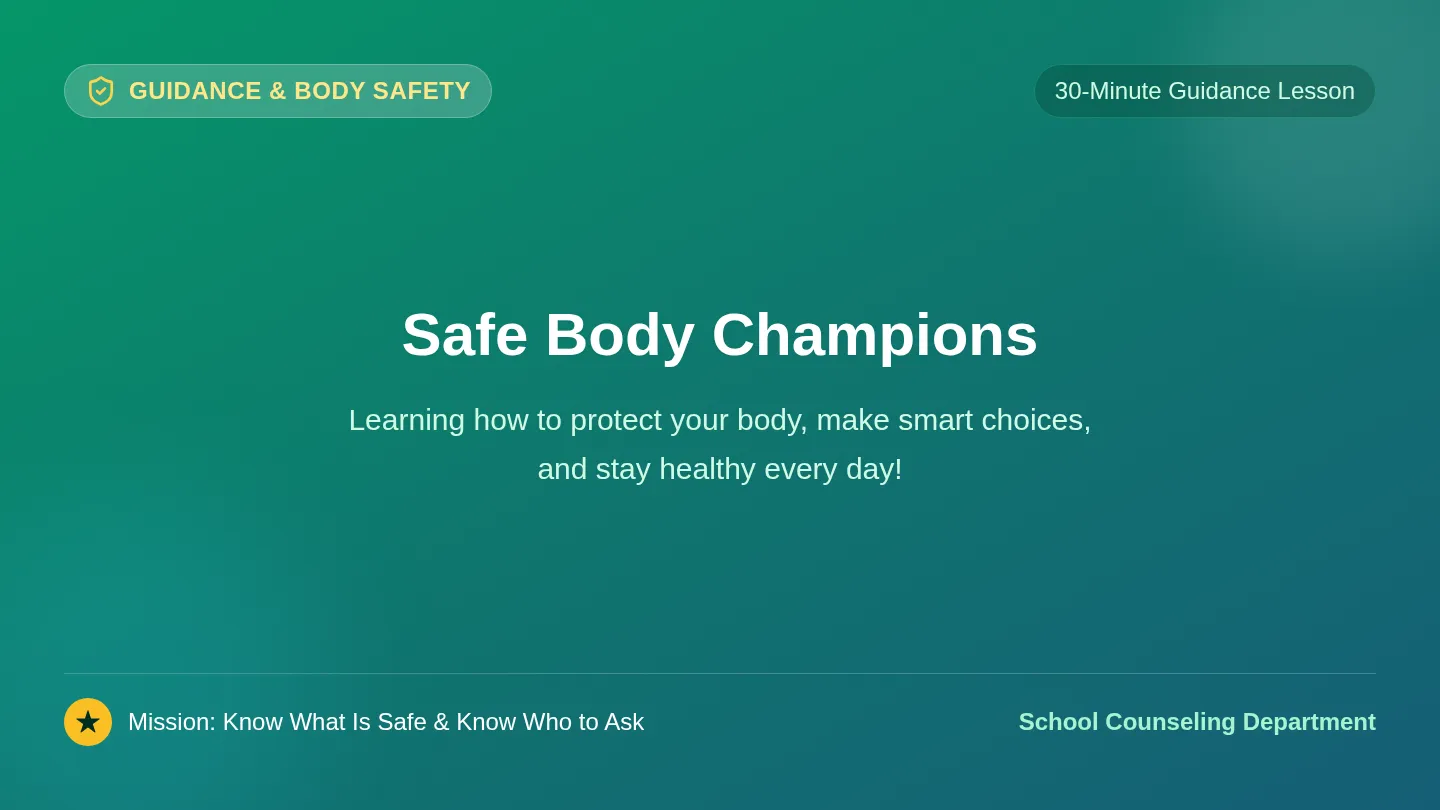
Fuel Factor: Power Your Plate
Discover the five essential food groups, unlock the science of nutrients, and learn how every meal fuels your brain, muscles, and growth.
5 Food Groups
Vital Nutrients
Balanced Meals
Meal Makeover
Warm-Up Question Think • Pair • Share
If your body was a high-performance vehicle, what kind of fuel did you load into it this morning?
Premium Fuel
Nutrient-rich foods deliver steady energy, sharp concentration in class, and lasting muscle stamina.
Quick Burners
Sugary snacks and refined carbs cause quick energy spikes followed by midday crashes and brain fog.
Key Concept: Nutrients are the chemical compounds in food that keep cells repairing, growing, and thriving.
Overview
The Five Core Food Groups
Every group delivers a specific combination of essential nutrients.
Fruits
Vitamins & Fiber
Apples, Berries, Oranges
Vegetables
Minerals & Immunity
Broccoli, Spinach, Peppers
Grains
Complex Energy
Brown Rice, Oats, Quinoa
Protein
Growth & Repair
Beans, Eggs, Fish, Chicken
Dairy / Alt
Strong Bones
Milk, Yogurt, Fortified Soy
No single food group has everything! Your body requires teamwork between all five.
The Powerhouse Duo
Fruits & Vegetables
Fiber Vitamins A & C
Immune Armor
Vitamin C (citrus, bell peppers) and Vitamin A (carrots, sweet potatoes) guard cells against sickness and protect eyesight.
Digestive Power
Dietary fiber keeps your gut healthy, stabilizes blood sugar, and provides smooth, long-lasting energy throughout classes.
Eat the Rainbow
Different colors indicate different protective phytonutrients. Red, dark green, orange, and purple foods protect different organs!
Plate Target: Fill half your plate with colorful fruits and vegetables at lunch and dinner!
Energy Engine
Grains: Whole vs. Refined
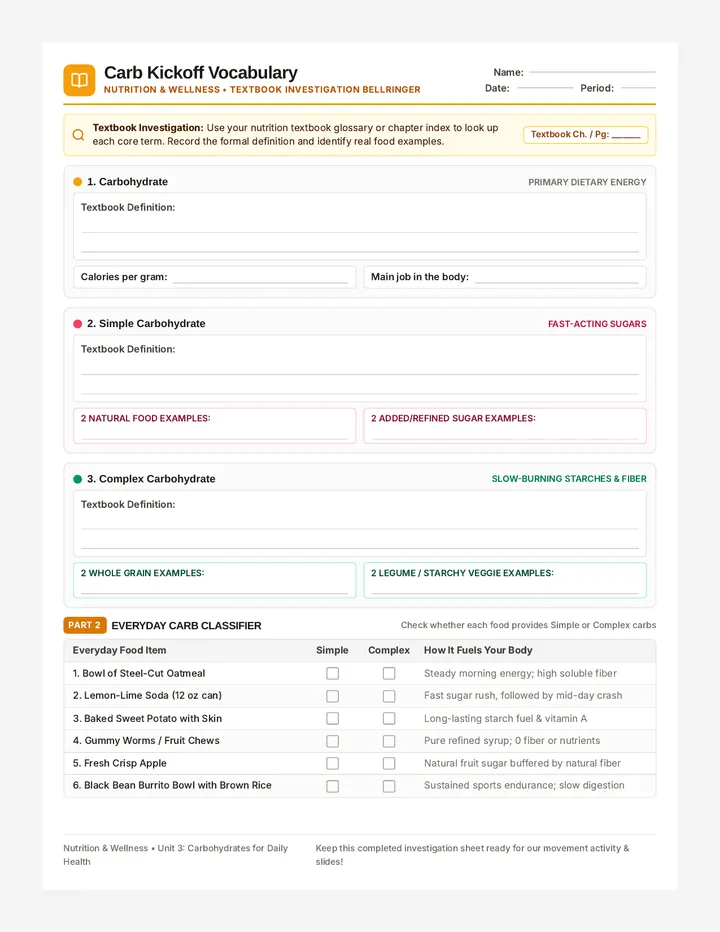
Carbohydrates are your brain and muscle system’s preferred source of energy.
Whole Grains (Pick Often)
Contains all 3 parts of the seed: Bran (fiber), Endosperm (carbs), and Germ (B-vitamins & minerals).
Top Examples:
100% whole wheat bread, brown rice, oatmeal, popcorn, quinoa.
Result: Slow, steady fuel that lasts until the final school bell.
Refined Grains (Limit)
Milled to remove the bran and germ. The fiber and natural nutrients are stripped away, leaving fast-digesting starch.
Common Examples:
White bread, white flour tortillas, sugary breakfast pastries, cookies.
Result: Quick sugar rush, then sudden fatigue and hunger.
Smart Rule: Make at least half of your daily grains whole grains!
Building Blocks
Protein: Growth & Muscle Repair
Amino Acids
What Does Protein Do?
- Builds and repairs muscle tissue after sports or gym class
- Forms hormones, antibodies, and healthy hair and nails
- Contains iron, which transports oxygen in your bloodstream
Where Can You Find It?
Animal Sources
Chicken, turkey, fish, eggs, lean beef, tuna
Plant Sources
Black beans, lentils, chickpeas, tofu, nuts & seeds
Pro-tip: Plant proteins also provide healthy dietary fiber!
Portion Tip: A standard protein serving is about one-quarter of your plate, roughly the size of your palm.
Skeletal Strength
Dairy & Fortified Alternatives
Calcium Vitamin D
Peak Bone Density
Middle school is the most critical window in life for building bone mass! 90% of adult bone strength is locked in by age 18.
The Vitamin D Key
Calcium cannot enter your bones alone—it requires Vitamin D to unlock absorption. Look for fortified milk or milk alternatives!
Non-Dairy Options
Lactose intolerant or plant-based? Fortified soy milk, almond milk, oat milk, or dark leafy greens deliver equal calcium.
Aim for low-fat or unsweetened varieties to gain bone-building minerals without added sugars.
Meal Architecture
The Balanced Plate Formula
Veggies Largest Share
Fruits Bright & Whole
Grains 1/4 Whole Grain
Protein 1/4 Lean Protein
Dairy / Alt
1
Half the Plate = Produce
Combine raw, steamed, or roasted veggies with fresh fruit.
2
Quarter Plate = Smart Carbs
Brown rice, whole wheat pasta, corn, or roasted sweet potato.
3
Quarter Plate = Quality Protein
Beans, grilled chicken, tofu, tuna, eggs, or nut butter.
Water is your best everyday hydration partner alongside every meal!
Hands-On Practice
The Meal Makeover Challenge
Case Study
Original Lunch:
Unbalanced
🍕 2 slices cheese pizza (white refined flour crust)
🥤 1 large regular soda (high added sugar)
🥔 1 bag barbecue potato chips (high sodium, low fiber)
Missing: Whole veggies, fresh fruit, long-lasting complex fiber. High crash potential by 1:30 PM!
Upgraded Makeover:
Balanced Fuel
🍕 1 slice veggie pizza on whole wheat pita + grilled chicken
🥗 Baby carrot sticks & cucumber slices with hummus
🍎 Crisp sliced apple + ice water with lemon wedge
Nutrient Win: Vitamins A & C, steady complex fiber, lean protein, zero sugar crash!
Small upgrades make huge differences in how alert and focused you feel.
Lesson Debrief
Your 3 Fuel Rules
Take these three simple strategies to the cafeteria today!
1. Color Your Half
Put at least two bright colors of fruits and vegetables on every main plate.
2. Upgrade to Whole
Swap refined white breads and sugary cereals for 100% whole grain alternatives.
3. Pair & Power
Combine complex carbs with lean protein or dairy to stay full and alert for hours.
Now open your Plate Builder Worksheet to design your championship meal!
Plate Builder Worksheet
Health & Wellness • Grade 6
Plate Builder Worksheet
Classify food groups, analyze key nutrients, and power your body.
Name:
Date:
Period:
1
Food Group & Nutrient Match
For each food item below, identify its Primary Food Group (Fruit, Vegetable, Grain, Protein, Dairy/Fortified Alt) and write the Key Nutrient it delivers (Complex Carbs, Protein, Calcium, Vitamin C, Iron, or Healthy Fiber).
Food Item
Primary Food Group
Standout Nutrient Delivered
1. Fresh Baby Spinach
2. Steel-Cut Oatmeal
3. Grilled Chicken Breast
4. Plain Low-Fat Greek Yogurt
5. Ripe Blueberries
6. Black Beans
2
Nutrient Roles in the Body
Answer each question using complete, scientific sentences based on today's lesson.
A. Why does your body absorb longer-lasting energy from a bowl of brown rice than from a frosted pastry, even though both contain carbohydrates?
B. Middle school students are in a rapid growth window. Which mineral is essential for locking in bone strength right now, and which vitamin must accompany it for proper absorption?
C. Your friend claims: "Drinking a 16-ounce bottle of apple juice is identical to eating a fresh medium apple." Explain why this statement is scientifically incorrect.
Grade 6 Health: Nutrition & Body Systems Page 1 of 2 • Continue to Page 2
Part 3: The Plate Architect & Case Study
Assemble balanced meals and evaluate real-world dietary habits.
Application & Analysis
3
Design Your Championship Lunch
Plan a complete, balanced lunch following the MyPlate proportion guidelines. Specify the foods you would select and identify the primary nutrient or benefit each contribution provides.
Fruits & Veggies (1/2 Plate) Produce
List 1 vegetable and 1 fruit choice:
Key vitamins & body benefit:
Grains (1/4 Plate) Complex Carbs
List 1 whole grain selection:
Why whole grain over refined:
Protein (1/4 Plate) Muscle & Iron
List 1 lean animal or plant protein:
How it aids muscle recovery/growth:
Dairy / Fortified Alt (Side) Calcium Shield
List 1 beverage or dairy/alt item:
Bone-building nutrients provided:
4
Case Study: The Afternoon Crash
Fuel Factor Teacher Guide
Teacher Facilitation Guide • Health & Nutrition
Fuel Factor: Food Groups & Balanced Meals
6th Grade Health • 45–50 Minute Instructional Period
Unit: Body Fuel & Systems Standards: NHES 1, 3, & 7
Learning Objectives
- Classify foods into the 5 USDA MyPlate food groups.
- Connect nutrients (fiber, calcium, complex carbs, protein) to body functions.
- Construct a nutritionally balanced lunch using plate proportions.
- Critique & Redesign real-world meals to prevent energy crashes.
Materials & Prep
- • Fuel Factor Slides presentation
- • Plate Builder Worksheet (1 per student)
- • Optional: Sample grocery ads or clean food packages for hands-on sorting
Suggested Lesson Pacing (45–50 Minutes)
Time
Phase
Teacher Facilitation & Student Action
00–07 min
Hook & Warm-Up
Present Slide 2. Prompt: "What fuel did you give your brain engine today?" Pair-share on premium fuel vs. sugar crashes.
07–22 min
Direct Instruction
Guide through Slides 3–8. Emphasize whole vs. refined grains, bone density window in puberty, and 1/2 plate produce.
22–32 min
Guided Makeover
Walk through Slide 9 (Pizza & Soda Case). Model how swapping items retains taste while eliminating insulin spikes.
32–43 min
Worksheet Lab
Students complete Plate Builder Worksheet in pairs or independently. Circulate to challenge student justifications.
43–48 min
Debrief & Exit
Review Slide 10 (3 Fuel Rules). Collect Page 2 for assessment; call on 2 students to share upgraded plates.
Key Misconceptions to Address
Misconception: "Fruit juice equals whole fruit."
Reality: Juicing removes dietary fiber. Without fiber, fructose enters the bloodstream rapidly, causing spikes and crashes. Whole fruit provides slow, sustained absorption.
Misconception: "Protein only comes from meat."
Reality: Beans, lentils, edamame, and nuts are powerhouse plant proteins with abundant fiber and zero saturated fat.
Misconception: "All carbohydrates are bad."
Reality: Complex carbs are the brain and muscles' primary fuel. The key is choosing whole intact grains (oats, brown rice) over ultra-processed refined starches.